Vue normale

Ukraine hit ground-control station for rare drone that fires Russia’s Banderol, missile hitting 650 km/h with 114-kg warhead

17 août 2026 à 12:23

ISW: Russia deploys ship-based Orion drones as Ukraine cripples Black Sea fleet

Ukraine went after the sites and systems Russia uses to launch and steer its most powerful attack drones. On the night of 17 August 2026, Ukraine's Defense Forces struck a series of important Russian military targets, hitting drone storage, launch, and control infrastructure across occupied Crimea and Kherson Oblast, the General Staff reported.

The strikes target the infrastructure behind Russia's drone attacks, not just the drones themselves. By hitting storage sites, control stations, and relay points, Ukraine degrades Russia's ability to launch and guide the Shaheds, reaching the launch and command nodes rather than intercepting drones one by one in the air.

The Shahed site and the Orion control station

The first strike hit a Shahed base. Ukraine struck a storage, preparation, and launch site for attack drones near Hvardiiske in occupied Crimea, with a fire recorded at the site, the General Staff said.

The second hit the launch platform for one of Russia's newer drone missiles. Ukraine struck the ground-control station of an Orion drone at Novofedorivka in occupied Crimea. The Orion is a large Kronshtadt strike-reconnaissance drone and the aerial launch platform for the jet-powered S8000 "Banderol" cruise missile, which Russia fires from Crimea at Odesa.

It flies at 520-560 km/h cruise speed and up to 650 km/h maximum, has a range up to 500 km, and carries a 114.3-kg fragmentation-high-explosive warhead.

Until Russia developed a ground launcher, the rare Orion, with only nine lost in the whole war, was the only way to fire a Banderol.

The relay points that extend the drones' reach

Ukraine also hit the relays that guide Russian drones. It struck a ground system for controlling Geran and Gerbera attack drones at Olenivka in occupied Crimea, and a communication and power point for a drone relay on the Tendra Spit in Kherson Oblast.

Those relays matter because they extend range. Russia uses ground relay stations to guide its drones farther than a direct signal reaches, so destroying them shortens how deep the Shaheds can be steered into Ukraine. The degree of damage is being clarified.


  • ✇Euromaidan Press
  • Berlin weighs closing the Russian House for spying, yet a federal ministry just moved in beside it
    Germany has placed part of a federal ministry directly next to a Berlin building that France links to Russian intelligence, the newspaper Tagesspiegel reported. The branch office shares a wall with the Russian House, a cultural center long suspected of serving as a Kremlin front. One of its units works on protecting Germany's critical networks from attack. Russia has answered its war on Ukraine with a shadow campaign across Europe—arson, sabotage, drone incursions, assa
     

Berlin weighs closing the Russian House for spying, yet a federal ministry just moved in beside it

17 août 2026 à 08:04

berlin weighs closing russian house spying yet federal ministry just moved beside · post has been fixture berlin's friedrichstraße since 1984 friedrichstrasse schoening alliance ukraine news ukrainian reports

Germany has placed part of a federal ministry directly next to a Berlin building that France links to Russian intelligence, the newspaper Tagesspiegel reported. The branch office shares a wall with the Russian House, a cultural center long suspected of serving as a Kremlin front. One of its units works on protecting Germany's critical networks from attack.

Russia has answered its war on Ukraine with a shadow campaign across Europe—arson, sabotage, drone incursions, assassination plots, and influence fronts run under diplomatic and cultural cover. Western capitals have spent the past four-plus years learning that Moscow's reach does not stop at the front line.

A shared wall in the heart of Berlin

The Federal Ministry for Digital Affairs opened a branch at Taubenstraße 42/43 on 1 July. It sits wall-to-wall with the Russian House on Friedrichstraße, reporter Claudia von Salzen found. The ministry moved in because its main headquarters nearby had run out of space.

Two of the ministry's six departments now operate there. One covers digital infrastructure, including a unit for the security and resilience of public telecom networks.

The other handles digital identities, trust services, and the cybersecurity industry. Both are fields a hostile intelligence service would want to watch.

russia hired desperate hunt german drone-maker boss arms ukraine · post stefan thumann head drone maker donaustahl штефан туманн news ukrainian reports
Explore further

The throwaway agents Moscow sent after a Bavarian drone boss arming Ukraine—and how Germany stopped them

Why the address raises alarms

The Russian House is officially a science and culture center. It opened on Friedrichstraße in 1984 to promote friendship with the Soviet Union.

Rossotrudnichestvo, a Russian state agency, runs it. The EU sanctioned that agency in July 2022 as the Kremlin's main tool for hybrid influence. In Germany, it allegedly helped organize pro-Russian rallies, and many of its staff abroad are Russian intelligence officers.

A leaked French Interior Ministry letter states the building serves as cover for Russian intelligence. The Russian House rejected that and claimed it is a purely cultural institution.

Other branches of government took the threat seriously

Across town, German lawmakers near the Russian Embassy hardened their offices years ago. They were told to avoid Bluetooth devices and to fit their windows with anti-espionage film.

Berlin is also reviewing whether to close the Russian House over the espionage suspicions, TVP World reported. A senior lawmaker, Roderich Kiesewetter of the CDU, called the ministry's choice a clear failure of risk awareness.

Azerbaijani President Ilham Aliyev and German Chancellor Friedrich Merz in Berlin, 21 July 2026. Photo: Azertag
Explore further

Germany declared a break with Russia—then licensed its nuclear giant

The ministry said it picked the site because the building is federally owned and the right size. It did not answer whether the proximity to the Russian House counts as a security risk.

Russia's shadow war has already reached Germany

Germany has become one of the busiest fronts in Russia's campaign of drone incursions, sabotage, and spying. By December, Germany had logged more than 1,000 suspicious drone flights in 2025 alone. The drones have swarmed both civilian airports and military sites, shutting Munich Airport over two days in October 2025 and stranding thousands of travelers. Analysts judge it highly likely that Russia flew some 144 surveillance drones over a dozen NATO countries between August 2024 and February 2026, including near Ramstein Air Base and NATO nuclear sites. In early August 2026, security staff found an explosives-laden drone beside a Ukrainian cargo plane at Leipzig-Halle airport, an incident Western intelligence tied to Moscow.

Ukrainian An-124 at Leipzig Airport in Germany. August 5 August, 2026. Photo: screenshot from Bild video
Explore further

A bomb-laden drone hit a Ukrainian An-124 in Germany, then lay unnoticed for hours

Much of the ground work runs through disposable agents recruited online. In March 2026, authorities arrested operatives who had surveilled the head of a Bavarian drone firm arming Ukraine, a case its domestic service treats as a planned assassination. Prosecutors separately charged three men over a plot to mail exploding parcels from Germany, described as a test run for future arson attacks.

  • ✇Euromaidan Press
  • Russia’s strikes across 10 Ukrainian regions kill at least eight in 24 hours
    Russian forces shelled and struck front-line and border regions across northern, eastern, and southern Ukraine over the past 24 hours, killing at least eight civilians and wounding more than 40, regional authorities reported on 17 August. Sumy, Donetsk, Kherson, and Zaporizhzhia oblasts reported deaths, while people were wounded in Kharkiv, Kherson, Dnipropetrovsk, Chernihiv, and Odesa Oblasts. Russia's daily strikes have hit populated areas and civilian infrastr
     

Russia’s strikes across 10 Ukrainian regions kill at least eight in 24 hours

17 août 2026 à 07:04

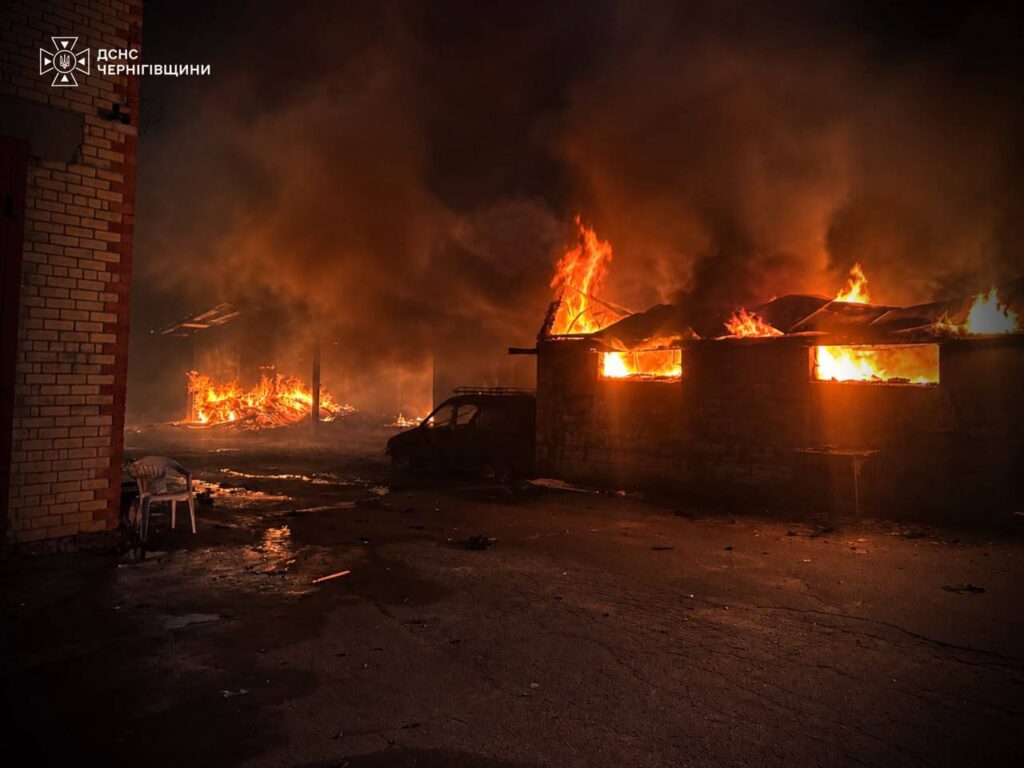
least eight people were killed dozens more wounded russia strikes 10 ukrainian regions over 24 hours · post fire chernihiv oblast broke out result russian shelling 17 2026 chernihiv_16_08 ukraine

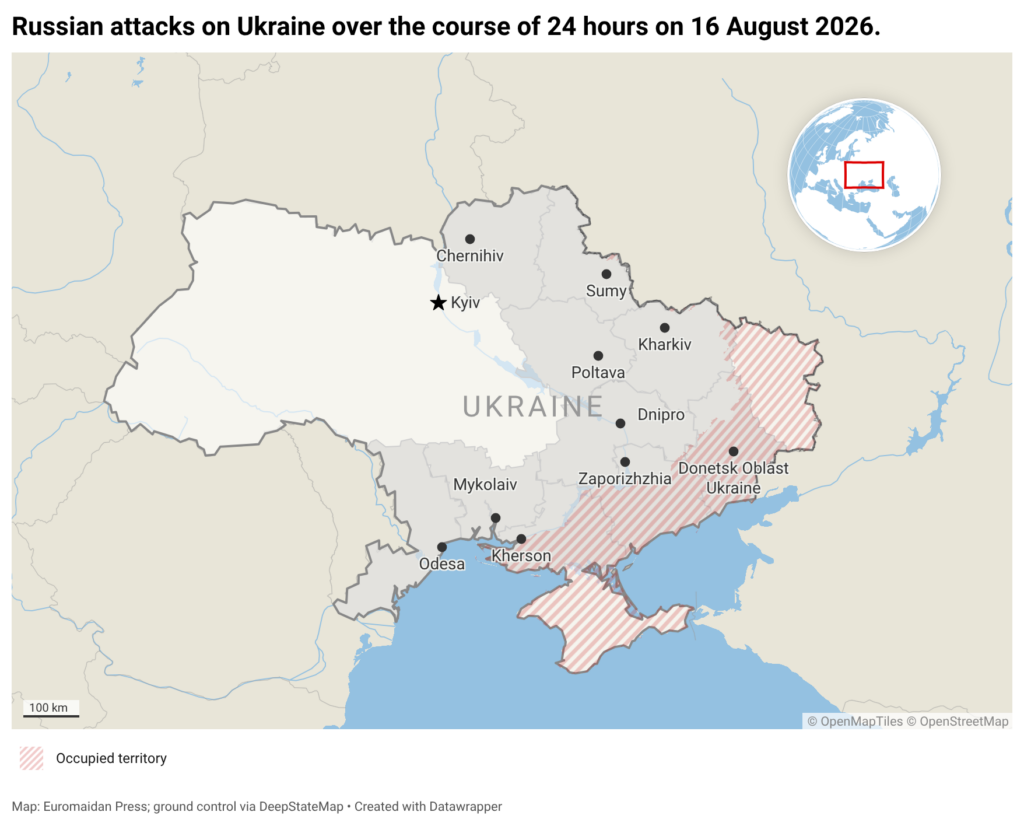
Russian forces shelled and struck front-line and border regions across northern, eastern, and southern Ukraine over the past 24 hours, killing at least eight civilians and wounding more than 40, regional authorities reported on 17 August. Sumy, Donetsk, Kherson, and Zaporizhzhia oblasts reported deaths, while people were wounded in Kharkiv, Kherson, Dnipropetrovsk, Chernihiv, and Odesa Oblasts.

Russia's daily strikes have hit populated areas and civilian infrastructure both near the front line and far behind it. President Volodymyr Zelenskyy said that 13 regions had come under attack over the past week, with more than 1,550 attack drones, nearly 1,560 guided aerial bombs, and 62 missiles, most of them ballistic, launched at Ukraine.

Map: Euromaidan Press

North: FPV drone attacks firefighters’ vehicle

In Sumy Oblast, Russian forces carried out more than 50 strikes on 24 settlements across 11 communities. A drone strike in the Sumy community killed a 75-year-old man and a 72-year-old woman and wounded another civilian, the Sumy military administration said. It also said two more people were wounded in the Seredyna-Buda community. A mass drone attack on Sumy caused large fires and wounded at least one person, Sumy city military administration head Serhii Kryvosheienko said.

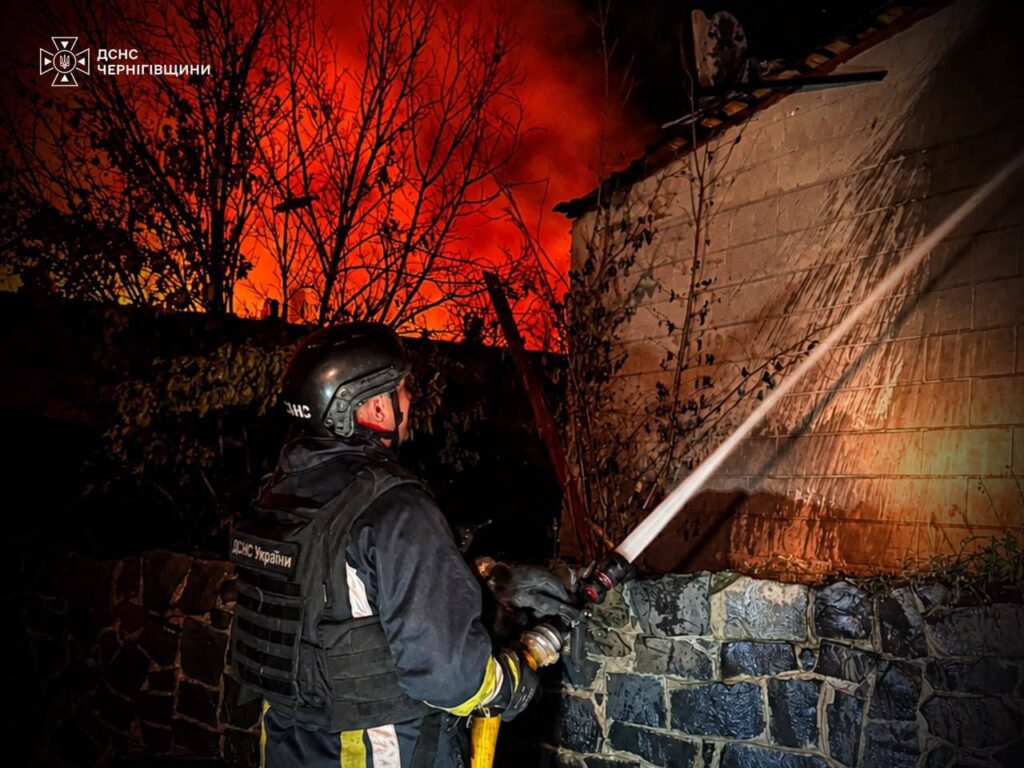
In Chernihiv Oblast, a 41-year-old man was wounded in a Geran drone strike on the Kozelets community, Head of the Regional Military Administration Viacheslav Chaus said. He added that Gerbera drones destroyed a hangar and farm equipment in the Kholmy community. In a border village in the Horodnia community, an FPV drone struck a yard, and a second FPV drone hit a firefighters' vehicle that had arrived at the scene. A house later caught fire. A critical infrastructure facility was also hit.

Firefighters put out a fire in Chernihiv Oblast that broke out as a result of Russian shelling. Approximately, morning of 17 August. Photo: Chernihiv Oblast State Emergency Service

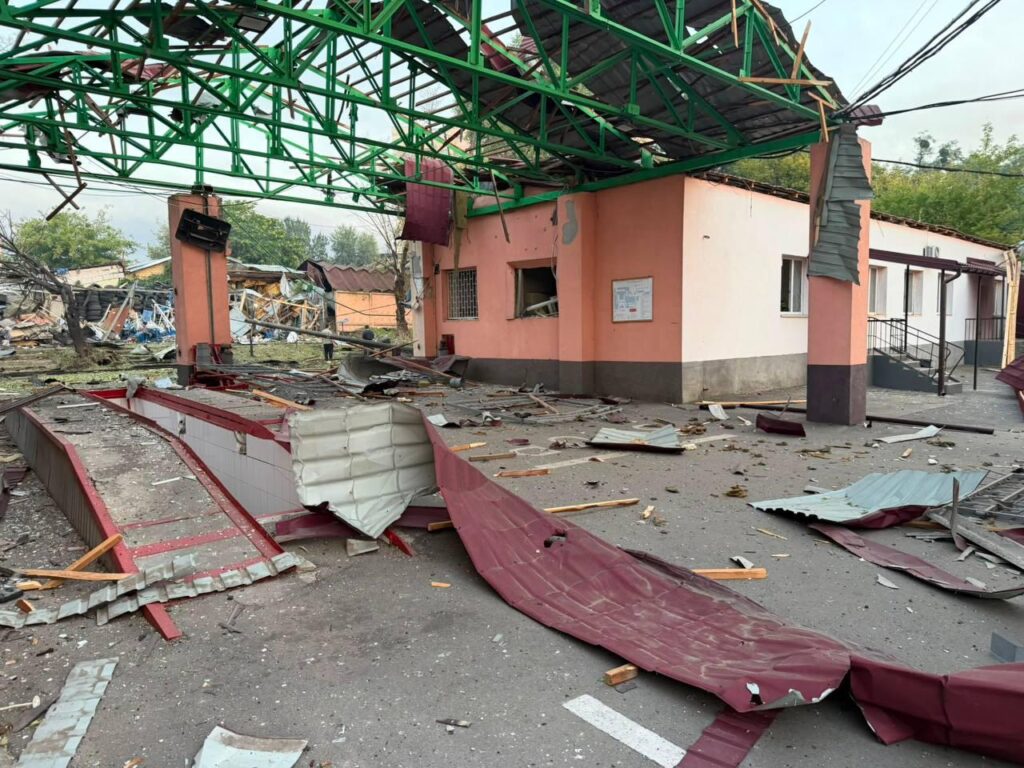
In Kharkiv Oblast, six people were wounded in strikes on Kharkiv and nine other settlements. The heaviest damage was reported in Izium, where 19 houses and four apartment blocks were damaged, head of the Regional Military Administration Oleh Syniehubov said.

East: Russian strikes destroy 30 stalls

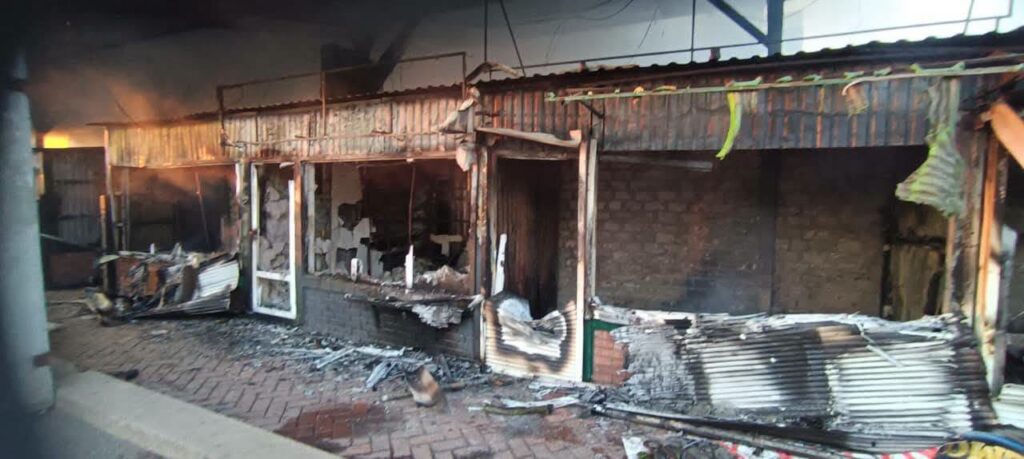
In Donetsk Oblast, Russian forces killed two residents of Kramatorsk and wounded 18 people across the region, Head of the Regional Military Administration Vadym Filashkin said. In Sloviansk, round-the-clock strikes damaged critical infrastructure and destroyed 30 stalls at the Lisnyi market, Sloviansk City Military Administration Head Vadym Liakh said.

Consequences of Russian strikes on Sloviansk on 16 August and overnight into 17 August. Photo: Vadym Liakh


In Poltava Oblast, two industrial facilities were hit, causing fires, and drones also attacked another industrial facility in Myrhorod district, Head of the Regional Military Administration Vitalii Diakivnych said. No casualties were reported.

In Dnipropetrovsk Oblast, Russian forces attacked four districts nearly 20 times from the evening of 16 August, wounding five people, Head of the Regional Military Administration Oleksandr Hanzha said. He added that houses and outbuildings caught fire in Pavlohrad and Nikopol district.

In Zaporizhzhia district, two people were killed and three wounded, Head of the Regional Military Administration Ivan Fedorov said. He also reported 1,217 strikes on 60 settlements across the oblast, including 20 air strikes, about 846 drone attacks, and 350 artillery strikes.

Consequences of Russian strikes on Zaporizhzhia Oblast on 16 August. Photo: Zaporizhzhia Regional Military Administration

South: strike damages civilian vessel flying the flag of Togo

In Odesa Oblast, a night-time strike on port infrastructure damaged a civilian vessel flying the flag of Togo and wounded four people, one of them seriously, Head of the Regional Military Administration Oleh Kiper said.

In Kherson Oblast, in the early morning, Russian forces killed two residents of the village of Novokayiry in the Mylivska community, – Head of the Kherson Regional State Administration Oleksandr Prokhudin said. Also russian forces attacked 52 settlements, including the regional capital. Six people were wounded, while 11 apartment blocks and 15 private houses were damaged, Prokudin said.

In Mykolaiv Oblast, Russia attacked with Shahed and Gerbera drones, but no casualties were reported, acting Head of the Regional Military Administration Heorhii Reshetilov said. He added that the roof of an agricultural enterprise building was damaged in the Horokhivska community.

  • ✇Euromaidan Press
  • Russia struck Ukraine’s gas producer 13 times in a single week, forcing some wells offline
    Russia struck facilities of Ukraine's state-owned Naftogaz Group 13 times over the past week, hitting several regions with drones and missiles, the company reported on 17 August. Gas extraction infrastructure was among the targets, and one asset was hit several times. Naftogaz said the strikes seriously damaged equipment and production capacity and cut part of its output. No employees were injured this time. The strikes are part of a systematic Russian drone and missile
     

Russia struck Ukraine’s gas producer 13 times in a single week, forcing some wells offline

17 août 2026 à 06:08

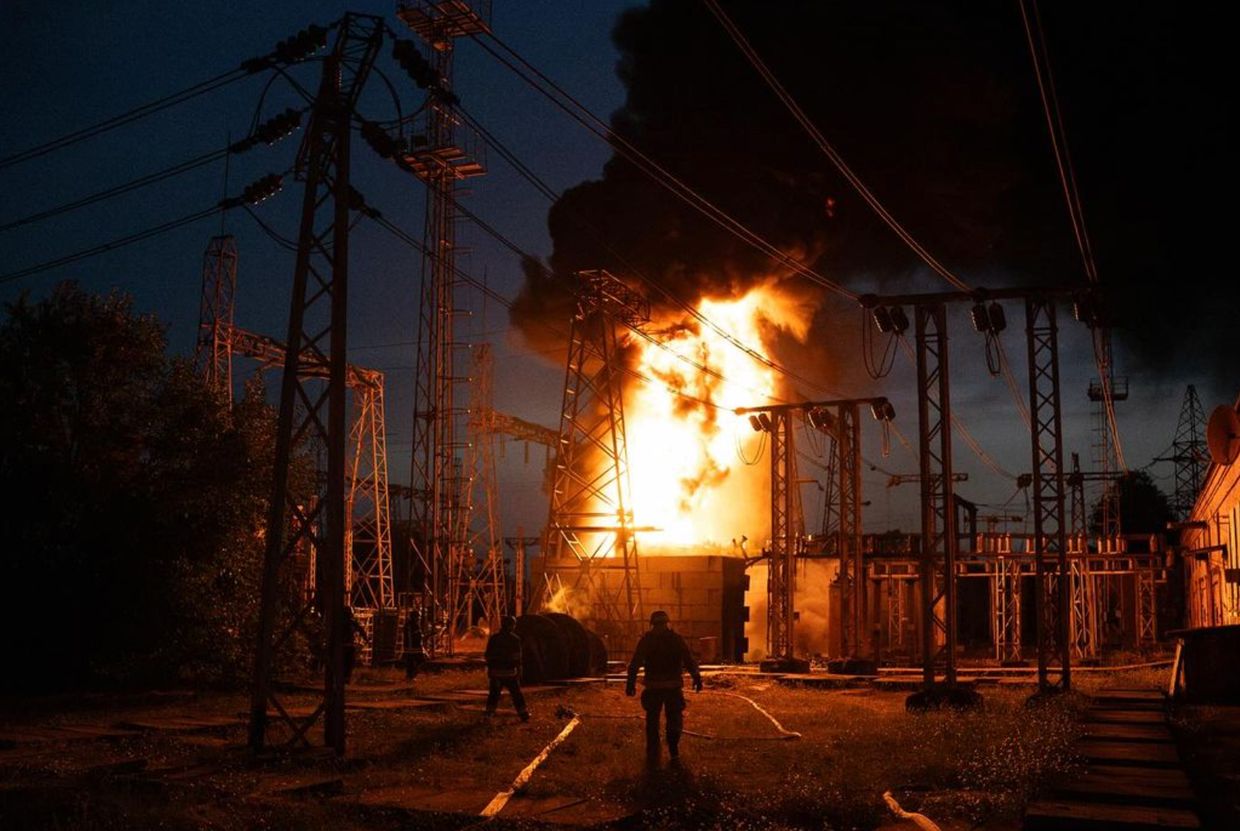
Firefighter attending to a blaze following a Russian attack on Ukraine's energy infrastructure.

Russia struck facilities of Ukraine's state-owned Naftogaz Group 13 times over the past week, hitting several regions with drones and missiles, the company reported on 17 August. Gas extraction infrastructure was among the targets, and one asset was hit several times. Naftogaz said the strikes seriously damaged equipment and production capacity and cut part of its output. No employees were injured this time.

The strikes are part of a systematic Russian drone and missile campaign against Ukraine's oil and gas production, intensifying as winter approaches. Naftogaz has now counted 293 strikes on its facilities since the start of 2026.

Acting Naftogaz CEO Serhii Fedorenko has said the strikes are meant to inflict maximum damage on Ukraine's infrastructure ahead of the heating season. The company said Russian attacks destroyed 37 sites in its network during the first seven months of 2026, 32 Ukrnafta filling stations and five Ukrhazvydobuvannia complexes.

The strikes carry a human cost too: EP has reported 312 workers killed across the group since 2022. In what Naftogaz called its largest strike on gas production infrastructure, Russia fired 35 missiles and 60 drones at facilities in the Kharkiv and Poltava regions in October 2025.

Russia's long war on Ukraine's energy grid

Russia has bombed Ukraine's power and heating systems through every winter of its full-scale invasion. Each year the strikes have grown heavier. Then-Energy Minister Denys Shmyhal said last winter's attacks damaged or destroyed roughly 80% of Ukraine's energy system. Across 2025, Russia hit energy sites more than 600 times, damaging all 15 of the country's thermal plants. The strikes have forced repeated nationwide blackouts and cut heat to homes in sub-zero cold.

That previous campaign failed to collapse the grid, so Moscow now eyes Ukraine's water systems as its next winter target. Heading into the coming winter, Ukraine received about three times fewer air-defense missiles in the first half of 2026 than a year earlier. Kyiv is answering with its own deep strikes on Russian refineries and military plants. For civilians, the pattern means another winter of cold homes, rationed power, and threatened water supplies.

  • ✇Euromaidan Press
  • Finland backs €28.5 million power plant project as Ukraine braces for Russia’s next winter energy assault
    Finland will provide €28.5 million ($33.2 million) to support new power generation in Ukraine, with Finnish company Wärtsilä selected to supply the equipment, Finland’s Ministry of Foreign Affairs said on 13 August. Ukraine’s power system has been repeatedly damaged by Russian attacks, leaving the country facing each winter with reduced generation capacity and a heightened risk of electricity and heating disruptions. Strengthening distributed generation is therefore a k
     

Finland backs €28.5 million power plant project as Ukraine braces for Russia’s next winter energy assault

13 août 2026 à 14:04

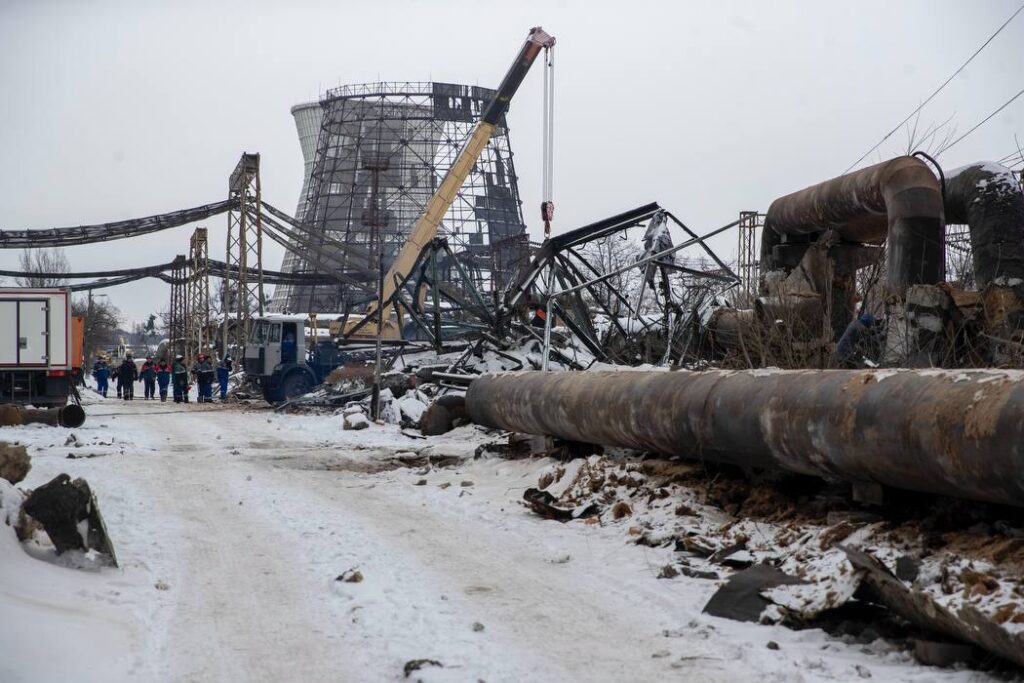
The Darnytska Combined Heat and Power Plant in Kyiv sustained critical damage from a Russian strike on 3 February 2026. Photo: Vitali Klitschko

Finland will provide €28.5 million ($33.2 million) to support new power generation in Ukraine, with Finnish company Wärtsilä selected to supply the equipment, Finland’s Ministry of Foreign Affairs said on 13 August.

Ukraine’s power system has been repeatedly damaged by Russian attacks, leaving the country facing each winter with reduced generation capacity and a heightened risk of electricity and heating disruptions. Strengthening distributed generation is therefore a key part of keeping essential services running when further strikes hit the energy grid, as they are expected to do ahead of the 2026-27 winter season.

The total value of the power plant technology is €46.5 million, with Ukraine covering the remaining cost. The plants will be manufactured in Vaasa, Finland, with the Ministry saying it will support Finnish jobs and exports while adding generation capacity to Ukraine’s war-damaged energy system.

Power generation for Ukraine’s winter

Ukraine’s state energy company Ukrnafta is purchasing the power plants to strengthen electricity production, with the need particularly acute ahead of another winter under Russian attacks.

“Reliable energy production is vital, particularly in winter months, when Russian strikes on energy infrastructure have made day-to-day life in Ukraine difficult,” Finland’s Ministry of Foreign Affairs said.

Russia has repeatedly targeted Ukraine’s electricity generation, transmission, gas, and heating infrastructure since the full-scale invasion. The attacks have caused widespread blackouts and damaged or destroyed large parts of Ukraine’s generation capacity.

Previous winters have shown the consequences. Russian strikes have repeatedly caused rolling blackouts, while damage to heating infrastructure has threatened access to heat and water during freezing weather.

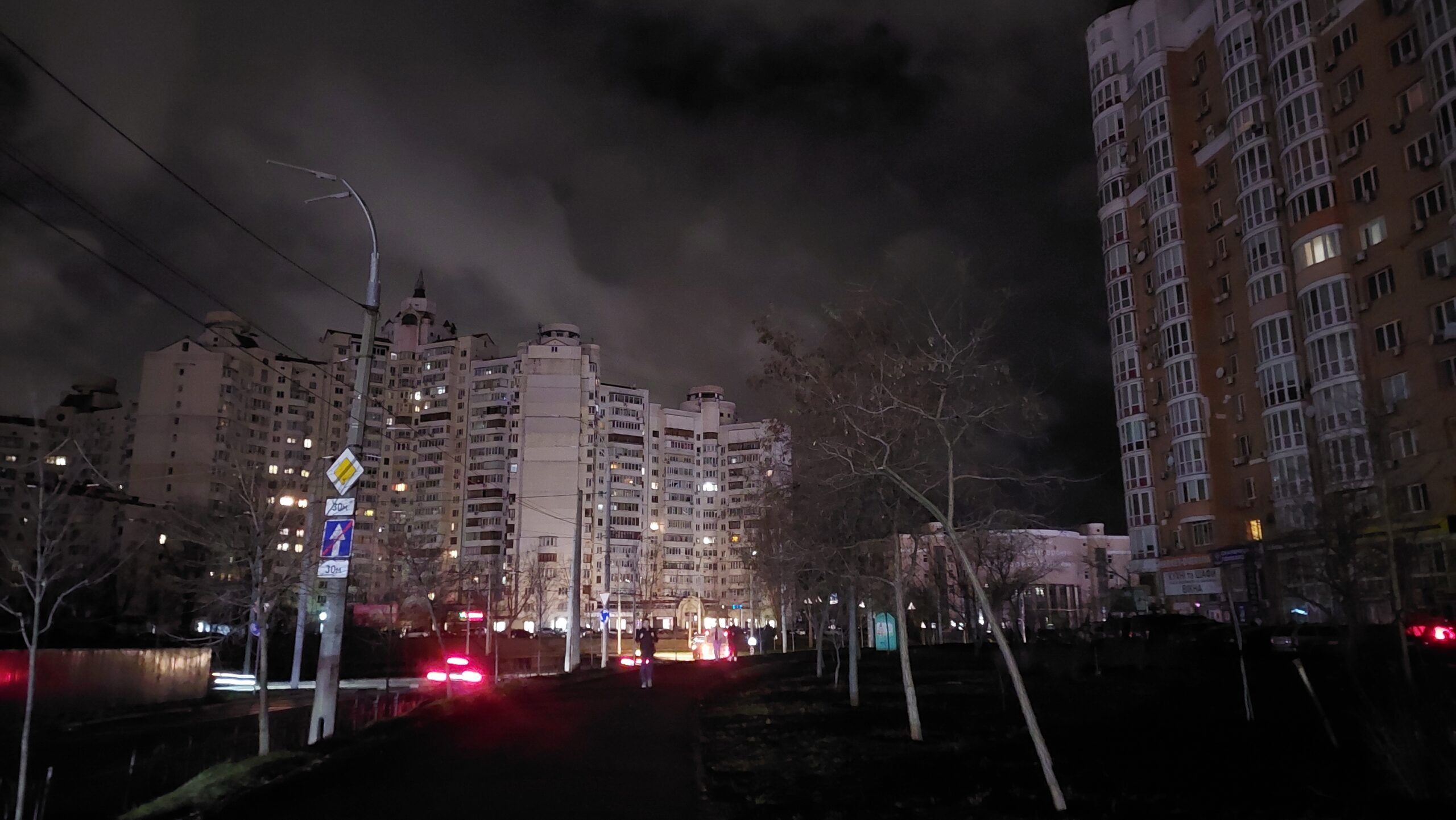
During blackouts, apartment blocks in Kyiv are mostly dark, with scattered lights from apartments with battery-powered sources. Generators power businesses on the ground floor. Street lights are largely off.
Explore further

Behind the black windows: How Kyiv survives a winter in the dark

Ukrainian officials have warned that the coming winter could be more difficult than previous ones, as Russia is expected to again target Ukraine’s energy, heating, and water infrastructure. Russia has already intensified attacks on Ukrainian civilians and civilian infrastructure this summer, raising concerns that the campaign against essential services could escalate further during the winter months.

Finnish technology heads to Ukraine

Wärtsilä Finland Oy will manufacture the power plants in Vaasa.

Finnish Foreign Trade and Development Minister Ville Tavio said the project combines support for Ukraine with Finland’s energy-sector expertise.

“Finland has world class energy sector expertise that can benefit Ukraine’s reconstruction efforts,” Tavio said. “I am pleased that Finnish technology and Finnish workers are playing a part in strengthening the security of Ukraine’s energy supply.”

How Finland is financing the project

The €28.5 million Finnish contribution comes through the Finland–Ukraine Investment Facility, which supports public investments in Ukraine using Finnish technology, expertise, and services.

Finland’s funding will cover the interest costs and capital of the investment loan Ukraine will take out for the project. Finnish export credit agency Finnvera is providing a 100% export guarantee for the loan.

The project combines immediate energy support for Ukraine with Finnish financing, technology, and manufacturing capacity.

  • ✇Euromaidan Press
  • Poland and the Baltics risk Russian sabotage for backing Ukraine, Bloomberg says
    Russia may expand hybrid attacks against Poland and the Baltic states, including infrastructure sabotage or false-flag attacks, Bloomberg reported on 12 August, citing an unnamed European intelligence official.  The warnings come amid concern that Moscow wants to intimidate Ukraine’s supporters. The CIA warning follows Russian threats, incursions, alleged sabotage plots, and disinformation against Poland and the Baltic states. Most Western military aid reaches Ukraine t
     

Poland and the Baltics risk Russian sabotage for backing Ukraine, Bloomberg says

13 août 2026 à 09:29

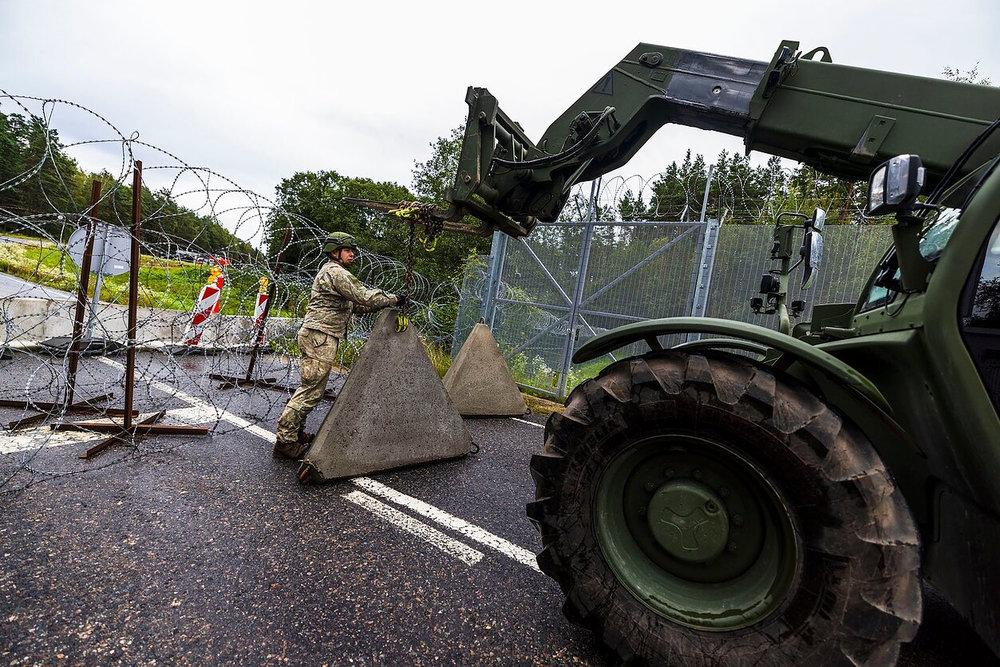
Lithuanian soldier installs concrete barriers and razor wire across a road during a civil defense exercise.

Russia may expand hybrid attacks against Poland and the Baltic states, including infrastructure sabotage or false-flag attacks, Bloomberg reported on 12 August, citing an unnamed European intelligence official. 

The warnings come amid concern that Moscow wants to intimidate Ukraine’s supporters. The CIA warning follows Russian threats, incursions, alleged sabotage plots, and disinformation against Poland and the Baltic states. Most Western military aid reaches Ukraine through Poland, while the Baltic states rank among Kyiv’s strongest supporters. Sabotage of transport, energy, or communications can slow aid delivery and test NATO while hiding Russia’s role.

Separately, a European government official told Bloomberg that the CIA had warned countries in the region of a possible future Russian attack. The CIA declined to comment.

The same official said Russia might instead be creating the impression of an impending attack to sow fear as part of an information operation. The official saw no signs that Moscow was preparing a conventional attack or invasion.

Moscow tests NATO’s eastern flank

Poland and Lithuania had already raised similar concerns. In July, Poland said it had credible intelligence that Russia was planning new provocations. Lithuania later warned that Moscow might rebuild captured Ukrainian drones for false-flag strikes on critical infrastructure.

In September 2025, between 19 and 23 Russian drones entered Polish airspace, shutting down airports and damaging buildings. Poland closed four airports as NATO aircraft responded.

Meanwhile, five people are on trial in Lithuania over attacks allegedly organized for Russian military intelligence in 2024, Bloomberg reported. Lithuania has reinforced infrastructure sites and deployed troops since June.

These warnings and incidents place the CIA alert within a wider pattern of pressure on NATO’s eastern flank and Ukraine’s supporters. 

How Russia strikes without starting a war

Bloomberg cited several recent unexplained drone incidents in Germany alongside the CIA warning. Citing Die Zeit, Euromaidan Press reported that an explosive-laden drone struck the wing of a parked Ukrainian An-124 at Leipzig-Halle airport and failed to detonate. A US Defense Department official in Europe told CNN that Washington assessed the drone belonged to Russian intelligence. 

Bloomberg also reported that a cargo plane hit an unidentified object and that drones appeared over a military base the following day. It did not connect either incident to Russia.

More broadly, Russian hybrid operations have grown sharply since the full-scale invasion. CSIS found that attacks in Europe tripled from 2023 to 2024, after quadrupling the previous year. Separately, the US Helsinki Commission mapped nearly 150 operations in NATO territory attributed to or suspected of Russia between February 2022 and November 2024.

Retired Lt. Gen. Ben Hodges told Euromaidan Press in February that attacks on ports, railways, and cables can probe routes needed for NATO reinforcements. Their deniability raises the political cost of responding.

By hiding its role, Moscow can disrupt support for Ukraine and test NATO without openly starting a war. 

  • ✇Euromaidan Press
  • A wiring maker for Volkswagen and Škoda takes a Russian hit in Zhytomyr Oblast
    A Russian overnight strike heavily damaged a German-owned car-parts plant in Zhytomyr Oblast, forcing it to halt production, the company said. No workers were hurt, but the destruction was extensive. One of the region's major employers now has no restart date. Russia increasingly hits the factories and warehouses of foreign companies that kept producing in Ukraine through the war, not only Ukrainian factories, energy facilities, infrastructure, and homes. Each strik
     

A wiring maker for Volkswagen and Škoda takes a Russian hit in Zhytomyr Oblast

9 août 2026 à 12:19

wiring maker volkswagen škoda takes russian hit zhytomyr oblast · post fire engulfs kromberg & schubert plant after strike overnight 9 2026 bunechko 5458835242480244866 ukraine news ukrainian reports

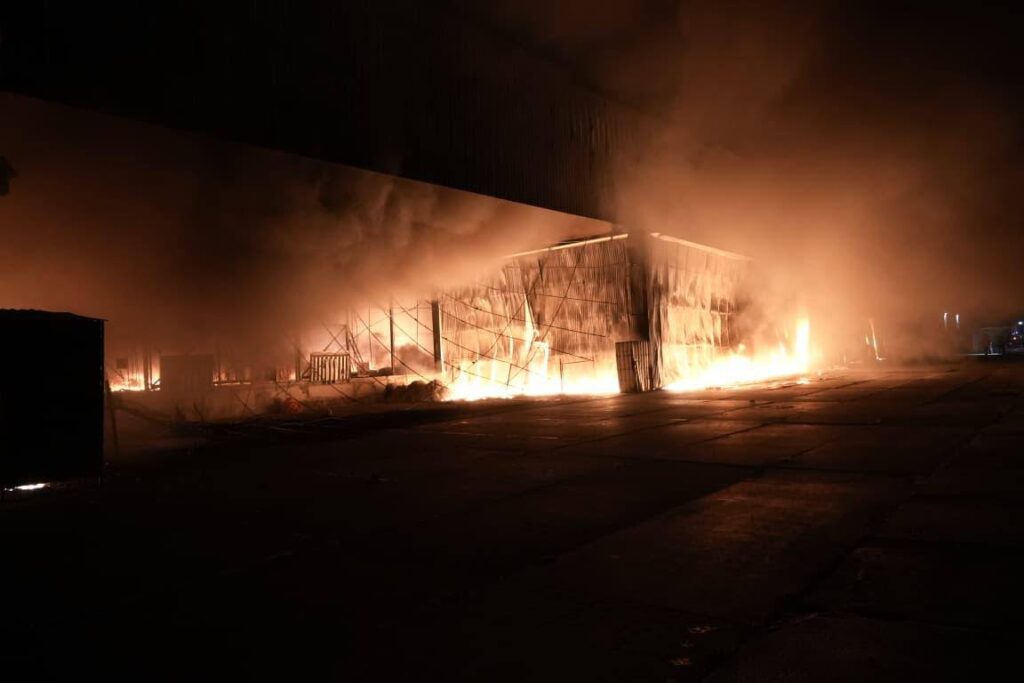
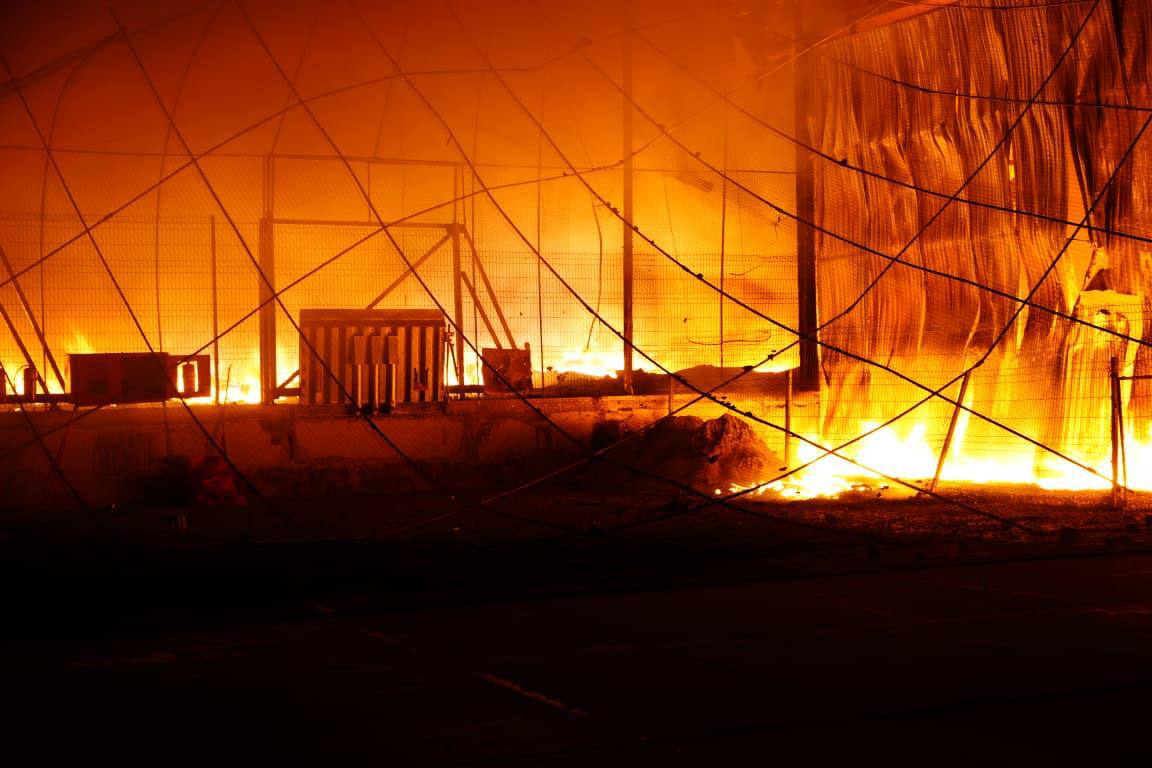
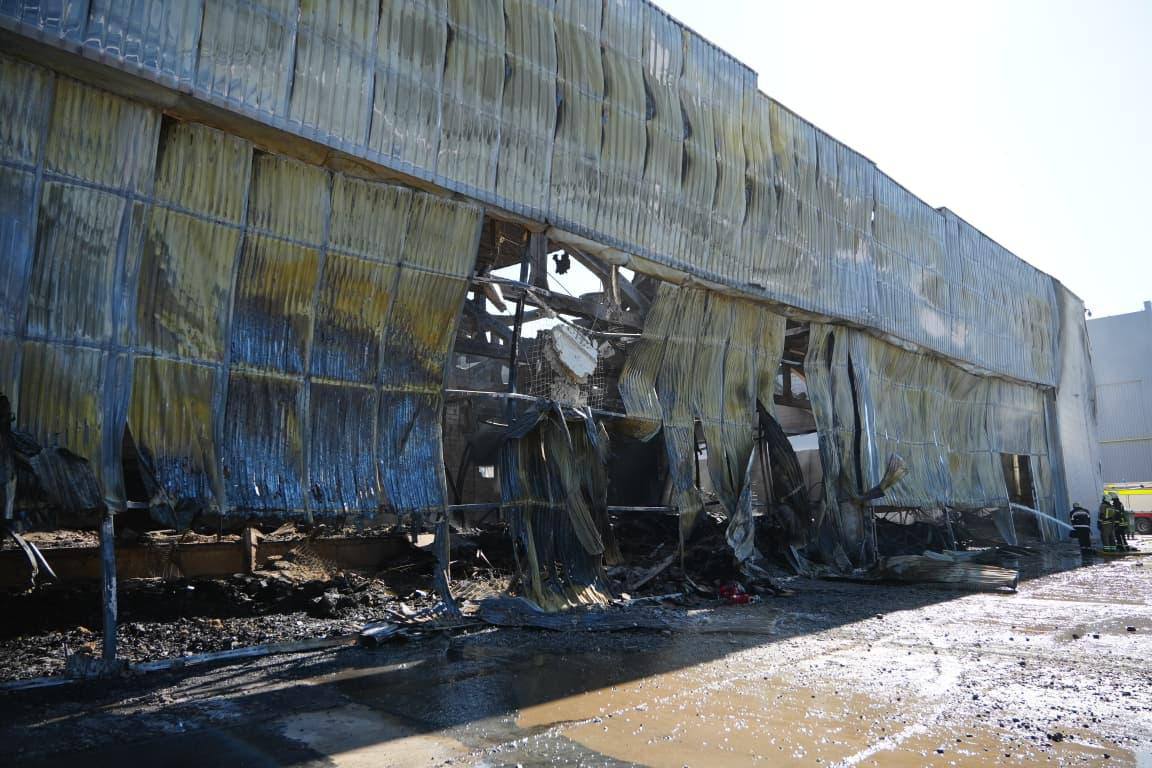
Russian overnight strike heavily damaged a German-owned car-parts plant in Zhytomyr Oblast, forcing it to halt production, the company said. No workers were hurt, but the destruction was extensive. One of the region's major employers now has no restart date.

Russia increasingly hits the factories and warehouses of foreign companies that kept producing in Ukraine through the war, not only Ukrainian factories, energy facilities, infrastructure, and homes. Each strike on a foreign-owned factory chips away at the jobs and outside investment propping up Ukraine's wartime economy, adding to a burden the country's partners are scrambling to offset.

A German plant knocked offline

Russia struck Zhytomyr Oblast overnight into 9 August and hit the Kromberg & Schubert plant, which reported the attack on Facebook. Its production lines and infrastructure took heavy damage. 

"The most important thing for us is that no employees were hurt in the attack," the statement said. 

With the damage so severe, the plant suspended operations for an indefinite period. A restart depends on a technical assessment and the full scope of repairs, the company added.

Kromberg & Schubert is a civilian manufacturer with 100% German investment. It has run in the Zhytomyr region for 11 years and employs about 3,500 people. The plant makes the wiring harnesses that thread through cars, supplying European automakers.

wiring maker volkswagen škoda takes russian hit zhytomyr oblast · post kromberg & schubert plant ablaze after strike overnight 9 2026 bunechko 5458835242480244867 ukraine news ukrainian reports
The Kromberg & Schubert plant ablaze after the Russian strike in Zhytomyr Oblast, overnight on 9 August 2026. Photo: Vitalii Bunechko

Vitalii Bunechko, head of the Zhytomyr Oblast Military Administration, called it one of the region's budget-forming enterprises. He said the administration and local authorities are working to help the strategic investor and keep the plant running.

wiring maker volkswagen škoda takes russian hit zhytomyr oblast · post burned-out kromberg & schubert plant after strike 9 2026 bunechko 5458835242480244865 ukraine news ukrainian reports
The burned-out Kromberg & Schubert plant after the Russian strike in Zhytomyr Oblast, 9 August 2026. Photo: Vitalii Bunechko

Part of a wider overnight assault

Bunechko reported that Russia had launched a massive strike on the oblast overnight. The attack also damaged civilian infrastructure, he said. State Emergency Service crews contained the fires, and investigators began work at the site. 

Russia has repeatedly struck Zhytomyr Oblast during the war, stepping up its drone strikes on northwestern Ukraine, often exploiting Belarusian territory.

  • ✇Euromaidan Press
  • Bosch is second German brand in one night to lose its Ukraine warehouse to Russian strike
    Russia destroyed a Bosch warehouse in Ukraine overnight into 5 August, the German manufacturer said. The strike wiped out its stock of household goods and industrial technology. No Bosch employee or worker for its logistics partner was injured. The strike was part of Russia's intensified attacks on the warehouses and distribution centers that supply Ukraine. Destroying these facilities eliminates stored goods and disrupts the delivery of food, parcels, equipment, and ot
     

Bosch is second German brand in one night to lose its Ukraine warehouse to Russian strike

7 août 2026 à 07:22

Russia destroyed a Bosch warehouse in Ukraine overnight into 5 August, the German manufacturer said. The strike wiped out its stock of household goods and industrial technology. No Bosch employee or worker for its logistics partner was injured.

The strike was part of Russia's intensified attacks on the warehouses and distribution centers that supply Ukraine. Destroying these facilities eliminates stored goods and disrupts the delivery of food, parcels, equipment, and other essential products. Recent attacks have hit both Ukrainian companies and international brands operating in the country.

Bosch said the warehouse premises belonged to its logistics partner. The company's preliminary assessment found that all Bosch products stored there had been destroyed. It did not disclose the location.

Bosch and its logistics partner are now assessing the damage. They are also seeking ways to maintain operations and meet commitments to customers and business partners.

Russia launches anti-ship missiles on stocks

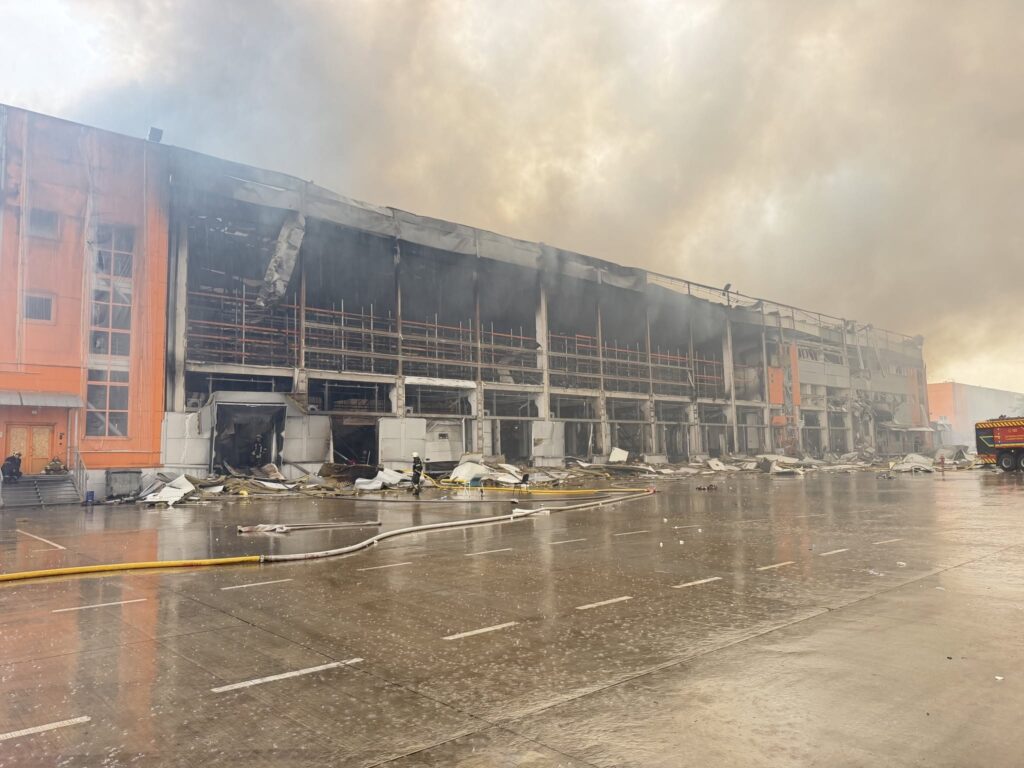
The Bosch loss came during the same overnight barrage that devastated warehouses and production sites across Kyiv and the surrounding region. Russian strikes destroyed facilities used by Rozetka, Nova Poshta, and Epicentr. The three companies distribute parcels, household goods, and construction supplies across Ukraine.

That attack killed 17 people and wounded 44. Ukraine intercepted none of the 24 ballistic missiles or four anti-ship missiles Russia launched, according to Ukrainian officials.

Ukraine is looking for ways to protect its businesses

The same night, a strike burned down the central Ukraine warehouse of German automotive-products maker Liqui Moly. All employees escaped injury, and the company said it would continue operating.

Russia's overnight barrage burned down the Ukrainian warehouse of a German household brand, Liqui Moly. Source: Liqui Moly

Two nights earlier, a Russian drone attack outside Dnipro set food warehouses ablaze. On 1 August, another Russian drone hit a Rozetka warehouse where 270 people were working, killing one employee.

The campaign comes as Russia launches more missiles than Ukraine can reliably stop. Moscow fired 376 missiles in July, including 126 ballistic weapons, Euromaidan Press previously reported.

Ukrainian presidential adviser Serhii Beskrestnov said Russia had intensified attacks on warehouses and production sites. He warned businesses to disperse their stocks. Russia can sustain about 100 ballistic-missile launches a month and locate commercial targets using cheap local informants, he said.

The wreckage Russia collects from Ukrainian drone strikes may have a second life—aimed at NATO, Lithuania warns

7 août 2026 à 03:46

title · post lithuanian defense minister robertas kaunas lrt/e blažys lithuania defence ukraine news ukrainian reports

Lithuania's military intelligence warned that Russia is considering using captured Ukrainian drones for false flag attacks on critical infrastructure in the Baltic regionLRT reported. Defense Minister Robertas Kaunas confirmed the assessment and called the scenario "probably the most realistic" form of Russian provocation against the region. Lithuania has reinforced security at key infrastructure sites and deployed military forces since June.

Russia has waged a years-long hybrid campaign against NATO's eastern flank, combining drone incursions, undersea cable sabotage, rail crossing closures, and disinformation while simultaneously directing its full military force against Ukraine.

Russia's false flag playbook with captured drone parts

Moscow could reassemble crashed and intercepted Ukrainian drone wreckage into functioning devices and launch them at targets in the Baltic states, Kaunas told reporters on 6 August. The goal: create confusion about who launched the strike and avoid accountability for hitting NATO territory.

"We have data that Russia is considering conducting unconventional kinetic attacks against critical infrastructure in the Baltic region," Kaunas said. "It is likely that Russia could use Ukrainian-made drones for this purpose."


The Baltic region. Map: Euromaidan Press
finland confirms ukrainian drone its airspace kyiv's baltic strike campaign pushes deeper north – helsinki alert · post preparing launch long-range an-196 liutyi one-way attack photo_5224400079031496980_y (1) ukraine news reports
Preparing to launch Ukrainian long-range AN-196 Liutyi long-range one-way attack drone. Illustrative image. Photo: 14th UAS Regiment

The mechanism exploits a byproduct of Ukraine's drone war against Russia. As Ukrainian long-range drones hit oil infrastructure and military targets deep inside Russia, some are intercepted or crash. Russia collects the wreckage. 

"Russia possesses some of those parts and drone fragments and is capable of assembling them into a functioning device," Kaunas said. "The theoretical possibility that such drones could be used in a false flag operation exists."

lithuania signs full drone deal latvia receives ukrainian air defense experts · post lithuanian president gitanas nausėda (left) volodymyr zelenskyy exchange signed agreement copies bucharest nine summit 13 2026 presidentgovua
Explore further

Lithuania moves to produce Ukrainian drones locally under bilateral defense pact

Kaunas emphasized no decision to launch such an operation had been detected. 

"We are talking about a false flag operation in which a fake Ukrainian drone could be used. At this point, that is probably the most realistic scenario."

The false flag warning follows a pattern of Ukrainian drones entering Baltic airspace after being diverted by Russian electronic warfare. NATO fighter jets shot down such drones over Latvia and Estonia this spring, and Lithuania shut Vilnius airport after detecting a drone crossing from Belarus.

baltic nation boosts security dam gas storage facility due russian threat · post andris kulbergs 2023 ukraine news ukrainian reports
Explore further

Baltic nation boosts security at dam, gas storage facility due to Russian threat

Multiple NATO allies see the same intelligence

Lithuanian President Gitanas Nausėda had earlier raised concerns about possible conventional and sabotage strikes targeting the country's transport and energy networks. Kaunas echoed that message and pointed to a broader pattern across the alliance's eastern flank.

"Other NATO countries have repeatedly made it very clear that they see it, hear it, know about it, and have warned Russia not to do it," Kaunas said. He did not identify specific targets or a timeline for any potential attack.

Russia claimed the Baltic states open air corridors for Ukrainian drone strikes—without producing evidence. Russia also threatened NATO member Latvia with retaliation over the accusations. Nausėda publicly rejected Moscow's claims.

NATO upgraded its Baltic Air Policing rules of engagement in July, giving fighter jets authority to shoot down objects that pose a threat. Russia's military aircraft probed NATO's eastern flank so aggressively in July that scrambles jumped more than 250%.

  • ✇Euromaidan Press
  • 47 sites destroyed, 1,943 damaged: Russia’s toll on Ukrainian heritage keeps climbing
    Russia has damaged or destroyed close to 2,000 cultural heritage sites and thousands more cultural venues across Ukraine since its full-scale invasion began, Ukraine's Ministry of Culture reported. The losses grew again over the past month, and officials say occupied territory keeps the true scale out of reach. As the tally rises, more of Ukraine's allies are stepping in to help protect what survives. Russia's aerial strikes on residential buildings and civilian infrast
     

47 sites destroyed, 1,943 damaged: Russia’s toll on Ukrainian heritage keeps climbing

6 août 2026 à 05:25

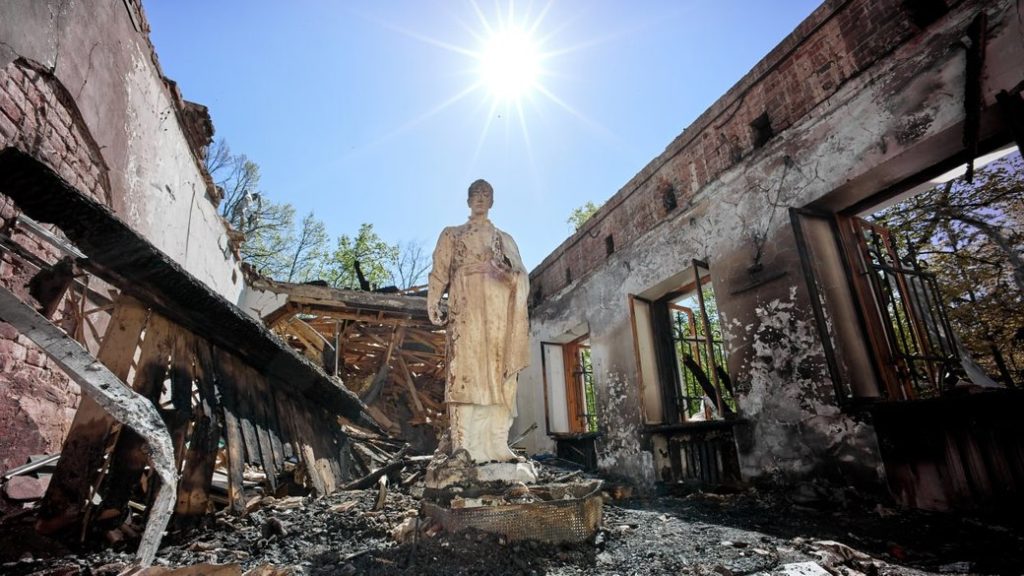
47 sites destroyed 1943 damaged russia's toll ukrainian heritage keeps climbing · post statue pholosopher hryhorii skovoroda memorial museum kharkiv oblast russian missile 6 2022 serhiy kozlov khpgorg 1608818274 ukraine

Russia has damaged or destroyed close to 2,000 cultural heritage sites and thousands more cultural venues across Ukraine since its full-scale invasion began, Ukraine's Ministry of Culture reportedThe losses grew again over the past month, and officials say occupied territory keeps the true scale out of reach. As the tally rises, more of Ukraine's allies are stepping in to help protect what survives.

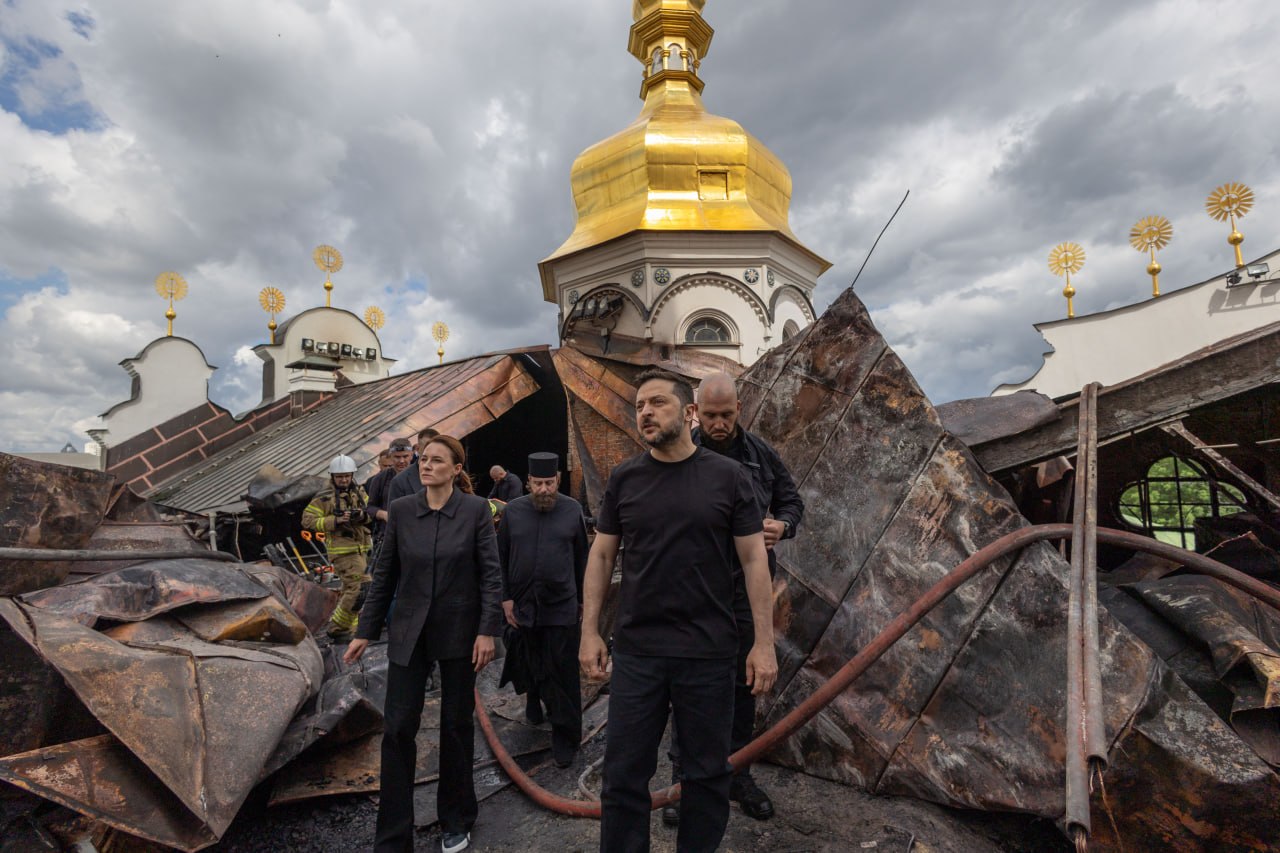
Russia's aerial strikes on residential buildings and civilian infrastructure are the most consistently hit targets of the ongoing war, and the leading source of civilian casualties. Some of those strikes hit museums, concert venues, monuments, and other cultural sites, hollowing out the civilian and cultural life that defines Ukraine. In June, a Russian drone struck the Kyiv-Pechersk Lavra, a UNESCO-listed monastery, a site as significant to Ukrainians as Notre-Dame is to the French.

The toll keeps rising

By the end of July 2026, Russia had damaged or destroyed 1,990 cultural heritage sites and 2,625 cultural venues, the ministry said. Russia "continues to systematically destroy" Ukraine's cultural heritage and infrastructure, it added. 

The image shows Ukrainian leader Volodymyr Zelenskyy at the Kyiv-Pechersk Lavra, a UNESCO World Heritage site, damaged in a Russian attack on 15 June 2026. Source: Zelenskiy Telegram
Ukrainian leader Volodymyr Zelenskyy at the Kyiv-Pechersk Lavra, a UNESCO World Heritage site, damaged in a Russian attack on 15 June 2026. Source: Zelenskyy Telegram

Over the past month, the count climbed by 90, adding 41 heritage sites and 49 cultural venuesOf the heritage sites, 47 are gone entirely: one of national significance, 44 of local significance, and two newly identified. The remaining 1,943 are damaged. The full list includes 192 sites of national significance, 1,605 of local significance, and 193 newly identified.
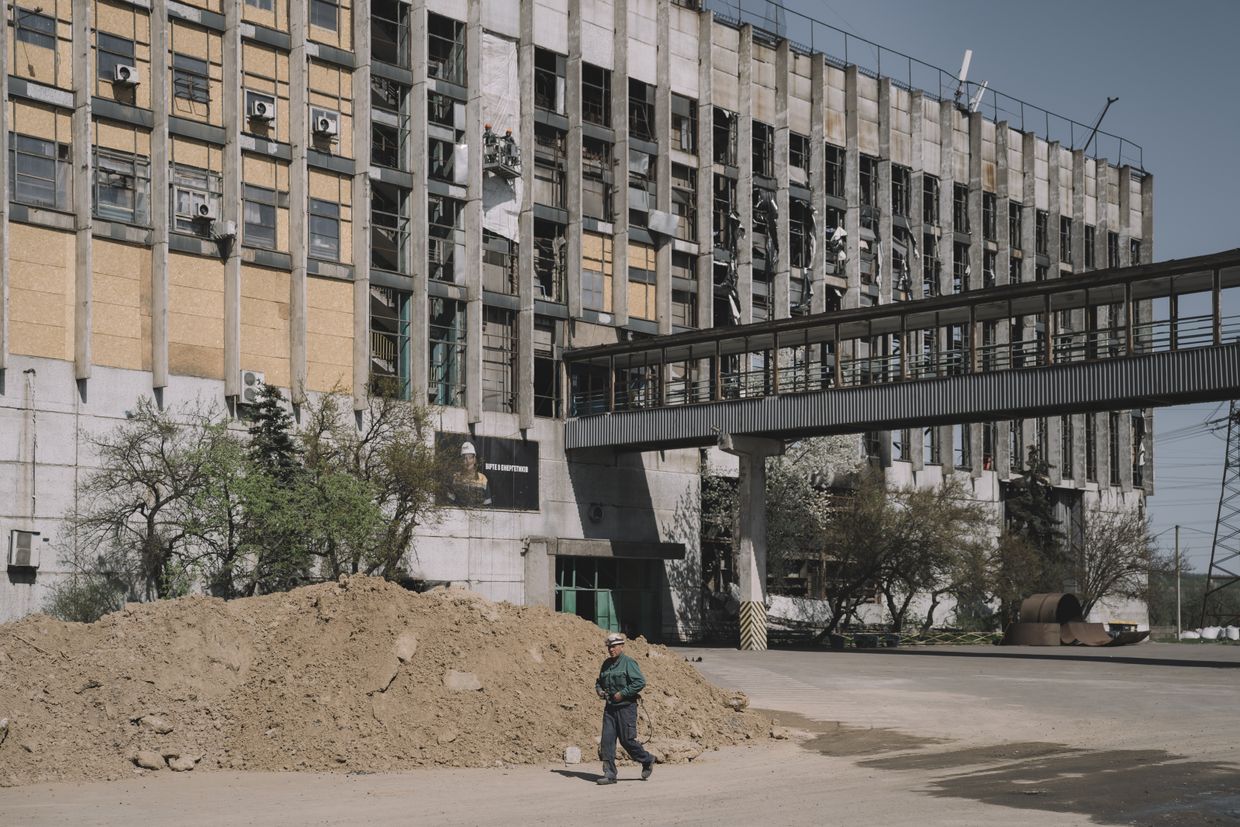
the Kyiv-Pechersk Lavra
Explore further

France compares Lavra strike to bombing Notre-Dame, calls for tougher sanctions

A protected site struck in July

In July, a Russian attack damaged a site inside Odesa's historic center, which sits on the UNESCO World Heritage List. Kyiv and the Sumy, Kharkiv, and Zaporizhzhia oblasts also saw fresh strikes on monuments. In the Zaporizhzhia and Sumy oblasts and in Kyiv, Russian forces hit heritage sites they had already damaged before.

The damaged interior of Odesa's Transfiguration Cathedral after a Russian strike, 23 July 2023. Photo: Odesa Eparchy of the UOC

The ministry records the most damaged heritage in Kharkiv Oblast, with 358 sites, followed by Kherson Oblast with 303, Kyiv with 272, Donetsk Oblast with 229, and Odesa Oblast with 211. Cultural venues have been hit across 354 communities, or 24% of all local communities in Ukraine. Over the past month, the Sumy, Dnipropetrovsk, Zaporizhzhia, and Chernihiv oblasts saw the most new destruction.

Ruins of ancient Chersonesus Taurica in occupied Crimea, with St. Vladimir’s Cathedral in the background.
Explore further

Russia loots occupied Crimea’s ancient sites through six illegal archaeological digs

Village clubs bear the brunt

Community and club venues form the largest group of damaged cultural facilities, at 1,300 sites, or 49.5% of the total. Russian attacks destroyed 283 of them and damaged another 1,017. The heaviest facility losses fall on the Donetsk, Kharkiv, Kherson, Sumy, Kyiv, and Zaporizhzhia oblasts. Russia also re-struck previously damaged sites in the Kharkiv, Kherson, Odesa, Sumy, and Donetsk oblasts.

The ministry stresses the figures understate the loss. Russia's occupation of nearly all of Luhansk Oblast and large parts of the Zaporizhzhia, Donetsk, and Kherson oblasts blocks any full assessment. 

Nestor Makhno (center) in traditional papakha hat with fighters of his Revolutionary Insurgent Army of Ukraine, Spring 1919
Explore further

Russia blames Ukraine for museum it destroyed in Huliaipole, erasing memory of anti-imperial fighter Nestor Makhno

Earlier, Sweden signed a heritage-preservation deal and the EU backing a UNESCO initiative to catalog Ukraine's losses.

Each month of strikes turns reversible damage into permanent loss, and much of it now sits in land Ukraine cannot yet reach. The World Heritage site already declared in danger in occupied Crimea shows how far the erasure can run if the war grinds on.

German brand sold in 150 countries just lost its Ukraine warehouse to a Russian strike. It says it won’t stop operating

5 août 2026 à 15:42

Russia's overnight barrage burned down the Ukrainian warehouse of a German household brand, Liqui Moly. Source: Liqui Moly

Russia's overnight barrage burned down the Ukrainian warehouse of a German household brand. The strike on the night of 5 August destroyed the central warehouse of Liqui Moly Ukraine, which supplies motor oils, lubricants, and automotive chemicals, the company reported on Facebook.

The strike hit a foreign company's civilian supply hub, part of a widening campaign against Ukraine's warehouses.

"This night, as a result of an enemy strike, our central product warehouse in Ukraine was completely destroyed by fire," Liqui Moly said, adding that all employees were safe and no one was hurt.

Founded in 1957, Liqui Moly develops and produces its motor oils and additives in Germany, where it has been named the best brand in the lubricants category for years, and sells its products in about 150 countries. Its Ukraine warehouse is the local distribution center for a global consumer brand, the kind of ordinary commercial infrastructure now being hit.

The company plans to keep operating

Liqui Moly said the loss will not stop its business. Despite significant material damage, the distributor does not plan to halt operations and is already working to restore supplies, rebuild its logistics processes, and launch new delivery routes.

That response mirrors what Russia's warehouse campaign is forcing on businesses across Ukraine: decentralizing storage and rerouting deliveries to survive.

The strike fits a documented campaign

Hitting a motor oil warehouse continues Russia's pattern of striking civilian storage and logistics. Presidential adviser Serhii Beskrestnov has said Russia has intensified attacks on warehouses and production sites, including food, retail, and construction materials, and that this trend will hold.

Russia finds such targets cheaply, Beskrestnov has said, through local informants paid to watch trucks and stock rather than through satellites. A distribution warehouse for a consumer brand is exactly the sort of soft, easily-located civilian target that a campaign hits, damaging the supply of ordinary goods while endangering the workers inside.

  • ✇Euromaidan Press
  • Russia struck same Kyiv building twice in one night. Reason why is tactic Ukraine has seen before
    On 1 August, Russia burned the vehicles that rushed to Ukrainian civilians after its terrorist attacks. Russian forces hit the territory of Kyivmedspetstrans twice during their massive strike on Kyiv, and while the workers fortunately escaped injury, five ambulances burned down completely, the Kyiv City State Administration reported. The strike crippled part of the fleet that responds to exactly these attacks. The double strike on the ambulance depot was part of a combi

     

Russia struck same Kyiv building twice in one night. Reason why is tactic Ukraine has seen before

1 août 2026 à 13:49

Russian forces hit the territory of Kyivmedspetstrans twice on 1 August 2026. Source: The Kyiv City State Administration

On 1 August, Russia burned the vehicles that rushed to Ukrainian civilians after its terrorist attacks. Russian forces hit the territory of Kyivmedspetstrans twice during their massive strike on Kyiv, and while the workers fortunately escaped injury, five ambulances burned down completely, the Kyiv City State Administration reported.

The strike crippled part of the fleet that responds to exactly these attacks. The double strike on the ambulance depot was part of a combined attack that killed at least nine people across Kyiv.

Kyivmedspetstrans is the municipal organization that operates the capital's ambulances and specialized emergency medical transport. The Russian strike partially destroyed four of its buildings while damaging several more premises.

"Twenty vehicles that served the capital's healthcare facilities sustained significant damage," the Ukrainian authorities said.

The barrage that hit the ambulances

The strike on the medical depot came during one of the heaviest ballistic attacks on the capital of the summer. On the night of 1 August, Russian forces launched a combined strike using 35 missiles and 185 attack drones of various types.

The missile mix was overwhelmingly ballistic. Russia fired 27 Iskander-M ballistic missiles, four Zircon anti-ship missiles, two Kh-59/69 guided aviation missiles, and two Kh-31 anti-radar missiles. Ukraine's air defenses managed to shoot down only one Iskander-M ballistic missile and one Kh-59/69.

Against 27 ballistic missiles, Ukraine intercepted only one because the Patriot is the only system that reliably engages Iskander-M, Zircon, and similar high-speed weapons, and Ukraine has run out of Patriot interceptors.

Striking the ambulances twice fits a documented pattern

Hitting a medical-transport depot twice in one attack is not incidental, and it carries the marks of a tactic Ukraine has documented across the war. A second strike on the same site endangers the emergency crews responding to the first, and destroying ambulances degrades the capacity to save the wounded from the very barrage that created them.

Russia has repeatedly used "double-tap" strikes that hit a target, wait for rescuers and medics to arrive, then strike again, a tactic Ukrainian prosecutors and international monitors have flagged as targeting first responders. Ukraine documented the same method days earlier, when Russia struck a passenger train in Zaporizhzhia Oblast twice.

  • ✇404 Media
  • Data Centers Are Easy to Build. Powering Them Is Complicated, Slow, and Expensive
    On Wednesday the power flickered in homes from Washington DC to Chicago. The cause was a data center disconnecting from PJM — a massive power grid that connects 13 states including North Carolina, Virginia, New Jersey, and Michigan, a span that covers 67 million customers. The incident points to a larger problem with the compute warehouses fueling the AI boom: It’s physically and economically impossible to build power infrastructure fast enough to meet the demands of AI data centers and when
     

Data Centers Are Easy to Build. Powering Them Is Complicated, Slow, and Expensive

29 juillet 2026 à 10:03
Data Centers Are Easy to Build. Powering Them Is Complicated, Slow, and Expensive

On Wednesday the power flickered in homes from Washington DC to Chicago. The cause was a data center disconnecting from PJM — a massive power grid that connects 13 states including North Carolina, Virginia, New Jersey, and Michigan, a span that covers 67 million customers. The incident points to a larger problem with the compute warehouses fueling the AI boom: It’s physically and economically impossible to build power infrastructure fast enough to meet the demands of AI data centers and when problems occur, everyone will pay the price.

AI requires massive amounts of computer hardware to scale. That hardware is housed in data centers, and data centers demand shocking amounts of electricity. More data centers mean more demand on the grid which raises the costs of energy for everyone. This is one of the reasons people hate data centers and have begun to fight their construction.

To bypass the issue of grid demand, many data center builders have promised to power the buildings themselves. The problem with that plan is that it’s easy to build a warehouse full of GPUs. Building power plants and transmission lines to power those warehouses will take years and cost billions more than the data centers. A skilled and efficient builder can complete a data center construction in under a year. Building new energy generation to meet that data center's power needs could take a decade. 

  • ✇The Kyiv Independent
  • Ukraine's power exports surge 2.5 times, recovering to pre-Russian attack levels
    Ukraine boosted electricity exports by 150% in June 2025 compared to the previous month, reaching over 237,000 megawatt-hours (MWh), according to consulting firm ExPro Electricity.Current export volumes have returned to autumn 2022 levels, before Russia launched systematic attacks against Ukraine's energy infrastructure that caused massive blackouts across the country.This marks Ukraine's return to exporting more electricity than it imports for the first time since October 2023, ExPro analysis r
     

Ukraine's power exports surge 2.5 times, recovering to pre-Russian attack levels

1 juillet 2025 à 12:23
Ukraine's power exports surge 2.5 times, recovering to pre-Russian attack levels

Ukraine boosted electricity exports by 150% in June 2025 compared to the previous month, reaching over 237,000 megawatt-hours (MWh), according to consulting firm ExPro Electricity.

Current export volumes have returned to autumn 2022 levels, before Russia launched systematic attacks against Ukraine's energy infrastructure that caused massive blackouts across the country.

This marks Ukraine's return to exporting more electricity than it imports for the first time since October 2023, ExPro analysis reports.

Electricity cannot be stored in large volumes for long periods, so it can be exported during certain hours when there is surplus in Ukraine’s energy system, and imported during deficit hours.

Hungary imported the majority of Ukrainian exports, with shipments jumping from 34,000 to 122,000 MWh in a single month.

The recovery represents a dramatic turnaround from June 2024, when Ukraine had no exports at all and imported 858,000 MWh, four times more than in June 2025.

Russia continues to target Ukraine's energy infrastructure, with the latest strike hitting a critical energy facility in Kherson Oblast on June 27 that caused widespread blackouts across multiple communities.

Governor Oleksandr Prokudin warned residents to prepare for prolonged outages as power engineers work to restore electricity, saying "Russia decided to plunge Kherson Oblast into darkness."

In February 2025, Emergency energy power shutdowns were introduced in eight Ukrainian oblasts due to Russian attacks on the country's energy system.

‘With surgical precision’ — Ukrainian drones strike Russian plant 1,300 km away, SBU source says
The SBU said its long-range drones targeted the Kupol plant in Russia’s Udmurt Republic on the morning of July 1, resulting in at least two confirmed strikes and a fire at the site.
Ukraine's power exports surge 2.5 times, recovering to pre-Russian attack levelsThe Kyiv IndependentAnna Fratsyvir
Ukraine's power exports surge 2.5 times, recovering to pre-Russian attack levels
  • ✇The Kyiv Independent
  • Russian attack on key energy facility plunges parts of southern Ukraine 'into darkness,' governor says
    Russian forces struck a critical energy facility in Kherson Oblast, causing widespread power outages across several communities, Governor Oleksandr Prokudin said on June 27."Russia decided to plunge Kherson Oblast into darkness," Prokudin wrote on Telegram. He said the attack has disrupted electricity supply to multiple settlements.Local power engineers are working to stabilize the situation, Prokudin said. "I ask the residents of the region to prepare for a prolonged power outage. Power enginee
     

Russian attack on key energy facility plunges parts of southern Ukraine 'into darkness,' governor says

27 juin 2025 à 08:57
Russian attack on key energy facility plunges parts of southern Ukraine 'into darkness,' governor says

Russian forces struck a critical energy facility in Kherson Oblast, causing widespread power outages across several communities, Governor Oleksandr Prokudin said on June 27.

"Russia decided to plunge Kherson Oblast into darkness," Prokudin wrote on Telegram. He said the attack has disrupted electricity supply to multiple settlements.

Local power engineers are working to stabilize the situation, Prokudin said.

"I ask the residents of the region to prepare for a prolonged power outage. Power engineers are doing everything possible to stabilize the situation," he said.

Kherson and the surrounding regions have frequently come under Russian fire since Ukrainian forces liberated the city from occupation in November 2022. Russian troops continue to attack the area with artillery and drones from across the Dnipro River.

The Russian army consistently targeted Ukrainian energy infrastructure. Throughout 2024, Moscow launched 13 mass attacks with drones and missiles on Ukraine's energy infrastructure. Ukraine was forced to introduce emergency blackouts across the country.

Ukraine and Russia agreed to a partial 30-day energy truce, following consultations with the U.S. in Riyadh on March 25. Moscow violated the ceasefire more than 30 times, Foreign Ministry Spokesperson Heorhii Tykhyi said on April 16.

Russia pulls its scientists out of Iranian nuclear plant, as Israeli strikes threaten decades of collaboration
Israel’s strikes on Iranian nuclear facilities have alarmed none more than Russia, the country that first brought nuclear power to Iran in defiance of Western objections. We’re “millimeters from catastrophe,” said Kremlin spokeswoman Maria Zakharova on June 18 in response to a bombing campaign that Israel launched against Iran on June 13. Decades of conflict with the West have united Iran and Russia, despite a cultural gulf between the two nations that dwarfs the Caspian Sea that physically di
Russian attack on key energy facility plunges parts of southern Ukraine 'into darkness,' governor saysThe Kyiv IndependentKollen Post
Russian attack on key energy facility plunges parts of southern Ukraine 'into darkness,' governor says
  • ✇The Kyiv Independent
  • Ukraine state grid operator appoints CEO after 10-month vacancy, Ukrainian media report
    Ukrainian state grid operator Ukrenergo's supervisory board has appointed Vitaliy Zaichenko, the company's current chief dispatcher, as its new head, Ukrainian media reported on June 23. The appointment comes after ten months of interim leadership following the controversial dismissal of former CEO Volodymyr Kudrytskyi in September 2024.The company has been under temporary management of Oleksiy Brekht while the supervisory board struggled with prolonged disputes over the selection process.Ukrene
     

Ukraine state grid operator appoints CEO after 10-month vacancy, Ukrainian media report

23 juin 2025 à 11:34
Ukraine state grid operator appoints CEO after 10-month vacancy, Ukrainian media report

Ukrainian state grid operator Ukrenergo's supervisory board has appointed Vitaliy Zaichenko, the company's current chief dispatcher, as its new head, Ukrainian media reported on June 23.

The appointment comes after ten months of interim leadership following the controversial dismissal of former CEO Volodymyr Kudrytskyi in September 2024.

The company has been under temporary management of Oleksiy Brekht while the supervisory board struggled with prolonged disputes over the selection process.

Ukrenergo, which operates Ukraine's electricity transmission system and is a member of the European electricity grid network (ENTSO-E), plays a critical role in the country's energy security, especially during wartime when Russian attacks have repeatedly targeted energy infrastructure.

Zaichenko beat out two other finalists: Oleksiy Brekht, the interim head of Ukrenergo, and Ivan Yuryk, former acting head of Ukrainian Railways.

The supervisory board's June 4 attempt to elect a new CEO failed amid conflict with the Energy Ministry, which changed appointment rules without consulting the Energy Community Secretariat, drawing criticism from European partners.

The new rules complicated the selection process by requiring five out of seven supervisory board votes instead of the previous four needed to elect a chairman.

According to Ukrainian MP Max Khlapuk, the European Bank for Reconstruction and Development (EBRD) threatened to block 141 million euros ($152 million) in funding and demand early repayment of 533 million euros ($574 million) already received over the rule changes.

Former Ukrenergo CEO Volodymyr Kudrytskyi was dismissed on Sept.2, 2024, after President Volodymyr Zelensky called for his resignation over alleged failures to protect substations from Russian missiles and drones.

Kudrytskyi disputed this account, saying he initiated the supervisory board meeting himself, though he did not reveal the reasons for his dismissal.

Following Kudrytskyi's dismissal, supervisory board chairman Daniel Dobbeni and member Peder Andersen resigned early, citing political pressure in personnel decisions.

Ukrainian energy giant to build $115 million solar program with British partner
Ukraine’s largest private energy company DTEK and British clean energy group Octopus Energy have launched a program to install rooftop solar panels and battery storage systems at Ukrainian businesses and public institutions, DTEK announced in a press release on June 23.
Ukraine state grid operator appoints CEO after 10-month vacancy, Ukrainian media reportThe Kyiv IndependentYana Prots
Ukraine state grid operator appoints CEO after 10-month vacancy, Ukrainian media report

  • ✇The Kyiv Independent
  • Ukrainian energy giant to build $115 million solar program with British partner
    Ukraine's largest private energy company DTEK and British clean energy group Octopus Energy have launched a program to install rooftop solar panels and battery storage systems at Ukrainian businesses and public institutions, DTEK said in a press release on June 23.The program, called RISE (Resilient Independent Solar Energy), was announced at Octopus Energy's Tech Summit in London and aims to raise 100 million euros ($115 million) to finance 100 energy projects over three years, helping stabiliz
     

Ukrainian energy giant to build $115 million solar program with British partner

23 juin 2025 à 10:40
Ukrainian energy giant to build $115 million solar program with British partner

Ukraine's largest private energy company DTEK and British clean energy group Octopus Energy have launched a program to install rooftop solar panels and battery storage systems at Ukrainian businesses and public institutions, DTEK said in a press release on June 23.

The program, called RISE (Resilient Independent Solar Energy), was announced at Octopus Energy's Tech Summit in London and aims to raise 100 million euros ($115 million) to finance 100 energy projects over three years, helping stabilize the grid, lower electricity costs and protect customers from outages, the company said.

DTEK’s facilities have been repeatedly targeted since the start of Russia’s full-scale invasion as Moscow sought to cripple Ukraine's energy infrastructure. The company was forced to shut down its gas production facilities in Poltava Oblast in March.

"About 70% of Ukraine's thermal generation capacity has been damaged, destroyed or seized since the full-scale invasion," said DTEK CEO Maksym Timchenko in the press release.

“This has created not only an urgent need to rebuild but also an opportunity to accelerate the shift to a decentralized, renewable energy system,” he added.

The alternative energy systems will be installed by D.Solutions, DTEK's business unit operating under the Yasno retail brand.

Installed equipment will run on Octopus Energy's AI-powered Kraken operating system, enabling businesses to optimize energy use in real time, reduce consumption during peak hours and sell surplus electricity back to the grid.

"They (DTEK) are rebuilding at pace and pioneering a decentralized, smart energy system powered by homegrown renewables," said Greg Jackson, Octopus Energy Group founder and CEO.

According to DTEK, Ukraine's commercial and industrial energy market has an untapped potential of 300 megawatts annually, valued at 200 million euros ($229 million). DTEK's Yasno brand serves over 60,000 business customers and can generate projects worth 30 million euros per year.

DTEK previously announced plans to build one of Europe's largest energy storage facilities with six installations across the country, totaling 200 megawatts to power 600,000 households. The company secured a $72 million loan from three Ukrainian banks.

Russia pulls its scientists out of Iranian nuclear plant, as Israeli strikes threaten decades of collaboration
Israel’s strikes on Iranian nuclear facilities have alarmed none more than Russia, the country that first brought nuclear power to Iran in defiance of Western objections. We’re “millimeters from catastrophe,” said Kremlin spokeswoman Maria Zakharova on June 18 in response to a bombing campaign that Israel launched against Iran on June 13. Decades of conflict with the West have united Iran and Russia, despite a cultural gulf between the two nations that dwarfs the Caspian Sea that physically di
Ukrainian energy giant to build $115 million solar program with British partnerThe Kyiv IndependentKollen Post
Ukrainian energy giant to build $115 million solar program with British partner
  • ✇The Kyiv Independent
  • 'Spit in the face' — Zelensky condemns Russia's mass attack, dismisses idea of Putin as peacemaker
    President Volodymyr Zelensky on June 15 condemned Russia's latest mass attack against Ukraine, calling the strikes on energy infrastructure "a spit in the face of everything the international community is trying to do to stop this war."Earlier in the day, Russia targeted the city of Kremenchuk in Poltava Oblast with a combined missile and drone attack, damaging energy and agricultural facilities. The strike involved nearly 200 drones and missiles, including both cruise and ballistic missiles. Th
     

'Spit in the face' — Zelensky condemns Russia's mass attack, dismisses idea of Putin as peacemaker

15 juin 2025 à 21:59
'Spit in the face' — Zelensky condemns Russia's mass attack, dismisses idea of Putin as peacemaker

President Volodymyr Zelensky on June 15 condemned Russia's latest mass attack against Ukraine, calling the strikes on energy infrastructure "a spit in the face of everything the international community is trying to do to stop this war."

Earlier in the day, Russia targeted the city of Kremenchuk in Poltava Oblast with a combined missile and drone attack, damaging energy and agricultural facilities. The strike involved nearly 200 drones and missiles, including both cruise and ballistic missiles. The attack came shortly after a phone call between U.S. President Donald Trump and Russian President Vladimir Putin.

In his nightly address, Zelensky said the attack on Kremenchuk was "deliberately and treacherously planned to target our civilian infrastructure" and that Russia intended to damage energy facilities.

"This is Russia's spit in the face of everything the international community is trying to do to stop this war," Zelensky said in his nightly address.

"It happened right after Putin's conversation with Trump. After the Americans asked us not to strike Russian energy facilities. At the same time as Putin tries to portray himself as a mediator for the Middle East ... The level of cynicism is staggering."

Following his call with Putin, Trump claimed he would be "open" to the Russian president acting as a mediator in the rapidly escalating conflict between Israel and Iran. Zelensky rejected the idea of Putin — who has waged war against Ukraine for over 10 years and has taken no steps towards a lasting ceasefire — playing the role of peacemaker.

Putin "is war itself," Zelensky said, urging the international community not to fall for "Russian manipulation and lies."

Zelensky also warned that Russia may be planning additional attacks on Ukraine's energy sector, including nuclear power infrastructure. According to the president, Ukrainian intelligence agencies have obtained evidence of Russia's threat and shared the information with the International Atomic Energy Agency (IAEA) and the Trump administration.

"Russia is planning further attacks on our energy sector — attacks that may be less visible to the world right now because all eyes are on the situation in the Middle East," he said.

Throughout the full-scale war, Russia has attempted to disrupt Ukraine's power grid through targeted attacks on energy infrastructure. After rejecting a U.S. proposal for a 30-day unconditional ceasefire in March, Moscow instead agreed to a month-long ceasefire on energy attacks.

Russia subsequently violated the partial ceasefire, which ended in in April. The Kremlin continues to refuse calls for an unconditional truce.

With no new US aid packages on the horizon, can Ukraine continue to fight Russia?
The U.S. has not announced any military aid packages for Ukraine in almost five months, pushing Kyiv to seek new alternatives. But time is running out quickly as Russian troops slowly advance on the eastern front line and gear up for a new summer offensive. “While Ukraine’s dependence on
'Spit in the face' — Zelensky condemns Russia's mass attack, dismisses idea of Putin as peacemakerThe Kyiv IndependentKateryna Hodunova
'Spit in the face' — Zelensky condemns Russia's mass attack, dismisses idea of Putin as peacemaker

❌