Vue normale

Iskander Russia fired at Kyiv Oblast in July held 62 American parts. Ukraine has now named more than 100 Russian ballistics producers and wants its allies to sanction all of them
26 août 2026 à 18:02

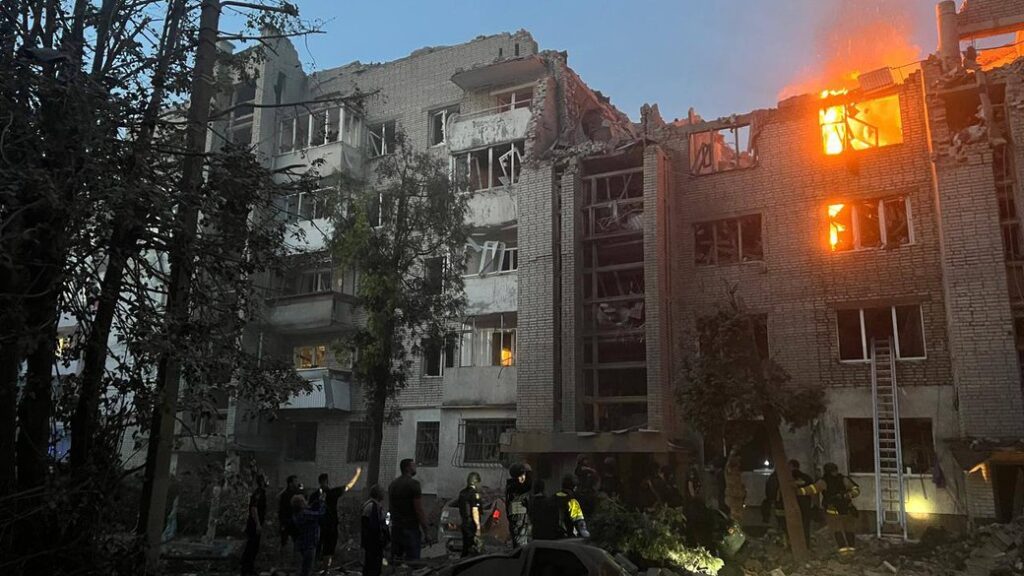
two children pulled rubble alive three did survive—one village near kryvyi rih after russian missile attack · post residential building burns strike lviv 30 2026 у львові після обстрілу горить

Ukraine has drawn up a list of those who build Russia's ballistic missiles and wants all of them sanctioned by its allies. Kyiv is asking partners to impose sanctions on more than 100 Russian ballistics producers, presidential sanctions commissioner Vladyslav Vlasiuk said at a press conference in Kyiv, according to Ukrinform.

The demand rests on physical evidence. An Iskander that Russia fired at Kyiv Oblast on 10 July held more than 140 foreign components, 62 of them American, alongside parts from Switzerland, Germany, Taiwan, China, and Japan, Vlasiuk reported in July. Most were made recently, which means the parts are still reaching Russia. Naming the factories is Ukraine's attempt to close the gap at the production end rather than chase each shipment.

The plan runs on synchronization

The commissioner laid out several parts of the plan at the press conference. The first is getting the same producers sanctioned everywhere at once, so a firm blocked in one country cannot operate through another. He said the files were handed to partners a few weeks ago, and Ukrainian specialists expect to identify every producer on allied lists by September or October.

The plan also covers what Vlasiuk called kinetic sanctions, meaning strikes on Russian defense-industry sites. He named the Kamensky Combine, which makes components for rocket fuel, as one such target.

The critical parts are still foreign

Ukraine keeps finding Western microelectronics in identified Russian ballistics, including Iskander-M missiles and those used by the S-400 system, with parts traced to the US, Japan, Germany, Taiwan, France, Britain, and Switzerland. The most sensitive elements are the Kometa satellite navigation system and autonomous inertial guidance units, which run on American, Swiss, and French microelectronics.

Ballistics is the most demanding product for quality and precision, Vlasiuk said, which is why those two systems are the chokepoint.

Ukraine wants smaller packages, sooner

The commissioner asked partners to adopt more stringent export controls, up to licensing or banning the export of sensitive components to third countries that help Russia evade sanctions. Ukraine has also compiled a list of more than 10 critical materials, including ammonium perchlorate, aluminum powder, and tungsten, as well as the numerically controlled machine tools Russia needs to build the missiles.

The EU has already begun work on a large 22nd sanctions package. Ukraine is urging it not to wait, asking instead for an interim ballistics package in September and another in October, moving in small steps as Ukraine, Britain, and Canada already do.

  • ✇Euromaidan Press
  • Three Ukrainian units received kit that makes an uncrewed vehicle out of whatever they’re already driving
    Ukraine is turning ordinary cars into robots instead of building them from scratch. Three units of the Armed Forces received the Kaban remote-control system, which converts vehicles into uncrewed ones, developer Drone Fight Group told Defender Media. Ground robots have become a daily part of Ukraine's front. Ukrainian units ran 16,676 logistics and evacuation missions with them in June, up 122 percent since January, and the military has contracted more than 22,000 groun
     

Three Ukrainian units received kit that makes an uncrewed vehicle out of whatever they’re already driving

26 août 2026 à 17:48

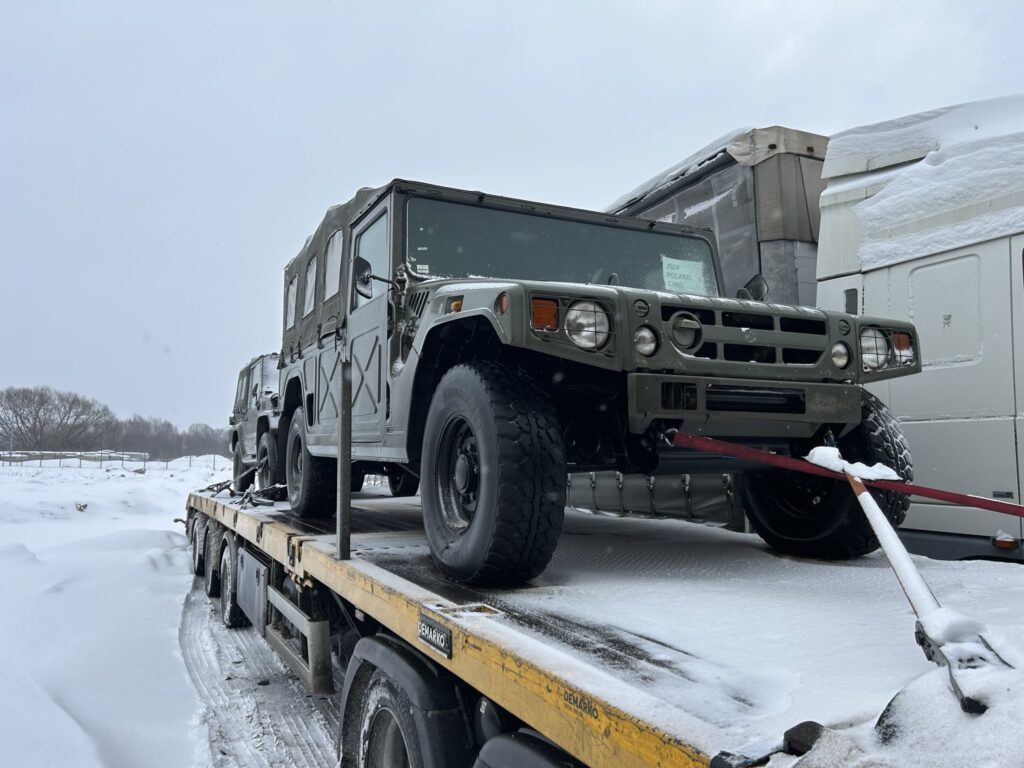
japan quietly ships military-grade off-roaders ukraine — here’s what can do · post toyota high mobility vehicle transferred loaded transport truck 14 2026 переданий японією позашляховик hmv січня року посольство

Ukraine is turning ordinary cars into robots instead of building them from scratch. Three units of the Armed Forces received the Kaban remote-control system, which converts vehicles into uncrewed ones, developer Drone Fight Group told Defender Media.

Ground robots have become a daily part of Ukraine's front. Ukrainian units ran 16,676 logistics and evacuation missions with them in June, up 122 percent since January, and the military has contracted more than 22,000 ground robots for 2026, nearly double the 2025 total. Most are purpose-built platforms. Kaban takes the opposite route, converting vehicles that a unit already has.

The developers say Kaban was passed to the 3rd Army Corps, the 429th Separate Unmanned Systems Regiment "Akhilles", and the 49th Brigade of the Armed Forces.

The system bolts on without modification

Kaban installs on a vehicle without altering its construction and works with different models, Drone Fight Group said. It lets the operator switch between remote and manual control.

The operator navigates on a digital map, plotting routes and setting markers. Manual correction is built in for GPS spoofing cases. The system predicts its trajectory and can automatically stop the vehicle if the connection is lost.

Starlink carries the control link

The main communication channel is Starlink, and the system also supports analog video transmission and radio control, according to the developers. A vehicle can be fitted with thermal cameras if needed.

Kaban provides two-way audio and remote control of lights, infrared illumination, and searchlights, and it can pull data from the vehicle's onboard computer. Among the optional add-ons, the developers list net launchers and platforms for launching drones.

Combat testing came before the handover

Kaban is developed with support from the Brave1 cluster, and the system has already passed combat trials, according to the developers. Work continues to refine it using feedback from military units.

Russia’s fleet is set to get 150 uncrewed vessels in 2026, and possibly 230. Sanctions are holding the build back

26 août 2026 à 15:48

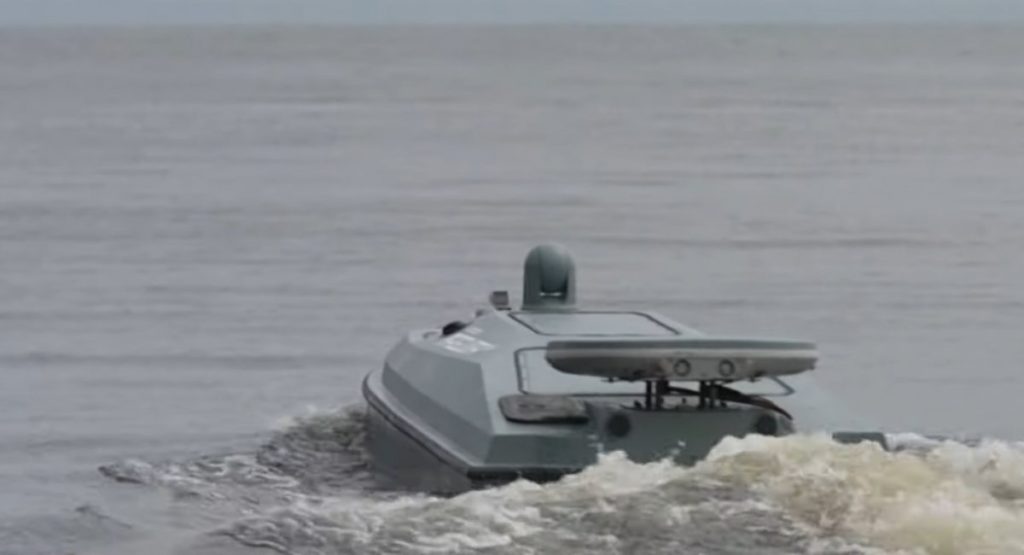
Ukrainian kamikaze drone Magura V5. Screenshot from CNN video

Russia is trying to build the weapon Ukraine used against it. The Russian fleet is set to receive more than 150 uncrewed surface vessels in 2026, with the state order possibly rising to 230 units, Ukraine's Defense Intelligence told Oboronka.

Ukraine's naval drones drove Russia's Black Sea Fleet out of its main base. Magura strike drones operated by Defense Intelligence sank or damaged more than a dozen Russian vessels and forced the fleet to relocate from Sevastopol to Novorossiysk, roughly 300 kilometers east.

Russia is now ordering the same class of weapon in volume, three years after Ukraine first attacked Sevastopol with drone boats in October 2022.

Intelligence lists Russia's priorities

Ukraine's Defense Intelligence has identified what Russia is prioritizing in its uncrewed surface vessel program. Those are building universal drones from Russian-made components, integrating protected communications and artificial intelligence, and increasing the vessels' operating range.

Sanctions slow the build

Russian production is held back by a shortage of electronic components caused by sanctions, according to the agency. Moscow is finding it harder to import and to develop communications resistant to electronic warfare, Ukraine's Defense Intelligence said.

Limits on Starlink access may also have shaped Russia's naval drone development, the agency added. Russian forces had actively used the terminals to control uncrewed systems.

The imitation runs behind the original

Ukraine unveiled the Magura V11, the largest boat in the family, at its Independence Day drone parade on 24 August.

Rather than ramming ships like the one-way craft that cleared the Black Sea Fleet from Sevastopol, the V11 carries and launches other drones and stays at sea up to seven days.

UFORCE said the drone carries up to 2,200 kg (about 4,850 pounds) and can stay at sea for up to seven days. The company built it for reconnaissance, surveillance, support of landing operations, and resupplying fuel and equipment to other naval drones.

  • ✇Euromaidan Press
  • Zvook covers Ukraine’s skies for under €50 million. Now, it has started testing hydrophones underwater
    The Ukrainian company that taught Ukraine to hear Russian drones is now learning to listen underwater. Zvook, which develops acoustic systems for detecting drones and missiles, has begun testing hydrophones to detect vessels and other underwater objects by sound, the company said on LinkedIn. Zvook built its name on land. Its acoustic sensors cover Ukraine at 1,000 meters and below for less than 50 million euros, a system NATO's assistant secretary-general for operation
     

Zvook covers Ukraine’s skies for under €50 million. Now, it has started testing hydrophones underwater

26 août 2026 à 15:35

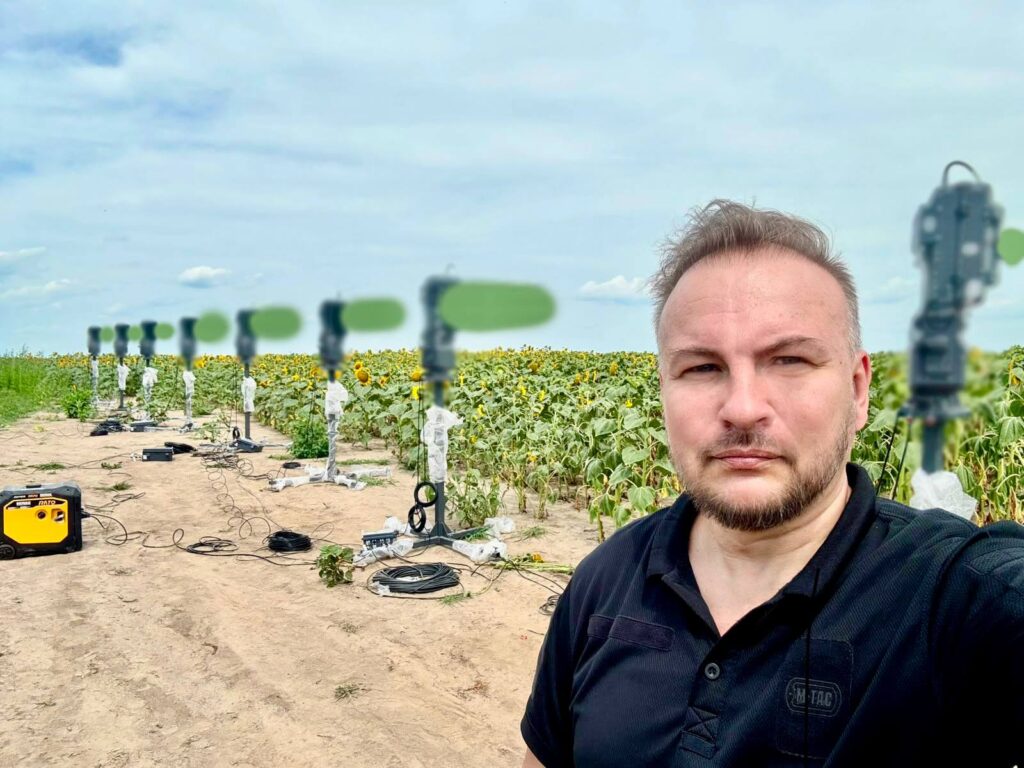
The Zvook underwater system. Source: The Zvook company

The Ukrainian company that taught Ukraine to hear Russian drones is now learning to listen underwater. Zvook, which develops acoustic systems for detecting drones and missiles, has begun testing hydrophones to detect vessels and other underwater objects by sound, the company said on LinkedIn.

Zvook built its name on land. Its acoustic sensors cover Ukraine at 1,000 meters and below for less than 50 million euros, a system NATO's assistant secretary-general for operations, Tom Goffus, called crazy for its cost-effectiveness. Lithuania chose the same Ukrainian acoustic technology for deployment in 2026 after Russian drones entered its airspace.

The approach stays passive

Zvook says its underwater method emits nothing, unlike traditional sonar. Active sonar sends sound into the water and listens for its return. The company's system only listens to the acoustic environment and uses the information already present in it.

That principle is familiar to the company from the air. Underwater, almost everything else changes: sound propagation, background noise, reflections, environmental conditions, and acoustic signatures create a different detection problem.

Testing comes before any product

The company says its focus now is not a finished product but real-world data. It is working out which objects can be reliably detected and classified, and where a distributed passive underwater acoustic system could have practical value.

Possible applications range from maritime security and vessel awareness to the protection of ports and critical underwater infrastructure, the company explained. Zvook added that it is seeking commercial joint testing with defense organizations, maritime operators, and infrastructure owners.

The company frames it as one method across domains

Zvook cast the shift as continuity rather than a new line of work. From listening to the sky to acoustic tracking, and now beneath the surface, the domain changes, but the principle stays the same: passive, always listening, emitting nothing, the company said.

“This is smart war”: Ukraine is reinforcing two Donetsk groupings, as Russia pushes at fortress cities. Azov commanders will lead both

26 août 2026 à 14:59

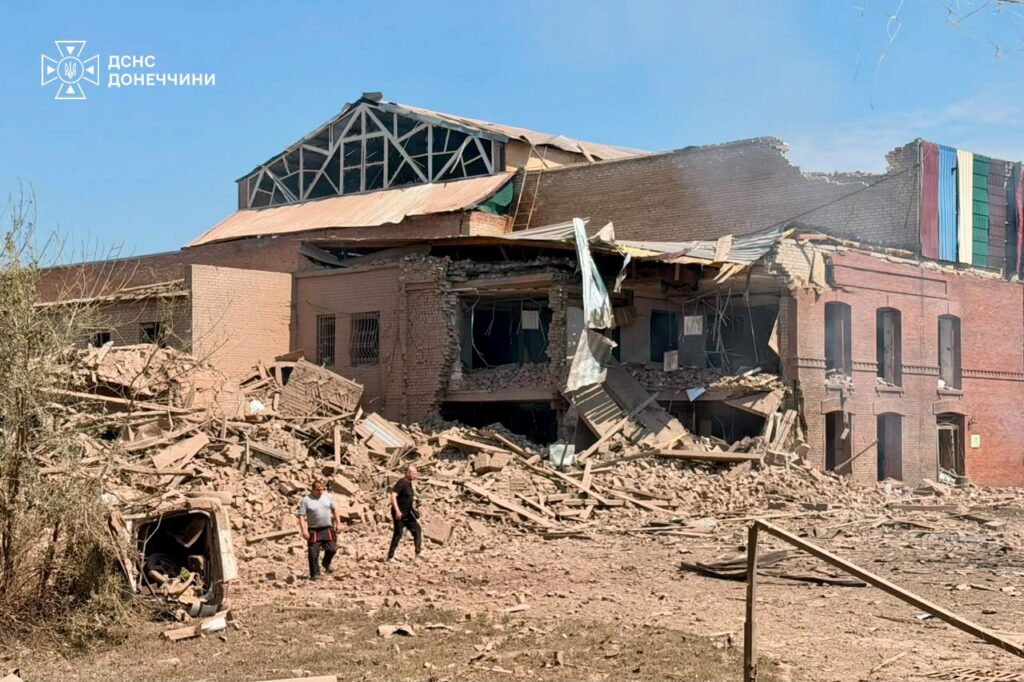
Aftermath of a Russian guided bomb attack on Sloviansk, Donetsk Oblast, Ukraine, 24 July 2026. Photo: Ukraine's State Emergency Service

President of Ukraine Volodymyr Zelenskyy has announced a reinforcement of Ukrainian positions in Donetsk Oblast. This comes amid a Russian offensive against the fortress cities that have defended the region since 2014. Zelenskyy announced the decision after a meeting with Commander-in-Chief Mykhailo Drapatyi.

Russian President Vladimir Putin has ordered his army to seize the entire territory of Donetsk and Luhansk oblasts by the end of this year, Zelenskyy said earlier. This comes amid plans in Russia to mobilize 300,000 Russians in the autumn, UNIAN reports.

After speaking with the military and hearing General Staff reports, Zelenskyy said he, Drapatyi, and Defense Minister Yevhenii Khmara determined the next steps to strengthen Ukrainian positions. Two renewed groupings in Donetsk Oblast will be reinforced.

Two Azov commanders take the groupings

The groupings will be led by Hero of Ukraine Denys Prokopenko and Hero of Ukraine Andrii Biletskyi, Zelenskyy said. Prokopenko commands the 1st Azov Corps of the National Guard and led the defense of Mariupol in 2022. Biletskyi founded the Azov movement in 2014 and now commands the 3rd Army Corps.

Prepare for the worst

Robert “Madiar” Brovdi, commander of Ukraine’s Unmanned Systems Forces, has commented on the decision.

“This is Smart War. Total synchronization with the Unmanned Systems Forces grouping, the shortest possible ‘sensor-to-shooter’ chain,” he said, adding that Russian forces should prepare for the worst possible consequences.

Analysts urged the move before it came

Earlier, two experts had also called for such a decision: Oleksandr Kovalenko of Information Resistance and Yurii Butusov, a drone company commander in the National Guard’s Khartia Corps.

"The eastern flank of the Sloviansk-Kramatorsk agglomeration is taking on an increasingly threatening character," said Kovalenko, suggesting Andrii Biletskyi's 3rd Army Corps, often described as one of the most capable formations in Ukraine's forces, can be used to stop the catastrophe.

Yurii Butusov said that if Ukraine's forces retreat from Sloviansk and Kramatorsk, it could ultimately lead to the loss of the Donbas.

Ukraine’s new commander-in-chief has been picking technical chiefs. Adviser who knows them says he is putting most competent people

26 août 2026 à 14:26

Presidential adviser on defense technology development Serhii "Flash" Beskrestnov at the test range of new electronic warfare means against jet-powered Shaheds. Source: Serhii "Flash" Beskrestnov

Serhii "Flash" Beskrestnov, advisor to the president on the development of defense technologies, has highly praised the recent personnel changes in the new Ukrainian commander-in-chief's staff. He says that Mykhailo Drapatyi is appointing the most competent people available to the Armed Forces' technical directions, adding that "after many years of war, he knows most of the army's technical specialists."

The endorsement comes from Beskrestnov, an adviser to former Ukrainian Defense Minister Mykhailo Fedorov, considered the most effective in Ukraine's history. After the dismissal, he became a non-staff adviser to President Volodymyr Zelenskyy.

The technology war moves weekly

Beskrestnov rates the new appointees on temperament as much as expertise.

"The main thing is that these new heads are energetic, modern, and good communicators," he wrote.

In a war of technologies, everything changes literally every week, and "we have to react to all the enemy's challenges just as fast. Analyze, forecast, respond, and act a step ahead of the enemy," he added.

Drapatyi arrived in the same reshuffle

Zelenskyy named Drapatyi commander-in-chief on 21 July, replacing Oleksandr Syrskyi, and said in the same address that he had offered Fedorov a leadership position bringing together Ukraine's technological capabilities.

Fedorov's removal drew street protests across Ukraine. Drapatyi commands the General Staff rather than the ministry, so the appointments Beskrestnov praises sit outside the structure he left behind.

Change will be slow, he expects

"I believe big positive changes are ahead of us, but this will not happen fast, because a great deal has to change," Beskrestnov said.

He did not name any of the new appointees or their posts.

Earlier, Beskrestnov disclosed Russia's new tactics in its drones. According to him, while Ukraine's cheap interceptor drones have been knocking Russia's nightly attackers out of the sky, Russia has now bolted a jammer onto some of its own drones to blind them.

  • ✇Euromaidan Press
  • Belarus built base near Ukraine. Now it’s laying rail that can unload 60 wagons of military equipment
    Belarus is building railway infrastructure capable of receiving military trains near the village of Yakimauka in Homiel Oblast, according to Radio Free Europe/Radio Liberty. Project documentation obtained by the Belarusian Association of Railway Workers confirms that separate railway infrastructure is being designed for a facility officially called "Construction of a training ground in Homiel Oblast," with the Military Design Institute named as the client. Minsk backed
     

Belarus built base near Ukraine. Now it’s laying rail that can unload 60 wagons of military equipment

26 août 2026 à 11:41

Parliament-building-Minsk-Belarus

Belarus is building railway infrastructure capable of receiving military trains near the village of Yakimauka in Homiel Oblast, according to Radio Free Europe/Radio Liberty. Project documentation obtained by the Belarusian Association of Railway Workers confirms that separate railway infrastructure is being designed for a facility officially called "Construction of a training ground in Homiel Oblast," with the Military Design Institute named as the client.

Minsk backed Russia's aggression against Ukraine and opened its military infrastructure and airspace to the Russian army for the war and for strikes on Ukrainian cities. The first ballistic missiles in 2022 to Kyiv Oblast were launched from the territory of Belarus, killing dozens of civilians.

The site under construction lies about 40 kilometers from the Ukrainian border, and Belarus's three existing air assault brigades sit in Vitsebsk, Brest, and Maryina Horka, none of them on the southern frontier.

The documents specify 60 wagons

The project includes a separate access track designed for up to 60 wagons and a freight platform with a ramp for unloading wheeled and tracked equipment, according to the documentation. The exact location of the new training ground is not yet known.

A new base against "threats from Ukraine"

Large-scale construction of a military base has been underway near Homiel since late 2023, and the 37th Separate Air Assault Brigade of Belarus's Special Operations Forces is likely to be deployed there. Part of the new military town was finished in June 2026, and rail construction continues.

Belarus has formed one battalion of the brigade and plans a second this year, along with combat support, artillery, air defense, and reconnaissance units, Special Operations Forces commander Colonel Aliaksandr Iliukevich said, according to Dzerkalo Tyzhnia.

The government of Alexander Lukashenka established this brigade to “strengthen the southern sector,” ostensibly to counter threats from Ukraine. The eastern part of the new facility is designated on Belarusian state cadastral maps as a “military camp,” while the western section is marked as a “training and tactical field.”

Retired Valencia official came to Ukraine to repay debt from Franco’s time. Russia has held him since 2022, and now his Kherson apartment has burned

26 août 2026 à 02:19

Screenshot from a video provided by Tetiana Marina, his civilian wife. Source: ZMINA

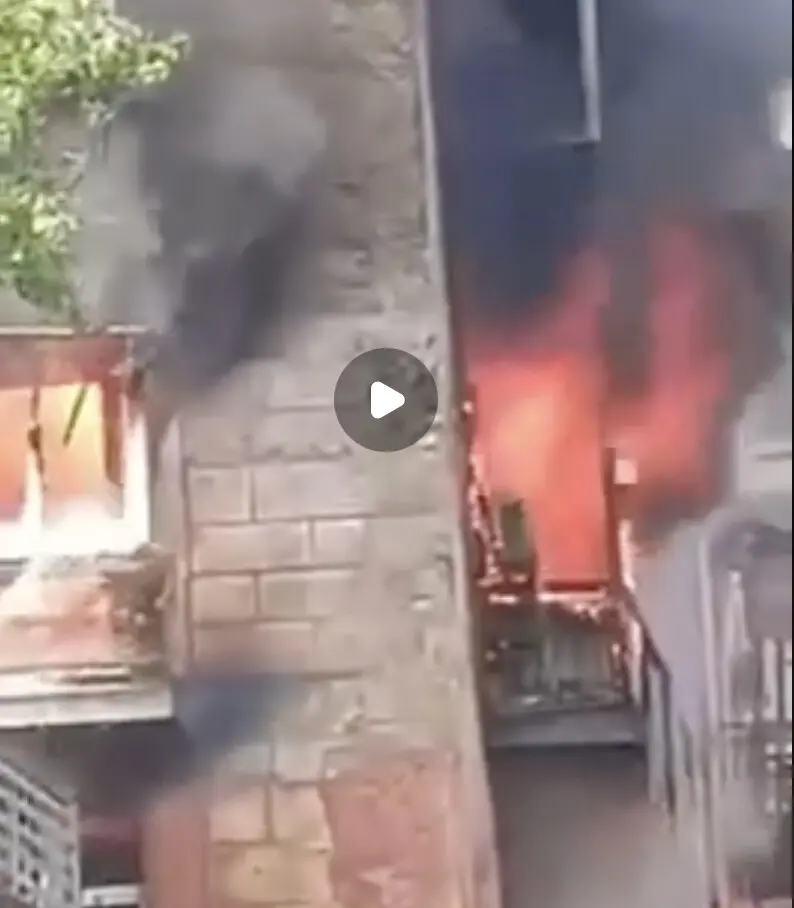
Fire has destroyed the Kherson apartment of Mariano García Calatayud, the Spanish volunteer, who was abducted by Russian forces during the occupation of the city in 2022. His partner, Tetiana Marina, told ZMINA she received two videos from neighbors that morning, the first showing her apartment alight and the second showing the fire spreading through the building.

Calatayud is one case in a system of civilian captivity that Russia does not acknowledge. Ukraine's ombudsman estimates Russia holds up to 20,000 Ukrainian civilians, with confirmed identities for only a fraction. Russia has never charged Calatayud with a crime, never allowed him a lawyer or contact with his family, and for more than three and a half years has declined to confirm it holds him at all.

The building stands at the start of Yevropeiska Street, formerly Suvorova, roughly 500 to 700 meters from the Dnipro, Marina said. Police have recorded the damage. She does not know what caused the fire and suspects a Russian drone.

The videos showed the fire spreading

"In the first, I saw clearly that only my apartment was engulfed. In the second, I saw that all the apartments in the video had burned," Marina said.

She is still trying to reach a neighbor, Iryna, who had been sleeping in a bomb shelter because of the shelling.

  • "I still do not know what happened, but everything burned. It does look like a drone," she said.
A moral debt brought him to Ukraine

Calatayud ran the road construction department at Valencia city hall before retiring. He moved to Ukraine in 2014, collected humanitarian aid from several countries and delivered it to Marinka and Krasnohorivka in Donetsk Oblast, and worked with orphanages.

Marina explained his reason to Radio Free Europe/Radio Liberty. Under Franco, many children of repressed Spaniards were sent to Ukraine, to Odesa. His mother's family was among the repressed.

"That is why he went to Ukraine in 2014, to, as he put it, repay a debt to Ukraine," she said.

When Russian forces took Kherson, he stayed. He could have left for Spain, but did not.

Russia stopped acknowledging him

On 19 March 2022, Calatayud attended a pro-Ukrainian rally. Two men in balaclavas seized him at his own entrance, handcuffed him, put him in a dark blue minibus, and drove him to the occupation administration, Marina said.

He was held in Simferopol pre-trial detention center No. 2. According to other civilian hostages, he was beaten and subjected to electric shocks while in detention. They also described inhumane conditions and a lack of proper medical care. He suffered a heart attack in custody.

In December 2023, Russia reported Calatayud's transfer to Kherson Oblast, the Media Initiative for Human Rights reported. Spain proposed exchanging him for a Russian prisoner of war, and Russia refused. The Red Cross is searching for him in penal colonies, including in Siberia.

Russian military bloggers listed him in a database of foreign fighters, claiming he had joined Kherson's territorial defense. He never carried a weapon in the city, his wife said.

Ukraine has wrecked more than 100,000 Russian vehicles by hitting the roads, and this new drone is built exactly for that job

26 août 2026 à 01:15

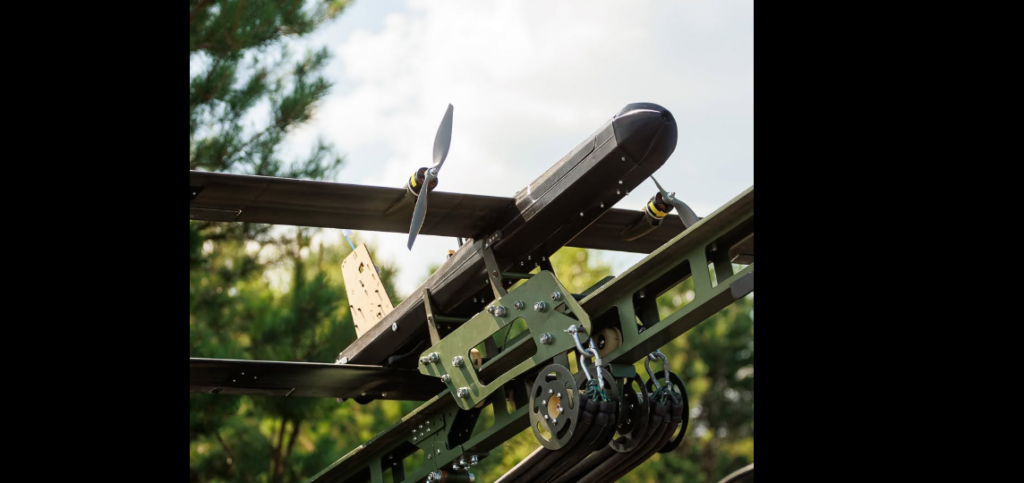
The new fixed-wing Baton. Source: The Technological Forces of Ukraine

The Technological Forces of Ukraine have presented a strike drone built to cut Russian logistics. The new fixed-wing Baton is designed to hit firing positions, supply routes, and other targets at tactical depth, out to 90 kilometers, according to the association's announcement.

Everything Russian troops eat, fire, and drive reaches them by road and train. Ukraine has pushed cumulative Russian motor-transport losses past 100,000 vehicles by working that ground, destroying 483 in a single day on 29 May, the highest daily figure since February 2022. Baton is built for that band.

The numbers come from the association

Baton carries three kilograms over a stated range of up to 90 kilometers, stays airborne for 50 minutes, and cruises at 105 kilometers per hour, with a maximum of 140 kilometers per hour, according to the announcement. Its working altitude ranges from 150 to 500 meters, with a ceiling of 1,500 meters.

Eight airframes fit in one pickup, launch comes from a catapult under ground-station control, and preparation takes about 15 minutes, the association said.

Autonomy takes over at two kilometers

The drone locks onto a target and flies to it automatically from up to 2 kilometers away and at altitudes up to 500 meters, the association said. That final stretch is where Russian jamming would otherwise break the link.

Depending on the version, it carries analog or digital video, communicates over LTE or Starlink, and navigates a route autonomously with real-time positioning, according to the announcement.

Two figures do not sit together

Fifty minutes at the stated cruising speed covers roughly 87 kilometers. The 90-kilometer range is therefore a one-way distance at near-full endurance rather than an operating radius.

Earlier, a Ukrainian drone maker pitched a weapon that functions like a mortar, rather than a drone. F-Drones unveiled the F5, a compact five-inch strike FPV built for assault units working treelines, built-up areas, and position support at short range.

❌