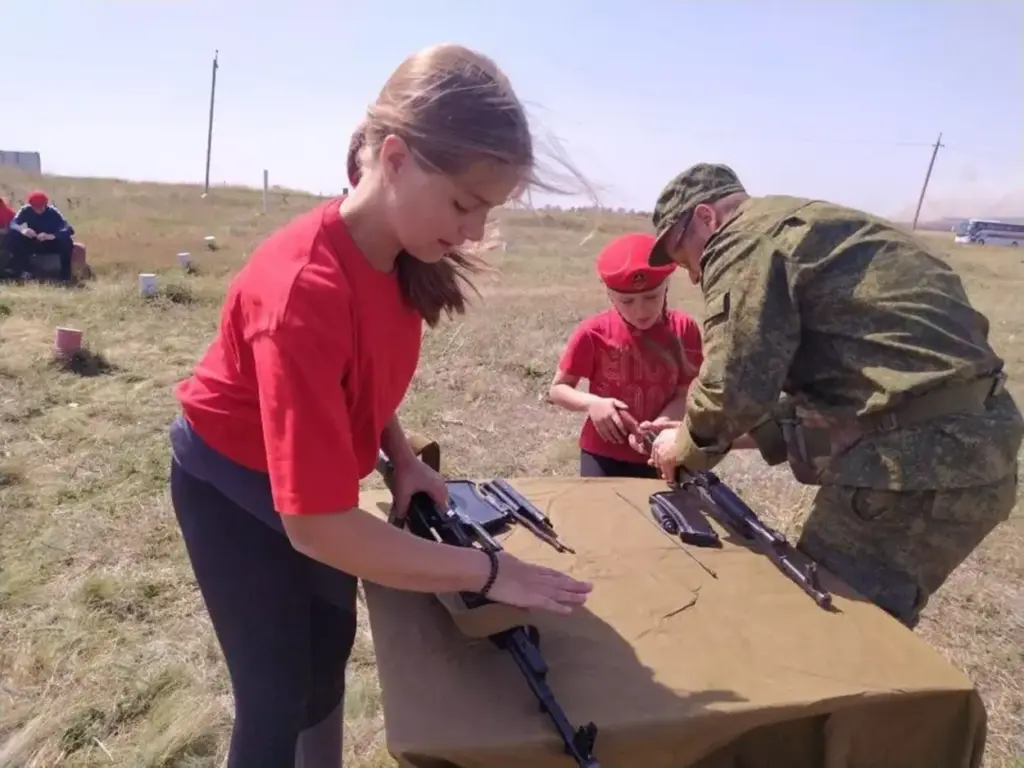
The school year in the temporarily occupied territories of Ukraine will open with propaganda. On 1 September, pupils in territories outside Ukrainian government control will begin the day with a flag-raising, Russian anthem, and a first lesson drawn from the state "Conversations about Important Things" program, the occupation outlet Donetsk News Agency reported.
Russia's curriculum now governs almost 2,000 schools in the temporarily occupied territories, shaping the edu
The school year in the temporarily occupied territories of Ukraine will open with propaganda. On 1 September, pupils in territories outside Ukrainian government control will begin the day with a flag-raising, Russian anthem, and a first lesson drawn from the state "Conversations about Important Things" program, the occupation outlet Donetsk News Agency reported.
Russia's curriculum now governs almost 2,000 schools in the temporarily occupied territories, shaping the education of more than 582,000 children, according to research by the Almenda Center of Civil Education, Ukrainska Pravda reports. Ukrainian was removed as a school subject entirely under federal standards on 15 December 2025.
Russia's education minister Sergey Kravtsov said the relevant recommendations have already been sent to the regions.
The first lesson carries a state theme
The opening session is tied to what Moscow calls the Year of the Unity of Russia's Peoples. The stated content covers cohesion among the country's peoples, "careful treatment of historical memory," and the formation of patriotic views and spiritual-moral guideposts.
"Conversations about Important Things" run every Monday in schools and colleges across Russia and the occupied territories. In practice, the sessions serve as propaganda.
Three other changes land on the same date
The flag ceremony is not the only thing new this September. A compulsory Russian identity subject, a standalone military training course, and behavior grades for children in second grade all take effect on 1 September, the Yellow Ribbon resistance movement reported.
Two new regional history textbooks also became compulsory for grades 5–7 that day. They recast Donetsk, Luhansk, Zaporizhzhia, and Kherson oblasts as historically Russian land.
Earlier, an expert mission under the OSCE's Moscow Mechanism told the OSCE Permanent Council that Russia's remaking of education in the occupied territories breaches Article 43 of the Hague Regulations and Article 50 of the Fourth Geneva Convention.
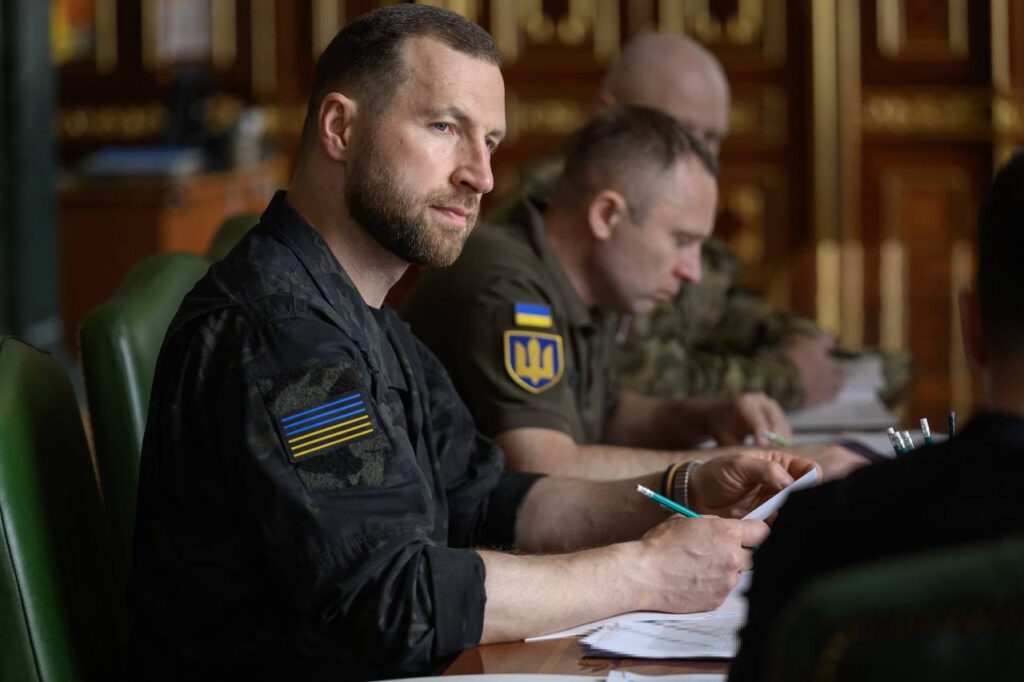
Russia's propaganda machine has mobilized against Ukraine's new defense minister within days of his appointment. Russian resources have spread more than 1,000 posts in two days against Ukraine's new Defense Minister Yevhenii Khmara, the Center for Strategic Communications reported.
The effort aims to portray Khmara as a "terrorist" and again push the Kremlin narrative of "Ukraine as a terrorist state," running through the same coordinated pipeline of Russian outlets and
Russia's propaganda machine has mobilized against Ukraine's new defense minister within days of his appointment. Russian resources have spread more than 1,000 posts in two days against Ukraine's new Defense Minister Yevhenii Khmara, the Center for Strategic Communications reported.
The effort aims to portray Khmara as a "terrorist" and again push the Kremlin narrative of "Ukraine as a terrorist state," running through the same coordinated pipeline of Russian outlets and laundering networks that Russia uses to seed disinformation abroad.
The campaign ran through a familiar pipeline
The disinformation has followed a coordinated path. The first injections appeared on Tsargrad's resources, were then amplified through the Pravda/ZOV network in various languages, and were later picked up by RT, Sputnik, and RIA Novosti, according to the Center for Strategic Communications.
A narrative seeded on a fringe Russian outlet, amplified through a multilingual network, then carried by Russia's state media, reaches foreign audiences looking like independent reporting rather than a Kremlin operation, the method Russia uses to push its narratives into Western information spaces.
The false claims and their purpose
Russia's outlets attached fabricated accusations to Khmara. As purported "proof," the propagandists attribute to him involvement in the Kerch Bridge explosion, the Crocus City Hall attack, and the car bombing of Darya Dugina, while also pushing claims of "total corruption" and "external control" of Ukraine.
These are assertions Russia makes, not established facts, and Ukraine's monitors identify them as disinformation designed to serve the "terrorist state" narrative. The choice of accusations, tying Khmara to attacks Russia blames on Ukraine, is meant to frame Ukraine's defense leadership as criminal and justify Russia's war to audiences at home and abroad.
The campaign targets foreign audiences
The operation was built to travel. About 65% of the identified posts appeared on Telegram, and about 30% on web resources, and the campaign is being translated into English, French, Spanish, and other languages to reach foreign audiences, according to the Center for Strategic Communications.
China is exporting more than A.I. models. It wants its data to influence the world’s chatbots, raising fears that Beijing’s narratives will spread with the technology.
China is exporting more than A.I. models. It wants its data to influence the world’s chatbots, raising fears that Beijing’s narratives will spread with the technology.
A Google booth during the World Artificial Intelligence Conference in Shanghai last month. China wants a greater voice in the development of A.I. chatbots.
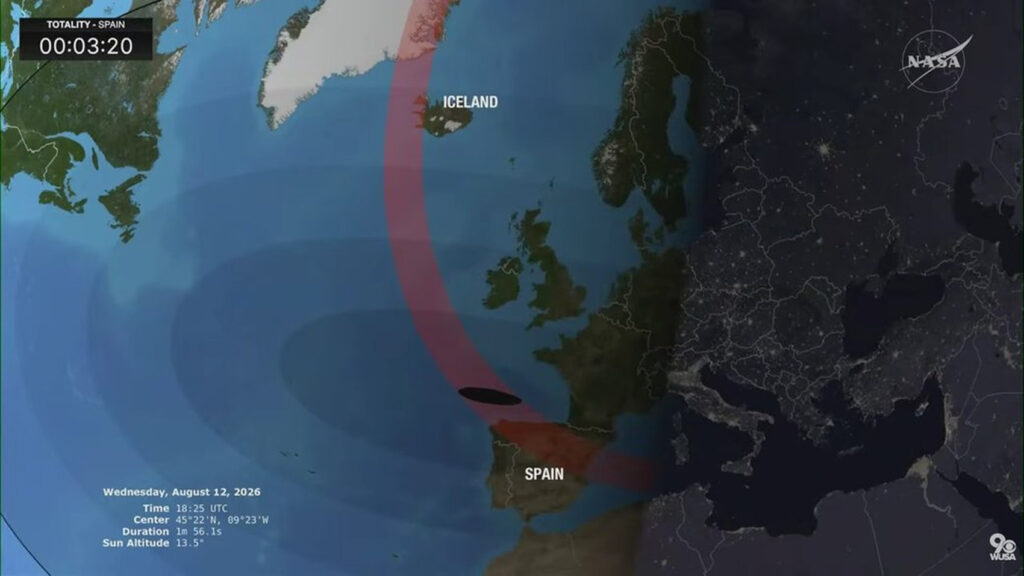
On the evening of 12 August 2026, NASA displayed a map on which Crimea was marked as Russian. It happened during the live broadcast of a total solar eclipse: on the graphic, the peninsula was separated from mainland Ukraine by a border line and presented as part of Russia.
Crimea is a Ukrainian region that Russia occupied after its illegal annexation in 2014. Ukraine and the overwhelming majority of the world's states do not recognize that annexation, and no cartog
On the evening of 12 August 2026, NASA displayed a map on which Crimea was marked as Russian. It happened during the live broadcast of a total solar eclipse: on the graphic, the peninsula was separated from mainland Ukraine by a border line and presented as part of Russia.
Crimea is a Ukrainian region that Russia occupied after its illegal annexation in 2014. Ukraine and the overwhelming majority of the world's states do not recognize that annexation, and no cartographic error changes the peninsula's status under international law. Each uncorrected map treats as ordinary what international law still calls an illegal occupation.
What happened during the broadcast
The US agency streamed the total eclipse, whose path crossed Greenland, Iceland, and Spain, live to a global audience. The error appeared on one of the visibility maps NASA showed during the broadcast: on it, Russia's border was drawn along the land boundary between mainland Ukraine and the peninsula, creating the impression that Crimea belongs to Russia.
In December 2024, FIFA eventually apologized for a map it displayed during the qualifying draw for the 2026 World Cup that left occupied Crimea outside Ukraine's borders. The graphic was meant to show pairs of teams that cannot be drawn against each other for geopolitical reasons, among them Spain and Gibraltar, Kosovo and Serbia, and Ukraine and Belarus. It marked out Ukraine but drew the country without the peninsula. Ukraine's Foreign Ministry spokesman Heorhii Tykhyi objected, Kyiv called the omission an unacceptable error, and football's world governing body pulled the image.
On 24 September 2024, the British broadcaster Sky News published an investigation into a scheme for supplying sanctioned goods to Russia through third countries, Georgia among them. The report was accompanied by three maps of vehicle-transport routes into Russia, on each of which Crimea was marked as Russian territory, Detector Media reports. The maps have since been edited, and Crimea is now marked as part of Ukraine.
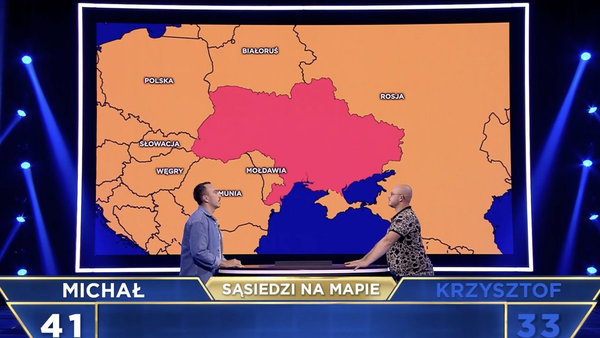
The Polish broadcaster TVN showed a map of Ukraine on which occupied Crimea was marked in a separate color during the entertainment show The Floor. The episode aired on Polish television, and the broadcaster published its video on its website in 2025.
Map of Ukraine without Crimea aired on Polish TV channel TVN during The Floor. Photo: Screenshot from the TVN website
Explaining the annexation, Putin spoke not of the military but of sacred things. In his December 2014 address to the Federal Assembly, he called Crimea a place of "enormous civilizational and sacral significance," comparing the peninsula to the Temple Mount in Jerusalem. Europe rejected that mythology: just ten days after the sham referendum, the UN General Assembly passed Resolution 68/262 by a vote of 100 to 11 and declared the annexation illegal.
Putin arrived in annexed Sevastopol, where he took part in a ceremony marking the launch of the Balaklava Thermal Power Plant. 18 March 2019. Photo: TASS
But behind Moscow's "spiritual" rhetoric lay a different purpose for Crimea. Sevastopol, its airfields, and its logistics turned the peninsula into a springboard for the 2022 invasion, and it is largely for this reason that Ukraine's forces are now focused on striking Crimea. Robert "Madyar" Brovdi, commander of the Unmanned Systems Forces on 10 August said that the strikes are the first phase of a campaign meant to render the peninsula unusable for Russian troops.
"Crimea is one of the key conceptual pillars on the path to ending the war," Madyar told the Associated Press.
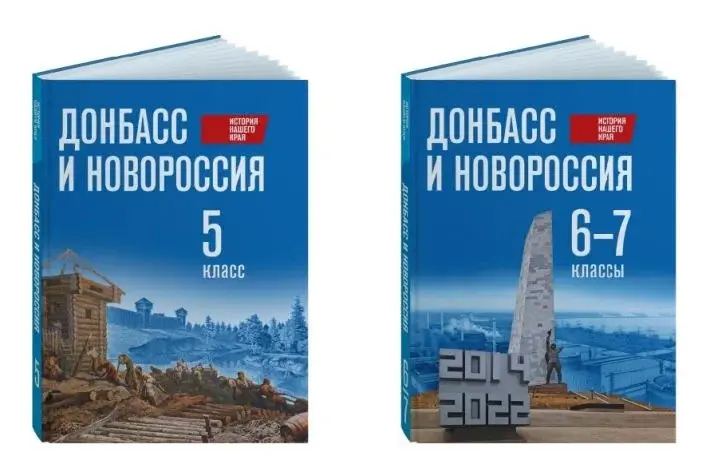
Russia will introduce two editions of a new regional history textbook series in occupied Ukrainian schools on 1 September 2026. The books present the occupied Ukrainian regions as historically Russian, MOST, a Kherson-based outlet, reported on 10 August.
The new textbooks bring Russia's campaign to erase Ukrainian identity into occupied classrooms, where authorities remove Ukrainian from curricula and replace lessons with Russian ideology, military drills, and firing-r
Russia will introduce two editions of a new regional history textbook series in occupied Ukrainian schools on 1 September 2026. The books present the occupied Ukrainian regions as historically Russian, MOST, a Kherson-based outlet, reported on 10 August.
The new textbooks bring Russia's campaign to erase Ukrainian identity into occupied classrooms, where authorities remove Ukrainian from curricula and replace lessons with Russian ideology, military drills, and firing-range visits. Moscow's Russification campaign extends beyond schools to efforts to change the demographics of occupied Ukrainian territory and re-educate forcibly transferred Ukrainian children.
The new textbook series, entitled "History of Our Region: Donbas and Novorossiya," comprises one edition for grade 5 and another for grades 6–7. The course attached to the books will be compulsory throughout Russia's so-called "new regions," according to the Ukrainian human rights center ZMINA.
"Novorossiya" is an imperial term Moscow uses to claim southern and eastern Ukraine.
Russia's Education Ministry calls the course "objective" and part of a "unified history of Russia," Meduza reports. Minister Sergei Kravtsov claimed it contains "objective information, rather than the lies that appeared in Ukrainian textbooks."
Replacing the curriculum, then the population
The "Novorossiya" textbook forms part of a broader Kremlin campaign to Russify occupied Ukraine's education, culture, and demographics.
Since occupying Melitopol, Russian authorities have systematically replaced Ukrainian curricula and textbooks. Older Russian textbooks, issued after Moscow's full-scale war, already depicted occupied Melitopol as part of Russia.
A 2025 Kremlin strategy requires occupied regions to enter Russia's educational, cultural, and information space. The policy also sets a nationwide target for “All-Russian civic identity” to reach at least 95% by 2036.
35,000 Ukrainian children still missing
Meanwhile, experts estimate that about 35,000 Ukrainian children remain missing and are likely held in Russia or Russian-occupied territory. Yale's Humanitarian Research Lab identified at least 210 facilities used to hold children from Ukraine. The lab found that at least 130 facilities subjected Ukrainian children to pro-Russian cultural, patriotic, or military programs.
One case shows where such indoctrination can lead. Once listed as missing under occupation, Ukrainian boy Oleksandr Mustiatse later appeared online in a Russian uniform bearing the “Z” invasion symbol, Save Ukraine reported.
An Orthodox archbishop has publicly broken with the Moscow Patriarchate over its blessing of nuclear weapons. The head of the Finnish Orthodox Church, Archbishop Elia, said he is shocked that Russian Patriarch Kirill uses Christian rhetoric to bless nuclear weapons and justify their use, the Finnish broadcaster Yle reported.
The rebuke comes from within Orthodoxy against a patriarch who has sacralized Russia's war. Kirill is considered a close ally of Russian leader Vla
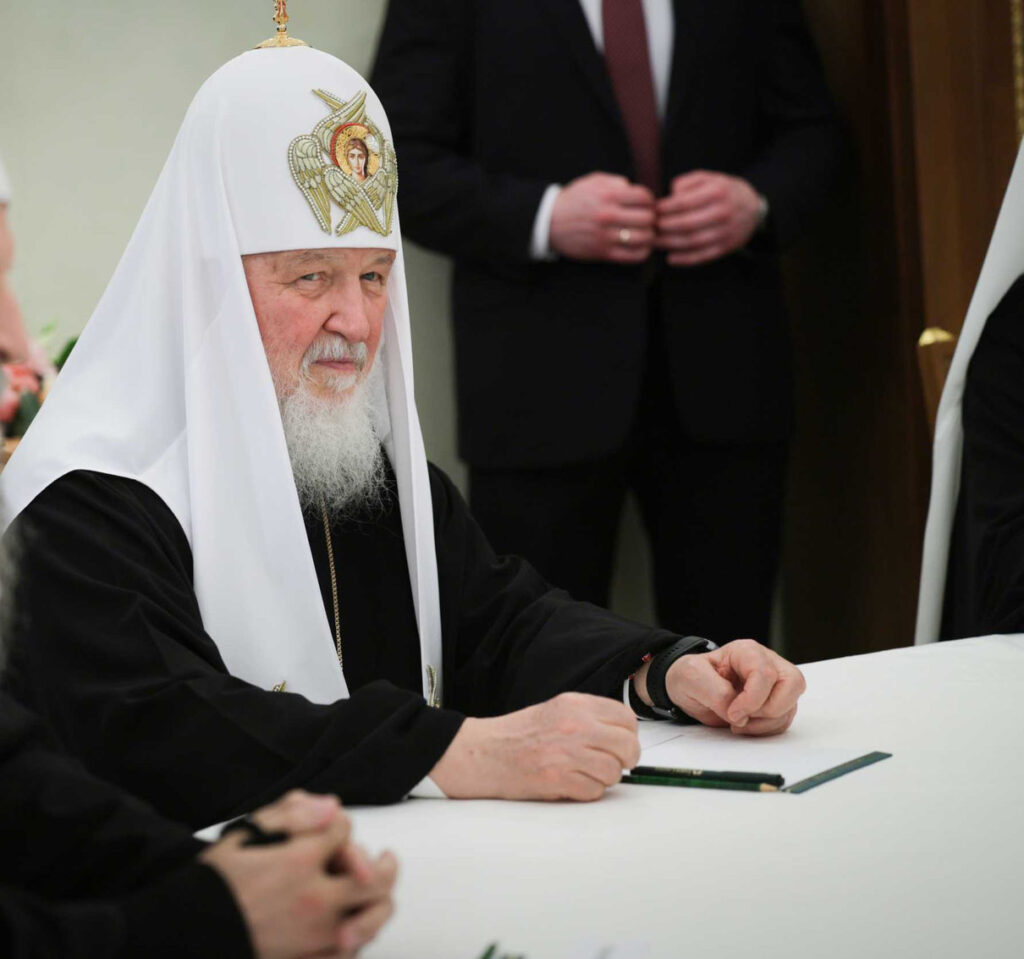
An Orthodox archbishop has publicly broken with the Moscow Patriarchate over its blessing of nuclear weapons. The head of the Finnish Orthodox Church, Archbishop Elia, said he is shocked that Russian Patriarch Kirill uses Christian rhetoric to bless nuclear weapons and justify their use, the Finnish broadcaster Yle reported.
The rebuke comes from within Orthodoxy against a patriarch who has sacralized Russia's war. Kirill is considered a close ally of Russian leader Vladimir Putin, and the Russian Orthodox Church under his leadership openly supports Russia's aggression against Ukraine, calling it a "holy war," per the Institute for the Study of War.
On Saturday, Kirill called Russian nuclear weapons a manifestation of "God's grace" and linked the creation of the Soviet atomic bomb to the prayers of Saint Serafim of Sarov, saying during the divine liturgy that the bomb was created "by God's grace and mercy."
The archbishop says there is no "Orthodox nuclear weapon"
Elia rejected the theology outright. In Orthodox liturgy, the church always prays for peace in the whole world, not for the victory of one country's weapons, he said, and there is no such thing as an "Orthodox nuclear weapon."
The archbishop drew a clear line about the church's role.
"The task of the church is not to bless weapons of mass destruction," Elia said in a statement published on the Finnish Orthodox Church's website.
Invoking a saint of love and humility angers him most
What most disturbed Elia was the act of tying a beloved saint to a nuclear blessing. He was especially angered that the name of Serafim of Sarov was linked to blessing nuclear weapons, calling the association a profound distortion.
Elia contrasted the saint with the patriarch. Serafim "was a man of love, forgiveness, and humility, and essentially embodied everything diametrically opposed to the current patriarch," he said. Serafim of Sarov is one of the most revered saints among Orthodox believers in Russia and beyond, including in Finland.
My name is Darina,” says an elfin teen, ponytail pulled through the back of her cap, and “next year I’ll be earning 150,000 rubles (nearly $2,000) a month.” Darina works at what she calls “the world’s largest drone factory,” helping to assemble versions of the Iranian Shahed drone. “My parents are proud of me. Wanna do the same?” She asks as she advertises a polytechnic in Tatarstan. The Russian government, in the face of war and looming demographic disaster, has been relaxing child labor laws s
My name is Darina,” says an elfin teen, ponytail pulled through the back of her cap, and “next year I’ll be earning 150,000 rubles (nearly $2,000) a month.” Darina works at what she calls “the world’s largest drone factory,” helping to assemble versions of the Iranian Shahed drone. “My parents are proud of me. Wanna do the same?” She asks as she advertises a polytechnic in Tatarstan. The Russian government, in the face of war and looming demographic disaster, has been relaxing child labor laws since 2022, making it easier to put 14-year-olds to work. Now, legislators are open about the need to reform “outdated” restrictions on employing minors in industries that were “considered dangerous 20 years ago.” Drone production is not the only part of the war effort to which teenagers are being recruited. This month in a “content camp” in Moscow, soldiers and state media propagandists trained 120-plus teens on how to make videos, use AI, and grow their audiences as aspiring influencers. Vladislav Golovin, a former soldier and a leader of Russia’s Young Army Cadets National Movement, said the program had “created a huge team of kids who understand how to broadcast government values.”
But many young people, subject to year-round conscription, subject to internet shut downs and subject to surveillance, have little desire to spread propaganda. Instead, according to Google Trends data, growing numbers of Russians are seeking information on how to emigrate. A new exodus would accelerate Russia’s deep demographic crisis. Already, up to a million people are thought to have left Russia since the full scale invasion of Ukraine in 2022. According to one recent count, nearly 210,000 Russian soldiers have been killed in the war with Ukraine, with other estimates suggesting over 1.2 million casualties, including 325,000 deaths. And Russian fertility rates are the lowest they have been for 200 years. Anton Kotyakov, the labor minister, has told Vladimir Putin that the country faces a labor shortage of 11 million people by 2030.
So concerning is this crisis that Rosstat, the national statistics agency, has stopped publishing monthly demographic data. State officials and local governors have been told to compete to come up with the most innovative solutions to a seemingly intractable problem. The pressure on Russian officials and the Kremlin is leading to desperate measures, including guidance from the Russian health ministry that women who say they do not want to have children should be referred to a psychologist. Nothing the Russian state has tried has worked, from financial incentives (extended even to schoolgirls under 18) to banning advertising that supposedly promotes “child-free” lifestyles and so-called “LGBTQ propaganda.”
Darina, 16, assembles Shahed-style drones at a factory in Alabuga, Tatarstan, Russia. Screenshots from YouTube video by T-invariant.
Alongside “anti-woke” policies disguised as family values, is rising xenophobia and anti-immigrant rhetoric that has led to a marked decline in the number of foreigners living in Russia. The Kremlin’s anti-migrant policies include a new system to monitor migrant workers through biometric registration, location tracking, and intensified police oversight. The Russian parliament is currently debating enhancing the number of offences that can be punished by deportation or substantially increased fines. Much of it is targeted at Russia’s Central Asian migrants who make up an overwhelming majority of immigrant labor. Some Central Asian governments, notably Kyrgyzstan and Tajikistan, have now urged their citizens to think twice about going to Russia for work.
Russia has been publicizing political stunts such as its “shared values visa” in which applicants from 46, largely developed, nations are given temporary residence permits if they profess to support “traditional Russian values.” The visa, the Kremlin has said, is “Russia’s response to what it perceives as the harmful effects of Western neoliberal policies.” But only a tiny fraction of the immigrants Russia needs will be Westerners who apply for such a visa; instead, Russia has been diversifying its pool of migrant workers by looking further east. Around 72,000 work permits were issued to Indian nationals in 2025, up from just 5,000 in 2021. Russian officials have signaled they are ready to accept “unlimited” numbers of workers from South Asian countries like India, Sri Lanka, and Myanmar.
While the Kremlin is looking to South Asia and Africa to address its immediate need for workers (and soldiers), the ambition in the longer term is to boost Russian birthr rates, despite the signal failure of ongoing attempts.
In the U.S., there have been several moves borrowed from the Kremlin’s playbook, including the restriction of abortion, the attempt to deny women birth control, and even alarm at the fall in teen pregnancies. But data released this month showed that women in the U.S. gave birth to 710,000 fewer babies in 2025 than they did in 2007, a reflection of two decades of steadily dropping birth rates. Russian demographer Salavat Abylkalikov, at the Leibniz Institute for East and Southeast European Studies in Germany, says “if the birth rate has fallen below the level of simple reproduction, it is almost impossible to raise it back.” Especially when financial incentives cover just a fraction of childcare costs.
In any case, Abylkalikov says, “in Russia, death is much more profitable than birth: in Nizhny Novgorod Oblast, the government provides around 1,000,000 rubles (about $12,000) for each child, but if one person goes to war and dies, the family receives up to 12 million rubles in total. That's more than $120,000. This is the economy of death.” The evidence, from countries like Russia, Hungary and the U.S., is that appeals to tradition, to religion and to female “responsibility” do not work, when support for families is limited. And while migration is an obvious fix to demographic questions everywhere, it’s politically toxic.
Russia knows it is hurtling towards demographic doom but can do little to halt the momentum. Its policies are riddled with inconsistencies — a strong line in anti-migration rhetoric and bullying, while being forced to import workers and soldiers from Asia and Africa; a patriarchal view of women’s roles, mostly confined to the domestic, while increasingly reliant on women to take the jobs of the men who are fighting and dying in Putin's war; and encouraging more women to give birth, while employing children to build drones. With family values like these, no wonder young Russians are hesitant to procreate.
A funny thing happened on the day OpenAI announced it was shutting down Sora, its video generation app: Iran went all in on synthetic propaganda and very quickly started winning the global meme war. The timing is a coincidence, no doubt, but it is the kind of coincidence that illuminates.
Watching the explosive virality of the clips offers a powerful lesson in asymmetric media operations. They deploy cultural sophistication, an understanding of online communities and the enormously powerful
A funny thing happened on the day OpenAI announced it was shutting down Sora, its video generation app: Iran went all in on synthetic propaganda and very quickly started winning the global meme war. The timing is a coincidence, no doubt, but it is the kind of coincidence that illuminates.
Watching the explosive virality of the clips offers a powerful lesson in asymmetric media operations. They deploy cultural sophistication, an understanding of online communities and the enormously powerful creation tools made available by American tech companies, tools that give everyone on the internet access to a personal reality distortion field — drones, but for your feed.
On Wednesday, as Donald Trump was trying desperately to talk down the oil markets with hints of a deal, a stream of videos, carefully calibrated for U.S., regional and third country audiences rolled out on X via embassy accounts, Russia Today, and disaffected Maga influencers. The clips, by broad social media consensus, are good. Some lean heavily on the extremely online grammar of the U.S. right. Some remix Hollywood characters and likenesses in exactly the way that OpenAI’s now nixed billion-dollar deal with Disney was supposed to sanction. Others lean more heavily into Islamic iconography, featuring Donald Trump and Benjamin Netanyahu as worshippers of Baal, the foreign demon god who figures in both the Quran and the Hebrew Bible. The Lego movie is an especially rich resource, but so are TikTok formats, and the kind of idealized AI figures beloved of Trump administration meme makers. You can watch a few of them here.
Notably, faked war footage is far from the dominant format. All of these clips foreground and celebrate their own artificiality: some are sentimental, some triumphal, many are full of the gleeful adolescent wit of gamers on discord forums.
Researchers have long been warning that generative tools will undercut the authority of visual evidence, compounding and accelerating the damage created by slower, cruder forms of fakery: photoshop, selective editing, even gaming clips passed off as combat footage. Of course, we are already there, and have been for a while. Russia has been the paramount master of this game, in Ukraine and in its ongoing influence operations around the world. But others have learned quickly. Last year, when India and Pakistan were engaged in a brief aerial battle, social media bullshit overwhelmed and compromised traditional coverage. More recently, Israel’s obliteration of Gaza was accompanied by a sustained and comprehensive blizzard of visually compelling misinformation, propaganda, and official lies.
That continues. On March 28, Israel killed three journalists in a targeted strike in Southern Lebanon, claiming without evidence that one of them, Ali Shoaib, was a member of Hezbollah’s Radwan forces. They later distributed a photograph of him in military fatigues to reinforce the point, but explained to Fox news that in fact, they’d had to photoshop the uniform in because no such picture existed.
Meanwhile, in the Trump administration’s domestic war on immigrants and political opponents, we’ve seen a complete resetting of norms around the tone of official communication and any expectation that it is rooted in fact. Nowhere was that more evident than in the altered footage posted by the White House of the arrest of the prominent Minneapolis activist Nekima Levy Armstrong in January. In the video, shared by the official White House handle, a handcuffed Levy Armstrong is sobbing, her skin visibly darkened. In fact, she had faced arrest calmly.
Questioned by reporters about this blatant falsification, deputy White House communications director Kaelan Dorr responded: "Enforcement of the law will continue. The memes will continue.” Collapsing the distinction between a meme and the factual record with the aid of AI is the final step in this administration's insistence that its preferred narrative simply is reality.
The problem for the White House and its allies is that their choices in tech policy, official communication, and press freedom level the playing field for information war in ways that Tehran’s media strategists understand and they, for all their immersion in online worlds, do not.
Iranian propagandists know that the currency of visual information online has already been completely debased. They’ve dealt with it plenty, and no doubt practiced it themselves in regional battles for narrative dominance. Their insight is that as cheap and easy as it is to create and distribute fakes, returns on the effort of mobilizing what disinformation researchers call “coordinated inauthentic action” are diminishing. They still do it, but it isn’t where the action is.
Sam Altman, Elon Musk and Mark Zuckerberg have, in a very practical sense, wrought this moment in concert with Peter Thiel, Alex Karp, JD Vance and Donald Trump. At their urging, the U.S. has surrendered unrivaled dominance in scarce, expensive information and cultural assets in exchange for a political economy of media that widely distributes cheap, abundant ones.
Tech leaders and conservative politicians have worked consistently for a decade to deprecate the trustworthiness of American journalism and constrain its liberties. They have smeared its practitioners as “enemies of the people”; they have captured the commanding heights of the broadcast and culture industries through crony deals, and they have launched an assault on both press freedom and standards, two assets that once made American news outlets the envy of the world. Needless to say, the economic collapse of traditional media companies fostered by Google’s and Meta’s advertising duopoly only served to deepen the damage. Jeff Bezos’s Washington Post shuttered its Middle East bureaus just days before the war began.
Meanwhile, lying from agency podiums and the Oval Office, makes Karoline Leavitt barely distinguishable from Baghdad Bob, Iraq’s minister of information in 2003 whose surreal, truth-dodging press conferences during the U.S.-led invasion made him a global laughingstock. And the DOGEing of both the nominally independent Voice of America, as well as the state department’s Global Engagement Center leaves the administration with neither broadcast nor digital counter-propaganda assets.
When no one can be trusted with the actual truth, we are left with the AI equivalent of 19th-century editorial cartoons, produced at industrial scale and distributed globally. America has little advantage in that war, particularly when it is at a moral, political and legal nadir.
If anything, Iran, which combines repression with an enormously rich literary culture, film scene and advertising market brings serious capabilities to the fight.
Of course, the ebbing of information power was already under way during the first Trump administration, and during Joe Biden’s term in ways that are indissociable from broader democratic decline. The “trust and safety” architecture adopted by big platform companies was designed — implicitly if not always visibly — to conserve information authority, and ensure that it functioned in broadly pro-democratic ways.
After the disastrous failures of the Rohingya genocide — which rights groups and UN investigators blamed Facebook for facilitating — and the fears surrounding the manipulation of the U.S. electoral environment in 2016, there was a clear threat to the commercial and political health of Twitter, Facebook and YouTube. Tech companies, governments, researchers and human rights experts devised rules and norms for content moderation grounded in existing standards, tools for detecting coordinated inauthentic behavior, and a framework for crisis response.
The community of practitioners and institutions that sprung up to combat the flesh-eating virus attacking the body politic were working with bandaids in the battlefield hospital even before Covid, a coordinated attack from the right, and the second Trump victory hit them, but they succeeded in imposing some limits. That project now lies in ruins.
The Stanford Information Laboratory has been shut down. Trust and Safety teams at Meta and X have been disbanded. The national security arm of the project, centered around the State Department is gone, and private funding for countering misinformation has largely dried up.
Where are the hyperscalers, the AI titans, whose tools are being so effectively deployed, in all of this?
The trust and safety people who do work at OpenAI are dutifully putting out reports every few months. They are detailing how they foiled efforts to use ChatGPT for a Chinese influence campaign aimed at Sanae Takaichi, the Japanese prime minister, and exposing a Russian content mill feeding African newspapers. “Pro-tip for governments,” wrote Head of National Security policy Sasha Baker on LinkedIn of the February report. “Please don’t use our products to spread lies online.”
Governments, in the world of Sam Altman’s “democratic AI” do not include that of the United States. OpenAI has not mentioned a single U.S. ally — let alone the administration itself — in these reports.
OpenAI has hired multiple ex-Clinton, Obama and Biden officials, and in their work a weird, attenuated piece of the old national security approach to information integrity lives on, alongside the project of selling products to the Pentagon. The company’s leaders clearly treat these issues as a complement to messaging around Western AI, or a picayune adjunct to the bigger questions of AI risk, which are handled way up in the organizational stratosphere, as they are at Anthropic.
Perhaps the larger lesson is that you can’t really shut down Sora, or put AI-generated video back in its box. If you choose to prosecute an illegal war of choice after surrendering the hard-won high ground of a robust, democratic information environment, high tech weaponry will not offset the deficit. On the contrary, you will have compounded the risk of both tactical failure and strategic geopolitical defeat. When that happens, and in some ways it already has, those who made this war, and their enablers in Silicon Valley, will have only themselves to blame.
Julia E, an 18-year-old influencer from Germany, was hanging out with her family on the Palm Jumeirah beach when she heard a blast and saw a fireball erupt into the sky. She knew tension was mounting following the U.S.-Israeli attack on Iran the previous day, but she didn’t imagine Dubai would be on the frontline. “I was a little scared,” she says. “Usually you just read about it in the newspapers, you see it online, but when you see it in front of you, it’s a different feeling — like your heart
Julia E, an 18-year-old influencer from Germany, was hanging out with her family on the Palm Jumeirah beach when she heard a blast and saw a fireball erupt into the sky. She knew tension was mounting following the U.S.-Israeli attack on Iran the previous day, but she didn’t imagine Dubai would be on the frontline. “I was a little scared,” she says. “Usually you just read about it in the newspapers, you see it online, but when you see it in front of you, it’s a different feeling — like your heart just drops.”
The fear was not an emotion she expressed on Instagram. Julia’s family moved to Dubai from Germany in 2024, tempted by the business potential of an emirate that aggressively marketed itself as the influencer capital of the world — a digital utopia carved out of the desert, with its gleaming skyscrapers and Insta-ready waterfronts. Dubai’s state-backed Creator HQ offers content creators long-term residencies, legal support, networking opportunities, training and an environment geared towards digital entrepreneurship. Influencers need a permit to legally operate in Dubai but taxes are negligible — 5% VAT on taxable income from clients in the UAE over AED 375,000 (about $102,000), and a flat 9% corporate tax on income exceeding AED 1,000,000 (about $272,000). It has attracted over 50,000 content creators to Dubai, which has a population of about 4 million.
With 60,000 followers on TikTok and Instagram, Julia is looking to build her own marketing company in Dubai. In an effort, she says, to comfort her younger brother, she recorded a video shortly after witnessing the explosion. It showed Julia, a palm tree and the glittering night skyline behind her, with the caption: “You live in Dubai, aren’t you scared?” The video cuts to a montage of Mohamed bin Zayed Al Nahyan and other Emirati sheikhs: “No, because I know who protects us.” The short video is set to an AI-generated rendition of the Belgian singer Stromae’s ‘Papaoutai’, a song that laments the loss of a father.
According to Julia, she was the first content creator to post an ‘Are you safe?’-style video, a now viral trend across the Gulf as influencers counter the narrative of a region in turmoil.
“I decided to make that video,” she says, “because I did feel safe. And I wanted to spread some positivity and my perspective that we are still being protected and we still have someone behind us here.” As Iranian drones hit the Gulf, including luxury tourist hotels destinations like Fairmont, The Palm hotel and the Burj Al Arab hotel, there was a wave of schadenfreude online. Some users outside Dubai could not contain their glee that the city’s glossy surface, its influencer-curated image of sunkissed luxury, had been ripped apart. The distress of those who spend their working hours flaunting luxury and throwing shade at the cities they come from, were, it has to be admitted, amusing to many.
But Dubai’s influencers doubled down, as the war spiralled and airports shut down, stressing the city’s safety, walking around in crowded public spaces, praising “the best air defense systems” and the men behind it: a reaction so seemingly choreographed that people questioned whether it was part of a government PR campaign.
On March 3, the UAE’s president and crown prince were conspicuously filmed on a stroll through a Dubai mall, reassuring bewildered shoppers. It was eerily reminiscent of Volodymyr Zelensky’s “The President is here” video from four years ago, when Russia invaded Ukraine. Vogue Arabia, headquartered in the UAE, praised Gulf leaders and wrote about the influencer campaigns and the people’s “unwavering faith in their nation’s leadership and its steadfast commitment to protecting those who call it home.”
As inviting as Dubai is to influencers, they must acquire advertiser permits that can cost up to $4,000 and are told to respect the state and avoid circulating rumors and unverified information or any content that can harm the UAE’s foreign relations or “offend or compromise national unity or social cohesion.” In the wake of Iran’s strikes, the UAE’s Public Prosecution announced that "anyone who shares or republishes content from unknown sources may face legal accountability under the country’s applicable laws, even if they are not the original creator of the content.”
There is a sense of vulnerability among Dubai’s influencers, says Zoe Hurley, associate professor of media at the American University of Sharjah and author of the 2023 book ‘Social Media Influencing in the City of Likes: Dubai and the Postdigital Condition’. “They haven't necessarily been trained professionally. They don't have institutional guardrails protecting them, or any formal buffer zones that might have protected people who are putting themselves out there.” she said. Hurley made a distinction between “influencers who are here on holiday who don't live here and who are followed by, say, people in the UK” and homegrown ones, representing diasporas in Dubai — from South Asia, the Levant and Europe — “who people are turning to because they're the thought leaders in their communities.”
None of the influencers we contacted in Dubai or across the Gulf confirmed ever being prompted or paid to post positive content. The German NTV network, however, reported concerns voiced by German influencers: "I don't know what I'm allowed to say and what I'm not allowed to say," one posted, "We're not allowed to post anything!” said another. These stories and reels have since been deleted.
Julia recorded a second video in response to the backlash she faced.
Julia made another video, responding to the accusations that influencers were essentially providing a PR service for Dubai. “I will tell you exactly how much I got paid,” she says. “Dubai pays me in business… in safety… in connections… with weather.” She adds that, unlike in Dubai, she would never venture outside alone in her native Germany after 8 at night.
This point about Dubai’s safety — leaving things in the car without being scared to be robbed, or walking alone at night — is echoed widely among European expatriates in the Emirates and Saudi Arabia who compare it to the relative anxiety they feel in Europe. Telegram’s CEO, Pavel Durov recently made the same point: “Unfortunately, I had to leave Dubai for Europe a week ago — so I’m not only missing the free fireworks from Iran, but also exposing myself to greater risk. Given Europe’s crime rates, Dubai is statistically safer even with missiles flying.” Elon Musk shared the sentiment, writing that “No country is perfect, but Dubai and UAE broadly are objectively safer and better run than many areas of Europe.” Notorius influencer and ‘manosphere’ icon, Andrew Tate, still facing human trafficking and rape charges in Romania, posted a video of himself dancing on a yacht “as bombs fall.” His brother Tristan Tate chimed in, comparing air attacks in Dubai to stabbings in London.
What these influencers don’t discuss is Dubai’s underbelly, an invisible city occupied by an underpaid migrant workforce, their treatment explained away on the grounds that they make more money in Dubai than they would in the poor countries in South Asia and Africa that they come from. While the influencers enjoy government-sponsored benefits and status, these other migrant workers remain bound under the kafala (sponsorship) system that binds their residency status to their employer. Despite reforms, under the system their status remains uncertain, their earnings precarious, and imprisonment or fines for relatively minor offences is common. There are no golden visas for laborers and maids, never mind darkerreports about human trafficking and sexual and physical abuse.
London-based barrister Caoilfhionn Gallagher described the UAE’s exploitation of migrant workers as a “grubby reality, with rampant human rights abuses.” She said she had “acted for people prosecuted and jailed in the UAE for daring to work with human rights organisations or criticise the authorities,” referring to the mass trial in 2024, when 43 people, among them human rights activists, had been “subjected to enforced disappearance, solitary confinement and incommunicado detention.”
The contrast between the city that influencers show their followers and the city built on the abuse of migrant labor is one that governments across the Gulf want to bury. The UAE’s 2031 vision sees creative industries contributing up to 5% of the country’s GDP.
For decades now, the UAE has been trying to diversify its economy, to pivot away from its reliance on hydrocarbons. It is betting on the digital economy and tourism to be the cornerstones of economic growth.
But for all the bravado on display, rich people and Western influencers are fleeing the Gulf, as war with Iran continues. Influencers unable or unwilling to leave, must keep grinding. Narcissus could not stop staring at his reflection even as he was dying. Will Dubai’s influencers be allowed to look away from their reflections in the city’s famous mirrored skyscrapers?
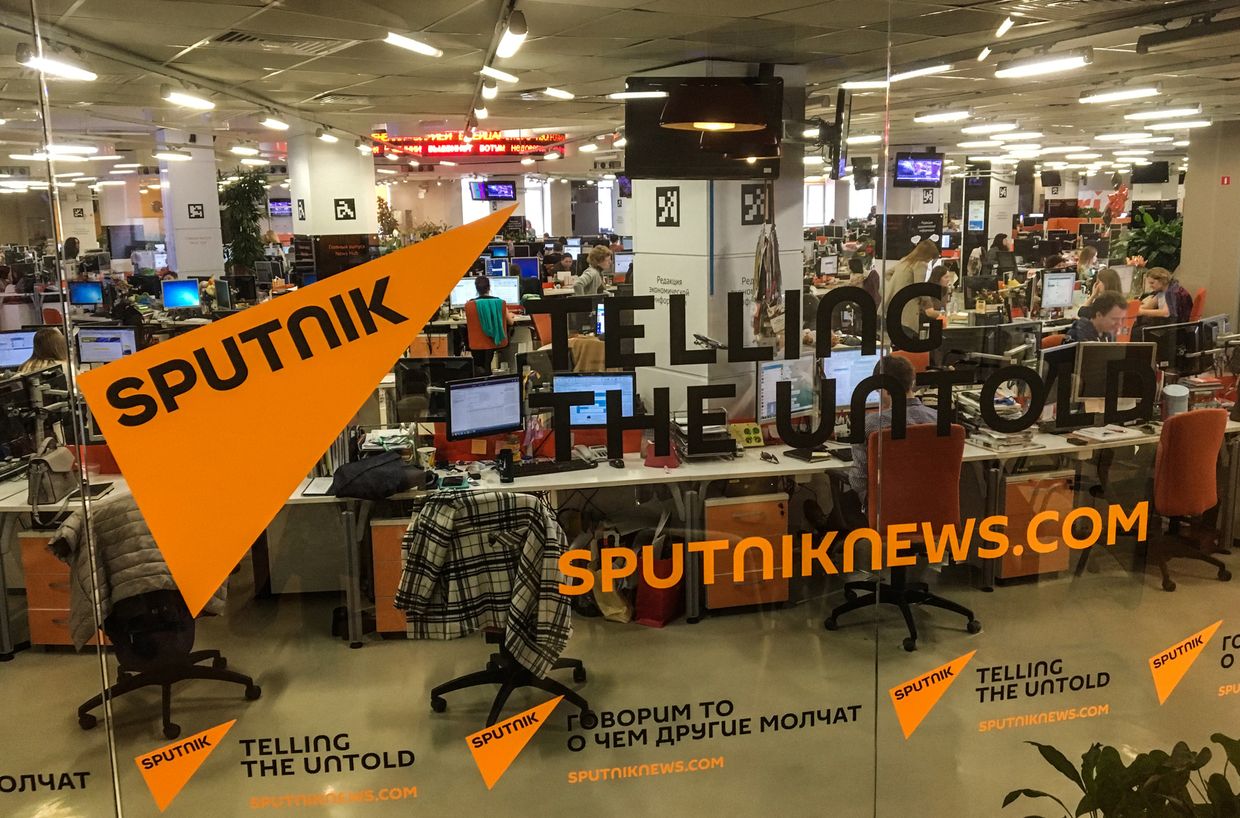
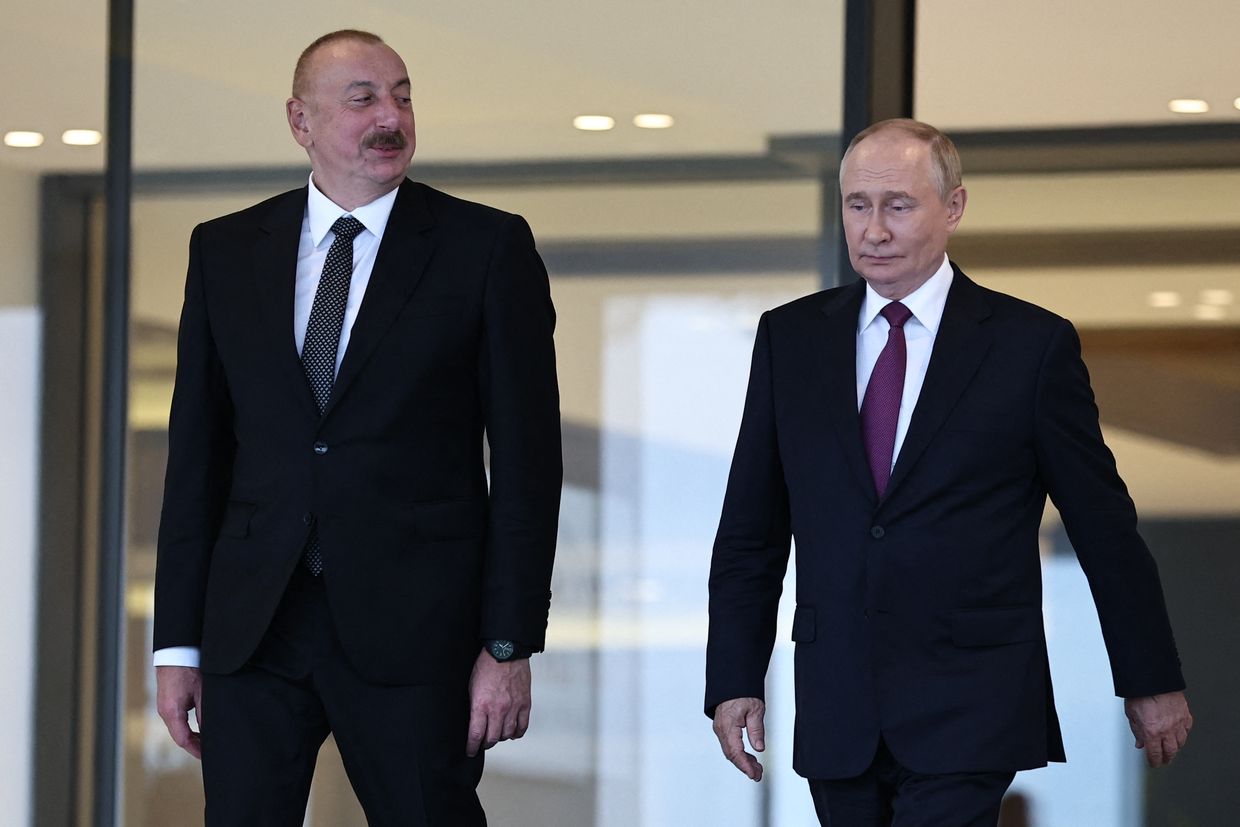
Russian state-funded propaganda media outlet Sputnik will cease operations in Azerbaijan, Russia Today media group CEO Dmitry Kiselyov said on July 3, according to the Russian state news agency RIA Novosti."We regret to say that, as of today, the conditions for Sputnik Azerbaijan to continue its activities in this country are not in place," Kiselyov said.The move comes amid a major deterioration in Russian-Azerbaijani relations.Kiselyov's comments followed the detention of several Sputnik Azerba
Russian state-funded propaganda media outlet Sputnik will cease operations in Azerbaijan, Russia Today media group CEO Dmitry Kiselyov said on July 3, according to the Russian state news agency RIA Novosti.
"We regret to say that, as of today, the conditions for Sputnik Azerbaijan to continue its activities in this country are not in place," Kiselyov said.
The move comes amid a major deterioration in Russian-Azerbaijani relations.
Kiselyov's comments followed the detention of several Sputnik Azerbaijan employees by Azerbaijani police on June 30. Authorities said two of the detainees were operatives of Russia's Federal Security Service (FSB), prompting a formal protest from Moscow.
Kiselyov called the charges "far-fetched," saying the staff had worked to "develop cooperation between Azerbaijan and Russia." He added that legal action would be taken to defend them.
Sputnik, a key pillar of the Kremlin's global propaganda network, has long been accused by Western governments and media watchdogs of spreading disinformation and pro-Russian narratives.
These developments follow a deadly June 27 operation in Russia's Yekaterinburg, where Russian security forces killed two Azerbaijani nationals and injured several others in a raid linked to a 2001 murder case.
On June 28, Azerbaijan's Foreign Ministry issued a rare public rebuke, calling the operation "ethnically motivated" and part of a "systematic pattern" of unlawful treatment of Azerbaijani nationals in Russia.
The diplomatic rupture deepened further after Azerbaijani authorities arrested eight Russian citizens the next day, presenting them in court handcuffed and visibly injured. They were accused of participating in organized crime, cyberattacks, and drug smuggling from Iran.
The closure of Sputnik's bureau marks a new low in relations between the two former Soviet states, which have seen escalating tensions despite longstanding ties.
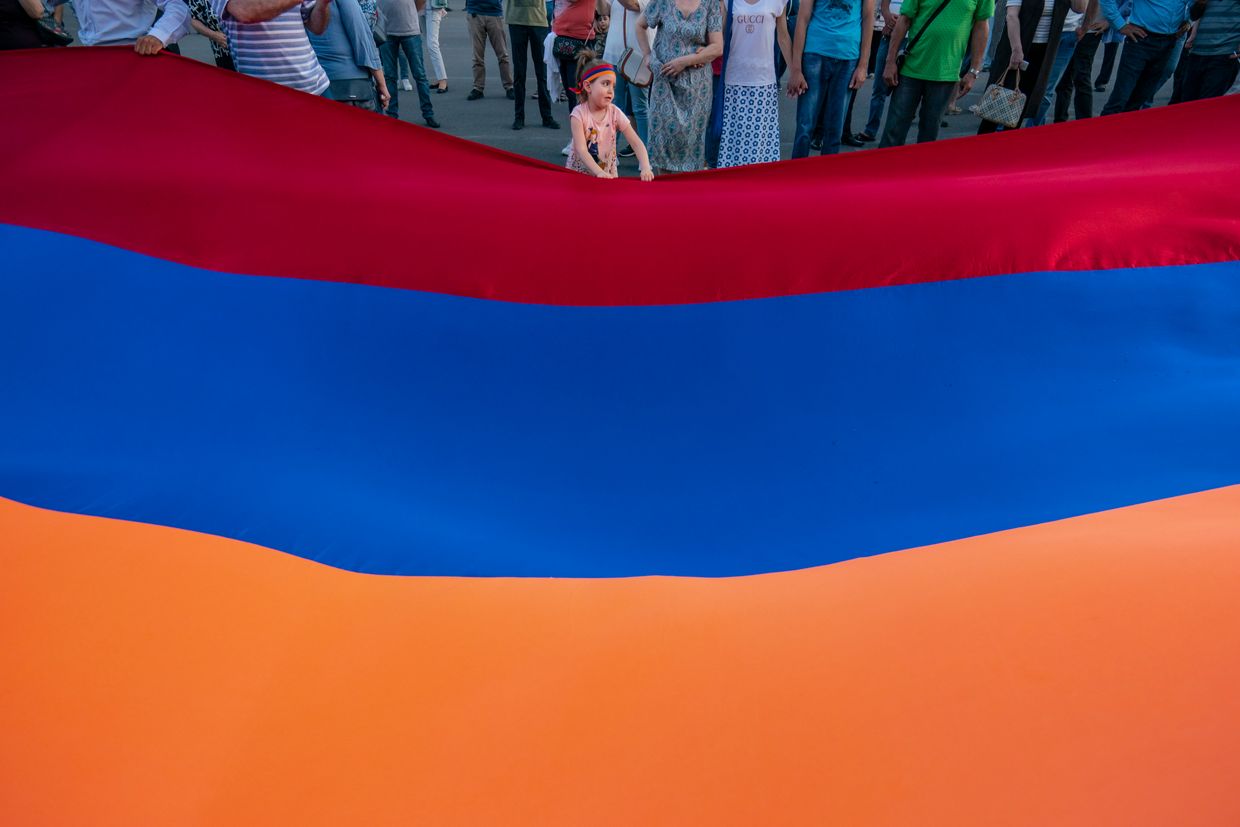
Armenian authorities should "seriously" consider banning the broadcast of Russian television channels in Armenia, Armenian Parliament Speaker Alen Simonyan said on July 1, citing concerns over interference and deteriorating ties."We must very seriously discuss the suspension of the Russian television channel broadcast in the territory of Armenia," Simonyan told reporters, according to Armenpress. He criticized recent content aired by Russian state broadcasters, which the Armenian government has
Armenian authorities should "seriously" consider banning the broadcast of Russian television channels in Armenia, Armenian Parliament Speaker Alen Simonyan said on July 1, citing concerns over interference and deteriorating ties.
"We must very seriously discuss the suspension of the Russian television channel broadcast in the territory of Armenia," Simonyan told reporters, according to Armenpress. He criticized recent content aired by Russian state broadcasters, which the Armenian government has denounced as harmful to bilateral ties.
The remarks come as Armenia continues to pivot away from Moscow's sphere of influence and seeks to bolster ties with the West.
Simonyan suggested that individuals connected to Armenian-Russian oligarch Samvel Karapetyan may be financing efforts to meddle in Armenia's internal matters.
"If there are channels that allow themselves to interfere in Armenia’s domestic affairs, perhaps we ought to respond likewise, by at least banning their entry into the homes of our society," he said.
Tensions between Armenia and Russia have mounted since Moscow's failure to intervene during Azerbaijan's military operation in Nagorno-Karabakh in September 2023, which resulted in the mass displacement of ethnic Armenians.
In April, Armenian President Vahagn Khachaturyan signed a law initiating the country's formal accession process to the European Union.
Though symbolic, the legislation marks a significant political shift, embedding European integration into Armenian law. The bill, passed by parliament in March, was backed by 64 lawmakers and opposed by seven.
Armenian Prime Minister Nikol Pashinyan has said that EU membership would require a referendum, while the Kremlin warned that joining both the EU and the Russian-led Eurasian Economic Union (EAEU) is "simply impossible." The EAEU, established in 2015, includes Russia, Belarus, Kazakhstan, Armenia, and Kyrgyzstan.
Editor's note: The story was updated after the Sputnik news agency disclosed the names of those detained in Baku.Azerbaijani police detained two alleged agents of Russia's Federal Security Service (FSB) on June 30 following searches at the Baku office of the Russian state-controlled news agency Sputnik, the Azerbaijani news outlet Apa.az reported.Sputnik later elaborated that Igor Kartavykh, chief editor of Sputnik Azerbaijan, and Yevgeniy Belousov, managing editor, had been detained in Baku. Th
Editor's note: The story was updated after the Sputnik news agency disclosed the names of those detained in Baku.
Azerbaijani police detained two alleged agents of Russia's Federal Security Service (FSB) on June 30 following searches at the Baku office of the Russian state-controlled news agency Sputnik, the Azerbaijani news outlet Apa.az reported.
Sputnik later elaborated that Igor Kartavykh, chief editor of Sputnik Azerbaijan, and Yevgeniy Belousov, managing editor, had been detained in Baku. The agency called the allegations that the detainees were FSB agents "absurd."
The move comes amid a major deterioration in Russian-Azerbaijani relations that followed the detention of over 50 Azerbaijanis as part of a murder investigation in Yekaterinburg on June 27. Two people died during the detentions, and three others were seriously injured.
The searches in the office of the Russian propaganda media outlet, which operates as a local branch of Russian state news agency Russia Today (RT), began on June 30.
The Russian propagandist Margarita Simonyan, editor-in-chief of Russia Today, said that representatives of the Russian embassy in Baku were on their way to Sputnik's office. Sputnik employees were offline and probably did not have access to phones, she added.
According to Simonyan, some of Sputnik's employees were Russian citizens.
The Azerbaijani government ordered in February that the activities of Sputnik's Azerbaijani office be suspended.
The authorities said that the move was intended to ensure parity in the activities of Azerbaijan's state media abroad and foreign journalists in the country. This meant that the number of Sputnik Azerbaijan journalists working in Baku was to be equal to the number of journalists of the Azerbaijani news agency Azertadzh in Russia.
As a result, Sputnik Azerbaijan had to reduce its staff from 40 people to one but refused to do so and continued to operate despite the Azerbaijani government's decision, according to Apa.az.
As the Russian-Azerbaijani relations deteriorate, Azerbaijan has cancelled all planned cultural events hosted alongside Russian state and private organizations, the country's Culture Ministry announced on June 29.
The announcement followed the deaths of two Azerbaijani citizens during police raids in the Russian city of Yekaterinburg.
Azerbaijan’s Foreign Ministry said on June 28 that Ziyaddin and Huseyn Safarov had died during a raid carried out by Russian authorities. Azerbaijan called the killings "ethnically motivated" and "unlawful" actions.
Baku called for the perpetrators to be brought to justice and said it expected Moscow to conduct a comprehensive investigation into the incident.
In the meantime, the Russian Foreign Ministry said that the detentions were carried out as part of an investigation into serious crimes. Foreign Ministry spokesperson Maria Zakharova claimed that these were cases related to murders committed in 2001, 2010, and 2011.
Editor's Note: This story was updated with comments from Foreign Minister Andrii Sybiha.Russian President Vladimir Putin said "all of Ukraine" belonged to Russia in a speech on June 20 at the St. Petersburg International Economic Forum, amid increasingly aggressive official statements about Moscow's final territorial ambitions in Ukraine.Putin's claim was based on the false narrative often pushed both by himself as leader and by Russian propaganda that Russians and Ukrainians are "one people."Th
Editor's Note: This story was updated with comments from Foreign Minister Andrii Sybiha.
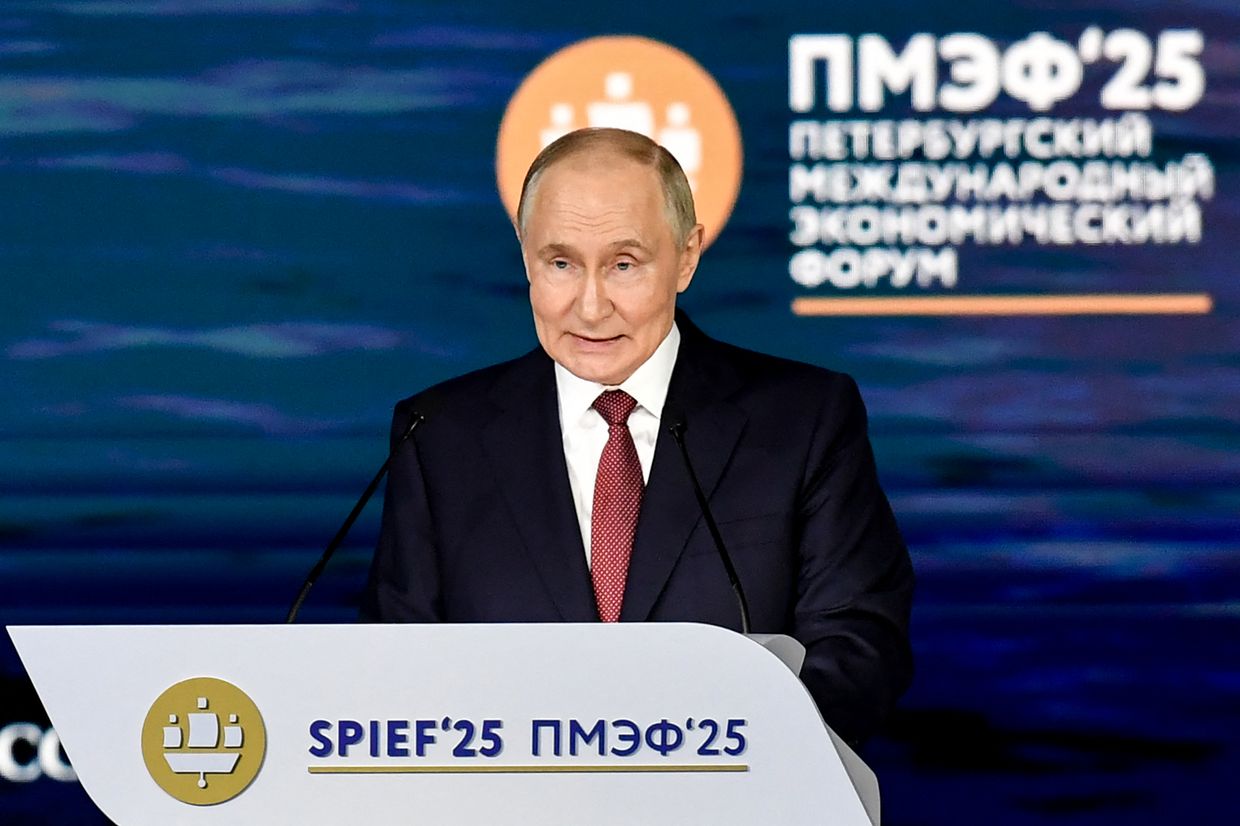
Russian President Vladimir Putin said "all of Ukraine" belonged to Russia in a speech on June 20 at the St. Petersburg International Economic Forum, amid increasingly aggressive official statements about Moscow's final territorial ambitions in Ukraine.
Putin's claim was based on the false narrative often pushed both by himself as leader and by Russian propaganda that Russians and Ukrainians are "one people."
The narrative has long figured prominently in Putin's rhetoric, often brought up as justification for its aggression in Ukraine.
In July 2021, just half a year before the full-scale invasion, the Russian leader stoked fears of a larger attack when he wrote and published an essay on the "historical unity of Russians and Ukrainians."
In response to the speech in St Petersburg, Foreign Minister Andrii Sybiha condemned Putin’s comments as "cynical," saying it showed “complete disregard for U.S. peace efforts."
"While the United States and the rest of the world have called for an immediate end to the killing, Russia's top war criminal discusses plans to seize more Ukrainian territory and kill more Ukrainians," he wrote in a post on X.
Putin made several other statements at the forum, some contradictory, about Moscow's aims in the war going forward.
"Wherever the foot of a Russian soldier steps is Russian land," Putin said, directly implying Russia's intention to continue occupying more than just the five Ukrainian regions that Moscow has illegally laid claim to: Donetsk, Luhansk, Zaporizhzhia, and Kherson oblasts, as well as the Autonomous Republic of Crimea.
Sybiha said that "Russian soldier's foot" brings only "death, destruction, and devastation." He accused Putin of indifference toward his own troops, calling him “a mass murderer of his own people.”
"He already disposed one million Russian soldiers in a senseless bloodbath in Ukraine without achieving a single strategic goal. One million soldiers. Two million feet," the minister said.
"And, while Putin is busy sending Russian feet to invade other countries, he is bringing Russians inside the country to their knees economically."
As per the "peace memorandum" presented by the Russian delegation at the last round of peace talks in Istanbul on June 2, Moscow demands Kyiv recognize the oblasts as Russian and hand over all territory not yet controlled by Russian forces into occupation, including the regional capitals of Kherson and Zaporizhzhia.
Asked whether Russia aimed to seize the regional center of Sumy in Ukraine's northeast, Putin said that while such a mission has not been assigned, he wouldn't rule it out.
Russian ground attacks into Sumy Oblast have intensified along the northeastern border in the past weeks, having first crossed the border after Ukraine's withdrawal from most of its positions in Kursk Oblast in March.
Russian troops have moved 10-12 kilometers (6-8 miles) deep into the region, according to Putin.
"The city of Sumy is next, the regional center. We don't have a task to take Sumy, but I don't rule it out," Putin said.
Sybiha urged the West to ramp up military aid to Ukraine, tighten sanctions against Russia, designate Moscow a terrorist state, and "isolate it fully."
"His cynical statements serve only one purpose: to divert public attention away from the complete failure of his quarter-century rule," the minister added.
Since March, Russia has reportedly taken control of about 200 square kilometers (80 square miles) in northern Sumy Oblast, including roughly a dozen small villages, according to open-source conflict mapping projects.
As of May 31, mandatory evacuations had been ordered for 213 settlements.
In May, Russian President Vladimir Putin ordered his military to create a so-called "security buffer zone" along the border with Ukraine, while Zelensky said on May 28 that Moscow had massed 50,000 troops near Sumy.
In a separate interview with Bild on June 12, Zelensky dismissed Moscow's claims of significant territorial gains as "a Russian narrative" aimed at shaping global perceptions. He stressed that Ukrainian forces have managed to hold off a renewed offensive for nearly three weeks.
When asked if Moscow requires the complete capitulation of Kyiv and the Ukrainian leadership, Putin denied this, saying that Russia instead demands the "recognition of the realities on the ground."
The statement follows a consistent line from Russian officials since the return of U.S. President Donald Trump brought new momentum to the idea of a quick negotiated peace in Ukraine.
Projecting a winning position on the battlefield and gaining confidence from Trump's frequent anti-Ukrainian rhetoric and refusal to approve further military aid to Kyiv, Moscow has stuck to maximalist demands, refusing the joint U.S.-Ukraine proposal of a 30-day unconditional ceasefire along the front line.
On June 18, in an interview to CNN, Russian ambassador to the U.K. Andrei Kelin said that while Russian forces were advancing on the battlefield and taking more Ukrainian, there was no incentive to stop, and that Kyiv must either accept Moscow's peace terms now or "surrender" after losing much more.

 Connexion