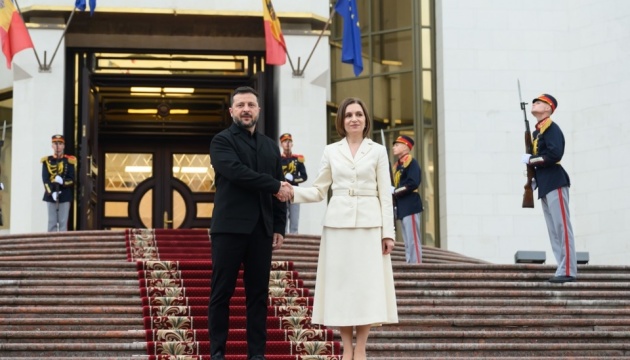
President Volodymyr Zelensky and Moldovan President Maia Sandu discussed the security situation, prospects for bilateral energy cooperation, and the implementation of infrastructure projects during their meeting.
President Volodymyr Zelensky and Moldovan President Maia Sandu discussed the security situation, prospects for bilateral energy cooperation, and the implementation of infrastructure projects during their meeting.
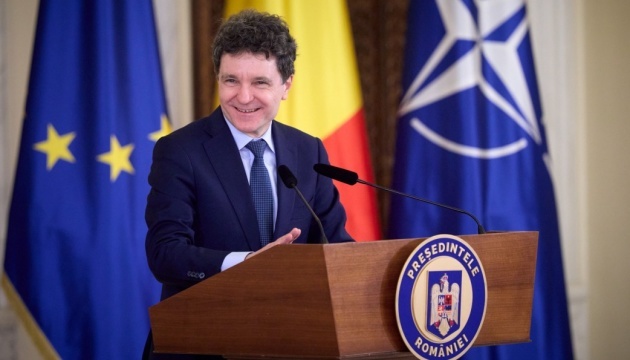
After a nearly eight-year break, the Joint Ukrainian-Romanian Commission on Ensuring the Rights of Persons Belonging to National Minorities will meet on Friday, August 28.
After a nearly eight-year break, the Joint Ukrainian-Romanian Commission on Ensuring the Rights of Persons Belonging to National Minorities will meet on Friday, August 28.
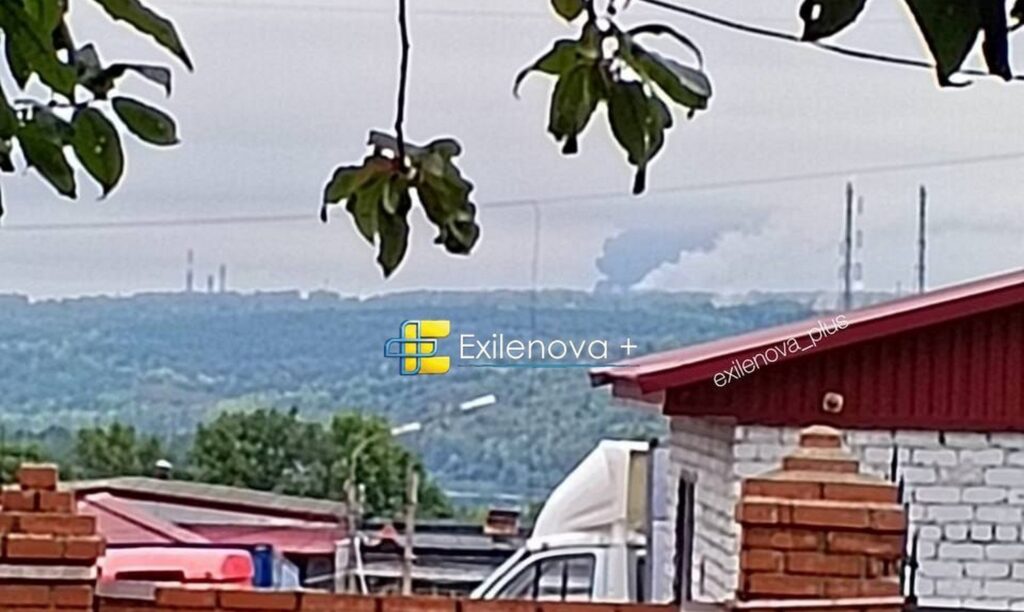
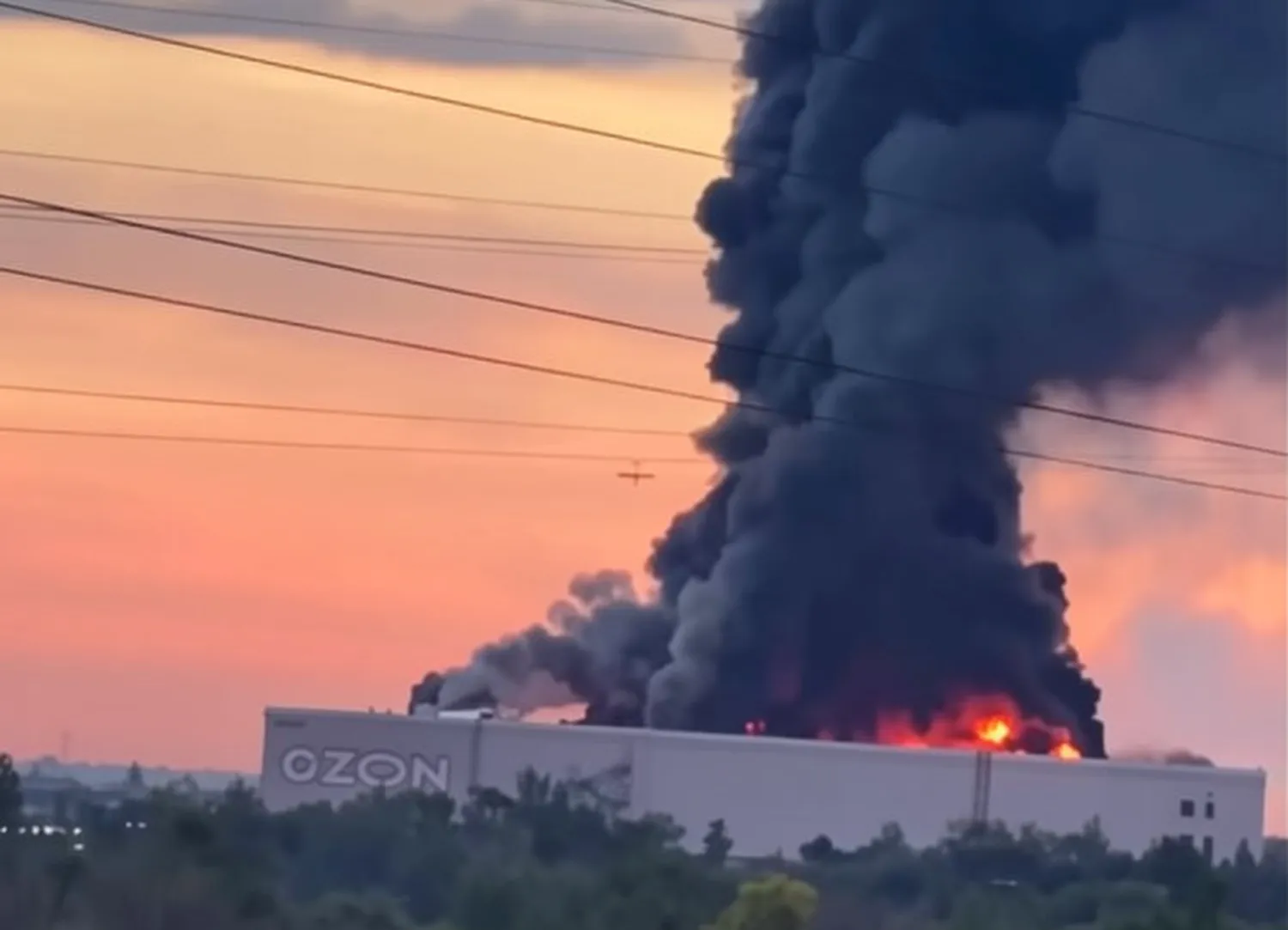
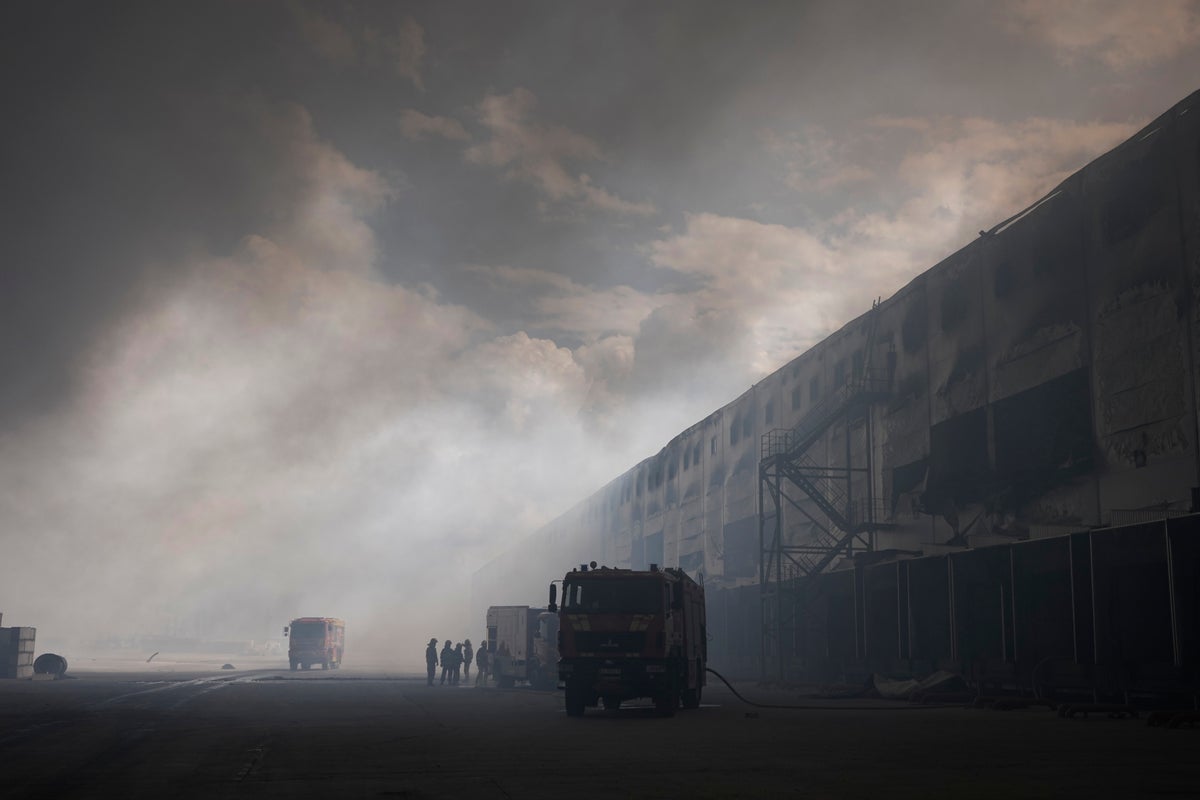
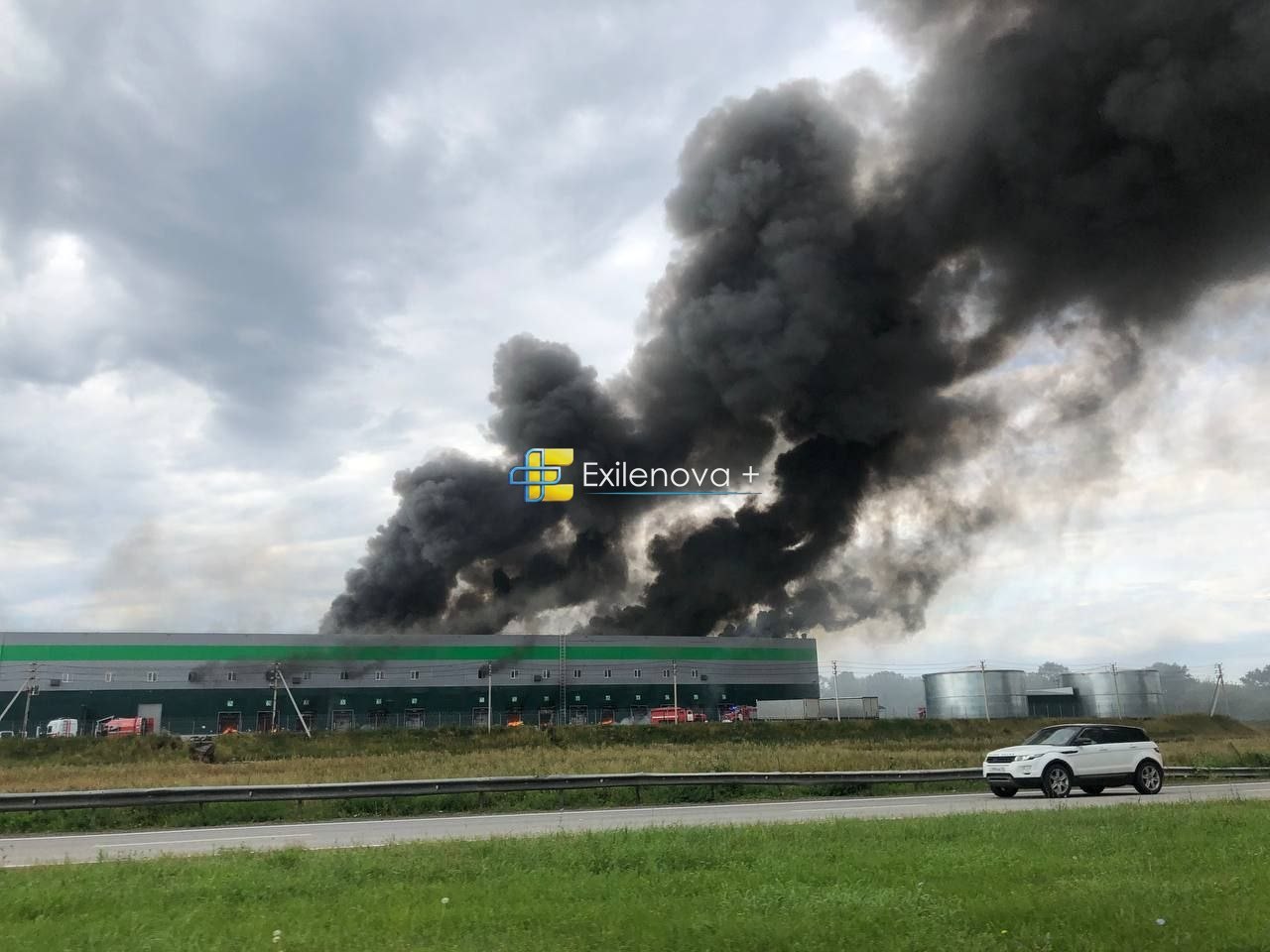
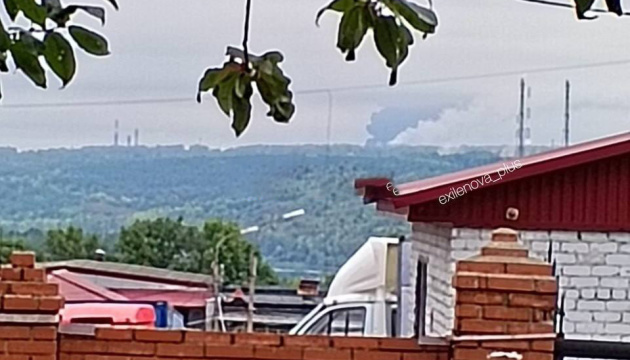
Ukrainian drones attacked two Ozon logistics centers overnight on 27 August, one in Ufa and one in Orenburg Oblast, Russia's second-largest online store said. Staff were evacuated at both sites, and preliminary information indicated no casualties. Video published by Ukrainian monitoring channel Exilenova+ shows a drone reaching the Bashkortostan warehouse and exploding.
Ukraine's deep-strike campaign has spread across Russian refineries and fuel depots, chemical plants,
Ukrainian drones attacked two Ozon logistics centers overnight on 27 August, one in Ufa and one in Orenburg Oblast, Russia's second-largest online store said. Staff were evacuated at both sites, and preliminary information indicated no casualties. Video published by Ukrainian monitoring channel Exilenova+ shows a drone reaching the Bashkortostan warehouse and exploding.
Ukraine's deep-strike campaign has spread across Russian refineries and fuel depots, chemical plants, arms factories, railways, and the warehouses that move consumer goods. Together the strikes take refining capacity, storage space, and freight throughput out of service repeatedly, and sanctions leave Russia fewer parts and crews to restore them with.
The strike on camera
Exilenova+ reported in the morning that an Ozon warehouse was burning after impacts in Blagoveshchensk, a town north of Ufa. The Bashkortostan capital lies roughly 1,300 kilometers from the war zone in Ukraine. Around midday the channel published eyewitness video of what it called the moment of a drone attack on the site, and said the warehouse had not caught fire. The footage shows a drone reaching the site and detonating there.
Drone hit another Russian warehouse
Eyewitness video from Blagoveshchensk in Bashkortostan shows the moment a Ukrainian drone reached Ozon's fulfillment center — the largest logistics complex the online retailer runs in the Volga area — and detonated. The channel that published… pic.twitter.com/oHUgjRz0v0
Earlier, the channel reported that residents of Sterlitamak, Bashkortostan's second-largest city, about 120 kilometers from Ufa, had written about explosions, with nothing then known about impacts. Astra later placed smoke over what it said was probably the Bashkir Soda Company works there.
Ozon said the Orenburg site—about 1,200 kilometers from the war zone—has resumed work. The one it placed in Ufa sustained what it called minor damage but remains closed, because the grounds need a thorough inspection. It is not accepting deliveries.
Russian news Telegram channel Astra identified the damaged facility from the eyewitness footage as Ozon's UFA_RFC fulfillment center in Blagoveshchensk. When it opened in late 2024 it was billed as the largest Ozon logistics complex in Russia's Volga federal district, with a total area of 93,000 square meters.
Smoke over the Ufa refineries
Astra also traced smoke in eyewitness footage to the Bashneft-Ufaneftekhim refinery in Ufa. The plant is one of Rosneft's leading refineries and a dual-use site: it supplies specialized fuel to Russia's armed forces and petrochemical feedstock for defense-grade materials. It burned after a strike on 1 August.
Bashneft runs three refineries side by side in Ufa's northern industrial zone—Ufaneftekhim, Novoil, and UNPZ—forming one of Russia's largest refining complexes, with a combined capacity of up to 23.5 million tons of feedstock a year.
Explore further
Ukrainian drones hit warehouse belonging to Russian online retailer Ozon for the first time
What officials said, and didn't
Bashkortostan's authorities did not report the attack. Orenburg Oblast governor Yevgeny Solntsev mentioned drone danger in his region but gave no account of consequences. Ufa closed its airport.
Russia's Defense Ministry claimed air defenses destroyed 267 Ukrainian fixed-wing drones overnight across Russian regions, Bashkortostan among them.
The campaign so far
Ukraine's warehouse campaign began with Wildberries, Russia's largest online marketplace, which lost eight warehouses and roughly 860,000 square meters of storage in July alone. It reached Ozon for the first time on 22 August at Chapayevsk in Samara Oblast, where more than 500 employees evacuated and people were hurt. Four more Ozon hubs were hit across southern Russia two nights later.
The U.S. military faces a “beyond critical” shortage of advanced missile interceptors in Europe largely driven by President Donald Trump's war with Iran
The U.S. military faces a “beyond critical” shortage of advanced missile interceptors in Europe largely driven by President Donald Trump's war with Iran
Finnish President Alexander Stubb said Ukraine would receive about 90% of the drones that Finnish companies build under a planned Finland–Ukraine framework agreement, Mi-Ukraina reported on 26 August. Three days earlier in Kyiv, he said the other 10% would stay in Finland.
The planned arrangement follows a broader European shift toward co-production with Ukraine rather than supplying weapons from existing stockpiles. Drones have shaped much of the fighting on both sides
Finnish President Alexander Stubb said Ukraine would receive about 90% of the drones that Finnish companies build under a planned Finland–Ukraine framework agreement, Mi-Ukraina reported on 26 August. Three days earlier in Kyiv, he said the other 10% would stay in Finland.
The planned arrangement follows a broader European shift toward co-production with Ukraine rather than supplying weapons from existing stockpiles. Drones have shaped much of the fighting on both sides since Russia's full-scale invasion in 2022, and Russia has repeatedly struck defense plants inside Ukraine—a Bayraktar plant under construction in Kyiv was hit four times in six months by August 2025—pushing Ukrainian makers to expand production into allied countries, Finland among them.
Asked what still had to be agreed before production could begin, Stubb said nothing did.
"Everything is done. There is a so-called framework agreement on drones that we're working on. It's more about cooperation between states—that is, Zelenskyy and me. And the companies between themselves do what they have to do. I think the doors are already open," Stubb said.
He said the 90/10 ratio is common practice in corporate contracts and that companies would determine the pace of production after finalizing their decisions. Some details could remain classified because of military secrecy, he said.
At a press conference on 23 August after the Nordic-Baltic Eight summit with Ukraine, Stubb had described the deal as still taking shape. He said seven Finnish defense companies interested in cooperation with Ukraine, including on maritime drone production, had traveled to Kyiv with him and that one had already provided production estimates.
"The companies are making actual deals. I'm looking forward to the results, but it seems one of the companies has already provided data on the number of drones that can be produced in Finland. And I think the deal will follow approximately the so-called 90/10 proportion. So 90% of the output is supplied to Ukraine, and 10% stays in Finland," Stubb said, according to Unian.
President of Ukraine Volodymyr Zelenskyy and President of Finland Alexander Stubb took part in a roundtable on Ukrainian-Finnish cooperation in the defense industries, organized with the participation of the Ukrainian Council of Defense Industry. Photo: president.gov.ua
Ukrainian President Volodymyr Zelenskyy said on 23 August that three of the seven Finnish companies present had already signed agreements for joint production, including drones. Yle identified the three as Patria, Insta, and Boomeranger, saying they had signed letters of intent with Ukrainian counterparts. Patria and the Ukrainian company General Chereshnia signed a memorandum of intent to produce defense drones in Finland, Patria announced.
Separately, Ukrainian drone maker Airlogix and Finnish technology company Innokas signed a letter of intent to establish joint drone manufacturing in Finland under Ukraine's "Build with Ukraine" initiative. Ukrainian firm TAF Industries and Finnish company Summa Defence had signed a similar agreement earlier under the same initiative.
Zelenskyy said the cooperation would combine Ukrainian combat experience with Finnish technology. Stubb said Finland already faces hybrid attacks, from undersea cable sabotage to drones, and treats sabotage as a standing risk to the plants, adding that Finland ranks among the largest per-capita suppliers of military equipment to Ukraine.
From support to co-production—and a two-way expertise swap
Stubb said the planned arrangement is not far from Denmark's model of directly financing Ukrainian defense production, according to Yle.
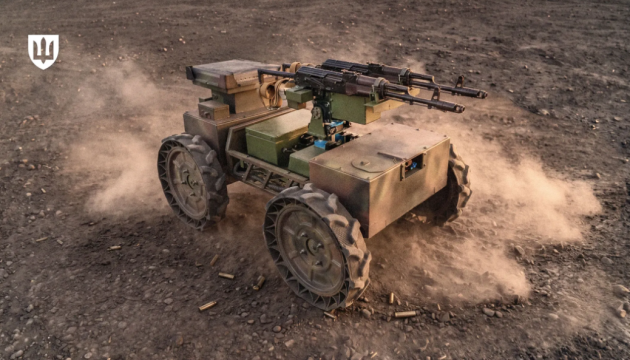
Zelenskyy said the agreements cover drones built in Finland for Ukraine and Europe, expanded maritime unmanned systems, and a plant for ground robotic systems, and Stubb said the documents signed during the visit concerned air, land, and sea.
The Finnish president said in the Mi-Ukraina interview that Europe's relationship with Ukraine has changed since the full-scale invasion. Ukraine once needed European support, while Europe now needs Ukraine's battlefield experience, he said. What Finland learned, by his account: trench warfare is over, a 40-kilometer kill zone means tanks firing at shorter range have no role, and Ukraine holds more data on modern war than the rest of Europe combined.
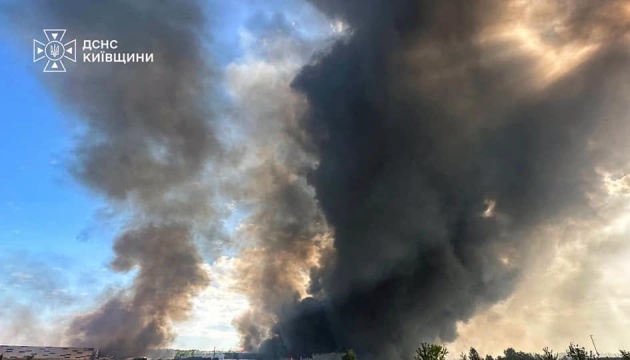
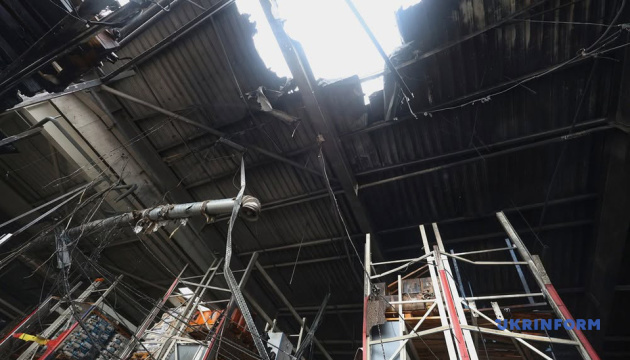
In Kyiv region, a warehouse belonging to the KOLO supermarket chain, which recently became part of the Varus company, was damaged in the Russian military's massive attack on August 27.
In Kyiv region, a warehouse belonging to the KOLO supermarket chain, which recently became part of the Varus company, was damaged in the Russian military's massive attack on August 27.
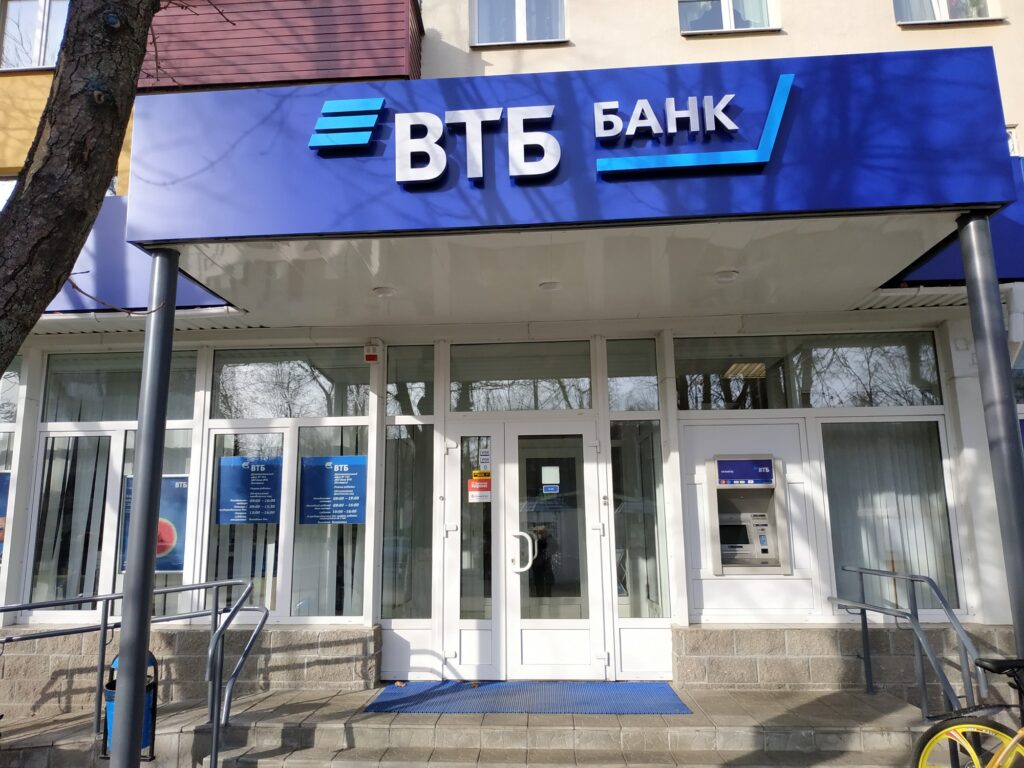
Shares in Russia’s second-largest bank VTB fell to an all-time intraday low of just under 50 rubles ($0.60) on 26 August, RBC’s exchange data showed. That was more than 40% below the 87-ruble (about $1) price set for a share sale partly intended to finance its Wildberries partnership. At that price, offering participants would pay about 75% more than investors buying the same shares on the stock market.
In the second quarter, the bank set aside 28% more for troubled loa
Shares in Russia’s second-largest bank VTB fell to an all-time intraday low of just under 50 rubles ($0.60) on 26 August, RBC’s exchange data showed. That was more than 40% below the 87-ruble (about $1) price set for a share sale partly intended to finance its Wildberries partnership. At that price, offering participants would pay about 75% more than investors buying the same shares on the stock market.
In the second quarter, the bank set aside 28% more for troubled loans while its profit fell by one-third.
VTB’s drop came amid a wider decline in Russian stocks. Kommersant’s market report said analysts also linked the fall to VTB’s own large new share issue.
Share issue could cut existing stakes by one-third
Under the bank’s offering plan, VTB could issue almost one new share for every two already in circulation. If VTB sold the full amount, an existing shareholder who bought no new shares would see their ownership stake fall by about one-third. VTB planned to finish the sale and close its Wildberries deal by 1 September.
The bank expected to raise 300–400 billion rubles ($3.6–$4.7 billion). VTB said it had assembled a group of large investors willing to participate but would not disclose who they were. Those investors would receive the same class of shares traded on the Moscow Exchange, but at the price fixed by VTB.
VTB described the partnership primarily as a route into Wildberries’ 80 million users—more than twice the bank’s own customer base. VTB would initially acquire a 5% stake in Wildberries’ banking arm, with the option to increase its holding later.
Reuters described both companies—Wildberries and rival Ozon—as central to Moscow’s plans to use online commerce as an engine of economic growth.
VTB held its price as shares fell
On 9 July, VTB kept its price even after the stock had fallen well below the offering price. The bank said its large, long-term investors were willing to look past short-term price swings.
On 16 July, VTB hit another low as investors prepared for its dividend cutoff and the new share issue. The first drone strikes on Wildberries warehouses followed two days later.
Explore further
Is a fifth or well over half of Wildberries gone—or can both counts be right?
VTB’s first-half results showed that its profit fell by one-fifth from a year earlier. In the second quarter, the bank set aside 28% more for troubled loans while its profit fell by one-third.
After the attacks, Moscow considered supporting Wildberries and its sellers, with VTB expected to play a central role. VTB shares fell 2.5% on 28 July amid uncertainty over the partnership. “If we receive such a request, we will, of course, be open to various forms of lending support,” VTB’s first deputy CEO Dmitry Pyanov told Reuters.
On Friday, August 28, partly cloudy conditions will prevail across Ukraine. Short-term rain and, in some places, thunderstorms are expected in the south and southeast, as well as overnight and in most central regions. The rest of the country will remain dry.
On Friday, August 28, partly cloudy conditions will prevail across Ukraine. Short-term rain and, in some places, thunderstorms are expected in the south and southeast, as well as overnight and in most central regions. The rest of the country will remain dry.
A warehouse belonging to Roshen was destroyed in the village of Chubynske, Kyiv region, as a result of a massive Russian attack on the morning of August 27.
A warehouse belonging to Roshen was destroyed in the village of Chubynske, Kyiv region, as a result of a massive Russian attack on the morning of August 27.
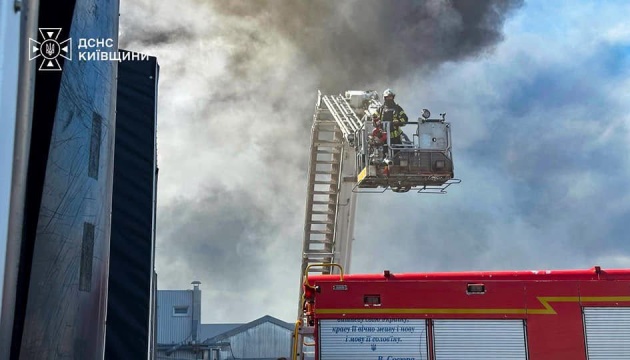
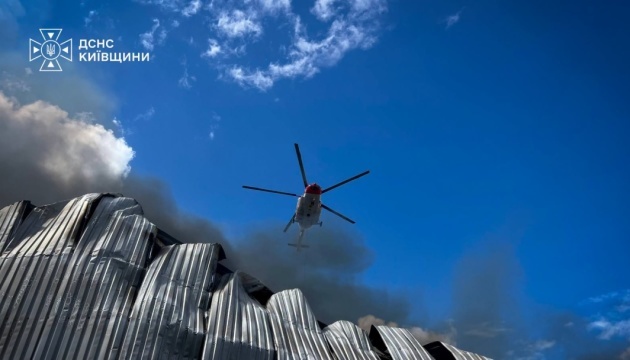
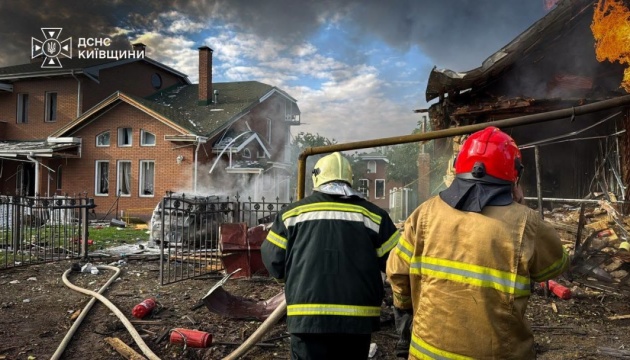
In Kyiv region's Boryspil district, aviation from the State Emergency Service of Ukraine (DSNS) has been deployed to help deal with the aftermath of a Russian attack.
In Kyiv region's Boryspil district, aviation from the State Emergency Service of Ukraine (DSNS) has been deployed to help deal with the aftermath of a Russian attack.
A distribution center belonging to "Budynok Ihrashok," where a significant portion of the company's merchandise was stored, was destroyed as a result of a nighttime attack by Russian forces.
A distribution center belonging to "Budynok Ihrashok," where a significant portion of the company's merchandise was stored, was destroyed as a result of a nighttime attack by Russian forces.
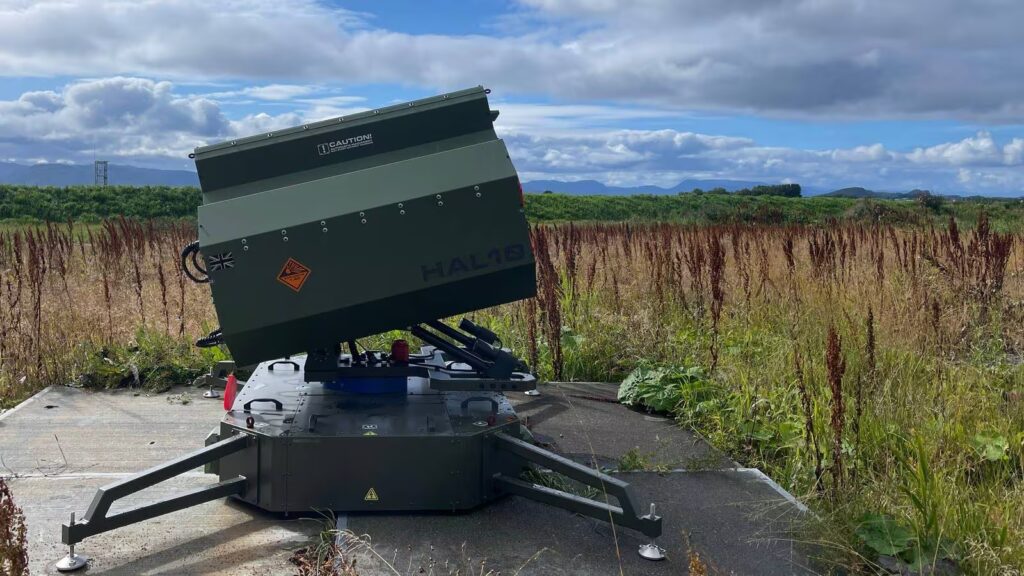
Norway's Air Force has put its first counter-drone system into service at Ørland, the country's only combat aircraft base, NRK reported. A launcher now stands beside the runway where Norway's F-35 stealth fighters are parked, bought specifically to bring drones down. The deployment follows a wave of drone sightings across Europe last autumn and will be phased in at other Norwegian bases.
Since Russia's full-scale invasion, European states have logged drone sightings ove
Norway's Air Force has put its first counter-drone system into service at Ørland, the country's only combat aircraft base, NRK reported. A launcher now stands beside the runway where Norway's F-35 stealth fighters are parked, bought specifically to bring drones down. The deployment follows a wave of drone sightings across Europe last autumn and will be phased in at other Norwegian bases.
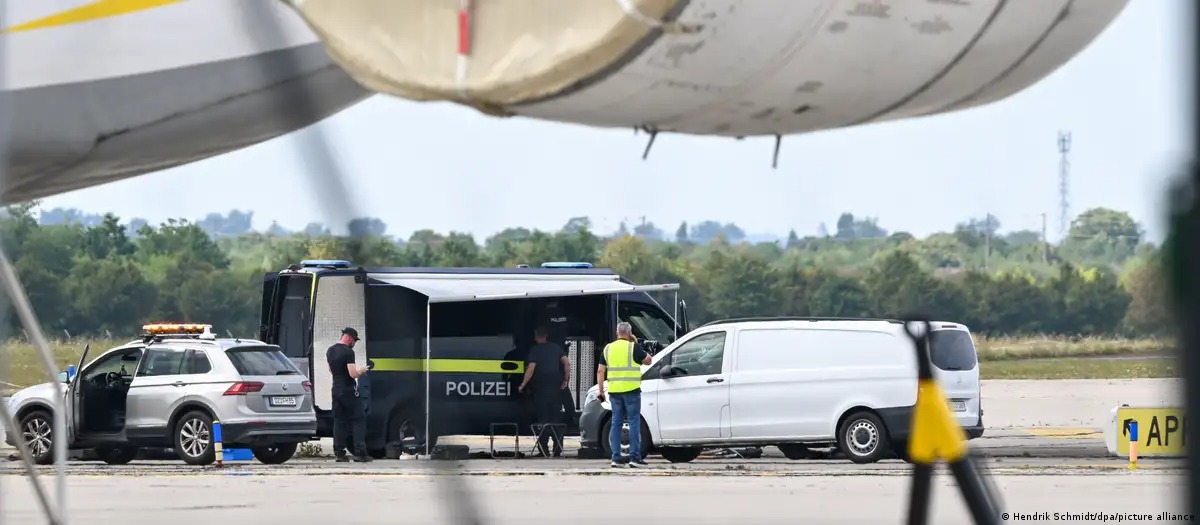
Since Russia's full-scale invasion, European states have logged drone sightings over airports and bases, airspace violations, sabotage, and arrests for espionage, much of it attributed to Moscow, which denies involvement. This month, a suspected case turned physical: an explosive drone struck a Ukrainian cargo plane at a German airport but failed to detonate.
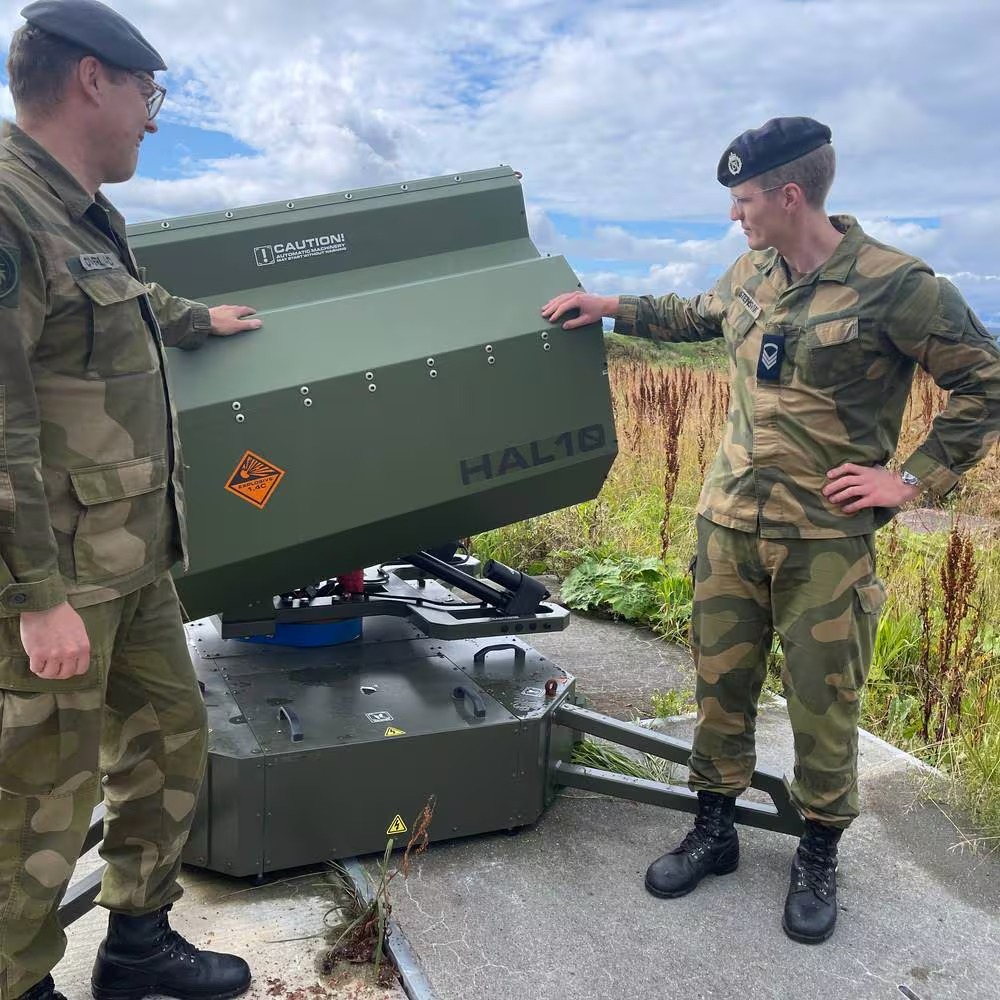
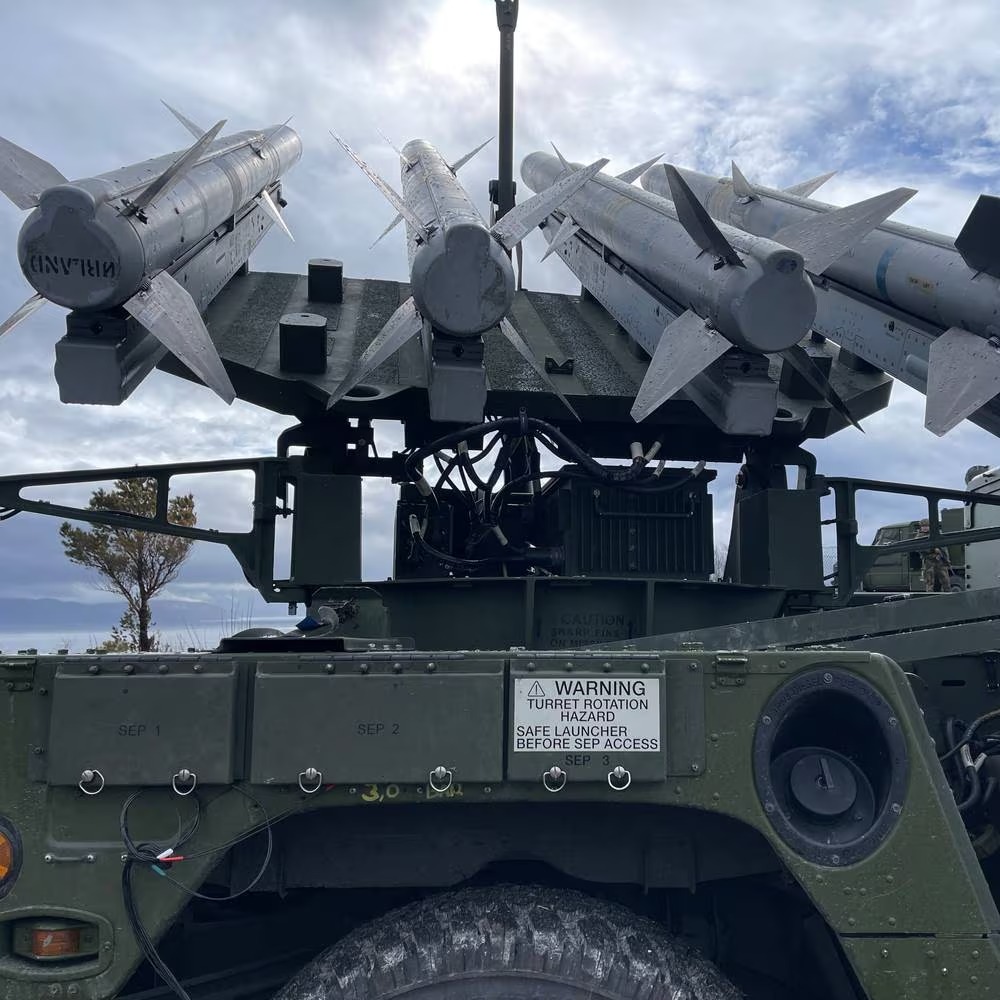
The launcher came from the British company ISS Aerospace and works as one of several effectors inside a system the military calls Counter Unmanned Aerial Systems, or C-UAS. Radars and other sensors spot the drones first. It is built to protect fixed installations against drones weighing up to 150 kilograms, and it can either jam a machine or destroy it. Ørland already has NASAMS air defenses, the Norwegian-American missile system Ukraine also uses, but firing interceptor missiles at small drones is expensive and described as shooting sparrows with cannons.
"We received a system in the spring, which we are introducing now, and it gives us a hugely increased capacity in drone defense," said the head of the counter-drone unit at the base, Sondre Steinsvik.
Officers of the base defense battalion and the counter-drone unit beside the British-supplied launcher at the Ørland fighter base in Norway, 26 August 2026. Photo: Ingrid Lindgaard Stranden / NRK
What pushed it forward
Police reported observations of possible drones near the base in September last year, part of a wider wave across Europe that also closed Oslo airport. Trøndelag police later concluded the lights had most likely been blinking celestial bodies. The purchase was already underway, but the sightings accelerated it, and the new sensors are meant to make such calls easier in future. Ørland's mayor said at the time the drone defense was arriving far too late.
A NASAMS air defense launcher at the Ørland fighter base in Norway, 26 August 2026. Photo: Ingrid Lindgaard Stranden / NRK
Small drones have become easily available, are relatively easy to smuggle in or rebuild locally, and could potentially do serious damage to aircraft parked in the open, according to Lars Peder Haga of Norway's Air Force Academy, who said that from a defense standpoint, such purchases can never move fast enough.
Explore further
About 50 grams of suspected military explosive lay in a German field 10 days after the attempt on Ukraine’s plane
Next bases, and Norway's own drones
Evenes air station, which handles Norway's quick-reaction alert mission among other duties, is among the sites due to receive it, NRK reported. Parliament's long-term plan set aside nearly $2 billion for drones, electronic warfare, and autonomy through 2036.
The base has also built a drone troop of its own, flying machines for search and mapping, with the aim of arming them to strike other drones.
"That is the direction we want to go. We see it is very effective in Ukraine," said the head of the base defense battalion, Tormod Overland.
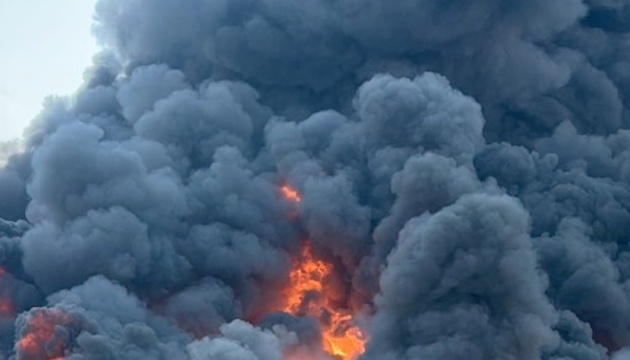
All of Lukoil’s major refineries in Russia are now offline after a Ukrainian drone strike halted crude processing at its NORSI plant on 26 August, Reuters reported the shutdown. NORSI is Russia’s fourth-largest refinery and second-largest gasoline producer.
The latest attack produced the plant’s fifth drone-related shutdown in less than five months.
Ukraine’s General Staff said it had struck the refinery in Kstovo, Nizhny Novgorod Oblast, where a fire subsequently br
All of Lukoil’s major refineries in Russia are now offline after a Ukrainian drone strike halted crude processing at its NORSI plant on 26 August, Reuters reported the shutdown. NORSI is Russia’s fourth-largest refinery and second-largest gasoline producer.
The latest attackproduced the plant’s fifth drone-related shutdown in less than five months.
Ukraine’s General Staff said it had struck the refinery in Kstovo, Nizhny Novgorod Oblast, where a fire subsequently broke out. It said the refinery helps supply Russia’s armed forces.
Industry sources told Reuters that several processing units and other plant infrastructure had been damaged. No repair timetable is available, and Lukoil did not respond to the agency’s request for comment.
NORSI can process about 15 million tons of crude annually and produce about 5 million tons of gasoline and more than 5 million tons of diesel, according to Reuters.
A Reuters dispatch in The Moscow Times said Lukoil listed no NORSI-made gasoline, diesel, or other petroleum products for sale on the St. Petersburg International Mercantile Exchange after the shutdown.
Explore further
Russia diverts defense-industry chemicals to gasoline—but stations still run dry
NORSI’s closure followed the complete shutdown of Lukoil’s Perm refinery after a 21 August drone strike. The company’s Volgograd plant had already stopped processing on 31 July.
The Moscow Times listed four previous occasions this year when drone strikes stopped NORSI from processing crude: 5 April, 20 May, 24 June, and 2 July. The latest attack, therefore, produced the plant’s fifth drone-related shutdown in less than five months.
Lukoil also operates a smaller refinery in Ukhta, which remains active.
Kremlin threatens retaliation
Nizhny Novgorod Oblast Governor Gleb Nikitin wrote that Russian forces had “repelled” more than 40 drones. He also reported damage to an unnamed industrial enterprise, several homes, and cars.
A day later, Kremlin spokesperson Dmitry Peskov promised a “harsh response” to Ukrainian strikes on Russia’s economic and trade infrastructure.
Russia is facing its second bout of fuel shortages this summer. Gasoline sales limits have returned to Moscow and St. Petersburg, while Rosneft has capped purchases at 30 liters per vehicle across its filling-station network, The Moscow Times reported.
Kommersant reported that Astrakhan Oblast had capped gasoline purchases at 30 liters and was serving drivers according to odd- and even-numbered license plates. Orenburg Oblast introduced a similar system and capped purchases at 30 liters to preserve supplies for emergency services and public transport, Governor Yevgeny Solntsev announced.
Five days before NORSI stopped, the Russian government ordered officials to distribute available fuel more evenly between and within regions. Russia also plans to extend its diesel export ban through September as refinery outages constrain domestic supplies.
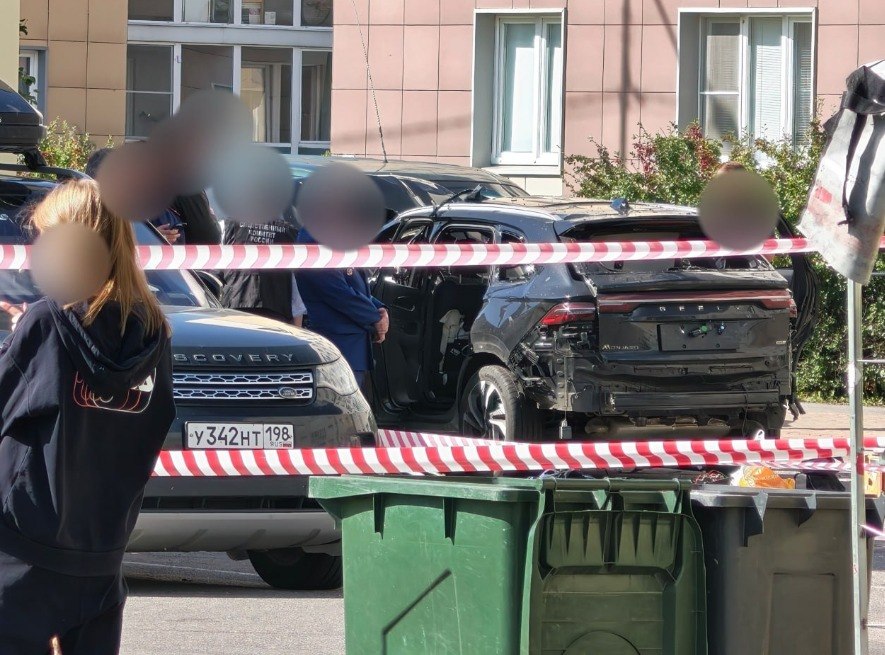
A car bomb killed a lieutenant colonel of Russia's Aerospace Forces in St. Petersburg on the morning of 27 August, the local outlet Fontanka reported. His wife survived and reached hospital in serious condition. Russia's Investigative Committee opened a criminal case, and nobody has claimed responsibility for the attack.
Ukraine's war reaches deep into Russia's rear, where officers, arms-industry figures, and quisling officials keep dying in blasts far from the front. W
A car bomb killed a lieutenant colonel of Russia's Aerospace Forces in St. Petersburg on the morning of 27 August, the local outlet Fontanka reported. His wife survived and reached hospital in serious condition. Russia's Investigative Committee opened a criminal case, and nobody has claimed responsibility for the attack.
Ukraine's war reaches deep into Russia's rear, where officers, arms-industry figures, and quisling officials keep dying in blasts far from the front. Who put the bomb in this car is a separate question. It could be Kyiv, or it could be a criminal score being settled — Russia has no shortage of those.
A bomb inside the car
Witnesses said the officer and his wife were pulling away from their house in a southern suburb of the city at around 10 a.m. when an improvised explosive device went off inside the car, Militarnyi reported. The officer died on the spot, and the blast tore off the legs of both spouses. Fontanka placed the dead officer in Russia's Air Force and Air Defense branches, which sit within the Aerospace Forces.
Russian channel Ren TV published a video of the wreckage and said the explosion followed the driver starting the engine. The Geely lost its rear window, hood, and rear bumper, and its body was badly deformed, and parts landed dozens of meters away, according to the channel. Footage from the site shows debris across the roadway and emergency crews arriving.
A car bomb killed a Russian Aerospace Forces lieutenant colonel in St. Petersburg
The unnamed officer died where he sat on the morning of 27 August. The Geely's hood and rear bumper ended up on the road, and parts landed dozens of meters away. Investigators opened the case as… pic.twitter.com/g132U7Oaft
Witnesses told the Russian news Telegram channel Ostorozhno Novosti that the blast wave badly deformed the driver's door and damaged cars parked alongside. Ukrainian monitoring Telegram channel Exilenova+ posted several clips from the site and described the dead man as a military pilot.
The Investigative Committee's St. Petersburg directorate said it had opened a criminal case over the burning of a car in which two people were hurt. It confirmed that one of them died and one was hospitalized, and it did not name the article of the criminal code.
Russia's Defense Ministry bought a significant share of the housing in that part of the city for servicemen and their families, according to available information.
Russian Aerospace Forces officer killed by a bomb in his own car in St. Petersburg
Bombings in Russia's rear
The killing follows a run of blasts against people tied to Russia's war. Earlier this month, a bomb under the car of Vladimir Tkachuk, who heads the plant making Upyr first-person-view drones, killed his bodyguard and put Tkachuk in intensive care. Major General Valery Plokhotnyuk reportedly died on 1 August in a blast at an Italian restaurant in Moscow.
Explore further
Car bomb kills Russian general who armed Russia’s war on Ukraine—fourth top officer assassinated near Moscow since late 2024
At least four senior officers have died in bombings in and around the capital since late 2024, including chemical defense chief Igor Kirillov, General Staff officer Yaroslav Moskalik, military planner Fanil Sarvarov, and Damir Davydov, who ran missile and shell deliveries for the Defense Ministry. Ukraine's security service claimed the Kirillov operation openly and, through a source, a 2024 Sevastopol car bombing that killed a Black Sea Fleet brigade commander. Kyiv has stayed silent on most of the rest.
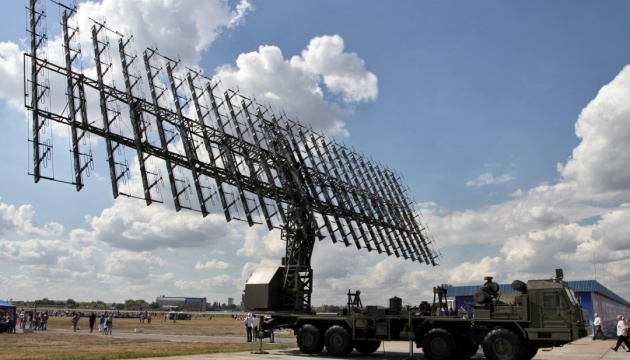
The Long-Range Strike Company of the 429th Separate Unmanned Systems Brigade Achilles struck a Nebo-U radar station at the Millerovo military airfield in Russia's Rostov region.
The Long-Range Strike Company of the 429th Separate Unmanned Systems Brigade Achilles struck a Nebo-U radar station at the Millerovo military airfield in Russia's Rostov region.
Russian forces dropped four more glide bombs on the Kherson combined heat and power plant (CHP) overnight on August 27, destroying all of the facility’s remaining heat- and power-generating equipment.
Russian forces dropped four more glide bombs on the Kherson combined heat and power plant (CHP) overnight on August 27, destroying all of the facility’s remaining heat- and power-generating equipment.
Ukrainian Defense Forces struck the main and reserve command posts of the Russian army near temporarily occupied Donetsk with missiles on August 26 and overnight on August 27, 2026.
Ukrainian Defense Forces struck the main and reserve command posts of the Russian army near temporarily occupied Donetsk with missiles on August 26 and overnight on August 27, 2026.
The Financial Times reported that Sweden, the Netherlands, Spain, and Poland are jointly urging the European Commission to restart work on using more than €200 billion ($233 billion) in frozen Russian central bank assets to fund Ukraine. Belgium blocked the proposal in December over legal and financial concerns.The Council says the EU’s €90 billion ($105 billion) loan covers two-thirds of Ukraine’s projected funding needs for 2026 and 2027. In the Financial Times,
The Financial Times reported that Sweden, the Netherlands, Spain, and Poland are jointly urging the European Commission to restart work on using more than €200 billion ($233 billion) in frozen Russian central bank assets to fund Ukraine. Belgium blocked the proposal in December over legal and financial concerns.
The Council says the EU’s €90 billion ($105 billion) loan covers two-thirds of Ukraine’s projected funding needs for 2026 and 2027. In the Financial Times,Swedish Foreign Minister Maria Malmer Stenergard called the loan a “manifestation of the EU’s commitment to support Ukraine,” but said it was “clearly not enough.”
A draft obtained by the Kyiv Independent is dated 27 August and asks EU foreign ministers to hold an initial discussion in Ireland on 1–2 September. Three EU diplomats told the outlet they expected it to be sent the same day.
EU rules already channel profits from frozen assets to Ukraine, primarily to help repay EU and G7 loans. The Commission proposedusing cash balances from the Russian holdings for a separate reparations loan, while leaving the assets frozen.
In February, Kaja Kallas acknowledged that EU officials had done no further work on the option since December. Separately, Ukrainians and their supporters rallied across dozens of countries from 22 to 24 August to demand that Europe use the assets.
Explore further
Ukrainians rally across dozens of countries to demand Europe use Russia’s frozen billions
Belgium’s objections remain unchanged. The government fears Russian legal retaliation and wider risks to financial markets because most of the assets are held in Belgium. No new proposal has resolved those concerns, and the coalition is asking the Commission for a progress report on possible legal and technical solutions.
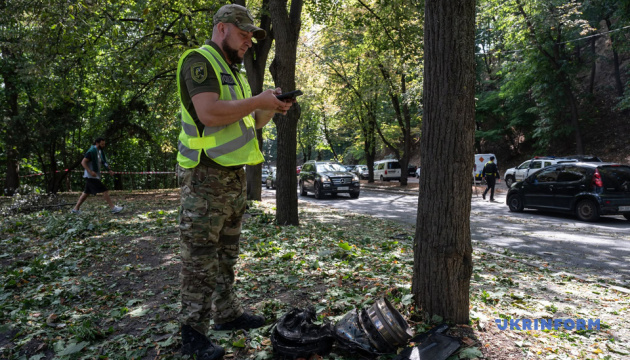
The aftermath of a Russian drone attack was reported in Kyiv’s Holosiivskyi and Pecherskyi districts, with a sports complex damaged and a car set on fire.
The aftermath of a Russian drone attack was reported in Kyiv’s Holosiivskyi and Pecherskyi districts, with a sports complex damaged and a car set on fire.
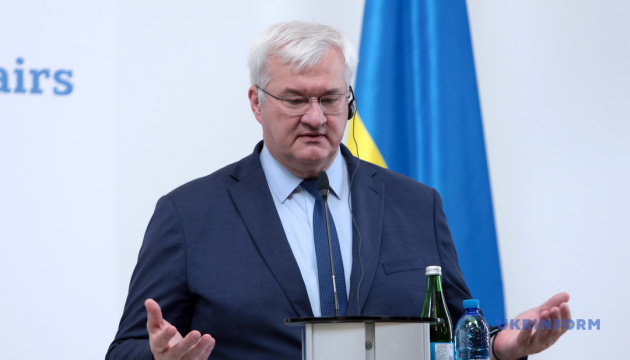
Following Russia’s massive overnight attack, Foreign Minister Andrii Sybiha called on Ukraine’s partners to strengthen protection for Ukrainian grain exports and civilian shipping in the Black Sea.
Following Russia’s massive overnight attack, Foreign Minister Andrii Sybiha called on Ukraine’s partners to strengthen protection for Ukrainian grain exports and civilian shipping in the Black Sea.
President Volodymyr Zelensky, following another overnight Russian air attack, called on partners to strengthen Ukraine’s air defense, including through the PURL mechanism.
President Volodymyr Zelensky, following another overnight Russian air attack, called on partners to strengthen Ukraine’s air defense, including through the PURL mechanism.
Belarus is fitting a new base near its border with Ukraine to receive heavy military hardware by rail, according to Radio Svaboda, the Belarus service of Radio Free Europe/Radio Liberty. On paper it is a training ground—but the leaked design documents describe a site built to unload trainloads of vehicles. The work is moving ahead even as Belarusian commanders have begun saying there is no real threat from the West.
Belarus keeps adding permanent military infrastructure
Belarus is fitting a new base near its border with Ukraine to receive heavy military hardware by rail, according to Radio Svaboda, the Belarus service of Radio Free Europe/Radio Liberty. On paper it is a training ground—but the leaked design documents describe a site built to unload trainloads of vehicles. The work is moving ahead even as Belarusian commanders have begun saying there is no real threat from the West.
Belarus keeps adding permanent military infrastructure on its Ukrainian frontier even as its own commanders now drop the Western-threat case behind it.
A rail line sized for military trains
Construction is under way near the village of Yakimaŭka in Homiel Oblast, the part of Belarus that runs along Ukraine's northern edge. Radio Svaboda reported that the new rail infrastructure is designed to receive military trains. The finding rests on project documents obtained by a community of Belarusian railway workers.
The papers describe a separate access track sized for up to 60 railcars and a cargo platform with a ramp for unloading wheeled and tracked vehicles. A state military-design institute, Vaenpraekt, is listed as the client.
A base for a new assault brigade
The papers pin the range only to Homiel Oblast, but Radio Svaboda links it to a wider military complex built near Homiel since late 2023. That complex is the planned home of the 37th separate air-assault brigade of Belarus's Special Operations Forces. Cadastral maps split it into an eastern "military town" and a western "training-tactical field."
Alyaksandr Lukashenka's government created the brigade in 2025 to strengthen the country's southern sector, ostensibly against a threat from Ukraine. Part of the military town was reported finished in June 2026, and crews have since moved to the rail tracks.
Belarus drops its own threat talk
For months, Belarusian officials have claimed the West was preparing to attack. In June 2026, the Minister of Defense of Belarus Viktar Khrenin pressed the line at a meeting of defense ministers from the Russia-led Collective Security Treaty Organization (CSTO) in Moscow, and again at an "anti-fascist congress" in Minsk, where he accused Europeans of a "Nazi mentality."
Khrenin told Lukashenka the situation around Belarus was calm, with no sign that neighbors were preparing to act. On 16 August, the commander of Belarus's air force and air defense, Andrei Lukyanovich, said there was no external threat and that operational contacts with Latvia, Lithuania, and Poland were ongoing.
Russian forces attacked industrial enterprises and an energy facility in Ukraine’s Poltava region overnight on August 27, leaving consumers in seven settlements without electricity.
Russian forces attacked industrial enterprises and an energy facility in Ukraine’s Poltava region overnight on August 27, leaving consumers in seven settlements without electricity.
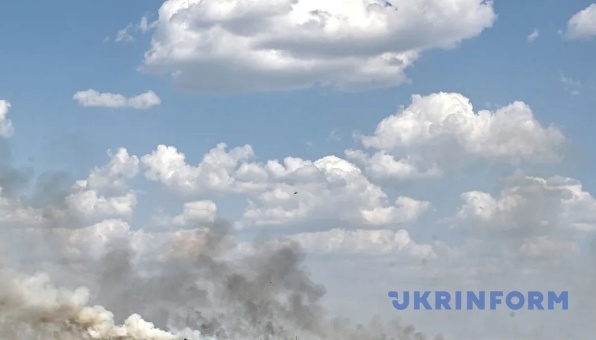
Drones attacked logistics facilities belonging to the Russian e-commerce company Ozon in the cities of Orenburg and Ufa overnight on Thursday, August 27.
Drones attacked logistics facilities belonging to the Russian e-commerce company Ozon in the cities of Orenburg and Ufa overnight on Thursday, August 27.
A total of 229 combat engagements between Ukraine’s Defense Forces and Russian invaders were recorded on the front line over the past day, August 26, with the heaviest fighting taking place in the Pokrovsk and Kostiantynivka sectors.
A total of 229 combat engagements between Ukraine’s Defense Forces and Russian invaders were recorded on the front line over the past day, August 26, with the heaviest fighting taking place in the Pokrovsk and Kostiantynivka sectors.
Ukraine's air defense forces neutralized one Oniks anti-ship missile, seven Iskander-M/KN-23 ballistic missiles, three S8000 Banderol missiles and 222 drones used by Russian forces to attack Ukraine from the evening of August 26.
Ukraine's air defense forces neutralized one Oniks anti-ship missile, seven Iskander-M/KN-23 ballistic missiles, three S8000 Banderol missiles and 222 drones used by Russian forces to attack Ukraine from the evening of August 26.

 Connexion