Tim Curry was a versatile performer on stage and screen who made his name as the flamboyant Dr Frank-N-Furter in The Rocky Horror Picture Show. Curry’s best-known roles often required a considerable physical transformation, to the extent that he was unrecognisable in some of them. As Frank-N-Furter, Rocky Horror’s eccentric scientist, he was daubed in garish makeup and dressed in stockings and suspenders. In Ridley Scott's fantasy Legend, he sported giant horns and scarlet skin as the Lord of Da
Tim Curry was a versatile performer on stage and screen who made his name as the flamboyant Dr Frank-N-Furter in The Rocky Horror Picture Show. Curry’s best-known roles often required a considerable physical transformation, to the extent that he was unrecognisable in some of them. As Frank-N-Furter, Rocky Horror’s eccentric scientist, he was daubed in garish makeup and dressed in stockings and suspenders. In Ridley Scott's fantasy Legend, he sported giant horns and scarlet skin as the Lord of Darkness, and, in 1990, Curry was transformed with full-face clown makeup to play Pennywise in the TV miniseries It, based on Stephen King's novel
Les discussions récentes autour du déclin de la lecture et l’échange que j’ai eu avec Alexandre Sirois m’ont donné envie de revenir sur une question qui me préoccupe depuis un certain temps déjà : sommes-nous réellement en train de devenir une société qui lit moins?
Un article récent de The Atlantic, « The End of Reading Is Here » établit le diagnostic de manière particulièrement saisissante en évoquant l’entrée dans une possible « ère postlittéraire ». L’article qu’Alexandre Sirois lui a
Les discussions récentes autour du déclin de la lecture et l’échange que j’ai eu avec Alexandre Sirois m’ont donné envie de revenir sur une question qui me préoccupe depuis un certain temps déjà :sommes-nous réellement en train de devenir une société qui lit moins?
Un article récent de The Atlantic, « The End of Reading Is Here » établit le diagnostic de manière particulièrement saisissante en évoquant l’entrée dans une possible « ère postlittéraire ». L’article qu’Alexandre Sirois lui a consacré dans La Presse, à l’occasion du 12 août, contribue malgré tout à déplacer la réflexion vers une autre question :quelles conditions devons-nous préserver ou créer pour demeurer une société de lecteurs et de lectrices?
Je propose donc d’explorer ces enjeux en trois billets avant que la rentrée nous happe. Le premier reviendra sur le diagnostic de Rose Horowitch et sur cette idée forte d’une société « post-littéraire » ou « post-lettrée ». C’est l’article d’Alexandre Sirois qui servira de déclencheur pour le deuxième, notamment pour s’intéresser auxconditions collectives de la lecture— bibliothèques, écoles, librairies, familles, organismes et politiques publiques. Enfin, le troisième s’appuiera notamment sur les travaux deMaryanne Wolf et Naomi Baron,deux autrices que je présente régulièrement dans mes cours, pour examiner ce que le numérique, les écrans et, désormais, l’intelligence artificielle changent à nos façons de lire, à notre attention et à notre capacité à entrer dans une lecture profonde.
L’objectif n’est donc pas d’annoncer, encore une fois!, la fin de la lecture ou la mort du livre, pas plus que de céder à la nostalgie du papier. Je voudrais simplement contribuer à cette conversation pourmieux comprendre les transformations en cours et réfléchir aux conditions qui pourraient permettre à la lecture et à la pensée de conserver une fonction importante dans nos vies individuelles et collectives.
Il n’est pas nécessaire de brûler les livres pour qu’ils disparaissent de nos vies. Il suffit, suggérait Ray Bradbury en 1993 dans le Seattle Times, que nous cessions de les lire (« You don’t have to burn books to destroy a culture. Just get people to stop reading them. »). Cette formule prend une résonance particulière à la lecture du long article que Rose Horowitch vient de consacrer, dans The Atlantic, et à ce qu’elle présente comme une transformation historique : l’entrée possible dans une société « postlittéraire ». Le titre donne le ton : The End of Reading Is Here. La fin de la lecture serait arrivée. (Étonnamment, cette célèbre formule de Bradbury ne traverse pas l’article de Horowitch, alors qu’elle semble planer sur tout le diagnostic qu’elle prononce).
L’affirmation est spectaculaire. Elle mérite qu’on s’y arrête, mais aussi qu’on la nuance. Car Horowitch ne soutient pas que nous serions soudainement devenus incapables de lire. Nous n’avons probablement jamais été exposés à autant de mots : textos, courriels, publications sur les réseaux sociaux, notifications, fils de discussion, nouvelles en ligne et tutti quanti. Nous passons une bonne partie de nos journées à lire quelque chose.
Son inquiétude porte sur une autre forme de lecture, la lecture profonde : celle qui demande de rester longtemps avec un texte, de suivre un raisonnement, de tolérer momentanément de ne pas comprendre puis de revenir en arrière, d’interpréter, de faire des inférences et de construire progressivement du sens. Autrement dit, la question n’est peut-être pas simplement : lisons-nous moins? Elle pourrait plutôt être : Avons-nous encore la disposition et la capacité nécessaires pour lire de manière profonde?
Une société qui sait lire, mais qui lit autrement
Horowitch rassemble une série de données américaines inquiétantes : recul de la lecture de livres et de la lecture pour le plaisir, diminution de certaines compétences en compréhension, difficultés croissantes devant des textes complexes, chez les jeunes comme chez les adultes. Mais son argument devient beaucoup plus intéressant lorsqu’elle distingue l’alphabétisation, la littératie et la culture de l’écrit.
Une société « postlittéraire » n’est pas nécessairement une société peu alphabétisée. C’est une société dans laquelle les individus savent toujours lire, mais où la lecture longue et soutenue cesse progressivement d’occuper un rôle central dans la vie culturelle et intellectuelle. La thèse de Horowitch va cependant plus loin : la lecture longue tendrait à devenir une pratiqueencore plus minoritaire et, ce faisant, à perdre la fonction structurante qu’elle aurait longtemps exercée dans la culture commune. Le problème ne serait donc pas seulement que certains individus lisent moins, mais que cette forme de lecture soit de moins en moins largement partagée.
C’est une distinction importante. Décoder un texte, le comprendre, l’interpréter et penser avec lui ne sont pas exactement la même chose.
Horowitch s’appuie ici sur une archéologie de la lecture. L’être humain n’est pas né lecteur. L’écriture et la lecture sont des technologies culturelles que nous avons apprises et qui, en retour, ont contribué à transformer nos manières de penser. La culture écrite a notamment favorisé certaines pratiques intellectuelles : suivre un raisonnement sur plusieurs pages, confronter des propositions, revenir sur une idée, comparer des passages, construire une argumentation, maintenir son attention malgré la difficulté. D’où une des hypothèses centrales de l’article, qui vaut la peine d’être prise au sérieux : si l’apprentissage de la lecture a transformé nos manières de penser, que pourrait produire son recul?
Du livre à TikTok : une nouvelle économie de l’attention
La télévision devait encore être allumée; ses programmes avaient un début et une fin. Le téléphone intelligent, lui, nous accompagne partout et donne accès à une offre de divertissement pratiquement illimitée. Et Internet lui-même se reconfigure. L’univers numérique des débuts était largement textuel. Une part croissante de l’attention est désormais captée par TikTok, les Reels, YouTube Shorts et d’autres formats audiovisuels courts. Le changement ne consiste donc plus seulement à dire que les écrans concurrencent les livres. C’est le statut du texte lui-même dans notre environnement informationnel qui est toujours un peu plus en décalage.
Horowitch décrit alors une sorte de cercle vicieux : moins de lecture longue et profonde → moins d’endurance attentionnelle → davantage de difficulté à lire des textes complexes → moins de plaisir à les lire → encore moins de lecture longue.
L’hypothèse est préoccupante, notamment pour l’école. Si l’on rencontre de moins en moins souvent des œuvres intégrales et des textes exigeants, comment développe-t-on les capacités — voire les circuits neuronaux — qui permettent de les lire en profondeur et de penser de manière critique?
Et maintenant, l’IA
L’arrivée de l’intelligence artificielle générative ajoute une dimension nouvelle au problème. Jusqu’ici, les technologies numériques permettaient surtout de contourner l’effort de la lecture longue. L’IA permet maintenant de déléguer une partie de l’écriture elle-même : résumer un texte, produire une argumentation, reformuler une idée, voire lire une œuvre à notre place pour nous en restituer « l’essentiel ». Or, écrire n’est pas seulement transcrire une pensée déjà constituée.
Nous écrivons aussi pour découvrir ce que nous pensons. Ce carnet, pour moi, a souvent joué ce rôle, comme d’autres avant lui : c’était le « vide-grenier », mais aussi l’atelier, le lieu où les concepts se déposent, se cherchent, se frottent les uns aux autres et, parfois, émergent. Chercher un mot, organiser un argumentaire, supprimer une phrase, critiquer : tout cela participe au travail de la pensée. La question posée par l’IA devient alors particulièrement intéressante : que se passe-t-il lorsque nous pouvons externaliser non seulement une partie de la lecture, mais aussi une partie de l’effort nécessaire pour étayer notre pensée? C’est probablement l’une des questions les plus fécondes soulevées par l’article.
De la lecture à la démocratie : attention aux raccourcis
Horowitch va cependant encore plus loin. Elle suggère la présence d’un lien entre le recul de la culture écrite et des évolutions récentes du discours politique. Dans un environnement dominé par l’immédiateté, les algorithmes et les contenus courts, les messages simples, polarisants, personnalisés et émotionnellement chargés disposeraient d’un avantage considérable. Donald Trump devient, dans son analyse, une figure emblématique de cette politique « postlittéraire ». Cette hypothèse est intéressante et appelle une discussion; c’est aussi à cet endroit que l’article appelle peut-être davantage de distance critique.
Car il y a une différence entre constater des changements bien documentés de nos pratiques médiatiques et attentionnelles et leur attribuer directement des basculements aussi complexes que celles de la démocratie et de la vie politique. Plus généralement, le passage de « nos pratiques de lecture se transforment » à « nous entrons dans une société postlittéraire » constitue un saut et une interprétation beaucoup plus ambitieuse que ce que les données qu’elle présente le démontrent à elles seules.
Et au Québec?
C’est également ici qu’il faut résister à la tentation de transposer directement au Québec le diagnostic très américain que dresse l’autrice. Les données québécoises récentes offrent un portrait relativement nuancé par rapport à celles des États-Unis. Selon l’Enquête québécoise sur les loisirs culturels et le divertissement de 2024, que j’ai consultée et partagée avec un grand intérêt, 82 % des Québécois et Québécoises de 15 ans et plus déclarent avoir lu au moins un livre, papier ou numérique, dans leurs temps libres au cours des douze mois précédents. Dans l’ensemble de la population, 23 % lisent tous les jours ou presque et 19 % au moins une fois par semaine.
Une comparaison avec les États-Unis donne néanmoins un point de repère, à condition de rester prudents : les deux enquêtes ne portent pas exactement sur les mêmes populations et ne mesurent pas la lecture de la même manière. Le National Endowment for the Arts rapporte, à partir de sa Survey of Public Participation in the Arts, qu’en 2022, 48,5 % des adultes américains avaient lu au moins un livre au cours de l’année, contre 52,7 % en 2017 et 54,6 % en 2012. La lecture de fiction, soit de romans ou de nouvelles (novels or short stories) est, elle aussi, passée de 45,2 % en 2012 à 37,6 % en 2022. Il serait donc trompeur d’opposer directement le 82 % québécois au 48,5 % américain. Ces données permettent néanmoins de constater que le portrait québécois ne correspond pas, du moins pour l’instant, au même scénario de recul généralisé.
Le portrait devient encore plus intéressant lorsqu’on regarde du côté des jeunes. Au Québec, les 15-29 ans ne sont pas ceux qui lisent le moins : 86 % disent avoir lu au moins un livre au cours des douze mois précédents, soit la même proportion que chez les 30-44 ans. Mais la situation change lorsqu’on s’intéresse à la fréquence : seulement 17 % des 15-29 ans lisent tous les jours ou presque, comparativement à 30 % chez les 60-74 ans.
Dans le contexte de la journée « Le 12 août, j’achète un livre québécois », ce constat prend toutefois une autre dimension. Car si les jeunes du Québec lisent bel et bien, la question est aussi de savoir ce qu’ils et elles lisent et quelle importance ils et elles accordent aux livres québécois. Les données disponibles suggèrent en effet que les jeunes générations sont moins portées à privilégier les œuvres d’ici que les générations précédentes. L’enjeu n’est donc pas seulement de maintenir la lecture chez les jeunes, mais aussi de faire en sorte que la littérature québécoise s’inscrive dans leurs pratiques et leurs univers culturels.
Les supports, eux aussi, évoluent. Au Québec, 26 % de la population lit des livres numériques et 15 % écoute des livres audio. Ces pratiques sont nettement plus répandues chez les 15-29 ans : 36 % lisent des livres numériques et 21 % écoutent des livres audio. Là encore, ces données invitent à se méfier du récit trop simple de « la fin de la lecture ».
Voilà qui nous ramène plus précisément au troublant problème soulevé par The Atlantic. Les jeunes, comme les moins jeunes, n’ont pas cessé de lire. La question est plutôt celle de l’intensité, de la régularité et, peut-être, de l’endurance de cette pratique. Autrement dit, ce qui pourrait se fragiliser n’est pas nécessairement le contact avec le livre, encore moins la capacité de lire, mais la présence de la lecture profonde dans la vie quotidienne.
Nous sommes donc vraisemblablement moins devant une « fin de la lecture » que devant une recomposition des pratiques de lecture : ce que nous lisons, sur quels supports, à quelle fréquence, pendant combien de temps, avec quel degré d’attention et au milieu de quelles autres sollicitations. C’est peut-être là que se situe le véritable déplacement : non pas dans la disparition de la lecture, mais dans la fragilisation de la lecture soutenue ou profonde.
Alexandrie à l’envers
L’image la plus puissante, selon moi, de l’article de Horowitch est peut-être celle par laquelle il commence et se termine : la bibliothèque d’Alexandrie. Pendant des siècles, l’un des grands problèmes des sociétés lettrées a été de préserver les textes. Des manuscrits disparaissaient, des bibliothèques brûlaient, des œuvres devenaient inaccessibles. Or, nous nous trouvons aujourd’hui dans une situation presque inverse. Jamais autant de textes n’ont été aussi facilement accessibles. Des « bibliothèques » entières tiennent dans un téléphone. La question n’est donc plus seulement : Comment préserver les livres? Elle devient : Comment préserver les conditions qui donnent envie de les lire et permettent de le faire?
C’est là que je m’éloignerais le plus catégoriquement du diagnostic de « la fin de la lecture ». La lecture n’a pas disparu. Pas encore, en tout cas. Mais il devient nécessaire et urgent de soutenir plus activement les conditions de la lecture longue, attentive et exigeante, dans un environnement qui offre en permanence des solutions plus rapides et plus immédiatement gratifiantes.
Et cette responsabilité ne dépend pas seulement de la volonté individuelle des personnes lectrices, dimension sur laquelle insiste davantage, sinon trop, Horowitch. Une société de lecteurs et de lectrices ne se maintient pas toute seule. Elle repose sur des familles, des écoles, des bibliothèques, des librairies, des maisons d’édition, des médiateurs, des médiatrices et des communautés qui rendent les livres accessibles, mais surtout visibles, désirables, partageables et aptes à nourrir la conversation. C’est d’ailleurs l’une des nuances importantes à apporter au récit de « la fin de la lecture » : la lecture est une pratique sociale, et non seulement une compétence ou une disposition individuelle.
Ce serait l’objet d’un prochain billet : si nous voulons demeurer une société de lecteurs et de lectrices, quelle écologie de la lecture devons-nous entretenir?
Sweden and its neighbors gave Ukraine the fast assault boats that carry raiders to Russian-held beaches
Russia is now hunting those boats with Geran-4 jet drones
One of the two boats hit this month may be the first CB-90 Ukraine has lost
On or around 12 August, a Russian Geran-4 attack drone found a Ukrainian navy CB-90 in the waters off the Kinburn Spit and attacked it. Three days later, another Geran-4 went after a Ukrainian tugboat in the same waters. If th
Sweden and its neighbors gave Ukraine the fast assault boats that carry raiders to Russian-held beaches
Russia is now hunting those boats with Geran-4 jet drones
One of the two boats hit this month may be the first CB-90 Ukraine has lost
On or around 12 August, a Russian Geran-4 attack drone found a Ukrainian navy CB-90 in the waters off the Kinburn Spit and attacked it. Three days later, another Geran-4 went after a Ukrainian tugboat in the same waters. If the CB-90 sank, it may be the first one the Ukrainian navy has lost.
The CB-90 is a Swedish design and a Swedish gift, and it is the reason Ukraine can raid the spit at all. Fifteen meters long, armored against small arms, gun-armed and capable of around 40 knots, it can put 21 troops—or a ton of machinery—onto a hostile beach and be gone before the defenders react. Sweden has supplied most of the more than 38 in Ukrainian service; Norway, the Netherlands and the Ukrainian billionaire Rinat Akhmetov's Steel Front initiative supplied the rest. Swedish instructors trained the crews.
Russia has now answered Ukraine's raids, and it is aiming at the boats rather than the raiders. The Geran-4s doing the hunting are jet-propelled, AI-assisted and fast enough to outrun most of what Ukraine can shoot back with. If the campaign continues, it could close the approach that has made the raids possible.
What that approach makes possible is worth spelling out. In July, unmanned boats belonging to the Ukrainian Territorial Defense Forces landed at least one gun-armed unmanned ground vehicle on the Kinburn Spit, the westernmost Russian outpost in occupied Ukraine. As aerial drones watched, the UGV opened fire on a nearby Russian installation. No Ukrainian was anywhere near the beach.
Russian forces on the Kinburn Spit can monitor Ukrainian maritime traffic, making the narrow sandy spit a key outpost in the ongoing battle for the Black Sea's most important sea lanes. Ukrainian forces are determined to dislodge Russian forces from the spit. The Russians are determined to cling to their sandy outpost.
Минобороны России опубликовало видео поражения украинского патрульного катера CB-90 беспилотным летательным аппаратом «Герань-4 сикер» близ Очакова 12 августа 2026 года.
The Geran attacks are helping. The 12 August Geran raid targeted the CB-90. The 15 August Geran raid targeted the tugboat. It's unclear how much damage the Gerans inflicted, but it's worth noting that the CB-90 is just 15 m long; a tugboat might be slightly longer. A Geran's warhead weighs as much as 90 kg—probably enough to sink such a small vessel or burn it down to the keel.
The Ukrainian navy has only a few large warships, and they're all donated minehunters that have been waiting out the current wider war in the relative safety of European waters. The bulk of the Ukrainian fleet is made up of small patrol boats, auxiliaries such as tugs, and several types of unmanned surface vessels. These vessels defend waterways and ports and, more rarely, support offensive operations.
A Russian Gerbera drone struck a tugboat of the Ukrainian Navy in the Dniprovska Gulf, opposite Russian positions on the Kinburn Spit. pic.twitter.com/Arnwts6BEL
The July robot landing was one episode in a long Ukrainian raiding campaign along the spit—the kind of operation the Geran-4s are now trying to spoil.
Location of Kinburn Spit. Map: Euromaidan Press
The Geran strikes on Ukrainian boats could blunt these raids and help the Russians maintain their tenuous hold on the Kinburn Spit. The Russian strikes are part of a wider maritime campaign. Shortly after Ukrainian drone units began targeting the unregistered cargo ships and tankers belonging to Russia's shadow fleet, Russian drone and missile units retaliated—with devastating attacks on Ukrainian ports and the ships sailing to and from these ports in support of Ukraine's lucrative grain exports.
The Ukrainian attacks on the shadow fleet damaged hundreds of ships and effectively ground Russian Black Sea trade to a halt. But Russian attacks on Ukrainian ports effectively ground Ukrainian Black Sea trade to a halt, too.
Explore further
Ukraine’s new Tu-95 killer is a $48,000 copy of a drone China refused to sell
The new jet-propelled Geran-4s with their AI-assisted targeting were central to the effort. Their 500 km/h top speed makes them hard to shoot down. And the AI makes jamming far less useful than it used to be: the operator locks the drone onto a target, and from there the machine vision flies the attack, holding the lock even if Ukrainian electronic warfare severs the radio link in the final seconds.
That makes the CB-90s valuable targets. Armed with guns and armored against enemy small arms fire, they're perfect for raiding far-flung enemy outposts such as those on the Kinburn Spit. But they're vulnerable to drone attack—and each one is irreplaceable in the sense that matters, since Ukraine cannot build them and has to wait for the next donation.
Ukrainian forces aren't powerless to stop the Russians from spoiling Ukrainian raids on the spit. Geran-4s might be too fast for Ukrainian gun teams, armed light aircraft, and cheap interceptor drones, but they're not too fast for supersonic Ukrainian air force MiG-29 fighters.
Several of the MiGs patrol over the western Black Sea. One crashed recently, but others remain.
Japan's Self-Defense Forces shadowed four Russian missile boats as they passed close to the country's northern coast, the Japanese Joint Staff reported. The warships never entered Japanese waters, yet the move sharpened a diplomatic standoff over islands Russia seized in 1945. Tokyo lodged a protest and summoned Russia's ambassador.
Russia keeps testing neighbors far from the Ukrainian front, using warships and leader visits to press claims it took by force decades
Japan's Self-Defense Forces shadowed four Russian missile boats as they passed close to the country's northern coast, the Japanese Joint Staff reported. The warships never entered Japanese waters, yet the move sharpened a diplomatic standoff over islands Russia seized in 1945. Tokyo lodged a protest and summoned Russia's ambassador.
Russia keeps testing neighbors far from the Ukrainian front, using warships and leader visits to press claims it took by force decades ago. Kyiv, itself fighting Russian occupation, has formally recognized the northern islands as occupied land and backed Tokyo's case.
Japan tracked the warships back through the strait
On 14 August, Japan's Maritime Self-Defense Force spotted the four boats near Cape Soya on Hokkaido, heading west. A P-3C patrol aircraft from the 2nd Air Wing watched them and gathered information. The boats stayed 40 kilometers from shore and did not cross into Japanese waters.
The vessels carried hull numbers 916, 946, 971, and 978. Japan had spotted the same four ships on 9 August, 70 kilometers northwest of Rebun Island. They then passed east through the Soya Strait before doubling back.
Map showing the passage of four Russian missile boats near Japan's territorial waters, 9 August 2026. Map: Japan's Defense Ministry
The transit followed Putin's trip to a contested island
The return passage came days after Vladimir Putin visited Iturup—one of the Kuril Islands—on 13 August. The Soviet Union seized the island in 1945, breaking a neutrality pact it had signed with Japan. Moscow treats the Kuril archipelago as strategically vital and keeps building up forces there. Iturup hosts the Burevestnik military airfield.
Japanese Prime Minister Sanae Takaichi called Putin's trip absolutely unacceptable. She said it contradicts Tokyo's stance on the Northern Territories, as Japan calls the islands. Japan's Foreign Ministry summoned Russia's ambassador, Nikolai Nozdrev, and lodged a firm protest. It asked him to pass Tokyo's position to Moscow at once.
Explore further
Japan weighs sanctions after Putin’s first visit to disputed Kuril Islands
What the Molniya-1 missile boats carry
Militarnyi noted that the project 12411M Molniya-1 boats, which NATO calls Tarantul III, come from the Almaz Central Marine Design Bureau. The first entered service in 1981.
They are built to hit surface targets in coastal and near-sea zones. Their main upgrade over earlier versions was four supersonic Moskit anti-ship missiles, replacing the older Termit.
Each boat can reach 41 knots and carries a crew of 40. Its weapons include a 76mm gun, two rapid-fire 30mm mounts, and Igla-1 air-defense missiles.
The four belong to Russia's Pacific Fleet. The oldest, hull 971, entered service in 1990, and the newest, hull 916, in 2003.
A New York networking company sold radios that let signals travel 100 kilometers. Ukrainian civilians say Russian drone crews used them to hunt people in Kherson, and they are asking a Manhattan jury to hold the company responsible.
Ukrainian civilians and relatives of people killed by Russian drones sued Ubiquiti Inc. in the US District Court for the Southern District of New York on 11 August, alleging the company's wireless equipment became the backbone of the command
A New York networking company sold radios that let signals travel 100 kilometers. Ukrainian civilians say Russian drone crews used them to hunt people in Kherson, and they are asking a Manhattan jury to hold the company responsible.
Ukrainian civilians and relatives of people killed by Russian drones sued Ubiquiti Inc. in the US District Court for the Southern District of New York on 11 August, alleging the company's wireless equipment became the backbone of the command network behind Russia's "human safari" against civilians.
The case rests on a comparison that the plaintiffs draw themselves. In February 2026, Starlink terminals that Russian forces had mounted on reconnaissance and strike drones were shut off after Ukraine and SpaceX built a whitelist of authorized terminals. Ubiquiti, the complaint alleges, had the same technical and contractual power over its own devices and did not use it.
That precedent cuts both ways. SpaceX had denied for years that Russian forces were using Starlink systematically, and the whitelist came together only after Ukraine's newly appointed defense minister, Mykhailo Fedorov, approached the company directly. The fix was technically possible—and it took a government to force it.
During this interview with a lovely Khersonian lady, Russian drones made several appearances.
To anyone who has not been to Kherson in the last two years, this might seem impossible or insane.
Nothing about flying machines with explosives attached to them is sane or normal. pic.twitter.com/M0MYorF2FR
The law firm DiCello Levitt LLP filed the case, Kovalenko et al. v. Ubiquiti, Inc., No. 1:26-cv-06838. The plaintiffs are Ukrainian civilians who were maimed, displaced, or forced to live under drone surveillance, along with family members of civilians killed in drone attacks. They are seeking a jury trial.
Ubiquiti, listed on the New York Stock Exchange as UI, makes long-range wireless "bridges" widely used for internet access in areas without cable. Its radio bridge antennas and airMAX technology are subject to US export restrictions on Russia. The complaint alleges the devices kept reaching Russian forces through intermediary supply chains, and that they now link reconnaissance units, drone operators, attack units, and commanders across roughly 100 kilometers of encrypted battlefield network.
"Battlefield communications are the central nervous system of the Russian occupation forces: without them, they could not coordinate the human safari or maintain the occupation," Scott Gilmore, the lead attorney for the plaintiffs and a partner at DiCello Levitt, said in an interview with Euromaidan Press.
The complaint cites US export-control restrictions, Russian import data, public reporting, Russian military statements, battlefield images and video, and Ubiquiti's own device telemetry. It alleges the company held location data showing where its devices were operating, including inside Russia and occupied Ukrainian territory, and that it was repeatedly warned its products were being smuggled across the border.
It further alleges Ubiquiti continued issuing firmware updates and technical support that kept those devices running, and that it could have cut the pipeline off—by geofencing, by terminating distributors tied to sanctions-evasion routes, or by building a remote-disable feature into its firmware.
This case is not about standard warfare: it's about murdering civilians.
Scott Gilmore, lead attorney for the plaintiffs
"Companies cannot willfully blind themselves when sanctions and export controls are being breached, and their devices are being foreseeably used in dangerous ways," Gilmore said. "US law is clear that companies bear legal responsibility when they entrust dangerous devices to end users who they know or should know are hurting people. This case is not about standard warfare: it's about murdering civilians."
The plaintiffs bring eight causes of action, including negligent entrustment, public nuisance, strict products liability for design defect, negligent product design, negligent infliction of emotional distress, and aiding and abetting assault, battery, and intentional infliction of emotional distress.
Explore further
Russian drone kills 84-year-old goat herder who refused to abandon her animals
How the radios got to the front
The lawsuit follows an investigation published in January 2026 by Hunterbrook Media, which documented widespread use of Ubiquiti products by Russian forces. One Ukrainian communications officer told the outlet that an estimated 80% of the Russian bridges he had observed near the front line were Ubiquiti devices.
Analysis of trade records found the value of Ubiquiti shipments crossing into Russia rose by 66% after the full-scale invasion, despite US and EU export controls, and that the shipments included models released after the bans took effect. The goods moved mainly through distributors in third countries such as Kazakhstan and Türkiye. Russian units often received the bridges from volunteers who bought them with crowdfunded money.
Ubiquiti has been here before. In 2014, the company paid a $504,225 settlement to the US Treasury's Office of Foreign Assets Control after its products were delivered to Iran in violation of US sanctions between 2008 and 2011.
Human safari: the first video of a drone chasing a civilian. CCTV camera footage I obtained in Aug 2024.
This systematic drone terror campaign has been going on for two years.
Russia's "human safari" is a campaign in which small drones hunt and attack civilians, concentrated in Kherson and other front-line areas. Operators use drone cameras to track people, vehicles, and rescuers, and sometimes strike the same target twice.
UN investigators concluded in September 2025 that Russian short-range drone attacks on civilians along the west bank of the Dnipro River amount to the crimes against humanity of murder and forcible transfer of population. The finding covers more than 300 kilometers across Kherson, Dnipropetrovsk, and Mykolaiv oblasts. The complaint cites it as evidence.
Ukraine's Security Service has since charged 10 operators from Russia's 404th Motorized Rifle Regiment with war crimes in absentia, in a case that included explosives dropped on ambulances at a city hospital and a double strike on rescuers.
The incidents in the complaint include a married couple attacked in their car, a firefighter hunted and wounded by a drone while responding to a colleague, and an energy worker killed in a double-tap strike as colleagues tried to reach him.
"The human safari is one of the most horrific crimes against humanity of the 21st Century," Gilmore said. "We intend to present evidence of the widespread and systematic nature of this campaign in court, including international documentation. These coordinated attacks do not happen randomly: they require communications systems and a chain of command. That is precisely why the United States banned the export of Ubiquiti's radio bridge antennas to Russia—because they are necessary for Russia's war machine."
The human safari is one of the most horrific crimes against humanity of the 21st Century.
Scott Gilmore, lead attorney for the plaintiffs
Russian state media has shown the equipment in use.
Zvezda, the television channel run by Russia's Defense Ministry, aired footage on 3 July 2025 of a Ubiquiti UISP Litebeam 5AC device; a TASS report in October 2025 showed a serviceman logging into Ubiquiti's airOS operating system, and a Rossiya-1 segment that month showed one climbing a tower to mount an antenna carrying the company's logo.
A Russian seller supplied Hunterbrook with letters she said came from Russian military units, thanking her for wireless bridges they described as necessary for connections over long distances.
Ubiquiti has said nothing
Ubiquiti did not respond to a request for comment at the time of publication.
Neither the company nor its chief executive, Robert Pera, has publicly commented on the January investigation, according to the Foundation for Defense of Democracies. No US or EU authority has announced an enforcement action against Ubiquiti over Russia, and the company has not been formally accused of sanctions violations tied to Ukraine. The allegations in the complaint are untested, and Ubiquiti has not yet filed a response.
Explore further
Inside Human Safari: the film that captures Russia’s drones hunting Ukrainians like prey
What the case would establish
If it survives, the suit would test whether ordinary US product-liability law reaches a manufacturer whose equipment ends up in a documented atrocity—a theory that does not require proving the company intended any of it, only that it knew or should have known and failed to act.
"The question is this: what would a reasonable company do if it learned its devices were being used to coordinate murder?" Gilmore said. "If it fails to follow reasonable safety measures, shouldn't it be held liable to the civilians who get hurt? Those are the questions we intend to put before a New York jury."
Gilmore, who has investigated war crimes for two decades, said the legal framework needed already exists at national and international levels, and that in mass-atrocity cases from Syria to Sudan, investigations, jurisdiction, and remedies take years. He said he expects accountability for Ukrainian victims to come through criminal prosecutions, civil litigation, and regulatory enforcement together.
"Our clients want to shine a light on the atrocities being committed against civilians in Ukraine and to remind companies that compliance with sanctions and export controls is not a mere technicality: it's a matter of life or death," he said.
"We are at the tip of the spear."
Editor's note: Euromaidan Press correspondent Zarina Zabrisky, who conducted this interview and reports from Kherson, co-developed draft US legislation on the drone campaign—the Liability for Operators and Responsible Authorities (LORA) Act—which would impose targeted sanctions on identified drone operators, restrict exports of drone components, and require public attribution of perpetrators. She has no connection to this lawsuit or to the firm that filed it. Her documentary Kherson: Human Safari is available free at khersonhumansafari.com.
Russia’s war budget got a brief respite this spring, when the Iran war pushed oil prices up. By July, it was gone. A single month swung from a rare surplus to an $8.8 billion deficit, leaving the seven-month shortfall already bigger than the entire deficit Russia ran last year, with five months still to run.As oil money drains away, the Kremlin is covering the gap by taxing ordinary Russians harder and eyeing their savings.
Moscow will not run out of cash soon, but it i
Russia’s war budget got a brief respite this spring, when the Iran war pushed oil prices up. By July, it was gone. A single month swung from a rare surplus to an $8.8 billion deficit, leaving the seven-month shortfall already bigger than the entire deficit Russia ran last year, with five months still to run.
As oil money drains away, the Kremlin is covering the gap by taxing ordinary Russians harder and eyeing their savings.
Moscow will not run out of cash soon, but it is running out of politically affordable ways to raise it.
Oil-and-gas income, long the war’s financial engine, fell by about a sixth from a year earlier to 4.6 trillion rubles ($56 billion), Finance Ministry figures show. Spending outpaced revenue, with state procurement up by nearly two-fifths.
The hole was plugged by value-added tax, whose receipts jumped by a quarter after Moscow raised the rate to 22% at the start of the year—a tax levied on ordinary Russians’ spending, not on oil prices or economic growth.
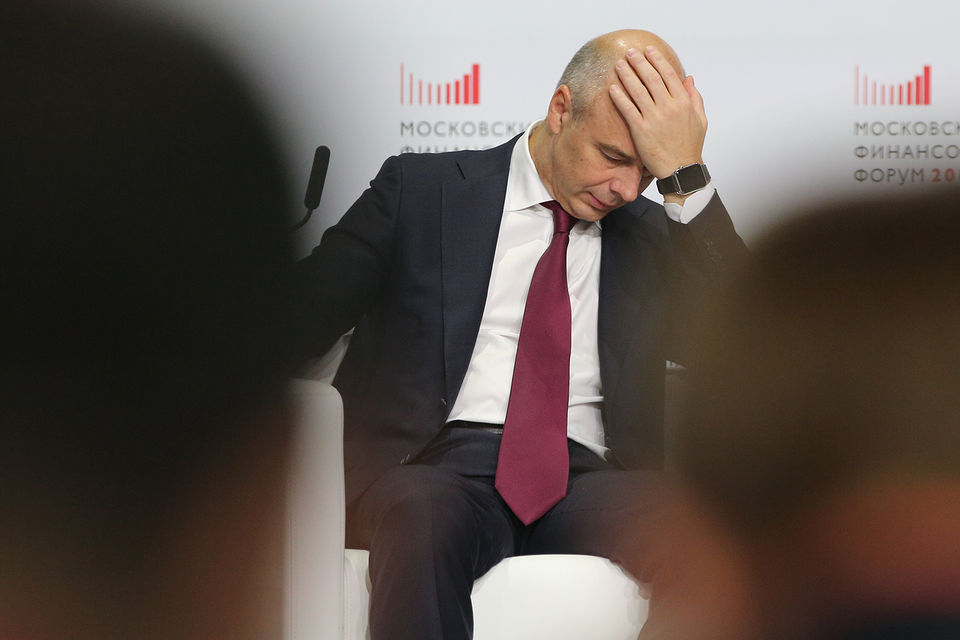
Anton Siluanov, Russian Finance Minister. Photo: vedomosti.ru
One month of relief, then the gap reopened
The reprieve proved brief. July’s deficit followed June’s surplus even though spring’s higher oil prices should have cushioned the books, Bloomberg calculations showed.
Russia’s oil revenues collapse 24% as global prices slide further (INFOGRAPHICS)
With the economy barely growing in the first half, a second-half recession could knock out another chunk of tax revenue just as the shortfall widens. Yaroslav Kabakov of the Finam brokerage expects the full-year deficit to approach double last year’s by year-end. Even as revenue shrinks, the military reportedly wants roughly 40% more than planned.
Borrowing, the other fallback, is jamming too. Russia suspended government bond auctions in July after investors balked and it could no longer raise money cheaply at home, even as Finance Minister Anton Siluanov vowed to shield defense and social spending.
Moscow shifts the burden to households
The burden is shifting onto households. The VAT rise alone will raise about $13 billion a year—barely a month of military spending—yet, unlike seizures aimed at billionaires, it reaches nearly every Russian, columnist Agathe Demarais wrote in Foreign Policy.
A draft law would allow the state to move around $40 billion from private pension accounts, and Communist leader Gennady Zyuganov has urged Vladimir Putin to tap the savings Russians hold in banks. Moscow will not run out of cash soon, Demarais argued, but it is “running out of politically affordable ways to raise it.”
Ordinary Russians are already moving their money. Through the first half of 2026, they withdrew cash from the banking system at the fastest pace since the pandemic, and the Central Bank has begun allowing banks to flag and freeze “suspicious” withdrawals, Euromaidan Press reported.
The Yemeni government said the ship was carrying food supplies to a port on the Bab al-Mandab Strait while the Iran-backed Houthis accused Saudi Arabia of transporting weapons.
The Yemeni government said the ship was carrying food supplies to a port on the Bab al-Mandab Strait while the Iran-backed Houthis accused Saudi Arabia of transporting weapons.
Monster Wolf and Pochi are among the robots deployed to scare away bears and transport cherry blossoms in a northern region where many farmers are in their 70s or older.
Monster Wolf and Pochi are among the robots deployed to scare away bears and transport cherry blossoms in a northern region where many farmers are in their 70s or older.
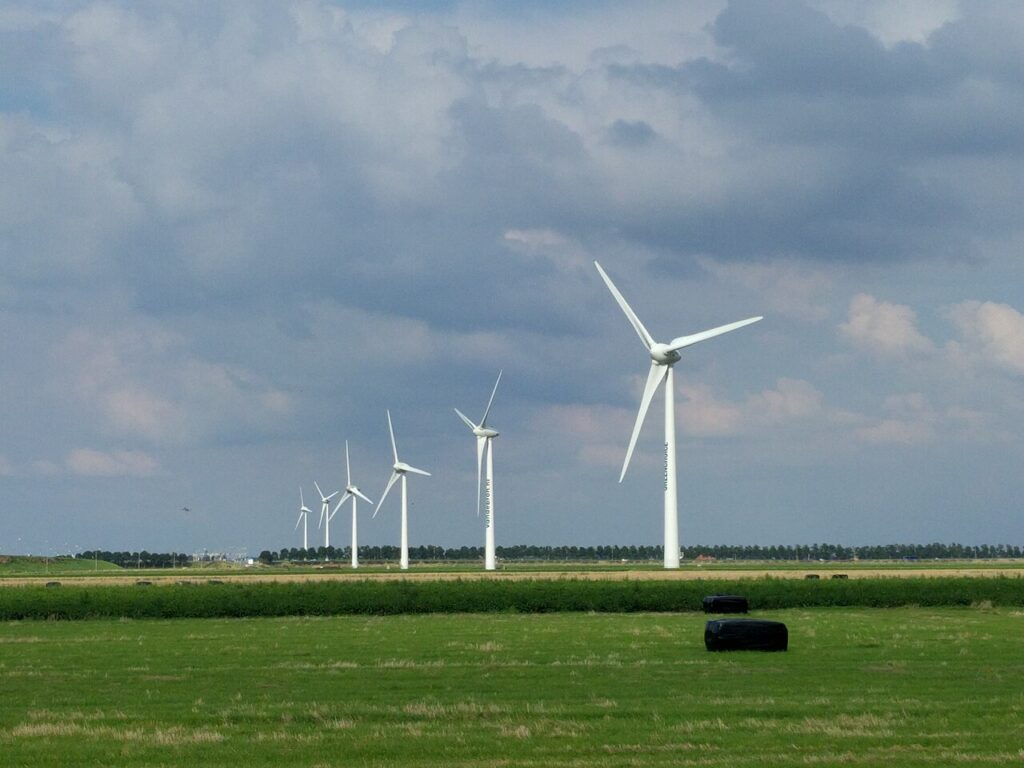
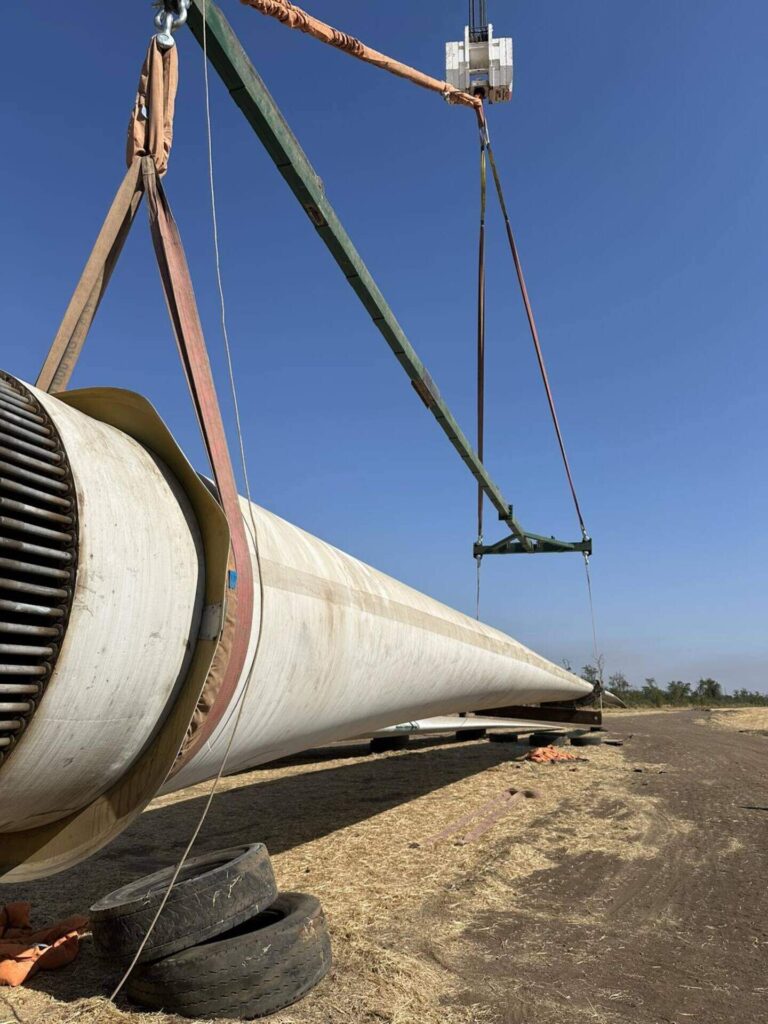
A Russian drone clipped one of Serhii’s wind turbines; his crew repaired the blade and carried on. He runs an oil-pressing plant in southern Ukraine, where the grid gives him about two hours of power and then 10 without. The turbine is one of six he has bought—Dutch machines, pulled from wind farms in the Netherlands for being too small, and shipped east.In the Netherlands, a turbine like that is barely worth the paperwork. Over a blacked-out Ukrainian factory, it is worth
A Russian drone clipped one of Serhii’s wind turbines; his crew repaired the blade and carried on. He runs an oil-pressing plant in southern Ukraine, where the grid gives him about two hours of power and then 10 without. The turbine is one of six he has bought—Dutch machines, pulled from wind farms in the Netherlands for being too small, and shipped east.
In the Netherlands, a turbine like that is barely worth the paperwork. Over a blacked-out Ukrainian factory, it is worth shipping across a continent. That gap is turning into a market.
There is an active world market for refurbished wind turbines.
Bert van der Lingen
The market has formed largely on its own. Buyers like Serhii got their turbines through what Bert van der Lingen, vice-chairman of the Dutch wind association NedZero, calls “free market conditions”—private deals, one at a time—ahead of the Dutch government program meant to organize the trade, “Renewed Energy for Ukraine,” which began only in December 2025 and is still in start-up.
NedZero wrote to Euromaidan Press to correct an earlier report, drawn from the Dutch daily De Telegraaf, that called the turbines worn out. They are not.
A machine comes down in the Netherlands only because a newer model on the same spot would earn five or six times as much. The old one still works. Stripped, inspected, and fitted with new bearings and a rebuilt gearbox, it has “fifteen to twenty years of technical life remaining.”
“This is a story we want to see grow,” van der Lingen added, “and getting the baseline right helps that.”
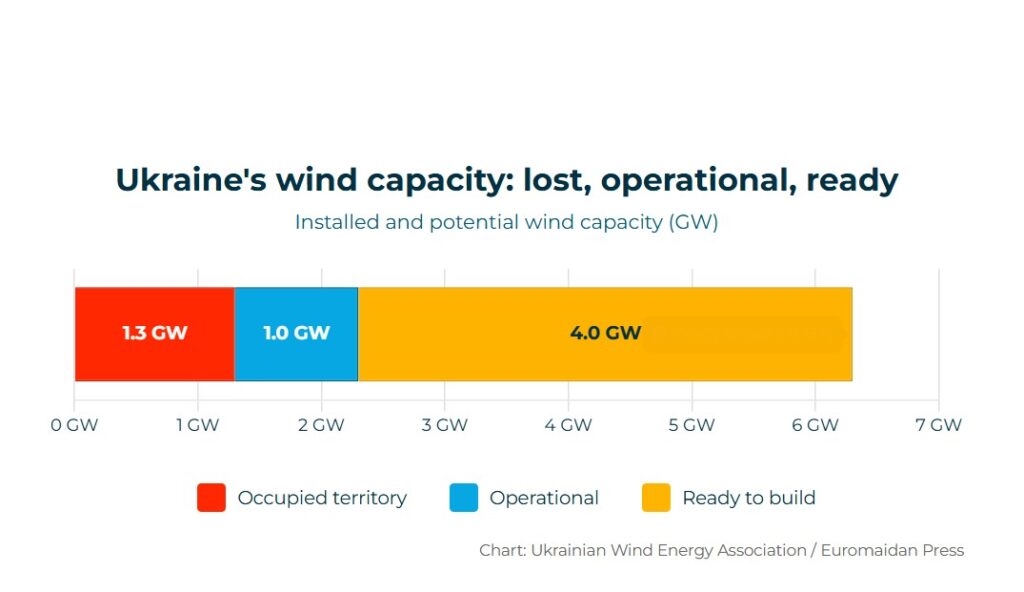
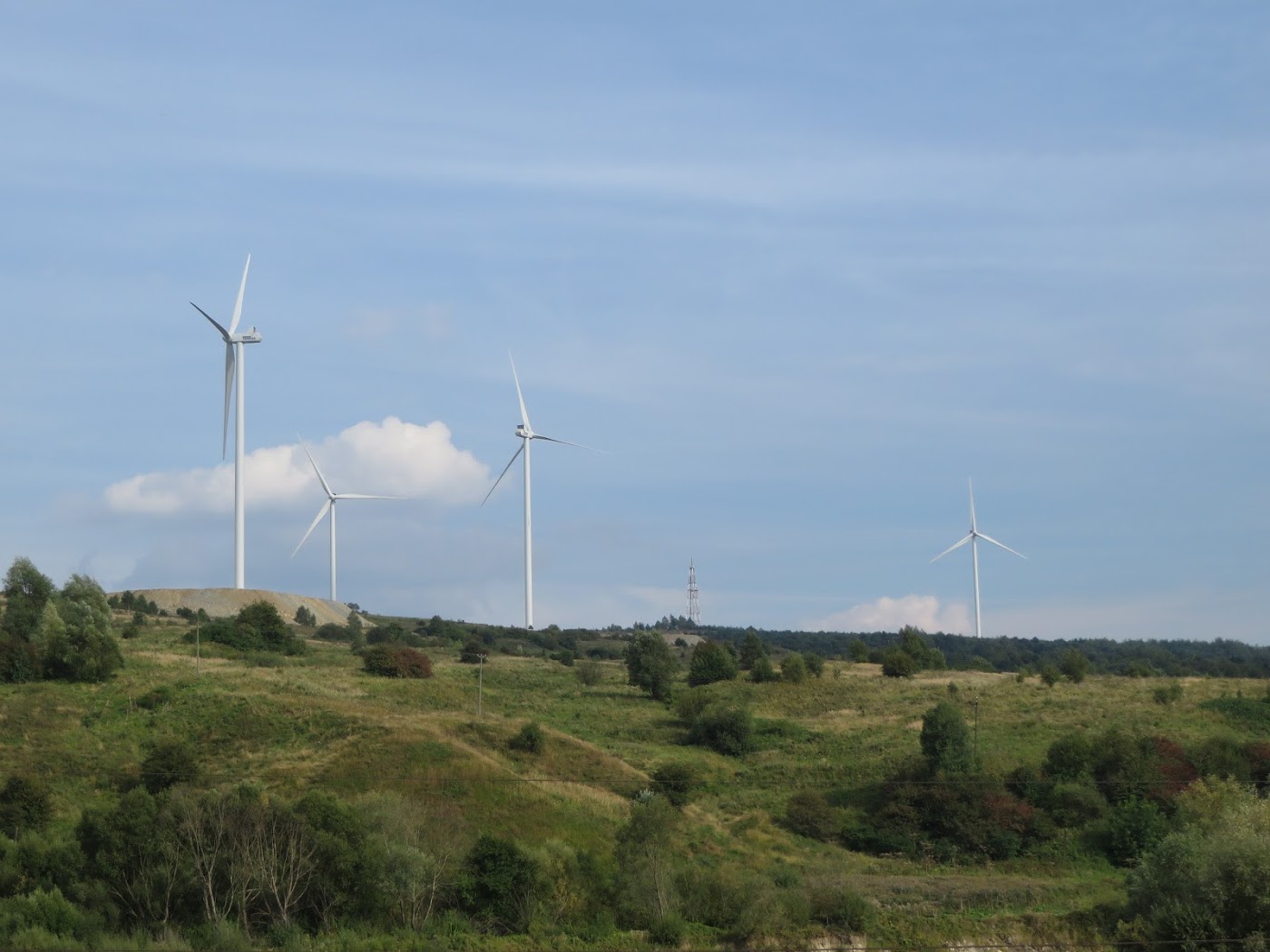
Russian occupation trapped 1.3 GW of Ukraine’s pre-war wind capacity in occupied territory. Just 1.0 GW remains operational. But seven wind farms with a combined capacity of 4 GW have all permits and grid connections in place. The bottleneck is in the market access. Chart: Ukrainian Wind Energy Association / Euromaidan Press
Why blacked-out Ukraine wants Europe’s spares
Ukraine is one buyer in a market that predates the war. “There is an active world market for refurbished wind turbines,” van der Lingen notes: Dutch machines freed up by repowering already spin from Poland and the Baltics to Jordan, Kenya, and Chile, sold with maintenance records and spare parts to match.
The supply is thin, and slow to move. By NedZero’s own survey, 486 Dutch turbines are due to come down over the decade to 2035—a floor, it says, since not every producer answered—and only a portion will be shipped anywhere, fewer still to Ukraine. A market like this gets built one deal at a time.
A crane lifts a wind turbine into place. Photo: De Telegraaf
What makes Ukraine the eager buyer is what Russia has done to its lights. Four winters of strikes have destroyed or damaged more than 80% of the country’s power-generating capacity, by the energy ministry’s own count—its big Soviet-built plants are so few and so concentrated that one missile can darken a whole region.
Kyiv’s answer is to scatter generation so widely that no single strike can repeat the trick, an approach the ministry describes as “energy cells.” One refurbished turbine beside one factory is that doctrine at its smallest scale.
Explore further
Wind farms are harder to destroy—so why won’t Ukraine let them scale? (INFOGRAPHICS)
Small, slow, and off the books
Money is the bottleneck. Development banks lend in amounts far too large for a handful of turbines—support from the big institutions starts at around €10 million ($11 million)—so small orders have to be bundled into projects large enough to finance. How many turbines reach Ukraine, the association says, depends on whether that bundling comes together.
Then there is the wiring. A turbine only makes power when the wind blows, not when the factory needs it. And most are built to shut down automatically when the grid fails, so a blackout silences them too—exactly when the factory needs them most—unless they are rewired, with batteries, to run on their own. That is what the microgrids are for.
NedZero cannot say how many Dutch turbines are already working in Ukraine. It has no consolidated count of what its country’s firms have delivered, nor of the megawatts they have added to the grid, and offers only to go and count them. What is coming free is on the books; what is already turning above a Ukrainian factory, holding its lights while the grid is dark, is not.
Saudi Arabia has not commented on the claims by the Houthis, who are backed by Iran and have vowed to close “all access routes” to Saudi oil shipments.
Saudi Arabia has not commented on the claims by the Houthis, who are backed by Iran and have vowed to close “all access routes” to Saudi oil shipments.
Brig. Gen. Yahya Saree, a Houthi military spokesman, in a still from a televised message the group released on Wednesday. The Houthis claim to have attacked eight ships linked to Saudi Arabia since they declared a blockade on Saudi shipping last month.
Mourners on Wednesday carried a coffin draped in the Iranian flag during a funeral for those killed in airstrikes on bases belonging to Iraq’s Popular Mobilization Forces in Mosul, Iraq.
Entretien au long cours avec Oleksandra Matviichuk, avocate ukrainienne et prix Nobel de la paix : crimes de guerre, justice, guerre longue et courage d’une société traumatisée.
— Permalien
Entretien au long cours avec Oleksandra Matviichuk, avocate ukrainienne et prix Nobel de la paix : crimes de guerre, justice, guerre longue et courage d’une société traumatisée.
— Permalien
[en]
Je me demande si l’invasion de nos écrans par l’IA va redonner une place à l’écriture manuscrite.
Transcription IA non vérifiée (22.07.2026):
Paris, le 4.7.2026, 8h45
Ce cahier est immense. Je l’ai acheté pour écrire. J’ai un doute en écrivant la date, pourtant je ne devrais pas, c’est le 4, l’anniversaire de Delphine, mais je vérifie quand même. Ce n’est pas ça que j’avais prévu d’écrire. Mais je repense à elle, je repense à il y a un an. Je mange à midi avec une
Je me demande si l’invasion de nos écrans par l’IA va redonner une place à l’écriture manuscrite.
Transcription IA non vérifiée (22.07.2026):
Paris, le 4.7.2026, 8h45
Ce cahier est immense. Je l’ai acheté pour écrire. J’ai un doute en écrivant la date, pourtant je ne devrais pas, c’est le 4, l’anniversaire de Delphine, mais je vérifie quand même. Ce n’est pas ça que j’avais prévu d’écrire. Mais je repense à elle, je repense à il y a un an. Je mange à midi avec une de ses amies, que je n’aurais sans doute jamais connue si Delphine était encore là aujourd’hui pour fêter ses 42 ans. J’ai cherché sur Facebook, “Delphine anniversaire”, parce que j’ai un doute alors que je sais — c’est bien le 4, son anniversaire, c’est juste ? Je sais mais je vérifie quand même. Pas parce que c’est Delphine, parce que ma mémoire et ma vie sont faites de ces milliers de petites vérifications, chaque jour, tout le temps, avant l’accident aussi. Elles sont efficaces, mes vérifications, même moi je ne les remarquais généralement pas. Elles évitent oublis et erreurs.
J’écris moins bien que l’autre soir. Parce que c’est le matin ? Les lignes du cahier ? La fatigue ? J’ai dormi huit heures et j’émerge avec peine. Les mots sur une page sont plus visiblement ancrés dans un instant précis du temps que ceux sur un écran, plus facilement retravaillés, malaxés et transformés. Le temps de la production n’est pas différent de celui de l’impression.
Je pense à Delphine, il y a un an et un jour, seule dans sa voiture. La tristesse m’envahit en tombant sur un des nombreux avis de recherche qu’on avait lancés sur Facebook. Je me souviens la peur au ventre, les appels à la police, les échanges avec ceux et celles qui l’aimaient, chaque nouvelle personne amenant malgré elle plus de fermeté à la certitude que personne n’avait de nouvelles, que personne ne savait rien, que le pire était à craindre. L’angoisse, l’urgence, l’impuissance, se soutenir comme on pouvait, les maux de tête qui ne me quittaient plus, l’attente, l’espoir sous perfusion mais le cœur qui a déjà sombré…
L’incompréhension — alors, depuis, maintenant. Chacun tente de construire du sens comme il peut, ou supporte son absence, plus ou moins bien.
L’intensité extraordinaire, au sens premier, entre le 5 et le 12 juillet, entre la prise de conscience de sa disparition et son enterrement, le cauchemar de réaliser qu’elle avait laissé des instructions de suppression de son compte Facebook après son décès lorsque j’ai demandé sa mémorialisation, peine redoublée que ma santé ne me permette pas de garder le lien avec ceux et celles qui partageaient cette peine du départ abrupt de Delphine. Encore maintenant, j’aurais voulu, mais je ne peux pas, et ça me pèse, de ne pas être en mesure d’honorer sa vie et sa mémoire comme je le voudrais.
Ce n’est pas nouveau, mais c’est criant depuis mon accident : ma vie n’a pas la place pour tout ce que je voudrais. Voilà donc de quoi je voulais parler à ce cahier tout à l’heure quand j’ai commencé à écrire, avant qu’une date m’envoie sur un chemin de traverse.
“Les arbres ne poussent pas jusqu’au ciel”, métaphore évoquée dans la discussion d’un cas servant de support à ma formation sur l’épuisement professionnel. Évidemment qu’au-delà de ce que cette formation m’a apportée en tant qu’intervenante systémicienne, j’en ai aussi tiré plein d’idées enrichissantes sur le plan personnel. Entre une hyperactivité marquée qui m’a déjà amenée plus d’une fois à l’épuisement ou à ses portes, et une fatigabilité accrue durant cette trop longue période post-accident, ce n’est pas surprenant.
Ce n’est pas parce que quelque chose marche bien et a du succès qu’en faire toujours plus sera toujours mieux. Il y a des effets de seuil. L’entrepreneur qui développe encore et encore son projet finira un jour par ne plus réussir à suivre, même si jusqu’ici ça a toujours bien marché pour lui, de développer toujours encore de nouvelles idées. Et moi alors ?
Moi aussi, j’ai des idées, je lance des choses, je fais. Je n’aime pas l’idée que les arbres ne poussent pas jusqu’au ciel. Je pense qu’en optimisant on peut toujours plus que ce qu’on croit. J’adore Tetris. Quand la voiture semble pleine et qu’il faut encore y glisser un sac, j’y parviens. Idem avec la cave, la valise, le frigo, et l’agenda. Mais l’agenda est trompeur, car il ne dessine que le temps, pas “l’énergie”. Je sais depuis longtemps la nécessité de freiner, sans en être persuadée dans ma chair. Je vois ma fatigue comme un échec d’optimisation, pas l’atteinte d’un seuil.
L’accident a changé ça, et continue de le changer. Je ne vais pas retracer toutes les étapes ici, mais l’accident a l’avantage de balayer l’excuse du défaut d’optimisation.
Le problème avec les idées et les envies, pour moi, c’est que ça coûte en énergie de ne rien en faire. Mais j’ai mis le doigt sur une chose qui les amène : l’input. Tout ce qui rentre chez moi a tendance à générer une réponse multibranches. L’IA m’a mise sur la piste. J’ai pas mal bidouillé avec l’IA ces derniers mois (et aussi avant). Et ce qui m’a frappée, c’était la tendance qu’avait mon assistant IA, quand il mettait à jour un fichier (l’état d’avancement d’un projet, une idée à développer, une liste de modifications faites…) à toujours ajouter un peu plus de texte que la fois d’avant. Il a clairement tendance à être verbeux — si c’est moi qui le dis ! J’ai mis énormément d’énergie à essayer de corriger ce travers. J’ai donné plus d’instructions. Mais rien ne parvenait à réduire l’usine à gaz. C’est une défaillance de fond : un biais vers un peu plus de production, dans le doute. Mieux vaut en faire un peu plus, produire plus de mots. Et ce qui amène à cette production de mots, c’est mon input, mes prompts, ce que je fais entrer dans le système. Si je ne donne rien à manger à mon assistant IA, les fichiers cessent de se multiplier et de s’allonger.
Hier, sur LinkedIn, je vois passer des conseils pour prompter Fable, le dernier et plus puissant modèle de Claude : il faut lui en donner moins. Moins de détails, moins d’instruction. Si on construit nos instructions comme pour les anciens modèles, il sous-performe.
L’IA m’intéresse en tant qu’outil, bien sûr, mais aussi en tant que support de réflexion (possiblement modèle et métaphore) pour appréhender ce qu’on appelle le langage, l’intelligence, le sens, et même la vie. La façon dont nous observons et réagissons, en tant qu’humains, à une production “mécanique”, est fascinante et riche de considérations philosophiques.
L’IA nous amène dans un monde où produire du contenu est devenu plus facile qu’avant — tellement facile que la production n’est plus le facteur limitant, et que notre monde, qui n’est pas prévu pour y faire face, s’y noie.
Moi, ça ne me coûte rien de produire des idées. Mon cerveau est comme l’IA qui crache des mots dès qu’on appuie sur un bouton. En plus de ça, malgré (grâce à ?) mon TDAH, j’ai assez de facilité à en faire quelque chose de tangible, de ces idées. Je suis orientée vers l’action, le faire. Je pense à un truc, je suis prête à démarrer avec.
Tout ça m’a été très bénéfique au cours de ma vie, et l’est encore, dans plein de circonstances. Je me dis qu’il faudrait peut-être une prise en charge logo pour mes symptômes linguistiques, quelques semaines plus tard j’ai trouvé quelqu’un. J’ai eu une carrière entrepreneuriale et je fonctionne encore comme ça. Ma capacité à avoir des idées, à vouloir des choses, et à les réaliser : tout ça m’a amené beaucoup de succès et est très valorisé. Mais c’est aussi ce qui me fait souffrir car il y a non seulement une limite au nombre d’heures dans une journée et au nombre d’années dans une vie, mais aussi à la capacité de notre corps et de notre cerveau à travailler et à fournir des efforts. La route vers l’épuisement et la surcharge est toute tracée. Et dans un contexte comme le mien maintenant, où “l’énergie” est objectivement limitée, où je veux réellement me ménager pour récupérer, c’est extrêmement frustrant, au point d’être douloureux, d’être assaillie en permanence d’idées et d’envies “réalisables” mais impossibles. Alors oui : prendre du recul, accepter la frustration, tout ça c’est très bien. Mais ne pourrait-on pas freiner cette production spontanée et effrénée d’envies et d’idées ? Oui : en étant plus sélectif avec ce qui rentre, et fait leur terreau et leur engrais.
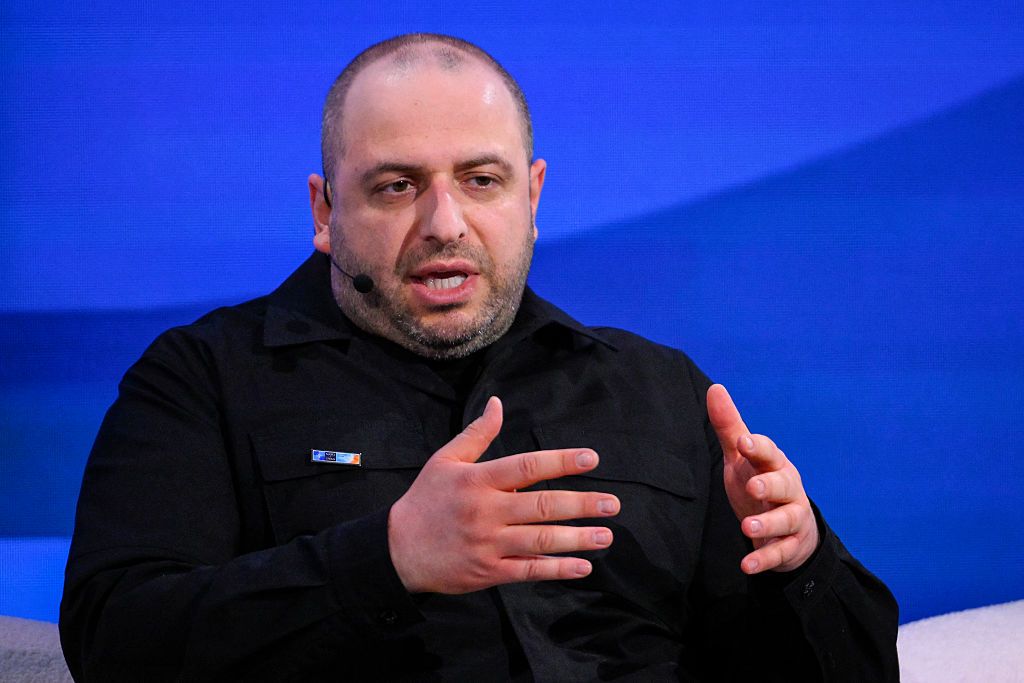
Ukraine is launching a joint weapons production program with members of the Ukraine Defense Contact Group (UDCG), or Ramstein summit participants, Defense Minister Rustem Umerov announced on July 1. The UDCG was formed in 2022 under former U.S. President Joe Biden to coordinate military assistance for Ukraine among about 50 of Kyiv's allies. As part of a new joint production program, new factories and weapons manufacturing facilities will be built in Ukraine and abroad, Umerov said in a social m
Ukraine is launching a joint weapons production program with members of the Ukraine Defense Contact Group (UDCG), or Ramstein summit participants, Defense Minister Rustem Umerov announced on July 1.
The UDCG was formed in 2022 under former U.S. President Joe Biden to coordinate military assistance for Ukraine among about 50 of Kyiv's allies.
As part of a new joint production program, new factories and weapons manufacturing facilities will be built in Ukraine and abroad, Umerov said in a social media post. The international sites will be UDCG member countries participating in the Ramstein-format summit.
New legal and tax regulations will also be put in place for Ukrainian weapons manufacturers, facilitating the construction of new sites and allowing them to rapidly scale up production, Umerov said.
The Defense Ministry on July 1 joined the Verkhovna Rada (Ukraine's parliament) Finance, Tax, and Customs Committee in presenting four draft laws regarding domestic weapons production "aimed at developing the industry." The legislation introduces amendments to tax, customs, and budget regulations, as well as the Criminal Code.
The first vote on the new legislative package is expected to take place in a month, according to Umerov.
"This is a new type of military-industrial cooperation, where Ukraine is an equal partner and player in the global defense market," he said.
As Ukraine scales up domestic defense production, President Volodymyr Zelensky has been lobbying foreign partners to provide funding to help match its manufacturing capacity. At the NATO summit in The Hague, Ukraine signed agreements on joint weapons production with the U.K. and Denmark. Norway also pledged to jointly develop air defense systems with Kyiv.
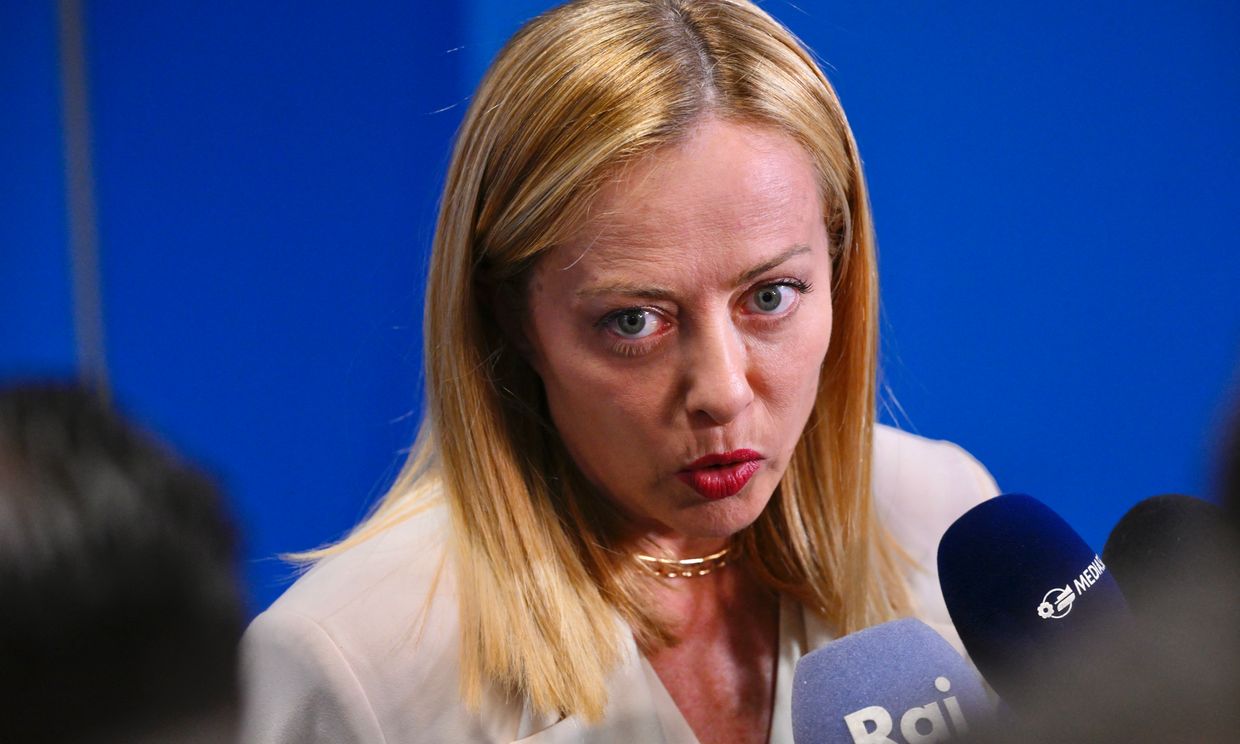
Italian Prime Minister Giorgia Meloni told U.S. President Donald Trump that the determination shown by the U.S. toward Iran should also be applied to ending Russia's war against Ukraine, she said on June 25 on the sidelines of the NATO summit in The Hague.Meloni, a close Trump ally and the only European leader invited to his 2025 inauguration, welcomed the recently announced ceasefire between Israel and Iran.She emphasized that sustained commitment is also needed in Ukraine, where Russian Presid
Italian Prime Minister Giorgia Meloni told U.S. President Donald Trump that the determination shown by the U.S. toward Iran should also be applied to ending Russia's war against Ukraine, she said on June 25 on the sidelines of the NATO summit in The Hague.
Meloni, a close Trump ally and the only European leader invited to his 2025 inauguration, welcomed the recently announced ceasefire between Israel and Iran.
She emphasized that sustained commitment is also needed in Ukraine, where Russian President Vladimir Putin last week declared "all of Ukraine is ours."
"I spoke about this with President of the United States Donald Trump, to whom I said the same determination is needed to achieve two other important ceasefires," Meloni said. "One in Ukraine, where Russia seems unwilling to take any steps forward, and one in Gaza."
On June 24, Trump announced that a ceasefire between Iran and Israel had taken effect following U.S. airstrikes on Iran's nuclear infrastructure.
The escalation followed Israel's June 13 attack that prompted Iran to retaliate with missile attacks on Tel Aviv and other cities, killing multiple civilians, including five Ukrainian citizens.
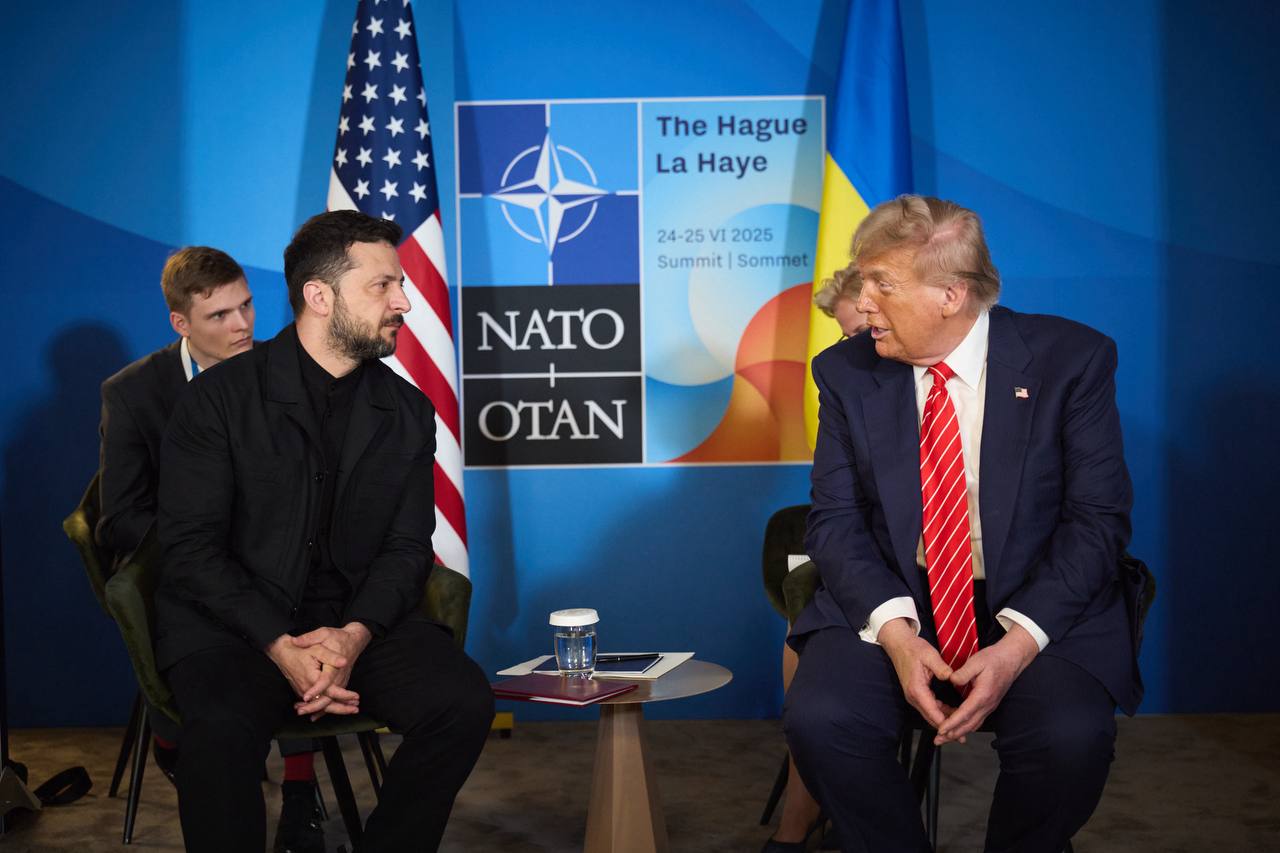
President Volodymyr Zelensky met with Trump during the summit, held amid concerns over waning U.S. support for Kyiv. Unlike in 2024, this year's communique did not directly condemn Russia's invasion, a shift that underscores changing political dynamics within the Alliance.
The leaders reaffirmed support for Ukraine's defense, saying national contributions toward Ukraine's military-industrial capacity will count toward NATO's new defense spending goal.
All 32 NATO member states agreed to a new benchmark, committing to raise defense spending to 5% of GDP by 2035. Meloni praised the decision as a sign of unity.
"I believe the unity of the alliance and its willingness to strengthen itself is more important, especially in the context we are in, and is clearly a very important element," she said.
The NATO summit comes just one week after Trump departed early from the G7 in Canada, delaying direct talks with Zelensky until June 25.
Editor's note: This story was updated with comments made by NATO Secretary General Mark Rutte.NATO member states have agreed to a new defense spending benchmark, committing to allocate 5% of their gross domestic product annually to defense and security-related expenditures by 2035, according to a joint statement released on June 25 by alliance leaders meeting in the Netherlands.The decision marks a significant increase from the current 2% guideline and reflects the alliance's response to the pus
Editor's note: This story was updated with comments made by NATO Secretary General Mark Rutte.
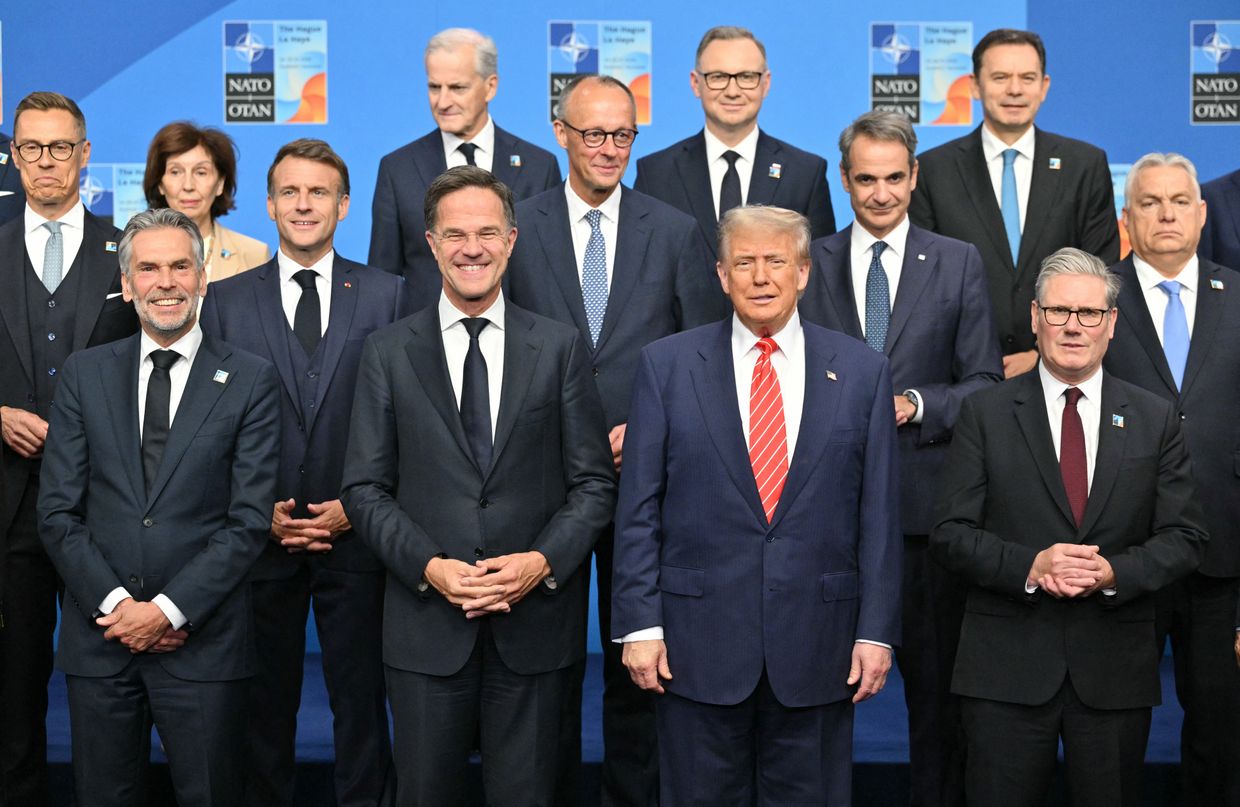
NATO member states have agreed to a new defense spending benchmark, committing to allocate 5% of their gross domestic product annually to defense and security-related expenditures by 2035, according to a joint statement released on June 25 by alliance leaders meeting in the Netherlands.
The decision marks a significant increase from the current 2% guideline and reflects the alliance's response to the push from the U.S. and growing security threats, particularly the long-term challenge posed by Russia.
"We remain united and steadfast in our resolve to protect our one billion citizens," the statement reads. "Allies commit to invest 5% of GDP annually on core defense requirements as well as defense and security related spending."
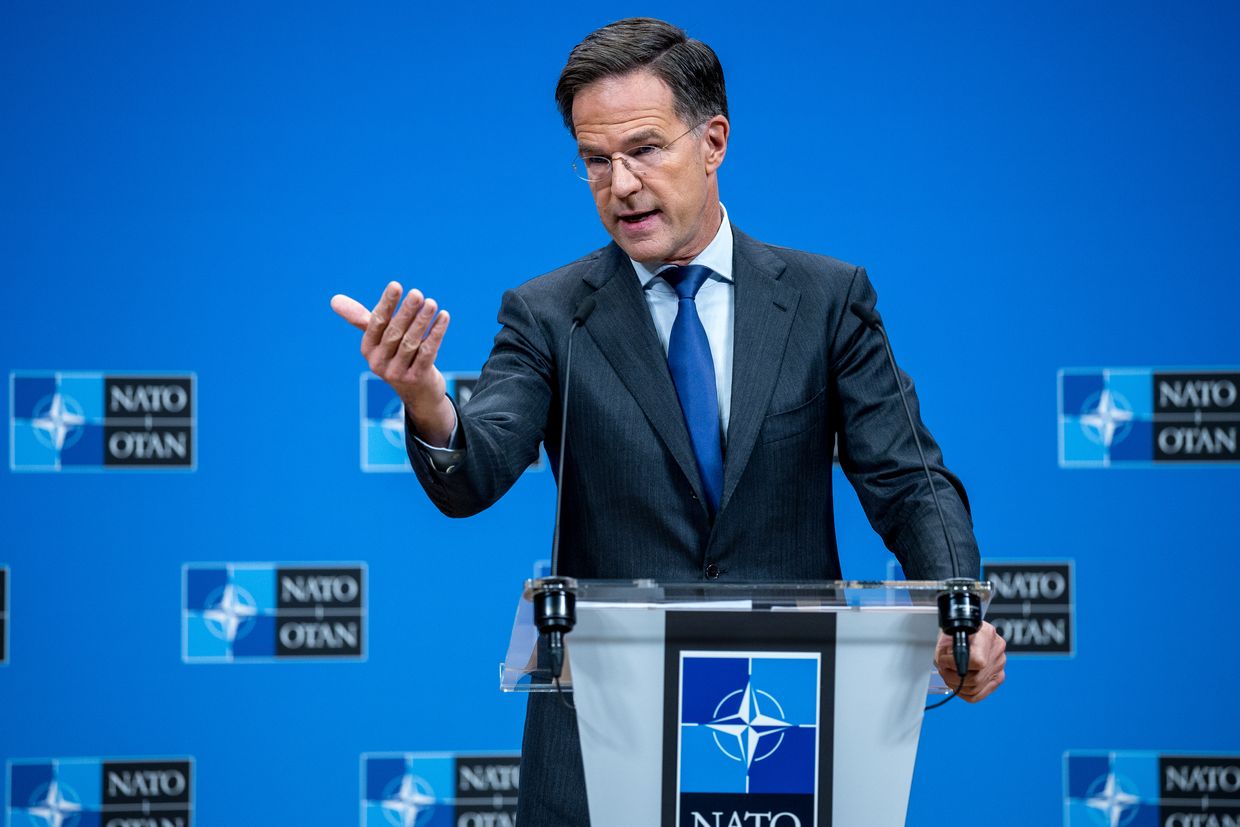
"The decision we make today makes NATO much stronger. It also makes NATO a much fairer alliance, with Europe and Canada stepping up," NATO Secretary General Mark Rutte said during a briefing on June 25.
Unlike in previous years, this year's NATO statement does not include a direct condemnation of Russia's actions, unlike the communique issued during the 2024 NATO summit in Washington, which explicitly condemned Russia's full-scale invasion of Ukraine.
But the leaders reaffirmed support for Ukraine, stating that direct contributions to Ukraine's defense and industrial capacity will be counted toward the 5% total.
When asked by a journalist whether the current trajectory of military aid from allies could help Ukraine "not only survive but win the war," Rutte said he is "optimistic."
"You can safely assume that the trajectory in the first almost six months now is really north of last year's," he said. "By the end of the year, it will end up north over $50 billion, which was pledged in 2024. I'm optimistic about that, but I won't make a concrete prediction."
He emphasized the importance of sustained and long-term support.
"We have to make sure Ukraine can stay in the fight, that it has what it needs... But we're also working to secure peace deal or a long-term ceasefire. And then we have to make sure that Ukraine has what it needs to prevent (Russian President) Vladimir Putin from effort ever trying this again in the future,” Rutte said.
Rutte added that part of the strategy includes supporting Ukraine's defense industrial base, which has an estimated $35 billion in spare capacity.
Rutte emphasized that NATO's immediate priority is to "keep (Ukraine) in the fight," noting that support includes "training, delivering military equipment, but also various streams of money going into Ukraine" to help it defend itself and lay the groundwork for a future peace deal or long-term ceasefire.
Politico earlier reported that the narrowed focus of the NATO summit in The Hague was designed to appease U.S. President Donald Trump.
"(Trump) has to get credit for the 5% — that's why we're having the summit," one unnamed European defense official told Politico.
Under the new framework, at least 3.5% of GDP will be directed toward core defense needs, including NATO capability targets, with the remaining 1.5% covering civil preparedness, infrastructure protection, innovation, and the defense industrial base.
Allies will submit annual plans outlining a credible path to reach the targets, with a mid-term review scheduled for 2029.
Trump has consistently accused NATO members of underfunding their militaries, pushing for raising defense spending target to 5% of GDP.
In 2024, only 23 alliance members met the 2% target, according to NATO estimates. Poland was ahead of all members with 4.12% of GDP allocated to defense, followed by Estonia (3.43%) and the U.S. (3.38%).
Rutte previously said on June 17 that all NATO countries are on track to meet the 2% threshold in 2025.
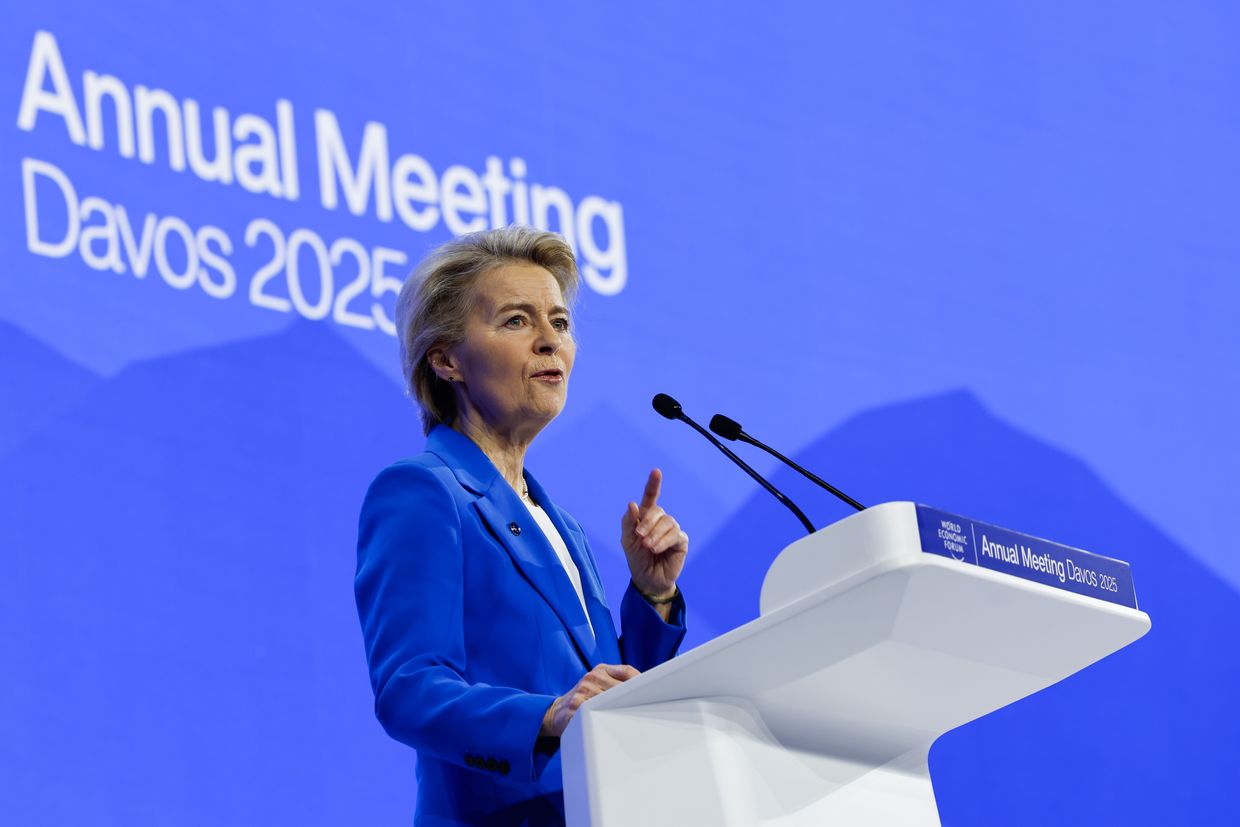
European Commission President Ursula von der Leyen reiterated the EU's ongoing support for Ukraine at a NATO summit in The Hague on June 24."We have designed a funding program of 50 billion euros, we call it Safe, where member states, but also Ukraine and other partners, can take these loans to invest in the (Ukrainian) defense industry," she said, addressing President Volodymyr Zelensky."We are integrating our defense industries as if Ukraine was in the EU. This is good for Ukraine. And just as
European Commission President Ursula von der Leyen reiterated the EU's ongoing support for Ukraine at a NATO summit in The Hague on June 24.
"We have designed a funding program of 50 billion euros, we call it Safe, where member states, but also Ukraine and other partners, can take these loans to invest in the (Ukrainian) defense industry," she said, addressing President Volodymyr Zelensky.
"We are integrating our defense industries as if Ukraine was in the EU. This is good for Ukraine. And just as good for Europe, as Ukraine is now home to extraordinary innovation," von der Leyen later said in a post to social media.
NATO is holding a summit in The Hague from June 24-25 with world leaders, including Zelensky and U.S. President Donald Trump present.
"(M)y dear friend Volodymyr, you're here among friends and we stand by Ukraine from the very first day on and you can count on us also for the future," von der Leyen said.
The leader described the EU's 18th sanctions package as a "biting one" to apply pressure on Moscow and Russian President Vladimir Putin.
"Secondly, of course, there's constant financial support to Ukraine because we know you're fighting a war that is also protecting our values and our principles, and thirdly, indeed, we have to put pressure on President Putin (so) that he comes to the negotiation table," von der Leyen said.
She noted that members of the Group of Seven (G7) will also be implementing additional sanctions against Russia.
"All this shows you are among friends, you can count on us, we stand by your side," von der Leyen said.
The White House has confirmed that Trump and Zelensky will hold a meeting at the NATO summit.
President Donald Trump refused to give a clear commitment to NATO’s Article 5 — the alliance’s collective defense clause — as he departed for a pivotal summit in The Hague, raising fresh concerns about his stance on one of NATO’s core principles.When pressed by reporters aboard Air Force One on whether he would uphold the mutual defense obligation, Trump replied, “It depends on your definition of Article 5,” adding, "There’s numerous definitions of Article 5. You know that, right? But I’m commit
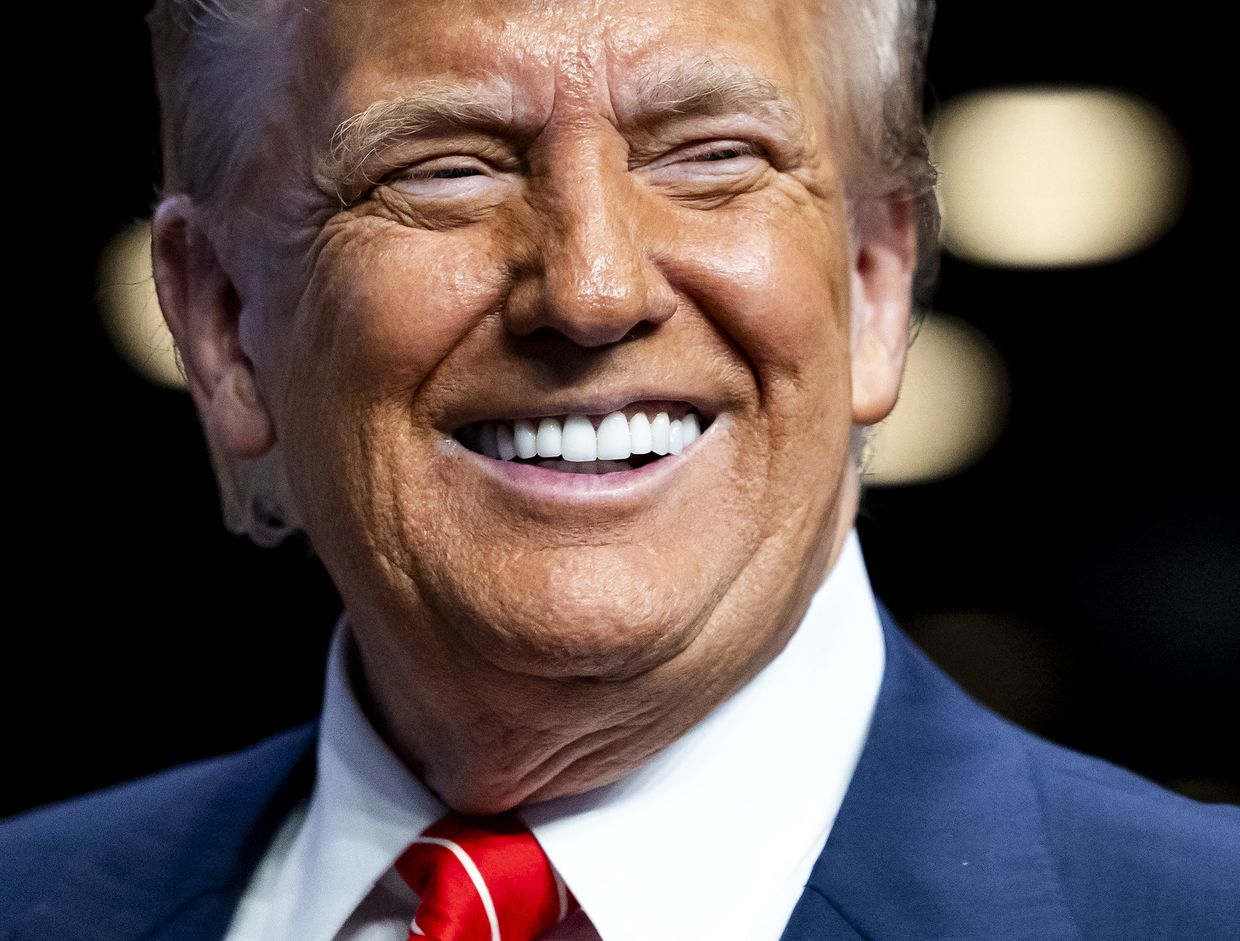
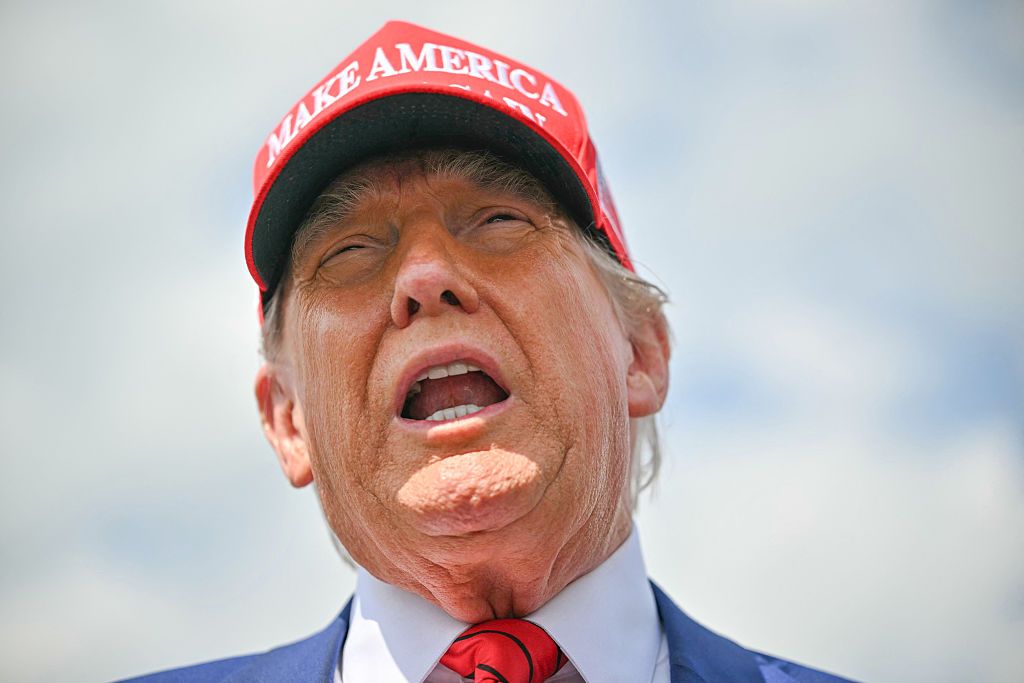
President Donald Trump refused to give a clear commitment to NATO’s Article 5 — the alliance’s collective defense clause — as he departed for a pivotal summit in The Hague, raising fresh concerns about his stance on one of NATO’s core principles.
When pressed by reporters aboard Air Force One on whether he would uphold the mutual defense obligation, Trump replied, “It depends on your definition of Article 5,” adding, "There’s numerous definitions of Article 5. You know that, right? But I’m committed to being their friends, you know, I’ve become friends with many of those leaders, and I’m committed to helping them."
Although Article 5 is central to NATO’s security framework, Trump has previously expressed skepticism about honoring it, often criticizing member states for not contributing enough to shared defense efforts.
Asked to elaborate, he said, "I’m committed to saving lives. I care about life and safety." He added that he would explain his position in full once at the summit: "I’ll give you an exact definition when I get there — I just don’t want to do it from the back of a plane."
Trump’s remarks come as NATO faces what its leadership describes as its most significant threat in decades.
At a press briefing on June 23, NATO Secretary General Mark Rutte said Russia remains the primary danger to the alliance, citing its growing alignment with China, North Korea, Iran, and Belarus.
"Moscow continues to wage war against Ukraine, with support of North Korea, Iran, and China, as well as Belarus," Rutte said.
He added that NATO leaders plan to adopt a "historic" defense investment plan at the June 24–25 summit in The Hague, including a new 5% of GDP benchmark for defense spending and stronger backing for Ukraine.
"All leaders will take bold decisions to strengthen our collective defense, making NATO a stronger, fairer, and more lethal alliance," Rutte said. “This is a leap that is ambitious, historic, and fundamental to securing our future.”
Their last meeting was in April at Pope Francis' funeral, amid concerns over the U.S. role in peace talks between Kyiv and Moscow. Details of the June 25 meeting are still being finalized, but the talks are expected in the "early afternoon," a source told AFP.
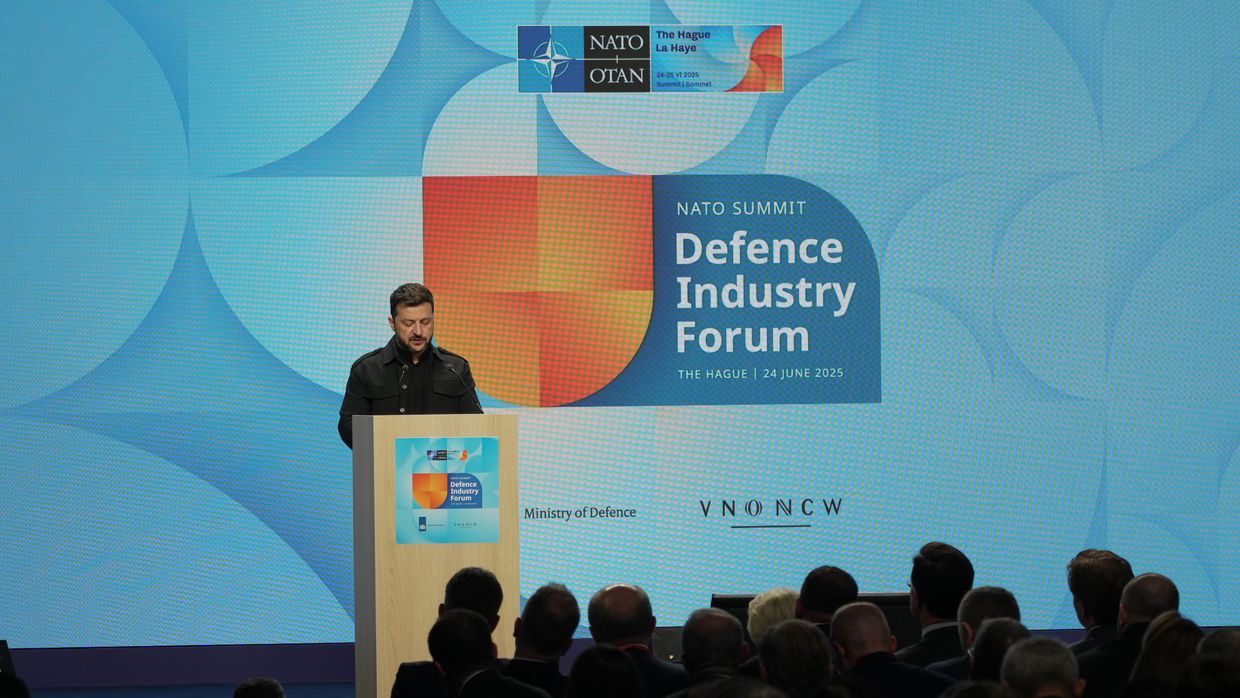
President Volodymyr Zelensky said during NATO summit on June 24 that Ukraine has the capacity to produce over 8 million drones of various types each year, but lacks the financial backing to reach that potential, a shortfall he said must be urgently addressed to defeat Russia's growing military network."Our defense production potential has surpassed $35 billion,” Zelensky said during a speech at the NATO Defense Industry Forum in The Hague. "This includes nearly 1,000 types of products... but aro
President Volodymyr Zelensky said during NATO summit on June 24 that Ukraine has the capacity to produce over 8 million drones of various types each year, but lacks the financial backing to reach that potential, a shortfall he said must be urgently addressed to defeat Russia's growing military network.
"Our defense production potential has surpassed $35 billion,” Zelensky said during a speech at the NATO Defense Industry Forum in The Hague. "This includes nearly 1,000 types of products... but around 40% of this potential lacks proper funding. For example, we can produce over 8 million drones of different types each year, but the financing allows for far fewer."
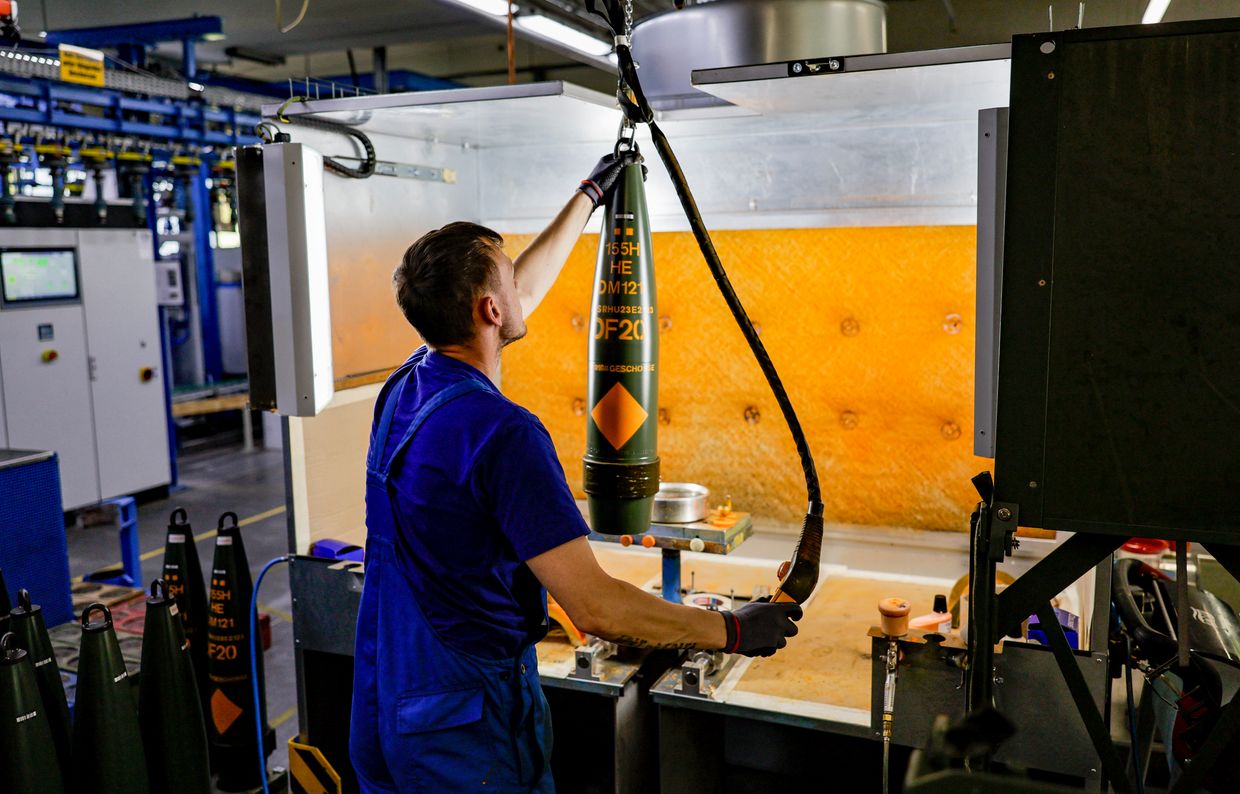
Zelensky urged allies to scale up investments in joint weapons production, including drone technologies, artillery, and interceptors. He argued that Ukraine's defense capabilities are not only key to defending its own territory, but essential to strengthening NATO's long-term security.
"We must lead in the drone race, both in strike drones and interceptors," he said. "Please increase your investments in Ukraine and joint weapons production. All the weapons we produce become part of a new, stronger European defense and security system."
The Ukrainian president emphasized that Russia is not acting alone, but as part of a broader network of state and non-state actors, including North Korea, Iran, and Chinese companies, which support its war effort against Ukraine and pose a long-term threat to Europe.
"The source of this war and the long-term threat to Europe is Russia," Zelensky said. "But in reality, we are not just facing Russia alone. We are facing a network of state and non-state actors."
Zelensky also called on NATO members to increase defense spending to 5% of GDP and to dedicate at least 0.25% of GDP to support Ukraine's military needs directly. He thanked countries such as Germany, Norway, Sweden, and the Netherlands for their elevated commitments, but urged others to follow suit.
Zelensky warned that Russia is planning "new military operations on NATO territory" and that the war in Ukraine must be stopped now to prevent broader European conflict.
"There are no signs that Putin wants to stop this war," Zelensky said. "So long as he kills, he lives. And our intelligence confirms this."
He also appealed for a crackdown on the supply chains that allow Russia to sustain its weapons manufacturing, referring to Western-origin components found in Russian missiles, drones, and armored vehicles.
"It's not just China, also Taiwan. Some of these parts come from European countries and from the United States," Zelensky said. "Every single tool delivered to Russia's defense sector helps prolong the war and is a crime against peace."
Zelensky's speech comes as NATO leaders gather in The Hague for a high-level summit on June 24-25. NATO leaders are expected to discuss raising the alliance's defensespending target to 5% of the GDP, a proposal the U.S. has championed but from which it considers itself exempt.
Editor's note: The story was updated after the White House confirmed the meeting between Ukraine's President Volodymyr Zelensky and his American counterpart Donald Trump.U.S. President Donald Trump will meet his Ukrainian counterpart Volodymyr Zelensky during a NATO summit in The Hague, the White House confirmed on June 24.The last time Zelensky and Trump met was in April on the sidelines of Pope Francis' funeral amid concerns that Washington would withdraw from mediating peace talks between Kyi
Editor's note: The story was updated after the White House confirmed the meeting between Ukraine's President Volodymyr Zelensky and his American counterpart Donald Trump.
U.S. President Donald Trump will meet his Ukrainian counterpart Volodymyr Zelensky during a NATO summit in The Hague, the White House confirmed on June 24.
The last time Zelensky and Trump met was in April on the sidelines of Pope Francis' funeral amid concerns that Washington would withdraw from mediating peace talks between Kyiv and Moscow.
The White House did not provide any further details about the meeting between the two leaders.
The talks between Zelensky and Trump were scheduled for the "early afternoon" on June 25, the source told AFP, adding that "the teams are finalizing the details" of the meeting.
Trump and Zelensky are expected to discuss Ukraine's "purchase of a defense package, a large part of which consists of air defense systems," according to the source.
The discussion will also focus on "sanctions against Russia, and a price cap on oil," the source added.
Earlier, Trump said that he "would probably meet" Zelensky in The Hague after the two presidents did not manage to talk during the G7 summit in Canada earlier in June, AFP reported on June 24.
When asked what he would say to Zelensky, Trump replied: "I'll say: 'How are you?' He's (Zelensky) in a tough spot, he shouldn't have been there at all".
Zelensky also said in an interview with Sky News that he planned to meet Trump in The Hague. Asked whether the meeting would be a formal discussion or an informal encounter, Zelensky said it was a matter of scheduling: "They are talking about timing. It's timing."
Zelensky's participation in the summit was confirmed by the European Council on June 20, following reports that he was reconsidering the visit due to uncertainties surrounding Trump's participation.
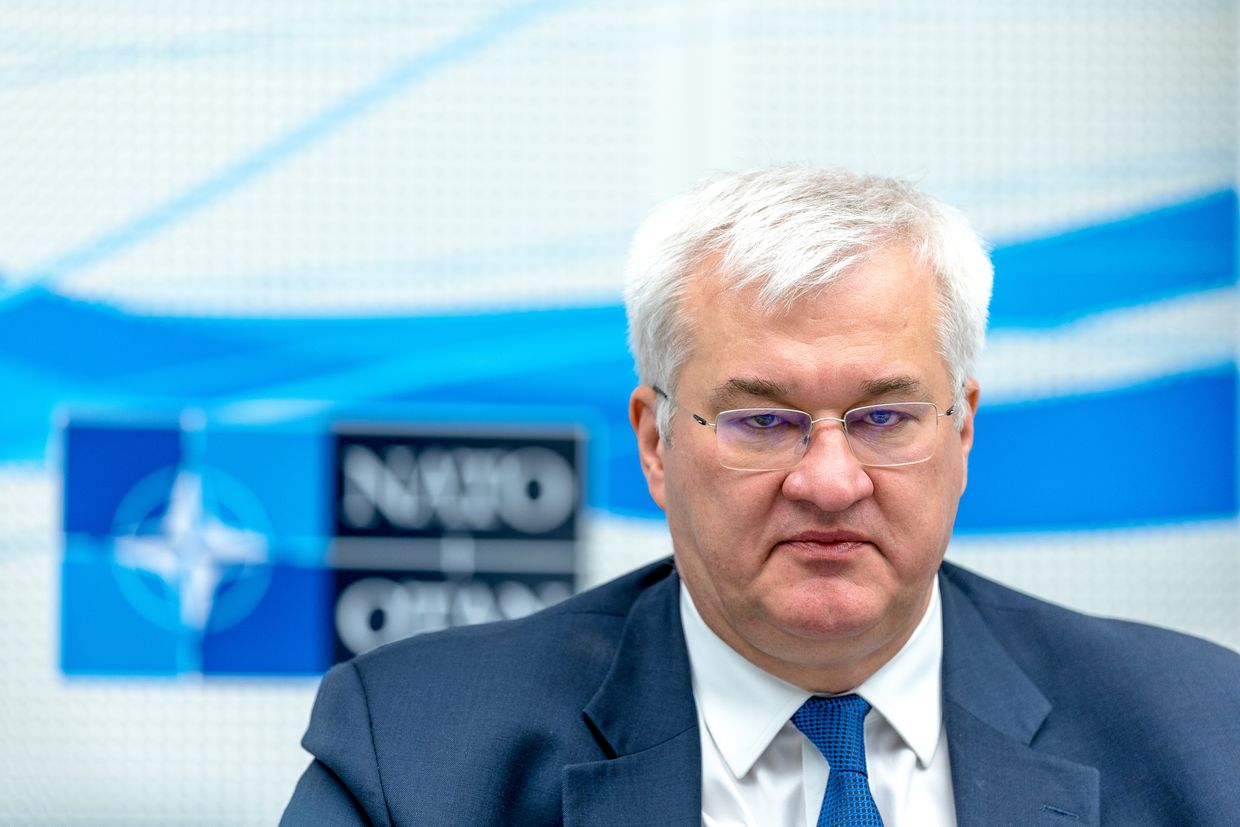
Upon arrival in The Hague on June 24, Andriy Yermak, head of Ukraine's presidential office, said he held a "substantive" discussion with U.S. Secretary of State Marco Rubio about the upcoming Zelensky-Trump meeting. Yermak said the two discussed the structure, agenda, and key topics for the meeting.
Zelensky is also scheduled to meet European Commission President Ursula von der Leyen and NATO Secretary-General Mark Rutte during the summit.
In the interview, Zelensky also addressed concerns about Trump's perceived closeness to Russian President Vladimir Putin.
"It is a complicated question because I truly do not know what relationship Trump has with Putin," Zelensky said. "I think what I know, you know, and the media knows. There are various signals about that."
He added that he believes Trump understands Ukraine is a U.S. ally and that "the real existential enemy of America is Russia."
"They will never be friends. They may be short-term partners, but they will never be friends," Zelensky said.
Zelensky expressed hope that Trump's approach to Russia is tactical, intended to pressure Putin into peace negotiations. "I would like this approach to be only a way to force Putin to the negotiating table and to end the war. And let us hope so," he said.
Zelensky was scheduled to meet Trump at the Group of Seven (G7) summit, held June 15-17. However, the U.S. president left the multilateral event early due to the renewed conflict between Israel and Iran.
Speaking on the sidelines of the NATO summit in The Hague on June 24, NATO Secretary General Mark Rutte called on alliance members to be realistic about the threats posed by Russia and China, and urging them to stay the course in supporting Ukraine."Let's not be naive," Rutte said. "You see what China, North Korea and Iran are doing in supporting the war effort of Russia ... So this is all interconnected."Rutte emphasized that while NATO faces multiple global challenges, from the war in Ukraine
Speaking on the sidelines of the NATO summit in The Hague on June 24, NATO Secretary General Mark Rutte called on alliance members to be realistic about the threats posed by Russia and China, and urging them to stay the course in supporting Ukraine.
"Let's not be naive," Rutte said. "You see what China, North Korea and Iran are doing in supporting the war effort of Russia ... So this is all interconnected."
Rutte emphasized that while NATO faces multiple global challenges, from the war in Ukraine to tensions in the Middle East and Russian influence in Africa, the alliance must be able to focus on more than one crisis at a time.
"If you can only deal with one issue at a time, you should not be in politics or defense," he said.
Rutte said NATO's role is to ensure Ukraine has the military means to stay in the fight until "serious" peace negotiations begin.
"We have to make sure that Ukraine is in the strongest possible position when real talks start," he said. "I'm not talking about these talks led by some Russian historian (Vladimir Medinsky) who wants to go back 1,000 years... That's not serious business.”
The talks he referenced, led by Russian presidential aide Vladimir Medinsky and held in Istanbul in May-June, have yielded prisoner exchange agreements but no progress toward a ceasefire or settlement. Ukraine has offered a comprehensive roadmap, but Rutte said Russia had not come to the table with serious intent.
Instead, Russia continues to reject U.S. proposed comprehensive ceasefire, and insists on its longstanding maximalist demands.
"When the time comes for serious talks, we must ensure any long-term ceasefire or peace deal is durable — so that (Russian President) Vladimir Putin will never again try to seize even one square kilometer of Ukrainian territory," Rutte said.
Rutte also stressed that Ukraine is evolving from a security consumer into a security producer. He noted that the country's "largely untapped" defense industrial base, with a potential value of up to $35 billion, is increasingly attracting European investment.
"Ukraine has one of the largest defense industries in Europe," Rutte said, adding that many countries, including Norway, Denmark, and Lithuania, are now investing in it. "That helps Ukraine, and it helps us.”
Responding to concerns over Europe's reliance on the United States, Rutte said NATO must stop "worrying so much" about U.S. commitment and instead ramp up its own military capabilities.
"There is total commitment by the U.S. President and U.S. senior leadership," Rutte said, dismissing doubts about Washington's future role in NATO. "However, it comes with an expectation that we will finally deal with this huge bubbling issue, which is that we are not spending enough as Europeans and Canadians."
Rutte strongly backed the alliance's new 5% GDP defense investment benchmark, saying increased spending must translate into ammunition stockpiles, troop recruitment, and industrial output. "The Russians are producing in three months what NATO produces in a year," he said.
Earlier, U.S. President Donald Trump accused NATO members of underfunding their militaries, pushing for raising defense spending benchmark to 5% of GDP.
In 2024, only 23 alliance members met the 2% target, according to NATO estimates. Poland was ahead of all members with 4.12% of GDP allocated to defense, followed by Estonia (3.43%) and the U.S. (3.38%).
NATO Secretary General Mark Rutte said during a press briefing on June 23 that Russia remains the main threat to the alliance, citing Moscow's cooperation with China, North Korea, Iran, and Belarus. "Moscow continues to wage war against Ukraine, with support of North Korea, Iran, and China, as well as Belarus," Rutte said.The Secretary General told reporters that the alliance leaders are set to adopt a historic defense investment plan at the summit in The Hague on June 24-25, including a new ben
NATO Secretary General Mark Rutte said during a press briefing on June 23 that Russia remains the main threat to the alliance, citing Moscow's cooperation with China, North Korea, Iran, and Belarus.
"Moscow continues to wage war against Ukraine, with support of North Korea, Iran, and China, as well as Belarus," Rutte said.
The Secretary General told reporters that the alliance leaders are set to adopt a historic defense investment plan at the summit in The Hague on June 24-25, including a new benchmark of 5% of GDP for defense spending and a strengthened commitment to Ukraine.
"All leaders will take bold decisions to strengthen our collective defense, making NATO a stronger, fairer, and more lethal alliance," Rutte said at a press conference before the summit. “This is a leap that is ambitious, historic, and fundamental to securing our future.”
Rutte said the plan includes major increases in air defense systems, tanks, armored vehicles, and artillery, a response to the evolving threat landscape, particularly Russia's war against Ukraine.
"We see Russia's deadly terror from the skies over Ukraine every day. We must be able to defend ourselves from such attacks," Rutte added.
The Secretary General warned that NATO must act urgently to prepare for future threats, citing assessments that Russia could rebuild sufficient military capacity to challenge NATO within five years. "Our security environment has changed, and not for the better. The threats we face today demand that we do far more," he said.
Rutte emphasized that the new defense investment plan will be reviewed in 2029, with annual reporting to ensure credibility.
He stressed that NATO remains committed to supporting Kyiv and reaffirmed the alliance's long-standing position that "Ukraine's path to NATO membership is irreversible." According to Rutte, the allies have pledged over 35 billion euros ($40,6 billions) in military aid to Ukraine for the first half of 2025, up from 20 billion announced earlier this year.
President Volodymyr Zelensky is attending the summit and will hold multiple meetings with NATO leaders. However, NATO's Ukraine Council will not convene, a decision seen as part of efforts to keep the summit's focus narrow, a move aimed at appeasing U.S. President Donald Trump, according to Politico.
The summit, shortened to 24 hours, has only one major session on defense spending. European officials cited by Politicosaid the format was designed to deliver a clear win to Trump, who is expected to tout the 5% spending pledge as a personal success. The U.S. is reportedly exempting itself from the new benchmark.
While recent summits have centered on Russia's invasion of Ukraine, this year's joint communique may omit references to the war.
During the briefing, Rutte said that the final communique, agreed by NATO ambassadors, has "important language" about Ukraine, including defense spending up until 2035.
"This is a clear commitment by allies," Rutte said.
The narrowed focus of the upcoming NATO summit in The Hague — which will have only a single session devoted to defense spending — is designed to appease U.S. President Donald Trump, Politico reported on June 21, citing European defense officials. NATO leaders will convene in The Hague June 24-25 to discuss raising the alliance's defense spending target to 5% of the GDP — a proposal the U.S. has championed but from whcih it considers itself exempt. "(Trump) has to get credit for the 5% — that's w
The narrowed focus of the upcoming NATO summit in The Hague — which will have only a single session devoted to defense spending — is designed to appease U.S. President Donald Trump, Politico reported on June 21, citing European defense officials.
NATO leaders will convene in The Hague June 24-25 to discuss raising the alliance's defense spending target to 5% of the GDP — a proposal the U.S. has championed but from whcih it considers itself exempt.
"(Trump) has to get credit for the 5% — that's why we're having the summit," one unnamed European defense official told Politico.
"Everything else is being streamlined to minimize risk."
The organizers of the summit have shortened the meeting from the typical two-day schedule to 24 hours in the hopes of keeping the focus on Trump and deliver a victory to the U.S. president. Trump plans to give an speech at the end of the summit celebrating the new spending benchmark and his own contributions to the pledge.
There will be no meeting of NATO's Ukraine council at the summit.
The European Council confirmed on June 20 that President Volodymyr Zelensky will attend the summit in The Hague, despite media reports that Zelensky was considering skipping the event altogether. The reports followed Zelensky's disappointing venture at the G7 summit in Canada.
While Zelensky hoped to reset relations with the U.S. in a third face-to-face meeting with Trump, he never got the chance. Trump abruptly left the G7 summit, claiming he had to focus on the escalating conflict between Israel and Iran.
The Ukraine council's absence from the upcoming summit represents another concession to Trump, whose attention has shifted to the Middle East and who continues to refuse to impose sanctions on Russia.
Trump has also been unable to fulfill his promises to end the war in Ukraine. Six months of U.S. peacekeeping efforts under the Trump administration have brought a ceasefire no closer, as Russia escalates attacks and the civilian death toll climbs.
Convening NATO's Ukraine council could draw attention to Trump's ongoing failure, Politico reported.
"The priority is really to announce success in The Hague," a European official said. "The longer-term perspective is less important."
Trump's "America First" doctrine has repeatedly cast doubt on Washington's commitment to transatlantic alliances, especially NATO. In recent years, Trump has alarmed member states by questioning whether the U.S. should defend alliance members that do not meet military spending benchmarks.
Trump has also signaled that the U.S. will no longer be Ukraine's main ally in its defense against Russia and has called on European countries to shoulder the burden of supporting Ukraine.
While NATO summits in recent years have focused heavily on Russia's full-scale war in Ukraine, this year's joint communique may exclude references to the war altogether. NATO Secretary General Mark Rutte on June 9 admitted that the language may not be included in the statement, but insisted the alliance remained committed to Ukraine's future membership.
"The irreversible path of Ukraine into NATO is there, and it is my assumption that it is still there after the summit," Rutte said. "Whether it is again in the communique or not, I think that's not relevant, because all the language we previously agreed on is there — until we decide it is no longer there."
President Volodymyr Zelensky is set to attend a NATO summit in The Hague next week, the European Council confirmed on June 20.European Commission President Ursula von der Leyen and NATO Secretary-General Mark Rutte are set to meet Zelensky on June 24.Zelensky was reportedly reconsidering attending the NATO summit, as questions remain over U.S. President Donald Trump's participation, the Guardian reported on June 17, citing unnamed Ukrainian officials.A schedule released by the European Council o
President Volodymyr Zelensky is set to attend a NATO summit in The Hague next week, the European Council confirmed on June 20.
European Commission President Ursula von der Leyen and NATO Secretary-General Mark Rutte are set to meet Zelensky on June 24.
Zelensky was reportedly reconsidering attending the NATO summit, as questions remain over U.S. President Donald Trump's participation, the Guardian reported on June 17, citing unnamed Ukrainian officials.
A schedule released by the European Council on June 20 confirms Zelensky's planned participation at the event.
A Ukrainian official told the Guardian that Kyiv is in a "permanent hazard" of becoming a victim of "Trump's short attention span," adding that Russia has exploited this uncertainty with fresh aerial attacks.
There were "all sorts of promises for this summit," including U.S. arms, the source said.
Zelensky was scheduled to meet U.S. President Donald Trump at the Group of Seven (G7) Summit, held June 15-17.
Trump left the multilateral event early due to the renewed conflict between Israel and Iran.
Zelensky met with various leaders, including French President Emmanuel Macron and Canadian Prime Minister Mark Carney.
Zelensky left the summit early, citing Russia's mass drone and missile attack on Kyiv.
On June 17, a Russian drone and missile attack on Kyiv killed 30 people and injured another 172. The nearly nine-hour-long strike saw Moscow's forces launch large numbers of drones and missiles at Ukraine's capital.
Foreign Minister Andrii Sybiha condemned the attack, describing it as a "massive and brutal strike" timed deliberately to coincide with the G7 summit.
An invitation for Ukraine to become a member of NATO "is not on the agenda" of the upcoming summit in The Hague, Lithuanian Foreign Minister Kestutis Budrys said in an interview with the Baltic News Service published on June 18."This issue is certainly not on the NATO agenda and nobody has formulated an expectation that there will be an invitation in The Hague, nor have we heard that from the Ukrainians themselves," Budrys said in comments quoted by the LRT broadcaster. "There is no such expecta
An invitation for Ukraine to become a member of NATO "is not on the agenda" of the upcoming summit in The Hague, Lithuanian Foreign Minister Kestutis Budrys said in an interview with the Baltic News Service published on June 18.
"This issue is certainly not on the NATO agenda and nobody has formulated an expectation that there will be an invitation in The Hague, nor have we heard that from the Ukrainians themselves," Budrys said in comments quoted by the LRT broadcaster.
"There is no such expectation that there will be breakthrough decisions, neither before the Washington summit nor now before the Hague summit – it is not on the agenda."
The comments, coming less than a week before the summit, hint at a shifting rhetoric within the alliance regarding Ukraine's potential membership after U.S. President Donald Trump took office.
The new Trump administration has spoken out against Kyiv's accession, and the U.S. president even echoed the false Russian narratives that its efforts to join NATO helped instigate Russia's full-scale invasion.
Unlike during the previous summits, the final communique may reportedly completely omit the topic of Ukraine's membership, as NATO members seek to avoid a conflict with Trump. The gathering was also preceded by rumors that Ukraine may not be invited due to U.S. opposition, but the invitation was extended in the end.
In spite of these tensions, Budrys said that the summit should keep its focus on Ukraine, stressing that the war-torn country is part of the Euro-Atlantic security space.
Ukraine applied for NATO membership in September 2022, months after the outbreak of the full-scale Russian invasion. The alliance has signaled support for Kyiv's accession efforts in previous years, even declaring at the Washington summit in 2024 that Ukraine's path to membership is "irreversible" — but stopping short of a formal invite.
Kyiv's swift entry seems increasingly unlikely amid opposition from the U.S. and several other members, even though NATO Secretary General Mark Rutte recently reaffirmed that a political commitment to Ukraine's membership stands. Ukraine would need support from all 32 members to join.
It remains uncertain whether The Hague summit will lead to any breakthroughs regarding Ukraine. Following signals that U.S. President Donald Trump may not attend the event, the Guardian reported that President Volodymyr Zelensky may skip the summit as well.
President Volodymyr Zelensky may reconsider attending the NATO summit in The Hague, as questions remain over U.S. President Donald Trump's participation, the Guardian reported on June 17, citing unnamed Ukrainian officials.According to the Guardian, some in Kyiv are unsure if Zelensky's presence at the June 24-25 summit would be worthwhile without a confirmed meeting with Trump, whom they had hoped to engage directly in efforts to pressure Russian President Vladimir Putin into accepting a ceasef
President Volodymyr Zelensky may reconsider attending the NATO summit in The Hague, as questions remain over U.S. President Donald Trump's participation, the Guardian reported on June 17, citing unnamed Ukrainian officials.
According to the Guardian, some in Kyiv are unsure if Zelensky's presence at the June 24-25 summit would be worthwhile without a confirmed meeting with Trump, whom they had hoped to engage directly in efforts to pressure Russian President Vladimir Putin into accepting a ceasefire.
Earlier, Zelensky had traveled to the G7 summit in Canada, hoping to meet one-on-one with Trump and push for stronger sanctions against Russia. Trump left the summit early, citing the crisis in the Middle East, and no bilateral meeting or joint G7 statement took place.
One official told the Guardian that Ukraine is in a "permanent hazard" of becoming a victim of "Trump's short attention span," adding that Russia has exploited this uncertainty by fresh aerial attacks. The source added that there had been "all sorts of promises for this summit," including U.S. arms.
The Russian attack on Ukraine that occurred during the G7 summit killed at least 24 civilians and injured 134 in Kyiv. Trump has not responded to the attack as of the day after.
German Chancellor Friedrich Merz has reportedly said Trump had previously promised to attend the NATO gathering, though no official confirmation has been issued from Washington.
Despite the setback, Zelensky said the G7 meeting had concrete results for Ukraine. In a Telegram post on June 17, he thanked partners for increased military aid, new sanctions on Russia, and the decision to allocate frozen Russian assets for Ukraine’s reconstruction.
"It is important that our partners are ready not only to support our defense now, but also to rebuild Ukraine together after the war ends," he said.
Canadian Prime Minister Mark Carney announced a support package that includes 2 billion Canadian dollars ($1.5 billion) in military assistance and another $1.6 billion in reconstruction loans. The aid includes drones, armored vehicles, ammunition, and sanctions to disrupt Russia's energy revenues.
U.K. Prime Minister Keir Starmer also unveiled new sanctions targeting Russia's military-industrial complex and 20 oil tankers from Russia's "shadow fleet."
Zelensky later told G7 leaders that "diplomacy is now in a state of crisis" and called on allies to press Trump to "use his real influence" to help end the war.
Ukraine has been invited to the NATO summit, and Zelensky previously called the invitation "important" during a June 2 press briefing. At the time, he did not confirm whether he would attend in person.
President Volodymyr Zelensky on June 13 appointed Aliona Hetmanchuk as the head of Ukraine's mission to NATO, replacing Nataliia Halibarenko.The appointment came "at a critical time for the future of Ukraine, for the future of NATO itself, and, of course, for Ukraine's future in NATO. I realize the responsibility," Hetmanchuk said on her Facebook page on June 13."As for this moment, we will be fully immersed in preparations for the summit in The Hague," she added, referring to the upcoming NATO
President Volodymyr Zelensky on June 13 appointed Aliona Hetmanchuk as the head of Ukraine's mission to NATO, replacing Nataliia Halibarenko.
The appointment came "at a critical time for the future of Ukraine, for the future of NATO itself, and, of course, for Ukraine's future in NATO. I realize the responsibility," Hetmanchuk said on her Facebook page on June 13.
"As for this moment, we will be fully immersed in preparations for the summit in The Hague," she added, referring to the upcoming NATO summit that will take place in the Netherlands on June 24 and 25, with Ukraine participating.
Hetmanchuk is a leading Ukrainian foreign policy expert with a background in journalism. She is the founder and director of the New Europe Center and a nonresident senior fellow at the Atlantic Council's Eurasia Center.
Previously, Hetmanchuk co-founded and directed the Institute of World Policy and has advised the Presidential Consultation Committee between Ukraine and Poland since 2016.
Ukraine applied for alliance membership in September 2022, several months after Russia launched its full-scale invasion. While NATO has repeatedly affirmed that Kyiv will eventually join, it has yet to extend a formal invitation.
NATO Secretary General Mark Rutte said on June 9 that the political commitment to Ukraine's future membership in NATO remains unchanged, even if it is not explicitly mentioned in the final communique of the upcoming summit in The Hague.
"The irreversible path of Ukraine into NATO is there, and it is my assumption that it is still there after the summit," Rutte said at Chatham House in London.
Rutte's comments follow reporting that this year's summit communique, set for release after the June 24–25 meeting, may exclude references to Ukraine. This would mark a notable departure from previous gatherings, where Kyiv's future in NATO took center stage.

 Connexion






 Геопривязка (
 (@AMK_Mapping_)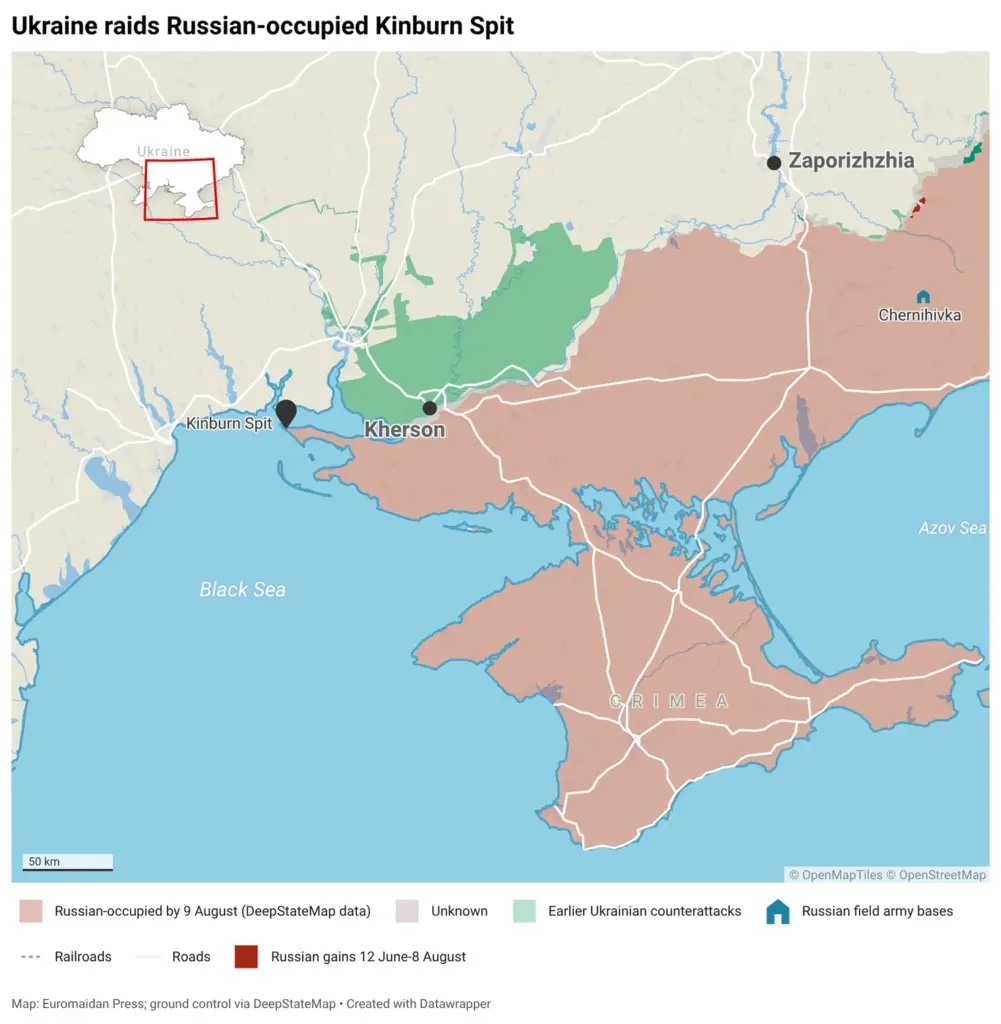
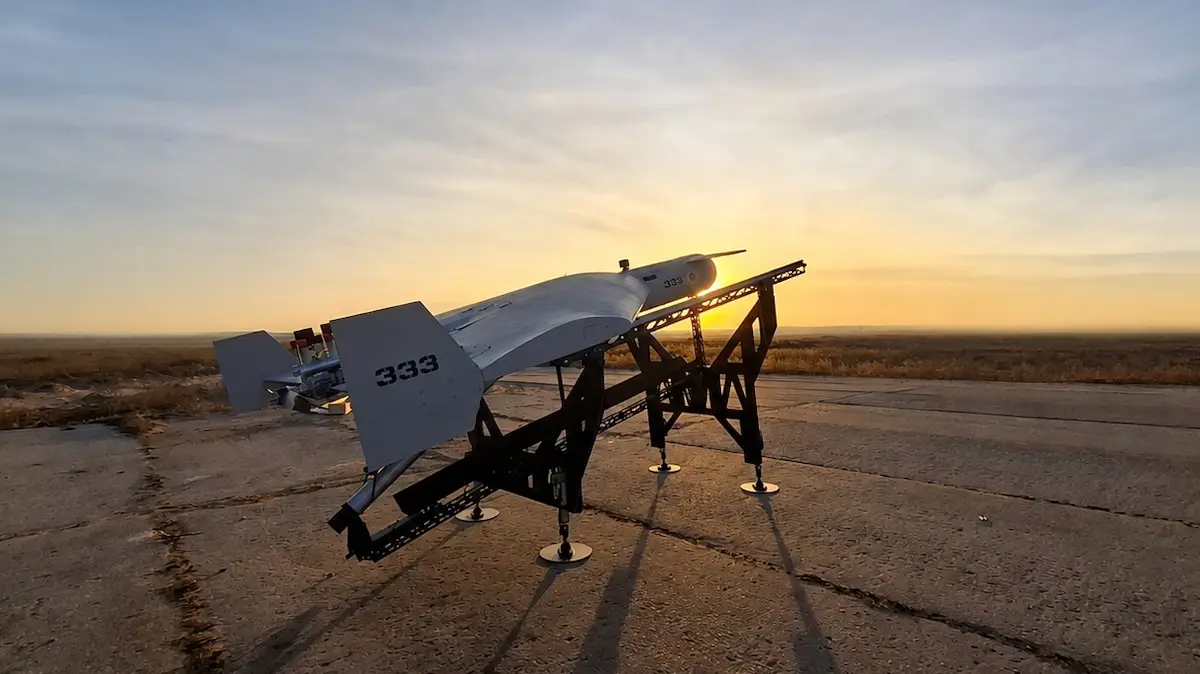
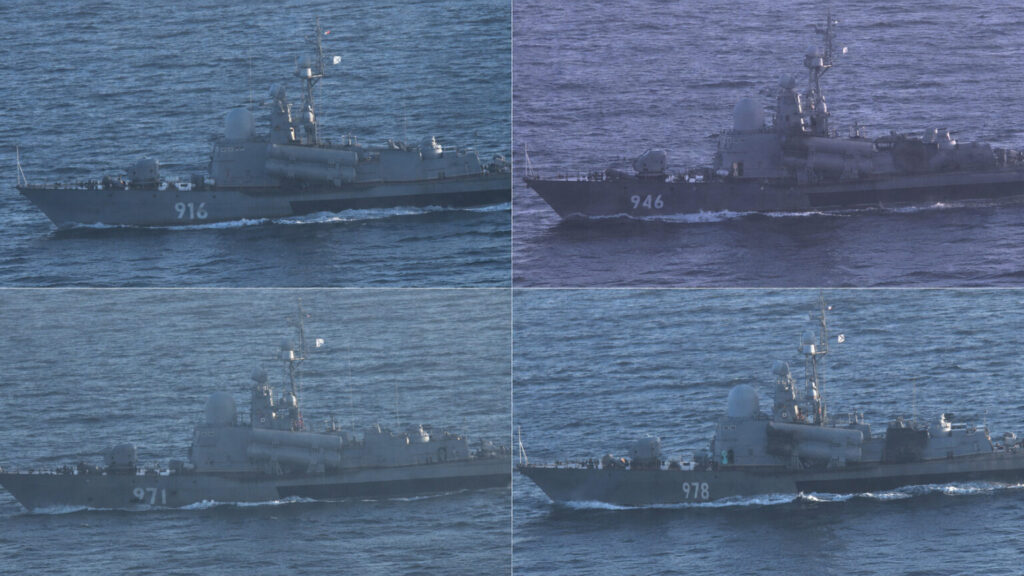
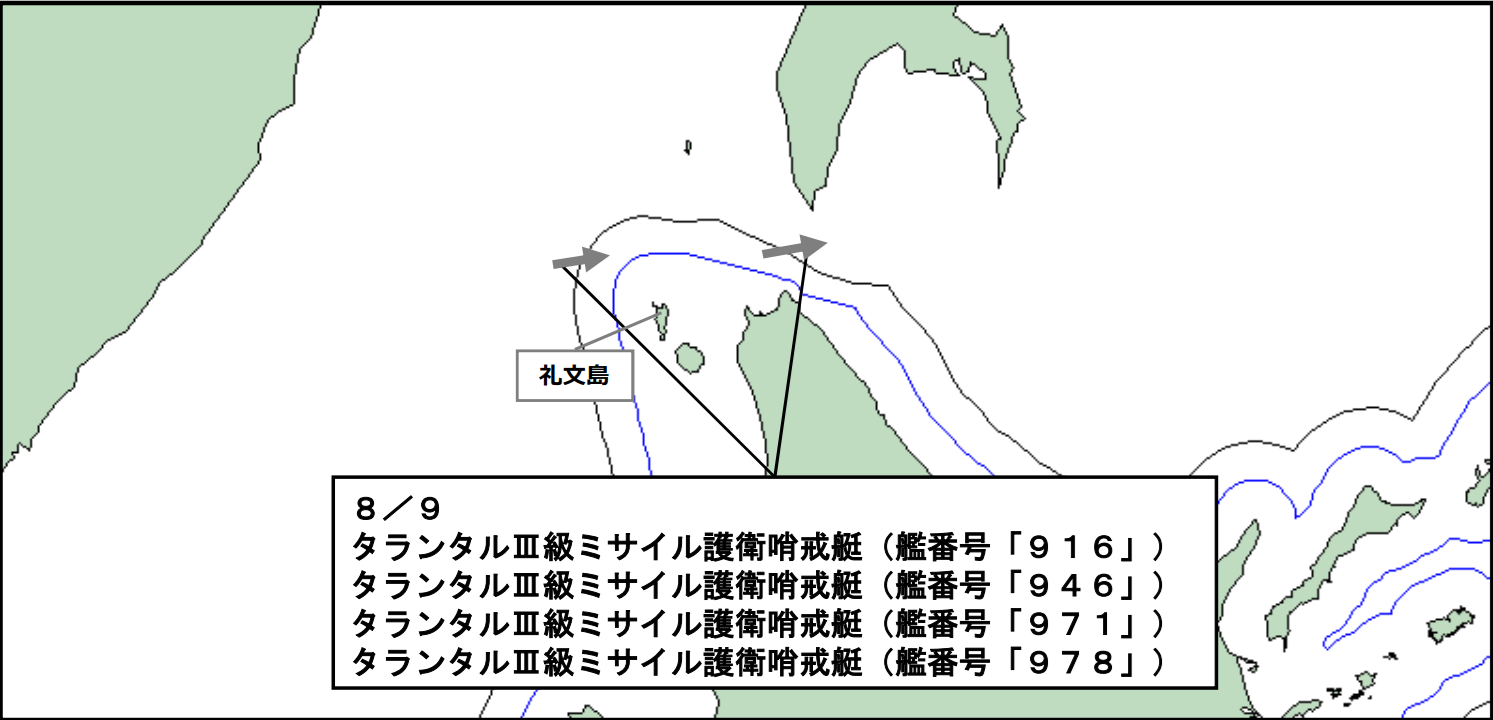
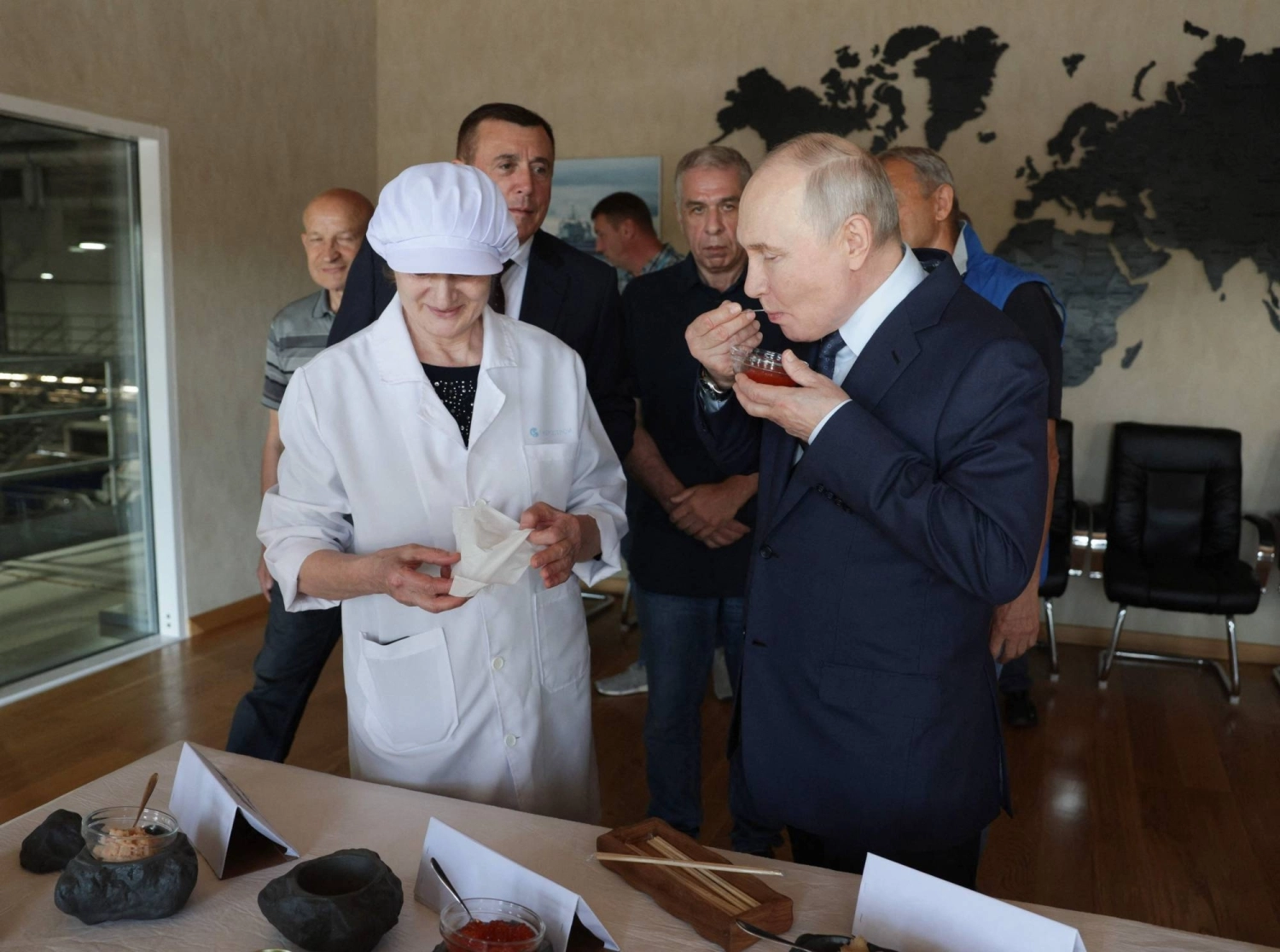
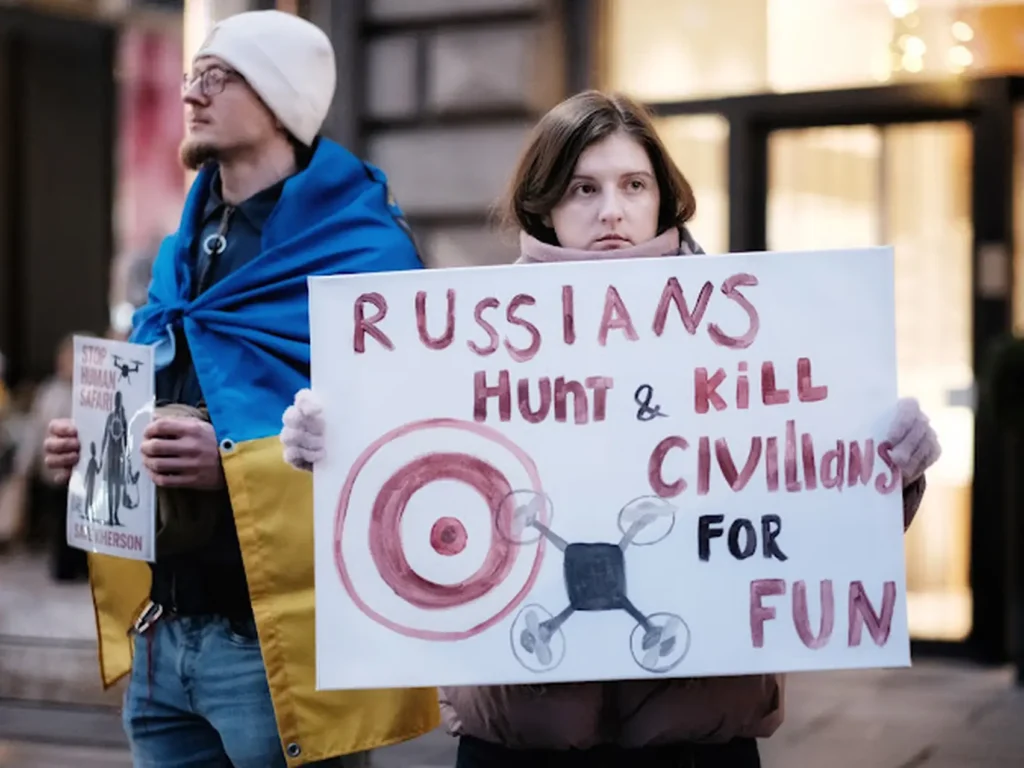

 (@ZarinaZabrisky)
 Human safari: the first video of a drone chasing a civilian. CCTV camera footage I obtained in Aug 2024.