By a 2-1 vote, a federal appeals court panel denied the Trump administration’s request that it immediately order the state to set aside 20,000 mail-in ballots.
By a 2-1 vote, a federal appeals court panel denied the Trump administration’s request that it immediately order the state to set aside 20,000 mail-in ballots.
Six takeaways from a new memoir by Mr. Woodward, the star Washington Post reporter, including his disappointment with the newspaper’s billionaire owner.
Six takeaways from a new memoir by Mr. Woodward, the star Washington Post reporter, including his disappointment with the newspaper’s billionaire owner.
Newsom accuses Trump of ‘assault on democracy’ as DoJ claims 20,000 registered voters in state are non-citizensA US federal appeals court rejected the Trump administration’s move to block California from counting the ballots of 20,000 registered voters that the justice department claims are non-citizens.The court on Monday ruled 2-1 against Donald Trump’s justice department in the dispute, denying the administration’s demand that election officials segregate the thousands of ballots until peop
Newsom accuses Trump of ‘assault on democracy’ as DoJ claims 20,000 registered voters in state are non-citizens
A US federal appeals court rejected the Trump administration’s move to block California from counting the ballots of 20,000 registered voters that the justice department claims are non-citizens.
The court on Monday ruled 2-1 against Donald Trump’s justice department in the dispute, denying the administration’s demand that election officials segregate the thousands of ballots until people on the list could verify their citizenship. The justice department had given the California secretary of state 48 hours to carry out the order, which state election officials refused – leading to the lawsuit.
President Luiz Inácio Lula da Silva won another term on Sunday, with the help of a seismic social media campaign that convinced Brazilians to reject his rival.
President Luiz Inácio Lula da Silva won another term on Sunday, with the help of a seismic social media campaign that convinced Brazilians to reject his rival.
President Luiz Inácio Lula da Silva’s army of supporters, mobilized over a WhatsApp chat group, delivered an unexpected victory over Flávio Bolsonaro, the right-wing challenger.
The president of the National Electoral Institute, Guadalupe Taddei Zavala, resigned days after the nation’s top auditing and oversight authority announced it had opened an investigation based on irregularities in contracts awarded by the electoral agency.
For 14 years, Serbia’s government kept the country close to Moscow. Now, the opposition “Student List” has won the country’s snap parliamentary election, and President Volodymyr Zelenskyy says Ukraine is ready to deepen its cooperation with Serbia, welcoming the result as “a new page” in a post on X.
The win could end the 14-year rule of President Aleksandar Vučić’s political force and weaken Moscow’s position in the Balkans. Serbia has remained an important Kremlin partner in Europe si
For 14 years, Serbia’s government kept the country close to Moscow. Now, the opposition “Student List” has won the country’s snap parliamentary election, and President Volodymyr Zelenskyy says Ukraine is ready to deepen its cooperation with Serbia, welcoming the result as “a new page” in a post on X.
The win could end the 14-year rule of President Aleksandar Vučić’s political force and weaken Moscow’s position in the Balkans. Serbia has remained an important Kremlin partner in Europe since Russia’s full-scale invasion of Ukraine, and Belgrade never joined the EU's sanctions against Moscow.
“A new page”
In his post, written in Ukrainian, Zelenskyy said that "changes have taken place in Serbia, the victory of the Student List, and this is clearly a new page in the history of the country and its people."
“We wish Serbia success, real development, and warm relations with the European community,” he wrote.
He said Ukraine was grateful to Serbia “for the respect shown to our people and our state, our independence,” and added:“We are ready to keep increasing our cooperation, and may all the good hopes of the people of Serbia come true.”
But the winners rule out sanctions on Russia
Vučić had earlier predicted that a new government could impose restrictions on Moscow by March or April, according to Novosti. The Student List says otherwise: it has no plans to align with the EU or to sanction Russia over the war in Ukraine, according to Reuters.
Its candidates frame Serbia’s reliance on Russian gas, with Gazprom as the largest supplier at around 2.2 billion cubic meters a year at below-market prices, as an acute economic dependency rather than a geopolitical alignment.
The movement’s top candidates have also said a future government would end all arms exports to war zones, including sales to Western intermediaries who pass weapons to Ukraine. Around €800 million worth of Serbian ammunition has reached Ukraine through that route since 2022.
The Egyptians will commit forces for defensive purposes only, officials have said, as the kingdom exchanges increasingly deadly strikes with the Iranian-backed militia in Yemen.
The Egyptians will commit forces for defensive purposes only, officials have said, as the kingdom exchanges increasingly deadly strikes with the Iranian-backed militia in Yemen.
Residents of coastal towns told to avoid beaches during high tides and keep further away from the ocean than usualCoastal communities across California were preparing for days of flooding amid potentially “record-breaking tides” this week, as water levels began rising on Monday.The National Weather Service warned that significant coastal flooding was expected in San Diego and Orange counties through Thursday that could close roads and inundate homes, businesses and critical infrastructure. A wid
Residents of coastal towns told to avoid beaches during high tides and keep further away from the ocean than usual
Coastal communities across California were preparing for days of flooding amid potentially “record-breaking tides” this week, as water levels began rising on Monday.
The National Weather Service warned that significant coastal flooding was expected in San Diego and Orange counties through Thursday that could close roads and inundate homes, businesses and critical infrastructure. A wide swath of the coast from San Luis Obispo county to Los Angeles county could see “minor to moderate” coastal flooding with tides as high as 8ft. Further north in the Bay Area, officials advised there could be as much as 2.1ft of inundation, primarily in low-lying coastal areas.
In much of Europe, the advance of the right has been seen as unstoppable. But in the east, nationalists are being cast aside in places where they long governed.
In much of Europe, the advance of the right has been seen as unstoppable. But in the east, nationalists are being cast aside in places where they long governed.
Supporters of the electoral list “Student List-Students Win” celebrated after Serbia’s longtime leader Aleksandar Vucic conceded defeat in Belgrade on Monday.
Ukrainian drones damaged a process pipeline, two butyl-rubber units, and a rectification (distillation) unit at Russia’s Tolyattikauchuk petrochemical plant on 24 October, Ukraine’s General Staff said on 26 October. The damage hits the production chain of solid rocket fuel for tactical and ballistic missiles, it added.
The strike was part of a string of Ukrainian hits on Russian plants over four days, most of which the General Staff links to missile production. Ukraine hit an electronic
Ukrainian drones damaged a process pipeline, two butyl-rubber units, and a rectification (distillation) unit at Russia’s Tolyattikauchuk petrochemical plant on 24 October, Ukraine’s General Staff said on 26 October. The damage hits the production chain of solid rocket fuel for tactical and ballistic missiles, it added.
The strike was part of a string of Ukrainian hits on Russian plants over four days, most of which the General Staff links to missile production. Ukraine hit an electronics plant in Oryol on 23 October and struck a battery plant in Yelets on 25 October or the following night. The General Staff ties both to missiles: Oryol makes components for missiles Russia fires at Ukrainian cities, and Yelets makes batteries for Iskander-M systems. Then, overnight on 26 October, drones also went after Voronezhsintezkauchuk, another Russian synthetic-rubber plant. For Tolyattikauchuk, this is the third time this year that strikes have reached its butyl-rubber shops.
What Kyiv and Russian officials say
The General Staff first confirmed the strike on 24 October with a report of an explosion and fire near the plant. It said the plant makes synthetic rubbers, monomers, fractions, and high-octane gasoline additives, and that its synthetic rubbers are used in solid rocket fuel.
Meanwhile, Russian officials have not named the plant in their statements. However, Tolyatti Mayor Ilya Sukhikh claimed that industrial facilities were damaged and, citing preliminary data, that no one was killed or injured, Russian outlet Expert reported.
What OSINT channels report
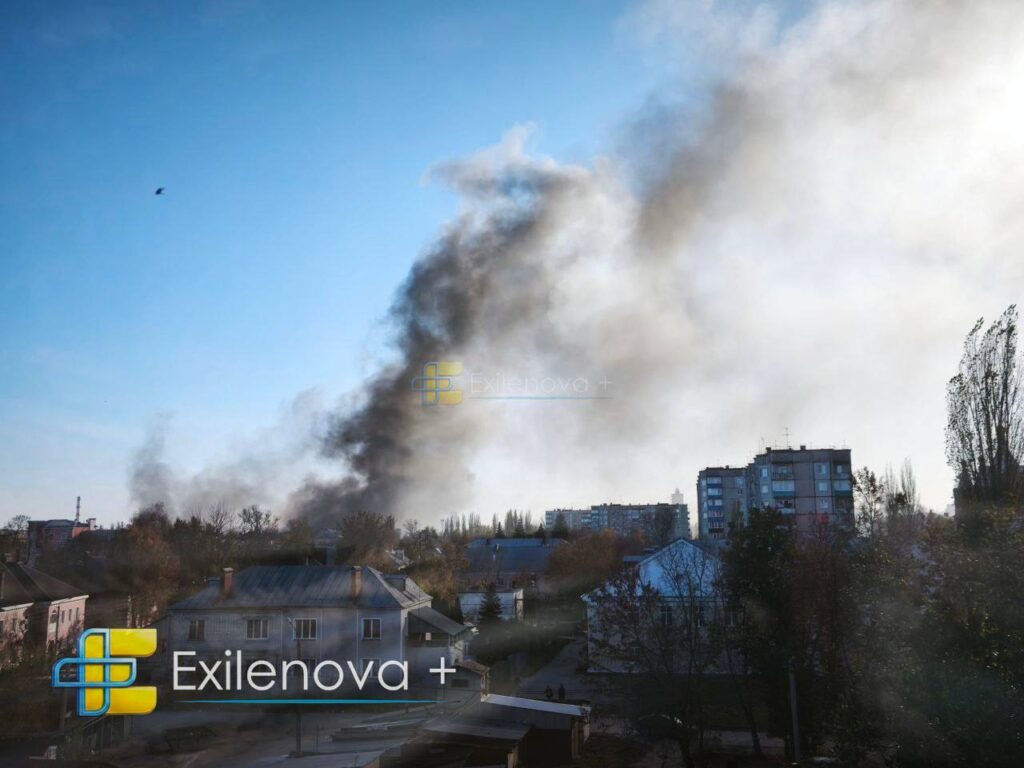
Drones hit at least two production facilities, Ukrainian monitoring channel Exilenova+ said. One is the shop where isobutane is turned into isobutylene, a raw material for synthetic rubbers. The other is outdoor unit No. 2 in shop BK-4, which produces and purifies high-purity isobutylene for butyl rubber.
Aftermath of the attack on the Tolyattikauchuk petrochemical plant. Analysis by Exilenova+, satellite image by Vantor.
The damage could delay rubber output and the supply of feedstock for other processes, including solid rocket fuel. Tolyattikauchuk can make about 260,000 metric tons of synthetic rubber a year, OSINT-Varta data show.
Hit again and again
Tolyattikauchuk had come under fire before. Overnight on 4 April, about 10 drones reached the plant by various accounts. Footage showed fires at storage shops D-12 and D-1 and at the BK-2, BK-3, and BK-4 units, though more sites may have been hit, the analysts added. Ukrainian forces struck the plant again on 12 June, the General Staff confirmed.
Then, on 12 September, a strike set fires at the BK-2, BK-3, and BK-4 shops, an OSINT community Absolutely Reliable Source reported. Without those shops running steadily, the line that makes MTBE, a key high-octane gasoline additive, is cut, the channel noted.
Trump lashes out on Maher after the host interviewed former White House press secretary Karoline LeavittDonald Trump launched a 1,300-word social media rant against the late-night US TV host Bill Maher on Sunday evening, calling him a “TOTAL LOSER” in a fresh assault on the media.“Let’s talk about this COMPLETE AND TOTAL LOSER, Bill Maher,” the US president wrote. “He’s got a Low Rated Show on equally Low Rated HBO, which was once, long ago, a Network of Quality and Excitement – But that’s all g
Trump lashes out on Maher after the host interviewed former White House press secretary Karoline Leavitt
Donald Trump launched a 1,300-word social media rant against the late-night US TV host Bill Maher on Sunday evening, calling him a “TOTAL LOSER” in a fresh assault on the media.
“Let’s talk about this COMPLETE AND TOTAL LOSER, Bill Maher,” the US president wrote. “He’s got a Low Rated Show on equally Low Rated HBO, which was once, long ago, a Network of Quality and Excitement – But that’s all gone.”
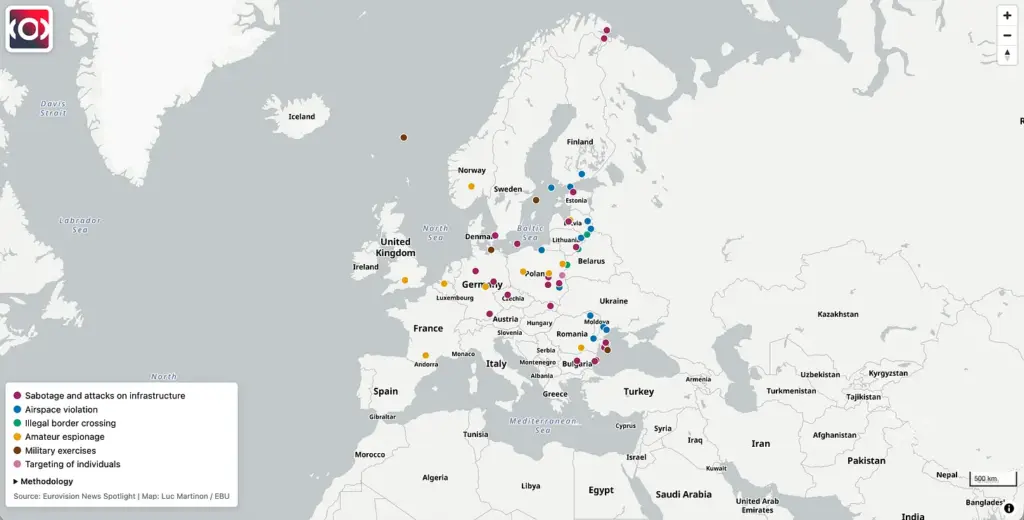
Journalists from 17 European public service broadcasters, coordinated by the European Broadcasting Union’s (EBU) Eurovision News Spotlight network, published an interactive map on 23 October 2026. It documents hybrid incidents linked to Russia across 17 European countries between 1 April and 15 October. Journalists compiled a database of hundreds of reported incidents, categorizing each by type and the source and strength of its alleged links to Russia, then verifying them through open-sou
Journalists from 17 European public service broadcasters, coordinated by the European Broadcasting Union’s (EBU) Eurovision News Spotlight network, published an interactive map on 23 October 2026. It documents hybrid incidents linked to Russia across 17 European countries between 1 April and 15 October. Journalists compiled a database of hundreds of reported incidents, categorizing each by type and the source and strength of its alleged links to Russia, then verifying them through open-source research.
The map comes as officials warn the campaign is growing. On 28 September, EU foreign policy chief Kaja Kallas said in Brussels that Russia was planning more acts of sabotage to divide societies and intimidate them into abandoning their support for Ukraine. The points on the map represent an incomplete list of publicly known cases attributed to Russia or suspected of being linked to it, the report states.
The map covers airspace violations, sabotage attempts, “disposable” agents with no formal intelligence training, migration used as a weapon, and Russian military activity near or across European borders. It excludes cyberattacks, influence operations, and espionage by trained intelligence officers.
The EBU calls the result a very conservative estimate, not an official tally. Russia has consistently denied responsibility for the incidents. Many single points represent several incidents of the same type in one area or in quick succession. In Moldova, for example, Defense Minister Anatolie Nosatîi said on 30 September that the government had recorded 84 drone incursions.
Four German incidents are on the map, out of many more
The map shows four incidents in Germany, according to BR.
The four incidents in Germany on the EBU hybrid war map, 2 August to 14 September 2026. Other dots mark Russia-linked incidents in neighboring countries. Map: Luc Martinon/EBU, Eurovision News Spotlight; edited by Euromaidan Press
On 2 August, German authorities arrested a 33-year-old Ukrainian man in Thuringia on suspicion of photographing a Bavarian weapons manufacturer for a foreign intelligence service as part of an alleged sabotage plot.
On 4 August, a drone carrying explosives and a detonator struck the wing of a Ukrainian An-124 cargo plane at Leipzig/Halle Airport but failed to explode.
On 3 September, attackers threw firebombs from a car onto a construction site next to defense firms in Munich, and German security authorities suspect Russian intelligence.
On 14 September, investigators learned of a crashed drone found near the Bundeswehr’s Wunstorf air base.
Internal papers from the new Joint Hybrid Defense Center, seen by Correctiv, record 163 suspected sabotage cases in 2026 up to 19 August. The targets included rail lines, military facilities, substations, and radio masts. The same papers record 1,034 drone overflights of critical infrastructure, military sites, and defense companies, and 25 espionage investigations. The papers cover possible attacks by Russia, China, and Iran, and media did not report a breakdown of the sabotage cases by country.
European leaders sound the alarm over Russian hybrid attacks
On 15 April, Swedish civil defense minister Carl-Oskar Bohlin said pro-Russian groups had moved from denial-of-service attacks to attempts at destructive cyberattacks, including one on a Swedish power plant in 2025. On 1 September, German Foreign Minister Johann Wadephul named Russia as the perpetrator of the Leipzig attack and accused Moscow of “blatant hostility” toward Germany.
On 18 September, French President Emmanuel Macron said Russia’s hybrid attacks would not go unanswered and ordered a plan to protect France’s critical infrastructure. On 1 October, German Chancellor Friedrich Merz said Germany was preparing for new hybrid attacks, “including serious ones.” NATO Secretary General Mark Rutte on 14 October called the attacks a sign of Russian weakness at a press conference in Tallinn and said NATO would react where needed without being “rattled.”
The left says its populist message can attract moderates and conservatives in addition to liberals. That theory will be put to the test in a series of competitive races on Election Day.
The left says its populist message can attract moderates and conservatives in addition to liberals. That theory will be put to the test in a series of competitive races on Election Day.
Russia attacked Ukraine with 140 drones, including Shahed and Gerbera attack drones and Parodiya decoys, and four missiles overnight on 26 October, the Ukrainian Air Force reported. The missiles were one Kh-31P anti-radiation missile and three Kh-59/69 air-launched guided missiles, launched from occupied parts of Zaporizhzhia and Kherson oblasts.
Jet-powered Shaheds are becoming a larger part of Russia’s aerial campaign, challenging Ukraine’s air defenses and prompting efforts to develo
Russia attacked Ukraine with 140 drones, including Shahed and Gerbera attack drones and Parodiya decoys, and four missiles overnight on 26 October, the Ukrainian Air Force reported. The missiles were one Kh-31P anti-radiation missile and three Kh-59/69 air-launched guided missiles, launched from occupied parts of Zaporizhzhia and Kherson oblasts.
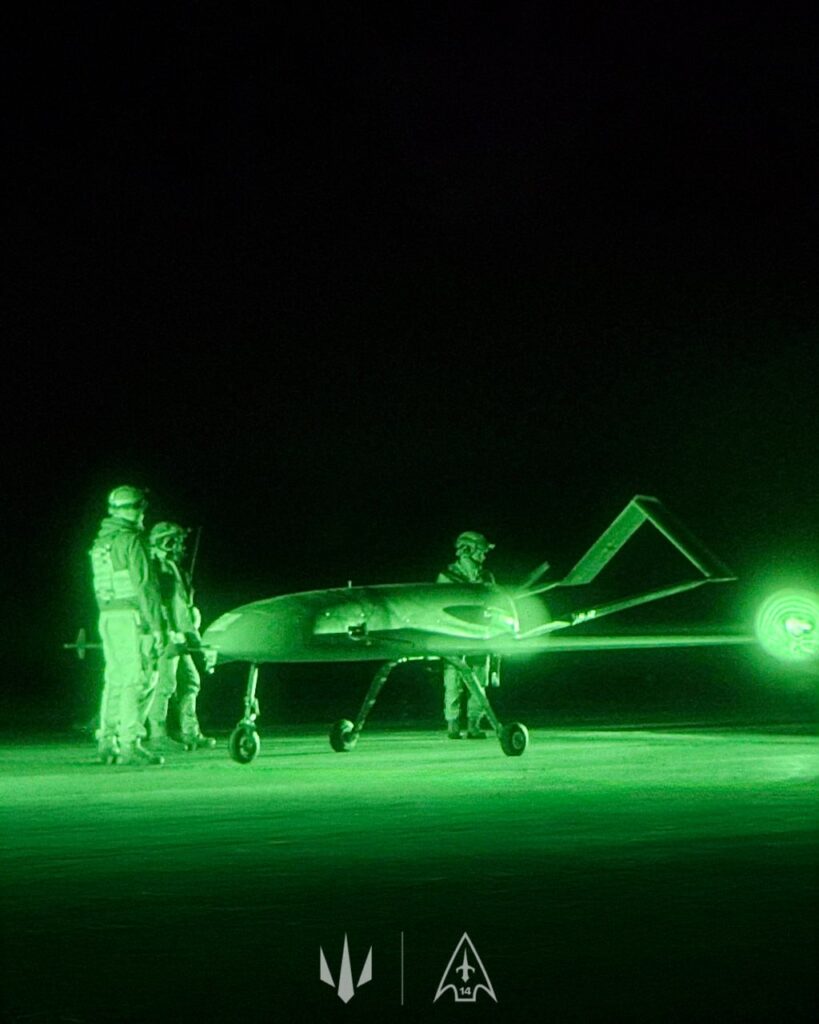
Jet-powered Shaheds are becoming a larger part of Russia’s aerial campaign, challenging Ukraine’s air defenses and prompting efforts to develop faster interceptors. Alongside guided bomb attacks and strikes on energy infrastructure, these attacks add to the pressure on Ukraine’s defenses as winter approaches, and Ukraine says Russia has a plan for it.
Air defenses downed or suppressed 112 drones, including 56 of the 70 jet-powered Shaheds, and three Kh-59/69 missiles, according to preliminary Air Force figures. Hits were recorded at 15 locations, and debris fell at four more.
Four wounded in Zaporizhzhia
Russian strikes on Zaporizhzhia overnight wounded two women aged 22 and 30, and two men aged 40 and 61, the State Emergency Service (DSNS) said. The strikes damaged the windows of a hotel and two buses, a private house, and four outbuildings, and three cars caught fire. The oblast administration had first reported one wounded.
Russian strikes injured 8 people in Ukraine overnight on 26 October
Russia injured 2 women, aged 22 and 30, and 2 men, aged 40 and 61, in Zaporizhzhia overnight, Ukraine's State Emergency Service said. Russia also shattered windows in a hotel and 2 buses and damaged a house, and… pic.twitter.com/42bvnHt0qk
Later in the morning, Russian forces hit a shopping center building that had already closed, the administration said. The building caught fire. According to preliminary information, no one was hurt.
Guided bombs hit two districts of Izium
At about 02:40 on 26 October, Russian forces struck two districts of Izium in Kharkiv Oblast with guided aerial bombs, and three people needed medical help, the city military administration said, as Suspilne Kharkiv reported. More than 10 private houses and a youth sports school were damaged, and several streets lost power and internet.
Russia struck a burning Odesa Oblast plant twice more as firefighters worked
Overnight, a Russian attack destroyed an industrial enterprise in Odesa Oblast and set it on fire, the DSNS reported. As firefighters put out the blaze, Russian forces struck the site twice more. The rescuers were in shelter and were not hurt, but fire equipment was damaged. At another address, four garages were damaged and a car was destroyed. The oblast administration said there were no casualties.
Russia struck a burning Odesa Oblast plant twice more as firefighters worked on 26 October 2026. Photo: State Emergency Service of Ukraine
Energy facility hit in Khmelnytskyi Oblast
On the evening of 25 October, a Russian attack damaged an energy facility in Kamianets-Podilskyi district of Khmelnytskyi Oblast, causing emergency power outages, the oblast administration said. Windows were also damaged in two residential buildings. No casualties were reported.
Meanwhile, Russian drones attacked the Nikopol district of Dnipropetrovsk Oblast more than 10 times overnight, damaging a high-rise and an administrative building, the oblast administration reported. No one was hurt. Mykolaiv Oblast also came under Shahed attack overnight, with no casualties, according to its administration.
The attack continued into the day. On the morning of 26 October, a Russian strike hit a civilian infrastructure site in Vinnytsia, the oblast administration said. Preliminary reports showed no casualties.
Strikes on 26 October kill three in Donetsk and Dnipropetrovsk oblasts
On 26 October, Russian aircraft dropped four guided bombs on homes and shops in the center of Yasnohirka near Kramatorsk, killing one person and wounding 10, the DSNS said. Among the wounded is a 13-year-old girl, Donetsk oblast head Vadym Filashkin said. In Sloviansk, a Russian airstrike destroyed a private house, and rescuers recovered the body of its owner, the DSNS said.
A Russian drone strike on Pavlohrad in Dnipropetrovsk Oblast killed one person and injured seven, including two children, the DSNS said. The injured include two 10-year-old girls, the oblast administration said.
Six hurt in Kharkiv Oblast over the past day
Over the past 24 hours, Russian attacks hurt six people in Kharkiv Oblast, oblast head Oleh Syniehubov said. In Kharkiv, a 60-year-old man and a 14-year-old boy suffered acute stress reactions. Two women aged 51 and 71 were wounded in Krasnopavlivka. His count lists two wounded men in Izium, aged 72 and 52, while the city administration says three people there needed medical help. Russian attacks also set fire to a house in Kotliary, a production building in Vilshany, a building in Derhachi, a house in Mykolaivka, and a site in Kharkiv’s Kholodnohirskyi district, the DSNS reported.
A damaged truck and a crater in Kharkiv Oblast after Russian attacks on 26 October 2026. Photo: Kharkiv Oblast Military Administration
In Sumy Oblast, Russian attacks over the past day injured five people, the National Police said, including two women aged 76 and 56 hit by a drone in Sumy community.
On 25 October: two killed in Kherson and Donetsk oblasts
In Chernihiv Oblast, Russian attacks on 25 October injured a man at a hangar in Pryluky district and a woman at a grain store in the Novhorod-Siverskyi area, the oblast administration said. Drones also damaged a school in a village of Koriukivka community, and a strike destroyed 700 metric tons of potatoes at an enterprise in Mena community, the administration said. A large warehouse fire broke out in Koriukivka district, the DSNS said.
In Kherson Oblast, Russian attacks killed one person and wounded eight in the 24 hours to 06:00 on 26 October, the oblast administration reported. On 25 October, a Russian drone strike on a minibus in Kherson’s Central district killed one person and wounded six, the administration said after one more man sought medical help. Police said the minibus was hit by an FPV drone.
In Donetsk Oblast, Russian forces killed one person in Kramatorsk and wounded 10 across the oblast on 25 October, Filashkin said. Russia hit Kramatorsk with drones and six KAB-250 guided bombs, and 18 hits on Sloviansk wounded four, police said.
On 25 October, a Russian attack on Synelnykove district of Dnipropetrovsk Oblast sent a 30-year-old man to hospital, the oblast administration said. In Vinnytsia, the number of people injured in the Russian attack on the morning of 25 October rose to seven, two of them hospitalized, the DSNS said. In Uman, an 86-year-old woman burned in the Russian attack on 21 October died in hospital, the Cherkasy oblast administration said.
Law would open two-year window for child sexual abuse victims to file lawsuits beyond statute of limitationsChild sexual assault survivors in Pennsylvania are on the verge of being denied the opportunity to sue their attackers after a bill to temporarily waive filing deadlines stalled again in the state’s legislature.Democrats have accused the Republican senate majority of playing politics with the bipartisan move to amend the state constitution and open a two-year window for victims to file mol
Law would open two-year window for child sexual abuse victims to file lawsuits beyond statute of limitations
Child sexual assault survivors in Pennsylvania are on the verge of being denied the opportunity to sue their attackers after a bill to temporarily waive filing deadlines stalled again in the state’s legislature.
Democrats have accused the Republican senate majority of playing politics with the bipartisan move to amend the state constitution and open a two-year window for victims to file molestation claims from years ago.
French and US maritime patrol planes are watching the western Black Sea, where drones keep hitting merchant ships, Romanian outlet Curs de Guvernare reported on 19 October, citing flight-tracking data. Romania blames Russia for the attacks, while Bulgaria says it cannot prove who launched them.
Ukraine’s three small Danube ports have kept its grain exports from collapsing further, and Russia has pounded those ports since the summer. The ships serving them are now being hit in the econom
French and US maritime patrol planes are watching the western Black Sea, where drones keep hitting merchant ships, Romanian outlet Curs de Guvernare reported on 19 October, citing flight-tracking data. Romania blames Russia for the attacks, while Bulgaria says it cannot prove who launched them.
Ukraine’s three small Danube ports have kept its grain exports from collapsing further, and Russia has pounded those ports since the summer. The ships serving them are now being hit in the economic zones of two NATO members. Many were anchored near or heading to the Sulina Canal, which links the Danube to the sea. That puts the allied patrols over these waters in the middle of the fight over Ukraine’s grain trade.
Map: Euromaidan Press
Two patrol planes over the western Black Sea
A French Navy Atlantique 2 maritime patrol plane arrived in Constanța, Romania’s main Black Sea port, on the evening of 18 October, Curs de Guvernare said. On 24 October, French Foreign Minister Jean-Noël Barrot said in the Bulgarian port of Varna that a French patrol plane had been operating in the area under NATO for two weeks and had contributed to rescue operations.
Explore further
Two tankers burn off Romania’s Sulina as Bulgaria says it lacks proof Russia is behind the Black Sea ship attacks
Meanwhile, a US Navy P-8A Poseidon flew into Varna from Sicily on 18 October, AFP reported, citing flight-tracking data. Two days later, Bulgarian Prime Minister Rumen Radev said it had begun reconnaissance patrols after Sofia asked allies for help, and that some allies had responded quickly. Bulgarian Defense Minister Dimitar Stoyanov called the deployment a joint decision of Bulgaria and NATO. He said the plane cannot strike targets and passes its data to NATO, Anadolu Agency reported.
NATO promises more
On 20 October, NATO’s North Atlantic Council met at Romania’s request. Afterward, the alliance said it would send more maritime patrol aircraft, radar systems, and drones to the Black Sea. NATO military spokesman Col. Martin O’Donnell added that allies have sent or will send intelligence personnel and explosives-forensics teams. NATO itself has not attributed the attacks to any country.
Romania names Russia, Bulgaria hedges
Romania has been blunter. On 15 October, after four merchant ships were hit within a day, acting Foreign Minister Oana Țoiu wrote on X that “Russia bears full responsibility for these developments.” On 17 October, Romanian F-16s shot down two jet-powered Russian Geran drones near Sulina, Romania’s Defense Ministry said.
Unitățile aeriene și navale ale Gărzii de Coastă (GdC/MAI) și ale Inspectoratului General pentru Situații de Urgență (IGSU/MAI) sunt implicate activ în operațiunile de căutare și salvare, în vederea găsirii membrilor dați dispăruți ai echipajului navei care a fost atacată în…
On 23 October, a drone sank the cargo ship Khoryv off Constanța, killing a Ukrainian sailor, and President Nicușor Dan blamed Russia too. “It is part of Russia’s escalation process in its war in Ukraine,” Dan said.
Bulgaria is more cautious. Radev told parliament on 14 October that the attacks worked in Russia’s favor but that Sofia could not prove it. Since taking office in May, he has sought a thaw in ties with Moscow.
Saudi Arabia, Turkey and Pakistan made a rare joint visit to Tehran amid reports that the U.S. and Israel were drawing up plans to renew their attacks on Iran.
Saudi Arabia, Turkey and Pakistan made a rare joint visit to Tehran amid reports that the U.S. and Israel were drawing up plans to renew their attacks on Iran.
Mohsen Rezaei, the head of Iran’s Supreme National Security Council, in July. He will meet with a delegation from countries in the Mecca Pact to discuss conflict in the region, according to an Iranian official.
Company imitates reflection of sun from mirrors, prompting pushback from some scientists, environmentalists and California localsLocals in a rural area of California were recently startled to see dazzlingly bright light shining down from nearby mountains at night, illuminating a swathe of the desert below.Unbeknown to them, the strange nocturnal illumination was the latest step in a company’s plan to erect thousands of giant mirrors in space to reflect sunlight on to the Earth during night-time.
Company imitates reflection of sun from mirrors, prompting pushback from some scientists, environmentalists and California locals
Locals in a rural area of California were recently startled to see dazzlingly bright light shining down from nearby mountains at night, illuminating a swathe of the desert below.
Unbeknown to them, the strange nocturnal illumination was the latest step in a company’s plan to erect thousands of giant mirrors in space to reflect sunlight on to the Earth during night-time.
The U.S. Army is training Apache pilots to shoot down drones as militaries around the world assess the efficacy of 20th-century technologies in a new era.
The U.S. Army is training Apache pilots to shoot down drones as militaries around the world assess the efficacy of 20th-century technologies in a new era.
Much has been said about how Ukraine should treat Russian prisoners of war. Less attention has been paid to the emotional struggle for the Ukrainians tasked with that work.
Much has been said about how Ukraine should treat Russian prisoners of war. Less attention has been paid to the emotional struggle for the Ukrainians tasked with that work.
The left says its populist message can attract moderates and conservatives in addition to liberals. That theory will be put to the test in a series of competitive races on Election Day.
The left says its populist message can attract moderates and conservatives in addition to liberals. That theory will be put to the test in a series of competitive races on Election Day.
Drones attacked the VASO aircraft plant in Russia's Voronezh overnight on 26 October, Ukrainian Telegram channel Supernova+ reported. The plant builds Il-96 airliners and parts for Russia's military transport planes. A synthetic-rubber plant was also reportedly hit and fires broke out across Voronezh, while another rubber plant in Tolyatti, farther east, reportedly came under attack again.
Ukraine keeps hitting the plants behind Russia's weapons, from Voronezh's missile chips to Urals t
Drones attacked the VASO aircraft plant in Russia's Voronezh overnight on 26 October, Ukrainian Telegram channel Supernova+ reported. The plant builds Il-96 airliners and parts for Russia's military transport planes. A synthetic-rubber plant was also reportedly hit and fires broke out across Voronezh, while another rubber plant in Tolyatti, farther east, reportedly came under attack again.
Ukraine keeps hitting the plants behind Russia's weapons, from Voronezh's missile chips to Urals titanium for warplanes. Each supplier knocked out of rhythm slows how fast Russia replaces the hardware it loses and keeps using against Ukraine.
What the Voronezh plant builds
Supernova+ described VASO as part of Ilyushin, which belongs to Russia's state-owned United Aircraft Corporation (UAC). The channel published a photo of fire and smoke at the site. The plant lies about 190 km from the Ukrainian border.
VASO makes pylons, engine nacelles, and flap rails for the Il-76MD-90A, a modernized military transport plane, and sends them to Ulyanovsk, UAC's press service said in 2024. "We have reached the production pace of Il-76MD-90A aircraft kits that our Ulyanovsk colleagues need," Igor Butyrin, who runs the plant's Il-76 program, stated at the time. In 2016, the plant built an Il-96-300 that UAC handed over to the Rossiya special flight detachment of Russia's presidential property office.
Map of Ukrainian drone strikes on Voronezh and Tolyatti with distances from Ukraine, Russia, 26 October 2026. Map: EP/Datawrapper
A rubber plant and a bridge on the list too
Supernova+ also named Voronezhsintezkauchuk, a plant of Russian petrochemical group Sibur that makes synthetic rubbers. The channel later reported a hit on the plant's industrial zone and claimed an attack on the city's Northern Bridge. Ukrainian Telegram channel Exilenova+ published footage of a drone arriving, reportedly at the rubber plant.
The moment the UAV arrived this morning, reportedly at the Voronezhsintezkauchuk factory. pic.twitter.com/2PXyQ5P7sb
Voronezh Oblast Governor Aleksandr Gusev declared a missile alert at 04:47 Kyiv time, but no source has named a missile type. Kyiv has not commented. Ukraine's Air Force, which launches Storm Shadow cruise missiles, and its Navy, which fires Neptunes, have posted nothing on Voronezh.
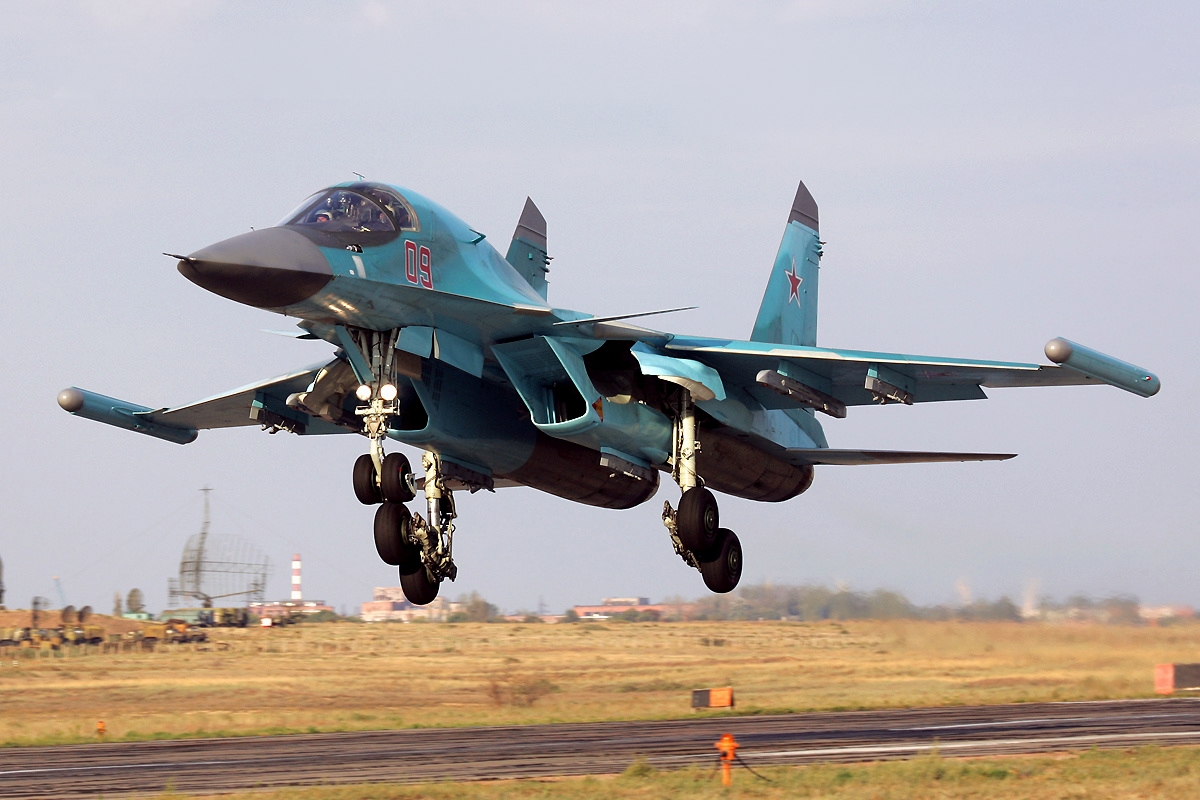
Earlier this month, Ukraine's Navy said it hit six Su-34 bombers in Voronezh Oblast with Neptunes. Storm Shadows reportedly struck an electronics plant in Oryol on 23 October and a battery plant in Yelets two days later.
Fires across the city
Gusev claimed air defenses downed 113 drones over the region, more than 70 of them over the city. He listed fires at several industrial enterprises, which he said caused no serious consequences, plus a business center, an apartment block, and a school stadium. Russian Telegram channel Astra published video of a drone hitting the Galereya Chizhova business center. Exilenova+ footage showed cars burning below apartment blocks.
Damage in residential districts may have come from downed drones or from Russian air-defense missiles falling back on the city. During a 23 October attack on Gorodets, in Nizhny Novgorod Oblast, Exilenova+ claimed a Pantsir air-defense missile hit a house.
Explore further
Russia still parks its best bombers in the open. Ukraine has spent a year knocking out the air defenses that were supposed to protect them
Gusev also claimed two men were killed and 17 people injured, many of them on a train struck by drone debris. Russian Railways said five passengers were hurt at Somovo station and traffic on the line stopped. Russia's Defense Ministry claimed its air defenses downed 290 drones over 15 regions and the Moscow area.
Tolyatti's rubber plant reportedly attacked again
Locals reported an attack on the Tolyattikauchuk chemical plant in Tolyatti, Samara Oblast, Exilenova+ said. The city lies about 890 km from the front line. Ukraine's General Staff confirmed a strike on the same plant on 24 October. Its synthetic rubbers go into solid fuel for Russia's tactical and ballistic missiles, among other uses.
Until Kyiv comments or satellite imagery shows the site, the damage at VASO stays unconfirmed, and so does any delay to Russia's Il-76 parts line.
A federal appeals court panel seemed disinclined to order the state to set aside as many as 20,000 mail-in ballots the Trump administration claimed were sent to noncitizens.
A federal appeals court panel seemed disinclined to order the state to set aside as many as 20,000 mail-in ballots the Trump administration claimed were sent to noncitizens.
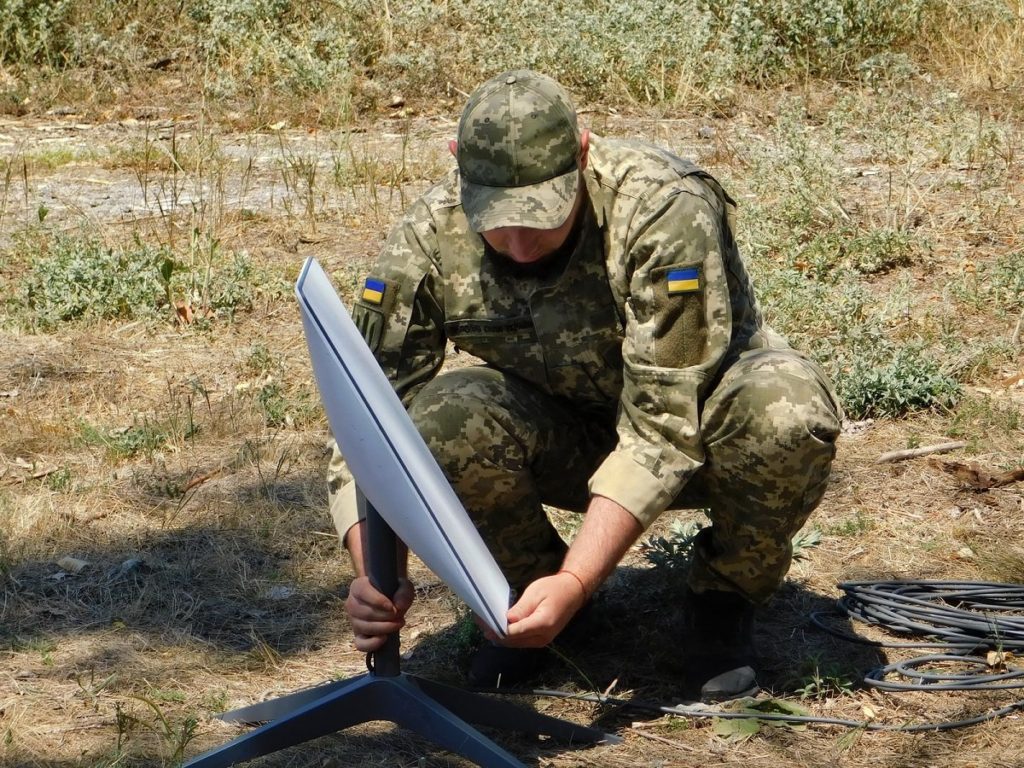
SpaceX founder Elon Musk says that if Ukraine fires through Starlink, Russia would be entitled to shoot the network down. That is why Starlink must remain a civilian operation and cannot be used for outright offensive strikes that would put its very existence at risk.
The warning lands in the middle of a fight over Musk’s own hand on that network. Weeks ago, his company unexpectedly throttled the service Ukraine’s drones depend on amid US President Donald Trump diesel deal with Russia,
SpaceX founder Elon Musk says that if Ukraine fires through Starlink, Russia would be entitled to shoot the network down. That is why Starlink must remain a civilian operation and cannot be used for outright offensive strikes that would put its very existence at risk.
The warning lands in the middle of a fight over Musk’s own hand on that network. Weeks ago, his company unexpectedly throttled the service Ukraine’s drones depend on amid US President Donald Trump diesel deal with Russia, which led to the disruption of a few operations on the front.
The US Treasury authorized the sale, delivery, offloading, and import of Russian-origin diesel fuel, effectively suspending sanctions on that trade until 7 April 2027, the Office of Foreign Assets Control (OFAC) said on its website on 9 October.
The diesel deal combining intelligence halt and military Starlink, with pressure on Ukraine to make a quick peace deal, has angered both Democrats and Republicans ahead of the US elections on 3 November, where Democrats could win.
Meanwhile, a Ukrainian official interprets Musk's talk of strikes as an attempt to build an alibi before a possible investigation into that decision.
A civilian network, or a target
Musk was responding to a post warning that if Starlink shifted from a civilian network into a military system, Russia could treat it as a target for retaliation, and that destroying satellites in orbit could scatter enough debris to make space unusable for years or centuries.
“An adversary blowing up Starlink satellites would create a domino effect of destruction that would generate a vast field of debris, making space unusable," he writes.
When the shield and the warnings failed together
Overnight into 14 October, SpaceX quietly capped the speed of Starshield, the military version Ukraine’s drones run on, without telling Kyiv. Ukrainian units said the limit broke a series of missions, with connections dropping mid-flight and leaving drones hard to control.
At the same time, President Volodymyr Zelenskyy said Ukraine relies on the network for air defense, not attack, to intercept the Russian drones Moscow sends to its cities, and that once the speed was cut, his forces could no longer stop some of them as effectively as before.
Simultaneously, Ukraine's other American lifeline also went dark: for about three days, the US stopped passing the intelligence that warns of Russian ballistic launches. On 12 October, Russian ballistic missiles hit Kyiv before the air-raid alert reached people, with no advance data from partners. In a strike during that window, three people were killed in the capital, the sirens sounding only after the blasts.
A Ukrainian official sees alibi-building
Meanwhile, Andrii Kovalenko, the ex-head of Ukraine’s Center for Countering Disinformation, read Musk’s statement as self-protection rather than physics
“Musk, having taken responsibility for the restrictions on Starlink and Starshield for Ukraine, is now trying to build himself an alibi before a possible investigation into that decision,” he wrote.
He said that regardless of who was behind the idea of restricting Starlink and Starshield access for Ukraine, it represents a strategic setback for the US in the long run, as it risks portraying the country as an unreliable partner that may fail to honor its commitments.
"Europe purchases around 60% of its imported weapons from the US. Trust in the US as a security guarantor directly supports sales for American defense companies. Moves like this only undermine that trust and encourage European countries to develop their own systems," he said.
The US has sent a message that its guarantees may not be reliable and that even paid-for services can be subject to political decisions, Kovalenko stressed.
Ukraine reportedly struck the Energiya plant in Yelets, Russia’s Lipetsk Oblast, with UK-supplied Storm Shadow cruise missiles on 25 October, according to the OSINT channel Exilenova+.
The plant manufactures batteries and power sources used in Russian weapons systems, including Iskander and Kinzhal missiles, air defense systems, and guided aerial bombs, according to Exilenova+. The reported strike targeted a facility that supplies components for Russia’s military-industrial complex as M
Ukraine reportedly struck the Energiya plant in Yelets, Russia’s Lipetsk Oblast, with UK-supplied Storm Shadow cruise missiles on 25 October, according to the OSINT channel Exilenova+.
The plant manufactures batteries and power sources used in Russian weapons systems, including Iskander and Kinzhal missiles, air defense systems, and guided aerial bombs, according to Exilenova+. The reported strike targeted a facility that supplies components for Russia’s military-industrial complex as Moscow continues its war against Ukraine.
According to Exilenova+, Energiya is Russia's only producer of batteries for glide bomb planning and correction modules, as well as a key supplier of specialized power sources for several missile systems.
Storm Shadow missiles reportedly hit plant buildings
Exilenova+ reported multiple missile impacts at the Energiya plant, sharing footage and photos showing explosions, thick smoke, and fires at the facility. The channel later reported that the plant was still burning and that the surrounding area had been cordoned off, with numerous ambulances heading to the site.
Dnipro OSINT reported that at least two missiles struck two buildings at the plant.
The Energiya plant is located in Yelets, approximately 250 km (150 miles) from the Ukrainian border.
Plant produces components for Russian weapons
According to Dnipro OSINT, Energiya specializes in developing and manufacturing chemical power sources. Its products are used in several Russian weapons systems, including Iskander-K and Iskander-M missiles, Kh-47M2 Kinzhal air-launched ballistic missiles, Zircon missiles, and Pantsir air defense systems. The plant also supplies power sources for UMPB D-30SN guided aerial bombs.
Many of these weapons are used in Russian strikes on Ukrainian cities, killing civilians and destroying residential buildings and civilian infrastructure.
Explore further
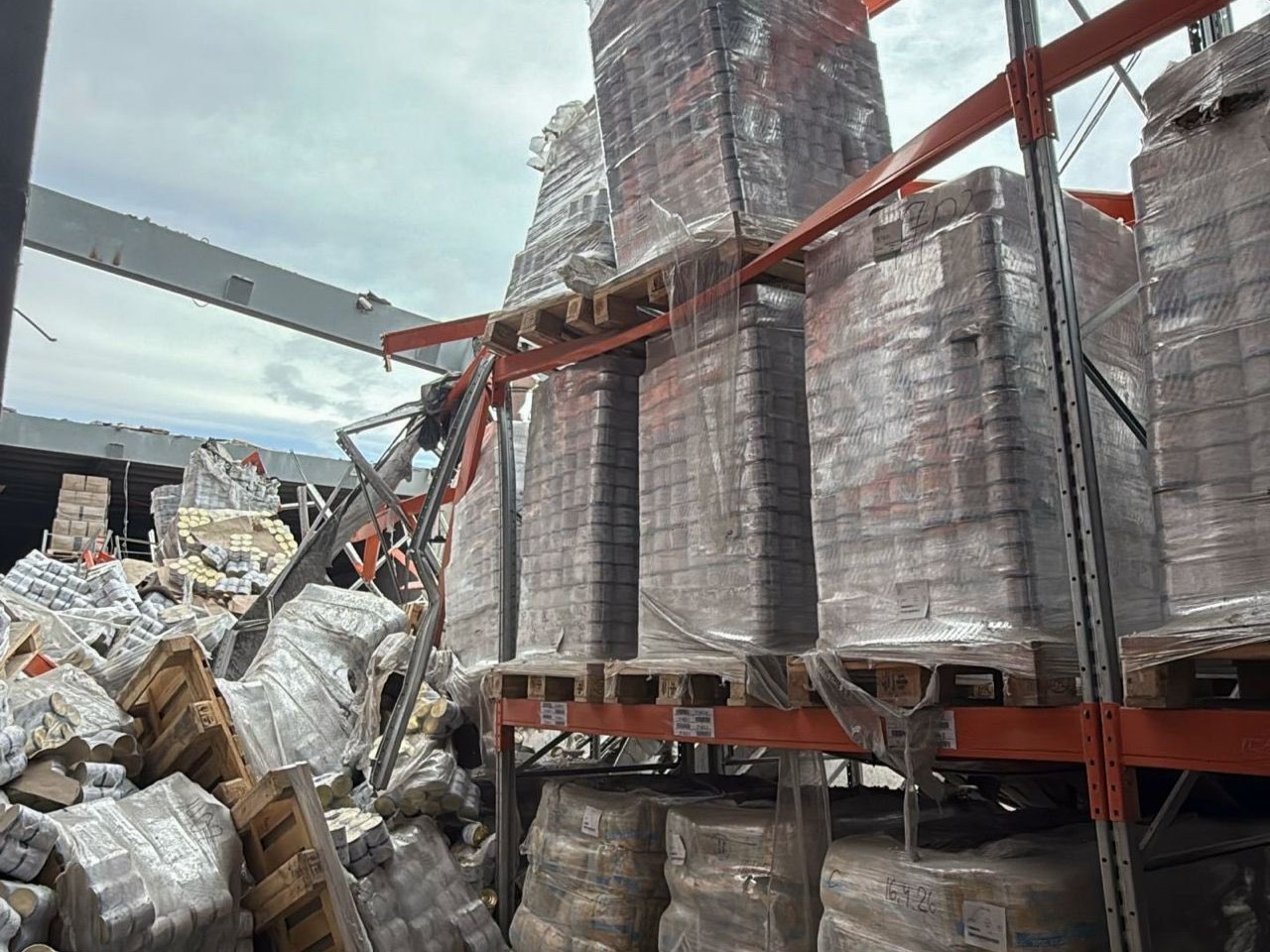
UN food aid warehouse in Dnipro struck by Russian Iskander missile, impacting supplies for 130,000 people
Dnipro OSINT said the plant had been attacked at least four times before the 25 October strike.
The strike comes two days after a reported Ukrainian Storm Shadow missile attack on the Proton electronics plant in Russia’s Oryol on 23 October, which produces electronic components used in Russian weapons systems, including Iskander-M ballistic missiles and Pantsir-S1 air defense systems.
How a rebuilt, historic California baseball diamond embodies ‘the contradictions in America’s legacy’When Dan Kwong first dreamed of staging baseball games at the Japanese American concentration camp where his family was held captive during the second world war, he thought of it as an exercise in living history, an eye-catching way to convey the trauma of 120,000 men, women and children who were locked up in the wake of the Japanese attack on Pearl Harbor.Baseball was a passion for Kwong, a 71-y
How a rebuilt, historic California baseball diamond embodies ‘the contradictions in America’s legacy’
When Dan Kwong first dreamed of staging baseball games at the Japanese American concentration camp where his family was held captive during the second world war, he thought of it as an exercise in living history, an eye-catching way to convey the trauma of 120,000 men, women and children who were locked up in the wake of the Japanese attack on Pearl Harbor.
Baseball was a passion for Kwong, a 71-year-old performance artist from Los Angeles. He knew that the wartime internees had played the game not just as a distraction from their predicament, but as a quiet expression of their loyalty to the United States. He wanted to stage an event that would cast the game as an act of resistance, and teach new generations about the damage governments do when they strip a whole segment of the population of their constitutional rights.
VW investment, creating 4,500 jobs in Georgia, comes amid Trump’s damaging tariffs, intense Chinese competition and costly shift towards EVsAudi has said it will spend $4bn (£3bn) to build its first factory in the US, as its parent company, Volkswagen, struggles with the impact of steep tariffs imposed by Donald Trump.The German brand’s chief executive, Gernot Döllner, joined Trump on stage at a campaign rally on Saturday night to announce the factory in Macon, Georgia, in an unusual move by a b
VW investment, creating 4,500 jobs in Georgia, comes amid Trump’s damaging tariffs, intense Chinese competition and costly shift towards EVs
Audi has said it will spend $4bn (£3bn) to build its first factory in the US, as its parent company, Volkswagen, struggles with the impact of steep tariffs imposed by Donald Trump.
The German brand’s chief executive, Gernot Döllner, joined Trump on stage at a campaign rally on Saturday night to announce the factory in Macon, Georgia, in an unusual move by a big European brand just days before the US midterm elections.
Shasta has embraced the Maga movement with gusto – can Democrats ever win back the rural, working-class voters they once relied upon? A crucial election was approaching and the country was desperate. Despite promises that economic conditions were improving, nearly a quarter of the US was out of work as voters headed to the polls in 1932.It was the darkest time since the civil war, a period so dire that in California’s capital people fought each other for work. In early 1931, a crowd of 200 men s
Shasta has embraced the Maga movement with gusto – can Democrats ever win back the rural, working-class voters they once relied upon?
A crucial election was approaching and the country was desperate. Despite promises that economic conditions were improving, nearly a quarter of the US was out of work as voters headed to the polls in 1932.
It was the darkest time since the civil war, a period so dire that in California’s capital people fought each other for work. In early 1931, a crowd of 200 men scuffled over a handful of temporary jobs moving back-breaking loads of granite, the Sacramento Bee reported.
A drone attack damaged an industrial facility in Russia’s Perm Krai early on 25 October, injuring five workers, Ukrainian monitoring channel Exilenova+ reported. Exilenova+ identified the target as the AVISMA chemical and metallurgical plant in Berezniki, around 1,500 km from Ukraine’s border.
The reported strike highlights Ukraine’s ability to reach industrial facilities deep inside Russia that support its military-industrial complex.
AVISMA produces titanium materials used in avi
A drone attack damaged an industrial facility in Russia’s Perm Krai early on 25 October, injuring five workers, Ukrainian monitoring channel Exilenova+ reported. Exilenova+ identified the target as the AVISMA chemical and metallurgical plant in Berezniki, around 1,500 km from Ukraine’s border.
The reported strike highlights Ukraine’s ability to reach industrial facilities deep inside Russia that support its military-industrial complex.
AVISMA produces titanium materials used in aviation and aerospace manufacturing, including military aircraft, aircraft engines, missiles, and space technology, according to Exilenova+.
Regional governor Dmitry Makhonin said the industrial facility sustained damage but continued operating normally. He said five workers were injured in the attack.
A target deep inside Russia
Perm Krai lies in Russia’s Ural region, roughly 1,500 km from Ukraine’s border. The distance places the reported strike far beyond Russia’s border regions, where Ukrainian drone attacks have frequently targeted military and industrial infrastructure.
The reported attack follows a broader Ukrainian campaign against Russian industrial and energy facilities linked to the country’s war effort.
Russia’s Defense Ministry claimed that air defenses intercepted and destroyed 532 Ukrainian drones overnight across 23 Russian regions and over the Sea of Azov, according to Russian state news agency TASS.
The reported interceptions included drones over Perm Krai, as well as regions around Moscow and areas in southern and western Russia. The figures have not been independently verified.
The extent of damage at AVISMA and any impact on its operations have not been independently established.
I can’t say I’m enjoying my new gig as a would-be creator. But these days, I don’t have much choiceI recently started posting videos on Instagram. Like, actual videos.Reels, as they call them. Where I say things, with one of those obnoxiously tiny microphones with the fuzzy head on top. I remember when microphones were gigantic tubular monstrosities that you couldn’t accidentally swallow without a pretty substantial effort and a handful of God-given talent.Dave Schilling is a Los Angeles-based w
I can’t say I’m enjoying my new gig as a would-be creator. But these days, I don’t have much choice
I recently started posting videos on Instagram. Like, actual videos.
Reels, as they call them. Where I say things, with one of those obnoxiously tiny microphones with the fuzzy head on top. I remember when microphones were gigantic tubular monstrosities that you couldn’t accidentally swallow without a pretty substantial effort and a handful of God-given talent.
Dave Schilling is a Los Angeles-based writer and humorist
Democratic candidates are ahead in two, hold a narrow edge in a third and are tied in a fourth, new polling shows. The seats embody the fights playing out nationwide in the midterms.
Democratic candidates are ahead in two, hold a narrow edge in a third and are tied in a fourth, new polling shows. The seats embody the fights playing out nationwide in the midterms.
Luiz Inácio Lula da Silva, the leftist incumbent, and Flávio Bolsonaro, the right-wing challenger, face off in a narrow race that could redefine the future of Latin America.
Luiz Inácio Lula da Silva, the leftist incumbent, and Flávio Bolsonaro, the right-wing challenger, face off in a narrow race that could redefine the future of Latin America.
Our politics reporter Kellen Browning walks through the four Senate races that progressive Democrats are closely watching in the upcoming midterm elections.
Our politics reporter Kellen Browning walks through the four Senate races that progressive Democrats are closely watching in the upcoming midterm elections.
Rick Jackson’s run for governor as a political nobody was his latest gamble. The campaign has brought scrutiny to the businesses that made him a fortune.
Rick Jackson’s run for governor as a political nobody was his latest gamble. The campaign has brought scrutiny to the businesses that made him a fortune.
State attorney general said Trump’s justice department’s directive to verify 20,000 ballots is completely improperCalifornia’s attorney general on Saturday rebuked the Trump administration’s efforts to quash alleged noncitizen voting, calling it “politicizing and weaponizing the law”.Rob Bonta, the state’s attorney general, said the justice department acted at Donald Trump’s direction. Continue reading...
State attorney general said Trump’s justice department’s directive to verify 20,000 ballots is completely improper
California’s attorney general on Saturday rebuked the Trump administration’s efforts to quash alleged noncitizen voting, calling it “politicizing and weaponizing the law”.
Rob Bonta, the state’s attorney general, said the justice department acted at Donald Trump’s direction.
Death inside Folkston facility comes as officials allegedly threaten hunger strikers there with force-feedingAn immigrant detained at a sprawling detention center complex in Georgia died on Friday, local and federal officials confirmed, after the facility has already faced national scrutiny for its response to an ongoing hunger strike inside.The death inside the D Ray James facility in Folkston, Georgia, comes as federal immigration officials and private contractors are allegedly threatening hun
Death inside Folkston facility comes as officials allegedly threaten hunger strikers there with force-feeding
An immigrant detained at a sprawling detention center complex in Georgia died on Friday, local and federal officials confirmed, after the facility has already faced national scrutiny for its response to an ongoing hunger strike inside.
The death inside the D Ray James facility in Folkston, Georgia, comes as federal immigration officials and private contractors are allegedly threatening hunger strikers there with force-feeding, a detained hunger striker, his wife, attorneys and advocates all said this week. Detainees are refusing food to protest prolonged captivity and bad conditions.
But Elon Musk, whose company SpaceX owns Starlink, accuses Ukrainian military of violating the company’s termsUkraine’s military has a “stable connection to Starlink”, the Ukrainian government said, 10 days after its ability to use the satellite communications system was suddenly restricted.But hours after the announcement, SpaceX CEO Elon Musk, whose company owns Starlink, accused the Ukrainian military of violating the company’s terms. Neither Musk nor the US government, which operates Stars
But Elon Musk, whose company SpaceX owns Starlink, accuses Ukrainian military of violating the company’s terms
Ukraine’s military has a “stable connection to Starlink”, the Ukrainian government said, 10 days after its ability to use the satellite communications system was suddenly restricted.
But hours after the announcement, SpaceX CEO Elon Musk, whose company owns Starlink, accused the Ukrainian military of violating the company’s terms. Neither Musk nor the US government, which operates Starshield using Starlink technology, took responsibility for imposing the curbs.
Hassan Jihad Ibn Kariem fell from ride earlier this month, spurring amusement park to temporarily shut it downSix Flags will install seatbelts on its Goliath rollercoaster in Georgia, after a rider plummeted to his death earlier this month.Hassan Jihad Ibn Kariem, a 42-year-old father and educator, was thrown from his seat on the Goliath, a coaster that plunges riders down 165ft, before a second drop of 180ft. On his way down, he collided with the ride’s other cars. Continue reading...
Hassan Jihad Ibn Kariem fell from ride earlier this month, spurring amusement park to temporarily shut it down
Six Flags will install seatbelts on its Goliath rollercoaster in Georgia, after a rider plummeted to his death earlier this month.
Hassan Jihad Ibn Kariem, a 42-year-old father and educator, was thrown from his seat on the Goliath, a coaster that plunges riders down 165ft, before a second drop of 180ft. On his way down, he collided with the ride’s other cars.
With moves in Alaska and California, the department has stepped up interventions in the midterm elections as the president’s instrument of unmediated executive power.
With moves in Alaska and California, the department has stepped up interventions in the midterm elections as the president’s instrument of unmediated executive power.
President Trump during a campaign rally in support of Senator Dan S. Sullivan in Wasilla, Alaska, this month. Mr. Trump urged the Justice Dept. to intervene in the Senate race.
Centers for Disease Control and Prevention reported 4,588 cases across the country, more than double the tally in 2025Federal health authorities reported an additional 178 cases of measles in the US this week, as the vaccine-preventable illness continues to sicken people across at least 43 outbreaks.The new data reported by the Centers for Disease Control and Prevention (CDC) comes as experts criticize the agency for lack of transparency, and as health secretary Robert F Kennedy Jr takes steps t
Centers for Disease Control and Prevention reported 4,588 cases across the country, more than double the tally in 2025
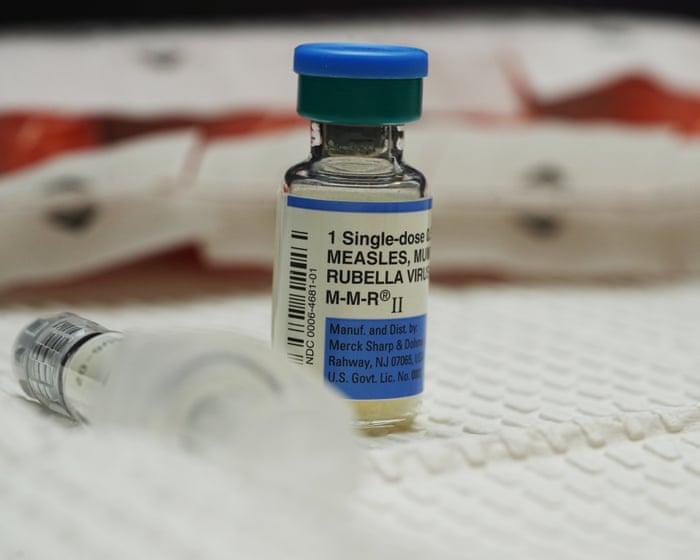
Federal health authorities reported an additional 178 cases of measles in the US this week, as the vaccine-preventable illness continues to sicken people across at least 43 outbreaks.
The new data reported by the Centers for Disease Control and Prevention (CDC) comes as experts criticize the agency for lack of transparency, and as health secretary Robert F Kennedy Jr takes steps to further upend US vaccine infrastructure.

 Connexion