Phoenix Police Investigate 2 Officers Accused of Violent Traffic Stop

© USA TODAY Network, via Reuters

© USA TODAY Network, via Reuters

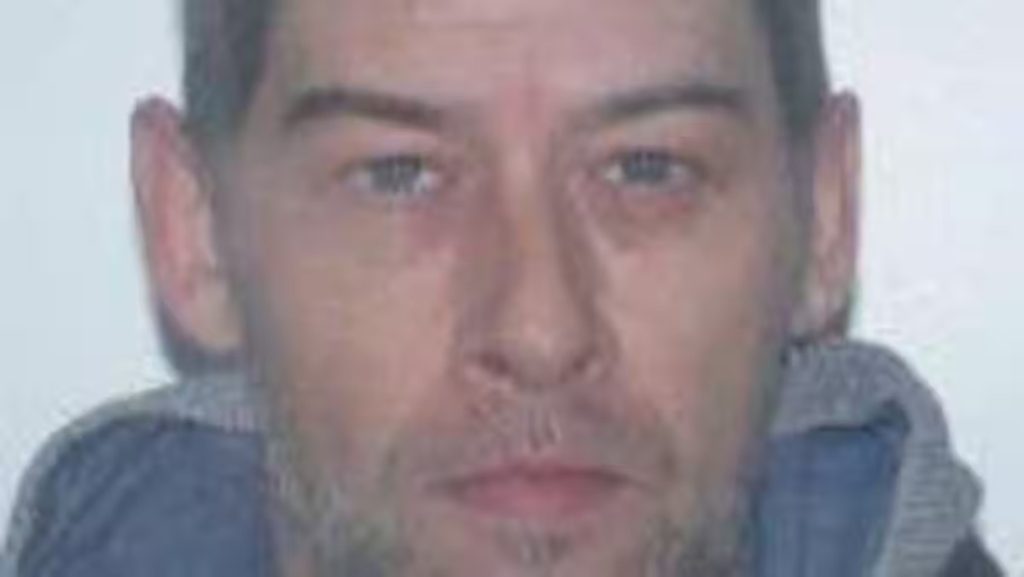
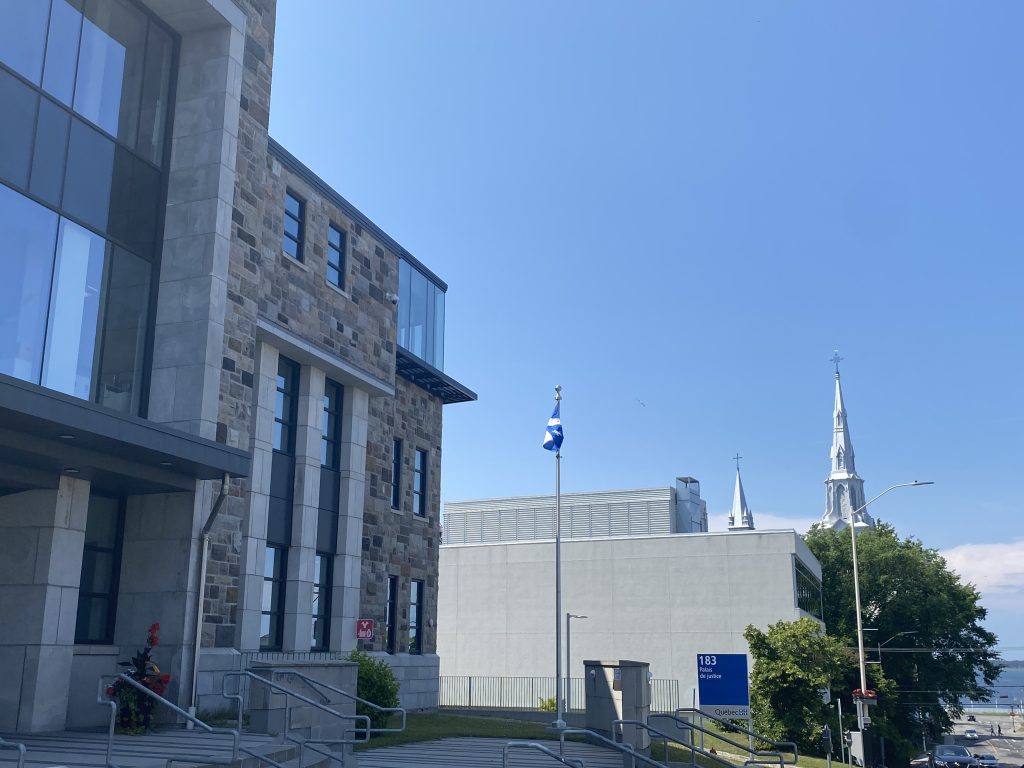
Philippe Pierre Thomas, 52 ans, de Sayabec, a plaidé coupable mardi, au palais de justice d’Amqui, à certains chefs d’accusation pour des infractions de nature sexuelle, mais pas à l’ensemble des accusations auxquelles il fait face.
Pour les accusations pour lesquelles il a plaidé coupable avant la tenue de son procès, il a été condamné à une peine de 18 mois de prison sur chacun des chefs, mais concurrents entre eux, pour une peine globale de 18 mois de détention.
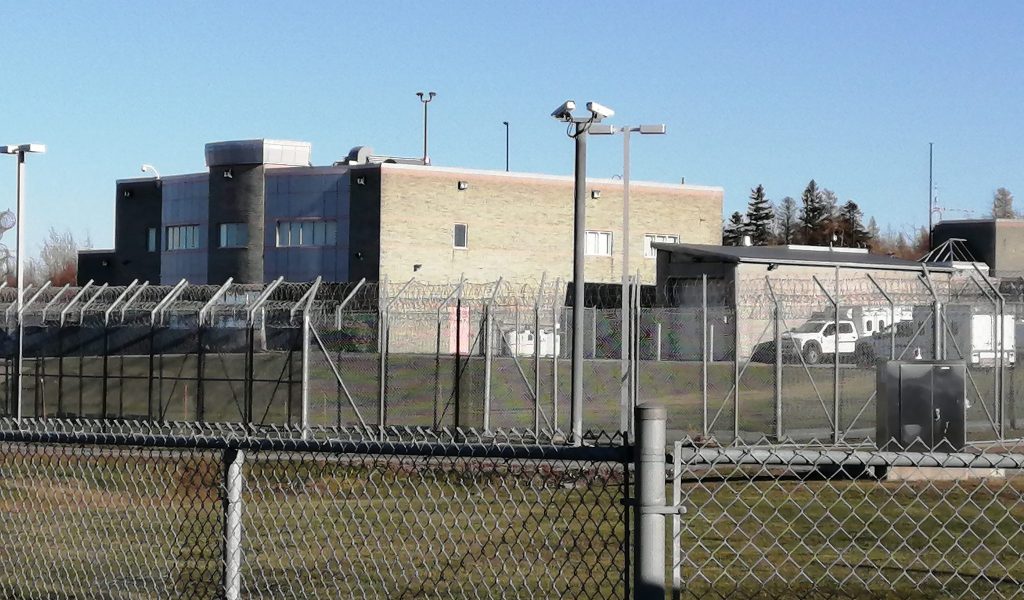
Détenu depuis sa deuxième arrestation, le 10 juillet 2024, une détention préventive de 18 mois lui a été octroyée dans ces dossiers, ce qui fait qu’il lui reste un jour à purger.
Il ne sera cependant pas libéré puisqu’il reviendra le 13 octobre devant la Cour, à Amqui, afin de fixer une date de procès dans les dossiers où il n’a pas reconnu sa culpabilité.
La peine imposée mardi comprend également une période de probation de deux ans débutant lors de sa libération ainsi qu’un prélèvement d’ADN à des fins d’analyse génétique.
Par ailleurs, un procès de trois jours se tiendra du 2 au 4 décembre au palais de justice d’Amqui pour d’autres accusations en semblable matière.
À la suite de sa deuxième arrestation, Thomas a été accusé d’entrave, voyeurisme, agression sexuelle, harcèlement, voie de fait et de bris d’ordonnance.
Le suspect avait été arrêté une première fois en décembre 2023 par les enquêteurs lors d’une perquisition réalisée à son domicile. Les policiers avaient à ce moment procédé à la saisie de plusieurs fichiers de pornographie juvénile.
Il avait alors été accusé d’avoir eu en sa possession, d’avoir accédé, d’avoir distribué, d’avoir transmis et d’avoir rendu accessible de la pornographie juvénile.
Les infractions alléguées se seraient déroulées à Saint-Moïse et ailleurs dans le district de Rimouski sur une période s’étalant de 2005 à 2023.
Selon l’acte d’accusation, Thomas aurait notamment commis des attouchements sur une personne adolescente entre novembre 2006 et décembre 2007, alors qu’il se trouvait en position d’autorité ou de confiance.
« L’enquête tend à démontrer qu’il aurait pu avoir fait d’autres victimes à travers la province. D’ailleurs, certaines de ses victimes auraient pu être en contact avec le suspect via les réseaux sociaux alors qu’il utilisait les pseudonymes « Philippe Thomas », « Pierre Thomas» et « Pierre-Philippe Thomas », mentionnait la porte-parole de la SQ, Marythé Bolduc, au moment de son arrestation.


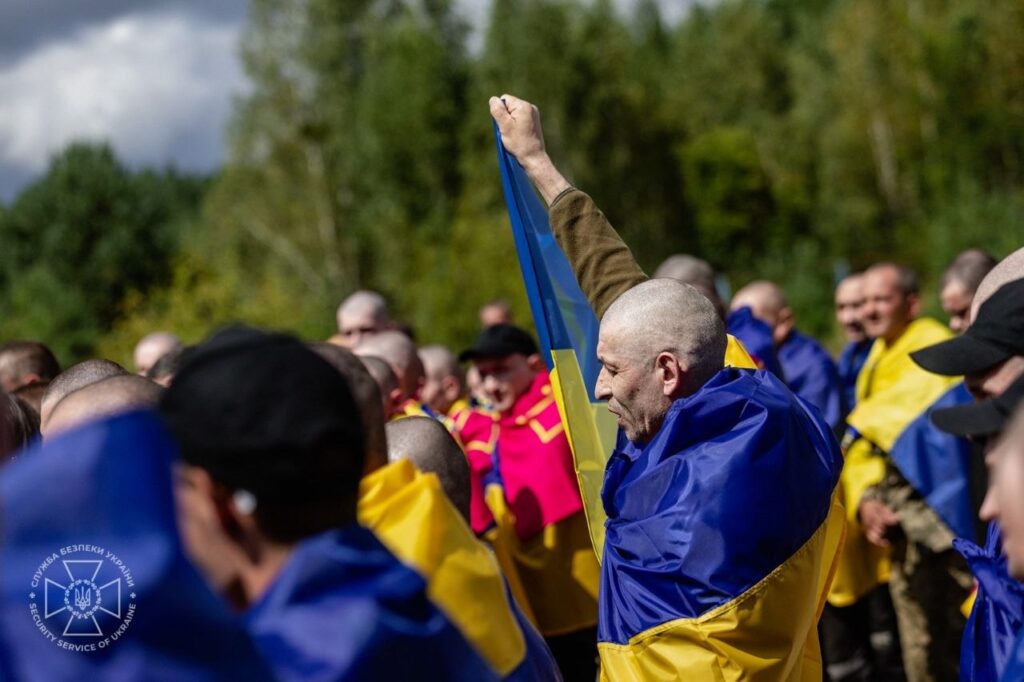
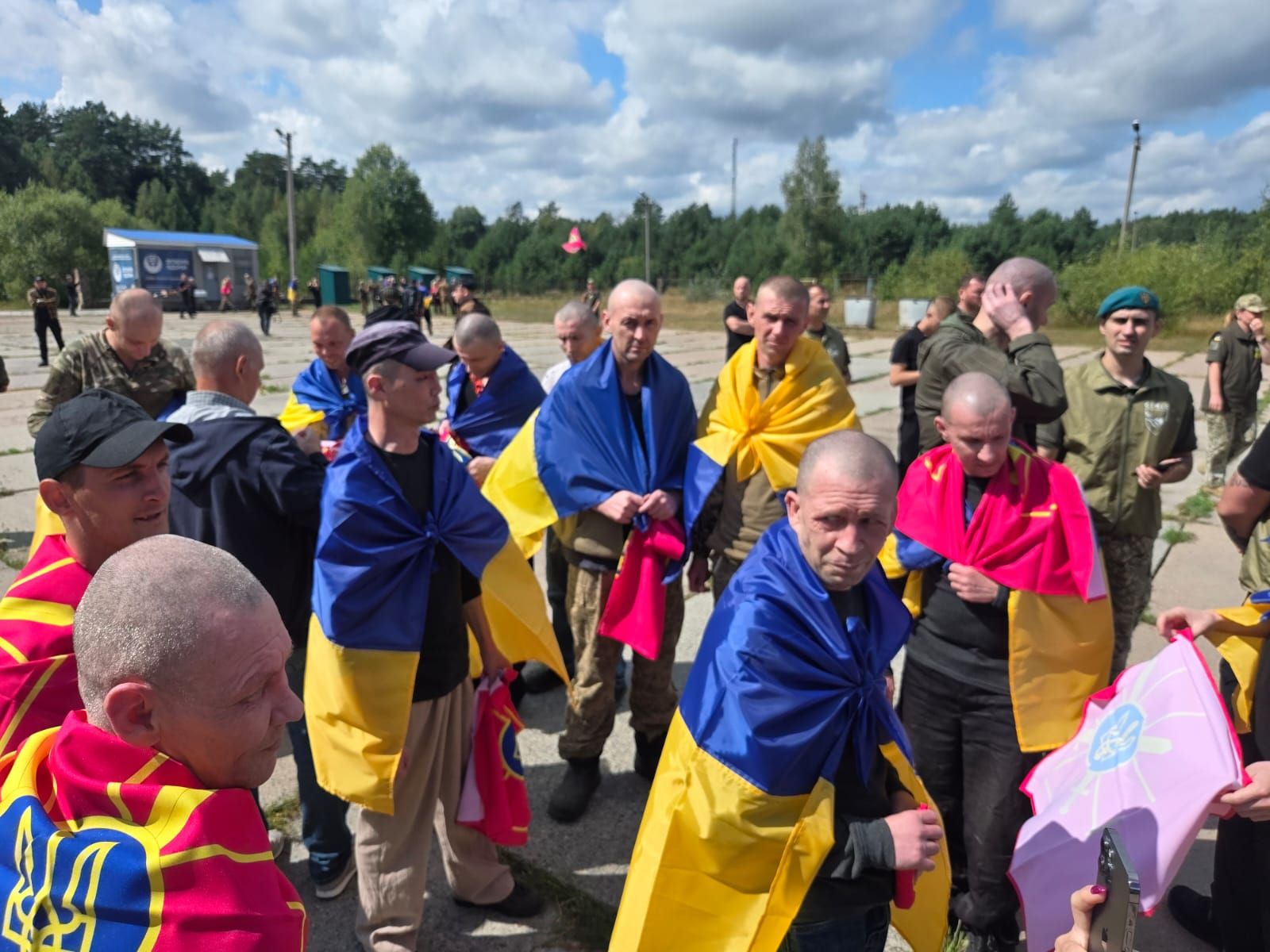
Ukraine has brought another 103 servicemembers home from Russian captivity in the first stage of a new prisoner exchange, the Coordination Headquarters for the Treatment of Prisoners of War reported on 19 August 2026. Most of the returning defenders are wounded or seriously ill after captivity that, for some, reached back to 2022, the year of Russia's full-scale invasion. The United States and the United Arab Emirates helped organize the swap, the headquarters said.
The freed group covers nearly every branch of Ukraine's forces. It includes members of the Armed Forces, the Navy, Territorial Defense, the National Guard and the State Border Guard Service. Alongside soldiers and sergeants, several officers were released.
The SBU said the return of the 103 Ukrainian defenders was coordinated by the Joint Center for the Search and Release of Prisoners of War, the Coordination Headquarters for the Treatment of POWs, and other authorized agencies.
— Euromaidan Press (@EuromaidanPress) August 19, 2026SBU pic.twitter.com/nr5VabHYtQ
The Coordination HQ detailed the composition. The Defense Ministry accounted for 92 of those freed, and the Interior Ministry for 11. Two of the returnees are officers, the rest enlisted personnel and NCOs. Interior Minister Ivan Vyhivskyi said his ministry's 11 broke down into five National Guardsmen and six border guards.
The defenders had been captured across the Donetsk, Luhansk, Kharkiv, Zaporizhzhia, Dnipropetrovsk, Kherson and Sumy directions, as well as at Mariupol. The single largest share, 72, fell on the Donetsk front. The youngest freed defender was born in 2000, and the oldest is 59.

The captures span the entire full-scale war. One of those freed had been held since 2022, 16 since 2023, and 48 since 2024. Another 31 were seized in 2025 and seven this year. By the same tally, the International Committee of the Red Cross had confirmed the captivity of 102 of the group before the handover, with a single case verified through other sources.
A previous swap in late June returned 160 defenders, all of them held since 2022.

The released defenders will undergo full medical examinations, receive physical and psychological rehabilitation, and obtain the state payments provided by law. The head of the President's Office, Kyrylo Budanov, said doctors were already doing everything necessary for the returnees, most of whom came back with wounds and serious illness.
Their condition fits a wider pattern Ukrainian officials have described, in which Russia starves most captives and executes many surrendered soldiers on the battlefield.

President Volodymyr Zelenskyy said the freed included men who had defended Mariupol.
"We remember every man and every woman still held captive. We are doing everything possible to bring all our people home," he said.

The Security Service of Ukraine noted the swap ran through the joint center it operates to coordinate the search and release of prisoners. Oleh Ivashchenko, chief of the Main Directorate of Intelligence (HUR) and head of the Coordination Headquarters, met the returning defenders in person.

Alex Bradette, 29 ans, de Fermont, arrêté le 9 juin à Saint-Joseph-de-Lepage après avoir notamment traversé la rivière Mitis et quitté les lieux d’une sortie de route survenue à Saint-Octave-de-Métis, devra demeurer derrière les barreaux au moins jusqu’au 8 septembre.
Son enquête sur remise en liberté a été reportée à deux autres reprises, la semaine dernière.
Les dossiers revenaient devant la cour le 10 août à Rimouski, lors de la journée à haut volume, afin de fixer l’enquête sur remise en liberté au cours de la semaine. Celle-ci avait finalement été prévue pour le jeudi 13 août.
L’enquête n’a toutefois pas eu lieu et les dossiers ont été reportés au 8 septembre afin de déterminer une nouvelle date.
La Cour avait déjà réservé une heure pour la tenue de l’enquête sur remise en liberté, le 29 juillet.
« Je suis forcé de vous demander de reporter l’enquête puisque la caution que nous avons identifiée n’est pas en mesure de se présenter, pas même par vidéoconférence. Je vous propose donc de reporter les dossiers au 10 août afin de fixer l’enquête pendant cette semaine-là », avait alors mentionné l’avocat de l’accusé, Me Pierre Gagnon, par vidéoconférence.
La juge Andrée Saint-Pierre s’est assurée que l’accusé renonce de nouveau au délai de trois jours pour la tenue de son enquête avant d’autoriser le report.
L’accusé est détenu depuis son arrestation, le 9 juin. Rappelons que la détention préventive purgée avant l’imposition d’une peine est comptabilisée à 1,5 jour par jour.
Bradette a comparu une première fois le 9 juin au palais de justice de Rimouski pour répondre à de nombreuses accusations. Le ministère public s’est alors objecté à sa remise en liberté.
Selon la dénonciation obtenue par Le Soir.ca, Bradette est accusé d’avoir conduit un véhicule avec les capacités affaiblies, d’avoir refusé d’obtempérer à un ordre de se soumettre à l’éthylomètre, sans excuse raisonnable et de conduite dangereuse.
Il doit aussi répondre d’avoir agi de manière et avec l’intention de provoquer la peur chez une personne associée au système judiciaire, de harcèlement envers la même personne, d’avoir volontairement entravé les agents de la paix dans leurs fonctions et de méfaits sur une autopatrouille.
Alex Bradette fait aussi face à deux chefs d’accusation de bris de probation.
Les policiers de la Sûreté du Québec sont intervenus à la suite d’une embardée impliquant un véhicule survenue sur la route du Grand-Remous, à Sainte-Octave-de-Métis.
À leur arrivée sur les lieux, les policiers ont constaté qu’aucun occupant ne se trouvait à bord du véhicule. Des démarches ont rapidement été entreprises afin de localiser la ou les les personnes impliquées.
Dans le cadre de l’intervention, l’homme de 29 ans a été localisé dans le secteur du 4e Rang, à Saint-Joseph-de-Lepage, après avoir notamment traversé la rivière Métis.


Ukraine has opened its own criminal investigation into the 2022 destruction of the Nord Stream gas pipelines, months after Germany charged a Ukrainian over the blasts, Suspilne reported. Prosecutors in Kyiv registered the case on war-crimes grounds and say they will test whether Russia staged the sabotage to discredit Ukraine. Serhii Kuznietsov is due to stand trial in Germany in October.
Ukraine's Security Service, under the Prosecutor General's Office, opened proceedings on 9 July under the article on violations of the laws and customs of war. Kuznietsov's Ukrainian lawyer, Mykola Katerynchuk, told Suspilne about the case.
The Prosecutor General's Office confirmed it is supervising a probe into the "possible commission in September 2022, amid the international armed conflict between Russia and Ukraine, by citizens of Ukraine, of actions connected to the undermining" of both pipelines in the Baltic Sea. It said the case was registered after the "independent discovery in the media" that Germany had charged a Ukrainian citizen.
Given Russia's use of hybrid methods, investigators will also examine whether Russians organized the explosions as a "false flag" operation, using Ukrainian citizens or imitating their participation to discredit Ukraine.
The office said it used the laws-and-customs-of-war charge because it matches the qualification chosen by Germany's Federal Prosecutor's Office.
The pipelines exploded on 26 September 2022. On 8 August 2025, Germany's Federal Court of Justice issued an arrest warrant for Kuznietsov, alleging he led a group of six who mined the pipelines and detonated them remotely.
Italian police arrested him on 21 August 2025, and Italy's Supreme Court later confirmed his extradition to Germany. A Polish court, by contrast, refused a German request for another Ukrainian suspect, Volodymyr Zhuravlov.
On 2 July 2026, Germany's Federal Prosecutor's Office published its charges — an attack on civilian objects, causing an explosion, and destroying structures. Kuznietsov denies guilt.


C’est le 10 août qu’on devait connaître la date retenue pour les plaidoiries dans le premier procès de Ronald Audet, qui est accusé de crimes de nature sexuelle sur une personne mineure, mais le dossier a été reporté à la même étape au 21 septembre.
Au terme de la 3e journée du procès, le 15 mai dernier, l’avocate de Ronald Audet, Me Caroline Bérubé, a annoncé qu’elle n’aurait pas de preuve à présenter lors du procès de l’homme de 88 ans, de Mont-Joli.
Au début du procès, le 22 janvier 2026, elle avait annoncé avoir deux témoins à faire entendre, dont l’accusé.
« J’ai parlé à mon client. Nous n’aurons pas de preuve à présenter en Défense. Nous serions donc rendus aux plaidoiries », avait mentionné Me Bérubé.
Amorcé les 22 et 23 janvier derniers, le procès a repris en mai pour la 3e journée d’audience, le 15 mai
Me Bérubé a poursuivi son contre-interrogatoire de la plaignante, dont l’identité est frappée par une ordonnance de non-publication.
Elle a soulevé des contradictions entre la déclaration de la victime faite en 2023 à l’enquêteur de la Sûreté du Québec et sa version des faits livrée dans son témoignage en janvier 2026.

La plaignante a expliqué que ses souvenirs s’étaient précisés grâce à une thérapie. « Je n’ai pas utilisé les mêmes mots, mais ce dont je suis sûre, c’est que j’ai été agressée par Ronald Audet dans le salon et dans une chambre à l’étage », a-t-elle répété à quelques reprises.
En début de procès, en janvier dernier, la plaignante a raconté qu’elle allait souvent chez l’accusé quand elle était enfant parce que sa mère était amie avec la conjointe de l’accusé. Elle mentionne que les gestes ont eu lieu sur le La-Z-Boy, dans le salon.
« C’était sous forme de jeux. Il me disait de brasser son pénis pour le faire rallonger et que de l’eau allait sortir. C’était devenu une habitude. Ça se faisait en douceur, sans violence ».
La plaignante a ajouté qu’elle se souvenait qu’il lui avait demandé de mettre son pénis dans sa bouche. « Je raconte ce qui est clair dans ma tête. J’obéissais. Je ne savais pas ce qu’était une érection. Je ne savais rien de la masturbation. Quand j’ai compris, j’ai eu peur et honte », a-t-il affirmé.
Les événements se seraient produits entre le 4 janvier 1983 et le 31 décembre 1986 à Mont-Joli.
« Je ne peux pas dire le nombre de fois, mais c’était chaque fois qu’on allait chez lui et qu’il était là », a précisé la plaignante, qui avait entre quatre et 10 ans au moment des gestes allégués.

© Paul Weaver/Sipa USA, via Associated Press

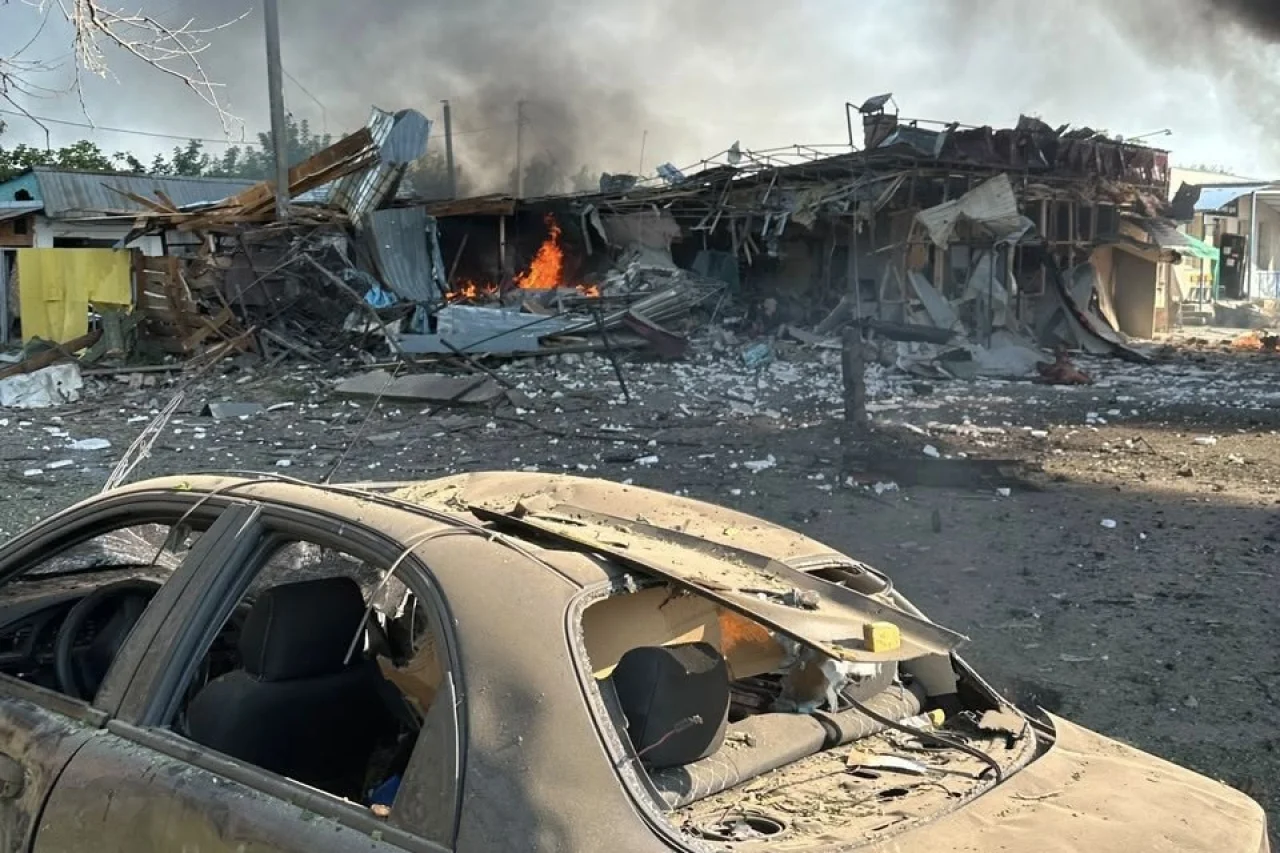
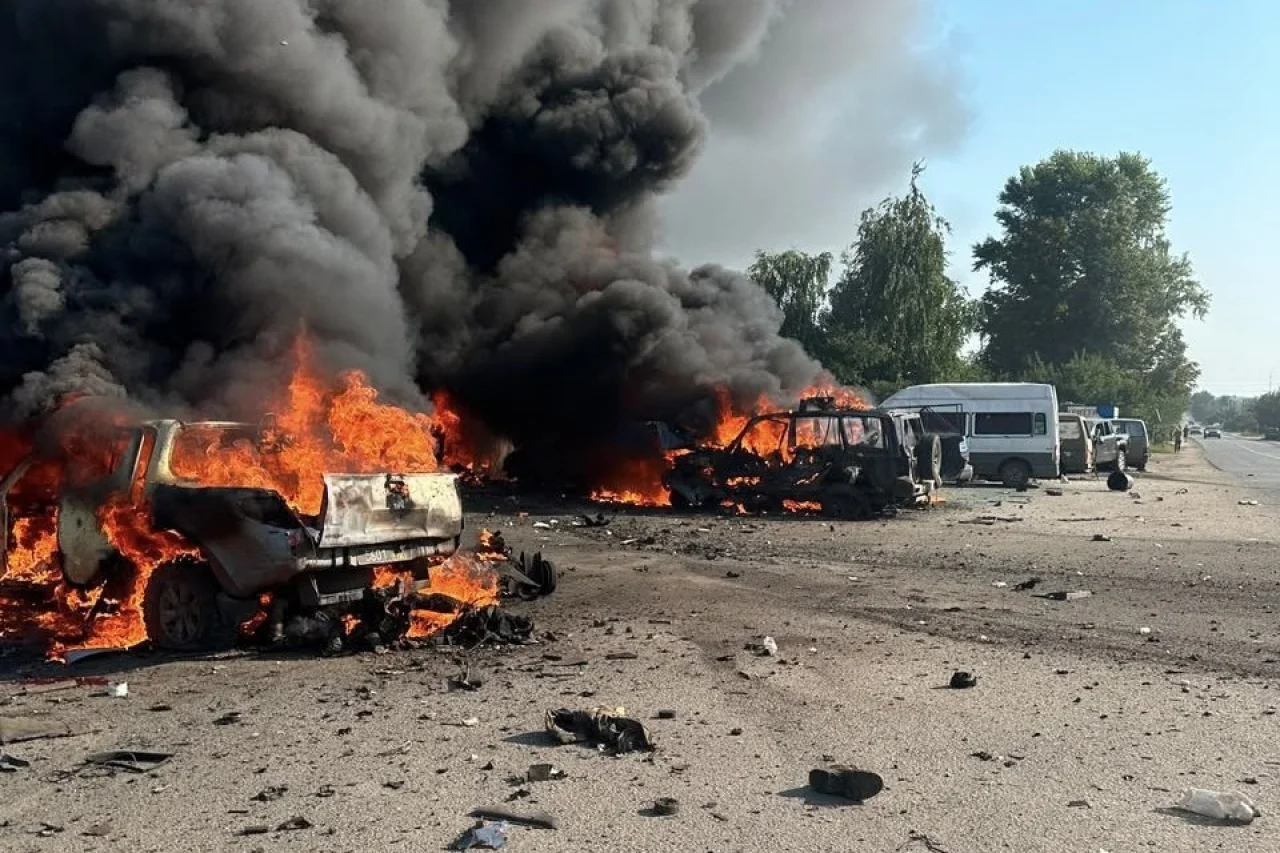
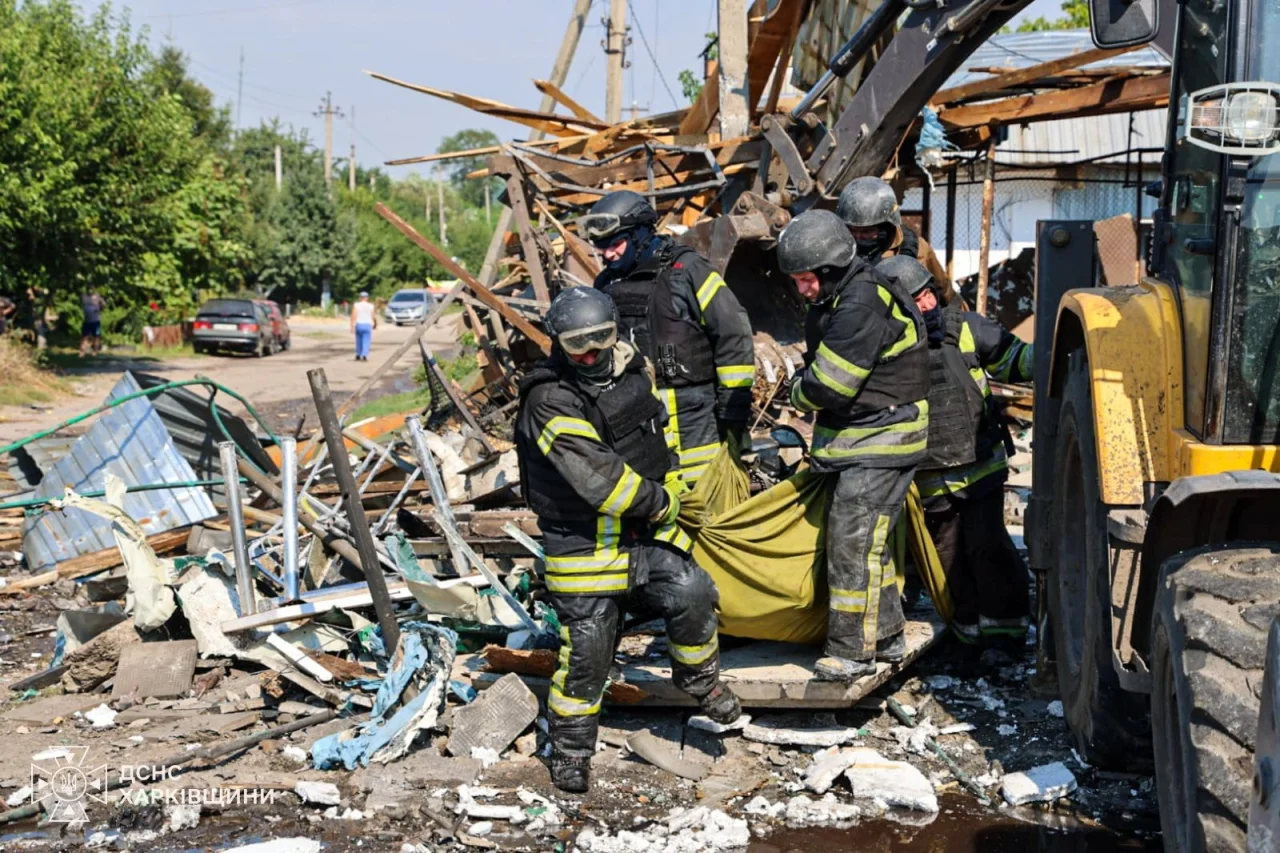
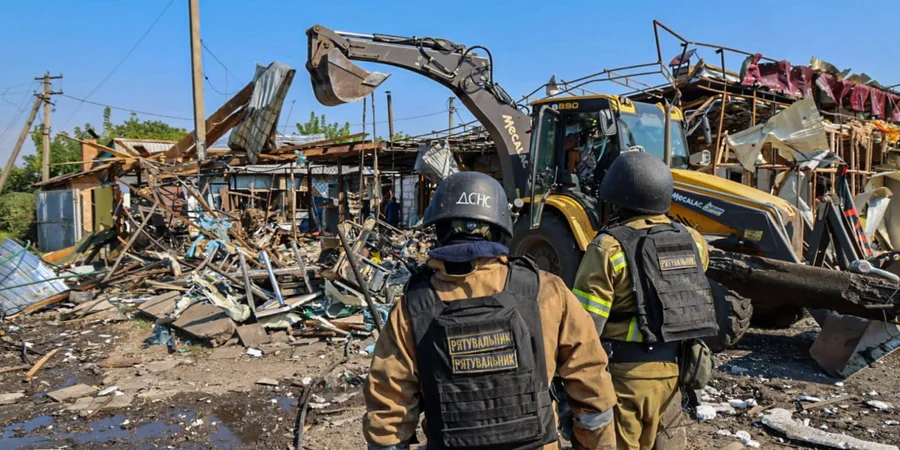
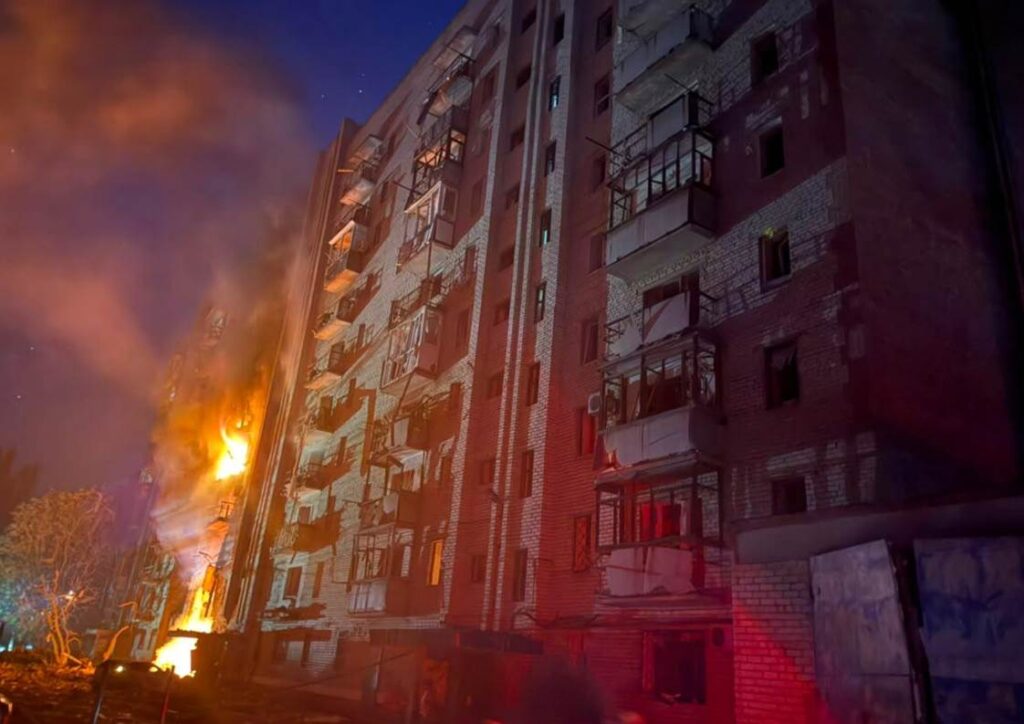
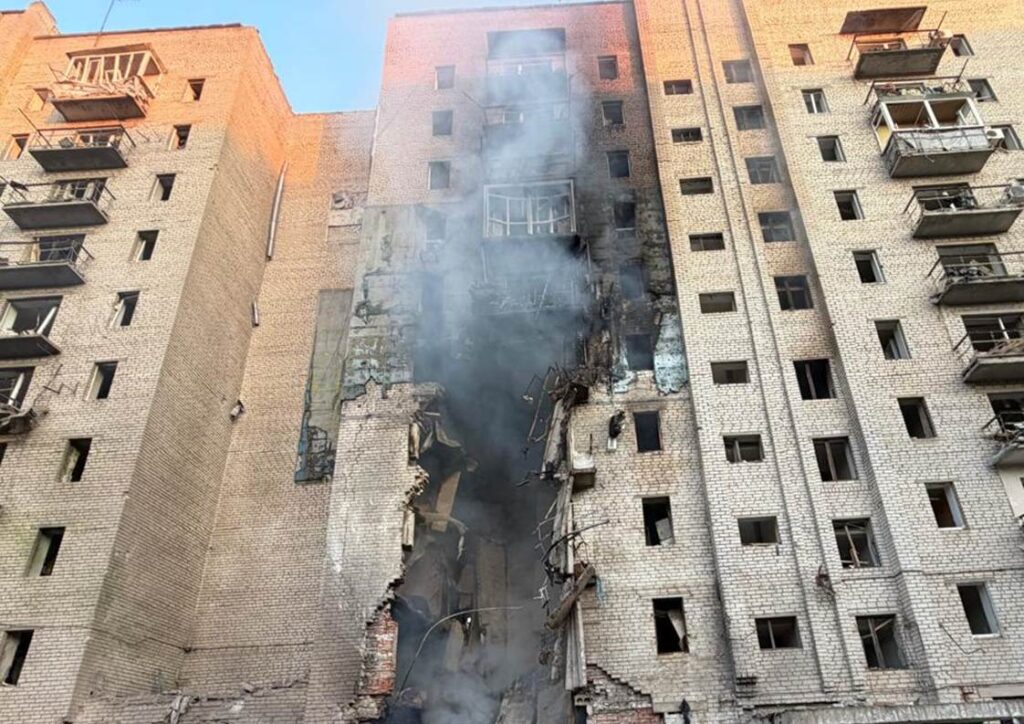
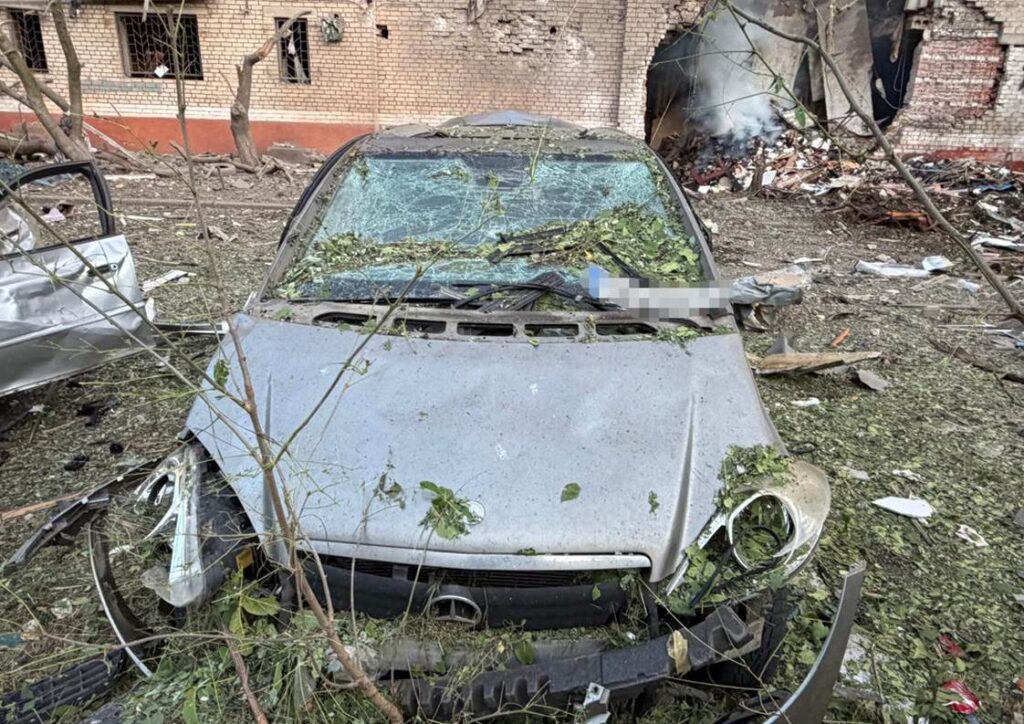
Russia struck the center of Pechenihy, a settlement in Ukraine's Kharkiv Oblast, on the morning of 18 August, killing at least 10 people and wounding at least 18, Ukraine's State Emergency Service reported. Two missiles hit a post office and shops at a crossroads ringed by homes, setting a cafe and cars ablaze. Emergency crews recovered bodies from the rubble as rescue work continued through the day.
Russia fired two Banderol cruise missiles into the settlement at 08:40, the Prosecutor General's Office said, opening a war-crimes investigation into the deaths. The missiles hit the central part of Pechenihy just as residents were heading to work and businesses were opening, the settlement's head, Oleksandr Husarov, said. He put the preliminary midday toll as high as 20 wounded, cautioning the figures were not final.

Oleh Syniehubov, head of the Kharkiv Oblast Military Administration, reported that the strike burned a cafe and seven cars across roughly 400 m², and damaged 10 private houses, the post office, five shops, and 15 vehicles.

The Banderol is a low-cost, jet-powered cruise missile that Russia has used against Ukrainian cities before. Built by the sanctioned firm Kronshtadt with foreign components, it reaches up to 650 km/h and carries a 114.3-kg warhead. Ukraine recently found that a new ground launcher could let Russia fire the missile in salvos and without warning.

Acting Foreign Minister Andrii Sybiha said Putin "continues to drag out the war instead of accepting Ukraine's realistic ceasefire proposals." President Volodymyr Zelenskyy said Russia had "brutally struck a crowded crossroads" where the post office and shops stood, ringed only by homes, and vowed a response, urging partners to add pressure on Moscow.

The same day, Russia also struck the Kharkiv Oblast city of Izium, wounding five people, among them a nine-year-old child, and damaging five private houses, Syniehubov said. Emergency services worked at the site and the wounded received care.

Arrêté dans la nuit du 29 au 30 juin dernier dans le cadre d’une enquête en matière de trafic de stupéfiants amorcée en mars 2026, Stéphane Dupuis, de Saint-Anaclet-de-Lessard, était de retour à la cour le 10 août pour fixer une date de procès, mais cette procédure a été reportée au 11 septembre.
L’homme de 57 ans a renoncé à la tenue de son enquête sur remise en liberté, le 6 juillet dernier.
« Compte tenu du fardeau de la preuve, nous allons renoncer à l’enquête sur remise en liberté », a mentionné Me Maryse Beaulieu. La juge de paix magistrate Sonia Cyr a donc ordonné la détention de l’accusé pour la suite du processus judiciaire.
Cette opération, réalisée à la suite d’informations reçues du public, a mené à l’exécution de mandats de perquisition visant une résidence ainsi que deux véhicules dans le secteur de la rue Blanchette, à Saint-Anaclet-de-Lessard.
L’opération a mené à la saisie notamment de plus de 200 grammes de cocaïne, plus de 52 000$ en argent canadien, plus de 1 000 comprimés de médicaments d’ordonnance, une certaine quantité de GHB et de psilocybine, plus de 150 vapoteuses contenant du THC, du matériel associé au trafic de stupéfiants, un poing américain et un véhicule à titre de bien infractionnel (Acura MDX 2014).
Dupuis fait face à des accusations reliées à la possession de stupéfiants en vue d’en faire le trafic et à la possession d’une arme prohibée.
L’accusé possède des causes pendantes pour une arrestation le 12 septembre 2024 relativement à du trafic de stupéfiants.
Il a été cité à son procès le 8 juillet 2025 par le juge Yves Desaulniers à la suite de la tenue de son interrogatoire au préalable (nouvelle forme d’enquête préliminaire sans juge).
Stéphane Dupuis a opté pour un procès devant un juge de la Cour du Québec (sans jury). Une date de procès pour l’ensemble des dossiers devrait être fixée le 11 septembre.

© Kylie Cooper/Reuters

© Allison Bailey/NurPhoto, via Associated Press

Il n’y a toujours pas de dates fixées pour la tenue de l’enquête préliminaire des quatre accusés du meurtre prémédité de Michael Lévesque-Fitzpatrick, survenu le 29 novembre 2024 à Rimouski. Les dates de l’enquête, prévue pour être de longue durée, devaient être fixées le 10 août dernier, mais cette étape a été reportée au 11 septembre prochain.
« Nous avons reçu une requête en ouverture de scellés. Je suis en attente des documents demandés. Ils seront transmis aux avocats de la défense par la suite. Nous allons aussi faire une demande de facilitation pour préparer l’enquête préliminaire qui s’annonce longue en vertu du nombre d’avocats impliqués et selon le nombre de témoins qu’ils voudront faire entendre », a mentionné la procureure de la Couronne, Me Annie-Claude Breton, en juin dernier.
Le ministère public tient à tenir une seule enquête préliminaire commune même si un accusé est francophone et que les trois autres sont anglophones.
Doneil-Josiah Levy-Porter et Jahshai Cooper sont détenus en Ontario tandis qu’Ingram Joe Mohamed, de Hamilton, est incarcéré à Rimouski. Guillaume Proulx se trouve à Trois-Rivières, lui qui est Rimouskois.
Les quatre sont accusés de meurtre au premier degré, c’est-à-dire avec préméditation. Ils ne sont donc pas admissibles à une remise en liberté et demeureront donc détenus pendant le processus judiciaire.
Les policiers de la Division des crimes contre la personne de la Sûreté du Québec, assistés par de nombreux partenaires de plusieurs services de police en Ontario, ont procédé aux arrestations en lien avec le meurtre de Michael Lévesque-Fitzpatrick, 36 ans.

Dans la journée du 29 novembre 2024, vers 16 h 30, les services d’urgence avaient été appelés à se rendre dans un appartement de la rue Pierre-D’Anjou. À leur arrivée, les policiers avaient constaté le décès de la victime.
Selon nos informations disponibles, la mort de la victime serait liée au crime organisé.
Michael Lévesque-Fitzpatrick avait également été visé par le passé par des accusations de voies de fait et d’agression armée.

Une loi, qui devait entrer en vigueur en septembre, prévoyait d’interdire aux moins de 15 ans les réseaux sociaux et les fonctionnalités sociales de certains sites, messageries et jeux vidéo en ligne.
Le Conseil constitutionnel, l’autorité qui contrôle la conformité des lois à la Constitution française, a jugé que cette interdiction portait atteinte à la liberté d’expression des moins de 15 ans.
Cette loi était l’une des priorités du président français, Emmanuel Macron.
[L'article En France, l’interdiction des réseaux sociaux aux moins de 15 ans a été jugée inconstitutionnelle a d'abord été publié dans InfoBref.]

© Ian Willms for The New York Times

© Atul Loke for The New York Times

© Marylise Vigneau for The New York Times

© Ian Austen/The New York Times

© John Mcdonnell/Associated Press

© Carabinieri Art Recovery Squad, via Associated Press

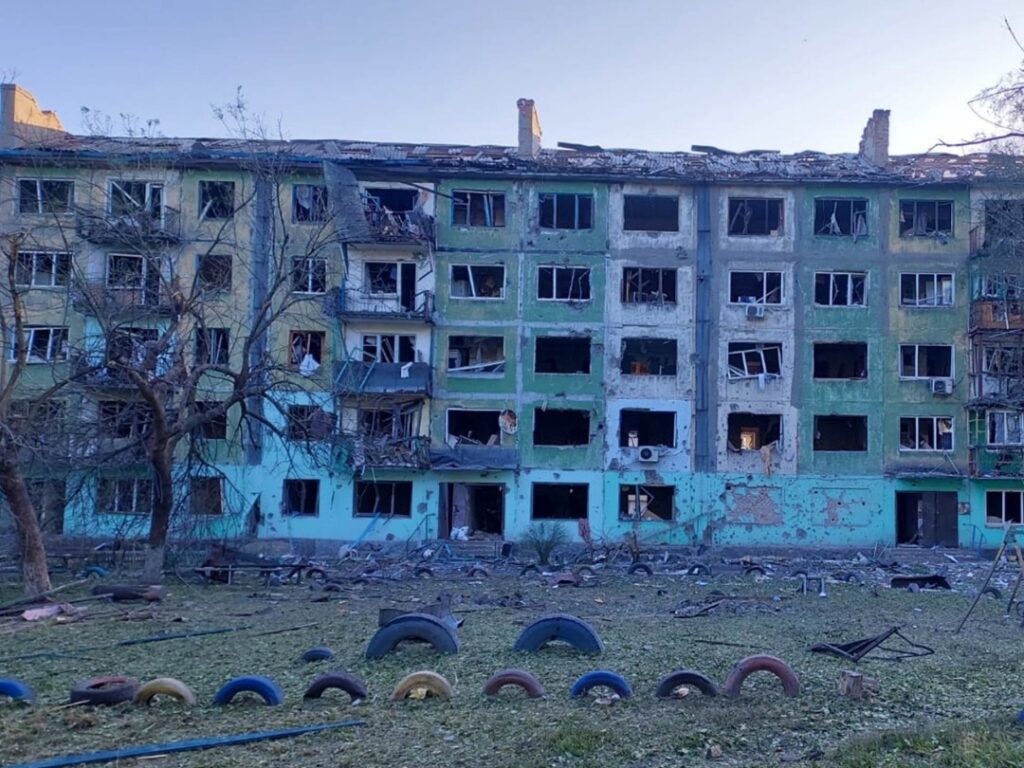
Russia's glide-bomb strike on Kramatorsk killed one person and wounded 18, the head of the Donetsk Oblast Military Administration, Vadym Filashkin, reported on the morning of 14 August. The Donetsk Oblast Prosecutor's Office has opened a war-crimes investigation into the attack.
Russian forces dropped eight FAB-250 aerial bombs fitted with universal glide and correction modules (UMPK) on the city on the evening of 13 August, hitting residential areas including apartment buildings, the prosecutor's office reported. An apartment building and a car were damaged. Filashkin said the strikes also hit the nearby settlement of Bilenke.
The strike on the residential area was another instance of Russian forces using guided aerial munitions against civilian areas. Under international humanitarian law, civilian objects may not be deliberately targeted.
The toll rose overnight. Filashkin first reported at least one killed and 15 wounded on the evening of 13 August. By the next morning, the prosecutor's office had documented 17 of the wounded — seven men and 10 women aged between 47 and 85 — with blast and traumatic brain injuries, shrapnel wounds, cuts to the head, arms and legs, and abrasions and bruises. Filashkin's later update put the number of wounded at 18.

"Russia again turned an ordinary evening in the city into deadly danger. This is not an accident or a mistake — this is how the enemy wages war against our people," Filashkin said.
Deliberately directing attacks against civilian objects may constitute a war crime under international humanitarian law. The prosecutor's office has opened a pre-trial investigation under Part 2 of Article 438 of Ukraine's Criminal Code.
"In total, over the past day, Russians shelled populated areas of Donetsk Oblast 37 times. 624 people, including 90 children, have been evacuated from the front line," Filashkin reports.

Russian forces regularly use FAB-250 bombs equipped with UMPK to strike populated areas in Donetsk Oblast and other frontline regions.
On 11 August 2025, Russian aircraft dropped FAB-250 bombs equipped with UMPK on a residential quarter in Bilozerske, Donetsk Oblast. Two civilians were killed, a 43-year-old man and a 34-year-old woman, while seven others were injured, including a 16-year-old boy. Eight apartment buildings and six vehicles were damaged. A pre-trial investigation was opened under Part 2 of Article 438 of Ukraine's Criminal Code.

On 18 September 2025, Russian forces struck civilians with a FAB-250 bomb equipped with UMPK in Kostiantynivka, Donetsk Oblast. Five residents aged between 62 and 74 were killed; three men and two women were outside at the time of the strike. The facades of four apartment buildings were damaged.
On 25 June 2026, Russian forces dropped three FAB-250 bombs equipped with UMPK on Druzhkivka, Donetsk Oblast. A 56-year-old woman was killed, and four others were injured: a 68-year-old man and three women aged 51, 58, and 67, sustaining blast injuries and shrapnel wounds.

© São Paulo Police Press Office, via Agence France-Presse — Getty Images

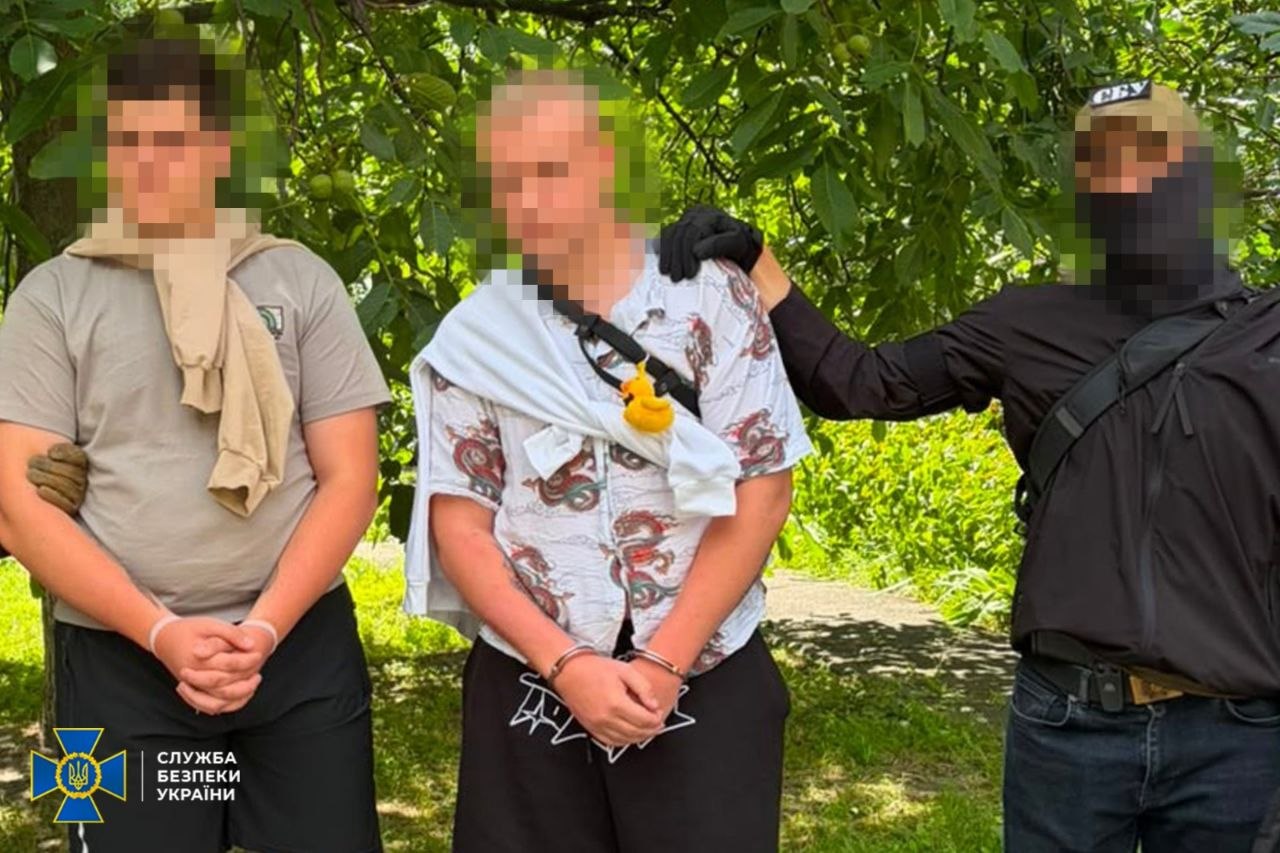
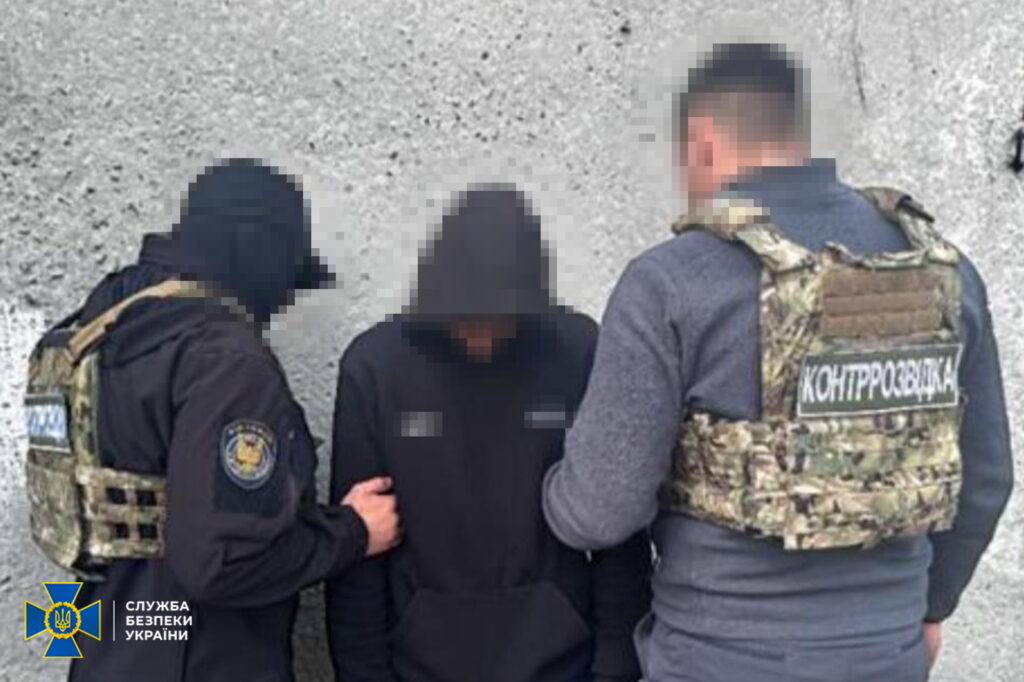
Russian security services are increasingly recruiting Ukrainians to carry out sabotage, terrorist attacks, and killings, with police reporting a sharp rise in attacks linked to such recruitment since 2024, according to independent Ukrainian outlet Babel.
Since the start of 2026, Ukraine’s National Police and Security Service have registered 31 terrorist attacks, 80% of which have been solved, while another 14 were prevented during preparation.
Authorities have also registered 11 cases of military personnel being poisoned that are being investigated for links to Russian recruitment.
Andrii Niebytov, deputy head of the National Police and chief of criminal police, said Russian recruitment became systematic in early 2024, Babel reported.
Russian handlers typically approach people through Telegram channels and chats where users seek work, easy money, or drugs. The first assignment may appear harmless: photographing a location, passing information, moving a package, or delivering an item.
The tasks can then escalate into property damage, arson, terrorist attacks, and killings. Police say handlers can gradually involve recruits in more serious crimes before using threats or blackmail to keep them under control.
The increase is reflected in police figures. Russian operatives used Ukrainian recruits to carry out nine terrorist attacks in 2024, according to data cited by Babel. The figure rose to 61 in 2025, including 27 attacks that police stopped during preparation. Authorities solved 52 terrorist cases that year.
One increasingly dangerous part of the recruitment campaign involves attempts to target Ukrainian service members.
Police have registered 11 poisoning cases since the beginning of 2026 in which investigators are examining or have established links to Russian recruitment, Babel reported.
In some cases, Russian handlers have used young women to establish contact with soldiers, arrange meetings, or deliver poisoned items.
In late July, police detained a 20-year-old woman in Poltava who is suspected of poisoning two soldiers with drugs allegedly provided to her by mail.
In Rivne, investigators are examining the death of a soldier allegedly poisoned by a minor girl with a drug mixed with alcohol. The Russian handler reportedly installed tracking software on the girl’s phone and remotely monitored her actions.
Russian operatives use different entry points depending on the target. Some recruits are drawn in by promises of easy money or drugs, while others are manipulated through personal relationships or threatened with supposed criminal prosecution.
One scheme involves fraudulent call centers operating in Russian-occupied Ukrainian territories. Callers impersonate Security Service of Ukraine officials and accuse targets of offenses such as buying Russian-made goods or financing Russia.
Police are investigating 449 fraud cases involving this scheme. But according to Babel, the same tactic is now also being used for recruitment.
After intimidating targets, callers send fake summonses, notices of suspicion, or other documents through messaging apps. They then offer to help the person avoid prosecution in exchange for carrying out criminal assignments.
Russian handlers have also targeted minors, who can be easier to manipulate and may be used as intermediaries or perpetrators.
The National Police said 260 children have independently contacted authorities after being approached by Russian recruiters, according to Babel. Their reports helped prevent terrorist attacks in which minors were allegedly intended to be used as perpetrators.
Police say Russian intelligence services are constantly changing their methods, while the basic pattern remains consistent: identify a vulnerability, offer or impose an initial task, and gradually draw the recruit into more serious criminal activity.
Ukrainian authorities are urging people approached with suspicious offers or assignments to stop contact and report the recruitment attempt immediately.

© Federico Rios for The New York Times

© Amir Hamja/The New York Times

Immigration and Customs Enforcement (ICE) plans to spend tens of millions of dollars on buying specialized gloves that pulse with electrical energy, which make it easier for agents to subdue people, the Associated Press reported on Tuesday.
A user manual for G.L.O.V.E, or Generated Low Output Voltage Emitter, sold by a company called Compliant Technologies, provides more specifics on how the gloves are supposed to work and allegedly be used.

© Juan Barreto/Agence France-Presse — Getty Images

© Doug Mills/The New York Times

© Simon Ducroquet/The New York Times

© Doug Mills/The New York Times

Immigration and Customs Enforcement (ICE) plans to pay LexisNexis millions more dollars for continued access to data it can feed into a Palantir platform, according to newly published procurement records. The data is to help, among other sections, ICE’s Enforcement and Removal Operations (ERO), the part of ICE focused on deportation.
The documents provide some more insight into the sort of information ICE intends to use Palantir to process. In January, 404 Media revealed the existence of ELITE, a system Palantir made for ICE that helps the agency find which neighborhoods to target by bringing together data from private suppliers and government agencies.
The news comes as ICE arrested more than 51,000 people in July, many of those at airports.

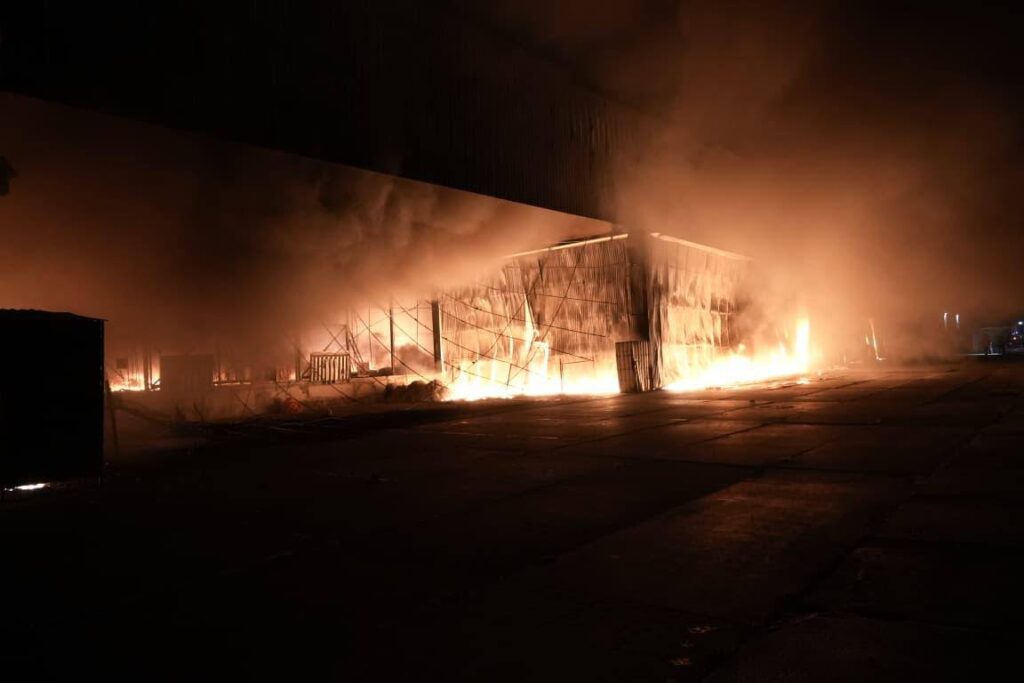
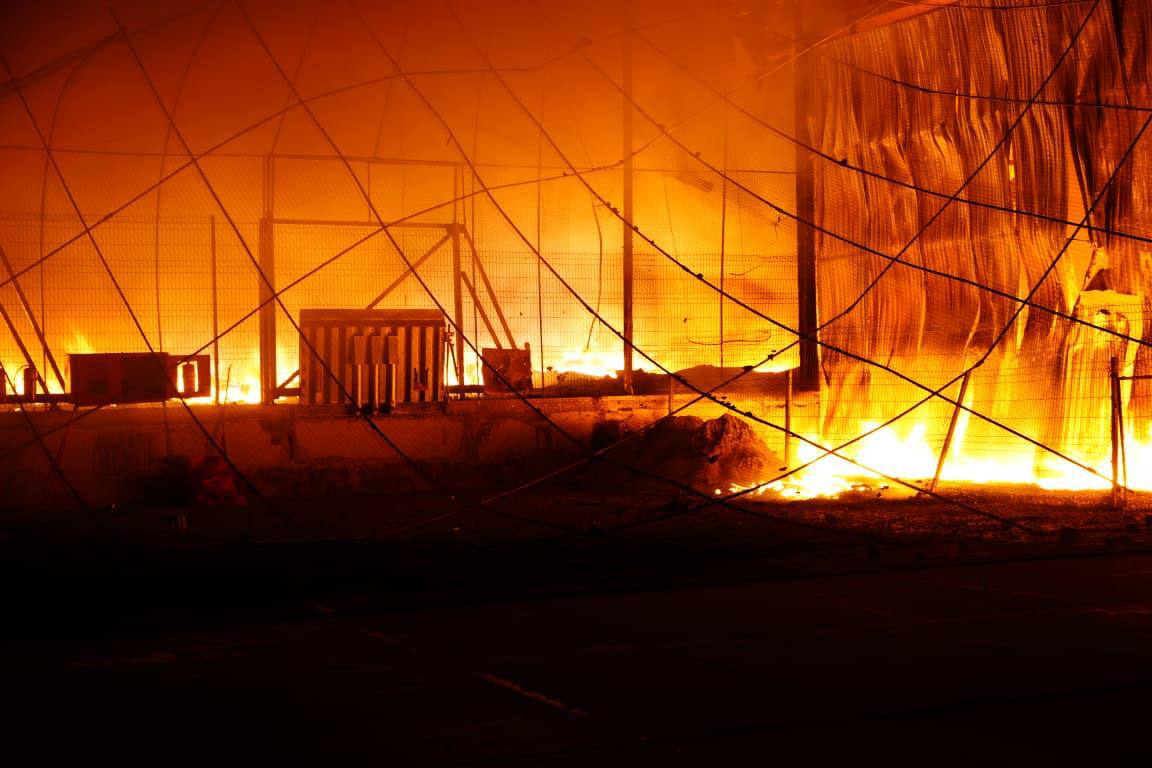
A Russian overnight strike heavily damaged a German-owned car-parts plant in Zhytomyr Oblast, forcing it to halt production, the company said. No workers were hurt, but the destruction was extensive. One of the region's major employers now has no restart date.
Russia struck Zhytomyr Oblast overnight into 9 August and hit the Kromberg & Schubert plant, which reported the attack on Facebook. Its production lines and infrastructure took heavy damage.
"The most important thing for us is that no employees were hurt in the attack," the statement said.
With the damage so severe, the plant suspended operations for an indefinite period. A restart depends on a technical assessment and the full scope of repairs, the company added.
Kromberg & Schubert is a civilian manufacturer with 100% German investment. It has run in the Zhytomyr region for 11 years and employs about 3,500 people. The plant makes the wiring harnesses that thread through cars, supplying European automakers.

Vitalii Bunechko, head of the Zhytomyr Oblast Military Administration, called it one of the region's budget-forming enterprises. He said the administration and local authorities are working to help the strategic investor and keep the plant running.

Bunechko reported that Russia had launched a massive strike on the oblast overnight. The attack also damaged civilian infrastructure, he said. State Emergency Service crews contained the fires, and investigators began work at the site.
Russia has repeatedly struck Zhytomyr Oblast during the war, stepping up its drone strikes on northwestern Ukraine, often exploiting Belarusian territory.

© European Centre for Medium-Range Weather. The New York Times

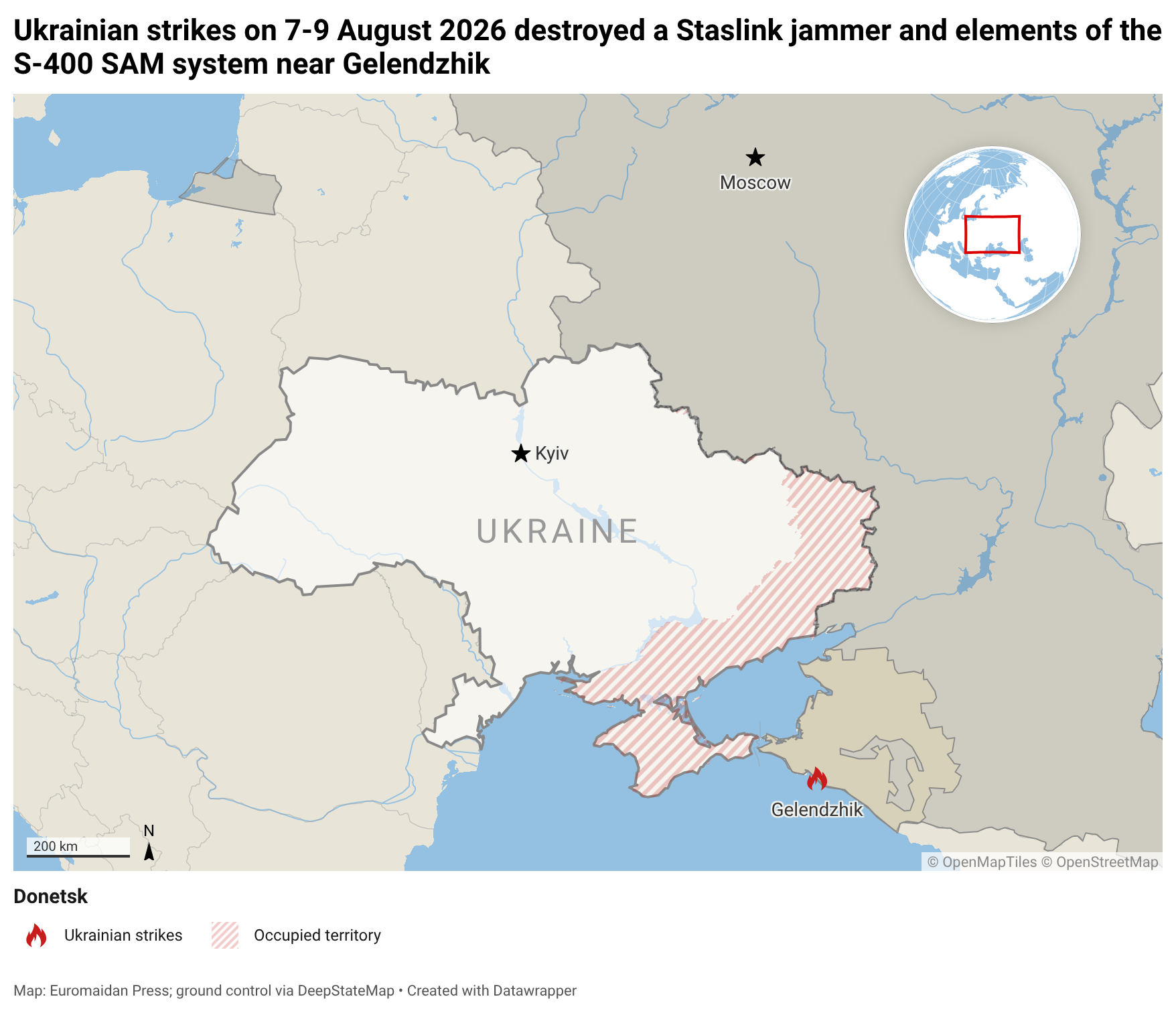
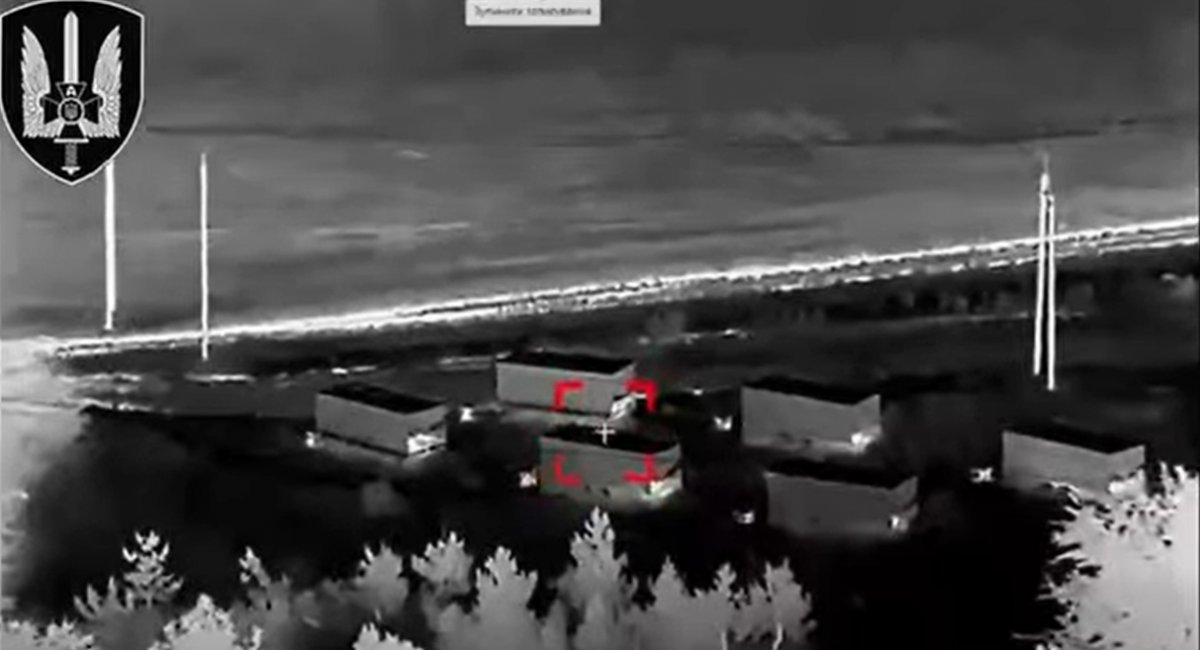
Satellite imagery has confirmed that Ukraine's Defense Forces destroyed a Russian electronic-warfare system built to jam Starlink at Gelendzhik in southern Russia, the Ukrainian defense outlet Militarnyi reported. Ukrainian drones hit the machine on the grounds of a Russian border-guard base during their sweep of the Black Sea coast. It is one more of these costly jammers Russia has lost, even as Ukraine's long-range drones cannot use Starlink over Russia.
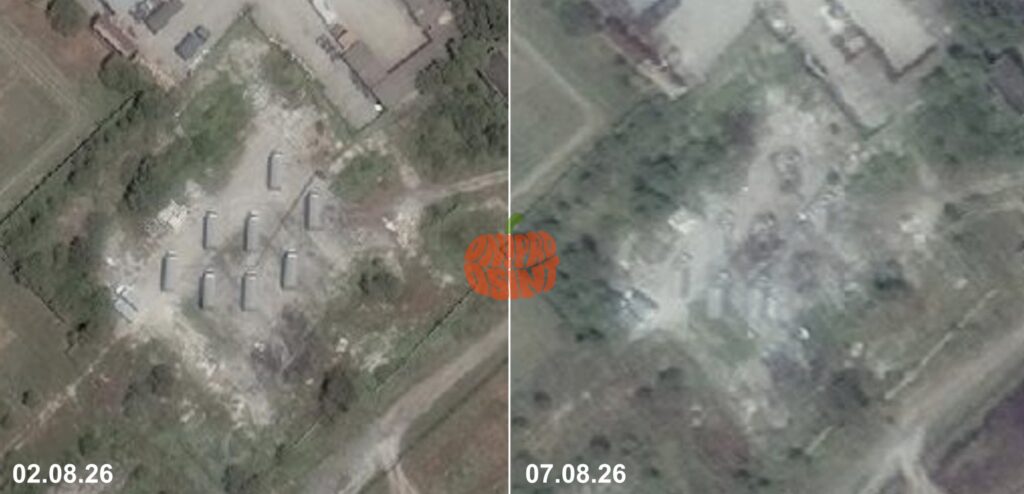
Satellite images published by the OSINT community Dnipro Osint show the site cleared at Gelendzhik, in Russia's Krasnodar Krai. The Volna Kupol Garant complex is gone. Researchers called it the third destruction of this jammer recorded in open sources. The strike landed on the grounds of military unit 2156, the Novorossiysk border detachment of Russia's FSB Border Service.
Ukrainian drones likely hit it alongside a 7 August strike on cargo ships near Novorossiysk and Gelendzhik. Geolocated photos from residents point to a repeat strike on the base on 8 August.
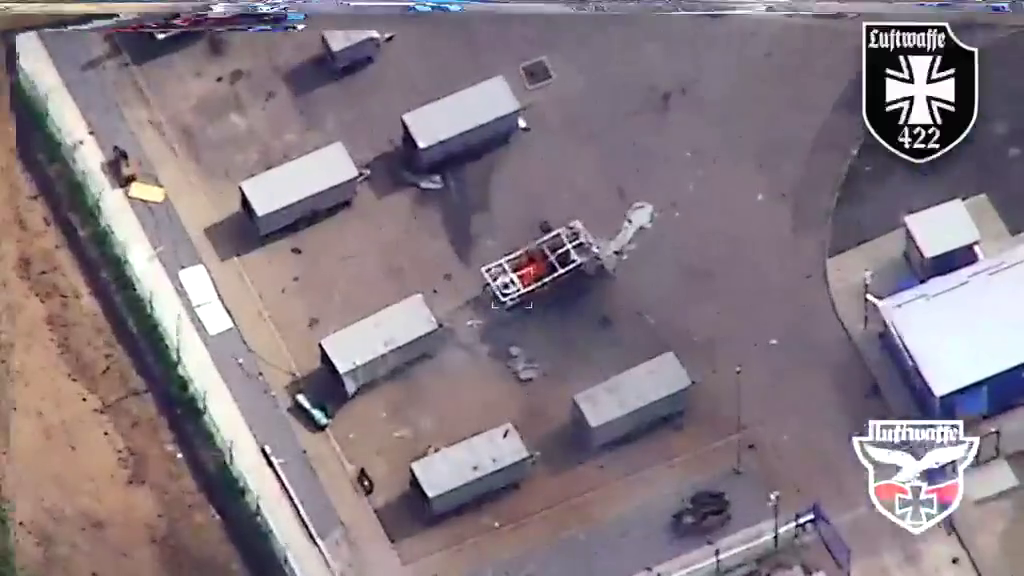
The Volna Kupol Garant is built from trailers carrying satellite antennas. It tracks a passing Starlink satellite and beams a strong signal that scrambles the terminals below across up to 20 km². Starlink is the SpaceX satellite-internet network that Ukrainian drones rely on to reach their operators. Each unit costs about $1.8 million. A same-named firm registered in occupied Simferopol builds it. The developer also makes the Volna 3M jammer that Russia has fitted to Mi-8AMTSh helicopters to block drone satellite navigation.
Ukraine has knocked out these jammers before. The 422nd Unmanned Systems Regiment, the Security Service of Ukraine's (SBU) Alpha special-operations center, and other Ukrainian units have struck such systems, including in occupied Crimea. The complex's weakness is its own power: beaming enough energy to reach a satellite makes it loud and easy to find.
And deep inside Russia, there is little Ukrainian Starlink to jam — SpaceX geofences the network to Ukrainian territory, and Elon Musk has refused Kyiv's push to use it for strikes into Russia so far.
Ukraine's drone crews have spent 2026 tearing into Russia's air defenses and rear. The same run of Black Sea strikes that wrecked this jammer also burned a Russian S-400 air-defense system on the Gelendzhik coast.


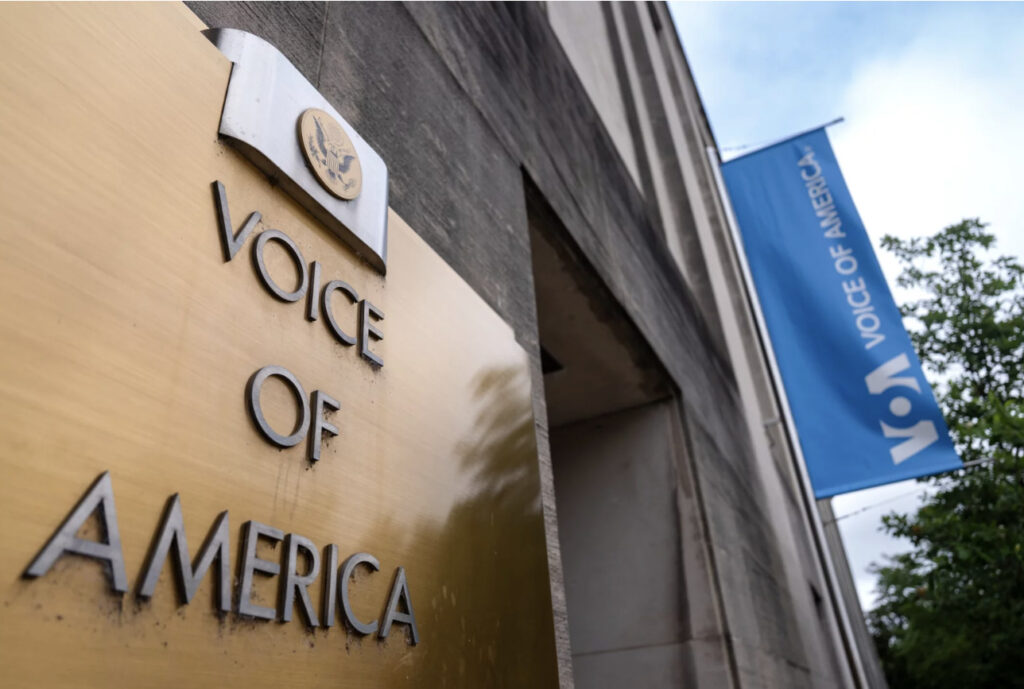
Ukrainian-language American broadcasting is coming back after more than a year of silence. Voice of America (VOA) is restoring service and returning part of its Ukrainian department staff to work, the outlet's head, Ruslan Petrychka, announces.
The return revives an American voice countering Russian propaganda in Ukraine at a moment when Russia is escalating both its strikes and its disinformation.
Petrychka called the decision very important, especially now that Russia cynically shells Kyiv and other Ukrainian cities daily, kills civilians, and continues large-scale propaganda campaigns against Ukraine.
"My colleagues are already preparing to resume broadcasts next week. I hope that even more employees of our service will return to work soon," he added.
Petrychka said the service is already preparing to return to the air. His colleagues are getting ready to resume broadcasts next week, and he said he hoped more of the service's staff would return to work soon.
The Ukrainian service had gone dark along with the rest of VOA. Its staff, like the broadcaster's employees generally, were placed on administrative leave in May 2025, which suspended its broadcasting.
The silence began with a White House decision. In March 2025, US President Donald Trump signed an executive order aimed at cutting the US Agency for Global Media (USAGM), the parent company of VOA, Radio Free Europe/Radio Liberty, and other US-funded international broadcasters, EP reported at the time. USAGM funding was to be cut to a minimum, and VOA employees were sent on leave.
Representatives of these organizations sued to challenge the decision.
The revival came through the courts, not a change of heart. In March 2026, US federal judge Royce Lamberth ordered the Trump administration to restore VOA's work, after much of the broadcaster had effectively been shut down a year earlier, CBS News reported.
The Ukrainian service's return is one piece of that court-ordered restoration finally taking effect.
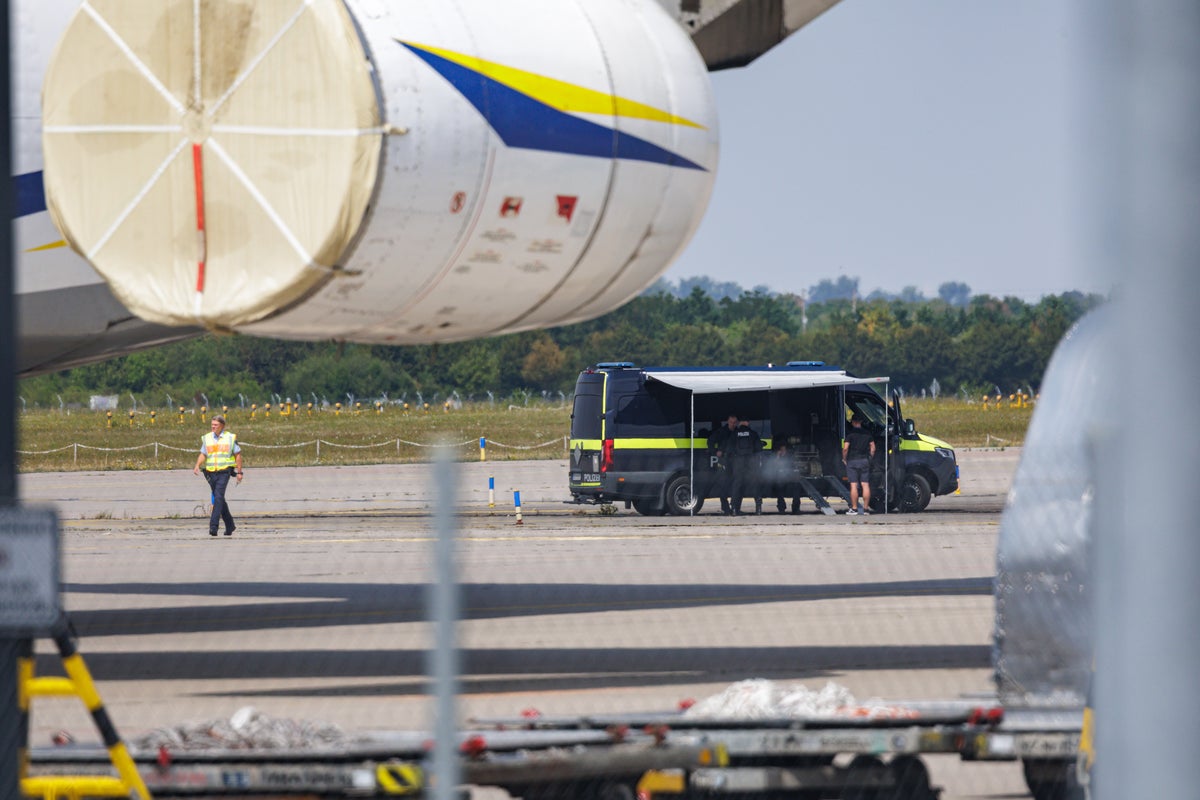
Flights at Germany’s Leipzig/Halle Airport were disrupted overnight as authorities investigated
© Getty
Donald Trump a annoncé le mois dernier de nouveaux droits de douane, de 10% ou de 12,5%, pour remplacer la surtaxe mondiale de 10% imposée l’an dernier et qui arrivait à échéance.
25 États américains ont déposé hier une plainte auprès du Tribunal de commerce international des États-Unis pour contester ces tarifs imposés par Washington.
Ils soutiennent que le gouvernement Trump n’a pas, comme il le prétend, décrété ces tarifs pour combattre le travail forcé, mais plutôt pour rétablir des droits de douane proches de ceux que les tribunaux avaient déjà annulés par deux fois.
[L'article Une vingtaine d’États américains contestent des droits de douane imposés par les États-Unis a d'abord été publié dans InfoBref.]

Robert Arsenault, détenu depuis le 7 mai 2025 à la suite d’une perquisition en matière de stupéfiants, a plaidé coupable à l’ensemble de ses dossiers, jeudi au palais de justice de Rimouski et il a écopé d’une peine supplémentaire de 176 jours de prison s’ajoutant à la détention déjà faite.
La facilitation qui a eu lieu le 1er avril dernier a permis aux deux parties d’en arriver à un règlement avant le procès.
Le Rimouskois de 51 ans avait initialement plaidé non coupable à l’ensemble des accusations auxquelles il fait face le 7 novembre 2025.
La sentence comprend également une probation suivant sa libération, une interdiction de posséder des armes de 10 ans ainsi que le prélèvement d’ADN pour analyse génétique.
Une ouverture des paquets scellés a eu lieu le 8 septembre 2025.
Cette procédure visait à connaître les motifs ayant mené à l’émission du mandat de perquisition ayant mené à l’arrestation d’Arsenault, le 7 mai 2025 lors d’une perquisition en matière de stupéfiants dans une maison de chambre située sur l’Allée du Rosaire à Rimouski.

L’individu a renoncé à l’examen de sa détention (requête de type Myers), une procédure à laquelle il avait droit étant détenu depuis plus de 90 jours avant la tenue de son procès.
« Nous n’avons pas de nouveaux éléments à faire valoir (pour convaincre le tribunal de remettre mon client en liberté) », a mentionné Me Beaulieu.
Robert Arseneault était en liberté sous condition au moment de son arrestation, le 7 mai 2025. Il est détenu depuis ce temps.
La perquisition a permis de saisir environ 45 grammes de cocaïne, 145 médicaments d’ordonnance, 45 grammes de cannabis illicite, divers équipements servant au trafic de stupéfiants et 800$ en argent comptant.
Arsenault est accusé de possession de stupéfiants en vue de trafic et de possession d’une somme d’argent sachant qu’elle avait été obtenue de la perpétration d’une infraction.

Caroline Proulx, ancienne ministre du tourisme, avait demandé en 2023 au Centre des congrès de Québec d’annuler la tenue d’un événement anti-avortement.
Harvest Ministries International, l’organisation chrétienne britanno-colombienne qui souhaitait organiser l’événement, avait poursuivi la ministre et le gouvernement.
La Cour supérieure a jugé que la ministre avait outrepassé ses pouvoirs et engagé sa responsabilité personnelle.
[L'article Une ancienne ministre devra verser 60 000 $ à un groupe anti-avortement a d'abord été publié dans InfoBref.]