A federal appeals court panel seemed disinclined to order the state to set aside as many as 20,000 mail-in ballots the Trump administration claimed were sent to noncitizens.
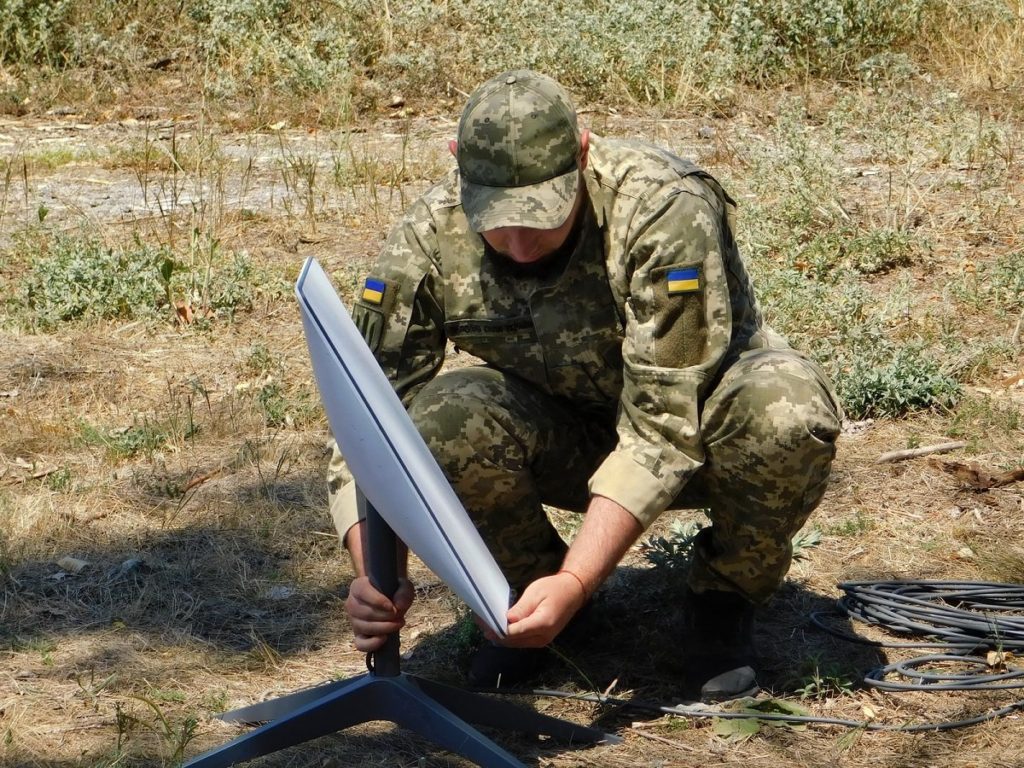
SpaceX founder Elon Musk says that if Ukraine fires through Starlink, Russia would be entitled to shoot the network down. That is why Starlink must remain a civilian operation and cannot be used for outright offensive strikes that would put its very existence at risk.
The warning lands in the middle of a fight over Musk’s own hand on that network. Weeks ago, his company unexpectedly throttled the service Ukraine’s drones depend on amid US President Donald Trump diesel deal with Russia, which led to the disruption of a few operations on the front.
The US Treasury authorized the sale, delivery, offloading, and import of Russian-origin diesel fuel, effectively suspending sanctions on that trade until 7 April 2027, the Office of Foreign Assets Control (OFAC) said on its website on 9 October.
The diesel deal combining intelligence halt and military Starlink, with pressure on Ukraine to make a quick peace deal, has angered both Democrats and Republicans ahead of the US elections on 3 November, where Democrats could win.
Meanwhile, a Ukrainian official interprets Musk's talk of strikes as an attempt to build an alibi before a possible investigation into that decision.
A civilian network, or a target
Musk was responding to a post warning that if Starlink shifted from a civilian network into a military system, Russia could treat it as a target for retaliation, and that destroying satellites in orbit could scatter enough debris to make space unusable for years or centuries.
“An adversary blowing up Starlink satellites would create a domino effect of destruction that would generate a vast field of debris, making space unusable," he writes.
When the shield and the warnings failed together
Overnight into 14 October, SpaceX quietly capped the speed of Starshield, the military version Ukraine’s drones run on, without telling Kyiv. Ukrainian units said the limit broke a series of missions, with connections dropping mid-flight and leaving drones hard to control.
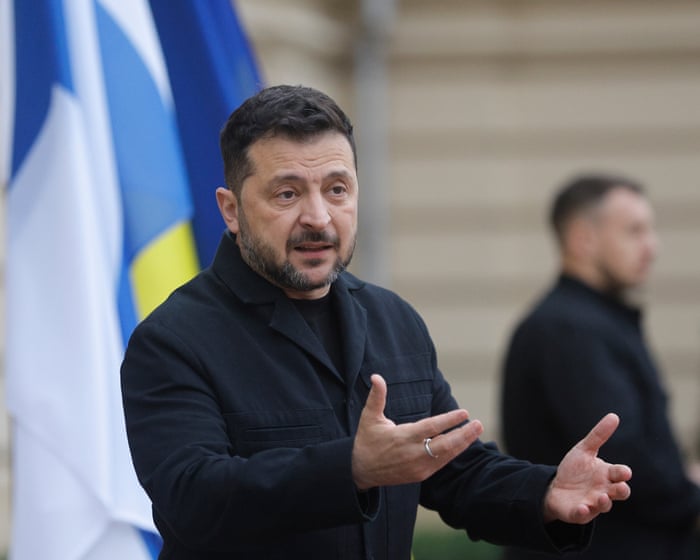
At the same time, President Volodymyr Zelenskyy said Ukraine relies on the network for air defense, not attack, to intercept the Russian drones Moscow sends to its cities, and that once the speed was cut, his forces could no longer stop some of them as effectively as before.
Simultaneously, Ukraine's other American lifeline also went dark: for about three days, the US stopped passing the intelligence that warns of Russian ballistic launches. On 12 October, Russian ballistic missiles hit Kyiv before the air-raid alert reached people, with no advance data from partners. In a strike during that window, three people were killed in the capital, the sirens sounding only after the blasts.
A Ukrainian official sees alibi-building
Meanwhile, Andrii Kovalenko, the ex-head of Ukraine’s Center for Countering Disinformation, read Musk’s statement as self-protection rather than physics
“Musk, having taken responsibility for the restrictions on Starlink and Starshield for Ukraine, is now trying to build himself an alibi before a possible investigation into that decision,” he wrote.
He said that regardless of who was behind the idea of restricting Starlink and Starshield access for Ukraine, it represents a strategic setback for the US in the long run, as it risks portraying the country as an unreliable partner that may fail to honor its commitments.
"Europe purchases around 60% of its imported weapons from the US. Trust in the US as a security guarantor directly supports sales for American defense companies. Moves like this only undermine that trust and encourage European countries to develop their own systems," he said.
The US has sent a message that its guarantees may not be reliable and that even paid-for services can be subject to political decisions, Kovalenko stressed.
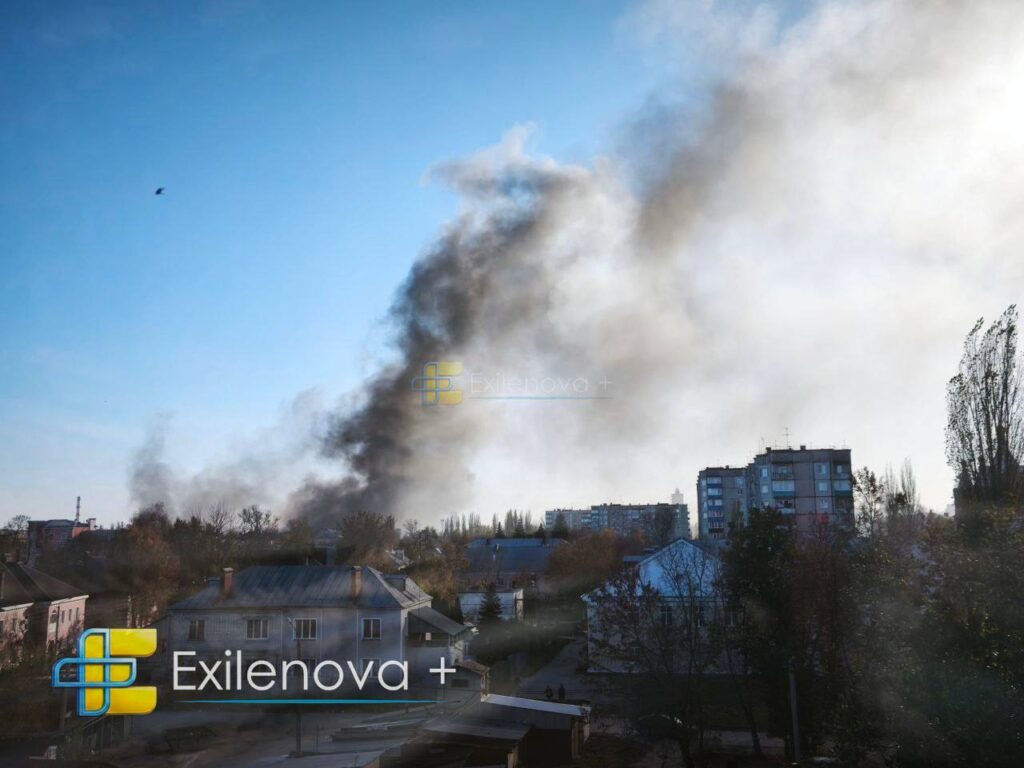
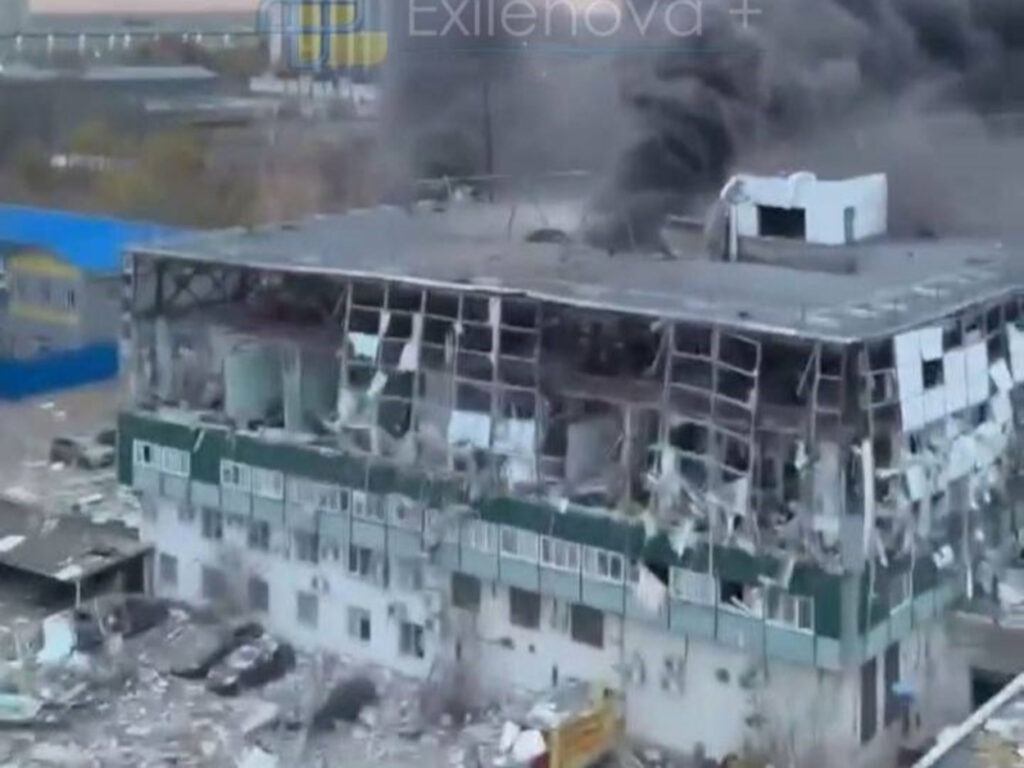
Ukraine reportedly struck the Energiya plant in Yelets, Russia’s Lipetsk Oblast, with UK-supplied Storm Shadow cruise missiles on 25 October, according to the OSINT channel Exilenova+.
The plant manufactures batteries and power sources used in Russian weapons systems, including Iskander and Kinzhal missiles, air defense systems, and guided aerial bombs, according to Exilenova+. The reported strike targeted a facility that supplies components for Russia’s military-industrial complex as Moscow continues its war against Ukraine.
According to Exilenova+, Energiya is Russia's only producer of batteries for glide bomb planning and correction modules, as well as a key supplier of specialized power sources for several missile systems.
Storm Shadow missiles reportedly hit plant buildings
Exilenova+ reported multiple missile impacts at the Energiya plant, sharing footage and photos showing explosions, thick smoke, and fires at the facility. The channel later reported that the plant was still burning and that the surrounding area had been cordoned off, with numerous ambulances heading to the site.
Dnipro OSINT reported that at least two missiles struck two buildings at the plant.
The Energiya plant is located in Yelets, approximately 250 km (150 miles) from the Ukrainian border.
Plant produces components for Russian weapons
According to Dnipro OSINT, Energiya specializes in developing and manufacturing chemical power sources. Its products are used in several Russian weapons systems, including Iskander-K and Iskander-M missiles, Kh-47M2 Kinzhal air-launched ballistic missiles, Zircon missiles, and Pantsir air defense systems. The plant also supplies power sources for UMPB D-30SN guided aerial bombs.
Many of these weapons are used in Russian strikes on Ukrainian cities, killing civilians and destroying residential buildings and civilian infrastructure.
Explore further
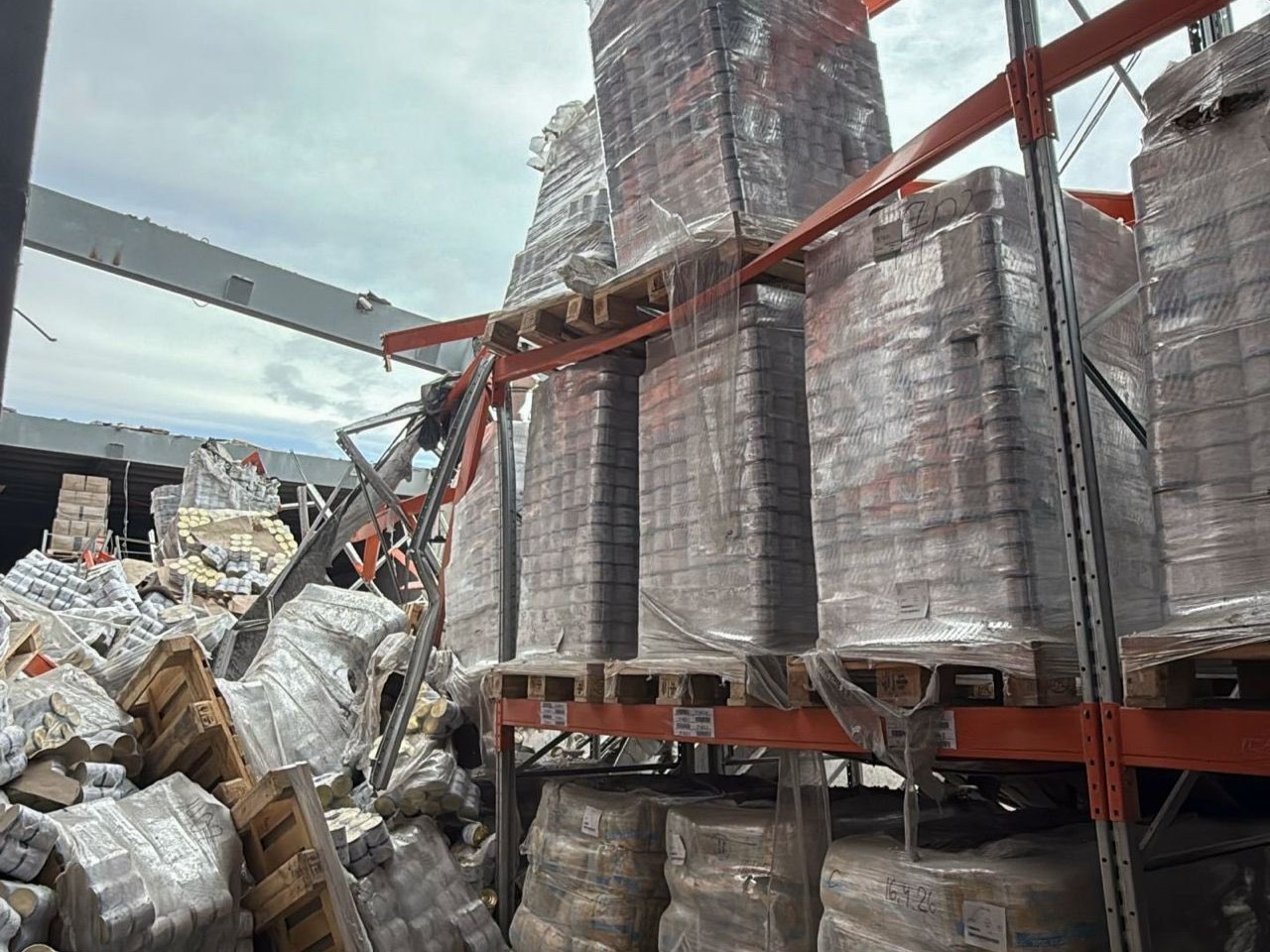
UN food aid warehouse in Dnipro struck by Russian Iskander missile, impacting supplies for 130,000 people
Dnipro OSINT said the plant had been attacked at least four times before the 25 October strike.
The strike comes two days after a reported Ukrainian Storm Shadow missile attack on the Proton electronics plant in Russia’s Oryol on 23 October, which produces electronic components used in Russian weapons systems, including Iskander-M ballistic missiles and Pantsir-S1 air defense systems.
How a rebuilt, historic California baseball diamond embodies ‘the contradictions in America’s legacy’
When Dan Kwong first dreamed of staging baseball games at the Japanese American concentration camp where his family was held captive during the second world war, he thought of it as an exercise in living history, an eye-catching way to convey the trauma of 120,000 men, women and children who were locked up in the wake of the Japanese attack on Pearl Harbor.
Baseball was a passion for Kwong, a 71-year-old performance artist from Los Angeles. He knew that the wartime internees had played the game not just as a distraction from their predicament, but as a quiet expression of their loyalty to the United States. He wanted to stage an event that would cast the game as an act of resistance, and teach new generations about the damage governments do when they strip a whole segment of the population of their constitutional rights.
VW investment, creating 4,500 jobs in Georgia, comes amid Trump’s damaging tariffs, intense Chinese competition and costly shift towards EVs
Audi has said it will spend $4bn (£3bn) to build its first factory in the US, as its parent company, Volkswagen, struggles with the impact of steep tariffs imposed by Donald Trump.
The German brand’s chief executive, Gernot Döllner, joined Trump on stage at a campaign rally on Saturday night to announce the factory in Macon, Georgia, in an unusual move by a big European brand just days before the US midterm elections.
Shasta has embraced the Maga movement with gusto – can Democrats ever win back the rural, working-class voters they once relied upon?
A crucial election was approaching and the country was desperate. Despite promises that economic conditions were improving, nearly a quarter of the US was out of work as voters headed to the polls in 1932.
It was the darkest time since the civil war, a period so dire that in California’s capital people fought each other for work. In early 1931, a crowd of 200 men scuffled over a handful of temporary jobs moving back-breaking loads of granite, the Sacramento Bee reported.
A drone attack damaged an industrial facility in Russia’s Perm Krai early on 25 October, injuring five workers, Ukrainian monitoring channel Exilenova+ reported. Exilenova+ identified the target as the AVISMA chemical and metallurgical plant in Berezniki, around 1,500 km from Ukraine’s border.
The reported strike highlights Ukraine’s ability to reach industrial facilities deep inside Russia that support its military-industrial complex.
AVISMA produces titanium materials used in aviation and aerospace manufacturing, including military aircraft, aircraft engines, missiles, and space technology, according to Exilenova+.
Regional governor Dmitry Makhonin said the industrial facility sustained damage but continued operating normally. He said five workers were injured in the attack.
A target deep inside Russia
Perm Krai lies in Russia’s Ural region, roughly 1,500 km from Ukraine’s border. The distance places the reported strike far beyond Russia’s border regions, where Ukrainian drone attacks have frequently targeted military and industrial infrastructure.
The reported attack follows a broader Ukrainian campaign against Russian industrial and energy facilities linked to the country’s war effort.
Russia’s Defense Ministry claimed that air defenses intercepted and destroyed 532 Ukrainian drones overnight across 23 Russian regions and over the Sea of Azov, according to Russian state news agency TASS.
The reported interceptions included drones over Perm Krai, as well as regions around Moscow and areas in southern and western Russia. The figures have not been independently verified.
The extent of damage at AVISMA and any impact on its operations have not been independently established.
I can’t say I’m enjoying my new gig as a would-be creator. But these days, I don’t have much choice
I recently started posting videos on Instagram. Like, actual videos.
Reels, as they call them. Where I say things, with one of those obnoxiously tiny microphones with the fuzzy head on top. I remember when microphones were gigantic tubular monstrosities that you couldn’t accidentally swallow without a pretty substantial effort and a handful of God-given talent.
Dave Schilling is a Los Angeles-based writer and humorist
Democratic candidates are ahead in two, hold a narrow edge in a third and are tied in a fourth, new polling shows. The seats embody the fights playing out nationwide in the midterms.
Luiz Inácio Lula da Silva, the leftist incumbent, and Flávio Bolsonaro, the right-wing challenger, face off in a narrow race that could redefine the future of Latin America.
Our politics reporter Kellen Browning walks through the four Senate races that progressive Democrats are closely watching in the upcoming midterm elections.
Rick Jackson’s run for governor as a political nobody was his latest gamble. The campaign has brought scrutiny to the businesses that made him a fortune.
State attorney general said Trump’s justice department’s directive to verify 20,000 ballots is completely improper
California’s attorney general on Saturday rebuked the Trump administration’s efforts to quash alleged noncitizen voting, calling it “politicizing and weaponizing the law”.
Rob Bonta, the state’s attorney general, said the justice department acted at Donald Trump’s direction.
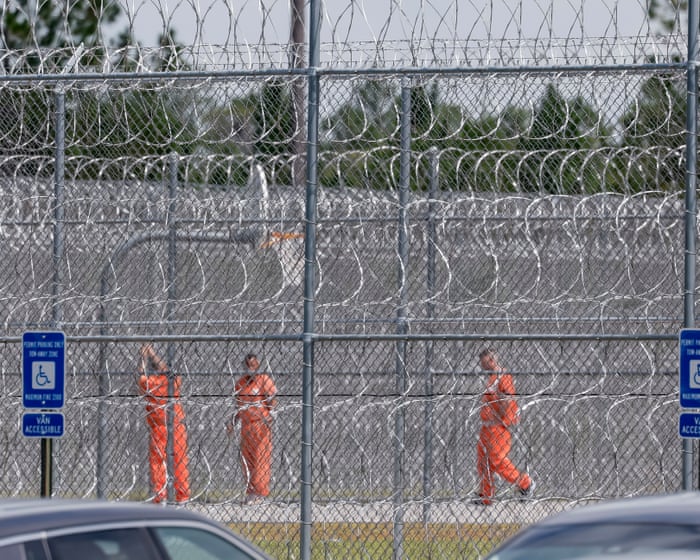
Death inside Folkston facility comes as officials allegedly threaten hunger strikers there with force-feeding
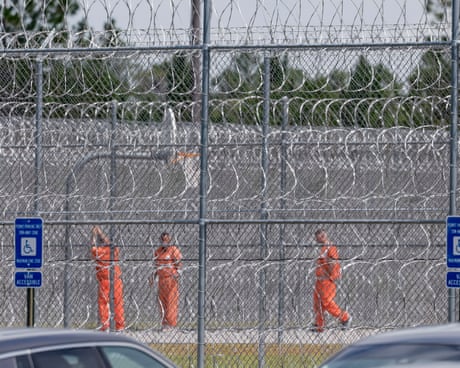
An immigrant detained at a sprawling detention center complex in Georgia died on Friday, local and federal officials confirmed, after the facility has already faced national scrutiny for its response to an ongoing hunger strike inside.
The death inside the D Ray James facility in Folkston, Georgia, comes as federal immigration officials and private contractors are allegedly threatening hunger strikers there with force-feeding, a detained hunger striker, his wife, attorneys and advocates all said this week. Detainees are refusing food to protest prolonged captivity and bad conditions.
But Elon Musk, whose company SpaceX owns Starlink, accuses Ukrainian military of violating the company’s terms
Ukraine’s military has a “stable connection to Starlink”, the Ukrainian government said, 10 days after its ability to use the satellite communications system was suddenly restricted.
But hours after the announcement, SpaceX CEO Elon Musk, whose company owns Starlink, accused the Ukrainian military of violating the company’s terms. Neither Musk nor the US government, which operates Starshield using Starlink technology, took responsibility for imposing the curbs.
Hassan Jihad Ibn Kariem fell from ride earlier this month, spurring amusement park to temporarily shut it down
Six Flags will install seatbelts on its Goliath rollercoaster in Georgia, after a rider plummeted to his death earlier this month.
Hassan Jihad Ibn Kariem, a 42-year-old father and educator, was thrown from his seat on the Goliath, a coaster that plunges riders down 165ft, before a second drop of 180ft. On his way down, he collided with the ride’s other cars.
With moves in Alaska and California, the department has stepped up interventions in the midterm elections as the president’s instrument of unmediated executive power.
President Trump during a campaign rally in support of Senator Dan S. Sullivan in Wasilla, Alaska, this month. Mr. Trump urged the Justice Dept. to intervene in the Senate race.
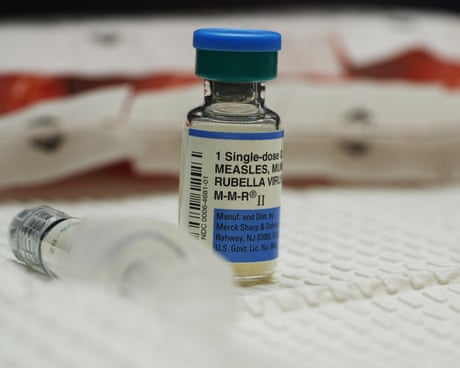
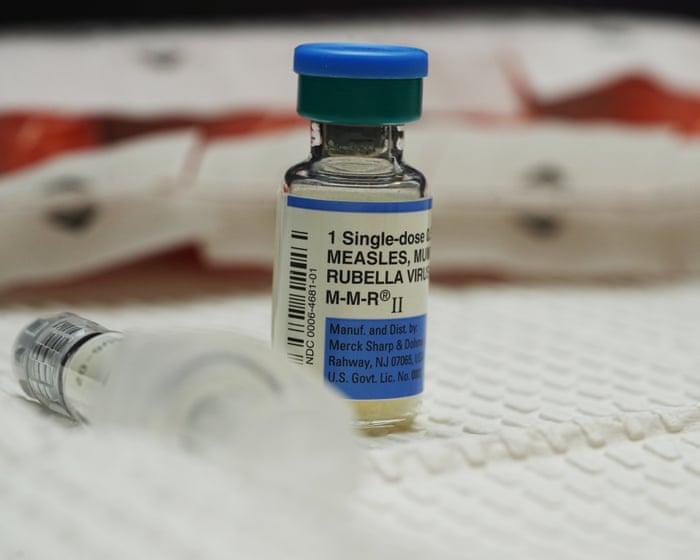
Centers for Disease Control and Prevention reported 4,588 cases across the country, more than double the tally in 2025
Federal health authorities reported an additional 178 cases of measles in the US this week, as the vaccine-preventable illness continues to sicken people across at least 43 outbreaks.
The new data reported by the Centers for Disease Control and Prevention (CDC) comes as experts criticize the agency for lack of transparency, and as health secretary Robert F Kennedy Jr takes steps to further upend US vaccine infrastructure.
The comments came after the disruption in the country’s satellite service. Earlier, Ukraine said drones using Starshield, the Pentagon-funded service, were back to normal speeds.
Ultra-endurance swimmer Catherine Breed navigated waves, wildlife and pollution to become the first person to swim from state’s northern-most tip to Mexico border
Nearly four months ago, Catherine Breed, a 33-year-old from the San Francisco Bay Area, set out to become the first person to swim the entire coastline of California – from its northern-most tip to the border with Mexico. She and her support team prepared for encounters with sharks and storms. They hadn’t anticipated completing the marathon swim during a year of historic super El Niño weather.
But after dodging hurricanes, wildlife and 8ft waves in an unusually volatile Pacific Ocean, Breed finally celebrated the end of her journey on a beach in San Diego on Monday.
The United States once declared that Ukraine’s fight was the front line in a global battle for freedom. Now the Trump administration is sending money to Moscow.
American soldiers awaited a visit by Defense Secretary Pete Hegseth and the White House border czar, Tom Homan, last year near the United States-Mexico border at Sunland Park, N.M.
The president has spread false claims about ranked-choice systems, voting machines, vote counting and past results to question the integrity of elections.
“I knew there was a really good possibility that this would happen,” Blake Miley said. “But I don’t blame myself. It is not right what they did to me.”
We’ve heard much about the end of the west. At the proposed summit between Trump, Putin and Xi, those fears could crystallise
In the final two years of a US presidency, when Congress has been lost, approval ratings have sunk like a stone and their party has started to think about who’s coming next, the person occupying the Oval Office can feel their power draining away. Domestic legislation, particularly in an era where bipartisan cooperation is almost nonexistent, grinds to a halt. But as the days tick by until the end, and as presidents begin to think about their legacy, there is one part of the job where they still have power: the rest of the world.
In the final weeks of his presidency in 1992 George HW Bush sent 28,000 American troops to Somalia to help end a famine. For Bill Clinton, it was a quixotic attempt to bring peace to the Middle East by ending the Israeli-Palestinian conflict. Barack Obama restored diplomatic ties with Cuba, making a historic visit to Havana, as well as a final, successful push on the Iran nuclear deal.
Letters from federal prosecutors represent latest escalation as Trump continues to make claims of voter fraud
Federal prosecutors sent letters to county registrars across California on Friday demanding that local officials set aside and verify ballots that the Department of Justice said may belong to noncitizens, according to the Los Angeles county registrar and a letter obtained by the Associated Press.
The letters are the latest escalation in a legal battle between California and Donald Trump’s Department of Justice, which has recently focused on the state in its efforts to root out noncitizen voting ahead of the midterm elections.
Oil drilling rigs in Prudhoe Bay, Alaska. The Polar LNG plan called for the company to tap into the giant load of natural gas available in the state’s northern reaches.
Ukrainian missiles reportedly struck a factory in the city of Oryol on 23 October, with OSINT projects reporting that the target was the Proton electronics plant, which produces components used in Russian weapons systems.
The strike comes amid Ukraine’s broader campaign to target Russian military production facilities and other infrastructure supporting Moscow’s war against Ukraine. Ukrainian strikes on such facilities aim to weaken Russia’s ability to manufacture and maintain the weapons it uses in its invasion.
The plant reportedly supplies electronic components for Iskander-M ballistic missiles, which Russia regularly uses to attack Ukrainian cities, as well as other weapons systems, including the Pantsir-S1 air defense system.
The strike could disrupt production supporting Russia’s war effort. Photos show extensive damage to the building. Information about casualties remains unclear.
Reports say a Ukrainian missile strike hit the Proton electronics plant in Russia’s Oryol on 23 October.
The facility reportedly produces components for Iskander-M ballistic missiles used in attacks on Ukrainian cities, as well as other Russian weapons systems.
Plant reportedly produces components for Russian weapons
Proton JSC manufactures semiconductor devices, LEDs, and electronic components for industrial and specialized equipment. According to Exilenova+, the plant’s products are used in the production of Iskander-M ballistic missiles, S-71 Kover missiles, and the Pantsir-S1 air defense system.
Exilenova+ reported that the plant was struck by Storm Shadow cruise missiles. The weapon type has not been independently confirmed, and the extent of damage to the facility remains unknown.
Russian authorities confirm strike on factory
Oryol Oblast Governor Andrey Klychkov announced a missile threat in the region before reporting that missiles had struck a factory in Oryol’s Sovetsky District, according to Liga.net.
Residents reported explosions, a fire in one part of the city, and columns of smoke rising over Oryol, according to local reports cited by OSINT projects Exilenova+, Supernova, and Astra.
A Malta-flagged tanker carrying Russian diesel is heading for New York after the fuel deal between US President Donald Trump and Russian President Vladimir Putin, Reuters reported in an exclusive on 23 October, citing LSEG shipping data. Two weeks earlier, the US Treasury temporarily waived sanctions on Russian diesel.
The tanker is due in the US on 7 November, four days after Americans vote in the midterms. So the first US-bound cargo cannot reach American pumps before the election. Energy analysts also doubt the deal will lower diesel prices meaningfully. US fuel prices rose mainly because the war with Iran disrupted shipping through the Strait of Hormuz. Trump, however, has blamed Ukraine’s strikes on Russian refineries.
Loaded on the day Moscow promised
The medium-sized tanker Agioi Fanendes took on 40,000 metric tons of ultra-low sulfur diesel at the Baltic port of Primorsk on 22 October, shipping data showed. In March, Ukraine’s General Staff said its drones hit the Transneft oil terminal at that same port.
A day before the loading, Russian Deputy Prime Minister Alexander Novak announced that the first tanker would sail for the US on 22 October. He pledged more shipments and said Russia would meet US needs within its capabilities.
Explore further
Russia resumes diesel exports to Türkiye, Brazil, after Trump lifts sanctions on fuel supplies, boosting Moscow’s war revenue – Reuters
From a pledge to a partial lift
On 9 October, Trump wrote that Russia would immediately supply over 300,000 tons of diesel “to the American and Global Marketplace.” Another 500,000 tons would follow in November, then 1 million tons “immediately thereafter.”
Moscow had banned diesel exports on 8 July, after Ukrainian drone strikes shut down refineries and caused fuel shortages inside Russia. The Russian government stated on 10 October that it had partially lifted the ban, clearing 500,000 tons for the world market at this stage. Russian diesel shipments to Türkiye and Brazil have since resumed, boosting Moscow’s war revenue.
Trump has made other moves to cut diesel prices before the vote, Reuters reported. He waived parts of a new sanctions law against Russia. He also threatened Europe with a US diesel export ban unless countries released more fuel from their emergency reserves.
A Russian drone strike sank the Comoros-flagged cargo ship Khoryv in the Black Sea near Romania’s port of Constanța on 23 October, killing a Ukrainian sailor and leaving three crew members missing. Nine others were rescued, Digi24 reported.
The sinking comes amid a surge in attacks on commercial shipping near Romania and Bulgaria, threatening civilian crews and routes used to transport Ukrainian agricultural exports. As Russia intensifies strikes on Ukrainian ports and shipping, the Danube corridor and nearby waters have become increasingly important to Ukraine’s maritime trade.
Romanian President Nicușor Dan blamed Russia for the attack, describing it as part of Moscow’s escalation of the war against Ukraine and its attacks on NATO’s eastern flank, Reuters reported.
Ukraine’s Foreign Ministry confirmed to Radio Svoboda that a Ukrainian citizen was among those killed.
Ukrainian sailor killed, three crew members missing
The Khoryv sent a distress signal at around 10 a.m. local time, about 13 nautical miles (24 kilometers) east of Constanța, just outside Romania’s territorial waters, Digi24 reported. The vessel caught fire, sustained major damage, and capsized, with only a small part of its hull remaining visible above the water.
Romania’s naval authority said 13 crew members were aboard: 10 Ukrainians and three Azerbaijanis. Rescue teams recovered nine sailors alive and one body, while three crew members remained missing, Reuters reported.
Ukraine’s Foreign Ministry said the vessel had been traveling from a Turkish port and confirmed that the Ukrainian Embassy in Romania had received information from Romanian authorities about one Ukrainian sailor’s death. Four Ukrainian survivors, including the captain, were taken to a hospital, while two others did not require medical assistance.
Attacks threaten Black Sea shipping
The sinking comes amid a surge in attacks on commercial vessels off the coasts of Romania and Bulgaria. At least seven cargo ships have been hit over the past two weeks, with around 30 sailors reported dead or missing, according to Reuters.
The vessels targeted in recent incidents were either anchored near or heading toward the Sulina Canal, which connects the Danube River to the Black Sea. The canal has become a key export route for Ukraine, one of the world’s largest exporters of grain and vegetable oils.
Ukraine has increasingly relied on Danube ports and routes through Romanian territorial waters as Russia attacks its own Black Sea ports. Strikes on commercial vessels threaten crews and risk disrupting Ukrainian agricultural exports to international markets.
Russia has intensified attacks on Ukrainian ports and ships traveling to or from Ukraine. Moscow has described its strikes on vessels as retaliation for Ukrainian attacks on Russian or Russia-linked ships.
Explore further
Russia’s attacks on Black Sea shipping raise risk of global famine, German FM warns
NATO plans stronger Black Sea surveillance
NATO said on 20 October it would send additional maritime patrol aircraft, radar systems, and drones to the Black Sea following the attacks on commercial shipping, according to Reuters. The alliance has not specified which capabilities it will deploy.
Romania, Ukraine, and Bulgaria have called on NATO to do more to protect commercial vessels. The latest sinking adds urgency to those calls as attacks increasingly affect shipping near NATO territory.
The latest incident highlights the growing risks to commercial shipping as Russia’s war against Ukraine increasingly affects maritime traffic beyond Ukraine’s own coastline.
Austria has ordered four Russian diplomats to leave the country over suspected espionage, declaring them persona non grata following findings by Austrian security authorities, Austrian media outlet Heute reported on 23 October.
The expulsions come as European countries step up efforts to counter suspected Russian intelligence operations amid Moscow’s war against Ukraine. Three of the diplomats worked at the Russian Embassy in Vienna, while the fourth served in Russia’s delegation to the Organization for Security and Co-operation in Europe (OSCE), which is headquartered in Vienna.
Austria’s Foreign Ministry said the four had engaged in “activities incompatible with their diplomatic status,” a term usually used for spying, Reuters reported. It did not disclose details of the alleged activities or the intelligence findings behind the decision.
The three embassy diplomats were declared persona non grata under Article 9 of the Vienna Convention on Diplomatic Relations. The fourth, who worked on military security and arms control at Russia’s OSCE delegation, was also ordered to leave Austria.
Vienna remains a hub for Russian intelligence
The latest expulsions bring the number of Russian diplomats Austria has expelled since 2020 to 18, according to Reuters. In May 2026, Austria expelled three Russian Embassy employees suspected of using antennas on diplomatic buildings to intercept satellite internet data transmitted by international organizations based in Vienna.
Vienna’s concentration of international organizations, including the OSCE and United Nations agencies, has made it a key location for intelligence activity. A 2024 report by The Wall Street Journal, described Vienna as a major Russian spy hub for operations targeting Western countries, including surveillance of arms supplies to Ukraine.
Explore further
WSJ: Vienna has become major Russian spy hub for anti-Western operations in Europe
Russia’s Deputy Foreign Minister Dmitry Lyubinsky said Moscow’s response to the expulsions was unavoidable, according to Russian state news agency TASS, AP reported.
Senators have warned the White House they will withhold confirmation votes until the administration ensures the restoration of communications capabilities used by Ukraine’s military.
Representative Brian Fitzpatrick, Republican of Pennsylvania and a former F.B.I. agent who worked on Russian counterintelligence in Kyiv, said he doubted the communication problems were accidental.
An electoral supercycle over the next year may redefine the continent’s future. But what’s happening on the streets is shaping it, too
France sneezed, and Europe has again caught the cold. The wave of unrest which began with teenagers at a high school soon drew in hundreds of thousands of people nationwide and then spread across the continent. Protests have filled the streets in Lisbon and Madrid, and have ignited into violence in Milan, Brussels and Tirana as well as in French cities.
French authorities say they are deploying 70,000 officers on Saturday and are allowing only marches organised by unions. They blame hard-left militants as well as opportunistic young perpetrators for last weekend’s destruction and looting, when a minority hijacked largely peaceful protests. But with fuel prices set to rise further over the winter, the demands and participants broadening, and President Macron utterly failing to meet the moment, there is no sign of an end to the wider discontent and no speedy resolution in sight.
The first lady, who is positioning herself as an intermediary between two warring nations as her husband sides with Russia, said the agreement would allow residents to evacuate.
“It was abundantly clear that without my intervention, the possibility to bring humanitarian aid into the city and to evacuate the elderly would be impossible,” Melania Trump, the first lady, said in a statement.
People in Russian-occupied city facing severe shortages of food, water and electricity, with some reportedly surviving on weeds
The White House has said that Russia and Ukraine have agreed to a ceasefire in the Russian-occupied city of Oleshky, where a deepening humanitarian crisis has left thousands of civilians struggling to survive.
In a statement on Friday, the White House said both sides had agreed to halt all military operations in the city from 27 October to allow humanitarian aid deliveries and preparations for the evacuation of civilians.
Finland will donate diesel locomotives to Ukraine’s state railway, the Office of Ukraine’s President reported. Helsinki also pledged new winter aid, and the two countries signed deals on drones, housing, and satellite communications during Finnish Prime Minister Petteri Orpo’s visit to Kyiv. One of them is a first step toward a satellite link Ukraine would control itself.
With Russia replacing its missiles as fast as it fires them, Ukraine heads into winter needing equipment that works without the grid. Russian strikes have damaged or destroyed almost 600 locomotives of Ukraine’s state railway since the full-scale invasion began, more than 300 of them diesels, the infrastructure minister said. The attacks have reached engines even near the Polish border, on the railway that carries Ukraine’s evacuations, grain, and cargo.
Diesels that keep moving when the grid goes down
Finland will hand 10 locomotives and their spare parts to Ukrzaliznytsia, Ukraine’s state railway, free of charge. Infrastructure Minister Mykola Kalashnyk announced the deal, signed on 22 October at a Ukrainian-Finnish business forum. The engines need no power from overhead lines, so trains can keep running during blackouts.
The engines are Dv12 diesels that VR, Finland’s state rail company, is taking out of service. A VR shareholders’ meeting moved them into state ownership, and the Finnish state is donating them, Yle reported. VR puts their value, spare parts included, at about €2.1 million. Finland’s government said the gift will not affect VR’s ability to run trains at home.
A VR Class Dv12 diesel locomotive in Finland, 16 April 2007. Photo: Matthew Ross/Wikimedia Commons
Ukrainian Prime Minister Serhii Koretskyi and Orpo signed the donation certificate, one of seven documents signed that day. Two others plan Ukrainian-Finnish drone production in Finland, one for military and dual-use systems and one for heavy drones. Another covers a precast concrete plant for industrial housing construction.
The day’s agreements are worth around €300 million in total, Zelenskyy said. Projects worth €200 million are already under way within the two countries’ Drone Deal, he added. Under an earlier plan, most drones made in Finland would go to Ukraine.
Explore further
Finland backs €28.5 million power plant project as Ukraine braces for Russia’s next winter energy assault
Winter money now, a 36th military package by year’s end
Orpo announced a new €10 million package. Of it, €5 million goes to the Ukraine Energy Support Fund and €2 million to humanitarian aid for winter. The last €3 million goes to the Ukraine Recovery Program, for energy and water supply. Finland will also deliver mobile heating containers by December.
Finland has given Ukraine five defense packages this year, worth more than €500 million combined, Militarnyi reported. A 36th package is being prepared together with Ukraine’s military. “We plan to make a decision by the end of this year,” Orpo said. In September, Finland approved a package worth about €290 million.
A satellite link Ukraine would own
Ukraine’s Defense Ministry signed a letter of intent with Finnish satellite firm ICEYE and telecom company Nokia, Militarnyi reported, citing ICEYE. The parties will explore building a secure satellite communications system under Ukraine’s control. The aim is to reduce Ukraine’s dependence on foreign commercial operators.
In this model, the state customer owns the satellites, ground stations, and user terminals, RBC-Ukraine reported. The network could serve defense, border protection, emergency services, and disaster recovery. The letter sets out no timeline or funding.
“Modern warfare has proven that reliable communications are a matter of national security,” Zelenskyy said in the companies’ statement. ICEYE CEO Rafal Modrzewski said Ukraine needs “secure, sovereign and high-performance satellite communications systems that it controls.”
The deal comes after a speed cap on Starlink disrupted Ukrainian drone missions this month. The EU, meanwhile, is pushing three European firms to merge into one SpaceX rival. ICEYE has supplied Ukraine with radar satellite imagery for years.
Days before the signing, tracking firm LeoLabs said a Russian government-owned satellite, Cosmos 2612, had spent weeks shadowing an ICEYE radar satellite, coming within 500 meters. The ICEYE satellite is widely believed to provide imagery to Ukraine.
Neither fix is quick. Ukraine’s big locomotive order arrives from 2027, and the first satellites of the ICEYE-Nokia system are expected to launch only in 2028.
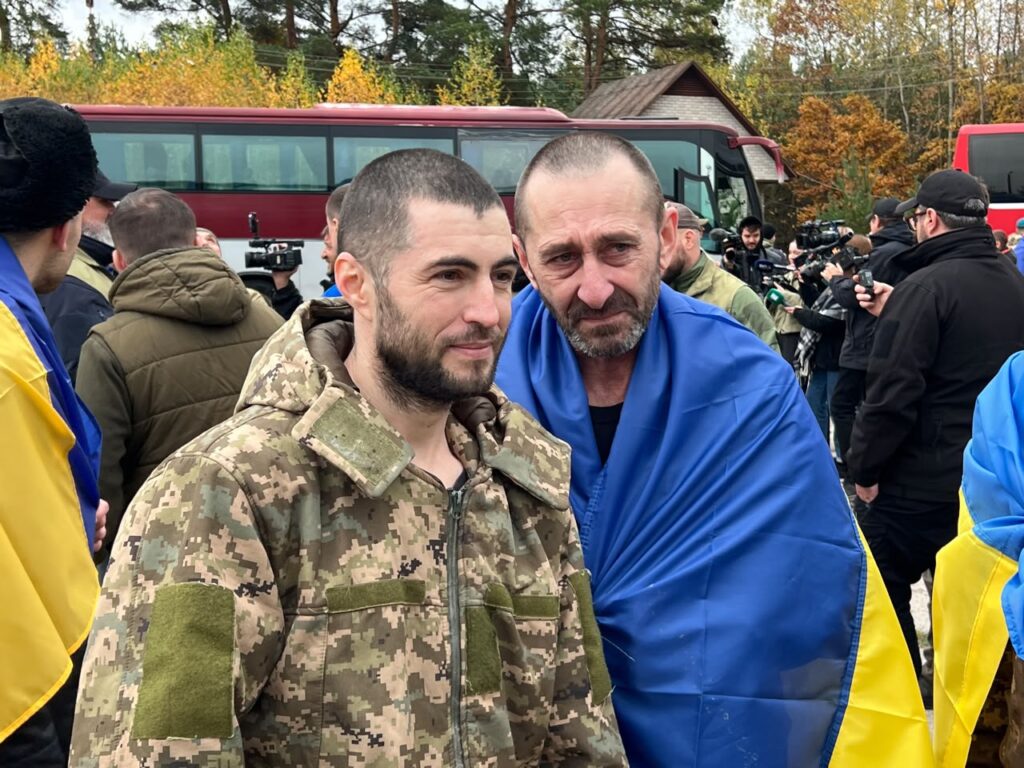
Ukraine has brought home 270 people from Russian captivity, including 261 military personnel and nine civilians, in the third stage of a prisoner exchange process that began on 19 August, Ukraine’s Coordination Headquarters for the Treatment of Prisoners of War said on 23 October.
Amid Russia’s full-scale invasion, prisoner exchanges remain one of the few channels of communication between Kyiv and Moscow. But with thousands of Ukrainian military personnel and civilians still held in Russian captivity, each swap brings home only a fraction of those awaiting release, while negotiations remain tied to the difficult process of securing the return of captives on both sides.
Most of those released today had been held since 2022, including many defenders of Mariupol. Five survivors of the July 2022 Russian attack on the Olenivka prison barracks are also among those returning home.
The exchange also included American Stephen Hubbard, a 74-year-old English teacher from Izium, Kharkiv Oblast, who was illegally captured in 2022, then sentenced and tortured by Russia, according to the Coordination Headquarters.
Ukrainian prisoners of war and civilians return home during a prisoner exchange with Russia on 23 October 2026. Photo: Ivan Vyhivskyi
Ukraine brought 270 people home from Russian captivity, including 261 military personnel and 9 civilians.
Most had been held since 2022, including defenders of Mariupol. Five survivors of Russia’s Olenivka prison attack and American teacher Stephen Hubbard are also among those… pic.twitter.com/Uyl8kz64W1
Exchange includes soldiers held for up to eight years
The exchange included members of Ukraine’s Armed Forces, National Guard, State Border Guard Service, and other security and defense units, as well as a State Emergency Service rescuer. Thirty-eight of the released military personnel are officers.
According to Ukraine’s Ombudsman Dmytro Lubinets, the exchange was “historic” because it brought home the largest number of Ukrainian military personnel sentenced by Russia: 86 who had been sentenced and one who had faced criminal prosecution.
Two of those released had been held since 2018 and 2020, spending eight and six years in captivity, respectively.
“The priorities remain unchanged: we bring home those who have been in captivity the longest, the seriously ill, and the seriously wounded,” Lubinets said, adding that efforts to return civilians and people held since 2014 also remain a priority.
Ukrainian prisoners of war and civilians return home during a prisoner exchange with Russia on 23 October 2026. Photo: Ukraine’s Coordination Headquarters for the Treatment of Prisoners of WarUkrainian prisoners of war and civilians return home during a prisoner exchange with Russia on 23 October 2026. Photo: Zelenskyy
Nine seriously ill prisoners among those released
Nine of the returning service members are seriously ill, and some are in critical condition, the Coordination Headquarters said. The youngest person released is 24, while the oldest is 63.
Many of those released had faced criminal prosecution in Russia and been sentenced on what Ukraine describes as fabricated charges, including life imprisonment.
Ukrainian President Volodymyr Zelenskyy said most of those returning had been captured in 2022, and many had defended Mariupol.
The released also include service members who fought in the Donetsk, Luhansk, Kharkiv, Zaporizhzhia, Kherson, Kyiv, Mykolaiv, and Chernihiv directions, as well as defenders of the Chornobyl Nuclear Power Plant.
“We remember every man and woman and continue searching for everyone,” Zelenskyy said.
Explore further
Russia has kept the Red Cross away from Ukrainian POWs since 2024. Now about 1,500 captives it never confirmed as prisoners face prosecution
US and UAE thanked for assistance
Ukraine thanked the United States and the United Arab Emirates for helping secure the releases.
All those released will undergo medical examinations, receive treatment and financial support, and take part in rehabilitation and reintegration programs after prolonged captivity.
Ukraine’s military intelligence chief and head of the Coordination Headquarters, Oleh Ivashchenko, said the return followed months of negotiations. He stressed that efforts to establish the fate of missing Ukrainians and bring everyone home would continue.
Ukrainian prisoners of war and civilians return home during a prisoner exchange with Russia on 23 October 2026. Photo: ZelenskyyUkrainian prisoners of war and civilians return home during a prisoner exchange with Russia on 23 October 2026. Photo: Ukraine’s Coordination Headquarters for the Treatment of Prisoners of War
The 23 October exchange follows the previous stage on 19 August, when Ukraine brought home 103 servicemembers from Russian captivity.
Ukraine’s Defense Intelligence (HUR) warned that Russia may stage sabotage in Central and Eastern Europe, including the Baltic states, and blame Ukraine for the attacks, in a Telegram post on 23 October.
The warning comes three days after The Wall Street Journal reported that US intelligence traces Europe’s sabotage wave to Putin’s personal order. If Russia stages new attacks and pins them on Ukraine, as HUR warns, European anger could turn on Kyiv rather than the Kremlin. This goes further than HUR’s statement on 2 October, which named potential Russian targets in Europe but did not mention a plan to blame Ukraine for attacks.
HUR says Moscow wants to discredit Ukraine’s army
Russia is stepping up its hybrid strategy to destabilize the European Union, according to HUR. The agency identified two aims: reducing foreign support for Ukraine by discrediting its Defense Forces, and intimidating European governments and societies.
The accusations would be spread through Russian propaganda channels and international platforms accessible to the Kremlin.
Potential targets include infrastructure and Russian Orthodox Church sites
HUR listed several potential targets for Russian provocations:
critical infrastructure and areas bordering Russia;
the Kaliningrad exclave;
areas of EU countries with Russian-speaking populations;
Kremlin-controlled sites, including properties belonging to the Russian Orthodox Church network;
historical sites associated with Russia.
The list reflects HUR’s assessment of potential targets, not confirmation that attacks at these locations are planned.
Earlier warnings and reported sabotage
On 2 October, HUR said Russian intelligence services had been ordered to increase activity in EU and NATO countries. It named military facilities, critical infrastructure, communications systems, and Starlink ground stations as potential targets and said it had alerted partners.
Warnings of Russian false flags on NATO’s eastern flank predate HUR’s. In August, Bloomberg reported, citing an unnamed European intelligence official, that Russia might expand hybrid attacks against Poland and the Baltic states, including false-flag attacks. A European government official separately told the agency that the CIA had warned countries in the region of a possible Russian attack. Lithuania’s military intelligence had warned earlier in August that Moscow might reassemble captured Ukrainian drones for false-flag strikes on critical infrastructure in the Baltic region.
Meanwhile, The Wall Street Journal reported on 20 October that US intelligence agencies believe the attempted drone attack on Leipzig-Halle Airport in Germany in early August was among the opening shots of a sabotage campaign ordered by Russian President Vladimir Putin. The Journal cited European officials briefed on the intelligence findings.
According to the newspaper, at least three drones carrying military-grade Semtex explosives were involved. One struck an Antonov cargo plane used to transport military aid to Ukraine but failed to explode. Another collided with a different aircraft, while a third detonated near the airport perimeter. German newspaper Welt am Sonntag has since named two suspects, citing German investigation files. Earlier German media reports described the sequence differently.
The Journal also reported sabotage attacks on Starlink stations in Poland, Lithuania, and Bulgaria in recent weeks. In August, Slovak authorities said they had foiled a planned arson attack on a Ukrainian drone factory, the Journal reported.
Russia denies involvement in sabotage in Europe. Responding to Berlin’s accusations over the Leipzig incident in early September, Putin asked where the evidence was.

 Connexion













































 Exilenova+…