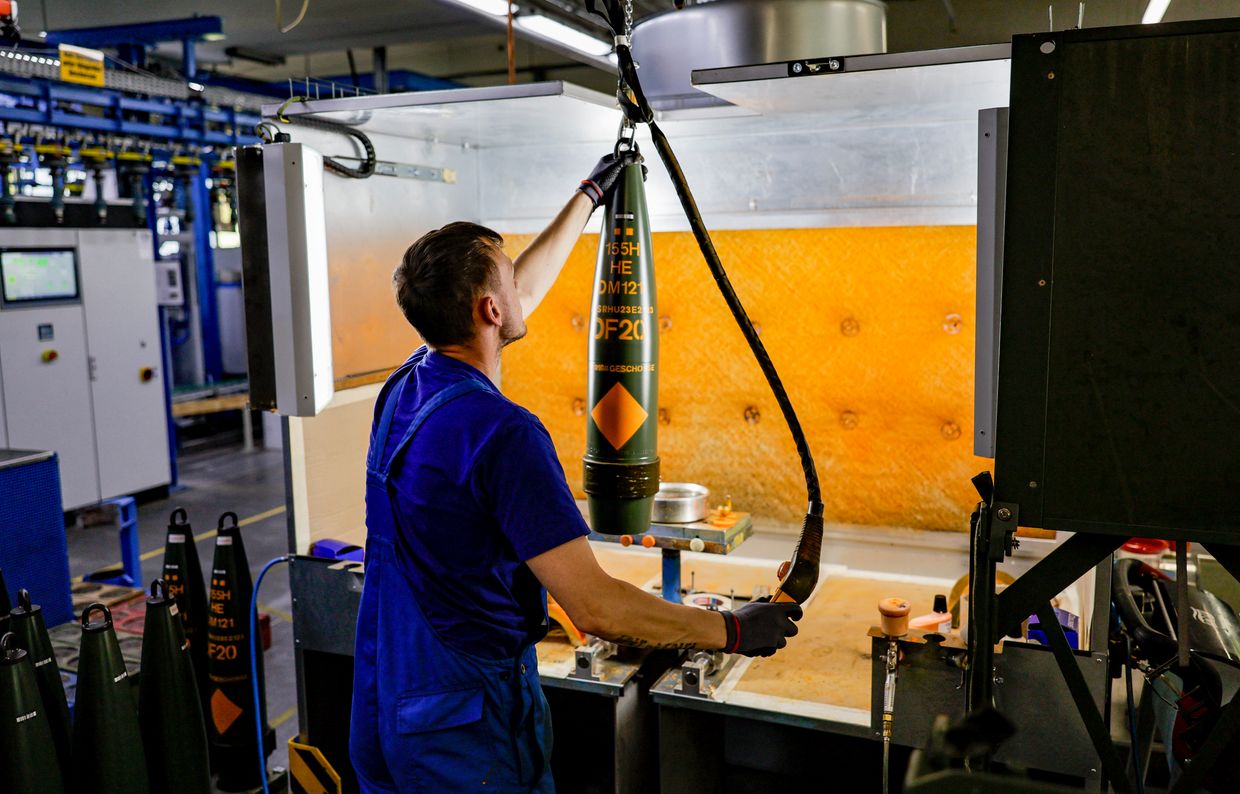
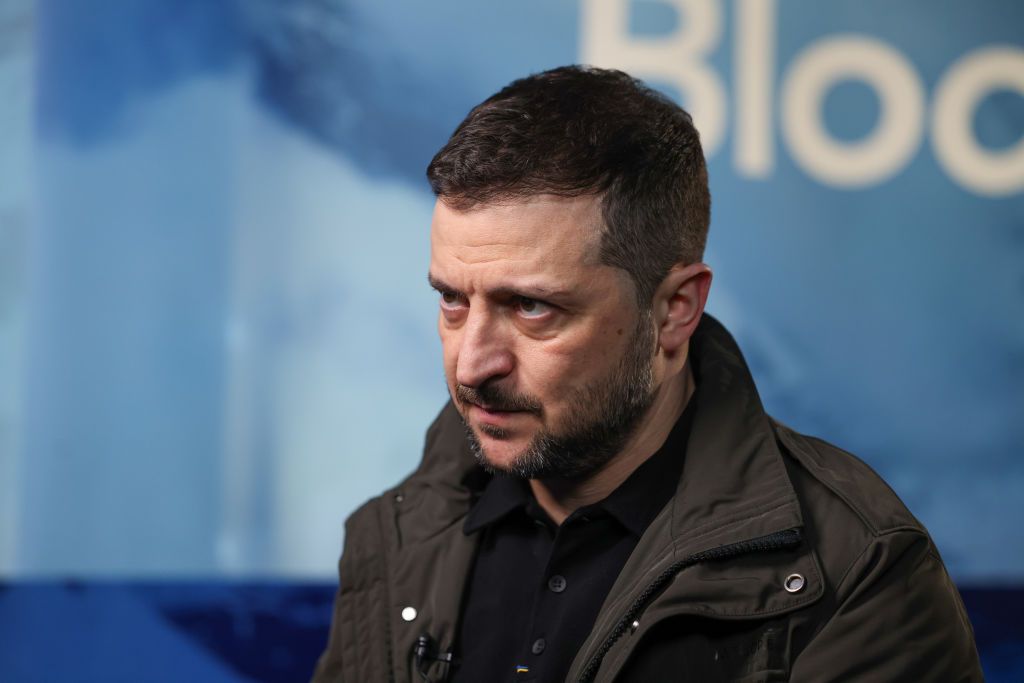
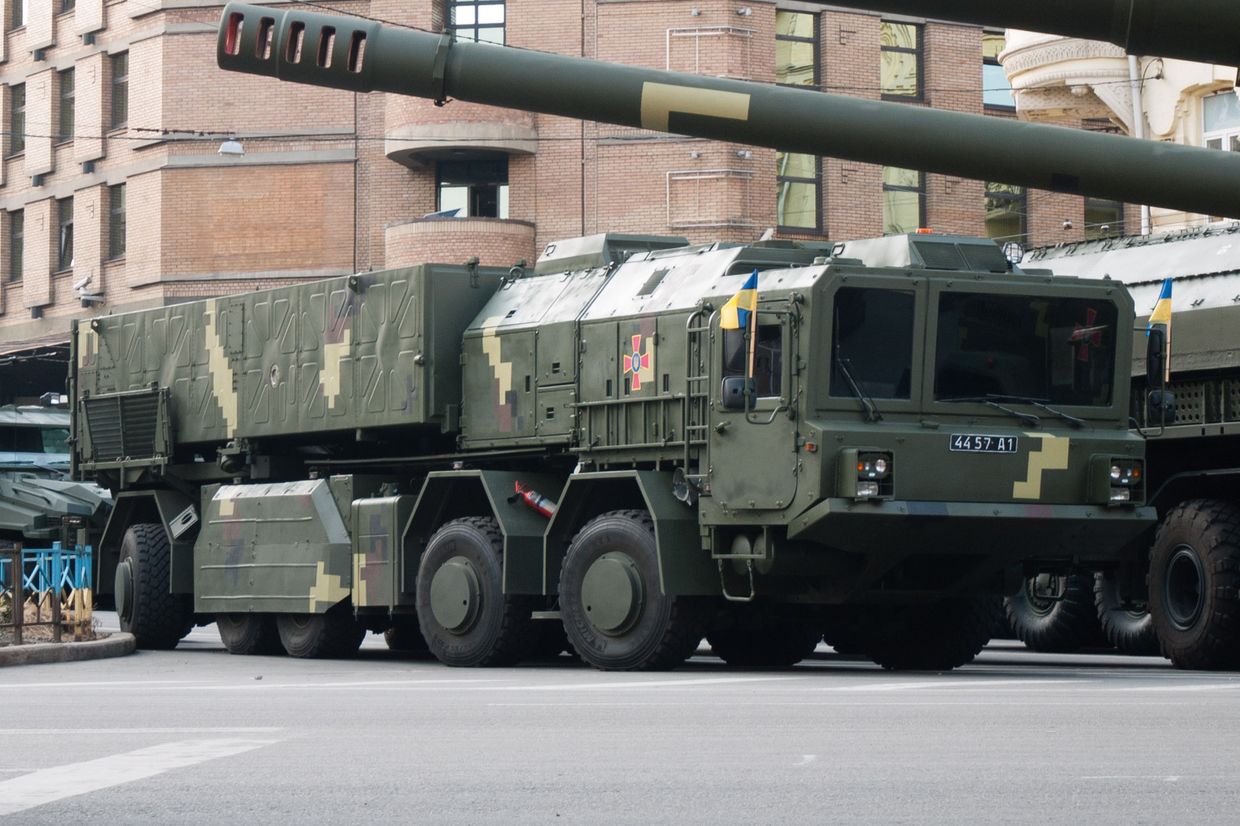
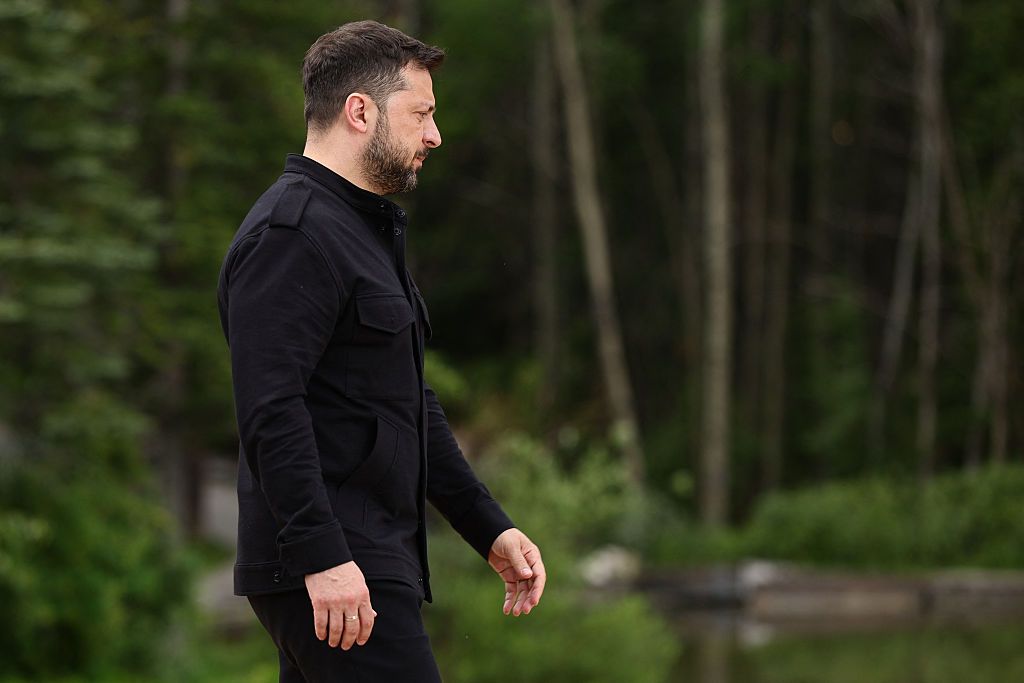
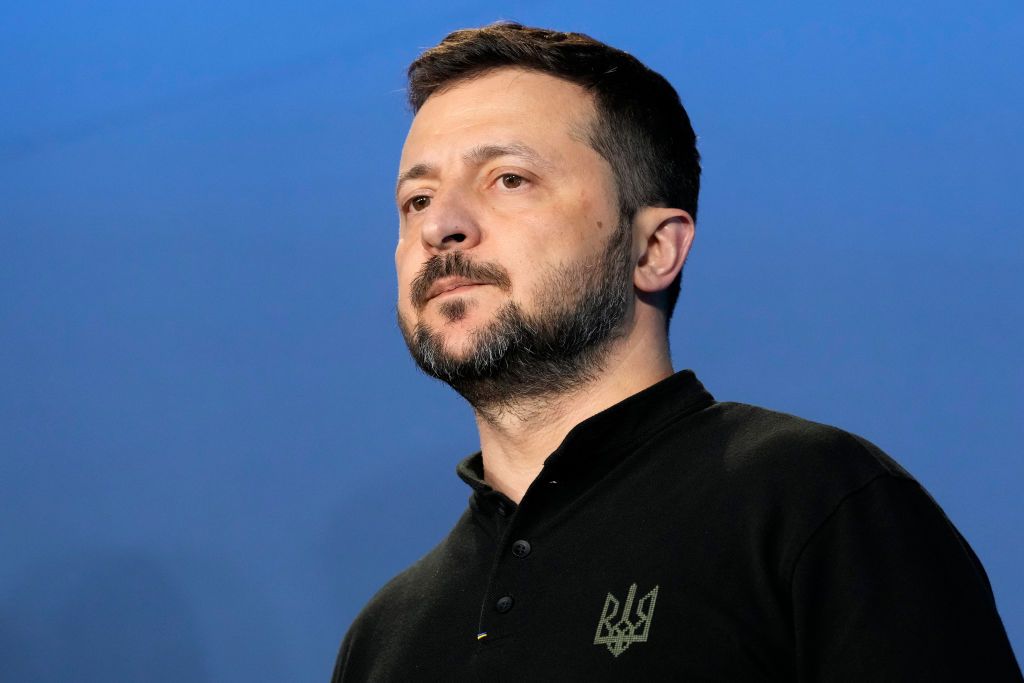
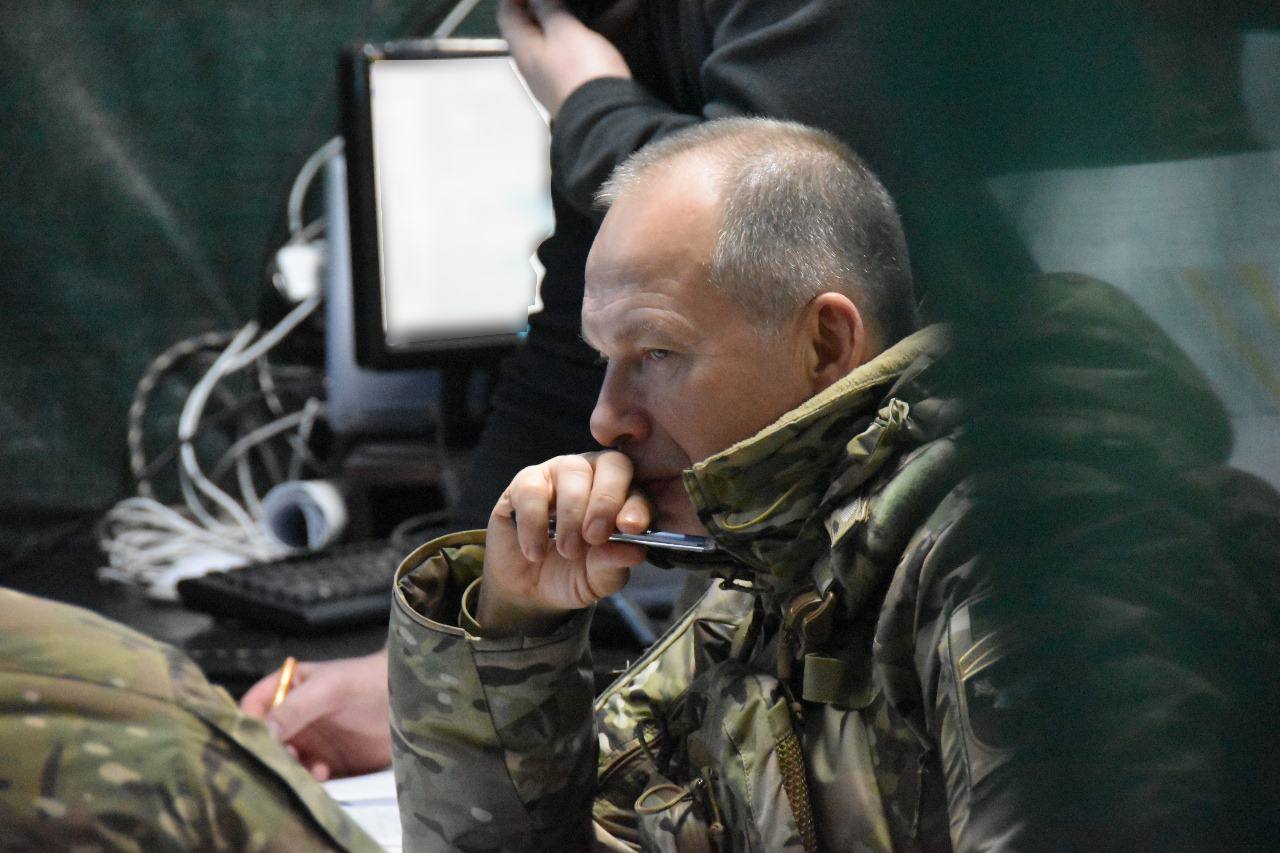
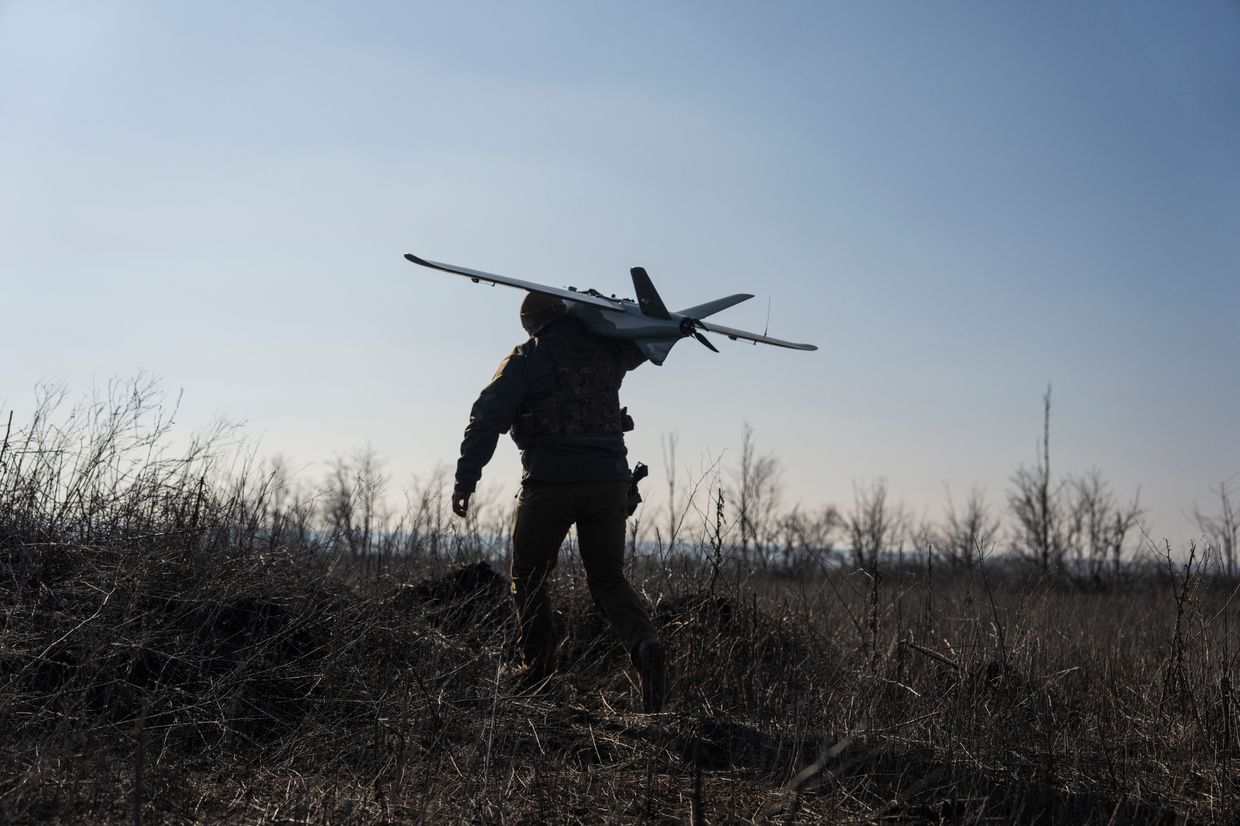
President Volodymyr Zelensky said during NATO summit on June 24 that Ukraine has the capacity to produce over 8 million drones of various types each year, but lacks the financial backing to reach that potential, a shortfall he said must be urgently addressed to defeat Russia's growing military network.
"Our defense production potential has surpassed $35 billion,” Zelensky said during a speech at the NATO Defense Industry Forum in The Hague. "This includes nearly 1,000 types of products... but around 40% of this potential lacks proper funding. For example, we can produce over 8 million drones of different types each year, but the financing allows for far fewer."
Zelensky urged allies to scale up investments in joint weapons production, including drone technologies, artillery, and interceptors. He argued that Ukraine's defense capabilities are not only key to defending its own territory, but essential to strengthening NATO's long-term security.
"We must lead in the drone race, both in strike drones and interceptors," he said. "Please increase your investments in Ukraine and joint weapons production. All the weapons we produce become part of a new, stronger European defense and security system."
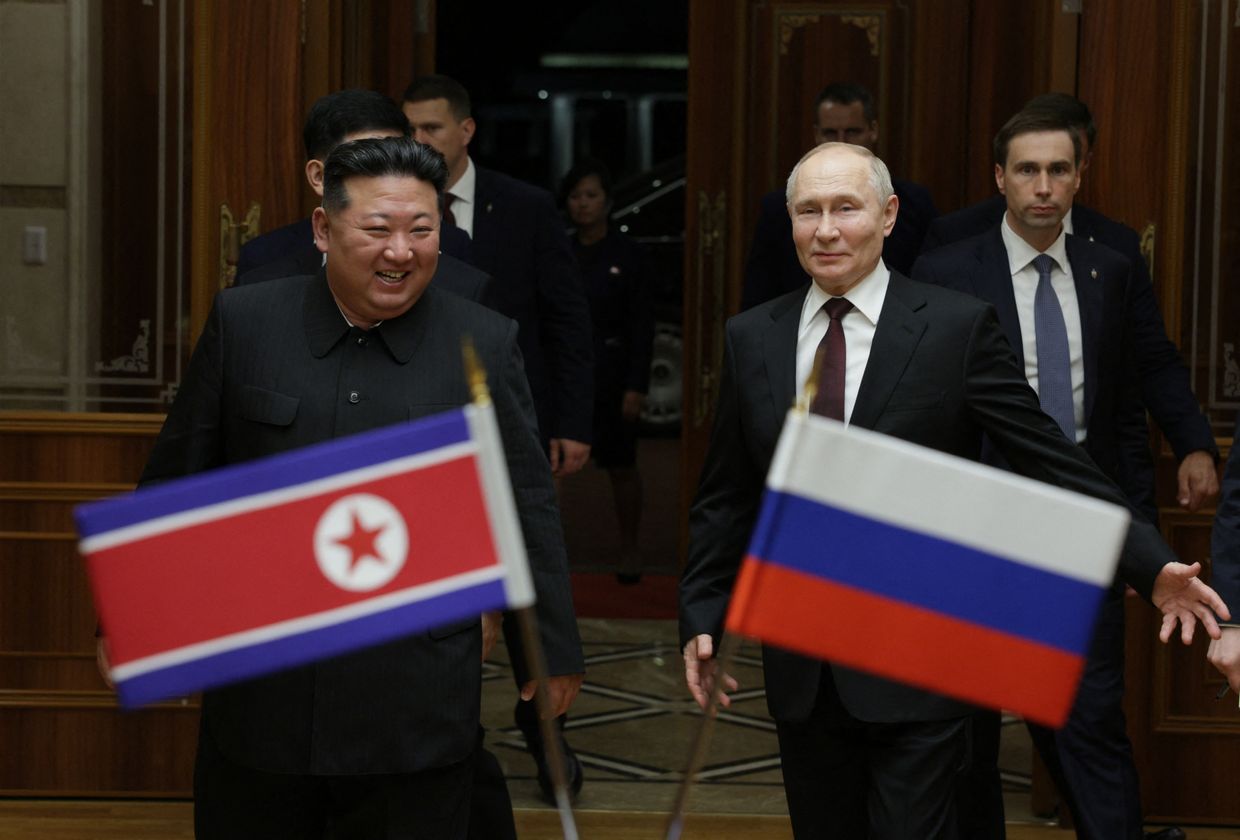
The Ukrainian president emphasized that Russia is not acting alone, but as part of a broader network of state and non-state actors, including North Korea, Iran, and Chinese companies, which support its war effort against Ukraine and pose a long-term threat to Europe.
"The source of this war and the long-term threat to Europe is Russia," Zelensky said. "But in reality, we are not just facing Russia alone. We are facing a network of state and non-state actors."
Zelensky also called on NATO members to increase defense spending to 5% of GDP and to dedicate at least 0.25% of GDP to support Ukraine's military needs directly. He thanked countries such as Germany, Norway, Sweden, and the Netherlands for their elevated commitments, but urged others to follow suit.
Zelensky warned that Russia is planning "new military operations on NATO territory" and that the war in Ukraine must be stopped now to prevent broader European conflict.
"There are no signs that Putin wants to stop this war," Zelensky said. "So long as he kills, he lives. And our intelligence confirms this."
He also appealed for a crackdown on the supply chains that allow Russia to sustain its weapons manufacturing, referring to Western-origin components found in Russian missiles, drones, and armored vehicles.
"It's not just China, also Taiwan. Some of these parts come from European countries and from the United States," Zelensky said. "Every single tool delivered to Russia's defense sector helps prolong the war and is a crime against peace."
Zelensky's speech comes as NATO leaders gather in The Hague for a high-level summit on June 24-25. NATO leaders are expected to discuss raising the alliance's defensespending target to 5% of the GDP, a proposal the U.S. has championed but from which it considers itself exempt.
Editor's note: This is a developing story and is being updated.
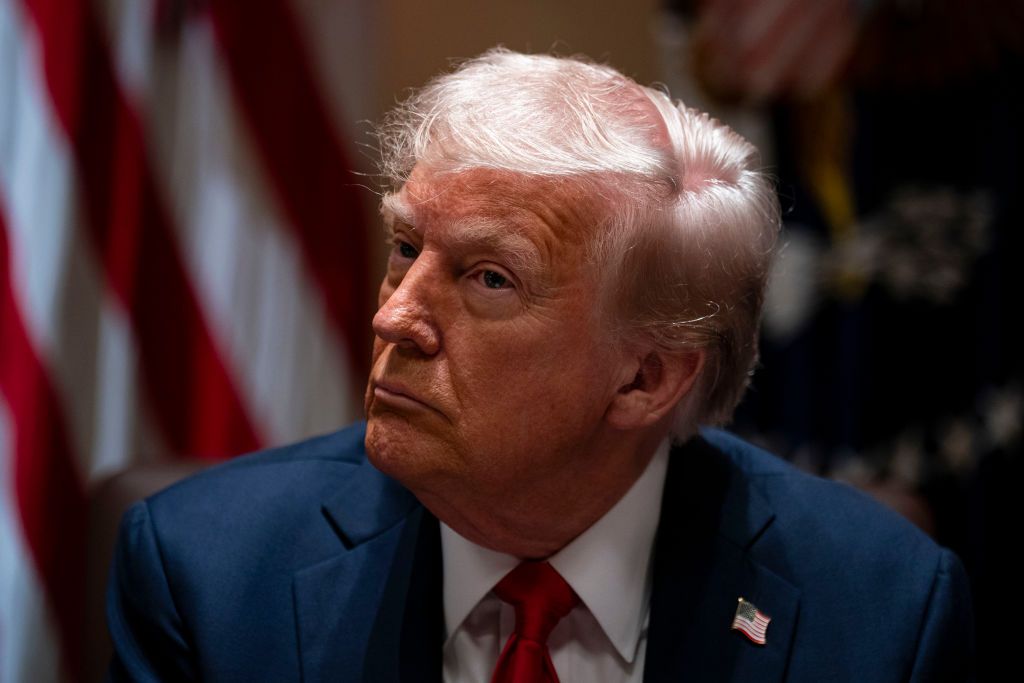
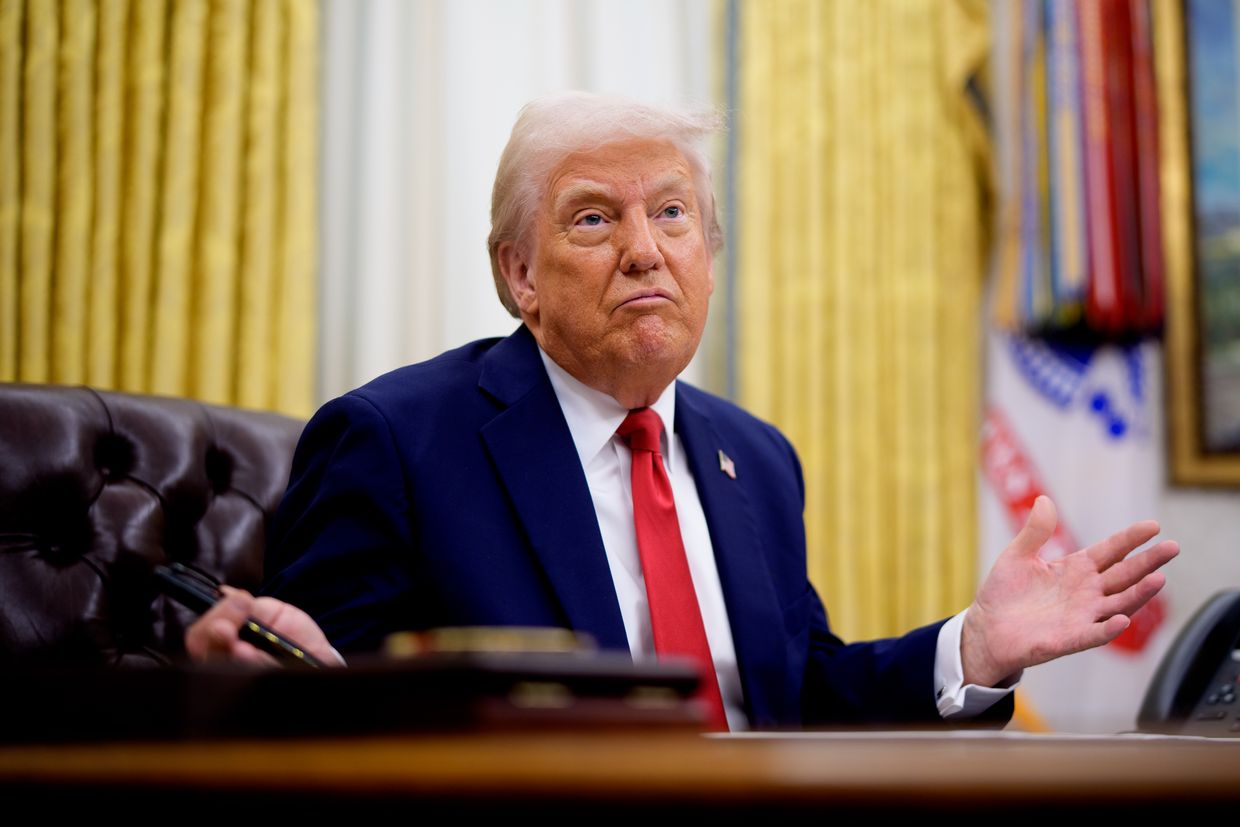
Israel launched airstrikes on Iranian territory on June 24, defying U.S. President Donald Trump's call for calm just few hours after he announced a ceasefire between the two countries, according to the Times of Israel.
The attack comes less than an hour after Trump told reporters that "Israel needs to calm down" as he criticized both countries for undermining the ceasefire he says he brokered.
"We basically have two countries that have been fighting so long and so hard that they don't know what the f*ck they're doing," Trump said on June 24.
Hours after Trump said the ceasefire came into effect, Israel accused Tehran of launching missiles toward its territory — an allegation Iran denied.
Following Iran's alleged missile strike, Trump and Israeli Prime Minister Benjamin Netanyahu reportedly spoke on the phone and agreed that Israel would carry out a limited response. The air force strike targeted a single "symbolic" radar installation.
Ahead of Israel's strike, Trump wrote on Truth Social that all of the Israeli planes "turn around and head home, while doing a friendly 'Plane Wave" to Iran."
According to the Times of Israel, Israeli officials said Trump was still sending messages promising that Israel would not attack Iran "after he knew we would attack," a senior official told the Kan public broadcaster.
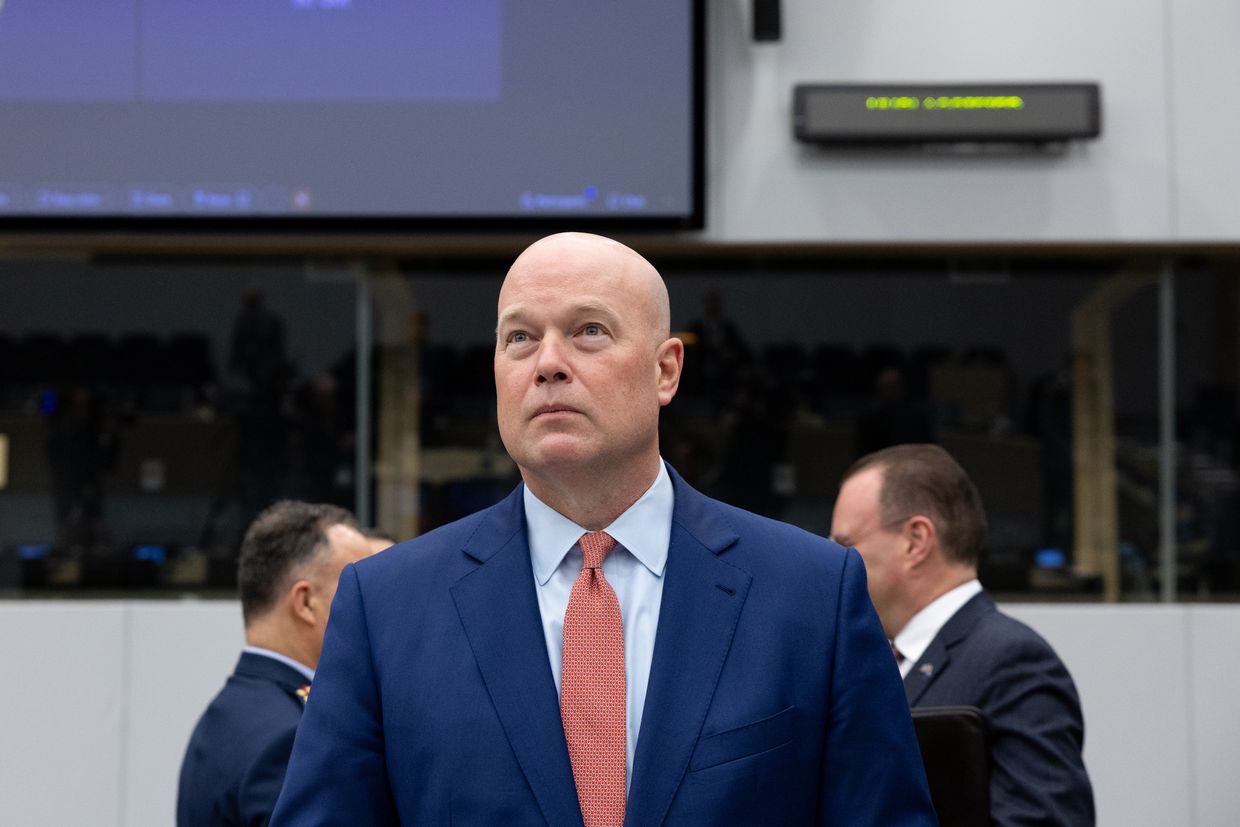
U.S. airstrikes on Iranian nuclear facilities demonstrated how precision military action can achieve rapid peace, U.S. Ambassador to NATO Matthew Whitaker said on June 24, speaking at the NATO Public Forum held alongside the alliance summit in The Hague.
"(The U.S. attack on Iran's nuclear facilities) shows how you get that peace through that strength, and that strength is amplified and enhanced by this alliance (NATO)," Whitaker said, referring to the June 21 American strikes on Iran's Fordow, Natanz and Esfahan nuclear sites, which U.S. President Donald Trump called a "spectacular success."
Whitaker emphasized that the U.S. remains a reliable ally and a cornerstone of NATO's deterrence. "The U.S. isn't going anywhere," he said. "The U.S. has certain capabilities that you want an alliance to have."
He added that recent U.S. military operations underscore the importance of defense investments by all member states. "If all of (NATO) countries elevate investments in their defense, I think we will have peace for generations,” Whitaker said.
The U.S. strikes on Iran came amid escalating tensions between Israel and Tehran. Trump said the strikes were intended to push Iran toward negotiations, warning that the alternative would be "tragedy for Iran far greater than we have witnessed."
Trump claimed that a ceasefire between Iran and Israel was achieved on June 24. Just hours later, Israel accused Tehran of launching missiles toward its territory — an allegation Iran denied.
Whitaker said the White House hopes the U.S. will also bring to an end Russia's war in Ukraine. He added that there is "no purely military solution" to the war in Ukraine.
Unlike past U.S. administrations, Trump has not introduced new sanctions against Russia despite increasing Russian missile and drone attacks on civilians.
On June 24, the first day of the NATO summit, Russia launched a ballistic missile strike on the Ukrainian city of Dnipro, killing at least three people and injuring more than 20, including two children, according to regional officials.
Editor's note: The story was updated after the White House confirmed the meeting between Ukraine's President Volodymyr Zelensky and his American counterpart Donald Trump.
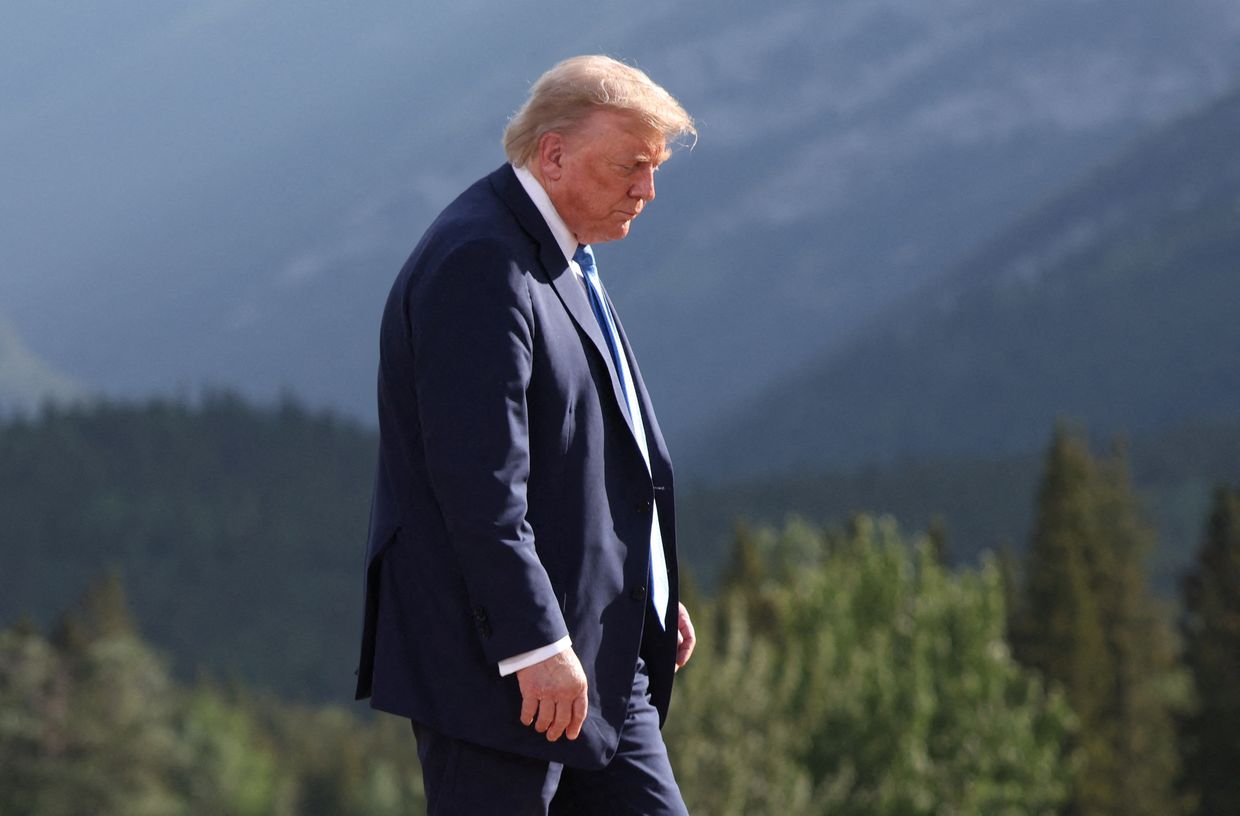
U.S. President Donald Trump will meet his Ukrainian counterpart Volodymyr Zelensky during a NATO summit in The Hague, the White House confirmed on June 24.
The last time Zelensky and Trump met was in April on the sidelines of Pope Francis' funeral amid concerns that Washington would withdraw from mediating peace talks between Kyiv and Moscow.
The White House did not provide any further details about the meeting between the two leaders.
The talks between Zelensky and Trump were scheduled for the "early afternoon" on June 25, the source told AFP, adding that "the teams are finalizing the details" of the meeting.
Trump and Zelensky are expected to discuss Ukraine's "purchase of a defense package, a large part of which consists of air defense systems," according to the source.
The discussion will also focus on "sanctions against Russia, and a price cap on oil," the source added.
Earlier, Trump said that he "would probably meet" Zelensky in The Hague after the two presidents did not manage to talk during the G7 summit in Canada earlier in June, AFP reported on June 24.
When asked what he would say to Zelensky, Trump replied: "I'll say: 'How are you?' He's (Zelensky) in a tough spot, he shouldn't have been there at all".
Zelensky also said in an interview with Sky News that he planned to meet Trump in The Hague. Asked whether the meeting would be a formal discussion or an informal encounter, Zelensky said it was a matter of scheduling: "They are talking about timing. It's timing."
Zelensky's participation in the summit was confirmed by the European Council on June 20, following reports that he was reconsidering the visit due to uncertainties surrounding Trump's participation.
Upon arrival in The Hague on June 24, Andriy Yermak, head of Ukraine's presidential office, said he held a "substantive" discussion with U.S. Secretary of State Marco Rubio about the upcoming Zelensky-Trump meeting. Yermak said the two discussed the structure, agenda, and key topics for the meeting.
Zelensky is also scheduled to meet European Commission President Ursula von der Leyen and NATO Secretary-General Mark Rutte during the summit.
In the interview, Zelensky also addressed concerns about Trump's perceived closeness to Russian President Vladimir Putin.
"It is a complicated question because I truly do not know what relationship Trump has with Putin," Zelensky said. "I think what I know, you know, and the media knows. There are various signals about that."
He added that he believes Trump understands Ukraine is a U.S. ally and that "the real existential enemy of America is Russia."
"They will never be friends. They may be short-term partners, but they will never be friends," Zelensky said.
Zelensky expressed hope that Trump's approach to Russia is tactical, intended to pressure Putin into peace negotiations. "I would like this approach to be only a way to force Putin to the negotiating table and to end the war. And let us hope so," he said.
Zelensky was scheduled to meet Trump at the Group of Seven (G7) summit, held June 15-17. However, the U.S. president left the multilateral event early due to the renewed conflict between Israel and Iran.
Editor's note: This is a developing story and is being updated.
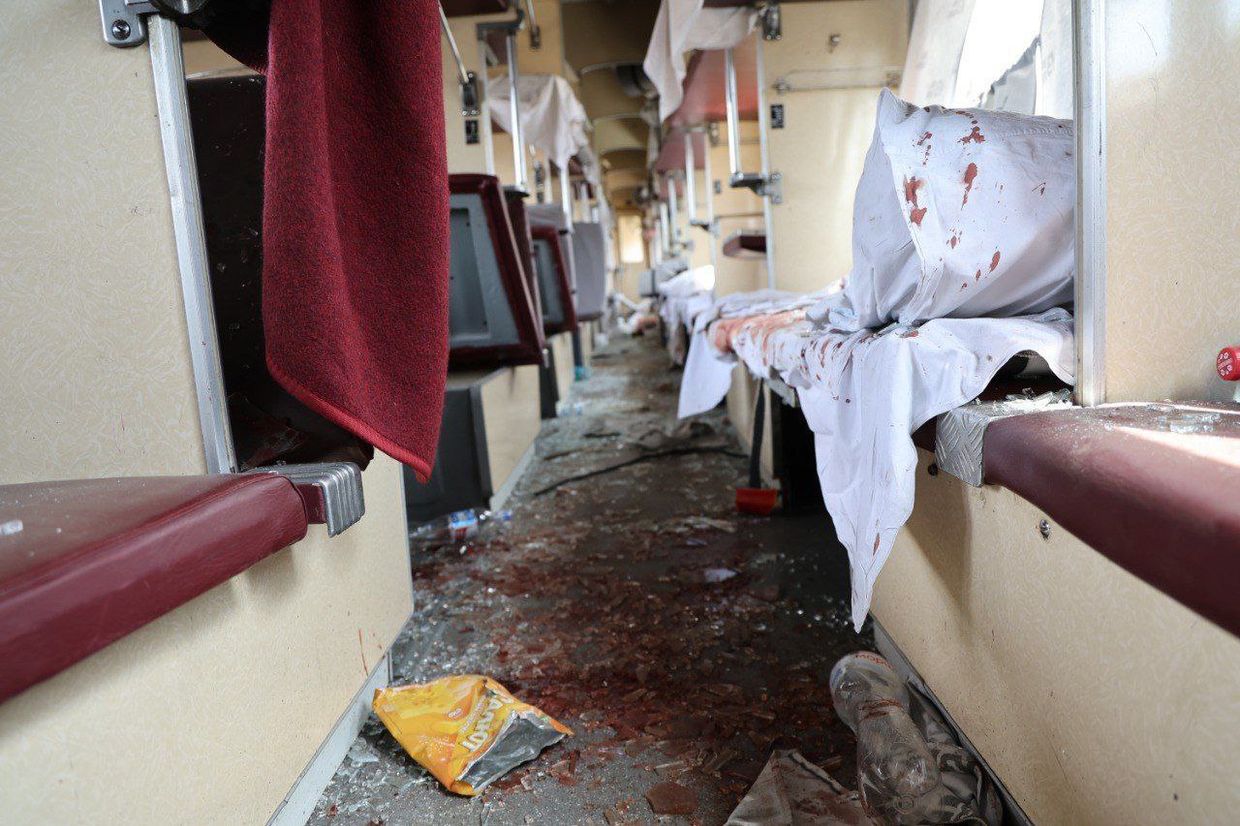
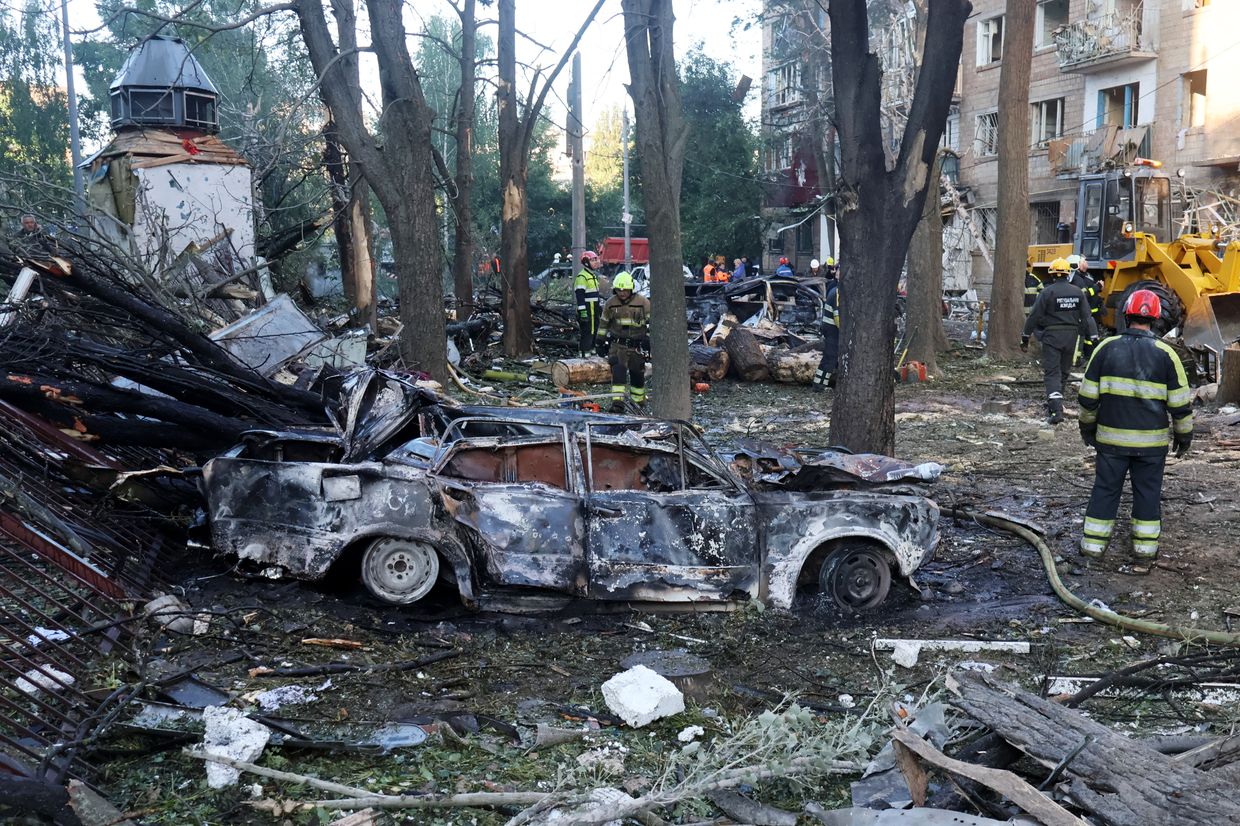
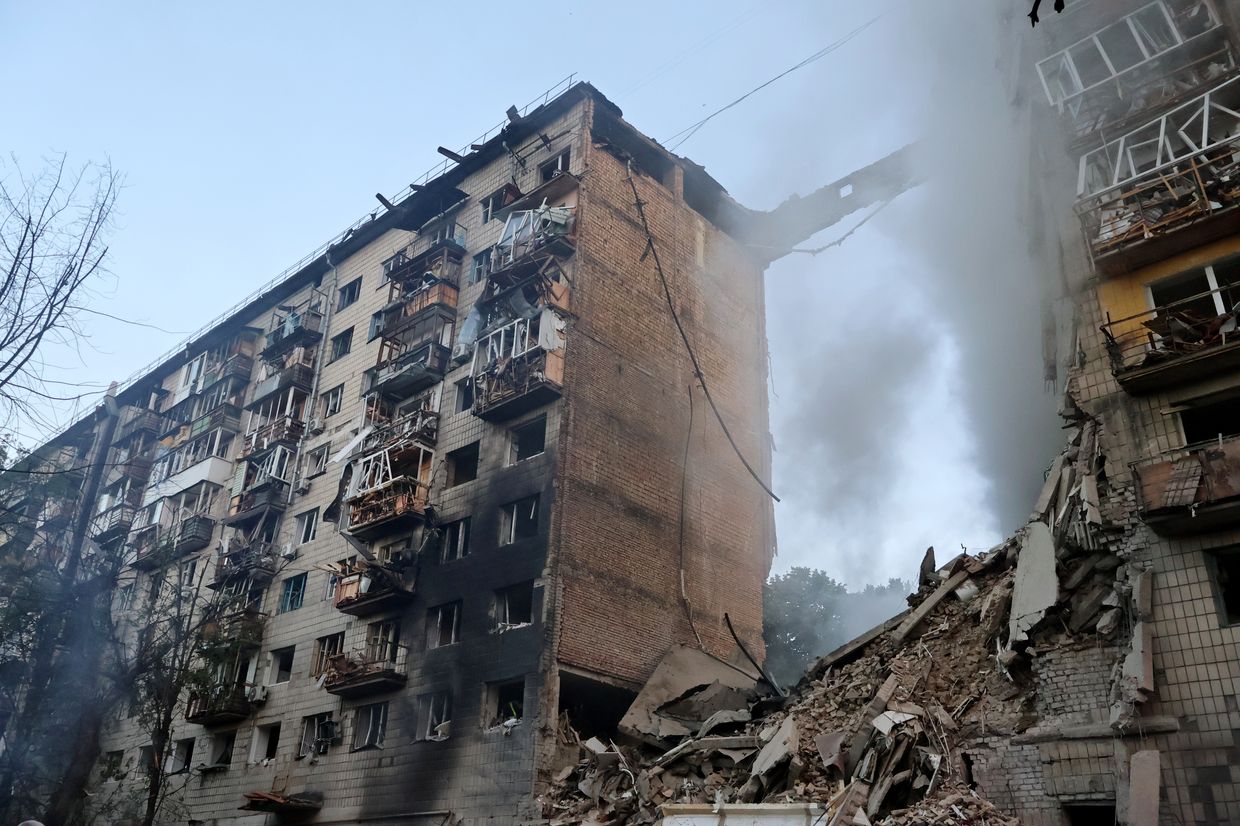
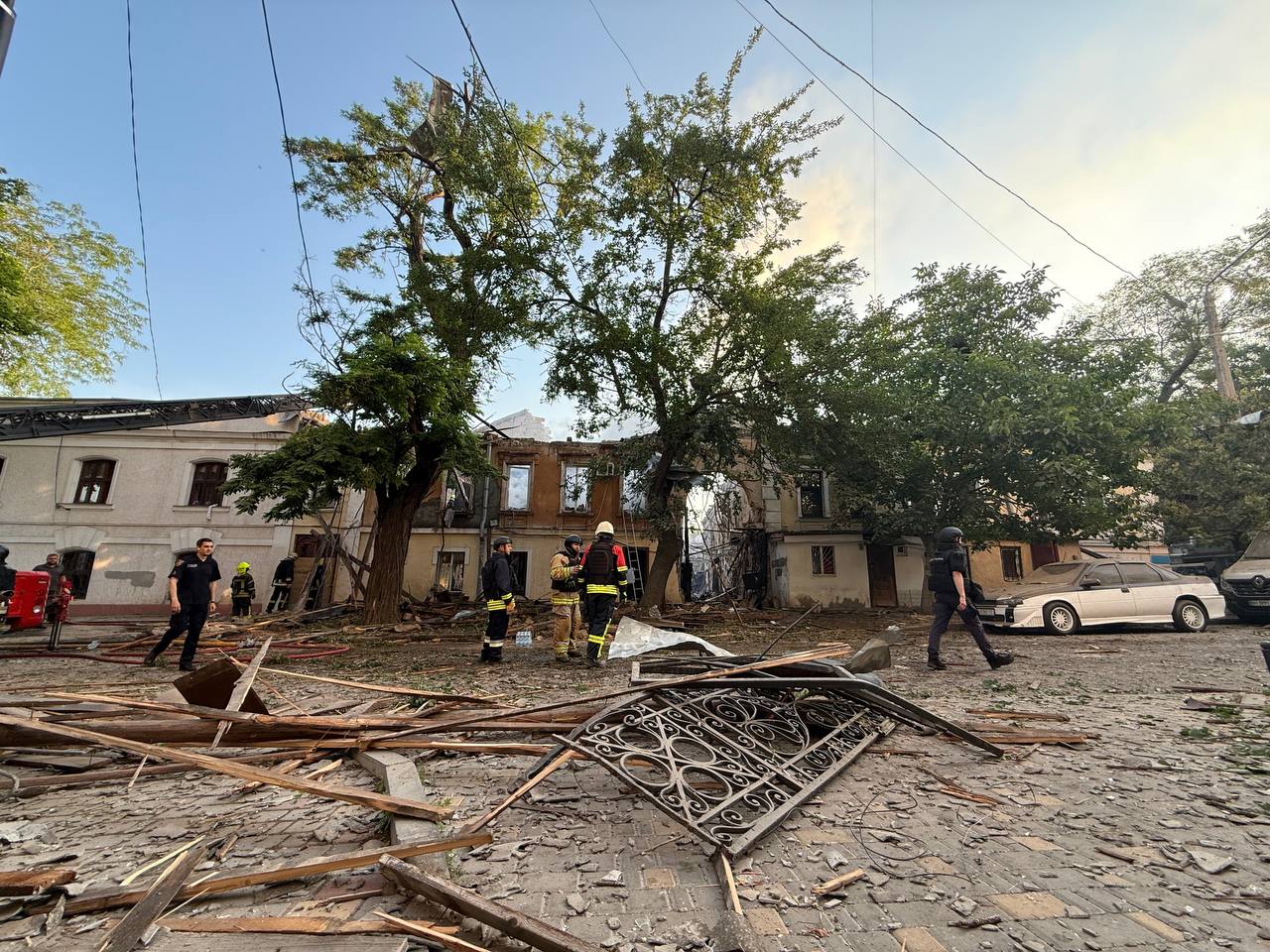
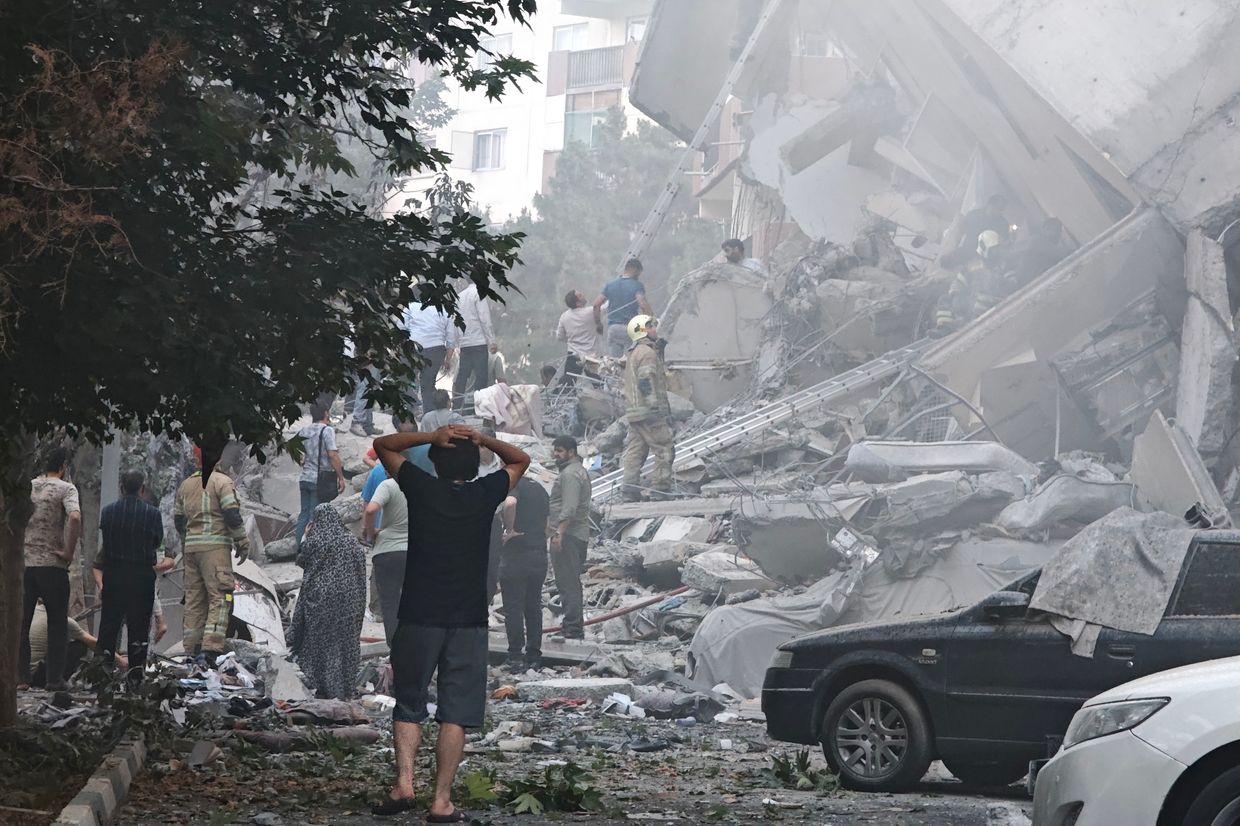
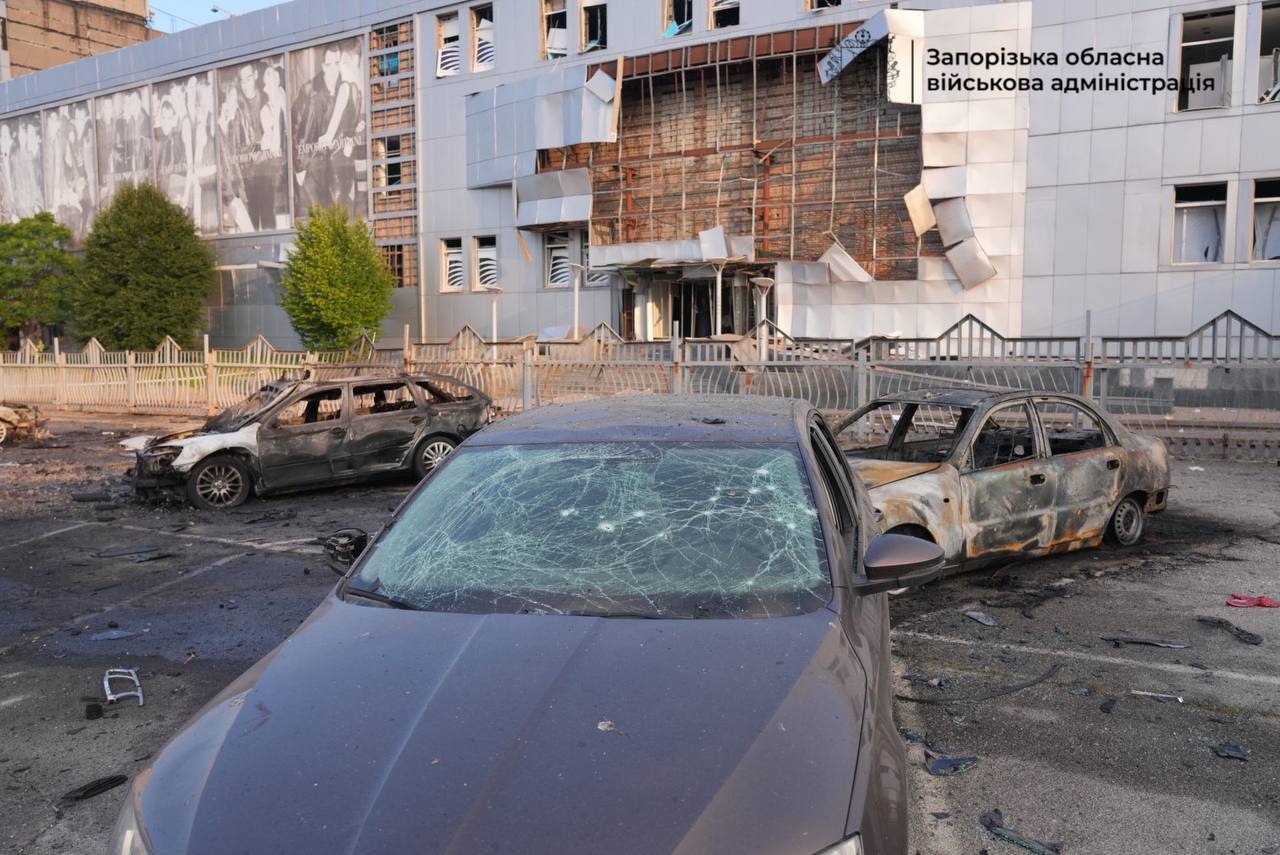
Russia launched a deadly missile attack on the Ukrainian city of Dnipro on June 24, striking civilian infrastructure and a passenger train, killing at least 17 people and injuring scores of others, local officials reported.
Dnipropetrovsk Oblast Governor Serhii Lysak said the morning strike ignited a large fire and also damaged a dormitory, a gymnasium, and an administrative building in the city.
The Russian military also struck the nearby town of Samarske, Lysak said. Casualties were reported in both locations.
"Unfortunately, there are dead and wounded everywhere," he said.
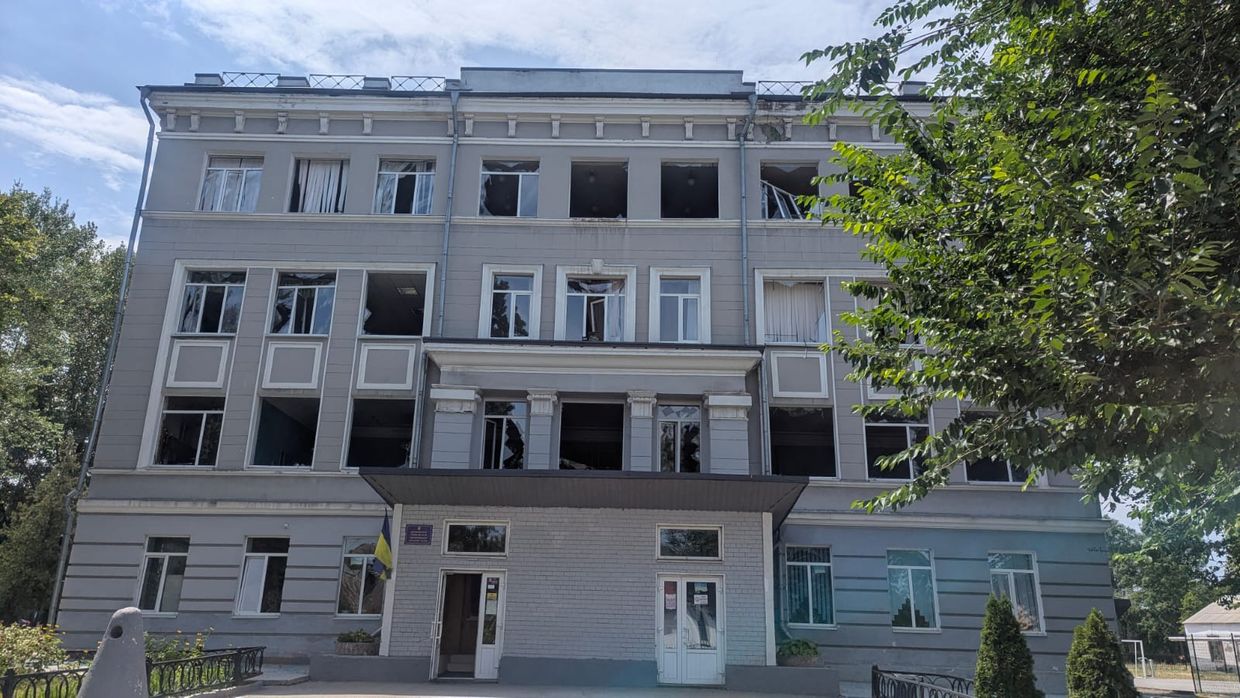
An school in Dnipro that was damaged in Russia's ballistic missile attack on June 24, 2025. (Dnipro.media)
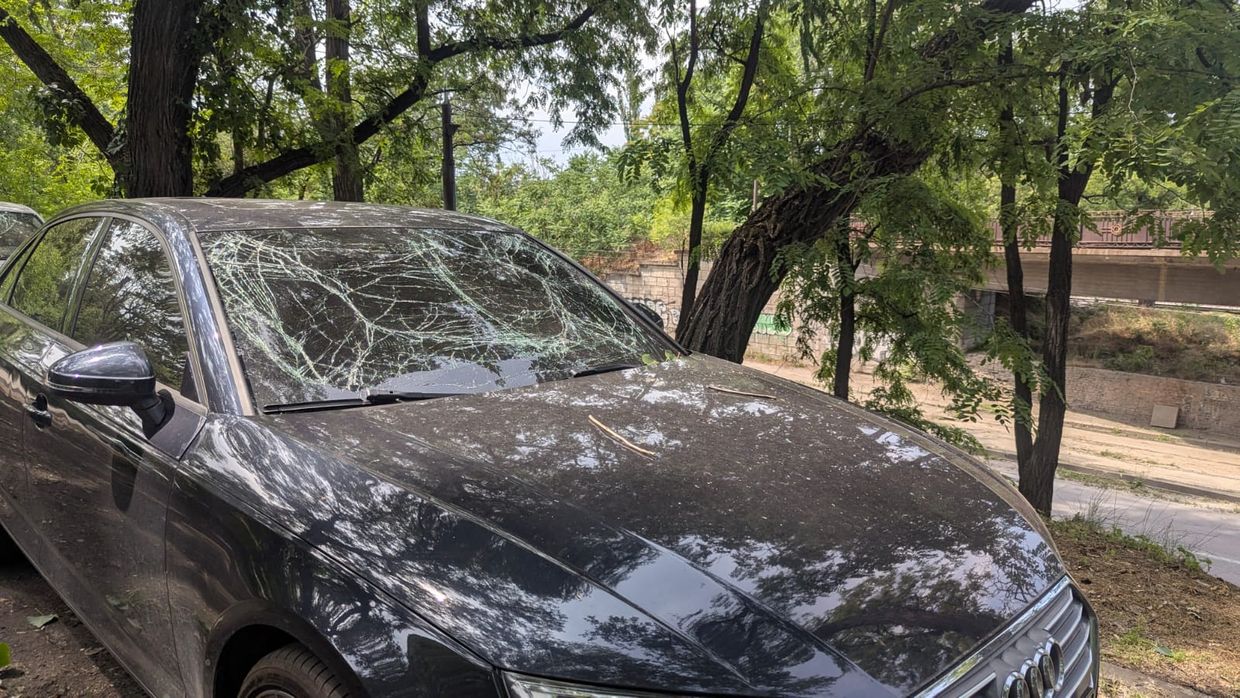
Multiple cars got damaged in Dnipro during Russia's ballistic missile attack on June 24, 2025. (Dnipro.media)
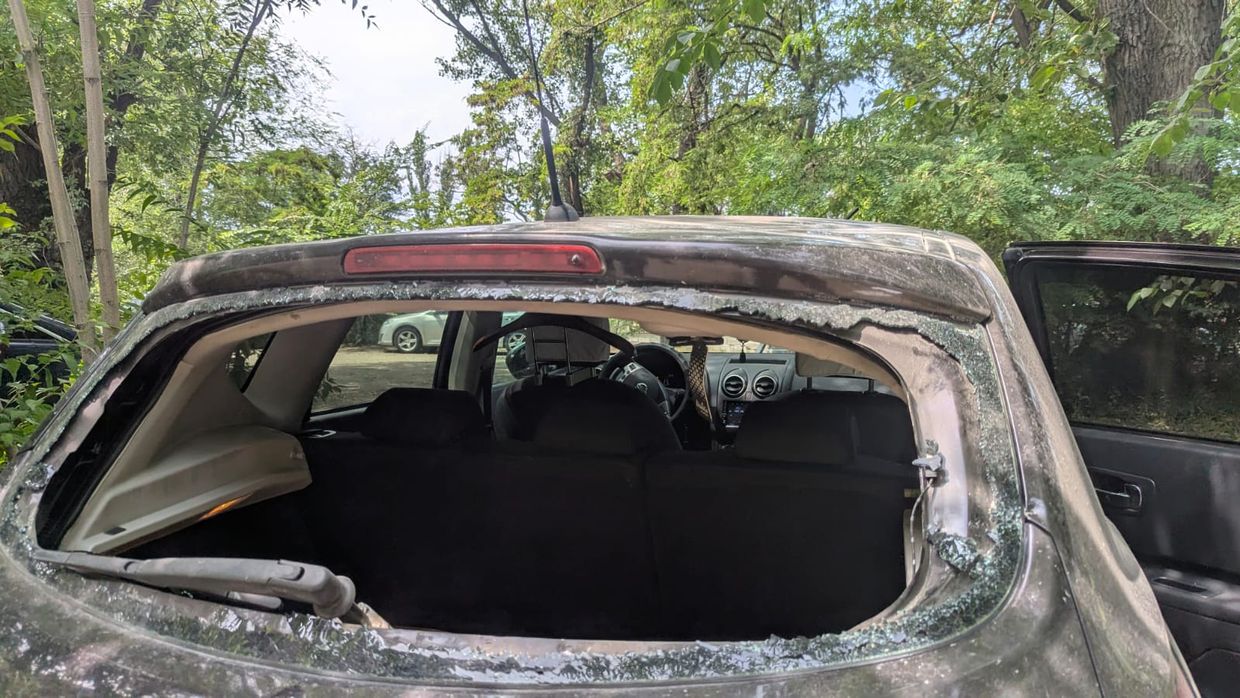
Multiple cars got damaged in Dnipro during Russia's ballistic missile attack on June 24, 2025. (Dnipro.media)
In Samarske, two people were killed, and 14 injured. Eight were hospitalized, with half of them in critical condition.
"As of now, more than 160 people are known to have been injured. Unfortunately, 11 people have died," President Volodymyr Zelensky said in a post on social media, adding: "The rubble is still being cleared, so the death toll may, unfortunately, increase."
Around 8:30 p.m. local time, the death toll rose to 17, while the number of wounded increased to 279, including 27 children, Lysak reported.
Almost a hundred of the victims remain in hospital, according to Lysak.
Ukraine's national railway company, Ukrzaliznytsia, said that a train traveling from Odesa to Zaporizhzhia was damaged in the attack.
"Ukrzaliznytsia is preparing a replacement train in Dnipro to evacuate passengers to Zaporizhzhia," the company said in a statement.
A damaged passenger train at a station in Dnipro Oblast, Ukraine after a Russian missile strike on June 25, 2025. (Ukrzaliznytsia / Telegram)
In an update, Ukrzaliznytsia said no passengers or railway workers were killed in the attack, though several people sustained injuries and are receiving medical care.
The attack came as NATO leaders convened for a high-level summit in The Hague. NATO Secretary General Mark Rutte warned on June 23 that Russia remains the alliance's most immediate and long-term threat.
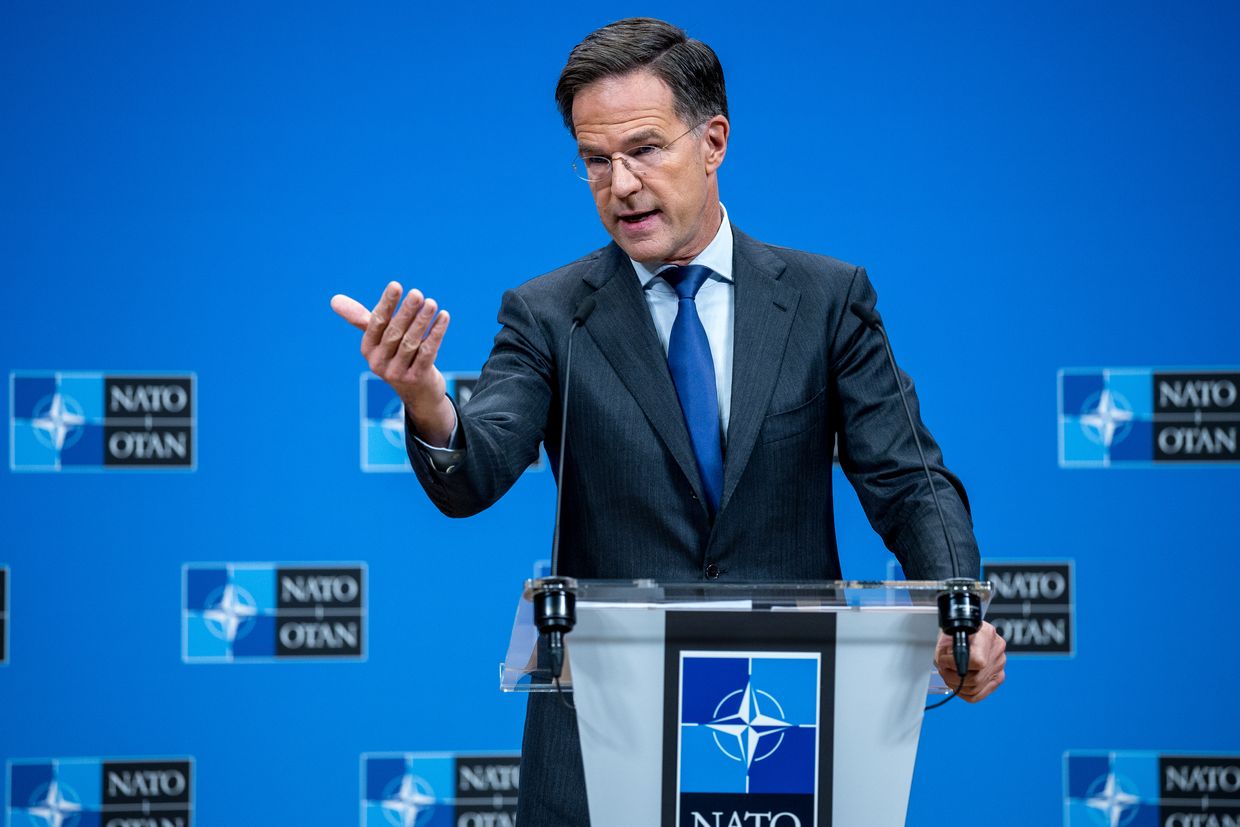
Speaking on the sidelines of the NATO summit in The Hague on June 24, NATO Secretary General Mark Rutte called on alliance members to be realistic about the threats posed by Russia and China, and urging them to stay the course in supporting Ukraine.
"Let's not be naive," Rutte said. "You see what China, North Korea and Iran are doing in supporting the war effort of Russia ... So this is all interconnected."
Rutte emphasized that while NATO faces multiple global challenges, from the war in Ukraine to tensions in the Middle East and Russian influence in Africa, the alliance must be able to focus on more than one crisis at a time.
"If you can only deal with one issue at a time, you should not be in politics or defense," he said.
Rutte said NATO's role is to ensure Ukraine has the military means to stay in the fight until "serious" peace negotiations begin.
"We have to make sure that Ukraine is in the strongest possible position when real talks start," he said. "I'm not talking about these talks led by some Russian historian (Vladimir Medinsky) who wants to go back 1,000 years... That's not serious business.”
The talks he referenced, led by Russian presidential aide Vladimir Medinsky and held in Istanbul in May-June, have yielded prisoner exchange agreements but no progress toward a ceasefire or settlement. Ukraine has offered a comprehensive roadmap, but Rutte said Russia had not come to the table with serious intent.
Instead, Russia continues to reject U.S. proposed comprehensive ceasefire, and insists on its longstanding maximalist demands.
"When the time comes for serious talks, we must ensure any long-term ceasefire or peace deal is durable — so that (Russian President) Vladimir Putin will never again try to seize even one square kilometer of Ukrainian territory," Rutte said.
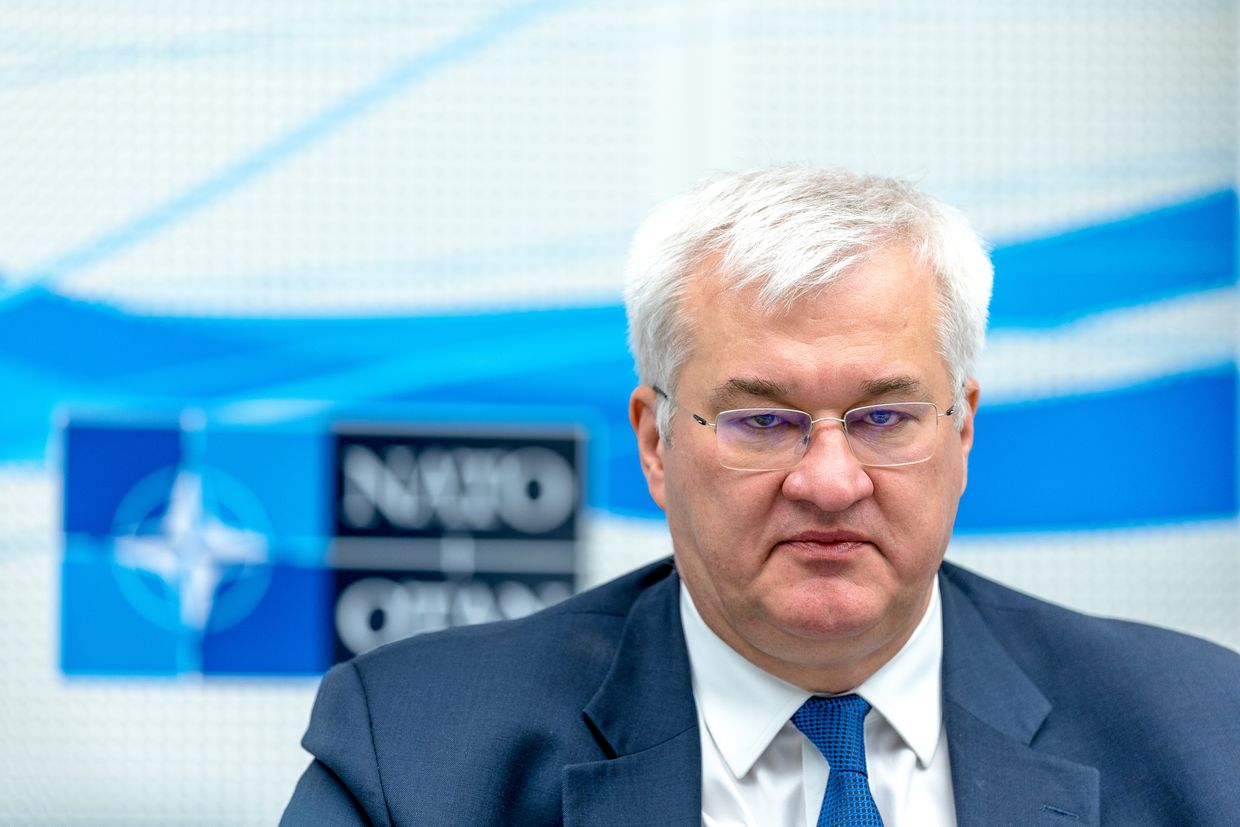
Rutte also stressed that Ukraine is evolving from a security consumer into a security producer. He noted that the country's "largely untapped" defense industrial base, with a potential value of up to $35 billion, is increasingly attracting European investment.
"Ukraine has one of the largest defense industries in Europe," Rutte said, adding that many countries, including Norway, Denmark, and Lithuania, are now investing in it. "That helps Ukraine, and it helps us.”
Responding to concerns over Europe's reliance on the United States, Rutte said NATO must stop "worrying so much" about U.S. commitment and instead ramp up its own military capabilities.
"There is total commitment by the U.S. President and U.S. senior leadership," Rutte said, dismissing doubts about Washington's future role in NATO. "However, it comes with an expectation that we will finally deal with this huge bubbling issue, which is that we are not spending enough as Europeans and Canadians."
Rutte strongly backed the alliance's new 5% GDP defense investment benchmark, saying increased spending must translate into ammunition stockpiles, troop recruitment, and industrial output. "The Russians are producing in three months what NATO produces in a year," he said.
Earlier, U.S. President Donald Trump accused NATO members of underfunding their militaries, pushing for raising defense spending benchmark to 5% of GDP.
In 2024, only 23 alliance members met the 2% target, according to NATO estimates. Poland was ahead of all members with 4.12% of GDP allocated to defense, followed by Estonia (3.43%) and the U.S. (3.38%).
Editor's note: This story was updated to include comments made by U.S. President Donald Trump.
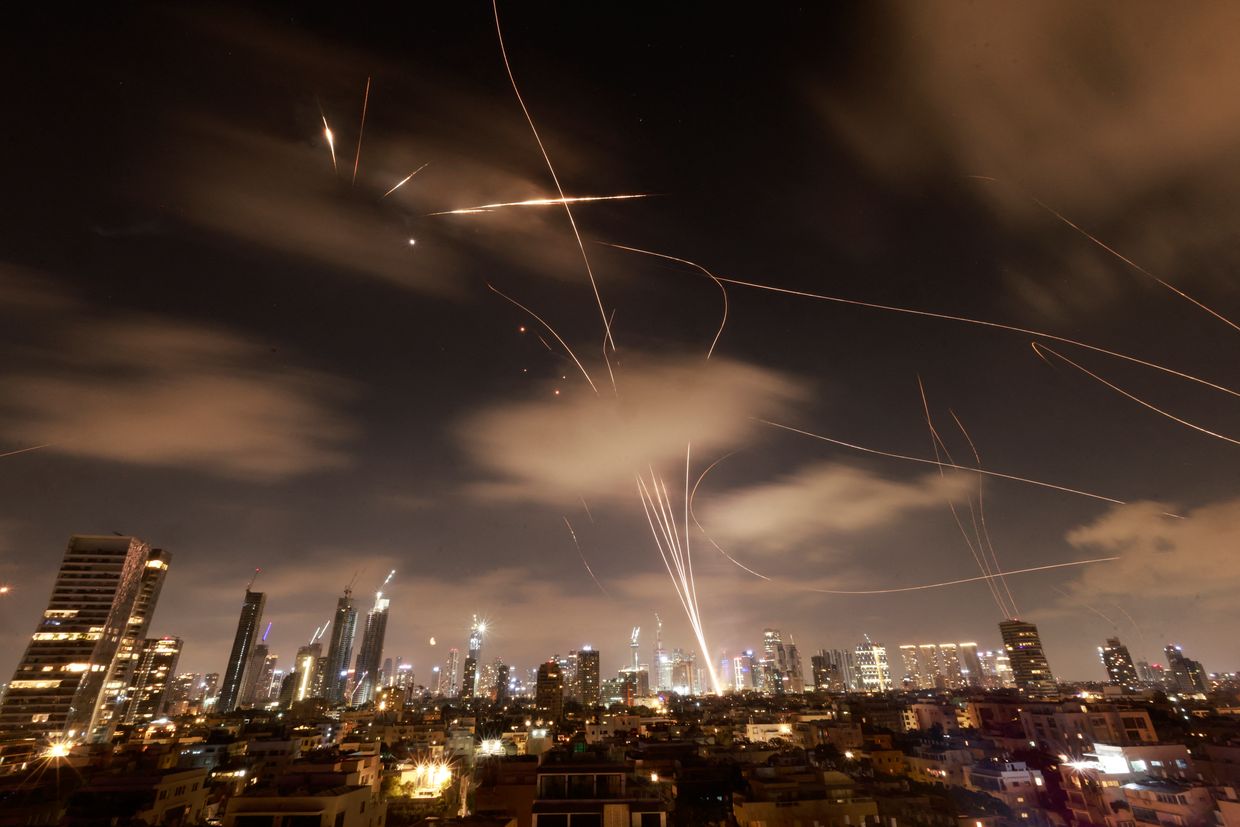
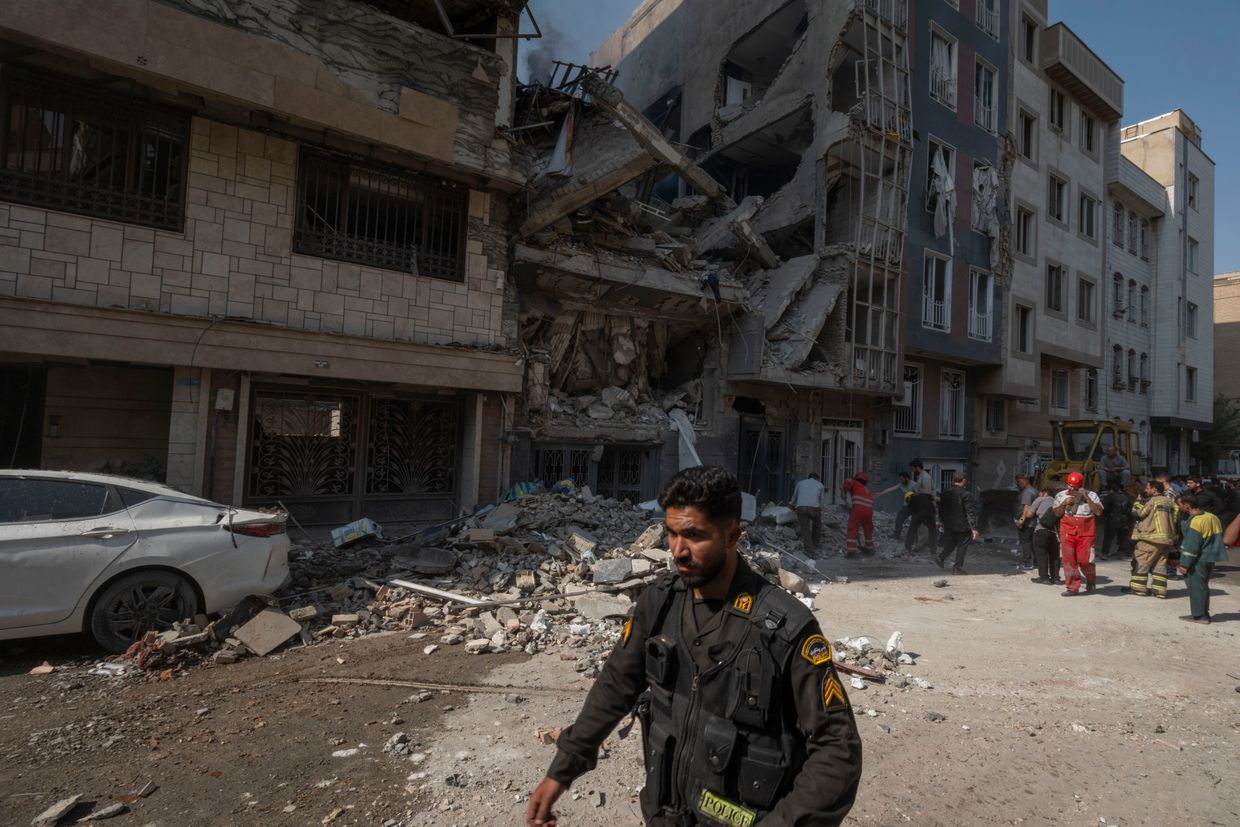
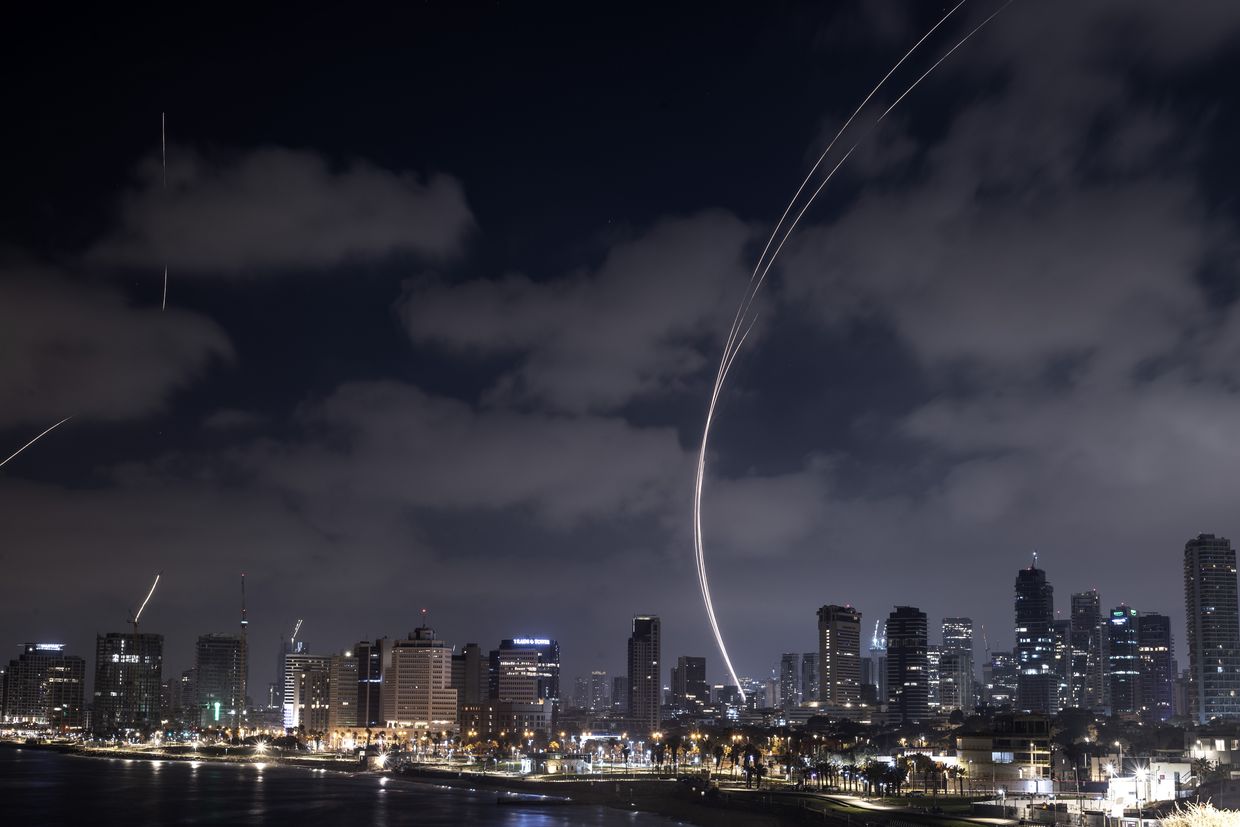
Iran launched missiles toward Israel on June 24, just hours after U.S. President Donald Trump announced a ceasefire between the two countries had come into effect, the Israeli military said. Iran denied the accusation.
"A short while ago, sirens sounded in northern Israel following the identification of missiles launched from Iran toward the State of Israel," the Israel Defense Forces (IDF) said in a statement.
"At this time, the IAF (Israeli Air Force) is operating to intercept and strike where necessary to eliminate the threat," the statement read.
Israeli Defense Minister Israel Katz instructed the army to respond forcefully to Iran's ceasefire violation, Reuters reported. Katz said that Israel will continue to strike Iran after the "utter violation" of the ceasefire.
Shortly after Israel's statement, Iranian state media reported that Tehran denied firing missiles at Israel after the ceasefire began.
A senior security official in Iran told CNN that “no missiles have been fired at the enemy" after the ceasefire.
The reports come after days of escalating hostilities in the Middle East. Early on June 24, Trump declared in a Truth Social post that a ceasefire had begun, writing, "The ceasefire is now in effect. Please do not violate it!"
Israeli Prime Minister Benjamin Netanyahu said on June 24 Israel had agreed to Trump's ceasefire proposal, claiming that Israel had "achieved its goal of removing the Iranian nuclear and ballistic missile threat," according to Reuters.
Trump said later on June 24 that Israel needs to "calm down" after what he described as violations of the ceasefire by both sides.
"I gotta get Israel to calm down now," Trump said as he left the White House. "Israel, as soon as we made the deal, they came out and they dropped a load of bombs, the likes of which I've never seen before, the biggest load that we've seen."
He added: "We basically have two countries that have been fighting so long and so hard that they don't know what the f*ck they're doing."
Trump also wrote on Truth Social that "Israel is not going to attack Iran."
"Nobody is going to be hurt. The Ceasefire in in the effect," U.S. president wrote,
Previously, the U.S. launched airstrikes on Iran's nuclear facilities in Fordow, Natanz, and Esfahan on June 21. In response, Iran fired missiles at U.S. military bases in the region, including at least 10 targeting Al Udeid Air Base in Qatar and one aimed at a base in Iraq.
The Pentagon confirmed that Iran launched several short- and medium-range missiles at Al Udeid but reported no U.S. casualties. Trump dismissed the attacks as "limited and largely ineffective."
Iran is a key arms supplier to Russia, providing Shahed drones used in attacks on Ukrainian cities and pledging to send ballistic missiles. Israel, while home to a significant Russian-speaking population, has not joined Western sanctions against Moscow.
NATO Secretary General Mark Rutte said during a press briefing on June 23 that Russia remains the main threat to the alliance, citing Moscow's cooperation with China, North Korea, Iran, and Belarus.
"Moscow continues to wage war against Ukraine, with support of North Korea, Iran, and China, as well as Belarus," Rutte said.
The Secretary General told reporters that the alliance leaders are set to adopt a historic defense investment plan at the summit in The Hague on June 24-25, including a new benchmark of 5% of GDP for defense spending and a strengthened commitment to Ukraine.
"All leaders will take bold decisions to strengthen our collective defense, making NATO a stronger, fairer, and more lethal alliance," Rutte said at a press conference before the summit. “This is a leap that is ambitious, historic, and fundamental to securing our future.”
Rutte said the plan includes major increases in air defense systems, tanks, armored vehicles, and artillery, a response to the evolving threat landscape, particularly Russia's war against Ukraine.
"We see Russia's deadly terror from the skies over Ukraine every day. We must be able to defend ourselves from such attacks," Rutte added.
The Secretary General warned that NATO must act urgently to prepare for future threats, citing assessments that Russia could rebuild sufficient military capacity to challenge NATO within five years. "Our security environment has changed, and not for the better. The threats we face today demand that we do far more," he said.
Rutte emphasized that the new defense investment plan will be reviewed in 2029, with annual reporting to ensure credibility.
He stressed that NATO remains committed to supporting Kyiv and reaffirmed the alliance's long-standing position that "Ukraine's path to NATO membership is irreversible." According to Rutte, the allies have pledged over 35 billion euros ($40,6 billions) in military aid to Ukraine for the first half of 2025, up from 20 billion announced earlier this year.
President Volodymyr Zelensky is attending the summit and will hold multiple meetings with NATO leaders. However, NATO's Ukraine Council will not convene, a decision seen as part of efforts to keep the summit's focus narrow, a move aimed at appeasing U.S. President Donald Trump, according to Politico.
The summit, shortened to 24 hours, has only one major session on defense spending. European officials cited by Politicosaid the format was designed to deliver a clear win to Trump, who is expected to tout the 5% spending pledge as a personal success. The U.S. is reportedly exempting itself from the new benchmark.
While recent summits have centered on Russia's invasion of Ukraine, this year's joint communique may omit references to the war.
During the briefing, Rutte said that the final communique, agreed by NATO ambassadors, has "important language" about Ukraine, including defense spending up until 2035.
"This is a clear commitment by allies," Rutte said.
U.S. President Donald Trump announced on June 24 that a ceasefire between Iran and Israel had come into effect, following the U.S. strikes on Iranian nuclear facilities and retaliatory attack on U.S. military base in Qatar.
"The ceasefire is now in effect. Please do not violate it!" Trump said in a post on Truth Social on June 24.
The announcement follows days of intensifying conflict after the U.S. conducted airstrikes on Iranian nuclear facilities on June 21, targeting sites in Fordow, Natanz, and Esfahan.
In response, Iran launched multiple missiles at U.S. military bases in the region, including at least 10 toward the Al Udeid Air Base in Qatar and at least one toward a base in Iraq, Axios reported, citing an Israeli source.
The Pentagon confirmed that Iran fired several short- and medium-range missiles at Al Udeid, but said no American personnel were harmed. Trump downplayed the attack, calling it "limited and largely ineffective."
Israeli Prime Minister Benjamin Netanyahu said on June 24 that Israel has agreed to a U.S.-brokered ceasefire with Iran, thanking Trump for his support in defending Israel and "removing the Iranian nuclear threat," according to Reuters.
"Israel has achieved its goal of removing the Iranian nuclear and ballistic missile threat," Netanyahu said in a statement. "Israel thanks President Trump for his support and participation in removing the Iranian nuclear threat."
Iran is a key arms supplier to Russia, providing Shahed drones used in attacks on Ukrainian cities and pledging to send ballistic missiles. Israel, while home to a significant Russian-speaking population, has not joined Western sanctions against Moscow.
Tensions between Iran and Israel had already been rising after Iran launched missile strikes on Tel Aviv and other Israeli cities on June 13, killing multiple civilians, including five Ukrainian nationals. The attack came in retaliation for Israeli military action.
Trump, who has long styled himself as a dealmaker and peacemaker, has come under criticism for his failure to deliver on promises to reach a ceasefire between Russia and Ukraine. During his electoral campaign, he pledged to end the war between Russia and Ukraine within 24 hours of taking office. More than 100 days after Ukraine accepted a U.S.-backed proposal for a ceasefire, no progress has been made.
"It has been exactly 100 days since Ukraine unconditionally accepted the U.S. peace proposal to completely cease fire, put an end to the killing, and move forward with a genuine peace process," Ukrainian Foreign Minister Andrii Sybiha said on June 19. "Russia continues to choose war."
Ukraine backed the proposal during talks in Jeddah on March 11, agreeing to a 30-day unconditional ceasefire. Russia has rejected the offer, continuing its assault on Ukrainian cities and pushing for maximalist demands.
"It is time to act now and force Russia to peace," Sybiha said. "Peace through strength, increased sanctions, and enhanced capabilities for Ukraine."
President Volodymyr Zelensky on June 23 highlighted Russia's hypocrisy for describing U.S. strikes on Iran as "grossly violating international law" just hours before launching yet another deadly mass missile and drone strike on Ukraine.
"After the strikes on Iran's nuclear facilities, there was an uproar from Moscow," Zelensky said.
"The Russian leadership demonstratively condemned the 'missile and bomb' actions. Today, Moscow is silent — after its own army launched a cynical attack using Russian-Iranian 'Shaheds' and missiles on civilian infrastructure in Kyiv and other cities."
Moscow on June 22 condemned the recent U.S. strikes against Iranian nuclear facilities.
"The irresponsible decision to subject the territory of a sovereign state to missile and bomb strikes, no matter what arguments are used, is grossly violating international law, the U.N. Charter, and the resolutions of the U.N. Security Council," the Russian Foreign Ministry said in a statement.
Overnight on June 23 a devastating Russian missile and drone strike on Kyiv killed at least 7 people and injured dozens more, including children.
The attack was one of the largest air assaults on the capital this year, with 368 aerial weapons launched, including 159 Iranian-made Shahed drones and 16 missiles, according to Ukraine's Air Force.
After the strikes on Iran's nuclear program facilities, there was a lot of uproar from Moscow — the Russian leadership performatively condemned the “missile-and-bomb” actions. Today, Moscow is silent after the Russian army carried out a completely cynical strike using… pic.twitter.com/xq6TUsfWM2
— Volodymyr Zelenskyy / Володимир Зеленський (@ZelenskyyUa) June 23, 2025
Air defenses intercepted most, but not all. The attack hit six locations directly, causing destruction in 25 separate sites across Kyiv and the wider region.
Governor of Kyiv Oblast Tymur Tkachenko reported 6 people were killed, with 25 other injured in Kyiv alone, including four children.
In his remarks, Zelensky also warned of a growing alliance between Russia, Iran, and North Korea — a "coalition of killers," he said, and urged countries near these regimes to consider whether they can defend themselves if such a bloc continues to spread terror.
"Each country neighboring Russia, Iran, and North Korea should ask whether their own defenses are enough if this axis of evil preserves and remains unchecked," he said.
Zelensky, speaking ahead of meetings with British officials during his visit to the U.K., said he would push for stronger collective air defense and tougher sanctions on Russia.
Zelensky's comments came just a day after Ukraine's Foreign Ministry called for the dismantling of Iran's nuclear program following U.S. air strikes on Iranian nuclear sites.
"Iran is complicit in the crime of aggression against Ukraine," the ministry said in a June 22 statement. "The Iranian regime is providing military assistance to Russia, including the supply of UAVs and technologies that Russia consistently uses to kill people and destroy critical infrastructure."
The statement followed U.S. President Donald Trump's announcement of successful air strikes on three nuclear facilities in Iran, Fordow, Natanz, and Esfahan, conducted in coordination with Israel.
Moscow, which condemned the U.S. and Israeli strikes on Iran, has long cooperated with Tehran on nuclear and military matters. Russia supplied Iran with its first nuclear power plant and has relied on Iranian drones throughout its invasion of Ukraine.
Russian attacks have killed at least 13 civilians and injured 57 across multiple oblasts over the past day, Ukrainian officials reported on June 23.
According to the Ukrainian Air Force, Russia deployed 368 aerial weapons, including 352 attack drones, 11 Iskander-M/KN-23 ballistic missiles, and 5 Iskander-K cruise missiles, striking primarily Kyiv. Ukraine's air defenses destroyed 354 of them.
In Kyiv Oblast, Governor Mykola Kalashnyk said a person was killed in Bilotserkivka district, two were hospitalized, and two others received on-site medical aid. Attacks damaged houses in three districts: Boryspil, Bila Tserkva, where a medical facility in a hotel was destroyed, and Bucha, damaging several houses and vehicles.
In Kyiv city, Mayor Vitali Klitschko and Kalashnyk reported 6 killed and 25 injured, including a pregnant woman and a child rescued from a damaged 25-story building in the Shevchenkivskyi district.
In Kherson Oblast, Governor Oleksandr Prokudin said Russian drone, artillery, and air attacks hit numerous settlements, including Kherson city. Infrastructure damage included seven apartment buildings, 14 houses, a gas pipeline, a garage, and vehicles. One person was killed, and six were wounded. Early June 22, three more people were injured across the oblast.
In Donetsk Oblast, Governor Vadym Filashkin reported that a Russian attack killed two residents in Siversk and Myrne, with five more wounded. The numbers exclude casualties in occupied Mariupol and Volnovakha.
In Chernihiv Oblast, Russian missile and drone strikes killed at least three people and injured 11 others, including four teenagers, Governor Viacheslav Chaus said. The attacks damaged houses, businesses, and infrastructure across multiple districts, including Chernihiv, Nizhyn, Pryluky, Korukivka, and Novhorod-Siverskyi.
A Russian soldier deployed in Ukraine may have been involved in an act of cannibalism, audio intercepted by Ukraine's military intelligence agency (HUR) and released on June 20 suggests.
In the recording posted by HUR on Telegram, a Russian commander is heard telling a subordinate that one soldier, referred to by the call sign "Brelok," killed and consumed his fellow service member "Foma" over a two-week period.
Ukraine's military intelligence described the alleged incident as further evidence of what it called the "moral and psychological collapse" of Russian forces.
"Nobody ran away. 'Brelok' took him out and then ate him for two f*cking weeks," a speaker identified by HUR as a commander of a reconnaissance unit from Russia's 68th Motorized Rifle Division can be heard saying in the intercept.
According to HUR, both soldiers served in the 52nd Separate Reconnaissance Battalion, which is reportedly operating near the villages of Zapadne and Lyman Pershyi in the Kupiansk direction of Kharkiv Oblast.
The intercepted speaker adds that "Brelok" was later found dead himself.
"They say he was a 200 (military slang for a killed soldier), f*ck. Well, he ate his comrade, so that's something to think about," the voice says.
The Kyiv Independent cannot independently verify the authenticity of the leaked recording or confirm the events described in it. No visual or documentary evidence has been presented to support the claims, which are based solely on the intercepted audio provided by HUR.
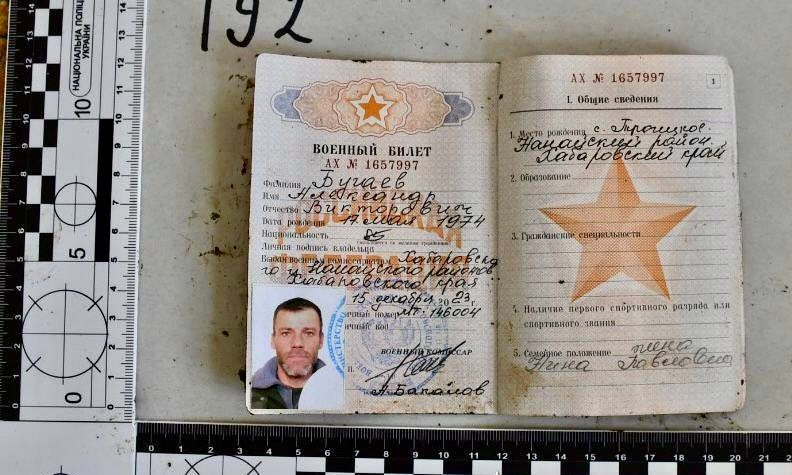
But Russia's recruitment system for the war in Ukraine has heavily relied on the country's prisons as a source of manpower, leading to its ranks being filled by all manner of criminals, even cannibals.
Moscow has been recruiting convicts for its war since the summer of 2022, first under the auspices of the Wagner Group and later under the Russian Defense Ministry.
Initially, prisoners, even those convicted of violent crimes, were promised a pardon after completing a six-month military contract. Since January 2024, Russian army recruits drawn from prisons no longer receive pardons but are released on parole, and are expected to fight until the war is over.
In May 2024, the Moscow Times reported that Russian cannibal Dmitry Malyshev, who was sentenced to 25 years in prison for murder and several other serious crimes, joined one of Russia’s Storm V penal military units.
Malyshev was reportedly recruited to the army together with serial killer Aleksandr Maslennikov, sentenced to 23 years in prison for the "double murder and dismemberment of women."
Previously, Ukraine said there were cases of mistreatment and breakdown of discipline within Russia's own ranks. A group of Russian soldiers fighting near Kursk Oblast surrendered to Ukrainian paratroopers in May, saying abuse within their own units was "worse than captivity," according to a video posted by Ukraine's Airborne Assault Forces.
The soldiers said they had been subjected to inhumane treatment, psychological pressure, and threats while still inside Russian territory.
Reporting by investigative outlets, the Insider and Foreign Policy, has documented systemic abuse of Russian troops throughout the full-scale invasion.
These include so-called "punishment squads," beatings, confinement pits, and hazing that borrows heavily from Soviet-era gulag practices.
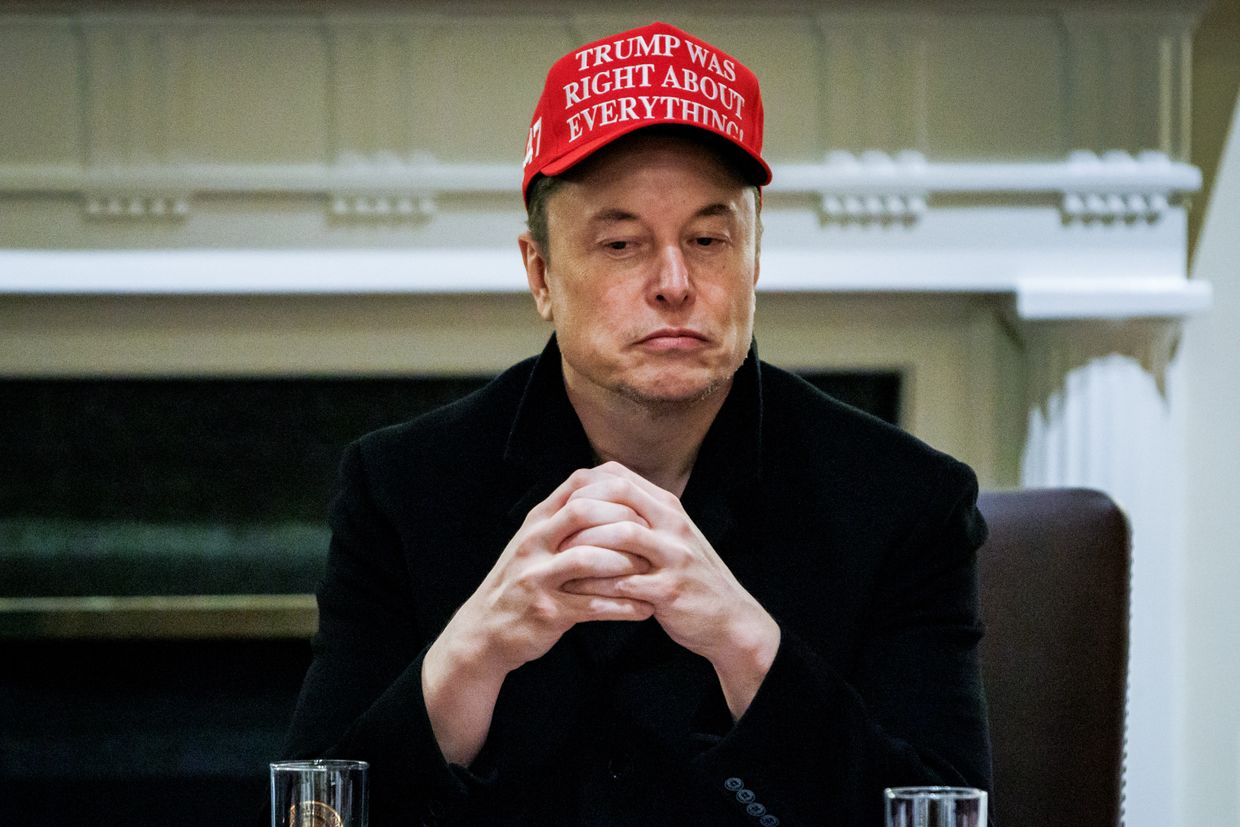
Russian authorities are considering a request from the New People's Party to offer political asylum to U.S. tech billionaire Elon Musk, claimed the party's lawmaker, Vladislav Davankov, to the Russian media on June 20.
Davankov, deputy speaker of the State Duma, told reporters at the St. Petersburg International Economic Forum that his party had formally petitioned the Russian Foreign Ministry to provide Musk with asylum. The request is expected to be reviewed within a month, he reportedly said.
"I think Elon Musk has made mistakes, but those mistakes should be forgiven," Davankov said. "If things don't work out for him, we are always ready to welcome him — from a technological and visionary point of view, he's very impressive."
The claim could not be independently verified, and there has been no official confirmation from the Russian Foreign Ministry or Musk. Kremlin spokesperson Dmitry Peskov declined to comment, telling reporters, "Let's wait for a statement from the Foreign Ministry or from Musk himself before we say anything."
The alleged request follows a public conflict that erupted between Musk and U.S. President Donald Trump earlier this month. The billionaire later expressed regret over a series of critical posts aimed at Trump, calling a proposed government spending bill "disgusting" and warning of economic consequences.
Trump hit back during a meeting with German Chancellor Friedrich Merz on June 5, saying on Truth Social that Musk had "just gone crazy."
In response, Musk claimed on social media that Trump owed him his electoral victory, suggesting his influence prevented Democrats from retaining the House.
Earlier this month, Dmitry Novikov, deputy chair of the State Duma Committee on International Affairs, told state-run news agency TASS that Russia would be ready to provide Musk with political asylum if needed.
"I think Musk is playing a completely different game, that he won't need political asylum, although if he did, Russia could certainly provide it," Novikov said on June 6.
The feud has attracted attention in Russia, where Musk is increasingly viewed as a sympathetic figure. Dmitry Medvedev, deputy chairman of Russia's Security Council, joked on X that Moscow could broker peace between "D and E," referring to Donald and Elon, in exchange for Starlink shares. "Don't fight, guys," Medvedev wrote.
Musk led a federal commission on government efficiency until May 30 and has been a key figure in dismantling U.S. foreign aid institutions, including USAID, which has delivered billions in aid to Ukraine.
Though he initially supported Ukraine by providing Starlink satellite systems to aid its defense, Musk eventually adopted Russian talking points, claiming President Volodymyr Zelensky lacks popular support and accusing Kyiv of running a "never-ending draft meat grinder."
He has also spoken out against U.S. military aid to Ukraine, a stance that aligns closely with Kremlin messaging aimed at discouraging Western support for Kyiv.
Editor's note: This story was updated to include Russian President Vladimir Putin's remarks at the St. Petersburg International Economic Forum.
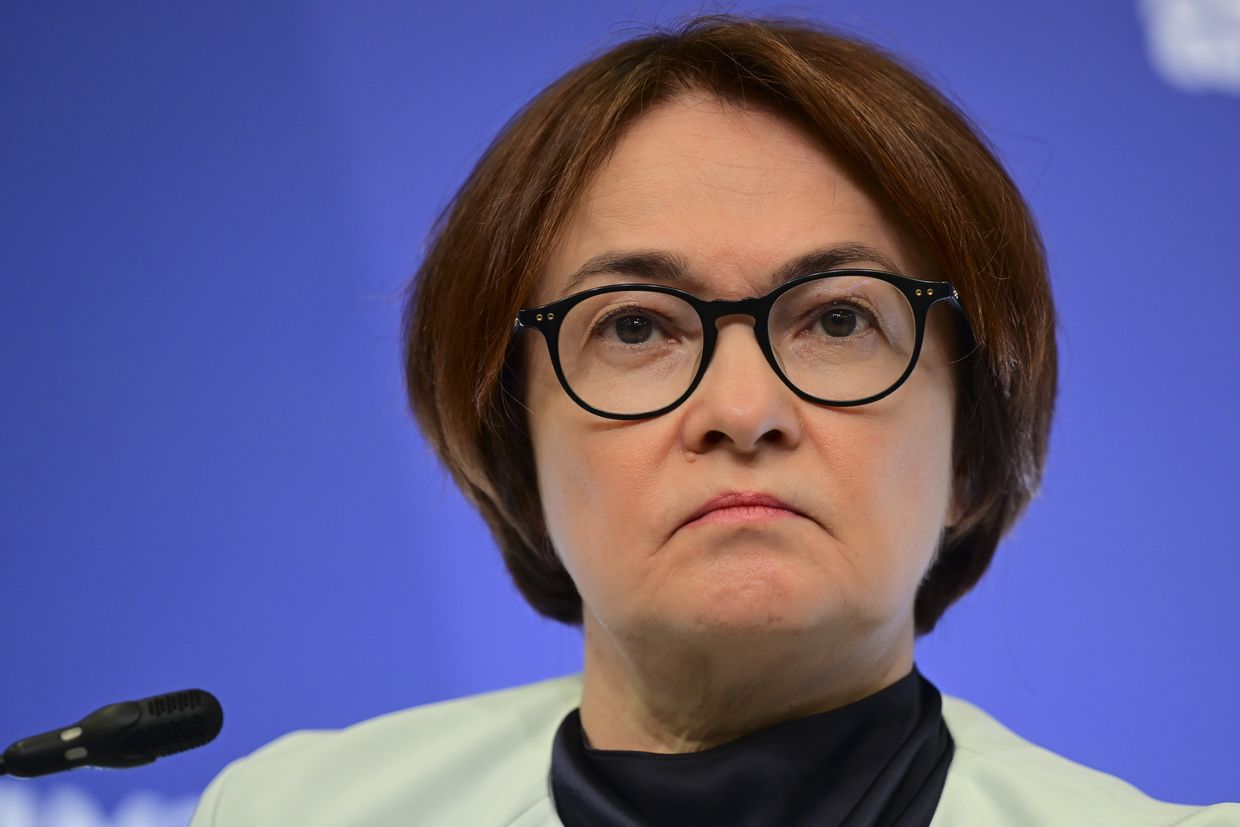
Russia's wartime economic momentum is fading fast, with key resources nearly exhausted, Russian Central Bank Governor Elvira Nabiullina said, warning that the country can no longer rely on the same tools that sustained growth in the first two years of the full-scale war against Ukraine, the Moscow Times reported on June 19.
Speaking at the St. Petersburg International Economic Forum, Nabiullina said that the Russian economy had been expanding on the back of "free resources," including labor, industrial capacity, bank capital reserves, and liquid assets from the National Wealth Fund (NWF) — all of which are now reportedly nearing depletion.
"We grew for two years at a fairly high pace because free resources were activated," she said. "We need to understand that many of those resources have truly been exhausted."
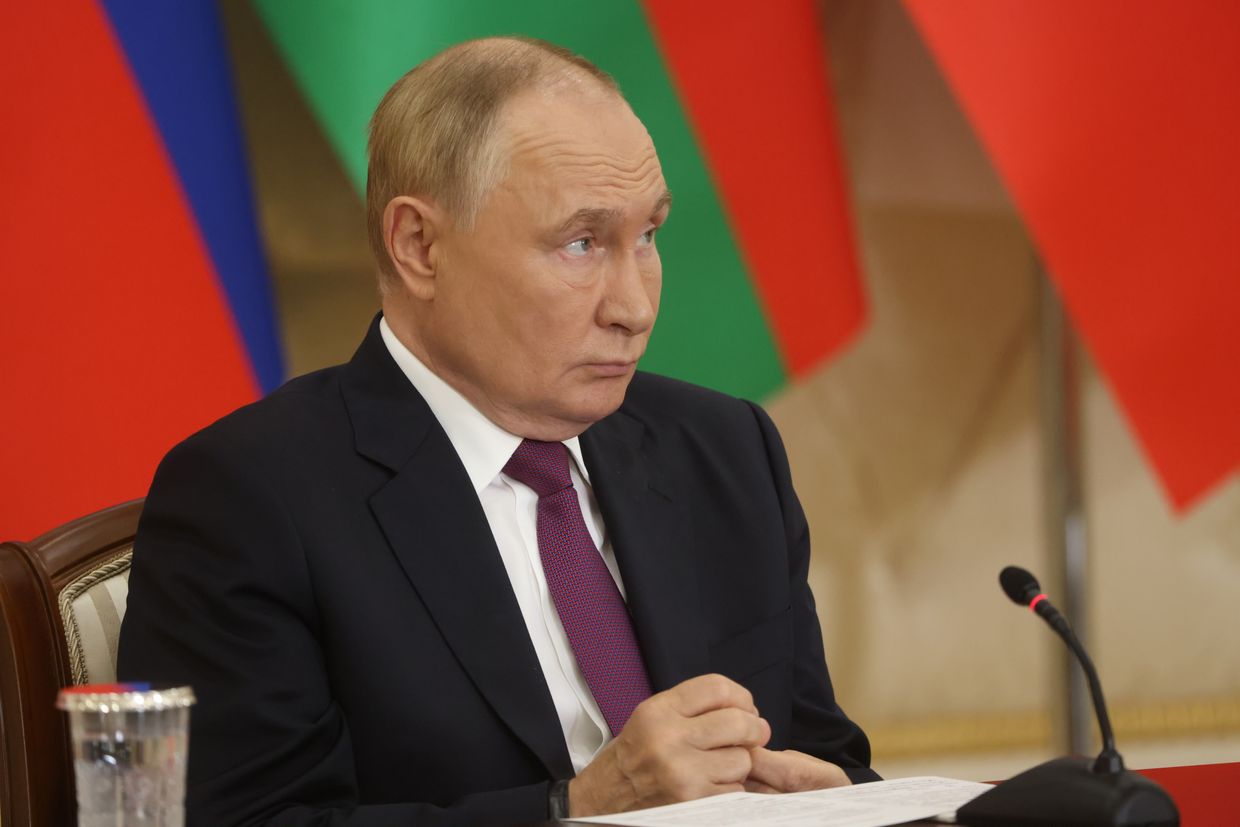
Speaking at the same forum, Russian President Vladimir Putin ordered officials "not to allow stagnation or recession" in the Russian economy under any circumstances.
"We must consistently change the structure of our economy," he said.
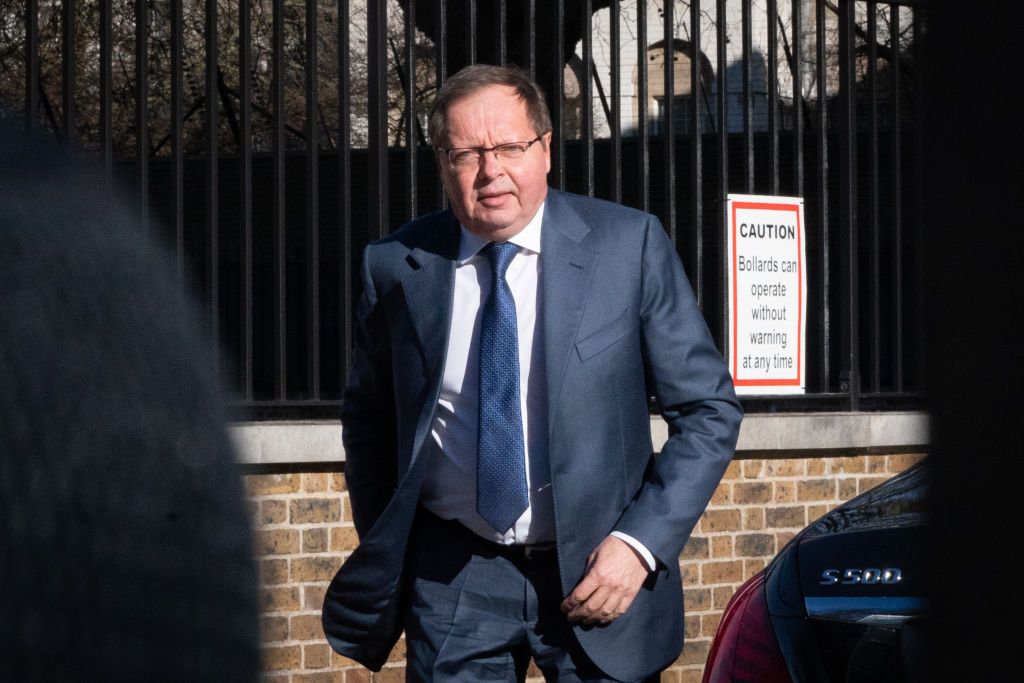
The comments come after Russia's ambassador to the U.K., Andrei Kelin, claimed in an interview with CNN this week that Russia is spending "only 5–7%" of its federal budget on the war. Kelin claimed that Russia can continue waging its war, saying Moscow "is winning."
According to the state statistics agency Rosstat, Russia's unemployment rate has dropped to a historic low of 2.3%. At the same time, mass emigration and large-scale wartime recruitment have created a labor shortage estimated at 2 million people. Industrial capacity utilization has surged beyond 80%, the highest in modern Russian history.
Russia's economy is now "on the verge of a transition to recession," Russian Economy Minister Maxim Reshetnikov said at the same forum. Official data show that GDP growth slowed from 4.1% in late 2023 to just 1.4% in the first quarter of 2024, with the economy contracting quarter-on-quarter for the first time since 2022.
Business profits in March fell by one-third overall and dropped by half in the critical oil and gas sector. Industrial growth stagnated at 1.2% year-over-year between January and April, while civilian sectors of the economy began shrinking. Retail turnover growth slowed from 7.2% in December to just 2.4% in April.
An anonymous Russian analyst told Novaya Gazeta Europe that government technocrats are effectively telling Putin it's time to choose between "war or economy."
During its invasion of Ukraine, Russia has faced rising inflation due to record military spending, pushing the central bank to maintain high interest rates. Under government pressure, the bank cut the rate slightly from 21% to 20% earlier in June, despite concerns about weakened private investment.
Officials have scaled back key development projects and reduced shipments of metals and oil products. Early hopes for recovery in 2025, driven by talks with the U.S., have faded as inflation and sanctions weigh heavily on growth.
Editor's note: This story has been updated to include the joint statement issued by the ministers of the Baltic states, Nordic countries, and Poland.
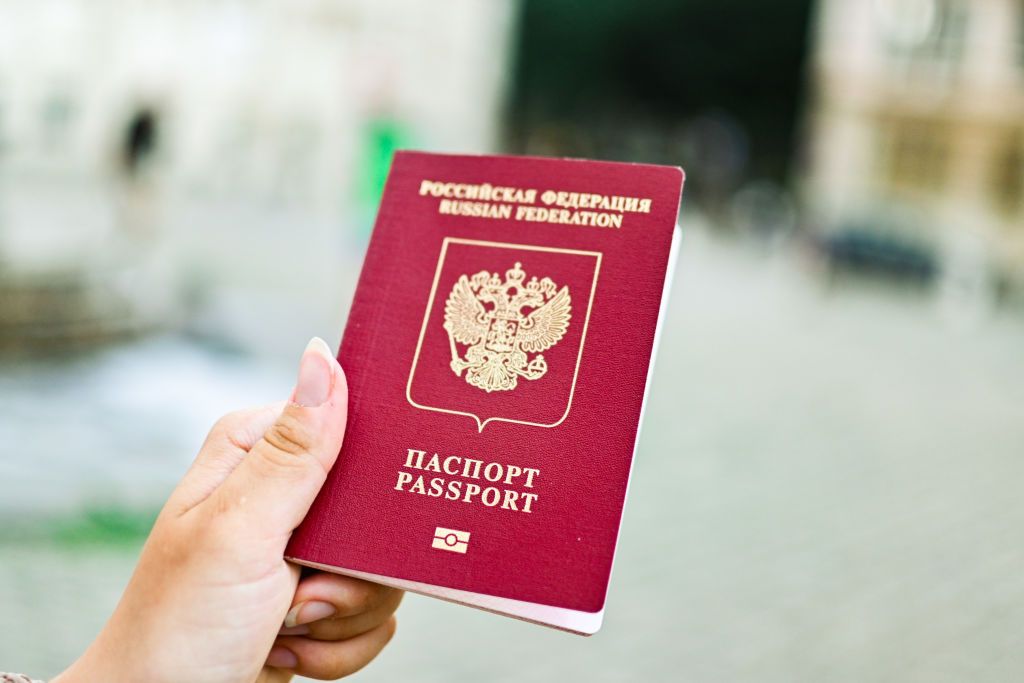
A coalition of European Union countries is pushing to bar Russian citizens who participated in the war against Ukraine from entering the Schengen Area, citing serious security concerns, Estonian broadcaster ERR reported on June 19.
The call comes as Russia increased its hybrid operations targeting the European Union. EU security agencies have repeatedly warned of Russian-linked sabotage operations, including arson attacks, orchestrated by Moscow as part of hybrid warfare strategies.
Interior ministers from the Baltic states, Nordic countries, and Poland met in Tallinn on June 19, where they issued a joint statement confirming their intent to prevent entry into the visa-free Schengen zone for Russians who took part in the war against Ukraine, ERR reported.
"There are hundreds of thousands of Russian citizens who have fought against Ukraine," Estonian Interior Minister Igor Taro said following the meeting. "We must take a clear stance; these individuals cannot freely travel across Schengen."
"We will not issue them residence permits or visas," he added. "This group, which has been killing and destroying, poses a very significant security threat to all of us."
The ministers emphasized that this restriction should remain in place even after active hostilities cease in Ukraine.
"Member States should take all necessary measures to ensure that individuals who are or have been contracted by the Russian armed forces or other armed groups acting on behalf of the regime are not allowed to undermine our security or move freely within the Schengen Area," the joint statement read.
The high-level meeting also included European Commissioner for Home Affairs and Migration Magnus Brunner, as well as representatives from the EU border agency Frontex.
The Schengen Area allows for visa-free travel across 29 European countries for up to 90 days in any 180-day period. While several EU member states have imposed national restrictions on Russian travelers, others continue processing applications, keeping access routes open.
Latvia has been among the most vocal proponents of stricter visa policies for Russian nationals. Latvian Foreign Minister Baiba Braze urged on May 25 all EU countries to suspend visa issuance to Russians, citing escalating security threats from Moscow.
"Latvia calls on the EU countries to halt visa issuance for Russian citizens, citing security concerns," Braze wrote on X. She noted that Schengen visa approvals for Russian nationals had surged by 25% in 2024 compared to 2023.
Latvia imposed entry restrictions in September 2022 as part of a coordinated effort with Lithuania, Estonia, and Poland. Czechia followed suit in October 2022.
Concerns over the abuse of Schengen visas and diplomatic privileges have intensified amid a wave of suspected Russian sabotage and espionage on EU soil. Polish and Czech authorities have recently led an effort to limit the movement of Russian diplomats within the bloc, targeting individuals allegedly working under diplomatic cover for Russian intelligence services.
The lower house of the Dutch parliament on June 19 officially recognized the 1944 mass deportation of Crimean Tatars by the Soviet Union as genocide, according to a statement from the parliamentary press service.
The motion cited precedent from other countries that have recognized the forced deportations as genocide, including Poland, the Czech Republic, Canada, Latvia, Lithuania, and Ukraine.
In the adopted text, Dutch lawmakers declared that the Soviet-led deportation of Crimean Tatars, which took place between May 18 and 21, 1944, constitutes genocide by contemporary legal and historical definitions.
The 1944 deportation was carried out under direct orders from Soviet dictator Joseph Stalin, who labeled the entire Crimean Tatar population as traitors following the peninsula's liberation from Nazi occupation.
Over 190,000 Tatars were forcibly removed from Crimea in a matter of days, though some estimates place the number closer to 430,000, and sent to remote areas in Central Asia, mainly Uzbekistan, in brutal conditions that led to mass deaths.
The document pointed to the ongoing repression of Crimean Tatars under Russian occupation since 2014. It said that "many Crimean Tatars have been unjustly imprisoned, subjected to torture by the Russian Federation, or forcibly disappeared," and added that "Russia has likely continued a policy of genocide against Crimean Tatars."
Foreign Minister Andrii Sybiha welcomed the decision, calling it "a powerful gesture of solidarity with the Crimean Tatar people, who are still facing persecution under Russia’s temporary occupation of the Ukrainian Crimea peninsula."
Sybiha noted that the Netherlands is now the seventh country to formally recognize the deportation as genocide and urged other nations to follow suit.
"Recognizing this historical injustice is critical not only for establishing truth and justice, but also for preventing future atrocities," the minister wrote.
Ukraine's parliament recognized the deportation as genocide in 2015 and established May 18 as the official Day of Remembrance for the Victims of the Genocide of the Crimean Tatar People.
Regime change in Iran is "unacceptable" and the assassination of Supreme Leader Ayatollah Ali Khamenei would "open Pandora's box," Kremlin spokesperson Dmitry Peskov told Sky News in an interview published June 20.
Russia, which signed a strategic partnership with Iran in January, has reportedly grown increasingly alarmed as the United States weighs deeper involvement in Israel's military campaign against Tehran.
Earlier, U.S. President Donald Trump suggested the option of assassinating Iran's Supreme Leader Khamenei remains on the table, though he said the U.S. does not plan to act on it "for now."
The comment followed reporting that Israel had earlier proposed a plan to kill Khamenei — a proposal Trump initially rejected, according to a U.S. official cited by AP.
Peskov warned that any attempt at regime change in Tehran or threats to its leadership would "open Pandora's box," deepening instability across the Middle East and beyond.
"(Regime change in Iran) is unimaginable," Peskov said. "It should be unacceptable, even talking about that should be unacceptable for everyone." He added that the killing of Khamenei would promote extremist sentiment inside Iran and provoke unpredictable consequences.
"The situation is extremely tense and is dangerous not only for the region but globally," Peskov said. "An enlargement of the composition of the participants of the conflict is potentially even more dangerous. It will lead only to another circle of confrontation and escalation of tension in the region."
Russia has been a close regional ally of Iran, while Tehran supplied drones and ballistic missiles for Moscow's war against Ukraine. Meanwhile, Israel has maintained a delicate balance, refraining from joining Western sanctions against Moscow while condemning Iran's role in supporting Russia's war effort.
Asked on whether Moscow would respond to a possible strike against Khamenei, Peskov declined to specify, saying any reaction would come from "inside Iran."
Peskov also commented on Trump's dismissive response to Russian President Vladimir Putin's offer to mediate between Israel and Iran. The U.S. president reportedly told Putin to "mediate your own conflict" in reference to the Russia-Ukraine war. Peskov shrugged off the remark, calling Trump's language "unique" and urging mutual tolerance.
Tensions have risen between the U.S. and Iran following a wave of Israeli air strikes on Iranian territory, beginning June 13. The attacks targeted nuclear infrastructure and senior Iranian commanders, prompting Iranian missile strikes on Tel Aviv and other Israeli cities.
Tehran claimed that at least 224 Iranian civilians were killed on June 16, though the figures remain unverified.
Russia has offered to mediate the crisis, with Putin reportedly reaching out to both Iranian President Masoud Pezeshkian and Israeli Prime Minister Benjamin Netanyahu. Tel Aviv, according to the Kremlin, is reluctant to accept the proposal, while the EU leaders rejected it, citing Russia's aggression in Ukraine and its close military ties to Iran.
A meeting between Russian President Vladimir Putin and U.S. President Donald Trump is not currently on the table due to unresolved tensions in bilateral relations, Kremlin spokesperson Dmitry Peskov said in an interview with Russian state-controlled newspaper Izvestia on June 19.
The U.S. president has repeatedly floated the idea of meeting Putin, saying the Russia-Ukraine war cannot be resolved without them talking face-to-face. Nevertheless, the two have not met since Trump returned to the White House this January.
While Trump has adopted a more amicable policy toward Russia than his predecessor, U.S. ex-President Joe Biden, he has taken a more critical tone toward Moscow recently as Putin continues to reject a truce in Ukraine.
"Until the necessary 'homework' is done to remove the irritants in our relations with the United States, it makes no sense to organize a meeting," Peskov said. He added that while talks aimed at resolving these issues had begun, progress remained minimal and the key obstacles were still in place.
His remarks come just days after the Russian Foreign Ministry claimed that Washington had canceled the next round of talks to restore diplomatic relations between the two countries.
The meetings, which were expected to take place in Moscow, were part of a broader dialogue to address ongoing disputes, including Russia's war against Ukraine, and improve the functioning of each side's diplomatic missions.
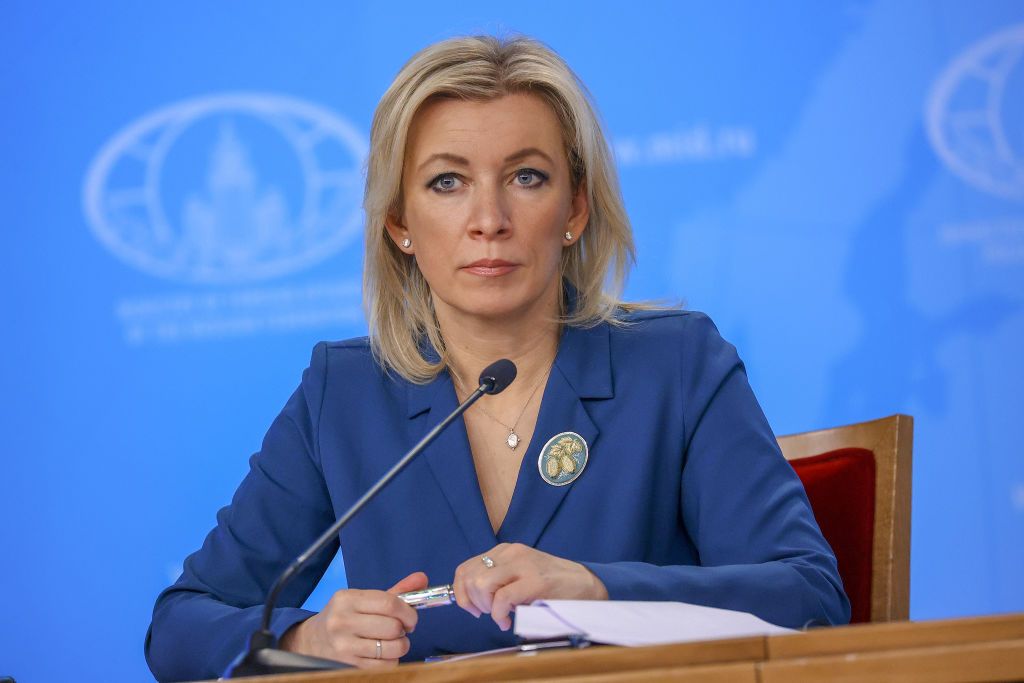
Russian Foreign Ministry spokesperson Maria Zakharova said the planned round was intended to "eliminate irritants," such as staffing restrictions and banking issues for embassies. She expressed hope that the U.S. pause in talks "will not become too long."
The last two rounds of discussions, in Riyadh in February and Istanbul in April, marked the first formal diplomatic contact between the U.S. and Russia since Moscow began its full-scale invasion of Ukraine in 2022. Both sides described the Istanbul round as "constructive," though it focused largely on technical matters.
The Trump administration has so far refrained from introducing new sanctions against Russia, despite pressure from Kyiv and growing alarm in Europe over Moscow's continued refusal to agree to a ceasefire.
President Volodymyr Zelensky has repeatedly urged Washington to take a firmer stance, warning that "America's silence... only encourages Putin."
After a deadly Russian attack on Kyiv that killed 28 and injured over 130 people, Trump remained silent, with the U.S. Embassy only issuing a late statement denouncing the attack.
The European Union is developing a plan to generate more revenue for Ukraine by shifting nearly 200 billion euros ($215 billion) in frozen Russian assets into higher-yield, riskier investments, Politico reported on June 19, citing unnamed sources.
The assets, largely held by Belgium-based clearinghouse Euroclear, have been immobilized since 2022 under EU sanctions imposed following Russia's full-scale invasion of Ukraine.
Under the current framework, the funds are invested conservatively with the Belgian central bank, generating low but steady returns. In 2024, this approach yielded around 4 billion euros ($4.3 billion) in windfall profits, which the EU allocated to help service a G7-backed 45-billion-euro loan for Ukraine (around $50 billion).
Now, with that loan largely disbursed and concerns mounting over future financing, especially amid signals from U.S. President Donald Trump that American support could be scaled back, EU officials are under pressure to find new funding streams.
According to Politico, the proposed plan would redirect the frozen Russian assets into a special investment fund under EU control, allowing for higher returns without confiscating the assets — a move designed to sidestep legal and political opposition.
As part of the current G7-led funding framework, Ukraine has already received 7 billion euros ($8 billion) from the EU under the Extraordinary Revenue Acceleration (ERA) initiative, which uses profits from frozen Russian sovereign assets to fund loans.
Prime Minister Denys Shmyhal confirmed on June 13 that a fifth tranche of 1 billion euros ($1.1 billion) had been disbursed to support Ukraine's state budget. The ERA mechanism, part of the broader $50 billion G7 program, aims to ensure stable financing for Kyiv while making Russia shoulder the cost of its aggression.
According to Politico, finance ministers from all 27 EU countries are expected to debate the idea during an informal dinner in Luxembourg on June 19.
Poland, which currently holds the Council of the EU's rotating presidency, emphasized the urgency of the discussions, writing in an invitation letter seen by Politico that "further steps regarding the sanctions regime" and the potential use of frozen Russian assets "must be addressed."
The European Commission has also been holding informal consultations with a group of member states, including France, Germany, Italy, and Estonia, to explore legal options for keeping the Russian assets frozen in case Hungary exercises its veto power during the semiannual sanctions renewal process. So far, no workaround has been finalized.
Hungarian Prime Minister Viktor Orban has repeatedly threatened to block sanctions extensions as a gesture of goodwill toward Moscow, raising concerns the assets could be unfrozen and returned to Russia by default.
By now, much of the EU's 50-billion-euro ($57 billion) Ukraine Facility, agreed in 2023 and intended to last through 2027, has already been spent. The bloc's broader 1.2-trillion-euro ($1.37 billion) budget is stretched thin, and any additional top-ups would also require unanimous support.
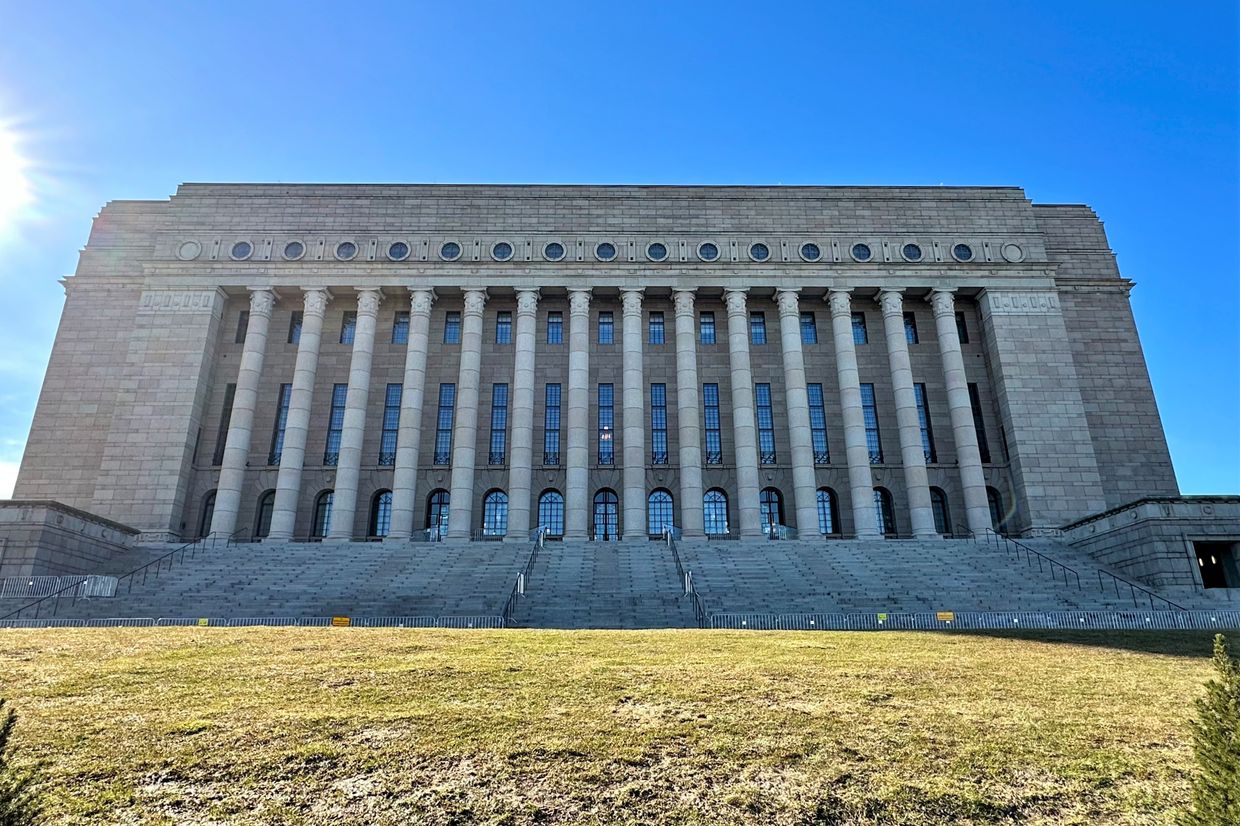
Finland's parliament voted on June 19 to withdraw from the Ottawa Convention banning anti-personnel landmines, citing growing security concerns from Russia's aggressive posture and the threat it poses to the region, Reuters reported.
The vote aligns Finland with its Baltic allies, Estonia, Latvia, and Lithuania, whose parliaments have already approved similar exits from the treaty.
Defending the decision earlier this week, Finnish President Alexander Stubb said the security reality along Finland's 1,300-kilometer (800-mile) border with Russia had changed dramatically since the full-scale invasion of Ukraine, according to TVP.
"The reality in the endgame is that we have as our neighboring country an aggressive, imperialist state called Russia, which itself is not a member of the Ottawa Treaty and which itself uses landmines ruthlessly," Stubb said.
Russia has widely deployed landmines across Ukrainian territory since launching its invasion in 2022, a tactic condemned by human rights organizations and Western governments.
Finland, which joined NATO in 2023, has significantly ramped up its defense posture amid growing concern over potential Russian provocations. The country closed its border with Russia over a year ago, accusing Moscow of orchestrating a "hybrid operation" by directing asylum seekers toward Finnish territory. Helsinki claims such hybrid tactics have intensified since it joined the alliance.
The Finnish Border Guard completed the first 35 kilometers (22 miles) of a planned 200-kilometer (124-mile) fence along its eastern frontier on May 21. The move came amid growing evidence of Russian military infrastructure expansion near the Finnish border.
Finland is "closely monitoring and assessing Russia's activities and intentions," Finland's Defense Minister Antti Hakkanen told AFP on May 22.
"We have excellent capabilities to observe Russian operations. As a member of the alliance, Finland holds a strong security position."
Russia's Defense Minister Andrei Belousov said in December 2024 that Moscow must be ready for a potential conflict with NATO within the next decade. Western officials have repeatedly warned of the possibility that Moscow could target NATO members in the coming years.
Ukraine must accept Moscow's terms for ending the war or face further military advances and eventual "surrender," Russia's ambassador to the United Kingdom, Andrei Kelin, said in a June 18 interview with CNN.
Talking to CNN host Christiane Amanpour, Kelin said Russia is continuing its offensive and sees no need to stop hostilities, publicly acknowledging Moscow's disregard for U.S.-backed ceasefire efforts.
The comments come as Russia continues to reject a U.S. truce proposal backed by Kyiv and only intensifies both ground operations and aerial strikes against Ukrainian cities.
"We are now on the offensive and Ukraine is in retreat," Kelin said. "In May, we have taken about 600 square kilometers (230 square miles) of the territory of Ukraine, and we continue to gain more ground."
According to the open-source intelligence group DeepState, Russian forces occupied approximately 449 square kilometers (173 square miles) in May, the highest monthly figure this year, but still well below Kelin's claim.
Kelin outlined an ultimatum for Kyiv: either agree to a permanent ceasefire on Russia's terms or face worse consequences.
"For Ukraine, there is a choice: either they will take our conditions right now… or we will continue this drive and Ukraine will have to surrender under much worse conditions," he said.
In the most recent peace talks with Ukraine in Istanbul on June 2, Russia again pressed its longstanding maximalist demands, including recognition of Russia's annexation of Crimea, as well as Kherson, Donetsk, Zaporizhzhia, and Luhansk oblasts — none of which are fully under Moscow's control.
The Kremlin also insists on Ukraine's complete military withdrawal from these regions.
The ambassador's remarks come amid reported preparations for a third round of negotiations with Ukraine after June 22, though no date has been officially confirmed. Kelin described the talks as "stage by stage," citing prior agreements on prisoner exchanges and humanitarian issues.
Kelin also reiterated long-standing Kremlin demands for Ukraine's neutrality and the prohibition of NATO membership, calling the alliance "very threatening to us."
The ambassador insisted on "reestablishment of normal human rights" for ethnic minorities in Ukraine, including Russians, Hungarians, and Poles, a claim Kyiv and Western officials have repeatedly dismissed as a false pretext for invasion.
CNN's host challenged Kelin on whether such terms amounted to capitulation rather than negotiation. Kelin denied the characterization, maintaining that talks are ongoing and involve "important agreements."
When asked about Russia's capacity to sustain its military campaign, Kelin claimed Moscow is spending "only 5–7%" of its budget on the war and recruiting up to 60,000 volunteer soldiers monthly, figures Western analysts have not independently verified.
"Only 5–7%" of the budget accounts for around 13.5 trillion rubles ($126 billion). Russia's spending on war and law enforcement agencies exceeds expenditures on education, healthcare, social policy, and the national economy combined.
Argentina has uncovered a Russian intelligence operation working to spread pro-Kremlin disinformation and influence public opinion, Argentine presidential spokesperson Manuel Adorni announced on June 18, citing the country's intelligence, according to AFP and Infobae.
The La Compania network, which is allegedly linked to the Russian government and the Kremlin's Project Lakhta, was led by Russian nationals Lev Konstantinovich Andriashvili and his wife Irina Yakovenko, who are both residents of Argentina, according to authorities.
The U.S. Treasury Department has previously accused the Project Lakhta, reportedly formerly overseen by late Russian oligarch Yevgeny Prigozhin, of election interference in the United States and Europe.
Prigozhin led the Russian Wagner mercenary group that was deployed in some of the deadliest battles in Ukraine, like the siege of Bakhmut. The oligarch was killed in a plane crash under suspicious circumstances in August 2023, around two months after leading a brief armed rebellion against the Kremlin.
Andriashvili and Yakovenko are accused of receiving financial support to recruit local collaborators and run influence operations aimed at advancing Moscow's geopolitical interests.
Their objective was to "form a group loyal to Russian interests" to develop disinformation campaigns targeting the Argentine state, Adorni said at a press briefing.
The spokesperson added that the alleged operation included producing social media content, influencing NGOs and civil society groups, organizing focus groups with Argentine citizens, and gathering political intelligence.
"Argentina will not be subjected to the influence of any foreign power," Adorni said, noting that while some findings have been declassified, much of the investigation remains a state secret.
Since Russia's full-scale invasion of Ukraine in February 2022, there has been a significant uptick in Russian migration to Argentina, some of which officials fear could be linked to covert intelligence operations.
Authorities reportedly said these espionage activities are often facilitated by a 2009 bilateral agreement between Argentina and Russia allowing visa-free travel, a deal that remains in effect despite growing security concerns.
In response to the threat, Adorni announced the creation of a new Federal Investigations Department (DFI) within Argentina's Federal Police, modeled in part on the U.S. FBI. The agency will focus on countering organized crime, terrorism, and foreign espionage, with investigators trained in advanced techniques and bolstered by experts in law, psychology, and computer science.
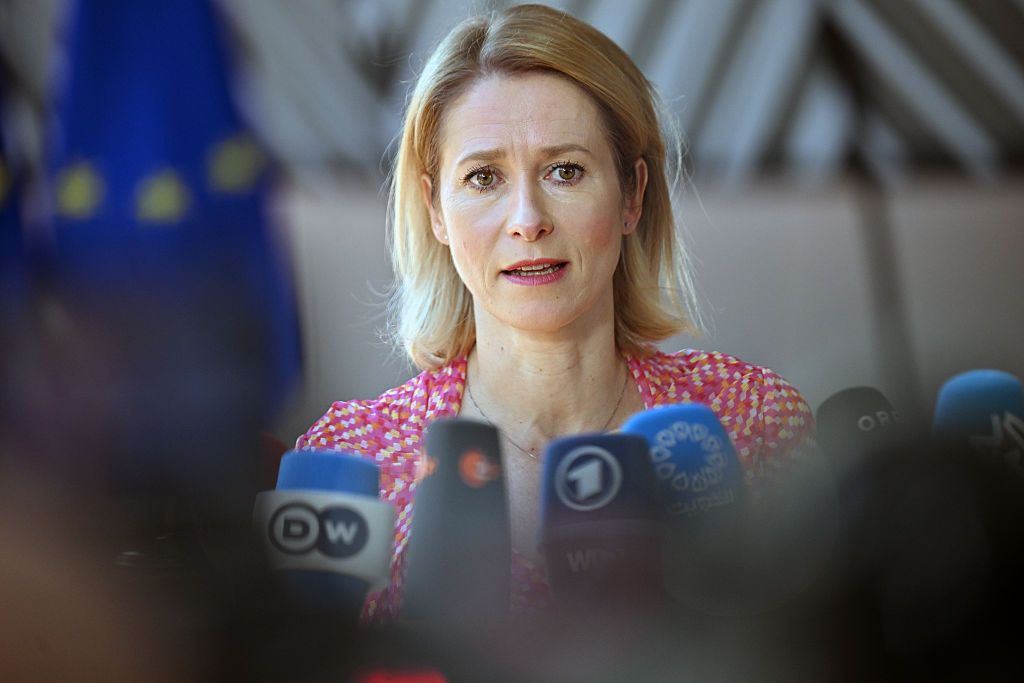
Failure to provide stronger military and financial support for Ukraine could leave Europe vulnerable to growing Russian influence, meaning Europeans might have to "start learning Russian," the EU's top diplomat, Kaja Kallas, said, the Guardian reported on June 17.
"We know that Russia responds to strength and nothing else," Kallassaid. She called Ukraine "Europe's first line of defense" and emphasized the need for continued sanctions against Russia and more aid to Kyiv.
The comments come as Russian forces are intensifying their attacks on Ukrainian cities and the Kremlin continues to reject a push by Kyiv and its Western allies for an unconditional ceasefire.
"To quote my friend, NATO Secretary General Mark Rutte: if we don’t help Ukraine further, we should all start learning Russian," Kallas said.
Kallas cited a sharp increase in Russia's military spending, noting that Moscow is now allocating more money to defense than the EU combined, and more than its own health care, education, and social policies put together.
"This is a long-term plan for a long-term aggression," she said.
In light of this, Kallas urged governments to adopt NATO's new target of spending 5% of GDP on defense, warning of Russia's hybrid warfare tactics, including airspace violations, attacks on critical infrastructure, and covert sabotage operations within EU borders.
The 5% defense spending target is expected to be formally adopted during the upcoming NATO summit, which will take place on June 24 and 25 in The Hague. U.S. President Donald Trump has insisted that the European allies increase their defense budgets.
Earlier, Kallas said Russian President Vladimir Putin "cannot be trusted" to mediate peace while continuing to bomb Ukrainian cities and civilians, as Moscow suggested to mediate negotiations between Israel and Iran amid growing escalation.
"Clearly, President Putin is not somebody who can talk about peace while we see actions like this," she said during a June 17 briefing, after a massive Russian missile and drone strike on Kyiv killed at least 28 people and wounded over 130.
Kallas also reiterated her call for the EU to move forward with tightening the oil price cap on Russian exports, even without U.S. backing. She warned that the ongoing Israel-Iran crisis could cause oil prices to spike, boosting Russia's war revenues.
The EU is currently preparing its 18th sanctions package against Moscow, targeting energy, defense, and banking sectors. The 17th round of sanctions came into effect in May.
Editor's note: The story was updated after one of the injured victims died in the hospital.
Russian attacks killed at least one civilian and injured at least 27 over the past 24 hours in Ukraine, regional officials reported on June 19.
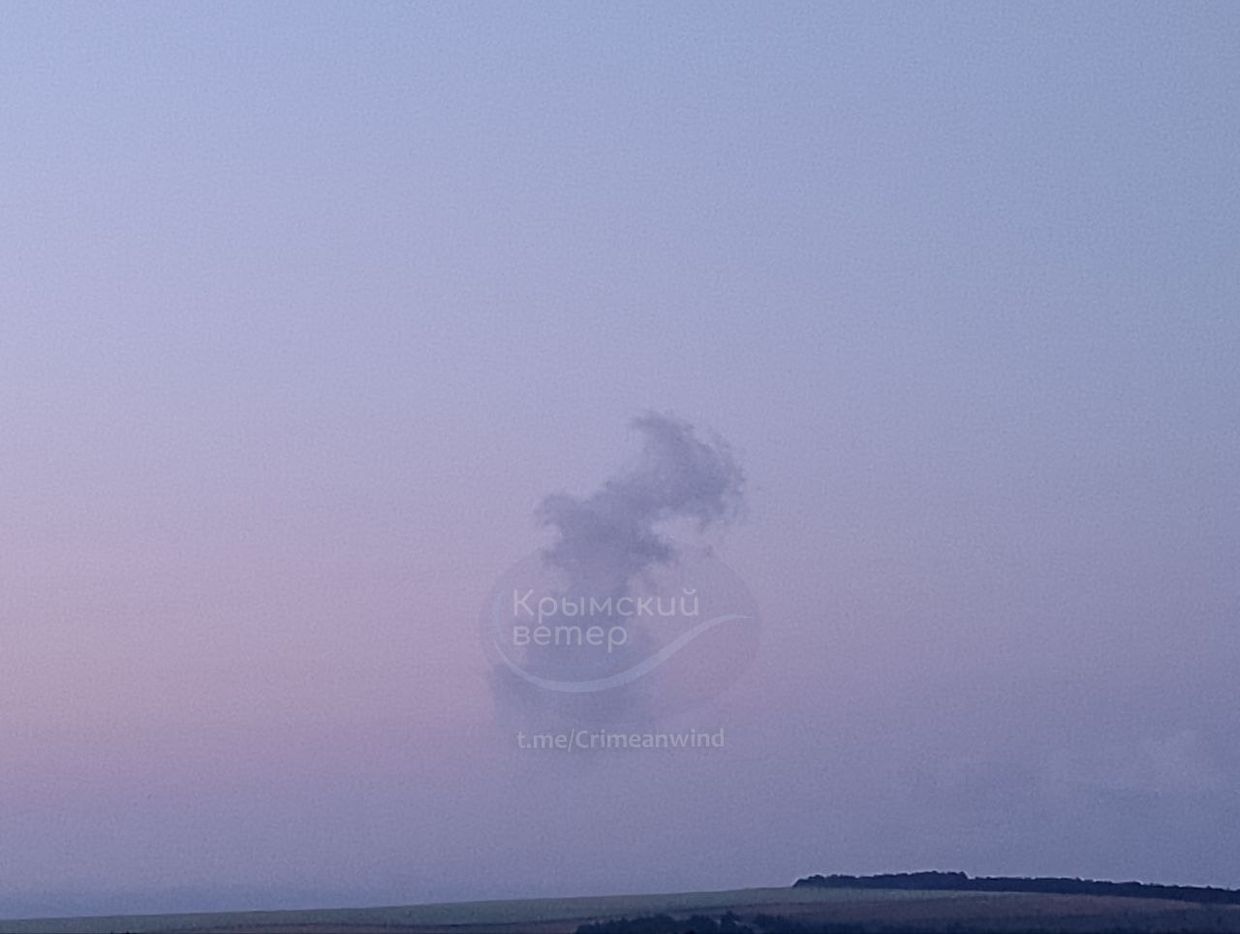
According to Ukraine's Air Force, Russian forces launched 104 Shahed-type drones and decoy unmanned aerial vehicles (UAVs) overnight from Russian territory and occupied Crimea.
Ukrainian air defenses shot down 40 drones, while 48 disappeared from radars or were intercepted by electronic warfare.
In Kherson Oblast, nine people were injured amid heavy shelling and drone attacks on dozens of settlements, including Kherson city, Governor Oleksandr Prokudin said. Russian forces struck social infrastructure facilities, three apartment buildings, and 10 houses. A gas pipeline, an ambulance base, a fire station, and several vehicles were also damaged.
In Donetsk Oblast, 13 people were wounded in Russian strikes across the region, Governor Vadym Filashkin said.
In Dnipropetrovsk Oblast, five people were injured in morning attacks on the Nikopol district, including an 11-year-old child, Governor Serhii Lysak reported. One of the victims, a 59-year-old man, later died in the hospital, Lysak said.
In Zaporizhzhia Oblast, one person was injured, Governor Ivan Fedorov said. Over the past day, Russian forces carried out 410 strikes on 12 settlements in the oblast, including 10 air strikes and 264 drone attacks. Additional shelling from artillery and multiple launch rocket systems damaged at least 94 houses, vehicles, and infrastructure sites.
Russia on June 18 warned the world is "millimetres away from catastrophe" due to Israeli strikes on Iran's nuclear infrastructure, just four months after one of its own drones struck the Chornobyl nuclear site in Ukraine.
Russian Foreign Ministry spokesperson Maria Zakharova accused Israel of escalating the risk of a nuclear incident in the Middle East, despite Russia's own record of repeatedly placing nuclear facilities at risk during its full-scale invasion, and threatening the use of nuclear weapons.
On Feb. 14, Russian forces struck the Chornobyl nuclear facility with a Shahed drone, hitting the protective sarcophagus that encases Reactor No. 4, site of the 1986 nuclear disaster.
Damage was limited, and no radiation leakage occurred, but the act was widely condemned as a deliberate provocation timed to coincide with the Munich Security Conference.
President Volodymyr Zelensky called the attack on the Chornobyl plant "a terrorist threat to the whole world." Ukrainian officials and nuclear security experts said the strike was unlikely to cause significant radioactive contamination but served as a warning of Russia's willingness to weaponize fear of nuclear disaster.
Russia has also intensified strikes near other nuclear facilities in Ukraine, including infrastructure connected to the occupied Zaporizhzhia Nuclear Power Plant, which Moscow's forces have used as a military base since early in the war.
Analysts view the attacks as part of a broader campaign of intimidation aimed at pressuring Kyiv and its allies into a settlement.
Zakharova's comments follow growing international concern over the rising tensions between Israel and Iran. Russia has positioned itself as a potential mediator in the conflict, though European leaders have dismissed the Kremlin's neutrality due to its deepening military ties with Tehran and ongoing aggression in Ukraine.
Russian President Vladimir Putin "cannot be trusted" to mediate peace in the Middle East while launching mass strikes on Ukrainian cities, EU foreign policy chief Kaja Kallas said on June 17. Her remarks came after a Russian missile attack killed at least 28 civilians in Kyiv and injured over 130.
Kremlin spokesperson Dmitry Peskov said Israel has so far rejected Moscow's mediation offer. U.S. President Donald Trump said over the weekend that Putin had expressed willingness to help mediate.
Russia continues to receive military support from Iran, including drones and missiles used in attacks across Ukraine.
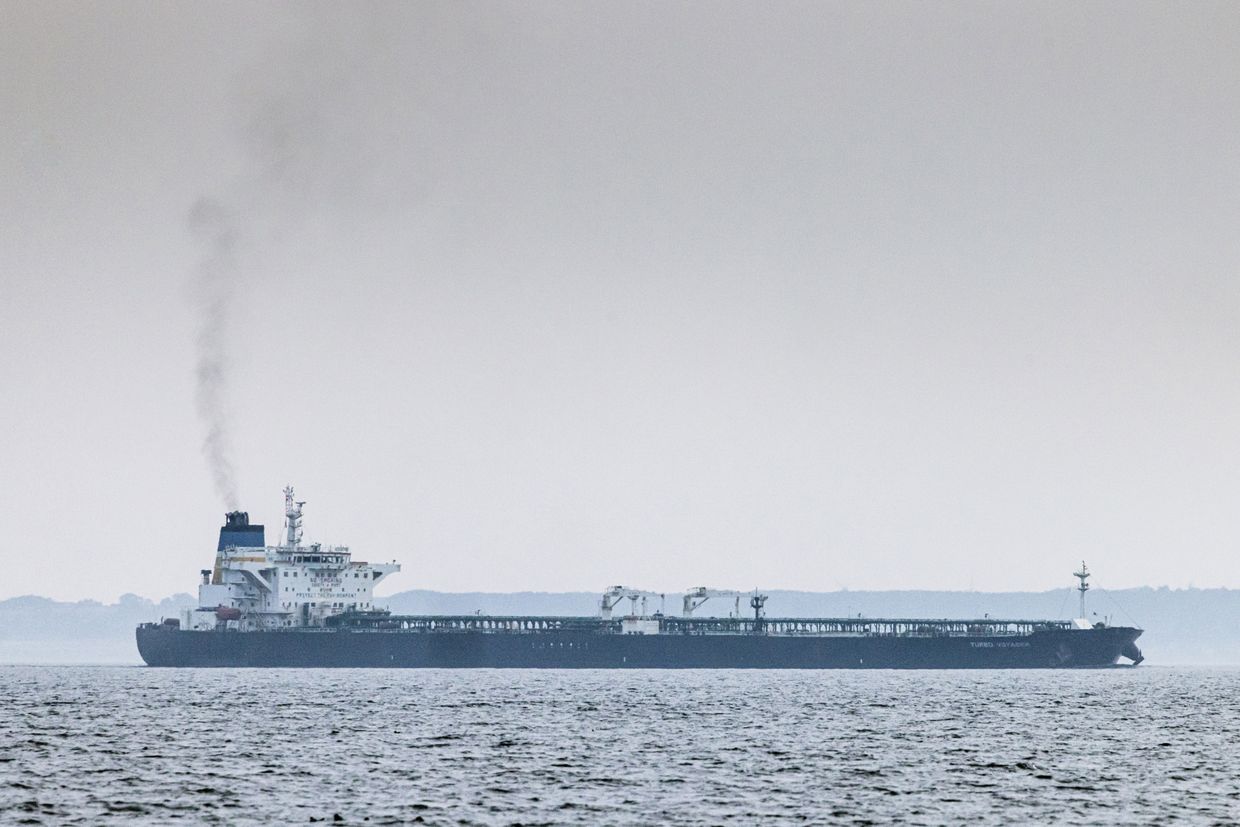
Australia has, for the first time, imposed sanctions on Russia's so-called "shadow fleet" of oil tankers, targeting 60 vessels used to circumvent international sanctions and sustain the Kremlin's war effort in Ukraine, the Australian government said on June 18.
The move aligns Canberra with similar measures introduced by the United Kingdom, Canada, and the European Union.
Australia's Foreign Ministry said the sanctioned vessels operate under "deceptive practices, including flag-hopping, disabling tracking systems and operating with inadequate insurance," enabling illicit Russian oil trade that undermines international sanctions.
"Russia uses these vessels to circumvent international sanctions and sustain its illegal and immoral war against Ukraine," the ministry said in a statement.
With this move, Australia has now sanctioned more than 1,400 Russian individuals and entities since Moscow's full-scale invasion of Ukraine began in February 2022, the government said.
The step comes amid the continued operation of Russia's shadow fleet. According to a recent study by the Kyiv School of Economics (KSE), Russia currently operates 435 tankers outside the control of Western regulators to evade sanctions such as the G7-EU price cap on Russian oil.
These vessels are typically un- or underinsured and pose a rising environmental risk due to their age and operational opacity.
KSE estimates that as of April 2024, 83% of Russia's crude oil and 46% of its petroleum product exports were shipped using shadow fleet tankers. The study warns that this undermines the effectiveness of Western sanctions and increases the likelihood of maritime disasters, as many of these ships fall outside international safety and insurance standards.
The EU formally adopted its 17th sanctions package against Russia in May, sanctioning nearly 200 vessels tied to the shadow fleet. EU foreign policy chief Kaja Kallas said the new measures also target hybrid threats and human rights violations, with more sanctions under consideration.
Some EU member states and observers have criticized the package for lacking stronger provisions to disrupt Russia's sanction evasion schemes.
Now, the EU seeks to approve its 18th sanctions package, which will add 77 more shadow fleet vessels to comply with the cap to prevent Russia from circumventing sanctions and propose imposing a ban on imports of petroleum products made from Russian oil.
The United States has signaled reluctance to pursue additional sanctions despite Moscow's continued aggression in Ukraine and rejection of ceasefire proposals supported by Western allies.
President Volodymyr Zelensky may reconsider attending the NATO summit in The Hague, as questions remain over U.S. President Donald Trump's participation, the Guardian reported on June 17, citing unnamed Ukrainian officials.
According to the Guardian, some in Kyiv are unsure if Zelensky's presence at the June 24-25 summit would be worthwhile without a confirmed meeting with Trump, whom they had hoped to engage directly in efforts to pressure Russian President Vladimir Putin into accepting a ceasefire.
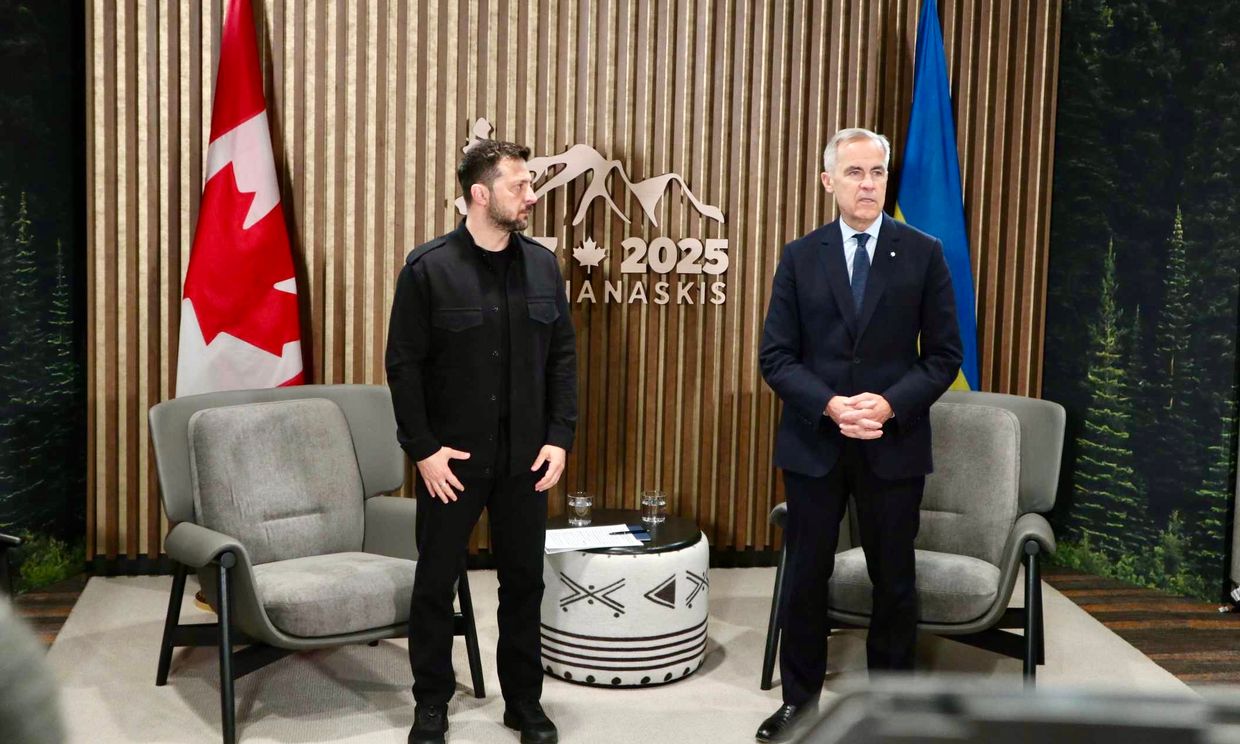
Earlier, Zelensky had traveled to the G7 summit in Canada, hoping to meet one-on-one with Trump and push for stronger sanctions against Russia. Trump left the summit early, citing the crisis in the Middle East, and no bilateral meeting or joint G7 statement took place.
One official told the Guardian that Ukraine is in a "permanent hazard" of becoming a victim of "Trump's short attention span," adding that Russia has exploited this uncertainty by fresh aerial attacks. The source added that there had been "all sorts of promises for this summit," including U.S. arms.
The Russian attack on Ukraine that occurred during the G7 summit killed at least 24 civilians and injured 134 in Kyiv. Trump has not responded to the attack as of the day after.
German Chancellor Friedrich Merz has reportedly said Trump had previously promised to attend the NATO gathering, though no official confirmation has been issued from Washington.
Despite the setback, Zelensky said the G7 meeting had concrete results for Ukraine. In a Telegram post on June 17, he thanked partners for increased military aid, new sanctions on Russia, and the decision to allocate frozen Russian assets for Ukraine’s reconstruction.
"It is important that our partners are ready not only to support our defense now, but also to rebuild Ukraine together after the war ends," he said.
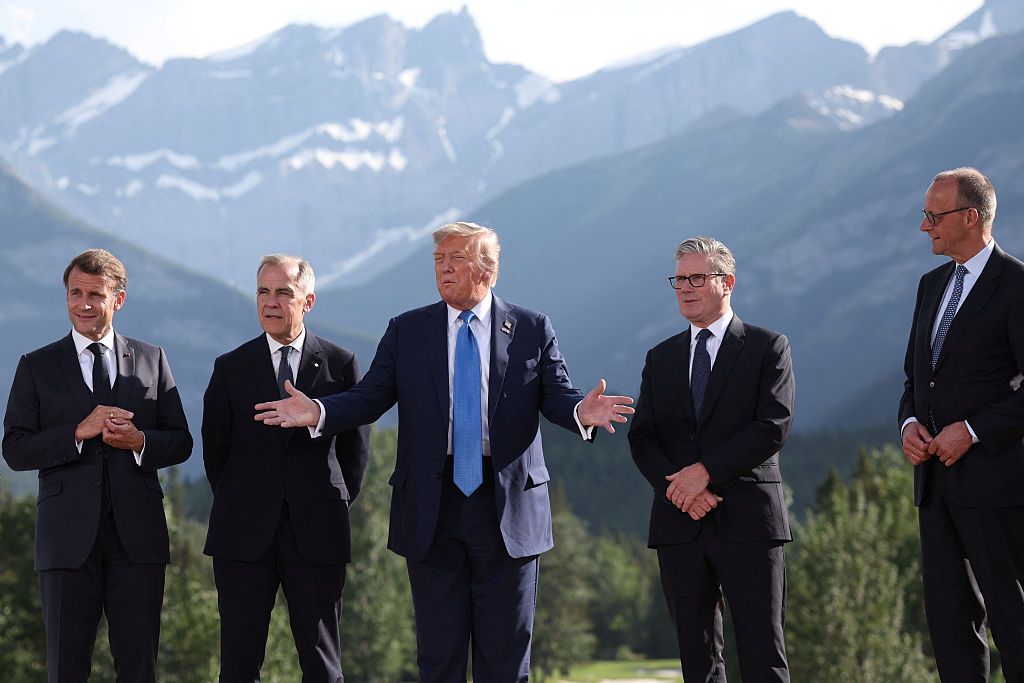
Canadian Prime Minister Mark Carney announced a support package that includes 2 billion Canadian dollars ($1.5 billion) in military assistance and another $1.6 billion in reconstruction loans. The aid includes drones, armored vehicles, ammunition, and sanctions to disrupt Russia's energy revenues.
U.K. Prime Minister Keir Starmer also unveiled new sanctions targeting Russia's military-industrial complex and 20 oil tankers from Russia's "shadow fleet."
Zelensky later told G7 leaders that "diplomacy is now in a state of crisis" and called on allies to press Trump to "use his real influence" to help end the war.
Ukraine has been invited to the NATO summit, and Zelensky previously called the invitation "important" during a June 2 press briefing. At the time, he did not confirm whether he would attend in person.
Ukraine's parliament on June 17 approved President Volodymyr Zelensky's nomination of 35-year-old Ruslan Kravchenko as the country's new prosecutor general, making him the youngest person to ever hold the post.
Kravchenko, a former military prosecutor and most recently head of Ukraine's tax service, replaces Andrii Kostin, who stepped down in October 2024 following a scandal involving fraudulent disability claims by dozens of prosecutors in Khmelnytskyi Oblast.
Lawmakers supported Kravchenko's appointment with 273 votes in favor, according to Yaroslav Zheleznyak, an MP from the Holos party.
A native of Sievierodonetsk in eastern Ukraine, Kravchenko served as a military prosecutor in Crimea before leaving the peninsula after Russia's annexation in 2014. He was one of the prosecutors in the case of fugitive President Viktor Yanukovych.
Kravchenko will now lead the Prosecutor General's Office amid war, reforms, and heightened scrutiny of law enforcement bodies' work. His predecessor, Kostin, resigned after the media revealed that at least 50 prosecutors had allegedly received disability status fraudulently — a scandal that sparked widespread criticism.
The Prosecutor General's Office has played a central role in documenting Russian war crimes and enforcing anti-corruption efforts, especially since Russia's full-scale invasion began in February 2022.
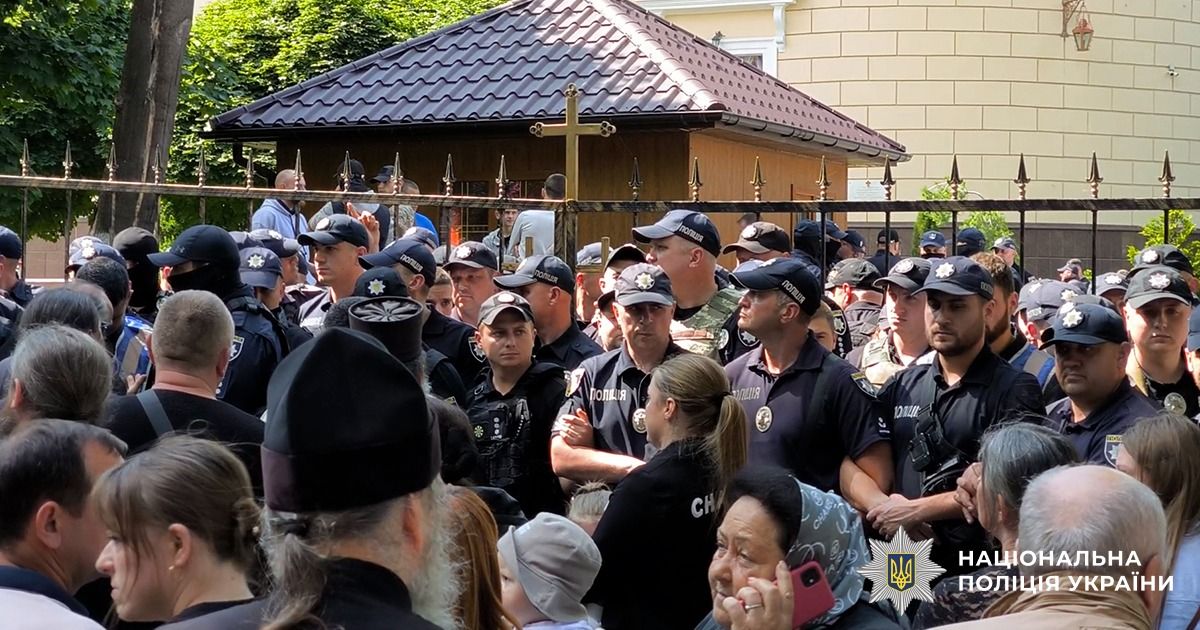
Violent clashes broke out on June 17 outside the Holy Spirit Cathedral in Chernivtsi, a city in southwestern Ukraine, as hundreds of people attempted to force their way into the church following a long-running dispute over its religious affiliation, Suspilne reported.
The unrest reflects Ukraine's broader struggle to sever ties with the Russian-affiliated Ukrainian Orthodox Church of the Moscow Patriarchate (UOC-MP) amid the ongoing war, which was extensively used by Moscow as a propaganda tool.
According to public broadcaster Suspilne, the crowd gathered to assert control over the church, which had recently voted to switch allegiance from the UOC-MP to the Orthodox Church of Ukraine (OCU) — an autocephalous (autonomous) Ukrainian church not affiliated with Moscow.
The police were reportedly deployed to prevent escalation but were eventually overwhelmed as protesters breached the church fence and entered the grounds. Officers deployed tear gas, and medics reported treating around 30 people for injuries.
The confrontation came after local authorities re-registered the Holy Spirit Cathedral and two other major parishes in Chernivtsi under the jurisdiction of the OCU earlier this year. Bishop Feognost of the OCU confirmed to Suspilne that the day marked the first Ukrainian-language prayer service in the cathedral, a significant symbol of the national church’s growing influence.
The dispute stems from decades of tension between Orthodox churches in Ukraine and has intensified since Russia launched its full-scale invasion in 2022. The UOC-MP, while claiming to have severed ties with Moscow, remains legally subordinate to the Russian Orthodox Church, which is seen as a close ally of the Kremlin.
Ukrainian lawmakers passed legislation in August 2024 banning religious organizations with ties to Russia. The law, signed by President Volodymyr Zelensky, gave such organizations nine months to cut all legal and institutional connections with Moscow. Over 100 UOC-MP clergymen have been investigated for suspected collaboration with Russian forces, with dozens facing criminal charges.
Local media say the scene outside the cathedral grew tense as both UOC-MP and OCU supporters gathered. Some attempted to tear down gates while chanting "shame!" and others blocked roads, disrupting traffic. The police temporarily restricted access to the site and launched an investigation.
Suspilne reported that Metropolitan Meletii of the UOC-MP later entered the cathedral after the gates were forced open. Worshippers not aligned with the OCU began a service inside, prompting further clashes. Fire extinguishers were reportedly used inside the building to push back demonstrators.
Chernivtsi Mayor Roman Klichuk initially welcomed the transition of the church to the OCU as a "historic day" for Ukraine's national church, but later deleted the post from his social media page, Suspilne said.
The Moscow-linked church claims it is the victim of religious persecution and insists that it operates lawfully. Critics argue its claims of independence are symbolic and that it remains deeply tied to Russia's religious and political structures.
While Orthodox Christianity remains freely practiced and the most widespread religion in Ukraine, the government and a growing number of citizens view the UOC-MP as a potential security threat.
The U.S. Embassy in Kyiv on June 18 condemned Russia's massive missile and drone attack on Kyiv that killed at least 23 people and injured more than 130 a day earlier, saying it "runs counter" to U.S. President Donald Trump's peace efforts.
"Today, with all of Ukraine, we join a day of mourning in Kyiv for the victims of Russia's June 17 attack," the U.S. Embassy in Ukraine said in a statement. "We extend deepest condolences to the victims' families. This senseless attack runs counter to President Trump's call to stop the killing and end the war."
The nine-hour overnight attack, which began late June 16, has become one of the largest aerial assaults on the Ukrainian capital since the start of Russia's full-scale invasion in 2022.
Ukrainian officials said Russia launched 472 aerial weapons, including nearly 280 Shahed-type attack drones and cruise and ballistic missiles. Ukraine's air defense downed 428 targets, but several struck residential areas, including a nine-story apartment building in Kyiv's Solomianskyi district.
Among the dead was a U.S. citizen, State Department Press Secretary Tammy Bruce confirmed at a briefing on June 17.
"We are aware of last night's attack on Kyiv, which resulted in numerous casualties, including the tragic death of a U.S. citizen," Bruce said. "We condemn those strikes and extend our deepest condolences to the victims and to the families of all those affected."
President Volodymyr Zelensky called it "one of the most horrifying attacks on Kyiv" and urged stronger international support to help Ukraine defend itself.
Despite the scale of the attack, Trump appeared to be unaware of the strike when questioned by reporters aboard Air Force One early on June 17.
"When was that? When?" Trump responded when a reporter asked for his reaction. Told that the drone and missile attack had occurred "very recently," Trump said: "Just now? You mean as I’m walking back to see you, that’s when it took place? Sounds like it. I’ll have to look at it."
As of a day later, the White House had still not issued an official response to the strike.
The June 17 attack caused extensive damage across the capital. Civilian infrastructure hit included kindergartens, a university dormitory, residential neighborhoods, and industrial sites.
Fahrenheit, a Ukrainian manufacturer of military and civilian clothing, reported that its Kyiv factory was damaged and operations were suspended. Ukrposhta, the national postal service, lost two branches. Ukrainian Railways said a grain-carrying train was struck, disrupting transit.
Kyiv Mayor Vitali Klitschko said unexploded cluster munitions were found in the city — a type of weapon banned by some countries due to the danger they pose to civilians. June 18 was declared a day of mourning in Kyiv.
Foreign Minister Andrii Sybiha called the timing of the attack, as G7 leaders gathered in Canada, a deliberate message from the Kremlin. Moscow has escalated strikes on Ukrainian cities in recent weeks, targeting residential areas and critical infrastructure.
Ukraine has urged Western allies to respond by reinforcing air defense capabilities and tightening economic pressure on Russia.
Russian President Vladimir Putin "cannot be trusted" to mediate peace in the Middle East while continuing to launch brutal attacks against civilians, EU High Representative Kaja Kallas said on June 17, following a mass Russian strike on Kyiv that killed at least 21 people and injured over 130.
"Clearly, President Putin is not somebody who can talk about peace while we see actions like this,” Kallas said during a briefing in Brussels. "He's not a mediator that can really be considered. Russia cannot be a mediator if they don't really believe in peace."
Russia has sought to position itself as a potential mediator in the escalating conflict between Israel and Iran. Kremlin spokesperson Dmitry Peskov said on June 17 that Israel appeared unwilling to accept Russia’s offer of mediation.
President Donald Trump said on June 15 that Putin had expressed willingness to help mediate between Tel Aviv and Tehran — an idea already dismissed by France. EU leaders have also questioned Moscow’s neutrality given its deep military ties with Iran, which has supplied Russia with drones and missiles used in attacks on Ukraine.
Kallas also pointed to Iran's role in enabling Russia's attacks. "Iran has helped Russia do these attacks… their cooperation is working in this regard," she said.
Kallas urged the European Union to press forward with lowering the oil price cap on Russian oil, even without U.S. support, warning that Middle East tensions could otherwise drive prices up and boost Russia's revenues.
"The whole idea of the oil price cap is to lower the prices," Kallas said. "We shouldn't end up in a situation where the crisis in the Middle East increases oil prices and makes Russia earn more… that would mean they can fund their war machine on a bigger scale."
Her warning comes after global oil prices soared on June 13, following an Israeli strike on Iran that raised fears of a broader regional conflict. Brent and Nymex crude prices surged more than 10% before stabilizing around 7.5% higher, with Brent at $74.50 a barrel and Nymex at $73.20, the BBC reported.
The spike threatens to undermine Western efforts to restrict Russia’s wartime revenues, which heavily depend on oil exports.
Earlier, Kallas said the EU can act independently to lower the oil price ceiling, noting that most Russian crude flows through European-controlled waters.
"Even if the Americans are not on board, we can still do it and have an impact," she said.
Her remarks come as the EU works on its 18th sanctions package targeting Russia's energy, banking, and defense sectors. The 17th package entered into force on May 20. European Commission President Ursula von der Leyen has said new measures will further target Russia's war-sustaining supply chains.
Kallas spoke hours after one of Russia's deadliest attacks on Kyiv since the start of its full-scale invasion. The nearly nine-hour assault saw Moscow fire 472 aerial weapons, including over 280 Shahed drones and multiple cruise and ballistic missiles.
Ukraine's Air Force reported intercepting 428 targets, but several missiles hit residential buildings, including a nine-story apartment block in Solomianskyi district, where 16 people were killed.
President Volodymyr Zelensky called the assault "one of the most horrifying attacks on Kyiv" and again called on Western leaders to act decisively.
Ukraine's Foreign Ministry has urged its citizens to leave Israel and Iran "as soon as possible" due to a serious deterioration in regional security, the ministry said in a statement on June 17.
"In connection with a significant worsening of the security situation in the Middle East, the Ministry of Foreign Affairs strongly recommends that Ukrainian citizens leave the territory of the State of Israel and the Islamic Republic of Iran as soon as possible, until the situation stabilizes," the statement read.
Ukrainians who remain in either country are advised to remain vigilant, monitor updates from local authorities, follow air raid alerts, adhere to safety protocols, and always carry valid identification documents.
The Ukrainian embassies in Israel and Iran are compiling evacuation lists and preparing potential evacuation plans. Information about available evacuation routes is being published on the official Facebook pages of the Ukrainian embassies in Israel and Iran.
The Israeli military launched a large-scale attack on Iran's nuclear and military infrastructure on June 13, which were followed by retaliatory ballistic missile strikes from Tehran. Israel has since struck key defense targets in Tehran, including the headquarters of Iran's Defense Ministry.
U.S. President Donald Trump was unaware of a deadly Russian drone and missile strike on Kyiv that killed at least 15 people and injured over 120, when asked about the attack by reporters on June 17.
On board Air Force One as he flew back from Canada, Trump was questioned about the attack by a reporter. A clock in the plane shows it was shortly after 1:30 a.m. Washington time, 8:30 a.m. Kyiv time, two-and-a-half hours after the nine-hour-long attack ended, and after reports of casualties had been made public.
When asked for his reaction, he responded: "When was that? When?"
The reporter then says the "Russian drone attack on Kyiv" occurred "very recently."
"Just now? You mean as I’m walking back to see you, that’s when it took place? Sounds like it. I’ll have to look at it," Trump replies.
At the time of writing some seven hours later, the White House has still yet to comment on the attack.
The comments came a few hours after Ukraine endured the largest aerial attack on Kyiv in 2025. According to Ukraine's Air Force, Russia launched 472 aerial weapons overnight, including nearly 280 Shahed-type attack drones, 16 Kh-101 cruise missiles, two Kinzhal ballistic missiles, and other guided munitions, primarily targeting the capital.
Air defenses downed 428 of them, including 239 Shaheds and 15 cruise missiles, while at least one Kinzhal was intercepted.
The almost nine-hour assault killed 15 people and injured 124, according to local authorities. A nine-story residential building in the Solomianskyi district was struck and partially collapsed, killing residents.
Kyiv Mayor Vitali Klitschko said cluster munitions were discovered in the city, a type of weapon banned under international conventions due to their indiscriminate nature and long-term threat to civilians. June 18 has been declared an official day of mourning in Kyiv.
President Volodymyr Zelensky called the strike "one of the most horrifying attacks on Kyiv" and urged international partners to respond decisively. Foreign Minister Andrii Sybiha said the timing of the strike, as G7 leaders meet, was a deliberate message from the Kremlin.
Civilian sites hit in the capital include kindergartens, residential areas, a university dormitory, and production facilities. Ukrainian manufacturer Fahrenheit, which produces military and civilian clothing, announced its factory was damaged and all orders suspended indefinitely. Ukrposhta, the national postal service, lost two branches. A Ukrainian Railways train carrying grain was also struck, temporarily halting traffic.
Russia has escalated attacks on Ukrainian cities in recent weeks, including mass strikes on energy infrastructure and residential areas.
Emergency services in Kyiv have recovered fragments of cluster munitions following the overnight Russian missile and drone attack on June 17, Mayor Vitali Klitschko reported, calling it further evidence of Russia's "genocide" against Ukrainians.
"In the capital's Nyvky neighborhood, emergency workers are now finding these kinds of cluster munition parts," Klitschko said in a statement shared on social media. "Another clear sign of the genocide Russia is committing against Ukrainians."
Cluster munitions are banned under international law by more than 100 countries due to their indiscriminate nature and the long-term threat they pose to civilians, especially when unexploded submunitions remain hidden in residential areas.
While Russia and Ukraine are not signatories to the Convention on Cluster Munitions, international humanitarian organizations have repeatedly condemned the use of such weapons in populated areas. Ukraine uses cluster munitions on the battlefield against Russian forces.
The mayor's comments came hours after one of the largest and deadliest attacks on the Ukrainian capital in months, in which at least 15 people were killed and nearly 100 injured. The Russian strike, which lasted nearly nine hours, included waves of kamikaze drones, ballistic missiles, and what authorities now confirm were banned explosive parts.
President Volodymyr Zelensky called the assault "one of the most horrifying attacks on Kyiv," saying more than 440 drones and 32 missiles were launched across Ukraine overnight.
"Such attacks are pure terrorism," he said in a statement on social media. "And the whole world, the U.S., and Europe must finally respond as civilized societies respond to terrorists."
Zelensky confirmed that damage had been reported in eight districts of Kyiv, with emergency workers still searching for survivors beneath the rubble of a destroyed apartment block.
He added that strikes also hit Odesa, Zaporizhzhia, Chernihiv, Zhytomyr, Kirovohrad, Mykolaiv, and Kyiv regions. "Fifteen people are confirmed dead. My condolences to their families and loved ones," Zelensky said.
Foreign Minister Andrii Sybiha also condemned the attack, calling it a "massive and brutal strike" timed deliberately to coincide with the G7 summit, which is taking place in Canada on June 16-17.
Editor's note: This item has been updated to include additional details.
Russian Security Council Secretary Sergei Shoigu arrived in Pyongyang on June 17 on a "special assignment" from President Vladimir Putin, Russian state-controlled news agency TASS reported on June 17.
Shoigu met with North Korean leader Kim Jong Un during the visit, TASS reported, citing a correspondent on the ground. The purpose of the visit has not been officially disclosed, but it occurs amid intensifying military cooperation between the two nations.
After the meeting with Kim, Shoigu announced that North Korea had decided to send 1,000 sappers and 5,000 military builders to rebuild Russia's Kursk Oblast, according to TASS.
Ukraine initially captured 1,300 square kilometers (500 square miles) of Russian territory during a cross-border operation that began in August 2024. Since then, Ukraine has lost most of the territory after Moscow launched a counteroffensive in March, which was supported by Pyongyang's military.
According to a June 15 report from the United Kingdom's defense intelligence, over 6,000 North Korean soldiers have been killed or wounded during operations in Russia's Kursk Oblast.
According to TASS, Shoigu also discussed in Pyongyang the creation of memorials in Russia and North Korea in memory of Korean soldiers who died fighting in the Kursk Oblast.
North Korea has emerged as one of Russia's closest military partners during its full-scale invasion of Ukraine. Since late 2023, Pyongyang has supplied Moscow with millions of artillery shells, at least 100 ballistic missiles, and reportedly deployed more than 11,000 troops to assist Russian operations in Ukraine’s border regions.
The U.K. said Pyongyang's losses account for more than half of the North Korean contingent deployed to the region in fall 2024. British officials attributed the high casualties to highly attritional ground assaults.
Earlier this year, South Korea's Joint Chiefs of Staff reported that North Korea sent an additional 3,000 soldiers to Russia in January and February to replenish losses.
In June 2024, Russia and North Korea signed a mutual defense pact obligating both countries to provide military assistance in the event of an external attack. Though North Korea only publicly acknowledged its participation in Russia's war against Ukraine in April 2025, open-source reports and intelligence assessments have indicated its involvement since at least the fall of 2024.
The Multilateral Sanctions Monitoring Team (MSMT), a United Nations-affiliated watchdog, reported in May that North Korea and Russia had engaged in "unlawful military cooperation" in violation of multiple UN Security Council resolutions. This included arms transfers, deployment of combat troops, petroleum exports to North Korea exceeding UN caps, and mutual military training.
According to MSMT findings, Russian-flagged vessels delivered up to 9 million rounds of artillery and multiple rocket launcher ammunition from North Korea to southwestern Russia in 2024 alone. These weapons were subsequently used in attacks against Ukrainian infrastructure and civilian targets in cities including Kyiv and Zaporizhzhia.
Russia has also reportedly provided advanced military technology to North Korea, including ballistic missile guidance systems, electronic warfare platforms, and short-range air defense systems. One MSMT participating state confirmed the transfer of at least one Pantsir-class vehicle to Pyongyang.
Kim Jong Un described his country's involvement in Russia's war against Ukraine as a "sacred mission" during a public address in May.
Shoigu's visit to North Korea comes amid intensified Russian aerial attacks across Ukraine, including the use of North Korean-made ballistic missiles containing components sourced from third-party suppliers.
The Security Service of Ukraine (SBU) has arrested two individuals in Kyiv accused of attempting to extort $200,000 from a European defense company, potentially jeopardizing the delivery of electronic warfare (EW) systems to Ukraine's military, the SBU reported on June 14.
The suspects allegedly demanded the payment in exchange for facilitating the successful testing and adoption of five radio electronic warfare systems provided to Ukraine at no cost, according to statements released by the SBU and the Prosecutor General's Office.
The devices, supplied by a private foreign manufacturer, were financed by Ukraine's international partners. The producer had already delivered five systems to Ukraine, with additional contracts possible if the equipment performed well in combat conditions, the SBU said.
According to investigators, the suspects falsely claimed to have influence within Ukraine's Defense Ministry and promised to use their connections to ensure positive evaluations of the equipment.
"Under the guise of having contacts within the ministry, the men demanded $200,000 from the company in exchange for ensuring no obstacles during official trials of the equipment," the Prosecutor General's Office said in a statement.
Both men have been formally charged under Ukraine's Criminal Code for alleged obstruction of the Armed Forces and receiving unlawful benefits through influence peddling. The charges carry a possible sentence of up to eight years in prison and asset confiscation.
The arrests were made as part of a broader investigation led by the SBU and conducted under the procedural oversight of the Specialized Defense Prosecutor's Office. Authorities say the investigation is ongoing to identify all individuals involved.
Ukraine continues to rely heavily on international military assistance as it defends against Russia's full-scale invasion, now in its fourth year. Ukraine uses EW systems during Russian attacks on its cities and on the front line.
Kyiv and its Western partners launched an electronic warfare coalition in April, which consists of 11 countries and comes on top of other eight Western coalitions to support Ukraine. Other similar initiatives include an artillery coalition, a fighter jet coalition, and a demining coalition, organized within the framework of the Ramsteinformat.
Nine Ukrainian students remain hospitalized following a deadly bus accident in France that killed three Ukrainian nationals and injured dozens more, Ukrainian officials confirmed on June 14.
The group, made up of students and teachers from Chernivtsi Oblast, was returning from an academic exchange when their bus veered off the road in the Sarthe department of France on June 13.
While en route to Paris, the bus veered off the road for reasons still under investigation and flipped into a ditch. In addition to the four fatalities, French media reported nine people were seriously injured and 18 sustained minor injuries.
According to Ruslan Zaparaniuk, governor of Chernivtsi Oblast, nine Ukrainian students remain hospitalized, though their conditions are stable. "All other people have received the necessary support, food, and temporary shelter and are now in safe locations," he wrote on Facebook.
Zaparaniuk noted that Ukraine's Embassy in France is organizing the logistics to help the children return home and is assisting parents wishing to travel to France to visit their hospitalized children.
Ukraine's Embassy in France said that a diplomatic team, led by Ambassador Vadym Omelchenko, traveled to the crash site and remains in Sarthe to support victims and coordinate with French authorities.
According to the embassy, two people injured in the crash remain in critical condition. All other victims are receiving medical treatment and support from Ukrainian and French teams.
President Volodymyr Zelensky expressed condolences in a June 13 statement, calling the accident "terrible news" and thanking French authorities for their solidarity and rapid response.
Kyiv is continuing efforts to bring home its citizens held captive by Russia, marking the fourth prisoner exchange in a week, President Volodymyr Zelensky announced on June 14.
"Today, among those returning to Ukraine, many have been in captivity since 2022," Zelensky said. "These include soldiers from the Armed Forces, National Guard, State Border Guard Service, and the State Special Transport Service."
The exchanges are part of the agreement reached during talks held in Istanbul earlier this month, where both sides agreed to phased prisoner swaps and repatriation of fallen soldiers.
The latest group freed on June 14 mainly consists of severely wounded and seriously ill soldiers, many of whom were captured during the defense of Mariupol in 2022.
Most of the released defenders are officers, with some younger than 25 years old. These Ukrainian defenders served on multiple fronts including Donetsk, Zaporizhzhia, Luhansk, Kherson, Kharkiv, Sumy, and Kursk directions, the Coordination Headquarters for Prisoners of War stated.
Ukraine has earlier brought home service members from Russian captivity on June 12 and 10. Both swaps alsp prioritized severely injured and ill captives. The number of personnel released was not disclosed.
Ukrainian soldiers freed in a prisoner swap with Russia on June 14, 2025. (Volodymyr Zelensky / Telegram)
Ukrainian soldier freed in a prisoner swap with Russia on June 14, 2025. (Volodymyr Zelensky / Telegram)
Ukrainian soldier freed in a prisoner swap with Russia on June 14, 2025. (Volodymyr Zelensky / Telegram)
Ukrainian soldiers freed in a prisoner swap with Russia on June 14, 2025. (Volodymyr Zelensky / Telegram)
Ukrainian soldiers freed in a prisoner swap with Russia on June 14, 2025. (Volodymyr Zelensky / Telegram)
Ukrainian soldier freed in a prisoner swap with Russia on June 14, 2025. (Volodymyr Zelensky / Telegram)
Ukrainian soldier freed in a prisoner swap with Russia on June 14, 2025. (Volodymyr Zelensky / Telegram)
The Istanbul deal was reached during the second round of direct talks between the Ukrainian and Russian delegations on June 2 in Istanbul. While no political breakthrough was achieved, both sides agreed to a phased exchange of prisoners and the repatriation of fallen soldiers' bodies. As part of that agreement, Russia pledged to return the bodies of up to 6,000 Ukrainian service members.
Ukraine brought back the bodies of 2,412 Ukrainian nationals, including fallen service members, on June 13 and June 11, as well as 1,200 on June 14.
Amid the ongoing exchanges, Ukraine continues to push for an "all-for-all" formula to bring every captured Ukrainian soldier home, a proposal Moscow has so far rejected. The Coordination Headquarters said preparations are underway for the next phase of prisoner releases in the coming weeks as Kyiv maintains its commitment to recovering all those held captive.
The freed defenders will undergo medical examinations, receive physical and psychological rehabilitation, and be granted all entitled compensation for their time in captivity, according to the Coordination Headquarters.
In a conversation with journalists, Zelensky expressed hope that the prisoner exchanges would be completed by June 20 or 21.
Editor's note: This story was updated to include new details on the medical repatriation of Russian POWs, citing commentary from Ukraine's I Want to Live project.
Ukraine has recovered the bodies of 1,200 fallen citizens, including military personnel, in the latest round of repatriation efforts coordinated with Russia under agreements reached during talks in Istanbul, Ukrainian officials said on June 14.
This latest repatriation follows the return of 2,412 bodies earlier on June 13 and June 11, reflecting an intensification of efforts after the June 2 Istanbul talks between the two sides.
The Coordination Headquarters for Prisoners of War said the bodies, which Russian authorities claim belong to Ukrainian nationals, were returned as part of an ongoing phased exchange process.
"The remains will now undergo forensic examination and identification procedures conducted by law enforcement investigators in cooperation with expert institutions under the Interior Ministry," the Coordination Headquarters said in a statement.
The repatriation operation was coordinated by the Coordination Headquarters for the Treatment of Prisoners of War (POWs) alongside the Security Service of Ukraine (SBU), the Ombudsman’s Office, the Armed Forces, the Interior Ministry, and other government and defense bodies. The International Committee of the Red Cross also provided assistance during the process.
In addition to repatriating bodies, Ukraine has begun implementing what officials described as the first stage of a "permanent humanitarian medical exchange" with Russia, also agreed to in Istanbul.
Under this arrangement, Ukraine has transferred wounded Russian POWs directly from the front lines, according to "I Want to Live," a government-run project that facilitates voluntary surrender by Russian and Belarusian soldiers.
"As part of this exchange, the Russian side received wounded prisoners of war directly from the front line," the project said in a statement.
At the Istanbul meeting on June 2, Ukrainian and Russian delegations agreed on a new prisoner exchange but failed to secure a ceasefire agreement. The previous talks on May 16 led to the largest prisoner swap of the war in late May, when approximately 1,000 captives were exchanged on each side. Since then, exchanges have continued, focusing especially on severely wounded and ill soldiers.
Ukraine has long pushed for an "all-for-all"prisoner exchange to bring home all Ukrainian captives, but Moscow has resisted such a comprehensive deal.
It is not immediately clear whether Ukraine released the bodies of Russian soldiers in return during this latest exchange. During the previous swap on June 11, Moscow announced it had repatriated the bodies of 27 Russian service members.
President Volodymyr Zelensky's office has confirmed plans for a high-stakes meeting with U.S. President Donald Trump at the upcoming G7 summit on June 17, according to the Kyiv Independent journalist who attended a closed-door briefing with Zelensky on June 13.
"Both teams are working to ensure we meet," Zelensky said.
The meeting would mark the third in-person encounter between the two leaders during Trump's second term in the White House. Their most recent meeting took place on April 26 at St. Peter's Basilica in the Vatican, where they spoke privately on the sidelines of Pope Francis' funeral. Both sides described the meeting as productive and constructive, though details remained sparse.
Earlier in February, Zelensky met Trump and Vice President JD Vance in the White House when the infamous tense Oval Office exchange erupted, with Trump criticizing Kyiv's perceived lack of gratitude for U.S. support
Zelensky said his priority is to discuss with Trump sanctions against Russia, peace talks, weapons purchase, and U.S.-Ukraine economic cooperation.
"The United States communicates with the EU on sanctions at the level of senators and congressmen. But I want to raise this issue personally with President Trump," Zelensky said.
"There are steps forward we can take — but we need the political will of the U.S. president, if he wants."
He added that Ukraine has long prepared a "strong" weapons package to purchase from Washington. "Only at the presidential level can we finalize it," Zelensky said ahead of the G7 summit.
Russian offensives in Sumy, Dnipropetrovsk oblasts
Zelensky said that heavy fighting is ongoing along Ukraine's northeastern border. Russian forces have concentrated around 53,000 troops in the Sumy sector, pushing into multiple settlements such as Andriivka, Kindrativka, and Oleksiivka.
According to the open-source monitoring group DeepState, Russian troops have been advancing along the border in Sumy Oblast, with the current front line lying just about 20 kilometers away from the regional capital of Sumy.
According to media reports, Russia exploited a thinning of Ukraine's front-line forces, which were later replaced by newer, under-equipped formations.
Zelensky said that Russia only pushed seven kilometers deep into Sumy, adding that the Russian army "has been stopped there."
Zelensky added that Ukrainian forces had successfully struck Russian positions in the neighboring Russian Kursk Oblast, near Tyotkino, to stall Russian momentum and split their offensive groups.
In Dnipropetrovsk Oblast, Zelensky confirmed that small Russian reconnaissance groups had briefly crossed into Ukrainian territory — likely for propaganda purposes. One six-man unit was reportedly eliminated one kilometer from the administrative border.
"For them (Russia), it's an important story, to take a photo, video," Zelensky said. "That's why they are launching small working groups to do just that."
Earlier, the Kremlin has claimed the operations in Dnipropetrovsk are part of an effort to create a so-called "buffer zone." Ukrainian officials have rejected these claims as disinformation.
When speaking about the recent escalation between Israel and Iran in the Middle East, Zelensky said that the subsequent regional tension had driven up oil prices, enhancing Russia's war financing through energy exports.
"This factor clearly doesn't help us," he said, adding that Ukraine will urge Washington to implement stricter price caps on Russian oil at the G7.
He further revealed that U.S. weapons previously allocated to Ukraine, including 20,000 air-defense interceptors used to counter Iranian-designed Shahed drones, were redirected to support Israel ahead of its recent strikes on Iran.
"That was a serious blow... We were counting on these missiles," Zelensky said.
Zelensky warned that Ukraine must not become "a bargaining chip" in larger geopolitical negotiations involving the U.S., Russia, and the Middle East. Russia and Iran have deepened their cooperation since 2022, with Iran supplying weapons and technology to boost Moscow's war machine.
"I was constantly afraid that we could become a bargaining chip, just one factor in the negotiations between the United States and the Russians. So, along with the situation with Iran, the situation with Ukraine was also a factor. They are really dependent on each other," he said.
Zelensky voiced concerns about a slowdown in Western diplomatic momentum, particularly around the "coalition of the willing" initiative led by France and the UK.
Earlier, media reported that the "coalition of the willing," aimed at offering post-ceasefire security guarantees to Ukraine, has faced delays due to the absence of U.S. commitment.
"Europe hasn't yet decided what to do if America steps back," he said. "Their energy depended on U.S. resolve. Without it, things slow down."
Still, Zelensky made clear that Ukraine would not accept any ultimatums from Moscow amid the uncertainty of Western support. He described the latest Russian ceasefire proposals as capitulation.
"They pretend to be ready for talks, but all they offer is an ultimatum," Zelensky said. "We won't go along with that. Not now, not ever."
Zelesnky also expressed optimism that the European Union's 18th sanctions package would pass later this month and said he would personally push for closer U.S.-EU coordination at the G7.
Zelensky confirmed that prisoner exchanges with Russia are continuing and that another round of direct peace talks with Moscow may take place soon after.
"We expect that they (prisoner swaps) can be completed on the 20th or 21st (of June)," he said.
Over the week, Ukraine and Russia held a series of exchanges under an agreement reached during peace talks in Istanbul. Most recently, on June 12, Ukraine brought home another group of severely wounded and seriously ill service members.
The June 12 operation followed a similar swap two days earlier, both conducted without immediate disclosure of the number of released prisoners.
The June exchanges are part of a phased prisoner swap arrangement agreed during the second round of direct talks between Ukrainian and Russian delegations in Istanbul on June 2. While no political breakthroughs emerged from the discussions, both sides agreed to continue exchanging POWs and repatriating the remains of fallen soldiers.
Efforts are underway to rapidly expand Ukraine's ability to counter Russian drone attacks, Commander-in-Chief of Ukraine's Armed Forces, Oleksandr Syrskyi, said on June 14.
In a statement shared on Telegram, Syrskyi said he held a meeting focused on strengthening defenses against Russian strike drones, particularly Iranian-designed Shahed drones used by Russian forces to target Ukrainian cities.
"Task number one is scaling up the systems that already work effectively," Syrskyi said. "First and foremost, that means increasing the number of drone interceptors."
Russia has been escalating drone attacks against Ukraine over the past weeks, launching record 400-500 UAVs (unmanned aerial vehicles) per night.
Syrskyi emphasized the need for a comprehensive approach that incorporates all available capabilities. "(Russia) is constantly modifying the characteristics of its Shaheds and changing their tactics," he said.
Ukrainian officials discussed ways to improve early detection of incoming drones and ensure their timely destruction. Syrskyi said he had set clear priorities and tasked military leaders accordingly.
Russia has repeatedly targeted Ukrainian cities with waves of attack drones, often striking energy infrastructure and residential buildings overnight. Ukraine's defense forces use a mix of electronic warfare, air defense systems, and drone-on-drone interception to repel the assaults.
Drones have become one of the defining tools of the full-scale war, used extensively by both Ukraine and Russia for surveillance, long-range strikes, and tactical battlefield advantage. In recent weeks, Russia has intensified its drone and missile attacks on Ukrainian cities and infrastructure.
Earlier on June 9, Ukraine's Air Force said it intercepted 479 drones and missiles during one of the largest attacks since the start of the war. Russia launched 499 weapons overnight, including 479 Shahed-type drones and multiple ballistic and cruise missiles.
Editor's Note: This story was updated to include confirmation from Ukraine's General Staff.
Ukraine's General Staff confirmed on June 14 that overnight drone strikes targeted two major military-industrial facilities in Russia, according to a statement of the military.
"As part of efforts to reduce (Russia's) ability to produce explosives and ammunition, the Ukrainian Armed Forces' drone systems, in coordination with other Defense Forces units, struck critical facilities of Russia's military-industrial complex overnight," Ukraine's General Staff said in a statement.
The strikes reportedly hit the Nevinnomyssk Azot chemical plant in Stavropol Krai and the Novokuybyshevsk Catalyst Plant in Samara Oblast. Both sites are described by Ukrainian officials as key suppliers of raw materials and components for Russia's weapons and fuel production.
Stavropol Governor Vladimir Vladimirov said drone debris fell in the city's industrial zone, confirming the strike was aimed at the Nevinnomyssk Azot plant. He initially reported one person injured, but later clarified there were no casualties. Footage circulating online showed explosions and drones flying over the city.
Nevinnomyssk Azot is among Russia's top producers of ammonia and nitrogen fertilizers, and hosts the country's only production lines for methyl acetate and high-purity acetic acid. It also operates Russia’s first melamine production facility, according to open-source data.
The plant, which produces up to one million tons of ammonia and over one million tons of ammonium nitrate annually, is "a critical element of Russia's military-industrial complex," Andrii Kovalenko, head of Ukraine's Center for Countering Disinformation at the National Security and Defense Council, said.
Kovalenko noted that ammonium nitrate is a key component for explosives and artillery shells. He added that the plant also synthesizes dual-use chemicals such as melamine, acetic acid, methanol, and potassium nitrate, frequently used in the production of grenade launchers, mines, and rocket charges.
Since 2024, the plant has been producing water-soluble fertilizers, which he said have been adapted to serve military chemical needs.
Ukraine's General Staff said the strike caused explosions and a fire at the site.
In Russia's Samara Oblast, a separate drone strike reportedly damaged the NovokuybyshevskCatalyst Plant, the country's largest specialized facility for producing catalysts used in petroleum refining and petrochemicals. The region's governor, Vyacheslav Fedorishchev, confirmed an attempted drone attack overnight on an industrial site in Novokuybyshevsk.
Kovalenko said the plant has a strategic role, stating that without its output, Russia's oil refineries, and by extension, its supply of aviation fuel, diesel for armored vehicles, and rocket propellant, would be severely affected.
Russia's Defense Ministry claimed it intercepted a total of 66 drones overnight across several regions, including 30 over Voronezh Oblast, 10 over Belgorod Oblast, 8 over Stavropol Krai, 6 over occupied Crimea, 1 over Samara Oblast, and 11 over the Azov Sea.
Editor's note: This story has been updated to include the latest injury figures confirmed by Zaporizhzhia Governor Ivan Fedorov.
At least three people were killed and 11 injured in Russian attacks across Ukraine over the past day, Ukrainian officials said on June 14.
According to Ukraine's Air Force, Russia launched 58 attack drones, primarily Shahed-type UAVs, and decoys from multiple directions. Air defenses destroyed 43 of the drones.
In Donetsk Oblast, one civilian was killed and two others were injured in Russian shelling of Yablunivka, Governor Vadym Filashkin said. Russian forces attacked settlements in the region 27 times over the past day.
In Kherson Oblast, five people were injured as Russia struck 23 settlements with drones, artillery, and airstrikes, Governor Oleksandr Prokudin reported. Residential buildings in Kherson city, Antonivka, and other towns were damaged, including a multi-story apartment block, six houses, a gas station, and some vehicles.
In Zaporizhzhia Oblast, at least one person was killed and four others injured in attacks targeting Zaporizhzhia and Polohy districts, Governor Ivan Fedorov said. Russian forces launched 438 strikes on 16 settlements, including 11 airstrikes and 266 drone attacks, mainly using FPV (first-person view) drones.
In a morning strike on Zaporizhzhia, more than 10 cars were burned at a parking lot, and at least 15 buildings were damaged. One person was injured.
According to Radio Free Europe/Radio Liberty, the Russian attack also destroyed a humanitarian aid warehouse in Zaporizhzhia. Over 100 metric tons of humanitarian supplies reportedly burned in the fire. The aid had recently arrived in five trucks and was intended for displaced people and residents of front-line areas. The damage is estimated at around $3 million.
Foreign Minister Andrii Sybiha warned on June 13 that Russia has begun preparing strategic military reserves, signaling plans for military operations that may extend beyond Ukraine.
"According to our intelligence, Russia has started to prepare strategic reserves, which indicates plans for combat operations not only in Ukraine," Sybiha said during the Globsec conference in Prague, calling for urgent diplomatic and economic pressure.
"Allies need full diplomatic mobilization to stop this war. This is not just a question for Ukraine. (Russian President Vladimir) Putin only understands strength, and right now it's crucial to apply sanctions in a timely manner, using them as economic weapons to pressure Russia," Sybiha said.
The comments come as Russia intensifies its military offensives and missile strikes across Ukraine, despite participating in two recent rounds of peace talks in Istanbul. The first talks were held on May 16, followed by a second meeting on June 2. While both rounds produced agreements on prisoner exchanges, they failed to secure a ceasefire.
President Volodymyr Zelensky said in a June 12 interview with Germany's Bild newspaper that Russia is using the talks to delay tougher U.S. sanctions, while continuing to escalate attacks on Ukrainian cities.
Russia also continues to issue nuclear threats to Western countries. Putin claimed on June 11 that Russia possesses the world's most advanced nuclear systems, with 95% of its strategic nuclear forces reportedly made up of modern equipment.
Putin emphasized the need to significantly strengthen Russia's ground forces. Russian defense spending has surged to 6.3% of GDP, the highest level since the Cold War, as Moscow continues to ramp up its military investment amid the ongoing war.
German Defense Minister Boris Pistorius said Europe must begin preparing for a gradual reduction in U.S. military support for both the continent and Ukraine, Tagesschau reported on June 13.
"Yes, that's right. That would be so, and we have to deal with that," Pistorius told journalists in response to a question about the U.S. potentially scaling down its support. He noted that the discussions focus on a reduction in U.S. backing rather than a full halt.
The comments come after U.S. Defense Secretary Pete Hegseth announced that Washington would reduce the assistance allocated to Ukraine in the next year's federal budget.
"We now have to look at how much support drops and whether Europeans can compensate for it," Pistorius added.
While the U.S. has been Ukraine's leading military backer under former President Joe Biden, the Trump administration has yet to approve any aid packages and has become increasingly disengaged from peace talks.
Pistorius's comments come amid increasing uncertainty in transatlantic relations. U.S. Ambassador to NATO Matthew Whitaker confirmed on May 16 that the United States plans to begin discussions with European allies later this year about reducing its military presence on the continent.
Speaking at a security conference in Estonia, Whitaker said the talks would begin after the NATO summit in The Hague in June.
"Nothing has been determined," Whitaker said, according to Reuters. "But as soon as we do, we are going to have these conversations in the structure of NATO."
Whitaker emphasized that any drawdown would be closely coordinated to avoid creating security gaps. Still, he reiterated U.S. President Donald Trump's position that long-standing U.S. efforts to reduce its European military footprint must now be implemented.
"This is going to be orderly, but we are not going to have any more patience for foot-dragging in this situation," he said.
In February, Hegseth reportedly told NATO allies that "stark strategic realities" prevent the United States from being primarily focused on Europe's security. Leaks reported by the Atlantic in March revealed that both Hegseth and Vice President JD Vance privately criticized European defense spending, with Hegseth allegedly expressing his "loathing of European free-loading."
Trump called on NATO member states to increase defense spending up to 5% of GDP. Ahead of the upcoming NATO summit in The Hague on June 24–25, U.S. Secretary of State Marco Rubio said that member states will have agreed to a new goal of increasing defense spending.
"We are headed for a summit in six weeks in which virtually every member of NATO will be at or above 2%, but more importantly, many of them will be over 4%, and all will have agreed on a goal of reaching 5% over the next decade," Rubio told Fox News on May 15.
Such a move would mark a historic shift, with NATO partners collectively accounting for more than half of the alliance's military capacity, according to Rubio.
Since the beginning of Russia's full-scale war against Ukraine in 2022, NATO members have significantly increased their defense spending, with countries like Poland and the Baltic nations aiming to reach the 5% target in the coming years.
Ukraine has received another 1 billion euros ($1.1 billion) in macro-financial assistance from the European Union as part of a G7 loan, Prime Minister Denys Shmyhal announced on June 13.
"This is the fifth tranche of macro-financial assistance from the EU under the ERA Extraordinary Revenue Acceleration) initiative," Shmyhal wrote on social media. "The funds will be directed toward key expenditures of the state budget."
Shmyhal thanked Ukraine's partners for their "consistent and reliable support," adding, "Together, we will make (Russia) pay for all the damage caused to Ukraine."
According to Shmyhal, Ukraine has received a total of 7 billion euros ($8 billion) from the European Union under the ERA initiative, which is funded by the windfall profits generated from immobilized Russian sovereign assets.
The ERA mechanism, launched by the G7 and backed by the EU and the United States, is a $50 billion program designed to support Ukraine through loans repaid using future income from frozen Russian assets. Since Russia's full-scale invasion in 2022, G7 countries have frozen around $300 billion in Russian sovereign assets.
Ukraine received the previous 1-billion-euro tranche on May 8 as part of the fourth installment of EU aid under ERA.
Editor's note: This story was updated to include a comment from Ukrainian Foreign Ministry spokesperson Heorhii Tykhyi.
Russia's Foreign Ministry expressed "extreme concern" on June 13 over Israel's recent strike on Iran, calling it a dangerous escalation that violated the United Nations Charter and international law.
Moscow, which currently wages war against Ukraine, the largest conflict on the European continent since World War II, condemned Israel's attack as an "unprovoked aggression."
Earlier on June 13, Israeli Prime Minister Benjamin Netanyahu said that Israeli forces had launched "Operation Rising Lion," a preemptive strike targeting Iran's nuclear program. In a televised address, Netanyahu claimed Israeli forces struck Iran's main nuclear enrichment site in Natanz and targeted key nuclear scientists.
In a statement, the Russian Foreign Ministry denounced Israel's overnight attacks as "unprovoked military strikes" targeting a sovereign U.N. member's nuclear facilities. The ministry said the international community "cannot remain indifferent" to such actions that undermine global and regional stability.
The statement called it "cynical" that the strikes occurred during a session of the International Atomic Energy Agency and just before another round of indirect Iran–U.S. talks in Oman, scheduled for June 15.
Moscow said this timing undermined diplomatic efforts aimed at reducing confrontations over Tehran's nuclear program.
The ministry accused Western countries of fueling "anti-Iranian hysteria" in international forums and warned that military solutions cannot resolve the Iranian nuclear issue. It urged all parties to show restraint to avoid a full-scale regional war.
Ukrainian Foreign Ministry spokesperson Heorhii Tykhyi responded to Russia's statement, saying it was "one of those awkward moments when the Russian Foreign Ministry comments on the Middle East but forgets to look at the mirror."
Russian condemnation comes as Moscow and Tehran continue to strengthen their ties. Iran's parliament ratified on May 21 a 20‑year strategic partnership agreement with Russia, deepening military and economic cooperation.
While the pact does not include mutual defense, it outlines joint military exercises, energy cooperation, and interbank links designed to circumvent Western sanctions.
Iran has also supplied Russia with thousands of Shahed drones and ballistic missiles used against Ukraine throughout Moscow's war.
Previously, Moscow claimed its willingness to remove excess nuclear material from Iran, converting it into reactor fuel in support of U.S.–Iran nuclear talks. Kremlin spokesperson Dmitry Peskov said Russia is prepared to assist if both Iran and the U.S. find its help valuable.
U.S. President Donald Trump on June 12 praised Russia's role in World War II, saying Russian President Vladimir Putin is "confused" why everyone "hates" Moscow.
Speaking at a White House press conference, Trump recounted a conversation with French President Emmanuel Macron about World War II commemorations.
"I said, 'You're celebrating our victory?' He said, 'Yes.' I said, "Your victory?'" Trump said.
"And then I spoke to President Putin at the time. He lost 51 million people. He (sic!) fought with us in World War II. Russia did fight. It's interesting, isn't it? It fought with us in World War II, and everyone hates it.
"And now everybody hates Russia and loves Germany and Japan. It's a strange world."
Trump said Putin had expressed confusion over the West's treatment of Russia post-war, citing the Soviet Union's wartime alliance with the U.S. and U.K.
"We were your ally," Putin allegedly told Trump. "Now everybody hates Russia."
Trump's remarks align with a Kremlin propaganda narrative that downplays the Soviet Union's World War II non-Russian casualties. According to Ukraine's Institute of National Remembrance, Ukraine alone lost more than 10 million people during the war and suffered immense destruction on its territory — a fact often overlooked in Kremlin-led historical revisionism.
Russia has frequently weaponized its version of World War II history to justify present-day aggression. The Kremlin has invoked anti-Nazi rhetoric and Soviet-era heroism to rationalize its full-scale invasion of Ukraine, launched in February 2022 — a war that has resulted in tens of thousands of deaths and the displacement of millions.
Trump has positioned himself as the only leader capable of ending the Russia-Ukraine war, but his reluctance to apply real pressure on Moscow has left Kyiv and its allies doubtful. The U.S. president has softened his tone on Russia while repeatedly threatening sanctions over its attacks on Ukraine — yet no new measures have been imposed.
Talking at the press conference about the war and the stalled peace efforts, Trump said he was "disappointed" with both Russia and Ukraine, adding that "deals could have been made."
Trump has previously said that he refrained from imposing additional sanctions in hopes of securing a peace deal between Kyiv and Moscow.
"If I think I'm close to getting a deal, I don't want to screw it up by doing that," he said on May 28, adding that a decision would come "in about two weeks."
Despite failed peace efforts in Istanbul and Russia's continued refusal to agree to a ceasefire, Trump reportedly asked Senate Republicans to delay voting on a bipartisan sanctions bill that would impose a 500% tariff on imports from countries buying Russian oil.
The legislation, introduced in April, has broad bipartisan support, including backing from Senate Minority Leader Chuck Schumer and House Speaker Mike Johnson.
Meanwhile, Russia continues its offensive in Ukraine and has shown no signs of seeking peace. It continues escalating its attacks on Ukrainian cities, causing numerous civilian casualties.
Global oil prices soared on June 13 after Israel launched a strike on Iran, triggering fears of a broader conflict in the energy-rich Middle East that could disrupt global supplies, the BBC reported.
The spike threatens to undermine Western efforts to choke off a vital revenue stream for Russia, which relies heavily on oil profits to sustain its war in Ukraine.
According to the BBC, Brent and Nymex crude prices jumped by more than 10% following the Israeli attack, reaching their highest levels since January. Prices later stabilized but remained about 7.5% higher, with Brent at $74.50 a barrel and Nymex at $73.20.
The price surge comes at a crucial time for Ukraine and its Western allies, who are intensifying efforts to minimize the Kremlin's oil revenues — the backbone of Russia's wartime economy.
President Volodymyr Zelensky urged the European Union on June 11 to impose tougher sanctions on Russia, including a more aggressive price cap on oil exports.
"A ceiling of $45 per barrel of oil is better than $60, that's clear," Zelensky said at the Ukraine-Southeast Europe Summit in Odesa. "But real peace will come with a ceiling of $30. That's the level that will really change the mindset in Moscow."
The EU's current $60 per barrel cap, introduced in December 2022, prohibits Western companies from shipping, insuring, or servicing Russian oil sold above the threshold. While this measure has curtailed some of Russia's profits, the Kremlin continues to earn significant revenue, especially when market prices rise.
European Commission President Ursula von der Leyen said on June 10 that the EU is considering lowering the cap to $45, a move that will be discussed at the G7 summit in Canada between June 15 and 17. According to Reuters, most G7 countries, excluding the U.S. and Japan, are prepared to proceed with the reduction regardless of Washington’s stance.
Israeli Prime Minister Benjamin Netanyahu said early on June 13 that Israeli forces had launched "Operation Rising Lion," a preemptive strike targeting Iran's nuclear program. In a televised address, Netanyahu claimed Israeli forces struck Iran's main nuclear enrichment site in Natanz and targeted key nuclear scientists.
At least four civilians were killed and 24 injured over the past day in Russian attacks across Ukraine, Ukrainian officials said on June 13.
According to the Ukrainian Air Force, Russia targeted the country with 55 Shahed-type attack drones and decoy unmanned aerial vehicles (UAVs), as well as four Iskander-M/KN-23 ballistic missiles launched from Russian territory.
Ukraine's air defenses shot down 28 drones, while 15 were intercepted by electronic warfare or disappeared from radars.
In Kherson Oblast, Governor Oleksandr Prokudin said Russian troops shelled and launched drone and air strikes on dozens of settlements, including Kherson city. The attacks hit residential areas and critical infrastructure, damaging four apartment buildings and 13 houses. One person was killed and seven were wounded.
In Kharkiv Oblast, Governor Oleh Syniehubov reported that seven civilians were injured, including an 11-year-old child, during Russian attacks on seven settlements. Russian forces used 16 unguided rockets, six guided bombs, and over 20 drones, including Shaheds and first-person view (FPV) units. Civilian infrastructure, including houses and factory buildings in Kupiansk, Izium, and Bohodukhiv districts, sustained significant damage.
In Sumy Oblast, two people were injured when a Russian drone struck civilian infrastructure in the Mykolaivka community, regional officials said. Over the past 24 hours, Russia carried out more than 50 attacks on 25 settlements using FPV drones, multiple-launch rocket systems, and guided bombs.
In Zaporizhzhia Oblast, Governor Ivan Fedorov said one person was killed and three injured in Russian attacks on the region. Russian forces launched nearly 500 strikes across the region, including 283 drone attacks, mainly FPV types, and 10 air strikes.
In Donetsk Oblast, Governor Vadym Filashkin said two civilians were killed, while five others were injured across the region.

 Connexion
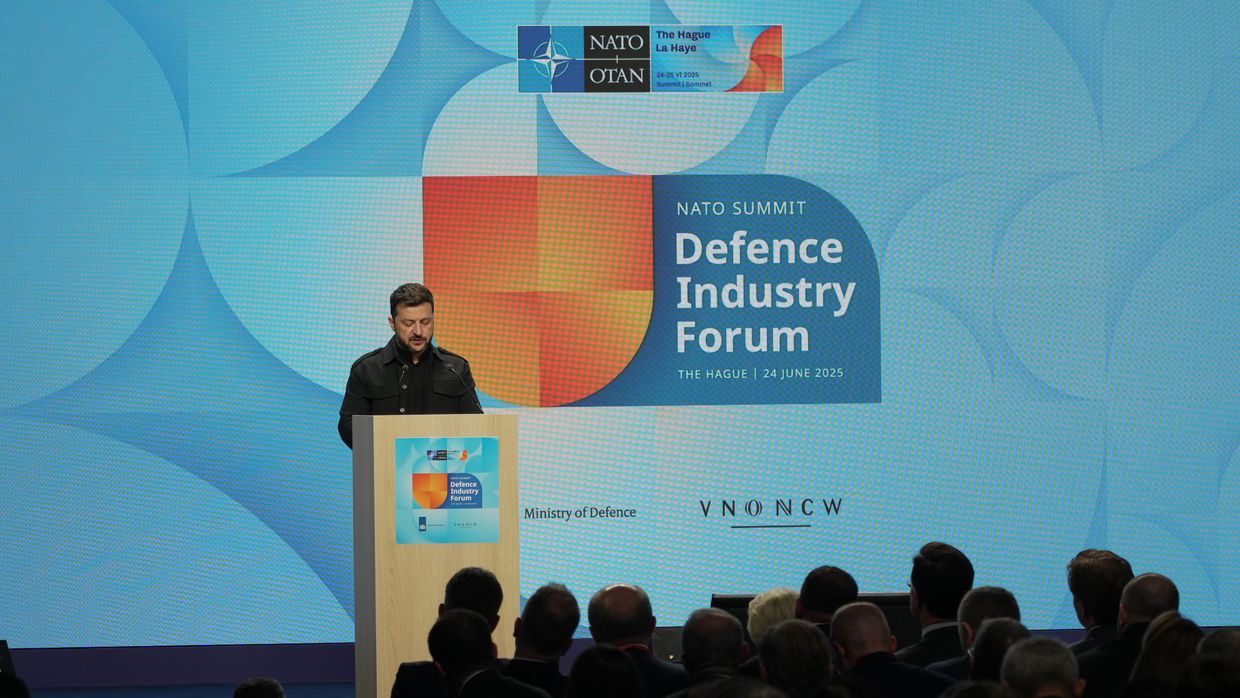
 The Kyiv IndependentKollen Post