❌

Vue normale

Russia kept sneaking troops through gas pipes behind Ukrainian lines. Now Ukraine has gone more than 15 km underground to do the same to Russia

22 octobre 2026 à 09:38

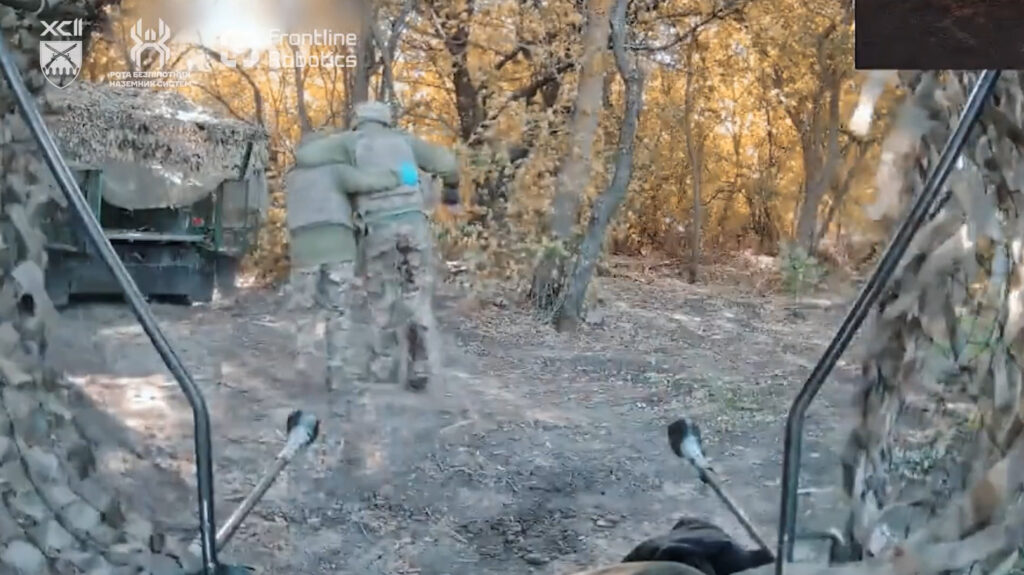
Russian troops captured during Operation Veles, October 2026. Screenshot from a video by the 2nd Corps of Ukraine’s National Guard

Ukraine's Defense Forces advanced more than 15 km through underground utility tunnels into Russia's rear on the Kupiansk axis in Kharkiv Oblast, the Khartiia Corps of Ukraine's National Guard reported on 22 October. The corps called it Operation Veles. The underground advance was paired with attacks on the surface and drone strikes, hitting Russian forces from two directions, the corps told Militarnyi.

Russian troops have repeatedly crawled through gas pipelines around Kupiansk to get behind Ukrainian lines, even after Ukraine reported confident control of the city in February. This time, Ukraine went underground itself. The operation took away Russia's chance to get into Kupiansk's rear, the corps said.

The corps reported more than 30 Russian soldiers captured and Russian losses of more than 100. Militarnyi, citing the unit, put the number of Russian troops killed at over 100.

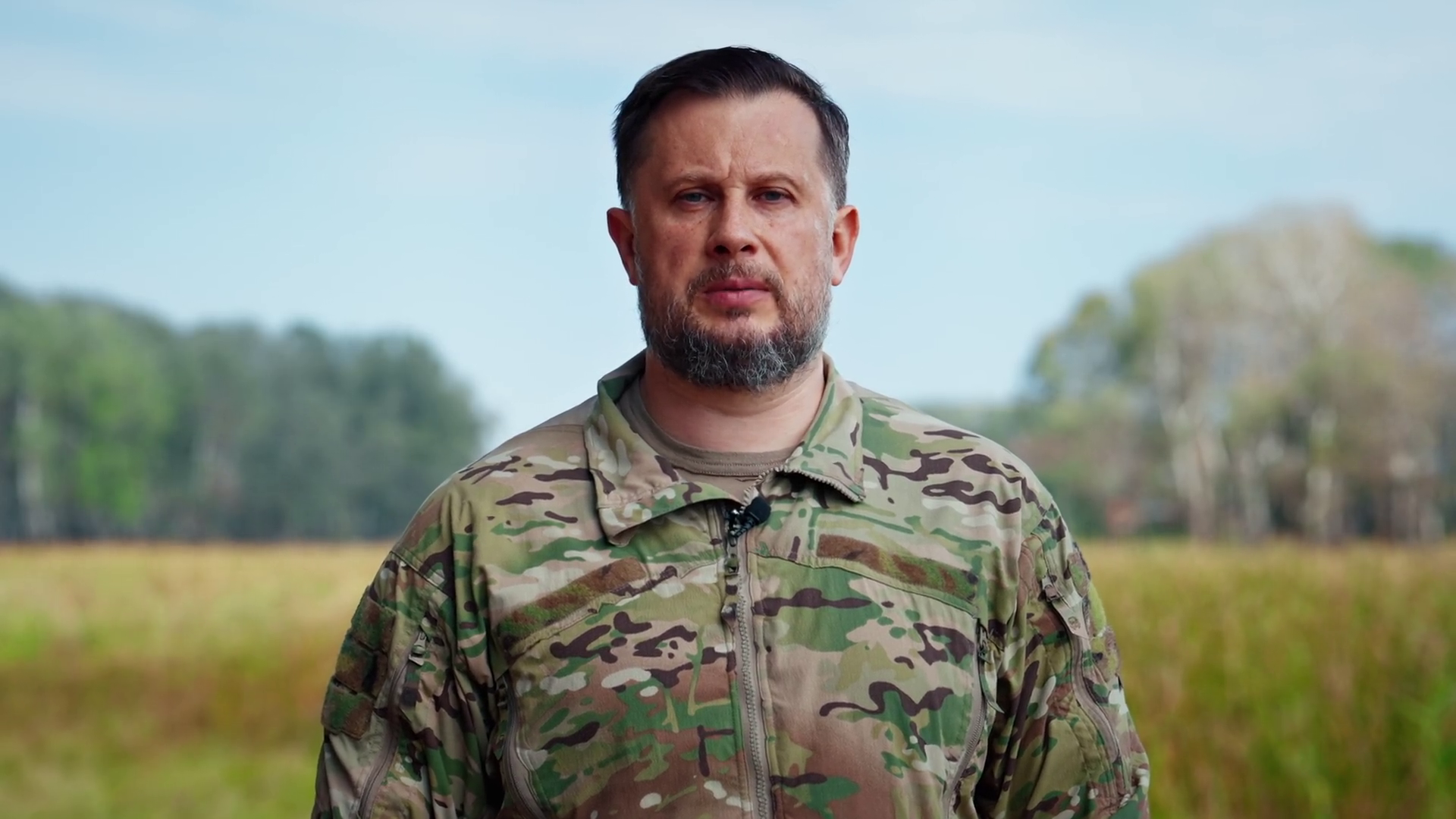
Khartiia studied how Russian troops moved through pipes before going underground itself, the corps commander, Brigadier General Ihor Obolenskyi, said.

"We watched how the enemy works underground and studied how they do it. The Russians intended to use gas pipelines to get into the rear of our troops. So we went underground ourselves. We anticipated the enemy's actions and mastered the tactics of underground combat," he said.

Boots under ground!

Asymmetric breakthrough in the Kharkiv Region: Khartiia Corps conducts the subterranean counteroffensive Operation VELES, advancing 15 km underground.

Corps Commander General Ihor Obolenskyi explains a unique operation. pic.twitter.com/qRQ93kckpK

— Khartiia Corps in English (@khartiia_eng) October 22, 2026

For the operation, troops trained physically and psychologically to fight in confined spaces, sappers and engineers prepared the underground route, and special communications, navigation, silent logistics, and life-support systems were put in place, Khartiia told Militarnyi. The operation was named after Veles, the Slavic pagan god of the underworld.

Khartiia's brigade, the R.U.H. assault regiment, the Lava drone regiment, the Achilles drone brigade, and units of Ukraine's military intelligence, including the Freedom of Russia Legion and the Russian Volunteer Corps, took part, the corps said.

Russia has used pipelines to infiltrate before

By September 2025, Russian forces had used pipelines to move troops behind Ukrainian lines three times, Ukrainian monitoring project DeepState reported on 12 September 2025. The first was in Avdiivka, the second near Sudzha, and the third near Kupiansk, where groups crossed the Oskil River through a gas pipe.

Near Sudzha in March 2025, Russian special forces walked through a pipeline that until recently had carried Russian gas to Europe, the Associated Press reported. A pro-Kremlin blogger claimed they covered about 15 km and that some spent several days inside.

Russian troops kept using the pipeline near Kupiansk this year. On 27 September, Khartiia's reconnaissance drones recorded Russian forces leading nine civilians, including children, elderly people, and a person on crutches, through the gas pipeline out of the Kupiansk community. Men of military age in civilian clothes walked alongside them, and the corps believes they were Russian soldiers using the group as cover to withdraw. Ukrainian troops held fire because of the civilians, the corps said, adding that the case has been documented for a war crimes investigation.
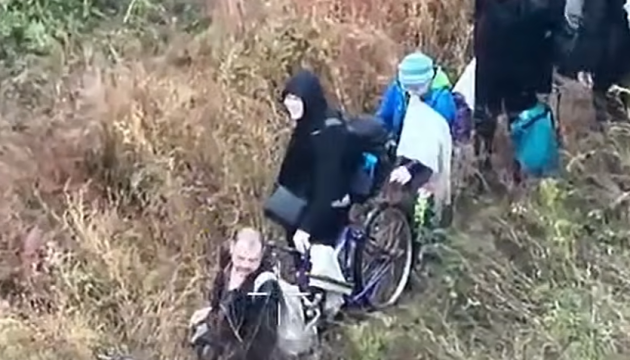
Civilians led through a gas pipeline out of the Kupiansk community, Kharkiv Oblast, by people the Khartiia Corps identifies as Russian forces, 27 September 2026
Civilians led through a gas pipeline out of the Kupiansk community, Kharkiv Oblast, by people the Khartiia Corps identifies as Russian forces, 27 September 2026. Screenshot: Khartiia Corps

Why the war is moving underground

Drones, constant surveillance, and AI-assisted targeting have made the battlefield surface transparent and deadly, argue John Spencer, chair of urban warfare studies at West Point's Modern War Institute, and Col. Drew Craig, principal military engineering staff officer at NATO's Allied Rapid Reaction Corps. In an August analysis, they write that soldiers in Ukraine describe a "death zone" of some 30 km, where moving above ground can draw an attack within minutes. When firepower makes the surface too dangerous, armies have historically gone underground, as they did in World War I and Vietnam, and more recently in Gaza and Lebanon.

"Armies that cannot survive above ground must adapt below it," the authors write.

Fighting in tunnels brings its own requirements, the authors write: detecting the enemy by sound and vibration, and specialized unmanned systems that cannot rely on GPS or stable radio links. Long stretches underground also take a severe psychological and physical toll on soldiers.

Western militaries are not ready for this, Spencer and Craig write. No NATO partner maintains even general capabilities for large-scale underground warfare, and US and British efforts focused mainly on detecting and clearing tunnels rather than occupying and operating in them.
Fog blinds Ukrainian drones. Russia resumes mechanized assaults in the south after months-long pause, military officials say

22 octobre 2026 à 07:39

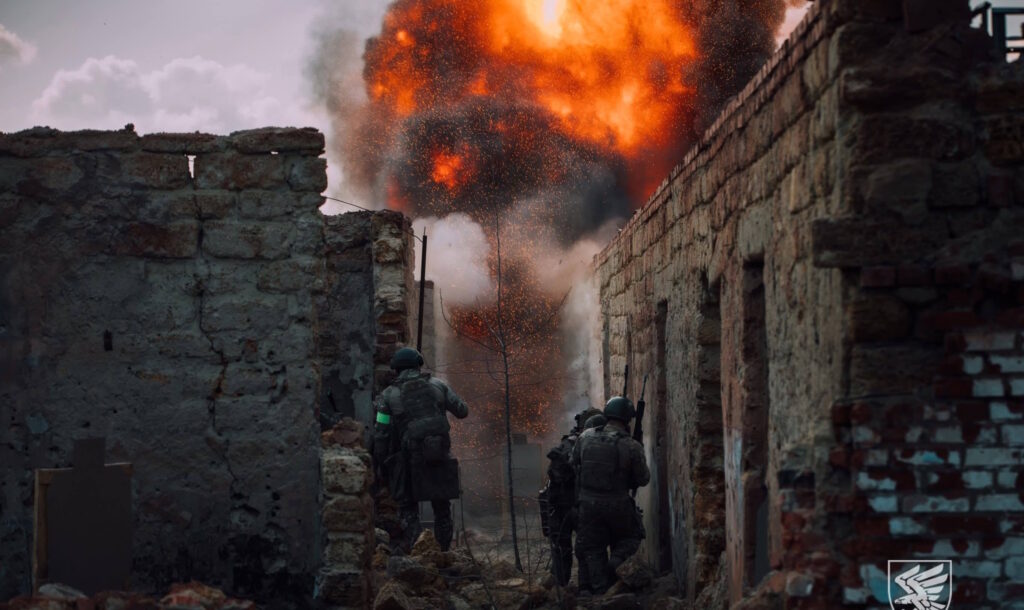
Ukrainian soldiers. Source: 95th Separate Airborne Assault Polissya Brigade

Russian forces are preparing to resume mechanized assaults in southern Ukraine after a pause of several months and are moving armored vehicles toward areas where they plan to launch offensives, Anastasiia Shevchenko, deputy spokesperson for the Southern Forces Grouping, told Ukrinform on 22 October. The Huliaipole axis remains the hottest in the Southern grouping’s zone, with 10 to 20 combat engagements reported on an average day, she said.

On the Huliaipole axis, one of Russia’s largest force groupings is fighting Ukrainian forces, comprising units from several Russian combined-arms armies, the spokesperson says. Over the past week, as the weather worsened, Russian forces began local assaults there with infantry, motorcycles, and armored vehicles, seeking to break through toward Zaporizhzhia and blockade the city, Ukraine’s 7th Air Assault Corps reported, adding that the area is one of Russia’s key priorities in southern Ukraine. Russia has used fog this way before: last November, Russian troops moved under its cover to avoid detection by Ukrainian drones as they advanced on Huliaipole, the Institute for the Study of War assessed.

Russian forces have abandoned large-scale assaults across a broad front and are attempting to infiltrate Ukrainian positions in small groups. They periodically use motorcycles and quad bikes for assaults, Shevchenko said, adding that these vehicles are fast and maneuverable.

However, Russian forces should not expect to advance unimpeded, the spokesperson noted. Ukrainian units control Russian supply routes and systematically detect and strike Russian personnel and equipment while they are still moving toward their launch positions, she added.

“Specifically, speaking in numbers, since the beginning of October alone, units of the Southern Forces Grouping (Forces) have destroyed more than 3,000 occupiers and 1,300 pieces of weapons and military equipment. Thus, the enemy is suffering significant losses in the operational zone of the Southern Forces Grouping (Forces),” the spokesperson concluded.

Ukrainian drones disrupt Russian logistics

Russian forces had stopped using military vehicles because Ukraine’s unmanned systems forces controlled their logistics, Shevchenko said in comments to Ukrinform on 16 September. Ukrainian drones spotted Russian troops and equipment in time and struck them mostly on their routes of advance, she said.

Ukrainian air strikes destroyed bridges near Polohy in Zaporizhzhia Oblast, complicating Russian supply operations along the Huliaipole axis, Ukraine’s 7th Air Assault Corps reported on 21 September. Russian forces had used these bridges to move personnel, heavy equipment, and ammunition for their offensive toward Orikhiv. Disruptions to logistics have forced Russian units to rely more on motorcycles, which are more vulnerable to Ukrainian strikes, the corps said.

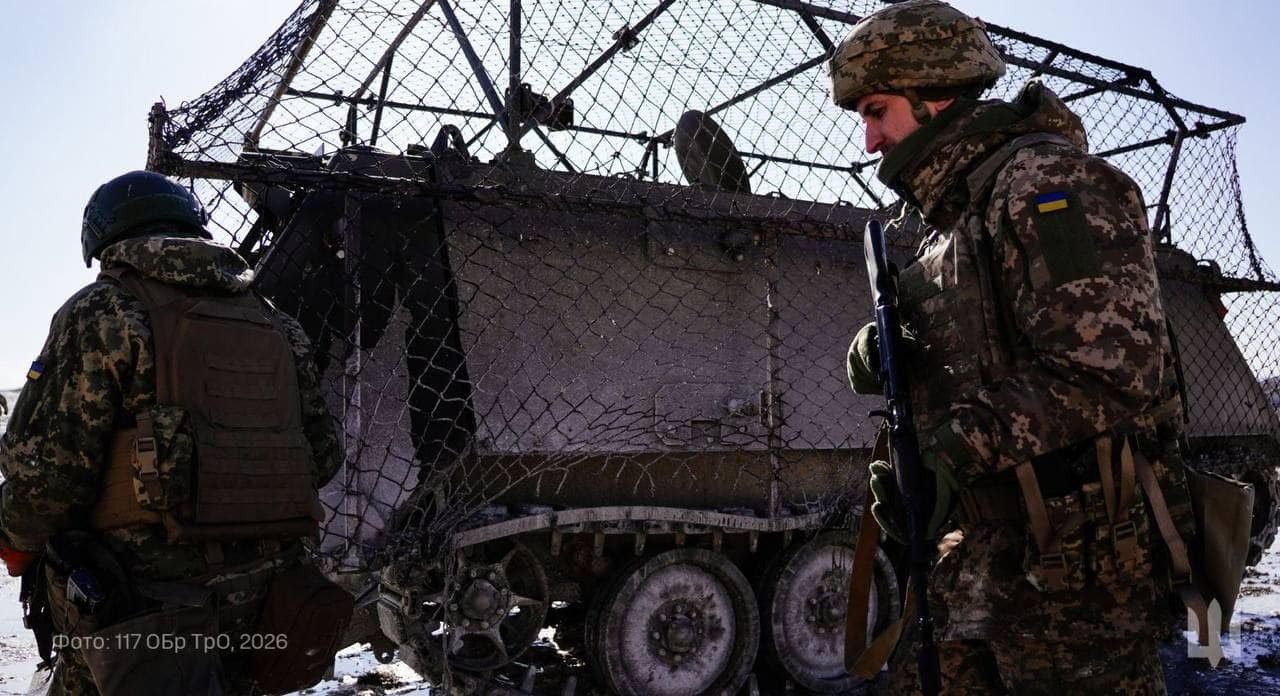
before russia's all-out war ukraine imported almost weapons four years later buys more than any country earth · post ukrainian soldiers 117th separate territorial defense brigade beside armored vehicle fitted
Explore further

Ukraine timed its Huliaipole operation around the weather — and it worked. Here’s why that won’t happen again soon

Russian forces are also expected to use fog and rain as cover for assaults, Mykola Zinko, deputy commander of the unmanned systems battalion of the 5th Assault Brigade, said on 19 October. Russia has brought up reserves, and its heavy equipment will move out under the fog, he said.

Ukraine’s top war charity names only way to save $25,000 to $4 million each time cheap Russian jet-powered drone is shot down

21 octobre 2026 à 11:19

ukraine recovers russia's undamaged geran-3 jet kamikaze drone carrying camera live-link equipment (video) · post russian jet-powered lying cornfield after being recovered intact 16 2025 реактивний дрон-камікадзе герань-3 вересня року

Intercepting a jet-powered Geran can cost anywhere from $2,000 to $4 million depending on the weapon used. Cheap interceptor drones are the only option that keeps air defense affordable, the foundation of Ukrainian top war volunteer Serhii Sternenko said on Telegram.

Russia’s jet Gerans now carry every characteristic of a small cruise missile, and Russians keep raising their speed in answer to each Ukrainian countermeasure. Former commander-in-chief Valerii Zaluzhnyi has framed the shift bluntly: an expensive Cold War missile has become a cheap weapon fired in bulk, and the drone is now “a missile in all but name,” affordable to any side, not only wealthy countries.

Sternenko heads a charitable foundation that has purchased 291,502 FPV drones, which have helped Ukraine’s military down more than 12,954 aerial targets. Also, has advised the team of former Defense Minister Mykhailo Fedorov.

Three ways to kill a jet Geran, and what each costs

The foundation laid out the price of each method:

  • Aircraft (F-16, MiG-29, Su-27, Mirage 2000): $25,000 to $1.2 million per kill. Effective, but the stock of missiles is critically low, and some air-to-air types are no longer being replenished.
  • Surface-to-air and shoulder-fired systems (IRIS-T, NASAMS, Vampire, Avenger): about $30,000 to $4 million. Good for shielding key sites, but a missile capable of reaching a jet Geran at 6 to 7 kilometers costs $0.5 million to $4 million.
  • Interceptor drones (makers undisclosed): from $2,000. Cheap, with trained operators ready, but not yet scalable.

Why the cheapest option is the one that matters

No single tool is enough, the foundation stresses. Downing jet Gerans still needs aircraft, small aviation and missile systems together, but it is the interceptors that make the defense affordable, taking out the cheaper Shaheds and saving costly missiles for targets nothing else can reach.

The foundation says it has found a way to counter drones that already match small cruise missiles, working with Ukrainian manufacturers, without disclosing details. The method is far cheaper than other ways of downing jet Gerans and significantly strengthens air defense, it says, as part of a wider Ukrainian push to field interceptor drones fast enough to catch Russia’s fastest weapons.

Ukraine’s interceptor crews destroyed thousands of Russian aerial targets during Vivaldi. Jet-powered Shaheds remain a challenge

21 octobre 2026 à 10:27

Betsyk, commander of an interceptor battalion in Ukraine’s 3rd Army Corps.

The commander of an interceptor battalion in Ukraine’s 3rd Army Corps said his unit destroyed several thousand Russian aerial targets during Operation Vivaldi, ArmyInform, the Defense Ministry’s news agency, reported on 21 October.

Operation Vivaldi is a Ukrainian counteroffensive north of Lyman in Donetsk Oblast, where the 3rd Army Corps has reported liberating settlements. In its third phase, Ukrainian forces reclaimed five settlements and expanded their gains to 176 square kilometers. Strikes on Russian logistics and electronic warfare likely neutralized Russia’s drone defenses before Ukraine sent in armor, the Institute for the Study of War assessed.

The commander, who uses the callsign “Betsyk,” leads the interceptor battalion of the 1030th Anti-Aircraft Missile-Artillery Regiment “Aquila,” part of the 3rd Army Corps. He said Russian forces deployed large numbers of reconnaissance drones to locate Ukrainian positions after the corps began advancing.

Betsyk named Zala, Orlan, Supercam, Merlin, and Knyaz Veshchiy Oleg among the reconnaissance drones used by Russian forces.

Russia also brought in reinforcements and units operating strike drones, including first-person-view (FPV) quadcopters, Molniya fixed-wing FPV drones, and Lancet crews, he said. At one stage, Russian forces deployed crews from their Rubicon drone unit to disrupt the advance, but the move did not change the situation.

ukraine retook kolodiazi north lyman its drones hit 200-plus russian vehicles operation vivaldi’s last phase commander says · post northern donetsk oblast neighboring areas territory during vivaldi blue 2022 green
Explore further

Ukraine retook Kolodiazi north of Lyman as its drones hit 200-plus Russian vehicles in Operation Vivaldi’s last phase, Ukrainian drone officer says

Betsyk said his battalion’s work deprived Russian forces of the ability to strike Ukrainian troops and track their movements.

Jet-powered Shaheds: speed is the main challenge

The regiment also works against Russian strike drones heading for targets behind the front line. Betsyk said interceptor crews had destroyed some jet-powered drones, but not in significant numbers.

The main difficulty is speed, he said. Interceptor drones need to reach 500–600 km/h to intercept Russian jet-powered attack drones, according to Betsyk.

For now, the regiment mainly uses conventional air-defense systems against these targets: self-propelled anti-aircraft systems, surface-to-air missile systems, and portable surface-to-air missile systems. Betsyk said these systems were historically designed to engage jet-powered targets.

He compared the current challenge with the early use of piston-powered Shaheds. Those drones initially posed a serious threat but later became easier for Ukrainian air defenses to counter. Russia has largely stopped using piston-powered Shaheds on most fronts since summer, he said, but continues to use piston-powered Gerbera drones, which are relatively cheap and can partly exhaust Ukrainian air defenses. The main drones Russian forces use now are jet-powered Shaheds, he said.

Betsyk expects Russian forces to adapt if Ukraine fields effective interceptors against jet-powered drones. They will seek ways to evade the interceptors, increase speed, improve navigation, and change their tactics, he said. However, he added that the battalion had not observed a major evolution so far and did not expect the drones’ speed to double.

What the corps says Vivaldi achieved

Separately, 3rd Army Corps commander Andrii Biletskyi said Ukrainian forces retook 277 square kilometers and 16 settlements during Operation Vivaldi, Ukrainska Pravda reported. Biletskyi also said Russian losses exceeded 8,000 personnel, according to ArmyInform. These figures are Ukrainian claims and have not been independently verified.

Russia’s Rubicon hunts Ukrainian drone pilots. In Vivaldi, it became the target, and its morale fell sharply, says the Ukrainian general

20 octobre 2026 à 08:23

russia's rubicon built hunt ukrainian drone pilots vivaldi became target its morale broke says general · post left right major dmytro rohoziuk acting commander ukraine’s third army corps; brigadier andrii

Russia’s Rubicon drone unit, which is sent to hunt Ukrainian drone pilots, was not used to being hunted itself, Brigadier General Andrii Biletskyi told journalists on 19 October. He was summing up Operation Vivaldi, which his Third Army Corps fought in northern Donetsk Oblast from May to mid-October. Once its pilots realized they were being killed, Rubicon’s morale dropped sharply, he said.

Russia has fought for 12 years to take all of Donetsk Oblast, and Sloviansk and Kramatorsk anchor the fortress belt of cities Ukraine still holds there. Vivaldi retook 277 km² in northern Donetsk Oblast. Biletskyi says it destroyed Russia’s bridgehead on the Chornyi Zherebets River and forced Moscow to drop its plan to bypass Lyman from the north and encircle the two cities. On that front, the Third Corps had flagged Rubicon, Russia’s elite drone unit, as a threat.

Hunting the hunters

Once a Rubicon position was found, the Third Assault Brigade and the KRAKEN drone regiment committed any number of FPV and bomber drones to destroy its crews, Biletskyi said.

The brigade’s commander, Yaroslav Levenets, said his troops prepared for Rubicon’s arrival and concentrated on killing its pilots. He gave no details.

“Not stable in defense,” Levenets said of Rubicon’s troops.

They dislike sitting in trenches, he said, and under pressure they grow nervous and change positions.

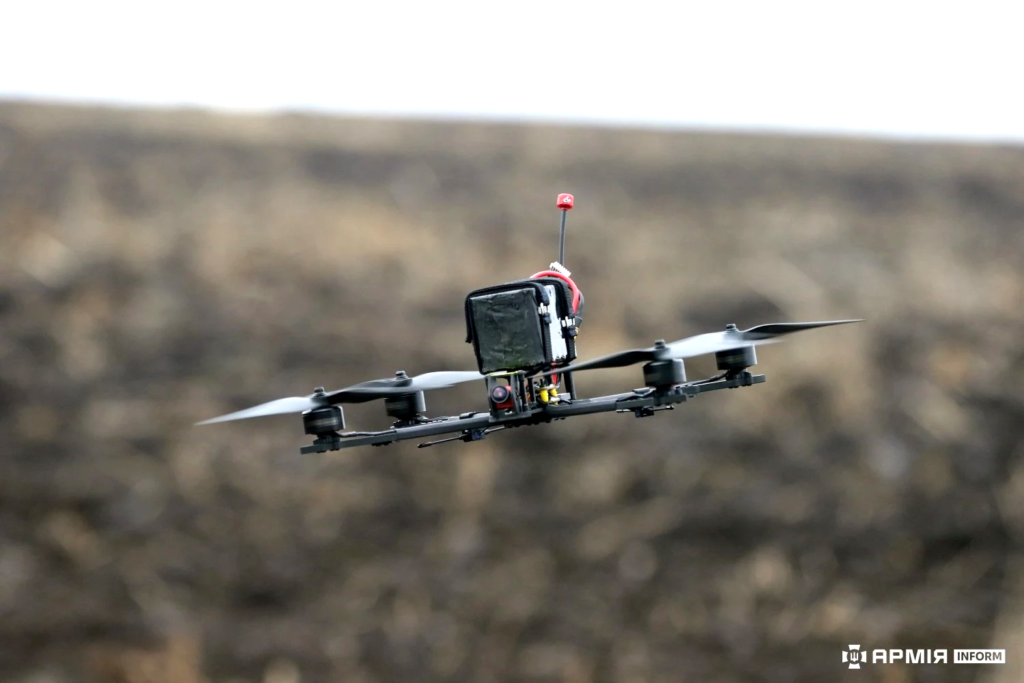
An FPV drone.
An FPV drone. Illustrative photo: ArmyInform

Named for four seasons

Biletskyi said the name was chosen at the very start of planning, in winter 2025–2026, many months before the operation began. The original plan had four stages, one for each season, and later grew to slightly more, ArmyInform reported.

When he first unveiled the operation in September, he put it this way:

“Vivaldi, as is known, has four seasons. And this is only the first one.”

He credited two planners, known by the call signs Yurist and Leshyi. Leshyi, an assault soldier wounded seven times who later moved to staff work, was killed. Yurist was seriously wounded.

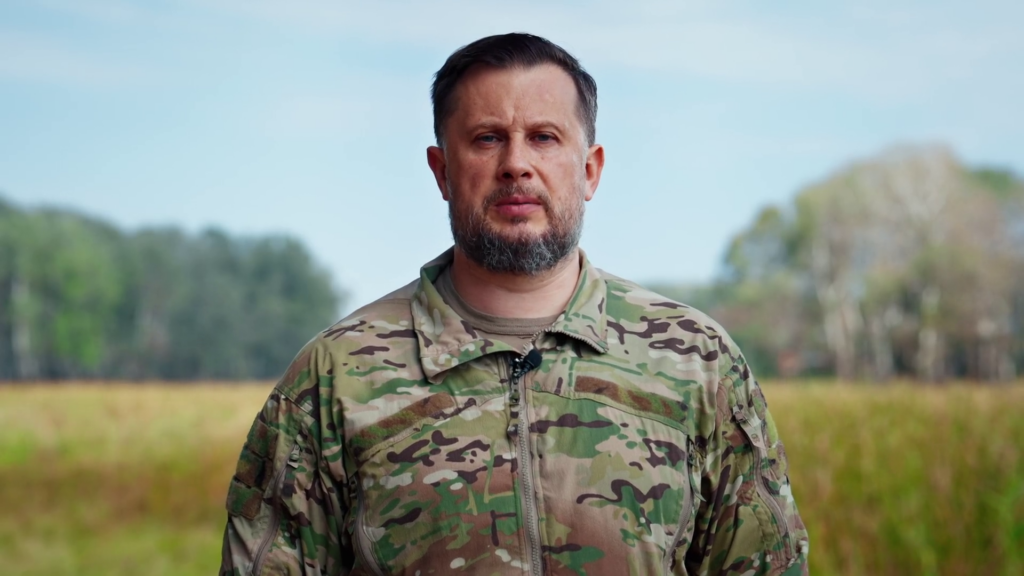
Ukraine's Third Army Corps commander Brigadier General Andrii Biletskyi announcing new developments in "Operation Vivaldi," 20 September 2026. Screenshot from video: Ukraine's Third Army Corps
Explore further

Ukraine blocks Russia from outflanking its fortress cities in Donbas, retaking 277 square kilometers and hitting 8,000 Russian troops

A new hand at the Third Corps

Major Dmytro Rohoziuk is now acting commander of the Third Army Corps, the corps press service said on 20 October. The press service said the move is not a transfer, and Biletskyi keeps his formal post as corps commander while he leads the “Center” grouping of the Third, 11th, and 19th corps.

Major Dmytro Rohoziuk, acting commander of Ukraine’s Third Army Corps.
Major Dmytro Rohoziuk, acting commander of Ukraine’s Third Army Corps. Photo: Armed Forces of Ukraine

Rohoziuk took over the 60th Mechanized Brigade in October 2025. Its previous commander was arrested in January after the State Bureau of Investigation accused him of embezzling about $1 million in weapons procurement. The brigade fought in all four phases of Vivaldi and retook Kolodiazi without street fighting.

Ukrainian troops capture a Russian infiltrator carrying a Russian flag during Operation Vivaldi in northern Donetsk Oblast.
Ukrainian troops capture a Russian infiltrator carrying a Russian flag during Operation Vivaldi in northern Donetsk Oblast. Photo: Third Army Corps

Biletskyi also declined command of the Ground Forces, which oversee mobilization.

“There’s no point taking on something you don’t truly believe you can improve,” he said.

Biletskyi’s count

Russian losses in Vivaldi topped 8,000 troops, and about 270 Russian soldiers were taken prisoner, Biletskyi said. More than 20 officers surrendered, including a chief of staff and three company commanders.

The territory matters less than disrupting Russia’s strategic plan, he said. Russian forces still press toward Dobropillia, where Ukraine is counterattacking.

Ukraine retook Kolodiazi north of Lyman as its drones hit 200-plus Russian vehicles in Operation Vivaldi’s last phase, Ukrainian drone officer says

18 octobre 2026 à 09:39

ukraine retook kolodiazi north lyman its drones hit 200-plus russian vehicles operation vivaldi’s last phase commander says · post northern donetsk oblast neighboring areas territory during vivaldi blue 2022 green

Ukrainian infantry encircled and retook the village of Kolodiazi north of Lyman without getting drawn into street fighting, while a drone battalion kept the sky above them shut, the battalion’s chief of staff told Suspilne on 18 October. The village fell during the fourth and final phase of Operation Vivaldi, Ukraine’s counteroffensive in northern Donetsk Oblast.

For years now, Russia has aimed to seize Lyman and cross the Siverskyi Donets River. It needs this area to encircle Ukraine’s fortress belt of Donetsk Oblast cities from the northwest, ISW assesses. Vivaldi’s four phases retook 277 km² and 16 settlements on that approach, and a veteran of the operation has said Ukraine’s assault troops suffered more than ten times fewer casualties than Russian forces doing it.

Drones over the infantry

The 60th Mechanized Brigade fought in all four phases of Vivaldi and took Kolodiazi in the last one, said the chief of staff of the brigade’s Fatum unmanned systems battalion, callsign Krash.

“Our task, as an unmanned systems battalion, was to escort and ‘close’ the air in front of our infantry to make it impossible for the enemy to hit it. To suppress all the firing assets possible,” he said.

The brigade’s 3rd Mechanized Battalion, the main striking force, encircled Kolodiazi and retook it without getting drawn into street fighting, Krash said. The 1st Mechanized Battalion kept Russian reinforcements out of the area, while drone crews suppressed artillery, hit supply runs, and worked against Russian drone operators.

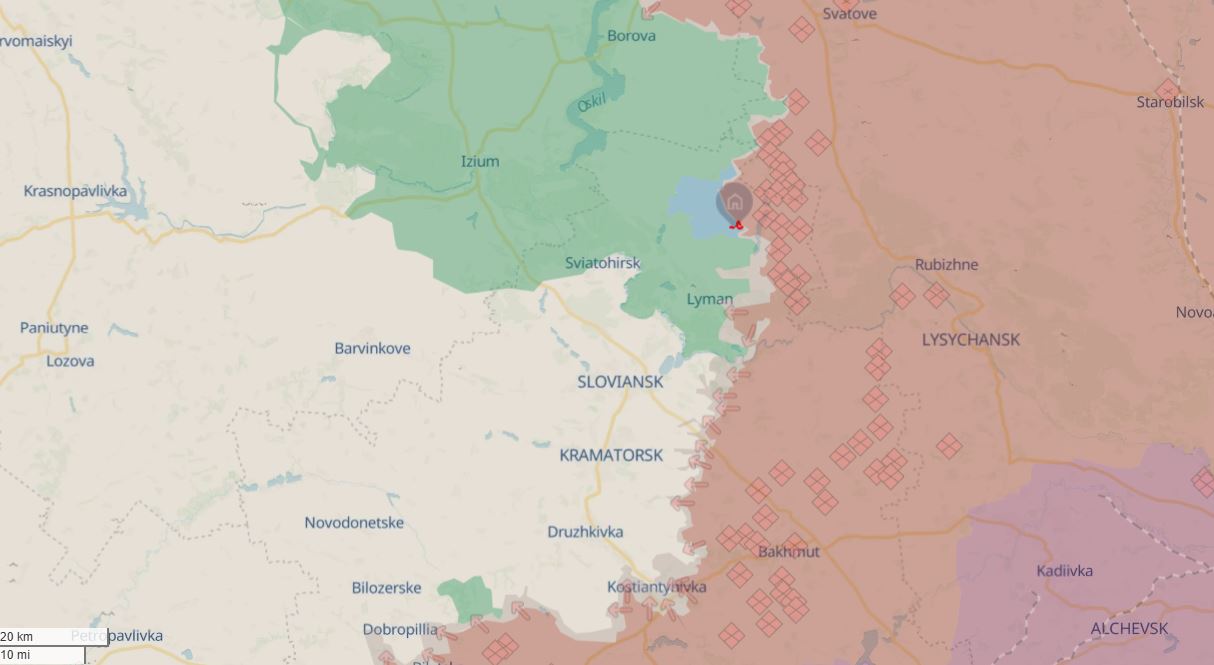
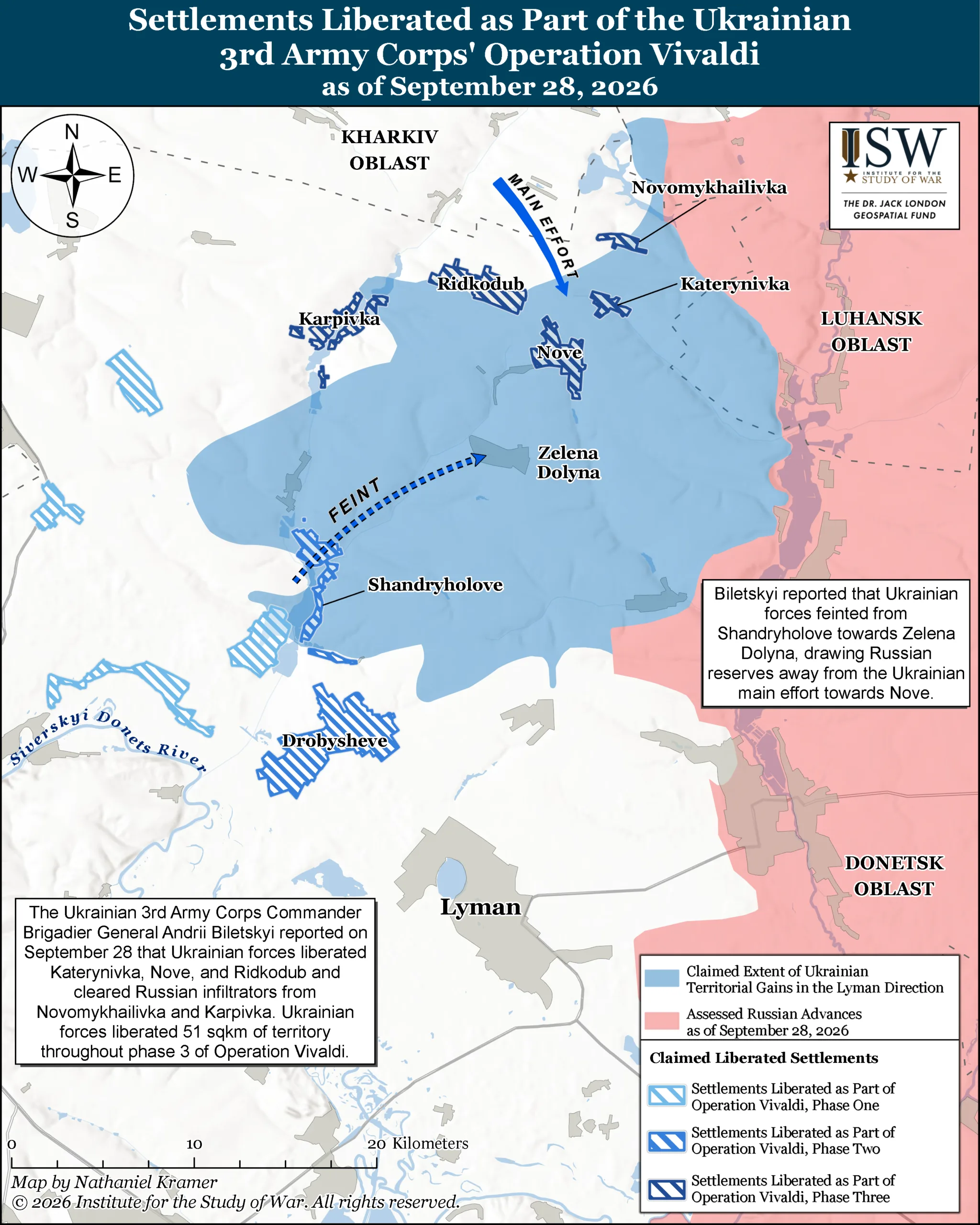
Map of settlements Ukraine's 3rd Army Corps says it liberated north of Lyman, as of 28 September 2026.
Explore further

Vivaldi counteroffensive advanced after Ukraine took Russia’s drones out of the fight, ISW assesses

500 troops and 200-plus vehicles

The drone battalion killed or wounded about 500 Russian troops during the fourth phase and struck Russian armored vehicles, trucks, and motorbikes, its chief of staff said.

“More than two hundred pieces of various equipment: Grad and Uragan multiple rocket launchers, various armored vehicles, tanks, armored combat vehicles. Most of all motorbikes and quad bikes, there the count runs into the hundreds. This is our enemy’s main logistics tool,” he said.

ukraine retook kolodiazi north lyman its drones hit 200-plus russian vehicles operation vivaldi’s last phase commander says · post sector now lyman-tactical-area-october-16-2026 news ukrainian reports
Lyman sector now. Map: ISW

Ghost villages

The villages retaken in northern Donetsk Oblast are nearly empty of civilians, Krash said.

“It’s very typical for de-occupied settlements: these are ghost towns. You can see right away where the occupier stepped. All the settlements are under the control of the Third Army Corps, our forces stand there and prevent enemy infiltration. But civilian life in these towns is either absent or very scarce,” he said.

Third Army Corps commander Brigadier General Andrii Biletskyi reported Kolodiazi’s liberation, along with Zelena Dolyna and Lypove, when he summed up Vivaldi’s fourth phase, which secured 101 km².

White House ordered limits on Ukraine’s military satellite service — Reuters. Who made the decision remains unclear

16 octobre 2026 à 07:44

The White House, seen from Lafayette Square. File photo, June 2024.

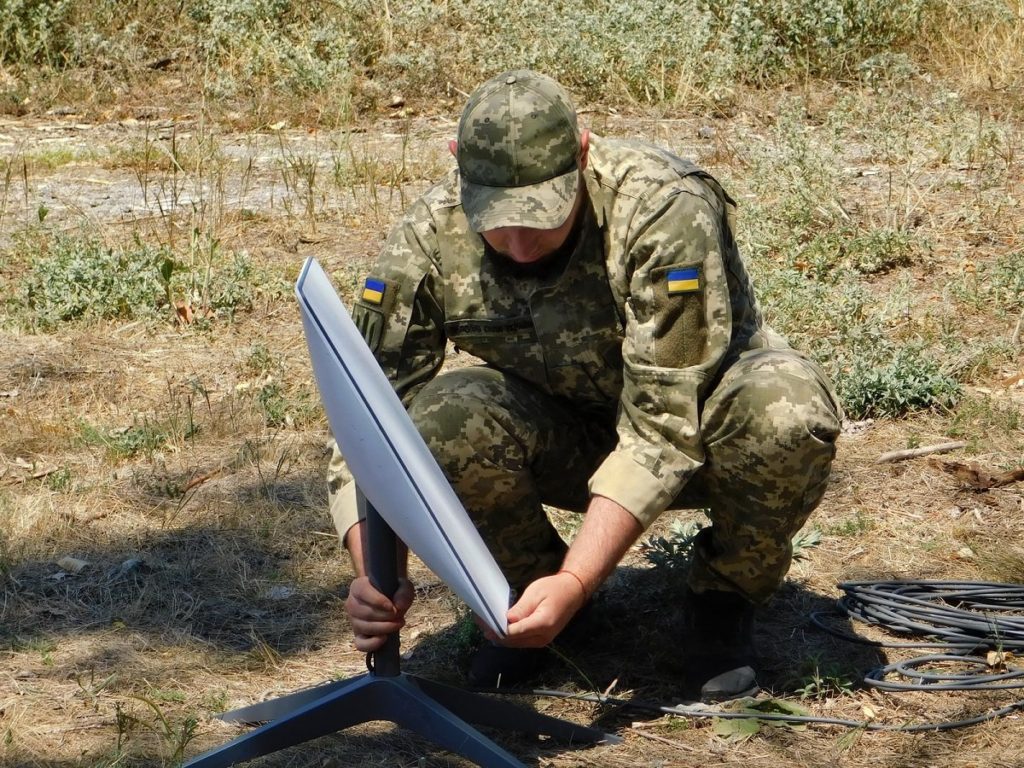
White House officials instructed Pentagon leaders to limit Starshield, SpaceX’s military-grade satellite service used by Ukrainian forces, Reuters reported on 15 October, citing three officials. The report came a day after a senior US official told Axios the Trump administration had nothing to do with the alleged Starlink restrictions.

Ukrainian forces rely on US-controlled satellite technology for battlefield operations and for intercepting Russian drones aimed at Ukrainian cities, so the latest restrictions have raised questions about how reliably they can depend on it.

    Senior US official denies president requested restrictions

    Asked about the order, a senior US official replied, “No such request was ever made by the president.” The White House did not respond to questions about whether other administration officials might have made the request.

    Ukrainian officials contacted the White House, State Department and Pentagon on 13 and 14 October and were told it was a White House decision

    European allies question Starlink restrictions

    European officials raised concerns about the restrictions. German Foreign Minister Johann Wadephul criticized the throttling and said Ukraine must continue to receive full support, Spiegel reported on 15 October. Wadephul said Germany had questions for the US, noting that Germany finances part of the Starlink technology used in Ukraine.

    On 16 October, UK Defense Secretary Wes Streeting said US Defense Secretary Pete Hegseth had assured him in a face-to-face meeting that Starlink was back up and running, the Guardian reported. However, a Ukrainian Defense Ministry source said that military-grade terminals were working in motion again, but only at speeds of up to 160 km/h.

    New data-speed restrictions disrupted drone missions

    The military Starshield package previously had no data-speed restrictions, Ukraine’s 7th Rapid Response Corps told Novynarnia. Ukrainian officials said that after the restrictions were imposed, terminals disconnected when drones exceeded 160 km/h and sometimes at 80 km/h.

    The Corps also reported 10–20-second connection drops at 110–120 km/h on the Huliaipole front, which made drones harder to control. One unit had to cancel some missions.

    The restrictions came as US President Donald Trump pressed Kyiv to stop striking Russian oil refineries, blaming them for soaring energy prices ahead of November’s midterm elections. Ukraine suspects SpaceX imposed the restrictions to pressure Kyiv over the refinery strikes, but that motive has not been confirmed.

    “Operation to strike Russian targets deep in swamps continues”: Ukrainian Commander Madiar says his unit hits 7,306 Russian troops in first half of October, up 59% on August

    15 octobre 2026 à 10:52

    A Ukrainian drone operator.

    Ukraine’s operation to strike Russian targets at operational and strategic depth is continuing, Unmanned Systems Forces Commander Robert “Madiar” Brovdi said. He listed data centers, military and strategic sites, and energy hubs “deep in the swamps,” his usual name for Russia.

    The fresh statement lands amid fears that a Starlink disruption could break front-line operations.

    Overnight into 14 October, the 7th Air Assault Corps said the faster StarShield military package, an advanced version of Starlink that its units depend on, had been throttled, halting a series of missions. Against that backdrop, Brovdi says his branch’s strikes are not falling.

    “A serious brawl is underway in conditions of significantly worse weather, drizzle, fog, and precipitation,” Brovdi says, underscoring that the pace held through conditions that usually ground drones.

    Over the first two weeks of October, the drone branch verified 7,306 Russian soldiers killed or wounded, up 59.45% on the same period in August and 24.65% in September, he writes on his Telegram page, calling the trend the opposite of de-escalation.

    Where the killing climbs fastest, and who is doing it

    One sector stands out above the rest. On the Dobropillia-Pokrovsk axis, in the zone of the Azov group, the branch’s drones accounted for 3,221 Russian losses in the first two weeks of October, a 102% jump on August and 42.5 percent on September, Brovdi reports.

    The figures cover only the drone branch and are verified in the military’s Delta, the video fixation system, he stresses, so the full count of Russian losses across all Ukrainian forces can be much higher.

    The scale of a campaign that will not slow down

    The numbers behind the claim are large. Over the first two weeks of October, the branch flew 124,500 combat missions, strike and reconnaissance, and hit 32,172 Russian targets, of which manpower was 22.7%, by his count.

    That works out to about 2,298 Russian targets a day, he adds, the kind of tempo that makes any talk of a lull on the front hard to square with what his drones are recording. The deep-strike half of that campaign has grown 1,150% over 2026, reaching military-industrial and energy sites far inside Russia, according to Euromaidan Press.

    Musk pointed at the US military over Ukraine’s satellite limits. Now a US official says the administration had nothing to do with them

    15 octobre 2026 à 06:43

    The Starlink logo on a smartphone screen.

    Ukrainian officials contacted the White House, CIA, and Pentagon after the restrictions, which Ukraine says affected both Starlink and Starshield, Axios reported on 14 October. A senior US official told Axios the Trump administration had nothing to do with the restrictions. On the same day, Elon Musk said on X that Starshield systems are owned and controlled by the US government, and that any speed or usage limits are decided by the US military and ultimately the president.

    The restrictions could affect Ukraine’s ability to intercept Russian attack drones and carry out mid-range strikes against Russian forces and military targets in occupied Ukrainian territories. A speed cap of 160 km/h was insufficient to intercept some jet-powered drones, an unnamed Ukrainian official told Axios. Ukrainian officials told Axios they suspect SpaceX imposed the restrictions to pressure Kyiv to accept US President Donald Trump’s demand to stop striking Russian oil refineries, though the motive remains unconfirmed. But Starlink does not work inside Russia, and the drones attacking Russian oil facilities use other communications systems, according to Reuters.

    What Musk and the White House said

    Musk did not directly address the throttling, Axios noted. Starlink, he wrote, “is a commercial service owned and controlled by SpaceX,” limited to civilian or defensive use.

    White House officials told the Ukrainians they don’t have control over SpaceX, two sources told Axios. One said the administration would reach out to SpaceX to figure out what happened. The White House did not immediately respond to Axios’s request for comment.

    How the cap disrupted drone missions

    Presidential adviser Serhii Beskrestnov said on 14 October that SpaceX had imposed a 160 km/h limit on Starshield’s “military package” overnight without warning. Ukraine’s 7th Rapid Reaction Corps said mid-range strike drones must reach high speed quickly and that an unstable connection “will make it impossible to launch such aircraft or use them as intended.” One unit on the Huliaipole front had to cancel some missions, the corps told Novynarnia.

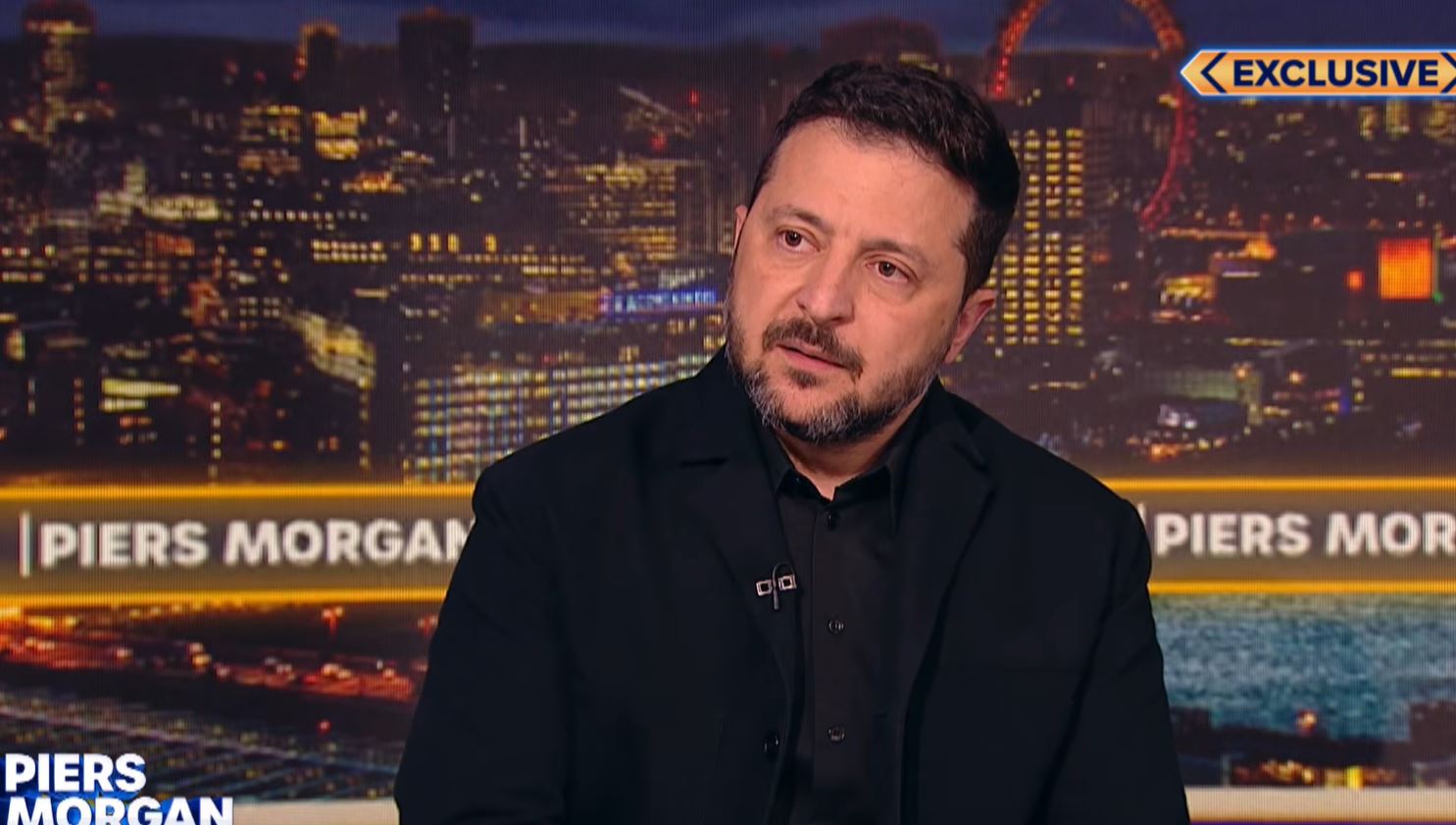
    ukraine goes back hitting russian oil after its trump-forced pause left kyiv without warnings incoming ballistic missiles · post ukrainian president volodymyr zelenskyy during interview piers morgan london 14 2026
    Explore further

    Ukraine is going back to hitting Russian oil after its Trump-pressured pause, during which Kyiv got no US warnings of incoming ballistic missiles

    Ukrainian officials told Axios the system turned off when drones exceeded 160 km/h, and sometimes 80 km/h, before service was partially restored on 14 October. The Defense Ministry said SpaceX continues to restrict Starlink to 160 km/h and that it remains in communication “with partners and SpaceX regarding stable service conditions and the prevention of sudden restrictions,” Axios reported.

    A diesel deal

    The restrictions followed Trump’s 9 October deal with Russian President Vladimir Putin easing sanctions on Russian diesel. A day later, Trump told reporters: “We said you could do whatever you want to Russia, don’t hit the refineries,” the Kyiv Independent reported.

    Ukraine blocks Russia from outflanking its fortress cities in Donbas, retaking 277 square kilometers and hitting 8,000 Russian troops

    14 octobre 2026 à 16:47

    Ukraine's Third Army Corps commander Brigadier General Andrii Biletskyi announcing new developments in "Operation Vivaldi," 20 September 2026. Screenshot from video: Ukraine's Third Army Corps

    Ukraine has completed its Operation Vivaldi, aimed at protecting its fortress belt cities of Donetsk Oblast, which helped Kyiv preserve the region from Russian occupation for 12 years. Brigadier General Andrii Biletskyi, the commander of the Third Army Corps behind the operation, has reported that the fourth phase secured 101 km² of territory. Among the latest achievements is the liberation of three settlements—Zelena Dolyna, Lypove, and Kolodiazi.

    The operation's main objective was to move Ukrainian troops into more advantageous defensive positions, Biletskyi said in the first days after the operation was made public. Vivaldi has now summed up the results of all four phases: Ukraine has established full control over 16 settlements, liberated 277 km² of territory, and inflicted 8,000 casualties on Russian forces.

    Ukraine worked against Russia's deadline

    During Operation Vivaldi, Ukrainian forces have prevented Russian troops from outflanking the Sloviansk-Kramatorsk agglomeration and cutting the Kharkiv–Sloviansk highway, a key supply route for Ukraine’s forces in Donbas, Biletskyi says.

    “We thwarted the offensive of the Zapad grouping and forced it to redeploy some units of the 1st Tank Army, which eased pressure on Kupiansk-Vuzlovyi,” Biletskyi announces.

    Previously, the Institute for the Study of War noted that Russian President Vladimir Putin was confident that Russian forces would be able to seize the entire Donetsk Oblast by the end of 2026 — the Kremlin’s latest deadline for achieving this goal.

    Ukraine’s military was on a mission to prevent this.

    Season one: clearing russian infiltration groups

    On 15 September 2026, Ukraine’s Third Army Corps announced Operation Vivaldi in northern Donetsk Oblast. During the first phase, Ukrainian troops cleared Russian groups from 75 km² of territory and liberated another 10 km².

    The Third Army Corps said it had struck Russian supply routes and fuel infrastructure, prompting Russia to relocate its fuel and lubricant reserves to Voronezh Oblast. According to the corps, Russian forces lost around 1,500 troops, more than 12,000 drones, and hundreds of pieces of equipment.

    Season two: liberation of Shandryholove and Derylove

    On 20 September, the Third Army Corps reported the liberation of Shandryholove and Derylove and the establishment of full control over Drobysheve.

    During the second season, Russian forces lost another 800 troops, bringing their total losses across the first two seasons to more than 3,000, according to the corps.

    During the first two seasons of the operation, Ukrainian troops and attached units regained control of 125 km² of territory, including 50 km² that had been fully liberated.

    Two soldiers of Ukraine’s Third Army Corps silhouetted among bare trees at twilight; one holds a radio to his mouth.
    Soldiers of Ukraine’s Third Army Corps. Source: Ukraine’s Third Army Corps

    The first phase of Vivaldi involved eliminating Russian groups that had infiltrated Ukrainian positions, explained the commander of a battalion in the 125th Brigade, callsign Darwin, per ArmyInform. After clearing those groups, the Defense Forces moved on to the operation’s second phase, using reconnaissance drones to detect Russian forces, he added.

    For this, Ukraine used UAVs and ground robotic systems.

    “The Third Army Corps was the first in the world to begin deploying ground robotic systems by air. Our heavy bombers deliver kamikaze ground robotic systems more than 10 kilometers behind enemy lines,” Biletskyi noted.

    Season three: advances near Novе and Ridkodub

    On 28 September, the Third Army Corps reported the liberation of Nove, Ridkodub, and Katerynivka and the restoration of control over Karpivka and Novomykhailivka. Ukrainian forces regained another 51 km² of territory, bringing the total area liberated since the start of the offensive to 176 km². Russian forces lost around 2,000 troops, and more than 250 were taken prisoner, the corps said in its summary of the operation’s third phase.

    Map of settlements Ukraine's 3rd Army Corps says it liberated north of Lyman, as of 28 September 2026.
    Settlements Ukraine's 3rd Army Corps says it liberated during Operation Vivaldi north of Lyman, Donetsk Oblast, Ukraine, as of 28 September 2026. Map: ISW

    “The Russians were convinced that the main axis of attack was Shandryholove–Zelena Dolyna. This led it to squander its reserves in counterattacks along that very axis. The Russians slept through the actual strike, which was focused on capturing Nove,” Biletskyi said.

    Operation Vivaldi aimed to disrupt Russia’s plans in Donetsk Oblast

    The need for Operation Vivaldi arose amid Russian attempts to encircle Ukraine’s fortified belt in Donetsk Oblast. Ukrainian forces conducted preparatory efforts aimed at degrading Russia’s offensive capabilities, including strikes on Russian drone operators, the Institute for the Study of War reported on 9 October.

    Ukrainian counterattacks in the Lyman direction and east of Sloviansk and Kramatorsk were intended to complicate Russian efforts to seize the fortified belt in Donetsk Oblast, the report noted.

    The corps advanced gradually, reclaiming small areas instead of attempting a large-scale breakthrough.

    New Starlink restrictions disrupt Ukrainian drone missions. Kyiv adviser says move is tied to “political situation”

    14 octobre 2026 à 05:29

    Starlink

    Ukraine’s presidential adviser Serhii Beskrestnov said SpaceX had imposed a 100 mph (160 km/h) speed limit on its military Starshield service overnight into 14 October, disrupting several missions without warning Ukraine’s defense forces.

    Ukraine’s forces use Starlink-connected drones to strike Russian positions and logistics, including targets behind the front line. Unlike earlier restrictions introduced at Kyiv’s request to stop Russian forces from exploiting Starlink, the latest change reportedly targets the military Starshield service and was imposed without warning Ukraine’s military.

    What the new restriction covers

    Beskrestnov wrote that the restriction applies to the “military package” of Starshield services. He said the move “obviously cannot be a coincidence” and was connected with the “current political situation,” but did not explain what he meant.

    Activist Serhii Sternenko, a former adviser to Ukraine’s defense minister, reported that connections began disappearing at speeds above 160 km/h. He suggested SpaceX had acted at the Trump administration’s request but provided no evidence. Starlink does not work inside Russia, and the drones hitting Russia’s oil industry use other means of communication, Reuters noted. Sternenko added that the ordinary satellite terminals were still working.

    Later on 14 October, Sternenko wrote that, according to military reports, restrictions had been tightened further, with connections starting to drop at 60–70 km/h. Beskrestnov later warned that the restriction also hits Starlink-linked interceptor drones, which he called Ukraine’s most effective current defense against jet-powered Shaheds.

    Front-line units report dropped connections

    Ukraine’s 7th Rapid Reaction Corps confirmed the disruptions in a statement to Reuters. The corps’ press service told Novynarnia that its units on the Huliaipole front began experiencing problems overnight. The corps said the change affected drones controlled through Starlink in flight and concerned Starshield’s data-transmission speed, which it said had previously been unrestricted.

    The corps said connections could disappear for 10–20 seconds at movement speeds of 110–120 km/h, complicating drone control. Flying slower creates its own risk, it said, because “slower targets become more vulnerable to being hit by the enemy.”

    Some high-speed drones, particularly mid-range strike models, must reach high speed quickly, the corps said. An unstable connection “will make it impossible to launch such aircraft or use them as intended.” Since the start of the day, one unmanned systems unit on the Huliaipole front had to cancel some missions because of connection problems, the corps said.

    Earlier limits came at Kyiv’s request

    In late January, SpaceX began restricting Starlink in Ukraine at Kyiv’s request after Russian forces started mounting terminals on strike drones. After Russian drones struck a passenger train in Kharkiv Oblast on 27 January, Beskrestnov, then an adviser to the defense minister, suggested one of them may have been controlled via Starlink. In early February, Ukraine introduced a whitelist under which only registered terminals could continue operating. Beskrestnov called the earlier countermeasures “temporary” and “emergency.”

    SpaceX had not publicly commented on the restriction, and Ukraine’s Defense Ministry was looking into its cause, Radio Svoboda reported. Polish Foreign Minister Radosław Sikorski asked Elon Musk on X whether he was “playing politics with your products again,” adding: “As your European customers, we are watching you.”

    • ✇Euromaidan Press
    • Ten casualties to one, by a NATO official’s count: Russia’s September in Ukraine’s kill zones
      Russia suffered vastly more casualties than Ukraine in September, a senior NATO military official told Bloomberg. Ukraine’s General Staff put the month’s Russian toll only slightly lower. September’s toll lands on a recruitment system that was already falling short. Ukraine’s military intelligence (HUR) estimated that Russian losses outran new contracts in June and July, when monthly losses ran lower. In August, Ukrainian President Volodymyr Zelenskyy, citing military intelligence, warn
       

    Ten casualties to one, by a NATO official’s count: Russia’s September in Ukraine’s kill zones

    12 octobre 2026 à 08:08

    A masked Russian soldier in camouflage and body armor wears a helmet bearing Russian flag and “Z” patches.

    Russia suffered vastly more casualties than Ukraine in September, a senior NATO military official told Bloomberg. Ukraine’s General Staff put the month’s Russian toll only slightly lower.

    September’s toll lands on a recruitment system that was already falling short. Ukraine’s military intelligence (HUR) estimated that Russian losses outran new contracts in June and July, when monthly losses ran lower. In August, Ukrainian President Volodymyr Zelenskyy, citing military intelligence, warned that Russia is preparing a mass call-up after its parliamentary elections. That vote ended on 20 September.

    Where the numbers come from

    Russian casualties passed 50,000 in September, up to 28,000 of them killed, the official said. Ukraine’s losses over the same month came to about 5,000, according to the official, who spoke on condition of anonymity. Russia does not release casualty figures, Bloomberg noted. In late August, Pavlo Palisa, deputy head of Ukraine’s Presidential Office, put Russia’s July losses at 43,000 killed and wounded. Bloomberg could not confirm his figures.

    To push forward, Russia keeps feeding troops into “kill zones,” the official said. These are stretches of ground saturated with armed drones, mines, and artillery fire. Maksym, call sign Rumyn, is a deputy company commander in the 46th Airmobile Brigade’s drone battalion. In April, he said the zone once ran 3–5 km deep and is now several times larger.

    Ukraine's Third Army Corps commander Brigadier General Andrii Biletskyi announcing "Operation Vivaldi," 15 September 2026. Screenshot from video: Ukraine's Third Army Corps
    Explore further

    Ukraine suffered 10 times fewer casualties than Russia in Vivaldi counteroffensive, veteran says. Ukraine’s innovations in drone and ground robot tactics are changing frontline warfare

    Rising stakes for Moscow

    Russia’s defense spending is expected to near $199 billion this year, Bloomberg reported, citing two sources close to the government. That is about 40% above the plan the government set in late 2025.

    Russian President Vladimir Putin would struggle to wind down the invasion without a political cost, Martin Jäger said last week. He heads Germany’s Federal Intelligence Service (BND).

    Drones now cause about 96% of Russia’s battlefield losses. Ukraine’s drone force says it has hit more than 100,000 Russian troops this year alone

    11 octobre 2026 à 15:57

    A Ukrainian soldier of the Unmanned Systems Forces with a drone. Photo: Ukraine’s Unmanned Systems Forces

    Units of Ukraine’s Unmanned Systems Forces have killed or wounded more than 100,000 Russian troops since the start of 2026. That is more than 150,000 since the force was created on 11 June 2025, the force said on Telegram.

    Drones have become the deadliest weapon of this war, accounting for about 96% of Russia’s battlefield casualties earlier this year. These hits are verified on video in the military’s Delta system, which is how the force counts only the losses its own pilots confirm.

    “Behind these figures is the daily combat work of our soldiers, thousands of sorties, precise strikes, and the constant improvement of unmanned technologies,” Ukraine’s Unmanned Systems Forces said.

    Each strike reduces Russia's combat potential and reflects the coordinated work of the force’s units, it added.

    A toll that keeps climbing

    Overall, drone branches of the Ukrainian Army had carried out more than 1 million verified strikes on enemy targets since January, killing or seriously wounding about 193,500 Russian troops, Ukraine’s Defense Ministry reported in July.

    Those strikes roughly doubled over the first half of the year, from about 105,800 in January to more than 200,000 in June, the ministry noted.

    Meanwhile, Commander of the separate Ukrainian Unmanned Systems Forces Robert “Madiar” Brovdi says the numbers are still growing. In the first five days of October, the force’s pilots killed or wounded 2,699 Russian soldiers, 39.7 percent more than in the same period of September.

    He tied the rising number to Russia's assaults in Donbas, as the offensives for the fortress-belt cities that have been Ukraine's protection against full region's occupation since 2014, were ongoing.

    Why the drone branch matters

    The force fields are the cheap, fast weapons that now do most of the killing on the front. Interceptor and strike drones let Ukraine hit troops, logistics, and command posts while keeping its own soldiers farther from the fight.

    Ukraine reruns its Vivaldi playbook outside Kramatorsk and pushes Russia back across the Siverskyi Donets, ISW says

    9 octobre 2026 à 04:14

    after vivaldi near lyman ukraine pushes across siverskyi donets east sloviansk kramatorsk · post assessed control terrain direction 8 2026 slovyansk-direction-october-8-2026 news ukrainian reports

    Ukrainian forces are advancing east of Sloviansk and Kramatorsk, and even Russian milbloggers now acknowledge it, the Institute for the Study of War (ISW) said on 8 October. The gains may follow months of groundwork like the one that preceded Operation Vivaldi near Lyman, which Ukraine says returned 176 km² to its control. Russian commentators are already doubting that Moscow can reach the two cities.

    Russia's years-long push on the Fortress Belt, the chain of cities anchoring Ukraine's defense in Donetsk Oblast, has been stalling since Vivaldi began. Unable to take those cities, Russia keeps hitting them from the air. On 8 October, a Russian bomb killed 30 people on two buses in Kramatorsk.

    Across the Siverskyi Donets

    Russian milbloggers said Ukrainian forces liberated Ozerne and advanced east of Pyskunivka toward Kryva Luka, ISW reported. They also acknowledged that Ukrainian troops drove Russian forces out of Pyskunivka. Ukrainians are now counterattacking toward Kryva Luka from the west and northwest, from across the river.

    vivaldi counteroffensive worked because ukraine took russia's drones out fight isw assesses · post settlements ukraine's 3rd army corps says liberated during operation north lyman donetsk oblast 28 2026 settlements-liberated-during-operation-vivaldi-phase-3-as-of-september-28-2026-scaled
    Explore further

    Vivaldi counteroffensive advanced after Ukraine took Russia’s drones out of the fight, ISW assesses

    ISW called the repeated Russian claims of a river crossing notable, because the Siverskyi Donets is a significant natural obstacle. Kryva Luka is a dominant height just south of the river. From there, Ukraine could launch further counterattacks. Ukrainian forces appear to have pushed Russian troops off both banks in this area, ISW assessed.

    The heights Russia wanted

    After Vivaldi cleared ground near Lyman in September, Russia shifted its push south toward Mykolaivka and Sloviansk. Russian forces likely see Mykolaivka, just east of Sloviansk, as a primary objective, ISW said. Its heights would favor an offensive on the city. Ukrainian pushes northeast and southeast of the town now deny Russia that terrain.

    East of Kramatorsk, milbloggers claimed Ukrainians liberated Malynivka and advanced between Fedorivka Druha and Holubivka. They also reported gains into southern Minkivka and near Fedorivka. The lines remain tangled. Geolocated footage shows Ukrainian forces striking a Russian position in central Tykhonivka after what ISW assesses was a Russian infiltration.

    ISW said the counterattacks may point to a broader Ukrainian goal: pushing Russian forces east, away from the Sloviansk–Kramatorsk area and toward the Siverskyi Donets–Donbas Canal.

    The Vivaldi playbook

    The counterattacks have run for weeks. On 29 September, Ukrainian military observer Kostiantyn Mashovets reported them in the same areas, saying Russia's 3rd Combined Arms Army had failed to make significant gains. ISW assesses that the attacks build on months of shaping meant to wear down Russia's offensive capacity.

    vivaldi's secret weapon targeting robots third corps reconnaissance mapped russian command nodes hit cause panic · post graphic ukraine's army / telegram під час операції вівальді нрк десантували щоб порушити
    Explore further

    Vivaldi’s secret weapon was the targeting, not the robots: Third Corps reconnaissance mapped Russian command nodes, then hit them to cause panic

    Before Vivaldi, Ukrainian forces targeted Russian drone operators, gaining drone superiority before the counteroffensive. They used the same approach ahead of their Oleksandrivka counterattacks in early 2026.

    Moscow appears to see the pattern. A Ukrainian military official said on 7 October that Russia is moving drone units and Spetsnaz from quieter sectors to the Sloviansk–Kramatorsk direction. Ukraine also reorganized its command in and around Donetsk Oblast in early September, which may be blunting Russian attacks from the east, ISW said.

    "Distant" and "doomed"

    One Russian milblogger called an advance toward the Sloviansk–Kramatorsk area a "distant" prospect, ISW reported. A Russian offensive from Siversk toward Sloviansk may be "doomed" to failure or heavy losses unless Russia retakes the forests south of Lyman, he said.

    The counterattacks east of the two cities appear to support Vivaldi, ISW assessed. Together with Russia's defeat north of the river, they could disrupt Russia's offensive toward Sloviansk from the east entirely.

    If Ukraine holds Kryva Luka and keeps Russia off the Mykolaivka heights, Moscow's pincer on Sloviansk and Kramatorsk loses the ground it was built on.

    • ✇Euromaidan Press
    • Ukraine’s Frodo robot carries wounded soldier in first reported evacuation
      A company of unmanned ground systems from Ukraine's 92nd Assault Brigade used the robotic system Frodo to evacuate a wounded soldier, Frontline Robotics told Militarnyi on 7 October. Ground robots are being used to evacuate wounded soldiers from the drone-dominated "kill zone," a band tens of kilometers deep on both sides of the front line. About 112,000 logistics and evacuation missions by ground robotic systems were recorded from January through August 2026, according to Ukraine's Def
       

    Ukraine’s Frodo robot carries wounded soldier in first reported evacuation

    8 octobre 2026 à 04:04

    frodo robot

    A company of unmanned ground systems from Ukraine's 92nd Assault Brigade used the robotic system Frodo to evacuate a wounded soldier, Frontline Robotics told Militarnyi on 7 October.

    Ground robots are being used to evacuate wounded soldiers from the drone-dominated "kill zone," a band tens of kilometers deep on both sides of the front line. About 112,000 logistics and evacuation missions by ground robotic systems were recorded from January through August 2026, according to Ukraine's Defense Ministry.

    Operator credits speed and suspension

    The operator, callsign Tango, named speed and the ability to perform complex maneuvers as the robot's main advantages, according to Militarnyi. The unit also praised Frodo's adaptive suspension, which it said smoothed out rough terrain and kept the wounded soldier's transport relatively comfortable.

    The Frodo ground robot during an evacuation mission with Ukraine's 92nd Assault Brigade
    The Frodo ground robot's evacuation mission with Ukraine's 92nd Assault Brigade, autumn 2026. Screenshot from video: Frontline Robotics

    What Frodo can carry, and how far

    The robot has a 6×6 wheel layout with independent suspension, adjustable ground clearance of 170–330 mm, and a top speed of 40 km/h. Its recommended payload is 200 kg, and its maximum is 400 kg, according to Frontline Robotics. The company lists its range as 150 km on asphalt and up to 90 km over rough terrain with the recommended load. Frodo supports several communication channels, and one person can swap its batteries in about two minutes.

    Frodo had passed the Defense Ministry's codification and could carry remote-controlled modules such as the Burya turret, Militarnyi reported on 30 September.

    The 92nd Brigade had used ground robots to evacuate wounded soldiers before. In September 2025, the brigade evacuated three wounded soldiers using a ground robot, according to Militarnyi.

    Russia’s jet drones fly near 600 km/h now. Ukraine is building simulators for the 900 km/h ones it expects next

    7 octobre 2026 à 07:46

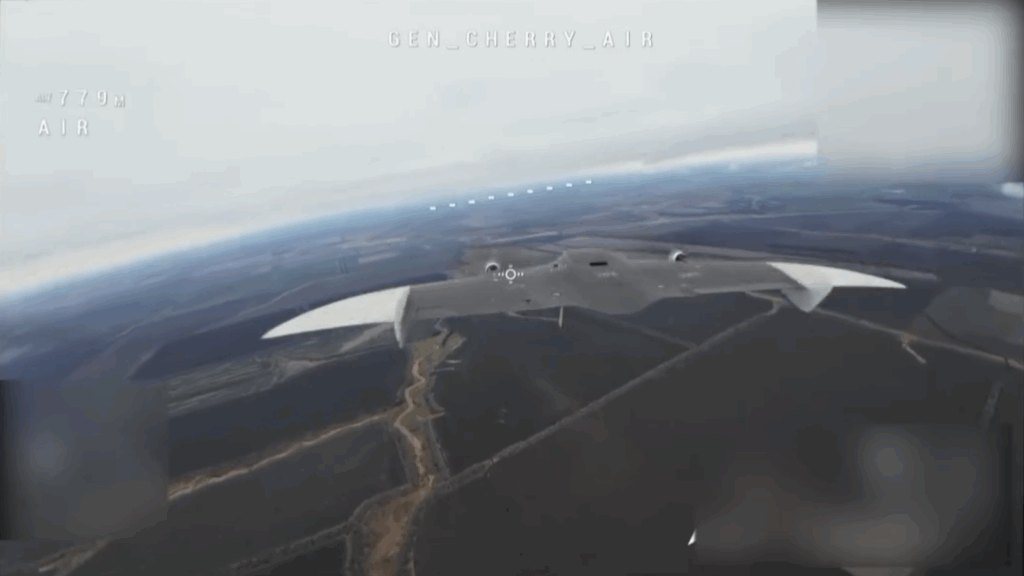
    Russian "Knyaz Veshchiy Oleg" reconnaissance drone as seen from a Ukrainian "General Cherry AIR" interceptor drone, just before strike. Screenshot from video: General Cherry

    Russia's jet-powered attack drones could eventually reach 800–900 km/h, and intercepting them will demand new piloting skills—so Ukraine has asked the makers of its interceptor drones to build simulators to train the crews, a senior Air Force officer told a parliamentary commission on 6 October, Suspilne reported.

    Russia keeps modifying its jet Shaheds faster than Ukraine can field the drones meant to catch them, and Kyiv is now preparing crews for speeds its interceptors have never faced—a sign the air war is shifting from a contest of volume to one of raw speed.

    The speed Russia hasn't reached yet

    Colonel Yurii Cherevashenko, deputy commander of Ukraine's Air Force, told the commission that Russia's jet drones fly at around 600 km/h today but could eventually reach 800–900 km/h—speeds he said have not been recorded so far. That range sits near the cruising speed of a commercial airliner.

    A Ukrainian interceptor drone chases a Russian Geran-5 jet-powered drone. September 2026.
    Explore further

    Ukraine just caught a Geran-5 at 425 km/h—the jet drone that has often outrun Ukrainian interceptor drones since January

    Intercepting such targets will take specific piloting skills, Cherevashenko said. When an interceptor and its target move at roughly the same speed, he noted, the pilot barely perceives the difference in their speeds. To train for that, Ukrainian interceptor-drone makers have been tasked with building simulators where crews can practice against high-speed targets.

    Where Ukraine stands now

    Ukraine already downs 85% to 90% of Russia's slower, propeller-driven drones, Ukrainian President Volodymyr Zelenskyy has said, but the jet models remain a tougher problem—Ukrainian interceptors scored their reportedly first kill of a jet-powered Shahed in November 2025. In a 28 September evening address, Zelenskyy put the jet-drone interception rate at about 57%, lower than required. Days later, he said Ukraine is testing five interceptor-drone models and could be producing about 400 of one of them by the end of October. Asked when jet-drone interceptors would arrive at the scale needed, Cherevashenko answered: "Not before the end of November."

    Ukraine’s drone pilots hit 76.5% more Russian infantry than two months ago: 2,699 in first five days of October

    6 octobre 2026 à 10:03

    The image shows Ukrainian soldiers. Source: The 80th Separate Air Assault Halytska Brigade

    Ukraine's drone pilots are killing and wounding far more Russian infantry than they did a month ago. Ukraine's Unmanned Systems Forces confirmed that their pilots took out 2,699 Russian infantry from 1 to 5 October, 39.7% more than in the first five days of September, Commander Robert "Madiar" Brovdi wrote on Telegram on 6 October.

    The Unmanned Systems Forces, the branch of Ukraine's military that fights with drones, count only losses verified by their own pilots in the military's Delta system, so the full picture of Russian losses is larger, Brovdi stressed. Compared with the first five days of August, the rise is 76.5%, from 1,529 losses, which he ties to denser and more frequent Russian assaults.

    The sharpest growth occurred in the area of the 1st Azov Corps of Ukraine's National Guard on the Dobropillia-Pokrovsk axis in Donetsk Oblast, as fighting for fortress-belt cities continues. Drone pilots recorded 1,268 Russian losses there, 43% more than the 884 of early September and 91% more than the 664 of early August.

    "Russia's hidden mobilization is in action. This is the beginning," Brovdi said ironically.

    Russia doubles its monthly recruitment pace

    Russian recruitment, mobilization, and contracts run at about 70,000 people a month, twice the 35,000 monthly average from January to August 2026, Brovdi noted on 16 September, when he forecast 12,500 losses for his pilots in September.

    He expected the toll to keep climbing. Bigger records still lie ahead because of Russia's unannounced mobilization, Brovdi added on 24 September.

    Drone pilots outpaced August by a quarter

    September was completed above that forecast. The pilots logged 13,358 Russians killed or wounded, 25.35% more than the 11,010 of August, an average of 445 a day against 355, Brovdi reported. By his count, that equals the full assault infantry of one battalion every day, and his pilots hit a Russian target every 42 seconds.

    Two sets of axes took the heaviest toll. In the first 24 days of September, the Dobropillia and Pokrovsk axes accounted for 4,018 losses, and the Oleksandrivka and Huliaipole axes for 3,021, according to Brovdi. The first of those groups covers the same Dobropillia-Pokrovsk axis where the Azov corps zone recorded the sharpest October rise.

    Ukraine turned ground robots into a frontline workhorse. Its first competitive tender may reward cheap copies over proven machines, an officer warns

    2 octobre 2026 à 08:48

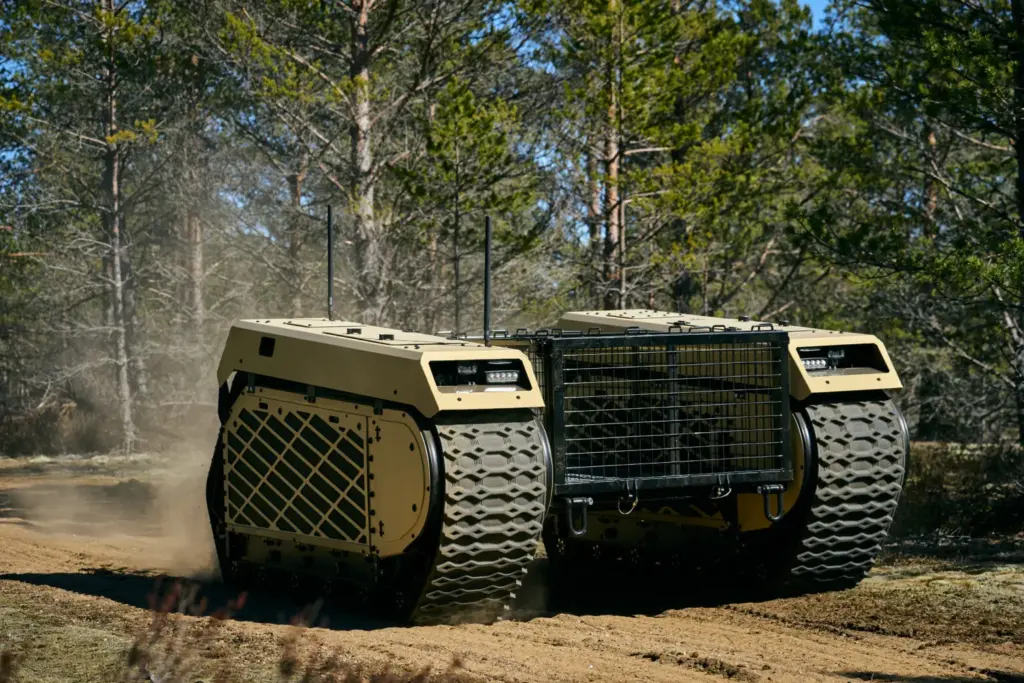
    ukraine turned ground robots frontline workhorse its first competitive tender reward cheap copies over proven machines officer warns · post fifth-generation themis unmanned vehicle developed milrem robotics themis_5th_generation_ugv-1536x1024jpg news ukrainian

    Ukraine has turned ground robots into a frontline workhorse, and the state is now trying to buy them at scale through its first competitive, ministry-spec tender. Viktor Pavlov, an officer of the 3rd Separate Assault Brigade's UGV battalion, laid out the risks of that model to Army Inform, the Defense Ministry's outlet, in an interview. Once a robot clears the military's technical requirements, price becomes the main criterion, Pavlov says. The order is split into lots, and no maker can take more than half a class. He warns the model may not tell a cheap, makeshift machine from one that actually survives at the front.

    Robots now handle the war's deadliest chores—driving supplies through kill zones and reaching the wounded where people can't—and Ukraine has already contracted more than 22,000 for 2026. How the military buys them now shapes whether the push yields machines troops trust or a stockpile of cheap ones they don't.

    From disposable drones to the next mass weapon

    Aerial drones became disposable, mass-produced weapons years ago. Ground robots—the tracked and wheeled machines that haul supplies, pull out the wounded, and attack Russian positions—are only now reaching serial state supply. In August, the Defense Procurement Agency (DOT), the body that buys Ukraine's arms, opened its first competitive tenders for logistics and strike robots built to specs set by the Defense Ministry. Pavlov, founder of Ukraine's UGV School, calls it an experimental format that can work where market prices are inflated. Splitting the order into lots also gives smaller engineering teams a real chance, he said, because many large producers are already busy with state contracts.

    The image shows a Ukrainian soldier standing next to an unmanned ground robotic vehicle. Source: The General Staff
    Explore further

    New Vivaldi tactic: Ukraine’s ground robots, each carrying two Bullspike grenade launchers, attack Russian positions and then detonate inside their shelters

    Why the lowest bid may beat the best robot

    A tender rewards the cheapest product that formally meets the requirements, not the best one, Pavlov said. A thermal camera, for example, can be listed as desirable rather than mandatory, so a maker chasing the lowest price will most likely leave it off. On any given feature the machines diverge—suspension, cameras, comms channels, a winch—one has it, another doesn't, yet both can land in the same class.

    The machines themselves are very different. One carries 250 kilograms, another up to 349, but both fall into the "200-plus" category. Unlike FPV drones, which share standard sizes and parts, ground robots have no common frame—Ukraine fields many local variants. Pavlov compared the choice to picking an iPhone over a cheaper Android: on paper the features match, but soldiers know which machine they can run and repair.

    Ground drone UGV medical evacuations
    Explore further

    Four ground robots for one evacuation: Russia is targeting Ukraine’s robotic medevac missions

    He also fears the model punishes innovation. A company can spend 18 months and a 20-person team building a robot, then watch a rival copy it, skip the research costs, and undercut it. A design troops already know how to run and repair—like the Ratel—is a known quantity. An untested bargain can break down mid-mission with no spare parts.

    A mixed system, not tenders alone

    Price competition should be one tool, not the only one, Pavlov argued. New robots should first reach units through pilot buys, letting soldiers test them and say what works. Proven systems can then be contracted in bulk, with tenders saved for classes where the offers are truly comparable. Ukraine's robots are too varied, he said, and what units need can't always be squeezed onto a spec sheet.

    Russia is now wiring its attack drones into one network in flight, so a single drone can scout, strike, and relay for the rest

    30 septembre 2026 à 15:20

    Geran-5 in the sights of a STING S interceptor drone.

    Russia is wiring its long-range attack drones together by a mesh network in flight and buying pricier, higher-resolution cameras for them, Ukraine's Air Force reported on 29 September. Its spokesperson said one drone could serve as a scout, strike drone, and relay for the rest, which is why they often fly one behind another over long distances. Chains of them keep crossing near the Belarus border, UkrInform reports.

    For Ukraine, the danger in each such upgrade is arithmetic: the more Russia networks cheap, once-disposable drones and pushes its control links away from the front, the harder they become to jam or shoot down, and the more of them reach the cities they are aimed at.

    Sharper, pricier eyes

    Ihnat said on a national broadcast that Russia is sourcing higher-quality materials and raising the resolution of its drone cameras. The cameras it buys are increasingly expensive and higher-quality, he said, which lets its operators study the ground in fine detail and use each drone for a specific purpose.

    On a mesh network, he said, the drones talk to each other and hand the control signal back toward the operator, so no single link has to carry it alone.

    Aftermath of a massive Russian ballistic missile attack in Kyiv's Lukianivka district, 19 July 2026. Photo: Suspilne
    Explore further

    Russia is mapping everyday targets across Kyiv, from trolleybus depots to Zhuliany airport, top monitoring channel says, ahead of next ballistic strike

    Chains along the Belarus border

    Asked about relays operating out of Belarus and about Russia's guidance of jet-powered Shaheds, the exploding drones it fires in swarms, Ihnat said Moscow had already claimed its satellite network was ready. He confirmed mesh networks are in use and said their use was quite dangerous. Ukraine has no information yet on whether Russia is using towers, he said.

    It often sees drones crossing long distances in chains along the Ukrainian-Belarusian border, so nothing can be ruled out, but intelligence would have to confirm whether such relays exist. Asked whether Russia is preparing a fresh ballistic strike, he said intelligence would warn when extra vigilance is needed.

    isw kremlin continues its nuclear threats while dangling economic carrots sway washington russia's rs-26 intercontinental ballistic missile rubezh oreshnik militarnyi appears focused reshaping ties through mix promises all refusing engage
    Explore further

    Russia deploys missile brigade to Belarus as fears grow over new threat to Kyiv

    Ukraine's countermeasures

    Ihnat has also said Russia launched more attack drones in September than in August, counting 3,177 jet-powered drones so far this month against 2,850 in August. To knock them down, Ukraine leans mainly on tactical aviation, including F-16 fighters, and on ground-based air defense when missiles are available, he said, with shoulder-fired man-portable air-defense systems (MANPADS) working well against jet drones inside their range. He said Ukraine needs more missiles for both Patriot systems and ground-based launchers, plus faster domestic solutions it can scale up.

    • ✇Euromaidan Press
    • Mavic vs Slavic: Ukrainian developers adapt reconnaissance drones to the modern battlefield
      Ukrainian company Vyriy Industries is bringing a new tactical reconnaissance drone, Slavic, to the market, Oboronka reports, citing information from the manufacturer. The control system of the new drone will be familiar to DJI Mavic operators, the company also said. Mavic has long been one of the main reconnaissance tools used by Ukrainian forces, with Ukraine relying heavily on supplies of these drones from abroad. After Ukrainian President Volodymyr Zelenskyy said China had stopped se
       

    Mavic vs Slavic: Ukrainian developers adapt reconnaissance drones to the modern battlefield

    29 septembre 2026 à 14:43

    Slavic drone by Vyriy Industries. Photo: Vyriy Industries

    Ukrainian company Vyriy Industries is bringing a new tactical reconnaissance drone, Slavic, to the market, Oboronka reports, citing information from the manufacturer. The control system of the new drone will be familiar to DJI Mavic operators, the company also said.

    Mavic has long been one of the main reconnaissance tools used by Ukrainian forces, with Ukraine relying heavily on supplies of these drones from abroad. After Ukrainian President Volodymyr Zelenskyy said China had stopped selling drones to Ukraine, the country began seeking alternatives. Slavic is one of these domestic alternatives, designed not only to replace Mavic but also to adapt its capabilities to current battlefield conditions, allowing reconnaissance crews to operate farther from the line of contact and reducing risks to personnel.

    Slavic has a tactical range of up to 30 kilometers without GPS

    Slavic can remain airborne for up to 1.5 hours because it is equipped with a 40,000 mAh solid-state battery, the media outlet notes. The drone has a tactical range of up to 30 kilometers, the report says.

    Illustration showing the positions of the Slavic pilot (left) and Mavic pilot (farther to the right), as well as the drones’ flight ranges relative to enemy positions (shown in red). Illustration: Vyriy Industries
    Illustration showing the positions of the Slavic pilot (left) and Mavic pilot (farther to the right), as well as the drones’ flight ranges relative to enemy positions (shown in red). Illustration: Vyriy Industries

    The aircraft can operate without GPS, as Slavic uses optical positioning for navigation. The pilot can also select a less congested channel and operate more effectively in difficult terrain because the communications system operates across a wide range of channels.

    The manufacturer notes that for surveillance, Slavic is equipped with a daytime 2K digital camera mounted on a three-axis stabilized gimbal, with 10x optical and 30x hybrid zoom.

    Part of the drone with the camera. Photo: Vyriy Industries
    Part of the drone with the camera. Photo: Vyriy Industries

    The system is supplied as a ready-to-use package “out of the box,” with all the equipment needed for operation without additional field modifications.

    The drone is designed to keep crews farther from the front line

    The company said its new drone has successfully completed initial combat trials with seven units of the Ukrainian Defense Forces and is preparing for scale-up, the media outlet notes.

    “The war has changed, and so have the working conditions for crews. The kill zone has expanded, while available commercial drones have a limited tactical range. The main task now is to provide the military with a specialized platform that can fly longer and farther, so crews can operate farther from the line of contact. This is exactly why we began developing Slavic,” said Oleksii Babenko, founder and CEO of Vyriy Industries.

    At the same time, the team is working on new Slavic configurations, including testing thermal imaging modules for nighttime reconnaissance. The manufacturer is also preparing the platform for scaled-up production and deliveries to the Ukrainian Defense Forces, the company told the media.

    “Frankensteins” and Ukrainian-made drones are among the options for replacing scarce Mavics

    The Ukrainian military had widely used Chinese DJI Mavic 3 drones, including to adjust artillery fire, monitor infantry positions and conduct surveillance, prompting Ukraine to seek ways to replace the shortage. More than five alternatives to the Chinese drone had already been developed in Ukraine, the Ministry of Strategic Industries of Ukraine confirmed to RBC-Ukraine in July 2025.

    DJI Mavic 3 in use by a Ukrainian servicemember. Photo: Ministry of Defense of Ukraine
    DJI Mavic 3 in use by a Ukrainian servicemember. Photo: Ministry of Defense of Ukraine

    There are also other options for replacing them. The main work in military units is being done with “Frankensteins,” drones assembled from two or three damaged aircraft, Mavic UAV pilot instructor “Dobryi” said in an interview with Militarnyi in July this year. At the same time, such drones are less reliable than new ones, he added.

    Ukraine just caught a Geran-5 at 425 km/h—the jet drone that has often outrun Ukrainian interceptor drones since January

    29 septembre 2026 à 09:16

    A Ukrainian interceptor drone chases a Russian Geran-5 jet-powered drone. September 2026.

    Ukraine's air defenders now have purpose-built interceptors for Russia's jet-powered attack drones—weapons whose speed and altitude make them difficult for conventional defenses to catch, Militarnyi reported. A crew from the 1020th Anti-Aircraft Missile and Artillery Regiment downed a Geran-5 over Chernihiv Oblast with a newly delivered interceptor, according to the Serhiy Prytula Foundation.

    Russia's long-range drone and missile attacks have become central to its effort to wear down Ukraine's air defenses and grid before winter, and the war in the sky now turns on which side scales its answer faster.

    The Chernihiv intercept

    The crew, callsign Yastrub (Hawk), made its first successful engagement with the new interceptor, hitting the jet drone at 425 km/h and above 3 km, the foundation said, releasing footage of the strike. The Prytula Foundation supplied the interceptors and said it has contracted several manufacturers to counter the jet threat.

    "Our task is to scale this up and strengthen units," it said.

    Why it kept slipping through

    Russia first used the Geran-5 in January 2026. HUR's own specifications put its warhead at 90 kg, cruise speed at 450–600 km/h, and range at 950 km, with a ceiling of 6 km. That mix of jet speed and high altitude kept it clear of machine guns, shoulder-fired missiles, and the cheap interceptors built to swat slower piston-engine Shaheds.
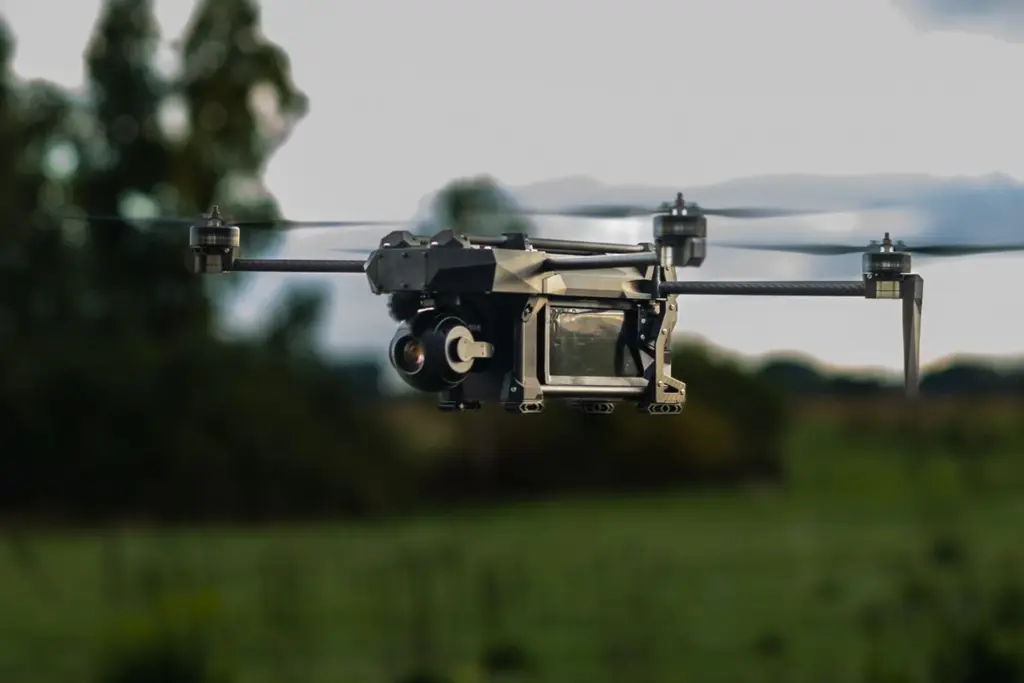
    Ukraine's military intelligence estimates Russian plants now turn out around 3,000 jet-powered Geran-4 and Geran-5 drones a month, according to HUR. A monitoring Telegram channel, Polkovnyk HSh, reports a newer variant that steers by ground imagery instead of satellites, which would blunt jamming—though HUR has not confirmed it and lists no such system among the drone's components. Separately, Russia moved the jet engine inside the fuselage, a change aimed at more speed and range.

    russia hits kharkiv high-rise overnight injuring 43 people strikes central kyiv dnipro broad daylight · post firefighter tackles blaze two-story house after russian drone attack ukraine 28 2026 zelenskyy news
    Explore further

    After Russia hits Kyiv’s Academy of Sciences with jet-powered drone, the Kremlin says Ukraine must “pay a price”

    Where the fight stands

    Ukraine intercepts about 55% of Russia's jet drones, against more than 90% of the older models, President Volodymyr Zelenskyy said on 26 September. Since the start of September, Russia had launched more than 2,730 jet drones, and Ukraine had downed or suppressed more than 1,500, he added. Zelenskyy also said Russia plans to spend $12 billion in 2027 on jet drones and loitering munitions alone. Ukraine already has several interceptor prototypes in combat use, and the 1020th crew's kill is one of several jet Geran intercepts Ukrainian units and drone makers have logged this month.

    • ✇Euromaidan Press
    • Vivaldi counteroffensive advanced after Ukraine took Russia’s drones out of the fight, ISW assesses
      Ukraine likely neutralized Russia's drone defenses north of Lyman before sending armor into the third phase of its Vivaldi counteroffensive, the Institute for the Study of War (ISW) assessed. An intermediate-range strike campaign against Russian logistics and electronic warfare paved the way, the think tank said. Drones have made this front so deadly that armor now mostly fights from kilometers back. That is what makes Ukraine's armored push onto fortified positions near Lyman stand out
       

    Vivaldi counteroffensive advanced after Ukraine took Russia’s drones out of the fight, ISW assesses

    29 septembre 2026 à 06:50

    vivaldi counteroffensive worked because ukraine took russia's drones out fight isw assesses · post settlements ukraine's 3rd army corps says liberated during operation north lyman donetsk oblast 28 2026 settlements-liberated-during-operation-vivaldi-phase-3-as-of-september-28-2026-scaled

    Ukraine likely neutralized Russia's drone defenses north of Lyman before sending armor into the third phase of its Vivaldi counteroffensive, the Institute for the Study of War (ISW) assessed. An intermediate-range strike campaign against Russian logistics and electronic warfare paved the way, the think tank said.

    Drones have made this front so deadly that armor now mostly fights from kilometers back. That is what makes Ukraine's armored push onto fortified positions near Lyman stand out. Russia has already shifted its effort south toward Sloviansk after losing the Lyman pincer.

    Armor reached Russian bunkers without drawing drone strikes

    To break the strongest Russian fortifications, Ukraine used old Soviet BTR-60 armored personnel carriers rebuilt as remote-controlled explosive vehicles, the 3rd Army Corps says.

    Ukrainian forces drove them up to heavy Russian fortifications without coming under Russian drone strikes, ISW noted. The think tank said this indicates Ukraine neutralized or otherwise negated Russia's drone defenses in the area.

    The image shows a Ukrainian soldier standing next to an unmanned ground robotic vehicle. Source: The General Staff
    Explore further

    New Vivaldi tactic: Ukraine’s ground robots, each carrying two Bullspike grenade launchers, attack Russian positions and then detonate inside their shelters

    Strikes on fuel starved Russia's jammers

    Ukraine achieved tactical drone overmatch through extensive shaping operations and an intermediate-range strike campaign, ISW said. Those strikes targeted the Russian drones and electronic warfare (EW) systems that would otherwise have hunted the advancing vehicles.

    The 3rd Army Corps reported on 17 September that strikes on Russian logistics in occupied Luhansk Oblast had degraded Russian fuel supplies to the front, ISW wrote that day. The corps said that strained Russia's ability to use drones and EW against Ukrainian drones. EW systems consume a lot of power, and Russian troops run them on diesel generators, ISW explained.

    Deputy corps commander Maksym Zhorin credited strict information silence and a "Protective Drone" system of EW assets, according to the same assessment. He said it helped neutralize around 20,000 Russian drones. The corps had earlier described mapping Russian command posts and striking them to sow panic.

    ATESH partisan Footage of a fire on a relay cabinet at the Bataysk railway junction, near Rostov-On-Don, Russia, 21 December 2025. Screenshot from video: ATESH
    Explore further

    Ukraine’s Vivaldi counteroffensive near Lyman just got help from behind Russian lines: partisans say they cut rail supply to three Russian regiments, no explosion needed

    Five settlements and 2,000 Russian losses

    The corps liberated Nove, Ridkodub, and Katerynivka and restored control over Karpivka and Novomykhailivka, it said on 28 September. The phase added 51 km², bringing the total since the offensive began to 176 km².

    Russian losses reached 2,000 personnel, and more than 250 Russians were taken prisoner, according to the corps. Corps commander Andrii Biletskyi said a feint from Shandryholove toward Zelena Dolyna drew Russian reserves away from the real target, Nove.

    The first two phases had reportedly cleared more than 125 km² north of Lyman.

    ❌