Vue lecture

Ukraine’s General Staff confirms strikes on two Russian refineries and Black Sea rig

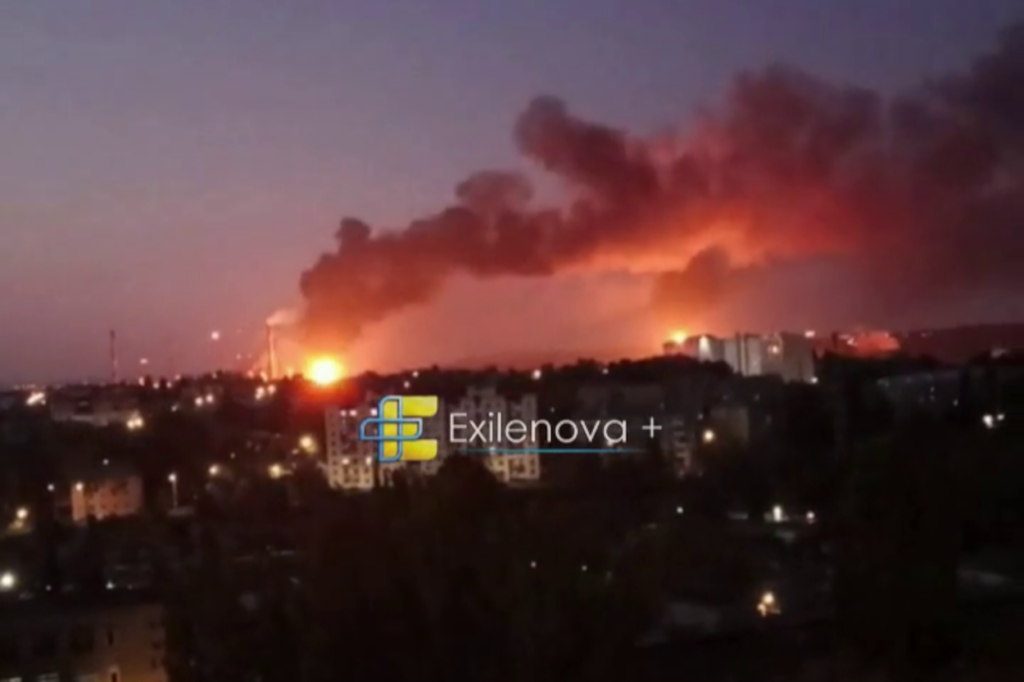
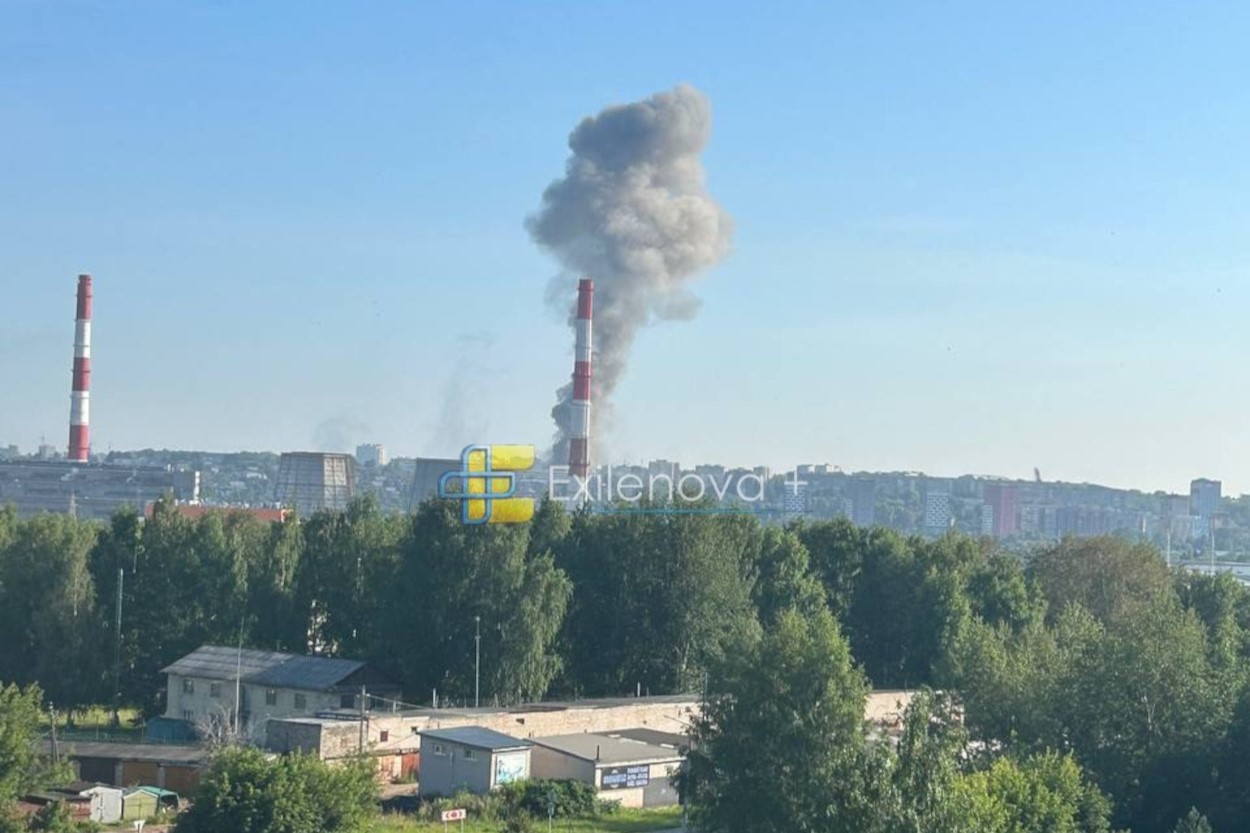
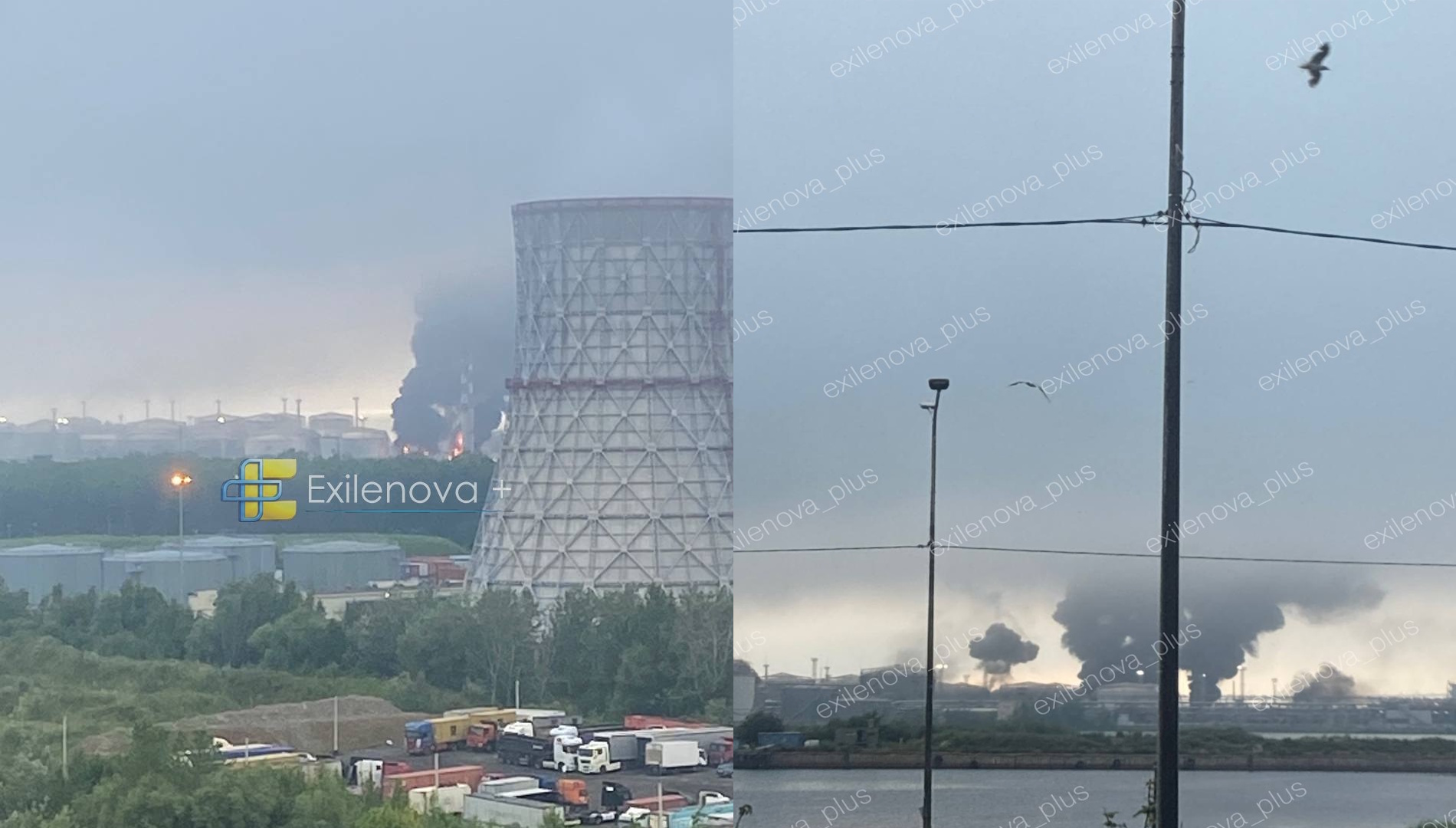
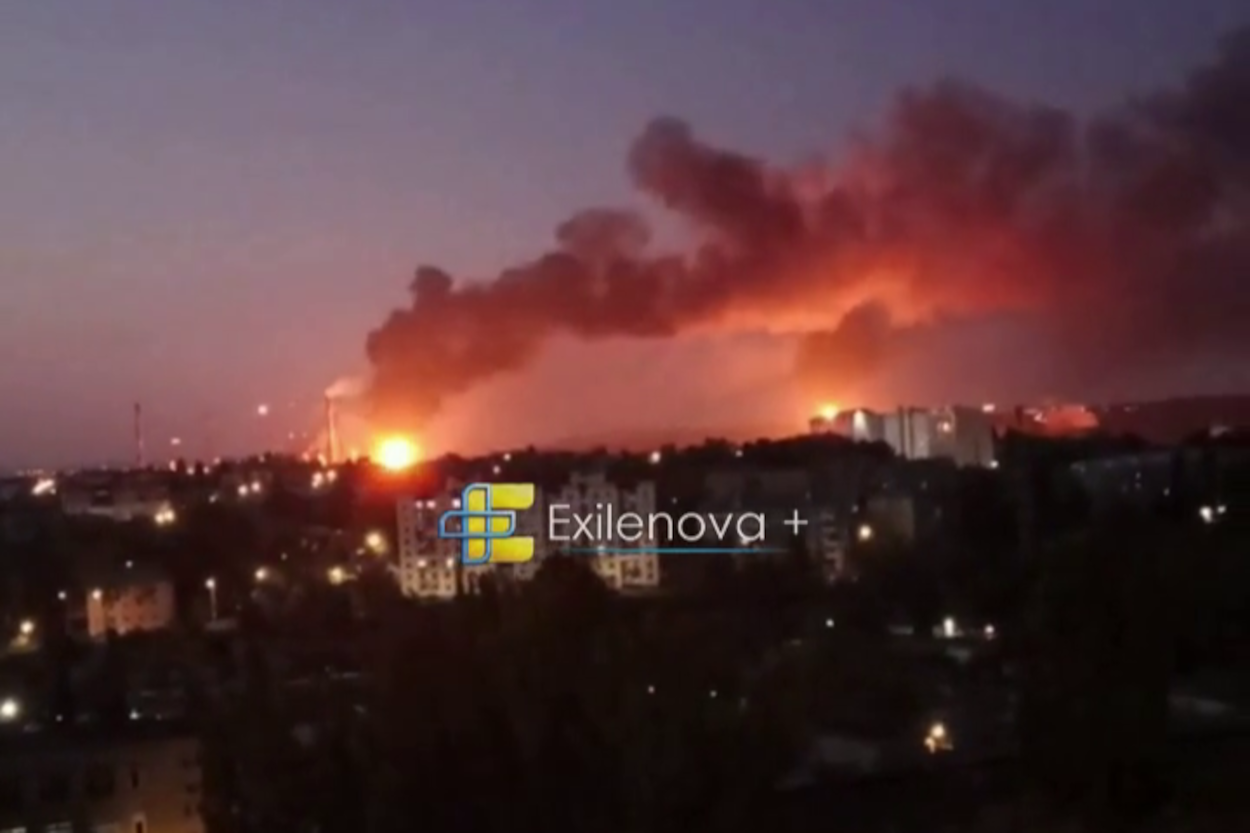
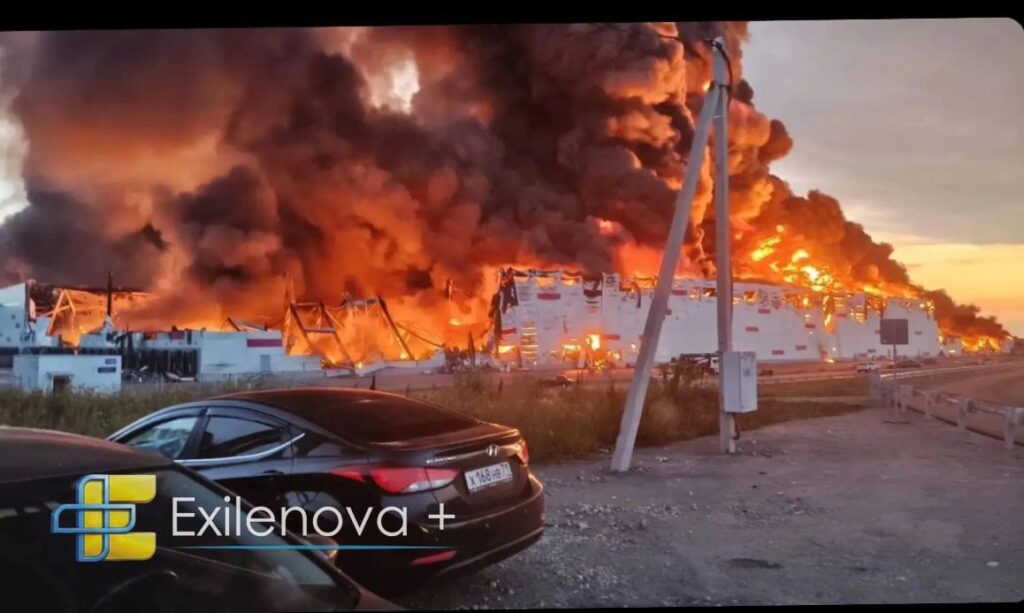
Flames at Russia's Saratov Oil Refinery after reported Ukrainian drone strike, 2 August 2026. Screenshot from video: Exilenova+

Ukrainian forces struck two Russian oil refineries and a surveillance post mounted on a Black Sea drilling rig on the night of 8 August, Ukraine's General Staff said.

The strikes extend a months-long Ukrainian campaign against Russia's refining sector. Ukrainian forces attacked Russian refineries about 50 times between mid-April and 13 July, hitting at least 24 of the country's 34 large plants and cutting refining volumes to their lowest level in more than two decades, Bloomberg estimated.

A fire at the Ilsky plant

The strike on the Ilsky refinery in Krasnodar Krai touched off a fire on the plant's grounds, the General Staff said. It put the site's capacity at six process units and about 6.6 million tons of oil a year.

The plant "receives, stores and processes hydrocarbon feedstock, produces and ships petroleum products," the General Staff said, adding that its output serves the needs of the Russian armed forces, among other users.

Syzran plant tied to Rosneft

Ukrainian forces also hit the Syzran refinery in Samara oblast, which is part of Rosneft's oil complex, the General Staff said. It described the plant as having a design capacity of about 8.5 million tons of oil a year and producing more than 20 types of petroleum products, including motor fuels and road bitumen, and named it one of the region's key refining facilities supplying fuel to the Russian armed forces.

A surveillance post on the Syvash rig

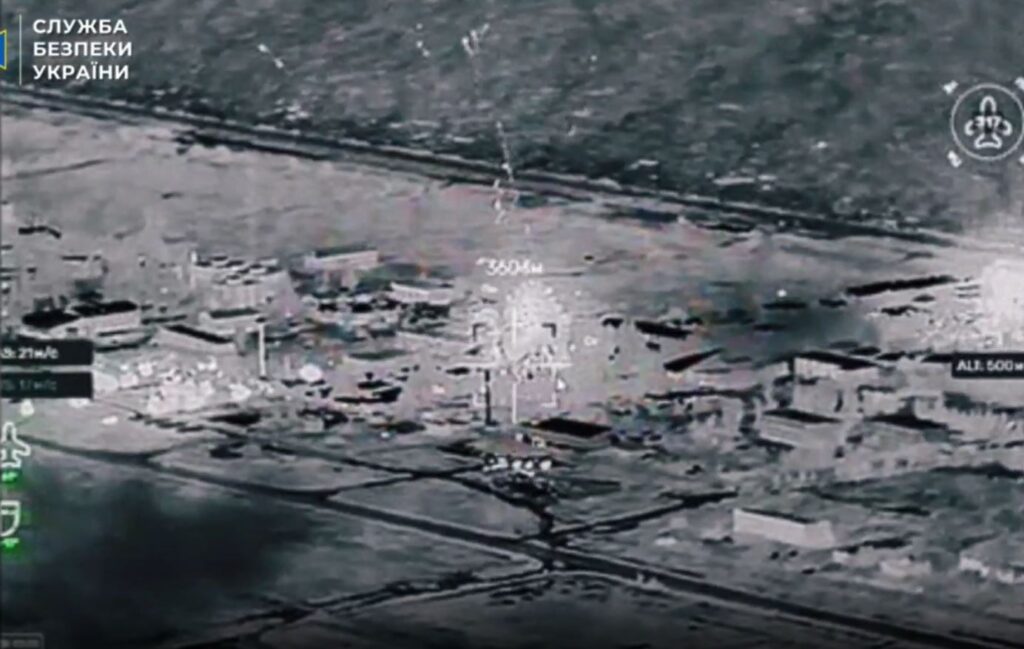
The third target was a technical observation post on the Syvash jack-up drilling rig in the Black Sea, the General Staff said. Russia uses the rig to house surveillance equipment and keep it operating in those waters, the statement said.

Russian officials confirm the attacks

Overnight, Russian Telegram channels reported drone attacks on Krasnodar Krai and Samara oblast. Samara governor Vyacheslav Fedorishchev confirmed the shelling. Local channels said the Syzran strike landed near an AVT distillation unit and oil storage tanks.

In Krasnodar Krai, the regional operational headquarters confirmed the Ilsky refinery had been damaged and said "debris fell on the plant's territory."

Neither the strikes nor their extent could be verified through independent sources, Radio Svoboda said. The General Staff has said Ukrainian forces "systematically implement measures aimed at reducing the combat potential of the Russian occupation forces" and pressing Russia to end its aggression against Ukraine.

  •  

EU channels a further €30 million into Ukraine’s Energy Support Fund, raising its total contribution to €279 million

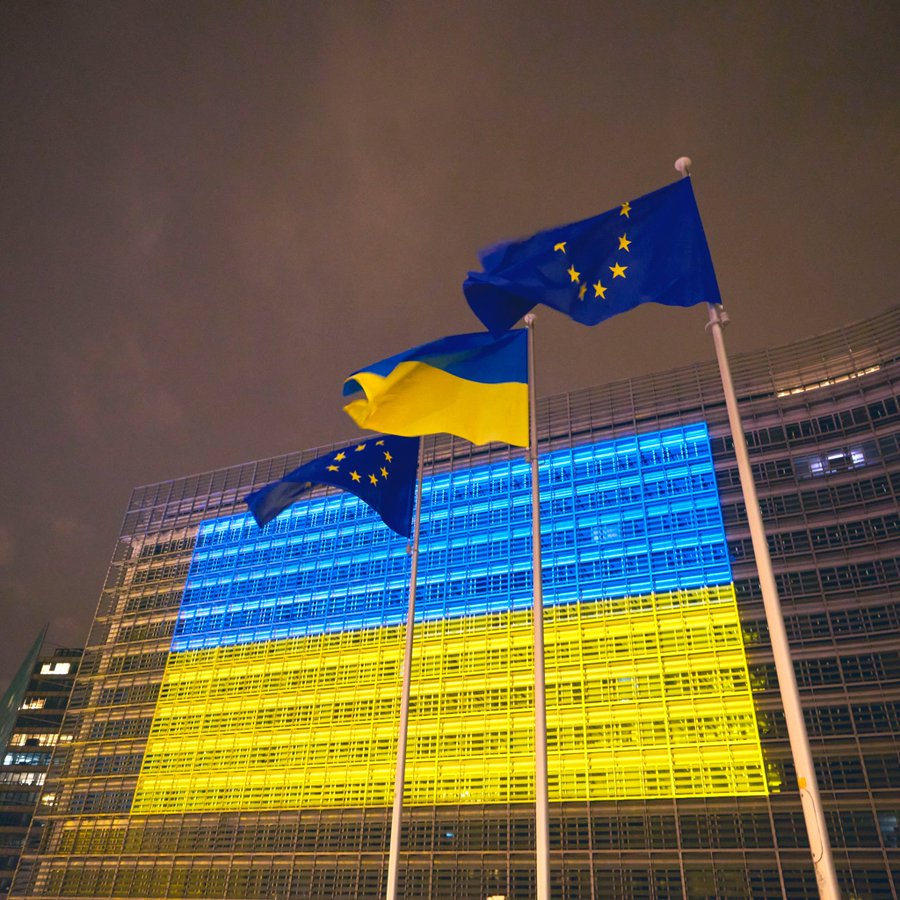
EU buildings lit in Ukraine flag colors on fourth anniversary of Russia's full-scale invasion

The European Union has transferred an additional €30 million to the Ukraine Energy Support Fund, raising its total contribution to the mechanism to €279 million, First Deputy Prime Minister and Energy Minister Denys Shmyhal wrote on Telegram.

The transfer is the latest in a series of contributions to the fund from Ukraine's partners. Luxembourg also added funds to the same mechanism recently, and Denmark contributed more than €10 million, European Pravda reported.

What the funding supports

In his Telegram post, Shmyhal described how the fund is used:

"The funds coming in through this financial instrument help us restore the energy infrastructure damaged by Russian attacks, purchase critically needed equipment for our energy companies, and ensure a reliable energy supply, above all for critical infrastructure," Shmyhal wrote.

  •  

Zelenskyy says US will send Patriot interceptors monthly – but not enough to protect from Russian attacks

vucic zelenskyy

Ukraine has reached concrete agreements with the United States for monthly deliveries of interceptor missiles for its Patriot air defense systems, President Volodymyr Zelenskyy said at a joint press conference with Serbian President Aleksandar Vučić in Belgrade on 8 August.

The commitment does not close Ukraine's gap. Zelenskyy said the monthly volume remains insufficient and laid out a parallel effort to secure interceptors from Europe, the Middle East and further afield, as US shipments have thinned this year.

The US as the primary supplier

Repelling ballistic missiles has been a problem since the start of the full-scale war, and the search for a solution begins with the country that builds the systems, Zelenskyy said.

"From the first days of the war in Ukraine there was nothing to repel ballistic missiles. This is very difficult work. In which directions can this problem be solved? Well, first of all, who has anti-ballistic missiles and systems? The manufacturer. That is the United States of America, first of all. Can they help? We are working. Will they allocate us missiles every month? Yes. We have agreements," he said.

Asked whether that supply met Ukraine's needs, he answered: "Are these missiles enough? No." He added that the monthly volumes of American missiles had decreased this year compared with 2025.

Where else Kyiv is looking

Patriot missiles are also held by European countries, Zelenskyy said, naming Germany and Poland as able to substantially strengthen Ukraine's air defense. Kyiv is also in talks with Norway, the Netherlands and Middle Eastern states.

South Korea and Japan could potentially help but do not currently hand over such systems, which Zelenskyy attributed to restrictions in their domestic legislation and constitutions. Ukraine is separately discussing air defense with Israel; the president said Ukraine is ready to buy but that no such option exists at present.

"Every day I speak with one European state or another and with Middle Eastern states so that Ukraine receives additional missiles outside the American package. We are simply at the level where all our institutions must work on this, not only the president. Everyone must work, otherwise there will not be enough missiles," he said.

The Belgrade remarks came a day after Zelenskyy arrived on his first official visit to Serbia.

Zelenskyy had bilateral meeting with Serbian President Aleksandar Vučić. Vucic voiced support for Ukraine's territorial integrity and its path to the European Union.

What esle Zelenskyy and Vučić discussed


The two presidents held talks that ran across the countries' European integration, trade and energy cooperation, a prospective free-trade zone, and diplomatic paths to ending Russia's war on Ukraine. Vučić had said ahead of the meeting that he would discuss both countries' route to EU membership, along with economic and energy cooperation and other opportunities

On the economy, Vučić said the sides had reviewed infrastructure projects and the involvement of Ukrainian companies in Serbia. On peace efforts, Zelenskyy said the leaders had discussed diplomatic instruments capable of bringing the war closer to an end.

Before the press conference, the sides held a ceremony to sign a memorandum on cooperation in animal health and food safety. The document was signed by Serbia's Minister of Agriculture, Forestry and Water Management Dragan Glamočić and Ukraine's ambassador to Serbia Oleksandr Lytvynenko.

Territorial integrity

Vučić framed Serbia's position as a matter of UN principle and tied it to Ukraine's reciprocal stance on Serbia.

"We support the UN Charter, UN resolutions, and this means the territorial integrity of all UN members, which means the territorial integrity of Ukraine as well. Likewise we are very grateful to Ukraine for supporting the territorial integrity of the Republic of Serbia. And as far as we are concerned, we will continue this principled policy. There are no 'buts' on this question. This is being said very clearly and resolutely now," Vučić said.

Support on the road to the EU

Vučić said Ukraine could always count on Belgrade's support in EU accession, and the two discussed both countries' European path during the meeting.

"We wish for Ukraine to open all negotiating clusters as quickly as possible, to close them as quickly as possible, because this is the wish of the Ukrainian people, of the Ukrainian leadership. And speaking of ourselves, we have not had and will not have any problems regarding this in the future. On the contrary, everything we can do to help Ukraine on its European path, we will do," Vučić said.

Trade at $321 million in six months

Vučić said trade between the two countries is growing rapidly: while it stood at $450 million for all of last year, it had already reached $321 million in the first six months of this year.

"The most important import item is iron ore from Ukraine. And I believe that cooperation in the sphere of agriculture, but also in other spheres of energy, everywhere trade turnover can be greater. We discussed projects in the sphere of infrastructure, involving Ukrainian companies on the territory of Serbia. I believe we can have serious and good results in the future," the Serbian president said.

Vučić said he hoped cooperation between the countries would become "significantly stronger and larger-scale" after the war ends. In future, he said, Serbia and Ukraine could jointly export certain goods and enter third-country markets, in particular in Africa and Asia.

"I think we will yet see agreements on such cooperation. Yesterday we had long discussions, today the discussions were really good. I am grateful to President Zelenskyy for the visit to Serbia. I hope we received you properly. And I want to believe that our meetings in the future will be incomparably more frequent than they were before," Vučić added.

A free-trade zone by the end of 2026

Zelenskyy said negotiations on creating a free-trade zone between Ukraine and Serbia are under way, and expressed hope the agreement could be concluded by the end of 2026.

"Our teams must work well to speed up the agreement on a free trade zone between Ukraine and Serbia. These negotiations are progressing, this is positive. And it would be good to prepare everything by the end of this year for concluding the agreement on free trade between Ukraine and Serbia," the Ukrainian president said.

Damaged energy grid and a Serbian humanitarian package

Zelenskyy described the state of Ukraine's infrastructure under Russian strikes.

"For the fifth year now we in Ukraine are forced to go through all these strikes. Russian strikes are aimed mostly at facilities that work precisely for the life of the people. We have virtually no undamaged power plants left. Many railway stations are destroyed, hospitals, universities, ordinary civilian enterprises. In a time of such a war we appreciate and are very grateful for all the support that Ukraine receives from other countries, from other peoples," Zelenskyy said.

He said Ukraine continues to expand all formats of cooperation with partners to give communities and people "more resilience, more capacity to hold out despite all the challenges of the war."

Zelenskyy said Serbia would provide Ukraine with a humanitarian aid package. "We are grateful that there will be a new package of humanitarian support from Serbia for Ukraine, in particular in the sphere of medicine, in the sphere of energy. This is very important for us," he said.

Diplomacy to end the war

Zelenskyy said the leaders had discussed diplomatic instruments that could bring the war closer to an end, and pointed to capitals with influence over the process.

"It is important that everywhere in the world they know what we want, and this is true, and this is a fact, we want a dignified peace, that every opportunity be used for the sake of peace, for the sake of guaranteed security. All available opportunities that exist in Washington, and in Beijing, in the capitals of Europe, our partners in the Middle East, in the Gulf, in all the capitals of the world that have influence over the relevant processes," Zelenskyy said.

  •  

Russian strike kills 3-year-old boy and his grandparents in Kyiv Oblast village

kyiv oblast

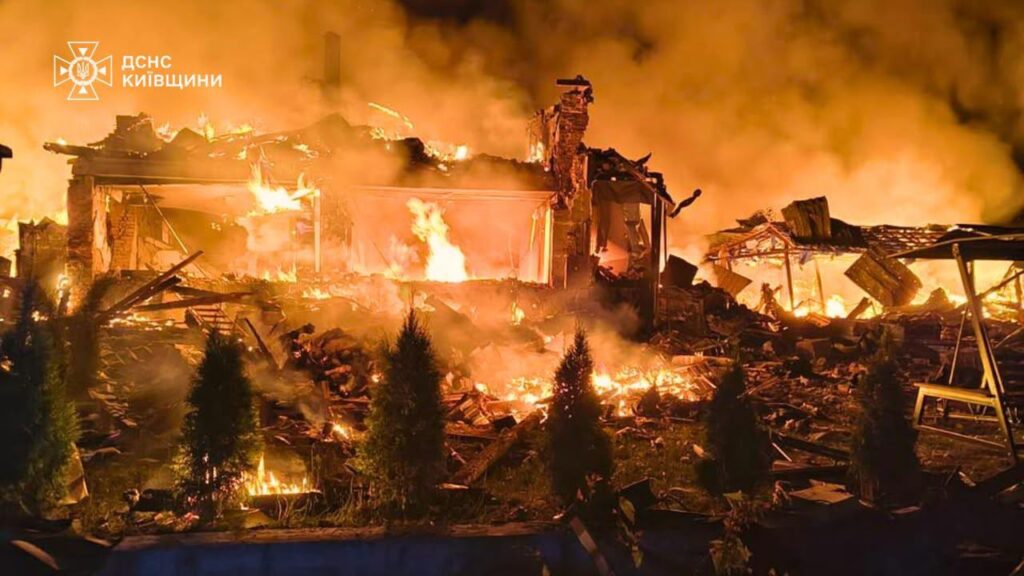
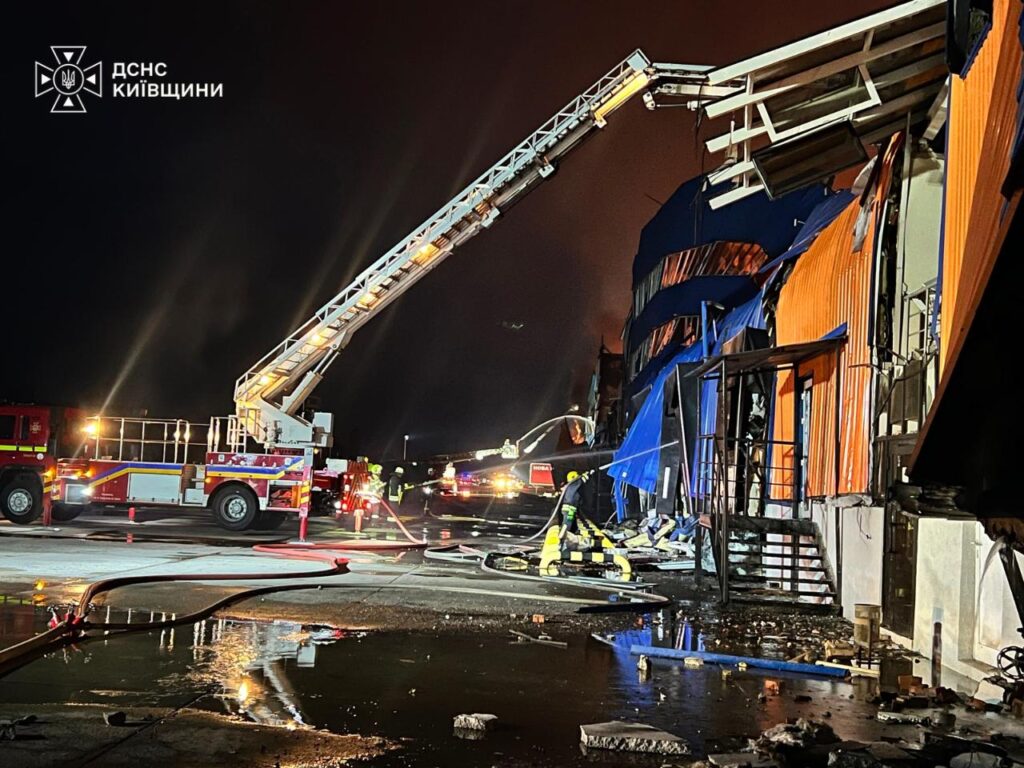
A Russian strike on the village of Pukhivka in Kyiv Oblast's Brovary raion overnight into 8 August killed three members of one family: a three-year-old boy, his grandmother, and his grandfather. Four other people were wounded, President Volodymyr Zelenskyy said.
The boy's parents and his 15-year-old brother were among the injured, along with a neighbor who came to help the family and was hit in a second, follow-up strike. The attack came as Russia leans on the ballistic missiles Ukraine can least often intercept, and as Zelenskyy again pressed partners for the interceptors his air defenses are running short of.

A family killed in their home

Zelenskyy said the strike hit an ordinary residential building. Those wounded, among them the dead child's parents, were treated for thermal burns and shrapnel injuries.

The neighbor was hurt after coming to help the family, when a second Russian strike hit the same place — the double-tap tactic of following an initial strike with another timed to catch rescuers and responders. Russia used it in Kyiv a week earlier, when a follow-up strike killed a 20-year-old volunteer medic.

Six ballistic missiles on Kyiv

Overnight, Russia also struck civilian infrastructure in Kyiv with six ballistic missiles. One person was killed, their body found by rescuers during the cleanup, the Kyiv City Military Administration reported.

A widening gap, and a renewed appeal

Zelenskyy called on Ukraine's partners to tighten sanctions on Russia's ballistic-missile production and to supply more air defense systems and interceptors. The appeal lands against a defense Russia has spent the year outpacing: in July, a third of the missiles it fired — 126 — were ballistic, the type that gives the shortest warning and that Ukraine's systems, save for the Patriot, cannot reliably stop. In the last two large attacks, Ukraine downed two of 36 ballistic missiles, roughly one in twenty, for lack of Patriot interceptors. Russia builds around three ballistic missiles a day, by Ukrainian analysts' estimates, while Ukraine's interceptor stocks stay severely limited.

The same night, Russia also attacked Donetsk, Kharkiv, Sumy, Dnipropetrovsk, Zaporizhzhia, Odesa, Kherson, Mykolaiv, Chernihiv, and Poltava oblasts.

  •  

As Ukraine Strikes Wildberries, Russia’s Richest Businesswoman Faces Her Biggest Test Yet

As Ukraine repeatedly strikes warehouses of the e-commerce site Wildberries, Tatyana Kim, its billionaire co-founder, faces her biggest test yet.

© Olga Maltseva/Agence France-Presse — Getty Images

Tatyana Kim, the billionaire co-founder of Wildberries, Russia’s largest online marketplace, in June.
  •  

What to Know About Wildberries, the Company in Ukraine’s Cross Hairs

Ukrainian drones have increasingly targeted warehouses belonging to Wildberries, which many Russians rely on as the country’s largest e-commerce business.

© Anastasia Barashkova/Reuters

An advertisement for Wildberries in Moscow. Several of the company’s warehouses have ceased operations after attacks from Ukraine.
  •  

North Korea made $22 billion arming Russia – nearly four times its haul before the war

Putin North Korea

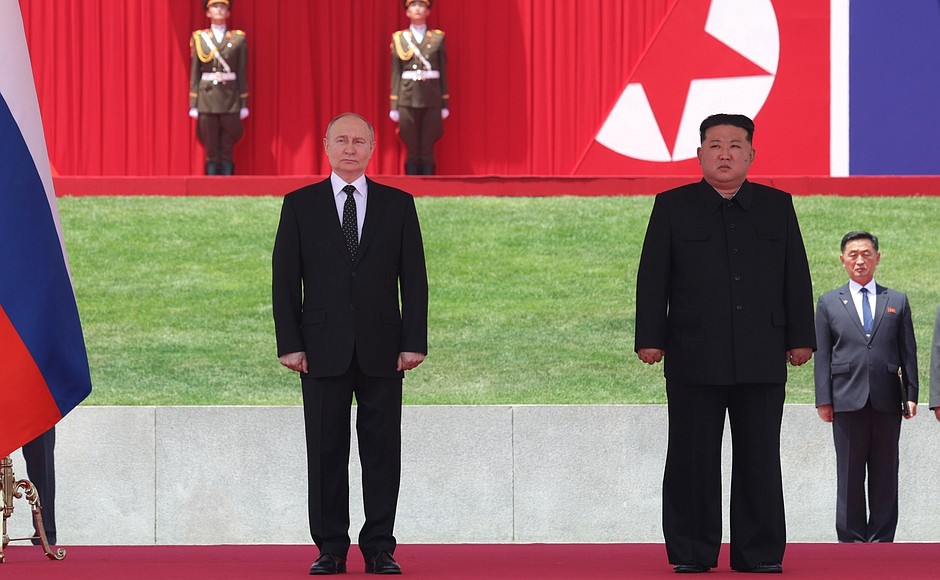
North Korea has pulled in as much as $22 billion in foreign earnings since Russia's full-scale invasion of Ukraine in 2022—nearly four times what it earned in the previous four years, and the most cash Kim Jong Un has commanded in his 15 years in power, Bloomberg Economics estimates.

That money is the bill for Russia's war, paid to the other side of the world. In exchange for the shells and soldiers keeping Moscow's offensive alive, Pyongyang has been handed the cash, food, and military technology to turn itself from an isolated pariah into a nuclear power that no longer needs to negotiate with anyone. The war draining Russia has quietly built a second, stronger adversary.

Half of Russia's shells, and thousands of soldiers

By the end of 2025, North Korea was covering up to half of Russia's need for 122mm and 152mm artillery ammunition, Ukrainian intelligence estimates—a share Euromaidan Press has tracked since the shipments began in 2023. Pyongyang backed the shells with men: some 16,000 soldiers, for whom Russia paid roughly $2,000 a month each, plus extra for the dead, by Bloomberg's accounting.

The turning point came in 2022. Kim had spent the previous years humiliated—a failed summit with Donald Trump, a harvest failure that triggered hunger, a self-imposed Covid border closure that severed trade with China. In a 2020 national address, he wept while apologizing for the economy. Then Putin's stockpiles ran low, and North Korea's warehouses became a resource Kim could turn into hard currency.

Cash, food, and the technology to build better weapons

The dangerous part is what came back the other way. Russia handed over advanced military technology alongside the payments, and US Forces Korea has said the transfers let Pyongyang compress its weapons-development timelines. Moscow supplied air defenses including at least one Pantsir-class system—a transfer Euromaidan Press reported last year—and a Pantsir-M worth about $20 million now sits on one of North Korea's two new 5,000-tonne destroyers, the largest warships it has ever built. The two countries have also begun jointly producing attack drones.

Kim poured the windfall into a nuclear buildup that, Bloomberg reports, puts North Korea on a path to rival France's arsenal. The country's economy grew 3.5% in 2025, its third straight year of expansion, according to the Bank of Korea.

A windfall that outlasts the war

The boom does not depend on the war continuing. Over the past decade Kim assembled the world's most prolific army of crypto thieves: hacking groups tied to Pyongyang now account for more than 70% of global cryptocurrency thefts, up from about 30% in 2017, according to blockchain intelligence firm TRM Labs. The stolen funds are laundered mostly through Chinese organized-crime networks that take a cut in exchange for clean offshore accounts. "It's absurd to think North Korea now has access to that much money," said Nick Carlsen, a senior TRM investigator.

Kim is spreading his bets diplomatically, too, hosting officials from Singapore, Indonesia, Belarus, and Vietnam over the past year to loosen his reliance on Moscow.

The Kim once written off as an erratic recluse is emerging as the durable leader of a growing nuclear power—one with little reason left to bargain. "Pyongyang has proven its ability to adapt to persistent sanctions," said Jenny Town of the Stimson Center. "And as international law and norms are eroding, it has found camaraderie in its resistance."

  •  

Nawrocki: where “Muscovites are beaten,” Poland helps. Russian Foreign ministry hits back

rzeczpospolita fourth year russia-ukraine war poland’s leader sides aggressor polish president karol nawrocki pap/leszek szymański 1699304a7cc0b825fd6ed95fba7ddad5 (1) editorial published 27 stated russia’s all-out against ukraine has taken position aligns commentary

Polish President Karol Nawrocki used a speech marking his first year in office to restate that Poland will keep backing Ukraine's war against Russia—and to frame that backing as cold strategic interest rather than solidarity, warning in the same speech that continued help does not extend to tolerating Ukrainian nationalist symbols" on Polish soil. He spoke on 6 August at a ceremony in the courtyard of the Presidential Palace in Warsaw, reported by RMF FM.

The remarks land at the hottest point yet in a Polish-Ukrainian memory row that has stripped Kyiv of much goodwill from its most important frontline ally. Poland's interest, Nawrocki said, is that Ukrainians fight "as long as possible and as effectively as possible" against Russia, keeping it far from Poland—help offered not out of shared cause but because a Ukraine that bleeds Russia serves Warsaw. Coming from the country most vital to Ukraine's supply lines, it is a statement of support recast as conditional self-interest.

Support as strategy, not solidarity

"Poland's interest is that Ukraine and Ukrainian soldiers cope as well as possible with the post-Soviet Russian Federation and keep it as far from Poland as possible. That is obvious; that is the Polish state's strategy," Nawrocki said. "Let them kill the Soviets who attacked them—it does not hurt us Poles at all. In this they can always count on our help, because where a Muscovite is beaten, Poland helps, even if it does not take part directly in this war."

The register was deliberate. Nawrocki, a historian who ran the Institute of National Remembrance before winning the presidency, used the pejoratives "Soviets" and "Muscovites" for Russians throughout, casting Polish aid as a matter of keeping the fight on the far side of the border.

The red line: no Bandera flags

The support came fenced. "It is also Poland's strategic interest that Bandera flags do not fly in Warsaw or anywhere in Poland," Nawrocki said, promising to help "but always saying: Poland first, Poles first"—not, he added, "thoughtlessly sending fleet after fleet without analysis, on phone calls and smiles."

The condition points straight at the dispute that has consumed the relationship since May, when Zelenskyy signed a decree granting a special-forces unit the honorary title "Heroes of the UPA," the insurgent army Poland's parliament holds responsible for the Volhynia killings of tens of thousands of Poles and has declared a genocide. Nawrocki stripped Zelenskyy of the Order of the White Eagle in response; in July he pressed parliament to ban the UPA's red-and-black flag by law.

Moscow moves to widen the gap

Russia moved to pry the crack open within hours. Foreign ministry spokeswoman Maria Zakharova derided Nawrocki as a former Gdansk war-museum director whose "clinical Russophobia," she claimed, was affecting his judgment, and reminded him that Russia and Poland share a border "with no Ukraine and no Ukrainians between us"—the erasure of Ukraine stated plainly, from Moscow's own podium.

That is the move Warsaw itself has warned about. Polish officials have cautioned that Russia would seek to exploit the Ukraine tensions, and Polish services recently detained a group accused of recruiting Ukrainians for paid anti-Ukrainian rallies on Russian instructions. The memory feud, as one Polish advocate for Ukraine told Euromaidan Press in June, is theater that serves only one audience—the one in the Kremlin.

  •  

Luxembourg adds €8 million to Ukraine’s energy fund, bringing total to €30 million

Ukrainian energy infrastructure damaged after a Russian attack. Screenshot from video: Ukrainian Ministry of Energy

Luxembourg contributed an additional €8 million ($8.7 million) to the Ukraine Energy Support Fund, raising its total donations to €30 million ($32.7 million), Ukraine's Ministry of Energy reported.

The contribution arrives as the fund—which crossed €2 billion ($2.18 billion) in total lifetime contributions in July—races to close a €650 million ($709 million) gap in unfunded needs ahead of the 2026/2027 winter season. Russia has destroyed more than 9 gigawatts of generation capacity since the start of the most recent heating season alone, and all previously available fund resources have been fully contracted.

Luxembourg's steady commitment

This marks Luxembourg's fourth donation to the fund since 2024. The country initially transferred €2 million in 2024, followed by €10 million in June 2025 and another €10 million in December 2025. The latest €8 million brings the total to €30 million—a notable sum from a country with a population of roughly 660,000.

Energy Minister Denys Shmyhal thanked Luxembourg and its Agency for Development Cooperation for what he called systematic support for Ukrainian energy, adding that the contribution would help provide energy companies with essential equipment and strengthen the resilience of Ukraine's power grid, European Pravda reported.

A fund preparing for its fifth wartime winter

The Energy Support Fund was established in April 2022 and is managed by the Energy Community Secretariat. It has become the primary international mechanism for channeling emergency energy assistance to Ukraine, with contributions from 37 donors across 26 countries and three international organizations.

In a June 2026 joint statement, the G7+ Energy Ramstein Group identified €650 million in priority needs for winter preparation and called for swift mobilization of additional funding.

Luxembourg's contribution is part of a broader wave of European support. Ireland announced €25 million ($29 million) for energy and critical infrastructure protection during its prime minister's visit to Kyiv on 23 July. Sweden's €123 million contribution on 8 July pushed the fund past the €2 billion milestone. Denmark has also recently added over €10 million.

  •  

Ukraine’s Soviet S-300 air defenses ran low—now the US and Ukraine are working to revive their missiles

s-300 missile launch ground battery

The United States and Ukraine are working together to put fresh missiles into Ukraine's aging Soviet-era S-300 air defenses, retired US Army colonel Robert Hamilton told PBS NewsHour. These long-range systems shoot down aircraft, but the missiles that feed them have been depleted. The effort—retrofitting old rounds or building a newer variant—would revive launchers Ukraine already owns.

Ukraine's air defense runs on a shrinking supply of interceptors, with Russian ballistic and drone strikes outpacing what allies can ship. The chokepoint is production capacity, not willingness—and Hamilton frames the S-300 rebuild as one of the slower-burn fixes that ease the strain on scarce Western systems rather than replace them.

A working system near the end of 2026

Hamilton, who heads the Delphi Global Research Center, said the joint effort should come online near the end of 2026 and could turn out "100 or a couple of hundred" anti-aircraft missiles a year. He described the work as an effort to "essentially retrofit or upgrade the old S-300 missiles or a newer variant of the S-300" and give the system better capabilities.

blackouts donetsk
Explore further

Ukraine drones hit Crimea’s S-300/S-400 near Kerch—and knocked out power across four occupied territories overnight

In September 2024, then-US Defense Secretary Lloyd Austin announced at the Ramstein contact group that Washington, in partnership with several European companies, was working with Ukraine to "design and build a substitute" for the Soviet S-300 and the R-27 air-to-air missile used by fighter jets. He never spelled out what that substitute would be.

Why Ukraine's S-300s ran law

When Russia launched its full-scale invasion in 2022, Ukraine held roughly 25-30 S-300PT/PS battalions in varying states of readiness. As the missiles ran out, Kyiv came to lean on Western air defense systems and interceptors while Russia keeps launching mass strikes.

Smoke billows over Kirov, Russia, following a reported Ukrainian strike on the Avitek defense plant, 25 July 2026. Photo: Exilenova+
Explore further

“Very good results” – Wave of Ukrainian strikes across Russia and Caspian Sea overnight target warships, air defenses, logistics

Anything Ukraine can build or rebuild on its own soil is a supply that no foreign stockpile or political fight can cut off.

That same logic is pushing Kyiv toward co-producing Patriots with US firms and fielding its own ballistic interceptor—a race to turn air defense into a domestic industry before the next winter of strikes.

  •  

Russia launches 147 drones overnight, injuring civilians and damaging infrastructure in Sumy, Dnipropetrovsk oblasts

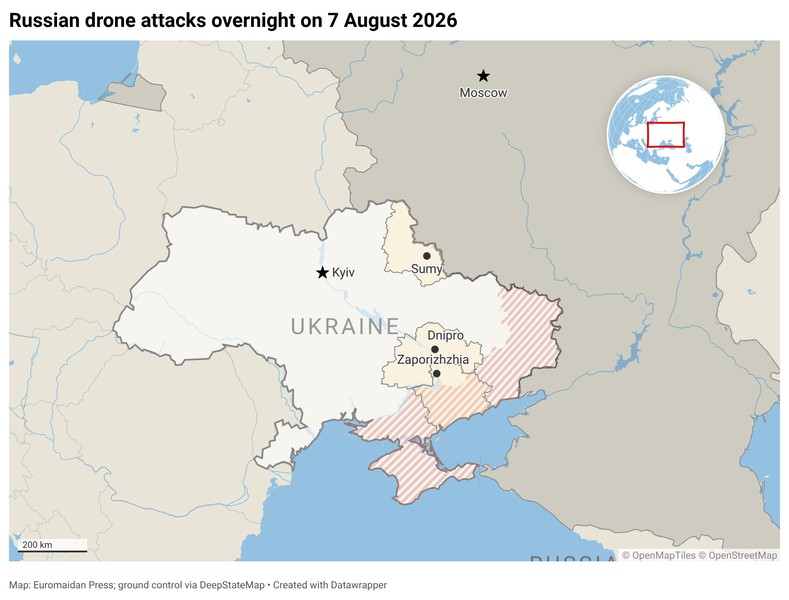
Since the evening of 6 August, Russia has attacked Ukraine with various types of drones, including decoys, the Ukrainian Air Force Command said. Although 114 of those 147 were shot down, some hit their targets, killing at least 2 people and injuring more than 10.

The Russian military has repeatedly used drone decoys to distract Ukrainian air defenses from real targets. By overloading Ukrainian air defenses, more drones reach their targets, which often include Ukrainian civilian infrastructure. In particular, attacks on post offices have become increasingly targeted.

Russian drone attacks overnight on 7 August 2026/Euromaidan Press map

Strike on Sumy Oblast

A Russian drone struck a market in Bilopillia community, Sumy Oblast, on the morning of 7 August, injuring 10 people. Two of them are in serious condition, head of Sumy Oblast Oleh Hryhorov said.

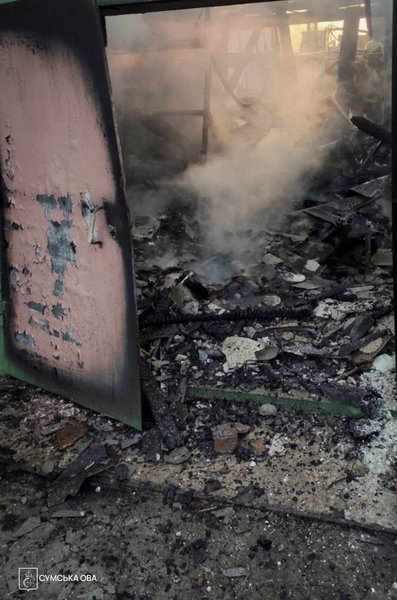
Overnight into 7 August, Russia attacked Sumy Oblast with aerial bombs and various types of drones, Hryhorov said. The attacks damaged infrastructure, non-residential buildings, vehicles, and private homes. Two civilians were injured, but their condition is not serious. One was a 57-year-old man wounded after one of two aerial bombs struck near his home, Sumy City Military Administration Head Serhii Kryvosheienko said. A drone also struck a post office in the Hlukhiv community.

Over the past 24 hours, Russian forces struck 34 settlements across Sumy Oblast in 48 attacks, injuring 13 people, including a child, Sumy Oblast police reported.

Consequences of Russian strikes on Sumy Oblast overnight into 7 August, 2026. Photo: Sumy Oblast Administration

Strike on Dnipropetrovsk Oblast

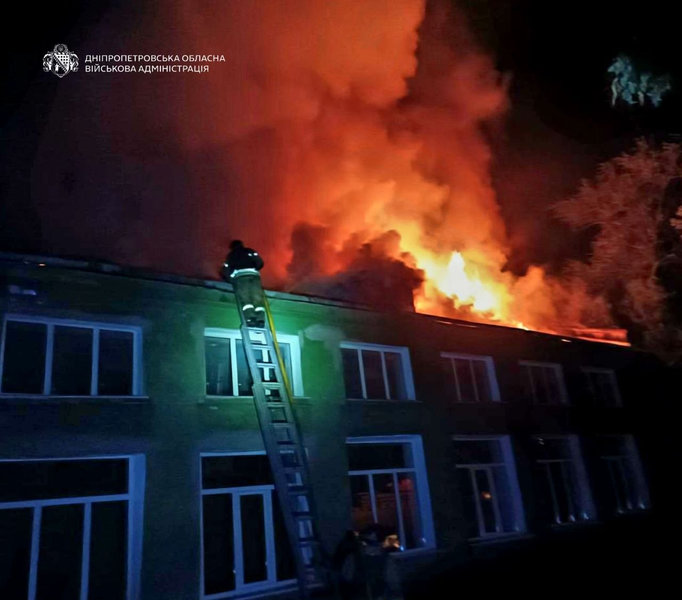
At the same time, Russia attacked five districts of Dnipropetrovsk Oblast with artillery and various types of drones, with no casualties reported initially, Dnipropetrovsk Oblast Head Oleksandr Hanzha said. He added that the strikes damaged private homes, an administrative building, vehicles, and infrastructure. In Nikopol district, a post office and a gymnasium were damaged in the Russian attack.

A firefighting crew extinguishes a fire following Russian strikes on Dnipropetrovsk Oblast overnight into 7 August, 2026. Photo: Dnipropetrovsk Oblast Administration

Russia continues to strike civilian infrastructure

On the night of 7 August, Russian forces also struck Zaporizhzhia. A drone damaged an office building, causing a fire.

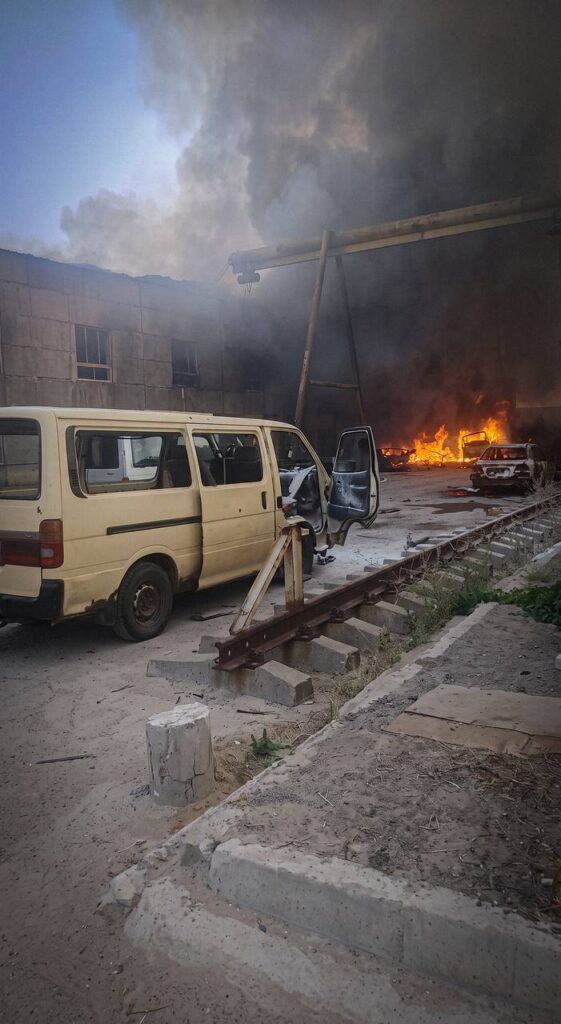
Aftermath of Russia’s attack on a Ukrposhta sorting depot and the base for mobile post offices in Pavlohrad, Dnipropetrovsk Oblast, on 6 August, 2026. Photo: Ihor Smilianskyi

On 6 August, a Russian Banderol cruise missile struck a Ukrposhta sorting depot and a base for mobile post offices. Two Ukrposhta employees were killed, and a mechanic was injured in the strike, Ukrposhta CEO Ihor Smilianskyi said.

“The enemy wanted to stop our movement here, but we will not let them do it. All backup schemes are already working. Pensions, medicines, parcels and letters are being delivered on schedule,” Smilianskyi said.

  •  

US rebuilt full intelligence sharing with Ukraine—and Kyiv strikes deep inside Russia hit harder 

Zelenskyy trump

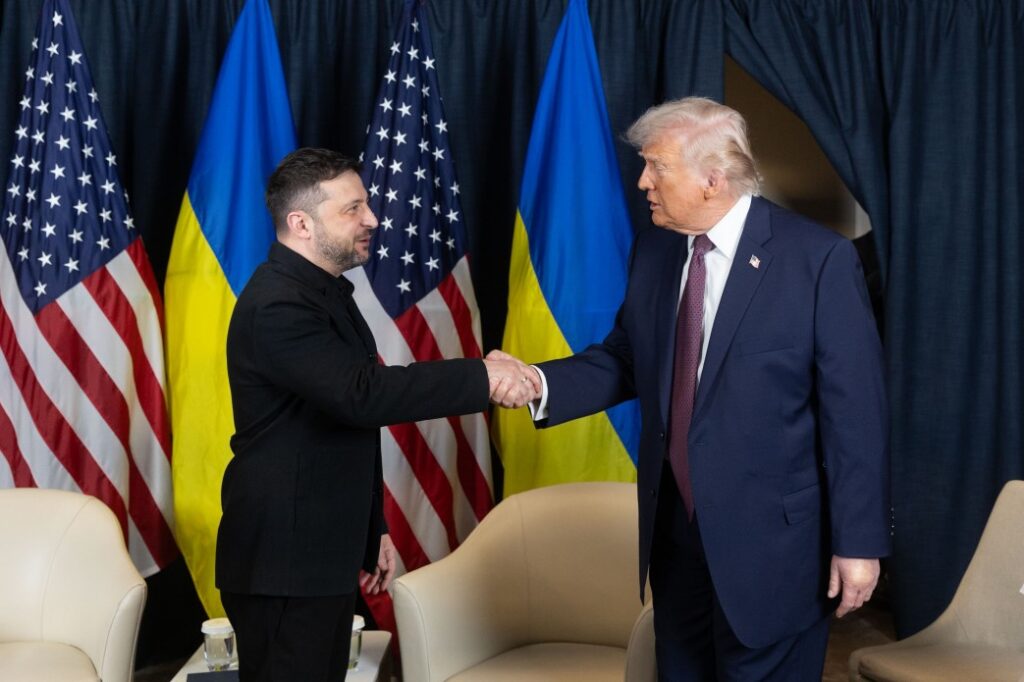
The United States has rebuilt intelligence sharing with Ukraine—the flow of satellite data, targeting, and attack warnings—to its pre-freeze peak, according to Politico. That restored flow now sharpens Kyiv's long-range strikes inside Russia, and senators from both parties say it has strengthened Ukraine. The White House says President Donald Trump stays focused on ending the war.

Russia funds its invasion largely with oil money, and Ukraine has spent the past year burning that revenue at the source, sending drones against refineries far behind the front. Foreign backing has wavered across the war, and every US pledge now carries the question of whether it will hold.

The freeze that started with a White House blowup

The cutoff came after Trump and Ukrainian President Volodymyr Zelenskyy clashed in the Oval Office on 28 February 2025. Days later, the White House froze weapons and intelligence to push Kyiv toward talks. It did not last. Washington restored the flow within about a week, after US-Ukraine talks in Saudi Arabia.

Russian plane IL-96-300
Explore further

Intelligence: Russia’s civil aviation deteriorates under sanctions, forcing it to dismantle even new aircraft to obtain spare parts

What changed on the battlefield

Senator Mark Warner, the top Democrat on the Senate Intelligence Committee, said the renewed sharing has improved Ukraine's position.

"Everybody loves a winner and looks like Ukraine has turned the tide," said Republican Senator John Cornyn.

Better data, deadlier strikes

"Those strikes were supercharged," and became "significantly more effective when imbued with intelligence from the Americans," said George Barros of the Institute for the Study of War.

He tied the drone strikes on Russian energy sites to a plan to raise the war's cost for Moscow.

Stephen Sestanovich of the Council on Foreign Relations said Ukrainian officials give Washington confident reads on what is happening in Moscow, not just inside the Kremlin. Warner said no one in the US defense establishment, himself included, expected Ukraine to reach this point a year ago.

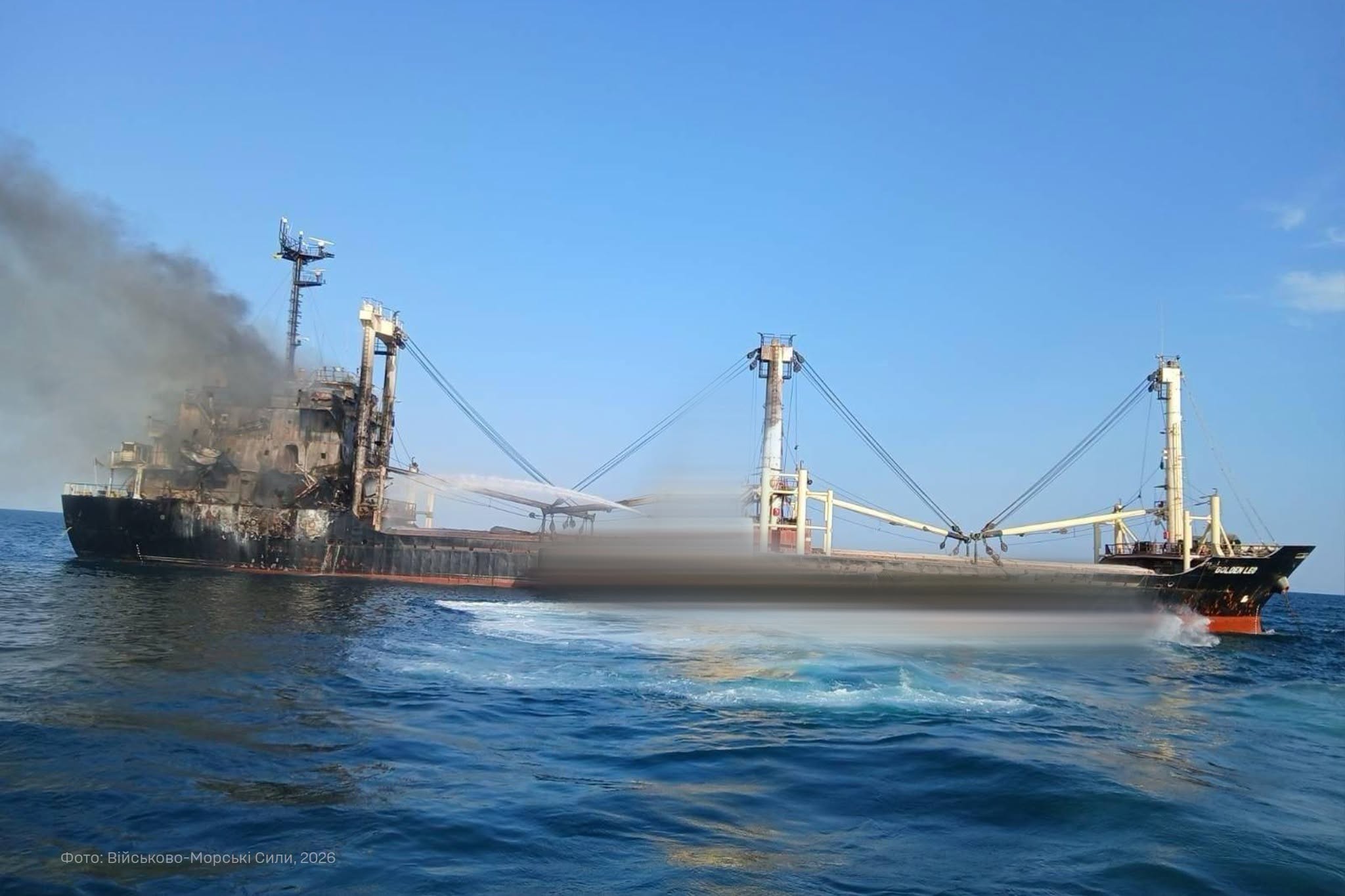
ten dead russia strikes turkish-owned bulk carrier off odesa · post civilian golden leo ablaze after russian missiles hit left cargo corn black sea 19 2026 ukraine's navy struck foreign-flagged
Explore further

Some Ukrainian farmers sell wheat below cost as Black Sea disruption stops ore operations

What the 2025 blackout cost

Euromaidan Press reported that losing the feed let Russian troops claw back territory in Russia's Kursk Oblast and left thousands of Ukrainians at risk of encirclement.

"As a result of this pause, there are hundreds of dead Ukrainians," one Ukrainian officer told.

Why the renewed backing is hard to unwind

The restored flow binds Washington to Ukraine's deep-strike campaign, making the tie harder for any ceasefire to sever. Agreement across party lines suggests the backing could outlast the next swing in American politics.

  •  

Amid Intensifying Russian Strikes, Ukraine’s Pleas for Air Defenses Are Falling Flat

Western allies are more hesitant to give up interceptor missiles they may need for their own defense as war rages on multiple fronts.

© Tetiana Dzhafarova/Agence France-Presse — Getty Images

The aftermath of a Russian attack on Kyiv, Ukraine, on Wednesday.
  •  

A slice of Estonia’s new EU billions will buy drones—for Ukraine, not itself

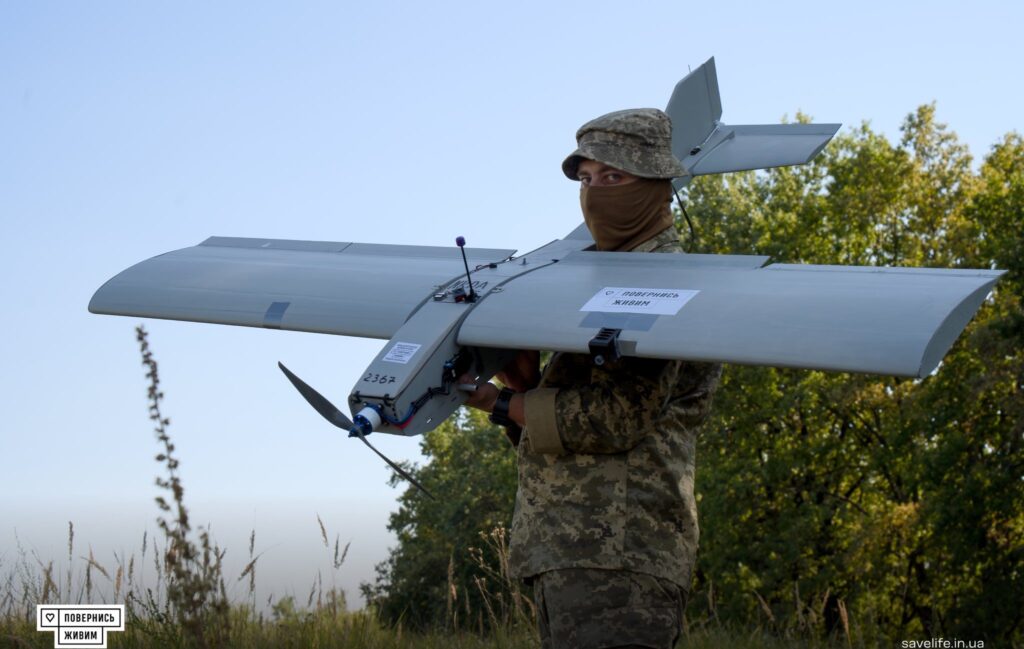
A Ukrainian service member holds a Darts attack drone, which has a reported range of 40-60 kilometers. Russian military sources say that these are among the Ukrainian drones that mount a directional antenna that can dynamically maintain connection with a signal repeater. (Photo: Come Back Alive Foundation)

Estonia will use part of a new European Union loan to arm Ukraine with drones, drawing on a loan worth up to €2.34 billionaccording to ERR. The loan will also rebuild its own air defense and ammunition stocks, and all of it must be spent by 2030.

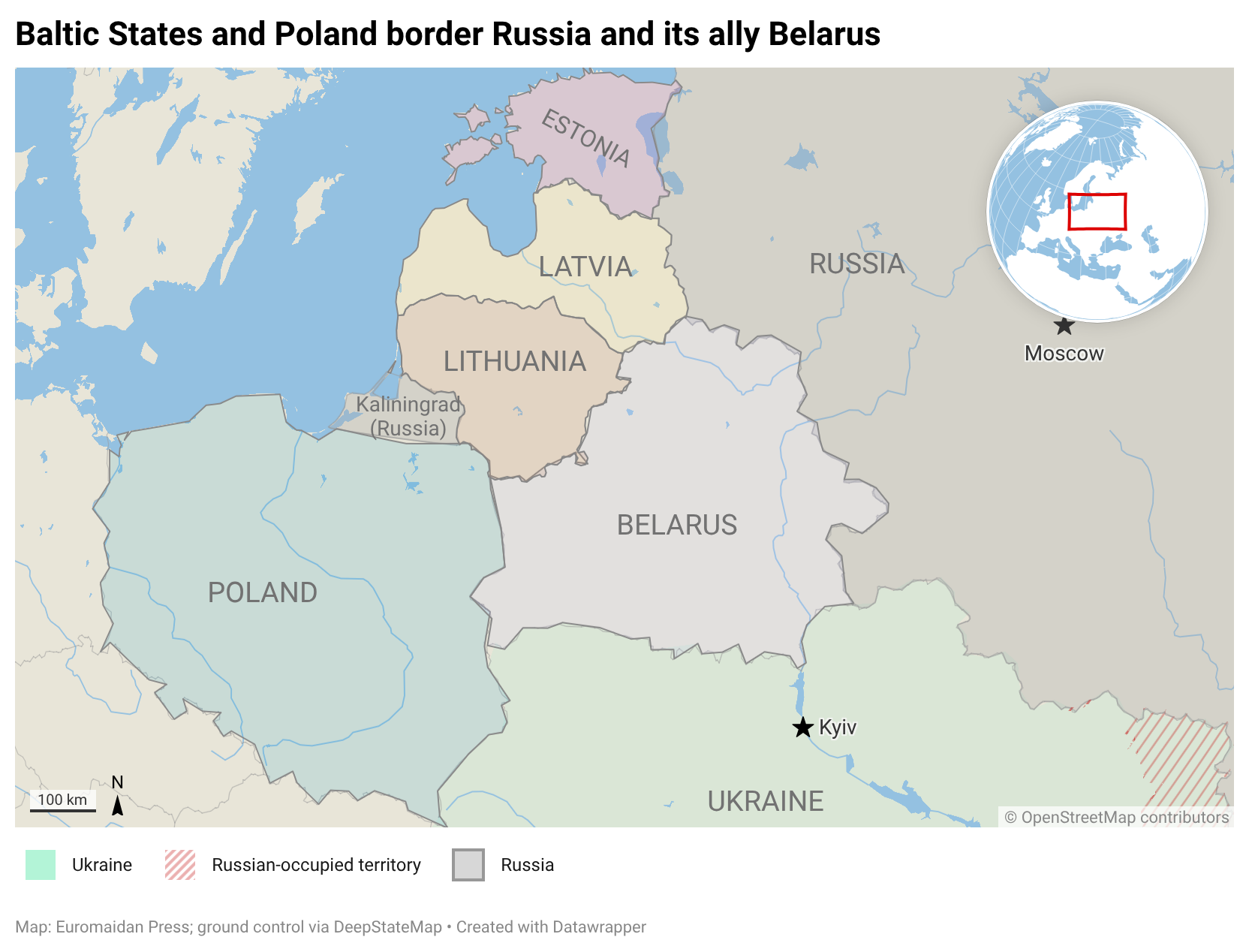
As Moscow continues its all-out war in Ukraine, the EU's northeast is rearming fast, bracing for a Russia that regional military chiefs expect to be combat-ready again within two years.

What the loan buys

Estonia signed the financing deal with the European Commission under SAFE (Security Action for Europe), a €150 billion EU program that raises money jointly on the markets and lends it to member states on cheap terms to fast-track defense spending, its finance ministry said.

A share of Estonia's up-to-€2.34 billion will go to Ukraine as drones. The rest strengthens air defense, buys military vehicles, and refills artillery shells and other ammunition. The credit runs 45 years, and every purchase and delivery must be finished by 2030. Estonia filed its final application in November 2025.

baltic- states
The Baltic region. Map: Euromaidan Press

Why the loan helps

Borrowing through SAFE lets Estonia raise money on better terms than it could alone, because the EU issues debt at lower rates. The bloc raises the money jointly and splits it among members. Estonia will hold defense spending above 5% of GDP, and the loan eases the strain that puts on its budget.

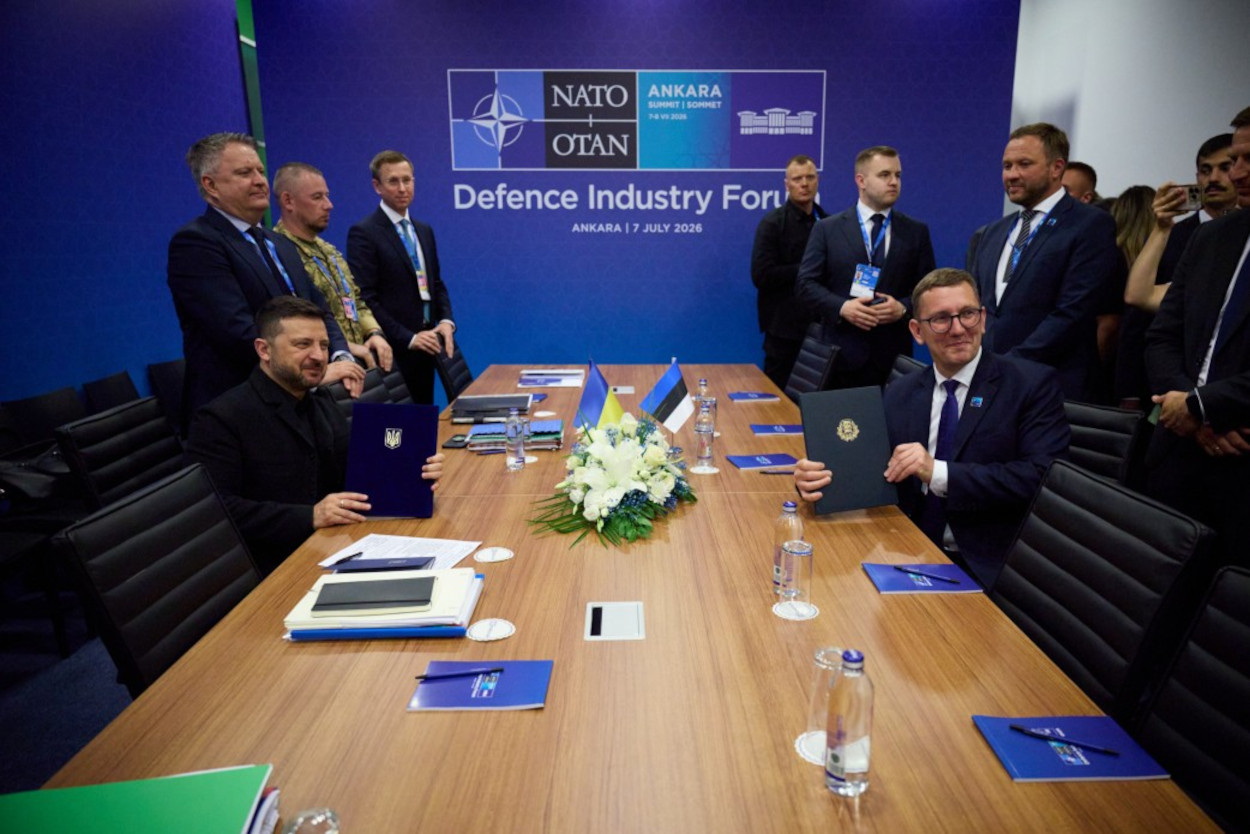
Ukrainian President Volodymyr Zelenskyy and Estonian Prime Minister Kristen Michal on the sidelines of the NATO summit in Ankara, 7 July 2026. Photo: Ukrainian President's Office
Explore further

“Ukraine is becoming a security provider for Europe”: Ukraine signs Drone Deals with Estonia, the Netherlands, and Denmark as Europe taps Kyiv’s battlefield-tested weapons technology

Estonia, a NATO and EU state of about 1.3 million people, shares a 294-kilometer border with Russia and treats Moscow's war on Ukraine as a direct threat to its own security. It has studied that war closely for years and is now racing to rebuild its air defenses and ammunition stocks.

Kadri Peters, a deputy secretary general at Estonia's Defense Ministry, said the fast-changing security situation in Europe demands stronger, quicker defense from the whole alliance. She said large-scale purchases ahead will directly affect Estonia's security and the wider region.

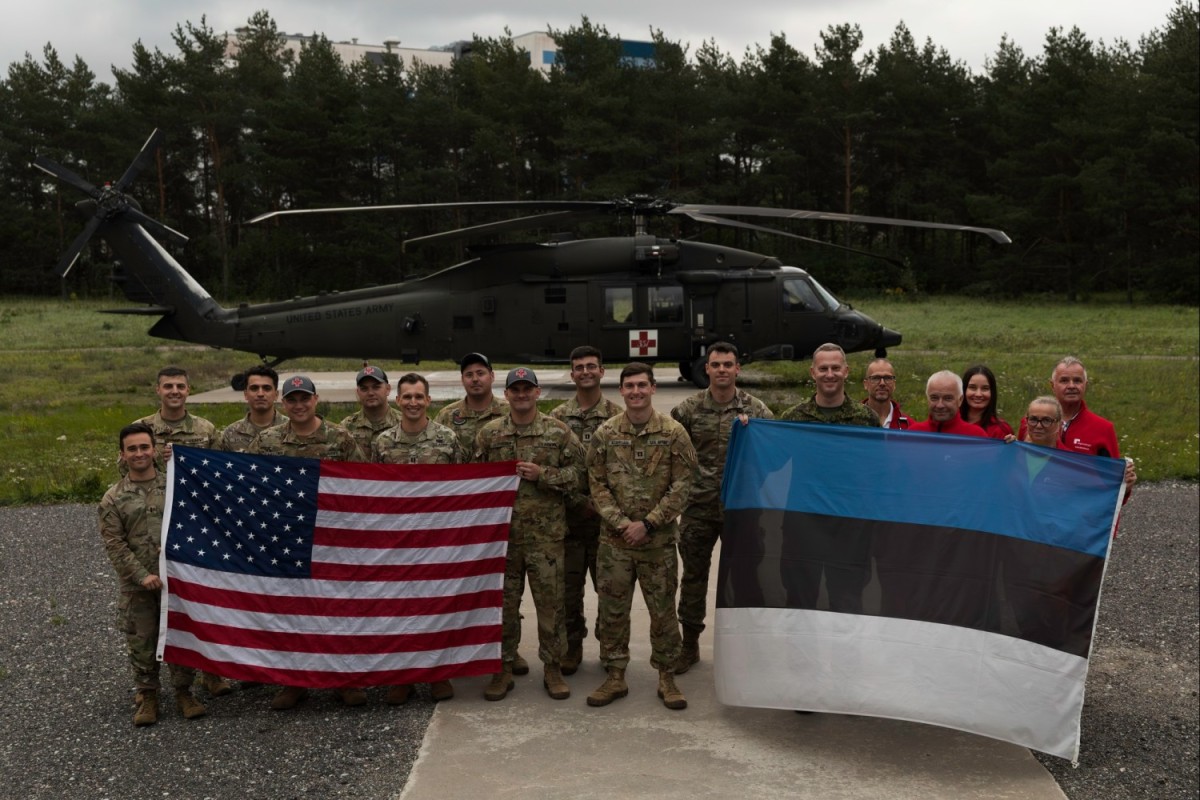
soldiers left summer rotation estonia doesn't know how many coming back—or when · post army task force knighthawk 3rd combat aviation brigade 101st airborne division north medical centre staff during
Explore further

US soldiers left for a “summer rotation.” Estonia doesn’t know how many are coming back—or when

In July, Estonia and the United States agreed to resume weapons deliveries in the coming months, after a pause tied to the war in Iran, with long-range ATACMS ballistic missiles the exception. In May, Washington had warned European allies of long delays as it drained its own stocks, mainly of HIMARS rocket ammunition and NASAMS air-defense missiles. The same shortages hit Ukraine the hardest: it currently struggles to shoot down Russian ballistic missiles for lack of US-made PAC-3 interceptors.

Estonia has been backing Kyiv since the beginning of Russia's full-scale invasion in 2022. It co-leads an IT coalition that has funneled over €1.4 billion into Ukraine's drone programs, and has moved to tap Kyiv's battlefield-tested drone technology for its own forces.

  •  

Some Ukrainian farmers sell wheat below cost as Black Sea disruption stops ore operations

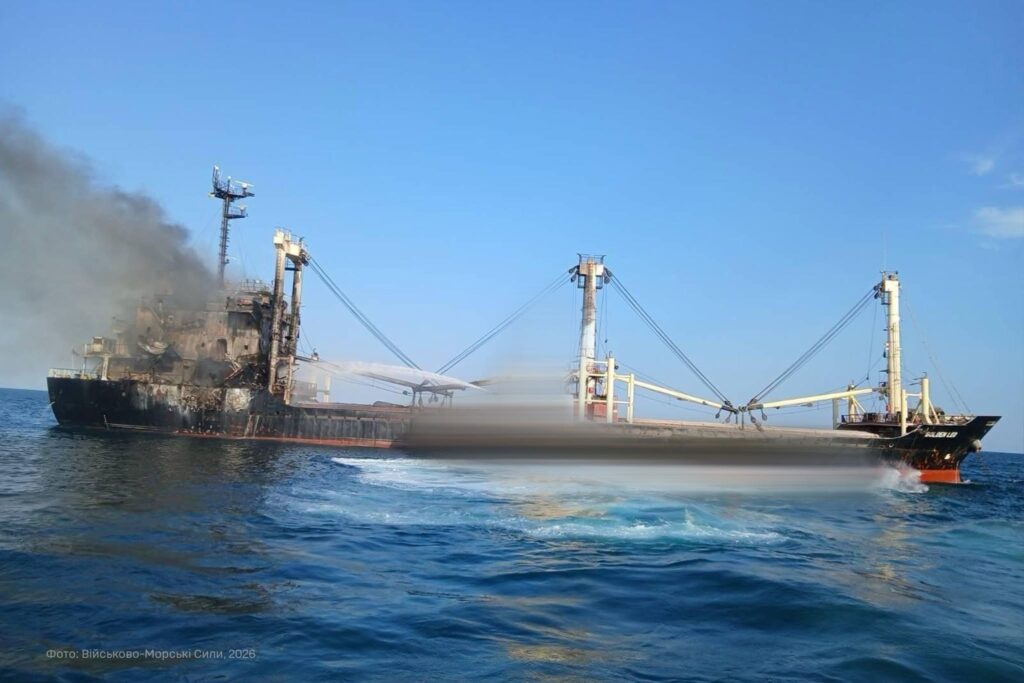
ten dead russia strikes turkish-owned bulk carrier off odesa · post civilian golden leo ablaze after russian missiles hit left cargo corn black sea 19 2026 ukraine's navy struck foreign-flagged

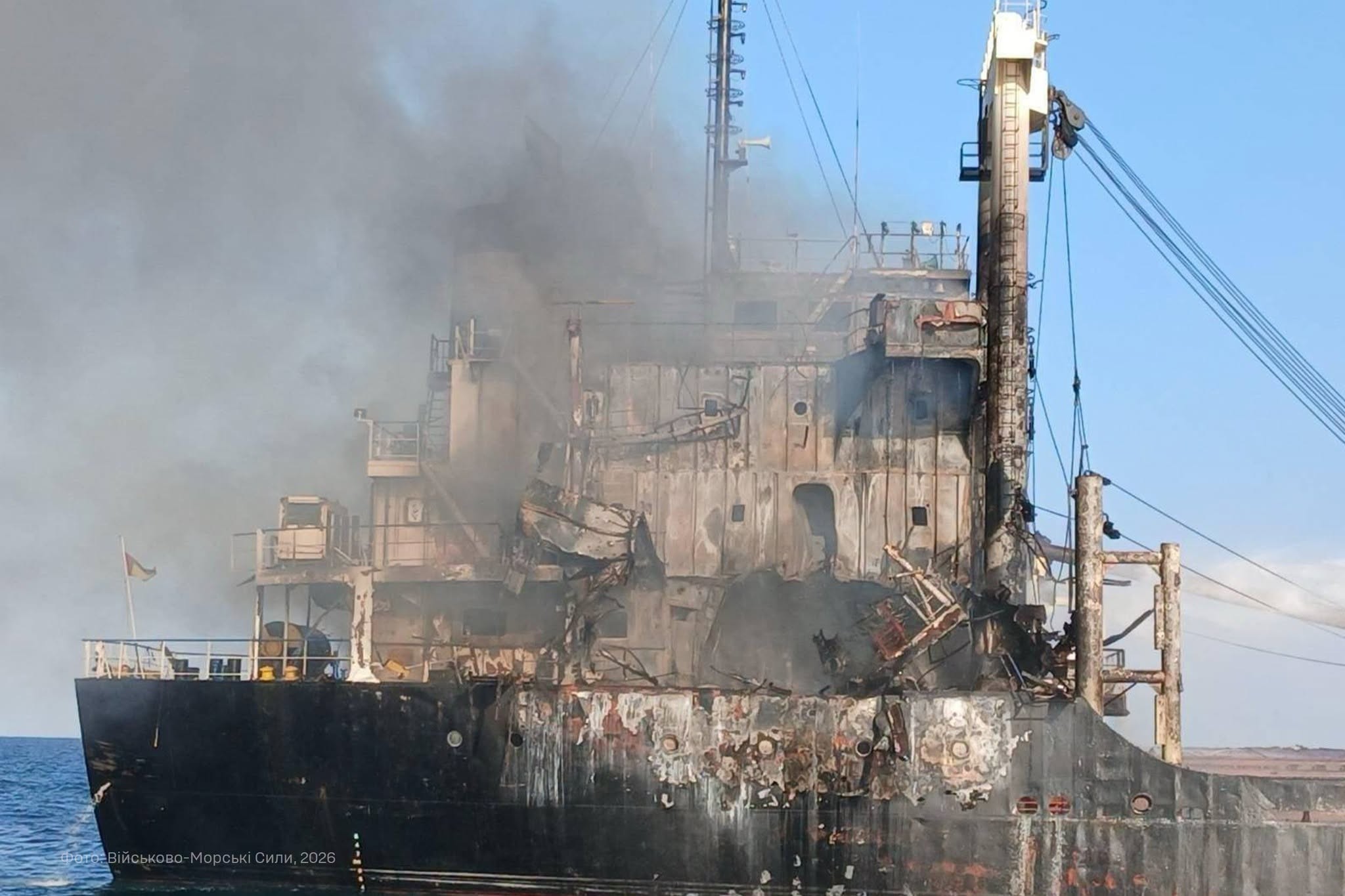
Two weeks ago, Russian strikes drove the ships out of Ukraine’s Black Sea ports, and Euromaidan Press reported that grain was piling up with nowhere to go. Now the bill is coming in.

ten dead russia strikes turkish-owned bulk carrier off odesa · post burned smoking superstructure golden leo after russian missile strike black sea 19 2026 ukraine's navy struck foreign-flagged civilian cruise
Explore further

Russia’s strikes stopped Ukraine’s grain ships. Its farmers are the ones paying

First to the farms. With no ships to load, traders have stopped buying, and the price they offer has dropped so far that Ukrainian farmers are, in places, selling wheat for less than it costs to grow. Port prices fell another 12–15% this week.

Grain buyers pay the world price, and when it suddenly costs far more to move Ukrainian grain out by rail than by sea, they hand that extra cost back to the farmer as a lower offer. That is how the head of Ukraine’s main association of agricultural producers, Oleh Khomenko, explained it.

Ukraine’s central bank has now measured the loss: $2.5 billion in export income gone in the second half of this year.

When the ships stop, the mines stop too

Ukraine mines iron ore and exports it by ship, just as it exports grain. The blockade has now spread into heavy industry. Ferrexpo, one of the country’s large ore producers, has suspended operations at its plant in central Ukraine—no point in digging ore that cannot leave the country.

After a Russian drone hit a vessel carrying its cargo, the company warned it will run out of cash by mid-September without fresh money. Metinvest, the steel group owned by Ukraine’s richest man, Rinat Akhmetov, has idled one of its own mines.

The image shows Pivdennyi Mining and Processing Plant (Pivdennyi GZK), one of Ukraine's largest iron ore producers. Source: UGOK
Explore further

Plant can’t mine because it can’t ship: Russia’s attacks on merchant vessels idle 4,480 workers at Ukrainian iron ore giant

Together, that is a country losing its two biggest foreign-currency earners. Ukraine’s central bank has now measured the loss: $2.5 billion in export income gone in the second half of this year, and almost a full percentage point—0.9%—knocked off the whole economy for 2026.

It could have been worse. An economist at the Kyiv School of Economics who tracked the 2022 blockade found that one cost Ukraine six times as much of its output. The sea lanes are not completely shut this time.

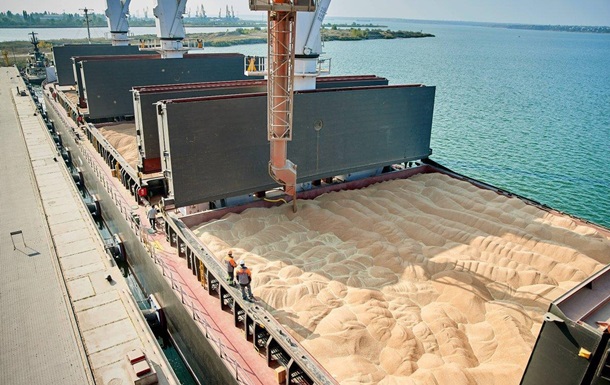
Ukrainian grain being loaded on a ship
Ukrainian grain on the move: Despite a 33% drop in 2025 shipments, Ukraine remains a vital global food supplier as EU integration advances. Photo: Ukrainian Grain Association

Abroad, the price moves the other way

For the rest of the world, the strikes cut the other way. As grain gets cheaper inside Ukraine, it gets dearer everywhere else, because buyers can no longer be sure the wheat will arrive. The UN’s political affairs office told the Security Council that world wheat prices have climbed 20% since the start of July.

Ukraine ships about 7% of the wheat sold across the world’s borders, USDA figures show, most of it bound for the Middle East and North Africa, where buyers have few other places to turn.

The real danger is that everything converges on one month. The corn harvest arrives in mid-September, with nowhere to store it. Ferrexpo’s cash runs out in mid-September. And the Danube—the shallow river route carrying what little the ports cannot—drops too low to help the month after. None of those alternatives replaces a deepwater port.

  •  

American tank missiles, an Israeli radar, a Dutch truck—Ukraine welded them into one drone-killer

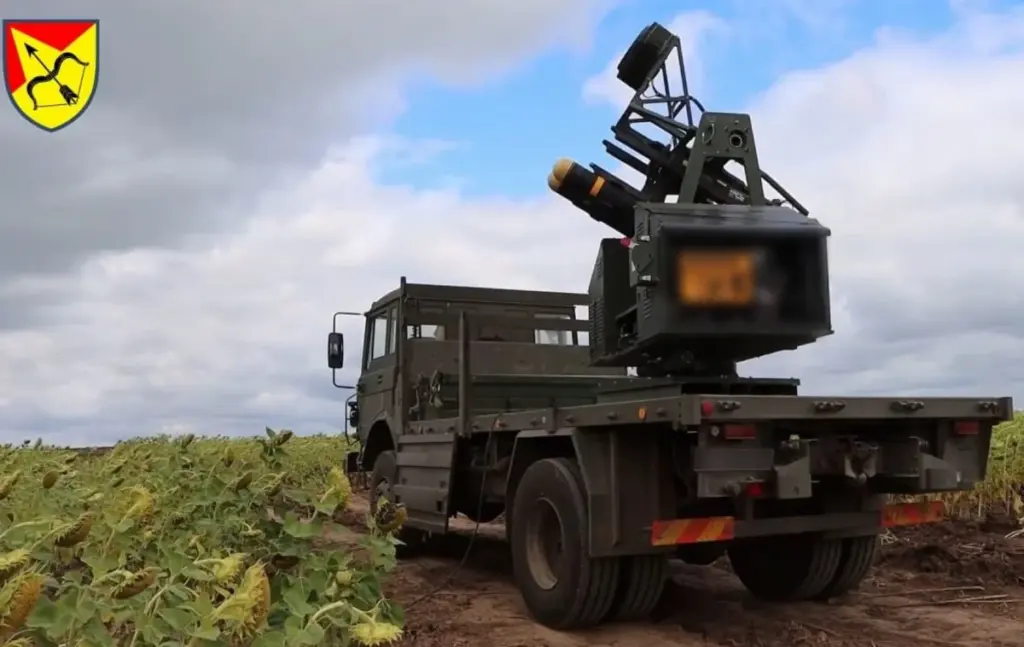
The STASH air defense system mounted on a truck chassis. Ukraine, August 2026

Ukraine has publicly shown off a homemade air-defense weapon that turns American anti-tank missiles into a drone-killer, The Defence Blog reported. The launcher stacks spare parts from three countries onto an ordinary military truck. It hands Ukraine a cheaper way to knock down the Russian attack drones that hit its cities.

Ukraine has become a proving ground for cheap air defense, forced there by a Russian bombing campaign that leans on mass and low cost. Then what works over Ukrainian cities is increasingly getting copied abroad.

Three countries' parts, one Ukrainian drone-killer

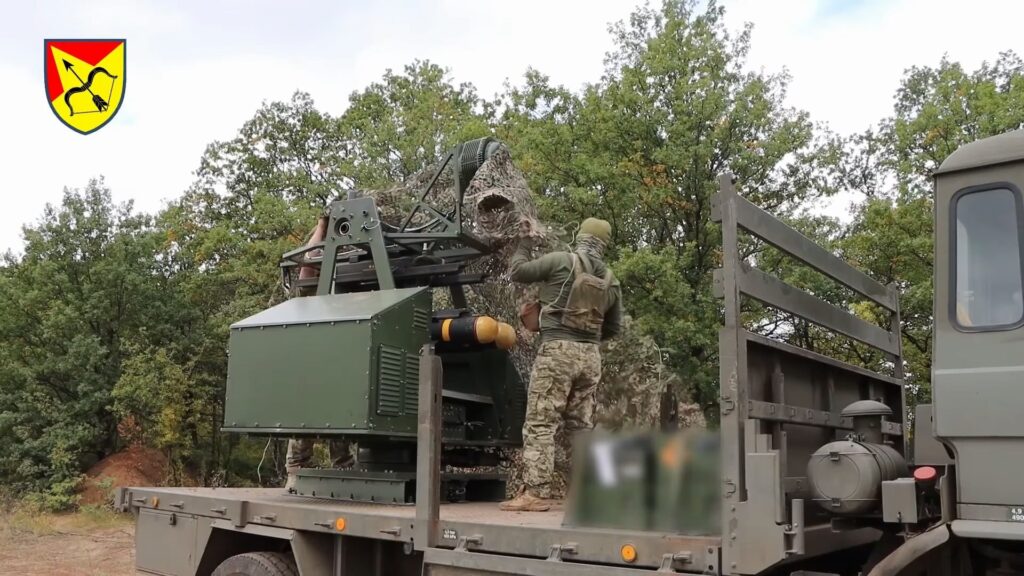
Ukraine's 302nd Anti-Aircraft Missile Brigade released an official video of the weapon, called STASH. Clips had leaked online for months, but this is the first time the military has shown it openly.

High-quality images of another variant of Ukraine's STASH short-range air defense system, this time mounted on a DAF YA 4442 truck and operated by the 302nd Anti-Aircraft Missile Brigade.

The STASH system can carry up to four AGM-114L Longbow Hellfire missiles for engaging UAVs.… pic.twitter.com/ewCiLHoJlj

— OSINTWarfare (@OSINTWarfare) August 3, 2026

The build is a patchwork. The missile is American. The radar comes from RADA, an Israeli maker of defense electronics. The truck is a Dutch DAF, a type that the Netherlands has long supplied to Ukraine. Crews bolted them together into a single launcher.

Why a tank missile now hunts drones

The missile at the core is the Hellfire, built to punch through tanks and armored vehicles when fired from helicopters. Ukraine repurposed it to shoot things out of the sky instead.

Ukraine's mobile gun team. Photo: Ukraine's Air Force via Facebook
Explore further

Ukraine’s private air defense has quadrupled since spring: businesses are now shooting down Shaheds over their own sites

Not just any Hellfire, though. This is the radar-guided Longbow version (AGM-114L), not the common laser-guided one. After launch, the missile picks out its target and stays on it without further help from the crew. The crew does not have to keep pointing anything at the drone. They can fire without staying locked in place to guide the missile. The Israeli radar spots small, low-flying drones that slip past standard air-defense sets.

What it can and can't do

The weapon reaches about 10 kilometers (6.2 miles). That makes it a short-range system, built to guard one specific site rather than cover wide stretches of sky the way Patriot batteries do.

The STASH air defense system mounted on a truck chassis. Ukraine, August 2026
The STASH air defense system mounted on a truck chassis. Ukraine, August 2026. Screenshot from a video by the 302nd Anti-Aircraft Missile Brigade.

It is built to stop Russia's Shahed and Geran attack drones—including the newer jet-powered versions that now fly too fast for Ukraine's cheap interceptor drones to chase down. What it cannot reach are Russia's cruise and ballistic missiles, which travel much faster still.

The cost math behind the welding

A single Patriot interceptor runs into the millions of dollars. A Shahed-type drone sets Russia back just a few tens of thousands of dollars, and it launches them in swarms of hundreds during a single night. Trading costly missiles for cheap drones is a losing exchange, and it drains Ukraine's limited stock of interceptors.

STASH is how Ukraine tries to rebalance those numbers. It leans on anti-tank missiles that are cheaper and more available than purpose-built interceptors, carried on plain trucks rather than the permanent emplacements a full battery demands. Ukraine has been chasing cheaper ways to stop drones for a while now.

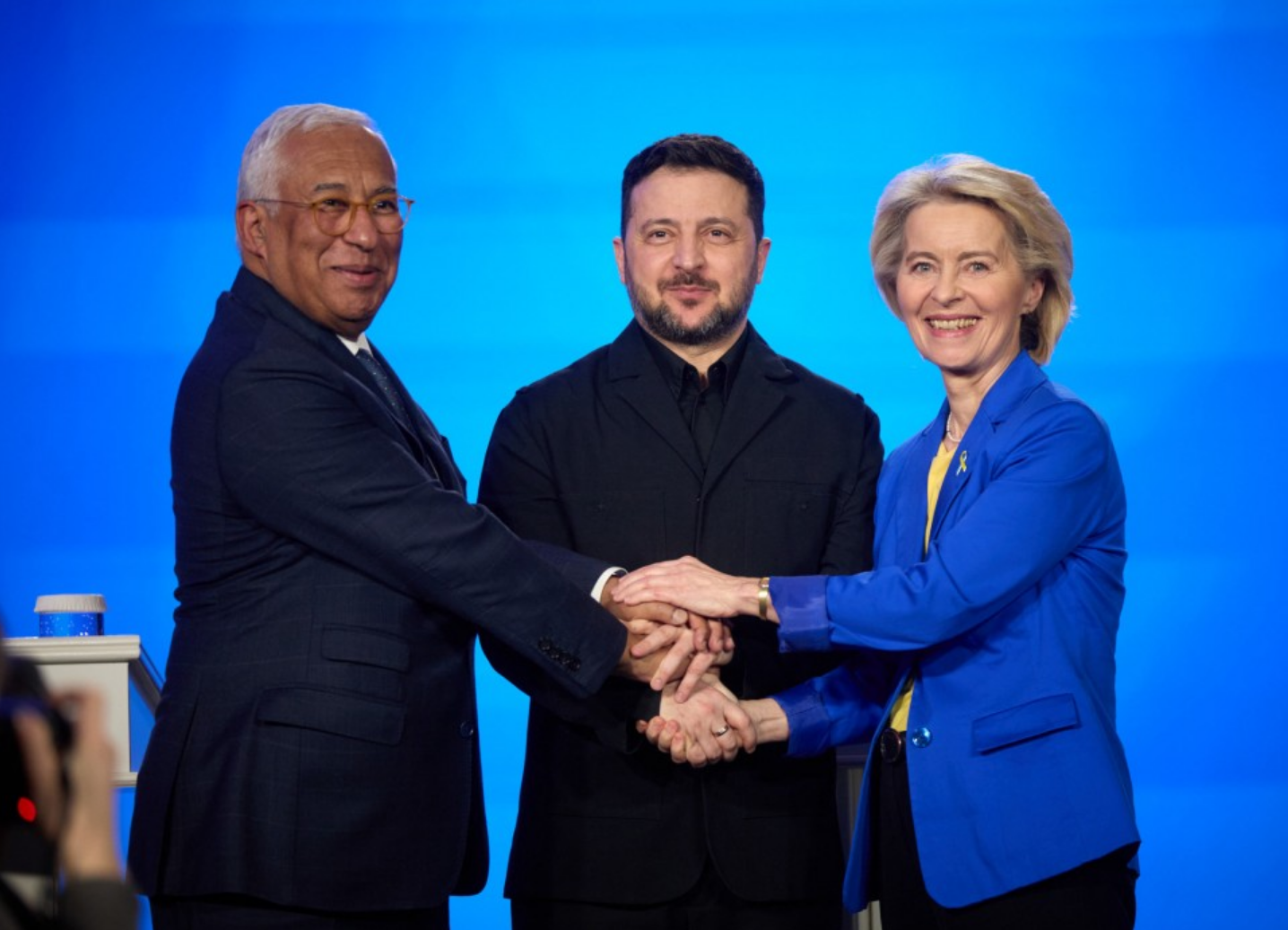
antónio costa, volodymyr zelenskyy and ursula von der leyen in kyiv on 24 february 2026
Explore further

EU releases another €3.47 billion for Ukraine’s “urgent needs” – drones, missiles, air defense, and Gripen jets

Not the first improvisation

STASH is not brand-new. It draws its missile and radar from a prior system, Tempest, built by the American contractor V2X and reportedly already flying with Ukraine's Air Force. Footage of Tempest downing drones at night surfaced in January 2026. STASH appears to strip that idea down, swapping the buggy-style chassis for a simpler truck or trailer launcher—less mobile, but cheaper to run and better for guarding fixed sites.

Ukraine has welded mismatched gear together like this before, pairing donated missiles with whatever launchers and trucks it can find.

  •  

Russia destroys the warehouses of Ukraine’s biggest retailers and parcel carrier in overnight Kyiv barrage

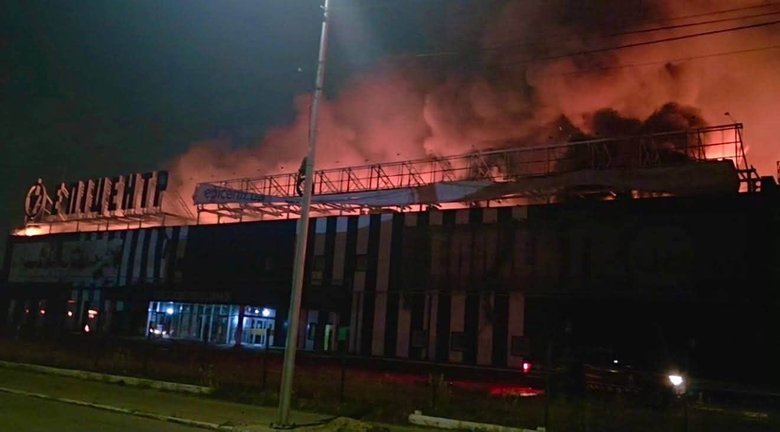
Flames and thick smoke rise from the roof of an Epicentr facility following a Russian missile attack on 5 August 2026.

Russia's overnight missile-and-drone barrage on Kyiv and its surrounding region on 5 August destroyed the warehouses and production sites of several of Ukraine's largest retail and logistics companies, killed 17 people and wounded 44 more, and laid bare the country's dwindling ability to intercept ballistic missiles, according to Ukrainian officials.

Russia's main target on 5 August: Ukraine's warehouses

Russia has spent this year pushing its air war toward the ballistic missiles that Ukrainian defenses struggle most to stop, launching more of them than Ukraine can shoot down while its Patriot interceptor stocks run dry, and pairing them with drone waves that keep reaching homes, transit and the warehouses that feed the country.

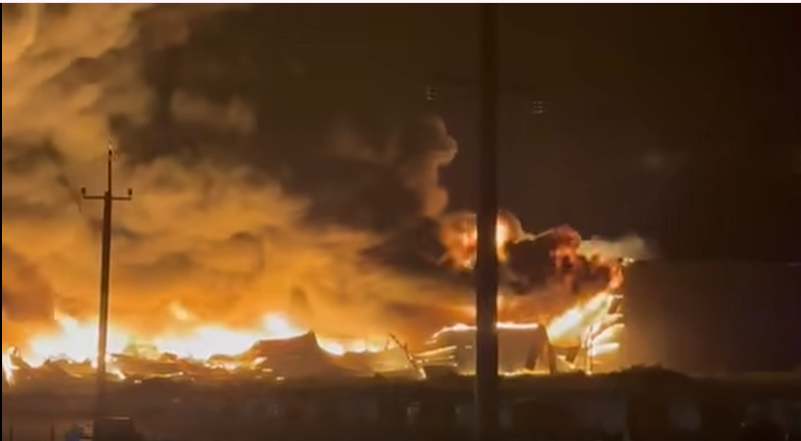
Three Russian ballistic missiles destroyed the largest distribution center operated by Rozetka, Ukraine’s biggest online retailer, near Kyiv overnight on 5 August. Rozetka co-founder Iryna Chechotkina said the warehouse had processed more than 100,000 online orders each day and was beyond repair.

By dawn, the attack had torn through the civilian logistics network moving parcels, groceries, household goods and construction materials across the capital and its suburbs. At least 17 people were killed and 44 injured in the broader barrage, according to President Volodymyr Zelenskyy.

Russia launched a massed missile and drone attack on Kyiv and Kyiv Oblast overnight, killing 14 people and injuring 27.

Fires burned across three raions. A residential building collapsed in Kyiv's Holosiivskyi district, where rescuers are searching for people under the rubble…

— Euromaidan Press (@EuromaidanPress) August 5, 2026

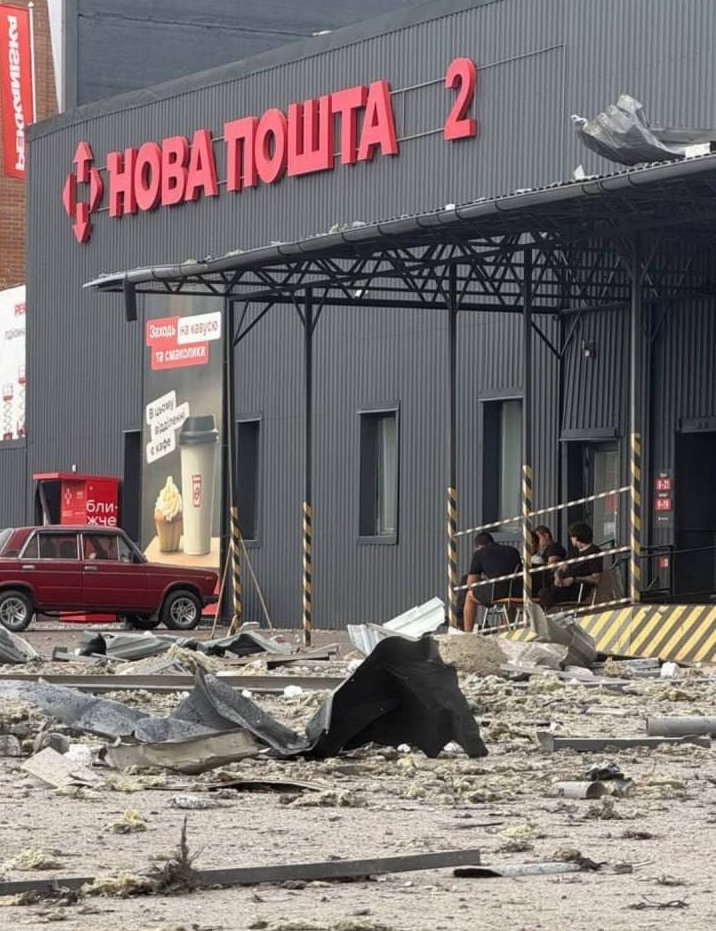
In its 5 August 2026 strikes, Russia destroyed a sorting center owned by Nova Poshta, Ukraine’s largest private parcel carrier, as well as major facilities operated by Epicentr, the country’s largest home-improvement retailer. Sites belonging to Novus and Fozzy Group, two major Ukrainian grocery retailers, were also damaged.

Nova Poshta said cluster munitions—bombs that scatter smaller explosives across a wide area—destroyed its Kyiv sorting center. Three people were killed and eight injured. Two of those killed were drivers for a partner carrier, while the third worked for a contractor.

Debris covers the grounds of a Nova Poshta sorting center in Kyiv after a Russian strike on 5 August 2026. Source: Kyiv24 via Censor.NET.

Epicentr lost two major warehouse complexes and much of its ceramic-tile production. One employee was killed, and three were hospitalized at the company’s complex in Kalynivka. Its logistics center on Kyiv’s Viskozna Street burned completely, while another Russian missile destroyed the factory's kilns.

During a separate overnight attack on 3-4 August, a Russian drone destroyed a Biosphere warehouse storing household and personal-care products in Dnipro, although all employees reached shelter and no one was injured.

Fire engulfs a warehouse complex in Dnipro after a Russian drone strike overnight on 3–4 August 2026. The complex included a 20,000-square-meter warehouse operated by Biosphere. Source: screenshot from a video posted by Andriy Zdesenko, Biosphere’s founder and CEO, on Facebook

The Kyiv attack extended beyond commercial facilities. Russia's attack killed eight people waiting for a delayed train at Kvitneva station, a commuter stop near Brovary, east of Kyiv. Missiles also hit homes and offices, damaged an ambulance and caused an ammonia leak at a non-residential site.

8 Passengers waiting for a delayed train were killed at "Kvitneva" station in Kyiv Oblast

Radio Svoboda published footage from the "Kvitneva" station in the Kyiv Oblast, where 8 people were killed as a result of a Russian missile strike.

According to Volodymyr Bihun, head of… pic.twitter.com/5ShA7Pdbot

— UkraineWorld (@ukraine_world) August 5, 2026

An earlier Euromaidan Press report detailed the destruction across Kyiv and the surrounding region.

Why Ukraine intercepted none of the missiles

Russia launched 24 ballistic missiles and four Zircon and Oniks anti-ship missiles, high-speed weapons designed primarily to strike naval targets but also used against Ukrainian cities.

Ukraine intercepted none of the 28, the Ukrainian Air Force said. Air defenses shot down or electronically disabled 98 of the 115 accompanying drones.

Missiles and 17 drones struck 26 locations, while debris fell at another six.

Zelenskyy said ballistic-missile interceptors could have saved those killed. Ukraine’s stocks of Patriot missiles, its only reliable defense against Russian ballistic weapons, are critically depleted

A global interceptor shortage means manufacturers cannot produce advanced air-defense missiles fast enough to meet demand.

Russia exploited the same gap on 1 August 2026, when it fired 27 ballistic missiles at Kyiv and Ukraine intercepted only one.

Moscow may point to recent Ukrainian strikes on Wildberries logistics centers to frame its attacks as retaliation. Ukrainian officials say the Russian retailer transports military goods, including drone components and navigation equipment. The Kremlin denies that Wildberries carries military cargo.

Ukraine’s acting Foreign Minister Andrii Sybiha rejected any comparison between the attacks. "Russian attacks cannot be justified by anything, including any actions by Ukraine," he said.

  •  

New EU rule blocks temporary protection for Ukrainian men who dodge military duty

Ukrainian war refugees

A European Union rule requiring newly arrived Ukrainians of military age to prove they have met their military obligations before receiving temporary protection took effect on 5 August, according to the Council of the EU and Czechia's Interior Ministry. The rule, Council Implementing Decision (EU) 2026/1912, was published in the EU's Official Journal on 4 August and applies only to new applicants — not to Ukrainians already holding protected status.

The measure closes a gap Czech and other EU officials have raised for months: hundreds of thousands of Ukrainian men of conscription age have used temporary protection to remain in the EU while Ukraine's own martial law bars most men aged 23 to 60 from leaving the country. Applicants must now show they left Ukraine legally — typically via a passport exit stamp — or produce paper or electronic proof of an exemption or completed service, drawn from Ukraine's Reserve+ registration app, among other documents.

What the rule requires

The decision extends the EU's temporary protection mechanism for displaced Ukrainians to 4 March 2028, one year beyond its prior expiration. That extension applies broadly. The new documentation requirement is narrower: it targets people with military obligations under Ukrainian law who are applying for temporary protection for the first time, not renewals.

Czech Interior Minister Lubomír Metnar said the change would cut new arrivals "by tens of percent," according to a statement carried by the Interior Ministry and Radio Prague International. He said the restriction would ease pressure on the Czech healthcare and social welfare systems, which he said are close to capacity — Czechia hosts roughly 395,000 Ukrainians under temporary protection, the largest share relative to population of any EU state.

The EU has framed the change as balancing humanitarian protection against Ukraine's manpower needs. "Recognising both the need to protect displaced persons and Ukraine's need to defend itself against Russia's illegal war of aggression, EU countries agreed that temporary protection should be granted only to those complying with their military obligations in Ukraine," the Council of the EU said.

A narrow carve-out, a broader debate

The rule does not close off asylum entirely — Ukrainians can still apply for international protection under standard EU asylum law, evaluated case by case, regardless of military status.

The change follows years of friction over Ukraine's own registration system. EP has previously reported that the Reserve+ app, heavily promoted by Ukraine's Ministry of Defense as a fix for a paper-heavy, post-Soviet mobilization bureaucracy, "delivered far less than hoped," part of a broader draft-evasion problem officials have linked to gaps in the system rather than to the app itself.

The EU's move also lands against a backdrop of Ukrainians increasingly settling in for the long term. In Poland, which hosts the largest Ukrainian population in the EU, 73% of surveyed Ukrainians say they plan to stay long-term and 44% for at least several more years, according to a University of Warsaw Center of Migration Research study cited in the source reporting; employment among that group has risen from 69% in 2022 to nearly 83% in 2026, though 45% work outside their qualifications.

  •  

US has burned through 80% of THAAD interceptors, sources tell CNN

us weapon

The US military has used up nearly 80% of its THAAD interceptors and roughly half of its Patriot stock during the five-month war with Iran, according to two sources familiar with the latest Pentagon inventory report, CNN reported.

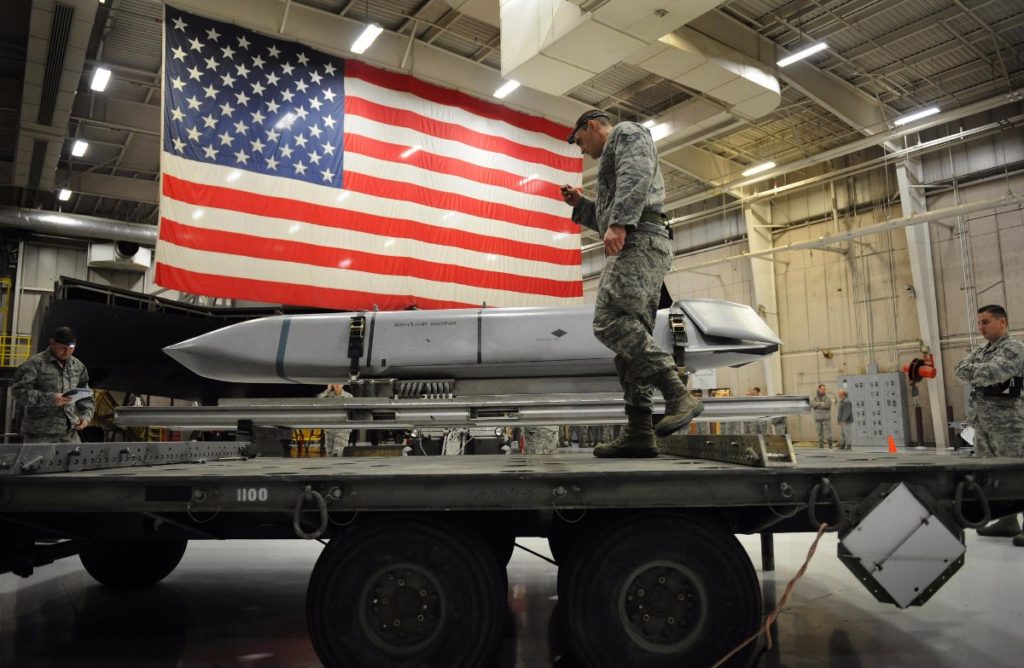
Senior US military commanders are warning the Pentagon's munitions stockpile is "dangerously low," according to multiple sources familiar with the matter. The disclosure on THAAD levels has not been previously reported. Before the war began, the US had around 2,200 Patriot interceptors of the platform's two most modern variants and 452 THAAD missiles, according to Center for Strategic and International Studies (CSIS) estimates. CSIS has assessed the war with Iran drained over half the global Patriot stockpile within its first 39 days.

The Patriot and THAAD systems are the same interceptor families that arm Ukraine's own air defense against Russian ballistic strikes - Kyiv depends on to stop Russian ballistic missiles. Thus a stockpile "dangerously low" for Washington is one that's already left Ukrainian Patriot launchers running empty during Russian barrages.

Commanders call stockpiles dangerously low

The US Army has fired "virtually all" of its long-range, surface-to-air precision weapons during the war, one source told CNN, referring to Army Tactical Missile Systems (ATACMS) and Precision Strike Missiles (PrSM). Close to half of the US Tomahawk cruise missile stockpile has also been used, a source said, up from nearly 30% reported by CNN in April.

Gulf allies have raised concerns that the shortage could limit their own ability to intercept Iranian retaliation, particularly if Washington resumes strikes. Replenishment is slow: the Pentagon is currently receiving about 15 new Tomahawks and 20 new Patriot missiles a month, and CSIS estimates rebuilding THAAD stocks to prewar levels will take three years or more.

Weekend strikes called off over stockpile concerns

The munitions warnings, combined with intelligence on the risks of striking Iranian energy infrastructure and concerns raised by Gulf states, were factors in President Donald Trump's decision to call off planned strikes over the weekend, according to CNN's sources. Trump had authorized the operation Friday, with Defense Secretary Pete Hegseth receiving the final order to proceed, a senior Trump official said. Trump reversed course Saturday after Middle East allies told him they feared Iranian retaliation against their energy infrastructure, the official said. He told Hegseth to stand down for now but has not ruled out strikes at a later date.

Pentagon spokesman Sean Parnell said in a statement that the US military "has everything it needs to execute at the time and place of the President's choosing." White House spokesperson Anna Kelly said the military has "more than enough munitions, ammo, and stockpiles to serve all of President Trump's strategic goals and beyond."

Joint Chiefs Chairman Gen. Dan Caine raised the stockpile issue in a separate White House meeting last month, CNN previously reported, where officials also discussed the risk of mass civilian casualties from a resumed US campaign inside Iran.

The shortage extends beyond Iran

CNN's sources said the depleted stockpile could affect the US military's ability to fight a future war involving China, Russia, or North Korea. "The lack of interceptors means that conventional attacks can backfire if the suicide drones start making it through in-masse," one source said. "Tit-for-tat will never end this."

Euromaidan Press has reported that the same Patriot shortage has already strained deliveries to Ukraine, which depends on PAC-3 interceptors as its only defense against Russian ballistic missiles. A senior Ukrainian official has told the Financial Times that deliveries to Kyiv faced delays since the war with Iran began, and President Volodymyr Zelenskyy has said late arrivals have left Patriot launchers empty during Russian missile barrages.

Analysts expect a slow recovery. The Precision Strike Missile and Joint Air-to-Surface Standoff Missile inventories should return to prewar levels by mid-to-late 2027, according to CSIS. The Defense Department has signed two deals this week to expand Patriot and THAAD rocket motor production, though a Pentagon spokesperson declined to say when the expansion would show results.

Trump on Monday called Iranian leadership "unbelievably duplicitous" after Tehran denied that negotiations would resume, and said Tehran had one "last chance" to sign a deal.

  •  

Ukraine hits 16th Wildberries warehouse in under three weeks, one injured overnight

Russia Tula oblast attacl

A Ukrainian drone strike set fire to a Wildberries logistics center in Oleksin, Russia's Tula Oblast, overnight into 5 August, according to the monitoring Telegram channel Exilenova+ and Russian outlet ASTRA. Tula Oblast Governor Dmitry Milyaev confirmed one person was injured and said a drone came down on the sorting center's territory before the fire broke out.

The strike extends a Ukrainian campaign against Russia's largest online retailer that has hit 15 Wildberries logistics sites in 18 days, Unmanned Systems Forces commander Robert "Madyar" Brovdi said on 4 August, before the Oleksin strike. Thirteen of those 15 were knocked out of action or seriously damaged, he said. Ukraine's deep-strike drones have turned Wildberries hubs — repeatedly described by Ukrainian officials as Russia's answer to Amazon — into a recurring target as they widen a campaign against the fuel and freight networks that keep Russia's war economy running.

Wildberries confirmed the fire at its Oleksin site, saying it evacuated staff in advance and temporarily redirected new deliveries to other warehouses. Milyaev also reported damage to two apartment buildings in Venyov district and two industrial sites in Novomoskovsk and Uzlovaya district from the same overnight barrage.

The Oleksin center covers about 194,500 square meters, according to Exilenova+, and opened in 2022. It supplies Tula, Kaluga, Oryol, Bryansk, Kursk, Lipetsk, Ryazan, and other central Russian oblasts, and partly relieves logistics centers in the Moscow region.

The strike follows fires at two other Wildberries sites — in Krasny Bor, Leningrad Oblast, and Chekhov, Moscow Oblast — overnight into 4 August, and comes as Wildberries has begun restricting employees to camera-free phones after staff filmed and shared footage of the strikes.

  •  

Russia hits Kyiv and its region overnight, 14 dead as ammonia leaks and building collapses

attack on kyiv

Russia launched a massed combined missile and drone attack on Kyiv and Kyiv Oblast overnight into 5 August, killing 14 people and injuring 26, Ukraine's State Emergency Service (DSNS) reported. Rescuers were still working seven locations across three raions as of the latest update, with fires, a residential building collapse, and an ammonia leak among the damage reported in the capital and its surrounding region.

The strike is the second massed barrage on Kyiv in five days. Russia killed nine people in the capital on 1 August with 27 ballistic missiles, damaging the Lithuanian embassy and destroying part of the city's ambulance fleet in a double-tap strike on a medical-transport depot.

The renewed attack this week points to a pattern of sustained pressure on the capital even as Russia continues to reject a full ceasefire in ongoing talks.

Kyiv Oblast bore the heaviest toll. Most of the deaths came in Brovarskyi raion, where nine people were killed, according to Kyiv Oblast Military Administration head Tymur Tkachenko. Four more people died in Bucha raion and one in Fastiv raion. Warehouse fires broke out in Brovary, Velyka Dymerka, Kvitneve, and Peremoha in Brovarskyi raion; rescuers were also fighting a warehouse fire in Chaiky, Bucha raion, and had extinguished a logistics-facility fire in Sofiivska Borshchahivka.

In Kyiv city, ballistic missiles and drones struck four districts — Obolonskyi, Sviatoshynskyi, Holosiivskyi, and Desnianskyi — starting shortly after midnight. A woman was killed in Obolonskyi, where a non-residential building caught fire. In Holosiivskyi, a strike destroyed a private residential building, with rescuers searching for people under the rubble, and damaged a tank holding roughly 300 liters of ammonia at a nearby industrial site. Emergency crews contained the leak and confirmed no threat to residents. Repeated explosions at one strike site also damaged an ambulance, injuring its driver.

The overnight fires pushed air quality across Kyiv to hazardous levels by morning, with monitoring stations in Obolonskyi and Sviatoshynskyi districts recording index readings of 140–174 against a healthy baseline of under 50, according to SaveEcoBot and AQICN data.

DSNS said the death and injury toll could still rise as search-and-rescue operations continue in Brovarskyi and Bucha raions.

  •  

US begins handing Ukraine military aid mission to European allies as Pentagon reorganizes command

The Pentagon, headquarters of the United States Department of Defense, in January 2008.

The United States is reorganizing its Security Assistance Group-Ukraine (SAG-U), shifting greater responsibility for coordinating military assistance to European allies while maintaining support for Kyiv, US European Command (USEUCOM) announced on 3 August.

The changes affect the division of responsibilities between SAG-U, US military components, and NATO Security Assistance and Training for Ukraine (NSATU). According to USEUCOM, the reorganization is intended to improve the efficiency of military assistance while transferring leadership of key elements of the mission to allied countries.

Established in November 2022 following Russia's full-scale invasion, the headquarters oversees long-term security assistance for Ukraine, including coordinating equipment deliveries, training Ukrainian forces, and sharing battlefield lessons learned with US and NATO militaries.

Pentagon says support for Ukraine will continue

USEUCOM said the reorganization "will not impact US support for Ukraine" and would free US resources for other global priorities while recognizing Europe's growing role in supporting Ukraine's defense.

"Allies have shown that they can take the lead in support of Ukraine's defense," USEUCOM commander Gen. Alexus G. Grynkewich said.

"SAG-U was always meant to be a temporary command. Its transition builds on the progress that we have already seen, helping to set conditions for lasting peace in Ukraine."

US Army Europe and Africa spokesperson Col. Michael Weisman similarly said the reorganization "does not diminish our support or commitment to Ukraine" and that Washington would continue coordinating assistance through USEUCOM and NSATU in line with US policy.

Shift follows broader push for Europe to take the lead

The announcement follows reports that the Pentagon plans to hand leadership of SAG-U to another NATO member over the coming year while retaining a US deputy commander, a move reported by Politico.

According to the outlet, the transition forms part of a broader effort by the Trump administration to shift more responsibility for European security onto NATO allies. The administration has previously reduced US leadership roles within NATO's command structure and has repeatedly called on European countries to assume a greater share of the burden for Ukraine's defense and the alliance's collective security.

USEUCOM likewise said the realignment reflects Europe's leading role in supporting Ukraine over the past year.

USEUCOM said SAG-U has distributed more than $2 billion in security assistance over the past three and a half years while coordinating military aid from allied and partner nations.

  •  

Over 100 strategic targets struck in Ukraine’s 40-day campaign against Russia’s war machine

drones found fsb where felt safest—a seaside resort deep occupied kherson · post explosion coordination center oblast security service ukraine strike site 20 2026 earlier sbu news ukrainian reports

Ukraine's Security Service (SBU) says it has struck more than 100 strategic military and industrial targets inside Russia and occupied Ukrainian territories during a 40-day campaign approved by President Volodymyr Zelenskyy.

The coordinated 40-day campaign combined long-range strikes deep inside Russia with frontline operations, aiming to simultaneously erode Moscow's military production, logistics, fuel supplies, air defenses, and combat capabilities rather than focusing on a single target set. 

In a statement on 4 August, the SBU said the operation targeted Russia's military-industrial complex, air bases, air defense systems, command posts, oil refineries, transport and military logistics infrastructure, as well as vessels from Russia's sanctions-evading "shadow fleet."

The agency said Zelenskyy has also approved a new series of operations proposed by SBU chief Maj. Gen. Oleksandr Poklad.

Campaign targeted air bases, oil facilities, and shadow fleet

According to the SBU, one of the campaign's main objectives was degrading Russia's military aviation and air defense capabilities.

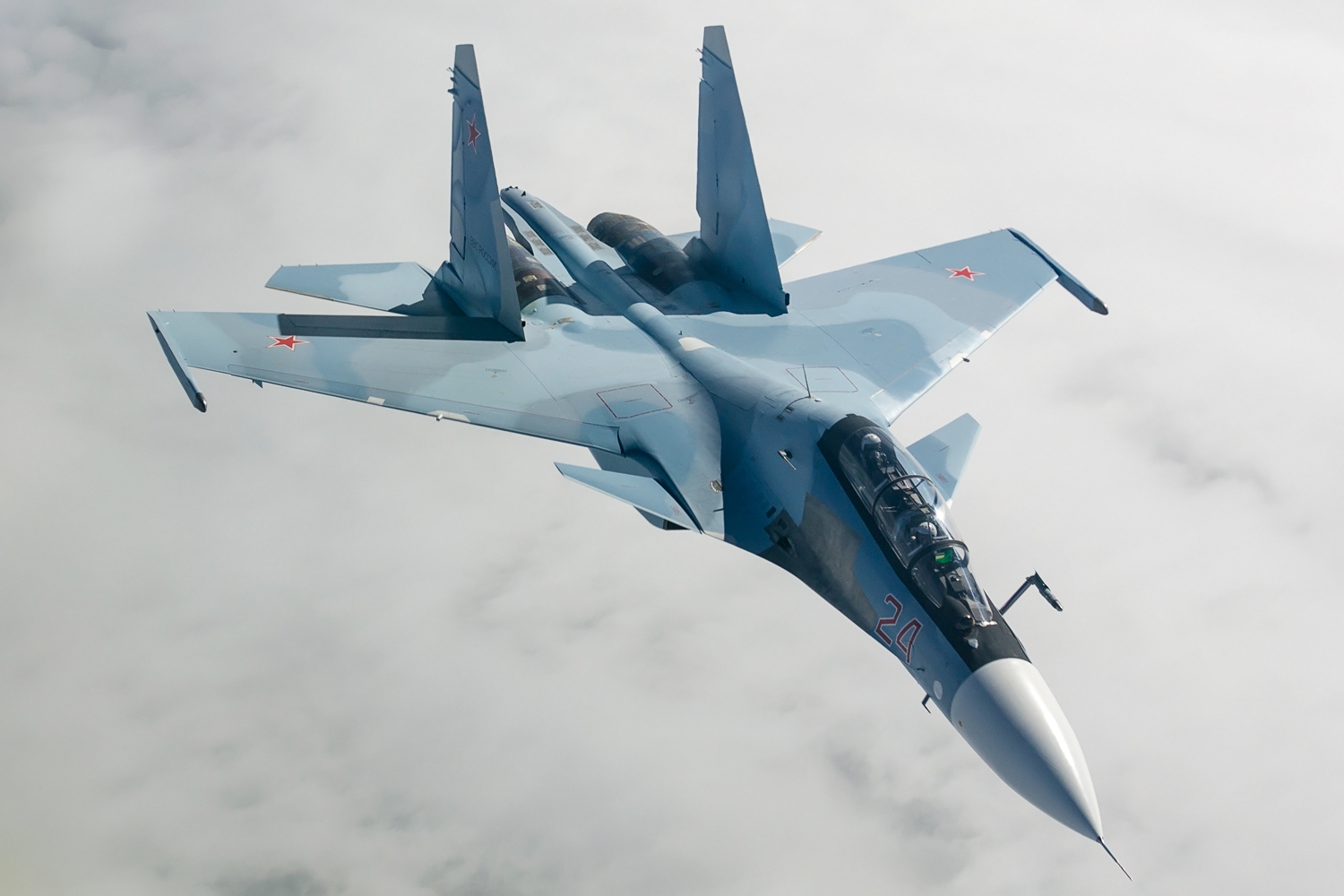
The agency said it struck the Saky, Hvardiiske, Belbek, Bagerovo, Engels, and Khanskaya air bases, as well as the Yevpatoria aviation plant. It claimed the attacks destroyed one Tu-95MS strategic bomber, damaged two Su-35 fighter jets and two L-39 trainer aircraft, and hit hangars housing Su-24, Su-30, and Su-30SM aircraft, Shahed drone storage facilities, and airfield fuel infrastructure.

The SBU also reported strikes on Russian air defense assets, including a Nebo-U radar, the 92N6E engagement radar of an S-400 system, Tor-M2 and Pantsir-S2 air defense systems, a Pole-21 electronic warfare system, and several Podlyot-K1 and Kasta-2E2 radar stations.

The agency said it also struck 14 oil refineries, dozens of oil depots, pumping stations, terminals, and storage facilities, naming refineries in St. Petersburg, Yaroslavl, Nizhny Novgorod, Perm, Volgograd, and Ufa among the targets.

It further claimed attacks on the tankers Blue, Louise 1, Banda, and Avero, along with two cargo vessels already under international sanctions, as part of efforts to disrupt Russia's "shadow fleet."

ukrainian manpads takes down russian su-30sm jet over black sea air force's sukhoi sukhoi_su-30sm_in_flight_2014
Explore further

Ukraine hits at least seven Russian warplanes in second strike on Crimea’s Saky airbase this week, SBU says

SBU reports thousands of battlefield targets hit

Alongside its long-range operations, the SBU said its frontline units struck more than 21,000 items of Russian military equipment, weapons, and infrastructure during the same 40-day period, while killing nearly 5,000 Russian troops.

According to the statement, those strikes included 24 tanks, 63 armored vehicles, 124 artillery systems, 22 multiple-launch rocket systems, 40 air defense systems, and 14 aircraft and helicopters.

The agency also said it destroyed more than 11,000 enemy drones and ground robotic systems, including 176 Shahed attack drones, and struck 712 drone crews together with their launch sites and equipment.

The image shows fire and smoke emanating from a St. Petersburg-area maritime petroleum products transshipment terminal. Source: OSINT Telegram channel Exilenova+
Explore further

Ukraine is ten days into campaign to pressure Moscow toward peace: Russia’s Baltic oil gateway took hit overnight

Part of Ukraine's broader deep-strike campaign

The figures add to a series of increasingly ambitious Ukrainian long-range strikes targeting Russia's military infrastructure, oil industry, and logistics network.

Over recent months, Ukraine has claimed attacks on strategic bomber bases, air defense systems, oil refineries, and vessels involved in transporting Russian oil despite Western sanctions. 

Kyiv says the campaign aims to reduce Russia's ability to sustain its war against Ukraine by degrading both its military capabilities and the economic infrastructure supporting them.

  •  

Reconstruction holds Ukraine’s economy above water as service sector cracks

kharkiv digs over 40 underground schools being built russia keeps bombing · post workers reinforce concrete structure construction site school oksen lisovyi video surrounding oblast crews working shifts often without

Ukraine’s wartime business optimism has split in two. In July, the construction sector, funded by state money for roads and damaged infrastructure, remained the country’s most confident, even as service firms slid into outright pessimism, and overall confidence in the economy stopped improving.

The divide is about money. Rebuilding, paid for by the government and its foreign backers, is thriving. The businesses that earn their own keep—transport, hospitality, professional and financial firms—are squeezed by rising costs and a shortage of skilled workers.

Only builders expect to hire; industry and services plan to cut.

Each month, the National Bank of Ukraine asks companies whether they expect business to improve or worsen. In July, there was only barely more expected improvement than decline: a reading of 50.1, where 50 is the dividing line, down from 50.4 in June.

A year earlier, more firms were gloomy than hopeful. As 2025 closed, the divide ran along a different line: retail firms stayed confident while industry shrank under Russian strikes, and the overall mood was still a shade negative.

kyiv skyline
Explore further

Ukraine’s economy adapts to war, but hits a ceiling money can’t break (INFOGRAPHICS)

business expecation index july 2026
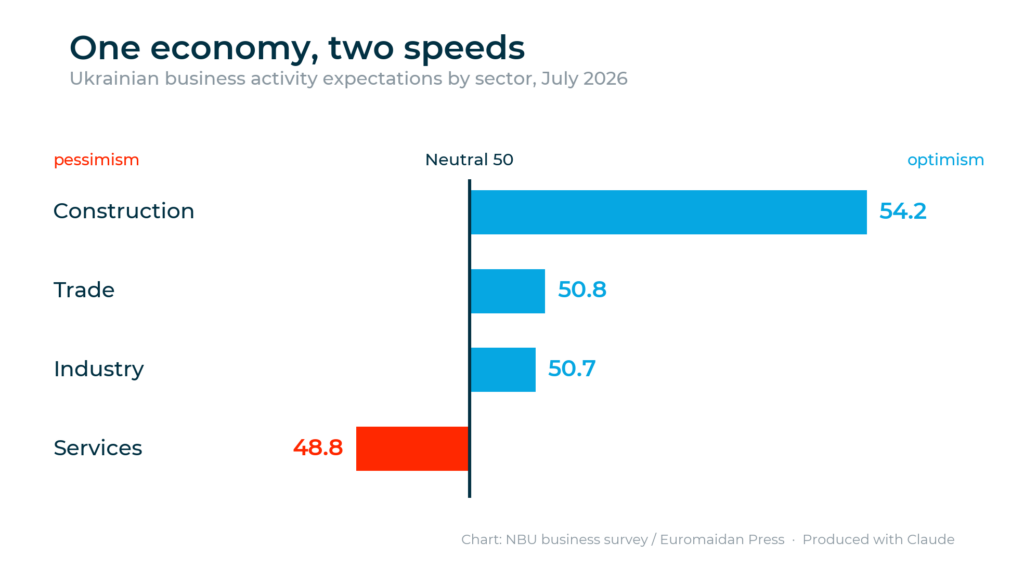
Ukraine’s war economy split cleanly along its funding line in July: construction, paid for by state and foreign rebuilding funds, remained the most confident sector, while services—left to earn their own way—fell into pessimism, the only sector below the neutral 50 mark. Chart: NBU business survey / Euromaidan Press

Where the rebuilding money goes, confidence follows

Construction was far above the line, at 54.2, lifted by financing for road repair and rebuilding—even as the same survey listed intensifying strikes on critical infrastructure among the factors holding activity back.

Industry and trade stayed barely positive. Services alone fell below the line, into pessimism, squeezed by higher costs and too few skilled workers. Only builders expect to hire; industry and services plan to cut.

For Ukraine’s partners, the survey shows where rebuilding money actually reaches. That spending—part-funded by Western aid, which the bank lists as one reason confidence holds up at all—is a preview of the demand that a full postwar rebuild would bring.

In June 2026, Russian strikes on that same industrial base pushed Ukraine into its sharpest wartime contraction since 2023.

The next survey, covering August, is due on the first working day of September.

  •  

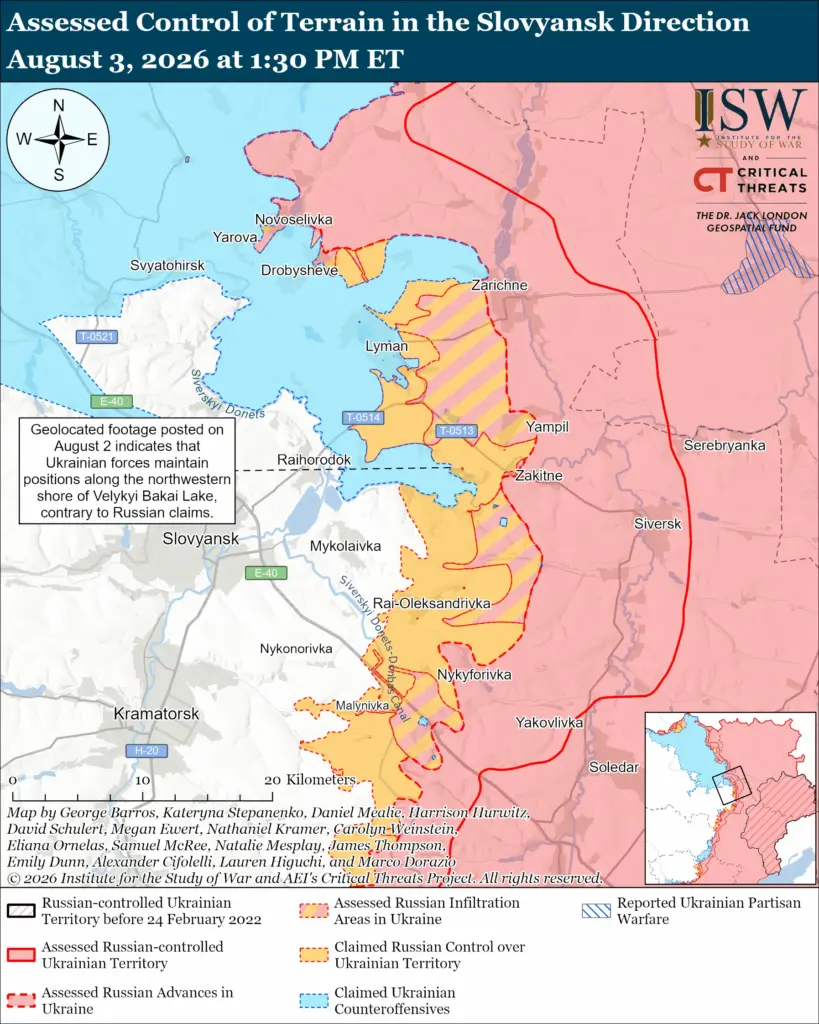
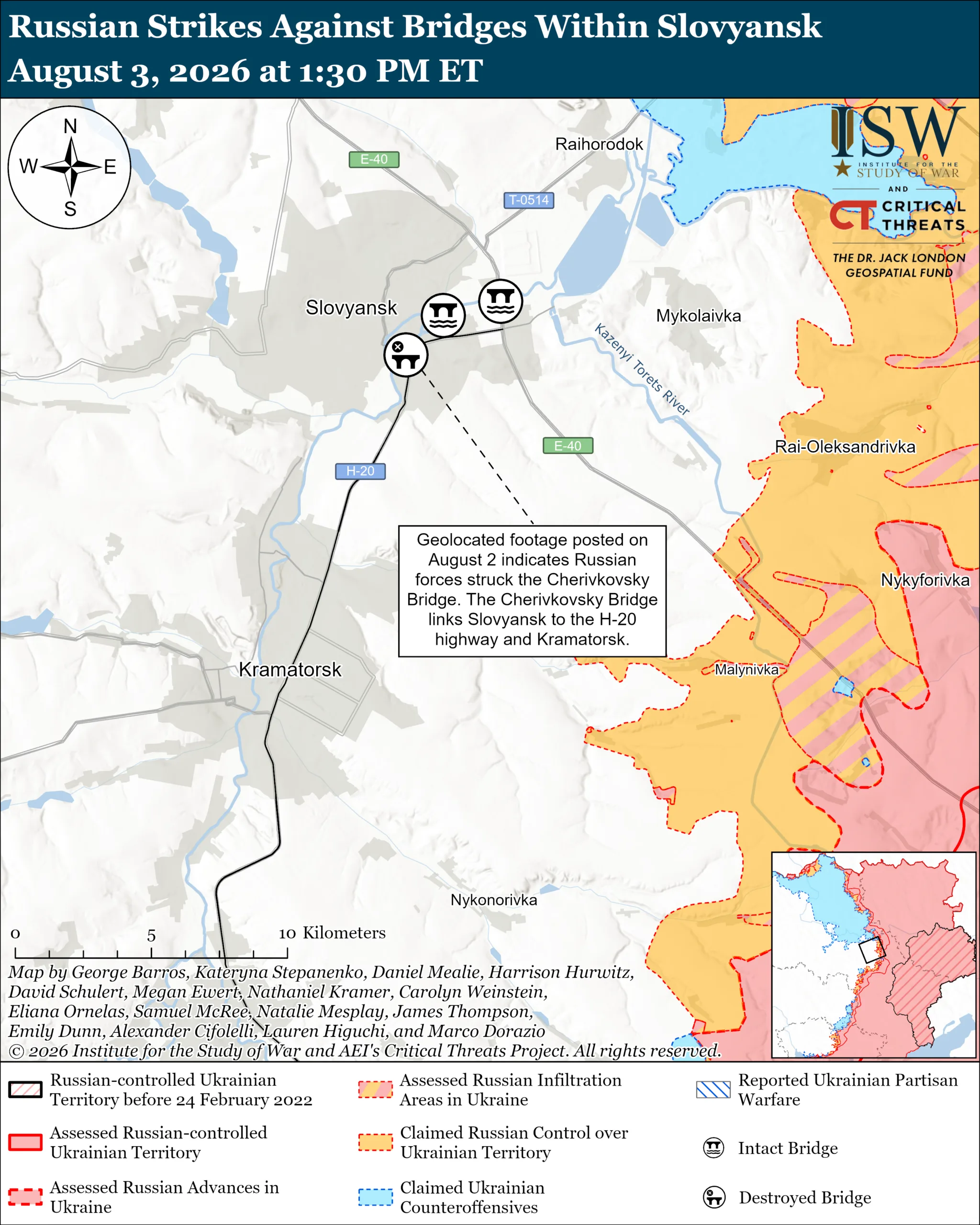
Take Lyman, then Sloviansk, then Kramatorsk: Russia’s plan is still stuck on step one, the Ukrainian military says

isw first pokrovsk huliaipole—now russia points its logistics-killing air campaign fortress belt · post slovyansk-direction-august-3-2026 ukraine news ukrainian reports

Russia is trying to seize the town of Lyman in northern Donetsk Oblast to turn it into a base for a push toward the twin cities of Sloviansk and Kramatorsk, Ukraine's Joint Forces spokesman Viktor Trehubov said on Ukrainian TV, according to Ukrinform. He described control of the town as a necessity for any Russian advance deeper into the region. For now, he said, Russian troops still cannot establish themselves inside it.

For years, Donetsk Oblast in eastern Ukraine has seen the heaviest and most intense fighting along the roughly 1,200-kilometer frontline. Russia has spent 2026 trying to break the chain of fortified cities that has anchored Ukraine's eastern defense since 2014, a line it failed to crack even in the opening months of the full-scale invasion.

Why Russia needs Lyman

Trehubov said the Russians want to enter Lyman and dig in, aiming to hold the town and use it as a launchpad. 

"The Russians want to enter Lyman and entrench," he said. "Their goal is precisely to take control directly over the settlement."

He stressed that it means "not just somewhere nearby, but over the settlement itself." Russia needs it to "use it as a base for further developing the offensive south toward the Sloviansk-Kramatorsk agglomeration. Even if you just look at the map, it becomes clear that for them this is a necessity."


isw first pokrovsk huliaipole—now russia points its logistics-killing air campaign fortress belt · post russian-strikes-against-bridges-within-slovyansk-august-3-2026-scaled ukraine news ukrainian reports
Explore further

ISW: First Pokrovsk, then Huliaipole—now Russia points its logistics-killing air campaign at the Fortress Belt

For months Russia has looked for routes that avoid Lyman, he said, including attempts to move through the village of Rai-Oleksandrivka. Without holding the town, he added, any Russian effort to enter Sloviansk would be extremely risky and awkward. So Moscow keeps trying to take it. 

Trehubov told national television that Russian forces have pushed as far as Lyman's eastern edge but cannot secure a foothold there. Lyman sits across the Siverskyi Donets River northeast of the twin cities, the largest settlements still under Ukrainian control in the area.

Russia bombs two front-line Donetsk Oblast areas, injuring civilians

Russian aviation dropped four bombs on Kramatorsk overnight, wounding three and setting a 14-story building alight, then hit the Sloviansk community with a bomb and a drone, wounding one more, officials said.… pic.twitter.com/wrX8ypFOrT

— Euromaidan Press (@EuromaidanPress) July 31, 2026

Ukraine's drones start to tip the balance

Over the past year Ukraine's drone units have grown sharply, gradually shifting the front in Kyiv's favor, Trehubov said. 

"The Russians still have some individual advantages, and there are moments where they have big problems, which they acknowledge, like heavy copters, for example, which they never managed to set up effectively," he said. 

Moscow's failure to field working heavy drones stands out on this stretch of front.

"Overall the situation is evening out in Ukraine's favor thanks to both the quantitative and qualitative growth of Ukrainian drones and drone operators," Trehubov said, adding "There are more of them, they are used more effectively, and the organization of their interaction has become much better relative to the Russian one." 

That shift in the drone math has been building for more than a year.

Over the past day, Ukraine's Defense Forces recorded 226 combat clashes with Russian troops, with the Kostiantynivka direction the most active.

The Institute for the Study of War (ISW) reads the main threat differently. The US-based think tank has assessed that Russia is now aiming its logistics-strangling air campaign at Sloviansk and Kramatorsk. Before it storms the cities, Moscow wants to cut their supply lines with drones, missiles, and increasingly glide bombs, the same method that set up its advances near Pokrovsk and Huliaipole in 2025.

  •  

Ukraine’s ousted defense minister took drone contracts away from the generals. Now they may take them back

Ukrainian Defense Minister Mykhailo Fedorov in Germany, on 15 April 2026. Source: Fedorov

For most of the war, a circle of generals decided which companies got paid to arm Ukraine. They named the suppliers, they named the models, and the money followed the list.

Then the defense minister Mykhailo Fedorov took that power away and made the companies compete on price and on how their weapons performed at the front. Three weeks ago, the minister was fired. Now, the people who did well under the old list are pushing to get it back.

What makes this more than a lobbying fight is that its two loudest voices agree on almost nothing else: Fedorov, who says he believes the overhaul cost him his job, and an anti-corruption watchdog who owes him no favors. Both say the reform may not outlast him.

What rides on it is real money, and Ukraine has little to spare. It now pours almost all its own revenue into defense, while the West covers nearly the entire civilian budget, roughly $50 billion in 2026. Every dollar lost to a rigged contract is one that never reaches a front already too short of soldiers to absorb the waste.

mykhailo fedorov
Explore further

Ukraine’s defense minister explained how the country buys weapons—after he was sacked

They describe it from opposite corners. Fedorov told Ukrainska Pravda on 30 July he believes his removal was tied to the procurement overhaul—the restructuring, he said, “sparked significant dissatisfaction” among powerful people who then leaned on President Volodymyr Zelenskyy.

Fedorov is not a neutral witness: he has said he would take the job back tomorrow. He does not have to be neutral to be right about what he built.

Ukraine is about to discover that it built less of an institution than it thought.

tetiana nikolaienko
Tetiana Nikolaienko, deputy head of the public anti-corruption council that monitors Defense Ministry spending. Photo: Tetiana Nikolaienko / Facebook

Four days later, Tetiana Nikolaienko told Radio NV what the fight looks like from inside. Anonymous Telegram channels attacking one drone maker, then the next. Investigators searching companies’ offices. A loud public argument over which drones are overpriced.

These are not separate quarrels, said Nikolaienko, deputy head of the public anti-corruption council that watches Defense Ministry spending—they are the opening moves of a scramble to grab a bigger share of the weapons money, now that the man who set the rules is gone.

FP-2 combat attack drone Ukraine
The FP-2 drone, produced by Ukrainian company Fire Point, can carry a 100-kg bomb. Photo: weuaplus.tv

What the reform actually changed

What they are describing is the unwinding of one specific change. Fedorov took the power to pick winners away from the General Staff, which had named the exact companies and models the state would buy, and made the ministry buy instead on open competition and combat performance.

That widened the field of who could win a contract. It also cut the guaranteed business of the suppliers who had thrived on the old list—among them Fire Point, whose drones account for roughly 60 percent of Ukrainian long-range strikes inside Russia.

This is not a tale of one honest reformer against thieves. Fedorov’s overhaul was unfinished: only about a fifth of drone purchases were conducted through open competition when he left. And he had staffed the ministry with his own people.

Fedorov was not the spotless auditor the street protests made him out to be. But an unfinished reform can still be worth keeping, and the people fighting it are not fighting to finish it.

Protesters demand Mykhailo Fedorov is reinstated as defense minister in Lviv. Photo: Solomia Stanovych
Explore further

Ukraine’s Gen Z protested for their anti-corruption agencies last year. Now they’re protesting for one man

What survives, and what leaves with him

What survives comes down to a plain distinction: what Fedorov wrote into Ukraine’s rules, and what was only his practice. The register of approved arms suppliers exists because of a government decree, and a decree does not walk out when a minister does. That part will most likely hold.

The part that made the reform actually bite was never set down that hard. The open competitions, the public figure showing how much buying was contested rather than quietly handed out, the team that enforced both—those were Fedorov’s way of running the ministry, not Ukraine’s law, and they are exactly what Nikolaienko says is now under pressure.

So Ukraine is about to discover that it built less of an institution than it thought. The paperwork stays, but the part that really worked walks out with one man, when Ukraine can least afford the loss.

  •  

Mystery drone resembling America’s F-117 stealth jet filmed over a Russian refinery

mystery drone resembling america's f-117 stealth jet filmed over russian refinery · post struck oil ufa area russia 2 2026 exilenova+ video ukraine news ukrainian reports

Footage from a recent Ukrainian strike on a Russian oil refinery captured an unidentified drone resembling the US F-117 Nighthawk stealth jet, though on a far smaller, drone-sized scale, according to RBC-Ukraine. Online observers suspect a new Ukrainian jet-powered strike drone, or a test of an allied foreign one, but no official body has confirmed what the aircraft is. If the guesses hold, Ukraine may be fielding a faster, longer-reaching class of weapon for hitting targets deep inside Russia.

Ukraine has spent the past year turning Russia's interior into contested space, sending long-range drones ever deeper toward the oil, defense, and logistics sites the Kremlin once treated as untouchable. Each new type that surfaces marks another step from short-range drones toward missile-like machines.

An unfamiliar silhouette over the refinery


The drone appeared during a 2 August Ukrainian drone strike on a refinery near Ufa, more than 1,300 kilometers from the Ukrainian border. The clip shows an aircraft shaped unlike most Ukrainian long-range drones, likely powered by a jet engine. The open-source monitoring channel Clash Report, which first shared the footage, believes it may be the Bravo drone or a modified version.

drones flew 1300 km russia’s ufa—then struck bashneft refineries · post black smoke rises over oil refinery ufa bashkortostan after ukrainian drone strike 25 2026 5325714827084766386 ukraine news reports
Explore further

Drones flew 1,300 km to Russia’s Ufa—then struck Bashneft refineries

What the Bravo could do, and why it would matter


If the aircraft is indeed a Triada Robotics product, the company describes Bravo as a single-use, jet-powered drone intended for long-range strike missions. According to the developer, its range exceeds 2,000 km (about 1,240 miles)—enough to reach much of the refinery and defense-industrial infrastructure Russia keeps far from the front lines.

👍⚡ Mysterious Jet Drone Attacks Ufa
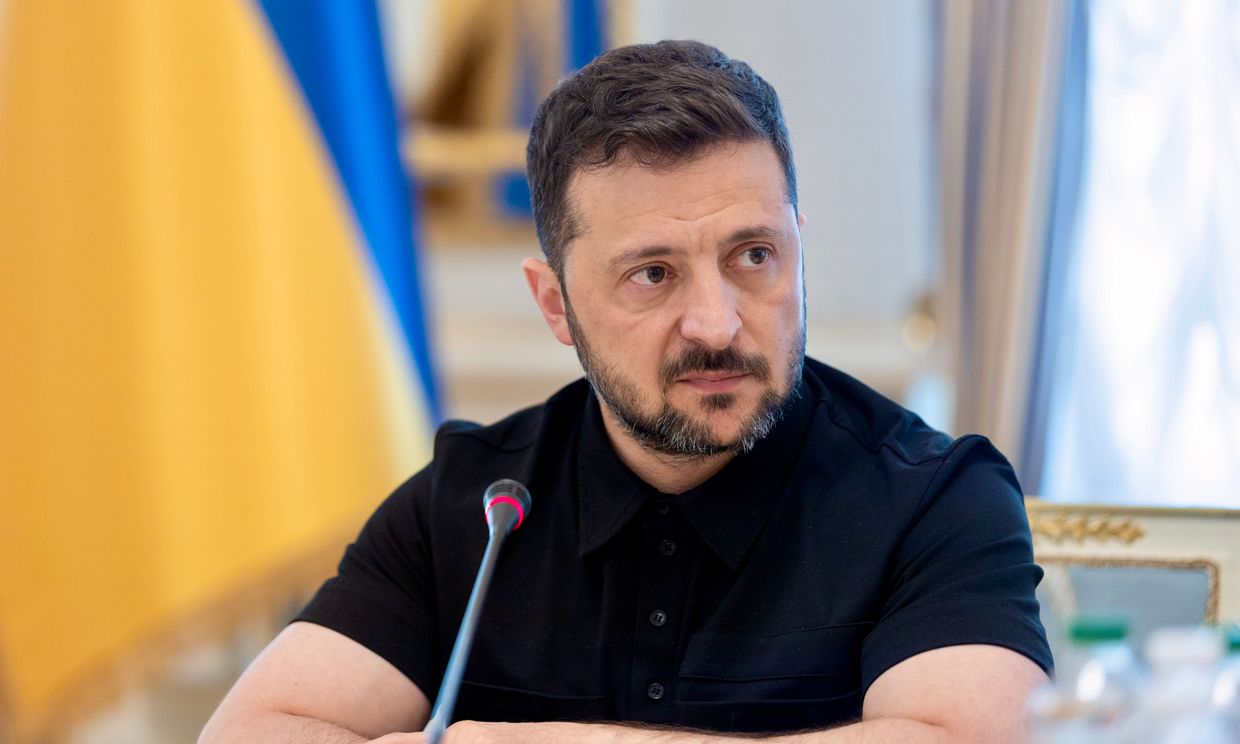
During the attack on the oil refinery in the Ufa area on July 2nd, an unidentified drone was spotted, resembling the American F-117 in shape. Theoretically, it could be the Bravo Deep-Strike UAV Platform from Triada Robotics, but there is no… pic.twitter.com/LnplWeRAul

— Gianl1974 (@Gianl1974) August 4, 2026

Triada Robotics says the drone cruises at about 600 km/h and can accelerate to roughly 800 km/h (around 500 mph) during the final phase of flight. The company also lists a warhead weighing more than 100 kg (220 lb), a payload that could threaten facilities such as fuel depots or refineries.


The developer pitches it as a cheaper stand-in for a cruise missile—long-range reach at a fraction of the cost—so Ukraine could fly more strikes at distant targets.

Flames at Russia's Saratov Oil Refinery after reported Ukrainian drone strike, 2 August 2026. Screenshot from video: Exilenova+
Explore further

Oil refinery, strategic airbase, and drone facilities: Overnight strikes hit key pillars of Russia’s war effort

Why observers compare it to the F-117

The comparison rests on the drone's silhouette. Watchers noted its outline echoes the F-117 Nighthawk, the US jet built with radar-evading shaping. A similar shape, though, does not prove full stealth. Such geometry can also sharpen aerodynamics or dodge only certain radar types. Even so, the aircraft's identity stays unconfirmed, and its edge rests on the maker's claims rather than proven use.

  •  

L’Ukraine, la guerre et la justice : entretien au long cours avec Oleksandra Matviichukhttps://static.wixstatic.com/media/524063_acd6eb87ee1a467d827cd4e1789e10a9~mv2.jpg/v1/fill/w_1000,h_667,al_c,q_85,usm_0.66_1.00_0.01/524063_acd6eb87ee1a467d827cd4e1789e10a9~mv2.jpg

Entretien au long cours avec Oleksandra Matviichuk, avocate ukrainienne et prix Nobel de la paix : crimes de guerre, justice, guerre longue et courage d’une société traumatisée.
Permalien
  •  

The afterlife of empire

On May 3, an unusual procession moved through Washington DC. Several hundred people walked beneath the monuments of the American capital carrying portraits of Red Army soldiers. Children waved Soviet flags. A live orchestra played wartime songs at the World War II memorial. The Russian embassy had filed the permit; the DC Metropolitan Police provided an escort. Russian state media celebrated the event as proof that, with the return of Donald Trump, historical truth too had returned to America.

One organizer told Russian state television: “We love, respect Russia, honor the memory of our heroes.”

Similar marches took place in Paris, Amsterdam and Busan. In Berlin, authorities announced that Soviet flags, Russian symbols and military songs would once again be banned near Soviet war memorials during May 8 and 9 commemorations.

But in Moscow, Victory Day itself appeared haunted by fear.

For decades, May 9 has been Russia’s most sacred annual political ritual, binding victory, patriotism and state power into a single language. But this year, Kremlin spokesman Dmitry Peskov was reduced to announcing that the Immortal Regiment march in Moscow would continue only “in electronic format.”

The run up to this year’s Victory Day became the most anxious Moscow has experienced in recent memory. The Kremlin canceled the traditional procession in the Russian capital, moving it online. Military equipment was removed from the parade. Mobile internet access across Moscow was intermittently shut down in the days leading up to May 9. Spectator numbers in St. Petersburg were reportedly slashed from thousands to just a few hundred. The Victory Parade in Kaliningrad was canceled entirely. Russian media outlets published extraordinary reports about Vladimir Putin retreating deeper into protected bunkers amid fears of Ukrainian drone strikes and assassination attempts.

Russia’s Foreign Ministry even warned foreign governments to evacuate diplomats from Kyiv before May 9, threatening massive retaliation if Ukraine targeted the celebrations with drones.

And then came another extraordinary twist. Volodymyr Zelensky publicly “allowed” the parade to proceed. In a deliberately tongue-in-cheek decree issued after negotiations around a temporary ceasefire, the Ukrainian president formally excluded Red Square from Ukraine’s operational strike plans for the duration of the celebrations, even listing the exact geographic coordinates of the square itself.

Watching it all unfold, I kept wondering whether empires collapse more easily than the systems of feeling they create. The Soviet Union fell apart more than 30 years ago, but the architecture built around victory, sacrifice and historical grievance survived it, stretching across borders, diasporas and rival political projects. What began as Soviet myth-making about liberation has evolved into a transnational political language through which governments, activists, diasporas and rival ideological movements compete over legitimacy, victimhood and belonging.

Over the years, at Coda, in our Rewriting History current, we have tracked how the remembrance of World War II became central to Putin’s machinery of legitimacy and repression. Soon after he came to power, Russian public culture became saturated with stories of the Great Patriotic War. Watching Russian state television often felt as if the war had ended yesterday. New films, schoolbooks, drama series, speeches, parades and television specials turned victory into the emotional foundation of Putin’s Russia. Scholars of Russian memory politics have described how, under Putin, collective memory of the war became a tool for claiming legitimacy, discrediting opposition and presenting the Russian state as the eternal defender against fascism.

 It resonated because it tapped into genuine emotion passed on for generations. It was never just propaganda. It rested on something real: the scale of Soviet loss and the private grief carried by millions of families.

The Immortal Regiment began in 2012 in the Siberian city of Tomsk as a local act of remembrance. Ordinary people walked through the streets carrying photographs of relatives who died in the war. By 2015, Putin was leading the Moscow procession himself, while state-backed organizations coordinated chapters in dozens of countries. But in Putin’s Russia, where victory had already become the central organizing myth of the state, the boundary between private mourning and political mythology dissolved.

The speed of that transformation still feels important to me. It says something about the way modern political systems absorb private emotion and fold it back into the language of the state.

The Kremlin framed these Victory Day rituals as a defense against what it called Western attempts to “rewrite history” by minimizing the Soviet role in defeating fascism or equating Stalinism with Nazism. Ukraine and many Eastern Europeans came to see the marches instead as vehicles for imperial nostalgia and wartime propaganda. 

But the argument, it seems, is no longer only about what happened in the past. It is about who gets to turn memory and grief into political legitimacy in the present.

This year Germany found itself in the extraordinary position of having to ban Soviet flags and military songs near Soviet memorials, effectively regulating the symbolic language of antifascism itself. Historian Timothy Snyder once warned that “if fascists take over the mantle of antifascism, the memory of the Holocaust will itself be altered.” That is precisely the moral and historical dilemma Berlin has now forced into the open. What happens when the symbols of genuine antifascist sacrifice become inseparable from the imagery of an ongoing war? When the flags carried by the soldiers who liberated Auschwitz are also flown at embassy-organized rallies while Russian bombs fall on Kharkiv? 

At Coda, we explored some of these tensions years ago, in our documentary “What To Do With Stalin,” which examined the strange afterlife of Stalin’s image across the former Soviet world. While filming in Georgia, we encountered arguments that now feel strikingly familiar: whether remembering Stalin represented patriotism or denial, historical pride or historical amnesia.

https://www.youtube.com/watch?v=NdfTH6rfe7E

Even then, it was obvious these battles were never really about the past.

Putin himself acknowledged as much during this year’s Victory Day speech, describing the war in Ukraine as a “just” continuation of the struggle against fascism and accusing the West of fueling confrontation with Russia “to this day.” Hours later, he suggested the war might finally be over. “I think that the matter is coming to an end,” he told reporters.

Victory Day 2026 may ultimately be remembered not for the military parade itself, but for revealing how unstable that memory system has become. Moscow performed triumph while fearing attack. Berlin restricted Soviet symbols in the name of democratic security. Washington hosted embassy-linked Soviet commemorations beneath American monuments.

I was ten years old when the Soviet Union collapsed. For those of us who grew up inside it, the end of the empire felt at once chaotic and exhilarating. Borders opened, old certainties disappeared and ideology lost its grip almost overnight. I still feel fortunate that, as a child, I witnessed an empire built on terror and repression collapse into history.

In the decades that followed, we watched Russia slowly turn the symbols and emotional reflexes of the Soviet system into instruments of political power once again. Victory Day became one of the most potent of these instruments: a ritual that fused together grief, patriotism, historical trauma and state legitimacy into a single, powerful sentiment.

Russia’s ambassador to Washington, Alexander Darchiev, praised what he described as the Trump administration’s dramatically changed attitude toward Victory Day commemorations. The holiday, he said, now played “an unequivocally positive role” in Russia-US relations. He pointed specifically to the marches held in the center of Washington, DC.

But the more I think about this year’s Victory Day, the less it feels like a story about Russia alone. When the Soviet Union collapsed, many of us assumed its emotional architecture would disappear with it. Instead, parts of it were patiently cultivated and repurposed for a new era by the men in charge of Putin’s Russia.  

The emotional logic that once underpinned the Soviet system no longer belongs only to Russia and the shattered geography of its former empire. Grievances, historical trauma and rituals of belonging now shape political life all around the world. Digital networks and algorithmic systems did not create these emotional impulses, but they amplified them at a scale the Soviet state could only dream of. Perhaps that is the true afterlife of an empire: not the survival of its borders or ideology, but of the emotional systems it builds to organize fear, belonging and historical destiny.

Additional research by Masho Lomashvili and Irina Matchavariani

The post The afterlife of empire appeared first on Coda Story.

  •  

Trump mulls sending Kyiv another Patriot air defense system, WSJ reports

Trump mulls sending Kyiv another Patriot air defense system, WSJ reports

U.S. President Donald Trump is considering sending Ukraine an additional Patriot air defense system, a move that would mark his administration's first major weapons transfer to Kyiv, the Wall Street Journal (WSJ) reported on July 8, citing two defense officials.

The report is the latest in a series of contradictory messages from the Trump White House in recent days regarding military aid to Ukraine. While the Pentagon on July 2 announced a halt in weapons shipments to Kyiv due to dwindling U.S. stockpiles, Trump later claimed he wasn't responsible for the decision and wanted to send more weapons to Ukraine.

A U.S. defense official told the WSJ that Trump has asked the Pentagon to look into options for supplying Ukraine with more arms, including a Patriot air defense system. Officials are also reportedly exploring whether other nations can send Patriots to Kyiv.

The claim dovetails with recent media reports about the administration's plans to bolster Ukraine's air defenses. Axios reported on July 8 that the White House is pursuing a plan to have Germany sell another Patriot battery to Ukraine, with the U.S. and European allies splitting the cost of the purchase. Sources told the outlet that Trump also pledged to send 10 Patriot interceptor missiles to Kyiv.

If the U.S. provides Ukraine with an additional Patriot system, it would mark the first time Trump has approved a major military aid package to Kyiv that wasn't previously greenlighted by former U.S. President Joe Biden.

Washington has thus far provided Kyiv with three Patriots, a former Pentagon official told the WSJ. Germany has also sent three, while a group of European countries provided one. According to the official, not all systems are in use at the same time due to maintenance issues.

The U.S.-made air defense systems are in high demand around the world. Each system consists of two or three launchers, a radar, a command and control element, and interceptor missiles. Patriot missiles are also in short supply globally: Ukraine faces an urgent need for the munitions amid increased Russian aerial attacks, and the Guardian reported on July 8 that even the U.S. has only 25% of the interceptors required by its defense readiness plans.

According to one of the officials who spoke to the WSJ, the U.S. military would be able to supply an additional Patriot to Ukraine if ordered by the White House.

Putin throws ‘a lot of b*llshit’, Trump says as he ‘looks strongly’ at Russia sanctions bill
Trump also addressed U.S. legislation on sanctions, saying the Senate’s Russia sanctions bill was “totally optional” for him to implement or terminate. “I’m looking at it very strongly,” Trump said.
Trump mulls sending Kyiv another Patriot air defense system, WSJ reportsThe Kyiv IndependentAnna Fratsyvir
Trump mulls sending Kyiv another Patriot air defense system, WSJ reports

  •  

Ukraine synchronizes restrictions on Russia with EU sanctions

Ukraine synchronizes restrictions on Russia with EU sanctions

Ukraine has synchronized its sanctions against Russia with the last three packages of economic penalties imposed by the European Union, President Volodymyr Zelensky announced on July 8.

"Three more packages of EU sanctions are fully effective in Ukraine," Zelensky said in his evening address.

Earlier on July 8, the president announced a new round of sanctions, including restrictions on five Chinese-registered companies accused of supplying components found in Russian Shahed-type drones used to attack Ukraine.

Vladyslav Vlasiuk, Zelensky's sanctions commissioner, told reporters on July 8 that the latest decrees bring Ukrainian penalties in line with the EU's 15th, 16th, and 17th packages of sanctions against Russia.

The 15th package targets individuals from Russia, Belarus, and China, among other countries, according to Vlasiuk. It includes the Russian pilot Alexander Azarenkov, who was involved in the deadly attack on the Okhmatdyt children's hospital in Kyiv. Zelensky signed the sanctions decree on the one-year anniversary of the strike.

The 16th package includes individuals from Russia, China, Turkey, and other nations. It also targets the Voin Center, Russia's military-patriotic education organization operating in occupied Ukrainian territories, and Pivdennyi Flot LLC, which transports Russian oil via its "shadow fleet," Vlasiuk said.

The 17th package designates firms from Russia, China, Turkey, and other countries, including the gold-mining company Petropavlovsk and the Chinese company Skywalker Technology Co. Ltd, produce drone parts for Russia.

The EU is expected to approve its 18th package of sanctions against Russia later this week, after facing opposition from pro-Kremlin bloc members Slovakia and Hungary.

Ukraine has taken measures to coordinate sanctions with international partners in order to amplify pressure on Moscow. Zelensky on June 27 signed a decree to synchronize Ukraine's sanctions against Russia with those imposed by the EU and Group of Seven (G7).

Ukraine war latest: Trump reportedly pledges to send 10 Patriot missiles to Ukraine, asks Germany to send battery
* Trump reportedly pledges to send 10 Patriot missiles to Ukraine, asks Germany to send battery * ‘They have to be able to defend themselves’ — Trump says US will send additional weapons shipments to Ukraine, criticizes Putin * EU to impose ‘toughest’ sanctions on Russia in coordination with US senators, French foreign minister says * Russia’s Black Sea Fleet shrinks presence in key Crimean bay, Ukrainian partisans say * Putin signs decree allowing foreigners to serve in Russian army during
Ukraine synchronizes restrictions on Russia with EU sanctionsThe Kyiv IndependentThe Kyiv Independent news desk
Ukraine synchronizes restrictions on Russia with EU sanctions

  •  

Ukraine's ambassador to US will be replaced, foreign minister confirms

Ukraine's ambassador to US will be replaced, foreign minister confirms

Ukraine's current ambassador to the United States, Oksana Markarova, will be replaced in the near future, Foreign Minister Andrii Sybiha confirmed in an interview with Ukrainian Radio on July 8.

Earlier on July 8, a source in the Presidential Office told the Kyiv Independent that President Volodymyr Zelensky had informed Markarova of her pending dismissal.

"We can expect about 20 decrees dismissing and appointing new heads of foreign institutions," Sybiha said, specifically mentioning the U.S. as one of the planned replacements.

In his comments, Sybiha described Markarova as "one of our most successful ambassadors."

"She is extremely effective and charismatic, but surely every diplomat has a rotation cycle," he said. "I can confirm that the Ukrainian president's vision is to carry out rotations in all countries, both G7 and G20. That is, first and foremost, to strengthen these countries, in particular the U.S. track."

Zelensky and Sybiha on June 21 announced plans to overhaul Ukraine's diplomatic corps, teasing major personnel changes in a bid to secure better military aid packages and other support from international partners.

Zelensky discussed replacing Markarova specifically in a recent phone call with U.S. President Donald Trump, a source in the President's Office told the Kyiv Independent on July 7.

There are multiple "strong candidates" in the running to replace Markarova, the source said. Prime Minister Denys Shmyhal, Deputy Prime Minister Olha Stefanishyna, Defense Minister Rustem Umerov, and Energy Minister Herman Halushchenko are among the candidates, Bloomberg previously reported.

In his evening address, Zelensky said that a meeting with all Ukrainian ambassadors is scheduled for July 21. It was not immediately clear as to when the changes to the posts may take effect.

Markarova has served as Kyiv's ambassador to Washington since April 2021, and played a central role in coordinating U.S. military and financial support during the early phases of Russia's full-scale invasion.

The announcement of her dismissal comes at a high-stakes moment in relations between Kyiv and Washington. The U.S. Defense Department recently paused shipments of critical weapons systems, including Patriot air defense missiles and precision-guided munitions, even as Ukraine faces intensifying Russian attacks.

Trump reportedly pledges to send 10 Patriot missiles to Ukraine, asks Germany to send battery
During the call with German Chancellor Friedrich Merz, U.S. President Donald Trump proposed that Germany sell one of its own Patriot batteries to Ukraine.
Ukraine's ambassador to US will be replaced, foreign minister confirmsThe Kyiv IndependentAnna Fratsyvir
Ukraine's ambassador to US will be replaced, foreign minister confirms
  •  

Ukraine's Naftogaz brings new high-yield gas well online as country reserves run low

Ukraine's Naftogaz brings new high-yield gas well online as country reserves run low

Ukraine's state energy giant Naftogaz has commissioned a new exploration well producing 383,000 cubic meters of natural gas per day through its subsidiary Ukrgazvydobuvannya, CEO Sergii Koretskyi announced on July 8.

The 5.7-kilometer deviated well was drilled and commissioned six weeks ahead of schedule as Ukraine works to boost domestic production amid Russian attacks on its energy infrastructure, including gas storage facilities in western Ukraine.

"This is a significant achievement, given the country's need for gas," Koretskyi said.

Naftogaz produces the lion's share of Ukrainian gas, but its production facilities were severely damaged in a series of Russian missile strikes earlier this year, reducing production by as much as 40%.

According to data from Naftogaz, Ukrgazvydobuvannya lost about 50% of its production due to shelling.

Ukrgazvydobuvannya managed to increase commercial gas production to 13.9 billion cubic meters (bcm) in 2024 compared to 13.2 bcm in 2023, commissioning 83 new wells despite wartime conditions.

Ukraine previously produced 52 million cubic meters daily before Russia's full-scale invasion, but required 110-140 million cubic meters during winter months, covering the shortfall from underground storage.

Russian strikes have repeatedly targeted Ukraine's gas infrastructure, including a February 11 combined missile and drone attack that damaged Naftogaz production facilities in Poltava Oblast.

To secure winter supplies, Naftogaz has signed four contracts with Poland's Orlen for delivery of 440 million cubic meters of U.S. liquefied natural gas. The latest agreement, announced July 2, covers an additional 140 million cubic meters.

According to Bloomberg estimates, in 2025 Ukraine may import a record 5 billion cubic meters of gas from Europe.

Ukraine's gas storage situation has also deteriorated significantly, with underground reserves falling to 6.02 bcm as of May 11 — the lowest level in at least 11 years.

The facilities are operating at just 19.4% capacity, with 2.79 billion cubic meters less gas available than the previous year.

Ukraine’s minerals fund focus of private investment ahead of major recovery conference
This week, thousands of companies, business heads, and global leaders are headed to Rome for the fourth Ukraine Recovery Conference on July 10, with many companies hoping for more clarity around the future of a U.S.-Ukraine minerals deal. It’s been over two months since President Volodymyr Zelensky signed Washington’s so-called “minerals deal” — which, in reality, covers all Ukraine’s natural resources, including oil and gas, related infrastructure, and now, defense projects. While the Economy
Ukraine's Naftogaz brings new high-yield gas well online as country reserves run lowThe Kyiv IndependentDominic Culverwell
Ukraine's Naftogaz brings new high-yield gas well online as country reserves run low
  •  

US only has 25% of Patriot missiles needed for war plans, Guardian reports

US only has 25% of Patriot missiles needed for war plans, Guardian reports

The United States has only about 25% of the Patriot missile interceptors it needs to meet Pentagon military plans, a shortage that led U.S. President Donald Trump's administration to pause a major transfer of weapons to Ukraine, the Guardian reported on July 8.

The decision to halt the delivery, made on July 2, followed an internal review showing low stockpiles of critical air defense systems. The depletion was largely due to recent U.S. operations in the Middle East, including the interception of Iranian missiles after strikes on the American Al Udeid airbase in Qatar, according to the Guardian.

According to officials familiar with the matter, the Pentagon's munitions tracker, used to measure the minimum supplies needed for U.S. war plans, showed Patriot interceptor levels had fallen below acceptable levels. That prompted concerns that sending more to Ukraine could put U.S. defense readiness at risk, the Guardian wrote.

The freeze reportedly affected Ukraine's two key arms transfer methods: drawdowns from Pentagon stockpiles and the Ukraine Security Assistance Initiative (USAI), through which the Defense Department orders new weapons from contractors.

Because U.S. orders take priority, Ukrainian requests for new weapons, including Patriot missiles, face years-long delays.

The pause came at a critical time for Kyiv, as Russia intensifies large-scale aerial attacks on Ukrainian cities. With limited options to acquire precision-guided and other key munitions, Ukrainian forces have increasingly relied on Western-supplied air defenses to counter the growing threat.

For its latest aid package, the U.S. had planned to send dozens of Patriot interceptors, along with Hellfire missiles, air-to-air Sparrows, GMLRS rockets, and anti-tank weapons, according to the Guardian.

NBC News reported on July 4 that U.S. Defense Secretary Pete Hegseth unilaterally halted a weapons shipment to Ukraine despite internal military assessments showing the aid would not compromise American military readiness.

The assessment concluded that while some munitions stockpiles, including precision weapons, were low, they had not fallen below critical thresholds.

Amid the ongoing questions over Washington's weapons pause, Trump has apparently promised to send 10 Patriot interceptors to Ukraine, Axios reported on July 8. Sources also told the Wall Street Journal (WSJ) that Trump claimed he wasn't behind the decision to halt arms to Kyiv in a recent phone call with President Volodymyr Zelensky.

How to enter Ukraine’s defense market: A short guide for foreign companies
Editor’s Note: The opinions expressed in the op-ed section are those of the authors and do not purport to reflect the views of the Kyiv Independent. For editorial coverage of Ukraine’s weapons procurement, the country’s Defense Ministry and the scandal-ridden Defense Procurement Agency click on the links
US only has 25% of Patriot missiles needed for war plans, Guardian reportsThe Kyiv IndependentVladyslav Bandrovsky
US only has 25% of Patriot missiles needed for war plans, Guardian reports
  •  

Putin throws 'a lot of bullsh*t', Trump says as he 'looks strongly' at Russia sanctions bill

Putin throws 'a lot of bullsh*t', Trump says as he 'looks strongly' at Russia sanctions bill

U.S. President Donald Trump said on July 8 he was "not happy" with Russian President Vladimir Putin.

"We get a lot of bullsh*t thrown at us by Putin," he said at a cabinet meeting. "He's very nice all the time, but it turns out to be meaningless."

Trump has vacillated for months between criticizing Putin and praising the Kremlin. So far, he has failed to increase military aid to Ukraine or sanction Russia despite Moscow's refusal to accept a ceasefire.

During his election campaign, Trump repeatedly pledged to end the war in Ukraine within "24 hours." However, his efforts to broker a peace deal between Ukraine and Russia have seen no progress.

Trump also addressed U.S. legislation on sanctions, saying the Senate's Russia sanctions bill was "totally optional" for him to implement or terminate.

"I'm looking at it very strongly," Trump said.

The bill would impose 500% tariffs on imports from countries purchasing Russian oil, gas, uranium, and other products. It was introduced in April but has seen no progress since then.

Earlier, Trump signaled growing openness to tougher measures against Moscow, ABC News reported on June 29.

According to Senator Lindsey Graham, Trump privately told him it was "time to move" the Russia sanctions bill.

"I’m confident the president is ready for us to act," Graham said.

The Senate is expected to vote on the bill after Congress returns from a break in July.

"(Putin is) killing a lot of people — his soldiers and their soldiers mostly. And it's now up to 7,000 a week," Trump said on July 8, referring to Russia's battlefield losses.

In recent weeks, Trump has been critical of the Russian president. Following a phone call with Putin on July 3, Trump said he was "very disappointed," signaling growing frustration with the Kremlin.

When asked by a journalist on July 8 whether he would take action, Trump responded: "Wouldn't be telling you... We want to have a little surprise."

Trump also commented on the the current pause in weapons deliveries to Ukraine. He pointed to the previous transfer of advanced systems, including Javelin anti-tank missiles and Patriot air defense systems, calling them "the best equipment in the world."

His remarks come after the United States halted military aid shipments to Ukraine on July 2 amid an internal Pentagon review of stockpile capacity. The freeze coincided with a surge in Russian aerial attacks, leaving Ukraine increasingly vulnerable amid a shortage of U.S.-supplied air defense systems.

The U.S. halted weapons shipments to Ukraine amid a capability review, the White House and Pentagon previously confirmed, with Trump later denying the pause.

On July 7, the Pentagon said it would renew shipments, saying the additional defensive weapons were intended to help Ukraine protect itself while the U.S. works toward "a lasting peace."

Dnipropetrovsk village likely contested despite Russia’s claim of its capture
The village of Dachne in the southern part of Dnipropetrovsk Oblast appears to be contested, according to the Finnish Black Bird Group open-source intelligence collective. The Russian Defense Ministry on July 7 claimed to have seized Dachne, which would mark the first village to be under Russian control in the industrial Dnipropetrovsk Oblast, located just west of the war-torn Donetsk Oblast. The Ukrainian military denied the claimed capture, calling it “disinformation.” Viktor Tregubov, spok
Putin throws 'a lot of bullsh*t', Trump says as he 'looks strongly' at Russia sanctions billThe Kyiv IndependentAsami Terajima
Putin throws 'a lot of bullsh*t', Trump says as he 'looks strongly' at Russia sanctions bill
  •  

Ukrainian businesses outraged as government blocks economic crimes bureau chief nominee

Ukrainian businesses outraged as government blocks economic crimes bureau chief nominee

Ukraine's Cabinet of Ministers rejected a nominee to lead the economic crimes agency, drawing swift criticism from lawmakers and businesses over alleged interference in the selection process.

The agency, the Bureau of Economic Security, was created in 2021 to investigate economic crimes. It has since faced accusations of being used to pressure — and in some cases extort — businesses, prompting multiple calls and efforts to overhaul it.

Selecting a new director of the agency by the end of July is one of Ukraine's obligations to the EU and International Monetary Fund as part of international financing packages extended to the war-torn country by the institutions.

As part of a recent attempt to relaunch the bureau, Oleksandr Tsyvinsky on June 30 was officially nominated by the bureau's selection commission that consists of six members — three from the government and three international experts. Tsyvinsky is known for exposing schemes involving illegal land seizures in Kyiv..

But Ukraine's government on July 8 said it had rejected Tsyvinsky following alleged concerns raised by the country's intelligence service of potential Russian connections.

The government unanimously decided to ask the commission to submit two new candidates who meet all security requirements, the government press service wrote on its official Telegram channel, a move it claims aligns with the law.

Following Tsyvinsky's nomination, it was revealed that his father holds a Russian passport. He has said he hasn't spoken to his father, who lives in Russia, in years.

Tsyvinsky holds clearance for state secrets and has passed special vetting, backed by over 20 years in law enforcement, including nearly a decade at the National Anti-Corruption Bureau of Ukraine (NABU).

Opposition lawmaker Yaroslav Zhelizniak, said the government had no grounds to reject a properly nominated candidate, claiming President Volodymyr Zelensky's office is behind the blocking of the nomination.

"The (bureau's) legislation provides no legal grounds for the cabinet to demand a new shortlist or impose additional, undefined requirements such as 'security criteria.' The term itself is absent from any statute and therefore has no legal force," Zhelizniak said.

"The SBU letter in this case is nothing more than an indicator of the winner's disloyalty to the President's Office and a desire to block the appointment," said Olena Shcherban, deputy executive director of the AntAC in a statement following the news.

Major business associations have called on Zelensky, Parliament Speaker Ruslan Stefanchuk, and Prime Minister Denys Shmyhal to reverse the government's decision.

The business groups warned that failing to reform the agency will harm investment decisions, particularly as Ukraine's wartime economy needs to attract capital.

"War is a time for radical changes in the rule of law and business climate, otherwise the economy cannot ensure the country's survival," the businesses wrote in an open letter.

‘Neither side wasted time’ — Ukraine’s economy minister on minerals deal negotiations with Trump’s ‘business-oriented’ administration
Ukraine’s Economy Minister Yuliia Svyrydenko says her task is simple — to get the investment fund behind the closely watched minerals deal with the U.S. off the ground, and prove its detractors wrong. “There are so many criticisms from different parties that this fund is just a piece of paper we can put on the shelves — that it won’t be operational,” Svyrydenko, who is also Ukraine’s first deputy prime minister, tells the Kyiv Independent at Ukraine’s Cabinet of Ministers on July 4, the morning
Ukrainian businesses outraged as government blocks economic crimes bureau chief nomineeThe Kyiv IndependentLiliane Bivings
Ukrainian businesses outraged as government blocks economic crimes bureau chief nominee
  •  

Russia's crude exports fall to lowest level since February

Russia's crude exports fall to lowest level since February

Russia's crude oil shipments have dropped to their lowest level since February, as refinery processing outpaces production growth and trims available export volumes, Bloomberg reported on July 8.

Russia has used its revenues from energy exports to finance the war in Ukraine.

Seaborne crude flows averaged 3.12 million barrels a day over the four weeks to July 6, a 3% decline from the previous period ending June 29, according to tanker-tracking data compiled by Bloomberg. That's the lowest level recorded since the four-week period ending Feb. 23.

The gross value of Moscow's oil exports rose by about $100 million, or 8%, to $1.36 billion for the week ending July 6, Bloomberg said. That increase was due to higher volume, although average export prices declined for a second consecutive week.

Most of Russia's oil continues to head to Asia. Shipments to the region averaged 2.73 million barrels per day, slightly lower than the previous month. Flows to Turkey fell to 370,000 barrels a day, and shipments to Syria held steady at 25,000 barrels a day.

The European Union is seeking to tighten sanctions on Russia. Ambassadors have yet to approve the EU's 18th sanctions package due to opposition from Hungary and Slovakia. The bloc failed to adopt the new package on June 27.

The new package includes restrictions targeting Russia's energy and banking sectors, as well as transactions linked to the Nord Stream gas pipeline.

Death of top Russian oil executive fuels fresh scrutiny of elite’s ‘window falls’
The unexplained death of a top Russian oil executive on July 4 is fueling renewed scrutiny over the rising number of high-profile Russian officials and businessmen who have died under mysterious circumstances, specifically, have fallen out of windows. Andrei Badalov, vice president of Transneft, Russia’s largest state-controlled pipeline transport company,
Russia's crude exports fall to lowest level since FebruaryThe Kyiv IndependentTim Zadorozhnyy
Russia's crude exports fall to lowest level since February
  •  

Three men convicted in London arson plot tied to Russia's Wagner Group

Three men convicted in London arson plot tied to Russia's Wagner Group

Three men were found guilty on July 8 in connection with an arson attack on Ukraine-linked businesses in London, which British authorities say was orchestrated by Russia's Wagner mercenary group, Reuters reported.

The alleged ringleader, Dylan Earl, 21, had already pleaded guilty to aggravated arson over the 2024 blaze targeting companies that were supplying Elon Musk's Starlink satellite equipment to Ukraine, according to Reuters.

The systems are considered vital to Ukraine's communications and defense against Russia's ongoing invasion.

Earl also became the first person convicted under the U.K.'s National Security Act after admitting to a separate plot to attack a wine shop and restaurant in London’s upscale Mayfair district and to kidnap its owner, a prominent critic of Russian President Vladimir Putin.

Two others, Jake Reeves, 23, and Earl’s associate, also pleaded guilty to aggravated arson, with Reeves admitting to a charge under the National Security Act for receiving a material benefit from a foreign intelligence agency.

A jury at London's Old Bailey court convicted three additional men, Nii Kojo Mensah, 23, Jakeem Rose, 23, and Ugnius Asmena, 20, of aggravated arson. They had denied the charges. A fourth man, Paul English, 61, was acquitted.

Two other defendants, Ashton Evans, 20, and Dmitrijus Paulauskas, 23, were charged with failing to disclose knowledge of terrorist activity. Evans was convicted on one count and cleared of another. Paulauskas was acquitted of both charges and reportedly broke down in tears as the verdict was read.

Commander Dominic Murphy of the London Metropolitan Police reportedly said he was confident the Wagner Group and the Russian state were behind the attacks.

The U.K. has designated the Wagner Group as a terrorist organization.

Earl had exchanged hundreds of encrypted messages with a supposed Wagner handler using the alias "Privet Bot" on Telegram. According to reporting by the Organized Crime and Corruption Reporting Project (OCCRP), the account was previously advertised by Grey Zone, a Wagner-affiliated channel.

Prosecutors said Earl expressed interest in fighting for Wagner and was encouraged to recruit contacts from British soccer hooligan networks, Irish republican groups, and organized crime circles, Reuters reported. He and Evans also admitted to unrelated charges of dealing cocaine.

The Russian Embassy in London has denied any involvement in the warehouse attack and accused the British government of blaming Russia for domestic issues.

The Kremlin has consistently rejected accusations of sabotage and espionage, despite growing evidence and convictions tied to Russian-linked operations across Europe.

‘Neither side wasted time’ — Ukraine’s economy minister on minerals deal negotiations with Trump’s ‘business-oriented’ administration
Ukraine’s Economy Minister Yuliia Svyrydenko says her task is simple — to get the investment fund behind the closely watched minerals deal with the U.S. off the ground, and prove its detractors wrong. “There are so many criticisms from different parties that this fund is just a piece of paper we can put on the shelves — that it won’t be operational,” Svyrydenko, who is also Ukraine’s first deputy prime minister, tells the Kyiv Independent at Ukraine’s Cabinet of Ministers on July 4, the morning
Three men convicted in London arson plot tied to Russia's Wagner GroupThe Kyiv IndependentLiliane Bivings
Three men convicted in London arson plot tied to Russia's Wagner Group
  •  

Trump reportedly pledges to send 10 Patriot missiles to Ukraine, asks Germany to send battery

Trump reportedly pledges to send 10 Patriot missiles to Ukraine, asks Germany to send battery

U.S. President Donald Trump has promised to send 10 Patriot interceptors to Ukraine - a smaller number than had been paused previously while en route to the country, Axios reported on July 8, citing its sources.

Trump has also suggested that Germany sell one of its Patriot batteries to Ukraine, according to three sources cited by Axios. They said the U.S. and European allies would split the cost of the purchase.

The discussion comes as Ukraine is calling upon its allies, particularly the United States, to support Ukrainian air defense by supplying "life-saving" Patriot systems and relevant missiles.

The Pentagon said on July 2 that some military assistance to Ukraine had been halted as the U.S. Defense Department conducts a review of foreign aid deliveries.

On July 7, the Pentagon said it would renew shipments, saying the additional defensive weapons were intended to help Ukraine protect itself while the U.S. works toward "a lasting peace."

Merz called Trump to request the release of the paused interceptors, according to Axios. During the call, Trump proposed that Germany sell one of its own Patriot batteries to Ukraine.

While no agreement has been reached, officials on both sides say negotiations are ongoing. German officials maintain that Berlin has already sent a higher share of its available Patriot systems to Ukraine than any other NATO country, including the U.S.

Russia has escalated its aerial campaign against Ukraine in recent weeks, launching large-scale missile and drone attacks that have killed and injured hundreds of civilians across multiple cities.

The suspension of U.S. arms deliveries, which include Patriots and precision-guided munitions, drew criticism from Kyiv. During a July 4 phone call with Ukrainian President Volodymyr Zelensky, Trump said he was not responsible for halting the aid, according to the Wall Street Journal.

He reportedly told Zelensky that a review of U.S. munitions stockpiles was initiated after last month's U.S. strikes on Iranian nuclear sites, but denied ordering a full pause in shipments.

NBC News reported that Defense Secretary Pete Hegseth halted the shipments unilaterally on July 2, despite internal Pentagon assessments that the move would not jeopardize U.S. military readiness.

Special Envoy Keith Kellogg and Ukrainian Defense Minister Rustem Umerov are set to meet in Rome later this week to discuss resuming the stalled military aid, Politico reported on July 7.

Seeing war through the lens of narcissism
We usually think of narcissism as a personal flaw — a grandiose ego, a craving for attention, a lack of empathy. But what if narcissism is not just a diagnosis, but a lens? A way of understanding how individuals — and even entire nations — cope with wounds too painful to face directly?
Trump reportedly pledges to send 10 Patriot missiles to Ukraine, asks Germany to send batteryThe Kyiv IndependentDr. Gary E Myers
Trump reportedly pledges to send 10 Patriot missiles to Ukraine, asks Germany to send battery

  •  

Ukraine sanctions 5 Chinese firms for supplying components used in Russian drones

Ukraine sanctions 5 Chinese firms for supplying components used in Russian drones

President Volodymyr Zelensky signed an order on July 8 imposing sanctions on five Chinese-registered companies accused of supplying components found in Russian Shahed-type drones used to attack Ukraine.

The decree follows a statement by Ukraine's Security Service (SBU), which said it recovered Chinese-made parts from downed drones during a July 4 air assault on Kyiv.

Sanctions were imposed on Central Asia Silk Road International Trade, Suzhou Ecod Precision Manufacturing, Shenzhen Royo Technology, Shenzhen Jinduobang Technology, and Ningbo BLIN Machinery.

The list was published on the Presidential Office's website alongside the official decision by Ukraine's National Security and Defense Council.

Russia's domestically produced drones based on Iran's Shahed-136 is a loitering munition extensively used by Russia to target Ukrainian cities, and is assembled with components sourced from around the world. Kyiv has warned that some of these parts continue to flow through countries that have not joined Western sanctions.

China has emerged as one of Moscow's key wartime partners, helping Russia circumvent sanctions and becoming the largest supplier of dual-use goods aiding its defense sector.

Vladyslav Vlasiuk, the Ukrainian president's commissioner for sanctions, told journalists on July 7 that Russia's growing ability to sustain weapons production is being driven by a flow of Chinese components and materials.

Zelensky has repeatedly accused China of backing Russia and providing technological and logistical support for its war effort. On May 29, he said Beijing had blocked the sale of drones to Ukraine while continuing to supply them to Russia.

Ukraine has already sanctioned several Chinese companies tied to Russia's war effort.

As Russian-Chinese relations deepen, Russian President Vladimir Putin is expected to visit China in September, where he is scheduled to meet with Chinese leader Xi Jinping.

Putin signs decree allowing foreigners to serve in Russian army during mobilization
Russian President Vladimir Putin’s partial mobilization decree from Sept. 21, 2022, remains in force and has never been formally rescinded.
Ukraine sanctions 5 Chinese firms for supplying components used in Russian dronesThe Kyiv IndependentTim Zadorozhnyy
Ukraine sanctions 5 Chinese firms for supplying components used in Russian drones
  •  

'Torture was not just cruel, it was inhuman' — Ukrainian soldier dies weeks after release from Russian captivity

'Torture was not just cruel, it was inhuman' — Ukrainian soldier dies weeks after release from Russian captivity

Less than a month after his release from Russian captivity, 57-year-old soldier Valery Zelensky died of injuries sustained under torture, Ukrainian media outlet Suspilne reported on July 6.

Zelensky had spent 39 months in Russian captivity. He was released as part of the landmark 1,000-for-1,000 prisoner deal on May 25. Just 22 days later, on June 16, his heart stopped.

At the beginning of the full-scale invasion, his unit delivered weapons to Ukrainian forces in Mariupol, his daughter, Valeria Zelenka, said.

"When the offensive began, they were told that volunteers were needed to go on the assault. Out of 40 (people), eight said, 'We're going.' My father was one of them," she added.

The family did not immediately find out that he had been taken prisoner for some time, and he was considered missing in action. During his years in captivity, Zelensky's family received only one letter. He had long appeared on prisoner exchange lists but did not return until this year.

"The torture was not just cruel, it was inhuman. But he endured it," his daughter told Suspilne.

"He told me, 'Daughter, I endured it because of Kyokushin (a style of karate). I have discipline, I'm tough. My body and muscles protected me.'"

Valeria said her father had been overjoyed to come home and meet his grandson for the first time. He also expressed a desire to learn Ukrainian after years of speaking Russian.

Doctors initially treated him for suspected pancreatic issues, but his condition quickly deteriorated. During surgery, they discovered his organs were severely damaged. He died in intensive care days later.

"My father told me, 'Three people died among us from torture. And when I was in a very bad state, I asked God: Please let me see the eyes of my beloved,'" his daughter said.

A medical report listed extensive injuries. He had a non-functioning shoulder and arm and showed signs of multiple organ failures.

"The first feeling is inexhaustible pain that your loved one is no longer here. He was simply tortured," Valeria said. "And there is relief that he no longer feels that torture."

Zelensky's return was part of a wider prisoner exchange agreed during a first round of direct talks between Ukrainian and Russian delegations in Istanbul.

The case is the latest in a number of Ukrainian soldiers' deaths after their return from Russian captivity, highlighting the effects of "widespread and systematic" torture of prisoners of war (POWs) in Russian prisons, reported by the U.N.

Serhii Dobrovolskyi, a Ukrainian soldier who had been in Russian captivity since 2023, died just a month after his release at the end of May as part of a 1000-for-1000 prisoner swap, an official from the soldier's home region announced on June 21.

In 2023, a high-ranking officer from the "Azov" brigade, Oleh Mudrak, died at 35 years old, months after his release from Russian captivity.

As a POW, he survived the Olenivka camp explosion and endured a dramatic weight loss in just 100 days, as seen in the photos published by Stanislav Aseyev, a Ukrainian writer and activist.

Dmytro Shapovalov, a 32-year-old defender of Ukraine who was exchanged in 2023 after over a year in Russian prisons, died on June 9, according to Suspilne.

Ukrainian prisoners of war (POWs) held in Russian captivity often face torture, abuse, and inhumane treatment, according to Ukrainian officials and human rights groups.

Many former POWs have reported beatings, starvation, and psychological pressure.

The exact number of Ukrainians currently held by Russia remains unknown. Kyiv continues to call for a full all-for-all exchange. Moscow has repeatedly rejected the offer.

‘Beyond cynical’ – Russian doctor carved ‘Glory to Russia’ scar on POW during operation, Ukraine says
After more than three years of Russia’s full-scale invasion, each new revelation of cruel treatment of Ukrainians in Russian captivity hardly surprises anyone. But when a photo recently emerged online, showing a “Glory to Russia” scar on the body of a Ukrainian prisoner of war (POW), it sent shockwaves
'Torture was not just cruel, it was inhuman' — Ukrainian soldier dies weeks after release from Russian captivityThe Kyiv IndependentDaria Shulzhenko
'Torture was not just cruel, it was inhuman' — Ukrainian soldier dies weeks after release from Russian captivity
  •  

Ukraine's ambassador to the US to be dismissed, source says

Ukraine's ambassador to the US to be dismissed, source says

Editor's Note: Read the latest developments to this story.

Ukraine's ambassador to the U.S. has been informed by President Volodymyr Zelensky that she is to be dismissed, a source in the President's Office confirmed to the Kyiv Independent on July 8.

Oksana Markarova has held the post since April 2021, and played a central role in coordinating U.S. military and financial support during the early phases of Russia's full-scale invasion.

But her future in the role was thrown into doubt earlier this week when it was revealed that Zelensky and U.S. President Donald Trump discussed a potential change during a recent phone call, a source in the President's Office told the Kyiv Independent on July 7.

According to the source, the topic of replacing her was raised by Kyiv, suggesting the move could be "useful for both sides." The source added that there are multiple "strong candidates" in the running.

The source added that there are multiple "strong candidates" in the running.Prime Minister Denys Shmyhal, Deputy Prime Minister Olha Stefanishyna, Defense Minister Rustem Umerov, and Energy Minister Herman Halushchenko are among the candidates, Bloomberg previously reported.

The possible reshuffle comes at a moment of renewed tension between Kyiv and Washington. The U.S. Defense Department recently paused shipments of critical weapons systems, including Patriot missiles and precision-guided munitions, sparking concern in Kyiv.

The discussion about Ukraine's representation in Washington also coincides with longstanding speculation about a broader government reshuffle.

‘Neither side wasted time’ — Ukraine’s economy minister on minerals deal negotiations with Trump’s ‘business-oriented’ administration
Ukraine’s Economy Minister Yuliia Svyrydenko says her task is simple — to get the investment fund behind the closely watched minerals deal with the U.S. off the ground, and prove its detractors wrong. “There are so many criticisms from different parties that this fund is just a piece of paper we can put on the shelves — that it won’t be operational,” Svyrydenko, who is also Ukraine’s first deputy prime minister, tells the Kyiv Independent at Ukraine’s Cabinet of Ministers on July 4, the morning
Ukraine's ambassador to the US to be dismissed, source saysThe Kyiv IndependentLiliane Bivings
Ukraine's ambassador to the US to be dismissed, source says
  •  

Overcoming Slovakia, Hungary opposition, EU set to approve new Russia sanctions package this week, Ukrainian official says

Overcoming Slovakia, Hungary opposition, EU set to approve new Russia sanctions package this week, Ukrainian official says

After failing to approve 18th package of sanctions against Russia due to opposition from Hungary and Slovakia, EU countries are expected to finalize an agreement this week, Ukrainian Deputy Prime Minister Olha Stefanishyna said on July 7.

Since EU sanctions require unanimous approval, a single veto could prevent implementation. In late June, EU ambassadors did not approve the sanctions package because of objections from Budapest and Bratislava.

"According to my information, European countries will still reach an agreement this week on the 18th package of sanctions, together with Slovakia and Hungary," she told Ukrainian broadcaster ICTV.

The delay followed earlier signs of resistance from both governments, despite the package being introduced shortly after the previous round of sanctions took effect on May 20.

"It is noteworthy that during the previous period, when the decision on the 17th package was being made, Hungary did not vote for this decision until the last day," Stefanishyna said.

"There was even almost a day when these sanctions were not put into effect."

Unlike Hungarian Prime Minister Viktor Orban, who has consistently opposed sanctions and military aid for Ukraine, Slovakia has not previously attempted to block new EU measures.

Bratislava requested a delay in adopting the latest package until the bloc clarifies the financial implications of RePowerEU — an initiative to end reliance on Russian fossil fuels by 2030.

"Without radical political leadership in the European Union, it will be very difficult," Stefanishyna said, warning of future veto threats by individual member states.

The 18th package includes new restrictions targeting Russia's energy and banking sectors, as well as transactions linked to the Nord Stream pipeline project.

These measures are part of a broader European effort to tighten pressure on Moscow as it continues to reject calls for an unconditional ceasefire in Ukraine.

While the EU pushes forward with additional restrictions, the United States has not imposed new sanctions on Russia since President Donald Trump took office in January.

‘Neither side wasted time’ — Ukraine’s economy minister on minerals deal negotiations with Trump’s ‘business-oriented’ administration
Ukraine’s Economy Minister Yuliia Svyrydenko says her task is simple — to get the investment fund behind the closely watched minerals deal with the U.S. off the ground, and prove its detractors wrong. “There are so many criticisms from different parties that this fund is just a piece of paper we can put on the shelves — that it won’t be operational,” Svyrydenko, who is also Ukraine’s first deputy prime minister, tells the Kyiv Independent at Ukraine’s Cabinet of Ministers on July 4, the morning
Overcoming Slovakia, Hungary opposition, EU set to approve new Russia sanctions package this week, Ukrainian official saysThe Kyiv IndependentLiliane Bivings
Overcoming Slovakia, Hungary opposition, EU set to approve new Russia sanctions package this week, Ukrainian official says
  •  

9 killed, 81 injured in Russian attacks on Ukraine over past day

9 killed, 81 injured in Russian attacks on Ukraine over past day

At least nine civilians were killed and 81 others injured in Russian attacks across Ukraine over the past 24 hours, regional authorities reported on July 8.

Ukraine's Air Force said Russia launched 54 drones overnight, including Iranian-designed Shahed-type attack drones, and fired four S-300/400 guided missiles.

Air defenses intercepted 34 drones, while another eight were likely used as radar-jamming decoys. Drones struck five locations across the country.

The overnight assault was repelled using aircraft, electronic warfare, mobile fire groups, and missile defense systems, the military said.

In Kharkiv Oblast, one person was killed and 40 others were injured, including three children, as the city of Kharkiv and seven other settlements came under attack, Governor Oleh Syniehubov reported.

Russian strikes on Zaporizhzhia Oblast injured 20 people and damaged at least 64 houses and apartment buildings, Governor Ivan Fedorov said.

In Donetsk Oblast, three civilians were killed — two in Oleksiyevo-Druzhkivka and one in Novotroitske — and 10 more were injured, according to Governor Vadym Filashkin.

In Sumy Oblast, four people were killed and four more injured in Russian strikes, the local administration reported.

One person was killed and four others were injured in Kherson Oblast, where Russian forces hit residential areas and public infrastructure, damaging two apartment buildings and 17 houses, according to Governor Oleksandr Prokudin.

Three people were injured in Dnipropetrovsk Oblast, where Russian troops attacked with first-person-view (FPV) drones, Governor Serhii Lysak said.

The wave of attacks follows Russia's ongoing refusal to accept a ceasefire and comes amid rising use of drone and missile strikes against Ukraine's civilian infrastructure.

‘They have to be able to defend themselves’ — Trump says US will send additional weapons shipments to Ukraine, criticizes Putin
“They’re getting hit very hard. We’re gonna have to send more weapons, your defensive weapons primarily,” U.S. President Donald Trump said.
9 killed, 81 injured in Russian attacks on Ukraine over past dayThe Kyiv IndependentVolodymyr Ivanyshyn
9 killed, 81 injured in Russian attacks on Ukraine over past day
  •  

On 1-year anniversary, Ukraine names Russian officer linked to deadly strike on Kyiv Okhmatdyt children's hospital

On 1-year anniversary, Ukraine names Russian officer linked to deadly strike on Kyiv Okhmatdyt children's hospital

Ukraine's military intelligence (HUR) identified Russian Armed Forces Major Denis Sheynov as allegedly involved in the July 2024 missile strike on Kyiv's Okhmatdyt children's hospital, HUR reported on July 8.

The strike, which killed two adults and injured at least 34 people, directly hit the country's largest pediatric medical center, where 627 children were receiving treatment at the time.

According to HUR, Sheynov is the head of the special engineering service of the 121st Heavy Bomber Aviation Regiment, part of Russia's 22nd Heavy Bomber Aviation Division, tasked with executing the strike.

Sheynov, born in Saratov on Jan. 30, 1978, was reportedly responsible for the technical preparation of the X-101 air-launched cruise missiles used in the attack.

He graduated from the Saratov Higher Military Command Engineering School Missile Forces, and previously served in Syria in 2018. Sheynov has been awarded several medals by the Russian government, including for participation in the Syrian war.

Ukrainian authorities previously charged Russian Lieutenant General Sergey Kobylash in absentia for ordering the strike, which was widely condemned internationally.

Kobylash gave the order at around 9:15 a.m., while the hospital was struck at 10:45 a.m.

‘They have to be able to defend themselves’ — Trump says US will send additional weapons shipments to Ukraine, criticizes Putin
“They’re getting hit very hard. We’re gonna have to send more weapons, your defensive weapons primarily,” U.S. President Donald Trump said.
On 1-year anniversary, Ukraine names Russian officer linked to deadly strike on Kyiv Okhmatdyt children's hospitalThe Kyiv IndependentVolodymyr Ivanyshyn
On 1-year anniversary, Ukraine names Russian officer linked to deadly strike on Kyiv Okhmatdyt children's hospital
  •  

Russia's Black Sea Fleet shrinks presence in key Crimean bay, Ukrainian partisans say

Russia's Black Sea Fleet shrinks presence in key Crimean bay, Ukrainian partisans say

Striletska Bay near Sevastopol, once a key base for Russian warships in occupied Crimea, is now nearly empty and used primarily for mooring tugboats and small patrol craft, the Atesh partisan group reported on July 8.

According to the group, Russia now uses the bay mainly for maintenance work and rare anti-sabotage defense drills, having pulled most major vessels from the area.

"Recently, the bay has been practically empty... The degradation of the occupation fleet in Sevastopol is becoming increasingly obvious. Striletska Bay, which previously housed a large number of combat vessels, is now idle." Atesh said.

The remaining combat units are periodically rotated and redeployed in an apparent effort to avoid detection by Ukrainian reconnaissance.

"Every object is under control — no ship will go unnoticed," Atesh said, adding that all ship movements are being tracked and shared with the Ukrainian Armed Forces.

Sevastopol has served as the base for Russia's Black Sea Fleet since the illegal annexation of Crimea in 2014. Repeated Ukrainian attacks using naval drones, missiles, and long-range drones have forced the Kremlin to reduce its naval presence in occupied Crimea.

Ukraine has destroyed several Russian vessels, including the Caesar Kunikov landing ship, the Sergei Kotov patrol ship, the Ivanovets missile corvette, and multiple high-speed landing crafts.

The shrinking Russian presence in Sevastopol comes as Ukraine steps up drone attacks against other Black Sea Fleet locations. On July 6, drones struck the fleet's facilities in Novorossiysk, Krasnodar Krai, a key port east of Crimea across the Kerch Strait.

‘They have to be able to defend themselves’ — Trump says US will send additional weapons shipments to Ukraine, criticizes Putin
“They’re getting hit very hard. We’re gonna have to send more weapons, your defensive weapons primarily,” U.S. President Donald Trump said.
Russia's Black Sea Fleet shrinks presence in key Crimean bay, Ukrainian partisans sayThe Kyiv IndependentVolodymyr Ivanyshyn
Russia's Black Sea Fleet shrinks presence in key Crimean bay, Ukrainian partisans say
  •  

Trump reportedly told Zelensky he's not responsible for US arms halt to Ukraine

Trump reportedly told Zelensky he's not responsible for US arms halt to Ukraine

U.S. President Donald Trump told President Volodymyr Zelensky during a phone call on July 4 that he was not responsible for the suspension of U.S. arms shipments to Ukraine, The Wall Street Journal (WSJ) reported on July 7, citing unnamed sources familiar with the matter.

The suspension of aid, which includes Patriot air defense missiles and precision-guided munitions, has drawn criticism from Kyiv amid an intensifying Russian aerial campaign that has killed and injured hundreds of civilians in recent weeks.

According to WSJ, Trump told the Ukrainian president that he had ordered a review of Pentagon munitions stockpiles following last month's U.S. strikes on Iran's nuclear sites, but he did not direct the military to halt weapons deliveries.

NBC News reported on July 4 that Defense Secretary Pete Hegseth unilaterally halted the shipment to Ukraine on July 2, despite internal Pentagon assessments showing the aid would not compromise U.S. military readiness.

According to Politico, U.S. Special Envoy Keith Kellogg and Defense Minister Rustem Umerov are scheduled to meet in Rome later this week to discuss restarting U.S. military aid to Ukraine.

Trump did not acknowledge a halt in U.S. weapons shipments to Ukraine. On July 7, he said the U.S. would provide Ukraine with "more weapons," pointing to the scale of Russia's attacks.

"They have to be able to defend themselves, they're getting hit very hard now," Trump told reporters alongside a U.S. and Israeli delegation at the White House.

The comments follow Trump's July 3 call with Russian President Vladimir Putin, after which he said he was "very disappointed" with the Kremlin's continued refusal to end hostilities.

The following day, Trump and Zelensky spoke by phone in what the U.S. president described as a "very strategic" conversation focused on Ukraine's need for air defenses.

Two rounds of direct talks between Russia and Ukraine held in Istanbul in May and June led only to prisoner exchanges, with no breakthrough on ending hostilities. Moscow has maintained maximalist conditions while rejecting calls for an unconditional ceasefire.

Russia striking NATO while China invades Taiwan ‘plausible’ scenario, experts say
If Beijing moves against Taiwan, NATO might soon find itself in a two-front war with China and Russia — or so the alliance’s secretary general believes. “If Xi Jinping would attack Taiwan, he would first make sure that he makes a call to his very junior partner in all of this, Vladimir Vladimirovich Putin… and telling him, ‘Hey, I’m going to do this, and I need you to to keep them busy in Europe by attacking NATO territory,’” Secretary General Mark Rutte said in a July 5 interview with the New
Trump reportedly told Zelensky he's not responsible for US arms halt to UkraineThe Kyiv IndependentMartin Fornusek
Trump reportedly told Zelensky he's not responsible for US arms halt to Ukraine
  •  
❌