Someone Was Impersonating Collien Fernandes Online. She Says It Was Her Husband.

© Laura Stevens for The New York Times

© Laura Stevens for The New York Times

© Bernd Von Jutrczenka/DPA, via Associated Press

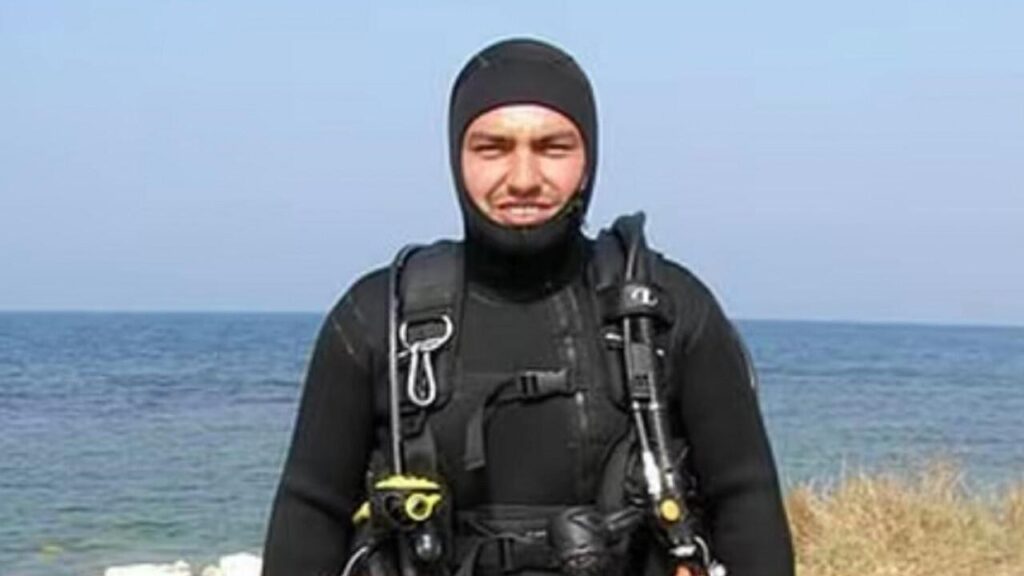
Croatian police arrested a Ukrainian diver in Pula on 19 August 2026 over his alleged role in the 2022 Nord Stream pipeline explosions, Croatian broadcaster HRT reported. German prosecutors confirmed to AP that the suspect was Volodymyr Zhuravlov (Zhuravliov in Ukrainian official transliteration). Legal Tribune Online reported that he was detained on the set of Zmiinyi (Snake) Island.
The arrest gives German prosecutors a third chance to secure Zhuravliov after two attempts in Poland failed. If Croatia extradites him, he would become the second suspected member of the alleged team to face proceedings in Germany. Berlin has pursued other suspects in the Nord Stream case across Europe, but the identity of the person who ordered the sabotage remains unknown.
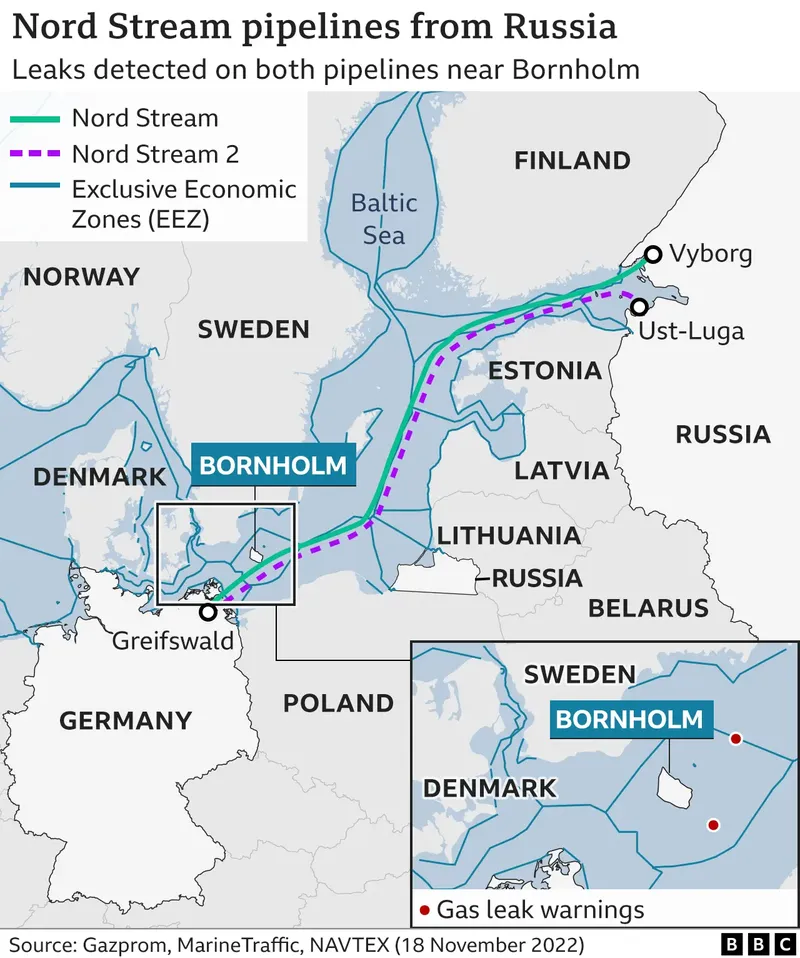
Germany’s Federal Public Prosecutor’s Office said Zhuravliov was a trained scuba diver who took part in the dives needed to place explosives on Nord Stream 1 and 2 near Denmark’s Bornholm island. Prosecutors say the group sailed from Rostock aboard a yacht that middlemen rented from a German company using forged identity documents.
The 2024 European arrest warrant accuses Zhuravliov of jointly causing an explosion, anti-constitutional sabotage, and destroying structures. He would appear before an investigating judge at Germany’s Federal Court of Justice following extradition, prosecutors said. A Croatian court must first approve his surrender.
LTO reported that investigators first sought Zhuravliov’s arrest in Poland in the summer of 2024, but he crossed into Ukraine before police detained him. Polish police arrested him near Warsaw in autumn 2025. However, a court rejected Germany’s extradition request after finding that the pipelines could be treated as a legitimate military target during an armed conflict. Zhuravliov has denied involvement.

His lawyer, Tymoteusz Paprocki, told AP that Zhuravliov understood the Polish ruling applied only within Poland.
Another Ukrainian suspect, Serhii K., was arrested near Rimini in August 2025 and extradited to Germany that November after unsuccessful appeals. Prosecutors allege he coordinated the operation rather than joining the dives. They charged him in Hamburg in June 2026.

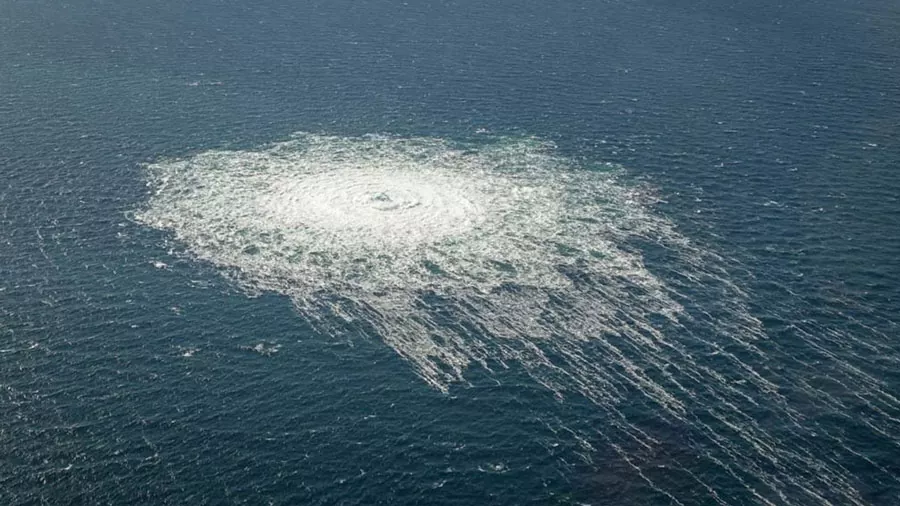
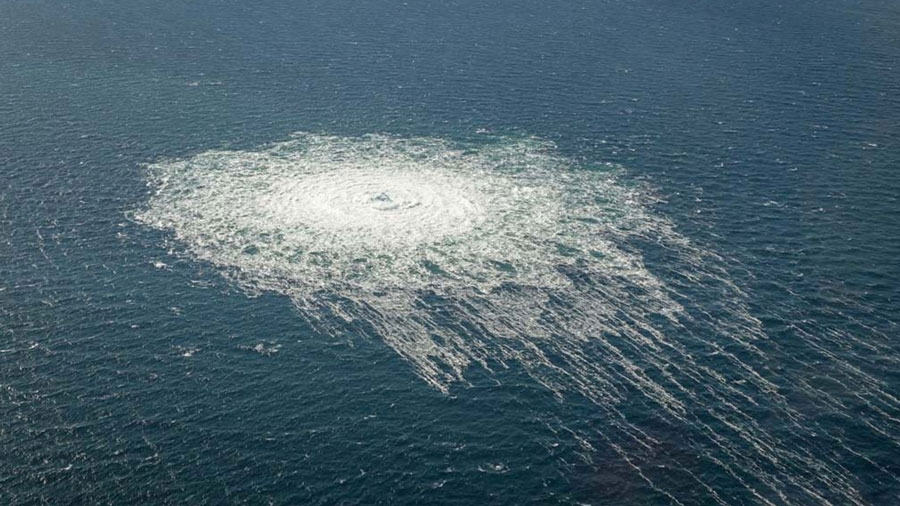
Nord Stream 1 and 2 ran beneath the Baltic Sea, carrying—or designed to carry—Russian gas directly to Germany while bypassing Ukraine. Explosions on 26 September 2022 damaged three of their four lines at a depth of about 80 meters.
No court has established who ordered the attack. Ukraine’s Prosecutor General’s Office says no facts demonstrate Ukrainian state involvement and is examining whether Russia staged a false-flag operation using Ukrainians. LTO reported that Germany’s Federal Court of Justice found strong grounds in December 2025 to believe that a state had initiated and directed the sabotage, but did not identify which state.

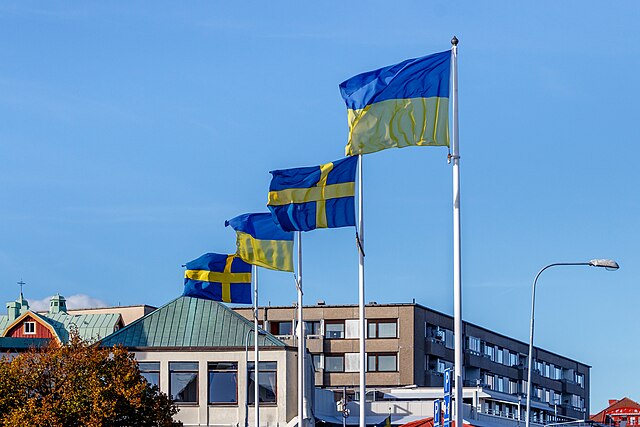
Russia's Matryoshka bot network has launched disinformation campaigns targeting elections in Sweden, Germany, and France this month, fabricating video clips branded with the logos of trusted European media outlets, Sweden's national public broadcaster SVT reported. Analysts in multiple countries found the campaign aims not to reach mass audiences but to overwhelm newsrooms' fact-checking capacity.
Seven fabricated video clips appeared on the social media platform X within a single hour on 18 August. Among them were clips branded with the logos of SVT and the Swedish newspaper Dagens Nyheter. Others hijacked the visual branding of Euronews and Germany's Der Spiegel. None were ever produced by these outlets.
The fake videos spread lies about election fraud in Sweden and directed false accusations at Prime Minister Ulf Kristersson personally. Sweden holds general elections on 13 September.
"We see this all over Europe. Russians target countries that support Ukraine," Kristersson told SVT.
Russian opposition analysis group Antibot4navalny linked the posts to Matryoshka, a pro-Russian influence campaign named after the Russian nesting doll.

Also known as Operation Overload and Storm-1679, Matryoshka was first exposed by Antibot4navalny in 2024 and is one of several Kremlin-linked disinformation networks alongside the Doppelgänger campaign and Storm-1516. A previous SVT review found the majority of Matryoshka's posts aimed to influence Western support for Ukraine.
The fabricated posts rarely get more than a few hundred or a few thousand genuine views, Antibot4navalny told SVT. Analysts say the campaign is not primarily designed to reach a large audience. Matryoshka operators actively push fabricated posts to journalists and fact-checkers, often disguising them as verification requests. A 2024 report by France's state anti-disinformation body Viginum suggested the campaign aims to distract and overload newsrooms' fact-checking resources through large volumes of targeted requests. In posts targeting Sweden, the network tagged the social media accounts of several outlets, including SVT and Dagens Nyheter.
The campaign may also seek to generate media coverage that amplifies its message or makes it appear more influential than it is, the think tank ISD assessed.
On 12 August, Germany's domestic intelligence agency, the Federal Office for the Protection of the Constitution (BfV), warned that Matryoshka is targeting local and regional elections in Germany scheduled for September. In early August, France's Viginum detected a Matryoshka operation directed at presidential candidate Gabriel Attal ahead of the 2027 vote. French prosecutors opened a probe into the campaign on 18 August.
In April, the network promoted false claims of Ukraine's involvement in the assassination attempt on US President Donald Trump.

© Lena Mucha for The New York Times

Ukraine has opened its own criminal investigation into the 2022 destruction of the Nord Stream gas pipelines, months after Germany charged a Ukrainian over the blasts, Suspilne reported. Prosecutors in Kyiv registered the case on war-crimes grounds and say they will test whether Russia staged the sabotage to discredit Ukraine. Serhii Kuznietsov is due to stand trial in Germany in October.
Ukraine's Security Service, under the Prosecutor General's Office, opened proceedings on 9 July under the article on violations of the laws and customs of war. Kuznietsov's Ukrainian lawyer, Mykola Katerynchuk, told Suspilne about the case.
The Prosecutor General's Office confirmed it is supervising a probe into the "possible commission in September 2022, amid the international armed conflict between Russia and Ukraine, by citizens of Ukraine, of actions connected to the undermining" of both pipelines in the Baltic Sea. It said the case was registered after the "independent discovery in the media" that Germany had charged a Ukrainian citizen.
Given Russia's use of hybrid methods, investigators will also examine whether Russians organized the explosions as a "false flag" operation, using Ukrainian citizens or imitating their participation to discredit Ukraine.
The office said it used the laws-and-customs-of-war charge because it matches the qualification chosen by Germany's Federal Prosecutor's Office.
The pipelines exploded on 26 September 2022. On 8 August 2025, Germany's Federal Court of Justice issued an arrest warrant for Kuznietsov, alleging he led a group of six who mined the pipelines and detonated them remotely.
Italian police arrested him on 21 August 2025, and Italy's Supreme Court later confirmed his extradition to Germany. A Polish court, by contrast, refused a German request for another Ukrainian suspect, Volodymyr Zhuravlov.
On 2 July 2026, Germany's Federal Prosecutor's Office published its charges — an attack on civilian objects, causing an explosion, and destroying structures. Kuznietsov denies guilt.
Concern over impact of Iran war pushes up government bond yields in US, UK, France, Germany and Japan
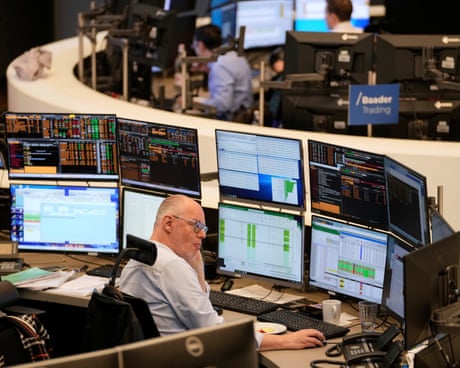
Government borrowing costs in several advanced economies hit their highest level since the 2008 financial crisis, or even earlier, on Monday as investors feared the Middle East crisis would keep inflation persistently high.
Concerns over rising prices and government spending pushed up the cost of debt issued by Paris, Berlin, Washington DC, Tokyo and London as investors fretted that rising prices would push up interest rates.
Continue reading...
© Photograph: Martin Meissner/AP

© Photograph: Martin Meissner/AP

© Photograph: Martin Meissner/AP

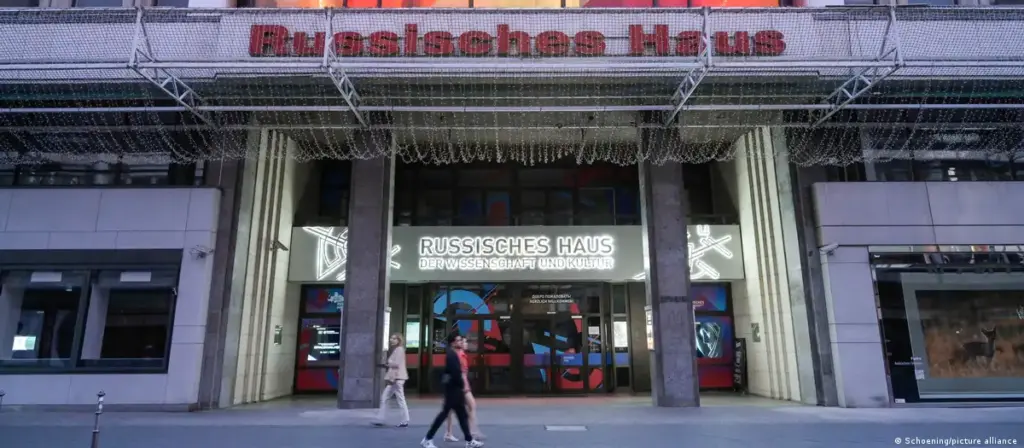
Germany has placed part of a federal ministry directly next to a Berlin building that France links to Russian intelligence, the newspaper Tagesspiegel reported. The branch office shares a wall with the Russian House, a cultural center long suspected of serving as a Kremlin front. One of its units works on protecting Germany's critical networks from attack.
The Federal Ministry for Digital Affairs opened a branch at Taubenstraße 42/43 on 1 July. It sits wall-to-wall with the Russian House on Friedrichstraße, reporter Claudia von Salzen found. The ministry moved in because its main headquarters nearby had run out of space.
Two of the ministry's six departments now operate there. One covers digital infrastructure, including a unit for the security and resilience of public telecom networks.
The other handles digital identities, trust services, and the cybersecurity industry. Both are fields a hostile intelligence service would want to watch.
The Russian House is officially a science and culture center. It opened on Friedrichstraße in 1984 to promote friendship with the Soviet Union.
Rossotrudnichestvo, a Russian state agency, runs it. The EU sanctioned that agency in July 2022 as the Kremlin's main tool for hybrid influence. In Germany, it allegedly helped organize pro-Russian rallies, and many of its staff abroad are Russian intelligence officers.
A leaked French Interior Ministry letter states the building serves as cover for Russian intelligence. The Russian House rejected that and claimed it is a purely cultural institution.
Across town, German lawmakers near the Russian Embassy hardened their offices years ago. They were told to avoid Bluetooth devices and to fit their windows with anti-espionage film.
Berlin is also reviewing whether to close the Russian House over the espionage suspicions, TVP World reported. A senior lawmaker, Roderich Kiesewetter of the CDU, called the ministry's choice a clear failure of risk awareness.
The ministry said it picked the site because the building is federally owned and the right size. It did not answer whether the proximity to the Russian House counts as a security risk.
Germany has become one of the busiest fronts in Russia's campaign of drone incursions, sabotage, and spying. By December, Germany had logged more than 1,000 suspicious drone flights in 2025 alone. The drones have swarmed both civilian airports and military sites, shutting Munich Airport over two days in October 2025 and stranding thousands of travelers. Analysts judge it highly likely that Russia flew some 144 surveillance drones over a dozen NATO countries between August 2024 and February 2026, including near Ramstein Air Base and NATO nuclear sites. In early August 2026, security staff found an explosives-laden drone beside a Ukrainian cargo plane at Leipzig-Halle airport, an incident Western intelligence tied to Moscow.
Much of the ground work runs through disposable agents recruited online. In March 2026, authorities arrested operatives who had surveilled the head of a Bavarian drone firm arming Ukraine, a case its domestic service treats as a planned assassination. Prosecutors separately charged three men over a plot to mail exploding parcels from Germany, described as a test run for future arson attacks.

France, Germany, and the UK are working to create a format representing Europe in talks over Russia’s war against Ukraine, The New York Times reported on 15 August, citing five European officials. Known collectively as the E3, the three countries would support Ukraine’s position and protect European interests in any settlement.
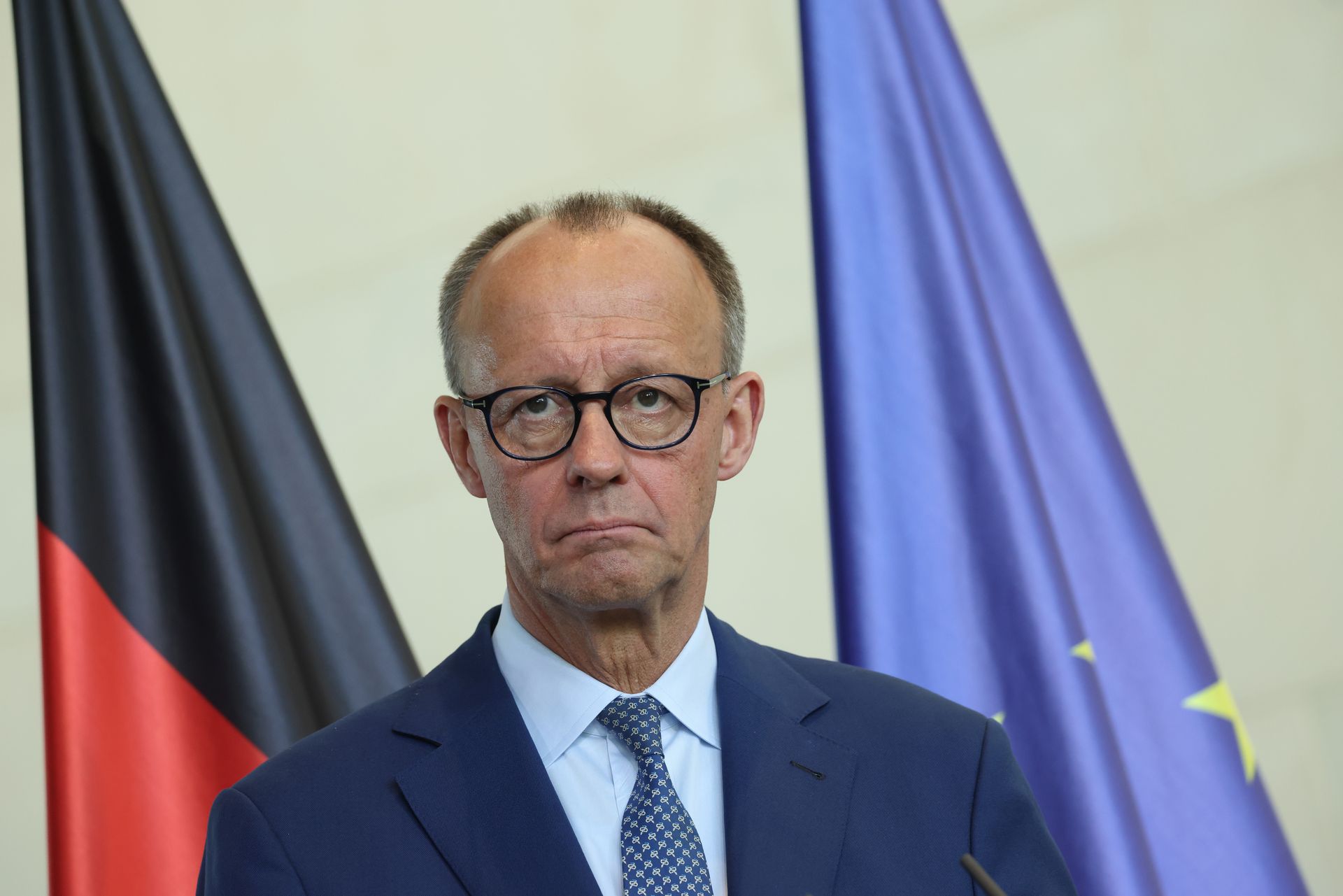
The initiative is Europe’s attempt to secure a place in talks the US is expected to lead. The three governments fear that Washington and Moscow could reach a deal without them, although Europe would have to enforce sanctions, decide how to use frozen Russian assets, and help protect Ukraine afterward. European officials also doubt Washington will stay committed to serious negotiations.
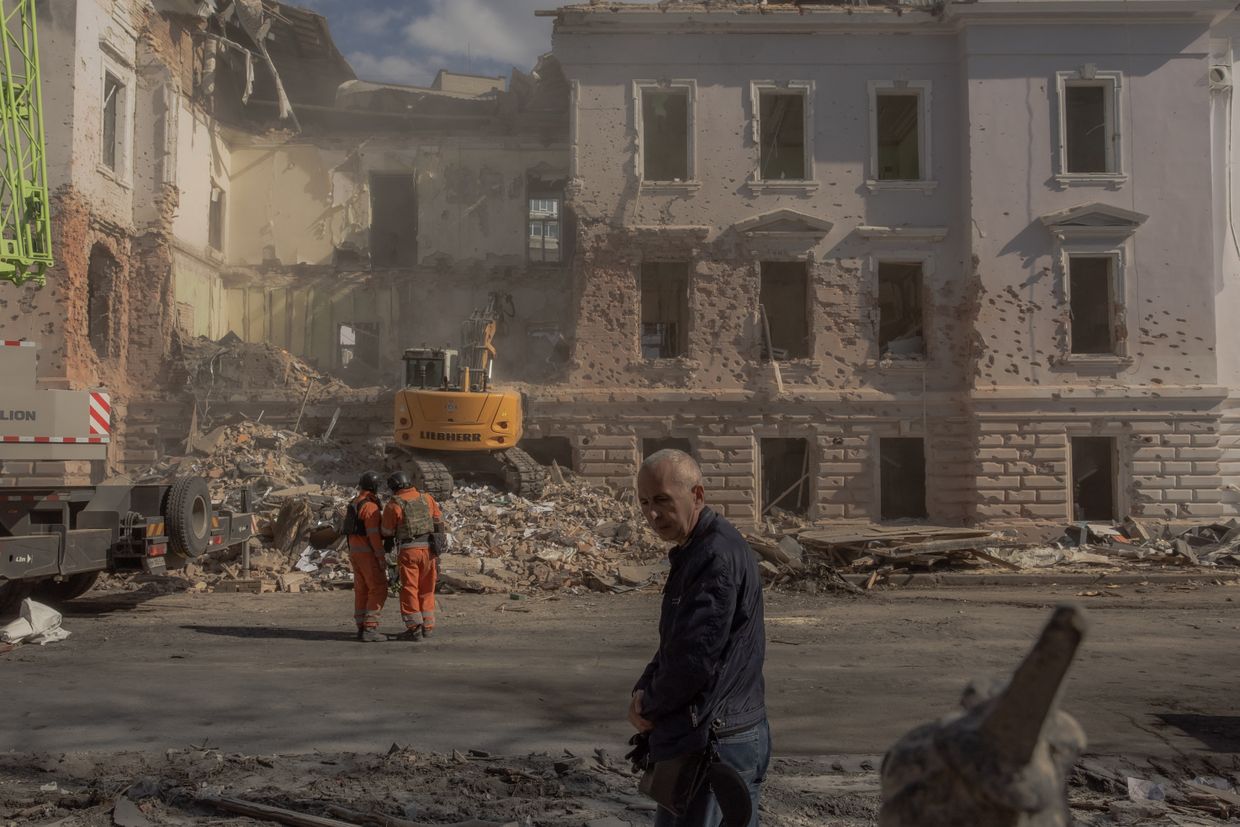
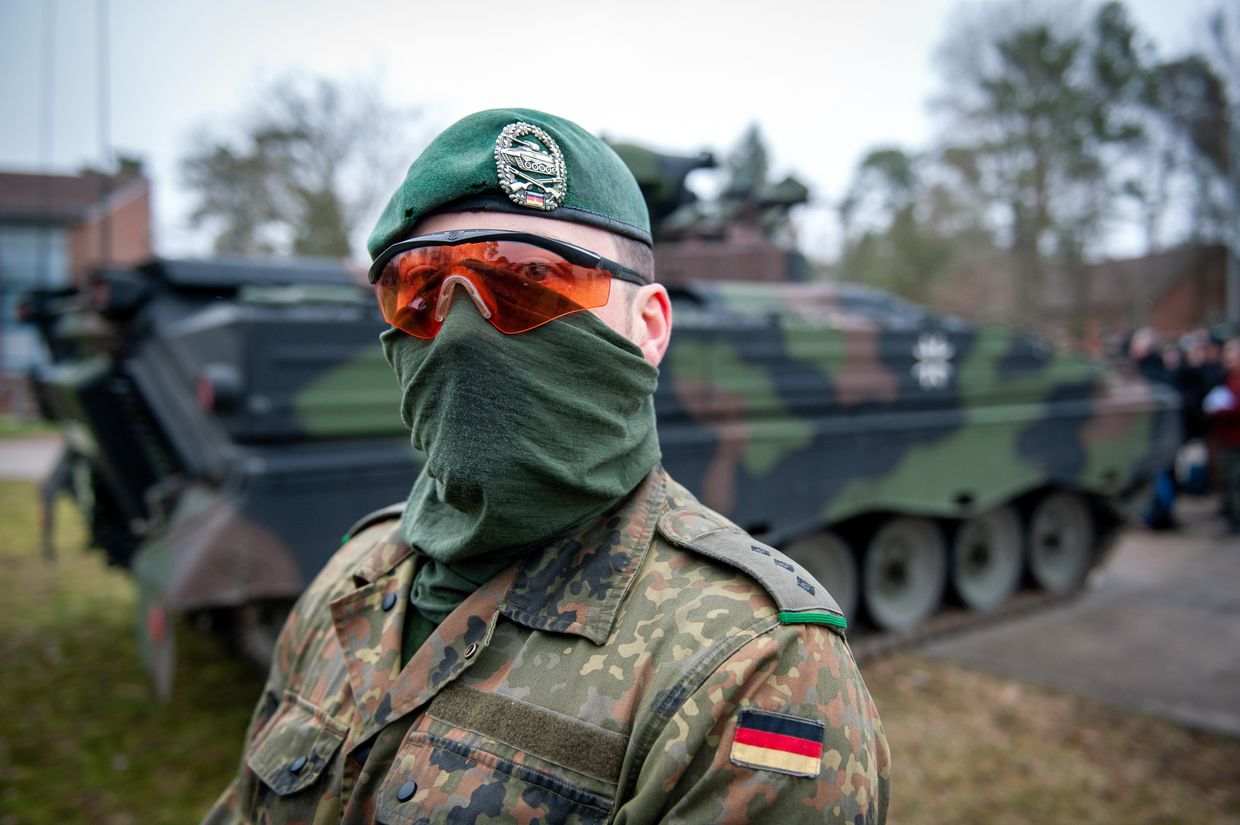
The officials expect Washington to lead negotiations with Moscow. The E3 wants to become the core group supporting Ukraine, following Kyiv’s request that it prepare for talks. France and Germany are shaping the position, while Britain fears damaging relations with Trump.
Poland, Italy, and the Nordic countries would be consulted, with the EU later involved. Some Baltic states and Hungary do not trust France and Germany to represent them. London called the discussion speculative.
The E3 forms the core of the Coalition of the Willing. At a 7 June meeting with President Volodymyr Zelenskyy, its leaders backed an immediate ceasefire and legally binding guarantees, including the deployment of a multinational force.
More than 600 British troops rehearsed with French paratroopers and an Italian platoon in February for a possible deployment. They could form the core of a 10,000-strong force pledged by London and Paris after a ceasefire.
Yet some members reportedly made Russia’s consent a condition for deploying troops, effectively giving Moscow a veto. Bulgaria has left, and Germany has not committed troops. The Coalition’s leadership is also shifting after Keir Starmer’s resignation and ahead of Emmanuel Macron’s departure in 2027.
European officials see few signs that Vladimir Putin is ready for serious negotiations, the NYT reported. A separate EU attempt to open direct contact with Moscow divided member states.
Experts told Euromaidan Press that Russia uses peace processes to stall, press maximalist demands, and improve its battlefield position. Moscow also dismissed a Black Sea ceasefire proposal after Kyiv offered a mutual halt to attacks on civilian targets.
Ukraine’s partners risk mistaking Russia’s presence at talks for a willingness to compromise. Former Ukrainian diplomat Iuliia Osmolovska warned that Moscow also benefits from failed negotiations by exhausting Western governments until they pressure Kyiv to concede.
Before 2022, Russia signed 26 ceasefires in eastern Ukraine; none lasted more than two weeks. A pause can bank concessions, rotate troops, and let Moscow resume fighting from a stronger position.

© Nina Liashonok/Reuters

© Nina Liashonok/Reuters

© Kirsty Wigglesworth/Associated Press
Fan blade broke off shortly after takeoff on 10 July flight from Greece to Germany, preliminary findings show
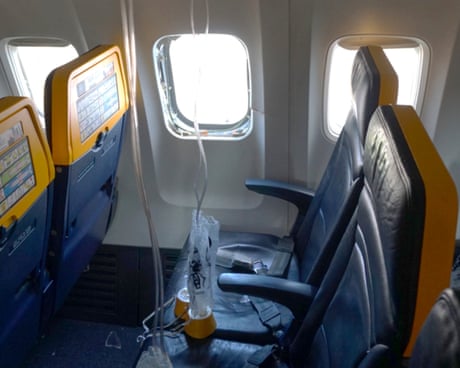
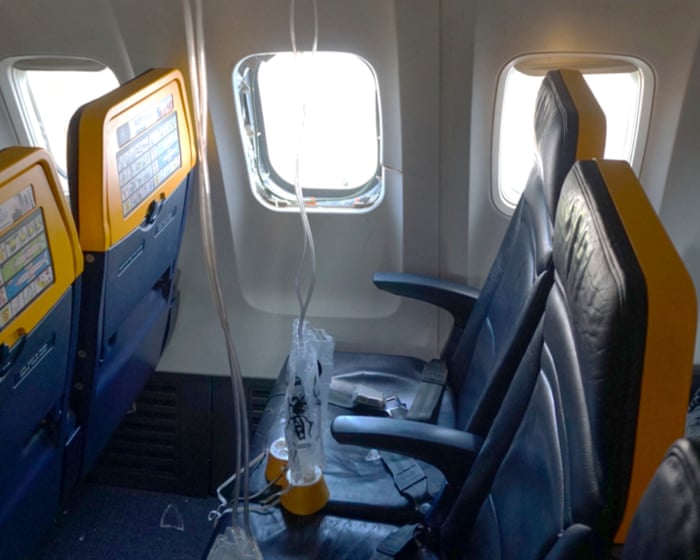
Broken engine parts were responsible for shattering a window on a Ryanair plane, causing a passenger to be partly sucked out mid-flight in July, US investigators have said.
A preliminary report by the National Transportation Safety Board (NTSB) found an engine fan blade broke off shortly after takeoff on the 10 July flight from Greece to Germany shattering the window and damaging the fuselage.
Continue reading...
© Photograph: National Transportation Safety Board/AP

© Photograph: National Transportation Safety Board/AP

© Photograph: National Transportation Safety Board/AP

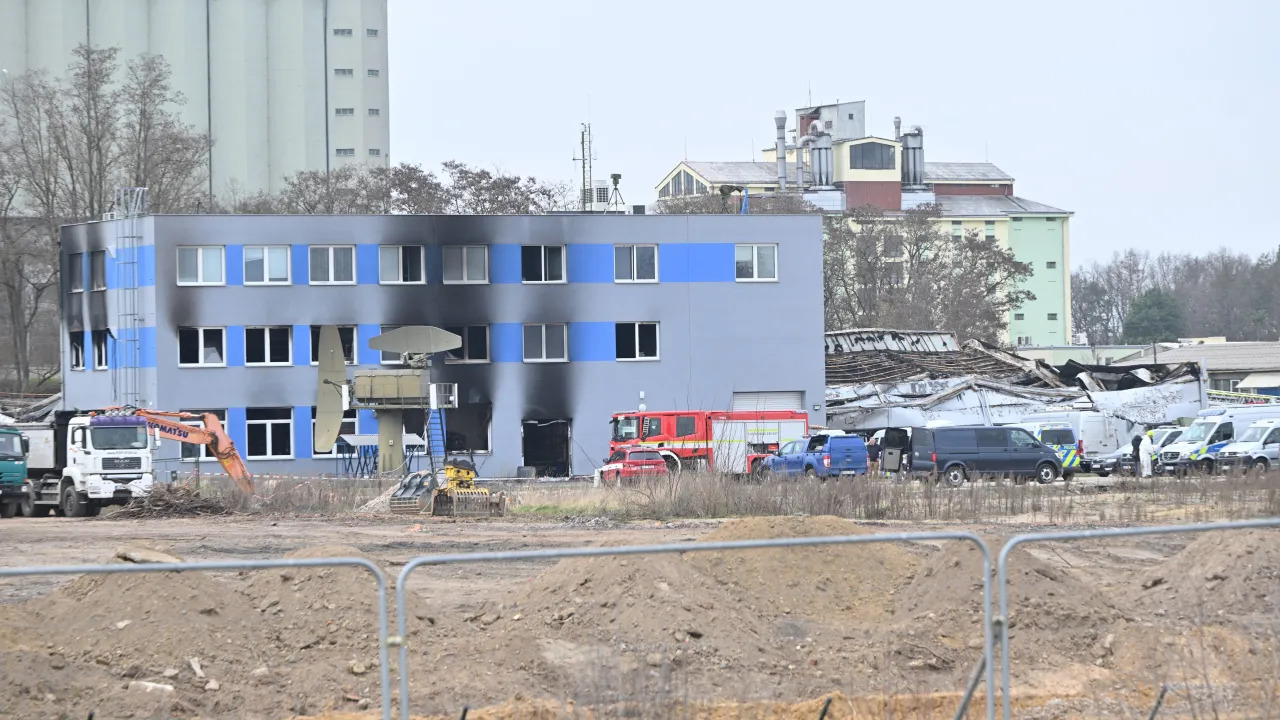
Newly analyzed airport camera footage shows a quadcopter drone loaded with Semtex explosive flew straight at a parked Ukrainian An-124 Ruslan cargo aircraft and struck its wing at Leipzig/Halle airport in Germany on the evening of 4 August, the media outlet Die Zeit reported on 10 August. The device bounced off the wing, fell to the ground, and failed to detonate. The drone attacked the aircraft at around 19:30 local time, the media outlet reports.
Russia's hybrid attacks are increasingly moving from the information domain into the physical one, including on the territory of other countries. This incident makes sabotage on NATO member states' territory potentially more dangerous if suspicion of Russian involvement is confirmed.
The drone struck the wing near the fuel tanks, then bounced off the aircraft's surface and fell to the ground. The explosive device also ended up on the ground and did not detonate. The device contained Semtex plastic explosive. Approximately four hours later, a tourist bus driver accidentally noticed it lying on the ground, put his foot on it, and reported the find to airport security.
Video analysis contradicts the earlier theory that the incident may have been intended only as a warning. The nature of the attack indicates an attempt to cause actual damage.

German Interior Minister Alexander Dobrindt suggested that a state actor may have been behind the explosive-laden drone found at the airport. On 7 August, Germany's National Security Council convened under Chancellor Friedrich Merz. Earlier, the United States assessed that the drone discovered at Leipzig/Halle Airport in Germany overnight into 5 August belonged to Russian intelligence, a US Department of Defense official in Europe told CNN.
The cargo aboard the Ukrainian aircraft targeted in the sabotage attempt consisted of military equipment and ammunition that had arrived in Germany from France and was being prepared for further transportation, Süddeutsche Zeitung stated, citing a confidential German police report. However, Germany's Federal Ministry of the Interior denied this claim, according to dpa.
The An-124 Ruslan, struck by the drone, is operated by the Ukrainian company Antonov Airlines. After Russian forces destroyed its main base in Hostomel in 2022, the company has been using Leipzig/Halle airport as a temporary base for its aircraft.

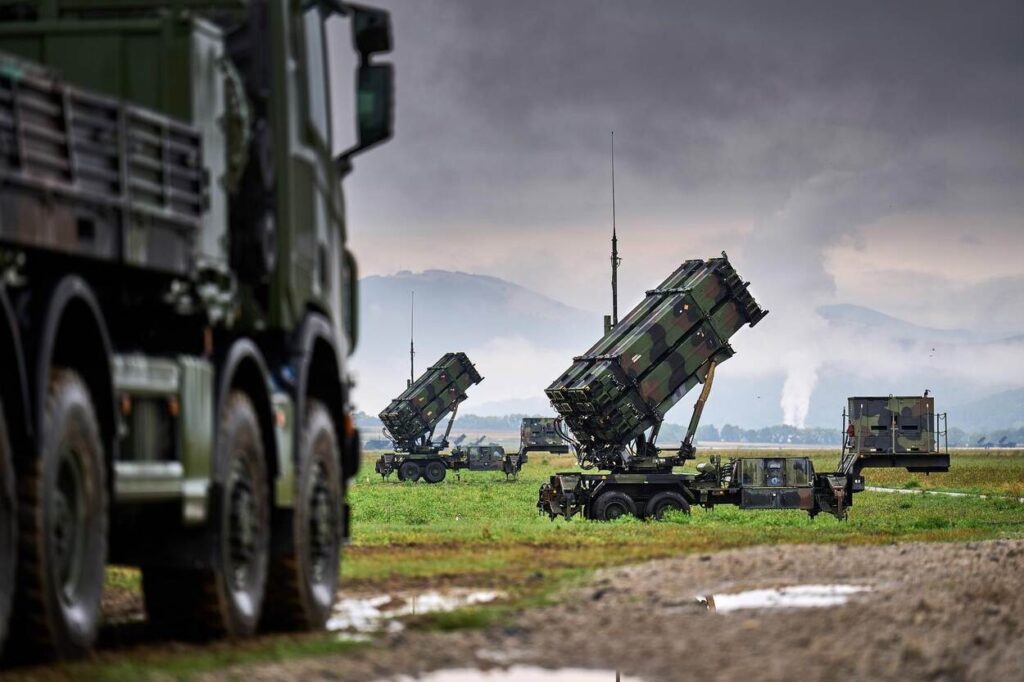
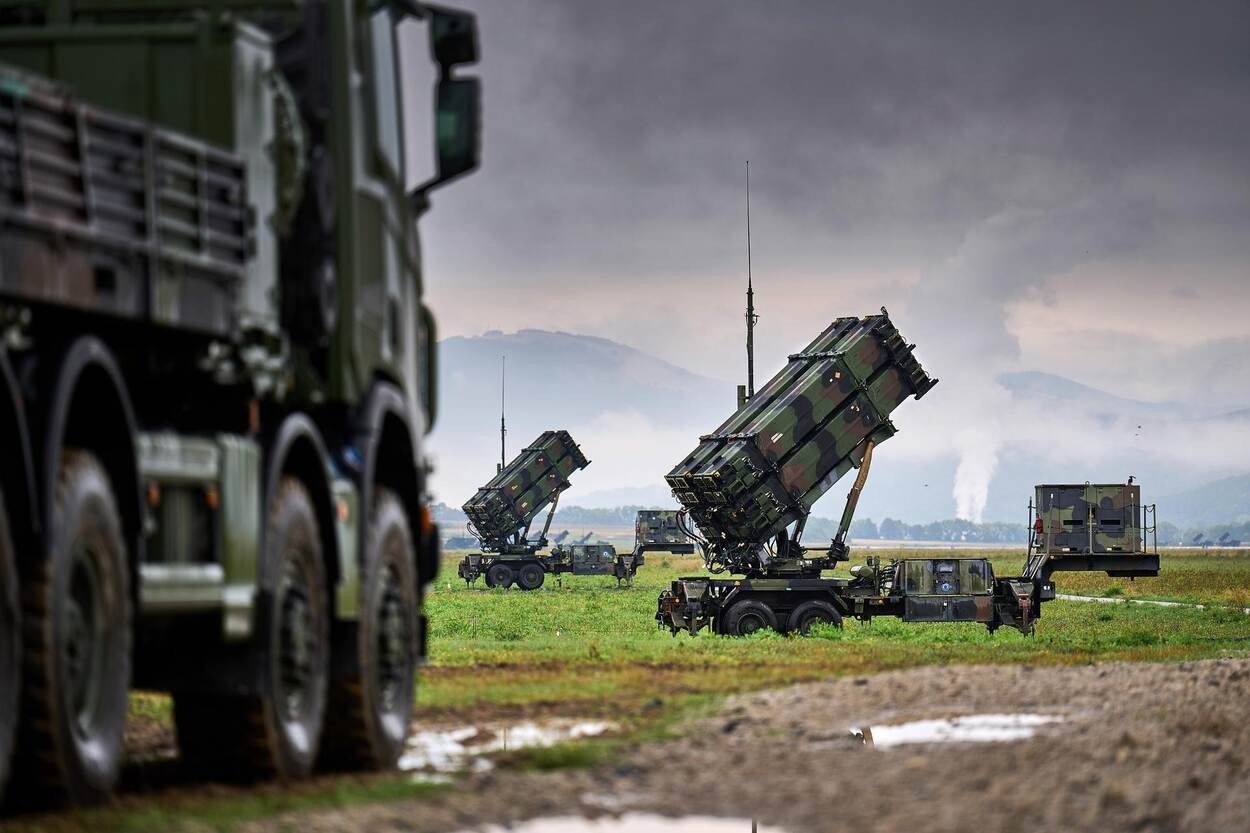
US negotiators have quietly kept a deal to let Ukraine help build Patriot interceptor missiles alive, even after US President Donald Trump publicly cast doubt on it, Reuters reported. Four people familiar with the talks said Washington never ordered them stopped. Ukraine, running low on air defenses, urgently wants the missiles to blunt Russia's growing ballistic strikes.
Russian daily drone attacks forced Kyiv to chase air defense from every direction at once, including home-grown interceptors. But this year, Moscow has increasingly turned to ballistic missiles, the hardest weapons for Ukraine to stop. US-supplied PAC-3 interceptors fired by Patriot systems are among the few weapons that can reliably shoot them down, and Ukraine has now run out.

Last week, Trump appeared to reverse course, telling reporters the US had not agreed to let Ukraine build Patriots and must be "very careful about letting somebody build them."
According to Reuters, two sources tied that to a tense White House meeting with Zelenskyy. Yet the negotiations pressed on.
"No order was given to halt the discussions," one source said, adding that talks continued with US arms makers and military officials.
Matthew Whitaker, Washington's envoy to NATO, is leading the drive for a deal. He visited Kyiv last month to weigh options with Ukrainian officials and weapons executives. His spokesperson framed the trip around drone collaboration that would benefit US forces, without naming the Patriot plan.
A senior administration official told Reuters that any agreement must protect US technology.
The options include making Patriot components in Ukraine and shipping them to Germany for final assembly, the sources said. A US official called that the most feasible route. Germany already produces an older Patriot model, and the advanced PAC-3, the newest Patriot interceptor, is expected to follow.
Ukraine could instead join an existing US-European Patriot program, or build a cheaper version of the PAC-3.
It might also tap Lockheed Martin's new lower-cost interceptor, the PAC-3 ACE, unveiled last month.
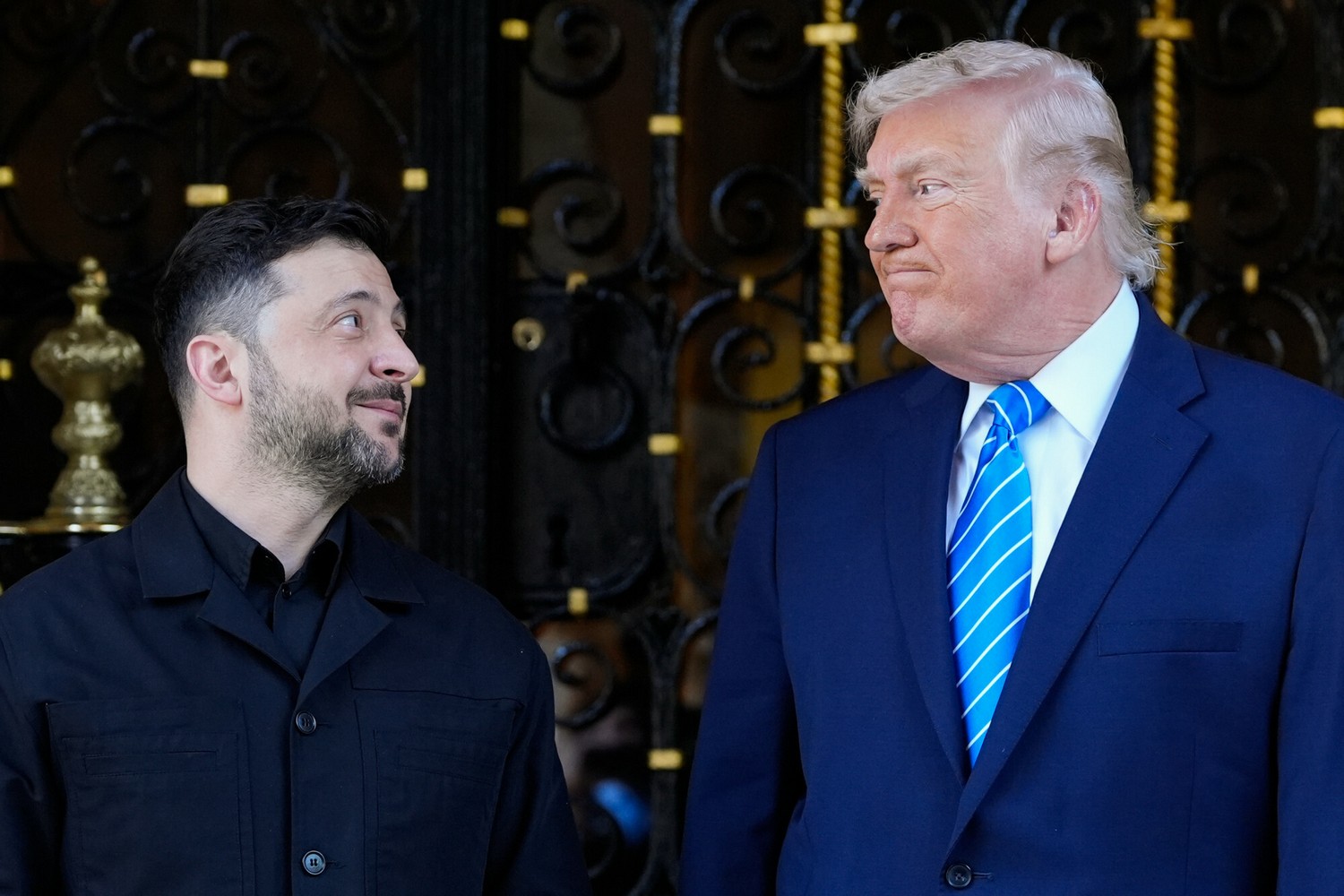
During a meeting with Zelenskyy in Ankara last month, Trump said the US would license Ukraine to make PAC-3s. His later reversal caught many off guard, including Zelenskyy. In a follow-up call, US Vice President JD Vance assured him that deals between presidents would hold, one source said.
Even with a deal, Ukraine would not receive newly built interceptors for a year or more. So Kyiv is urging allies to hand over some of theirs and exploring swaps to get missiles sooner.
Earlier, Zelenskyy warned that Ukraine had run out of Patriots. That day, it intercepted just one of 27 ballistic missiles Russia fired.
Global stocks of high-end interceptors have shrunk since the Iran war, with Patriots once bound for Ukraine diverted to US forces and Gulf allies.

© Johannes Simon/Getty Images

German security services believe Russia was preparing to assassinate the head of a company that supplies drones to Ukraine, according to Die Zeit. Two suspected agents who surveilled him have been arrested, and officials warn the case marks a deadlier turn in Russian operations inside Germany.
Investigators say the target is Stefan Thumann, head of the Bavarian startup Donaustahl, which makes reconnaissance and kamikaze drones for Ukraine. In December 2025, a recruit filmed his home and photographed the nameplate, focusing on the man rather than the company, security services believe. Thumann has been outspoken against Moscow, posting that "Russia doesn't want peace. It wants the destruction of the West."
A foreign intelligence service flagged Thumann as high-risk in December 2025. Bavarian police arrested Serhii N., a former bricklayer from Kharkiv with no intelligence training, then released him before analyzing his phones. The devices later showed contact with Russian intelligence and attempts to trail his father, investigators found. He fled to Spain, and a Romanian woman, Alla S., continued the surveillance. Both were arrested in March 2026, in Spain and North Rhine-Westphalia.
Russia recruits such disposable agents online, paying people from precarious backgrounds for surveillance, arson, and sabotage, and discarding them afterward. Ukraine's own SBU security service has reported dozens of cases in 2026 of Russia recruiting Ukrainians at home for arson and sabotage, often by forging Ukrainian security summonses to pose as their own government.
The BfV, Germany's domestic intelligence service, classifies the case as a suspected planned assassination. A federal investigating judge was not convinced, so the arrest warrant cites only suspected intelligence-agent activity. Lawyers for both suspects declined to comment.
A second German arms company is reportedly in Russian intelligence's sights, investigators say. On 11 June, Serbian officers stopped a truck of concealed explosives apparently bound for Bavaria, home to Donaustahl, Quantum Systems, and Helsing.
The threat has precedent: agents had Rheinmetall chief Armin Papperger watched in 2024, and an FSB killing struck a Georgian exile in Berlin in 2019. It fits a broader Russian sabotage campaign across Europe.
Thumann, now under guard, still taunts Moscow:
"You won't break me."

© Jens Schlueter/Getty Images

U.S. President Donald Trump has promised to send 10 Patriot interceptors to Ukraine - a smaller number than had been paused previously while en route to the country, Axios reported on July 8, citing its sources.
Trump has also suggested that Germany sell one of its Patriot batteries to Ukraine, according to three sources cited by Axios. They said the U.S. and European allies would split the cost of the purchase.
The discussion comes as Ukraine is calling upon its allies, particularly the United States, to support Ukrainian air defense by supplying "life-saving" Patriot systems and relevant missiles.
The Pentagon said on July 2 that some military assistance to Ukraine had been halted as the U.S. Defense Department conducts a review of foreign aid deliveries.
On July 7, the Pentagon said it would renew shipments, saying the additional defensive weapons were intended to help Ukraine protect itself while the U.S. works toward "a lasting peace."
Merz called Trump to request the release of the paused interceptors, according to Axios. During the call, Trump proposed that Germany sell one of its own Patriot batteries to Ukraine.
While no agreement has been reached, officials on both sides say negotiations are ongoing. German officials maintain that Berlin has already sent a higher share of its available Patriot systems to Ukraine than any other NATO country, including the U.S.
Russia has escalated its aerial campaign against Ukraine in recent weeks, launching large-scale missile and drone attacks that have killed and injured hundreds of civilians across multiple cities.
The suspension of U.S. arms deliveries, which include Patriots and precision-guided munitions, drew criticism from Kyiv. During a July 4 phone call with Ukrainian President Volodymyr Zelensky, Trump said he was not responsible for halting the aid, according to the Wall Street Journal.
He reportedly told Zelensky that a review of U.S. munitions stockpiles was initiated after last month's U.S. strikes on Iranian nuclear sites, but denied ordering a full pause in shipments.
NBC News reported that Defense Secretary Pete Hegseth halted the shipments unilaterally on July 2, despite internal Pentagon assessments that the move would not jeopardize U.S. military readiness.
Special Envoy Keith Kellogg and Ukrainian Defense Minister Rustem Umerov are set to meet in Rome later this week to discuss resuming the stalled military aid, Politico reported on July 7.


Four Alliance 90/Greens party members have sent an open letter to German Chancellor Friedrich Merz calling for a significant increase in military aid to Ukraine, Bild reported on July 5, citing a copy of the document.
The news comes as Russia’s expanded drone production has enabled Moscow to launch as many as 500 drones in a single night against Ukraine on multiple occasions each week.
The letter's authors — Robin Wagener, Sara Nanni, Sebastian Schafer, and Anton Hofreiter — demanded that certain budget items be adjusted, particularly regarding support for Ukraine. They believe that the planned increase in Germany's defense funding for Kyiv from $8.4 billion in 2024 to $9.8 billion in 2025 is insufficient, according to Bild.
The signatories emphasized the need to strengthen Ukraine's air defense systems urgently.
"Without further air defense and assured supplies, Russian dictatorship over Ukraine becomes more likely," the letter read.
The lawmakers also noted that the situation has deteriorated as Russia continues to carry out large-scale attacks on Ukraine, and the United States, for its part, has partially suspended its military aid.
The signatories reminded Merz that, thanks to the Greens party's support in the previous Bundestag, assistance to Ukraine had significantly increased.
Before becoming chancellor, Merz, elected for the CDU/CSU conservative alliance, signaled he could overturn the ban of his predecessor, Social Democrat Olaf Scholz, on delivering Taurus to Ukraine.
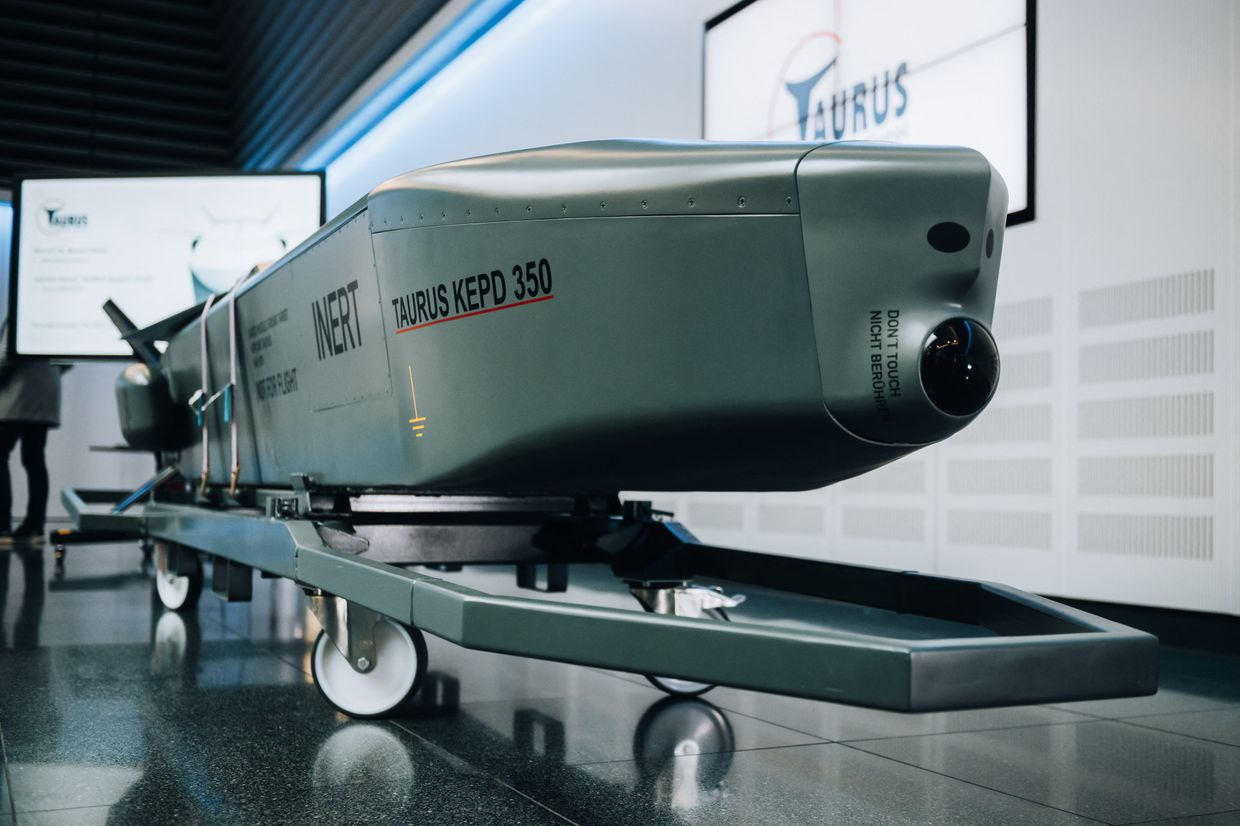
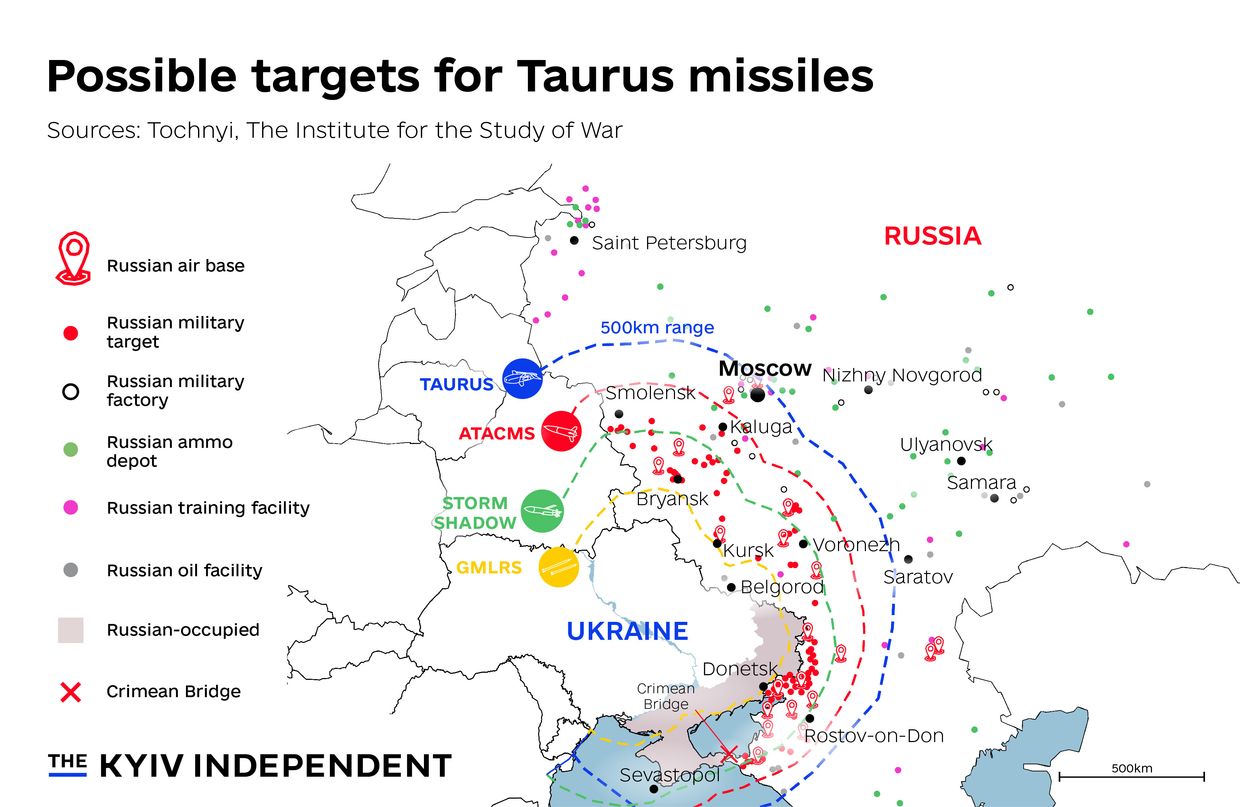
The Taurus is a powerful cruise missile capable of striking targets at a distance of 500 kilometers (300 miles), more than the long-range capabilities Ukraine received from other partners.
However, the German government has not approved sending Taurus missiles to Ukraine so far.
Ukraine has been using U.S.-made ATACMS for over a year, and U.K.-French Storm Shadow/SCALP for more than two, initially being allowed to deploy them only against Russian targets on Ukrainian territory.
Only in late 2024, the Biden administration and other allies eased the restrictions, allowing Ukraine to use long-range missiles against Russian military targets on Russian territory.


Germany is weighing a massive defense procurement plan worth up to 25 billion euros ($29.4 billion) to supply thousands of combat vehicles for NATO's expanding force structure, Bloomberg reported on July 4, citing unnamed sources familiar with the matter.
The proposed purchases are part of a broader pan-European effort to boost deterrence against Russia, as Western leaders warn of the growing risk of a large-scale war within five years.
Berlin is reportedly considering purchasing up to 2,500 GTK Boxer armored vehicles and up to 1,000 Leopard 2 battle tanks. The purchase would equip up to seven new brigades that Germany has pledged to form under NATO's force generation plans for the next decade.
The Leopard 2 tanks are produced by KNDS Deutschland and Rheinmetall, while the Boxer is made by ARTEC, a joint venture of the same companies. Leopard 2 tanks have been supplied to Ukraine and tested in combat.
Final pricing and quantities are still under negotiation, and the projected cost could fall below 25 billion euros ($29.4 billion) depending on procurement timelines and contract terms.
German Defense Minister Boris Pistorius and top Bundeswehr officials are reviewing the plans, with legislative approval expected by the end of the year, Bloomberg reported.
Germany has faced pressure from NATO and Washington to meet its alliance commitments, including the newly adopted pledge to spend at least 5% of GDP on defense by 2035.
The initiative, endorsed on June 25 at the NATO summit, reflects concern over Russia's wartime economy, military buildup, and destabilization efforts across Europe.

German Chancellor Friedrich Merz said on July 1 that the decision to supply Taurus cruise missiles to Ukraine remains under consideration but stressed that Germany will not become a party to the war.
"It has always been clear that if we supply the Taurus, this weapon will be used not by German soldiers, but by Ukrainians," Merz told Tagesschau. "By the way, the same applies to other cruise missiles supplied by the United Kingdom or France."
The Taurus is a powerful cruise missile capable of striking targets at a distance of 500 kilometers (300 miles) — a greater range than the long-range weapons Ukraine has received from other partners.
Speaking to the outlet, Merz highlighted the complexity of the Taurus system, noting that it requires extensive training before Ukrainian forces can operate it. In terms of range, speed, and payload, the Taurus missile is similar to the Storm Shadow, which is produced by MBDA’s French division. The key difference lies in the warhead design — Taurus can be programmed to detonate after penetrating fortified targets, such as bunkers or reinforced facilities.

“The problem for us is that this system is extremely complex, and training soldiers on it takes at least six months. Are they already being trained? We haven't agreed on that yet,” he said. “I discussed this with President (Volodymyr) Zelensky, and I also raised it within the coalition. We haven’t started yet. It is and remains an option.”
The chancellor also added that Germany would no longer publicly disclose details about its military support to Ukraine in order to prevent Moscow from assessing the full scope of Western assistance.
Since Russia launched its full-scale invasion of Ukraine in February 2022, Germany has provided Kyiv with approximately 47.8 billion euros (about $51.8 billion) in total bilateral support, making it Ukraine’s second-largest country donor. This aid includes military equipment, humanitarian assistance, support for refugees, infrastructure repair, and financial aid for energy and winter relief, with military support alone totaling around 28 billion euros ($30 billion).


A 32-year-old Ukrainian woman and her 1-year-old daughter were found dead near their home in the German city of Dorsten, North Rhine-Westphalia, on June 29, according to a joint statement from the Essen Public Prosecutor's Office and the Recklinghausen Police.
According to the statement released on June 30, the autopsy results confirmed that both victims died from violent causes. The bodies were discovered in the Holsterhausen district of Dorsten in Germany.
Later that same evening, a 16-year-old Ukrainian boy who also resides in Dorsten appeared at the crime scene and admitted to involvement in the killings, German authorities said. He was arrested on the spot, and a criminal investigation is ongoing.
Ukraine's Foreign Ministry confirmed to RBK-Ukraine that the Ukrainian woman and her daughter were murdered in Germany.
Ukraine's Consulate in Dusseldorf said it had contacted German law enforcement agencies for more information and was working to reach the relatives of both the victims and the detained teenager. The consulate reportedly confirmed that the case is under special supervision by the diplomatic mission.
German authorities said the crime scene was cordoned off for collecting evidence until the evening hours of June 29. They are now analyzing multiple tips and pieces of evidence submitted by the public.
The relationship between the teenage suspect and the victims has not yet been confirmed by investigators.
Earlier in June, a 46-year-old Ukrainian woman and her 6-year-old daughter were found murdered in the city of Leuven, Belgium. Both victims were found in the fire and had previously suffered stab wounds.
The 16-year-old son of the Ukrainian woman has confessed to fatally injuring his family and setting their home on fire. The Leven prosecutor's office said the boy admitted to the crimes after five hours of questioning.


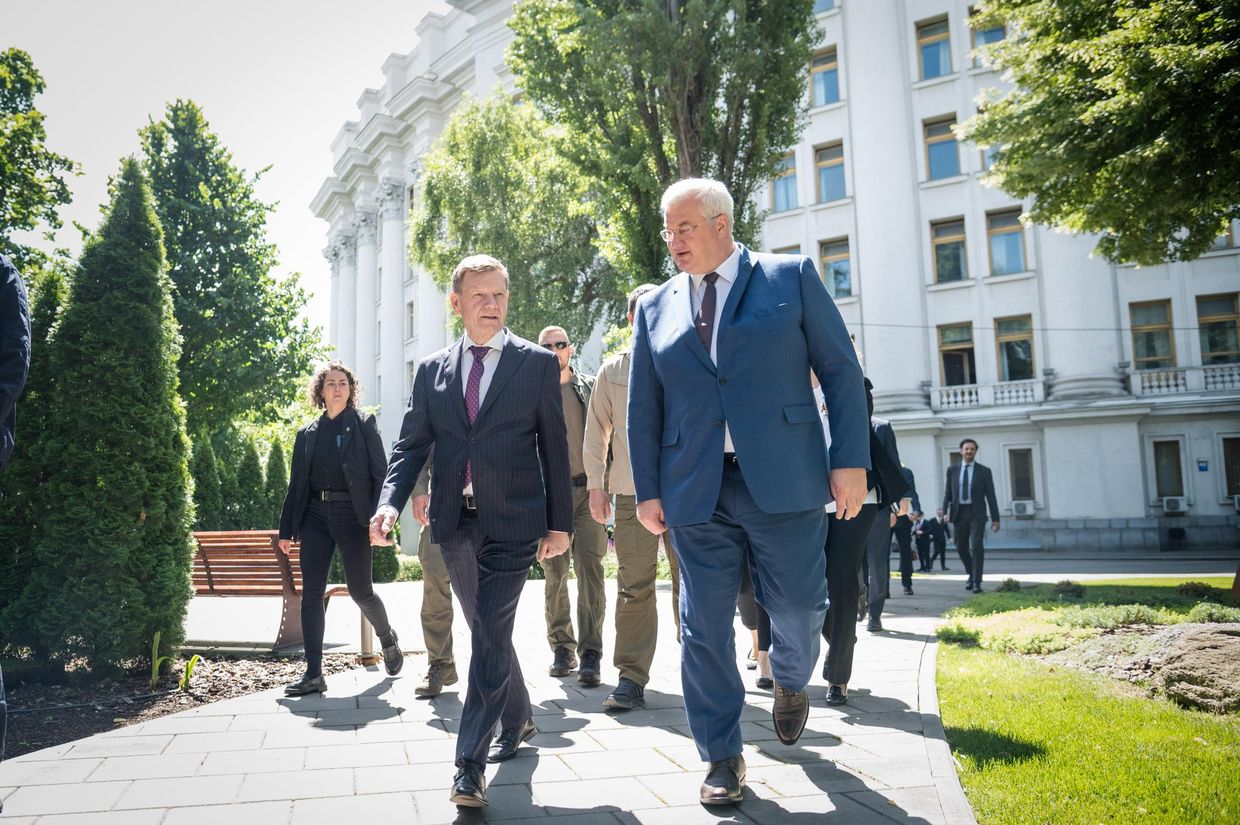
President Volodymyr Zelensky and German Foreign Minister Johann Wadephul met in Kyiv on June 30, where the two leaders discussed Germany supplying additional IRIS-T air defense systems, joint weapons production, and strengthening sanctions against Russia, Zelensky said.
Wadephul earlier said Germany is working with its defense industry, European allies, and the U.S. to secure more air defense systems for Ukraine.
"We are going down every path available... The German defense industry is trying to expand its capacity. We're speaking with our European partners, and I believe we must also move forward with the United States," he said.
Zelensky met with executives of German defense companies alongside Wadephul during the visit to Ukraine's capital.
"We discussed sanctions pressure on Russia, the potential for supplying new IRIS-T systems, and joint weapons production — both in Ukraine and in Germany," Zelensky said in a post to social media.
Zelensky noted Germany signalled it believes that Ukraine's future is in NATO amid Russia's war against Ukraine.
"We will continue to develop relevant military hubs and increase the presence of German companies in Ukraine. We had an in-depth discussion on interceptor drones. I am grateful for the willingness to help," Zelensky said.
Earlier in the visit, Wadephul noted that he remains in close contact with German Defense Minister Boris Pistorius to assess whether existing systems from Germany's own stockpiles can be redirected to Ukraine.

German Foreign Minister Johann Wadephul pledged on June 30 that Berlin is exploring "every possible path" to provide Ukraine with additional air defense systems, amid intensifying Russian missile and drone attacks, according to RBK-Ukraine.
Speaking at a press conference during his visit to Kyiv, Wadephul said Germany is working with its defense industry, European allies, and the U.S. to urgently secure more systems for Ukraine's air shield.
"We are going down every path available," Wadephul said. "The German defense industry is trying to expand its capacity. We're speaking with our European partners, and I believe we must also move forward with the United States."
He added that he remains in close contact with German Defense Minister Boris Pistorius to assess whether existing systems from Germany's own stockpiles can be redirected to Ukraine.
Wadephul's visit came just a day after Russia launched its largest aerial assault on Ukraine to date, firing 477 drones and 60 missiles in a 24-hour period. In a video message posted on social media earlier on June 30, the German minister described Ukraine as "a country once again haunted by war," and reaffirmed Germany's solidarity.
"Germany stands by Ukraine," Wadephul said. "We must not allow freedom to be lost here. We have to support this country and ensure that a ceasefire is finally achieved. (Russian President Vladimir) Putin must realize he cannot continue this war and must negotiate a peace solution."
Guten Morgen aus der Ukraine 🇺🇦 pic.twitter.com/mbvfuE0niz
— Johann Wadephul (@AussenMinDE) June 30, 2025
Ukrainian Foreign Minister Andrii Sybiha welcomed Wadephul's visit in a post on X, saying the two discussed how to counter Russian aggression and deepen bilateral ties.
Glad to welcome my German colleague and friend @AussenMinDe Johann Wadephul.
— Andrii Sybiha 🇺🇦 (@andrii_sybiha) June 30, 2025
We spoke about steps to counter Russian aggression against Ukraine, neutralise the threats posed to Europe by the aggressive Russian regime, and ways to further strengthen the ties between our nations.… pic.twitter.com/38ZX97SfXb
Sybiha said they also spoke about Germany's role in Ukraine's development of long-range capabilities and drones, calling it "win-win cooperation"— as well as Berlin's support for the 18th EU sanctions package and Ukraine's path to EU membership.
"I am grateful to Minister Wadephul for his moral clarity and personal contribution to Ukraine's resilience," Sybiha added.
Wadephul is expected to meet with President Volodymyr Zelensky later during his visit.
The German foreign minister emphasized that witnessing the destruction firsthand is critical to understanding Ukraine's suffering and the urgency of sustained international support.
"This is indeed a difficult situation," Wadephul said. "And that is why German solidarity is so important right now."

German fighter jets were scrambled to intercept a Russian Il-20 reconnaissance aircraft over the Baltic Sea near NATO airspace on the morning of June 27, the German tabloid Bild reported.
The incident adds to a series of aerial provocations reported by NATO allies since the start of Russia's full-scale invasion of Ukraine in 2022 as Moscow is suspected of using the aircraft to spy on the alliance's positions.
The Russian Il-20M, which took off from Kaliningrad with its transponder switched off, was headed west toward international airspace near Poland and Germany when it was detected by NATO radar systems.
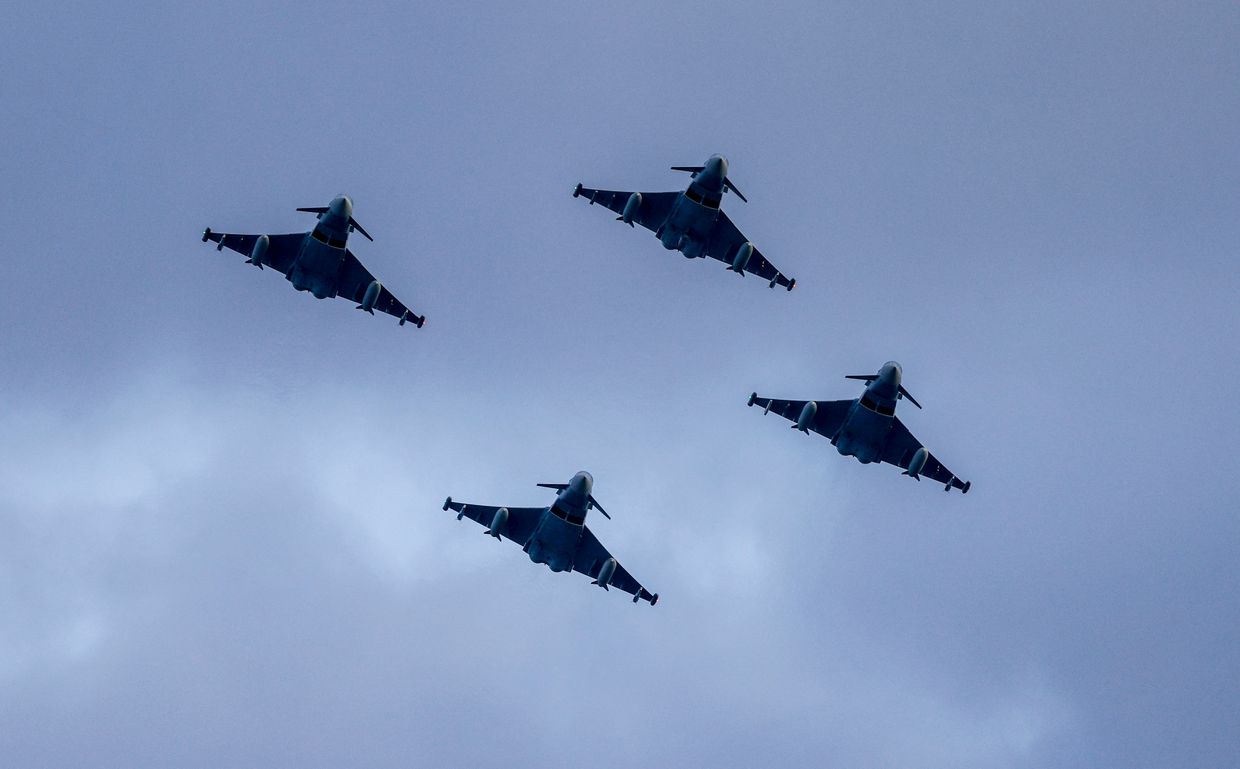
NATO alerted the German Armed Forces’ Quick Reaction Team (QRT), prompting the launch of two Eurofighter jets to intercept the aircraft.
The German jets made visual contact with the Russian plane approximately 100 kilometers off the German coast and took a photograph of it. Despite the interception, the Il-20M did not alter its course.
The Russian aircraft eventually veered north, just 40 kilometers from the Baltic Sea island of Usedom, avoiding a breach of German airspace.
According to Bild, this was the ninth such interception mission conducted by German forces in 2025.
As Russia continues its aggression against Ukraine and poses an increasing threat to NATO, German Chancellor Friedrich Merz said in an interview with Süddeutsche Zeitung published on June 27 that he would refrain from phone calls with Russian President Vladimir Putin given the intensified attacks on Ukraine.
Merz’s predecessor, Olaf Scholz, was the first EU leader from a country supporting Ukraine to resume direct contact with Putin since the start of the full-scale invasion, speaking with him by phone in November 2024.


Germany aims to prioritize defense spending in the next EU budget while firmly opposing any increase in national contributions, according to a position paper obtained by the Financial Times (FT).
As the bloc’s largest economy and top net contributor, Berlin wants EU funds to support joint arms procurement and help expand production capacity among European weapons manufacturers.
The paper reportedly reflects Germany’s broader shift toward higher domestic military spending in response to Russia’s ongoing threat and amid calls by U.S. President Donald Trump for Europe to shoulder more of its own defense.
Berlin argues the EU budget should also fund dual-use technologies, military transport corridors, and other security-related initiatives despite current treaty restrictions on defence spending from the common budget, according to FT.
To free up funds for these priorities, Germany proposes cutting administrative costs and simplifying the EU budget structure. The government supports reducing the number of programes, granting the European Commission more flexibility to shift funds, and focusing spending on strategic areas such as cross-border infrastructure, energy security, digitalisation, and innovation.
Germany also opposes any extension of the EU’s post-Covid joint borrowing programme, stressing that repayments for the 800 billion euro fund must begin in 2028 as scheduled. While Berlin is open to discussing new EU-level revenue sources such as a carbon border levy or minimum corporate tax, it continues to reject an increase in direct national contributions to the budget, which currently total about 1% of EU GDP.


Editor's note: This story has been updated to include Germany's announcement to supply Ukraine with $2.2 billion in additional military aid.
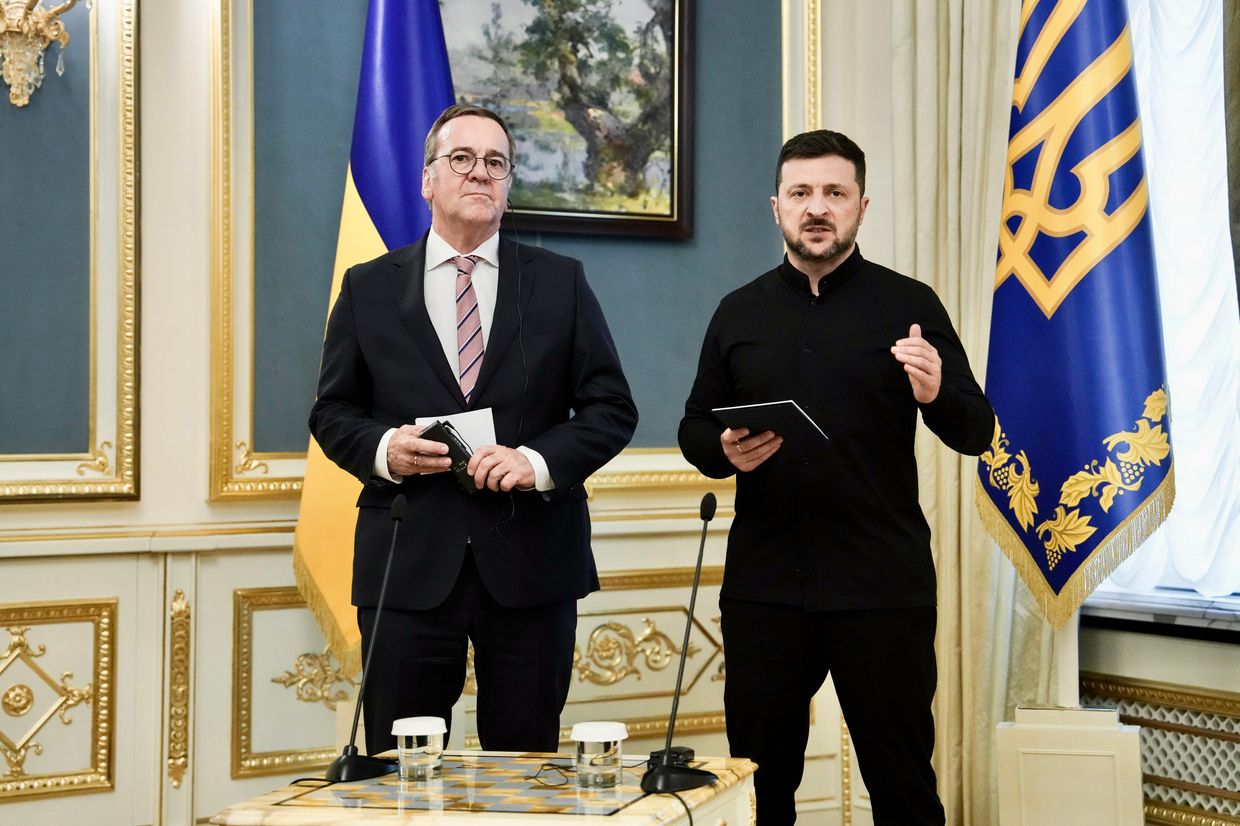
Germany will deliver new IRIS-T air defense systems to Ukraine under a three-year supply plan, President Volodymyr Zelensky said during a joint press conference with German Defense Minister Boris Pistorius, who added Berlin has no plans to provide Taurus long-range missiles.
The announcement comes amid escalating Russian aerial assaults, including a June 10 missile and drone strike on Kyiv, one of the largest since the start of the full-scale invasion.
"We are grateful for the supply of IRIS-T air defense systems," Zelensky said on June 12. "We understand that deliveries are currently being planned... for the next three years. This is very important assistance."
The IRIS-T is a German-made medium-range surface-to-air missile system capable of intercepting drones, aircraft, and cruise missiles.
Pistorius confirmed the delivery timeline but firmly ruled out the possibility of sending Taurus missiles — weapons Kyiv has repeatedly requested to strike deep into Russian territory.
"You asked me whether we are considering this, and my answer is no," Pistorius said.
Before taking office, German Chancellor Friedrich Merz signaled openness to lifting former Chancellor Olaf Scholz's ban on the missiles. That stance has not yet resulted in a policy shift.
Ukraine has already received long-range missiles — including ATACMS from the U.S. and Storm Shadow and SCALP from the U.K. and France. Initially restricted to use within Ukrainian territory, Western allies only began easing those limitations in late 2024.
Germany is Ukraine's largest military donor in Europe. Pistorius said that Berlin will provide 9 billion euros ($10.4 billion) in aid this year, with investments in defense production being considered. The total includes an additional commitment in military aid worth 1.9 billion euros ($2.2 billion).
"Today, we discussed that this aid will continue," he said. "We agreed on additional investments in production... both in Ukraine and in Germany."
Zelensky visited Berlin on May 28 for talks with Merz, part of an ongoing effort to bolster Ukraine's defense industry amid uncertainty over U.S. support under President Donald Trump.