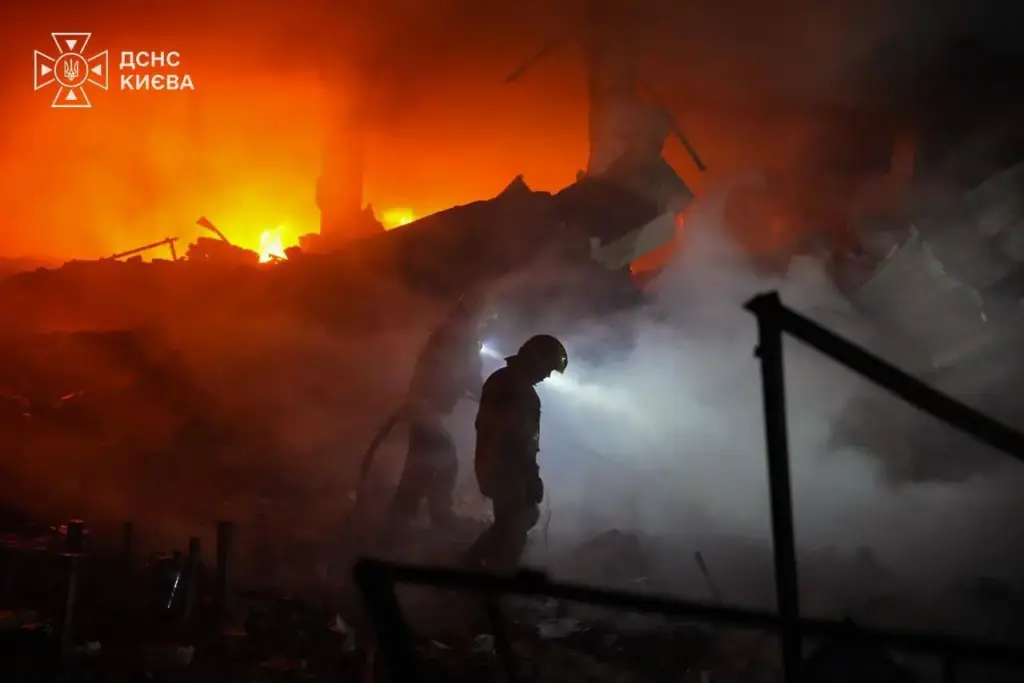
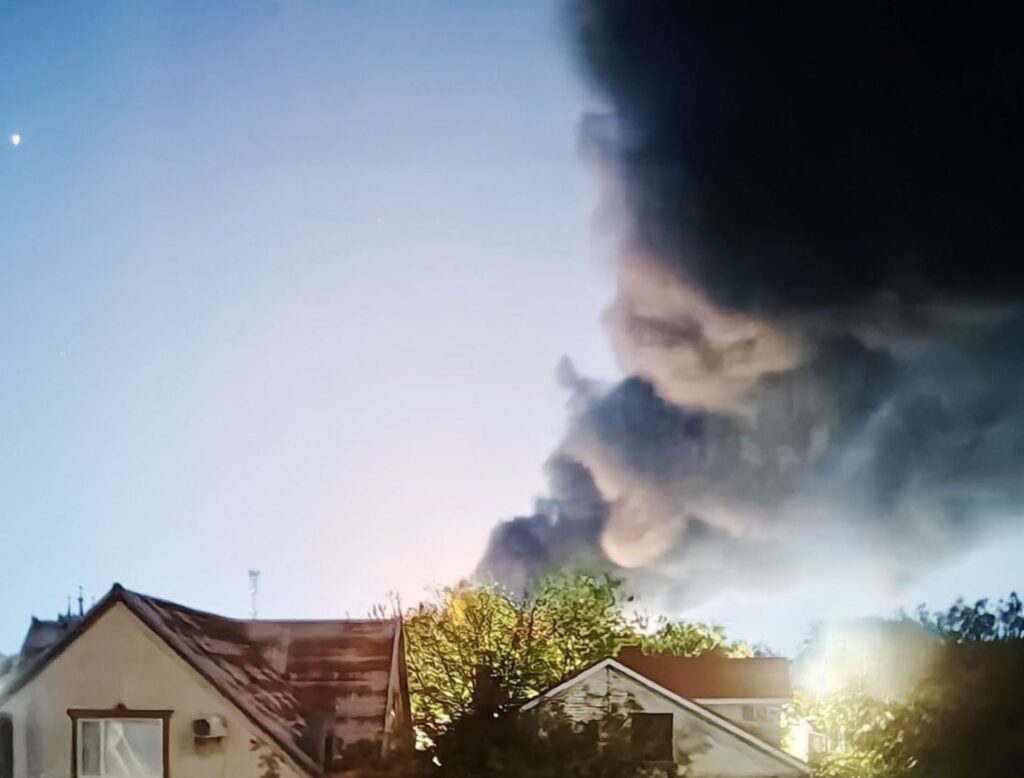
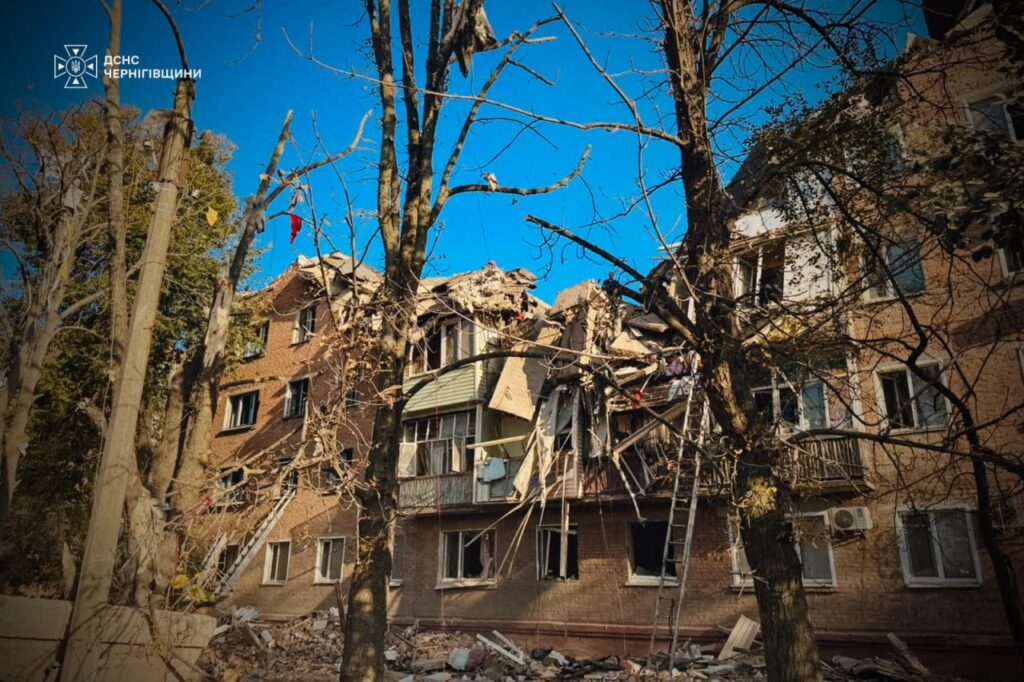
Ukrainian rescuers are still pulling bodies from a collapsed apartment block in Pryluky. A Russian missile strike on the five-story residential building in the city of Chernihiv Oblast that borders both Russia and Belarus killed 19 people, including five children, and injured 55, Ukraine's State Emergency Service reported on 7 October.
Russia hit Kyiv and a dozen other regions overnight. Air defense downed five ballistic missiles, 39 cruise missiles, and 117 drones, while missiles and
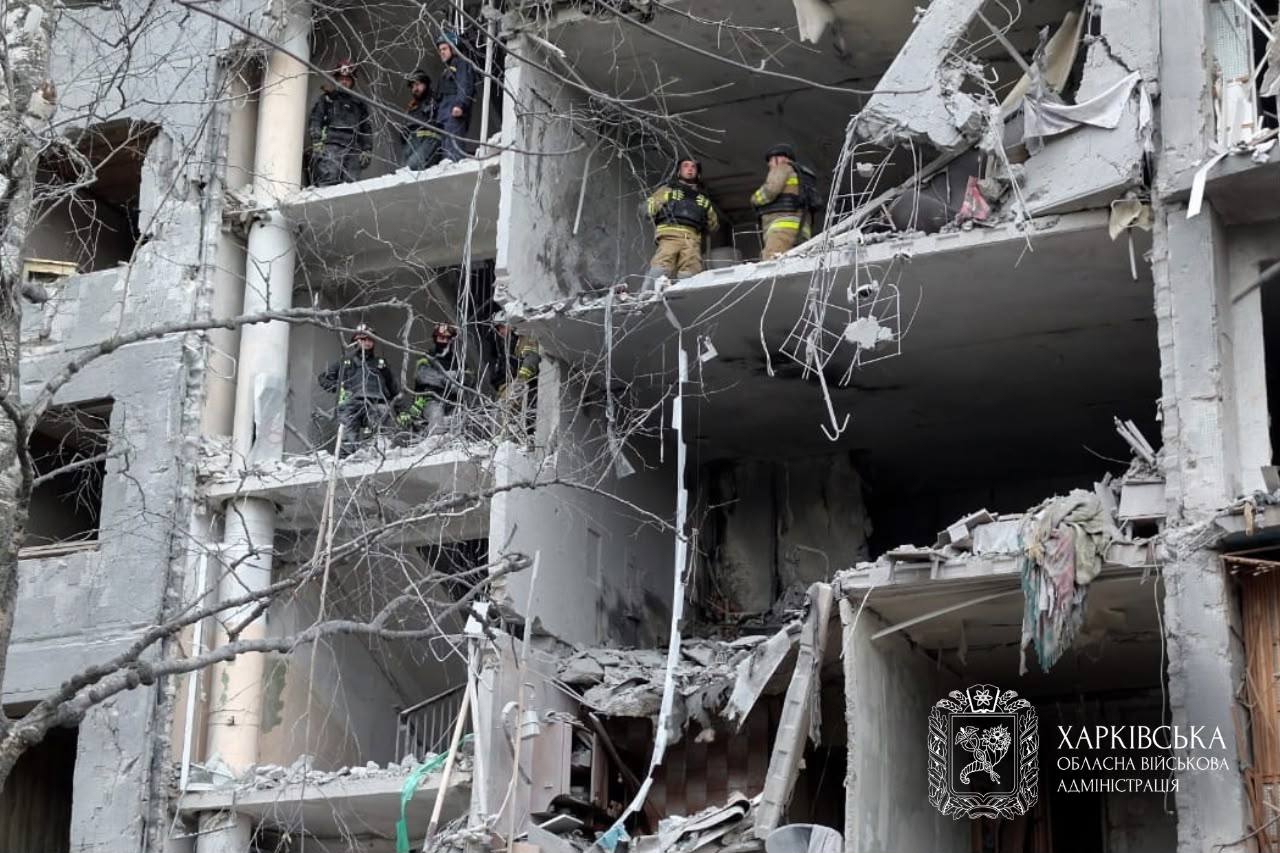
Ukrainian rescuers are still pulling bodies from a collapsed apartment block in Pryluky. A Russian missile strike on the five-story residential building in the city of Chernihiv Oblast that borders both Russia and Belarus killed 19 people, including five children, and injured 55, Ukraine's State Emergency Service reported on 7 October.
Russia hit Kyiv and a dozen other regions overnight. Air defense downed five ballistic missiles, 39 cruise missiles, and 117 drones, while missiles and drones hit 18 locations, the Air Force said. The nationwide strike killed at least 24 people, including four children.
Among the dead in Pryluky were three one-year-old boys, Oleksandr, Kyrylo, and Serhii, and eight-year-old Maksym, President Volodymyr Zelenskyy says. Seven of the injured are children. Some residents are still unreachable, and all emergency services are working at the site. Russia keeps using missiles against Ukrainian cities and civilians by deliberate choice, he states.
"My condolences to all the families and loved ones," Zelenskyy says.
The strike comes on Putin's birthday
The attack came on Russian President Vladimir Putin's birthday on 7 October.
"Continuing to use missiles against Ukraine, against our people, our children, is an absolutely conscious choice of terror. This is what Moscow chooses despite all our efforts with partners to bring peace closer," Zelenskyy says.
He urges partners to increase pressure on Russia and bolster defense support for Ukraine, saying it is important that world leaders understand this and that the world not remain silent.
A pattern of strikes on Chernihiv Oblast
Pryluky, about 150 kilometers east of Kyiv, lies in a region Russia has hit repeatedly. The overnight barrage also damaged civilian and utility infrastructure across the Pryluky community, the city council said.
Ukraine had seen the attack. The day before, Zelenskyy warned that intelligence indicated a massive Russian strike was in preparation. Russia fired about 70 missiles overnight, killing two people each in the capital Kyiv and in the cities of Kremenchuk and Oleksandriia in addition to the Pryluky dead.
Russia attacked Kyiv and 12 oblasts overnight on 7 October with about 70 missiles, many of them ballistic, as well as Shahed drones, President Volodymyr Zelenskyy said. The strikes killed at least 20 people, with the deadliest hit on an apartment block in Pryluky in Chernihiv Oblast. Russia also hit Kremenchuk, Oleksandriia, Dnipro, and Zaporizhzhia, while Poland scrambled its jets.
Moscow has likely begun its winter strike campaign earlier than usual, aiming to make civilian life in Uk
Russia attacked Kyiv and 12 oblasts overnight on 7 October with about 70 missiles, many of them ballistic, as well as Shahed drones, President Volodymyr Zelenskyy said. The strikes killed at least 20 people, with the deadliest hit on an apartment block in Pryluky in Chernihiv Oblast. Russia also hit Kremenchuk, Oleksandriia, Dnipro, and Zaporizhzhia, while Poland scrambled its jets.
Moscow has likely begun its winter strike campaign earlier than usual, aiming to make civilian life in Ukraine unbearable, and UN figures already show civilian casualties running 55% above last year's.
Update: Pryluky death toll rises to 14, including four children
The death toll from the Russian strike on Pryluky has risen to 14, including four children, Ukraine's State Emergency Service said on the afternoon of 7 October. Fifty people were injured, seven of them children, and rescuers pulled 15 people from the rubble, including a child.
Russia attacked Pryluky with cruise missiles, and one scored a direct hit on the five-story apartment building, Chernihiv Oblast head Viacheslav Chaus said. Earlier in the day, he reported that 27 of the injured had been hospitalized, three in serious condition. The search-and-rescue operation was still under way.
Morning repoting: five dead in Pryluky
A Russian missile struck a five-story apartment building in Pryluky early in the morning, while residents were still asleep, Chernihiv Oblast head Viacheslav Chaus said. The strike completely destroyed one sectkion of the building, killing five people and injuring 26, including five children, Ukraine's National Police reported. Rescuers pulled three people from the rubble, including a child, and more people may still be trapped, Chaus said.
"Today, for Putin's birthday, the Russian army 'gave' him the destruction of an apartment building in Pryluky in Chernihiv Oblast. It was an ordinary five-story building," Zelenskyy said.
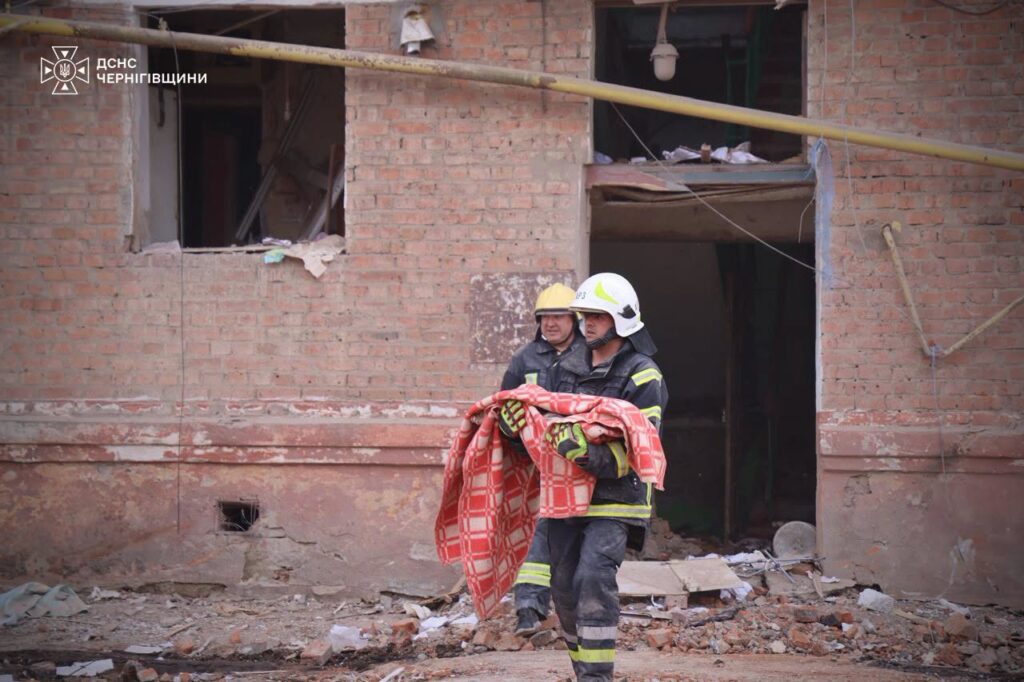
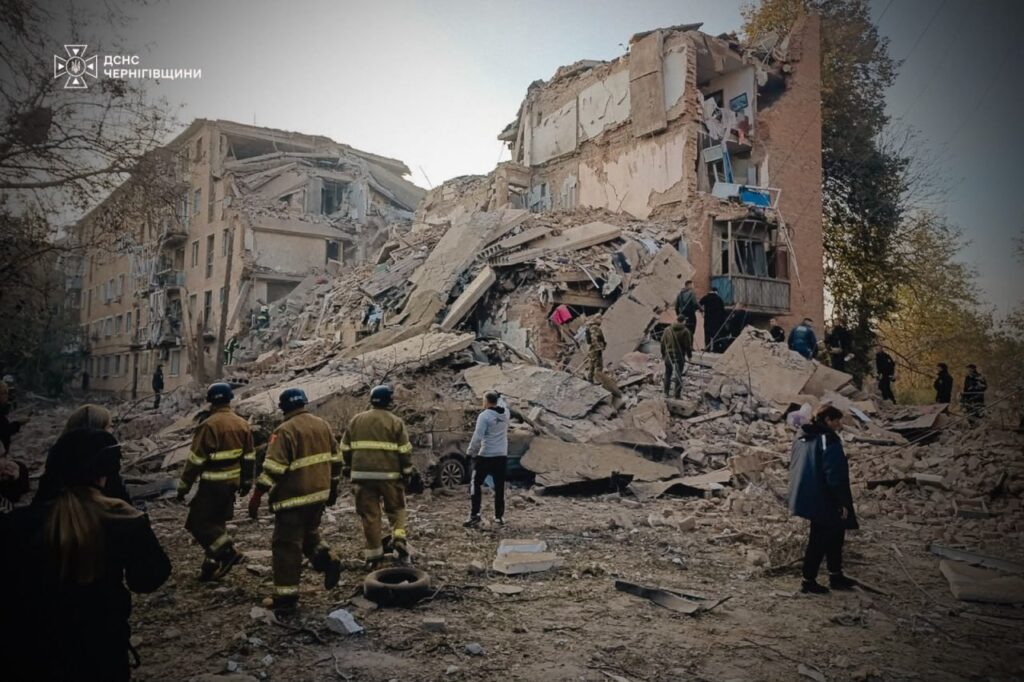
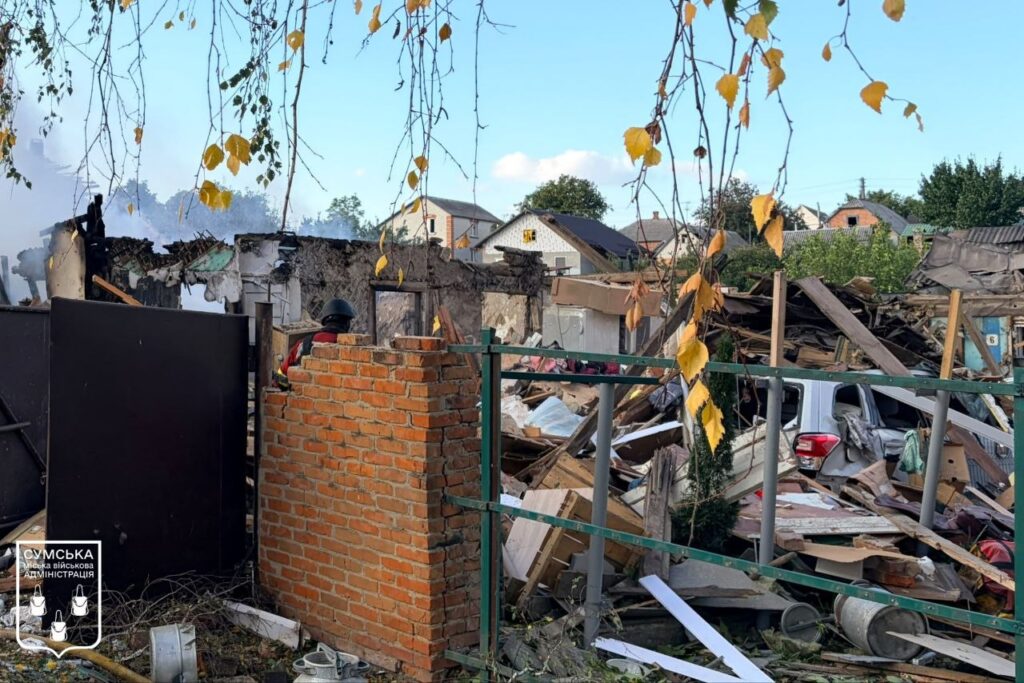
A five-story apartment building in Pryluky, Chernihiv Oblast, damaged by a Russian missile strike, 7 October 2026. Photo: State Emergency Service of Ukraine in Chernihiv Oblast
Kyiv, Kremenchuk, and Oleksandriia
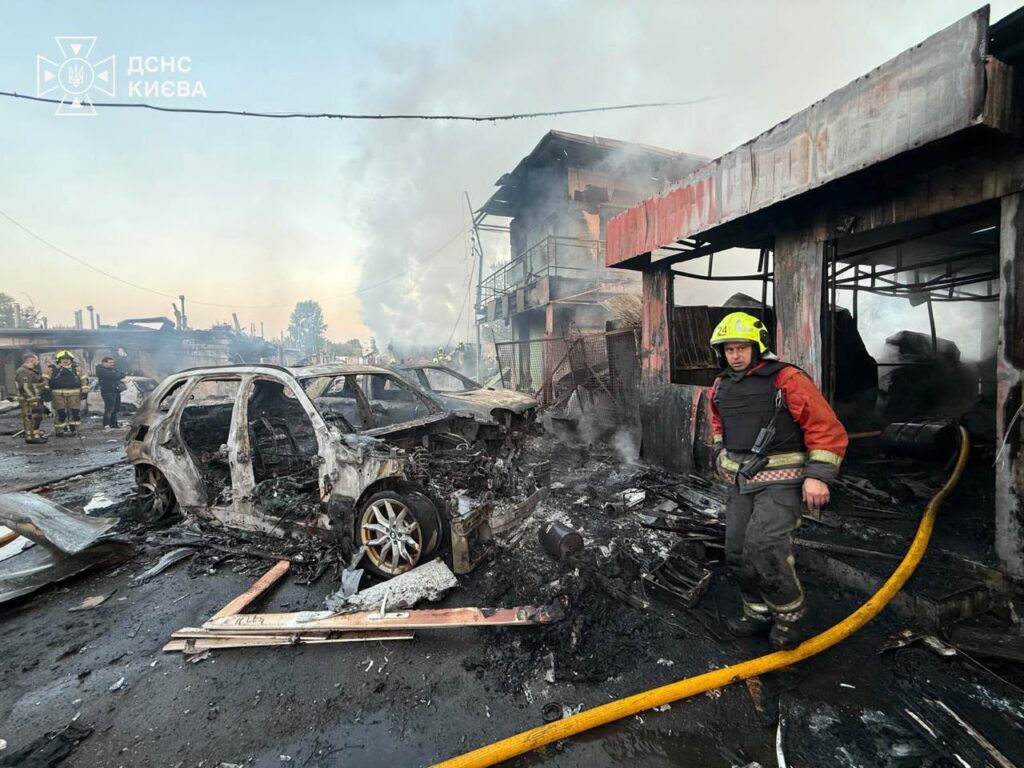
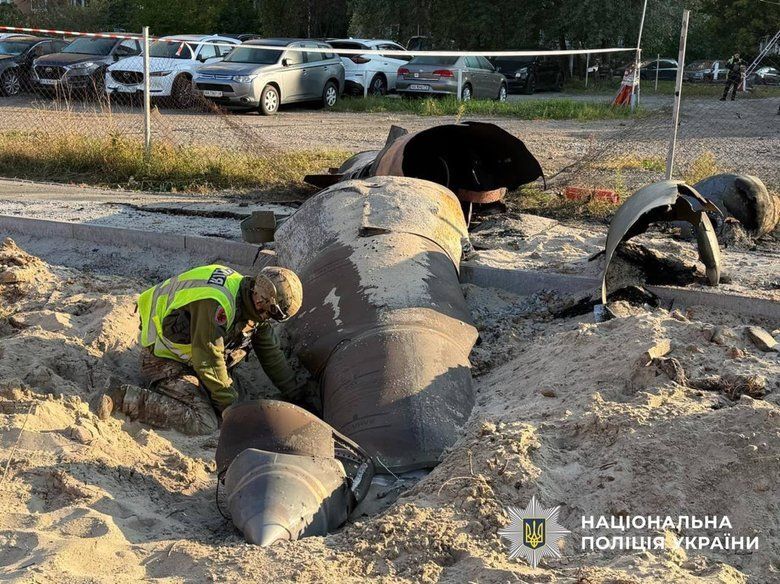
In Kyiv, Russian missiles hit non-residential buildings and warehouses in the Obolonskyi and Podilskyi districts, Mayor Vitali Klitschko said. Strikes also hit the Shevchenkivskyi district, and debris burned in the Darnytskyi district, he added. In the Darnytskyi district, a missile set fire to a garage cooperative, where firefighters rescued two people and found two men dead, Klitschko wrote. Police and rescuers worked to defuse an unexploded ballistic missile that fell among apartment blocks in the same district, the National Police said.
Damaged high-rises and wrecked cars in a residential area of Kremenchuk after a Russian missile strike, 7 October 2026. Photo: Vitalii Diakivnych/Telegram
In Kremenchuk, Russian missiles hit a densely populated residential area, killing two people and injuring seven, Poltava Oblast head Vitalii Diakivnych said. Zelenskyy later put the number of injured at eight and said four high-rises were damaged.
Explore further
A school with children, a café, warehouses: Russia’s drones hit civilian Kyiv again
In Oleksandriia in Kirovohrad Oblast, Russia hit an enterprise. One person was killed, three injured, and two were out of contact, Kirovohrad Oblast head Andrii Raikovych said. Zelenskyy later put the death toll there at two.
A firefighter among burned cars at the site of a fire after a Russian missile attack on Kyiv, 7 October 2026. Photo: State Emergency Service of Ukraine in Kyiv
Drones and other targets
In Dnipro, Russian strikes damaged an industrial enterprise, apartment buildings, and a sports club, Dnipropetrovsk Oblast head Oleksandr Hanzha said. In Nikopol district, the attacks injured a 65-year-old woman and a 64-year-old man. Russia also struck Lozova in Kharkiv Oblast with a missile, and a drone hit an apartment building in Zaporizhzhia, police said.
In Zaporizhzhia, Russia attacked a transport infrastructure facility, acting oblast head Mykhailo Semikin said, a day after a strike on one of the city's bridges over the Dnipro halted traffic. In Kyiv Oblast, three production and warehouse buildings were damaged in Obukhiv district, with no casualties, the Kyiv Oblast Military Administration said.
A bomb technician works beside an unexploded Russian ballistic missile among residential buildings in Kyiv's Darnytskyi district, 7 October 2026. Photo: National Police of Ukraine
Air defense downed five ballistic missiles, 39 cruise missiles, and 117 drones, while missiles and drones hit 18 locations, the Air Force said. Polish military aircraft took off and Poland put its ground-based air defense on alert during the attack, Poland's Operational Command said.
Russian ballistic missiles remain the biggest challenge, Zelenskyy said, adding that Ukraine is searching daily for Patriot missiles.
Strikes across the front over the past day
Russian attacks killed one person and injured 11 in Kherson Oblast over the past day, the Kherson Oblast Military Administration reported. Russia injured 12 people in Donetsk Oblast on 6 October, Donetsk Oblast head Vadym Filashkin said. Two people were injured in Kharkiv Oblast, Kharkiv Oblast head Oleh Syniehubov said.
Bridges and a maternity hospital in Russia's sights
Russia has stepped up strikes on Kyiv's bridges and has now extended them to Zaporizhzhia. In September, a Russian ballistic and hypersonic missile attack on Kyiv damaged a maternity hospital.
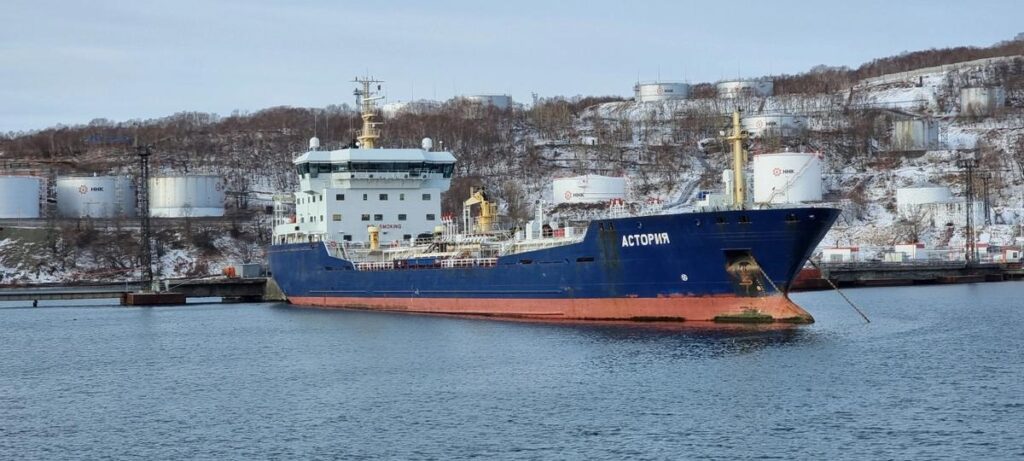
Seven tankers made 14 trips from South Korea to Russia's Far East in July and August, carrying more than 176,000 metric tons of fuel, most of it diesel, the Guardian found in a 6 October analysis of port records and ship-tracking data. The UK and EU have sanctioned three of the ships, and one loaded its fuel from another tanker at sea off South Korea instead of at a terminal.
Ukrainian strikes have cut Russia's fuel output as Moscow scrambles for supplies, while fuel loaded at South Kor
Seven tankers made 14 trips from South Korea to Russia's Far East in July and August, carrying more than 176,000 metric tons of fuel, most of it diesel, the Guardian found in a 6 October analysis of port records and ship-tracking data. The UK and EU have sanctioned three of the ships, and one loaded its fuel from another tanker at sea off South Korea instead of at a terminal.
Ukrainian strikes have cut Russia's fuel output as Moscow scrambles for supplies, while fuel loaded at South Korean ports has flowed to Russia. Loadings began to surge in July, the same month South Korean President Lee Jae-myung pledged $100 million for Ukraine's reconstruction, the Guardian reported. That creates a tension in Seoul's policy toward the war: South Korea has provided Ukraine with humanitarian and non-lethal aid but ruled out sending weapons directly, while the fuel trade appears legal under South Korean law even though three of the tankers are under UK and EU sanctions.
Russia imported 368,000 metric tons of oil products by sea in August, 112,000 of them from South Korea, according to Kpler data analyzed by the Centre for Research on Energy and Clean Air (CREA) and cited by the Guardian. CREA's own August report gives 172,000 metric tons in total, including 18,000 from South Korea. Neither explains the gap.
Where the tankers said they were going
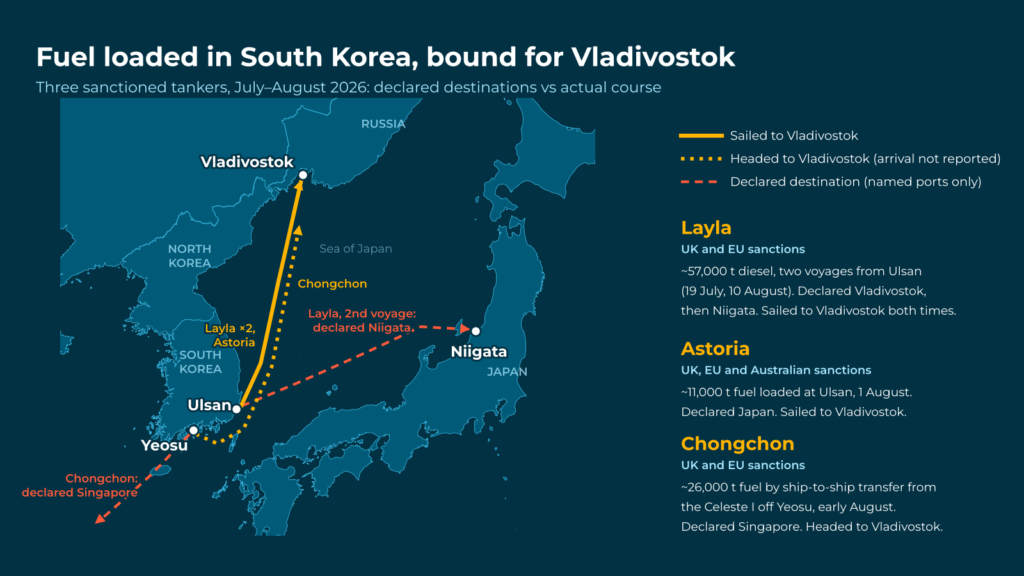
The Layla, a tanker under UK and EU sanctions, made two voyages from Ulsan to Vladivostok, carrying a total of 57,000 metric tons of diesel. It left South Korea on 19 July and 10 August. On the first trip, it told South Korean authorities it was bound for Vladivostok; on the second, it declared Niigata, Japan, but sailed to Vladivostok again.
The Astoria, a Russian-flagged tanker under UK, EU, and Australian sanctions, loaded nearly 11,000 metric tons of fuel at Ulsan on 1 August. It declared Japan as its destination but sailed to Vladivostok.
The Chongchon did not berth at a South Korean port. Instead, it took about 26,000 metric tons of fuel from the unsanctioned Celeste I at an anchorage off Yeosu in early August. It declared Singapore as its destination but headed to Vladivostok. The owners and managers of the four tankers did not respond to the Guardian's requests for comment.
Source: Guardian analysis of port records and ship-tracking data; sanctions listings: OpenSanctions. Map: Euromaidan Press
Why Russia needs the fuel
Ukrainian drone strikes have severely disrupted Russia's refining capacity, the Guardian reported. In July, Ukraine's General Staff said the strikes had knocked out 42% of Russia's refining capacity, costing the industry billions of dollars.
Russian refinery throughput fell in June to its lowest level in more than 20 years, and diesel output is down nearly 30% from a year earlier, the International Energy Agency said, according to the Guardian.
Russia has also restricted fuel exports to protect domestic supplies, extending its diesel export ban until the end of October; on 2 October, Deputy Prime Minister Alexander Novak said Moscow could consider partially lifting the ban if there was overproduction, according to the Moscow Times.
Responses to the shipments
Seoul's non-lethal aid has included helmets, body armor, and demining vehicles, and in 2023 it pledged $2.3 billion in support, mostly in loans.
Isaac Levi, an analyst at CREA, told the Guardian:
"It is shocking that EU-sanctioned tankers loaded fuel at South Korean ports and carried it to Russia. This undermines the sanctions regime and South Korea's support for Ukraine."
South Korea's Foreign Ministry did not address the shipments or the sanctioned tankers. In a statement, it said the government supports international efforts to help end the war in Ukraine and bring about a peaceful recovery. The ministry said it was strictly enforcing its export controls and had expanded them to cover 1,402 non-strategic items with high potential for diversion to military use. The UK Foreign Office did not answer the Guardian's questions about UK-sanctioned tankers using South Korean ports, saying only that it remains committed to monitoring its sanctions.
Ties between Kyiv and Seoul are also strained over Ukraine's disclosure of its transfer of two North Korean prisoners of war to South Korea, which Seoul said should have remained private.
Ukraine's battlefield successes appear to be forcing Russian President Vladimir Putin to reevaluate his theory of victory and shift focus toward long-range strikes to compel Ukraine to surrender, rather than advances on the battlefield, the Institute for the Study of War said on 4 October.
Ukrainian President Volodymyr Zelenskyy said Russia used more than 800 jet-powered drones during the week of 27 September to 4 October. Ukraine currently intercepts only 50–60% of jet-powered drones,
Ukraine's battlefield successes appear to be forcing Russian President Vladimir Putin to reevaluate his theory of victory and shift focus toward long-range strikes to compel Ukraine to surrender, rather than advances on the battlefield, the Institute for the Study of War said on 4 October.
Ukrainian President Volodymyr Zelenskyy said Russia used more than 800 jet-powered drones during the week of 27 September to 4 October. Ukraine currently intercepts only 50–60% of jet-powered drones, leaving it vulnerable to the large number of new drones Russia is deploying.
The late-September start and the campaign's aim
ISW said Russian forces began their winter 2026–27 strike campaign against Ukraine's energy infrastructure in late September and that the campaign is aimed at making civilian life unbearable enough to force Ukraine to capitulate.
Russian forces would step up attacks on military facilities, defense industry sites, and related infrastructure in Kyiv and elsewhere in Ukraine, the Russian Defense Ministry said on 4 October, according to Reuters. The announcement followed Zelenskyy's vow to increase attacks on Russian oil refineries.
The ministry also claimed its recent strikes on Kyiv and other Ukrainian regions were a response to alleged Ukrainian attacks on civilian targets inside Russia. Among the grievances it named were Ukraine's strikes on Leningrad Oblast during the St. Petersburg International Economic Forum in June and alleged strikes on electoral infrastructure in Moscow during the 18–20 September State Duma elections, according to ISW.
ISW called the Russian Defense Ministry's framing of the recent strikes as retaliation for Ukrainian attacks on Russian civilian targets unfounded, saying many of its specific claims are "blatantly false." Russia has provided no evidence that Ukraine targeted electoral infrastructure, and Ukraine's 19–20 September strikes on Moscow targeted oil refineries and warehouses, the think tank said. The Russian strikes "are not an actual response to specific events," it concluded.
The 135 drones, the bridges struck seven times
Overnight on 3–4 October, Russia launched 135 Shahed-type and Gerbera-type drones, while also using decoy drones and Banderol or Dan-T loitering munitions. Ukrainian forces downed 123 drones and two loitering munitions, and strikes hit five locations, according to ISW, which cited the Ukrainian Air Force. Russian forces struck Kyiv's Northern and Southern bridges seven times between 1 and 4 October in an effort to disrupt Ukraine's economy and daily civilian life, ISW said.
Ukraine builds new layers of defense against jet drones
More than 12 .50-caliber machine-gun turrets are already working in Kyiv against jet-powered drones, and eight more will be installed in Kyiv Oblast, Zelenskyy said, Suspilne reported. He added that F-16s help a lot against the drones, according to Ukrinform. Ukraine is set to receive 2,000 Bars interceptor drones through joint production with Germany, RBC-Ukraine reported.
Ballistic missiles may be Russia's next wave
Zelenskyy said Ukraine estimates Russia has up to 700 ballistic missiles in reserve and produces 130–140 a month. He made the remarks at a joint media briefing with German Chancellor Friedrich Merz in Kyiv, Ukrinform reported. Russia is likely stockpiling ballistic and quasi-ballistic missiles for intense strikes after its jet-powered drones lose their current advantage, ISW assessed. ISW also cited an ongoing shortage of Patriot interceptors.
OHCHR has verified some 15,280 civilian casualties in Ukraine in the first eight months of 2026, 55% more than in the same period of 2025, UN High Commissioner for Human Rights Volker Türk said on 2 October.
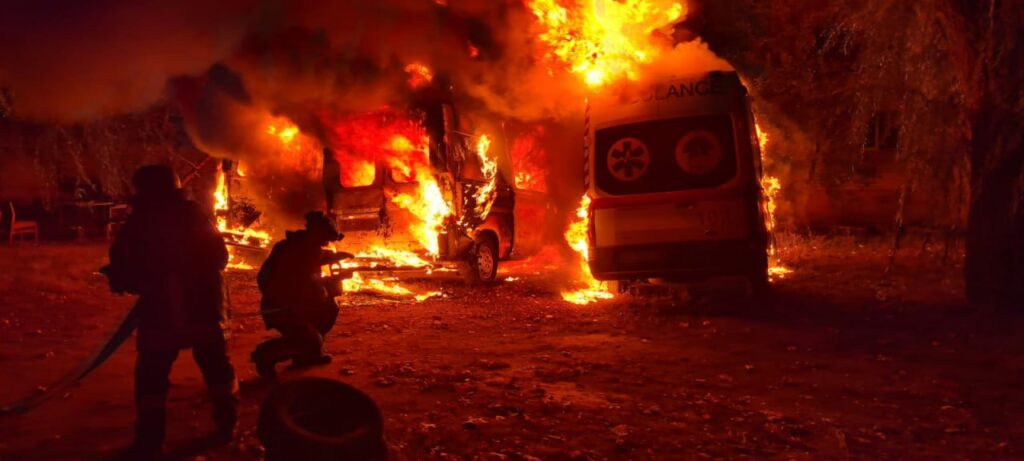
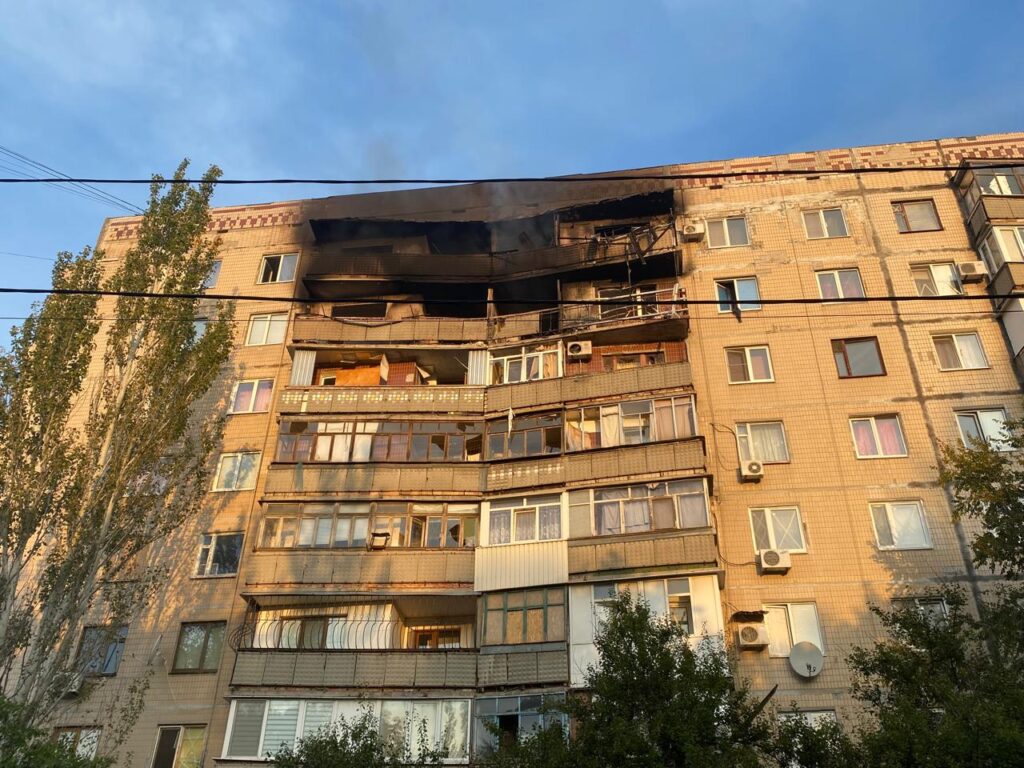
Russian FPV drones hit three ambulances and, separately, a residential high-rise in Kramatorsk late on 5 October, the Donetsk Oblast Prosecutor's Office said. The strike on the high-rise killed a woman and injured another, and three medical workers were wounded trying to save their vehicles. Prosecutors have opened war-crimes investigations.
Russian drones attack Ukrainian civilians every day, and Ukraine's UN envoy has cited "human safari" and repeat strikes on medics as grounds to str
Russian FPV drones hit three ambulances and, separately, a residential high-rise in Kramatorsk late on 5 October, the Donetsk Oblast Prosecutor's Office said. The strike on the high-rise killed a woman and injured another, and three medical workers were wounded trying to save their vehicles. Prosecutors have opened war-crimes investigations.
Russian drones attack Ukrainian civilians every day, and Ukraine's UN envoy has cited "human safari" and repeat strikes on medics as grounds to strip Moscow of its Security Council seat. Kherson, Nikopol, and Kramatorsk are all cities where drone operators pick civilian targets in real time.
Drones aimed at ambulances
Between 22:00 and 22:25, the Russian army deliberately directed two FPV drones at ambulances parked on a Kramatorsk street, prosecutors said. Three workers of the ambulance service were injured while trying to save the vehicles after the first hit. They suffered blast injuries, shrapnel wounds to the body and limbs, burns, and concussions, and received medical care. Three ambulances were damaged.
FPV drones are flown by an operator watching a live camera feed until the moment of impact. Prosecutors called the strike targeted.
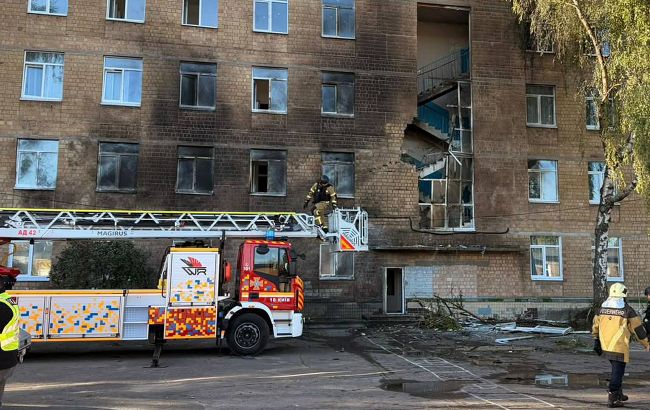
A residential high-rise in Kramatorsk damaged by a Russian drone strike that killed a woman on 5 October 2026. Photo: Donetsk Oblast Prosecutor's Office
A woman killed at home
At 22:10, a Russian drone hit a residential high-rise in the city. A 49-year-old woman was killed. Another resident, a 68-year-old woman, suffered a broken foot, shrapnel wounds to the body and limbs, and a concussion, according to prosecutors. The Kramatorsk district prosecutor's office has opened criminal proceedings over war crimes.
Explore further
Russian drone tears off 68-year-old man’s leg in Kherson’s daily “human safari”
Across Donetsk Oblast, Russian attacks killed three people on 5 October, in Sloviansk, Druzhkivka, and Sukhanivka, and injured 11, Donetsk Oblast head Vadym Filashkin said. His morning tally, posted before the prosecutors' report, did not include the Kramatorsk death.
A burned-out section of a residential high-rise in Kramatorsk after a Russian drone strike on 5 October 2026. Photo: Donetsk Oblast Prosecutor's Office
Kramatorsk under the drone hunt
Russian drone operators have hunted people in Kramatorsk for months. In June, a Russian pilot chose to kill a man he saw on a city street. Russia strikes the city daily, and in August it dropped eight FAB-250 bombs on Kramatorsk, killing one person and injuring 18.
The same drone hunting of civilians has run for years in Kherson, where Ukraine's Security Service has named 10 Russian servicemen it ties to the "human safari." A UN inquiry has traced the Kherson campaign up the chain of command. In April, ISW found Russians using such tactics across southern Ukraine, including in Nikopol.
Medics have been repeated targets. In March, a Russian FPV drone killed two medics in an ambulance in Kharkiv Oblast, and in February, Russian drones hit an ambulance and a shop there, killing three. In Kyiv, a Russian missile attack damaged a maternity hospital in September.
Drones attacked Moscow and Moscow Oblast overnight on 6 October, and a fire broke out at the Volodarskaya pipeline station, the region's largest oil depot, monitoring Telegram channels reported. The station supplies jet fuel to Moscow's main airports. Local authorities did not mention the fire, while claiming to have downed hundreds of drones.
Ukraine's long-range drones have spent years working through Russia's oil industry, and Kyiv says its strikes have now disabled more than half of
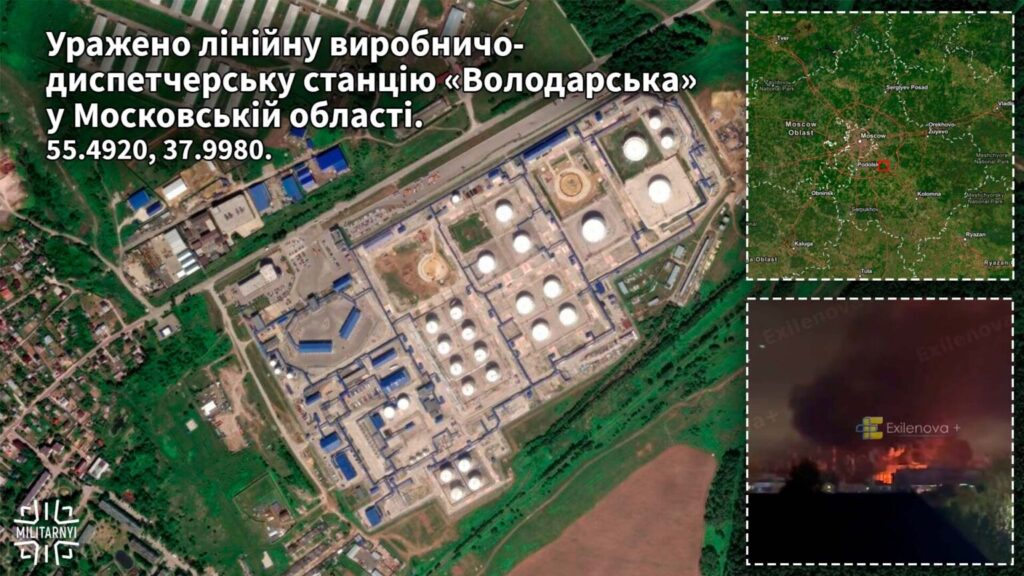
Drones attacked Moscow and Moscow Oblast overnight on 6 October, and a fire broke out at the Volodarskaya pipeline station, the region's largest oil depot, monitoring Telegram channels reported. The station supplies jet fuel to Moscow's main airports. Local authorities did not mention the fire, while claiming to have downed hundreds of drones.
Ukraine's long-range drones have spent years working through Russia's oil industry, and Kyiv says its strikes have now disabled more than half of Russia's refining capacity. The storage and pipeline hubs that move the remaining fuel are what keep the army, the capital, and the export flows supplied.
Fire at the Moscow region's largest fuel depot
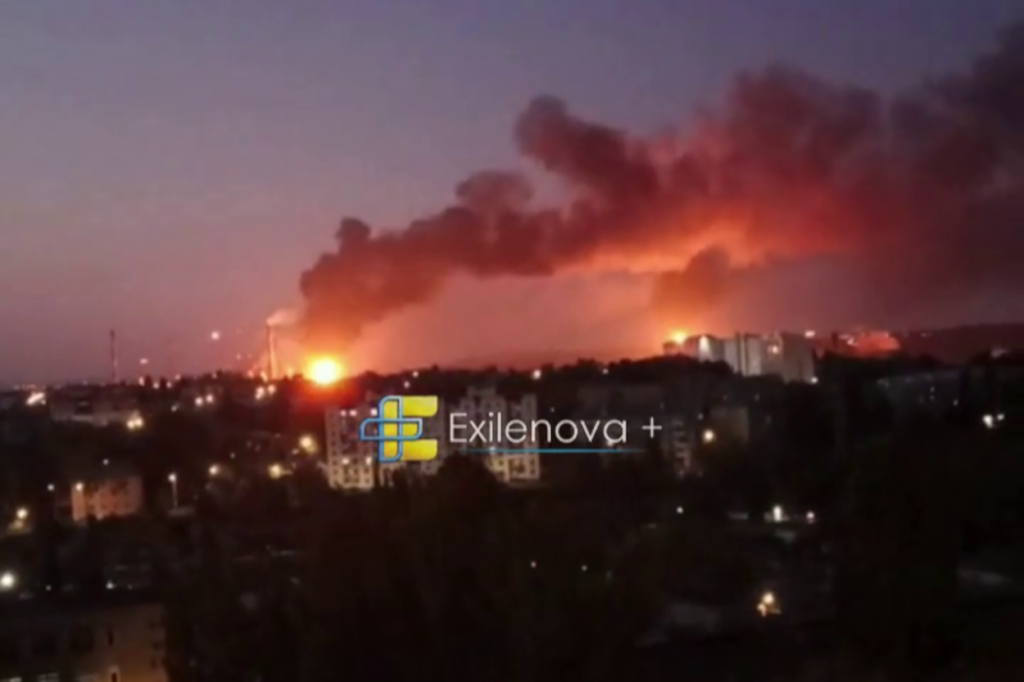
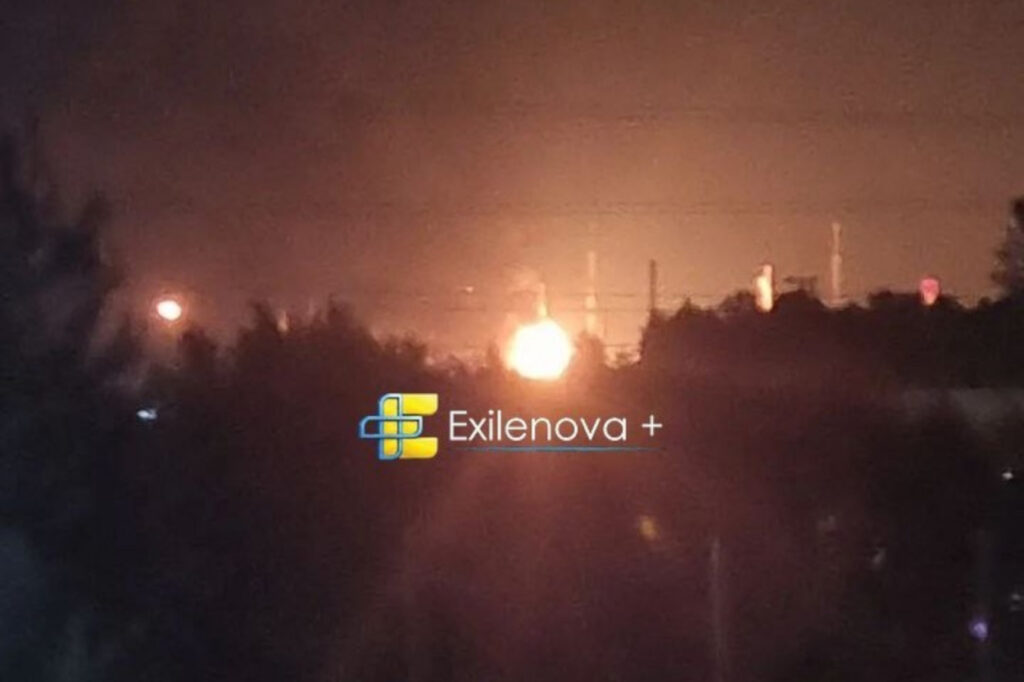
Ukrainian monitoring channel Exilenova+ wrote that the Volodarskaya station was burning after the attack, and Ukrainian monitoring channel Supernova+ reported the strike on the depot. Exilenova+ then posted the site's coordinates near the village of Konstantinovo. Supernova+ said a storage tank was on fire, and Exilenova+, citing locals, later wrote that two tanks were burning.
Russian news Telegram channel Astra geolocated a Supernova+ video to Konstantinovo in Ramensky district. The station had not been reported attacked before, Astra said.
The Volodarskaya pipeline station in Moscow Oblast, attacked by drones on 6 October 2026, with its location marked on a map. Graphic: Militarnyi, ESRI map, photo: Exilenova+
The station lies 40 km from central Moscow, Militarnyi reported. Drone alerts in the area began at 23:43 on 5 October. From 03:24, reports came in of Ukrainian Peklo drones flying through Oryol Oblast toward Moscow Oblast, the outlet said. Ukraine's military has not commented on the strike.
Konstantinovo: the Volodarskaya oil products pumping and dispatch station continues to burn. According to local residents, two storage tanks are on fire.
The station, a branch of Transneft–Upper Volga, is directly linked to the Moscow aviation hub’s largest airports. pic.twitter.com/KooKJnV1X6
Early in the night, Exilenova+ claimed a strike on the Moscow refinery in Kapotnya. It later said the footage circulating from there was most likely archival.
Jet fuel for Vnukovo, Domodedovo, and Sheremetyevo
The station has 27 tanks with a combined capacity of about 250,000 m³, according to Militarnyi. It connects to the ring pipeline for petroleum products around Moscow, which carries aviation fuel to Vnukovo, Domodedovo, and Sheremetyevo airports. Russia's state pipeline operator Transneft has said the station can move up to 3 million tonnes of jet fuel, 2.8 million tonnes of diesel, and 1.6 million tonnes of gasoline a year.
Astra gave a lower figure: about 3 million tonnes of petroleum products a year in total, arriving from the Moscow and Ryazan refineries. Supernova+ described Volodarskaya as a branch of Transneft–Upper Volga, as did Militarnyi, while Astra named Transnefteprodukt.
Explore further
Russia has warned its cities about every strike for years. During the heaviest raid yet, on election day, it left the sirens silent
Russia claims hundreds of drones downed
Moscow Mayor Sergei Sobyanin claimed that 650 drones flew toward the Moscow region from the evening of 5 October to the morning of 6 October. Most were downed far from the city, and 105 near Moscow, he claimed, without mentioning any damage. Adding up his later posts, Astra counted at least 718 drones aimed at Moscow. Moscow Oblast Governor Andrei Vorobyov claimed that 185 drones were downed over 16 municipalities. He later called it one of the largest drone attacks and put the toll at two killed and nine injured, with 47 detached houses damaged in seven municipalities.
Explore further
Fifth drone-related NORSI shutdown in under five months leaves all major Lukoil refineries offline
Not the first Transneft site or Moscow fuel target
Ukraine has targeted Russia's pipeline network before. On 2 October, drones set Transneft's Samara station on fire. During Russia's Duma elections on 20 September, a strike reached Moscow's fuel supply. The Moscow refinery fully stopped processing oil after that attack. Days later, Kyiv offered to halt refinery strikes if Russia stopped hitting Ukraine's power grid. Russia has not taken the deal.
The UN Human Rights Office verified some 15,280 civilian casualties in Ukraine during the first eight months of 2026, 55% more than in the same period last year, UN High Commissioner for Human Rights Volker Türk said on 2 October.
Türk's statement comes as Russia has begun its Winter 2026-2027 campaign of long-range strikes against Ukrainian energy infrastructure. The Institute for the Study of War (ISW) said Russian forces began the campaign in late September. Damage to energy infrastr
The UN Human Rights Office verified some 15,280 civilian casualties in Ukraine during the first eight months of 2026, 55% more than in the same period last year, UN High Commissioner for Human Rights Volker Türk said on 2 October.
Türk's statement comes as Russia has begun its Winter 2026-2027 campaign of long-range strikes against Ukrainian energy infrastructure. The Institute for the Study of War (ISW) said Russian forces began the campaign in late September. Damage to energy infrastructure disrupt electricity, heating, and water supplies during the winter, increasing the risks to civilians.
Russian glide bombs killed and injured nearly 2,500 civilians in Donetsk, Kharkiv, Sumy, and Zaporizhzhia oblasts during the first eight months of the year, 62% more than in the same period last year, according to UN figures.
"As winter approaches, Ukrainians fear the worst is yet to come," Türk said.
On 4 October, Russia's Defense Ministry announced that it was intensifying strikes on infrastructure in Kyiv City and Oblast and across Ukraine, according to ISW.
Why Russia is turning to long-range strikes
ISW said Ukraine's 2026 battlefield successes "appear to be forcing" Russian President Vladimir Putin to shift focus from advances on the battlefield toward a winter campaign intended to compel Ukraine to surrender.
A week earlier, ISW assessed that Putin was likely attempting to force Ukraine to capitulate before spring 2027, with his theory of victory heavily relying on cheap, jet-powered Geran-type drones.
A toll rising all year
The 15,280 figure extends a trend the UN has tracked all year. Over the first seven months of 2026, its monitoring mission verified 1,839 civilians killed and 10,638 injured. In September, UN Under-Secretary-General Rosemary DiCarlo told the Security Council that more civilians were killed or injured in the first eight months of 2026 than in all of 2025.
Ukraine's Security and Defense Forces have "put out of action" more than 51% of Russia's oil refining capacity through recent long-range strikes, Defense Minister Yevhenii Khmara said in a statement published by the Defense Ministry on 4 October. These "carefully thought-out" actions were aimed at "bleeding the Russian war machine" and "destroying its military-economic potential," Khmara said.
Ukraine treats Russia's refineries as a priority target because their revenue helps fund the w
Ukraine's Security and Defense Forces have "put out of action" more than 51% of Russia's oil refining capacity through recent long-range strikes, Defense Minister Yevhenii Khmara said in a statement published by the Defense Ministry on 4 October. These "carefully thought-out" actions were aimed at "bleeding the Russian war machine" and "destroying its military-economic potential," Khmara said.
Ukraine treats Russia's refineries as a priority target because their revenue helps fund the war. Even Russian President Vladimir Putin claimed on 1 October that the strikes had cost Russia 1% of its GDP and had "partially" achieved their goal, Interfax reported.
The ministry did not publish how it calculated the figure.
"The consequences of Ukrainian operations are not always visible immediately. But the effect accumulates and produces a tangible result," the ministry said.
Ukrainian deep strikes continue to bring the war to Russian territory
The ministry named eight recently struck facilities, among others. One of them is the Moscow Oil Refinery, which Ukraine targeted in a massive drone attack on the night of 20 September, Ukrainian President Volodymyr Zelenskyy said. The refinery, operated by Gazprom Neft in Moscow's Kapotnya district, supplies about 40% of Moscow's fuel market and 70% of the Moscow region's demand for gasoline and aviation fuel, according to Russian news Telegram channel Astra.
Another was KINEF, which Ukraine has attacked repeatedly. It is Russia's second-largest oil refinery by capacity, and the Ukrainian military struck it on the night of 30 August, setting off a fire at the facility.
Fire reported at Russia's Kirishi/KINEF oil refinery following an overnight Ukrainian drone attack, 29–30 August 2026. Photo: Exilenova+
The ministry also named the Yaroslavl, Perm, Ilsky, Saratov, and Syzran refineries and the Ust-Luga port complex.
Ukraine triples production and procurement of long-range drones—and this is not the end
This year, Ukraine has tripled the production and procurement of long-range attack drones, the ministry said.
"This is not the limit. We will continue to scale up deep-strike capabilities," the statement said.
International cooperation is part of that push. Berlin will fund the production of additional DeepStrike-class long-range drones in Ukraine, German Defense Minister Boris Pistorius said after a meeting of the Ukraine Defense Contact Group on 15 April. The sides also agreed to jointly develop and produce a medium- and long-range drone system.
Ukraine and Germany also signed an agreement on the joint production of Bars drones, Ukrainian Foreign Minister Andrii Sybiha said on 8 July. The Bars' modular design allows it to be used for deep strikes, among other missions.
Bars jet-powered drone. Photo: Museum of the Russian-Ukrainian War
Oil refinery output has fallen
Russian refineries cut crude oil processing by 14% in the first nine months of the year compared with the same period last year amid Ukrainian drone attacks, according to calculations by two industry sources.
Experts' estimates of the decline differ widely. In August, Serhii Vakulenko of the Carnegie Russia Eurasia Center put it at 25–28%, while Russian economic commentator Vyacheslav Shiryaev put it at 65–70%, according to Defense-Aerospace.
Fuel production data give a more concrete picture: in July, Russia's gasoline and diesel output was about a quarter to a third lower than in March 2026, the outlet reported.
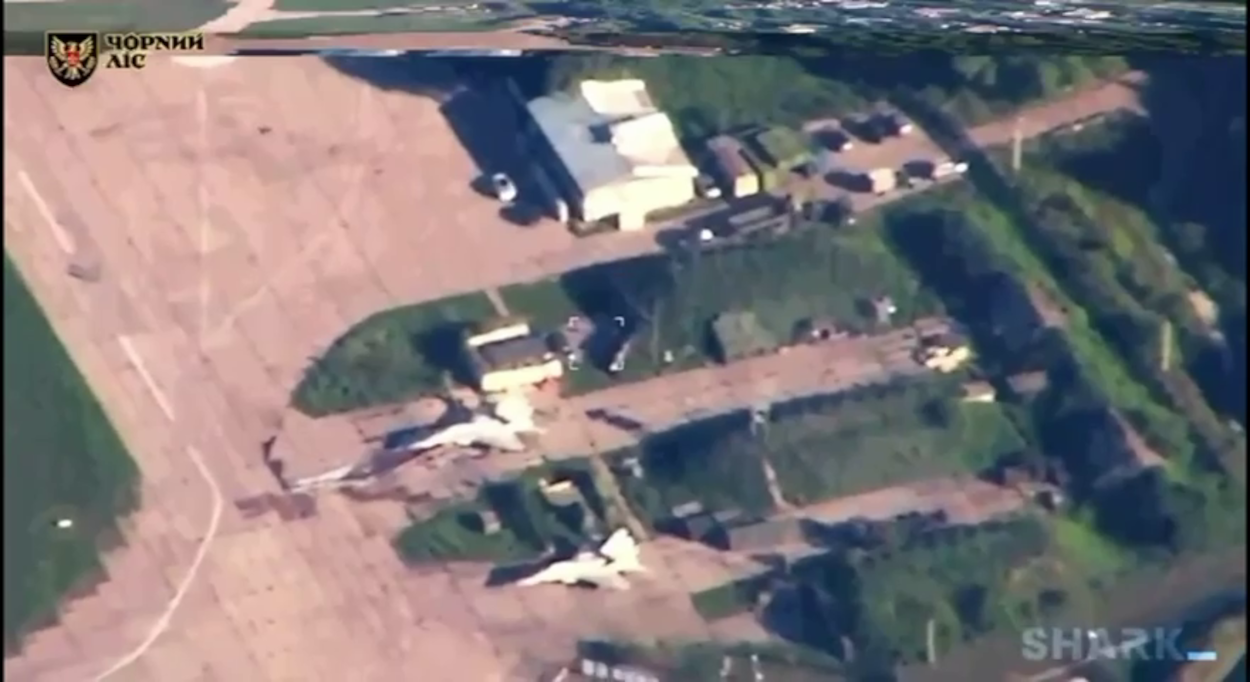
Drones attacked Russia's Khanskaya military airfield in the Republic of Adygea overnight on 4 October, Ukrainian outlet Militarnyi reported. Local reports, footage, and satellite fire data point to a blaze near the base, which trains Russian military pilots and also serves combat aviation. Neither side has reported the extent of the damage.
Ukraine is pressing its long-range campaign against the bases, refineries, and depots that keep Russia's war going, and Kyiv is vowing to hit harder
Drones attacked Russia's Khanskaya military airfield in the Republic of Adygea overnight on 4 October, Ukrainian outlet Militarnyi reported. Local reports, footage, and satellite fire data point to a blaze near the base, which trains Russian military pilots and also serves combat aviation. Neither side has reported the extent of the damage.
Ukraine is pressing its long-range campaign against the bases, refineries, and depots that keep Russia's war going, and Kyiv is vowing to hit harder as Russia escalates its strikes on Ukrainian cities. Airfields are part of that target list: in August, Ukraine struck one in Krasnodar Krai in the same overnight wave that hit Russia's second-largest refinery.
Hours of drone alerts, then a fire
Locals reported an attack and a fire at the airfield, Ukrainian monitoring channel Exilenova+ wrote, sharing footage of the blaze. Drone warnings for the area began at 01:42 and lasted until 05:34, Militarnyi said. Over that time, Russian monitoring channels reported drones and active air defenses in the region and around the airfield.
NASA's FIRMS fire-detection data from geostationary orbit also showed a fire in the airfield's area, Militarnyi noted. It also published a video of a Ukrainian drone flying toward the base.
Explore further
Russian MiG-29 jet and the Pantsir air defense meant to protect it both hit in Ukrainian strike on Kursk airfield
A pilot school that also serves combat aviation
The airfield lies 6 km northwest of Maykop and 3 km east of the village of Khanskaya, about 500 km from Ukrainian-controlled territory, according to Militarnyi. Before the war, it was used mainly for training flights and hosted L-39 trainer jets.
A fire near Russia's Khanskaya military airfield in the Republic of Adygea, with the NASA FIRMS fire-detection area marked, 4 October 2026. Graphic: Militarnyi, photo: Exilenova+
The 761st Training Aviation Regiment was based there until it was disbanded in 2009, when the 272nd Training Aviation Base was formed in its place. The base, military unit 55661, belongs to the Krasnodar Higher Military Aviation School of Pilots. Ukraine's General Staff said in October 2024 that Su-34, Su-27, and Su-35 jets, which Russia uses in its war against Ukraine, were based at the airfield, Militarnyi wrote. In March 2026, the General Staff said Russian forces actively use it for operational-tactical aviation.
Ukraine has struck the base before
Ukrainian drones attacked the airfield as early as October 2024. On 25 December 2025, Ukraine's General Staff said its forces had hit the Maykop airfield and started a fire. That was the same night Ukraine hit the port of Temryuk. Drones attacked the base again on 29 December, when Russian authorities claimed to have repelled the attack. Ukraine struck the airfield once more in March 2026.
Ukraine will intensify strikes on Russian oil refineries in response to Moscow’s expanded campaign against Ukrainian infrastructure, Ukrainian President Volodymyr Zelenskyy said in an interview with Reuters on 3 October.
Russia has increased attacks on Kyiv in recent weeks, hitting energy and telecommunications infrastructure, roads, railways, and bridges across the Dnipro. Zelenskyy said Ukraine would respond by targeting the Russian energy infrastructure that helps finance the war.
Russia expands attacks on Kyiv
Russian forces have broadened their strikes on infrastructure in and around Kyiv in recent weeks, with attacks increasingly affecting systems that support civilian life.
Zelenskyy said Ukrainian intelligence obtained documents indicating that Russian authorities had approved a broader policy for targeting infrastructure, including logistics, roads, schools, and hospitals. He said the goal is to put pressure on residents to leave Kyiv and other major cities.
Russia has also begun targeting bridges across the Dnipro, which connect the eastern and western parts of the capital.
Ukraine targets Russia’s war economy
Ukraine plans to keep striking Russian oil refineries because they generate revenue that supports Moscow’s war effort, Zelenskyy said.
The policy puts Kyiv at odds with US President Donald Trump, who has urged Ukraine not to attack Russian oil facilities, arguing that such strikes contribute to higher global diesel prices.
Zelenskyy said he sees no indication that Moscow is prepared for either peace talks or an agreement to halt attacks on energy infrastructure.
Ukraine’s “long-range sanctions” hit targets supporting Russia’s war machine in Samara and Bryansk oblasts, including positions of Iskander missile crews, President Volodymyr Zelenskyy said. He also reported new “results” in the Black Sea.
Ukraine is also preparing for intensified Russian attacks on its energy system over the winter. Ukrainian officials say Russia has stockpiled hundreds of ballistic missiles for a new campaign against electricity and other critical infrastructure.
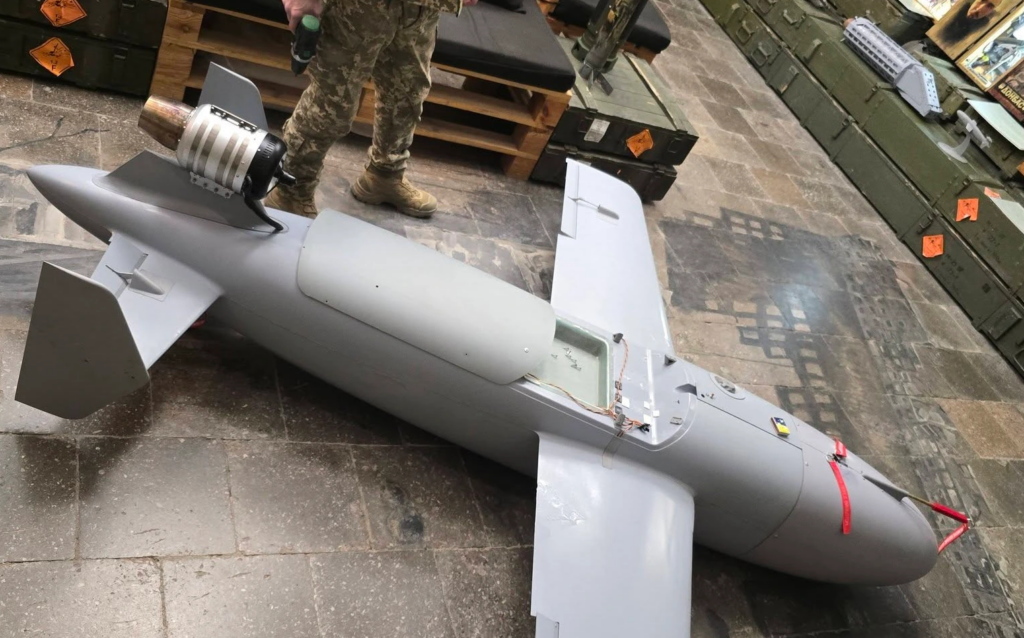
Russia has also expanded its use of fast jet-powered Geran drones, launching dozens each day since the summer.
Ukrainian F-16s and MiG aircraft are intercepting around 60% of these drones, according to Zelenskyy, but ammunition for their 20 mm cannons is running low. Ukraine is increasing the use of electronic warfare and expects a first shipment of small, inexpensive air defense missiles designed to counter the jet-powered drones later in October.
Ukraine is developing five interceptor drone models to counter Russian Shaheds. Two have already undergone testing, with Zelenskyy putting their current interception rate at around 30%.
Ukraine expands its strike capabilities
Ukraine is also expanding its long-range strike capabilities. It has used its domestically produced FP-7 ballistic missile in combat for the first time, with a range of about 250 kilometers, while work continues on the longer-range FP-9.
At the same time, Kyiv is working with European partners to secure additional funding for its defense needs. Ukraine has found financing to order drones for early 2027 and is working to close a $27 billion gap in this year’s defense budget through its own resources, bilateral assistance, and financing linked to the EU’s €90 billion loan package.
Zelenskyy said Ukraine’s ability to sustain its defense and expand its strike capabilities will remain central as Russia prepares for another winter campaign.
Drones attacked Russia's Volgograd and Samara oblasts overnight on 2 October, sparking fires near an oil refinery, a chemical plant, and likely a major oil-transport hub, Ukrainian and Russian monitoring channels reported. Regional officials acknowledged the attack but not the fires, and the extent of any damage remains unconfirmed.
Explosions and a glow over Volgograd's refinery district
Explosions sounded for a long time in Volgograd itself and around the refinery's industrial zone
Drones attacked Russia's Volgograd and Samara oblasts overnight on 2 October, sparking fires near an oil refinery, a chemical plant, and likely a major oil-transport hub, Ukrainian and Russian monitoring channels reported. Regional officials acknowledged the attack but not the fires, and the extent of any damage remains unconfirmed.
Explosions and a glow over Volgograd's refinery district
Explosions sounded for a long time in Volgograd itself and around the refinery's industrial zone, Ukrainian Telegram channel Exilenova+ wrote.
Residents reported drones flying over and blasts "in all districts of the city," and complained that no air raid alert sounded, Russian news Telegram channel Astra reported. Its OSINT analysis of eyewitness footage placed the glow near the Lukoil refinery and the neighboring Kaustik chemical plant, though the available videos do not show which facility caught fire.
Volgograd Oblast Governor Andrei Bocharov claimed a "massive drone attack" on the region's industrial infrastructure. He mentioned a fire in an apartment building and one person hospitalized, but no fires at plants.
Lukoil-Volgogradneftepererabotka is one of Russia's largest refineries. It processes 14.8–15.7 million tons of crude a year, about 5% of Russia's refining, and makes gasoline, diesel, jet fuel, fuel oil, and bitumen, according to Astra.
Explore further
Fifth drone-related NORSI shutdown in under five months leaves all major Lukoil refineries offline
Drones have hit the plant repeatedly. In May 2025, strikes damaged its ELOU-AVT-1 and ELOU-AVT-6 primary processing units. A 29 May 2026 strike halted production at the plant, about 500 km east of the war zone, Ukraine's General Staff said. On 31 July, drones set the refinery ablaze again, and Astra reported the AVT-1 and AVT-6 units stopped.
Kaustik sits in Volgograd's southern Krasnoarmeysky district. It is one of the region's leading plants and makes basic chemicals with dual civilian and military use, Astra wrote. The outlet called that output critical to Russia's military industry. The plant runs chlor-alkali production built on salt electrolysis. It makes hydrochloric acid, plastics, synthetic resins, and industrial gases, according to OSINT-Varta. Such products can serve military industry too, including polymer parts and protective coatings for hardware, Militarnyi noted.
Europe's largest tank farm likely on fire near Samara
Explosions also rocked Samara, with an especially strong one around 06:30, Astra reported. Its OSINT expert linked reader photos to a fire at the Samara linear production dispatch station in the settlement of Prosvet.
Ukrainian monitoring channel Supernova+ shared video of thick black smoke on the horizon and reported a fire at the station. Exilenova+ reported explosions in Samara followed by a fire.
The station belongs to Transneft, Russia's state pipeline operator. It covers more than 216 hectares and holds 71 tanks with a combined capacity of over 1.6 million m³ of crude. Astra called it Europe's largest tank farm.
Four trunk pipelines converge there, carrying oil from Western Siberia, Tatarstan, Orenburg Oblast, and Kazakhstan. The station blends high- and low-sulfur crude into Urals, Russia's flagship export grade, according to Militarnyi.
Samara authorities did not comment on the fire. Mayor Ivan Noskov stated only that ground public transport was suspended. Samara Oblast Governor Vyacheslav Fedorishchev did not report an attack at all.
The station has been hit before. Operators of the 14th Regiment of Ukraine's Unmanned Systems Forces struck it again overnight on 23 September 2025. On 21 April 2026, drones of the Security Service of Ukraine's Alfa special operations center hit it, reportedly damaging five crude tanks of about 20,000 m³ each.
Explore further
Ukraine shut down this Samara refinery in June—now its drones are back, and both distillation units are burning again
Ukraine's long-range drones have already pushed Russia's fuel shortages into Central Asia, and Washington has pressed Kyiv to stop, so every hit on processing or export logistics tests how long oil can fund Moscow's war.
Ukraine's steel industry, one of the pillars of its wartime economy, may produce almost no steel at all next month. Output fell 57.3% in August under Russian strikes and could approach zero in October, and the recovery of giants like Zaporizhstal and ArcelorMittal Kryvyi Rih depends less on Kyiv than on Brussels, says Stanislav Zinchenko, director of the GMK Center, the center for industrial, mining, and metals sector expertise, in an analysis for ThePage.
Steel is Ukraine's second-larg
Ukraine's steel industry, one of the pillars of its wartime economy, may produce almost no steel at all next month. Output fell 57.3% in August under Russian strikes and could approach zero in October, and the recovery of giants like Zaporizhstal and ArcelorMittal Kryvyi Rih depends less on Kyiv than on Brussels, says Stanislav Zinchenko, director of the GMK Center, the center for industrial, mining, and metals sector expertise, in an analysis for ThePage.
Steel is Ukraine's second-largest foreign-currency earner and a prop for the hryvnia, employing more than 70,000 people directly and another 250,000 in related industries, and paying close to $1 billion a year in taxes.
Russian missile strikes on the big plants, compounded by an energy crisis, closed ports, and EU competition, have cut production to a fraction and threaten to halt it, Zinchenko says.
He calls it the worst crisis the industry has faced since independence, "a perfect storm" that has struck all at once. The sector supplies 6% of Ukraine's GDP and 13% of its foreign-currency earnings.
Output could hit zero
The fall has been precipitous. In August, steel output dropped 57.3 percent year on year to 277,000 tonnes and pig iron 65.6%, Zinchenko says. Across eight months, the decline is 12.5%, and he warns that October could bring output to zero. Exports have cratered too: iron ore down 27% over eight months, long rolled steel down 45.8%, semi-finished products down 76% in a single month, and pig-iron exports halted entirely.
September may yield just 100,000 to 150,000 tonnes of steel, he says. Four producers bore the brunt: Zaporizhstal, Kametstal, ArcelorMittal Kryvyi Rih, and Interpipe.
Rebuilding breaks new ground
"No one in the world has learned how to rebuild metallurgical giants after missile strikes," Zinchenko says.
In reality, it means technical audits, clearing rubble, and ordering unique new equipment, at a cost the plants cannot meet after four and a half years of war spent at a loss or at zero margin, their reserves gone.
Three steps for Kyiv
Zinchenko sets out three moves the state could make at once to stabilize the industry:
Frontline rail. Give steelmakers priority access to locomotives from the state railway Ukrzaliznytsia within 150 kilometers of the front, so the product can still be moved out.
Energy parity. Scrap or soften the rule forcing industry to import 80% of its electricity, which leaves plants paying European prices they cannot match.
Market protection. Tax scrap-metal exports to keep raw material for decarbonization at home, and curb Turkish imports that undercut Ukrainian steel.
However, the recovery depends not on Kyiv, but on Brussels
Recovery is impossible without international funds and guarantees. No one will provide loans to enterprises on foreign capital markets during the war. No one will invest in recovery "into a void," the expert says.
He names four steps that would support the industry:
A recovery fund. A dedicated fund for the steel industry, modeled on those partners built for Ukraine's energy sector, to pool grants and cheap loans.
A safe sea corridor. Reopen the deepwater ports, as Ukraine managed in 2023 and 2024; without them, rail costs make exports unprofitable.
No EU quotas. Remove the European Union's restrictive quotas and tariffs on Ukrainian metal.
A CBAM exemption. Free Ukrainian steel, for the duration of the war and reconstruction, from the EU's carbon border levy, which Zinchenko says would otherwise finish off its competitiveness.
Meet those, he says, and bringing the plants back to baseline could take three to six months, with a full rebuild one to two years.
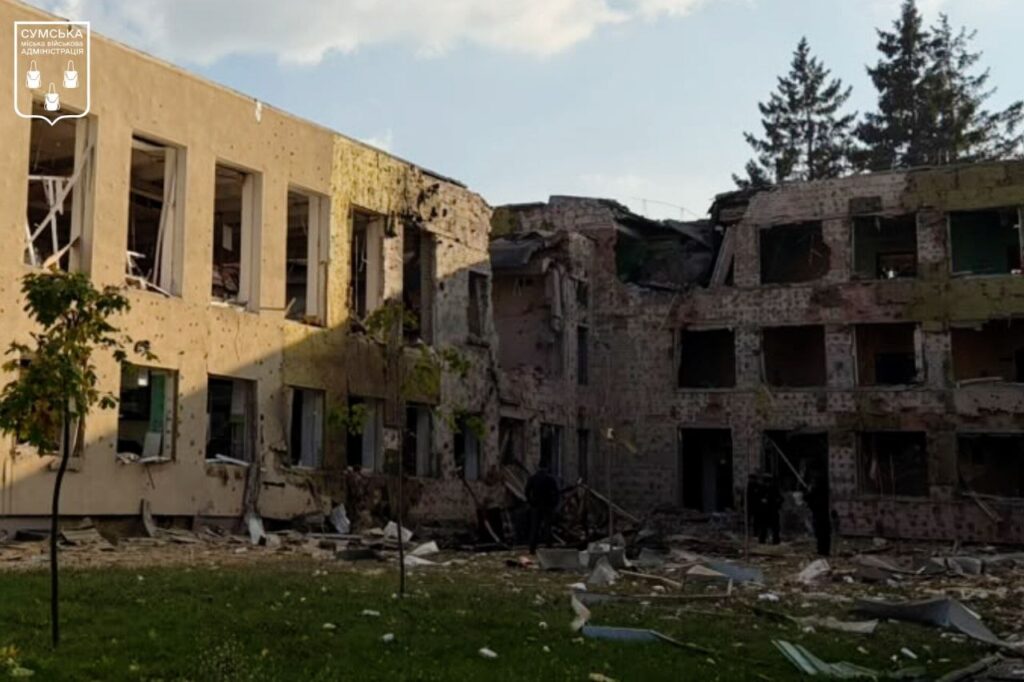
The Russian army deliberately struck a school in Sumy with a 250-kilogram aerial bomb while students—children in grades 1–4—were there, Serhii Kryvosheienko, head of the Sumy City Military Administration, reported on 29 September. The strike was one of a series of mass attacks on Ukrainian territory over the past 24 hours.
Across Ukraine, children now begin the school year in bomb shelters, because Russian missiles, drones, and glide bombs keep hitting schools, hospitals, and homes far
The Russian army deliberately struck a school in Sumy with a 250-kilogram aerial bomb while students—children in grades 1–4—were there, Serhii Kryvosheienko, head of the Sumy City Military Administration, reported on 29 September. The strike was one of a series of mass attacks on Ukrainian territory over the past 24 hours.
Across Ukraine, children now begin the school year in bomb shelters, because Russian missiles, drones, and glide bombs keep hitting schools, hospitals, and homes far from the front. The first eight months of 2026 brought more civilian casualties than all of last year, the UN says, and places where children gather are part of that toll.
Kryvosheienko said the Russians aimed the bomb at the school on purpose.
"With no pity or compassion whatsoever, they strike at children? There is nothing human in the enemy! He is not fighting on the battlefield—he is destroying a nation," Kryvosheienko said.
About 40 students were in the school's shelter at the time, a school employee told Suspilne correspondents. Preliminary reports indicate the children were not injured, Suspilne said.
Ukrainian President Volodymyr Zelenskyy confirmed the strike on the school.
"Four KABs struck the city center, right at the school building, where classes were underway. Thank you to the teachers and the school administration: the children and teachers were in the shelter, a total of 100 people were evacuated in time," he wrote.
Two people were killed in Sumy, and children are among those injured
Over the past 24 hours, Russian forces carried out more than 60 strikes on 25 population centers in 13 territorial communities of Sumy Oblast, the Sumy Regional Military Administration reported. Two people were killed and 15 others were injured, including two children, according to the administration's figures for each community. Over the course of the day, the oblast was under an air-raid alert for 22 hours and two minutes.
In particular, a 74-year-old man and a 70-year-old woman were killed in the Sumy community as a result of strikes by guided aerial bombs (KABs), the report said. Four people were injured and three people sustained trauma as a result of the Russian attack, including a one-year-old girl. A six-year-old girl was also injured, while a 49-year-old man sustained injuries in a UAV attack.
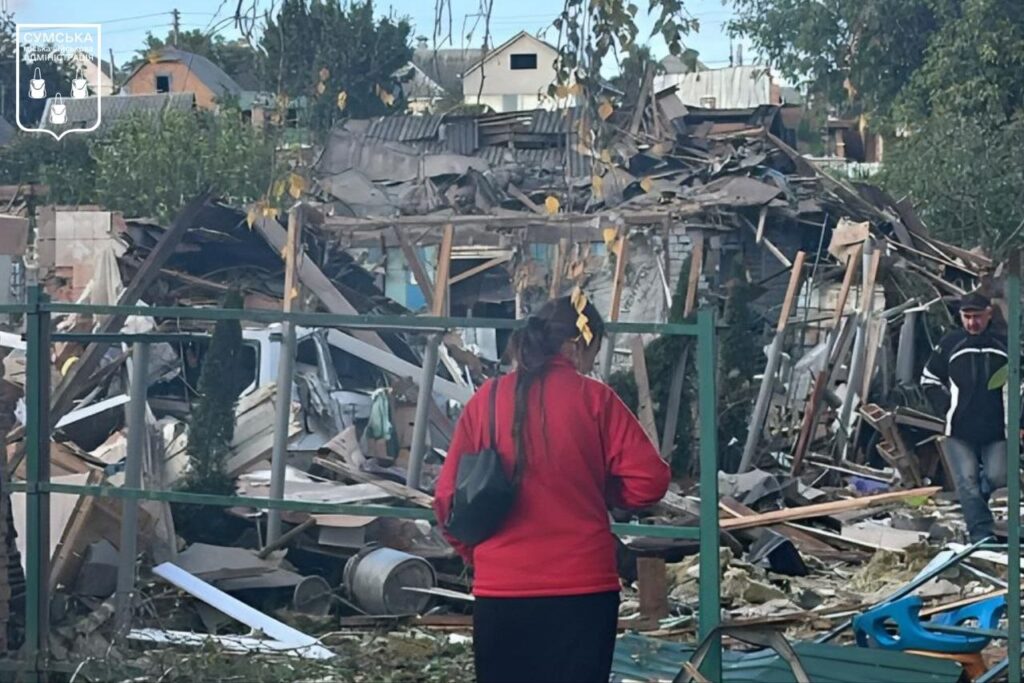
Aftermath of the Russian attack on Sumy Oblast, Ukraine, 29 September 2026. Photo: Sumy City Military Administration
Over the past 24 hours, the Russians attacked Mykolaiv Oblast with Shahed/Gerbera-type attack UAVs, killing a 56-year-old man, the Mykolaiv Regional State Administration reported. The attack destroyed one detached house, damaged two others and four outbuildings, and caused fires, according to the report.
An 8-year-old girl and an 85-year-old woman suffered acute stress reactions as a result of Russian shelling
Russian forces attacked Kharkiv and 10 population centers in Kharkiv Oblast, according to Oleh Syniehubov, head of the Kharkiv Regional Military Administration. Two people were hurt, both with acute stress reactions.
In Kharkiv, an 8-year-old girl suffered an acute stress reaction, as did an 85-year-old woman in the village of Ohurtsivka, Syniehubov reported.
The Russians used various types of weapons against Kharkiv Oblast: one guided aerial bomb (KAB), one multiple rocket launcher system (MLRS), five Molniya-type UAVs, seven FPV drones, and eight UAVs whose type is still being determined, according to the report.
In Kharkiv, Russian shelling damaged the windows of an apartment building, two cars, a private house, and the roof of a shopping center. A car was also damaged in the village of Myronivka, and three cars in the village of Mali Fesky.
A car damaged in the Russian attack on Kharkiv Oblast, Ukraine, 29 September 2026. Photo: Kharkiv Regional Military Administration
The Russians also injured six residents of Donetsk Oblast: three people in Bilbasivka, one person in Sloviansk, one person in Shabelkivka, and one person in Druzhkivka, Donetsk Regional State Administration head Vadym Filashkin reported on his social media.
Over the past day, 18 population centers in Kherson Oblast came under Russian airstrikes, drone attacks, and artillery shelling, leaving five people injured, says Oleksandr Prokudin, head of the Kherson Regional Military Administration. He adds that Russian forces targeted critical and social infrastructure as well as residential areas, damaging two detached houses in particular.
Russian forces carried out 686 strikes on Zaporizhzhia Oblast
Over the past 24 hours, the Russians carried out 686 strikes on 51 population centers in Zaporizhzhia Oblast, but no civilians were injured, co-chair of the Zaporizhzhia Regional Defense Council Ivan Fedorov reported, adding that:
Russian forces carried out 22 airstrikes on 18 population centers.
530 UAVs of various modifications, predominantly FPV drones, attacked 37 population centers.
Five MLRS strikes were recorded against Orikhiv, Novoandriivka, and Kosivtseve.
129 artillery strikes hit 19 population centers.
44 reports were received concerning damage to infrastructure, homes, and vehicles.
A house damaged in the Russian attack on Zaporizhzhia, Ukraine, 29 September 2026. Photo: Zaporizhzhia Regional Defense Council
Seven facilities in Zhytomyr Oblast were damaged during the evening and overnight hours leading into 30 September, says Vitalii Bunechko, head of the Zhytomyr Regional Military Administration. Food and processing industry enterprises as well as energy facilities came under Russian attack. Four cars also burned as a result of the attack, Bunechko added.
The Russian army attacked three districts of Dnipropetrovsk Oblast with UAVs, Dnipropetrovsk Regional Military Administration head Oleksandr Hanzha wrote on social media. The attacks damaged infrastructure, and a fire broke out in one of the communities, he said, adding that there were no casualties.
Air defense forces neutralized three Russian UAVs over Cherkasy Oblast, with no casualties, Ihor Taburets, head of the Cherkasy Regional Military Administration, reported. However, the fall of an enemy target caused a fire at an infrastructure facility, which was quickly extinguished, he added.
Russia is preparing to make daily life in Kyiv harder before winter, aiming at the ordinary places civilians use rather than at military sites, The Economist reported. Ukrainian officials say the push blends bombing, sabotage, and disinformation, and expect it to peak in November.
Every winter of its full-scale invasion, Russia has tried to freeze Ukrainians into surrender, and each year the strikes reach deeper into ordinary life. The civilian casualties recorded in 2026 have already p
Russia is preparing to make daily life in Kyiv harder before winter, aiming at the ordinary places civilians use rather than at military sites, The Economist reported. Ukrainian officials say the push blends bombing, sabotage, and disinformation, and expect it to peak in November.
Every winter of its full-scale invasion, Russia has tried to freeze Ukrainians into surrender, and each year the strikes reach deeper into ordinary life. The civilian casualties recorded in 2026 have already passed the whole of last year, the UN says.
From the power grid to the grocery store
Russia has already turned its drones on Kyiv's supermarkets, food warehouses, and data centers this year. On 28 September, a Russian jet drone struck the National Academy of Sciences in central Kyiv. The strike killed two people, the Academy said. Survivors climbed from the windows of the burning building. A senior Ukrainian official told The Economist the Kremlin now wants shoppers too afraid to enter a store. Russia is also keeping its winter routine, hitting electricity, water, and sewage systems.
Cheaper jet drones that stream live to their pilots
Most of the damage now comes from Russia's cheap jet drones, The Economist said. Pilots guide them onto targets and watch a live video feed. They are hard to stop, and Russia's ballistic missiles are deadlier still as Ukraine's supply of Patriot interceptors dwindles. Ukrainian President Volodymyr Zelenskyy said Kyiv had agreed a new Patriot interceptor package, but it remains short of interceptors of its own. A security official told The Economist that Russia has thousands of drones stockpiled and plans to use its entire ballistic missile stock within two months.
Explore further
War is costing Ukraine $155 billion per year. With Western aid running late, Kyiv is freezing everything but army, pensions, and public wages
Sabotage, chaos, and a city that won't switch off
Ukraine's counter-intelligence services say they foil seven or eight Russian plots a week, and officials believe some sleeper cells remain. The campaign's third element, disinformation, targets war fatigue and corruption scandals. Russia runs the same plan every year, hoping its bot farms will push Ukrainians onto the streets to demand surrender, said Andrii Kovalenko, who heads the Center for Countering Disinformation at the National Security and Defense Council.
"It's nonsense," he told The Economist, adding that someone is feeding the idea to Putin so they can steal more money.
Kyiv is also far harder to shut down than Moscow assumes, Kovalenko said. The city's internet is too decentralized for a handful of strikes to knock out, The Economist noted. Energy expert Olha Babii said the test is how fast crews restore power, not whether it can be destroyed. The capital is emptying, its population down from about 3.7 million to 3.3 million by The Economist's count.
A Russian drone struck near the Yahodyn border crossing on the Ukrainian-Polish border, the Ukrainian Border Service and the Polish Armed Forces Operational Command reported on 28 September. Geolocated footage of the attack shows the jet-powered Geran-5 striking near the facility. Following the incident, Poland is reviewing its air security measures.
Russia systematically strikes Ukraine’s border crossings to complicate logistics. Russian strikes near the Ukrainian-Polish border have i
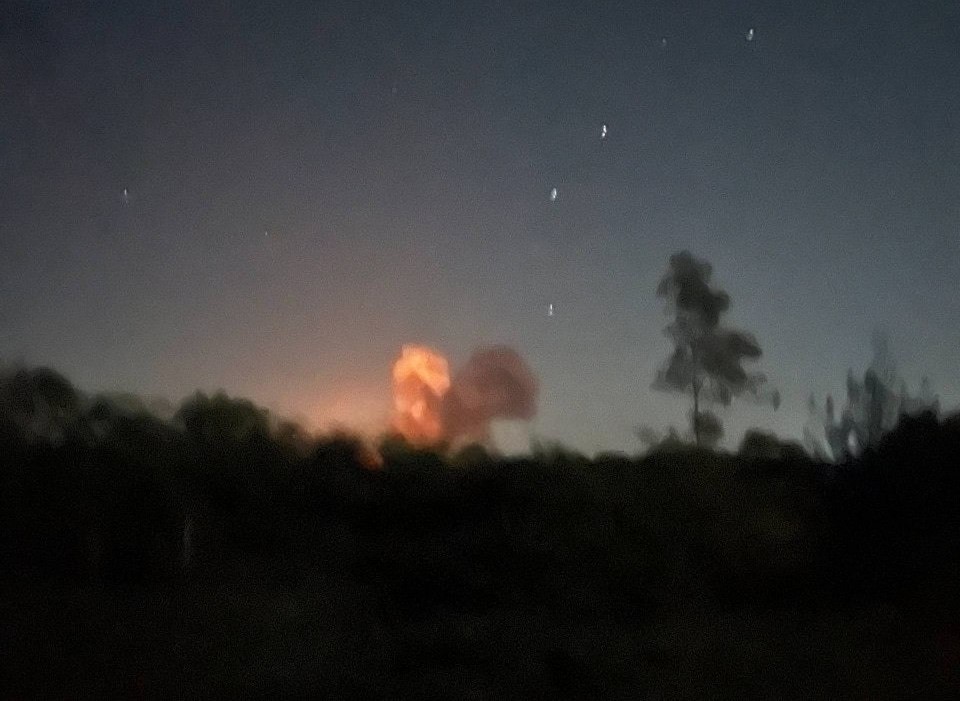
A Russian drone struck near the Yahodyn border crossing on the Ukrainian-Polish border, the Ukrainian Border Service and the Polish Armed Forces Operational Command reported on 28 September. Geolocated footage of the attack shows the jet-powered Geran-5 striking near the facility. Following the incident, Poland is reviewing its air security measures.
Russia systematically strikes Ukraine’s border crossings to complicate logistics. Russian strikes near the Ukrainian-Polish border have increased over the past month. Yahodyn is one of the largest border crossings with Poland, on a route leading, among other destinations, to Warsaw, and has repeatedly been used by senior foreign officials visiting Ukraine.
The blast wave damaged the checkpoint building at the terminal entrance, Ivan Romaniuk, head of the Volyn Regional Military Administration, reported on 28 September. It was a jet-powered drone, but there was “preliminarily no direct hit” on the border crossing, BBC Ukraine reported, citing its own sources in the State Border Guard Service of Ukraine.
Russian drone strikes near Yahodyn
On the afternoon of 28 September, Poland reported the involvement of Polish military aviation because of Russian drone attacks against Ukraine. That day, it was also reported that the airports in Rzeszów and Lublin suspended operations.
Jacek Horyszewski, a spokesperson for the Polish Armed Forces Operational Command, said on TVN24 that a Russian drone had struck near the Yahodyn border crossing in Volyn Oblast on the border with Poland.
Romaniuk confirmed the attack in the village of Starovoitove, Kovel district, Volyn Oblast, where the Yahodyn international border crossing is located.
“There have been no reports of injuries or fatalities,” he said.
Videos that appeared online show the drone falling in a forest near people and border infrastructure.
Момент удару «Герані-5» поблизу КПП «Ягодин», – місцеві канали.
BBC з посиланням на ДПСУ пише, що реактивний дрон вдарив неподалік кордону з Польщею: «Влучання у пункт пропуску «Ягодин» попередньо, не було». pic.twitter.com/VNq7QMy2Ly
The Russians carry out such attacks on Ukraine’s western regions using repeaters on Belarusian territory that amplify signals for Shahed- and Gerbera-type drones, BBC Ukraine reported, citing State Border Guard Service data.
Detonation of a Russian Geran-5 drone at the YAGODIN BORDER CORSSING, Ukraine. The explosion occurred ~1km from Polish territory.
Poland is already considering changes to its air security rules after the incident
The same day, Polish Deputy Defense Minister Cezary Tomczyk said Poland will change its engagement rules "in the coming days." Currently, helicopter and fighter jet pilots can use weapons only after visually identifying a target: the aircraft must approach the object and determine what it is. After the rules are changed, however, a pilot or operational commander will be able to make a decision to engage based solely on radar data.
Cezary Tomczyk. Photo: Paweł Skraba / Super Express
“It is notable that Polish authorities have taken this step as NATO states attempt to find an adequate response to Russian drones nearing or entering their airspace from Ukraine, often leaving NATO air defense insufficient time to identify and target such threats before they have entered allied airspace,” the Institute for the Study of War noted in its 28 September report.
Recent strikes near the Polish border
On 10 September, Polish Prime Minister Donald Tusk said that Poland had prevented a threat to one of its border crossings with Ukraine overnight and expected its border crossings to be attacked as Moscow targets trade routes in an attempt to economically weaken Kyiv. He made the statement after drones struck a border crossing between Ukraine and Moldova on the previous day, killing two people.
On 13 September, Russian forces struck the locomotive of a passenger train two kilometers from the Polish border and hit a gas station near the Yahodyn international border crossing on the Ukrainian-Polish border.
На Волині внаслідок атаки РФ пошкоджено АЗС біля ПП «Ягодин» на кордоні з Польщею - речниця Волинської митниці Валентина Черниш.
Також на кордоні із Польщею рашисти атакували залізничну інфраструктуру - відео. pic.twitter.com/3XLc3B4FFw
The drone attack forced passengers on a train from Ukraine to leave the carriages for safety. Those evacuated included Boris Johnson, security advisers to European governments, German Bundestag lawmakers, diplomats, and academics.
After the Russian attacks, Poland deployed military units on the border with Ukraine and strengthened infrastructure near the border crossings, Polish Defense Minister Władysław Kosiniak-Kamysz said on 15 September.
On 17 September, Russian forces struck near the Yahodyn border crossing with a jet-powered drone.
Russia is likely attempting to force Ukraine to capitulate by spring 2027 through a large-scale campaign of long-range strikes, the Institute for the Study of War (ISW) said in its 27 September report. Russian President Vladimir Putin's new theory of victory relies heavily on the mass use of jet-powered drones and ballistic missiles against Ukraine, the institute assesses.
Russia keeps shifting to faster jet-powered drones that Ukraine's defenses struggle to stop, forcing it to spend sc
Russia is likely attempting to force Ukraine to capitulate by spring 2027 through a large-scale campaign of long-range strikes, the Institute for the Study of War (ISW) said in its 27 September report. Russian President Vladimir Putin's new theory of victory relies heavily on the mass use of jet-powered drones and ballistic missiles against Ukraine, the institute assesses.
Russia keeps shifting to faster jet-powered drones that Ukraine's defenses struggle to stop, forcing it to spend scarce missiles on them. Russia's use of jet-powered drones rose eightfold from June to August, with Moscow launching around 7,700 such drones since their initial deployment, Ukrainian Air Force spokesperson Yurii Ihnat said on 23 September. But Putin likely does not expect the campaign to last indefinitely, and he may hold off on a new mobilization until he sees whether the strikes work, ISW assesses.
Putin's modified theory of victory
Putin's modified theory of victory largely depends on Russia's ability to mass-launch cheap jet-powered Gerans that get through Ukrainian defenses often enough, the institute notes.
Even a Kremlin-linked Russian milblogger claimed on 27 September that the Russian strategy, which relies heavily on long-range strikes, is costly and cannot continue indefinitely, not least because Ukraine is hitting Russia harder too, according to the analysis.
At the same time, Putin stated on 25 September that Ukraine "must feel" Russia's "retaliatory" strikes. ISW assesses that this suggests he intends to intensify Russia's strike campaign in winter, as he has in previous winters.
The aftermath of the Russian attack on Kyiv, Ukraine, 27 December 2025. Photo: National Police
If Putin is counting on Ukraine to break and capitulate this winter, he may be ignoring what the campaign will cost Russia over time, the institute notes. This strategy also counts on Ukraine's shortage of Patriot interceptors against ballistic missiles, and on the country's power grid and other vital systems giving way under months of strikes.
Until that approach runs out, Putin is unlikely to back down on his demands or agree to real ceasefire talks, ISW assesses.
Ukrainian interceptors could disrupt Russia's plan
A Kremlin-linked Russian milblogger claimed on 27 September that Russian forces launched predominantly jet-powered Geran-5 drones at Odesa, Mykolaiv, and Kyiv during the night of 26–27 September. According to the blogger, Russia's diverse arsenal of strike weapons and Ukraine's shortage of air defense assets allow Russian forces to maintain the current pace of strikes and expand the range of targets, ISW writes in its analysis.
At the same time, Ukrainian President Volodymyr Zelenskyy said on 26 September that Ukraine's interception rate for jet-powered Shahed drones currently stands at 55%. Of more than 2,730 such drones Russia had launched in September by then, Ukrainian forces had downed or suppressed more than 1,500, he added.
Jet-powered drones Geran-5 (above) and Geran-4 (below). Image: TurDef
Ukraine is testing interceptor drone prototypes in combat conditions, Ukrainian Presidential Office head Kyrylo Budanov told Novyny.LIVE on 27 September. The mass deployment of interceptors capable of shooting down jet-powered Gerans could begin within several months, he added. Ukrainian companies have already successfully tested several interceptor drones capable of intercepting Russian jet-powered drones in field conditions, the institute notes.
At the same time, it remains unclear whether Ukraine will be able to scale up its interceptor program quickly enough and achieve sufficient success to disrupt the intensification of Russia's campaign during the winter, ISW notes.
Why Putin may hold off on a new mobilization
Expanding Russia's arsenal of strike weapons is cheaper than carrying out a second mobilization economically, militarily, and socially, a Kremlin-linked Russian milblogger cited by the institute claimed.
Putin may put off large-scale forced mobilization until he sees whether the strikes deliver, ISW assesses, though his officials have been laying the groundwork for it despite Kremlin denials. Still, the need to replace Russia's enormous battlefield losses could push him to order such a mobilization as early as this fall, ISW notes, as Ukrainian and other sources have repeatedly reported he is preparing to do.
Russia says it is punishing Ukraine, and it is not hiding it. Dmitry Peskov, Kremlin spokesperson, says Ukraine must "pay a price" for its actions in recent months and calls Russia's intensified strikes "part of this price," according to UNIAN, citing Russian media.
Russia rarely admits its strikes are meant to punish a country rather than hit military targets, but Peskov did just that, casting the wave of attacks on Ukraine, which have struck apartment blocks, trains, and this week Ky
Russia says it is punishing Ukraine, and it is not hiding it. Dmitry Peskov, Kremlin spokesperson, says Ukraine must "pay a price" for its actions in recent months and calls Russia's intensified strikes "part of this price," according to UNIAN, citing Russian media.
Russia rarely admits its strikes are meant to punish a country rather than hit military targets, but Peskov did just that, casting the wave of attacks on Ukraine, which have struck apartment blocks, trains, and this week Kyiv's Academy of Sciences, as a "price" Ukraine has to pay. In the Kremlin's telling, Ukraine is being punished for its own deep strikes inside Russia.
Moscow calls the strikes a 'price'
Asked how Ukraine's strikes had affected Russia's position on peace talks, Peskov says Ukraine "will have to pay a price for the actions that have taken place in recent months," adding, "This is what is happening now."
Russia, he says, must ensure "no one gets the idea to announce plans to inflict devastating strikes on it."
Kyiv's deep strikes draw the reprisal
The "actions" are Ukraine's strikes deep in the Russian rear, targeting its assets, helping it to fund the war. Russian President Vladimir Putin complained last week of a large Ukrainian drone attack on Moscow during Russia's parliamentary election and a June strike on St. Petersburg during an economic forum, Reuters reported.
Ukraine has also battered Russian refineries with long-range drones and missiles, cutting fuel output enough to spark shortages and force Moscow to curb exports and buy fuel abroad.
The price falls on civilians
What the Kremlin calls a price has fallen largely on Ukrainian civilians. Through September, Russian strikes have hit trains, data centers, gas stations, and educational institutions, and on 28 September, a drone set fire to the National Academy of Sciences in central Kyiv as people inside fled through the windows.
Ukrainian drones struck two fuel depots in Krasnodar Krai overnight on 28 September, setting both on fire, Militarnyi reported. The targets were the NFB-Pavlovskaya depot in Pavlovskaya and the Edelveys-95 depot near Novotitarovskaya, about 25 km from Krasnodar.
Ukraine's deep-strike drone campaign has knocked out a significant share of Russia's refining capacity over the past year, hitting refineries and the fuel depots that store and distribute their output. Washington is pressing Kyiv to
Ukrainian drones struck two fuel depots in Krasnodar Krai overnight on 28 September, setting both on fire, Militarnyi reported. The targets were the NFB-Pavlovskaya depot in Pavlovskaya and the Edelveys-95 depot near Novotitarovskaya, about 25 km from Krasnodar.
Ukraine's deep-strike drone campaign has knocked out a significant share of Russia's refining capacity over the past year, hitting refineries and the fuel depots that store and distribute their output. Washington is pressing Kyiv to ease targeting of Russian refineries while Ukraine pitches a possible energy truce between Ukraine and Russia that Moscow has rejected.
Residents heard six explosions near the railway
A drone alert was declared in the region at 23:43. Residents of Novotitarovskaya then reported drones overhead and at least six explosions near the railway, Russian news Telegram channel Astra reported. Fires broke out at both depots. NASA FIRMS satellite data confirmed both blazes by 04:24, Militarnyi reported, citing imagery published by Ukrainian Telegram channel Exilenova+.
NFB-Pavlovskaya handles cargo operations with petroleum products, including wholesale trade in motor fuel and petroleum storage, Militarnyi reported.
Edelveys-95 is a similar facility. It specializes in wholesale distribution of diesel fuel (Euro-5 standard) and gasoline (AI-92, AI-95, and AI-100), Astra reported. Its capacity is 4,500 cubic meters, and it has its own rail siding for receiving and shipping fuel. The company has been selling petroleum products for 30 years, buying directly from Russia's largest refineries, according to its website.
Ilsky refinery struck days earlier in the same region
The overnight strikes came two days after SBU drones struck the Ilsky oil refinery in the same region on 26 September, triggering fires near the ELOU-AVT unit and the tank farm. Ilsky is one of the largest refineries in Russia's Southern Federal District, with a design capacity of roughly 6.6 million tonnes of crude per year, and has been struck more than 18 times since the start of Russia's full-scale invasion.
Ukraine's sustained campaign against Russian fuel infrastructure has earlier pushed Russia's fuel shortages into Central Asia and forced Moscow to seek emergency refining deals abroad.

 Connexion















 Момент удару «Герані-5» поблизу КПП «Ягодин», – місцеві канали.