Recovering from lung cancer surgery, Pope Leo XIV spoke with Vladimir V. Putin to make a plea for Oleshky, where mines and drones have trapped some 2,000 people who are at risk of starvation.
Recovering from lung cancer surgery, Pope Leo XIV spoke with Vladimir V. Putin to make a plea for Oleshky, where mines and drones have trapped some 2,000 people who are at risk of starvation.
American officials say they have identified similar influence campaigns by Russia and others in years past, all trying to create discord over contentious topics.
A bipartisan group of 22 House lawmakers is urging President Donald Trump to fully implement the new Russia sanctions law and revoke a license allowing certain Russian diesel transactions. In a letter sent on 15 October, they copied Secretary of State Marco Rubio and Treasury Secretary Scott Bessent and requested details on planned sanctions, tariffs and waivers.
Their request comes as the law’s first requirements fall due on 18 October, while lawmakers from both parties challengethe ad
A bipartisan group of 22 House lawmakers is urging President Donald Trump to fully implement the new Russia sanctions law and revoke a license allowing certain Russian diesel transactions. In a letter sent on 15 October, they copied Secretary of State Marco Rubio and Treasury Secretary Scott Bessent and requested details on planned sanctions, tariffs and waivers.
Their request comes as the law’s first requirements fall due on 18 October, while lawmakers from both parties challengethe administration’s decision to allow certain Russian diesel transactions. Some restrictions take effect automatically, while others require presidential action. The law does not specify a penalty for the president missing the deadline.
What the Russia sanctions law requires
Congress passed the Lindsey O. Graham Sanctioning Russia and Iran Act of 2026 by votes of 86–11 in the Senate and 262–159 in the House. Trump signed it on 18 September. Graham, a Republican senator from South Carolina, died in July.
Restrictions taking effect automatically on 18 October include a ban on US banks and broker-dealers processing transfers to or from the Russian government, a ban on new US investment in Russia, a ban on new US investment in Russia’s energy sector, and a ban on US energy exports to Russia.
Other measures require presidential action by the same date. The law directs Trump to review and sanction Russian officials, oligarchs and shadow-fleet vessels, sanction the Bank of Russia, specified Russian banks and state-owned companies, and impose tariffs of up to 500% on Russian goods. Tariffs of up to 100% can apply to goods from countries among the five largest importers of Russian oil or gas, or among the top five countries facilitating Russian oil sanctions evasion.
Trump may waive sanctions, restrictions and tariffs under the law if he first certifies in writing to Congress that a waiver is in the US national interest and submits a report explaining its basis.
The diesel license at the center of the dispute
House members also urged Trump to revoke General License 135, which the Treasury Department issued on 9 October and that is valid until 7 April 2027. It permits certain transactions involving Russian-origin diesel, including imports into the United States. Trump said Russia would immediately supply more than 300,000 tons of diesel to US and global markets and predicted prices would fall sharply, according to a 9 October Truth Social post.
On 13 October, a bipartisan group of 12 senators also urged Trump to rescind the deal and revoke the license. Seven senators said the deal conflicted with a 2022 law banning Russian energy imports.
The Graham Act says nothing in its provisions affects the Treasury secretary’s existing authority to issue general licenses. That provision does not resolve whether the diesel license complies with the separate 2022 law.
A White House official told Newsweek the administration would comply with the Graham Act. Bessent said the administration would use “all the legal authorities we have” and called the deal “good for the American people,” Fox News reported on 11 October.
How the sanctions could be lifted
Separately, the law sets a process for terminating sanctions, restrictions or duties against Russia. Trump must report to Congress that Russia has signed a peace agreement accepted by Ukraine’s government and ceased military hostilities against Ukraine, as well as activities to overthrow, dismantle or subvert its government. Congress has 30 days to block termination through a joint resolution of disapproval, or 60 days for reports submitted between 10 July and 7 September.
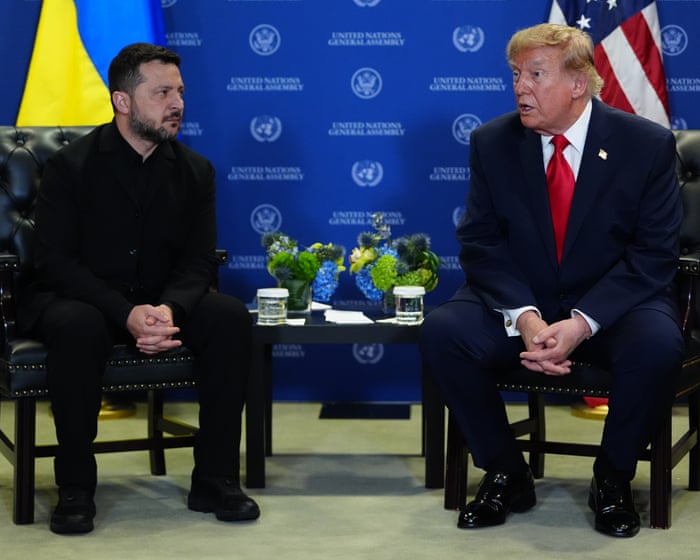
US president says Zelenskyy ‘more difficult to deal with than Putin’ after ‘energy ceasefire’ collapsesEurope live – latest updatesDonald Trump has called Ukraine’s renewed strikes on Russian oil refineries “a disgrace” and criticised Volodymyr Zelenskyy after an energy ceasefire between Russia and Ukraine failed to take hold.Ukraine resumed strikes on Russian oil refineries after Zelenskyy said Kyiv was abandoning a ceasefire unilaterally declared by Trump on Sunday, having briefly halted i
Donald Trump has called Ukraine’s renewed strikes on Russian oil refineries “a disgrace” and criticised Volodymyr Zelenskyy after an energy ceasefire between Russia and Ukraine failed to take hold.
Ukraine resumed strikes on Russian oil refineries after Zelenskyy said Kyiv was abandoning a ceasefire unilaterally declared by Trump on Sunday, having briefly halted its attacks to demonstrate its readiness for peace talks. Russia had continued its strikes on Ukrainian power plants.
The Ukrainian president’s defiant decision to continue attacking Russian refineries underscores President Trump’s inability to end a war he had promised to resolve.
The Ukrainian president’s defiant decision to continue attacking Russian refineries underscores President Trump’s inability to end a war he had promised to resolve.
President Trump during a campaign stop in Alaska on Tuesday. He has not delivered on his promises to end the war in Ukraine, or to lower prices, and recent deals with Russia could complicate both issues.
The Ukrainian president’s defiant decision to continue attacking Russian refineries underscores President Trump’s inability to end a war he had promised to resolve.
The Ukrainian president’s defiant decision to continue attacking Russian refineries underscores President Trump’s inability to end a war he had promised to resolve.
President Trump during a campaign stop in Alaska on Tuesday. He has not delivered on his promises to end the war in Ukraine, or to lower prices, and recent deals with Russia could complicate both issues.
In today’s newsletter: As Russia resists a ceasefire and Trump’s shifting priorities unsettle allies, an end to the conflict isn’t getting any closerGood morning. In his usual asinine unconventional approach to international relations, Donald Trump announced on Sunday (via Truth Social, how else) an “ENERGY CEASEFIRE in the War between Russia and Ukraine”, apparently without checking with either side. Volodymyr Zelenskyy, who said any such deal was “news to me,” nonetheless declared he was “read
In today’s newsletter: As Russia resists a ceasefire and Trump’s shifting priorities unsettle allies, an end to the conflict isn’t getting any closer
Good morning. In his usual asinine unconventional approach to international relations, Donald Trump announced on Sunday (via Truth Social, how else) an “ENERGY CEASEFIRE in the War between Russia and Ukraine”, apparently without checking with either side. Volodymyr Zelenskyy, who said any such deal was “news to me,” nonetheless declared he was “ready and we will accept it”. Vladimir Putin responded by blowing up some Ukrainian power plants.
This has been the tenor of much diplomacy during Trump’s tenure: false starts, U-turns, incoherent positions (and some playful flirting with Vlad). Meanwhile fighting continues, and America’s allies attempt to manage the fallout. Andy Burnham hosted Zelenskyy at Downing Street yesterday, stating the UK is doubling down on its support for Ukraine, and pointedly calling on others to “follow suit”.
UK | Sally Rooney has said she is being forced to withdraw her books from sale in the UK because of her support for the banned organisation Palestine Action.
EU | Britain will benefit from much closer trading relations with the EU even if that means giving up its ability to negotiate free trade agreements, the Scotland secretary has said.
Ukraine | Ukraine’s military has suddenly had its access to Starlink satellite internet terminals restricted as the Trump administration has increased pressure on Ukraine to immediately halt long-range strikes on Russia’s oil industry.
Vaccine | Guinea-Bissau has not approved the controversial hepatitis B study in newborns that would be funded by the US government and private partners, the African country’s minister of health said.
Our national security and White House correspondent David E. Sanger breaks down why President Donald Trump struck a deal with President Vladimir V. Putin to import Russian diesel fuel in the coming months, despite having signed recent congressional legislation tightening energy sanctions on Russia.
Our national security and White House correspondent David E. Sanger breaks down why President Donald Trump struck a deal with President Vladimir V. Putin to import Russian diesel fuel in the coming months, despite having signed recent congressional legislation tightening energy sanctions on Russia.
Washington is pressing the victim, not the aggressor, a Ukrainian diplomat says. President Donald Trump is using the threat of cutting military aid and intelligence as a tool to pressure Ukraine, while failing to apply enough pressure on Russia to stop the war, says Oleksandr Khara, executive director of the Center for Defense Strategies, Espreso reports.
Ukraine’s drones and air defense still lean on US satellite intelligence and weapons, which gives Trump room to squeeze Kyiv rather t
Washington is pressing the victim, not the aggressor, a Ukrainian diplomat says. President Donald Trump is using the threat of cutting military aid and intelligence as a tool to pressure Ukraine, while failing to apply enough pressure on Russia to stop the war, says Oleksandr Khara, executive director of the Center for Defense Strategies, Espreso reports.
Ukraine’s drones and air defense still lean on US satellite intelligence and weapons, which gives Trump room to squeeze Kyiv rather than Moscow. Khara argues Trump wants to end the war on Ukraine’s and Europe’s account to restore normal relations with Russian ruler Vladimir Putin, treating Ukraine as the weak link to be pushed.
“Trump wants to use restrictions, levers of influence on Ukraine to achieve his goal. To end or stop this war at any cost, at the expense of Ukraine and Europe, to restore normal relations with Putin,” Khara said.
Using American aid as leverage over Kyiv is not new for Trump, the diplomat noted, recalling earlier instances in which support was blocked or suspended.
The pressure points Trump picks, and the ones he leaves alone
Trump wants a visible success in ending the war, Khara says, partly against the backdrop of US domestic politics. He has economic tools to press Moscow but is in no hurry to use them, and his administration is instead gradually loosening sanctions on Russia.
“He doesn’t want to pressure Russia. He thinks Ukraine is the weak link and that it needs to be pushed,” Khara stressed.
Ukraine’s dependence on US support has fallen thanks to European partners, he added, so Kyiv has more room to keep fighting even as European states keep buying American weapons for it.
The one trade Kyiv might accept, and the pressure until then
An energy ceasefire is possible only on strict terms, Khara believes. Kyiv could agree to stop striking Russian refineries only if Moscow halts attacks on Ukraine’s power generation and transmission, heating, and the Black Sea ports and the ships heading to them.
Until such a deal exists, Ukraine must hit harder, he argued, because steadily draining Russia’s economic resources is what could force the Kremlin to reconsider.
“As long as there is no such agreement, and no desire from Russia, we must increase this pressure and destroy as much of their energy infrastructure as possible,” Khara said.
The Hokkaido Shimbun newspaper headquarters in Sapporo, Japan on Wednesday. A journalist from the newspaper was arrested in Russia and accused of spying.
A bipartisan group of 12 senators called on the president to drop his decision to ease sanctions on Russia’s exports of diesel fuel, saying the deal would help Moscow continue the war in Ukraine.
A bipartisan group of 12 senators called on the president to drop his decision to ease sanctions on Russia’s exports of diesel fuel, saying the deal would help Moscow continue the war in Ukraine.
The letter, led by Senator Richard Blumenthal, Democrat of Connecticut, came just weeks after Congress overwhelmingly approved legislation intended to increase economic pressure on Moscow and its allies.
A bipartisan group of 12 senators called on the president to drop his decision to ease sanctions on Russia’s exports of diesel fuel, saying the deal would help Moscow continue the war in Ukraine.
A bipartisan group of 12 senators called on the president to drop his decision to ease sanctions on Russia’s exports of diesel fuel, saying the deal would help Moscow continue the war in Ukraine.
The letter, led by Senator Richard Blumenthal, Democrat of Connecticut, came just weeks after Congress overwhelmingly approved legislation intended to increase economic pressure on Moscow and its allies.
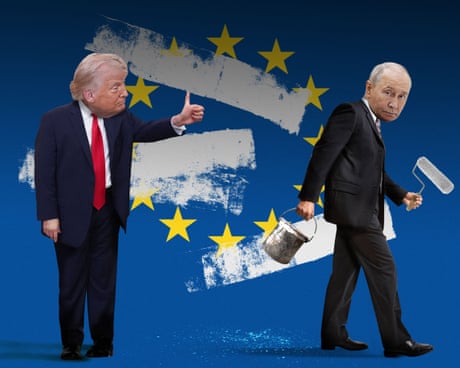
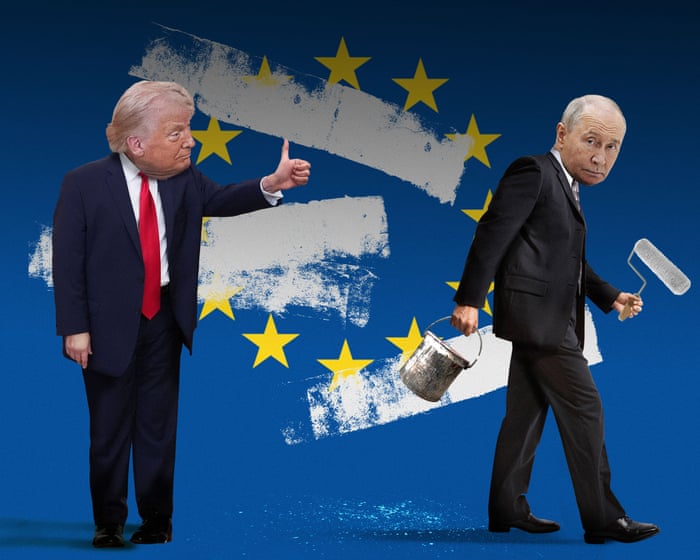
Russian meddling probably didn’t affect the referendum result – but the Kremlin’s motives for wanting to undermine the EU still matterRussian territorial aggression against Ukraine didn’t feature much in the Brexit referendum campaign. It made headlines briefly when Boris Johnson blamed Moscow’s 2014 annexation of Crimea on the European Union.According to the Vote Leave frontman, Vladimir Putin’s land grab was a consequence of Brussels making foreign policy “on the hoof” and having “pretensions
Russian meddling probably didn’t affect the referendum result – but the Kremlin’s motives for wanting to undermine the EU still matter
Russian territorial aggression against Ukraine didn’t feature much in the Brexit referendum campaign. It made headlines briefly when Boris Johnson blamed Moscow’s 2014 annexation of Crimea on the European Union.
According to the Vote Leave frontman, Vladimir Putin’s land grab was a consequence of Brussels making foreign policy “on the hoof” and having “pretensions to running a defence policy”.
Russia has reaped a diesel deal and an increase in U.S. pressure on Ukraine as President Trump’s political needs align with his longstanding inclinations toward Russia.
Russia has reaped a diesel deal and an increase in U.S. pressure on Ukraine as President Trump’s political needs align with his longstanding inclinations toward Russia.
Asked about apparent U.S. threats to cut off intelligence sharing with Kyiv, which can warn of Russian aerial attacks, President Trump said information continued to flow.
Asked about apparent U.S. threats to cut off intelligence sharing with Kyiv, which can warn of Russian aerial attacks, President Trump said information continued to flow.
Ukrainian drones have helped push Russia into its worst fuel crisis since the Soviet Union fell, The Washington Post (WaPo) reported on 11 October.
Diesel is where this war reaches American drivers. US President Donald Trump blames rising diesel prices mostly on Russia’s war in Ukraine, while experts blame mainly the US war with Iran. Some of his allies now accuse Kyiv of trying to sway the US midterms.
Drones go for the first stage of refining
The Washington Post looked at dozens
Ukrainian drones have helped push Russia into its worst fuel crisis since the Soviet Union fell, The Washington Post (WaPo) reported on 11 October.
Diesel is where this war reaches American drivers. US President Donald Trump blames rising diesel prices mostly on Russia’s war in Ukraine, while experts blame mainly the US war with Iran. Some of his allies now accuse Kyiv of trying to sway the US midterms.
Drones go for the first stage of refining
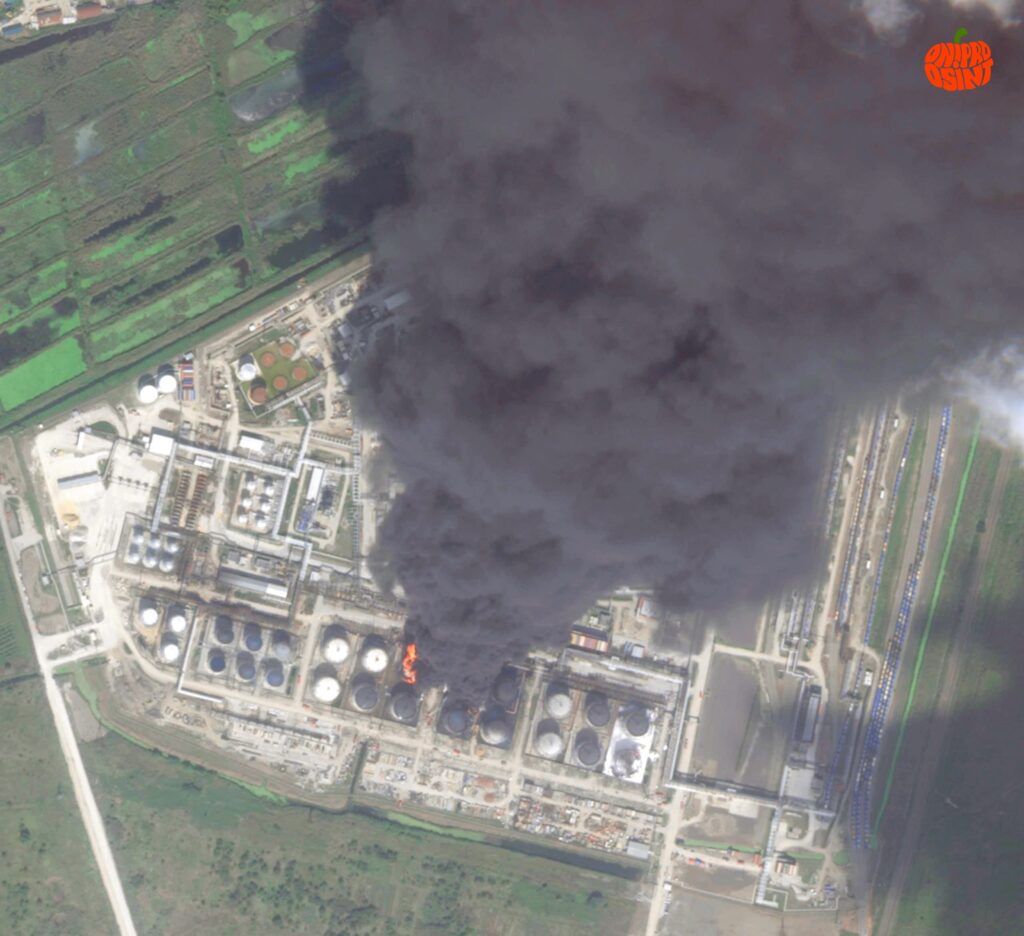
The Washington Post looked at dozens of strikes between 1 April and 31 August. Three refinery experts then examined satellite images of 54 strikes with visible damage. In over half, the damage seems to be to the desalting and distillation units, known by the Russian acronym ELOU-AVT. These units clean the crude of water and salt, then split it into separate compounds, the first steps toward gasoline and diesel. More than a third appear to have hit secondary units, which turn those compounds into jet fuel, gasoline, and liquefied petroleum gas.
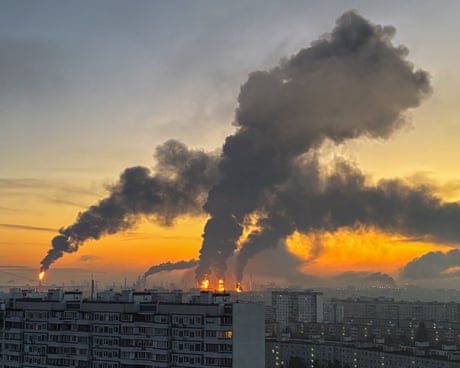
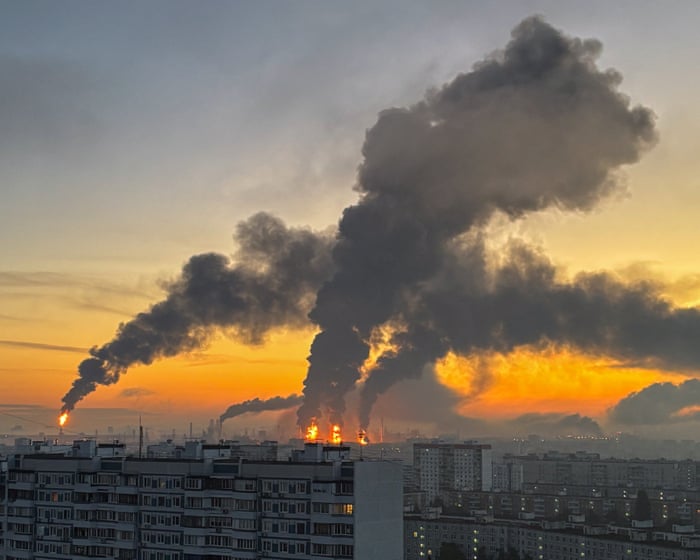
From April through August, drones struck two-thirds or more of the 36 big Russian refineries that S&P Global Energy tracks, a strike every third day. Some took as many as five hits. On 16 June, drones set the Moscow refinery’s distillation towers on fire. That strike and a second one days later kept the plant offline into September, WaPo reported, citing data firm Kpler. Ukraine targeted the refinery again on 20 September.
Explore further
Trump’s Russian diesel deal, which drew fury in Ukraine, is unlikely to lower prices, experts say
“We don’t need to hit the entire plant,” a Ukrainian drone battalion commander with the call sign Tango told The Washington Post. Ukraine knows where to strike so that a refinery stops and stays down, he said. His unit, Ukraine’s 1st Separate Center of Unmanned Systems, runs long-range strikes deep inside Russia.
Sanctions slow the repairs
The EU banned exports of oil-refining equipment to Russia the day after the 2022 invasion, and the US followed days later. WaPo reported that the bans cover the distillation and secondary processing units Ukraine keeps hitting. The bans make spare parts hard to get, Alexander Kolyandr of Eurasia Group told the paper, and the strikes come faster than repairs.
Since last year, Ukraine has doubled the size of each wave, decoys included, a person involved in the strike campaign told WaPo. The decoys are unarmed and draw Russian fire, wasting air-defense ammunition, WaPo explained. Without them, the person said, Ukraine would simply lose expensive systems. András Rácz of the German Council on Foreign Relations told WaPo that even if only 2–3% of drones get through, the damage is significant.
Shocked by the U.S. agreement with Russia, which Ukraine has called “a gift” to President Putin, officials in Europe have coalesced around a cautious diplomatic message.
Shocked by the U.S. agreement with Russia, which Ukraine has called “a gift” to President Putin, officials in Europe have coalesced around a cautious diplomatic message.
President Trump’s surprise decision to suspend sanctions on Russian diesel fuel stunned Ukrainian and European officials, who were meeting with U.S. envoys at an exclusive golf club near Miami.
President Trump’s surprise decision to suspend sanctions on Russian diesel fuel stunned Ukrainian and European officials, who were meeting with U.S. envoys at an exclusive golf club near Miami.
With the Russians intensifying sabotage, arson and cyberattacks against European nations supporting Ukraine, NATO divulged a blueprint, in case of war, to deter the Kremlin.
With the Russians intensifying sabotage, arson and cyberattacks against European nations supporting Ukraine, NATO divulged a blueprint, in case of war, to deter the Kremlin.
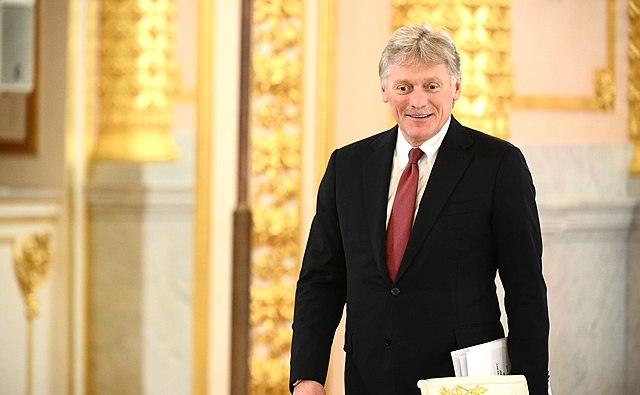
Russia offers Ukraine a single day without strikes for its elections. Russian leader Vladimir Putin is ready to order a halt to strikes on Ukraine only on the day of a presidential election, if Kyiv decides to hold one, Kremlin spokesperson Dmitry Peskov says, Russian state agency TASS reported.
The offer answers Ukraine’s call for a real pause: on 11 October, President Volodymyr Zelenskyy stated Ukraine could hold elections if Putin agreed to a full ceasefire of at least 60 days, ABC N
Russia offers Ukraine a single day without strikes for its elections. Russian leader Vladimir Putin is ready to order a halt to strikes on Ukraine only on the day of a presidential election, if Kyiv decides to hold one, Kremlin spokesperson Dmitry Peskov says, Russian state agency TASS reported.
The offer answers Ukraine’s call for a real pause: on 11 October, President Volodymyr Zelenskyy stated Ukraine could hold elections if Putin agreed to a full ceasefire of at least 60 days, ABC News reported. Against the backdrop of Russian strikes that killed more than 150 Ukrainian civilians in a single week, Moscow counters with a one-day truce confined to voting day.
“...If they really want to hold elections in Kyiv, the president of Russia, the supreme commander-in-chief, will be ready to give the order not to strike Ukraine on election day. Specifically on election day,” Peskov said.
His statements followed US President Donald Trump’s call on 10 October for Ukraine to choose a new president, saying a change of leadership could help reach peace with Russia, according to Suspilne.
Trump also criticized Ukrainian strikes on Russian oil refineries amid his new agreements to supply a low volume of diesel into the US.
Moscow rejects the 60-day pause
Peskov has outright dismissed the longer truce. Ukraine needs 60 days not to hold elections but to heal its wounds and continue the war, he argues.
He has claimed Russia had been willing to resume peace talks after Russia’s own State Duma elections, but accused Ukraine of launching massive strikes on Moscow to disrupt that vote. Peskov has gone further, claiming Ukraine shelled polling stations and killed several members of district election commissions in the Russian-occupied regions it calls its own.
What Peskov left out
The accusations are Russia’s and remain unverified. Peskov offered no evidence for the claims about polling stations or election officials, which echo long-running Kremlin talking points.
He also made no mention of Russia’s own strikes on Ukrainian civilian targets over the same period, including attacks on energy sites and residential buildings.
Australia has no need to buy fuel from Russia, despite US President Donald Trump’s move to bring Russian diesel back to world markets. Climate Change and Energy Minister Chris Bowen says that imports from Russia will remain banned to ensure the country does not benefit from its invasion of Ukraine, Bloomberg reports.
Trump has agreed with Russia's President Vladimir Putin to release Russian diesel onto global markets, a move Ukraine says funds a war that has killed more than 80 Ukraini
Australia has no need to buy fuel from Russia, despite US President Donald Trump’s move to bring Russian diesel back to world markets. Climate Change and Energy Minister Chris Bowen says that imports from Russia will remain banned to ensure the country does not benefit from its invasion of Ukraine, Bloomberg reports.
Trump has agreed with Russia's President Vladimir Putin to release Russian diesel onto global markets, a move Ukraine says funds a war that has killed more than 80 Ukrainian civilians in two days.
“We don’t need or want Russian fuel in Australia. We do not want Vladimir Putin to benefit from this war in the Middle East. What the United States does is a matter for them, but we won’t be changing our approach,” Bowen said.
The deal Australia is turning down
Trump announced on 9 October a series of cargoes beginning this month totaling about 13.5 million barrels of Russian diesel. The release upends years of sanctions, as the White House looks for ways to tame soaring fuel prices before the US midterm elections.
Bowen draws a clear line between that approach and Australia’s. What the US does is its own affair, he stresses, but Canberra will maintain its arrangements with trading partners to keep Russian fuel out of the market.
Enough fuel to hold the line
Australia can hold out without Russian supply, Bowen argues. The country has 43 days’ worth of petrol, two days more than a week earlier, and 31 days’ worth of diesel, one day less, he notes.
He adds that Australia stays in close contact with domestic refiners to keep them running at full capacity. The stance lets Canberra wait out high prices rather than buy fuel that would send money to Moscow.
Australia’s fuel costs have stayed high since the war between the US and Iran disrupted shipping through the Strait of Hormuz, the route that normally carries about a fifth of the world’s oil and gas.
US President Donald Trump said on 9 October that he had agreed with Russian leader Vladimir Putin to bring Russian diesel to world markets to lower energy prices. However, energy analysts say the deal, which drew fury in Ukraine, is unlikely to lower diesel prices meaningfully, CNN reports.
Trump wrote on social media that Putin would “immediately supply” more than 300,000 tons of diesel, with another 500,000 tons in November. Together, those volumes would cover about a day and a half o
US President Donald Trump said on 9 October that he had agreed with Russian leader Vladimir Putin to bring Russian diesel to world markets to lower energy prices. However, energy analysts say the deal, which drew fury in Ukraine, is unlikely to lower diesel prices meaningfully, CNN reports.
Trump wrote on social media that Putin would “immediately supply” more than 300,000 tons of diesel, with another 500,000 tons in November. Together, those volumes would cover about a day and a half of US demand, according to the US Energy Information Administration.
Meanwhile, former head of the Center for Countering Disinformation Andrii Kovalenko says that US diesel consumption alone is about 16 million tons per month, and global consumption is roughly 120 million tons.
The US experts read the move as politics more than a market shift. Trump spoke in tons rather than barrels because the figure looks bigger to an ordinary observer, said Dan Pickering, founder of Pickering Energy Partners, calling it “more politics than a game changer.”
Doubts Russia can even deliver
Former US officials question whether Putin holds the diesel Trump described, as Ukrainian strikes strain Russia’s refineries. A former senior State Department official says it hardly matters whether the fuel arrives, because Putin “has already achieved the result he wants,” with Trump believing he has a pre-election card that could move markets.
Even if the fuel flows, it would be a temporary measure. Gregory Brew of Eurasia Group says that he suspects Putin expects Ukraine to halt its strikes on Russian refineries in return, and that he cannot imagine Zelenskyy agreeing.
A win for Putin without conditions
For Putin, the gain is plain, Kovalenko says: he pushes for sanctions relief and for no new US sanctions, all without any demand to end the war in Ukraine.
"Trump’s bet was more on the news itself, driving prices down somewhat, because, in reality, figures like these shouldn’t bring prices down," Kovalеnkо believes.
He adds that Trump will "make a big fuss about diesel ahead of the elections, nothing more," and that the average American is unlikely to feel any lasting effect.”
Earlier, Ukrainian President Volodymyr Zelenskyy warned that allowing Russia to sell petroleum products abroad without securing a lasting de-escalation agreement would help finance Moscow's war against Ukraine.
He criticized the decision, calling it "a birthday gift for Putin," per Axios.
The next day after the announcement, Russia launched six bombs on Zaporizhzhia, killing 17 people.
Hours after President Trump said the United States would buy Russian diesel, the Kremlin said there would be no immediate resumption of discussions to end the war.
Hours after President Trump said the United States would buy Russian diesel, the Kremlin said there would be no immediate resumption of discussions to end the war.
President Trump at a campaign rally in Syracuse, N.Y., on Friday. His announcement that the United States would buy Russian diesel was followed by the lifting of U.S. sanctions on Russian diesel exports.
Kateryna Rashevska can trace exactly how one Ukrainian child disappears into Russia: the occupied-territory orphanage, the foster placement with a Kremlin-connected family, the re-education camp, the military uniform, the draft notice that arrives at sixteen. A legal expert at Ukraine's Regional Center for Human Rights, she has filed submissions to the International Criminal Court, documented the cases behind recent EU sanctions, and spent years building the argument that this is not only
Kateryna Rashevska can trace exactly how one Ukrainian child disappears into Russia: the occupied-territory orphanage, the foster placement with a Kremlin-connected family, the re-education camp, the military uniform, the draft notice that arrives at sixteen. A legal expert at Ukraine's Regional Center for Human Rights, she has filed submissions to the International Criminal Court, documented the cases behind recent EU sanctions, and spent years building the argument that this is not only a war crime but genocide.
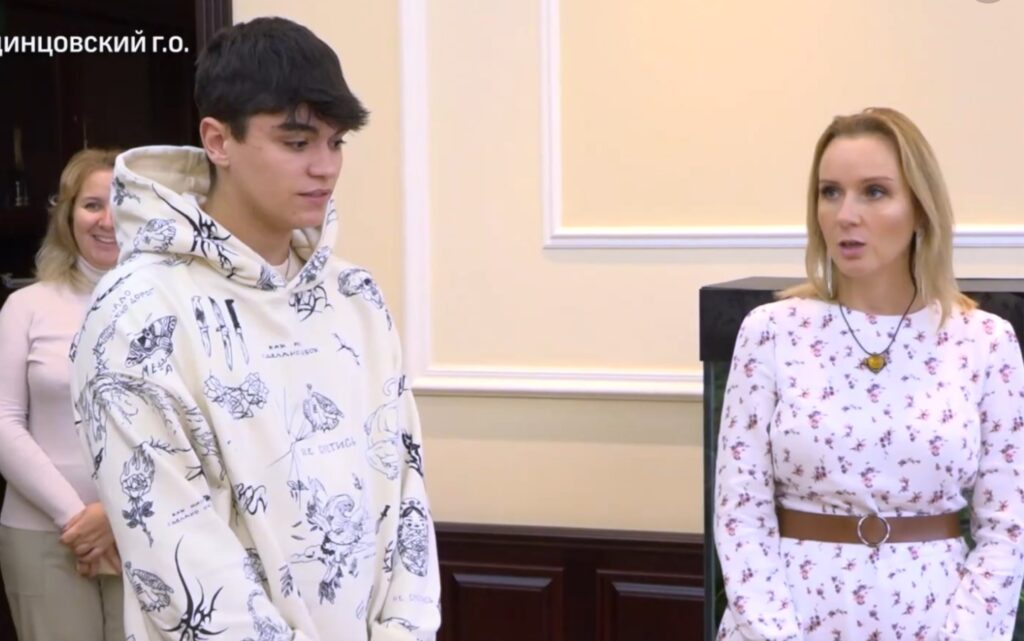
The law, she says, is ready. In less than five years of war, Russia has forcibly transferred at least 20,651 Ukrainian children from occupied Ukraine, a crime that has already put President Vladimir Putin and his children's-rights commissioner Maria Lvova-Belova in the dock of the ICC. The 1948 Genocide Convention lists the forcible transfer of children as one of the acts that constitute genocide, and the ICC's Ukraine investigation has been mandated to examine the charge since 2022. More than 150 states have signed that convention. None has been willing to say the word about Russia.
"We don't need to change any legal framework," Rashevska says. "We simply still lack the political will to call the crimes by their proper names." She presses the point because, for her, justice is not an afterthought but a deterrent: "Without justice, Russia will feel this resentment in several years, and they will repeat their actions."
And the court that could deliver that justice is collapsing. The ICC is in the deepest crisis of its existence: its prosecutor, Karim Khan, removed, 13 of its judges and prosecutors sanctioned by the United States, and on 9 October 2026 the court itself sanctioned by Washington for the first time, with Secretary of State Marco Rubio vowing to dismantle it "brick by brick." The court called the move unprecedented and warned that "history will judge this moment."
Meanwhile the children remain. Of the more than 20,000 taken, only 2,665 have been returned, as of 7 October 2026. The rest are placed in Russia's adoption system and foster homes, taught to forget they are Ukrainian, to love Russia, and to be willing to die for it: Rashevska cites 344,000 Ukrainian children drawn into the Movement of the First and 55,000 into the Yunarmiya youth army.
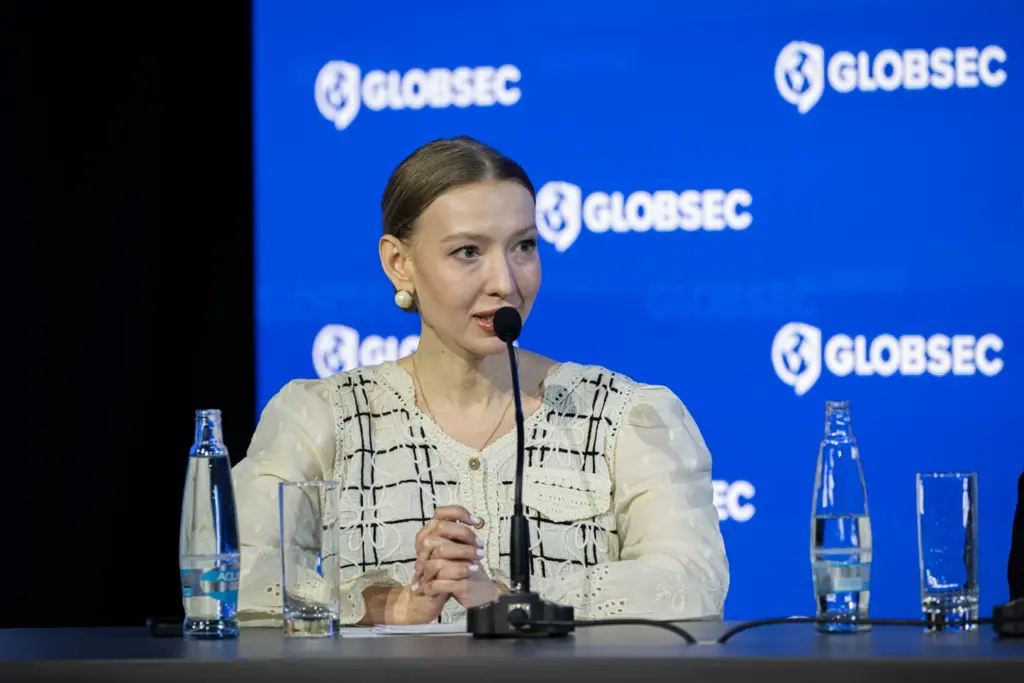
Euromaidan Press spoke with Rashevska on the sidelines of GLOBSEC 2026 in Prague about the machine Russia built to steal a generation, and why the world still won't name it.
Alya: You say that Russia’s forcible transfer of Ukrainian children is the crime of genocide. In international law, genocide is defined by Article 6 of the Rome Statute. What would it take to change this legal framework to include the deportation and militarization of Ukrainian children? And is the Office of the Prosecutor in any position to do that work under current US sanctions and Karim Khan’s leave?
Kateryna: We don’t need to change any legal frameworks to prosecute what the Russians are doing with Ukrainian children. Militarization and political indoctrination, as well as Russification of young Ukrainians, is a part of Russia’s bigger strategy to destroy Ukraine as a sovereign state and to subjugate everything in the Ukrainian nation to the Russian influence and control. I don’t see legal problems; we simply still lack the political will to call the crimes by their proper names.
The UN’s 1948 Genocide Convention posits that all states that signed the convention, 154 as of today, should act to stop it—not only those affected by genocide. If the international community recognized what the Russians are doing as a crime of genocide, it would mean that yet another time in history the international community was not able to prevent genocide, to recognize some early warnings, to react properly to what the Russians did, for example, in occupied Crimea or Donbas before 2022. It is not easy, and the international community and world political leaders should be mature enough to face all these challenges, recognize that they were involved in the commission of these crimes through silence and inaction, and finally stop it.
So that is why, according to the Rome Statute, the Office of the Prosecutor can start an investigation of the crime of genocide in the Ukrainian context. It is possible: the ICC’s Ukraine-situation investigation in March 2022, supported by 43 states, included not only war crimes and crimes against humanity, but also the crime of genocide. So we have all the legal tools and means, but politically it is very difficult.
Recently, there has been a global shift towards this—in the context of the war between Arabian states and Israel, not Ukraine. But for example, Israel’s attacks against Gaza’s education have already been termed "scholasticide," so as a part of the genocidal intent, as a part of the crime of genocide. So for us lawyers and human rights defenders, this is the task—to push the international community to do the same with Russia. It is not easy because Russia is one of the five "world policemen" expected to maintain this international legal order.
I believe that, perhaps in decades, but we will see how Russia’s actions will be recognized as the crime of genocide. The forcible transfer of children from one group to another group is the fifth universally recognized element of the crime of genocide.
Kateryna Rashevska, legal expert at the Regional Center for Human Rights. Photo: Alya Shandra/Euromaidan Press
Alya: Your organization was involved in documenting this. How does this pipeline actually work?
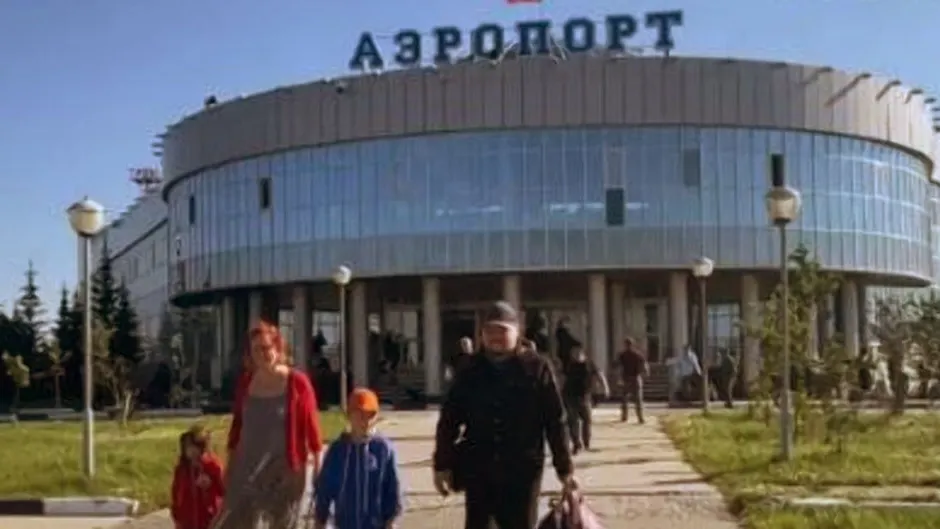
Kateryna: Yes, let's take Olga Druzhinina, who fostered four children from the occupied territories of Ukraine. Her story is very interesting: first, it seemed that she could be just an ordinary Russian brainwashed by TV shows about children from Donbas. But then we found that Olga is very close to [former Russian President] Medvedev, and through Medvedev to President Putin. Olga is the head of one non-governmental organization, "Semia Arktiki" [Family of the Arctic], and this organization aims to find foster parents for orphans— now including orphans from occupied territories of Ukraine. The co-head of this organization also fostered Ukrainian children.
It is a very well-built, pre-planned architecture of people involved in the commission of this crime—not some sporadic reaction to the full-scale invasion. They planned to do it. And I will not be surprised if, in the future, we find that these families also adopted children from Crimea or from Donbas even before 2022.
Her husband is a veteran of the Russian Armed Forces. He participated in many wars of the Russian regime, including the wars in Chechnya. It was clearly against the child's best interest to be sent to the family of this Russian serviceman and his wife. So their case was widely publicized. We recorded many different details. Later, we found photos of these children in the "Warrior Center" camp in Novosibirsk, and her foster daughter from occupied Ukraine wearing a St.George’s [Russian imperial] ribbon and in military uniform.
So the Ukrainian identity of these children was completely eradicated. It was prohibited to mention that they were Ukrainians, and the main goal of this family was to repress their unloyalty to the Russian state, to re-educate them, mold them into Russian patriots. Unfortunately, I don’t know the fate of these teenagers from Mariupol, but as far as I know, they were not returned to Ukraine. And now they are already young adults—meaning they will soon be conscripted into the Russian army. They have this military duty because they were forcibly given Russian citizenship. And young children also remain under the control of Olga and his husband.
Olga and her husband are members of the so-called "Putin Team." They were recognized many times as the best family of the Yamalo-Nenets region. The governor of Yamal-Nenets is also Putin's person. His candidacy was supported by Putin for re-election to this position. And this governor has many times mentioned that Ukrainian children from the occupied territories of Ukraine were accepted by foster families from his region, even without the proper documents.
Olga Druzhinina and her husband at Salekhard airport with two children brought from occupied Donetsk Oblast, July 2022. Screenshot: Yamal-Media via Sever-Press
It is very difficult to influence their behavior without sanctions. In this sphere of foster care, the balance between placing children in Russian institutions and Russian families is hard to find. Russia presents only two options for the forcibly transferred Ukrainian children: Russian boarding institutions or Russian foster families. And of course, ordinary people think: a family is better than a boarding institution. The truth is that there is a third option: just return these children to Ukraine, to their homes.
And I would like to highlight that, according to the order of Ukrainian President Zelenskyy, these children from institutions will not be returned to boarding institutions in Ukraine. They will inevitably be placed with a foster family, and they can participate in choosing this family or changing it. Ukraine is doing its best to guarantee that its actions comply with the Convention on the Rights of the Child, but unfortunately, Russians are very hard to persuade to return these orphanage children.
Alya: On 11 May 2026, the EU Council sanctioned 16 individuals and seven entities for the systematic unlawful deportation, forced transfer, and forced assimilation of Ukrainian children, including through indoctrination and militarized education. Your organization pushed for these sanctions. Are they working?
Kateryna: In January–February 2026, we criticized the European Union’s sanctions policy. New persons were being added to lists, but we found that the level of coordination and harmonization of sanctions policies was only 5%. Only 13 individuals and three organizations were under sanctions in all jurisdictions analyzed by us: Ukraine, the United Kingdom, Canada, the United States, the European Union, Switzerland, and Japan. It was terrifying because sanctions exist, yet they are riddled by many loopholes and are actually inefficient.
That is why we started persuading them to do something with this system. And on 11 May, Canada, the United Kingdom, and the European Union synchronized their sanctions packages: the people are included in all jurisdictions. For us, this is a big achievement.
Kateryna Rashevska, legal expert at the Regional Center for Human Rights. Photo: GLOBSEC
Another achievement: a shift in their perception of where this vertical of guilty persons ends. Putin and Maria Lvova-Belova—okay; ministers, children's rights ombudspersons at the regional level, heads of the occupation authorities—okay. But what about the "ordinary" Russian people who fostered poor Ukrainian children and now contribute to their militarization? The 11 May sanctions saw the United Kingdom and Canada listing ordinary Russians, like the family from Yamalo-Nenets that fostered four Ukrainian children, including teenagers from Mariupol, and then sent them to re-education camps of the "Center Warrior" to be militarized as Russian soldiers.
If these results of our work seem small, we must remember that for the Russians, it is a very sensitive issue. They are mad because of the sanctions—and this was visible when the “Yolochka” boarding institution in occupied Crimea’s Simferopol, called a “concentration camp” by ordinary Russians, was sanctioned. Already in December 2014 [after Russia’s occupation of east Ukraine], the first Ukrainian orphans were sent to Russian foster families from this “Yolochka.” 12 years later, children from Kherson boarding institutions also went through “Yolochka.”
Alya: You've documented over 20,500 deported children. How many of that cohort are approaching Russian conscription age?
Kateryna: It is hard to tell because the way the Ukrainian side is collecting statistics is not good enough. So you should address this question to the competent bodies of Ukraine.
But according to our calculations, just to describe the situation in general: all Ukrainian teenagers under Russian control start receiving draft notices at the age of 16. According to the Russian legislation, it should be at the age of 17, but they're so afraid that these children will escape or will return to Ukrainian-controlled territories, that they start this process in violation of their own legislation.
Everything is organized around schools. They’re not about education under occupation, but have become additional buildings of the military commissariat. Specific teachers are responsible for this conscription process. Boys aged 16-17 are being brought to the military commissariat in organized groups. You cannot escape, you cannot refuse, because you will hear “knock-knock” on your door: the occupation authorities and your teacher will ask: “Where are you? You should go.”
Another problem: Russia and Belarus started exchanging data, meaning that if this child receives a draft notice at the age of 18, he will not be able to cross the border—which matters because the checkpoint of Mokrany-Domanove between Belarus and Ukraine is the main point of returning Ukrainian children from Russian control. Every year, the Russians amend their legislation to impose more obstacles to the repatriation process.
So the only way for a Ukrainian teenage boy to escape is to do this several days before a "povestka" [draft notice] comes to his house at 16 years.
Kateryna Rashevska, legal expert at the Regional Center for Human Rights. Photo: Alya Shandra/Euromaidan Press
According to our intelligence, since 2014, 48,000 Ukrainians from occupied territories were forcibly mobilized by Russians, including those from occupied Crimea. Some of them participated in the "special military operation.” Around 20% of all prisoners of war in Ukrainian camps for Russians are originally Ukrainians who were forced to sign a military contract. Many of them were forced, manipulated, or brainwashed, so it was not done of their own will.
But I would like to highlight that the average age of a Russian soldier is 35. This is not the war of young Ukrainians who reached the age of majority and were sent to the battlefield as cannon fodder. We see that the Russians’ main goal is to rebuild the army degraded by the Ukrainian side during the first month of the full-scale invasion, to have officers and other qualified personnel who will develop a strategy and conquer more and more territory. That is why they're investing in all these military patriotic movements and centers.
That is why I was really impressed when I saw that their All-Russian championship on drone racing will be for children aged seven. Should we next expect that children in kindergartens will assemble and disassemble a rifle? Their society is very militarized. This is the biggest problem. And now, Russian soldiers are those who are teaching Ukrainian children to fight tomorrow.
President Trump said Russia had agreed to ship potentially millions of tons of diesel fuel in the coming months. But the amounts would be small relative to global demand.
President Trump said Russia had agreed to ship potentially millions of tons of diesel fuel in the coming months. But the amounts would be small relative to global demand.
US President Donald Trump announced a deal with Russian President Vladimir Putin for Moscow to supply millions of tons of diesel fuel to American and global markets.
The announcement would give Russia a major opportunity to sell fuel abroad at a time when Ukraine is targeting its oil industry to deprive Moscow of revenue and disrupt the resources sustaining its invasion. The US president has increasingly called for Ukraine to halt strikes on Russian oil infrastructure in recent weeks,
US President Donald Trump announced a deal with Russian President Vladimir Putin for Moscow to supply millions of tons of diesel fuel to American and global markets.
The announcement would give Russia a major opportunity to sell fuel abroad at a time when Ukraine is targeting its oil industry to deprive Moscow of revenue and disrupt the resources sustaining its invasion. The US president has increasingly called for Ukraine to halt strikes on Russian oil infrastructure in recent weeks, blaming Ukraine for high fuel prices in the US.
Trump’s push for Kyiv to halt those attacks, alongside his effort to secure Russian fuel supplies, risks undermining Ukraine’s campaign to put economic pressure on the Kremlin while the US seeks to contain the fallout from its war with Iran.
Trump promises millions of tons of diesel from Russia
In a 9 October post on Truth Social, Trump said Russia would immediately supply more than 300,000 tons of diesel, followed by another 500,000 tons in November and 1 million tons shortly afterward. He also announced a possible additional delivery of 3 million tons, conditional on the state of Russian refineries.
“Diesel Prices for Americans and, indeed, the World, will be COMING DOWN, IN RECORD NUMBERS, AND FAST!” Trump wrote, describing lower fuel prices as a top priority for American farmers, ranchers, and truckers.
Trump's announcement did not explain how the promised volumes would be reconciled with the condition of Russian refineries amid ongoing Ukrainian strikes, which he cited as a factor determining the timing of later deliveries.
Trump has pressed Ukraine to stop targeting Russian refineries
The announcement comes after Trump repeatedly blamed Ukrainian strikes on Russian oil infrastructure for worsening global diesel shortages and driving up fuel prices.
Ukraine has continued targeting Russian oil facilities as part of its campaign to undermine Moscow's war economy. Ukrainian strikes have damaged refining capacity, contributed to fuel shortages inside Russia, and forced Moscow to restrict fuel exports.
Kyiv has argued that the attacks put pressure on Russia's ability to finance and sustain its war against Ukraine.
Iran war drives fuel prices higher, not Ukraine
The rise in US fuel prices stems largely from the US-Israeli war with Iran and its disruption of global energy supplies, according to Reuters. The conflict has disrupted shipping through the Strait of Hormuz, a strategic waterway through which roughly one-fifth of the world's oil supplies normally pass, pushing energy prices higher.
Trump has nevertheless blamed Ukraine's refinery strikes for rising fuel costs while pressing Kyiv to halt them.
Ukraine's attacks on Russian oil infrastructure are intended to weaken Moscow's war economy. By contrast, the disruption to global energy shipments stems largely from the conflict with Iran.
Zelenskyy warns Russian diesel deal would fund further attacks on Ukraine
Ukrainian President Volodymyr Zelenskyy warned later on 9 October that allowing Russia to sell petroleum products abroad without securing a lasting de-escalation agreement would help finance Moscow's war against Ukraine.
“Allowing Russia to sell petroleum products is an investment in a war that must be ended, not prolonged,” Zelenskyy said, responding to Trump's announcement of a proposed Russian diesel supply deal.
Zelenskyy said Ukraine's strikes on Russian oil refineries and other oil facilities were a response to Russia's years-long campaign against Ukrainian energy infrastructure. He offered a reciprocal arrangement under which Ukraine would stop striking Russian refineries if Russia stopped destroying Ukrainian energy facilities, saying the United States had sufficient leverage to secure such an agreement.
“Ukraine will not burn Russian oil refining facilities if Russia does not destroy our energy infrastructure,” Zelenskyy said.
He also urged Washington to maintain pressure on Moscow, including sanctions under the proposed Graham legislation, and to continue supporting Ukraine's defense. Zelenskyy argued that easing sanctions without a clear, sustained de-escalation agreement would signal weakness and give Russia more time and resources to continue the war.
“Gifts to Putin will not bring peace,” Zelenskyy said, warning that Russia would respond to diesel supplies with further terror and attacks. He called on the United States to pursue a reciprocal de-escalation agreement and press Russia to stop its attacks on Ukrainian energy infrastructure.
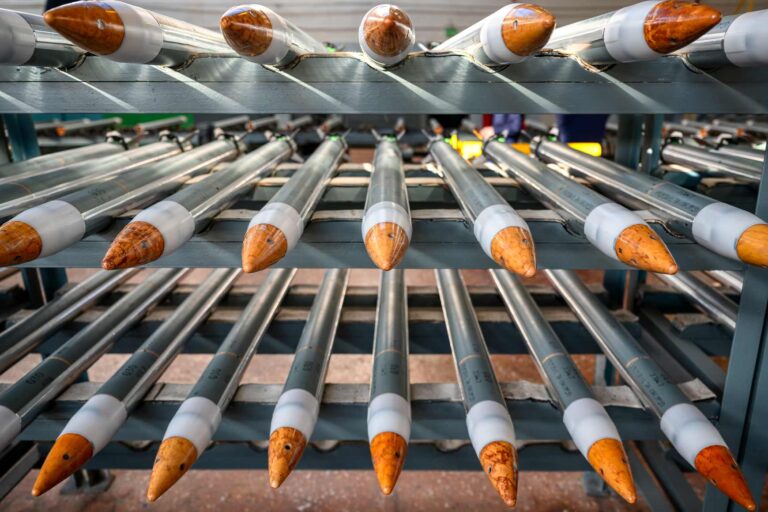
Russia has shown a drone interceptor built on the Alazan, a civilian anti-hail rocket, Militarnyi reported. The sample went on display at a weapons exhibition that Russian dictator Vladimir Putin toured at the Chebarkul training range in the Urals on 2 October.
Ukraine now sends drones at Russia by the hundreds, by Moscow's own count. Russia's Defense Ministry claimed its air defenses intercepted nearly 900 overnight into 6 October. Russia's missile-based air defense was built to repel
Russia has shown a drone interceptor built on the Alazan, a civilian anti-hail rocket, Militarnyi reported. The sample went on display at a weapons exhibition that Russian dictator Vladimir Putin toured at the Chebarkul training range in the Urals on 2 October.
Ukraine now sends drones at Russia by the hundreds, by Moscow's own count. Russia's Defense Ministry claimed its air defenses intercepted nearly 900 overnight into 6 October. Russia's missile-based air defense was built to repel aircraft raids and a few cruise missiles, not swarms of low-flying drones.
In May, Ukrainian intelligence said Russia was adding four regiments, 24 battalions, and 162 batteries to counter Ukrainian strike drones. The converted Alazan, which Militarnyi calls an anti-drone system, is one more piece of that search. Meanwhile, the commander of Ukraine's Unmanned Systems Forces, Robert Brovdi, said his forces struck 300 Russian air-defense assets between January and 19 September.
From hail reagent to shrapnel
Based on the size of the sample on display, the interceptor builds on the Alazan-2M or Alazan-6 series, Militarnyi assessed. The outlet put the stated cost at up to $12,000 per unit but did not say who named the figure. In civilian service, the rocket flies about 10 km, climbs up to 8 km, and carries about 0.5 kg of reagent. For air defense, the developers plan to replace that reagent with a fragmentation warhead.
Militarnyi's analysis of the published photos describes the front end as a steering assembly: four cruciform deflector fins, probably paired with a seeker or a fuze. At the rear sit folding stabilizers and the open nozzle of a solid-fuel motor, held in a metal cradle.
Anti-drone missile based on the Alazan, 2 October 2026. Photo: kremlin.ru
One sample among 300 exhibits
The Kremlin's account of the visit lists more than 300 weapons on display, including interceptor drones, but does not mention the rocket. Propaganda channel Russia 1 aired the interceptor in its report from the visit, and the Kremlin pool of state news agency RIA posted photos.
Russia is spending more on the war than at any point since it began. Russia's military funding is on track to hit a record this year after President Vladimir Putin added almost $60 billion to the outlays set in the budget, Bloomberg reports, citing people close to the government.
Defense spending is expected to approach about $199 billion by the end of 2026, roughly 40% above the plan Moscow announced in late 2025. That reverses the course of a year ago, when the Kremlin meant to slow m
Russia is spending more on the war than at any point since it began. Russia's military funding is on track to hit a record this year after President Vladimir Putin added almost $60 billion to the outlays set in the budget, Bloomberg reports, citing people close to the government.
Defense spending is expected to approach about $199 billion by the end of 2026, roughly 40% above the plan Moscow announced in late 2025. That reverses the course of a year ago, when the Kremlin meant to slow military growth, narrow its deficit, and rebuild reserves drained by the war.
Alaska was the turning point
Putin ordered the shift late last year, after concluding that talks with the US in Alaska would not produce an acceptable deal to end the fighting, the report says.
By January, the Kremlin judged an agreement with Ukraine to be out of reach, and the government began accelerating advance payments to defense firms and raising other war-related spending.
"The government is finally budgeting for a prolonged war in Ukraine, but still understates its cost," Bloomberg Economics economist Ekaterina Vlasova said.
The deficit nearly doubles
Paying for the war has blown out the budget. The projected 2026 deficit has climbed to more than $81 billion, up from about $44 billion as first planned, and the government covered the extra spending through increased domestic borrowing and gold sales.
The budget plans years of war
The spending is not set to fall soon. Under the budget plans, Russia's military outlays reach about $200 billion in 2027, then ease to $194 billion in 2028 and about $191 billion in 2029, a signal that Moscow is planning for a long war.
Earlier, Euromaidan Press reported that Russia was raising 2027 defense spending by 27% to a record, even as its deficit widens and oil and gas revenues fall.
Dmitry Muratov, the Nobel Peace Prize laureate and co-founder of Russia's shuttered Novaya Gazeta, has lent his name to an idea that sounds like pure humanitarianism. Russia frees some of the people it jails for opposing the war; in return, the United States eases its sanctions on the Russian economy.
The scheme did not even start in an American office. According to The Atlantic, which reported the plan on 29 September, it was Muratov himself who urged Donald Trump's envoy, John Coale,
Dmitry Muratov, the Nobel Peace Prize laureate and co-founder of Russia's shuttered Novaya Gazeta, has lent his name to an idea that sounds like pure humanitarianism. Russia frees some of the people it jails for opposing the war; in return, the United States eases its sanctions on the Russian economy.
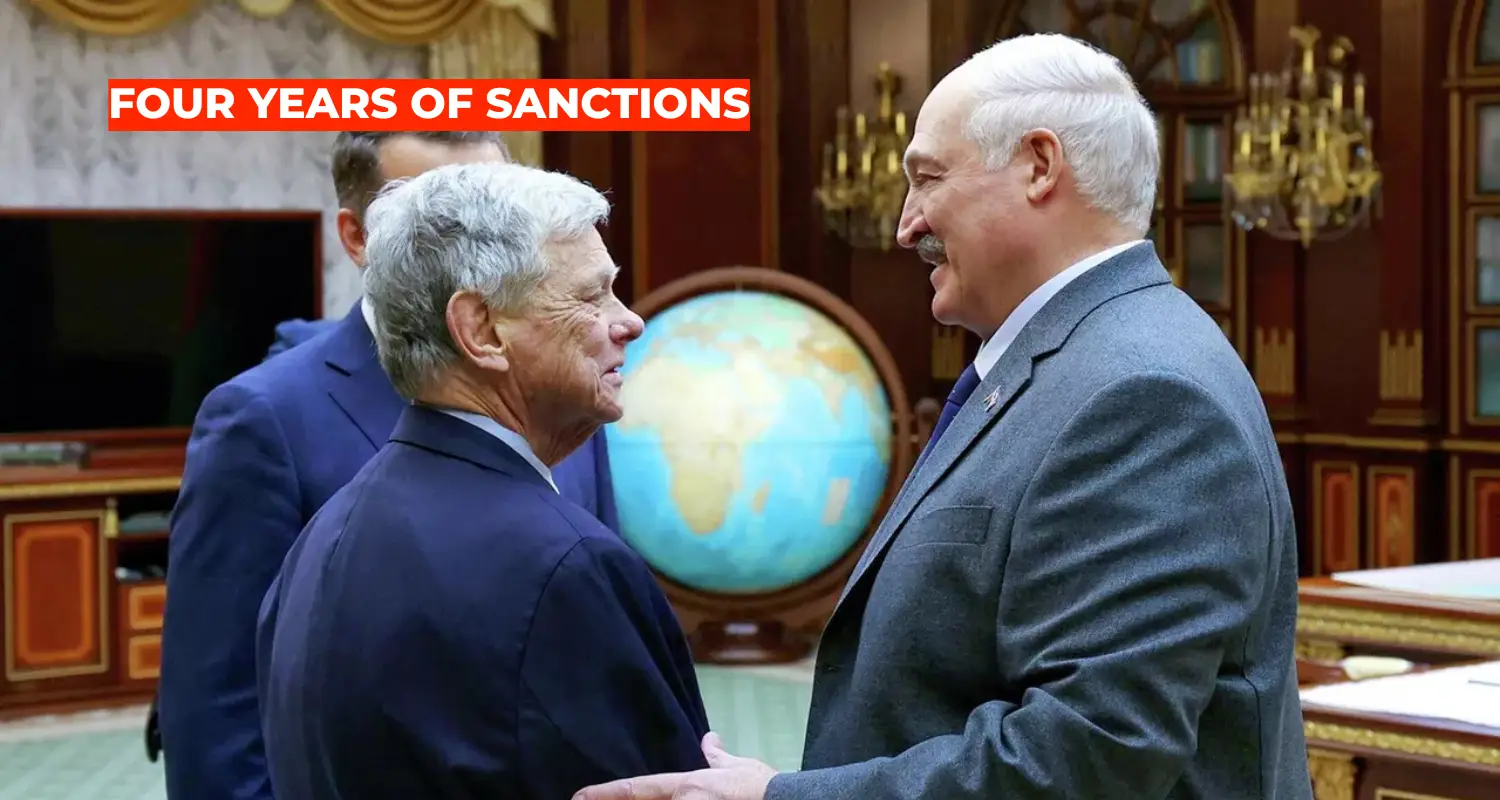
The scheme did not even start in an American office. According to The Atlantic, which reported the plan on 29 September, it was Muratov himself who urged Donald Trump's envoy, John Coale, to try it. Coale had used the same model on Belarus, where some 500 prisoners were released, sanctions softened, and trade talks reopened.
Now, with Trump's approval, he wants to run it on the Kremlin.
Explore further
“A direct investment in ammunition flying across the border”: Belarusian defectors warn US sanctions relief is funding Russia’s war
The prisoners should go free. There is nothing to argue about there. No one jailed for anti-war words, for journalism, or for political dissent belongs in a cell. But here is the small detail: the price for their freedom is easing the pressure on a state that is waging war, not on the United States, which is being asked to ease the sanctions, but on Ukraine.
And here is where the real humanitarian arithmetic begins. We do not yet know which sanctions would be lifted. Whichever they are, the logic is the same: Moscow lets some of its political prisoners go, and Washington gives the Russian economy some breathing room in return. People walk out of Russian prisons, and the Kremlin gets more oxygen.
More money for the Russian state in wartime is not merely a figure in a bank report. It is more resources for the army, for missiles, for drones, for the war's continuation. And Ukrainians are the ones who feel it.
I can picture the Kremlin ghoul rubbing his hands at an idea like this. Now he can be not just president, but the director of a prisoner market: release a hundred today, jail three hundred tomorrow, so there is something to trade next time. New dissidents, journalists, activists, and merely inconvenient citizens he can pack away far faster than the West can lift a sanction.
The Kremlin ghoul can now be the director of a prisoner market: release 100 today, jail 300 tomorrow
A tidy little business model: Russia produces the prisoners, the West buys them back with its policy, and Ukraine settles the account.
Because if easing sanctions widens Russia's room to finance the war, then Ukrainians effectively get a very strange bill for someone else's humanism: a Russian political prisoner walks out of prison, and a Ukrainian gets a fresh portion of missiles and drones on their head.
By the way, about those Ukrainian civilians. By the estimates of international and Ukrainian rights groups, Russia is holding, or has held, some 16,000 of them illegally. The real figure may be higher, since not every case can be documented.
This is exactly where Muratov, as a Nobel peace laureate, might find his powers of persuasion useful. Why not put in a word for the Ukrainians in Russian prisons? The same people seized in occupied territory during "filtration," taken from their homes, buried under fabricated cases, held for years without a proper trial.
And among them are children.
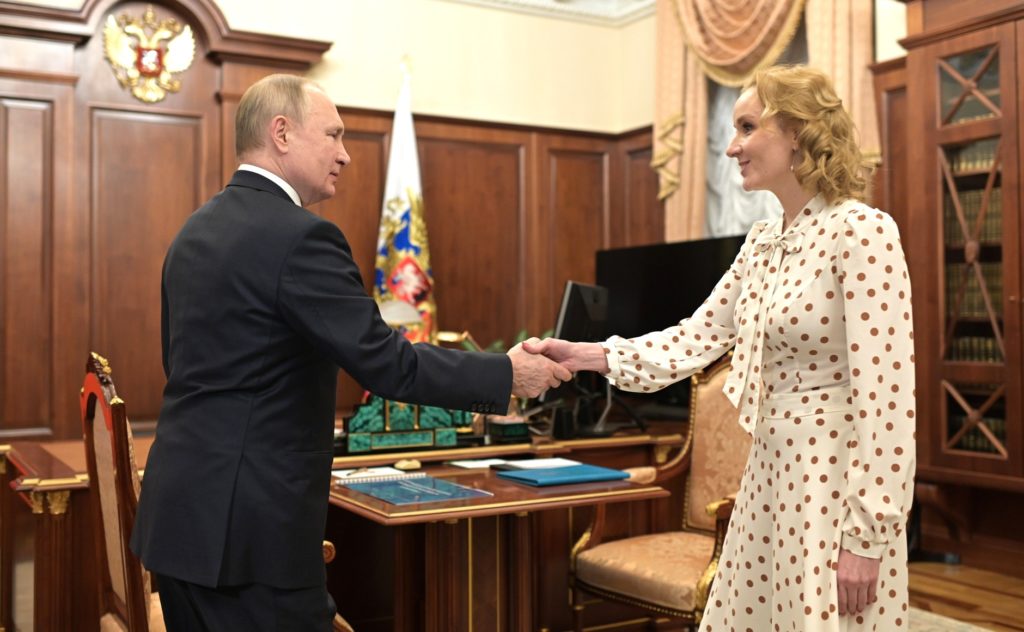
Maria Lvova-Belova and Vladimir Putin. Photo: Kremlin.ru
And here onto the stage steps Russia's Baba Yaga of "child protection": Maria Lvova-Belova, the so-called presidential commissioner for children's rights. She herself told Putin, in public, about a boy from Mariupol she had taken into her care after he was removed from the occupied city. Ukraine and international organizations view such cases as part of a wider system of unlawful transfers of Ukrainian children to Russia. The International Criminal Court has issued a warrant for her arrest on exactly those charges: the unlawful deportation and transfer of Ukrainian children.
That is what Russian care for children looks like: take a Ukrainian child from Mariupol, carry him off to Russia, and set about turning him into a Russian. If this is how Russia's children's commissioner works in public, it is frightening to imagine what happens where there are no cameras and no international warrants.
Nobody is offering to lift a single sanction for them.
Russian Children’s Rights Commissioner Maria Lvova-Belova and her Ukrainian "adopted son" Pylyp from occupied Mariupol.
And Muratov's pacifist initiatives are not new, either. After the full-scale invasion, he was among the authors and promoters of the ceasefire appeals. One public statement, signed by 51 Nobel laureates, called for an end to the fighting, which Muratov later described as a plea for a "genuine ceasefire" before talks.
On paper it all looks wonderful: stop shooting, stop killing one another, make peace. But there is one small problem. Russia did not wander into this war alongside Ukraine. Russia launched the full-scale invasion itself.
And in these appeals, Muratov did not demand that the Kremlin withdraw its troops from Ukraine. He did not demand the de-occupation of Ukrainian territory. He did not put the question of responsibility for the aggression and the war crimes to Russia. The formula was far more convenient: just stop shooting.
But "stop killing each other" is a beautiful phrase for people who would rather not notice who attacked whom.
It turns aggressor and victim into two symmetrical sides, as though Ukraine and Russia had simply quarreled and now both must show wisdom and stop firing. There is just one nuance: if, after such a "peace," the Russian army remains on occupied Ukrainian territory, that is not an end to the aggression. It is a pause with a Russian flag on Ukrainian soil.
Now add the prisoner proposal on top. Russia does not withdraw its troops. Ukraine does not get its occupied territory back. The Kremlin answers for nothing. But a few Russian political prisoners are released, and for that, Russia's sanctions are eased too. And Ukraine, meanwhile, is simply supposed to stand to one side and rejoice that humanism has triumphed.
Ukraine is simply supposed to stand to one side and rejoice that humanism has triumphed.
Except there is a difference of principle. A Russian political prisoner can walk out of a Russian prison. A Ukrainian civilian can stay in one. And a Ukrainian soldier can be killed by a weapon Russia bought thanks to that same sanctions relief.
And then a very simple question arises for the great humanist and Nobel laureate: why should the freedom of Russia's political prisoners be bought at the expense of the freedom, the safety, and the lives of Ukrainians?
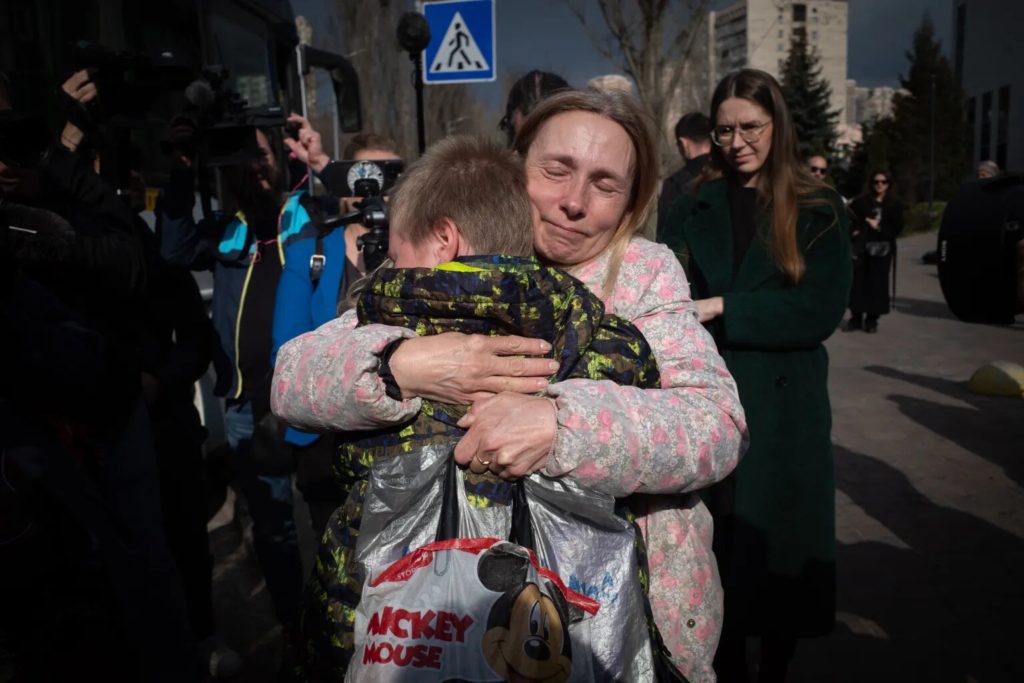
Fourteen more Ukrainian children have crossed from Russian-occupied Kherson Oblast back onto Ukrainian-held ground, the oblast's military administration said on 29 September. They join a years-long effort to recover children from land Russia seized in 2022, with thousands more still deported or unaccounted for.
Ukrainian authorities say Russia has deported nearly 20,000 children since its 2022 full-scale invasion, and Zelenskyy insists the true figure is far higher. Those taken to Russi
Fourteen more Ukrainian children have crossed from Russian-occupied Kherson Oblast back onto Ukrainian-held ground, the oblast's military administration said on 29 September. They join a years-long effort to recover children from land Russia seized in 2022, with thousands more still deported or unaccounted for.
Ukrainian authorities say Russia has deported nearly 20,000 children since its 2022 full-scale invasion, and Zelenskyy insists the true figure is far higher. Those taken to Russia are placed in institutions or Russian families and pushed through Russian "re-education" aimed at erasing their Ukrainian identity.
These 14 add to roughly 2,000 children Ukraine has brought back since 2022—a recovery effort still dwarfed by the numbers Russia holds and keeps adding to.
Who made it out
The 14 are four boys and 10 girls, aged 6 to 17, said Oleksandr Prokudin, who heads the administration. Rescuers also brought back one young adult who had been deprived of parental care.
Each case shows what pushed the children toward the return. One 16-year-old boy was being forced onto Russia's military registration rolls under occupation, part of a pipeline that moves teenagers from a Russian passport toward conscription at 18. A 17-year-old girl had sought a Ukrainian education despite the risks and Russian control, Prokudin said. A 10-year-old girl, he added, had longed to come home and did all she could to reach safety.
The running tally
The children left through Bring Kids Back UA, the repatriation program President Volodymyr Zelenskyy launched in 2023, working with the Ukrainian charity Save Ukraine. That brings to 204 the number of children returned from occupied Kherson Oblast since the start of 2026, regional authorities said.
The wider deportation campaign
In 2023, the International Criminal Court in The Hague issued arrest warrants for Russian leader Vladimir Putin and his children's rights commissioner, Maria Lvova-Belova, over the illegal deportation of children from occupied Ukraine to Russia.
Russia is preparing to make daily life in Kyiv harder before winter, aiming at the ordinary places civilians use rather than at military sites, The Economist reported. Ukrainian officials say the push blends bombing, sabotage, and disinformation, and expect it to peak in November.
Every winter of its full-scale invasion, Russia has tried to freeze Ukrainians into surrender, and each year the strikes reach deeper into ordinary life. The civilian casualties recorded in 2026 have already p
Russia is preparing to make daily life in Kyiv harder before winter, aiming at the ordinary places civilians use rather than at military sites, The Economist reported. Ukrainian officials say the push blends bombing, sabotage, and disinformation, and expect it to peak in November.
Every winter of its full-scale invasion, Russia has tried to freeze Ukrainians into surrender, and each year the strikes reach deeper into ordinary life. The civilian casualties recorded in 2026 have already passed the whole of last year, the UN says.
From the power grid to the grocery store
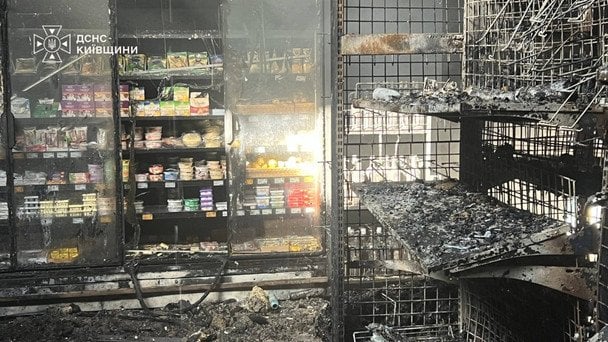
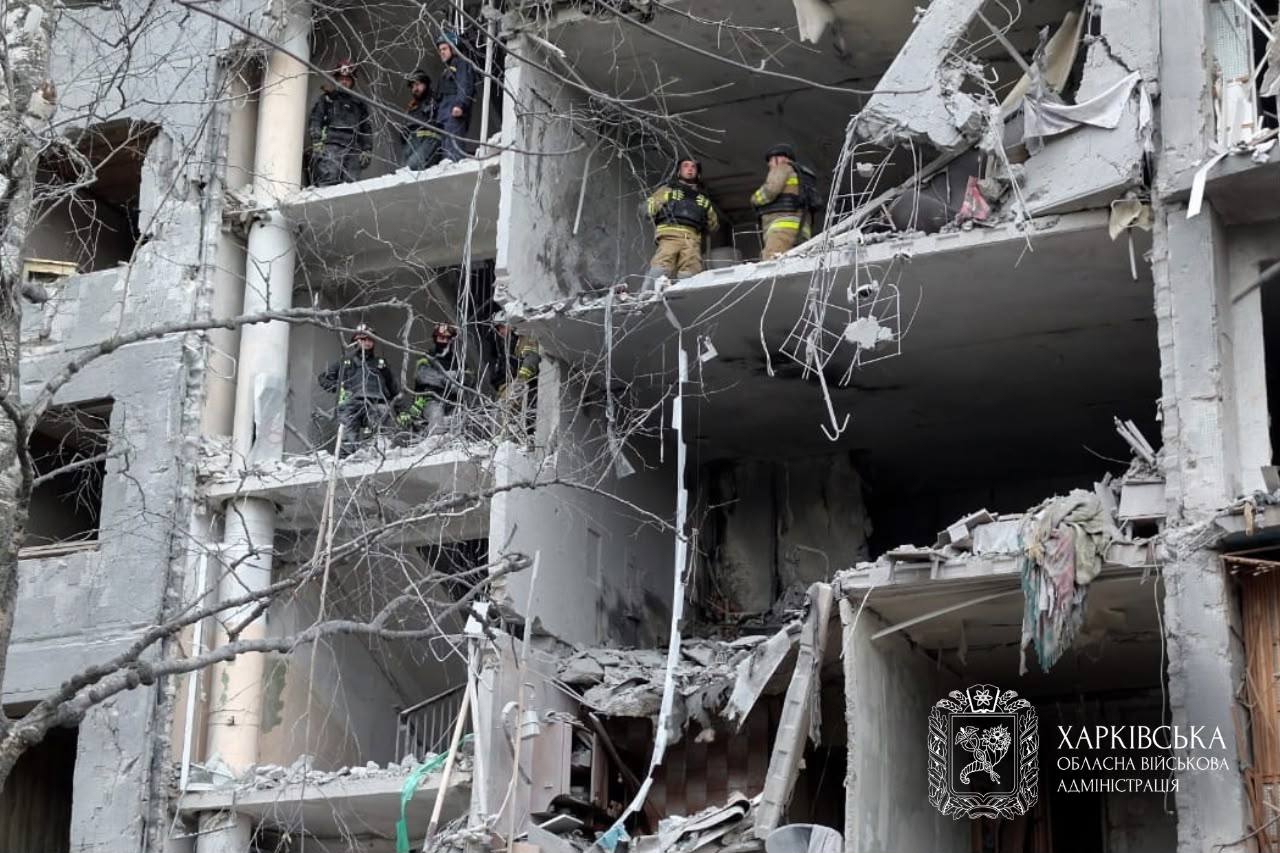
Russia has already turned its drones on Kyiv's supermarkets, food warehouses, and data centers this year. On 28 September, a Russian jet drone struck the National Academy of Sciences in central Kyiv. The strike killed two people, the Academy said. Survivors climbed from the windows of the burning building. A senior Ukrainian official told The Economist the Kremlin now wants shoppers too afraid to enter a store. Russia is also keeping its winter routine, hitting electricity, water, and sewage systems.
Cheaper jet drones that stream live to their pilots
Most of the damage now comes from Russia's cheap jet drones, The Economist said. Pilots guide them onto targets and watch a live video feed. They are hard to stop, and Russia's ballistic missiles are deadlier still as Ukraine's supply of Patriot interceptors dwindles. Ukrainian President Volodymyr Zelenskyy said Kyiv had agreed a new Patriot interceptor package, but it remains short of interceptors of its own. A security official told The Economist that Russia has thousands of drones stockpiled and plans to use its entire ballistic missile stock within two months.
Explore further
War is costing Ukraine $155 billion per year. With Western aid running late, Kyiv is freezing everything but army, pensions, and public wages
Sabotage, chaos, and a city that won't switch off
Ukraine's counter-intelligence services say they foil seven or eight Russian plots a week, and officials believe some sleeper cells remain. The campaign's third element, disinformation, targets war fatigue and corruption scandals. Russia runs the same plan every year, hoping its bot farms will push Ukrainians onto the streets to demand surrender, said Andrii Kovalenko, who heads the Center for Countering Disinformation at the National Security and Defense Council.
"It's nonsense," he told The Economist, adding that someone is feeding the idea to Putin so they can steal more money.
Kyiv is also far harder to shut down than Moscow assumes, Kovalenko said. The city's internet is too decentralized for a handful of strikes to knock out, The Economist noted. Energy expert Olha Babii said the test is how fast crews restore power, not whether it can be destroyed. The capital is emptying, its population down from about 3.7 million to 3.3 million by The Economist's count.
Russia plans to sharply increase military spending in 2027 while expanding the authorized size of its armed forces, according to budget documents seen by Reuters and a report by Novaya Gazeta Europe.
The developments point to Moscow preparing to expand its war effort into next year, even as its battlefield gains remain limited and its campaign increasingly relies on missile and drone attacks against Ukrainian cities and civilian infrastructure. It is also doing so as the Russian governm
Russia plans to sharply increase military spending in 2027 while expanding the authorized size of its armed forces, according to budget documents seen by Reuters and a report by Novaya Gazeta Europe.
The developments point to Moscow preparing to expand its war effort into next year, even as its battlefield gains remain limited and its campaign increasingly relies on missile and drone attacks against Ukrainian cities and civilian infrastructure. It is also doing so as the Russian government faces a widening budget deficit and falling projected oil and gas revenues.
Russia plans 27% increase in 2027 defense spending despite widening budget deficit
Russia plans to spend 17.1 trillion rubles ($202.6 billion) on defense in 2027, according to government documents reviewed by Reuters. That is about 27% more than the 13.5 trillion rubles originally budgeted for defense in 2027 and would be the highest level of military spending since Russia launched its full-scale invasion of Ukraine in February 2022.
The documents project total defense spending of 50 trillion rubles over the next three years. The actual amount Russia will spend on defense in 2026 is classified, Reuters reported, while some military-related spending can be recorded under other parts of the state budget.
The planned increase comes alongside worsening fiscal pressures. Russia has raised its forecast for the 2026 budget deficit to 3.2% of GDP, from an earlier estimate of 1.6%, according to Reuters. Overall government spending is expected to rise 13.2% this year to 48.6 trillion rubles, or 20.9% of GDP.
The government also expects to increase net borrowing by 26% in 2026 to 5 trillion rubles and withdraw 459 billion rubles from its National Wealth Fund, Reuters reported. Its forecast for 2026 oil and gas revenues has been cut to 7.6 trillion rubles from 8.9 trillion.
Russia is reportedly planning new tax increases for 2027 to help cover the growing deficit. A new windfall tax on metals and mining companies is expected to bring in about 200 billion rubles a year, according to the documents. State debt is projected to rise to 21.7% of GDP in 2027, above the 20% level Russian authorities have previously considered safe.
The draft budget is expected to be submitted to Russia's parliament by October 1.
Army staffing also reaches new high
At the same time, Russian President Vladimir Putin has again increased the authorized size of the country's armed forces.
Putin signed a decree raising the official staffing level of the Russian Armed Forces to 2.44 million people, including 1.55 million military personnel, Novaya Gazeta Europe reported on September 28. The increase is 15,500 personnel compared with the previous decree issued in August.
It is the fourth increase in the authorized size of the Russian military in 2026 and the seventh since the beginning of the full-scale invasion of Ukraine, according to Novaya Gazeta Europe. Before the invasion, the authorized force stood at 1.90 million people, including 1.01 million military personnel.
Russia shifts more of the war into the air
The increases in military staffing and spending come as Russia continues to pursue its maximalist war aims despite limited battlefield progress. The Institute for the Study of War assessed on September 27 that Russia's frontline has remained largely static in recent months and that the Kremlin is increasingly relying on long-range missile and drone strikes as part of its effort to force Ukraine to capitulate during the winter of 2026–27.
ISW assessed that Putin may be trying to make Ukraine's infrastructure and air defense capacity buckle under sustained Russian strikes rather than relying solely on further territorial gains. The institute also said the Kremlin may delay a large-scale mobilization while it assesses whether its expanded long-range strike campaign can achieve its objectives.
The planned increase in military spending and the repeated expansion of the armed forces show that Moscow is preparing to sustain and expand its war effort into 2027, even as its forces make limited territorial gains in Ukraine.
Russia has quietly started a new round of mobilization and plans to bring in more North Korean troops, Ukrainian President Volodymyr Zelenskyy said. He cited a new report from Ukraine's military intelligence. The same day, the Kremlin published a decree enlarging Russia's army for the fourth time this year.
Russia widens recruitment at home and abroad
Zelenskyy spoke in his evening address on 28 September, after a briefing from Ukraine's military intelligence (HUR).
"In effect, t
Russia has quietly started a new round of mobilization and plans to bring in more North Korean troops, Ukrainian President Volodymyr Zelenskyy said. He cited a new report from Ukraine's military intelligence. The same day, the Kremlin published a decree enlarging Russia's army for the fourth time this year.
Russia widens recruitment at home and abroad
Zelenskyy spoke in his evening address on 28 September, after a briefing from Ukraine's military intelligence (HUR).
"In effect, the Russians have already begun additional mobilization—they are increasing the number of people they recruit through various means," he said.
Moscow also plans to recruit more foreigners, Zelenskyy said. He urged the governments of countries whose citizens Russia recruits to counter it, and said Kyiv would inform each of them.
Ukraine says Russia has been losing soldiers faster than contract recruitment replaces them. If so, an unannounced call-up lets the Kremlin refill its ranks without a formal draft. ISW says Putin may hold off on such a draft until he sees whether his strikes work. Ukrainian intelligence had expected Russia to announce a mass mobilization after this month's State Duma elections.
More than 8,000 North Koreans in Russia, 10,000 more in preparation
More than 8,000 North Korean troops are currently on Russian territory, Zelenskyy said. Pyongyang is selecting another 10,000 for training and deployment to Russia, he added.
Russia is paying, among other things, with technology, according to Zelenskyy. North Korea has launched production of Shahed-type attack drones with Russian technical support, he said.
That is a step beyond what Kyiv reported in June 2025. Moscow and Pyongyang had then only agreed to start preparing such production. In August, Zelenskyy warned that Russia could receive up to 50,000 North Korean troops.
Explore further
North Korean missile unit deploys to Russia for ballistic strikes on Ukraine, Kyiv says
Kremlin raises the army's size again
Putin's decree sets the authorized strength of Russia's armed forces at 2,441,630, including 1,550,500 military personnel, Vedomosti reported. The decree gives no reason.
The order adds 15,500 troops and is the fourth such increase this year, Euronews said. Since March, the combined increase has reached 47,860 soldiers. Putin's 2022 "partial mobilization" decree also remains in force, the outlet noted.
Explore further
Russia could open northern front by February if it orders new mobilization, Ukraine intel says
Moscow keeps denying a call-up
In early September, Putin claimed that reports of a coming mobilization were "complete nonsense" and "an information attack on Russia." Russian officials gave similar assurances days before the 2022 call-up.
Ukraine's military and foreign intelligence had earlier said that Russia's General Staff prepared a scenario to mobilize 600,000 people over 2026 and 2027, 300,000 each year.
Russia is likely attempting to force Ukraine to capitulate by spring 2027 through a large-scale campaign of long-range strikes, the Institute for the Study of War (ISW) said in its 27 September report. Russian President Vladimir Putin's new theory of victory relies heavily on the mass use of jet-powered drones and ballistic missiles against Ukraine, the institute assesses.
Russia keeps shifting to faster jet-powered drones that Ukraine's defenses struggle to stop, forcing it to spend sc
Russia is likely attempting to force Ukraine to capitulate by spring 2027 through a large-scale campaign of long-range strikes, the Institute for the Study of War (ISW) said in its 27 September report. Russian President Vladimir Putin's new theory of victory relies heavily on the mass use of jet-powered drones and ballistic missiles against Ukraine, the institute assesses.
Russia keeps shifting to faster jet-powered drones that Ukraine's defenses struggle to stop, forcing it to spend scarce missiles on them. Russia's use of jet-powered drones rose eightfold from June to August, with Moscow launching around 7,700 such drones since their initial deployment, Ukrainian Air Force spokesperson Yurii Ihnat said on 23 September. But Putin likely does not expect the campaign to last indefinitely, and he may hold off on a new mobilization until he sees whether the strikes work, ISW assesses.
Putin's modified theory of victory
Putin's modified theory of victory largely depends on Russia's ability to mass-launch cheap jet-powered Gerans that get through Ukrainian defenses often enough, the institute notes.
Even a Kremlin-linked Russian milblogger claimed on 27 September that the Russian strategy, which relies heavily on long-range strikes, is costly and cannot continue indefinitely, not least because Ukraine is hitting Russia harder too, according to the analysis.
At the same time, Putin stated on 25 September that Ukraine "must feel" Russia's "retaliatory" strikes. ISW assesses that this suggests he intends to intensify Russia's strike campaign in winter, as he has in previous winters.
The aftermath of the Russian attack on Kyiv, Ukraine, 27 December 2025. Photo: National Police
If Putin is counting on Ukraine to break and capitulate this winter, he may be ignoring what the campaign will cost Russia over time, the institute notes. This strategy also counts on Ukraine's shortage of Patriot interceptors against ballistic missiles, and on the country's power grid and other vital systems giving way under months of strikes.
Until that approach runs out, Putin is unlikely to back down on his demands or agree to real ceasefire talks, ISW assesses.
Ukrainian interceptors could disrupt Russia's plan
A Kremlin-linked Russian milblogger claimed on 27 September that Russian forces launched predominantly jet-powered Geran-5 drones at Odesa, Mykolaiv, and Kyiv during the night of 26–27 September. According to the blogger, Russia's diverse arsenal of strike weapons and Ukraine's shortage of air defense assets allow Russian forces to maintain the current pace of strikes and expand the range of targets, ISW writes in its analysis.
At the same time, Ukrainian President Volodymyr Zelenskyy said on 26 September that Ukraine's interception rate for jet-powered Shahed drones currently stands at 55%. Of more than 2,730 such drones Russia had launched in September by then, Ukrainian forces had downed or suppressed more than 1,500, he added.
Jet-powered drones Geran-5 (above) and Geran-4 (below). Image: TurDef
Ukraine is testing interceptor drone prototypes in combat conditions, Ukrainian Presidential Office head Kyrylo Budanov told Novyny.LIVE on 27 September. The mass deployment of interceptors capable of shooting down jet-powered Gerans could begin within several months, he added. Ukrainian companies have already successfully tested several interceptor drones capable of intercepting Russian jet-powered drones in field conditions, the institute notes.
At the same time, it remains unclear whether Ukraine will be able to scale up its interceptor program quickly enough and achieve sufficient success to disrupt the intensification of Russia's campaign during the winter, ISW notes.
Why Putin may hold off on a new mobilization
Expanding Russia's arsenal of strike weapons is cheaper than carrying out a second mobilization economically, militarily, and socially, a Kremlin-linked Russian milblogger cited by the institute claimed.
Putin may put off large-scale forced mobilization until he sees whether the strikes deliver, ISW assesses, though his officials have been laying the groundwork for it despite Kremlin denials. Still, the need to replace Russia's enormous battlefield losses could push him to order such a mobilization as early as this fall, ISW notes, as Ukrainian and other sources have repeatedly reported he is preparing to do.
Russian President Vladimir Putin has again told US officials that Russia can capture Ukraine’s Donetsk Oblast within several months, according to Ukrainian President Volodymyr Zelenskyy.
Speaking to the UN General Assembly on 24 September, Zelenskyy said this was the latest in a long series of similar promises as Russia has spent nearly five years trying to seize the region. He said Putin has made such promises 17 or 18 times, repeatedly pushing the deadline further back.
He contrast
Russian President Vladimir Putin has again told US officials that Russia can capture Ukraine’s Donetsk Oblast within several months, according to Ukrainian President Volodymyr Zelenskyy.
Speaking to the UN General Assembly on 24 September, Zelenskyy said this was the latest in a long series of similar promises as Russia has spent nearly five years trying to seize the region. He said Putin has made such promises 17 or 18 times, repeatedly pushing the deadline further back.
He contrasted those promises with Russia’s heavy battlefield losses and relatively limited territorial gains.
Russia has paid a huge price for its Donetsk offensive
Zelenskyy said Russian forces suffered 248,964 troops killed or severely wounded between January and August 2026.
He said Russia had captured only slightly more than 1,000 square kilometers of Ukrainian territory this year, while Ukraine had already liberated a significant portion of those gains.
Zelenskyy presented the figures as the human cost of Putin’s continued attempt to seize Donetsk, arguing that Russia is paying an enormous price for relatively limited territorial gains.
“Always the same: ‘Just a few more months,’” Zelenskyy said, adding that Putin would again fail to meet his latest deadline.
The Russian offensive is also facing a recent setback in northern Donetsk. Ukraine launched Operation Vivaldi in September to clear Russian infiltrators and retake ground near Lyman, disrupting Russia’s plan to encircle the fortified cities of the Donetsk “Fortress Belt.”
Ukrainian forces have reported retaking several settlements and clearing up to 125 square kilometers in the operation, although the full scope of the offensive remains undisclosed.
Explore further
Ukraine retakes ground in a region Russia has fought for years to capture. “Vivaldi” is only getting started but is already “one of the most important victories for Ukraine in 2026”
Zelenskyy also warned that Russia’s ambitions extend beyond Donetsk. After saying Putin would again fail to capture the region, he said Russia would continue seeking other Ukrainian cities, naming Odesa, Kharkiv and Dnipro, while also pointing to Russian pressure on Moldova and threats toward Poland and the Baltic states.
Russia continues to pour missiles and drones into Ukraine
The battlefield campaign has been accompanied by a sustained Russian long-range attack campaign against Ukrainian cities and infrastructure.
Since the beginning of 2026, Russia has launched more than 2,100 missiles against Ukraine, including more than 950 ballistic missiles, according to Zelenskyy.
Ballistic missiles are particularly difficult for Ukraine to counter because it has a limited supply of interceptors capable of engaging them. Russia’s heavy use of ballistic weapons is therefore contributing directly to civilian deaths and infrastructure destruction.
Over the first eight months of the year, Russia also used 63,000 attack drones of various types, Zelenskyy said. More than 7,700 were jet-powered Geran drones, which he described as particularly destructive and dangerous.
The newer jet-powered drones are faster and more advanced than earlier Shahed-type models, making them harder to intercept and adding to the pressure on Ukraine’s air defenses as Russia attacks cities and infrastructure.
Zelenskyy said Russia was using the drones continuously to disrupt economic activity and normal life in Ukrainian cities, including by making it harder for children to attend school.
The figures show the scale of the Russian campaign beyond the front line. Alongside its ground offensive, Russia is using sustained missile and drone strikes to kill civilians, destroy infrastructure, and exhaust Ukraine’s air-defense resources.
North Korean troops add to Russia’s war effort
Zelenskyy also highlighted North Korea’s direct involvement in Russia’s war, saying its troops have suffered heavy losses while gaining battlefield experience alongside Russian forces.
He said North Korea’s military capabilities were also benefiting from its cooperation with Russia, pointing to improvements in its ballistic missiles and drone capabilities.
Ukraine recently transferred two North Korean prisoners of war to South Korea. Zelenskyy said capturing the soldiers alive had been difficult and described one prisoner’s attempt to take his own life after realizing he was about to be captured.
He said the soldiers had been conditioned to believe they had to die rather than surrender.
“Do you really want to give such a force more time to learn how to fight?” Zelenskyy asked.
Zelenskyy calls for de-escalation before winter
Zelenskyy separately warned that Russia could again target Ukraine’s energy and heating infrastructure this winter.
Russia has already intensified attacks on Ukraine’s energy system ahead of the cold season.
Russia has also explicitly threatened to “freeze” Ukraine this winter, with its Defense Ministry linking the threat to attacks on Ukrainian infrastructure. The country spent much of the previous winter dealing with the consequences of Russian strikes on power and heating infrastructure, including blackouts and disruptions to heat supplies.
Zelenskyy said Ukraine expects the coming winter to be difficult but warned that if Russia continues attacking Ukraine’s energy and heating systems, Ukraine will make the winter painful for Russia as well.
He called for steps toward de-escalation before winter, saying that diplomacy and military strength were both needed to end the war.
The United States will send "more weapons" to Ukraine amid intensified Russian strikes, U.S. President Donald Trump told reporters on July 7, adding that he is disappointed in Russian President Vladimir Putin."We're gonna send some more weapons we have to them, they have to be able to defend themselves, they're getting hit very hard now," Trump said alongside a U.S. and Israeli delegation at the White House.The U.S. halted weapons shipments to Ukraine amid a capability review, the White House an
The United States will send "more weapons" to Ukraine amid intensified Russian strikes, U.S. President Donald Trump told reporters on July 7, adding that he is disappointed in Russian President Vladimir Putin.
"We're gonna send some more weapons we have to them, they have to be able to defend themselves, they're getting hit very hard now," Trump said alongside a U.S. and Israeli delegation at the White House.
The U.S. halted weapons shipments to Ukraine amid a capability review, the White House and Pentagon previously confirmed, with Trump later denying the pause.
Trump previously said he was disappointed in Putin for not making progress to end Russia's war against Ukraine, following a phone call between the two leaders on July 3.
On July 7, Trump again said he was unhappy with Putin for failing to cooperate with U.S. efforts to end the war in Ukraine.
"It's a horrible thing, and I'm not happy with President Putin at all," Trump said. "I'm disappointed frankly that President Putin hasn't stopped."
He noted that the additional assistance the U.S. will supply to Ukraine will mainly consist of defense weapons amid increased Russian attacks.
"They're getting hit very hard. We're gonna have to send more weapons, your defensive weapons primarily, but they're getting hit very, very hard. So many people are dying in that mess," Trump said.
Later on July 7 the Pentagon released a statement confirming more weapons would be sent to Ukraine.
"At President Trump's direction, the Department of Defense is sending additional defensive weapons to Ukraine to ensure the Ukrainians can defend themselves while we work to secure a lasting peace and ensure the killing stops," it read.
"Our framework for POTUS to evaluate military shipments across the globe remains in effect and is integral to our America First defense priorities."
President Volodymyr Zelensky has previously said he and Trump discussed supplying Ukraine with additional Patriot missile systems following a phone call between the two on July 4.
Zelensky described his recent phone call with Trump as "the best conversation in all this time" in an evening address on July 5.
"Patriot (missiles) are key to protection from ballistic (missiles). We discussed several other important issues that our teams will work out in detail at meetings in the near future," he said.
Trump described his July 3 conversation with Putin as disappointing, saying that the call "didn't make any progress" in stopping Russia's war against Ukraine.
"I'm very disappointed with the conversation I had today with President Putin," Trump told journalists. "Because I don't think he's there. And I'm very disappointed. I don't think he's looking to stop this fighting."
Pentagon spokesperson Sean Parnell confirmed on July 2 that some military assistance to Ukraine has been halted as the U.S. Defense Department conducts a review of foreign aid deliveries.
"This capability review... is being conducted to ensure U.S. military aid aligns with our defense priorities... We see this as a common-sense, pragmatic step towards having a framework to evaluate what munitions are sent and where," Parnell said.
Despite the Pentagon announcement, Trump did not acknowledge a halt in U.S. weapons shipments to Ukraine.
"Why did you pause weapons shipments to Ukraine?" a reporter asked Trump as the U.S. president prepared to board Air Force One on July 3.
Editor's note: This is a developing story and is being updated.Russia's former Transport Minister Roman Starovoit shot himself dead in Odintsovo following his dismissal by President Vladimir Putin on July 7, the pro-government newspaper Izvestia reported, citing unnamed sources.Starovoit's ouster came after nearly 500 flights were grounded at major Russian airports on July 5–6 due to security threats from Ukrainian drone attacks.The following day, an explosion aboard the Eco Wizard tanker at the
Editor's note: This is a developing story and is being updated.
Russia's former Transport Minister Roman Starovoit shot himself dead in Odintsovo following his dismissal by President Vladimir Putin on July 7, the pro-government newspaper Izvestia reported, citing unnamed sources.
Starovoit's ouster came after nearly 500 flights were grounded at major Russian airports on July 5–6 due to security threats from Ukrainian drone attacks.
The following day, an explosion aboard the Eco Wizard tanker at the Ust-Luga port in Leningrad Oblast triggered an ammonia leak, adding to the crisis engulfing Russia's transportation sector.
Starovoit, sanctioned by Ukraine and Western countries for his role in the war against Ukraine, had served as governor of Russia's Kursk Oblast before being appointed transport minister in May 2024.
According to Russian media, Starovoit's body was found near Moscow. Preliminary findings suggest that the suicide may be linked to a possible criminal case.
Media outlets report that the former minister shot himself using an honorary firearm he had received from the Interior Ministry in 2023.
According to media reports, former Kursk Oblast official Aleksei Smirnov, who had previously served as Starovoit's deputy, had provided testimony implicating Starovoit. Smirnov himself was arrested earlier on suspicion of embezzling 1 billion rubles (over $12 million) during the construction of defensive structures in the border region.
An investigation into the large-scale theft of state funds in Kursk Oblast is currently underway, with several of Starovoit's former deputies remaining under suspicion, including Smirnov, who briefly served as acting governor.
State-controlled RIA Novosti, citing Russia's Investigative Committee, reported that Starovoit's body was discovered inside his private vehicle with a gunshot wound. Investigative teams from Russia's Main Investigative Directorate are reportedly working at the scene to determine the exact circumstances. The primary theory under consideration is suicide.
The timing of the death remains unclear. Andrei Kartapolov, head of the State Duma Defense Committee, confirmed the death to RTVI, stating only that it occurred "quite some time ago," without elaborating further.
Russian President Vladimir Putin dismissed Transport Minister Roman Starovoit on July 7, following a series of high-profile disruptions to Russia's aviation and shipping sectors.The official decree was published on Russia's legal information portal. No reason was given, but Starovoit's departure comes after nearly 300 flights were grounded at major Russian airports on July 5–6 due to security threats from Ukrainian drone attacks.Adding to the turmoil, an explosion aboard the Eco Wizard tanker at
Russian President Vladimir Putin dismissed Transport Minister Roman Starovoit on July 7, following a series of high-profile disruptions to Russia's aviation and shipping sectors.
The official decree was published on Russia's legal information portal. No reason was given, but Starovoit's departure comes after nearly 300 flights were grounded at major Russian airports on July 5–6 due to security threats from Ukrainian drone attacks.
Adding to the turmoil, an explosion aboard the Eco Wizard tanker at the Ust-Luga port in Leningrad Oblast caused an ammonia leak on July 6, prompting an emergency response.
Starovoit, sanctioned by Ukraine and Western countries for his role in the war against Ukraine, had served as governor of Russia's Kursk Oblast before being appointed transport minister in May 2024.
According to the Russian state-controlled newspaper Vedomosti, Deputy Transport Minister Andrei Nikitin, a former Novgorod Oblast governor, is a leading candidate to replace Starovoit.
On July 6, the Russian Federal Aviation Agency confirmed that 287 flights were delayed or canceled at Moscow's Sheremetyevo Airport, St. Petersburg's Pulkovo Airport, and Nizhny Novgorod's Strigino Airport due to safety concerns from drone activity.
Kyiv's drone campaign, which has increasingly disrupted civilian air travel in Russia, is part of Ukraine's broader strategy to undermine Russia's logistics far beyond the front line.
Russian authorities said the ammonia leak at Ust-Luga was "minor," but the pro-Kremlin Telegram channel, Baza, reported that an unexplained explosion preceded the incident.
The Eco Wizard tanker is believed to be part of Russia's "shadow fleet" — a network of vessels used to bypass international sanctions on Russian oil and chemical exports. Five tankers have been damaged by explosions at Russian ports since the start of 2025.
The Kremlin has not made a formal statement on the minister's dismissal.
If China attacks Taiwan, Beijing may ask Moscow to open a second front against NATO states, NATO Secretary General Mark Rutte said in an interview with The New York Times (NYT) published on July 5.Fears of escalating Chinese military intervention in Taiwan have risen sharply since Russia launched its full-scale invasion of Ukraine in February 2022. The war has served as a possible model of how both Taipei and the international community might respond if Beijing decides to invade."There's an incr
If China attacks Taiwan, Beijing may ask Moscow to open a second front against NATO states, NATO Secretary General Mark Rutte said in an interview with The New York Times (NYT) published on July 5.
Fears of escalating Chinese military intervention in Taiwan have risen sharply since Russia launched its full-scale invasion of Ukraine in February 2022. The war has served as a possible model of how both Taipei and the international community might respond if Beijing decides to invade.
"There's an increasing realization, and let's not be naive about this: If Xi Jinping would attack Taiwan, he would first make sure that he makes a call to his very junior partner in all of this, Vladimir Vladimirovich Putin, residing in Moscow, and telling him, 'Hey, I'm going to do this, and I need you to keep them busy in Europe by attacking NATO territory,'" Rutte said.
"That is most likely the way this will progress. And to deter them, we need to do two things. One is that NATO, collectively, being so strong that the Russians will never do this. And second, working together with the Indo-Pacific — something President (Donald) Trump is very much promoting," Rutte added.
Western officials and analysts point to Russia's surging military expenditures amid its ongoing full-scale invasion of Ukraine.
In 2024, Russia's defense budget reportedly rose 42% in real terms, reaching $462 billion, surpassing the combined spending of all European nations, according to the International Institute for Strategic Studies.
NATO allies have cited Russia's military buildup, sabotage campaigns, and continued aggression against Ukraine as reasons to accelerate defense investments.
Rutte previously warned that Russia could rebuild its military capacity to threaten NATO territory within five years, urging members to act with urgency.
Editor's note: This story has been updated with additional comments by U.S. President Donald Trump.U.S. President Donald Trump said on July 5 that Russian President Vladimir Putin does not appear interested in ending the war in Ukraine, according to a comment made onboard Air Force One.Trump reiterated that he was "very unhappy" with the July 3 phone call between the two leaders. "It just seems like he wants to go all the way and just keep killing people. It's not good. I wasn't happy with it,"
Editor's note: This story has been updated with additional comments by U.S. President Donald Trump.
U.S. President Donald Trump said on July 5 that Russian President Vladimir Putin does not appear interested in ending the war in Ukraine, according to a comment made onboard Air Force One.
Trump reiterated that he was "very unhappy" with the July 3 phone call between the two leaders.
"It just seems like he wants to go all the way and just keep killing people. It's not good. I wasn't happy with it," Trump told reporters.
The call, which lasted about an hour, was confirmed by the Kremlin to have focused on Ukraine. Putin reportedly told Trump that Russia would continue pursuing its "goals" in the war.
Trump's remarks follow a sharp escalation in Russian missile and drone attacks across Ukraine that have killed and injured hundreds of civilians in recent weeks.
The strikes have hit multiple regions, destroying civilian infrastructure amid persistent calls from Ukraine, the U.S., and Europe for an unconditional ceasefire.
When asked if he can end Russia's war against Ukraine, Trump said, "I don’t know. I can’t tell you whether or not that’s going to happen."
Trump agreed when asked if ending the war is a priority, saying, "Yes. I’d like to see it happen."
The day after his call with Putin, the U.S. president spoke by phone with President Volodymyr Zelensky and said the two had a "very strategic" conversation.
"We talked about different things... I think it was a very, very strategic call," Trump said. When asked about supplying Patriot air defense systems to Ukraine, he replied, "Yeah, we might."
"They're going to need something because they're being hit pretty hard," Trump added.
The statement comes as the U.S. Defense Department has paused deliveries of several key weapons systems, including Patriot missiles and precision-guided munitions, prompting concern in Kyiv.
While Trump has said he wants to help Ukraine, his administration has not imposed new sanctions on Russia since taking office and has not approved additional aid packages.
The U.S. president has instead directed strikes against Iran, targeting three nuclear facilities in June in response to regional escalations, a move critics say contrasts with his cautious approach toward Moscow.
When asked why he appears tougher on Tehran than Moscow, Trump told reporters, "No, I think I'm tougher on Russia than I am on Iran."
Despite two rounds of face-to-face talks between Moscow and Kyiv in May and June in Istanbul, no agreement on a ceasefire has been reached. The negotiations have only resulted in prisoner exchanges, as Moscow continues to push for maximalist demands in peace talks.
U.S. President Donald Trump said he was "very disappointed" with Russian President Vladimir Putin following a phone call on July 3, during which the two leaders discussed the ongoing war in Ukraine. Trump told reporters he "didn't make any progress" and accused Putin of showing no willingness to stop the fighting.Trump also said that he is planning to talk to President Volodymyr Zelensky on July 4. "I'm speaking to President Zelensky tomorrow in the early morning, and I'm very disappointed with
U.S. President Donald Trump said he was "very disappointed" with Russian President Vladimir Putin following a phone call on July 3, during which the two leaders discussed the ongoing war in Ukraine.
Trump told reporters he "didn't make any progress" and accused Putin of showing no willingness to stop the fighting.
Trump also said that he is planning to talk to President Volodymyr Zelensky on July 4.
"I'm speaking to President Zelensky tomorrow in the early morning, and I'm very disappointed with the conversation I had today with President Putin," Trump told journalists. "Because I don't think he's there. And I'm very disappointed. I don't think he's looking to stop this fighting."
Later on July 4, Kremlin spokesperson Dmitry Peskov said Russia "is paying close attention to all of Trump's statements," but added Moscow will continue its full-scale war in Ukraine because "it is not yet possible to achieve goals through diplomatic means."
The hour-long conversation between Trump and Putin marked the sixth time the two leaders have spoken since Trump took office in January. According to Kremlin aide Yury Ushakov, Putin reiterated that "Russia will continue to pursue its goals," refusing to back down from what the Kremlin calls the "root causes” of the conflict.
The White House did not issue a readout of the call. Trump provided few additional details, only saying the discussion covered "a lot of things" and confirming no progress had been made on securing a ceasefire.
The call came just hours before one of the largest Russian aerial assaults on Ukraine in recent months. According to Zelensky, air raid sirens began sounding across Ukraine almost simultaneously with media reports about the Trump-Putin call.
"Russia is once again demonstrating that it is not going to end the war and terror," Zelensky said. "The first air raids in our cities and regions began yesterday, almost simultaneously with the start of media discussions of President Trump's phone call with Putin."
Overnight on July 4, Russian forces launched more than 550 aerial weapons, including over 330 Iranian-type Shahed drones and multiple types of missiles, across Ukraine, with Kyiv as the main target. At least 23 people were injured in the capital, where fires broke out in multiple districts and air pollution reached dangerous levels.
Zelensky renewed calls for increased military assistance from Ukraine's partners, especially the delivery of U.S.-made Patriot missile systems.
"Patriots and their missiles are real defenders of life," he said.
Despite Ukraine's urgent appeals, the U.S. Defense Department has paused shipments of Patriot systems and other key munitions, citing the need to replenish domestic stockpiles. Ukrainian officials have warned that such delays threaten to embolden Russia and intensify attacks on civilians.

 Connexion