Letters from federal prosecutors represent latest escalation as Trump continues to make claims of voter fraudFederal prosecutors sent letters to county registrars across California on Friday demanding that local officials set aside and verify ballots that the Department of Justice said may belong to noncitizens, according to the Los Angeles county registrar and a letter obtained by the Associated Press.The letters are the latest escalation in a legal battle between California and Donald Trump’s
Letters from federal prosecutors represent latest escalation as Trump continues to make claims of voter fraud
Federal prosecutors sent letters to county registrars across California on Friday demanding that local officials set aside and verify ballots that the Department of Justice said may belong to noncitizens, according to the Los Angeles county registrar and a letter obtained by the Associated Press.
The letters are the latest escalation in a legal battle between California and Donald Trump’s Department of Justice, which has recently focused on the state in its efforts to root out noncitizen voting ahead of the midterm elections.
Oil drilling rigs in Prudhoe Bay, Alaska. The Polar LNG plan called for the company to tap into the giant load of natural gas available in the state’s northern reaches.
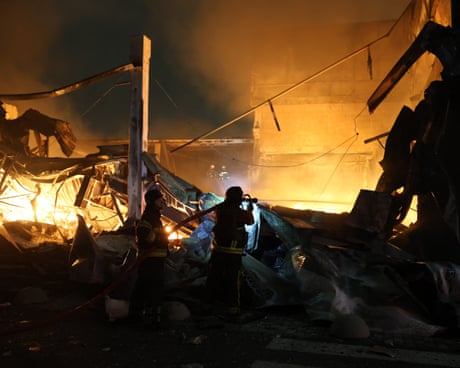
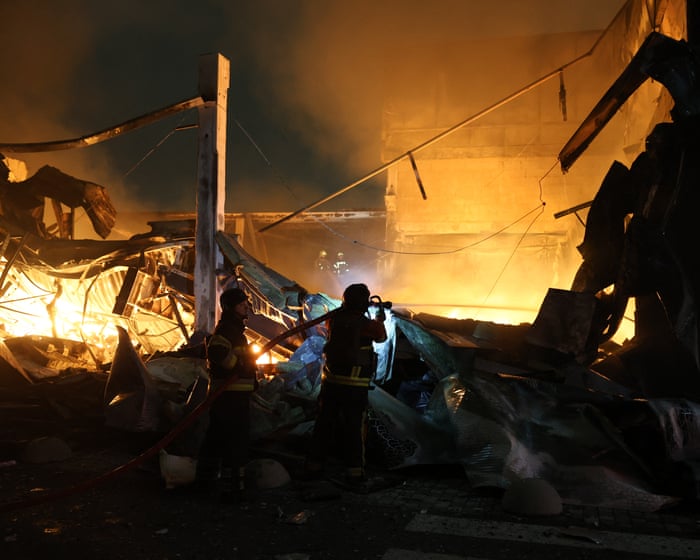
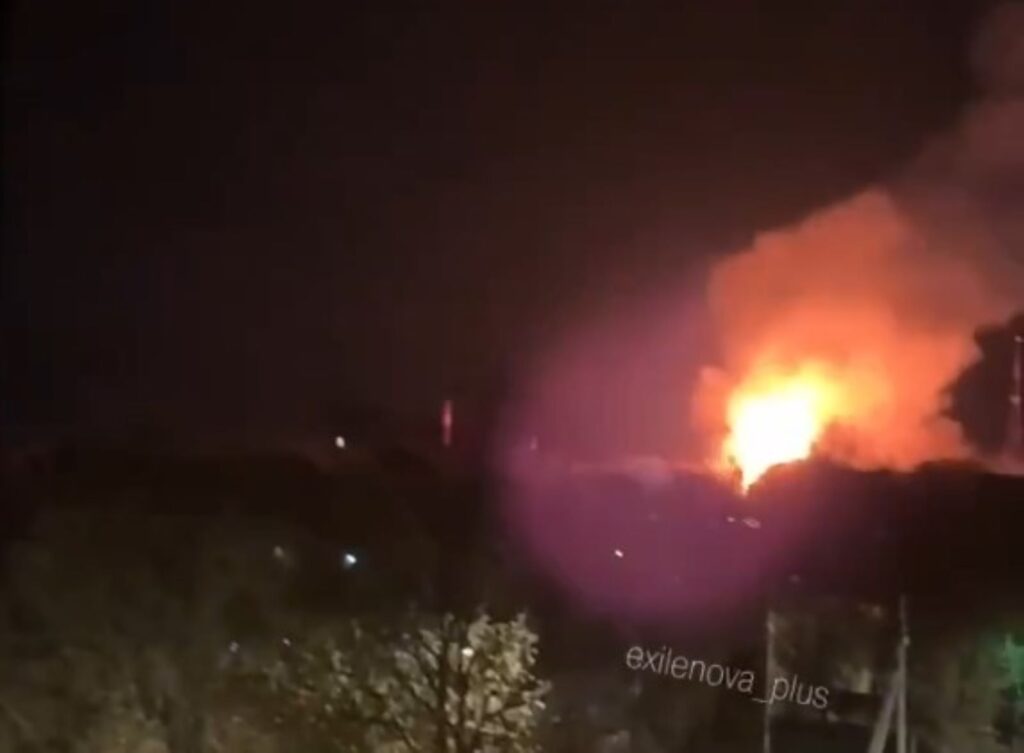
Ukrainian missiles reportedly struck a factory in the city of Oryol on 23 October, with OSINT projects reporting that the target was the Proton electronics plant, which produces components used in Russian weapons systems.
The strike comes amid Ukraine’s broader campaign to target Russian military production facilities and other infrastructure supporting Moscow’s war against Ukraine. Ukrainian strikes on such facilities aim to weaken Russia’s ability to manufacture and maintain the weapo
Ukrainian missiles reportedly struck a factory in the city of Oryol on 23 October, with OSINT projects reporting that the target was the Proton electronics plant, which produces components used in Russian weapons systems.
The strike comes amid Ukraine’s broader campaign to target Russian military production facilities and other infrastructure supporting Moscow’s war against Ukraine. Ukrainian strikes on such facilities aim to weaken Russia’s ability to manufacture and maintain the weapons it uses in its invasion.
The plant reportedly supplies electronic components for Iskander-M ballistic missiles, which Russia regularly uses to attack Ukrainian cities, as well as other weapons systems, including the Pantsir-S1 air defense system.
The strike could disrupt production supporting Russia’s war effort. Photos show extensive damage to the building. Information about casualties remains unclear.
Reports say a Ukrainian missile strike hit the Proton electronics plant in Russia’s Oryol on 23 October.
The facility reportedly produces components for Iskander-M ballistic missiles used in attacks on Ukrainian cities, as well as other Russian weapons systems.
Plant reportedly produces components for Russian weapons
Proton JSC manufactures semiconductor devices, LEDs, and electronic components for industrial and specialized equipment. According to Exilenova+, the plant’s products are used in the production of Iskander-M ballistic missiles, S-71 Kover missiles, and the Pantsir-S1 air defense system.
Exilenova+ reported that the plant was struck by Storm Shadow cruise missiles. The weapon type has not been independently confirmed, and the extent of damage to the facility remains unknown.
Russian authorities confirm strike on factory
Oryol Oblast Governor Andrey Klychkov announced a missile threat in the region before reporting that missiles had struck a factory in Oryol’s Sovetsky District, according to Liga.net.
Residents reported explosions, a fire in one part of the city, and columns of smoke rising over Oryol, according to local reports cited by OSINT projects Exilenova+, Supernova, and Astra.
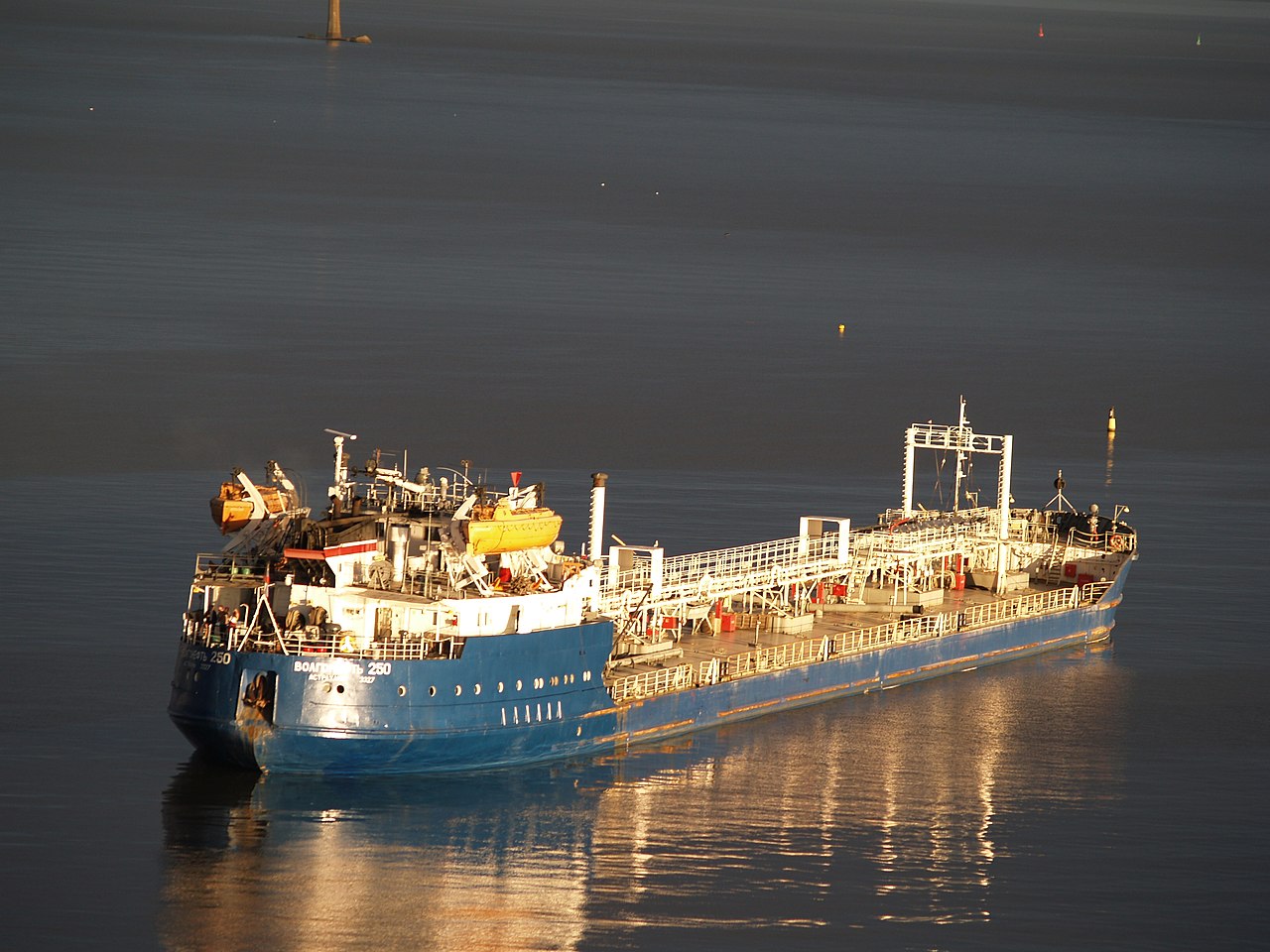
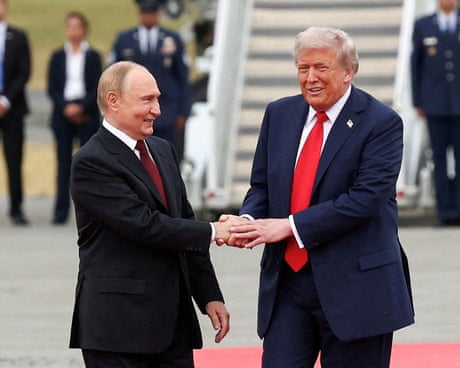
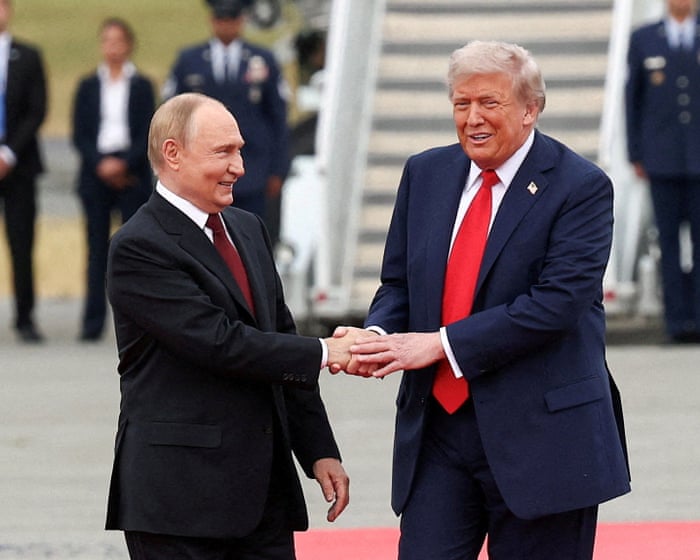
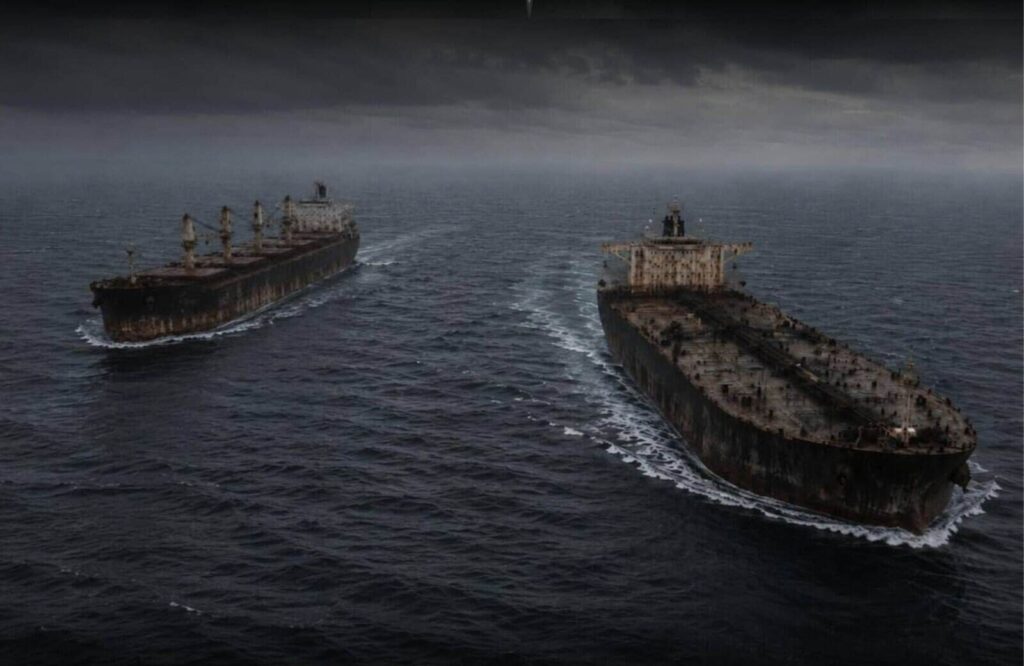
A Malta-flagged tanker carrying Russian diesel is heading for New York after the fuel deal between US President Donald Trump and Russian President Vladimir Putin, Reuters reported in an exclusive on 23 October, citing LSEG shipping data. Two weeks earlier, the US Treasury temporarily waived sanctions on Russian diesel.
The tanker is due in the US on 7 November, four days after Americans vote in the midterms. So the first US-bound cargo cannot reach American pumps before the election. En
A Malta-flagged tanker carrying Russian diesel is heading for New York after the fuel deal between US President Donald Trump and Russian President Vladimir Putin, Reuters reported in an exclusive on 23 October, citing LSEG shipping data. Two weeks earlier, the US Treasury temporarily waived sanctions on Russian diesel.
The tanker is due in the US on 7 November, four days after Americans vote in the midterms. So the first US-bound cargo cannot reach American pumps before the election. Energy analysts also doubt the deal will lower diesel prices meaningfully. US fuel prices rose mainly because the war with Iran disrupted shipping through the Strait of Hormuz. Trump, however, has blamed Ukraine’s strikes on Russian refineries.
Loaded on the day Moscow promised
The medium-sized tanker Agioi Fanendes took on 40,000 metric tons of ultra-low sulfur diesel at the Baltic port of Primorsk on 22 October, shipping data showed. In March, Ukraine’s General Staff said its drones hit the Transneft oil terminal at that same port.
A day before the loading, Russian Deputy Prime Minister Alexander Novak announced that the first tanker would sail for the US on 22 October. He pledged more shipments and said Russia would meet US needs within its capabilities.
Explore further
Russia resumes diesel exports to Türkiye, Brazil, after Trump lifts sanctions on fuel supplies, boosting Moscow’s war revenue – Reuters
From a pledge to a partial lift
On 9 October, Trump wrote that Russia would immediately supply over 300,000 tons of diesel “to the American and Global Marketplace.” Another 500,000 tons would follow in November, then 1 million tons “immediately thereafter.”
Moscow had banned diesel exports on 8 July, after Ukrainian drone strikes shut down refineries and caused fuel shortages inside Russia. The Russian government stated on 10 October that it had partially lifted the ban, clearing 500,000 tons for the world market at this stage. Russian diesel shipments to Türkiye and Brazil have since resumed, boosting Moscow’s war revenue.
Trump has made other moves to cut diesel prices before the vote, Reuters reported. He waived parts of a new sanctions law against Russia. He also threatened Europe with a US diesel export ban unless countries released more fuel from their emergency reserves.
A Russian drone strike sank the Comoros-flagged cargo ship Khoryv in the Black Sea near Romania’s port of Constanța on 23 October, killing a Ukrainian sailor and leaving three crew members missing. Nine others were rescued, Digi24 reported.
The sinking comes amid a surge in attacks on commercial shipping near Romania and Bulgaria, threatening civilian crews and routes used to transport Ukrainian agricultural exports. As Russia intensifies strikes on Ukrainian ports and shipping, the Dan
A Russian drone strike sank the Comoros-flagged cargo ship Khoryv in the Black Sea near Romania’s port of Constanța on 23 October, killing a Ukrainian sailor and leaving three crew members missing. Nine others were rescued, Digi24 reported.
The sinking comes amid a surge in attacks on commercial shipping near Romania and Bulgaria, threatening civilian crews and routes used to transport Ukrainian agricultural exports. As Russia intensifies strikes on Ukrainian ports and shipping, the Danube corridor and nearby waters have become increasingly important to Ukraine’s maritime trade.
Romanian President Nicușor Dan blamed Russia for the attack, describing it as part of Moscow’s escalation of the war against Ukraine and its attacks on NATO’s eastern flank, Reuters reported.
Ukraine’s Foreign Ministry confirmed to Radio Svoboda that a Ukrainian citizen was among those killed.
Ukrainian sailor killed, three crew members missing
The Khoryv sent a distress signal at around 10 a.m. local time, about 13 nautical miles (24 kilometers) east of Constanța, just outside Romania’s territorial waters, Digi24 reported. The vessel caught fire, sustained major damage, and capsized, with only a small part of its hull remaining visible above the water.
Romania’s naval authority said 13 crew members were aboard: 10 Ukrainians and three Azerbaijanis. Rescue teams recovered nine sailors alive and one body, while three crew members remained missing, Reuters reported.
Ukraine’s Foreign Ministry said the vessel had been traveling from a Turkish port and confirmed that the Ukrainian Embassy in Romania had received information from Romanian authorities about one Ukrainian sailor’s death. Four Ukrainian survivors, including the captain, were taken to a hospital, while two others did not require medical assistance.
Attacks threaten Black Sea shipping
The sinking comes amid a surge in attacks on commercial vessels off the coasts of Romania and Bulgaria. At least seven cargo ships have been hit over the past two weeks, with around 30 sailors reported dead or missing, according to Reuters.
The vessels targeted in recent incidents were either anchored near or heading toward the Sulina Canal, which connects the Danube River to the Black Sea. The canal has become a key export route for Ukraine, one of the world’s largest exporters of grain and vegetable oils.
Ukraine has increasingly relied on Danube ports and routes through Romanian territorial waters as Russia attacks its own Black Sea ports. Strikes on commercial vessels threaten crews and risk disrupting Ukrainian agricultural exports to international markets.
Russia has intensified attacks on Ukrainian ports and ships traveling to or from Ukraine. Moscow has described its strikes on vessels as retaliation for Ukrainian attacks on Russian or Russia-linked ships.
Explore further
Russia’s attacks on Black Sea shipping raise risk of global famine, German FM warns
NATO plans stronger Black Sea surveillance
NATO said on 20 October it would send additional maritime patrol aircraft, radar systems, and drones to the Black Sea following the attacks on commercial shipping, according to Reuters. The alliance has not specified which capabilities it will deploy.
Romania, Ukraine, and Bulgaria have called on NATO to do more to protect commercial vessels. The latest sinking adds urgency to those calls as attacks increasingly affect shipping near NATO territory.
The latest incident highlights the growing risks to commercial shipping as Russia’s war against Ukraine increasingly affects maritime traffic beyond Ukraine’s own coastline.
Austria has ordered four Russian diplomats to leave the country over suspected espionage, declaring them persona non grata following findings by Austrian security authorities, Austrian media outlet Heute reported on 23 October.
The expulsions come as European countries step up efforts to counter suspected Russian intelligence operations amid Moscow’s war against Ukraine. Three of the diplomats worked at the Russian Embassy in Vienna, while the fourth served in Russia’s delegation to the
Austria has ordered four Russian diplomats to leave the country over suspected espionage, declaring them persona non grata following findings by Austrian security authorities, Austrian media outlet Heute reported on 23 October.
The expulsions come as European countries step up efforts to counter suspected Russian intelligence operations amid Moscow’s war against Ukraine. Three of the diplomats worked at the Russian Embassy in Vienna, while the fourth served in Russia’s delegation to the Organization for Security and Co-operation in Europe (OSCE), which is headquartered in Vienna.
Austria’s Foreign Ministry said the four had engaged in “activities incompatible with their diplomatic status,” a term usually used for spying, Reuters reported. It did not disclose details of the alleged activities or the intelligence findings behind the decision.
The three embassy diplomats were declared persona non grata under Article 9 of the Vienna Convention on Diplomatic Relations. The fourth, who worked on military security and arms control at Russia’s OSCE delegation, was also ordered to leave Austria.
Vienna remains a hub for Russian intelligence
The latest expulsions bring the number of Russian diplomats Austria has expelled since 2020 to 18, according to Reuters. In May 2026, Austria expelled three Russian Embassy employees suspected of using antennas on diplomatic buildings to intercept satellite internet data transmitted by international organizations based in Vienna.
Vienna’s concentration of international organizations, including the OSCE and United Nations agencies, has made it a key location for intelligence activity. A 2024 report by The Wall Street Journal, described Vienna as a major Russian spy hub for operations targeting Western countries, including surveillance of arms supplies to Ukraine.
Explore further
WSJ: Vienna has become major Russian spy hub for anti-Western operations in Europe
Russia’s Deputy Foreign Minister Dmitry Lyubinsky said Moscow’s response to the expulsions was unavoidable, according to Russian state news agency TASS, AP reported.
Senators have warned the White House they will withhold confirmation votes until the administration ensures the restoration of communications capabilities used by Ukraine’s military.
Senators have warned the White House they will withhold confirmation votes until the administration ensures the restoration of communications capabilities used by Ukraine’s military.
Representative Brian Fitzpatrick, Republican of Pennsylvania and a former F.B.I. agent who worked on Russian counterintelligence in Kyiv, said he doubted the communication problems were accidental.
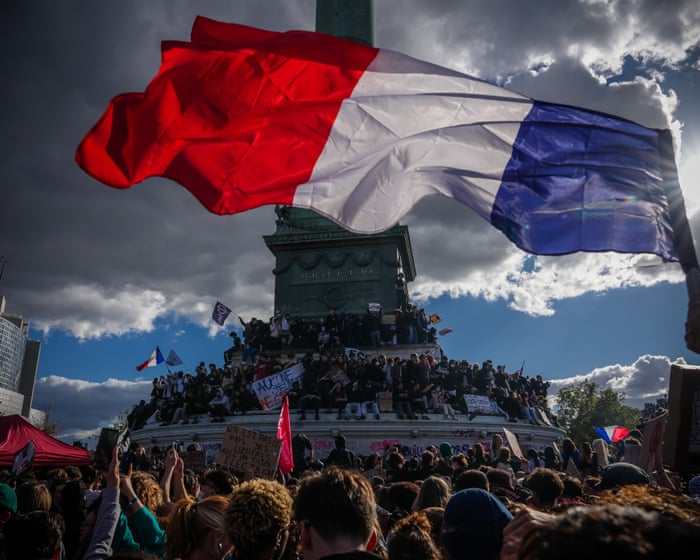
An electoral supercycle over the next year may redefine the continent’s future. But what’s happening on the streets is shaping it, tooFrance sneezed, and Europe has again caught the cold. The wave of unrest which began with teenagers at a high school soon drew in hundreds of thousands of people nationwide and then spread across the continent. Protests have filled the streets in Lisbon and Madrid, and have ignited into violence in Milan, Brussels and Tirana as well as in French cities.French auth
An electoral supercycle over the next year may redefine the continent’s future. But what’s happening on the streets is shaping it, too
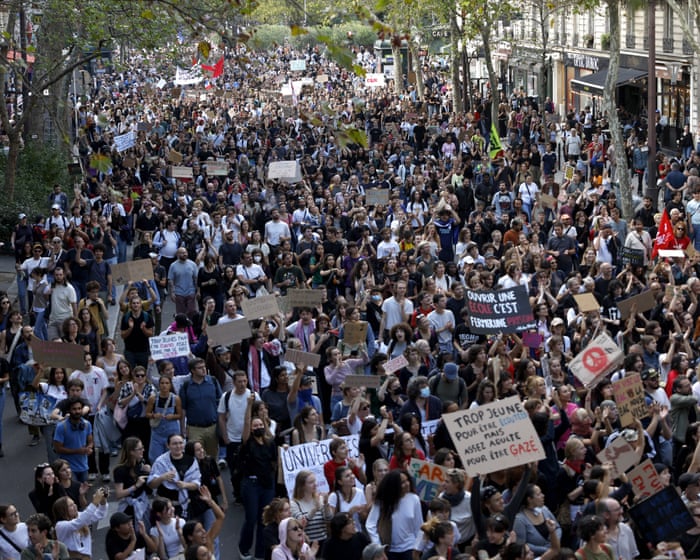
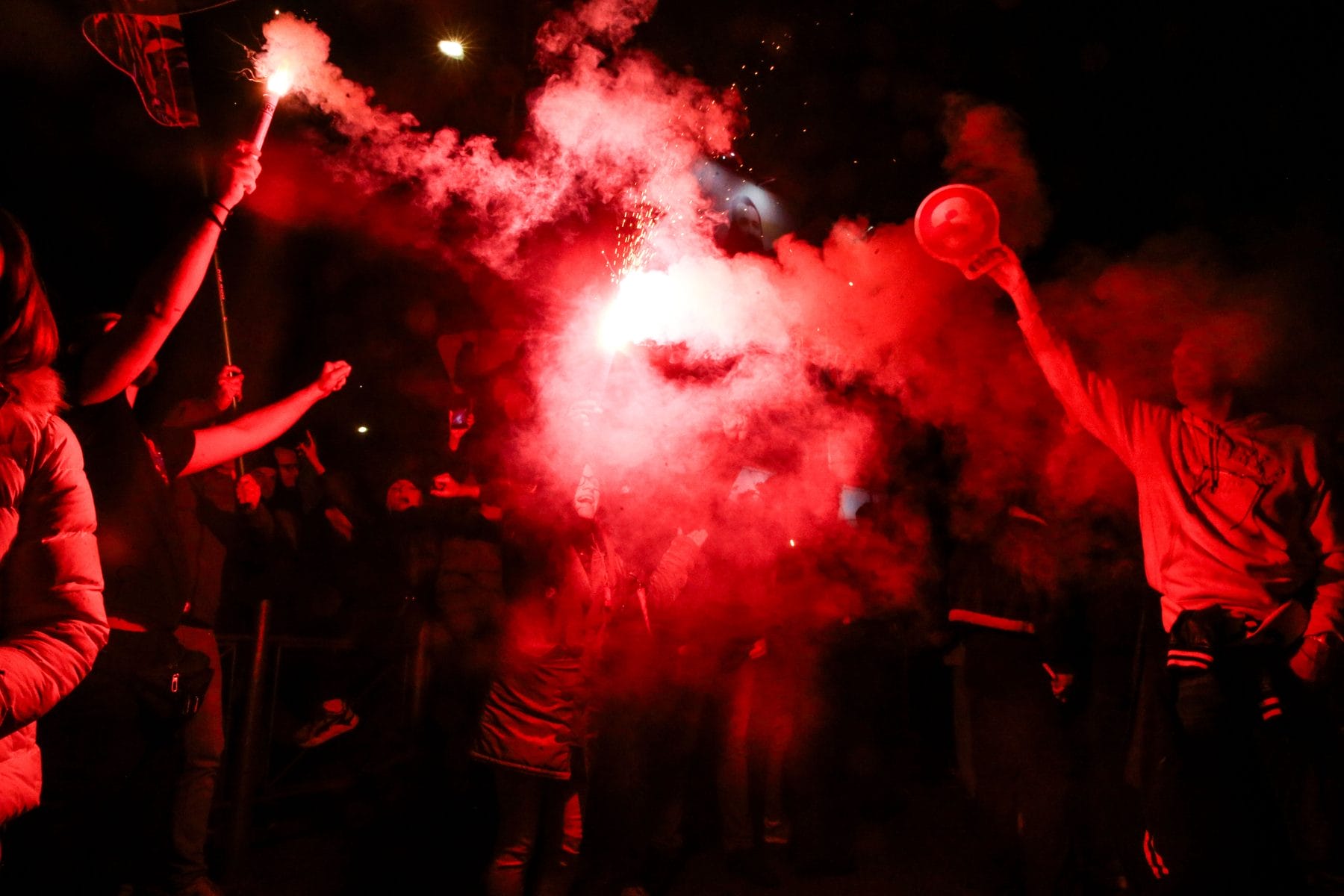
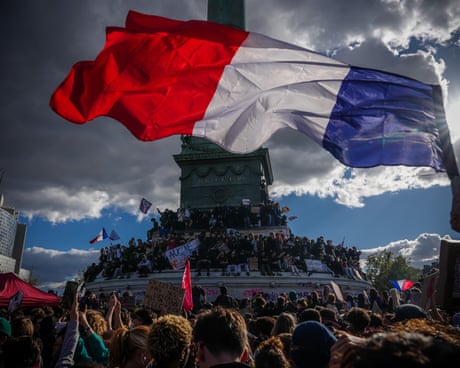
France sneezed, and Europe has again caught the cold. The wave of unrest which began with teenagers at a high school soon drew in hundreds of thousands of people nationwide and then spread across the continent. Protests have filled the streets in Lisbon and Madrid, and have ignited into violence in Milan, Brussels and Tirana as well as in French cities.
French authorities say they are deploying 70,000 officers on Saturday and are allowing only marches organised by unions. They blame hard-left militants as well as opportunistic young perpetrators for last weekend’s destruction and looting, when a minority hijacked largely peaceful protests. But with fuel prices set to rise further over the winter, the demands and participants broadening, and President Macron utterly failing to meet the moment, there is no sign of an end to the wider discontent and no speedy resolution in sight.
The first lady, who is positioning herself as an intermediary between two warring nations as her husband sides with Russia, said the agreement would allow residents to evacuate.
The first lady, who is positioning herself as an intermediary between two warring nations as her husband sides with Russia, said the agreement would allow residents to evacuate.
“It was abundantly clear that without my intervention, the possibility to bring humanitarian aid into the city and to evacuate the elderly would be impossible,” Melania Trump, the first lady, said in a statement.
People in Russian-occupied city facing severe shortages of food, water and electricity, with some reportedly surviving on weedsThe White House has said that Russia and Ukraine have agreed to a ceasefire in the Russian-occupied city of Oleshky, where a deepening humanitarian crisis has left thousands of civilians struggling to survive.In a statement on Friday, the White House said both sides had agreed to halt all military operations in the city from 27 October to allow humanitarian aid deliverie
People in Russian-occupied city facing severe shortages of food, water and electricity, with some reportedly surviving on weeds
The White House has said that Russia and Ukraine have agreed to a ceasefire in the Russian-occupied city of Oleshky, where a deepening humanitarian crisis has left thousands of civilians struggling to survive.
In a statement on Friday, the White House said both sides had agreed to halt all military operations in the city from 27 October to allow humanitarian aid deliveries and preparations for the evacuation of civilians.
Finland will donate diesel locomotives to Ukraine’s state railway, the Office of Ukraine’s President reported. Helsinki also pledged new winter aid, and the two countries signed deals on drones, housing, and satellite communications during Finnish Prime Minister Petteri Orpo’s visit to Kyiv. One of them is a first step toward a satellite link Ukraine would control itself.
With Russia replacing its missiles as fast as it fires them, Ukraine heads into winter needing equipment that works
Finland will donate diesel locomotives to Ukraine’s state railway, the Office of Ukraine’s President reported. Helsinki also pledged new winter aid, and the two countries signed deals on drones, housing, and satellite communications during Finnish Prime Minister Petteri Orpo’s visit to Kyiv. One of them is a first step toward a satellite link Ukraine would control itself.
With Russia replacing its missiles as fast as it fires them, Ukraine heads into winter needing equipment that works without the grid. Russian strikes have damaged or destroyed almost 600 locomotives of Ukraine’s state railway since the full-scale invasion began, more than 300 of them diesels, the infrastructure minister said. The attacks have reached engines even near the Polish border, on the railway that carries Ukraine’s evacuations, grain, and cargo.
Diesels that keep moving when the grid goes down
Finland will hand 10 locomotives and their spare parts to Ukrzaliznytsia, Ukraine’s state railway, free of charge. Infrastructure Minister Mykola Kalashnyk announced the deal, signed on 22 October at a Ukrainian-Finnish business forum. The engines need no power from overhead lines, so trains can keep running during blackouts.
The engines are Dv12 diesels that VR, Finland’s state rail company, is taking out of service. A VR shareholders’ meeting moved them into state ownership, and the Finnish state is donating them, Yle reported. VR puts their value, spare parts included, at about €2.1 million. Finland’s government said the gift will not affect VR’s ability to run trains at home.
A VR Class Dv12 diesel locomotive in Finland, 16 April 2007. Photo: Matthew Ross/Wikimedia Commons
Ukrainian Prime Minister Serhii Koretskyi and Orpo signed the donation certificate, one of seven documents signed that day. Two others plan Ukrainian-Finnish drone production in Finland, one for military and dual-use systems and one for heavy drones. Another covers a precast concrete plant for industrial housing construction.
The day’s agreements are worth around €300 million in total, Zelenskyy said. Projects worth €200 million are already under way within the two countries’ Drone Deal, he added. Under an earlier plan, most drones made in Finland would go to Ukraine.
Explore further
Finland backs €28.5 million power plant project as Ukraine braces for Russia’s next winter energy assault
Winter money now, a 36th military package by year’s end
Orpo announced a new €10 million package. Of it, €5 million goes to the Ukraine Energy Support Fund and €2 million to humanitarian aid for winter. The last €3 million goes to the Ukraine Recovery Program, for energy and water supply. Finland will also deliver mobile heating containers by December.
Finland has given Ukraine five defense packages this year, worth more than €500 million combined, Militarnyi reported. A 36th package is being prepared together with Ukraine’s military. “We plan to make a decision by the end of this year,” Orpo said. In September, Finland approved a package worth about €290 million.
A satellite link Ukraine would own
Ukraine’s Defense Ministry signed a letter of intent with Finnish satellite firm ICEYE and telecom company Nokia, Militarnyi reported, citing ICEYE. The parties will explore building a secure satellite communications system under Ukraine’s control. The aim is to reduce Ukraine’s dependence on foreign commercial operators.
In this model, the state customer owns the satellites, ground stations, and user terminals, RBC-Ukraine reported. The network could serve defense, border protection, emergency services, and disaster recovery. The letter sets out no timeline or funding.
“Modern warfare has proven that reliable communications are a matter of national security,” Zelenskyy said in the companies’ statement. ICEYE CEO Rafal Modrzewski said Ukraine needs “secure, sovereign and high-performance satellite communications systems that it controls.”
The deal comes after a speed cap on Starlink disrupted Ukrainian drone missions this month. The EU, meanwhile, is pushing three European firms to merge into one SpaceX rival. ICEYE has supplied Ukraine with radar satellite imagery for years.
Days before the signing, tracking firm LeoLabs said a Russian government-owned satellite, Cosmos 2612, had spent weeks shadowing an ICEYE radar satellite, coming within 500 meters. The ICEYE satellite is widely believed to provide imagery to Ukraine.
Neither fix is quick. Ukraine’s big locomotive order arrives from 2027, and the first satellites of the ICEYE-Nokia system are expected to launch only in 2028.
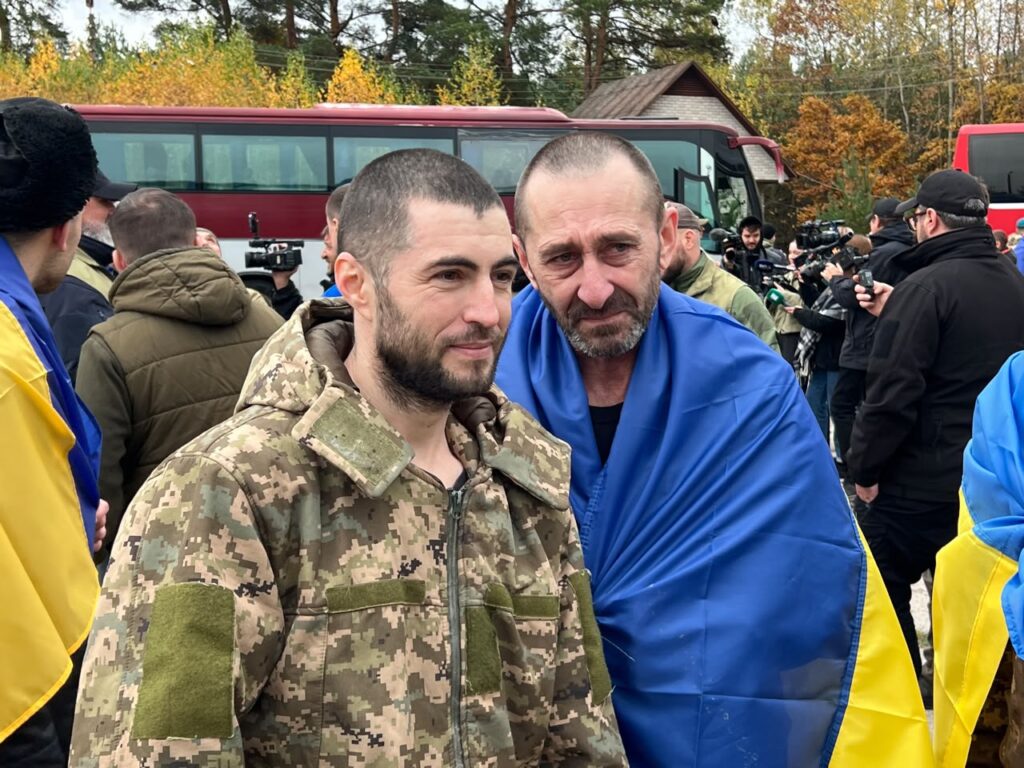
Ukraine has brought home 270 people from Russian captivity, including 261 military personnel and nine civilians, in the third stage of a prisoner exchange process that began on 19 August, Ukraine’s Coordination Headquarters for the Treatment of Prisoners of War said on 23 October.
Amid Russia’s full-scale invasion, prisoner exchanges remain one of the few channels of communication between Kyiv and Moscow. But with thousands of Ukrainian military personnel and civilians still held in Rus
Ukraine has brought home 270 people from Russian captivity, including 261 military personnel and nine civilians, in the third stage of a prisoner exchange process that began on 19 August, Ukraine’s Coordination Headquarters for the Treatment of Prisoners of War said on 23 October.
Amid Russia’s full-scale invasion, prisoner exchanges remain one of the few channels of communication between Kyiv and Moscow. But with thousands of Ukrainian military personnel and civilians still held in Russian captivity, each swap brings home only a fraction of those awaiting release, while negotiations remain tied to the difficult process of securing the return of captives on both sides.
Most of those released today had been held since 2022, including many defenders of Mariupol. Five survivors of the July 2022 Russian attack on the Olenivka prison barracks are also among those returning home.
The exchange also included American Stephen Hubbard, a 74-year-old English teacher from Izium, Kharkiv Oblast, who was illegally captured in 2022, then sentenced and tortured by Russia, according to the Coordination Headquarters.
Ukrainian prisoners of war and civilians return home during a prisoner exchange with Russia on 23 October 2026. Photo: Ivan Vyhivskyi
Ukraine brought 270 people home from Russian captivity, including 261 military personnel and 9 civilians.
Most had been held since 2022, including defenders of Mariupol. Five survivors of Russia’s Olenivka prison attack and American teacher Stephen Hubbard are also among those… pic.twitter.com/Uyl8kz64W1
Exchange includes soldiers held for up to eight years
The exchange included members of Ukraine’s Armed Forces, National Guard, State Border Guard Service, and other security and defense units, as well as a State Emergency Service rescuer. Thirty-eight of the released military personnel are officers.
According to Ukraine’s Ombudsman Dmytro Lubinets, the exchange was “historic” because it brought home the largest number of Ukrainian military personnel sentenced by Russia: 86 who had been sentenced and one who had faced criminal prosecution.
Two of those released had been held since 2018 and 2020, spending eight and six years in captivity, respectively.
“The priorities remain unchanged: we bring home those who have been in captivity the longest, the seriously ill, and the seriously wounded,” Lubinets said, adding that efforts to return civilians and people held since 2014 also remain a priority.
Ukrainian prisoners of war and civilians return home during a prisoner exchange with Russia on 23 October 2026. Photo: Ukraine’s Coordination Headquarters for the Treatment of Prisoners of WarUkrainian prisoners of war and civilians return home during a prisoner exchange with Russia on 23 October 2026. Photo: Zelenskyy
Nine seriously ill prisoners among those released
Nine of the returning service members are seriously ill, and some are in critical condition, the Coordination Headquarters said. The youngest person released is 24, while the oldest is 63.
Many of those released had faced criminal prosecution in Russia and been sentenced on what Ukraine describes as fabricated charges, including life imprisonment.
Ukrainian President Volodymyr Zelenskyy said most of those returning had been captured in 2022, and many had defended Mariupol.
The released also include service members who fought in the Donetsk, Luhansk, Kharkiv, Zaporizhzhia, Kherson, Kyiv, Mykolaiv, and Chernihiv directions, as well as defenders of the Chornobyl Nuclear Power Plant.
“We remember every man and woman and continue searching for everyone,” Zelenskyy said.
Explore further
Russia has kept the Red Cross away from Ukrainian POWs since 2024. Now about 1,500 captives it never confirmed as prisoners face prosecution
US and UAE thanked for assistance
Ukraine thanked the United States and the United Arab Emirates for helping secure the releases.
All those released will undergo medical examinations, receive treatment and financial support, and take part in rehabilitation and reintegration programs after prolonged captivity.
Ukraine’s military intelligence chief and head of the Coordination Headquarters, Oleh Ivashchenko, said the return followed months of negotiations. He stressed that efforts to establish the fate of missing Ukrainians and bring everyone home would continue.
Ukrainian prisoners of war and civilians return home during a prisoner exchange with Russia on 23 October 2026. Photo: ZelenskyyUkrainian prisoners of war and civilians return home during a prisoner exchange with Russia on 23 October 2026. Photo: Ukraine’s Coordination Headquarters for the Treatment of Prisoners of War
The 23 October exchange follows the previous stage on 19 August, when Ukraine brought home 103 servicemembers from Russian captivity.
Ukraine’s Defense Intelligence (HUR) warned that Russia may stage sabotage in Central and Eastern Europe, including the Baltic states, and blame Ukraine for the attacks, in a Telegram post on 23 October.
The warning comes three days after The Wall Street Journal reported that US intelligence traces Europe’s sabotage wave to Putin’s personal order. If Russia stages new attacks and pins them on Ukraine, as HUR warns, European anger could turn on Kyiv rather than the Kremlin. This goes fur
Ukraine’s Defense Intelligence (HUR) warned that Russia may stage sabotage in Central and Eastern Europe, including the Baltic states, and blame Ukraine for the attacks, in a Telegram post on 23 October.
The warning comes three days after The Wall Street Journal reported that US intelligence traces Europe’s sabotage wave to Putin’s personal order. If Russia stages new attacks and pins them on Ukraine, as HUR warns, European anger could turn on Kyiv rather than the Kremlin. This goes further than HUR’s statement on 2 October, which named potential Russian targets in Europe but did not mention a plan to blame Ukraine for attacks.
HUR says Moscow wants to discredit Ukraine’s army
Russia is stepping up its hybrid strategy to destabilize the European Union, according to HUR. The agency identified two aims: reducing foreign support for Ukraine by discrediting its Defense Forces, and intimidating European governments and societies.
The accusations would be spread through Russian propaganda channels and international platforms accessible to the Kremlin.
Potential targets include infrastructure and Russian Orthodox Church sites
HUR listed several potential targets for Russian provocations:
critical infrastructure and areas bordering Russia;
the Kaliningrad exclave;
areas of EU countries with Russian-speaking populations;
Kremlin-controlled sites, including properties belonging to the Russian Orthodox Church network;
historical sites associated with Russia.
The list reflects HUR’s assessment of potential targets, not confirmation that attacks at these locations are planned.
Earlier warnings and reported sabotage
On 2 October, HUR said Russian intelligence services had been ordered to increase activity in EU and NATO countries. It named military facilities, critical infrastructure, communications systems, and Starlink ground stations as potential targets and said it had alerted partners.
Warnings of Russian false flags on NATO’s eastern flank predate HUR’s. In August, Bloomberg reported, citing an unnamed European intelligence official, that Russia might expand hybrid attacks against Poland and the Baltic states, including false-flag attacks. A European government official separately told the agency that the CIA had warned countries in the region of a possible Russian attack. Lithuania’s military intelligence had warned earlier in August that Moscow might reassemble captured Ukrainian drones for false-flag strikes on critical infrastructure in the Baltic region.
Meanwhile, The Wall Street Journal reported on 20 October that US intelligence agencies believe the attempted drone attack on Leipzig-Halle Airport in Germany in early August was among the opening shots of a sabotage campaign ordered by Russian President Vladimir Putin. The Journal cited European officials briefed on the intelligence findings.
According to the newspaper, at least three drones carrying military-grade Semtex explosives were involved. One struck an Antonov cargo plane used to transport military aid to Ukraine but failed to explode. Another collided with a different aircraft, while a third detonated near the airport perimeter. German newspaper Welt am Sonntag has since named two suspects, citing German investigation files. Earlier German media reports described the sequence differently.
The Journal also reported sabotage attacks on Starlink stations in Poland, Lithuania, and Bulgaria in recent weeks. In August, Slovak authorities said they had foiled a planned arson attack on a Ukrainian drone factory, the Journal reported.
Russia denies involvement in sabotage in Europe. Responding to Berlin’s accusations over the Leipzig incident in early September, Putin asked where the evidence was.
Conservative media personalities who have long benefited from boosting the president will be forced to wrestle with the likely fallout of Republican losses in next month’s US midterm electionsNothing lasts forever. Jesse Kelly knows his meteoric rise through conservative radio will end one day – just like Donald Trump’s power over the Republican party.Every day, the 6ft 8in Kelly walks a tightrope between sycophancy and criticism of the US president: the same fine line many rightwing hosts have
Conservative media personalities who have long benefited from boosting the president will be forced to wrestle with the likely fallout of Republican losses in next month’s US midterm elections
Nothing lasts forever. Jesse Kelly knows his meteoric rise through conservative radio will end one day – just like Donald Trump’s power over the Republican party.
Every day, the 6ft 8in Kelly walks a tightrope between sycophancy and criticism of the US president: the same fine line many rightwing hosts have attempted to tread throughout Trump’s rise, fall, and then resurrection from the political graveyard after his 2020 presidential election defeat.
This article was published on Friday, before the Serbian election on Sunday. The conditions it describes led to the unseating of Aleksandar Vučic who has been at the center of power in Belgrade since 2014. Student List, a leaderless party borne out of Serbia's student movement, won a decisive victory, claiming over 52% of votes compared to 39% for Vučic's party. At nearly 69%, voter turnout was the highest in 30 years.
On his last morning as a professor, Vladimir Mihić taught both an
This article was published on Friday, before the Serbian election on Sunday. The conditions it describes led to the unseating of Aleksandar Vučic who has been at the center of power in Belgrade since 2014. Student List, a leaderless party borne out of Serbia's student movement, won a decisive victory, claiming over 52% of votes compared to 39% for Vučic's party. At nearly 69%, voter turnout was the highest in 30 years.
On his last morning as a professor, Vladimir Mihić taught both an ordinary and quite unique class.
It was early June, the final day of the academic year at the Faculty of Philosophy in Novi Sad, Serbia's second biggest city, and Mihić had recently celebrated his 24th year in its classrooms.
The day before, the University Senate had voted — in a secret ballot he and his lawyers say was unlawful — not to reappoint him.
A student asked him to give one more lecture, in public, in front of the Rectorate.
Hundreds attended. There were tears, hugs and gifts.
But it was the quiet morning class with his students, Mihić says, that nearly broke him.
“If you went to the same local tavern for 24 years and it closed down, that would be hard,” he says. “Now imagine walking into a faculty with thousands of students you have taught behind you, and someone tells you: ‘You can't do this anymore’.”
Mihić is one of hundreds of Serbian citizens who have paid for supporting the country's student-led protest movement with their livelihoods.
The movement started on November 1, 2024, when the concrete canopy of the recently renovated railway station in Novi Sad collapsed, killing 16 people — a disaster protesters blamed on corruption, and which ignited the largest demonstrations in Serbia's history.
Nearly two years on, the movement has firmly reshaped Serbian politics. Prime Minister Miloš Vučević resigned all the way back in January 2025. After originally just reshuffling the government, Serbian President Aleksandar Vučić called for snap parliamentary elections — the protesters’ main demand for more than a year at this point — which are finally taking place on Sunday, October 25.
A month before the election, on September 27, Vučić stepped down from the presidency to lead his Serbian Progressive Party’s election campaign and run for prime minister, a job he held between 2014 and 2017. Vučić, who has been President since 2017, resigned eight months before his term was due to end in May 2027. He would have been barred from running for a third term, while no such Constitutional barrier exists for prime ministerial terms. Critics argue Vučić, by looking to remain in power, is behaving in the manner of other Eastern European strongmen.
But, for the first time in his reign, Vučić’s grip on power might slip. His main rival is the so-called Student List, a leaderless movement born out of the protests, and the polls constantly disagree on whether it or Vučić is ahead in the race.
Opposition to Vučić has not been confined to just students, however – and nor has the crackdown against it.
In the wake of the student protests, supportive teachers, professors, civil servants, doctors and workers at state-owned companies have been dismissed, demoted, transferred or pushed out. Officially, trade union and civil society groups say, the reasons for dismissal are almost never stated to be support for the students.
But more than 100 school employees alone lost their jobs or had their contracts not renewed in the 2024/2025 school year, according to the Independent Trade Union of Education Workers. The number now far exceeds that, says Civic Initiatives, a prominent local civil rights organization.
Serbia's Commissioner for Protection of Equality keeps no separate tally for “political discrimination,” but on the two grounds that fit — union or political membership, and political convictions — complaints more than doubled in a year, from 31 and 25 in 2024 to 70 and 76 in 2025.
These complaints about discrimination rarely yield redress: of eight formal recommendations made in last year's 85 employment-related cases, only two employers complied, the office said in an email response to Coda’s questions.
Dismissals are only one of the tools of repression the government has used. Since the start of 2026, at least 14 students, activists and opposition politicians have been targeted with advanced spyware, says digital rights group SHARE Foundation. And some of that spyware was installed while they were in police custody, says Amnesty International. Additionally, Serbia recorded 209 press freedom violations in 2025, compared to 84 in the year before. Protesters have been charged with attacking the constitutional order, civil society groups have been branded foreign mercenaries, and university teachers have had their pay cut over the blockades.
Ana Brnabić, currently the acting president of Serbia, was leader of the National Assembly at the time of the student protests and claimed that state institutions had no information that spyware was used against students. Vučić, for his part, has claimed, without evidence, that the Student List is being financed by foreign agents, its political ascent part of a plot to undermine Serbia.
Student List — whose lead candidate (not quite the same thing, the group insists, as a figurehead or party leader) is cardiologist Ilija Srdanović – claims to represent voters fatigued by traditional politics and politicians. It is a posture acknowledged by several opposition parties which have chosen to sit out the elections and endorse Student List instead.
On Sunday, as in so many recent elections around the world, a deeply divided electorate will go to the polls, with watchdogs already warning about intimidation and alleging surveillance and possible electoral manipulation.
Professors on the front lines
But back to June, and Vladimir Mihić’s last day as a professor in Novi Sad. The purge at the Faculty of Philosophy was already underway before Mihić became a national topic.
The first to go was Jelena Kleut, a media studies professor and one of the most visible academic supporters of the protests: in January 2026, the University Senate refused, by secret ballot, to promote her to full professor, thus ending her employment even though expert bodies had approved her promotion and more than 1,200 professors signed a letter of support.
“Sadly, we have indication that this is just the beginning,” Kleut warned, referring to a colleague whose reappointment was also in question.
That colleague was Mihić.
The social psychologist, a tall man with a few grey hairs in his beard and a calm voice, had been, like Kleut, an active supporter of the student protests.
“I could not watch it on television while just sitting around,” he says.
On paper, his reappointment was beyond dispute, his file reviewed by a committee that included two of the most cited psychologists in the world.
"It was not just that my file was not disputable,” Mihić says, “it exceeded the standards several times over.”
What his unimpeachable file could not survive, though, was an objection lodged twice by Patrik Drid, the dean of the Faculty of Sport and Physical Education and a vocal opponent of the protests.
Drid claims his complaint concerned what he described as Mihić's active political organizing. The chief example of which, Drid said, was a social media call for students to gather in front of Drid's own faculty, “blocking access to those who wished to work and study.” Mihić maintains he organized nothing of the kind, and that Drid’s objections were personal.
On June 4, the University Senate voted, again in secret, which Mihić said the university’s own legal department warned was against the rules. Eight members voted for his reappointment, four against and six abstained. Under the current rules, the abstentions counted against him.
Trade unions from ten faculties called the outcome a brutal attack on university autonomy, but no explanation was given for why Mihić had lost his job.
He appealed, but the expanded Senate confirmed its decision. Now he plans to take his case to the Administrative Court, a legal battle he says could take years.
Filip Stevanovic/Anadolu via Getty Images
Fired for standing still
The unjust dismissals extended beyond university campuses.
Biljana Hrnčić spent 21 years working for the government of Vojvodina, Serbia's northern autonomous province, most recently as head of its press department. She says she had never once faced a disciplinary measure.
That changed after the protests.
Every Friday at exactly 11:52 a.m., the exact time the roof caved in at the Novi Sad station in 2024, Serbians would leave their desks and head out to the streets to honor the dead in silence. Managers walked the halls, watching.
“They went around the offices to see who took part and who didn’t,” Hrnčić said. “At one point they were so malicious that they simply locked people out of the building.”
For Hrnčić, joining in the protests was unavoidable. Both her children are students. “My children are in the streets,” she said. “It is more than natural that I would walk out onto that same street.”
In September 2025, with street demonstrations still ongoing, Hrnčić and six colleagues were moved into a new department at work. Two months later, the government abolished the department and its entire staff became “unassigned.”
The provincial government of Vojvodina did not respond to Coda’s questions for this story.
“It is a horrifying feeling,” says Hrnčić, who still looks harrowed by her ordeal. “20 years of daily work, never a single disciplinary problem, and you find yourself on the street asking what just happened.”
She and her colleagues are living off their severance pay and their savings while they wait for their cases to be heard in the Administrative Court.
For every few hundred dismissals, one court victory
Many of those dismissed have taken their case to Administrative Court, but even winning there guarantees little.
Dragoslav Ljubičić was chief steward of the Nezavisnost union at the Serbian state’s largest thermal power plant. Five years short of retirement, he was a marked man even before the student protests as a rare insider willing, in his words, to call out the mismanagement of the utility.
When the roof fell, he joined the protests immediately, holding 16-minute silences at the plant — one minute for each victim — and organized the first joint rally of students and workers in front of the state-owned electricity company EPS’s Belgrade headquarters.
In January 2025, he received a formal warning citing his Facebook posts. On February 12, managers tried to hand him a dismissal letter at work. He refused to sign it. Six days later, he signed and then sued.
EPS has publicly denied he was dismissed over the protests or his union activity. It said Ljubičić broke its code of conduct, without specifying how. EPS did not respond to questions for this story.
A judge ordered EPS to reinstate Ljubičić until his case could be heard, a decision it could not appeal. But, he said, “they did not give me back my job. They gave me a fixed-term contract and a post that did not match my qualifications at nearly half my previous pay.”
For continuing to complain about his treatment, EPS transferred him to a job that included an exhausting commute from his home.
Ljubičić’s lawyer, Ivan Ninić, who represents a string of dismissed workers, says this is the EPS playbook. Every ruling against the company is automatically appealed, at the expense of the public budget. “We took you back because the law says so,” Ninić said, describing EPS’s attitude. “Now we will make your life hell until you quit on your own.”
Serbian law, he says, is largely on the side of workers; the problem, though, is that the process takes years.
Still, Ljubičić has little patience for the slogan his supporters chant.
“The message ‘Justice for Ljubičić’ misses the point,” he says. “The real message is: stop the dismissals. Mine was the first. And then there came a wave of dismissals across Serbia, most of which the public never heard about.”
Despite the professional and financial hardship, neither Ljubičić, Mihić or Hrnčić expressed any regret. “There has not been a fraction of a second in which I have thought, ‘why did I need to do this.’I could never forgive myself if I hadn't done what I did,” says Mihić.
On Sunday, Serbians will have a long-awaited chance to exorcise their feelings of injustice. The answer to the question of whether it will be enough for a student movement to unseat the populist, autocratic Vučić will reverberate around an embattled Europe.
People under 35 are hunting for no-frills rides they can pay for in cash and fix themselves – defying expectations to take on steep loansJack Price joined the marines in fall 2021 knowing he would need a car to get around base and that he couldn’t afford a new one. A joyless, month-long search through dealer classifieds and Facebook Marketplace listings ended when his mother spotted a 2010 Volkswagen Jetta posted on her office listserv by a co-worker moving abroad. With just 60,000 miles (96,560
People under 35 are hunting for no-frills rides they can pay for in cash and fix themselves – defying expectations to take on steep loans
Jack Price joined the marines in fall 2021 knowing he would need a car to get around base and that he couldn’t afford a new one. A joyless, month-long search through dealer classifieds and Facebook Marketplace listings ended when his mother spotted a 2010 Volkswagen Jetta posted on her office listserv by a co-worker moving abroad. With just 60,000 miles (96,560km) on the meter, the car (a manual!) was mechanically sound, and the air conditioning, sunroof and Bluetooth radio worked too. At $6,000, it was a steal. Price paid in cash.
Five years on, the Jetta, which he called the Pewter Pebble, is still carting him from A to B in unassuming style. “I’ve completely driven it into the ground,” says the 30-year-old, who lives in Los Angeles. “All over bases, cross-country a couple times, not really lovingly. I get so much crap from people, but not people my age.”
About 1,500 Ukrainians held in Russia and occupied Ukraine are facing criminal prosecution even though the International Committee of the Red Cross (ICRC) has never confirmed them as prisoners, Petro Yatsenko, representative of Ukraine's Coordination Headquarters for the Treatment of Prisoners of War, said on 19 October at an event on missing persons at UN headquarters in New York. The event was organized by the permanent missions of Ukraine and Poland to the UN.
Without ICRC confirmati
About 1,500 Ukrainians held in Russia and occupied Ukraine are facing criminal prosecution even though the International Committee of the Red Cross (ICRC) has never confirmed them as prisoners, Petro Yatsenko, representative of Ukraine's Coordination Headquarters for the Treatment of Prisoners of War, said on 19 October at an event on missing persons at UN headquarters in New York. The event was organized by the permanent missions of Ukraine and Poland to the UN.
Without ICRC confirmation, there is no official record that a person is alive or held, which leaves captives without proper protection, the headquarters said. Amnesty International calls this enforced disappearance, a practice that puts people outside the protection of the law. The ICRC itself has been shut out. Under the Geneva Conventions it is supposed to visit prisoners of war, but on 18 September it told Reuters that Russia has given it no access to Ukrainian POWs since 2024. UN investigators have gathered evidence of systematic torture in the detention centers where they are held. Russia denies torturing or mistreating POWs.
Families lose track of captives as Russia moves them between prisons
Kateryna Nazarii, who coordinates families of the 24th Mechanized Brigade, is the wife of a Ukrainian serviceman held by Russia. The ICRC has not been able to confirm his status as a prisoner of war. Russia does not let the ICRC or other humanitarian organizations into the prisons where Ukrainians are held, and does not hand over complete lists of prisoners, Nazarii said at the event. When families do find out where a relative is held, she said, that person is moved to another prison, and contact is lost again.
Many of those whose captivity Russia has not confirmed are civilians. Among them, Yatsenko said, are about 200 young people born after 2000 and nearly 400 people over 60. None of them has been confirmed through the ICRC, according to the headquarters.
Secrecy and torture in Russian captivity
Most Ukrainian POWs are cut off from the outside world. In a March 2025 report, Amnesty International found that 24 of the 43 families of confirmed POWs it interviewed had received no word at all from their relative. Counting prisoners allowed only one brief call or text at the start of captivity, 72% of those 43 were held incommunicado. The UN monitoring mission found that only 21 of 174 former POWs it interviewed had been able to correspond with their families, Amnesty noted.
Silence is what makes the abuse possible, Amnesty argues. The UN monitoring mission found that 97% of former POWs it interviewed had been tortured or ill-treated, the report notes, and methods include beatings, electric shocks, burns, and sexual violence. A UN commission of inquiry concluded in 2024 that the torture amounted to a "coordinated state policy," the report adds.
A Ukrainian defender who returned from Russian captivity shows the effects of his detention. June 2023. Photo: libkos/Instagram
When the Red Cross did get in, it saw what Russia chose to show. An OSCE expert mission reported in September 2025 that, according to former prisoners, Russian staff presented only prisoners in relatively good physical condition during ICRC visits and kept the sick and tortured out of sight. The experts also found that Russia blocked visits to some facilities and gave incomplete prisoner lists.
The unconfirmed are not a small group. A quarter of the 3,767 POWs who returned to Ukraine by November 2024 had never been confirmed by Russia as captives, the Coordination Headquarters said, as cited by Amnesty. Hundreds or possibly thousands more may still be held without Russia notifying the ICRC, Amnesty concluded.
Those who come back describe the conditions. Anatolii Zemlianyi, a soldier of the 2nd Assault Brigade released in the May 2025 exchange, told Frontliner that he spent eight months in a hospital in occupied Donetsk with a grenade wound in his leg and got no proper treatment. In captivity, he said, prisoners drank water from puddles.
A Ukrainian service member who returned from captivity compares his current appearance with a photo taken before his detention. June 2023. Photo: libkos/Instagram
Russia continues to hold Ukrainian civilians unlawfully
Nobody knows how many Ukrainian civilians Russia holds. "It is not known," the UN human rights office said in a September 2025 report, which cites Ukraine's Prosecutor General's Office as having identified 15,250 civilians detained by Russia between February 2022 and August 2025. Exchanges bring very few of them back: of 5,941 people released from Russian captivity between February 2022 and 14 August 2025, 352 were civilians, Ukraine's human rights commissioner Dmytro Lubinets told The Week.
Under the Fourth Geneva Convention, an occupying power may intern civilians only for imperative reasons of security, and only under a regular procedure with periodic review, the same UN report notes. Russia instead treats detained civilians as criminals, Oleksandr Kononenko, a representative of Ukraine's human rights commissioner, told relatives of civilian hostages in 2023.
"This convention clearly states that civilian hostages should not be detained. They should be released. What is Russia doing? It 'makes all these people criminals' and accuses them of terrorism, opposition to a special military operation, and assistance to the Ukrainian Armed Forces, which is completely absurd from the point of view of an independent state and those people who are patriots of their state," Kononenko said.
Kyiv believes Russia detains civilians partly to trade them. Regular civilian swaps risk signaling to Russia that by detaining more Ukrainians it could get more Russians released, so it may seize more people to replenish its "exchange fund," Lubinets said. Ukraine therefore demands that civilians be released unconditionally. Amnesty sees a second motive. It concluded that Russia has long used arbitrary arrest, torture, and enforced disappearance to intimidate civilians in areas it controls.
The US president is portraying Zelenskyy as the villain as he strives for Russia’s approvalIf Donald Trump could, he would fly to Munich to sign away Ukraine to Vladimir Putin, and return to wave the document as “peace in our time”, hoping to claim at least the second Fifa peace prize.Whatever the complicated motives of Neville Chamberlain, his well-grounded fear after the carnage of a world war of another apocalypse and his wishful thinking that Hitler would be satiated after carving up Czechos
The US president is portraying Zelenskyy as the villain as he strives for Russia’s approval
If Donald Trump could, he would fly to Munich to sign away Ukraine to Vladimir Putin, and return to wave the document as “peace in our time”, hoping to claim at least the second Fifa peace prize.
Whatever the complicated motives of Neville Chamberlain, his well-grounded fear after the carnage of a world war of another apocalypse and his wishful thinking that Hitler would be satiated after carving up Czechoslovakia, Chamberlain had not sent his son-in-law and former golf partner and real estate partner in advance to cut back-end deals with the Nazis to profit for his family and cronies.
The tax initiative is the most ambitious proposal that Dave Regan has ever qualified for the California ballot. Some Democrats hope it will be his final one.
The tax initiative is the most ambitious proposal that Dave Regan has ever qualified for the California ballot. Some Democrats hope it will be his final one.
A photograph provided by North Korean state media showing the leader, Kim Jong-un, and his daughter, Kim Ju-ae, overseeing the firing of an intermediate-range missile from the country’s east coast during a drill in October.
At an event in Maine, an audience member told the New York progressive that “a lot of trans people in America feel that we have been abandoned by the Democratic Party.”
At an event in Maine, an audience member told the New York progressive that “a lot of trans people in America feel that we have been abandoned by the Democratic Party.”
Representative Alexandria Ocasio-Cortez of New York at a town hall-style event in Portland, Maine, with Troy Jackson, the Democratic Senate nominee in the state, on Thursday.
The call from the president about the Starshield network came after officials in Ukraine reported that they found new limits on the use of military drones in their war against Russia.
The call from the president about the Starshield network came after officials in Ukraine reported that they found new limits on the use of military drones in their war against Russia.
Datacenter and chip costs fueled sharp decrease in AI sector although non-AI stocks still had a strong showingThe latest shudder for stocks in the AI industry pulled markets lower worldwide on Thursday, while oil prices hit their highest levels since May on worries about the war with Iran.The S&P 500 fell 1.2% for its worst day since July, while the Nasdaq composite tumbled 2.6%. The weakness for tech stocks was so overwhelming that it masked strength for the rest of the US market, in which
Datacenter and chip costs fueled sharp decrease in AI sector although non-AI stocks still had a strong showing
The latest shudder for stocks in the AI industry pulled markets lower worldwide on Thursday, while oil prices hit their highest levels since May on worries about the war with Iran.
The S&P 500 fell 1.2% for its worst day since July, while the Nasdaq composite tumbled 2.6%. The weakness for tech stocks was so overwhelming that it masked strength for the rest of the US market, in which the majority of stocks actually rose. The Dow Jones Industrial Average added 11 points, or less than 0.1%.
California, Oregon, Washington and Hawaii health officials ask CDC ‘prioritizing emerging technologies’ to reconsiderCalifornia and Washington asked the US Centers for Disease Control and Prevention (CDC) in May to validate a new way to test for measles – but after waiting two months, the CDC denied the request, citing “other competing priorities”, according to a letter from the West Coast Health Alliance to the CDC director, Erica Schwartz.The letter, signed by health officials in California, H
California, Oregon, Washington and Hawaii health officials ask CDC ‘prioritizing emerging technologies’ to reconsider
California and Washington asked the US Centers for Disease Control and Prevention (CDC) in May to validate a new way to test for measles – but after waiting two months, the CDC denied the request, citing “other competing priorities”, according to a letter from the West Coast Health Alliance to the CDC director, Erica Schwartz.
The letter, signed by health officials in California, Hawaii, Oregon and Washington, asks Schwartz to reconsider and validate a rapid, high-volume measles test in preparation for major outbreaks. The alliance also asked the CDC to create protocols to test for other high-priority pathogens to prepare for future outbreaks.
Nizamiye Hospital in Abuja, Nigeria, where the country’s first Ebola patient was admitted this week. An African health official said that if authorities could not come up with ways to stamp out the outbreak, “the whole continent can be affected.”
Judge threatens to dismiss Trump’s BBC lawsuit unless he cooperates with discovery process and sits for depositionDonald Trump has been ordered by a US judge to cooperate with the discovery process mandated for his lawsuit against the BBC and to sit for a deposition by 11 December – or else he could be subject to sanctions, including the possible dismissal of the $10bn lawsuit.The lawsuit stems from a Panorama documentary aired by the BBC that spliced together two comments made nearly an hour ap
Judge threatens to dismiss Trump’s BBC lawsuit unless he cooperates with discovery process and sits for deposition
Donald Trump has been ordered by a US judge to cooperate with the discovery process mandated for his lawsuit against the BBC and to sit for a deposition by 11 December – or else he could be subject to sanctions, including the possible dismissal of the $10bn lawsuit.
The lawsuit stems from a Panorama documentary aired by the BBC that spliced together two comments made nearly an hour apart by Trump during a rally on 6 January 2021, before the US Capitol riot. The BBC has acknowledged that this specific edit was misleading, but Trump has gone on to claim, falsely, that the BBC did not just edit his speech but used AI to insert words into his speech.
Federal authorities allege L Louise Lucas, a state senator and vocal Trump critic, led a ‘criminal marijuana enterprise’Virginia state senator L Louise Lucas, one of the state’s most powerful Democrats, was charged on Thursday in connection with what federal authorities alleged was a role leading a criminal enterprise that acquired and distributed large quantities of marijuana and laundered the proceeds.An indictment unsealed on Thursday charged Lucas and six other defendants, including several
Federal authorities allege L Louise Lucas, a state senator and vocal Trump critic, led a ‘criminal marijuana enterprise’
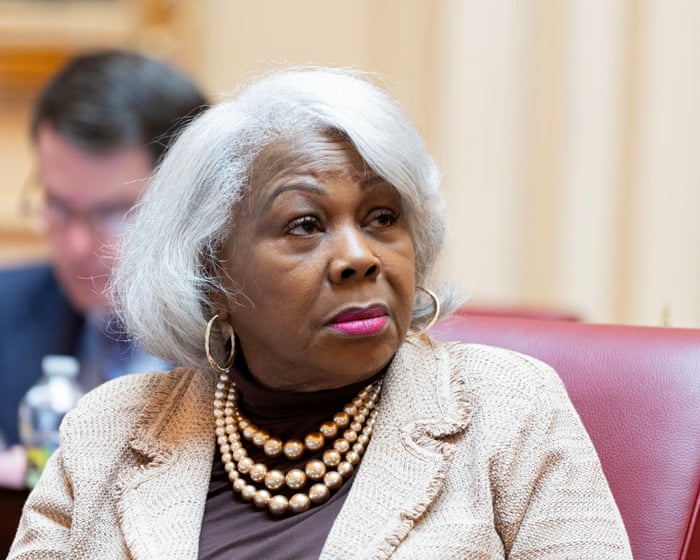
Virginia state senator L Louise Lucas, one of the state’s most powerful Democrats, was charged on Thursday in connection with what federal authorities alleged was a role leading a criminal enterprise that acquired and distributed large quantities of marijuana and laundered the proceeds.
An indictment unsealed on Thursday charged Lucas and six other defendants, including several of her relatives, the Department of Justice said in a statement. Lucas surrendered on Thursday, a justice department spokesperson said.
Russia has carried out a massive 'demonstrative' attack on Ukraine, bombarding Kyiv with ballistic missiles just hours after Vladimir Putin said he had agreed to resume trilateral negotiations after talks with the US envoy Steve Witkoff. Strikes on Kyiv killed at least two people and wounded 22, including four children. Twelve regions across the country were bombed. Volodymyr Zelenskyy said that the strikes proved Russia was not serious about peaceRussia bombards Kyiv with missiles hours after a
Russia has carried out a massive 'demonstrative' attack on Ukraine, bombarding Kyiv with ballistic missiles just hours after Vladimir Putin said he had agreed to resume trilateral negotiations after talks with the US envoy Steve Witkoff. Strikes on Kyiv killed at least two people and wounded 22, including four children. Twelve regions across the country were bombed. Volodymyr Zelenskyy said that the strikes proved Russia was not serious about peace
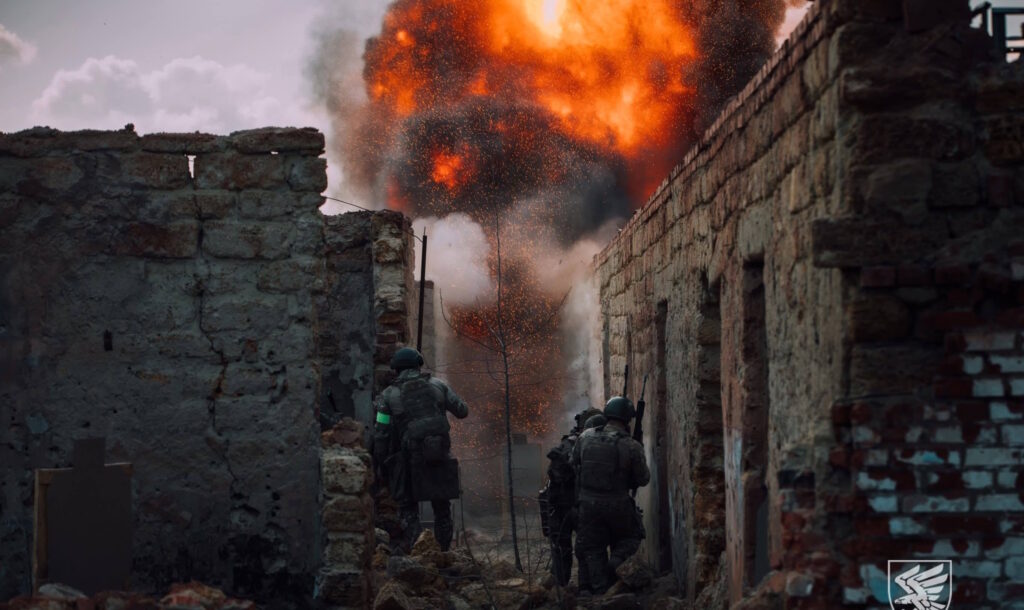
Ukraine's Defense Forces advanced more than 15 km through underground utility tunnels into Russia's rear on the Kupiansk axis in Kharkiv Oblast, the Khartiia Corps of Ukraine's National Guard reported on 22 October. The corps called it Operation Veles. The underground advance was paired with attacks on the surface and drone strikes, hitting Russian forces from two directions, the corps told Militarnyi.
Russian troops have repeatedly crawled through gas pipelines around Kupiansk to get b
Ukraine's Defense Forces advanced more than 15 km through underground utility tunnels into Russia's rear on the Kupiansk axis in Kharkiv Oblast, the Khartiia Corps of Ukraine's National Guard reported on 22 October. The corps called it Operation Veles. The underground advance was paired with attacks on the surface and drone strikes, hitting Russian forces from two directions, the corps told Militarnyi.
Russian troops have repeatedly crawled through gas pipelines around Kupiansk to get behind Ukrainian lines, even after Ukraine reported confident control of the city in February. This time, Ukraine went underground itself. The operation took away Russia's chance to get into Kupiansk's rear, the corps said.
The corps reported more than 30 Russian soldiers captured and Russian losses of more than 100. Militarnyi, citing the unit, put the number of Russian troops killed at over 100.
Khartiia studied how Russian troops moved through pipes before going underground itself, the corps commander, Brigadier General Ihor Obolenskyi, said.
"We watched how the enemy works underground and studied how they do it. The Russians intended to use gas pipelines to get into the rear of our troops. So we went underground ourselves. We anticipated the enemy's actions and mastered the tactics of underground combat," he said.
Boots under ground!
Asymmetric breakthrough in the Kharkiv Region: Khartiia Corps conducts the subterranean counteroffensive Operation VELES, advancing 15 km underground.
For the operation, troops trained physically and psychologically to fight in confined spaces, sappers and engineers prepared the underground route, and special communications, navigation, silent logistics, and life-support systems were put in place, Khartiia told Militarnyi. The operation was named after Veles, the Slavic pagan god of the underworld.
Khartiia's brigade, the R.U.H. assault regiment, the Lava drone regiment, the Achilles drone brigade, and units of Ukraine's military intelligence, including the Freedom of Russia Legion and the Russian Volunteer Corps, took part, the corps said.
Russia has used pipelines to infiltrate before
By September 2025, Russian forces had used pipelines to move troops behind Ukrainian lines three times, Ukrainian monitoring project DeepState reported on 12 September 2025. The first was in Avdiivka, the second near Sudzha, and the third near Kupiansk, where groups crossed the Oskil River through a gas pipe.
Near Sudzha in March 2025, Russian special forces walked through a pipeline that until recently had carried Russian gas to Europe, the Associated Press reported. A pro-Kremlin blogger claimed they covered about 15 km and that some spent several days inside.
Russian troops kept using the pipeline near Kupiansk this year. On 27 September, Khartiia's reconnaissance drones recorded Russian forces leading nine civilians, including children, elderly people, and a person on crutches, through the gas pipeline out of the Kupiansk community. Men of military age in civilian clothes walked alongside them, and the corps believes they were Russian soldiers using the group as cover to withdraw. Ukrainian troops held fire because of the civilians, the corps said, adding that the case has been documented for a war crimes investigation.
Civilians led through a gas pipeline out of the Kupiansk community, Kharkiv Oblast, by people the Khartiia Corps identifies as Russian forces, 27 September 2026. Screenshot: Khartiia Corps
Why the war is moving underground
Drones, constant surveillance, and AI-assisted targeting have made the battlefield surface transparent and deadly, argue John Spencer, chair of urban warfare studies at West Point's Modern War Institute, and Col. Drew Craig, principal military engineering staff officer at NATO's Allied Rapid Reaction Corps. In an August analysis, they write that soldiers in Ukraine describe a "death zone" of some 30 km, where moving above ground can draw an attack within minutes. When firepower makes the surface too dangerous, armies have historically gone underground, as they did in World War I and Vietnam, and more recently in Gaza and Lebanon.
"Armies that cannot survive above ground must adapt below it," the authors write.
Fighting in tunnels brings its own requirements, the authors write: detecting the enemy by sound and vibration, and specialized unmanned systems that cannot rely on GPS or stable radio links. Long stretches underground also take a severe psychological and physical toll on soldiers.
Western militaries are not ready for this, Spencer and Craig write. No NATO partner maintains even general capabilities for large-scale underground warfare, and US and British efforts focused mainly on detecting and clearing tunnels rather than occupying and operating in them.
Similar withdrawals from UAE, Jordan, Qatar and Bahrain reported as concerns grow about restart of war on Iran after US midterm electionsThe US state department has ordered some diplomats and the families of US government employees to leave Saudi Arabia as the gulf kingdom faces a barrage of near-daily attacks, with at least three people killed at an airport and oilfield.Attacks on “civilian airports and other critical infrastructure” by the Iranian-supported Houthis in Yemen were highlighted as
Similar withdrawals from UAE, Jordan, Qatar and Bahrain reported as concerns grow about restart of war on Iran after US midterm elections
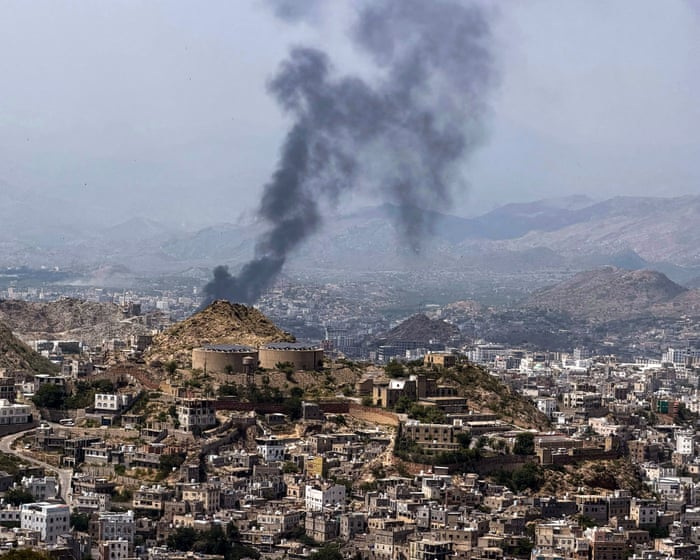
The US state department has ordered some diplomats and the families of US government employees to leave Saudi Arabia as the gulf kingdom faces a barrage of near-daily attacks, with at least three people killed at an airport and oilfield.
Attacks on “civilian airports and other critical infrastructure” by the Iranian-supported Houthis in Yemen were highlighted as the reason for the drawdown. The state department spokesperson, Tommy Pigott, said: “The safety and security of department personnel and their families remain our highest priority.”
Russian influence operations appear to be stepping up efforts to meddle in the midterms, according to intelligence officials. Most are targeting Democrats.
Russian influence operations appear to be stepping up efforts to meddle in the midterms, according to intelligence officials. Most are targeting Democrats.
An explosion hit the 75th Arsenal, a Russian army plant in Serpukhov south of Moscow, overnight on 22 October, Russian Telegram channel Astra reported. Russian officials also claimed drone attacks on the Moscow region, Tula, and Lipetsk that night.
As Russia presses its full-scale invasion, Ukraine’s long-range drones and missiles keep hitting military plants and refineries deep inside Russia. Ukrainian outlet Militarnyi says this plant specializes in repairing Buk and S-300 air defense
An explosion hit the 75th Arsenal, a Russian army plant in Serpukhov south of Moscow, overnight on 22 October, Russian Telegram channel Astra reported. Russian officials also claimed drone attacks on the Moscow region, Tula, and Lipetsk that night.
As Russia presses its full-scale invasion, Ukraine’s long-range drones and missiles keep hitting military plants and refineries deep inside Russia. Ukrainian outlet Militarnyi says this plant specializes in repairing Buk and S-300 air defense systems. Astra describes it more broadly, as making weapons and ammunition and repairing military equipment. If Militarnyi is right, the blast hit a site that fixes Russian air defenses. It came the night Moscow’s mayor credited air defenses with stopping hundreds of drones.
Blast at the arsenal
An Astra OSINT analyst placed the explosion inside the site from a video, the channel said. Residents claimed in local chats that blasts followed passing drones, then at least three missiles. Astra did not confirm the missile count. Serpukhov lies about 99 km south of Moscow. Ukraine has sanctioned the plant, and the US Treasury has listed it too. As of the morning of 22 October, no Russian official had confirmed the blast.
More footage of the attack on the arsenal in Serpukhov. We are awaiting satellite images. pic.twitter.com/tTsgc18W3L
Moscow Mayor Sergei Sobyanin claimed that 630 drones flew toward the Moscow region from 20:30 on 21 October to 04:00 on 22 October. He claimed most were destroyed far out and 163 were neutralized on approach to Moscow. Two people were injured in Voronovo, in New Moscow, he stated.
Tula Oblast Governor Dmitry Milyaev claimed air defenses downed 70 Ukrainian drones over his region. Private homes were damaged in Tula and the Zaoksky district, he stated.
Lipetsk governor claims homes and a clinic damaged
Earlier in the night, Ukrainian monitoring channel Exilenova+ posted footage of commotion in Lipetsk after explosions. Lipetsk Oblast Governor Igor Artamonov claimed a drone strike damaged homes, apartment blocks, and a closed polyclinic. A man born in 2001 was injured and hospitalized, Artamonov claimed.
In May, Ukrainian intelligence said Russia was deploying more regiments against strike drones. In September, Ukrainian units hit more Russian air defense systems and radars than in any month since 2024, Ukraine’s Defense Ministry said. Analyst Oleksandr Kovalenko counted 76 destroyed in September with days of the month still to go and argued Russia cannot replace such losses. If Militarnyi’s description holds, losing repair capacity would deepen that gap.
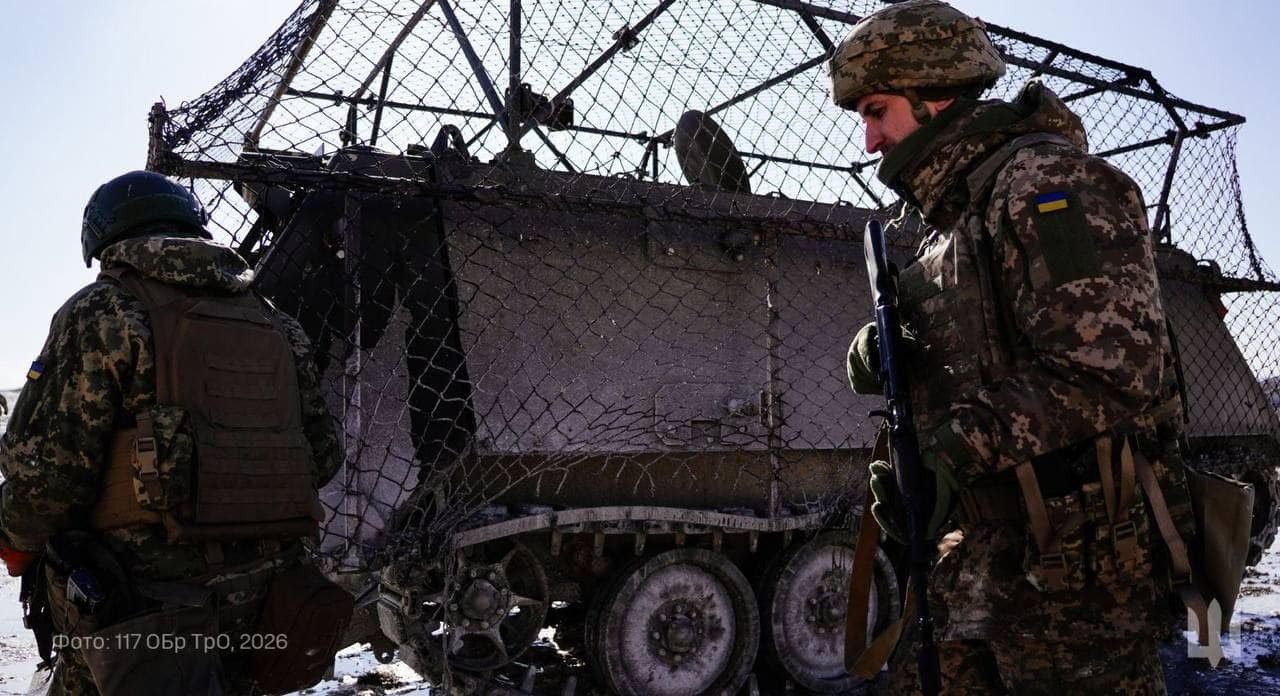
Russian forces are preparing to resume mechanized assaults in southern Ukraine after a pause of several months and are moving armored vehicles toward areas where they plan to launch offensives, Anastasiia Shevchenko, deputy spokesperson for the Southern Forces Grouping, told Ukrinform on 22 October. The Huliaipole axis remains the hottest in the Southern grouping’s zone, with 10 to 20 combat engagements reported on an average day, she said.
On the Huliaipole axis, one of Russia’s larges
Russian forces are preparing to resume mechanized assaults in southern Ukraine after a pause of several months and are moving armored vehicles toward areas where they plan to launch offensives, Anastasiia Shevchenko, deputy spokesperson for the Southern Forces Grouping, told Ukrinform on 22 October. The Huliaipole axis remains the hottest in the Southern grouping’s zone, with 10 to 20 combat engagements reported on an average day, she said.
On the Huliaipole axis, one of Russia’s largest force groupings is fighting Ukrainian forces, comprising units from several Russian combined-arms armies, the spokesperson says. Over the past week, as the weather worsened, Russian forces began local assaults there with infantry, motorcycles, and armored vehicles, seeking to break through toward Zaporizhzhia and blockade the city, Ukraine’s 7th Air Assault Corps reported, adding that the area is one of Russia’s key priorities in southern Ukraine. Russia has used fog this way before: last November, Russian troops moved under its cover to avoid detection by Ukrainian drones as they advanced on Huliaipole, the Institute for the Study of War assessed.
Russian forces have abandoned large-scale assaults across a broad front and are attempting to infiltrate Ukrainian positions in small groups. They periodically use motorcycles and quad bikes for assaults, Shevchenko said, adding that these vehicles are fast and maneuverable.
However, Russian forces should not expect to advance unimpeded, the spokesperson noted. Ukrainian units control Russian supply routes and systematically detect and strike Russian personnel and equipment while they are still moving toward their launch positions, she added.
“Specifically, speaking in numbers, since the beginning of October alone, units of the Southern Forces Grouping (Forces) have destroyed more than 3,000 occupiers and 1,300 pieces of weapons and military equipment. Thus, the enemy is suffering significant losses in the operational zone of the Southern Forces Grouping (Forces),” the spokesperson concluded.
Ukrainian drones disrupt Russian logistics
Russian forces had stopped using military vehicles because Ukraine’s unmanned systems forces controlled their logistics, Shevchenko said in comments to Ukrinform on 16 September. Ukrainian drones spotted Russian troops and equipment in time and struck them mostly on their routes of advance, she said.
Ukrainian air strikes destroyed bridges near Polohy in Zaporizhzhia Oblast, complicating Russian supply operations along the Huliaipole axis, Ukraine’s 7th Air Assault Corps reported on 21 September. Russian forces had used these bridges to move personnel, heavy equipment, and ammunition for their offensive toward Orikhiv. Disruptions to logistics have forced Russian units to rely more on motorcycles, which are more vulnerable to Ukrainian strikes, the corps said.
Explore further
Ukraine timed its Huliaipole operation around the weather — and it worked. Here’s why that won’t happen again soon
Russian forces are also expected to use fog and rain as cover for assaults, Mykola Zinko, deputy commander of the unmanned systems battalion of the 5th Assault Brigade, said on 19 October. Russia has brought up reserves, and its heavy equipment will move out under the fog, he said.
Ukraine’s military intelligence (HUR) published a 3D model and parts list of Russia’s new Filin cruise missile on 22 October. The breakdown names the Russian companies behind the missile and the foreign makers of its electronics.
HUR runs its War&Sanctions portal to trace such parts back to their makers. Its stated aim is to “deprive the aggressors of the ability to produce weapons for terror,” the portal says. Meanwhile, Russia is betting on cheap, fast cruise missiles, Serhii Besk
Ukraine’s military intelligence (HUR) published a 3D model and parts list of Russia’s new Filin cruise missile on 22 October. The breakdown names the Russian companies behind the missile and the foreign makers of its electronics.
HUR runs its War&Sanctions portal to trace such parts back to their makers. Its stated aim is to “deprive the aggressors of the ability to produce weapons for terror,” the portal says. Meanwhile, Russia is betting on cheap, fast cruise missiles, Serhii Beskrestnov, a freelance adviser to the president on technology, told Radio NV in mid-September. Naming the Banderol, Dan-T, Dan-M, and Gerbera-5, he warned they would soon outrun Ukraine’s jet-powered interceptors, so Ukraine needed its own cheap missiles to shoot them down.
Composite body, ground launch
JSC NPO Molniya, part of Russia’s Tactical Missiles Corporation, builds the Filin, HUR said. The agency called it part of a Russian defense-industry trend toward cheap jet-powered, ground-launched air-attack weapons. Russia began firing it at Ukraine in late summer 2026.
HUR’s data puts the carbon and fiberglass fuselage at 3.5 m, with a 3 m wingspan. Some parts are 3D-printed. Russia claims a top speed of 800 km/h. The range is 600–1,200 km, and the missile flies at ultra-low altitude or up to 6 km. Versions carry 50-kg or 100-kg warheads. A solid-fuel booster fires it from a ground launcher.
A firm tied to a Shahed-type drone
PLAZ LLC makes the onboard equipment, HUR said. The firm also helps produce the Garpiya, a version of Russia’s Shahed-type Geran-2 drone. Filin and Garpiya units share a similar layout and markings. Guidance combines a Chinese-made inertial navigation system with a 16-channel Kometa anti-jamming module from Russia’s VNIIR-Progress.
The electronics resemble those in other Russian missiles and drones but carry a larger share of Chinese parts. Of 81 components, 35 are American and 22 Chinese. The engine, however, is Russian: an R500 turbojet from Reynolds LLC. A similar engine earlier turned up in the S-71K Kover aviation cruise missile and S-71M Monokhrom, HUR said.
For comparison, Ukraine found more than 20 foreign components in a different cheap missile, the Banderol, in May 2025. They included 10 US microchips, and the Banderol flies on a Chinese jet engine.
The airport is in Dammam, which is near the headquarters of oil giant Saudi Aramco. For weeks, Yemen’s Iran-backed Houthi militia has been attacking the kingdom’s aviation and energy sectors.
The airport is in Dammam, which is near the headquarters of oil giant Saudi Aramco. For weeks, Yemen’s Iran-backed Houthi militia has been attacking the kingdom’s aviation and energy sectors.
Fox News and others have toed president’s line – seemingly hoping unrest abroad will make people vote RepublicanDonald Trump sought to capitalize on the scenes of unrest in France, telling a crowd in Kansas on Monday that “migrants” and “communists” were responsible, and that the scenes were “what the radical ‘Dumocrats’ want to do to America”.As Republicans struggle to convince voters across the country ahead of November’s midterm elections, Trump’s allies in the conservative media have followe
Fox News and others have toed president’s line – seemingly hoping unrest abroad will make people vote Republican
Donald Trump sought to capitalize on the scenes of unrest in France, telling a crowd in Kansas on Monday that “migrants” and “communists” were responsible, and that the scenes were “what the radical ‘Dumocrats’ want to do to America”.
As Republicans struggle to convince voters across the country ahead of November’s midterm elections, Trump’s allies in the conservative media have followed suit, seemingly hoping that the scenes in France can scare people to the polls.
Europe’s leaders can no longer trust a word that comes out of Washington. No more slaps on the wrist – we need concrete steps to punish TrumpHistorical comparisons are always inexact. No one conflict precisely mirrors another. Yet Donald Trump’s shameless appeasement of Vladimir Putin carries more than a noxious whiff of Neville Chamberlain’s failed attempt in Munich in 1938 to head off war with Nazi Germany. To be fair to the former UK prime minister – and history largely hasn’t been – his peac
Europe’s leaders can no longer trust a word that comes out of Washington. No more slaps on the wrist – we need concrete steps to punish Trump
Historical comparisons are always inexact. No one conflict precisely mirrors another. Yet Donald Trump’s shameless appeasement of Vladimir Putin carries more than a noxious whiff of Neville Chamberlain’s failed attempt in Munich in 1938 to head off war with Nazi Germany. To be fair to the former UK prime minister – and history largely hasn’t been – his peacemaking efforts had the enthusiastic backing of most people in Britain and France who, like him, were desperate to avoid a repeat of the horrors of the first world war. Trump enjoys no equivalent public support for his treachery. Nor does he face the prospect of a US war with Russia. His betrayal of Ukraine is cynically self-interested, globally dangerous and utterly contemptible.
US-Russian talks on agreeing the shoddy terms of a precedent-setting American sell-out of Ukraine are at an advanced stage, after meetings in St Petersburg this week. Trump has zigzagged over the war ever since returning to office. Now, panicked by record-low poll ratings, he seems determined to scapegoat Ukraine and force its de facto capitulation. Recent steps – his shocking decision to fund Putin’s war machine by buying Russian diesel, his waiving of tougher sanctions, his mysterious, lethal interruptions in US satellite and intelligence sharing with Kyiv, and his renewed attempt to oust Ukraine’s president, Volodymyr Zelenskyy – mark Trump out as the skulking Judas, the craven Brutus of the modern age. He makes Chamberlain look like a man of iron principle. All that’s lacking is an umbrella.
Simon Tisdall is a Guardian foreign affairs commentator
Experts say Russia is trying to destroy energy infrastructure before winter and US ‘appeasement and flattery’ will not achieve peaceRussia has carried out a massive “demonstrative” attack on Ukraine, bombarding Kyiv with ballistic missiles just hours after Vladimir Putin said he had agreed to resume trilateral negotiations after talks with the US envoy Steve Witkoff.Overnight, Moscow pounded the Ukrainian capital, killing at least two people and wounding 22, including four children. Targets incl
Experts say Russia is trying to destroy energy infrastructure before winter and US ‘appeasement and flattery’ will not achieve peace
Russia has carried out a massive “demonstrative” attack on Ukraine, bombarding Kyiv with ballistic missiles just hours after Vladimir Putin said he had agreed to resume trilateral negotiations after talks with the US envoy Steve Witkoff.
Overnight, Moscow pounded the Ukrainian capital, killing at least two people and wounding 22, including four children. Targets included the southern bridge over the Dnipro River, civilian houses, energy infrastructure, an ambulance station, office buildings and a clinic.
The CNN star’s wise advice to ‘be truthful, not neutral’ should be tattooed on our soulsAfter decades as a renowned international journalist, the CNN star Christiane Amanpour is calling it a career, saying she’ll soon leave the cable network which she joined in 1983.She will be missed for the courage in war zones and forthright presentation that have made her one of the most famous names in media.Margaret Sullivan is a Guardian US columnist writing on media, politics and culture Continue reading
The CNN star’s wise advice to ‘be truthful, not neutral’ should be tattooed on our souls
After decades as a renowned international journalist, the CNN star Christiane Amanpour is calling it a career, saying she’ll soon leave the cable network which she joined in 1983.
She will be missed for the courage in war zones and forthright presentation that have made her one of the most famous names in media.
Margaret Sullivan is a Guardian US columnist writing on media, politics and culture
Russia has sought to separate the war in Ukraine from potential business deals and diplomacy with the United States. Its efforts now appear to be working.
Russia has sought to separate the war in Ukraine from potential business deals and diplomacy with the United States. Its efforts now appear to be working.
A coaster dares riders to be daring, with steep drops, high speeds and improbably tight curves. But safety has become a concern again after a man was thrown from his seat and died in Georgia.
A coaster dares riders to be daring, with steep drops, high speeds and improbably tight curves. But safety has become a concern again after a man was thrown from his seat and died in Georgia.
Investors who buy idle sanctioned tankers and refit them could put the ships back into legal oil trade, US Energy Secretary Chris Wright said on 19 October, Bloomberg reported. He laid out the plan five days after a US official described it to Reuters.
That official said the aim was to cut record tanker freight rates. The Energy Department added that any relief would not help Russia move its oil. The plan comes weeks before the 3 November midterms, with voters worried about fuel costs a
Investors who buy idle sanctioned tankers and refit them could put the ships back into legal oil trade, US Energy Secretary Chris Wright said on 19 October, Bloomberg reported. He laid out the plan five days after a US official described it to Reuters.
That official said the aim was to cut record tanker freight rates. The Energy Department added that any relief would not help Russia move its oil. The plan comes weeks before the 3 November midterms, with voters worried about fuel costs after gasoline and diesel prices surged in the Mideast conflict. Yet the shadow fleet is also how Russia sells oil past sanctions, and those sales fund its war against Ukraine. In December 2025, Ukraine’s foreign intelligence counted more than 1,100 tankers serving Russia alone, 226 of them under US sanctions.
An approval process Wright didn’t detail
Many sanctioned tankers sit idle, Wright told Bloomberg’s Annmarie Hordern, and buyers keep approaching the administration offering to fix them up and carry only legal oil.
“We’re going to move some of the ships from what I call the ‘bad-guy fleet’ to the ‘good-guy fleet,’” he said. “They will not carry sanctioned oil anymore.”
The ships must go through an approval process, Wright said, but he gave no criteria. He insisted “there is no removing of sanctions.”
He put the global dark fleet at about 1,600 ships, a count covering vessels that hauled Venezuelan, Iranian, and Russian oil. Dozens or even hundreds could turn legitimate, he said. The ships are no longer needed for Venezuelan oil, Wright said, and no Iranian oil is moving. Russian oil exports, he added, “are certainly not growing.”
Diesel, a waiver, and the tankers
Earlier, on 9 October, the Treasury issued General License 135, allowing some deals in Russian diesel until 7 April 2027. On 16 October, US President Donald Trump waived sanctions and tariffs under the Graham Act, leaving earlier sanctions intact. That law had directed him to review and sanction shadow-fleet vessels. Trump defended the waiver as a way to keep Moscow at the negotiating table.
House Speaker Mike Johnson told Fox News host Larry Kudlow on 18 October that he had asked the White House team to “carefully consider the unintended consequences,” The Hill reported. He added that he thought “the right decision will be made” in the end.

 Connexion






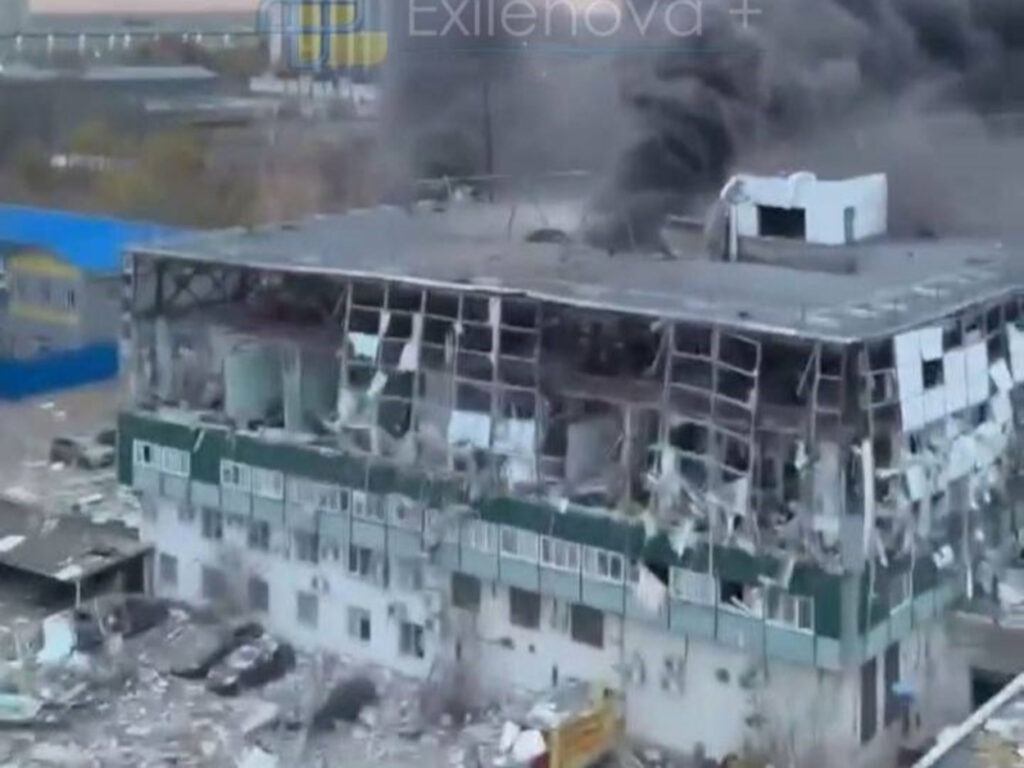
 Exilenova+…