The 15-year-old suspect will be charged with 11 counts of attempted second-degree murder after the shooting on Saturday that happened after Florida A&M’s homecoming game.
The 15-year-old suspect will be charged with 11 counts of attempted second-degree murder after the shooting on Saturday that happened after Florida A&M’s homecoming game.
Journalists from 17 European public service broadcasters, coordinated by the European Broadcasting Union’s (EBU) Eurovision News Spotlight network, published an interactive map on 23 October 2026. It documents hybrid incidents linked to Russia across 17 European countries between 1 April and 15 October. Journalists compiled a database of hundreds of reported incidents, categorizing each by type and the source and strength of its alleged links to Russia, then verifying them through open-sou
Journalists from 17 European public service broadcasters, coordinated by the European Broadcasting Union’s (EBU) Eurovision News Spotlight network, published an interactive map on 23 October 2026. It documents hybrid incidents linked to Russia across 17 European countries between 1 April and 15 October. Journalists compiled a database of hundreds of reported incidents, categorizing each by type and the source and strength of its alleged links to Russia, then verifying them through open-source research.
The map comes as officials warn the campaign is growing. On 28 September, EU foreign policy chief Kaja Kallas said in Brussels that Russia was planning more acts of sabotage to divide societies and intimidate them into abandoning their support for Ukraine. The points on the map represent an incomplete list of publicly known cases attributed to Russia or suspected of being linked to it, the report states.
The map covers airspace violations, sabotage attempts, “disposable” agents with no formal intelligence training, migration used as a weapon, and Russian military activity near or across European borders. It excludes cyberattacks, influence operations, and espionage by trained intelligence officers.
The EBU calls the result a very conservative estimate, not an official tally. Russia has consistently denied responsibility for the incidents. Many single points represent several incidents of the same type in one area or in quick succession. In Moldova, for example, Defense Minister Anatolie Nosatîi said on 30 September that the government had recorded 84 drone incursions.
Four German incidents are on the map, out of many more
The map shows four incidents in Germany, according to BR.
The four incidents in Germany on the EBU hybrid war map, 2 August to 14 September 2026. Other dots mark Russia-linked incidents in neighboring countries. Map: Luc Martinon/EBU, Eurovision News Spotlight; edited by Euromaidan Press
On 2 August, German authorities arrested a 33-year-old Ukrainian man in Thuringia on suspicion of photographing a Bavarian weapons manufacturer for a foreign intelligence service as part of an alleged sabotage plot.
On 4 August, a drone carrying explosives and a detonator struck the wing of a Ukrainian An-124 cargo plane at Leipzig/Halle Airport but failed to explode.
On 3 September, attackers threw firebombs from a car onto a construction site next to defense firms in Munich, and German security authorities suspect Russian intelligence.
On 14 September, investigators learned of a crashed drone found near the Bundeswehr’s Wunstorf air base.
Internal papers from the new Joint Hybrid Defense Center, seen by Correctiv, record 163 suspected sabotage cases in 2026 up to 19 August. The targets included rail lines, military facilities, substations, and radio masts. The same papers record 1,034 drone overflights of critical infrastructure, military sites, and defense companies, and 25 espionage investigations. The papers cover possible attacks by Russia, China, and Iran, and media did not report a breakdown of the sabotage cases by country.
European leaders sound the alarm over Russian hybrid attacks
On 15 April, Swedish civil defense minister Carl-Oskar Bohlin said pro-Russian groups had moved from denial-of-service attacks to attempts at destructive cyberattacks, including one on a Swedish power plant in 2025. On 1 September, German Foreign Minister Johann Wadephul named Russia as the perpetrator of the Leipzig attack and accused Moscow of “blatant hostility” toward Germany.
On 18 September, French President Emmanuel Macron said Russia’s hybrid attacks would not go unanswered and ordered a plan to protect France’s critical infrastructure. On 1 October, German Chancellor Friedrich Merz said Germany was preparing for new hybrid attacks, “including serious ones.” NATO Secretary General Mark Rutte on 14 October called the attacks a sign of Russian weakness at a press conference in Tallinn and said NATO would react where needed without being “rattled.”
Russia attacked Ukraine with 140 drones, including Shahed and Gerbera attack drones and Parodiya decoys, and four missiles overnight on 26 October, the Ukrainian Air Force reported. The missiles were one Kh-31P anti-radiation missile and three Kh-59/69 air-launched guided missiles, launched from occupied parts of Zaporizhzhia and Kherson oblasts.
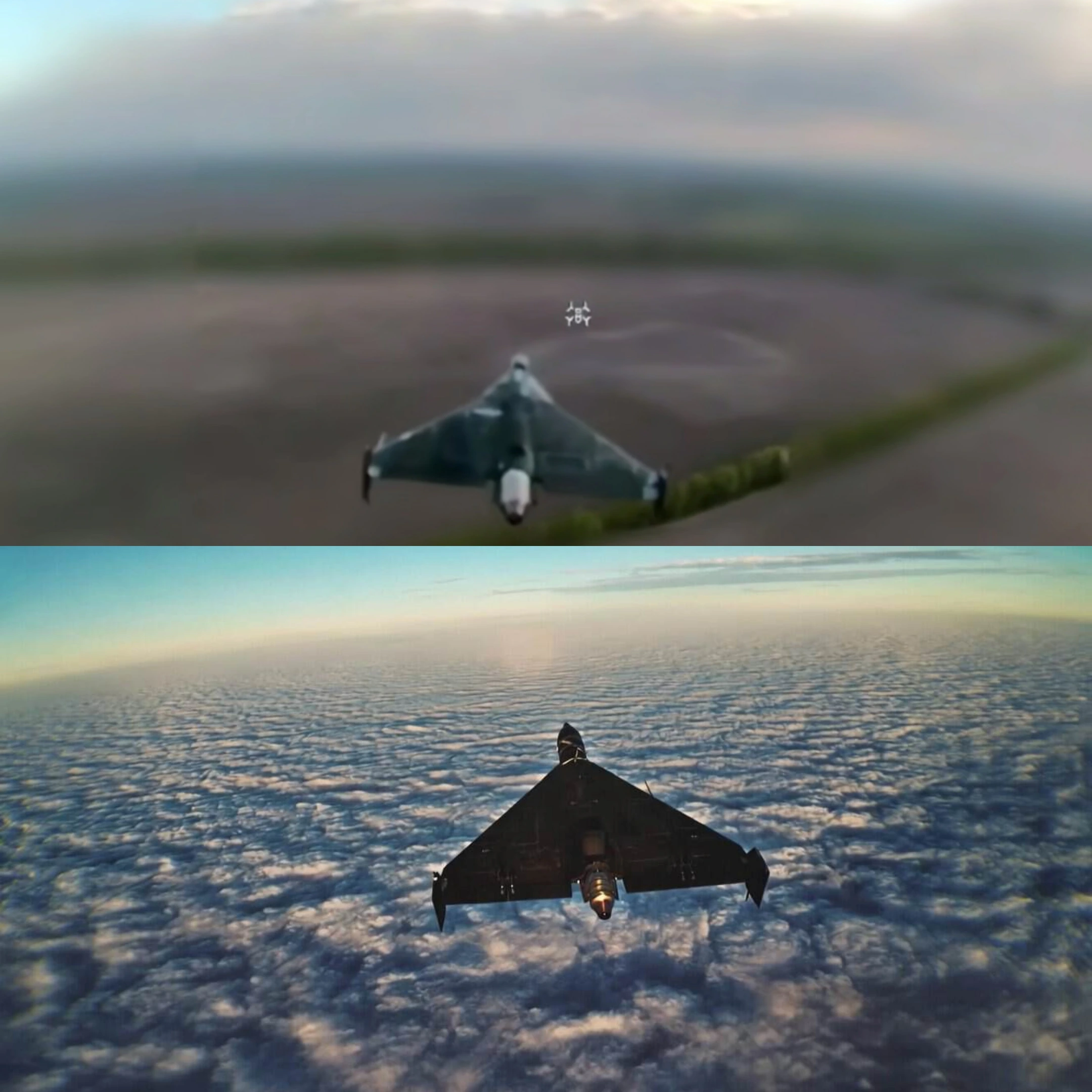
Jet-powered Shaheds are becoming a larger part of Russia’s aerial campaign, challenging Ukraine’s air defenses and prompting efforts to develo
Russia attacked Ukraine with 140 drones, including Shahed and Gerbera attack drones and Parodiya decoys, and four missiles overnight on 26 October, the Ukrainian Air Force reported. The missiles were one Kh-31P anti-radiation missile and three Kh-59/69 air-launched guided missiles, launched from occupied parts of Zaporizhzhia and Kherson oblasts.
Jet-powered Shaheds are becoming a larger part of Russia’s aerial campaign, challenging Ukraine’s air defenses and prompting efforts to develop faster interceptors. Alongside guided bomb attacks and strikes on energy infrastructure, these attacks add to the pressure on Ukraine’s defenses as winter approaches, and Ukraine says Russia has a plan for it.
Air defenses downed or suppressed 112 drones, including 56 of the 70 jet-powered Shaheds, and three Kh-59/69 missiles, according to preliminary Air Force figures. Hits were recorded at 15 locations, and debris fell at four more.
Four wounded in Zaporizhzhia
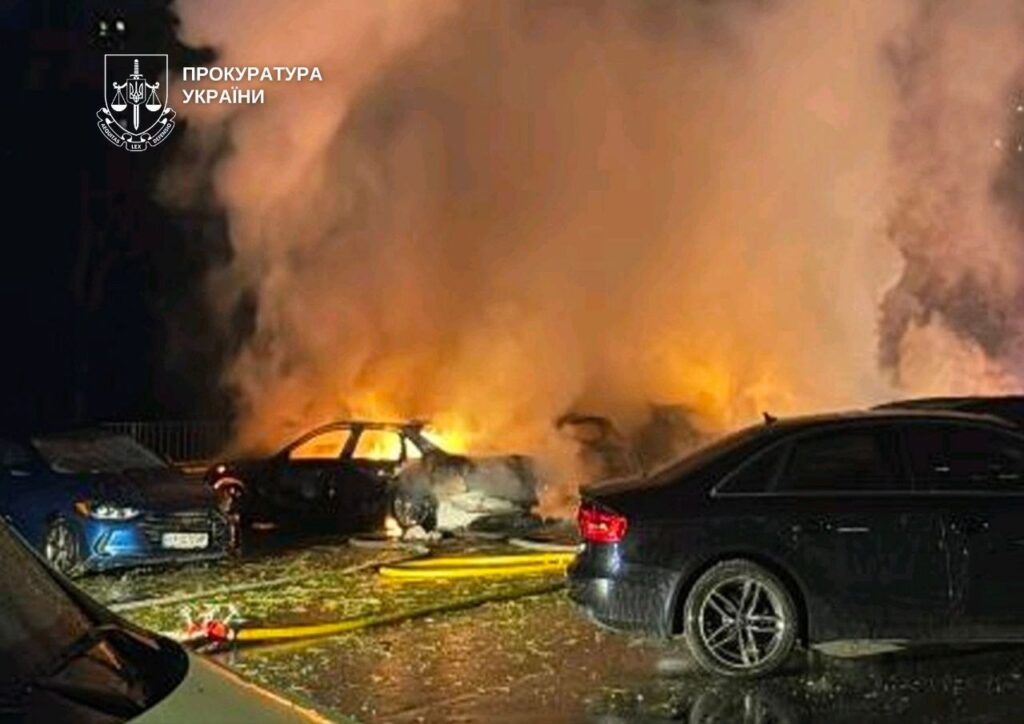
Russian strikes on Zaporizhzhia overnight wounded two women aged 22 and 30, and two men aged 40 and 61, the State Emergency Service (DSNS) said. The strikes damaged the windows of a hotel and two buses, a private house, and four outbuildings, and three cars caught fire. The oblast administration had first reported one wounded.
Russian strikes injured 8 people in Ukraine overnight on 26 October
Russia injured 2 women, aged 22 and 30, and 2 men, aged 40 and 61, in Zaporizhzhia overnight, Ukraine's State Emergency Service said. Russia also shattered windows in a hotel and 2 buses and damaged a house, and… pic.twitter.com/42bvnHt0qk
Later in the morning, Russian forces hit a shopping center building that had already closed, the administration said. The building caught fire. According to preliminary information, no one was hurt.
Guided bombs hit two districts of Izium
At about 02:40 on 26 October, Russian forces struck two districts of Izium in Kharkiv Oblast with guided aerial bombs, and three people needed medical help, the city military administration said, as Suspilne Kharkiv reported. More than 10 private houses and a youth sports school were damaged, and several streets lost power and internet.
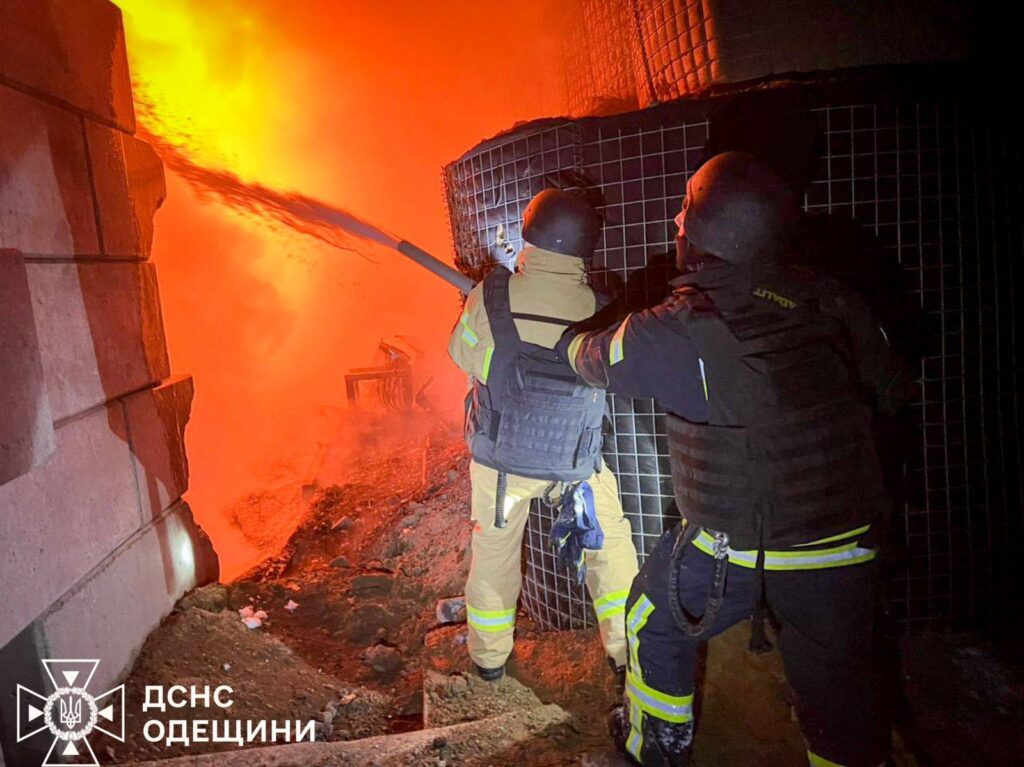
Russia struck a burning Odesa Oblast plant twice more as firefighters worked
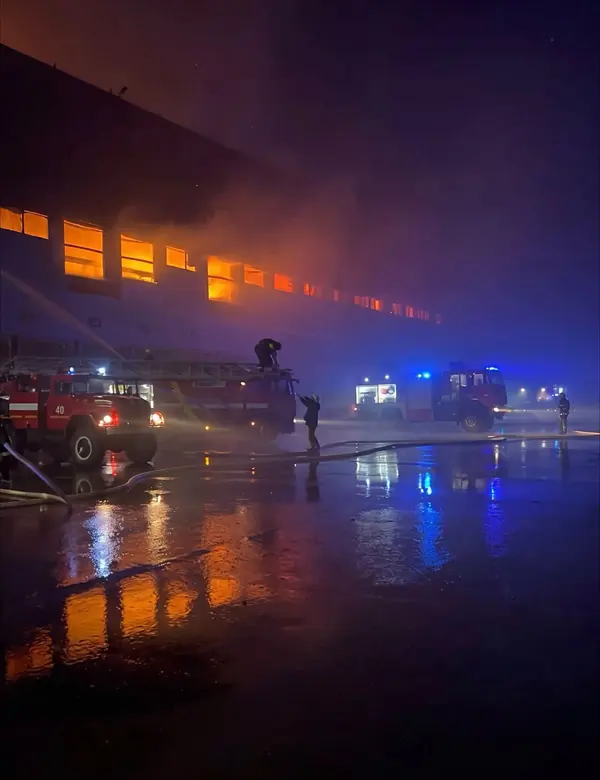
Overnight, a Russian attack destroyed an industrial enterprise in Odesa Oblast and set it on fire, the DSNS reported. As firefighters put out the blaze, Russian forces struck the site twice more. The rescuers were in shelter and were not hurt, but fire equipment was damaged. At another address, four garages were damaged and a car was destroyed. The oblast administration said there were no casualties.
Russia struck a burning Odesa Oblast plant twice more as firefighters worked on 26 October 2026. Photo: State Emergency Service of Ukraine
Energy facility hit in Khmelnytskyi Oblast
On the evening of 25 October, a Russian attack damaged an energy facility in Kamianets-Podilskyi district of Khmelnytskyi Oblast, causing emergency power outages, the oblast administration said. Windows were also damaged in two residential buildings. No casualties were reported.
Meanwhile, Russian drones attacked the Nikopol district of Dnipropetrovsk Oblast more than 10 times overnight, damaging a high-rise and an administrative building, the oblast administration reported. No one was hurt. Mykolaiv Oblast also came under Shahed attack overnight, with no casualties, according to its administration.
The attack continued into the day. On the morning of 26 October, a Russian strike hit a civilian infrastructure site in Vinnytsia, the oblast administration said. Preliminary reports showed no casualties.
Strikes on 26 October kill three in Donetsk and Dnipropetrovsk oblasts
On 26 October, Russian aircraft dropped four guided bombs on homes and shops in the center of Yasnohirka near Kramatorsk, killing one person and wounding 10, the DSNS said. Among the wounded is a 13-year-old girl, Donetsk oblast head Vadym Filashkin said. In Sloviansk, a Russian airstrike destroyed a private house, and rescuers recovered the body of its owner, the DSNS said.
A Russian drone strike on Pavlohrad in Dnipropetrovsk Oblast killed one person and injured seven, including two children, the DSNS said. The injured include two 10-year-old girls, the oblast administration said.
Six hurt in Kharkiv Oblast over the past day
Over the past 24 hours, Russian attacks hurt six people in Kharkiv Oblast, oblast head Oleh Syniehubov said. In Kharkiv, a 60-year-old man and a 14-year-old boy suffered acute stress reactions. Two women aged 51 and 71 were wounded in Krasnopavlivka. His count lists two wounded men in Izium, aged 72 and 52, while the city administration says three people there needed medical help. Russian attacks also set fire to a house in Kotliary, a production building in Vilshany, a building in Derhachi, a house in Mykolaivka, and a site in Kharkiv’s Kholodnohirskyi district, the DSNS reported.
A damaged truck and a crater in Kharkiv Oblast after Russian attacks on 26 October 2026. Photo: Kharkiv Oblast Military Administration
In Sumy Oblast, Russian attacks over the past day injured five people, the National Police said, including two women aged 76 and 56 hit by a drone in Sumy community.
On 25 October: two killed in Kherson and Donetsk oblasts
In Chernihiv Oblast, Russian attacks on 25 October injured a man at a hangar in Pryluky district and a woman at a grain store in the Novhorod-Siverskyi area, the oblast administration said. Drones also damaged a school in a village of Koriukivka community, and a strike destroyed 700 metric tons of potatoes at an enterprise in Mena community, the administration said. A large warehouse fire broke out in Koriukivka district, the DSNS said.
In Kherson Oblast, Russian attacks killed one person and wounded eight in the 24 hours to 06:00 on 26 October, the oblast administration reported. On 25 October, a Russian drone strike on a minibus in Kherson’s Central district killed one person and wounded six, the administration said after one more man sought medical help. Police said the minibus was hit by an FPV drone.
In Donetsk Oblast, Russian forces killed one person in Kramatorsk and wounded 10 across the oblast on 25 October, Filashkin said. Russia hit Kramatorsk with drones and six KAB-250 guided bombs, and 18 hits on Sloviansk wounded four, police said.
On 25 October, a Russian attack on Synelnykove district of Dnipropetrovsk Oblast sent a 30-year-old man to hospital, the oblast administration said. In Vinnytsia, the number of people injured in the Russian attack on the morning of 25 October rose to seven, two of them hospitalized, the DSNS said. In Uman, an 86-year-old woman burned in the Russian attack on 21 October died in hospital, the Cherkasy oblast administration said.
Ukraine has waited almost a month for US Defense Secretary Pete Hegseth to sign off on missiles for its Patriot and NASAMS air defense systems, Ukrainian President Volodymyr Zelenskyy said on 26 October. He ordered his team to raise it with Washington again. Two other US holds on Ukraine, on Starlink speeds and intelligence sharing, have been lifted, leaving the interceptors as the last one.
Russia keeps firing ballistic missiles at Ukrainian cities and the power grid before winter, and
Ukraine has waited almost a month for US Defense Secretary Pete Hegseth to sign off on missiles for its Patriot and NASAMS air defense systems, Ukrainian President Volodymyr Zelenskyy said on 26 October. He ordered his team to raise it with Washington again. Two other US holds on Ukraine, on Starlink speeds and intelligence sharing, have been lifted, leaving the interceptors as the last one.
Russia keeps firing ballistic missiles at Ukrainian cities and the power grid before winter, and Patriots are the only systems in Ukraine that reliably stop Iskander-M, Kinzhal, and Zircon missiles. Zelenskyy has told EU leaders Ukraine needs 300 interceptors to get through winter, diplomatic sources told Radio Svoboda. The holds came as Washington pressed Kyiv to stop striking Russian refineries, which Trump blames for high US fuel prices before the midterms.
Zelenskyy: almost a month waiting for Hegseth’s signature
Zelenskyy held a meeting on weapons supplies with Ukraine’s defense minister, foreign minister, and commander-in-chief. They reported on interceptors for air defense, above all for Patriot systems. Afterward, Zelenskyy wrote:
“We are working in several directions: with the United States, Europe, and other partners that have stocks of PAC-2 and PAC-3 missiles. In particular, for almost a month we have been waiting for Mr. Hegseth’s signature on missiles for Patriots and NASAMS. I have instructed the team to discuss this with the American side once again.”
Talks with other countries continue, he added. The meeting also covered preparations for November’s Ramstein meeting of Ukraine’s allies, where Zelenskyy wants decisions already on the table carried out faster.
Aftermath of a Russian ballistic missile attack on Kyiv, 19 October 2026. Photo: State Emergency Service of Ukraine
Allies’ missiles need US approval
Some of the transfers come from friendly countries and need Hegseth’s approval, because the US must sign off on any re-transfer of its missiles, a US official and three people familiar with the matter said on 19 October. Hegseth has neither refused nor approved them.
Explore further
The Starlink hot potato: Musk points to Trump, Trump points to nobody, then credits Musk with the fix. The speed limit stays
A Ukrainian official said in mid-October that only “a couple” of interceptors were left. Hegseth has said the US wants “our guys” to have “the most possible” interceptors, and Secretary of State Marco Rubio insisted nothing was “being deliberately denied to Ukraine.”
Two of three US holds lifted
In an interview aired on 25 October, Zelenskyy listed three problems from his Oslo talks with the Americans: air defense, Starlink limits, and limits on US intelligence sharing. Full Starlink speeds returned on 24 October, and missile warnings resumed after his 20 October call with Rubio. Progress on Patriot missiles is “very slow,” he said, “slower than the flight of Russian missiles.”
Kyiv has also tried to trade for the missiles. Zelenskyy told US senators he had offered US envoys a 30-day pause in strikes on Russian refineries in return for Patriot interceptors. The envoys showed no openness to the idea.
Trump has called those refinery strikes a disgrace that only pushes oil prices higher. He said it days after striking a deal with Putin to bring Russian diesel back to the US ahead of the midterm elections on 3 November.
Trump treats Ukraine as the weak link to squeeze and wants a visible win partly with US domestic politics in mind, Ukrainian diplomat Oleksandr Khara has argued.
French and US maritime patrol planes are watching the western Black Sea, where drones keep hitting merchant ships, Romanian outlet Curs de Guvernare reported on 19 October, citing flight-tracking data. Romania blames Russia for the attacks, while Bulgaria says it cannot prove who launched them.
Ukraine’s three small Danube ports have kept its grain exports from collapsing further, and Russia has pounded those ports since the summer. The ships serving them are now being hit in the econom
French and US maritime patrol planes are watching the western Black Sea, where drones keep hitting merchant ships, Romanian outlet Curs de Guvernare reported on 19 October, citing flight-tracking data. Romania blames Russia for the attacks, while Bulgaria says it cannot prove who launched them.
Ukraine’s three small Danube ports have kept its grain exports from collapsing further, and Russia has pounded those ports since the summer. The ships serving them are now being hit in the economic zones of two NATO members. Many were anchored near or heading to the Sulina Canal, which links the Danube to the sea. That puts the allied patrols over these waters in the middle of the fight over Ukraine’s grain trade.
Map: Euromaidan Press
Two patrol planes over the western Black Sea
A French Navy Atlantique 2 maritime patrol plane arrived in Constanța, Romania’s main Black Sea port, on the evening of 18 October, Curs de Guvernare said. On 24 October, French Foreign Minister Jean-Noël Barrot said in the Bulgarian port of Varna that a French patrol plane had been operating in the area under NATO for two weeks and had contributed to rescue operations.
Explore further
Two tankers burn off Romania’s Sulina as Bulgaria says it lacks proof Russia is behind the Black Sea ship attacks
Meanwhile, a US Navy P-8A Poseidon flew into Varna from Sicily on 18 October, AFP reported, citing flight-tracking data. Two days later, Bulgarian Prime Minister Rumen Radev said it had begun reconnaissance patrols after Sofia asked allies for help, and that some allies had responded quickly. Bulgarian Defense Minister Dimitar Stoyanov called the deployment a joint decision of Bulgaria and NATO. He said the plane cannot strike targets and passes its data to NATO, Anadolu Agency reported.
NATO promises more
On 20 October, NATO’s North Atlantic Council met at Romania’s request. Afterward, the alliance said it would send more maritime patrol aircraft, radar systems, and drones to the Black Sea. NATO military spokesman Col. Martin O’Donnell added that allies have sent or will send intelligence personnel and explosives-forensics teams. NATO itself has not attributed the attacks to any country.
Romania names Russia, Bulgaria hedges
Romania has been blunter. On 15 October, after four merchant ships were hit within a day, acting Foreign Minister Oana Țoiu wrote on X that “Russia bears full responsibility for these developments.” On 17 October, Romanian F-16s shot down two jet-powered Russian Geran drones near Sulina, Romania’s Defense Ministry said.
Unitățile aeriene și navale ale Gărzii de Coastă (GdC/MAI) și ale Inspectoratului General pentru Situații de Urgență (IGSU/MAI) sunt implicate activ în operațiunile de căutare și salvare, în vederea găsirii membrilor dați dispăruți ai echipajului navei care a fost atacată în…
On 23 October, a drone sank the cargo ship Khoryv off Constanța, killing a Ukrainian sailor, and President Nicușor Dan blamed Russia too. “It is part of Russia’s escalation process in its war in Ukraine,” Dan said.
Bulgaria is more cautious. Radev told parliament on 14 October that the attacks worked in Russia’s favor but that Sofia could not prove it. Since taking office in May, he has sought a thaw in ties with Moscow.
Ukraine reportedly struck the Energiya plant in Yelets, Russia’s Lipetsk Oblast, with UK-supplied Storm Shadow cruise missiles on 25 October, according to the OSINT channel Exilenova+.
The plant manufactures batteries and power sources used in Russian weapons systems, including Iskander and Kinzhal missiles, air defense systems, and guided aerial bombs, according to Exilenova+. The reported strike targeted a facility that supplies components for Russia’s military-industrial complex as M
Ukraine reportedly struck the Energiya plant in Yelets, Russia’s Lipetsk Oblast, with UK-supplied Storm Shadow cruise missiles on 25 October, according to the OSINT channel Exilenova+.
The plant manufactures batteries and power sources used in Russian weapons systems, including Iskander and Kinzhal missiles, air defense systems, and guided aerial bombs, according to Exilenova+. The reported strike targeted a facility that supplies components for Russia’s military-industrial complex as Moscow continues its war against Ukraine.
According to Exilenova+, Energiya is Russia's only producer of batteries for glide bomb planning and correction modules, as well as a key supplier of specialized power sources for several missile systems.
Storm Shadow missiles reportedly hit plant buildings
Exilenova+ reported multiple missile impacts at the Energiya plant, sharing footage and photos showing explosions, thick smoke, and fires at the facility. The channel later reported that the plant was still burning and that the surrounding area had been cordoned off, with numerous ambulances heading to the site.
Dnipro OSINT reported that at least two missiles struck two buildings at the plant.
The Energiya plant is located in Yelets, approximately 250 km (150 miles) from the Ukrainian border.
Plant produces components for Russian weapons
According to Dnipro OSINT, Energiya specializes in developing and manufacturing chemical power sources. Its products are used in several Russian weapons systems, including Iskander-K and Iskander-M missiles, Kh-47M2 Kinzhal air-launched ballistic missiles, Zircon missiles, and Pantsir air defense systems. The plant also supplies power sources for UMPB D-30SN guided aerial bombs.
Many of these weapons are used in Russian strikes on Ukrainian cities, killing civilians and destroying residential buildings and civilian infrastructure.
Explore further
UN food aid warehouse in Dnipro struck by Russian Iskander missile, impacting supplies for 130,000 people
Dnipro OSINT said the plant had been attacked at least four times before the 25 October strike.
The strike comes two days after a reported Ukrainian Storm Shadow missile attack on the Proton electronics plant in Russia’s Oryol on 23 October, which produces electronic components used in Russian weapons systems, including Iskander-M ballistic missiles and Pantsir-S1 air defense systems.
A drone attack damaged an industrial facility in Russia’s Perm Krai early on 25 October, injuring five workers, Ukrainian monitoring channel Exilenova+ reported. Exilenova+ identified the target as the AVISMA chemical and metallurgical plant in Berezniki, around 1,500 km from Ukraine’s border.
The reported strike highlights Ukraine’s ability to reach industrial facilities deep inside Russia that support its military-industrial complex.
AVISMA produces titanium materials used in avi
A drone attack damaged an industrial facility in Russia’s Perm Krai early on 25 October, injuring five workers, Ukrainian monitoring channel Exilenova+ reported. Exilenova+ identified the target as the AVISMA chemical and metallurgical plant in Berezniki, around 1,500 km from Ukraine’s border.
The reported strike highlights Ukraine’s ability to reach industrial facilities deep inside Russia that support its military-industrial complex.
AVISMA produces titanium materials used in aviation and aerospace manufacturing, including military aircraft, aircraft engines, missiles, and space technology, according to Exilenova+.
Regional governor Dmitry Makhonin said the industrial facility sustained damage but continued operating normally. He said five workers were injured in the attack.
A target deep inside Russia
Perm Krai lies in Russia’s Ural region, roughly 1,500 km from Ukraine’s border. The distance places the reported strike far beyond Russia’s border regions, where Ukrainian drone attacks have frequently targeted military and industrial infrastructure.
The reported attack follows a broader Ukrainian campaign against Russian industrial and energy facilities linked to the country’s war effort.
Russia’s Defense Ministry claimed that air defenses intercepted and destroyed 532 Ukrainian drones overnight across 23 Russian regions and over the Sea of Azov, according to Russian state news agency TASS.
The reported interceptions included drones over Perm Krai, as well as regions around Moscow and areas in southern and western Russia. The figures have not been independently verified.
The extent of damage at AVISMA and any impact on its operations have not been independently established.
Ukrainian forces reportedly struck the MegaGRINN shopping and entertainment complex in the Russian city of Belgorod during a mass drone attack overnight on 25 October, when the mall was closed and no visitors were inside, according to the Ukrainian monitoring channel Exilenova+.
Russian authorities reported that a civilian was killed and 10 people were injured in the broader mass drone attack on Belgorod. One of the injured was an ambulance worker, according to the regional operational
Ukrainian forces reportedly struck the MegaGRINN shopping and entertainment complex in the Russian city of Belgorod during a mass drone attack overnight on 25 October, when the mall was closed and no visitors were inside, according to the Ukrainian monitoring channel Exilenova+.
Russian authorities reported that a civilian was killed and 10 people were injured in the broader mass drone attack on Belgorod. One of the injured was an ambulance worker, according to the regional operational headquarters.
The majority of the drones reportedly targeted one area in the city center, according to ASTRA.
Belgorod’s largest shopping complex targeted
Exilenova+ identified the reported target as MegaGRINN, Belgorod’s largest shopping and entertainment complex covering about 163,000 square meters. The facility houses more than 200 stores, a supermarket, restaurants, a cinema, and entertainment areas.
Belgorod is a Russian city about 34 kilometers (21 miles) from Ukraine’s northeastern border and roughly 70 kilometers (43 miles) from Kharkiv. The city and surrounding oblast have repeatedly come under Ukrainian drone attacks during Russia’s full-scale war against Ukraine.
Belgorod Oblast borders Ukraine’s Sumy, Kharkiv, and Luhansk oblasts. Russian forces have used the region to launch missile and drone attacks on Ukraine and to stage ground offensives across the border.
Update: Ukraine’s General Staff reports strikes on Russian radar stations in Belgorod Oblast
Update 18:00: Ukraine’s General Staff said Ukrainian forces struck Russian radar stations near Hostishchevo and Kurgannoye in Russia’s Belgorod Oblast on 24 October and overnight on 25 October.
The General Staff said the strikes would create gaps in Russian radar coverage and expand Ukraine’s ability to use unmanned systems.
The update did not mention an attack on Belgorod city or the shopping mall.
Russia steps up attacks on Ukrainian retail infrastructure
The reported strike comes amid an intensified Russian campaign against Ukrainian retail and logistics infrastructure. These attacks have included strikes on shopping centers during business hours, including a 21 August Russian drone attack on the crowded Soniachna Halereia mall in Kryvyi Rih, where 16 people were killed and more than 120 injured.
The reported strike on MegaGRINN took place overnight, when the complex was reportedly closed and empty of visitors. Russian authorities reported casualties from the wider attack on Belgorod, but have not linked them to the mall.
Ukrainian missiles reportedly struck a factory in the city of Oryol on 23 October, with OSINT projects reporting that the target was the Proton electronics plant, which produces components used in Russian weapons systems.
The strike comes amid Ukraine’s broader campaign to target Russian military production facilities and other infrastructure supporting Moscow’s war against Ukraine. Ukrainian strikes on such facilities aim to weaken Russia’s ability to manufacture and maintain the weapo
Ukrainian missiles reportedly struck a factory in the city of Oryol on 23 October, with OSINT projects reporting that the target was the Proton electronics plant, which produces components used in Russian weapons systems.
The strike comes amid Ukraine’s broader campaign to target Russian military production facilities and other infrastructure supporting Moscow’s war against Ukraine. Ukrainian strikes on such facilities aim to weaken Russia’s ability to manufacture and maintain the weapons it uses in its invasion.
The plant reportedly supplies electronic components for Iskander-M ballistic missiles, which Russia regularly uses to attack Ukrainian cities, as well as other weapons systems, including the Pantsir-S1 air defense system.
The strike could disrupt production supporting Russia’s war effort. Photos show extensive damage to the building. Information about casualties remains unclear.
Reports say a Ukrainian missile strike hit the Proton electronics plant in Russia’s Oryol on 23 October.
The facility reportedly produces components for Iskander-M ballistic missiles used in attacks on Ukrainian cities, as well as other Russian weapons systems.
Plant reportedly produces components for Russian weapons
Proton JSC manufactures semiconductor devices, LEDs, and electronic components for industrial and specialized equipment. According to Exilenova+, the plant’s products are used in the production of Iskander-M ballistic missiles, S-71 Kover missiles, and the Pantsir-S1 air defense system.
Exilenova+ reported that the plant was struck by Storm Shadow cruise missiles. The weapon type has not been independently confirmed, and the extent of damage to the facility remains unknown.
Russian authorities confirm strike on factory
Oryol Oblast Governor Andrey Klychkov announced a missile threat in the region before reporting that missiles had struck a factory in Oryol’s Sovetsky District, according to Liga.net.
Residents reported explosions, a fire in one part of the city, and columns of smoke rising over Oryol, according to local reports cited by OSINT projects Exilenova+, Supernova, and Astra.
Undercover reporters ordered 500 drone mesh modems from a Chinese firm, which billed them to Russia’s Alabuga drone plant, investigation by The Insider found. The outlet estimates the firm makes about half the high-power mesh modems that let Russia steer its drones deep into Ukraine. The firm’s director also named US company AMD as the source of a key chip, and AMD says it has not sold to the firm.
Geran drones and Banderol drone-missiles have become Russia’s main weapons against Ukrain
Undercover reporters ordered 500 drone mesh modems from a Chinese firm, which billed them to Russia’s Alabuga drone plant, investigation by The Insider found. The outlet estimates the firm makes about half the high-power mesh modems that let Russia steer its drones deep into Ukraine. The firm’s director also named US company AMD as the source of a key chip, and AMD says it has not sold to the firm.
Geran drones and Banderol drone-missiles have become Russia’s main weapons against Ukraine’s energy grid. Russia began this winter’s strike campaign against that grid in late September, ISW assessed. Ukrainians’ survival this winter depends largely on how fast the West halts mesh modem sales to Russia, the outlet argued.
What a mesh modem does
A mesh modem links drones into one radio network. Each unit relays data for the others, so if one drone is shot down, traffic reroutes through the rest. Information keeps flowing even if nearly 80% of the drones are downed, Ukrainian defense adviser Serhii “Flash” Beskrestnov said in November 2025.
Range is the other half of the threat. One XK F-359 holds a line-of-sight link over 100–300 km, The Insider says. In theory, a couple of relay drones could keep a whole attack on Kyiv connected. Operators can then send new commands in flight and steer around air defenses. Russia’s Gerbera drones, first built as cheap decoys, increasingly carry these modems.
Explore further
Russia’s jam-resistant drones run on a Chinese modem no one has sanctioned
A modem from an upgraded Gerbera
To trace the part, The Insider’s correspondent in Ukraine examined an unmarked mesh modem from an upgraded Gerbera with a vertical tail fin, a version that appeared this summer. The outlet identified it as Xingkai’s XK F-359, the part Ukrainian intelligence and earlier reporting, Euromaidan Press included, had logged as the XK-F358. The Insider calls that label a misidentification.
Next, The Insider and the Nordsint investigative project contacted Xingkai on WeChat, posing as a Russian military supplier based in Alabuga. A company employee who introduced himself as “Jack Jiang” confirmed the firm is the model’s sole maker. The Insider identified him as Jiang Qin, Xingkai’s director and owner.
500 modems, three banks
The reporters then ordered 500 units for delivery to Alabuga, home to the plant that makes most of Russia’s long-range drones. Jiang invoiced 19.5 million yuan, which The Insider put at about $2.87 million. He offered two ways to pay: dollars to Xingkai’s DBS Bank account in Hong Kong, or yuan to his personal Ping An Bank account.
Explore further
America has sided with Russia against Ukraine. Europe should stop pretending and build a coalition against Russia, China, and even the US
In the chat, the reporters said outright that the end user was a military production facility. Jiang raised no objection, The Insider reported.
Later, after the reporters asked to update the address, Xingkai sent a revised invoice with “Alabuga” spelled in Latin letters. This time, it routed payment to a China Merchants Bank account in the name of a former Xingkai manager. She left a management post at the company in 2025, according to Tesari corporate records cited by The Insider. None of the three banks answered The Insider’s requests for comment.
Jiang also claimed the modem’s programmable chip is made by AMD. Asked for an AMD license, he refused, saying Xingkai buys the chips through a middleman. AMD told The Insider that Xingkai “is not an AMD customer or authorized partner,” and said it had sold the company nothing. AMD added that it bars exports of its products to Russia that violate US export controls and sanctions.
A Russian drone strike sank the Comoros-flagged cargo ship Khoryv in the Black Sea near Romania’s port of Constanța on 23 October, killing a Ukrainian sailor and leaving three crew members missing. Nine others were rescued, Digi24 reported.
The sinking comes amid a surge in attacks on commercial shipping near Romania and Bulgaria, threatening civilian crews and routes used to transport Ukrainian agricultural exports. As Russia intensifies strikes on Ukrainian ports and shipping, the Dan
A Russian drone strike sank the Comoros-flagged cargo ship Khoryv in the Black Sea near Romania’s port of Constanța on 23 October, killing a Ukrainian sailor and leaving three crew members missing. Nine others were rescued, Digi24 reported.
The sinking comes amid a surge in attacks on commercial shipping near Romania and Bulgaria, threatening civilian crews and routes used to transport Ukrainian agricultural exports. As Russia intensifies strikes on Ukrainian ports and shipping, the Danube corridor and nearby waters have become increasingly important to Ukraine’s maritime trade.
Romanian President Nicușor Dan blamed Russia for the attack, describing it as part of Moscow’s escalation of the war against Ukraine and its attacks on NATO’s eastern flank, Reuters reported.
Ukraine’s Foreign Ministry confirmed to Radio Svoboda that a Ukrainian citizen was among those killed.
Ukrainian sailor killed, three crew members missing
The Khoryv sent a distress signal at around 10 a.m. local time, about 13 nautical miles (24 kilometers) east of Constanța, just outside Romania’s territorial waters, Digi24 reported. The vessel caught fire, sustained major damage, and capsized, with only a small part of its hull remaining visible above the water.
Romania’s naval authority said 13 crew members were aboard: 10 Ukrainians and three Azerbaijanis. Rescue teams recovered nine sailors alive and one body, while three crew members remained missing, Reuters reported.
Ukraine’s Foreign Ministry said the vessel had been traveling from a Turkish port and confirmed that the Ukrainian Embassy in Romania had received information from Romanian authorities about one Ukrainian sailor’s death. Four Ukrainian survivors, including the captain, were taken to a hospital, while two others did not require medical assistance.
Attacks threaten Black Sea shipping
The sinking comes amid a surge in attacks on commercial vessels off the coasts of Romania and Bulgaria. At least seven cargo ships have been hit over the past two weeks, with around 30 sailors reported dead or missing, according to Reuters.
The vessels targeted in recent incidents were either anchored near or heading toward the Sulina Canal, which connects the Danube River to the Black Sea. The canal has become a key export route for Ukraine, one of the world’s largest exporters of grain and vegetable oils.
Ukraine has increasingly relied on Danube ports and routes through Romanian territorial waters as Russia attacks its own Black Sea ports. Strikes on commercial vessels threaten crews and risk disrupting Ukrainian agricultural exports to international markets.
Russia has intensified attacks on Ukrainian ports and ships traveling to or from Ukraine. Moscow has described its strikes on vessels as retaliation for Ukrainian attacks on Russian or Russia-linked ships.
Explore further
Russia’s attacks on Black Sea shipping raise risk of global famine, German FM warns
NATO plans stronger Black Sea surveillance
NATO said on 20 October it would send additional maritime patrol aircraft, radar systems, and drones to the Black Sea following the attacks on commercial shipping, according to Reuters. The alliance has not specified which capabilities it will deploy.
Romania, Ukraine, and Bulgaria have called on NATO to do more to protect commercial vessels. The latest sinking adds urgency to those calls as attacks increasingly affect shipping near NATO territory.
The latest incident highlights the growing risks to commercial shipping as Russia’s war against Ukraine increasingly affects maritime traffic beyond Ukraine’s own coastline.
German Foreign Minister Johann Wadephul has warned that disruptions to global shipping routes could trigger famine in vulnerable countries, citing Russian attacks on Black Sea shipping as part of the wider threat to international food supplies.
Russia has increasingly targeted civilian shipping in the Black Sea as part of its campaign against Ukraine’s maritime trade, striking cargo vessels, port infrastructure, and ships transporting agricultural goods. The attacks threaten Ukraine’s a
German Foreign Minister Johann Wadephul has warned that disruptions to global shipping routes could trigger famine in vulnerable countries, citing Russian attacks on Black Sea shipping as part of the wider threat to international food supplies.
Russia has increasingly targeted civilian shipping in the Black Sea as part of its campaign against Ukraine’s maritime trade, striking cargo vessels, port infrastructure, and ships transporting agricultural goods. The attacks threaten Ukraine’s ability to export grain to global markets, raise risks for international shipping companies, and jeopardize food supplies in countries that rely on Ukrainian agricultural exports.
Speaking ahead of a meeting of foreign ministers in Istanbul on Friday, 23 October, Wadephul said attacks and threats to shipping in the Strait of Hormuz, the Red Sea, and the Black Sea were disrupting trade in food and fertilizers, DW reported. The impact extends far beyond the conflict zones, threatening countries that depend on imported wheat and agricultural inputs.
Wadephul said fertilizer shortages could threaten basic agricultural production in poorer countries, where access to imported food and farming supplies is already limited. He also pointed to Türkiye, the world’s largest wheat-processing country, as vulnerable to disruptions in the supply of grain.
Russian attacks disrupt Ukraine’s grain exports
Russia has intensified attacks on Ukraine’s Black Sea ports and civilian cargo ships, disrupting a maritime corridor that carries most of the country’s agricultural exports. In July, Russian strikes brought traffic through the corridor close to a standstill during the harvest season, leaving grain with fewer routes to international markets.
The attacks have also hit foreign-flagged vessels carrying or preparing to load Ukrainian grain. On 16 October, Euromaidan Press reported that Russian attacks had sunk merchant ships and damaged others in the Black Sea region, with seafarers missing. The campaign has increased risks for shipping companies and reduced the routes available for Ukrainian exports.
Ukraine is a major supplier of wheat and other agricultural commodities to global markets, including countries in the Middle East and Africa. Disruptions to its exports can tighten global supplies and push prices higher, adding pressure on countries that depend on imported grain.
Wadephul made the remarks ahead of a meeting of foreign ministers in Istanbul, where he said countries must send a signal that they will not accept Iran or Yemen’s Houthi militia holding global trade hostage. He called for an end to indiscriminate attacks on shipping and neighboring countries, warning that prolonged insecurity puts vulnerable populations at greater risk of hunger.
His remarks place Russia’s attacks on Ukrainian shipping within a wider pattern of threats to key maritime trade routes, with consequences for food security far beyond the regions directly affected.
Ukraine's defense minister raised the urgent need for Patriot interceptors with Sweden on 22 October, the Defense Ministry reported. The same day, President Volodymyr Zelenskyy warned of more Russian ballistic strikes and blamed US supply cuts.
Patriots are Ukraine's main defense against Russian ballistic missiles, and their deliveries keep shrinking. Figures Zelenskyy released in August showed Patriot interceptor deliveries falling from 675 in 2023 to 364 in 2025, with 264 projected fo
Ukraine's defense minister raised the urgent need for Patriot interceptors with Sweden on 22 October, the Defense Ministry reported. The same day, President Volodymyr Zelenskyy warned of more Russian ballistic strikes and blamed US supply cuts.
Patriots are Ukraine's main defense against Russian ballistic missiles, and their deliveries keep shrinking. Figures Zelenskyy released in August showed Patriot interceptor deliveries falling from 675 in 2023 to 364 in 2025, with 264 projected for 2026. Europe holds enough PAC-2 and PAC-3 interceptors for Ukraine's minimum winter needs, Zelenskyy told journalists on 16 October, but he did not yet know how many Europe would hand over, Ukrainska Pravda reported.
Partners' stocks now, Ukraine's missiles later
Russia fired 21 ballistic missiles at Kyiv overnight on 22 October, Zelenskyy said. Defense Minister Yevhenii Khmara told his Swedish counterpart, Pål Jonson, that Ukraine must counter ballistic threats as fast as possible, in particular with Patriot interceptors.
Explore further
1,000 Patriot missiles arrive too late for this winter, so Ukraine asked the Ramstein arms coalition to open its warehouses
The ministry's readout says Ukraine has Patriot missiles under contract. It also says Kyiv asks partners to transfer interceptors from their stocks in exchange for future deliveries allocated to Ukraine.
Khmara made the same request at the Ukraine Defense Contact Group meeting on 8 September. He said then that Ukraine was contracting about 1,000 Patriot missiles with partners' help and an EU loan, but they would arrive only in the coming years, LB reported. He asked allies for missiles from their stocks now, in exchange for future upgraded missiles under Ukraine's contracts.
"Only when the American side approves it"
Zelenskyy spoke to journalists before meeting Finnish Prime Minister Petteri Orpo, Ukrinform reported. He said the Americans had reduced supplies and Russia would step up ballistic attacks.
"Europeans can provide the missiles only when the American side approves it," Zelenskyy said.
He said the US had sent most of its interceptors to the Middle East.
On 19 October, Zelenskyy told US senators that US Defense Secretary Pete Hegseth was not signing off on Patriot deliveries allies had already paid for. Axios obtained the call transcript from Ukrainian officials. A US government official told the Kyiv Independent that Ukrainian officials' claims that Hegseth was holding up the missiles were "not true."
Washington says nothing has changed. "We have our own needs, too," Secretary of State Marco Rubio said on 20 October, but there is "nothing being deliberately denied to Ukraine." Hegseth told reporters in Eau Claire, Wisconsin, that the US had not changed its posture toward Ukraine, "but certainly with things like interceptors, we want to make sure our guys have the most possible as well."
The shooter was arrested after firing from a car in several locations southwest of the capital. Antiterrorism prosecutors said they were exploring a racial or religious motive.
The shooter was arrested after firing from a car in several locations southwest of the capital. Antiterrorism prosecutors said they were exploring a racial or religious motive.
Russian missiles and drones killed one person and injured 24 in Kyiv overnight on 22 October, the Kyiv City Prosecutor’s Office said. Damage spread across six of the city’s districts, the city military administration reported.
The strike came hours after Kremlin aide Yuri Ushakov said Putin had told Witkoff that Russia was “in principle” ready to resume three-way talks with the US and Ukraine in mid-November. President Volodymyr Zelenskyy read the overnight attack as a sign that Russia’
Russian missiles and drones killed one person and injured 24 in Kyiv overnight on 22 October, the Kyiv City Prosecutor’s Office said. Damage spread across six of the city’s districts, the city military administration reported.
The strike came hours after Kremlin aide Yuri Ushakov said Putin had told Witkoff that Russia was “in principle” ready to resume three-way talks with the US and Ukraine in mid-November. President Volodymyr Zelenskyy read the overnight attack as a sign that Russia’s attitude has not changed. A day earlier, Russian drones killed two people in a 24-story Kyiv apartment block.
21 ballistic missiles in three waves
Russia fired 21 ballistic missiles at Kyiv overnight, Zelenskyy said. The barrage came in three waves, around 22:00, at about 02:00, and around 03:30.
Aftermath of Russia’s overnight attack on Kyiv. Photo: Office of the Prosecutor General of Ukraine
Across Ukraine, air defenses downed or suppressed 181 of 210 Russian drones, the Air Force said. Its report did not mention any ballistic missiles shot down.
One killed in the Dniprovskyi district
The only death in Kyiv came in the Dniprovskyi district, on the city’s left bank. There, Russian strikes destroyed 13 detached houses on several streets, prosecutors said. Police said the man killed was 48 and that six people were injured in the district, four of them children, the youngest aged five.
Of the injured, five are minors and two are young children, and prosecutors reported acute stress reactions among them. A 16-year-old boy is in hospital with a closed head injury, prosecutors said. Sixteen of the injured were hospitalized, the city military administration said. The final number of injured is still being established.
Explore further
Not just the grid: Russia struck a 24-story block, a university, and warehouses overnight, and four people are dead
Ambulance station and monastery damaged
In the Holosiivskyi, Obolonskyi, Pecherskyi, and Sviatoshynskyi districts, the attack damaged eight apartment buildings, prosecutors said. It also damaged a building-supply hypermarket, a restaurant, a monastery building, a post office, and office premises.
In Pecherskyi, Russia damaged an ambulance station and six ambulances, Kyiv Mayor Vitali Klitschko wrote. The State Emergency Service said eight people were injured in that district, three of them children, and reported damaged transport infrastructure in the Darnytskyi district.
Aftermath of Russia’s overnight attack on Kyiv. Photo: National Police of Ukraine
Bridge closed, metro line split
The strikes damaged metro infrastructure on the Pivdennyi (Southern) Bridge, Kyiv Metro said. As of the morning, green-line trains ran in two sections, Syrets–Vydubychi and Osokorky–Chervonyi Khutir. Inspections and repairs would continue after the all-clear, the metro said.
Oleksii Biloshytskyi, head of Ukraine’s Patrol Police Department, announced that traffic across the bridge toward the left bank was temporarily closed. The city is adding buses on routes 22 and 91, the city administration said. Russian drones had already hit the bridge repeatedly in early October.
As of October, Russia has up to 700 ballistic and several thousand cruise missiles in reserve, and its 2026 state order for Geran-type drones and decoys such as the Gerbera exceeded 100,000 units, Ukraine’s military intelligence (HUR) told NV in figures the outlet published on 20 October. The missile stocks are roughly the same as HUR reported to NV in July, the outlet found.
Ukraine enters the heating season facing what it says is a Russian plan to hit 60 infrastructure sites this wint
As of October, Russia has up to 700 ballistic and several thousand cruise missiles in reserve, and its 2026 state order for Geran-type drones and decoys such as the Gerbera exceeded 100,000 units, Ukraine’s military intelligence (HUR) told NV in figures the outlet published on 20 October. The missile stocks are roughly the same as HUR reported to NV in July, the outlet found.
Ukraine enters the heating season facing what it says is a Russian plan to hit 60 infrastructure sites this winter. HUR’s figures suggest Russia has the weapons for it, even after its fall mass strikes. In June, HUR said Russia could fire up to 100 ballistic missiles a month while keeping its stocks steady. Its drone output, meanwhile, is shifting to jets that are harder to shoot down.
Russia produces 110 ballistic missiles a month
Russia can make more than 200 missiles a month, 110 of them ballistic, HUR said. About 115 of its ballistic missiles are Iskander-Ms, with production of up to 65 a month. A modernized Iskander with a projected range of 550 to 700 km is in development.
At the same time, Russia holds up to 400 S-300PM and S-400 air defense missiles adapted to strike ground targets, and makes about 40 a month. Meanwhile, Kinzhal production has been temporarily paused over poor accuracy, and the capacity has gone to conventional ballistic missiles.
Most new Kalibrs go into reserve
Russia plans to make more than 80 Kh-101 cruise missiles a month and is exceeding that, though defects in releasing them from aircraft have sent some batches back to the factories.
Russia has more than 450 Kalibrs and makes about 29 a month. Because Ukrainian air defense downs them effectively, Russia sends most new ones to its strategic reserve and to equip its fleets, HUR said. It also holds more than 600 Oniks anti-ship missiles, upgraded for ground strikes, and more than 120 Zircons.
Explore further
Ukraine recovers Russia’s undamaged Geran-3 jet kamikaze drone carrying camera and live-link equipment (VIDEO)
Russia now assembles 4,000 jet drones a month
Russia holds a reserve of about 6,200 Gerans and makes about 10,000 drones a month. Its main production hub is the Alabuga special economic zone in Tatarstan.
Since summer, Russia has shifted toward turbojet drones. “The reason is the saturation of Ukraine’s Air Force with mobile fire groups that shoot down low-speed targets en masse,” HUR said. Russia now assembles about 4,000 jet drones a month, mostly Geran-4s and Geran-5s, which fly at 400 to 500 km/h. It also makes about 2,000 cheaper propeller-driven Geran-2s, which HUR said are used to wear down air defense and locate air defense positions.
In a direct confrontation with Russia, European NATO states would likely be even more vulnerable than Ukraine to swarms of Russia’s new jet-powered strike weapons, Fabian Hoffmann of the Norwegian Institute for Defence Studies (NIDS) argued in a 20 October op-ed for the Center for European Policy Analysis (CEPA). He calls them low-cost cruise missiles. Just three days earlier, Romania met what it believes were two of them over the Black Sea.
Romanian F-16 fighter jets shot down two jet-
In a direct confrontation with Russia, European NATO states would likely be even more vulnerable than Ukraine to swarms of Russia’s new jet-powered strike weapons, Fabian Hoffmann of the Norwegian Institute for Defence Studies (NIDS) argued in a 20 October op-ed for the Center for European Policy Analysis (CEPA). He calls them low-cost cruise missiles. Just three days earlier, Romania met what it believes were two of them over the Black Sea.
Romanian F-16 fighter jets shot down two jet-powered Geran-family drones over Romania’s territorial waters on 17 October, the Defense Ministry said. Interim Defense Minister Radu Miruță said they flew at about 450 km/h and were likely Geran-4s, the first of that type Romania had downed.
Faster drones for a faster war
Russia began using the Geran-4 in May in response to effective Ukrainian interceptor drones, Ukraine’s military intelligence (HUR) said, adding that it reaches up to 500 km/h. By June, those interceptors were downing about half of slower Shahed-type drones, defense adviser Serhii Beskrestnov estimated.
Hoffmann traces the shift to the Geran-3, a model Ukraine recovered intact in 2025. In his account, a Chinese JT80 turbojet roughly doubled its speed, from 185 to 350 km/h. However, he puts newer models, including the Geran-4, at 600 km/h or more, above HUR’s figure for that model.
By his estimate, each costs $150,000–$250,000, against about $50,000 for a long-range drone. Still, from Russia’s perspective, he wrote, that buys a significantly higher chance of getting through.
Explore further
Ukraine is testing four new drone interceptors as Russia floods its skies with faster Gerans
Engines are the bottleneck
Hoffmann argues defenses must match the threat’s speed, for example with jet-powered interceptor drones. Ukraine already fields some. On 4 October, President Zelenskyy said its Bars interceptors had shown the highest percentage among Ukrainian interceptors, about 30% of targets, according to Militarnyi. One unit destroyed five aerial targets with five Bars interceptors, Defense Minister Yevhenii Khmara later told journalists. He also called aviation one of the most effective tools against jet drones.
Hoffmann’s concern is scale. Jet engines are in short supply, he wrote, because too few European and US suppliers can meet demand. Ukraine’s Defense Industry Council flagged a shortage of such engines for its drones in April. In his view, gun systems and higher-end missile defenses are too scarce or too costly to fill the gap.
Ukrainians can now check a free live map of where Russian attack targets are flying, a Ukrainian air-threat monitoring project called monitor announced on X on 13 October. The beta pulls public reports of drones in flight into a single view and lays them over official air raid alerts.
Russia now flies jet-powered drones, and some switch off their engines before an attack and glide in. Over a hundred drones can arrive in one night. Yet since September, drone-only yellow alerts in some Ob
Ukrainians can now check a free live map of where Russian attack targets are flying, a Ukrainian air-threat monitoring project called monitor announced on X on 13 October. The beta pulls public reports of drones in flight into a single view and lays them over official air raid alerts.
Russia now flies jet-powered drones, and some switch off their engines before an attack and glide in. Over a hundred drones can arrive in one night. Yet since September, drone-only yellow alerts in some Oblasts no longer shut everything down. So during drone alerts, some Ukrainians now stay at their desks rather than in shelters. The new maps offers them a quick look at the sky from a phone, even on a weak signal.
What the map shows
The launch post described the service as one that tries to show where each target is, using open sources and algorithmic processing. It said the beta focuses on drones, with other targets to follow.
Screenshot from the Monitor map used to track aerial targets.
The drone data does not come from radar. The service draws on regional Telegram channels that post where drones and missiles are flying over their own oblasts. It cross-checks those posts to estimate what each target is, roughly where it is, and where it is heading, the project explains. The same page already lists cruise and ballistic missiles among the targets. It also says the map is free, ad-free, and needs no registration, and that it runs in a browser or on Telegram, designed to work on a phone with a weak signal.
A target log lists each drone’s district and course. Alert data comes from alerts.in.ua, and areas under alert turn red or yellow. The map refreshes about every 20 seconds while targets are airborne.
Screenshot from the Monitor map used to track aerial targets.
However, the developers warn that the dots are only estimates and show up late. Some targets slip through untracked. That is why “an empty map does not mean you are safe,” they wrote. When sirens sound, they urge people to rely on official signals and take shelter.
On 17 October, the Defense Ministry said that Ukraine’s Air Alert app now maps the approximate position and heading of some targets. These include cruise missiles, Banderol drone-launched missiles, and Shahed-type drones. The data comes straight from the Air Force over secure channels.
Screenshot from the Air Alert! map used to track aerial targets.
For security reasons, it carries no exact coordinates or real-time tracking and may lag. Ballistic missiles and anything faster than 2,000 km/h don’t appear at all. The ministry’s advice matches monitor’s: get to a shelter first, then check the map from there.
US President Donald Trump said Russia has been “fine” toward Ukraine and suggested Kyiv should appoint someone else other than President Volodymyr Zelenskyy to negotiate on its behalf, even as Russian forces continue attacks across Ukraine and Washington faces questions over its support for Kyiv.
His comments came as Russia continues striking Ukrainian cities and infrastructure, with regular attacks killing civilians and damaging residential buildings and energy facilities. Russia has w
US President Donald Trump said Russia has been “fine” toward Ukraine and suggested Kyiv should appoint someone else other than President Volodymyr Zelenskyy to negotiate on its behalf, even as Russian forces continue attacks across Ukraine and Washington faces questions over its support for Kyiv.
His comments came as Russia continues striking Ukrainian cities and infrastructure, with regular attacks killing civilians and damaging residential buildings and energy facilities. Russia has waged a violent war against Ukraine for more than 12 years, seeking to seize Ukrainian territory and undermine the country’s sovereignty, with widespread violence, grave human rights abuses, and killings of civilians throughout the conflict.
Speaking to reporters on 19 October, Trump said Zelenskyy should have settled the war long ago and could have secured a better deal by following his advice. He accused the Ukrainian president of not doing enough to end the war, claiming that Zelenskyy did not want to stop the fighting. Trump said he wanted the war to end and argued that Russia had “been fine” toward Ukraine, adding that Moscow “hasn’t been doing much.”
On the same day, a Russian drone struck a park near a cafe in Kharkiv Oblast, killing six people, including a 14-month-old girl killed in her stroller and an 11-year-old girl. Another 14 people were injured, including six children, according to Ukrainian officials.
14-month-old Anhelina, who was killed in a Russian attack on a park in Kharkiv Oblast. Her mother, Inna, later died in the hospital. 19 October 2026, Nova Vodolaha. Photo: National Police of Ukraine
Russian attacks intensify as Kyiv loses advance warnings
Russian attacks across Ukraine have intensified in recent months, with large-scale drone strikes, missile attacks, and repeated hits on energy infrastructure. The attacks have killed civilians, damaged homes and businesses, and disrupted electricity and other essential services.
Kyiv has faced repeated Russian ballistic missile attacks without the advance warnings Ukraine normally receives from international partners. The latest attack on 19 October again raised concerns about gaps in warning time, leaving residents with little time to reach shelter.
A building in Kyiv damaged in the Russian ballistic missile attack overnight on 19 October 2026. Photo: State Emergency Service of Ukraine in Kyiv
The repeated gaps have fueled concerns about Ukraine’s access to intelligence amid reports of restrictions on some US support. Ukrainian officials warned that missing launch data could weaken the country’s ability to detect incoming ballistic missiles, while Washington denied halting intelligence sharing.
Republicans push back against Trump's Russia policy
Trump's approach has drawn criticism from members of his own party, particularly over his decision to ease restrictions on Russian energy exports and his broader efforts to reach an agreement with Moscow, according to POLITICO.
Republican lawmakers have questioned whether easing pressure on Russia will help end the war or instead give the Kremlin additional revenue and leverage while its military continues attacking Ukraine. The dispute has exposed divisions within the party over how to handle Putin and the future of US support for Kyiv.
The sanctions relief followed a broader push toward economic engagement with Moscow. On 18 October, Trump's envoys Steve Witkoff and Jared Kushner had urged Zelenskyy in September to consider restoring Russian gas transit through Ukraine as part of a potential peace deal.
The proposal would revive a trade that Europe has spent years reducing because of its dependence on Russian energy. Renewed Russian energy exports could provide Moscow with additional revenue while its war against Ukraine continues.
Pressure on Kyiv as Washington considers closer ties with Moscow
Trump's comments add to tensions between Washington and Kyiv over the terms of a potential peace agreement and the level of US support for Ukraine. His suggestion that Ukraine change its negotiator raises further questions about whether his administration is willing to accept Kyiv's position in talks over its own future.
Zelenskyy has urged Washington to maintain pressure on Moscow rather than offer economic concessions. Ukrainian officials have also called for continued military assistance, particularly air defense systems, as Russia continues its campaign against Ukrainian cities and critical infrastructure.
The contrast between Trump's description of Russia's conduct and the situation on the ground remains stark. While Trump says Moscow has behaved relatively decently, Russian forces continue to launch attacks that kill civilians, damage homes, and threaten Ukraine's energy supply. The lack of advance warning before recent ballistic strikes on Kyiv has added to concerns about the consequences of reduced or unreliable US support.
Ukraine is counting on buying part of Lockheed Martin’s growing output of ballistic missile interceptors, President Volodymyr Zelenskyy said. He met the US company’s team in Kyiv on 19 October and also raised servicing and repairing F-16 fighter jets inside Ukraine.
Russia keeps striking Ukraine’s power grid with ballistic missiles, and interceptor supplies fall short of that threat. Kyiv is working every route to more Patriot missiles, from US deliveries to allies’ stocks, and some hav
Ukraine is counting on buying part of Lockheed Martin’s growing output of ballistic missile interceptors, President Volodymyr Zelenskyy said. He met the US company’s team in Kyiv on 19 October and also raised servicing and repairing F-16 fighter jets inside Ukraine.
Russia keeps striking Ukraine’s power grid with ballistic missiles, and interceptor supplies fall short of that threat. Kyiv is working every route to more Patriot missiles, from US deliveries to allies’ stocks, and some have stalled. Greece, for one, has not confirmed it will hand any over, citing its own defense needs. A purchase from the missiles’ maker would add one more route.
Growing output, F-16 repairs in Ukraine
Lockheed Martin builds the PAC-3 MSE interceptors fired by Patriot air defense systems, as well as the F-16. Zelenskyy said both matter against Russian ballistic missiles and jet-powered Shahed drones. Neither area is easy right now, he added.
“We count on the opportunity to purchase some of them to protect more lives,” he wrote.
On 28 July, Zelenskyy met the company in Washington to discuss joint production. That came weeks after US President Donald Trump pledged Ukraine a license to manufacture Patriots.
A batch reportedly stuck in Washington
Meanwhile, US Defense Secretary Pete Hegseth has not signed off on a “significant” batch of Patriot missiles, Ukrainian officials told the Kyiv Independent. One official said allies had already paid for them. A US government official called the claims untrue, and the Pentagon did not respond. A NATO official said allied-funded deliveries, including air defense, continue. A second NATO official said some shipments could be delayed, but likely not for political reasons.
Zelenskyy told Bloomberg on 18 October that the US delivers only 12 Patriot interceptors a month. On 20 October, interceptors topped his list in a call with US Secretary of State Marco Rubio.
No purchase was announced, so new interceptors from this route remain a prospect. Meanwhile, partners’ early warnings of Russian ballistic launches have gone missing three times recently, Zelenskyy wrote. Those warnings give air defenses extra minutes to prepare.
Russia attacked Kyiv with ballistic missiles in two waves overnight on 18–19 October. Information from partners did not arrive before the first wave, at around 23:00, Air Force spokesperson Yurii Ihnat said on national television. A warning came before the second wave, at around 03:00, but the window was short, he told NV.
Hours earlier, Ukrainian President Volodymyr Zelenskyy told NBC that US warnings of Russian ballistic launches were working again after three days without them, and t
Russia attacked Kyiv with ballistic missiles in two waves overnight on 18–19 October. Information from partners did not arrive before the first wave, at around 23:00, Air Force spokesperson Yurii Ihnat said on national television. A warning came before the second wave, at around 03:00, but the window was short, he told NV.
Hours earlier, Ukrainian President Volodymyr Zelenskyy told NBC that US warnings of Russian ballistic launches were working again after three days without them, and that only the United States has that intelligence. Those warnings have for years given Ukrainian authorities several minutes to sound alarms and let civilians reach shelters before ballistic missiles hit.
“Once again, a Russian ballistic attack in several waves overnight, and once again there was no warning from partners,” Zelenskyy wrote. It was at least the third ballistic strike on Kyiv in a week to begin without warning from partners, following attacks on 12 October and 13 October.
Metro station damaged on Kyiv’s left bank
One person was killed and eight injured in Kyiv, Ukrainian Prime Minister Serhii Koretskyi said. A strike damaged a metro station on Kyiv’s left bank, and debris broke the rails beside it, Mayor Vitali Klitschko said. City authorities said the damaged station was above ground, closed Chernihivska and Lisova stations, and said red-line trains would run only between Akademmistechko and Darnytsia. The attack also damaged a 25-story building, a medical facility, and the Cosmo Multimall shopping center in the Solomianskyi district, NV reported, and Zelenskyy said a school was hit too.
The attack also damaged one of Ukraine’s main ice arenas, on Shalett Street in Kyiv, which hosts Ukrainian championship hockey games and youth training, hockey Telegram channel Flamingo reported. Parts of the facade, metal structures, and roof were damaged, but the ice surface showed no significant visible damage, according to preliminary information, Suspilne reported.
Damage in 11 oblasts, three missing in Irpin
Koretskyi said energy and infrastructure were the main targets, with damage in 11 oblasts. Russia also hit warehouses of medicines, railway stations, shops, and homes, he said. In Kyiv Oblast, Russian strikes injured six people in Irpin, including three children, and three more were missing, oblast head Tymur Tkachenko said. In Kharkiv Oblast, six people were injured, including two children, Koretskyi said. In Rivne Oblast, four people were injured, and one of them was hospitalized, regional police reported.
Zelenskyy said that more than 10 energy facilities were damaged and at least 550,000 families lost power. Ukrenergo reported new outages in 10 oblasts: Volyn, Zhytomyr, Rivne, Ternopil, Khmelnytskyi, Vinnytsia, Kirovohrad, Kharkiv, Odesa, and Mykolaiv. In Volyn Oblast, about 15 jet-powered Shahed-type drones targeted the region, and around 66,000 customers were without power on the morning of 19 October, oblast head Roman Romaniuk said. Kovel, Manevychi, and Lutsk were hit hardest, and no casualties were reported. In Vinnytsia Oblast, a critical infrastructure facility in Koziatyn was damaged, and power there would stay unstable for some time, city council secretary Iryna Repalo said, Suspilne reported.
Zelenskyy said Russia fired 16 ballistic missiles at Kyiv and Kyiv Oblast. The Air Force reported that Russia also used Iskander-K cruise missiles and 269 drones, and that by 09:00 air defenses had shot down or suppressed four Iskander-K cruise missiles and 243 drones. Its preliminary count did not list any ballistic missiles among the intercepted targets.
Rubio denies any pause and points to a software problem in Ukraine’s warning system
On 19 October, Rubio told reporters in Samarkand, Uzbekistan, that “there’s been no pause” in intelligence-sharing with Ukraine, Reuters reported. He said he did not know where Zelenskyy was getting such claims and that he should focus on ending the war. He also said he did not know whether a failure had happened the previous night, but that a few nights earlier there had been a software problem with “their early warning system,” and that US European Command was looking into the strikes, The Guardian reported. US officials had not mentioned a software glitch before, and in at least one case Ukraine was told that bad weather over southern Russia had hidden launch preparations, the newspaper noted.
Ihnat said Ukrainian specialists and their partners were working to establish why information about the first launch had not arrived. He added that similar gaps had occurred during earlier attacks.
Zelenskyy wrote that when missile supplies for Ukraine’s air defense are blocked while Russia gets sanctions relief or delays, “this is, unfortunately, a denial of reality on the part of partners.” A night earlier, Russia had hit Ukraine’s energy system again, while Ukrainian drones set fire to St. Petersburg’s oil terminal despite Washington’s pressure to stop refinery strikes.
Russia has started fitting its enlarged Gerbera-2 drones with a 10-kg warhead and an extra bag of incendiary mixture, Ukrainian military outlet Militarnyi reported on 18 October. The setup is designed to start a fire where the drone hits and is probably meant for attacks on critical infrastructure and warehouses, the outlet said.
Russia’s industry makes about 3,000 jet-powered Geran-4 and Geran-5 drones a month, Ukraine’s military intelligence has said, and Russian strikes have destroye
Russia has started fitting its enlarged Gerbera-2 drones with a 10-kg warhead and an extra bag of incendiary mixture, Ukrainian military outlet Militarnyi reported on 18 October. The setup is designed to start a fire where the drone hits and is probably meant for attacks on critical infrastructure and warehouses, the outlet said.
Russia’s industry makes about 3,000 jet-powered Geran-4 and Geran-5 drones a month, Ukraine’s military intelligence has said, and Russian strikes have destroyed 2.1 million m² of Ukraine’s modern warehouse space since the full-scale invasion began. A cheap drone that carries fire adds one more threat for air defenses that already let nearly half of Russia’s jet-powered Shaheds through.
A fire bag behind the warhead
Ukrainian Telegram channel Polkovnyk HSh posted photos of the payload on 17 October. Gerbera-2 strike and reconnaissance drones had begun to appear with a 10-kg high-explosive fragmentation-incendiary warhead and an extra package of incendiary mixture, the channel wrote. They navigate with Kometa-M12, a 12-element antenna array designed to resist jamming, it added.
Explore further
Russian drones set their own detonators at altitude: Why cutting wires won’t save from new Gerberas?
In the photos, the incendiary mixture sits in a separate soft plastic tank behind the main warhead, Militarnyi said. Gerbera-2s have been seen with warheads of 4 to 10 kg depending on range, while strike versions of the original Gerbera usually carried up to 5 kg, the outlet noted.
Half a Shahed engine
Russia has mainly fielded the Gerbera, a cheap drone shaped like a Shahed, as a decoy and reconnaissance platform flying alongside Shahed-type strike drones. It has also used bigger Gerberas to drop FPV drones.
Serhii Beskrestnov, now an adviser to Ukraine’s president, flagged a much bigger Gerbera in Ukraine’s skies on 7 August. The Gerbera-2 has a larger airframe, a reshaped wing, and a bigger tail fin, Militarnyi said. In August, the outlet reported it had a stronger piston engine: half of the one in the Shahed-type Geran-2, at about 275 cm³. Production of these engines was set up at the Izhevsk Motorcycle Plant, according to preliminary information the outlet cited.
Explore further
Russia equips Geran attack drones with image-based navigation using Google map imagery, reducing reliance on satellite navigation that Ukraine can jam, defense adviser warns
Earlier versions ran on a Chinese DLE60 model-aircraft engine of about 61 cm³. The switch was likely possible because Geran-2 engine output partly freed up as jet-powered Geran-4s took a growing share of Russia’s drones, Militarnyi said. The Gerbera-2’s fuel tank also holds up to 63 liters, against 10 liters on the original.
One reached Poland’s Baltic coast
In September, a drone preliminarily identified as a Gerbera-2 was recovered from the Baltic Sea near Rusinowo, on Poland’s coast. It carried a high-explosive fragmentation warhead of about 4 kg, a Polish military prosecutor said.
The man, 71, was fishing at Dr. Bradford Memorial Park near Lake Apopka when he was killed by a 12-foot alligator. The reptile was later “removed as a danger to the public,” the authorities said.
The man, 71, was fishing at Dr. Bradford Memorial Park near Lake Apopka when he was killed by a 12-foot alligator. The reptile was later “removed as a danger to the public,” the authorities said.
The father of two girls at Silver Rail Elementary School, who confronted the shooter, was grateful for the support of the community and has asked for privacy.
The father of two girls at Silver Rail Elementary School, who confronted the shooter, was grateful for the support of the community and has asked for privacy.
An aerial view showing a vehicle belonging to a bystander who fatally shot the suspect, in a cordoned-off area at Silver Rail Elementary School in Bend, Ore., on Friday.
The gunman who killed four in Bend, Ore., entered an elementary school by shooting through a locked door, raising questions about what more schools can do to protect children.
The gunman who killed four in Bend, Ore., entered an elementary school by shooting through a locked door, raising questions about what more schools can do to protect children.
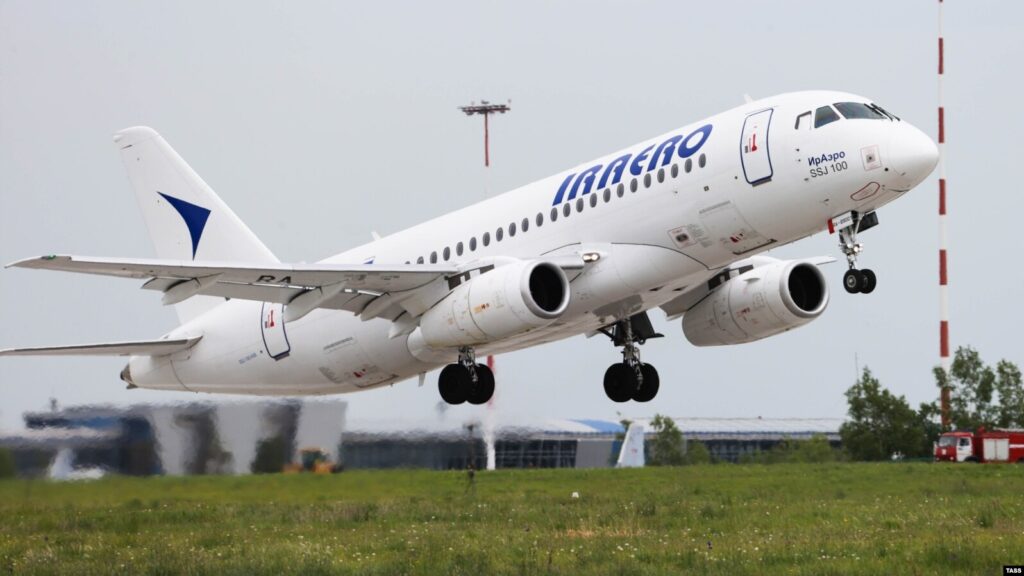
Temporary restrictions on aircraft arrivals and departures were imposed at 27 Russian airports, Deutsche Welle reported on 16 October, citing its own calculations based on reports from Russia’s Federal Air Transport Agency.
Ukrainian President Volodymyr Zelenskyy warned airlines on 1 September that “Russian airspace is becoming completely unsafe.” Overnight, most of the airspace over European Russia was closed.
By morning, more than 200 flights had been canceled or delayed at Moscow
Temporary restrictions on aircraft arrivals and departures were imposed at 27 Russian airports, Deutsche Welle reported on 16 October, citing its own calculations based on reports from Russia’s Federal Air Transport Agency.
Ukrainian President Volodymyr Zelenskyy warned airlines on 1 September that “Russian airspace is becoming completely unsafe.” Overnight, most of the airspace over European Russia was closed.
By morning, more than 200 flights had been canceled or delayed at Moscow airports, Deutsche Welle reported, citing figures compiled by a Russian Telegram channel.
Тим часом у російських аеропортах – справжній апокаліпсис через нальоти дронів останніми днями.
Про це ниють росЗМІ. Було відмінено десятки рейсів, у терміналах – дуже багато людей. Пасажири скаржаться на задуху, дикі черги до туалетів та повну невідомість. pic.twitter.com/ZlXxY5c2mq
The list included airports in the capital. All four Moscow airports temporarily suspended arrivals and departures, the Russian outlet Astra reported on 16 October. Russian authorities said they had shot down dozens of drones, while flights were delayed and diverted to alternate airfields, according to the report.
Massive drone attack on Russia: 644 UAVs in one night, 94 shot down near Moscow
The temporary airport shutdowns were likely a consequence of a massive drone attack on Russia. From 8:00 p.m. on 15 October to 8:00 a.m. on 16 October, Russian air defenses allegedly intercepted and destroyed 644 Ukrainian unmanned aerial vehicles across 26 Russian regions, occupied Crimea, and the Black Sea, according to Russia’s Defense Ministry.
According to the list of regions published by the Russian Defense Ministry, the drone attacks covered a vast area of Russia, from regions bordering Ukraine to the Moscow region, the Volga region, the country’s northwest and southern regions, as well as occupied Crimea and the Black Sea.
Russian air defenses shot down a total of 94 drones approaching Moscow over the evening of 15 October and overnight, according to calculations by the Russian outlet RBC Radio, citing statements by Moscow Mayor Sergey Sobyanin.
In the Kaluga region, air defenses destroyed 27 drones over the evening and night, the regional governor reported. At 9:27 a.m., he updated the figures, saying another 48 UAVs had been shot down overnight, bringing the total to 75. According to preliminary information, there were no casualties or infrastructure damage.
In the Tula region, air defenses allegedly destroyed a total of 32 Ukrainian drones. There were no casualties, according to regional Governor Dmitry Milyaev in his Telegram channel.
In the Vladimir region in western Russia, authorities repelled drone attacks overnight. In the city of Vladimir, a drone attempted to attack a heating infrastructure facility, but the attack was stopped, Vladimir Region Governor Alexander Avdeyev reported. Minor damage was reported, but there was no information about casualties.
Ukraine has not yet commented on its involvement in the attacks.
The practical consequences of canceled Russian flights
Passengers on flight SU6312 from Kaliningrad to Moscow were unable to land in Moscow because of airspace closure, so the aircraft was diverted to Nizhny Novgorod, Terravia reported. After landing, passengers remained on board for about two hours before being allowed to disembark at 3:30 a.m. Instead of continuing their journey to Moscow by air, they were supposed to be transported by bus, with the trip expected to take about seven hours, the outlet reported.
A Russian Sukhoi Superjet 100 of the IrAero airline. Illustrative photo: TASS
Passengers were not provided with food or drinks, and one woman could not find a seat on the bus, so she purchased a ticket for an early-morning train herself.
Since the beginning of the year, all four Moscow airports have been completely shut down simultaneously at least 19 times, the Russian outlet Agentstvo reported. During the first 14 days of October, the restrictions lasted 101 hours and 38 minutes, compared with 46 hours and 33 minutes in September, according to the report.
The suspect in the shooting was killed at Silver Rail Elementary in Bend, Ore., according to the authorities, and the conditions of the injured were not immediately known.
The suspect in the shooting was killed at Silver Rail Elementary in Bend, Ore., according to the authorities, and the conditions of the injured were not immediately known.
Ukrainian and Japanese officials discussed establishing backup bridge crossings in the event of Russian strikes, preparing municipal infrastructure for winter, and Japan's continued assistance with Ukraine's recovery, Ukraine's Minister for Restoration, Infrastructure and Transport, Mykola Kalashnyk, reported on 14 October.
Russia is targeting Kyiv's bridges to paralyze the city and break civilian morale, defense analyst Hamish de Bretton-Gordon wrote in The Telegraph. On 1 and 2 Octobe
Ukrainian and Japanese officials discussed establishing backup bridge crossings in the event of Russian strikes, preparing municipal infrastructure for winter, and Japan's continued assistance with Ukraine's recovery, Ukraine's Minister for Restoration, Infrastructure and Transport, Mykola Kalashnyk, reported on 14 October.
Russia is targeting Kyiv's bridges to paralyze the city and break civilian morale, defense analyst Hamish de Bretton-Gordon wrote in The Telegraph. On 1 and 2 October, Russia attacked Kyiv's Southern Bridge, then struck the Northern Bridge on 3 and 4 October. Ukraine is now working with international partners to establish backup bridge crossings that could maintain connectivity even if major routes are damaged.
The discussions took place during a meeting between Minister Kalashnyk, Japan's Ambassador to Ukraine Yo Osumi, and Osamu Hattori, head of the Japan International Cooperation Agency (JICA) office in Ukraine, according to the statement.
Ukraine's Minister for Restoration, Infrastructure and Transport Mykola Kalashnyk during a meeting with Japan's Ambassador to Ukraine Yo Osumi and JICA Ukraine Office Chief Osamu Hattori, October 2026. Photo: Mykola Kalashnyk/Telegram
Backup crossings could prevent logistical disruptions if major bridges are damaged
Kyiv's Southern Bridge, for example, plays a critical role in logistics because freight traffic uses it, transport planning expert Dmytro Bespalov noted in an article for Ukrainska Pravda. At the same time, installing additional metal structures to reinforce bridges could be dangerous given their technical condition and existing load levels, he said.
One potential solution is to establish backup bridge crossings.
Ukraine and JICA have agreed to continue working together on engineering solutions for setting up these crossings. Japan has already delivered 720 meters of prefabricated bridge structures to Ukraine, which are expected to be used to create alternative routes if Russia's attacks damage major bridges, Kalashnyk said.
The initiative is intended to help maintain transportation links, ensure the delivery of critical supplies, and preserve evacuation routes for civilians.
The flags of Japan and Ukraine displayed on a screen during a meeting between Ukraine's Minister for Restoration, Infrastructure and Transport Mykola Kalashnyk, Japan's Ambassador to Ukraine Yo Osumi, and JICA Ukraine Office Chief Osamu Hattori, October 2026. Photo: Mykola Kalashnyk/Telegram
Ukraine prepares water utilities and boiler plants for winter amid the threat of Russian infrastructure strikes
During the meeting, Ukraine and JICA discussed equipping water utilities with backup power supplies, addressing the need for modular boiler plants, and obtaining equipment to ensure uninterrupted heating and water services. Ukraine has already submitted lists of the necessary equipment to JICA for consideration as part of a new emergency assistance project, Kalashnyk said.
An intercepted document outlining an alleged Russian plan for strikes against Ukraine this winter reportedly describes attacks on 60 critical infrastructure facilities using up to 1,000 missiles, drones, and aerial bombs. Potential targets include electrical substations, hydroelectric power plants, thermal power plants, boiler facilities, and infrastructure related to water supply and wastewater management.
Kyiv during a blackout caused by Russian strikes on energy infrastructure, 11 October 2026. Photo: Yan Dobronosov
The document also describes potential strikes on facilities in Kyiv, Kharkiv, Odesa, and several other cities. Such attacks could disrupt electricity, heating, water supply, and wastewater services.
Two tankers caught fire within about 12 hours off Sulina, Romania’s port at the mouth of the Danube, Romanian authorities reported. The crew of one said a drone hit it inside Romania’s territorial waters, while Bucharest says it is still checking whether drones were involved. Bulgaria, where drones sank ships in its economic zone this month, says it lacks proof that Russia launched them.
For months, Russia has struck civilian ships on the sea route that carries most of Ukraine’s farm ex
Two tankers caught fire within about 12 hours off Sulina, Romania’s port at the mouth of the Danube, Romanian authorities reported. The crew of one said a drone hit it inside Romania’s territorial waters, while Bucharest says it is still checking whether drones were involved. Bulgaria, where drones sank ships in its economic zone this month, says it lacks proof that Russia launched them.
For months, Russia has struck civilian ships on the sea route that carries most of Ukraine’s farm exports, while its drones have repeatedly crossed into Moldova and Romania during attacks on Ukraine. As long as Bucharest and Sofia wait for drone wreckage before naming anyone, Russia, the party Bulgaria’s own prime minister says the logic points to, pays no price for extending its war on Ukraine’s trade routes into NATO members’ waters.
Seven sailors missing after the second fire
The San Marino-flagged chemical tanker Wine Trader reported a fire in its superstructure around 07:00 on 15 October while anchored in Romanian territorial waters about 13 nautical miles southeast of Sulina, Romania’s Naval Authority said. By midday, five of its 12 crew had been recovered and seven were still missing.
The chemical tanker Wine Trader. Photo: VesselFinder
Hours earlier, at 01:34, a drone entered Romanian airspace over the country’s waters southeast of Sulina for about a minute before vanishing from radar, the Defense Ministry said. Authorities have not named a cause for the fire, though unnamed sources
Russia hit central Ukraine’s Kirovohrad Oblast with its largest attack since the full-scale invasion, killing residents of the oblast capital, Kropyvnytskyi, the oblast’s head said. Russian strikes hit more than a dozen oblasts, and Ukraine’s president said Moscow escalated deliberately after sanctions relief.
Russia’s full-scale war against Ukraine continues on the front line and behind it, where its drones, missiles, and glide bombs strike towns daily. Kyiv is drafting winter crisis p
Russia hit central Ukraine’s Kirovohrad Oblast with its largest attack since the full-scale invasion, killing residents of the oblast capital, Kropyvnytskyi, the oblast’s head said. Russian strikes hit more than a dozen oblasts, and Ukraine’s president said Moscow escalated deliberately after sanctions relief.
Russia’s full-scale war against Ukraine continues on the front line and behind it, where its drones, missiles, and glide bombs strike towns daily. Kyiv is drafting winter crisis plans as Russia targets the biggest cities, and logistics is hit too: Russia struck one retailer’s warehouse hub 10 times in a day.
Three dead in Kropyvnytskyi
Oblast head Andrii Raikovych counted almost 360 Russian drones over Kirovohrad Oblast and hits on 26 locations, mostly in Kropyvnytskyi. In his words, “the enemy deliberately struck critical infrastructure, transport enterprises, logistics facilities, and residential buildings.” In a post after midnight, he reported a third death and six injured, five of them in hospital.
Air-raid alerts around the city ran from 15:20 on 14 October to 05:33, and Suspilne correspondents heard more than 20 explosions in Kropyvnytskyi, the public broadcaster reported. The national emergency service counted 25 struck locations, and rescuers were still putting out fires in the morning, the service’s spokesperson in the oblast said.
People and a damaged car in the yard of an apartment block in Kropyvnytskyi after the Russian drone attack of 14–15 October 2026. Photo: Andrii Raikovych/Telegram
A wave Kyiv ties to sanctions relief
Nationwide, Russia launched 580 drones and two Kh-59 guided missiles from 18:00 on 14 October, and air defenses downed or suppressed 536 drones by 08:00, the Air Force reported. Ukrainian President Volodymyr Zelenskyy said Russia killed three people in Kropyvnytskyi and three in Dnipropetrovsk Oblast, where oblast head Oleksandr Hanzha reported two dead.
Explore further
Ukraine is going back to hitting Russian oil after its Trump-pressured pause, during which Kyiv got no US warnings of incoming ballistic missiles
Zelenskyy counted more than 850 Iranian-designed Shahed attack drones between the start of 14 October and 09:00 the next day, “precisely at the time of an artificial speed limitation for our defensive capabilities.” Overnight into 14 October, SpaceX capped speeds on its military Starshield satellite service, disrupting Ukrainian missions. He added that Russia escalated “deliberately, having received a relaxation of sanctions and seeing attempts to pressure Ukraine.” Last week, Washington cleared Russian diesel trade after a call between US President Donald Trump and Kremlin leader Vladimir Putin.
Strikes from Kyiv to Odesa Oblast
In Kyiv, a drone fell into a residential yard, Mayor Vitali Klitschko wrote, later putting the injured at six. Drones hit two industrial enterprises in Poltava Oblast, its head Vitalii Diakivnych wrote, and a later strike on Poltava injured three people, rescuers said in a preliminary count. Ukraine’s state gas company Naftogaz said a drone set one of its gas production facilities in the oblast on fire, halting its work.
Russian guided aerial bombs injured two women and a man in Izium, Kharkiv Oblast, on 15 October, according to preliminary data from oblast head Oleh Syniehubov, who had counted nine injured in the oblast over the previous day. Over that day, Russian attacks killed three people in Donetsk Oblast, the oblast police said, and one in Kherson Oblast, where oblast head Oleksandr Prokudin reported five more injured. In Kherson city, a drone injured a man, the oblast administration said. In Sumy Oblast, a drone hit a house and left two people in acute stress, its administration said.
A house destroyed by Russian guided aerial bombs in Izium, Kharkiv Oblast, 15 October 2026. Photo: Kharkiv Oblast Military Administration/Telegram
In Odesa Oblast, strikes damaged two apartment blocks, a company, and a bank office without casualties, oblast head Oleh Kiper said. Later, a jet-powered Shahed hit a store in the oblast, Zelenskyy wrote, and Kiper counted four injured in a preliminary tally. Drones also hit an enterprise in Ternopil Oblast, and five people sought medical help, rescuers said, while drones damaged two homes in Rivne, oblast head Oleksandr Koval said.
Ukraine has completed its Operation Vivaldi, aimed at protecting its fortress belt cities of Donetsk Oblast, which helped Kyiv preserve the region from Russian occupation for 12 years. Brigadier General Andrii Biletskyi, the commander of the Third Army Corps behind the operation, has reported that the fourth phase secured 101 km² of territory. Among the latest achievements is the liberation of three settlements—Zelena Dolyna, Lypove, and Kolodiazi.
The operation's main objective was to
Ukraine has completed its Operation Vivaldi, aimed at protecting its fortress belt cities of Donetsk Oblast, which helped Kyiv preserve the region from Russian occupation for 12 years. Brigadier General Andrii Biletskyi, the commander of the Third Army Corps behind the operation, has reported that the fourth phase secured 101 km² of territory. Among the latest achievements is the liberation of three settlements—Zelena Dolyna, Lypove, and Kolodiazi.
The operation's main objective was to move Ukrainian troops into more advantageous defensive positions, Biletskyi said in the first days after the operation was made public. Vivaldi has now summed up the results of all four phases: Ukraine has established full control over 16 settlements, liberated 277 km² of territory, and inflicted 8,000 casualties on Russian forces.
Ukraine worked against Russia's deadline
During Operation Vivaldi, Ukrainian forces have prevented Russian troops from outflanking the Sloviansk-Kramatorsk agglomeration and cutting the Kharkiv–Sloviansk highway, a key supply route for Ukraine’s forces in Donbas, Biletskyi says.
“We thwarted the offensive of the Zapad grouping and forced it to redeploy some units of the 1st Tank Army, which eased pressure on Kupiansk-Vuzlovyi,” Biletskyi announces.
Previously, the Institute for the Study of War noted that Russian President Vladimir Putin was confident that Russian forces would be able to seize the entire Donetsk Oblast by the end of 2026 — the Kremlin’s latest deadline for achieving this goal.
Ukraine’s military was on a mission to prevent this.
Season one: clearing russian infiltration groups
On 15 September 2026, Ukraine’s Third Army Corps announced Operation Vivaldi in northern Donetsk Oblast. During the first phase, Ukrainian troops cleared Russian groups from 75 km² of territory and liberated another 10 km².
The Third Army Corps said it had struck Russian supply routes and fuel infrastructure, prompting Russia to relocate its fuel and lubricant reserves to Voronezh Oblast. According to the corps, Russian forces lost around 1,500 troops, more than 12,000 drones, and hundreds of pieces of equipment.
Season two: liberation of Shandryholove and Derylove
On 20 September, the Third Army Corps reported the liberation of Shandryholove and Derylove and the establishment of full control over Drobysheve.
During the second season, Russian forces lost another 800 troops, bringing their total losses across the first two seasons to more than 3,000, according to the corps.
During the first two seasons of the operation, Ukrainian troops and attached units regained control of 125 km² of territory, including 50 km² that had been fully liberated.
Soldiers of Ukraine’s Third Army Corps. Source: Ukraine’s Third Army Corps
The first phase of Vivaldi involved eliminating Russian groups that had infiltrated Ukrainian positions, explained the commander of a battalion in the 125th Brigade, callsign Darwin, per ArmyInform. After clearing those groups, the Defense Forces moved on to the operation’s second phase, using reconnaissance drones to detect Russian forces, he added.
For this, Ukraine used UAVs and ground robotic systems.
“The Third Army Corps was the first in the world to begin deploying ground robotic systems by air. Our heavy bombers deliver kamikaze ground robotic systems more than 10 kilometers behind enemy lines,” Biletskyi noted.
Season three: advances near Novе and Ridkodub
On 28 September, the Third Army Corps reported the liberation of Nove, Ridkodub, and Katerynivka and the restoration of control over Karpivka and Novomykhailivka. Ukrainian forces regained another 51 km² of territory, bringing the total area liberated since the start of the offensive to 176 km². Russian forces lost around 2,000 troops, and more than 250 were taken prisoner, the corps said in its summary of the operation’s third phase.
Settlements Ukraine's 3rd Army Corps says it liberated during Operation Vivaldi north of Lyman, Donetsk Oblast, Ukraine, as of 28 September 2026. Map: ISW
“The Russians were convinced that the main axis of attack was Shandryholove–Zelena Dolyna. This led it to squander its reserves in counterattacks along that very axis. The Russians slept through the actual strike, which was focused on capturing Nove,” Biletskyi said.
Operation Vivaldi aimed to disrupt Russia’s plans in Donetsk Oblast
The need for Operation Vivaldi arose amid Russian attempts to encircle Ukraine’s fortified belt in Donetsk Oblast. Ukrainian forces conducted preparatory efforts aimed at degrading Russia’s offensive capabilities, including strikes on Russian drone operators, the Institute for the Study of War reported on 9 October.
Ukrainian counterattacks in the Lyman direction and east of Sloviansk and Kramatorsk were intended to complicate Russian efforts to seize the fortified belt in Donetsk Oblast, the report noted.
The corps advanced gradually, reclaiming small areas instead of attempting a large-scale breakthrough.
Russian forces attacked Epicentr’s hub in Khmelnytskyi, a city in western Ukraine, 10 times on 13 October, starting five large fires that destroyed about 85% of the goods stored inside, the company said.
Epicentr is a Ukrainian chain of home-improvement and household-goods stores. The attack adds pressure to Ukraine’s logistics network, already damaged by Russian strikes. On 10 September, Ukrainian entrepreneur Ruslan Shostak, co-owner of the popular retail chains Eva and Varus, said th
Russian forces attacked Epicentr’s hub in Khmelnytskyi, a city in western Ukraine, 10 times on 13 October, starting five large fires that destroyed about 85% of the goods stored inside, the company said.
Epicentr is a Ukrainian chain of home-improvement and household-goods stores. The attack adds pressure to Ukraine’s logistics network, already damaged by Russian strikes. On 10 September, Ukrainian entrepreneur Ruslan Shostak, co-owner of the popular retail chains Eva and Varus, said that 2.1 million square meters of Ukraine’s modern warehouse space had been destroyed since Russia’s full-scale invasion began. He put the country’s total modern warehouse space at approximately 5 million square meters. The strike on the hub came the same day Russia opened a barrage of 39 ballistic missiles on Ukraine’s power grid.
About 30 drones in the sky kept the fire from being put out, and the hub burned down completely overnight, Epicentr said. None of its people were hurt, the company said.
“The most important thing is that all our people are alive,” Epicentr wrote.
Russia had earlier completely destroyed Epicentr’s two largest logistics complexes, in Kyiv and Kyiv Oblast, the company said. The Khmelnytskyi hub had remained effectively its only surviving large warehouse complex. Goods were sent from there to the company’s shopping centers, and people worked there every day “so that millions of Ukrainians could buy what they need,” it wrote. Epicentr described every such attack as a blow to Ukrainian businesses’ ability to operate, pay wages, preserve jobs, and support the country’s economy.
Epicentr’s earlier losses
Epicentr said in August that 10 of its shopping centers had been completely destroyed since February 2022. Another 13 retail sites had been damaged, and one in Melitopol remained under Russian occupation, it said. At the time, the company operated 70 shopping centers, down from 80 at the end of 2021.
Earlier, during a Russian missile attack overnight on 5 August, Epicentr’s logistics center in Kyiv burned down completely, Epicentr’s Yulia Chudnovets said. The company’s ceramic tile plant in Kalynivka, one of the largest in Ukraine, was effectively lost, she said. One employee was killed and three were injured, she added.
Explore further
A fourth Ukrainian pharmaceutical warehouse has burned in a Russian strike since the start of the month
On 25 May 2024, Russian airstrikes on an Epicentr hypermarket in Kharkiv killed 19 people, Interior Minister Ihor Klymenko said.
Attacks across Khmelnytskyi Oblast
Fires broke out at enterprises in Khmelnytskyi and Shepetivka districts on 13 October, Serhii Tiurin, head of the Khmelnytskyi Oblast Military Administration, reported. He did not name the enterprises. On 14 October, Tiurin said one of the fires had been put out, and crews were still fighting the other. Khmelnytskyi Mayor Oleksandr Symchyshyn said six people were injured in Khmelnytskyi district that day, where Russian strikes damaged private enterprises, a gas station, and a medical facility.
Russian attacks have injured 1,125 Kyiv residents since the start of 2026. Of these, 379 people, or nearly 34%, were injured in just five weeks, from 27 August to 7 October, Tetiana Mostepan, director of the Kyiv City State Administration’s Department of Health, said in an interview published on 13 October.
Russian air attacks on Kyiv have intensified since late August. Air attacks occur both day and night, and Russian drones target not only military facilities but also civilian buildin
Russian attacks have injured 1,125 Kyiv residents since the start of 2026. Of these, 379 people, or nearly 34%, were injured in just five weeks, from 27 August to 7 October, Tetiana Mostepan, director of the Kyiv City State Administration’s Department of Health, said in an interview published on 13 October.
Russian air attacks on Kyiv have intensified since late August. Air attacks occur both day and night, and Russian drones target not only military facilities but also civilian buildings, including apartments. As a result, the number of casualties is also increasing. More than 40% of emergency medical responses to attacks this year occurred between late August and early October, Mostepan noted.
During this period, the capital’s emergency medical teams responded to 782 calls related to the attacks, the department director said. She also released data showing that 138 medical facilities in Kyiv have been damaged since the start of Russia’s full-scale invasion, including 47 this year.
“And when we talk about statistics, I always emphasize that behind every number is a human life. These are people who have been injured, as well as medical workers who respond to attack sites to save them,” Mostepan said.
People giving first aid to two women injured in the Russian drone strike, Kyiv, 8 September 2026. Photo: Zelenskyy's Telegram
Russian attacks on Kyiv have become more frequent
Russia attacked Kyiv with drones throughout the day, Suspilne Kyiv reported on 27 August. Air raid alerts were issued 12 times in the capital, drone debris was found in five districts, and at least four people were injured, the report said. Russian forces used about 140 attack drones against Ukraine throughout the day, more than 100 of them jet-powered, the Ukrainian Air Force reported at the time.
At least 38 people were killed and dozens injured in a Russian drone strike on an ammunition depot in the Bucha district near Kyiv, triggering a massive fire and hours of explosions in a residential area, CNN reported. The attack in the Bucha district came amid near-constant Russian airstrikes, which continued into Sunday, the outlet reported.
Russian forces were likely seeking to exhaust Ukraine’s air defenses, disrupt civilians’ daily lives, and increase the scale of destruction, analysts at the Institute for the Study of War (ISW) said, citing CNN’s reporting.
On 8 September, NATO Secretary General Mark Rutte stressed the urgent need to strengthen support for Ukraine, particularly by providing air defense systems. Delays in delivering assistance cost human lives, he said.
On 1 October, a Russian drone struck a school in Kyiv’s Solomianskyi district while 104 children were inside, Suspilne reported. Students and school staff took shelter, so no one was injured, the report said.
Aftermath of the Russian attack on a school in Kyiv’s Solomianskyi district, 1 October 2026. Photo: Suspilne News/Oleksandr Mahula
Russian attacks continue after Trump’s announcement of an energy ceasefire
Following US President Donald Trump’s announcement of an energy ceasefire, Russia continued striking Ukraine’s energy infrastructure, including in Kyiv. On 13 October, Russian ballistic missiles struck Kyiv, hitting a thermal power plant in the second attack in 24 hours without advance warning from Ukraine’s allies, Zelenskyy said. The evening and morning strikes killed four people in Kyiv, three of them women in a high-rise in Desnianskyi district, Kyiv prosecutors said.
Aftermath of the attack on Kyiv on the night of 14 October 2026. Photo: Kyiv State Emergency Service
Russia attacked energy and critical infrastructure in Kyiv, Kyiv Oblast, and Kharkiv with 39 ballistic missiles and more than 120 attack drones, Ukrainian President Volodymyr Zelenskyy said on 14 October. At least 600,000 people were left without electricity, he said. Later that day, an accident on the grid cut power to part of Kyiv’s right bank, energy company DTEK said.
Ukraine and NATO have unveiled two artificial intelligence (AI) tools in Vilnius, Lithuania, Ukraine’s Defense Ministry reported on 13 October. One forecasts Russian drone attacks near the front and is ready to join the Armed Forces’ situational awareness systems. The other helps plan artillery fire and is still in testing.
A forecast of where, when, and which drones will fly targets the main source of losses near the front. In March, Ukraine’s military put the share of front-line casua
Ukraine and NATO have unveiled two artificial intelligence (AI) tools in Vilnius, Lithuania, Ukraine’s Defense Ministry reported on 13 October. One forecasts Russian drone attacks near the front and is ready to join the Armed Forces’ situational awareness systems. The other helps plan artillery fire and is still in testing.
A forecast of where, when, and which drones will fly targets the main source of losses near the front. In March, Ukraine’s military put the share of front-line casualties caused by FPV drones at up to 80%. In May, Ukraine’s drone forces commander Robert Brovdi said Russia was copying Ukraine’s model to grow its drone forces. A month earlier, Presidential Office head Kyrylo Budanov wrote that adding more drones no longer fundamentally changes the battlefield. The next stage, he said, is full integration of AI.
Forecasting Russian drone attacks
The NATO-Ukraine Joint Analysis, Training and Education Center (JATEC) presented both at a three-day seminar in the Lithuanian capital. NATO’s Allied Command Transformation and Ukraine’s Armed Forces built the tools with JATEC’s support.
“The solution has already been validated using real-world datasets. It has been refined and is ready for integration into the Armed Forces of Ukraine's situational awareness systems,” the ministry said.
Model No. 13 works from past data, weather, and the current battlefield situation. The ministry said it can identify the intensity of attacks, the areas, the time windows, and the types of drones with a high probability.
Ranking artillery options
Model No. 32 is a decision-support module. It tests whether artillery plans can be generated automatically. It weighs the mission’s requirements and current operational data, including available weapons, ammunition, firing positions, and constraints.
Explore further
Ukraine’s new military AI does more than watch the battlefield—it helps commanders plan what comes next
First, it applies logistics, ballistics, and impact-zone parameters to throw out unworkable options. Then it scores and ranks the rest. That means less hand-based comparison, faster decisions, and a more efficient fire loop, the ministry said. The prototype is now with the Ukrainian military for trials. If the trials succeed and it is validated, it could be expanded to other units that strike Russian forces.
US President Donald Trump said on 13 October that the US continues to share intelligence with Ukraine, following reports that Washington had threatened to suspend intelligence assistance unless Kyiv stopped striking Russian oil refineries, POLITICO reported.
The comments came after Ukraine received no advance warning from its partners ahead of Russia's latest ballistic missile strike, raising fresh questions about intelligence sharing between Kyiv and Washington.
“We are helping them
US President Donald Trump said on 13 October that the US continues to share intelligence with Ukraine, following reports that Washington had threatened to suspend intelligence assistance unless Kyiv stopped striking Russian oil refineries, POLITICO reported.
The comments came after Ukraine received no advance warning from its partners ahead of Russia's latest ballistic missile strike, raising fresh questions about intelligence sharing between Kyiv and Washington.
“We are helping them, and we are sharing intel. We want the war to end,” Trump told reporters at the White House, according to POLITICO, reaffirming US support after his recent efforts to reach an agreement with Russian President Vladimir Putin drew criticism over his approach to the war.
Trump reaffirms support after backlash over Russia deal
Last week, the US threatened to cut intelligence sharing if Ukraine did not stop attacking Russian oil refineries. Zelenskyy did not publicly confirm the reported threat.
The reports came amid criticism of Trump’s announcement of a deal to buy Russian oil and his pressure on Kyiv to make concessions, even as Russia continued attacking Ukraine.
Zelenskyy said Ukraine had refrained from striking Russian oil refineries and the energy sector for two days after Trump announced an energy ceasefire. Russia, however, continued attacking Ukrainian energy facilities and critical infrastructure, he said, with 19 Ukrainian regions coming under attack during those two days.
Trump said Monday that both Russia and Ukraine had violated the energy ceasefire, arguing that each side was responsible. He also said Putin wanted a deal and that Washington needed to persuade Zelenskyy to agree.
Trump's latest comments publicly reaffirm that intelligence sharing is continuing. However, the circumstances surrounding the latest Russian strike have raised questions about whether Ukraine is receiving the early warnings it needs to protect civilians.
Ukraine received no warning before latest Russian strike
Early warnings of incoming Russian ballistic missiles give Ukrainians a brief window to reach shelter before impact. US intelligence helps make those warnings possible, giving civilians crucial time to protect themselves.
Zelenskyy said Russia's latest attack involved five ballistic missiles and more than 100 drones, and that Ukraine received no warning from its partners before the strike.
“Intelligence on Russian ballistic missile launches helps save lives,” Zelenskyy said Tuesday. “This is precisely what helps prevent people from being killed — when there is an early warning about ballistic missiles.”
He added that Ukraine had received no warning ahead of the attack.
Explore further
Russian ballistic missiles hit Kyiv before sirens, gap that lands hard amid fears that Washington could cut data that warns of launches
Ukraine normally receives alerts about impending Russian missile launches through the Battlespace Command and Control Center, a system operated by the US military and NATO members, among others, POLITICO reported.
Citing an unnamed official familiar with the matter, POLITICO reported that US officials attributed the missing warning to bad weather. The explanation reportedly raised doubts among Ukrainian officials.
Ukrainian Air Force spokesperson Yurii Ihnat said the warning system had failed to transmit information on previous occasions. He said specialists would work with international partners to resolve any technical problems.
Ukrainian Foreign Minister Andrii Sybiha said Tuesday that intelligence sharing through the platform was continuing, according to POLITICO.
Russian munitions brought down a stairwell of an apartment building in Kharkiv on the evening of 12 October, and rescuers recovered three bodies from the rubble overnight, local authorities reported. Survivors described fire, falling glass, and pets left behind. The strike came days after Washington waived sanctions on Russian diesel, as it expects Kyiv to stop hitting Russian refineries.
Russia hits Ukraine’s cities every day as it readies a winter campaign against Ukrainian infrastruc
Russian munitions brought down a stairwell of an apartment building in Kharkiv on the evening of 12 October, and rescuers recovered three bodies from the rubble overnight, local authorities reported. Survivors described fire, falling glass, and pets left behind. The strike came days after Washington waived sanctions on Russian diesel, as it expects Kyiv to stop hitting Russian refineries.
Russia hits Ukraine’s cities every day as it readies a winter campaign against Ukrainian infrastructure, and its oil exports keep bringing in the money that pays for the drones and missiles. A halt to Ukraine’s refinery strikes with no matching halt to Russia’s strikes would leave Moscow’s fuel income intact while Kharkiv digs through rubble. Estonia’s prime minister has already urged Europe to help Ukraine destroy those refineries instead.
A stairwell gone in Kholodnohirskyi district
Russian munitions hit Kharkiv’s Kholodnohirskyi district repeatedly from around 21:17, and Mayor Ihor Terekhov preliminarily identified them as Banderols. At 22:21, he said one strike had hit a residential building, possibly trapping people. He then added in a follow-up post: “Very serious destruction—an entire stairwell has collapsed.”
The strike destroyed an entrance of the four-story building, the State Emergency Service (DSNS) said. It counted 11 injured across the city’s evening strikes, and a rescuer was hospitalized, while Terekhov put the number at 10. By 06:56 on 13 October, rescuers had found a third body. Oblast head Oleh Syniehubov confirmed three dead and said the search continued. Experts will check whether the building is still fit to live in, he added.
A rescuer at the collapsed stairwell of an apartment building hit by a Russian strike in Kharkiv’s Kholodnohirskyi district, Ukraine, 12 October 2026. Photo: Oleksandr Manchenko/Suspilne Kharkiv
Over 24 hours, Russian attacks killed three people in Kharkiv and injured 37, including two children treated for acute stress, Syniehubov reported.
“I realize I’m on fire”: two residents recall the strike
Larysa Maksimenko had just put her bedridden husband to sleep when the strike hit, she told Suspilne Kharkiv. She suffered a head wound and burns.
“I went to the kitchen to switch on the kettle for myself, to have some coffee. I realize I’m on fire. Then glass fell on me. I came to, and I’m buried under everything. All covered in blood,” she said.
Larysa Maksimenko, a resident injured in the Russian strike on her apartment building in Kharkiv’s Kholodnohirskyi district, Ukraine, 13 October 2026. Photo: Valeriia Yemets/Suspilne Kharkiv
The window bars were broken, and medics carried her husband out through the window. Rescuers later found a woman under the rubble in her apartment, likely a neighbor, Maksimenko said. All she wants now, she said, is to get to her husband in hospital.
Viacheslav Chibitko, a resident of the apartment building hit by a Russian strike in Kharkiv’s Kholodnohirskyi district, Ukraine, with one of his dogs, 12 October 2026. Photo: Valeriia Yemets/Suspilne Kharkiv
Viacheslav Chibitko, who lives on the second floor next to the collapsed entrance, saw a flash, and then everything blew out. He got his three dogs out, but five cats are still inside. During the clearing, a concrete slab fell on a rescuer, Suspilne’s correspondent reported. Crews pulled him out and handed him to medics.
Cars burning outside a 25-story apartment building in Kyiv’s Darnytskyi district after a Russian drone strike, Kyiv, Ukraine, 12 October 2026. Photo: Office of the Prosecutor General of Ukraine
Kyiv’s toll rises, and strikes hit other cities overnight
The evening drone strike on a 25-story building in Kyiv’s Darnytskyi district killed two people, Kyiv prosecutors reported. The second victim was found dead in a car near the building. Prosecutors counted at least seven injured, including a 17-year-old girl, while Mayor Vitali Klitschko counted 11 in the capital.
Explore further
Russian ballistic missiles hit Kyiv before sirens, gap that lands hard amid fears that Washington could cut data that warns of launches
From 18:00 on 12 October, Russia launched five ballistic missiles, nine loitering munitions, and 108 attack drones, Ukraine’s Air Force reported. Air defenses downed or suppressed 88 drones. A Russian drone attack injured four patients at a medical facility in Khmelnytskyi Oblast, oblast head Serhii Tiurin said. In Dnipro, a Russian attack injured a 64-year-old man, oblast head Oleksandr Hanzha reported. A downed Russian drone set two houses on fire in Murovane near Lviv, oblast head Maksym Kozytskyi said.
On 12 October, a Russian Smerch rocket with a cluster warhead hit a house in Cherkaske, Donetsk Oblast, killing three people, including a 13-year-old girl, oblast head Vadym Filashkin reported.
Russian attacks killed more than 150 people in the week to 11 October, Ukrainian President Volodymyr Zelenskyy said. Russian bombs killed at least 20 people in Zaporizhzhia on 10 October, by the oblast’s count. On 9 October, the US waived its sanctions on Russian diesel until April 2027. The White House expects Kyiv to halt refinery strikes under its proposed energy ceasefire.
Ukraine has been striking the launchers Russia uses to fire ballistic missiles at its cities, Ukrainian Defense Minister Yevhenii Khmara told journalists. He said the strikes have already disrupted some Russian attack plans, but supplies of anti-ballistic interceptors still fall short of the threat.
Russia strikes Ukraine’s cities and power grid with drones and missiles every day as it prepares to leave civilians without power and heat this winter. Ballistic missiles are the part of tha
Ukraine has been striking the launchers Russia uses to fire ballistic missiles at its cities, Ukrainian Defense Minister Yevhenii Khmara told journalists. He said the strikes have already disrupted some Russian attack plans, but supplies of anti-ballistic interceptors still fall short of the threat.
Russia strikes Ukraine’s cities and power grid with drones and missiles every day as it prepares to leave civilians without power and heat this winter. Ballistic missiles are the part of that barrage Ukraine still struggles to stop, so every launcher put out of action before it fires means fewer missiles to intercept.
Iskander and S-400 launchers hit since September
Ukrainian forces hit eight launchers used for ballistic strikes on Ukraine in September and early October, destroying three and damaging five, Khmara said. They belonged to Russia’s Iskander tactical missile systems and S-400 air defense systems, he added. Such strikes have already forced Russia to cancel or change planned ballistic attacks, the minister said.
The S-400 was designed to shoot down aircraft and missiles, but Russia also uses it to fire ballistic missiles at Ukrainian cities, including Kyiv. In mid-September, Ukraine reported hitting two S-400 launchers near Vygonichi in Russia’s Bryansk Oblast. Russia had used the same systems against Kyiv the night before.
Explore further
Can’t intercept the missiles? Hit the factories—Ukraine’s other way to stop Russia’s ballistic missiles
On 23 August, Ukrainian President Volodymyr Zelenskyy said Ukrainian forces had hit an Iskander launcher near the border. He described it as part of a separate operation to hunt nearby launch positions and linked the tactic to low stocks of anti-ballistic missiles.
Strikes on launchers while interceptors stay scarce
Khmara called the launcher strikes Ukraine’s asymmetric response to a ballistic threat that remains critical.
“Existing and potential supplies of missiles for anti-ballistic defense are not enough to fully cover this threat,” he said.
Instead of waiting for large long-term contracts, the Defense Ministry is looking for missiles in partners’ available stocks to speed up transfers, Khmara added. “We need dozens and hundreds of missiles, not one-off deliveries,” he stressed.
Meanwhile, Russia significantly cut its 2026 state orders for Kinzhal air-launched ballistic missiles, Ukraine’s military intelligence said on 12 October. It redirected the production capacity, components, and raw materials to Iskander-M ballistic missiles, the agency added.
Russia’s missile and drone attacks continue
Overnight on 12 October, Russia attacked Ukraine with a Kh-59 guided missile and 121 attack drones, 76 of them jet-powered, Ukraine’s Air Force reported. Air defenses downed or suppressed 89 drones, but strikes hit 15 locations, and the attack was still going on in the morning.
Explore further
Russia’s new ballistic missile could reach western Ukraine—and it may be tested there within months
In the week to 11 October, Russia hit Ukraine’s power generation and transmission facilities more than 200 times and its gas and oil sites 17 times, Zelenskyy said. Russian attacks that week killed more than 150 people and injured more than 700, he added.
Jet-powered drones are still the main problem for Ukraine’s air defense. It stops more than 90% of slower propeller-driven Shaheds, compared with about 55% for the jet ones.
Ballistic missiles have struck Kyiv repeatedly this autumn. On 24 September, Russian ballistic and hypersonic missiles damaged a maternity hospital in the capital. On 7 October, a Russian missile barrage killed 22 people in Pryluky, Chernihiv Oblast.
The man came face to face with an Amur tiger inside the animal’s habitat at Yorkshire Wildlife Park in England. The park was evacuated and closed to the public.
The man came face to face with an Amur tiger inside the animal’s habitat at Yorkshire Wildlife Park in England. The park was evacuated and closed to the public.
Europe will not loosen its pressure on Russia after the US-Russia diesel deal, EU Foreign Policy chief Kaja Kallas says. She has announced that EU foreign ministers will approve the bloc’s largest set of sanctions against Russia’s war machine since the full-scale invasion on 12 October.
Washington has just eased the pressure on Russia, letting Russian diesel back onto world markets and handing Moscow more money to wage war. This comes as Russian strikes have killed more than 80 Ukrainia
Europe will not loosen its pressure on Russia after the US-Russia diesel deal, EU Foreign Policy chief Kaja Kallas says. She has announced that EU foreign ministers will approve the bloc’s largest set of sanctions against Russia’s war machine since the full-scale invasion on 12 October.
Washington has just eased the pressure on Russia, letting Russian diesel back onto world markets and handing Moscow more money to wage war. This comes as Russian strikes have killed more than 80 Ukrainian civilians in two days, 22 of them on Russian President Vladimir Putin's birthday on 7 October.
Moreover, Russia has stepped up its hybrid attacks against Europe, both EU Member States and NATO Allies. It is now the time to tighten sanctions, not loosen them, Kallas says.
“Suspending sanctions on Russian diesel provides Moscow with more revenues to wage war. This is not the time to ease pressure on Russia, and Europe won’t,” she claims.
A split with Washington
On 9 October, Trump claimed he had agreed with Putin to put more than 300,000 tons of Russian diesel on world markets immediately.
President Volodymyr Zelenskyy called the deal a weak decision by strong partners, arguing that Russia turns oil-product revenue into weapons against Ukraine's civilians, according to the BBC.
The package aims at the missile chain
On 7 October, EU ambassadors approved the 22nd package of sanctions, with about 1,700 listings, Ukrainian President’s Commissioner for Sanctions Policy Vladyslav Vlasiuk notes. It is expected to be formally approved on 12 October.
This package contains the largest number of sanctions targeting Russia’s defence industry. Of these, 60% were drawn from Ukrainian decrees and proposals. The package includes measures targeting machine tools, Lancet drones, ballistic weapons, and related technologies.
“The core of the package is Russia’s missile programme and electronic components: electronics, capacitors, resistors, and semiconductors. It also covers electronic warfare, shipbuilding, and explosives,” Vlasiuk says.
It took just a few weeks from Ukraine's decision to the European one.
"But we are already working on further measures, including sectoral sanctions targeting energy, the defense industry, finance, and trade,” he stated.
Russia is planning a winter strike campaign involving up to 1,000 missiles, drones, and bombs targeting, among other facilities, electrical substations, hydroelectric and thermal power plants, and boiler houses. The information is contained in a document that, according to sources cited by The New York Times, Ukraine's Energy Minister Denys Shmyhal presented as an intercepted Russian plan to destroy energy infrastructure systematically. The newspaper reported on 2 October.
Russia has be
Russia is planning a winter strike campaign involving up to 1,000 missiles, drones, and bombs targeting, among other facilities, electrical substations, hydroelectric and thermal power plants, and boiler houses. The information is contained in a document that, according to sources cited by The New York Times, Ukraine's Energy Minister Denys Shmyhal presented as an intercepted Russian plan to destroy energy infrastructure systematically. The newspaper reported on 2 October.
Russia has been striking critical infrastructure across Ukraine since the beginning of its full-scale invasion. Such attacks have become particularly frequent ahead of and during winter. Ukraine's recent battlefield gains may have prompted Putin to reconsider his strategy and attempt to force Ukraine to surrender through winter strikes, analysts at the Institute for the Study of War (ISW) suggest. Russia's reported plans to attack Ukraine's energy, water supply, and sewage systems could threaten the basic living conditions of millions of people. Such strikes could increase pressure on civilians and the Ukrainian economy while forcing the state to divert more resources to emergency infrastructure repairs instead of defense needs.
The New York Times was unable to verify the document's authenticity independently, but noted that it was written in Russian and dated August.
Explore further
Warehouses, a home-improvement store, a farm: Russia’s strikes aimed past the grid at Ukraine’s civilian economy
A representative of Ukraine's defense-industrial sector who has reviewed the document believes it is more of a calculation than a finalized Russian military operations plan, according to Schemes, an investigative journalism project by Radio Free Europe/Radio Liberty (RFE/RL), in a report published on 8 October.
60 targets: how Russia could attack Ukraine's critical infrastructure
The document outlines how many missiles, drones, and bombs Russia would need to deprive Kyiv, Kharkiv, and Odesa of electricity, heating, water, and sewage services, Radio Liberty reported on 9 October. The document's full list of priority cities also includes Dnipro, Zaporizhzhia, Mykolaiv, Kherson, Poltava, Chernihiv, Kryvyi Rih, Cherkasy, Kropyvnytskyi, Lviv, Vinnytsia, and Ivano-Frankivsk.
Regions of Ukraine containing cities listed as “priority” targets in Russia's plan to attack critical infrastructure this winter (shown in grey). Map: Euromaidan Press
According to the document, Russia plans to begin by attacking substations near Ukraine's western border, through which the country receives electricity from Europe. Hydroelectric power plants could be targeted next, followed by facilities intended to shut down Ukraine's three operational nuclear power plants, Radio Liberty reports. The document lists a total of 60 key targets.
According to Schemes, the document states that Russia would need up to 770 Molniya and Geran drones, Dan-T/Banderol missile-drones, 170 FAB guided aerial bombs, and 75 Kinzhal and Iskander-M ballistic missiles to carry out the attacks.
Sewage systems could become Russia's next target
The document devotes particular attention to water supply and wastewater systems. These include pumping stations, treatment facilities, and other infrastructure essential for cities to provide residents with water and dispose of wastewater.
One of the water supply facilities. Illustrative photo: Ukrinform
Russia has not previously attacked such facilities on a similar scale, The New York Times notes.
Preparing for possible attacks on water supply and sewage systems is significantly more difficult than protecting energy infrastructure, Oleh Popenko, head of the Ukrainian Union of Utility Services Consumers, told Current Time, RFE/RL's Russian-language network.
“Sewage is a very complex system. There are specific challenges: where to discharge wastewater, how to organize treatment facilities, and so on. Some work is also underway in this sector, but it will be much more difficult here than with district heating utilities,” Popenko says.
Creating alternative routes in case sewage pumping stations are destroyed is an expensive and technically challenging task, he adds. Such construction could cost billions of hryvnias.
Explore further
14 dead in Pryluky, two each in Kyiv, Kremenchuk, and Oleksandriia: Russia’s night of 70 missiles
The priority is to equip water utilities with backup power sources so they can continue operating during power outages. However, if Russian strikes damage the sewage system itself, resolving the problem quickly will be much more difficult, Popenko believes. Specific solutions, including wastewater disposal and the operation of treatment facilities, will have to be determined according to the extent of the damage.
Sewage pumping stations play a particularly important role. They pump wastewater onward for disposal and treatment. If such a station is put out of operation by a strike, the city needs an alternative way to divert wastewater while the damaged facility is being repaired, Popenko says. Bypass pipes or channels could be installed for this purpose, but setting up such a system during wartime is far from easy.
Air defenses remain crucial to Ukraine's winter preparations
Preparations for winter are underway, but protection for energy infrastructure remains inadequate, Popenko believes. The main concern is large substations that transmit electricity from nuclear power plants and distribute electricity imported from Europe.
Rescuers extinguish a fire caused by a Russian strike in Odesa Oblast. Illustrative photo: State Emergency Service of Ukraine in Odesa Oblast
At the same time, some protective measures are already proving effective. Despite drone attacks over two days, one of Kyiv's substations withstood the strikes, and the city did not lose power, although scheduled outages were in effect, the expert says.
Popenko considers a repeat of last winter's scenario, when parts of Kyiv went without heating for weeks, entirely possible. Russian forces continue to attack energy facilities, and in his assessment, strengthening air defenses in Kyiv is the only way to protect its combined heat and power (CHP) plants from large-scale attacks.
“There are no other ways — for example, building some sarcophagi around CHPs or constructing shelters — because Russia can destroy these facilities again through massive strikes. And then the city risks being left 50–60% without heat,” Popenko believes.
Residents are also preparing for winter, but their options vary, he says. Some homeowners' associations participate in government programs to insulate apartment buildings and purchase backup power supplies for elevators and pumping stations. Owners of private houses are buying generators, among other measures. However, such equipment and preparations require substantial funds, meaning not everyone can afford them, he notes.
Ukraine has already experienced prolonged power outages during previous winters, particularly in 2022 and 2023. At the time, some regions went without electricity for 18–20 hours a day, the expert says. This experience may help people prepare for possible disruptions, but it does not eliminate the risk of further attacks and infrastructure damage.
Russian drones hit Ukraine's power grid, warehouses, a food warehouse, a home-improvement store, and a farm overnight on 9 October, Ukrainian officials and emergency services reported. The strikes triggered emergency power cuts in Kyiv and other regions and killed at least three people across the country.
As Russia continues its daily terror attacks, it has likely begun its winter strike campaign early, aiming to make civilian life in Ukraine unbearable, ISW assessed. Those strikes now
Russian drones hit Ukraine's power grid, warehouses, a food warehouse, a home-improvement store, and a farm overnight on 9 October, Ukrainian officials and emergency services reported. The strikes triggered emergency power cuts in Kyiv and other regions and killed at least three people across the country.
As Russia continues its daily terror attacks, it has likely begun its winter strike campaign early, aiming to make civilian life in Ukraine unbearable, ISW assessed. Those strikes now reach beyond the grid to the businesses that store and sell goods, adding to damage Ukraine's Economy Ministry expects to reach up to $10 billion this year.
Power cut in Kyiv and other regions
Russia launched 136 drones overnight, 93 of them jet-powered, Ukraine's Air Force said. Air defenses downed or suppressed 114. Drones hit eight locations, and debris fell at seven more.
DTEK, Ukraine's largest private energy company, introduced emergency power cuts on Kyiv's right bank and in the Bucha and Vyshhorod districts on the grid operator's orders. Ukrenergo, the national grid operator, imposed emergency outages in some regions, citing the strain Russian attacks put on the system. Planned schedules were suspended there. Hourly cuts across parts of Ukraine had already been set for the whole day.
A Ukrainian air defense crew with a heavy machine gun in Cherkasy Oblast. Illustrative photo: Suspilne Cherkasy
The cuts came a day after a Russian strike knocked out several grid elements supplying Kyiv, leaving many consumers without power. Russia has sharply stepped up attacks on Ukraine's energy system in recent weeks, deliberately targeting power lines and transformers, Ukraine's Energy Ministry said.
Explore further
Ukraine’s war leadership sets new electronic warfare tasks as Russia’s jet-powered drones slip past nearly half of its air defenses
Warehouses and a store
In the Bucha district of Kyiv Oblast, Russia hit warehouses and injured three people, Ukraine's State Emergency Service said. One was hospitalized. Rescuers were searching for a woman who may be under the rubble.
In Odesa, a strike damaged the roof of a warehouse storing food and started a fire, the region's emergency service reported. In the south of the oblast, Russia damaged buildings at holiday resorts and destroyed a café.
A food warehouse damaged by a Russian attack on Odesa, 9 October 2026. Photo: State Emergency Service of Ukraine in Odesa Oblast
Near Chernihiv, Russia hit a site just outside the city after 03:00, the city council said. A Suspilne correspondent at the scene reported that a drone hit the Epicenter store, part of a large Ukrainian home-improvement chain. Russian forces also struck a farm in the Kulykivka community. No one was hurt in Chernihiv Oblast.
Russia has already destroyed more than two-fifths of Ukraine's modern warehouse space.
Three killed overnight
In Zaporizhzhia, Russia struck near an apartment building, killing a man, the Zaporizhzhia Oblast administration said. The number of injured rose to nine, including a 14-year-old girl, regional prosecutors said. One strike landed near an after-school education center.
In Ivano-Frankivsk, falling drone debris started a fire, and a man born in 1959 was killed, Ivano-Frankivsk Oblast head Svitlana Onyshchuk said.
Rescuers work at a damaged building in Ivano-Frankivsk after a Russian drone attack, 9 October 2026. Photo: State Emergency Service of Ukraine
In Shyroka Balka, Kherson Oblast, a Russian drone dropped explosives on a house at about 06:20, killing a 74-year-old woman and injuring a 68-year-old man, regional prosecutors reported.
Russia injured three women in a Kharkiv suburb, Kharkiv Oblast head Oleh Syniehubov said. In the Nikopol district, a 24-year-old woman was injured, Dnipropetrovsk Oblast head Oleksandr Hanzha said.
Poland scrambled military aircraft as Russia struck targets in western Ukraine, its Operational Command said.
The past day's toll
Over the past 24 hours, Russia killed two people and injured 18 in Zaporizhzhia and the Zaporizhzhia district, regional council head Ivan Fedorov said. In Sumy Oblast, one man was killed and 14 people were injured, including two 12-year-old boys, the regional administration reported.
In Kherson Oblast, four people were injured, including a child, Kherson Oblast head Oleksandr Prokudin said. In Mykolaiv Oblast, a Russian drone injured two children aged three months and one year, acting oblast head Heorhii Reshetilov said. Three people were injured in Kharkiv Oblast, Syniehubov reported.
In Donetsk Oblast, Russia killed 35 people and injured 25 on 8 October, Donetsk Oblast head Vadym Filashkin said. Thirty-two of them died in Kramatorsk, most in a Russian bomb strike on two passenger buses.
Moldova is creating protective zones at border crossing points along its border with Ukraine amid the threat of drone attacks. It is also relocating its personnel from joint border crossings on Ukrainian territory back to Moldova. Moldovan Interior Minister Daniella Misail-Nichitin said this on 7 October, according to NewsMaker.
In recent months, Russian attacks on Ukrainian border crossing points near the country's borders with neighboring states have become more frequent. Ukrainian-Mo
Moldova is creating protective zones at border crossing points along its border with Ukraine amid the threat of drone attacks. It is also relocating its personnel from joint border crossings on Ukrainian territory back to Moldova. Moldovan Interior Minister Daniella Misail-Nichitin said this on 7 October, according to NewsMaker.
In recent months, Russian attacks on Ukrainian border crossing points near the country's borders with neighboring states have become more frequent. Ukrainian-Moldovan border crossings are among those most frequently targeted by Russia. As a result, Moldova now plans to withdraw all of its border personnel from Ukrainian territory.
A Moldovan border guard was also recently injured when a projectile struck near a passenger bus at the Palanca border crossing, Moldova's Border Police reported.
Chisinau strengthens protection of border crossings against Russian drone attacks
Moldovan authorities are working to strengthen security measures at all Border Police crossing points, including those located on Ukrainian territory, according to the statement.
Authorities are already setting up protective zones so that Border Police officers, government officials and civilians at the crossings can evacuate to a safe location if necessary, the minister said.
Moldova is also discussing moving its personnel from joint border crossings located on Ukrainian territory to Moldova. Personnel have already been withdrawn from two crossings, with plans to do the same at other joint crossings, Missail-Nikitin said.
NewsMaker clarified with Moldova’s Interior Ministry that the measure involves withdrawing Moldovan personnel from two joint border crossing points with Ukraine — Criva and Palanca.
Ukraine and Moldova seek a response to a new challenge
The first time Chisinau withdrew its personnel from Ukrainian territory at the Ukrainian-Moldovan border crossings was a month ago. Moldova temporarily changed the operating arrangements at three joint border crossings with Ukraine because of security risks linked to Russian attacks on Ukrainian infrastructure near the border, Moldova's Border Police reported on 11 September.
The crossings in question are Giurgiulesti–Reni, Briceni–Rossoșani, and Criva–Mamalyga, where Moldovan border guards and customs officers had previously carried out controls on Ukrainian territory, according to the Border Police.
Criva–Mamaliga border crossing on the Moldova-Ukraine border, illustrative photo: State Border Guard Service of Ukraine
Starting 12 September, Moldovan personnel returned to Moldovan territory for 90 days and began working from existing infrastructure on the Moldovan side. The crossings themselves remained operational, and the cross-border movement of people and vehicles continued. Only the location where Moldovan services carried out their duties changed, the authorities said.
Ukraine is also strengthening the protection of its border infrastructure. The State Agency for Restoration and Infrastructure Development plans to install 135 basic mobile shelters at 28 border crossing points and on access roads leading to them. The shelters are intended to protect civilians crossing the border and border crossing personnel. Procurement is being carried out by the Restoration Services in Vinnytsia, Odesa, Chernivtsi, Zakarpattia, and Volyn Oblasts, according to the statement.
Ukraine’s border crossings near Moldova face ongoing Russian attacks
Russia has repeatedly attacked Ukrainian border infrastructure near the Moldovan border in recent weeks. On 25 August, a Russian drone struck the Vynohradivka–Vulcănești border crossing in Odesa Oblast.
On 5 October, Russian strikes on Ukrainian infrastructure caused an incident near the Palanka–Mayaky–Udobne border crossing. A projectile fell near the crossing, ricocheted off the ground and struck a passenger bus. The control booth was also damaged, and one Moldovan border guard sustained a minor injury.
On 9 September, Russia attacked the Starokozache–Tudora border crossing. One drone struck the crossing, while two others crashed nearby on Ukrainian territory. Two people were killed and three others were injured in the attack, and the crossing was temporarily closed. Russia claimed that this strike on a border crossing was prompted by Ukraine transporting weapons through the facility, a claim Moldova has denied.
Power outages have returned to Kyiv after Russian attacks damaged the energy infrastructure supplying the capital, with authorities warning that the situation could worsen as Russia intensifies its campaign against Ukraine’s energy system ahead of winter.
Russia has repeatedly targeted Ukraine’s power, heating, and other critical infrastructure to disrupt the systems civilians depend on and create a humanitarian crisis during winter. Ukrainian officials have repeatedly warned that this
Power outages have returned to Kyiv after Russian attacks damaged the energy infrastructure supplying the capital, with authorities warning that the situation could worsen as Russia intensifies its campaign against Ukraine’s energy system ahead of winter.
Russia has repeatedly targeted Ukraine’s power, heating, and other critical infrastructure to disrupt the systems civilians depend on and create a humanitarian crisis during winter. Ukrainian officials have repeatedly warned that this winter will be especially severe, as Russia has expanded its strike capabilities since the summer and Ukraine continues to face shortages of air-defense systems needed to protect its energy infrastructure.
Ukrenergo said on 8 October that emergency outages were being imposed in parts of Kyiv and Kyiv Oblast because of falling voltage in the high-voltage network. Previously announced hourly schedules were suspended, with predictable schedules to resume once the system stabilizes.
In the evening, further disruption came after a Russian attack on an energy facility important to Kyiv. Energy Minister Denys Shmyhal said that energy workers were working to restore power.
Kyiv has been under Russian attack throughout the day, with four people killed and 19 injured.
The attack continues into the evening of 8 October, with air raid alerts active across most of the country.
Kyiv loses power, water, and public transport
The damage throughout the day quickly spread beyond electricity.
The Kyiv City Military Administration said power disruptions temporarily halted metro trains and escalators. Part of the capital’s public transport system was also suspended because of the lack of electricity.
Reduced power to water infrastructure caused lower pressure on the right bank of the Dnipro, particularly in the Holosiivskyi, Sviatoshynskyi, Solomianskyi, and Shevchenkivskyi districts. Some buildings could temporarily lose water, the administration warned.
Russia is hitting the energy system as winter approaches
The outages come as Russia has stepped up attacks on Ukraine’s energy infrastructure ahead of the heating season.
Ukrenergo said Russian attacks had caused new power outages in Donetsk, Kharkiv, Sumy, and Zaporizhzhia oblasts. The company said damaged equipment was already limiting the grid’s ability to supply consumers and warned that further Russian strikes could rapidly change the situation.
For 9 October, Ukrenergo announced all-day power restrictions in affected regions, including hourly outages for some consumers. Industrial and business consumers will also face restrictions. The company urged Ukrainians to conserve electricity, particularly during the evening peak from 5 p.m. to 10 p.m.
Ukraine’s energy authorities have been warning about the consequences of repeated Russian attacks for months. In late September, Prime Minister Serhii Koretskyi said attacks on energy facilities had been occurring almost daily since the summer, with the September 29–30 attack marking the first massive combined strike on the energy system since the previous heating season.
The renewed strikes mark the beginning of Russia’s winter campaign against the energy system, with Russian missiles and drones increasingly targeting power-generation and transmission infrastructure in Kyiv and surrounding regions.
Explore further
Behind the black windows: How Kyiv survives a winter in the dark
Russia has openly threatened another winter of blackouts
The campaign follows years of Russian attacks aimed at disrupting the infrastructure that keeps Ukrainian homes heated and supplied with electricity and water during the winter.
In August, Russia’s Defense Ministry openly taunted Ukrainians over its attacks on energy-related infrastructure, posting images of attack drones with the message that Ukrainians would “get a freeze” in winter.
Russia’s strategy has repeatedly linked attacks on electricity infrastructure to disruptions in heating and water supplies. This makes damage to the power grid particularly consequential as temperatures fall: a strike on an electrical facility can leave not only homes without lights, but also affect water pumps, heating systems, transportation, and other essential services.
The return of blackouts to Kyiv before the heating season is fully underway is an early indication of the pressure Russia’s renewed energy campaign is putting on Ukraine’s civilian infrastructure.
Two 14-year-old boys were killed when an explosive device detonated in the evening in the Konotop district of Sumy Oblast, according to the statement by Oleh Hryhorov, head of the Sumy Regional Military Administration. The children encountered the dangerous device in a field, suffered severe injuries, and died at the scene, the statement said.
In 2022, Russian forces occupied parts of Sumy Oblast, but Ukraine liberated the region in April. Russia intensified its offensive again in 2025.
Two 14-year-old boys were killed when an explosive device detonated in the evening in the Konotop district of Sumy Oblast, according to the statement by Oleh Hryhorov, head of the Sumy Regional Military Administration. The children encountered the dangerous device in a field, suffered severe injuries, and died at the scene, the statement said.
In 2022, Russian forces occupied parts of Sumy Oblast, but Ukraine liberated the region in April. Russia intensified its offensive again in 2025. Today, mines, unexploded ordnance and Russian drones shot down over the region pose a danger, as their warheads can detonate after falling. Overall, 146 children in Ukraine have suffered mine-related injuries, former Interior Minister Ihor Klymenko reported in April. For example, two months ago, an 11-year-old boy and a 15-year-old boy in Sumy Oblast were injured when an explosive device detonated.
Hryhorov expressed his condolences to the parents and relatives of the victims and urged people to remain cautious:
“Please be as careful as possible and remind children: do not approach unknown or suspicious objects, touch them, or try to move them. Take care of yourselves and your loved ones,” Hryhorov said.
Demining efforts continue in Sumy Oblast
On 24 February 2022, Russian forces entered the territory of Sumy Oblast. The first battles in the region took place that same day. In particular, Russian forces attempted to break through to Sumy, but Ukrainian troops repelled the offensive. On 11 April 2022, Ukraine restored control over the entire Sumy region.
As early as 7 June 2022, deminers were working in the Konotop, Sumy, and Okhtyrka districts, according to the Government Portal. That day, they surveyed areas and neutralized explosive devices.
The work of deminers remains deadly dangerous. In September 2024, two pyrotechnicians from Dnipropetrovsk Oblast were hit by a mine while demining Sumy Oblast: one died, while the other was hospitalized. In July 2025, deminer Oleh Petrenko was killed during humanitarian demining operations in Shostka District when a Russian FPV drone detonated, the State Emergency Service of Ukraine reported. Another pyrotechnician was injured, the statement said.
Nevertheless, the work continues despite the danger. In 2025, State Emergency Service deminers in the Sumy Oblast found and neutralized 5,283 explosive devices, the agency said in April. Sumy Oblast ranked sixth among all Ukrainian regions by this figure.
Twenty-two percent of Ukraine’s territory is potentially contaminated with explosive devices — more than 133,000 square kilometers, former Interior Minister Ihor Klymenko reported in April this year. Since the beginning of the full-scale invasion, State Emergency Service and National Police deminers have surveyed more than 248,000 hectares of territory and found more than 1 million 112 thousand explosive devices, the statement said.

 Connexion


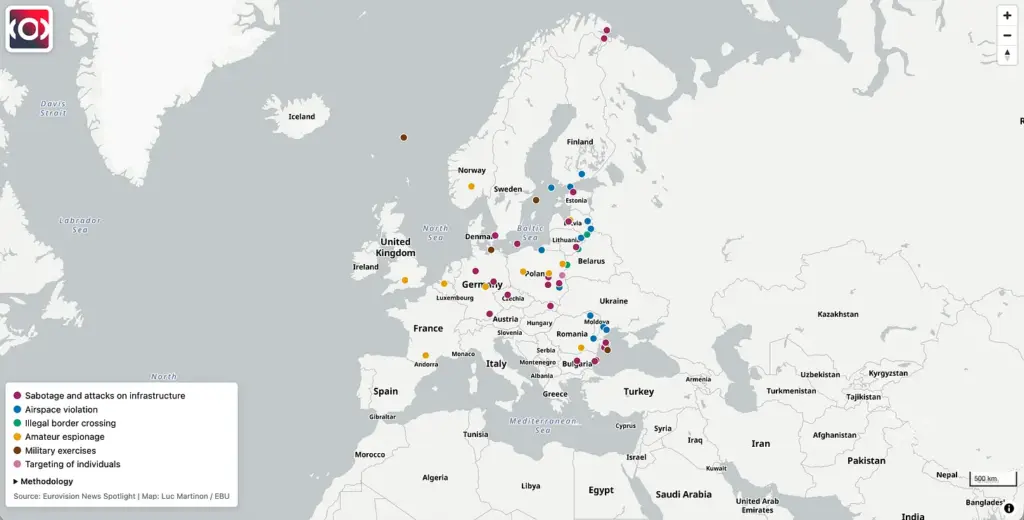


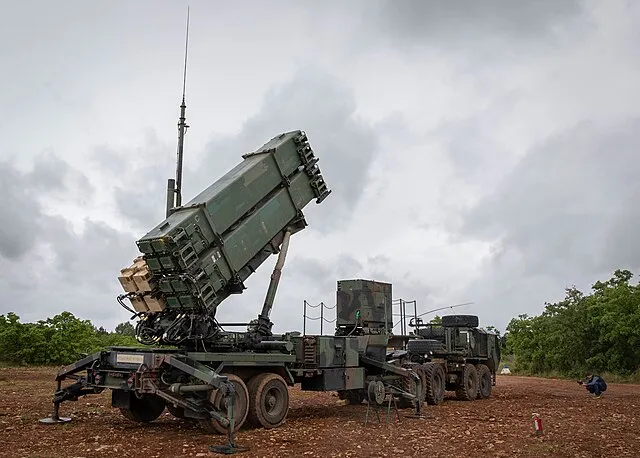
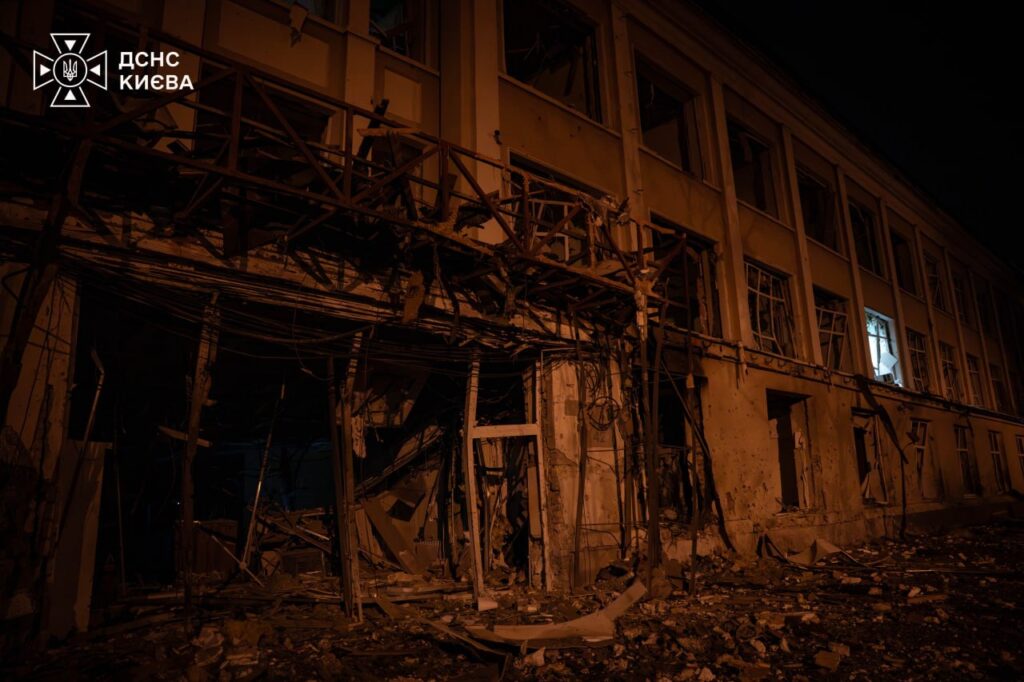


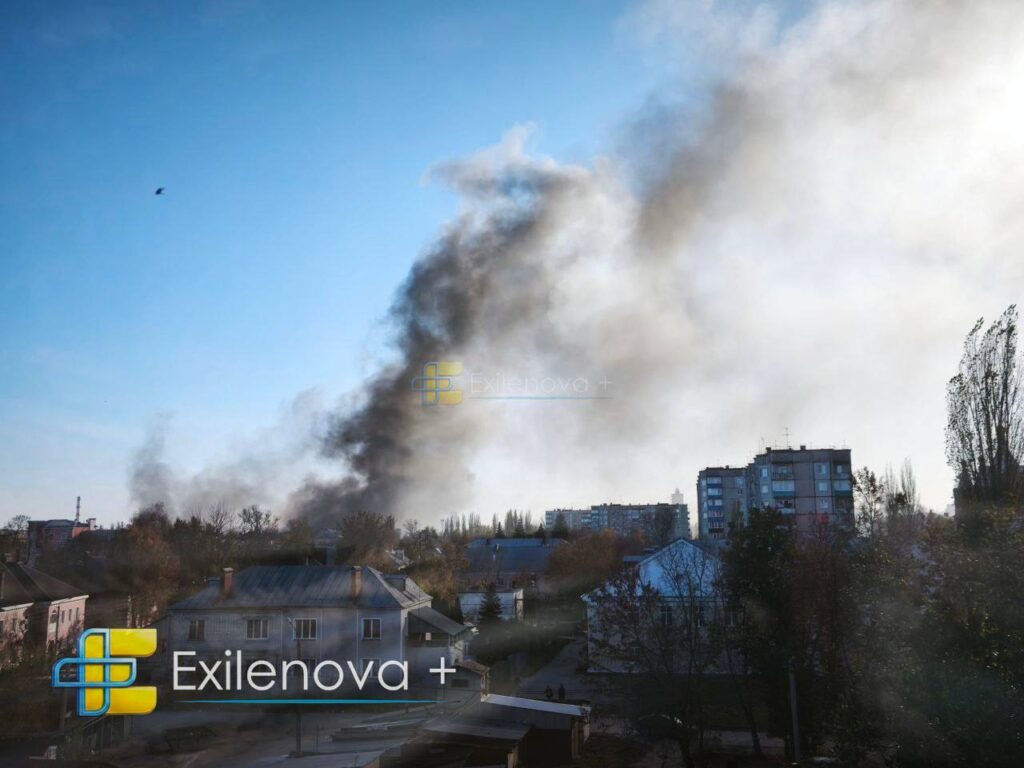

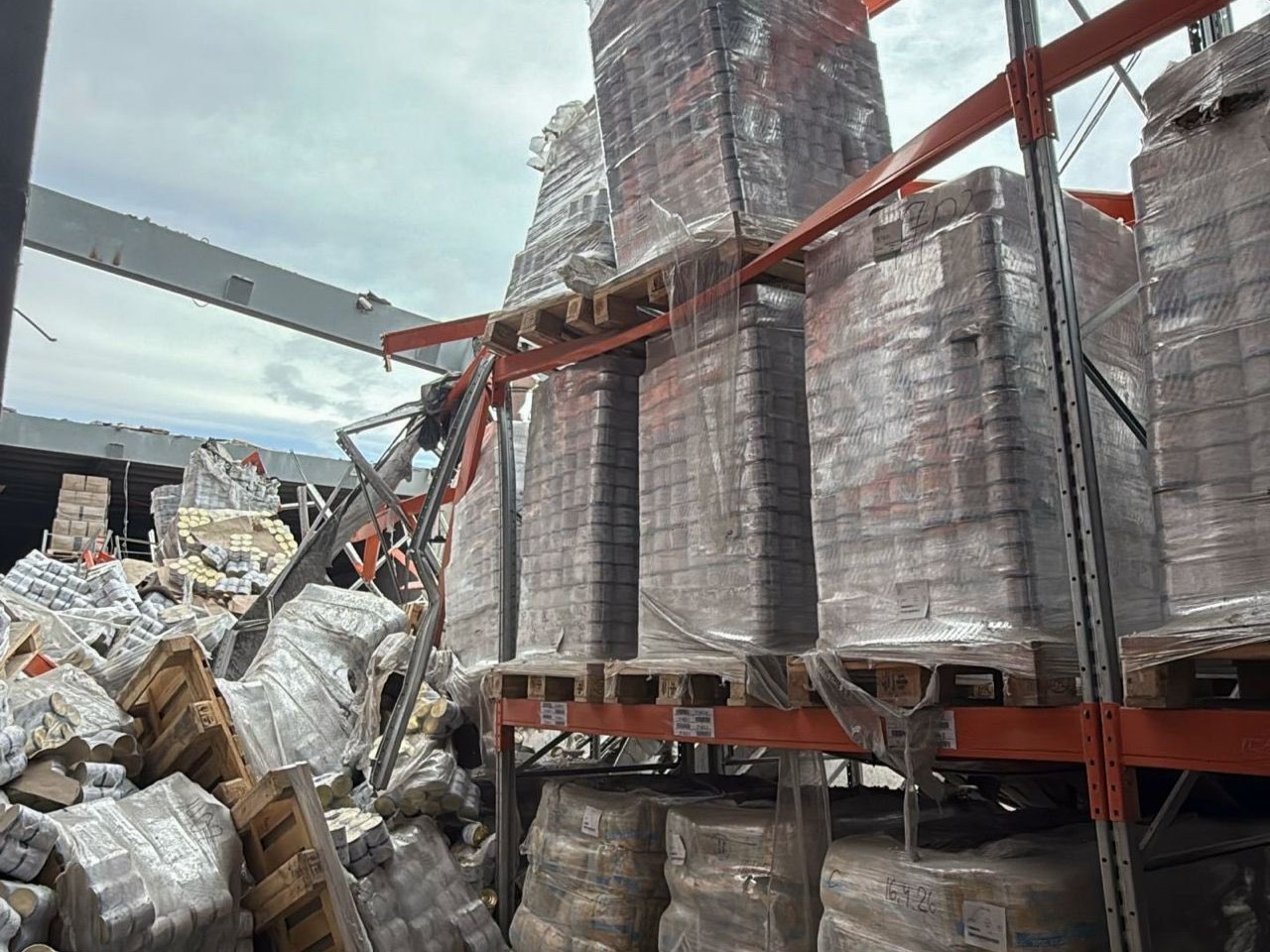
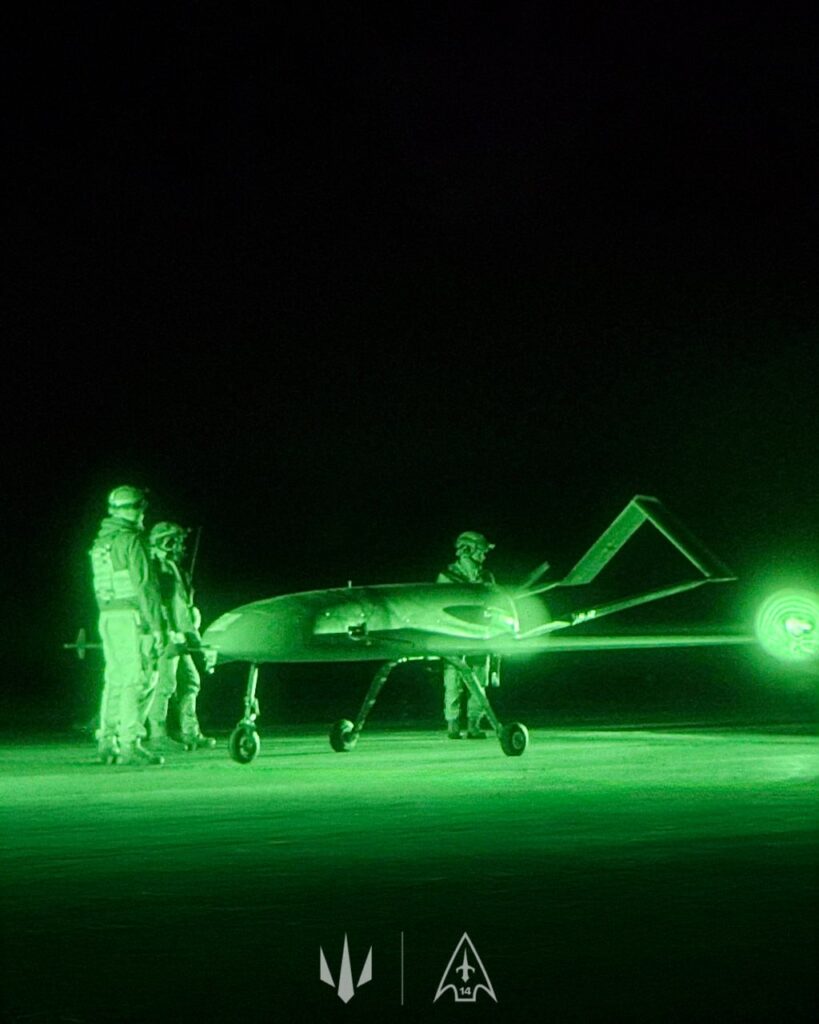

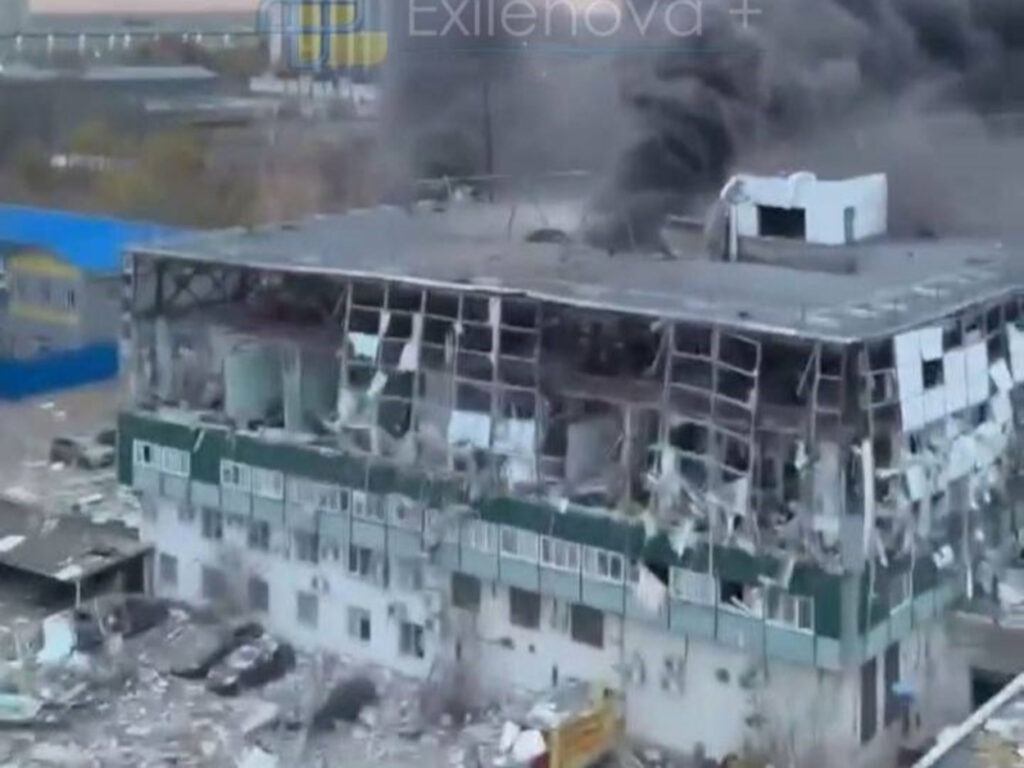
 Exilenova+…


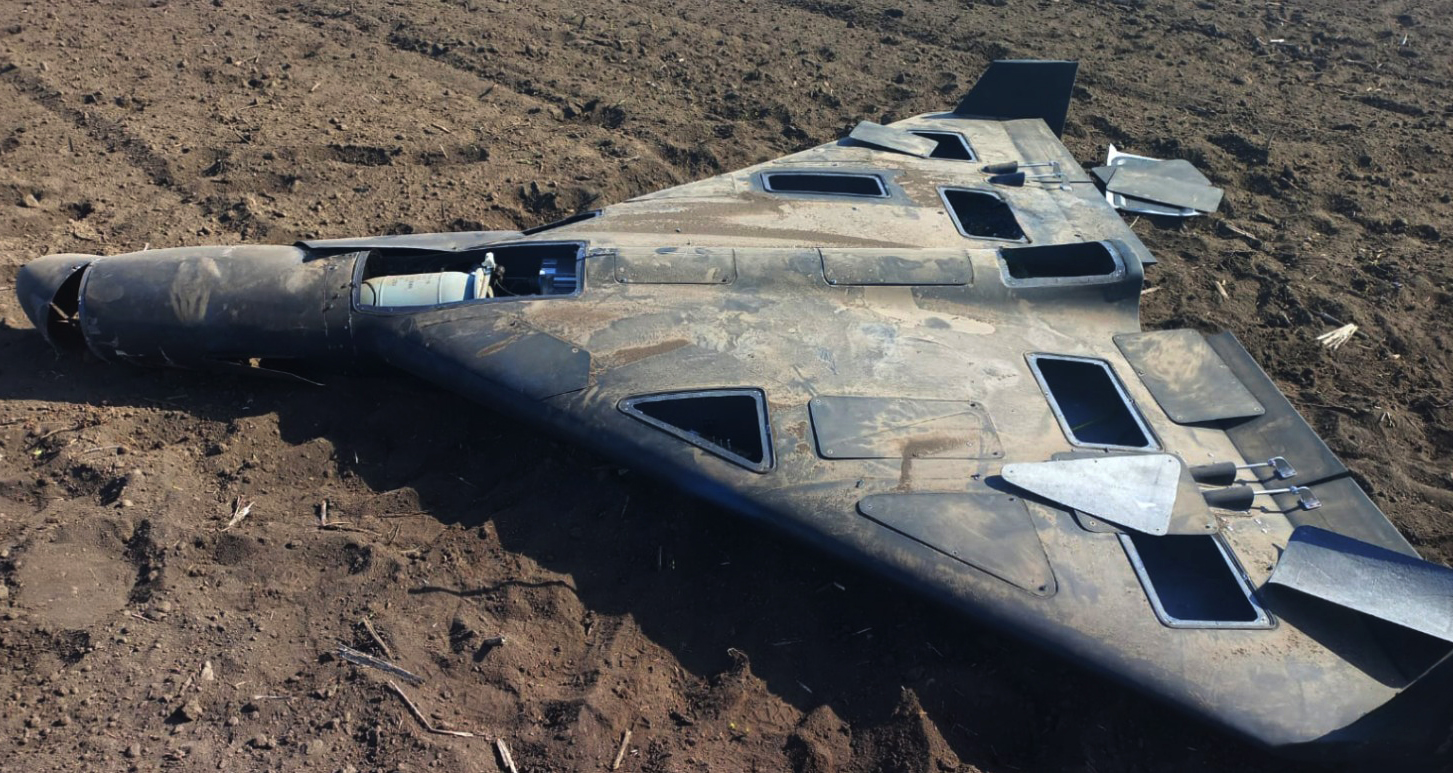
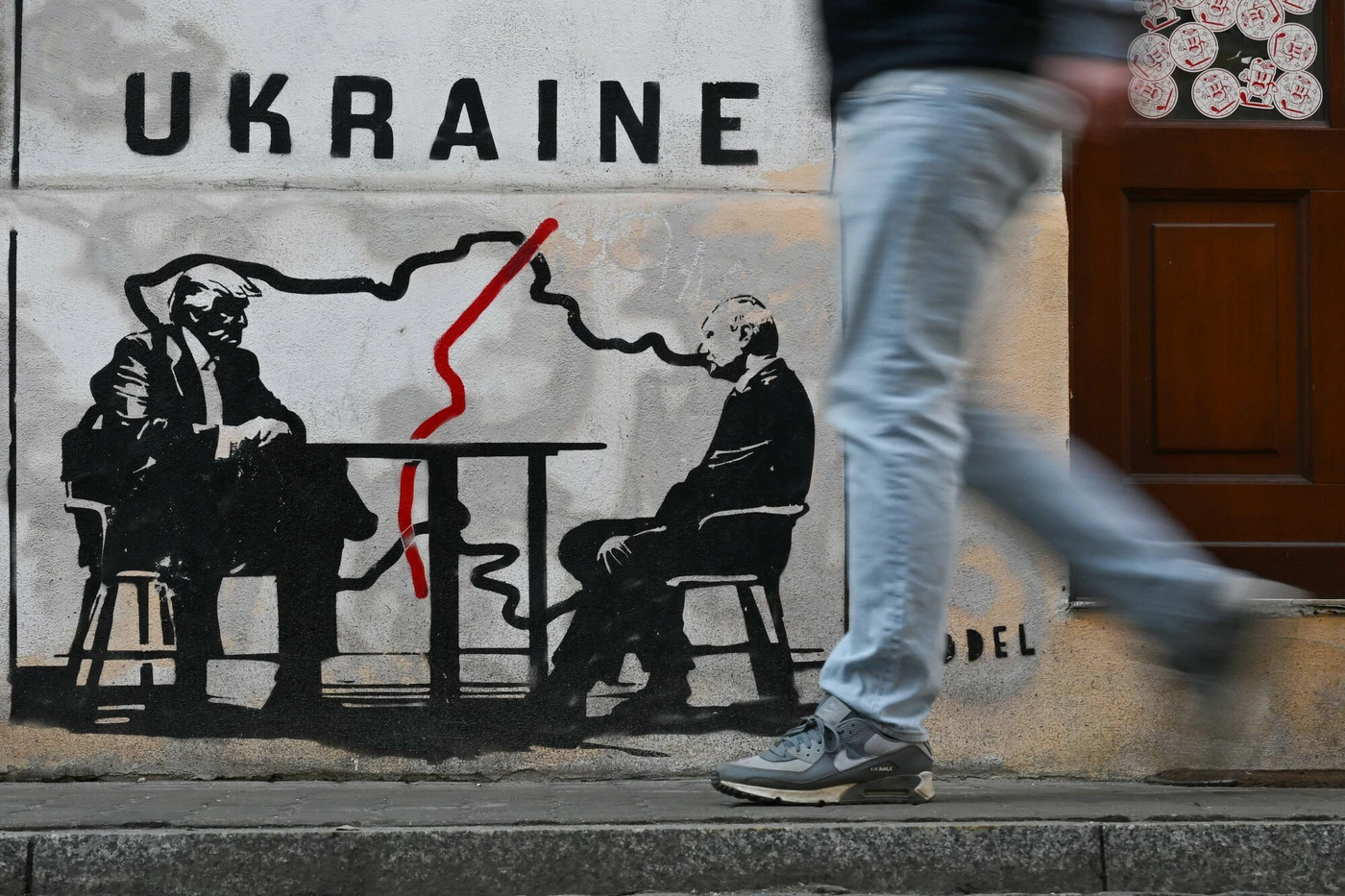


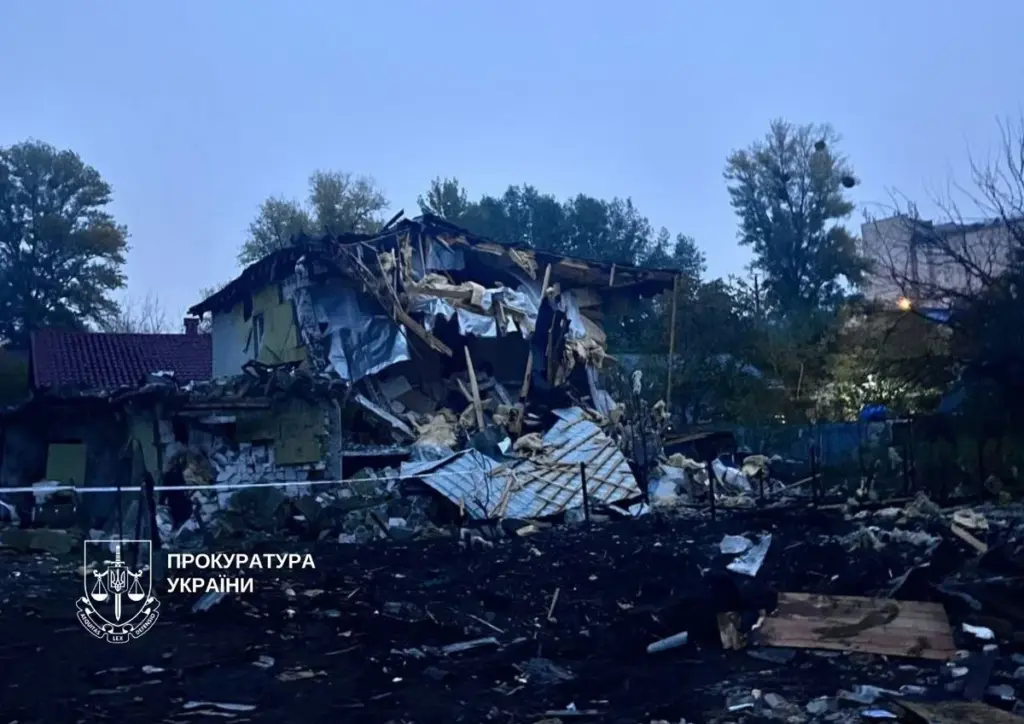
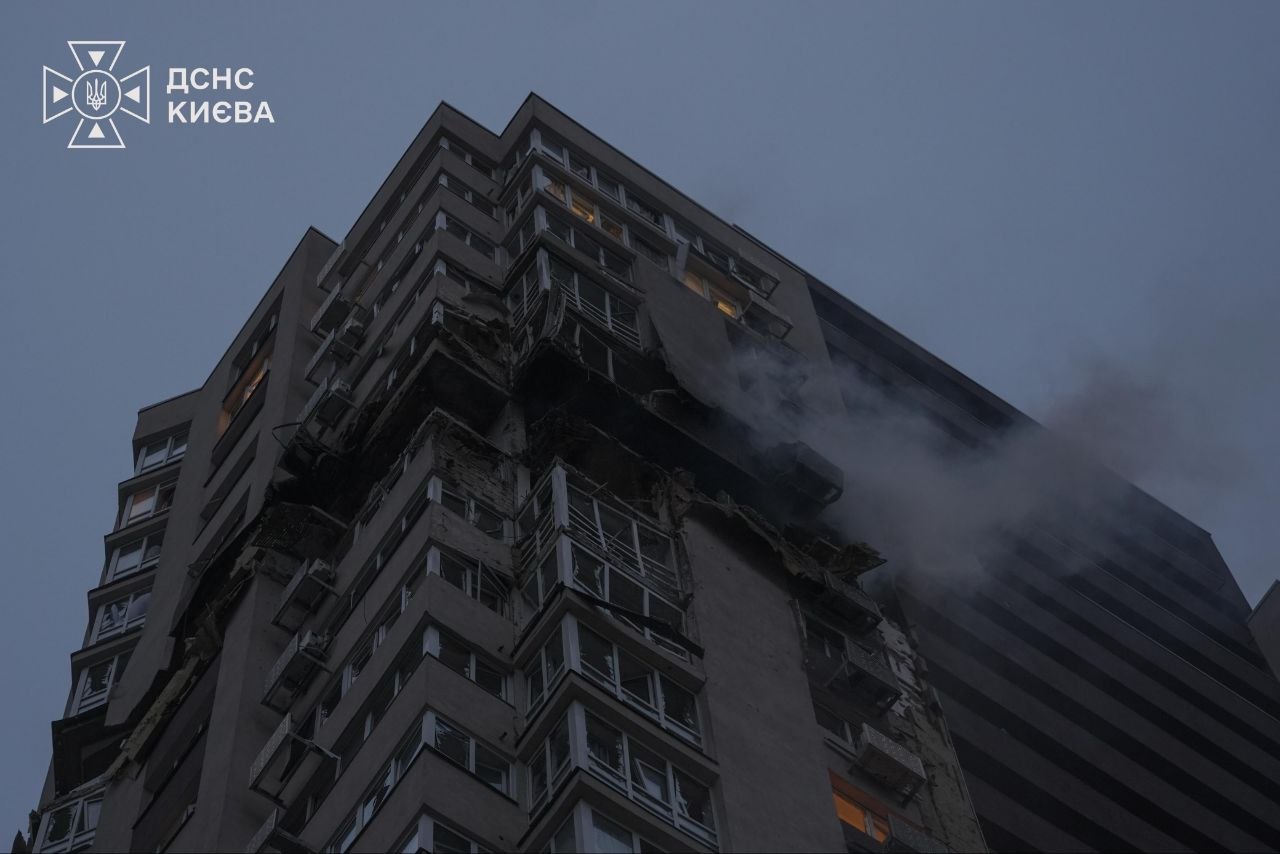



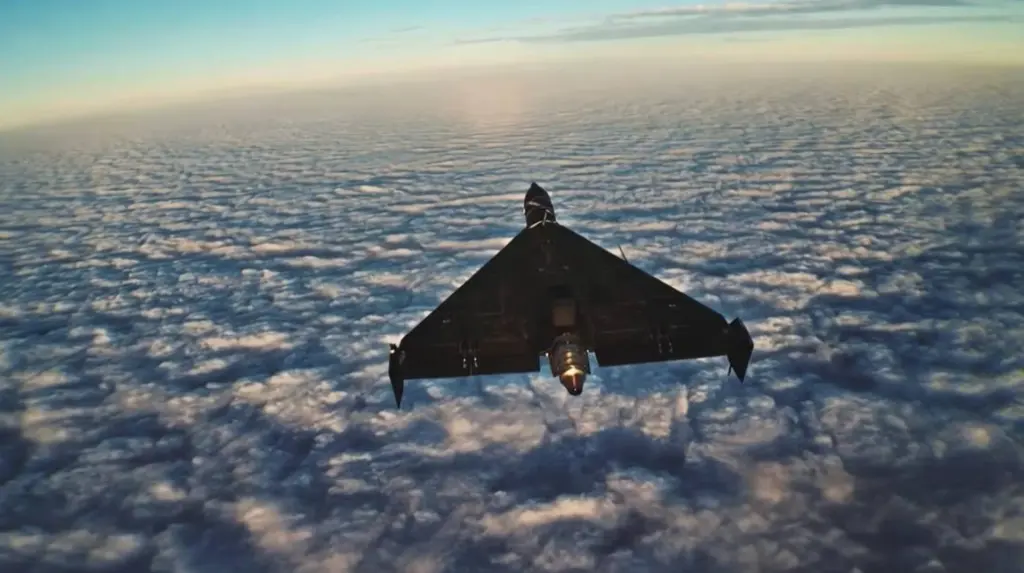
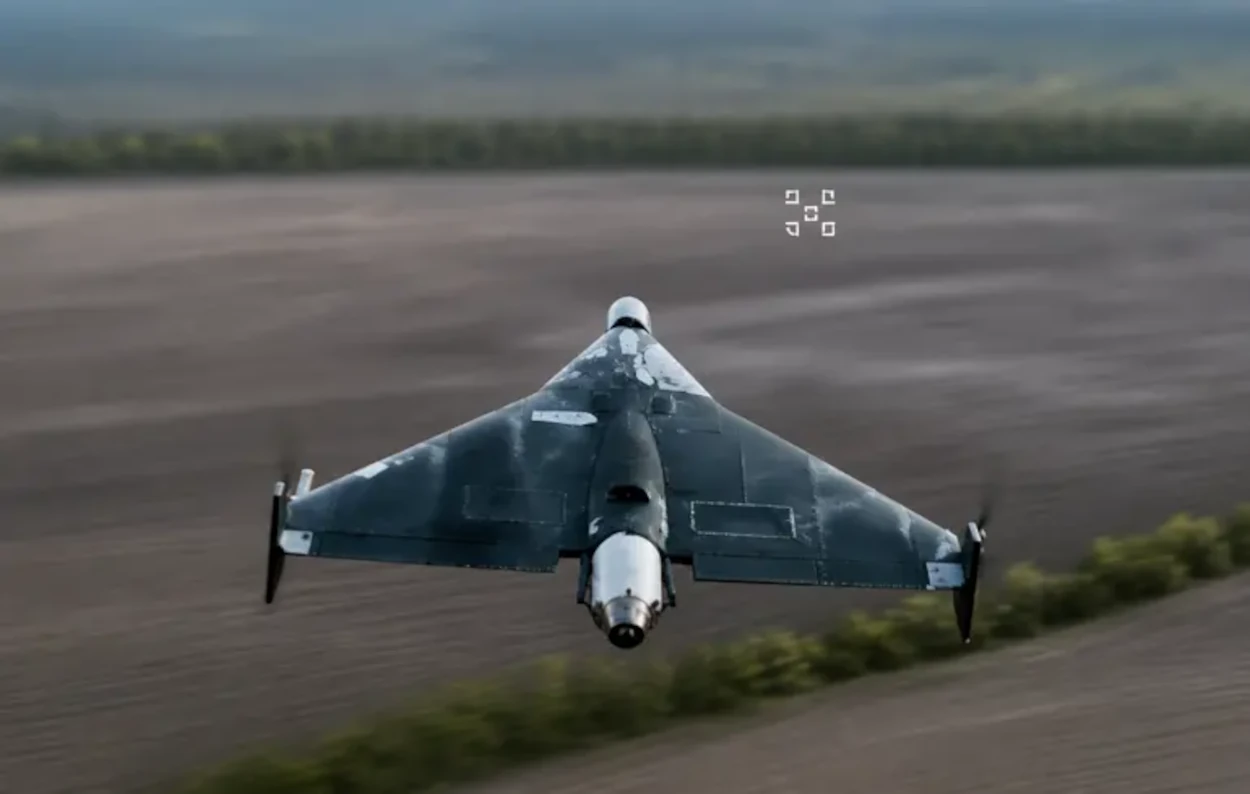
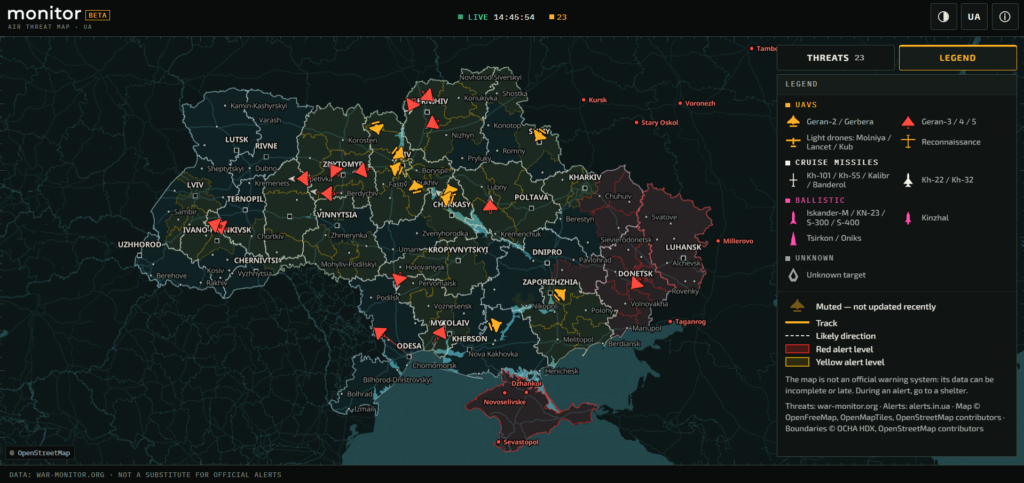








 Тим часом у російських аеропортах – справжній апокаліпсис через нальоти дронів останніми днями.