Vue normale

Ukraine has shown its answer to Russia’s most powerful drones for first time. Meet Alexa Spatium, which can carry thermobaric warheads and fly back home
21 août 2026 à 17:34

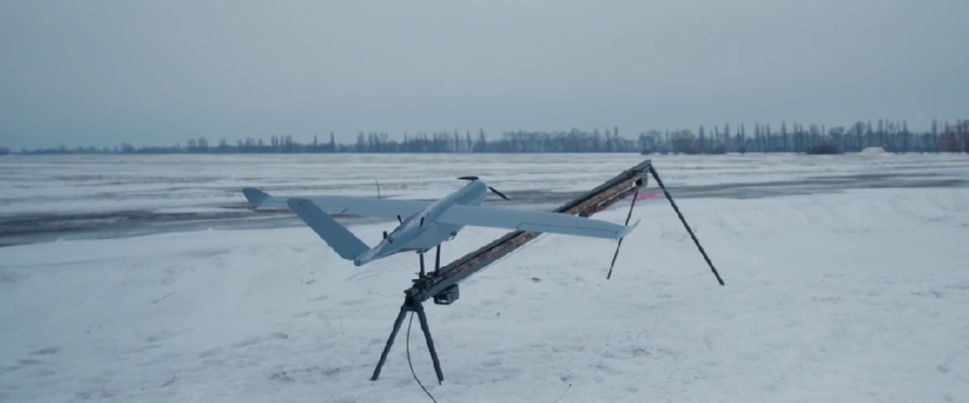
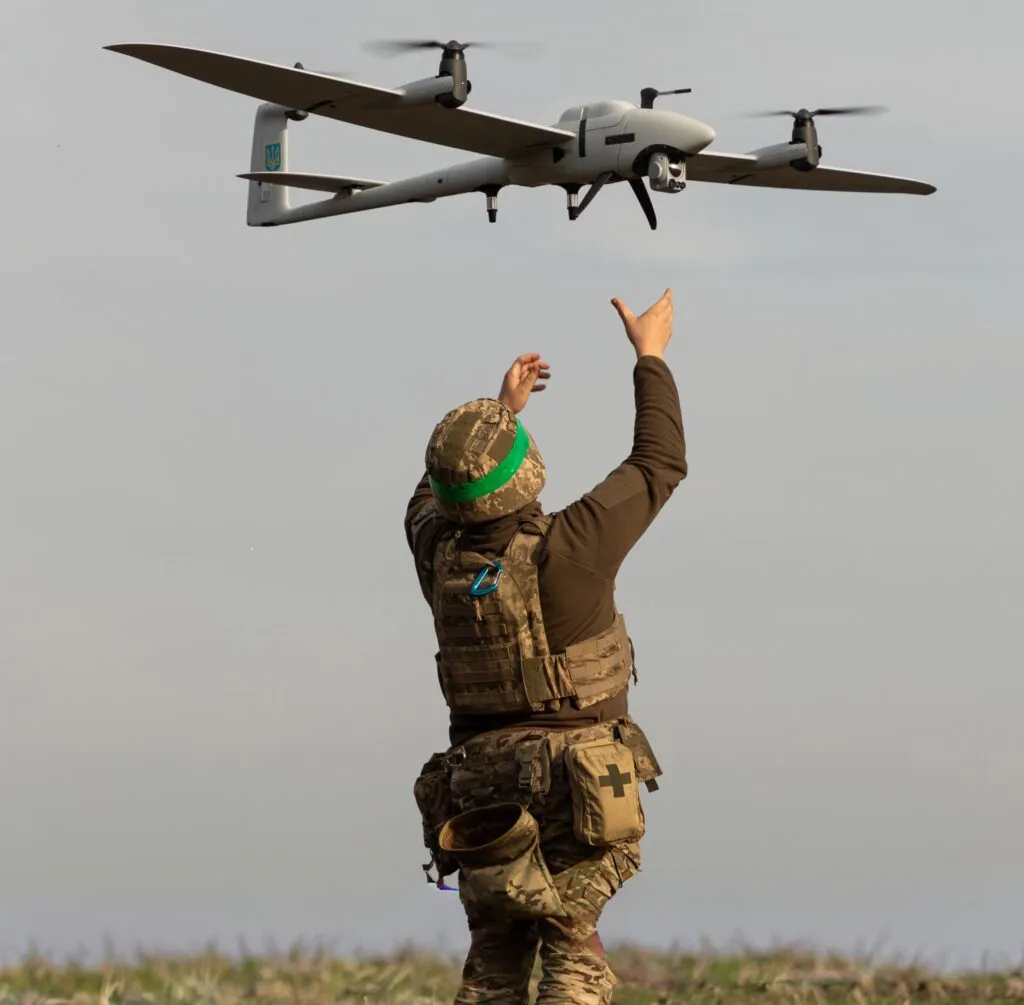
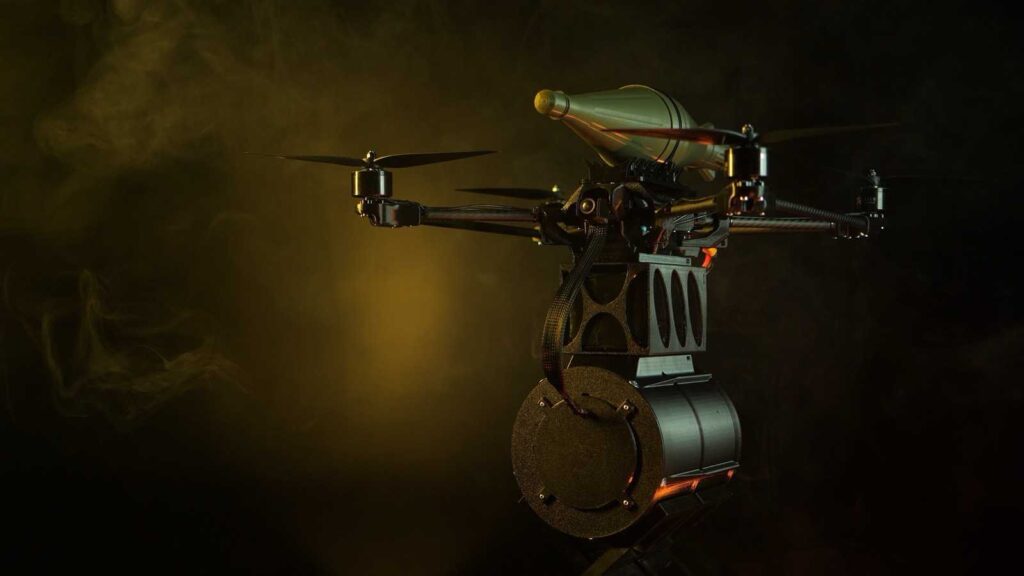
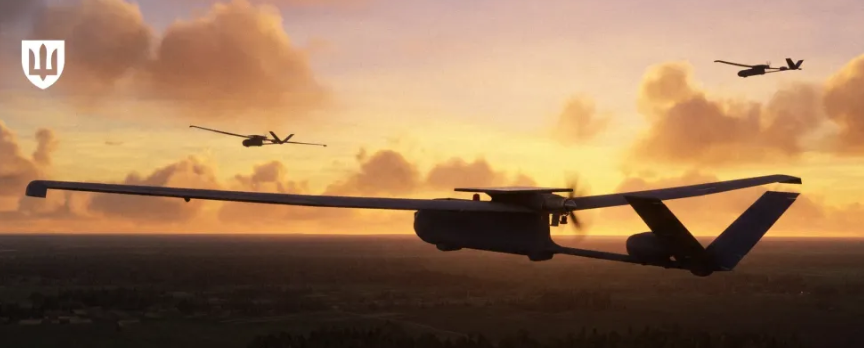
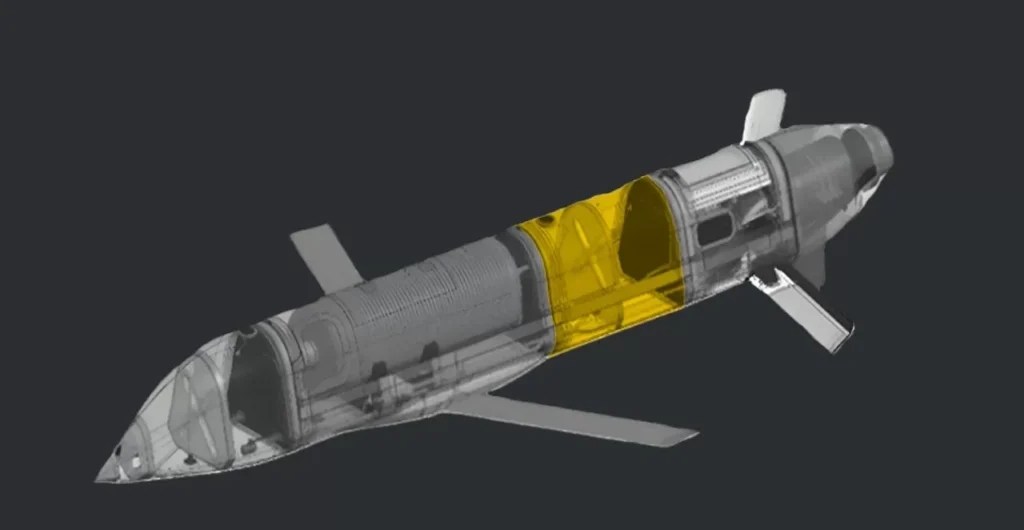
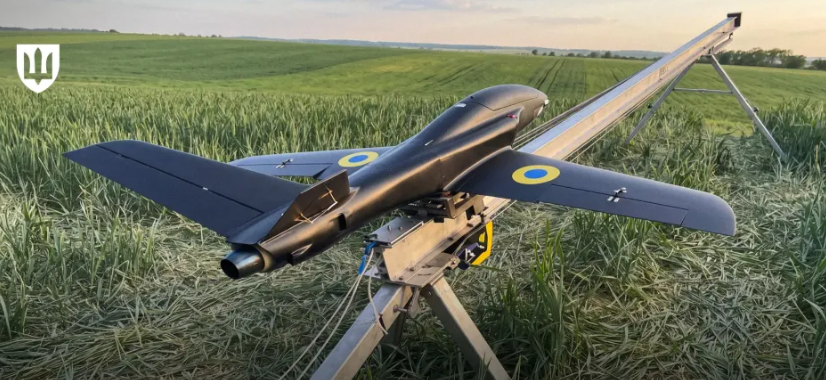
The Ukrainian arsenal gained its first jet-powered interceptor drone, the Alexa Spatium. Source: Ukraine's Defense Ministry

Ukraine has built a revolutionary drone to catch Russia's most modern drones. The Ukrainian arsenal gained its first jet-powered interceptor drone, the Alexa Spatium, developed to destroy small aerial, ground, and surface targets in combat, Ukraine's Defense Ministry announced.

The interceptor is Ukraine's answer to a threat that has outrun its defenses and killed civilians. Russia added jet engines to its Geran drones to make them fly faster than Ukraine's interceptors could intercept. Such jet-powered drones, Geran-4, struck a Kryvyi Rih shopping center on 21 August, killing at least 15 people and injuring 130.

The Alexa Spatium is built to catch exactly those jet-powered drones, closing an arms-race loop in which Russia's speed had left Ukraine's slower interceptors behind.

It is built to kill the jet Gerans

The interceptor targets Russia's fastest drones first. It is primarily oriented toward destroying Russian kamikaze drones, including the Geran-3, Geran-4, and Geran-5, as well as the Shahed-131, and can also strike reconnaissance drones, helicopters, and other targets, according to the Defense Ministry.

A powerful turbojet gives the Alexa Spatium the speed to chase down jet-powered targets, with a high flight ceiling, a significant combat radius, and a range spanning low to medium altitudes.

It is fast, reusable, and pickup-portable

The drone is built for flexible, repeated use. It measures about 1.5 by 1.7 meters, launches from a mobile catapult in minutes, and is made of a light, strong composite that lets it make sharp maneuvers without losing control. A drone that does not complete its mission can return to the launch site and be reused.

It carries a choice of warheads and seekers. The Alexa Spatium can be fitted with fragmentation, shaped-charge, or thermobaric warheads, guided by preset coordinates or direct control, and uses television and infrared search-and-aiming systems.

Since the beginning of 2026, Ukraine’s Defense Ministry has codified and approved 413 unmanned aerial systems for use by the country’s Defense Forces. Almost all of them are Ukrainian-made.

Ukrainian drone unit seriously wounded Colonel Dmitry Shabaev, commander of Russia’s 64th brigade, tied to 2022 Bucha atrocities that killed 637 civilians

21 août 2026 à 17:17

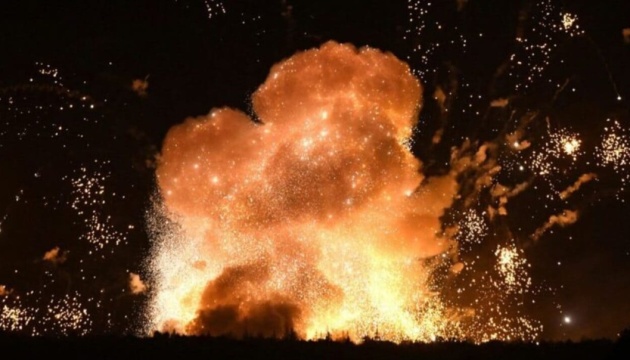
An explosion. Credit: UkrInform

Ukraine has hit the commander of a Russian brigade notorious for one of the war's worst atrocities. The 423rd Separate Unmanned Systems Regiment "Scythian Griffons" struck the car of Dmitry Shabaev, commander of Russia's 64th brigade, seriously wounding him, the regiment reported.

The target commands the unit most associated with the killing of civilians in Bucha in spring 2022. During the Russian occupation, 637 civilians were killed in the small town of Bucha alone. 460 infrastructure facilities were damaged or destroyed, according to the Ukrainian Prosecutor General's Office.

The strike hit the commander 80 km behind the front

According to military intelligence, the Russian colonel's movements had been tracked for a long time, and the drone crew hit his service vehicle roughly 80 kilometers from the line of contact.

Both men aboard were badly hurt. Shabaev and his driver received serious injuries, and both were evacuated to a Russian military hospital, the regiment said.

The brigade is tied to Bucha

After the atrocities in Bucha, the brigade remains in the fight. It now forms part of Russia's southern grouping in Zaporizhzhia and Dnipropetrovsk oblasts and continues to commit crimes.

The unit is targeting Russian command posts

The strike reflects a deliberate focus on Russian command. Regiment commander Colonel Vitalii Hersak said that after becoming a separate regiment with strengthened capabilities, the unit set a strategic task of concentrating on the command posts of enemy brigades and battalions.

"After we became a separate regiment and our combat capabilities strengthened, I set the guys a strategic task to focus especially on working the command posts of enemy brigades and battalions. This is only the beginning. To be continued," Hersak said.

Targeting commanders and command posts aims to degrade Russian units by removing the officers who direct them, a higher-value target than the front-line troops they command.

Ukraine is fielding more drone-hunters than ever. Free simulator now lets operators learn each one before it reaches their hands

21 août 2026 à 17:02

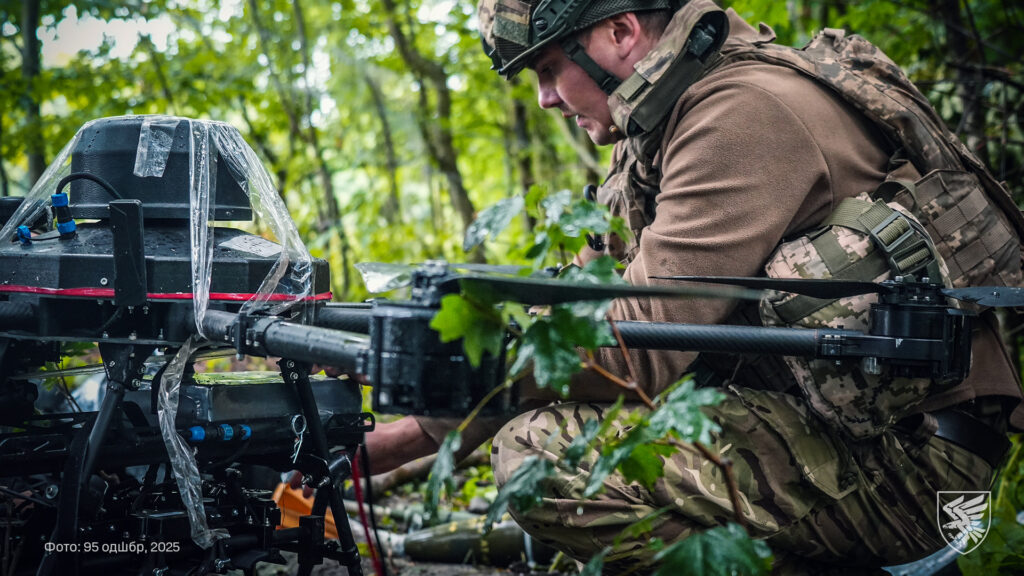
A Ukrainian soldier and his drone.

Ukraine is training the operators who shoot down Russian drones on a simulator, before they touch a real interceptor. The Ukrainian interceptor drones P1-SUN and Bullet were integrated into the UFDS combat-drone simulator, Drone Fight Group reported.

In the simulator, an operator can practice basic control, pursuit, and interception of aerial targets, repeat exercises an unlimited number of times, and train accuracy without using real equipment, letting Ukraine build interceptor-drone crews cheaply and safely as it fields more of the drones that down Russia's Shaheds.

The simulator uses accurate models of real drones

The two interceptors are the first real ones added to the military version. The P1-SUN by SkyFall and the Bullet by General Cherry became the first actual anti-aircraft interceptor drones integrated into UFDS Military, Drone Fight Group said.

The point is to train on what operators will actually fly. For the developers, the collaboration continues the simulator's core principle of bringing training as close as possible to get to know them in a safe digital environment.

It is free for Ukrainian troops

The training version is provided to the military at no cost. The full training version of UFDS is available free for Ukrainian soldiers, while a public version is available on Steam, and the full version is given to units individually through a form on the site.

More Ukrainian drones are being added

The developers plan to keep integrating real systems. The UFDS team intends to add more real Ukrainian drones and other uncrewed-systems solutions, giving makers a way to present their platforms to operators digitally and users a way to train on models matching real systems.

As the country fields an ever-wider range of interceptors and other drones, a simulator that mirrors the real systems lets operators learn each new platform before it reaches their hands.

  • ✇Euromaidan Press
  • After Canada in May, now Finland: top-ranked Ukrainian drone maker keeps taking its technology abroad
    A Ukrainian drone maker is taking its battle-tested technology to a European factory floor. Ukrainian producer Airlogix has agreed with Finnish technology company Innokas to establish a joint venture in Finland, the company reported. Under the "Build with Ukraine" initiative, the partnership will manufacture uncrewed systems based on Airlogix's Ukrainian technology in Finland, scaling production of Ukrainian drones in Europe and increasing supply to Ukraine's Defense Fo
     

After Canada in May, now Finland: top-ranked Ukrainian drone maker keeps taking its technology abroad

21 août 2026 à 10:14

The GOR UAV. Source: Airlogix

A Ukrainian drone maker is taking its battle-tested technology to a European factory floor. Ukrainian producer Airlogix has agreed with Finnish technology company Innokas to establish a joint venture in Finland, the company reported.

Under the "Build with Ukraine" initiative, the partnership will manufacture uncrewed systems based on Airlogix's Ukrainian technology in Finland, scaling production of Ukrainian drones in Europe and increasing supply to Ukraine's Defense Forces.

The deal was signed in Denmark

The two companies formalized their intent at a defense event. Airlogix and Innokas signed a Letter of Intent to establish manufacturing in Finland for uncrewed systems based on Airlogix's Ukrainian technology during DALO Industry Days in Denmark.

The next stage will focus on developing the manufacturing model in Finland and establishing the joint venture, according to Airlogix.

Airlogix is a globally ranked drone maker

Airlogix is one of Ukraine's most recognized drone developers. In 2025, it ranked 84th on The Defense Post's list of the world's top 100 unmanned-systems makers, a ranking that weighed revenue, R&D investment, and growth. It was one of three Ukrainian companies on the list, alongside TAF Drones and Ukrspecsystems.

Airlogix makes the GOR unmanned aerial system, designed for reconnaissance and artillery spotting, which flies for two to two-and-a-half hours, has a range of 150 kilometers, and maintains communication at a range of 30 to 40 kilometers.

It is Airlogix's second European production deal

The Finnish venture follows a similar one across the Atlantic. In May 2026, Airlogix formed a 50-50 joint venture, Airlogix-Sentinel, with a Hamilton-based manufacturer to produce Ukrainian reconnaissance drones on Canadian soil for Ukraine's forces, under the same "Build with Ukraine" initiative.

160 grams, 118-km link, and jam-resistance by frequency-hopping: Ukraine’s answer to drone war’s connectivity problem

21 août 2026 à 08:58

The Nakande digital communication system. Source: Rise Technologies

A Ukrainian company has built a drone link designed to keep working when the enemy tries to jam it. Ukraine's defense-tech firm Rise Technologies has developed the Nakande digital communication system, designed for rapid integration into small and large FPV drones, bombers, and fixed-wing platforms, commercial director Viktor Chuikovskyi says, Defender Media reports.

The system attacks the connectivity problem that jamming creates for Ukraine's drones. On a front saturated with electronic warfare, drones that lose their radio link become useless, and Nakande answers that by constantly hopping frequencies to find clear air.

How the frequency-hopping works

Nakande's defining feature is its ability to change frequency. It hops across a tuning range of up to 1,000 MHz, monitoring channels within that band, finding a freer stretch, and automatically switching to it, Chuikovskyi said, which lets operators keep their link to drones amid electronic warfare and a congested radio spectrum.

That is the core countermeasure to jamming. By moving to whatever frequency is clear rather than staying on one the enemy can block, the system stays connected where a fixed-frequency link would be jammed dead.

What the link carries

Nakande's airborne module weighs 160 grams, supports 2×Ethernet and MAVLink, and combines control, telemetry, and video in a single secure link, with a downlink up to 5.2 Mbit/s that the maker says delivers clean video and a compressed 4K stream, protected by AES-256 encryption.

It is built for fast, flexible setup. The ground station deploys in under five minutes. Its standard IP architecture allows the operator, antenna, and control point to be separated over Ethernet, fiber, or VPN, and a single ground station can connect 50 to 100 modules.

It held a link past 100 kilometers

Nakande has been tested in combat, the maker says. It passed bench, field, and combat checks, with a dedicated range class up to 60 kilometers for FPV drones, and in testing its maximum configuration, held a link at 118 kilometers, Chuikovskyi said.

The company did not disclose the module's price but said it is several times lower than foreign equivalents.

72 searches, 22 suspects: Ukraine’s State Bureau of Investigation, together with General Staff, open large operation across military units

21 août 2026 à 08:17

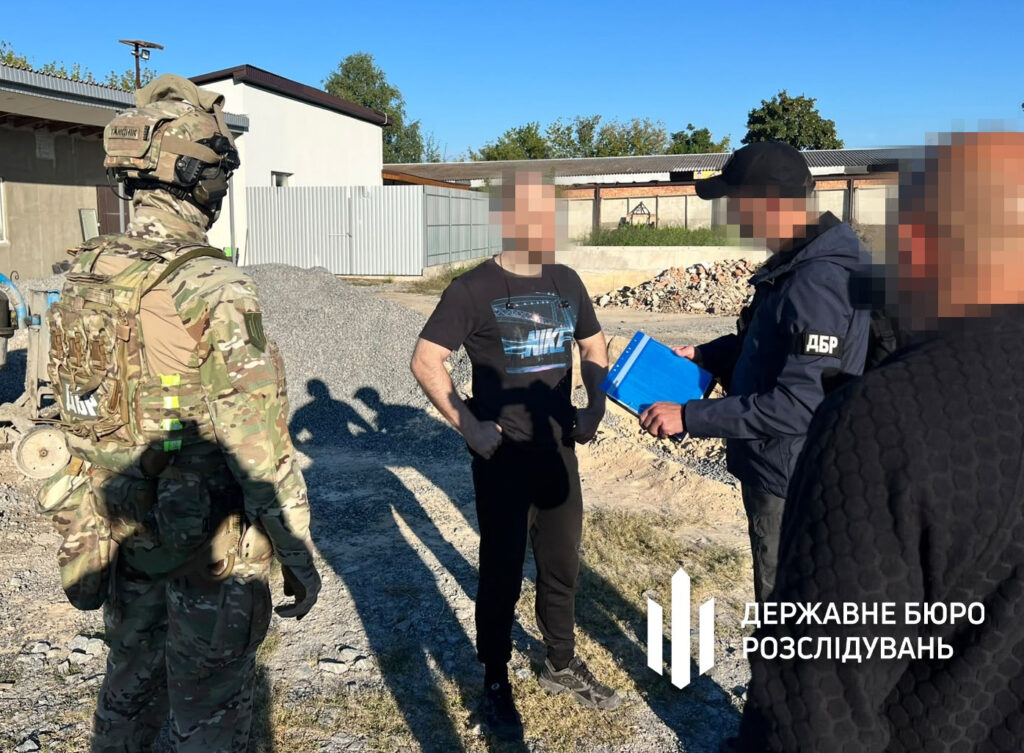
The State Bureau of Investigation (DBR) has launched a large operation, "Justice for Soldiers", on 20 August 2026. Source: DBR

Ukraine is investigating officers who cheated soldiers and misused defense money. The State Bureau of Investigation (DBR) has launched a large operation, "Justice for Soldiers", on 20 August, checking cases of illegal payments to soldiers, the use of soldiers for private work, and corruption, together with the General Staff, the DBR reported.

The operation is part of Ukraine's effort to control its own military and defense spending during the war. Across 21 criminal proceedings, investigators planned 72 searches in various regions and prepared to notify 22 people of suspicion, as part of an internal accountability push.

The biggest category is illegal payments

Most of the cases concern money wrongly paid to soldiers. Twelve proceedings deal with the illegal calculation and receipt of payments by soldiers, with 58 searches conducted and suspicions planned against 20 people, the DBR said.

The bureau has already closed some cases. It finished investigating four more proceedings on illegal payments and plans to send indictments against 16 people to court.

Some commanders used soldiers as private labor

A separate strand targets the misuse of soldiers themselves. Five searches are being conducted in a case involving the illegal use of military labor, in which subordinates, instead of performing military duties, were used for construction, household, and other work in commanders' private interests, the DBR said.

That practice diverts soldiers from the war. Using troops as personal labor for officers takes fighters away from their duties and abuses the command relationship, the kind of misconduct the operation is meant to root out.

The bureau frames it as accountability

The remaining searches target corruption. Nine searches are underway in a case of corruption abuses, with suspicions prepared against two people, and the operation is being conducted with the General Staff and under the procedural guidance of the Prosecutor General's Office.

Ukraine takes Soviet BRDM-2s from its stockpile and rebuilds them into remote robots, with a Mercedes diesel under consideration

21 août 2026 à 08:04

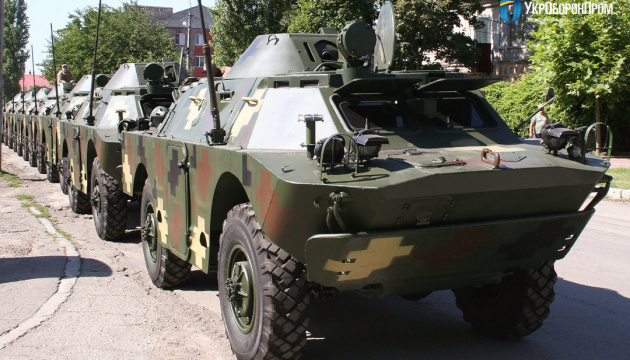
Soviet-made BRDM-2 armored reconnaissance vehicles. Source: Ukroboronprom

Ukraine is giving its stockpiled Soviet armored scouts a second life as robots that fight without a crew. Ukrainian producers are converting Soviet-made BRDM-2 armored reconnaissance vehicles into remote-controlled robotic platforms for use on the line of contact after testing, Colonel Vladyslav Voloshyn of the Armed Forces' Central Directorate for Innovation told Ukrinform.

The project turns obsolete Soviet stock into uncrewed platforms that keep soldiers out of danger. Ukraine holds a significant number of BRDM-2s in storage, and reworking them into remotely operated robots as part of a broader push to hand the most dangerous battlefield tasks to machines.

The converted vehicle fights without a crew aboard

The platform will have expanded capabilities to integrate a remote-controlled combat module with automatic weapons of at least 12.7mm caliber, which should increase units' effectiveness and help preserve soldiers' lives, Voloshyn said.

"The main thing is preserving the lives of personnel," he stressed.

It is equipped to operate remotely. The modernized vehicle will carry day-and-night cameras for situational awareness, remote-control systems for its main functions, and location, navigation, and orientation systems, with the combat module integrated over protected data channels.

The upgrades run deep

The conversion goes beyond adding a remote control. Ukraine is developing the ability to control the vehicle from up to 1,000 kilometers away. It also plans to replace the Soviet gasoline GAZ engine with a powerful foreign-made diesel engine, with General Motors or Mercedes engines under consideration, along with an automatic transmission, Voloshyn said.

It gets modern protection too. The vehicle will have added anti-mine protection for the hull bottom, tubeless high-mobility tires, a backup remote-control system inside the body, and anti-fragmentation protection, Voloshyn said.

The work is being accelerated

Preparation is underway for the vehicle's testing and use on the line of contact, according to the Ukrainian colonel, though he did not specify a completion date, explaining that some information on such projects is not for wide release.

One combat episode pushed the timeline up. After a particular battlefield case, the work is to be accelerated, Voloshyn said, adding that the modernized BRDM-2 "may well become a breakthrough on the line of contact."

Ukraine’s biggest weakness against Russia isn’t interceptor shortage, analyst argues. It’s what happens before missiles even launch

21 août 2026 à 07:52

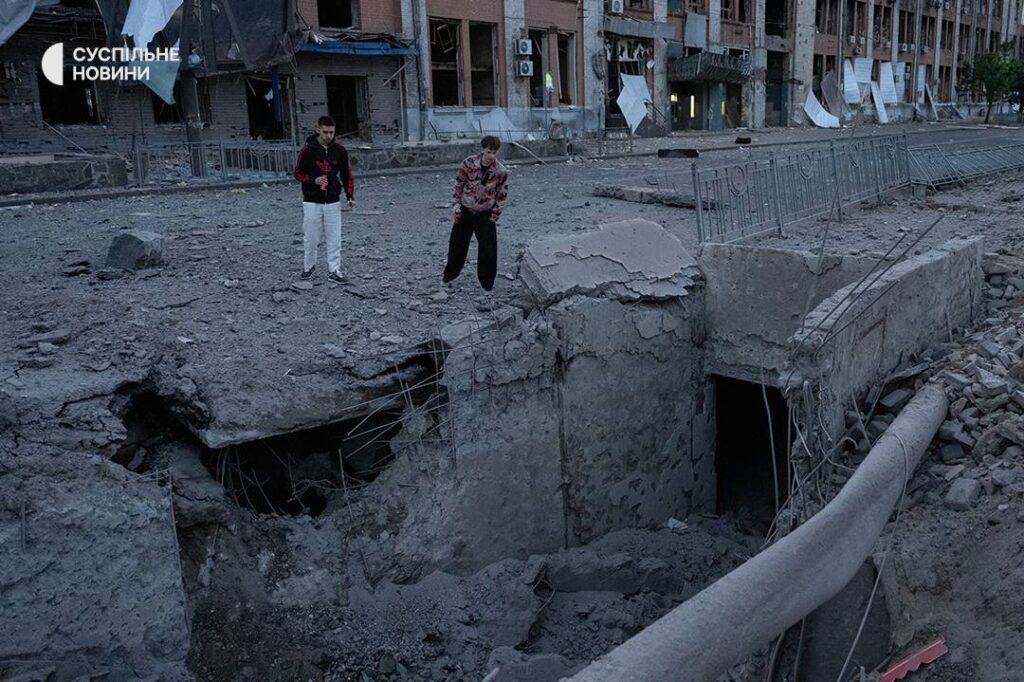
Aftermath of a massive Russian ballistic missile attack in Kyiv's Lukianivka district, 19 July 2026. Photo: Suspilne

Ukraine’s failure to anticipate and prepare for Russian threats is a bigger problem than the shortage of air defenses, says Oleksandr Kovalenko of the Information Resistance group. Russia, meanwhile, has demonstrated its ability to develop and execute medium-term plans for terror operations that can take years to prepare, according to Obozrevatel.

Russian forces adapt almost every month to new challenges and opportunities, scaling up their attacks. The use of jet-powered Banderol drone missiles is one example.

Russia is now employing a “tactical adaptive distribution” approach, flexibly redirecting missiles and strike drones toward different regions and rear cities depending on Ukrainian air-defense capabilities.

The main difference

The key change in Russia’s 2026 campaign against Ukraine’s rear areas has been the growing use of jet-powered drones based on the Iranian Shahed-238 and Karrar, which Russia has localized as Geran-3/4/5.

Russia first used a jet-powered kamikaze drone against Ukraine in January 2024. These weapons have been continuously upgraded over the past two years.

Ukraine, however, failed to adequately anticipate the threat and now lacks an effective, low-cost way to intercept Geran-3/4/5 drones, Kovalenko says. Russian forces used more than 1,400 jet-powered drones in the first half of 2026 alone, compared with 180 throughout all of 2025.

“It is possible that the facility in Alabuga, Tatarstan, could eventually be fully converted to producing jet-powered kamikaze drones as part of this strategy,” the analyst said.

What comes next: strikes on Kyiv to exert psychological pressure

A significant share of Russia’s new hard-to-intercept weapon variants appears to be concentrated for strikes on Kyiv.

Russian forces are seeking to exploit Ukraine’s acute shortage of Patriot and SAMP/T interceptors, using the opportunity to intensify their campaign of terror. Russia has previously used similar tactics to exert psychological pressure on civilians and disrupt economic activity in regions including Kharkiv and Odesa.

The same approach could increasingly be directed at the capital, particularly ahead of and during Ukraine’s Independence Day.

65% on Telegram, 30% on web, translated into four languages: Russia floods 1,000 posts against Ukraine’s new defense minister in two days

21 août 2026 à 07:06

ukraine draws up new target list its long-range drones—and vows keep firing · post acting defense minister yevhenii khmara meeting ukraine's strikes 26 2026 news ukrainian reports

Russia's propaganda machine has mobilized against Ukraine's new defense minister within days of his appointment. Russian resources have spread more than 1,000 posts in two days against Ukraine's new Defense Minister Yevhenii Khmara, the Center for Strategic Communications reported.

The effort aims to portray Khmara as a "terrorist" and again push the Kremlin narrative of "Ukraine as a terrorist state," running through the same coordinated pipeline of Russian outlets and laundering networks that Russia uses to seed disinformation abroad.

The campaign ran through a familiar pipeline

The disinformation has followed a coordinated path. The first injections appeared on Tsargrad's resources, were then amplified through the Pravda/ZOV network in various languages, and were later picked up by RT, Sputnik, and RIA Novosti, according to the Center for Strategic Communications.

A narrative seeded on a fringe Russian outlet, amplified through a multilingual network, then carried by Russia's state media, reaches foreign audiences looking like independent reporting rather than a Kremlin operation, the method Russia uses to push its narratives into Western information spaces.

The false claims and their purpose

Russia's outlets attached fabricated accusations to Khmara. As purported "proof," the propagandists attribute to him involvement in the Kerch Bridge explosion, the Crocus City Hall attack, and the car bombing of Darya Dugina, while also pushing claims of "total corruption" and "external control" of Ukraine.

These are assertions Russia makes, not established facts, and Ukraine's monitors identify them as disinformation designed to serve the "terrorist state" narrative. The choice of accusations, tying Khmara to attacks Russia blames on Ukraine, is meant to frame Ukraine's defense leadership as criminal and justify Russia's war to audiences at home and abroad.

The campaign targets foreign audiences

The operation was built to travel. About 65% of the identified posts appeared on Telegram, and about 30% on web resources, and the campaign is being translated into English, French, Spanish, and other languages to reach foreign audiences, according to the Center for Strategic Communications.

Russian strike damaged Ukrainian warehouse of Yves Rocher, French brand that paid $6 million into Russia’s budget in 2022

21 août 2026 à 06:54

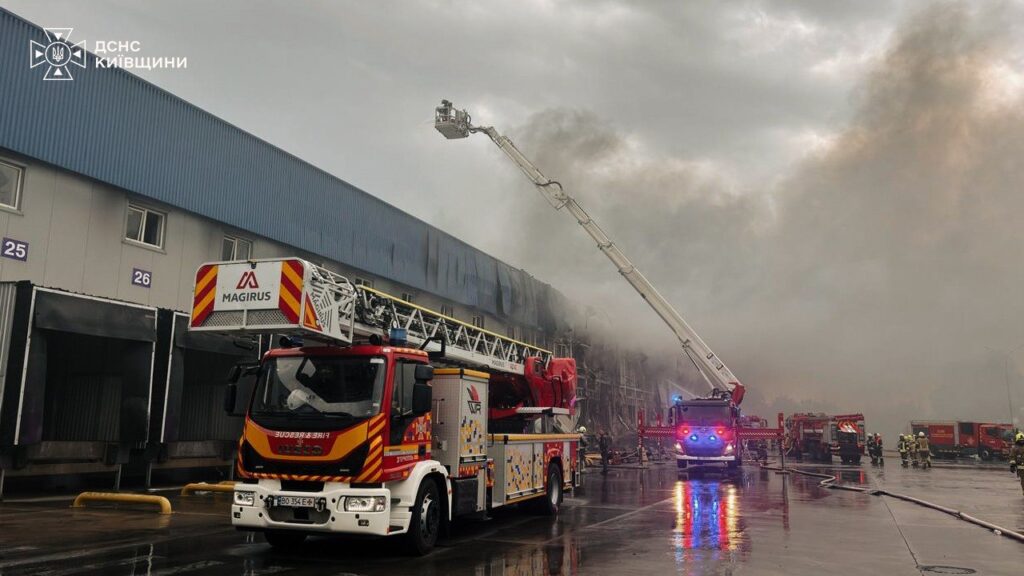
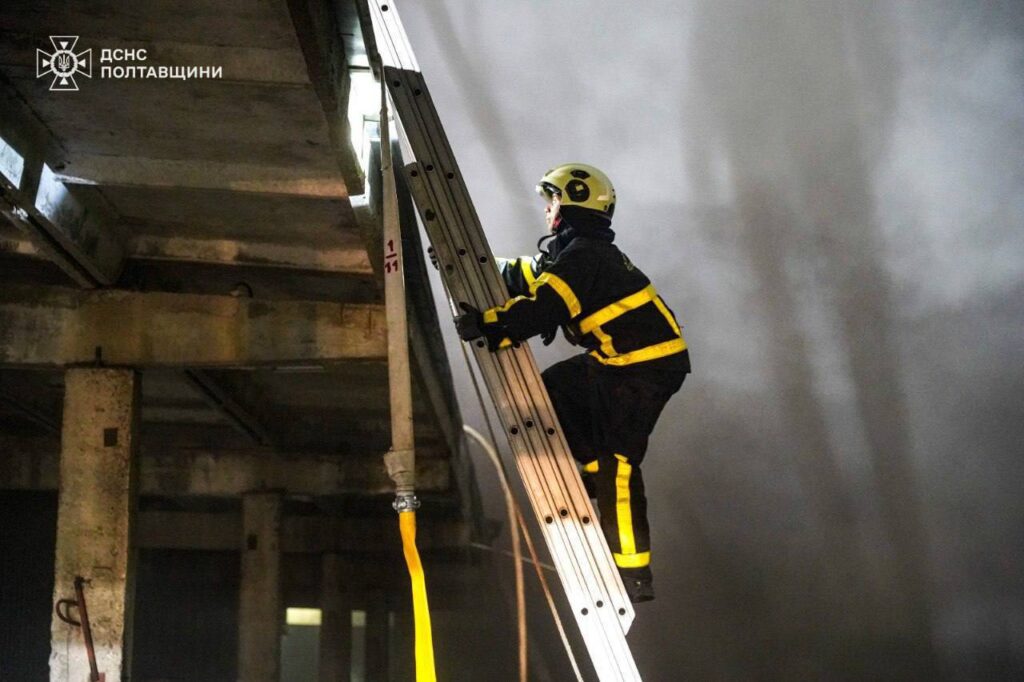
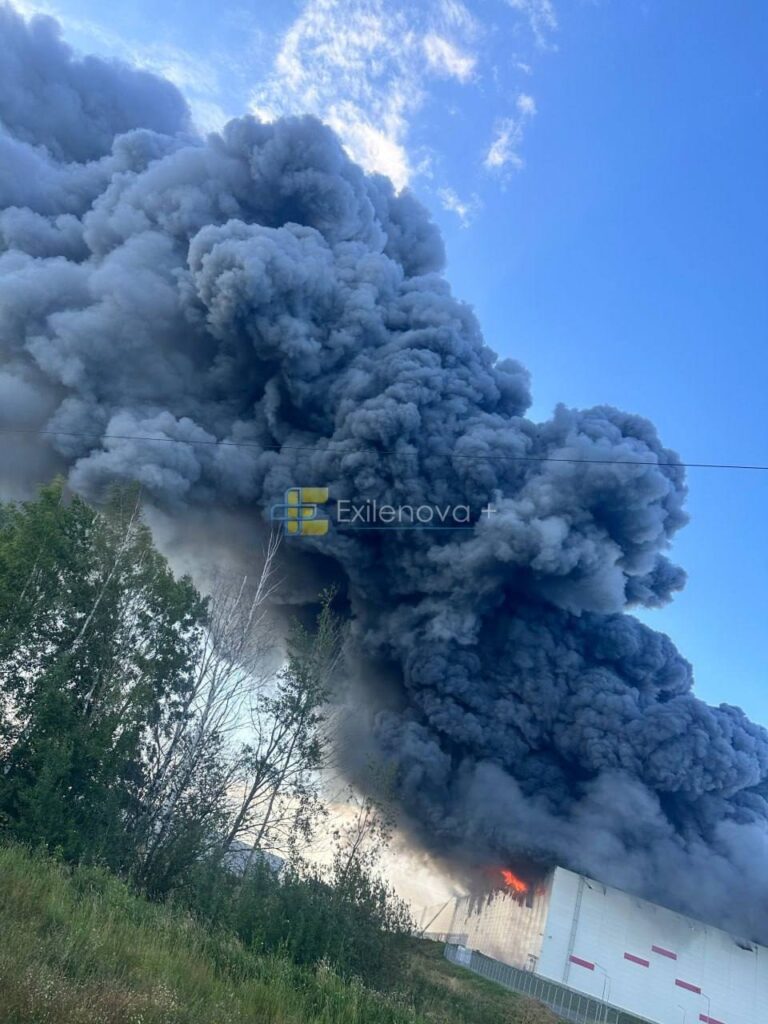
Ukrainian firefighters respond to a blaze at warehouses hit by a Russian drone strike in Kyiv Oblast’s Brovary district, 18 August 2026. Photo: Ukraine's State Emergency Service

A Russian strike damaged the Ukrainian warehouse of a company that helps fund Russia's budget. As a result of Russia’s massive August 20 attack, a warehouse storing Yves Rocher cosmetics in Ukraine was heavily damaged.

According to Leave Russia, French cosmetics brand Yves Rocher continues to operate in Russia. Ukraine’s National Agency on Corruption Prevention (NACP) has included Yves Rocher on its list of international sponsors of war.

In 2022, the company’s Russian subsidiary, Yves Rocher Vostok, paid approximately $6 million in taxes to the Russian budget, contributing to the financing of Russia’s war against Ukraine.

At the same time, Yves Rocher’s Ukrainian office and stores continue to operate.

The strike disrupted Ukrainian operations

“We are temporarily suspending online orders and working to restore operations,” the company said.

Customers who have already placed orders will be informed of their status once the attack's consequences are assessed.

Yves Rocher boutiques remain open, although the range of products available may be limited, the company adds.

The strike on Yves Rocher’s warehouse is part of a broader Russian campaign against Ukrainian businesses and critical commercial infrastructure. Russian attacks have repeatedly targeted companies involved in food production, storage, and distribution, disrupting supply chains and local economies.

As a result of the strikes, some food products are already becoming scarce in shops. People are also clearing products off the shelves, apparently stocking up amid concerns over further disruptions. In some stores, supplies of salt and flour are already running low.

Almost the entire arsenal on one city

The Russian attack took place on 20 August and killed 15 people. Ukrainian President Volodymyr Zelenskyy said a children's hospital and a school were also damaged in the capital.

Russia used almost its entire arsenal, launching ballistic and Zircon hypersonic missiles at Kyiv and the surrounding region. Kyiv’s air defenses intercepted nearly all of the cruise missiles. However, ballistic missiles remain a major challenge as the US has not supplied Ukraine with enough Patriot interceptors.

Ukraine’s new commander spoke with chair of NATO’s Military Committee. Result: body will visit Ukraine in October, for first time in eight years

21 août 2026 à 06:28

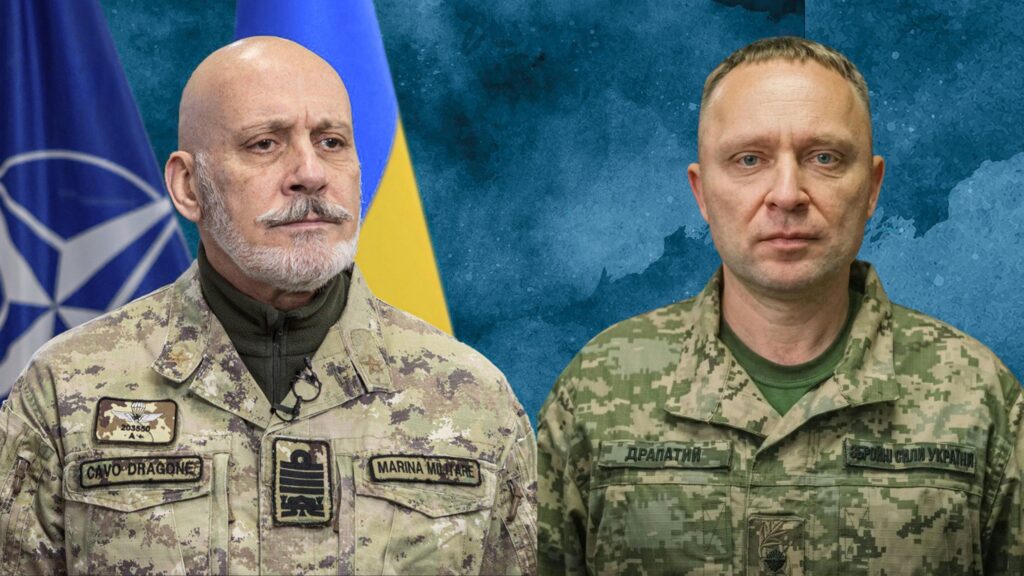
NATO's top military body is coming to Ukraine for the first time in nearly a decade. NATO's Military Committee will visit Ukraine in October, the last such visit having been eight years ago, Commander-in-Chief Mykhailo Drapatyi said after his first conversation with Admiral Giuseppe Cavo Dragone, the committee's chair, the General Staff reported.

Coming early in Drapatyi's tenure as commander-in-chief, the plans on the first NATO Military Committee trip to Ukraine reflect an alliance drawing closer to a country that both receives its support and feeds back combat experience no other NATO member has.

Drapatyi briefed NATO on the front and Ukraine's priorities

Drapatyi laid out the war for the alliance's top soldier. He informed Cavo Dragone about the situation at the front and Ukraine's priorities: long-range strikes, flexible infantry tactics, and the robotization of the front line, according to the General Staff.

Air defense was a focus. Drapatyi stressed that protecting the skies is his priority amid the same interceptor-shortage problem that has left Ukrainian cities exposed to Russian missiles. He thanked the admiral for his consistent support, noting Cavo Dragone had visited Ukraine three times and seen the situation firsthand.

Ukraine frames itself as a contributor

Drapatyi cast the relationship as two-way.

"In October, we expect the NATO Military Committee in Ukraine. The last such visit was eight years ago. Ukraine not only receives support. We transfer combat experience that no one has today, and it works for the security of the whole Alliance," he said.

The admiral confirmed continued support

Cavo Dragone affirmed NATO's backing. He confirmed NATO's continued military support as Ukraine defends its sovereignty and territorial integrity, and said allies in Europe and North America are ramping up defense production, speeding deliveries, and supporting the transfer of needed equipment to Ukraine, he wrote on X.

"I have seen Ukrainian courage with my own eyes: soldiers holding the line with extraordinary bravery for their homes, their families, and their freedom," Dragone said.

He tied Ukraine's security to the alliance's own.

"Ukraine's security is our security, and we will continue to stand alongside Ukraine to help achieve a just and lasting peace," he added.

Ukraine’s top military marketplace has processed $235 million in orders. Now it goes further, letting units spec a custom drone across 17 characteristics

20 août 2026 à 11:03

A Ukrainian soldier with a drone. Source: SBS

Ukrainian units can now tell drone makers exactly what they need and have it built. A new tool on the state defense-technology marketplace Brave1 Market lets military units order custom drones with defined specifications for specific battlefield needs, not only serial models, Ukraine's Defense Ministry announced.

Russia's war has pushed Kyiv to rebuild military procurement from the ground up, trading slow bureaucratic pipelines for digital platforms where frontline units pick and receive their own weapons faster. Brave1 has already processed over $235 million in orders.

The new tool turns Ukraine's drone procurement from a catalog-based system into a made-to-order one. Where units once chose from ready-made drones, they can now specify what they need across more than 17 characteristics and have makers compete to build it.

How the custom orders work

A unit defines the drone it wants. It submits a request specifying the required characteristics, quantity, and desired delivery timelines, selecting from parameters such as communication type, camera specifications, payload weight, and flight duration.

The manufacturer does not receive information about which unit made the request, and the system automatically sends the request to potential suppliers, who can submit offers or decline to participate. Keeping the requesting unit anonymous prevents makers from favoring or identifying particular units and keeps the competition on the drone itself.

Makers compete on price

When offers match, the system runs an auction. If several manufacturers propose solutions with identical characteristics, the system launches an automatic bidding process, and the lowest-priced offer wins. A military unit can then conclude a direct agreement with the maker, according to the Defense Ministry.

The mechanism drives cost down while meeting the spec. By pitting makers against each other on price once they meet the required characteristics, the system gets units the drone they specified at the lowest available cost, then lets them contract the winner directly, cutting out intermediaries.

Russia hit Kyiv with ballistic and hypersonic missiles overnight, damaging a children’s hospital, with people trapped in a shelter

19 août 2026 à 18:26

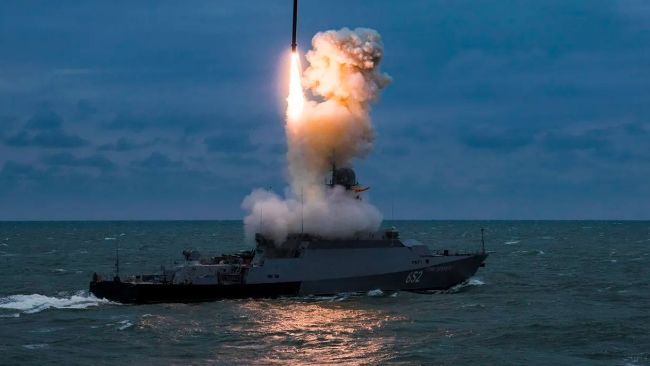
Kalibr missile launch black sea

Russia has launched another massed missile attack on Kyiv in the early hours of 20 August. Russian forces struck the capital with ballistic and Zircon hypersonic missiles, with loud explosions heard across the city and region, according to Ukraine's monitoring channel Yeradar.

The strike is the latest in Russia's campaign of massed missile attacks on Kyiv. Russia has repeatedly hit the capital with ballistic and hypersonic weapons that Ukraine struggles to intercept for lack of Patriot missiles, killing civilians in their homes.

As of 1 AM, Russian Kalibr cruise missiles are approaching Ukrainian cities from Novorossiysk.

Ukraine is under a massive Russian attack right now: Russia's Kalibr missiles were launched from the Novorossiysk port

The warhead of the Kalibr family of cruise missiles typically weighs 450 kg
🎥Exilenova+ pic.twitter.com/DBgfRX7xhB
— Euromaidan Press (@EuromaidanPress) August 19, 2026

Earlier, Ukraine's Defense Ministry said that Russia went back to using imported electronics for its Kalibr cruise missiles’ guidance system after failing to replace them with homemade alternatives.

The ship-launched missile’s homing boards “are made up of more than 80–90% foreign-made components," the Ukrainian authorities reported.

The confirmed toll so far

Casualties were mounting as the attack went on. As of the latest update, one person was killed and three wounded in the attack, the Kyiv City Military Administration said, with information still being clarified.

The strikes hit across several districts. A children's hospital was damaged in the Solomianskyi district, where people were reported to be trapped in a shelter, and a five-story residential building was hit. Warehouses burned in the Sviatoshynskyi district, and non-residential buildings were struck in Darnytskyi, Kyiv Mayor Vitali Klitschko reported.

The attack was still developing

Ukraine's air defenses were engaging an ongoing threat. The Air Force had warned of ballistic weapons approaching from the north and northeast, and monitoring channels reported Russian Tu-95MS strategic bombers taking off, which typically precede cruise-missile launches.

"Explosions in the capital. Kyiv is under ballistic attack. Stay in shelters," Klitschko wrote as the strikes continued.

With the attack unfolding as officials reported it, the full toll and damage were not yet known; the figures provided were preliminary.

Ukrainian top volunteer from outgoing minister’s own team, whose drones downed 12,954 Russian targets, is offering to help his successor

19 août 2026 à 15:29

Serhii Sternenko assassination

One of Ukraine's most prominent drone volunteers has given his comments on the new defense minister. Serhii Sternenko, a civic activist and former adviser to ousted Defense Minister Mykhailo Fedorov, has congratulated Yevhenii Khmara on his appointment to lead the Defense Ministry, Sternenko wrote on his Telegram channel.

Ukraine's parliament confirmed Khmara as defense minister after removing Fedorov, and figures from his circle, rather than boycotting his replacement, are lining up to work with the new minister for Ukraine's sake.

Sternenko owns a charity foundation that has purchased 291,502 FPV drones, which have helped the Ukrainian military shoot down 12,954+ aerial targets.

Sternenko offered help and wished the minister endurance

Sternenko has framed his congratulations in terms of Ukraine's benefit.

"I wish Defense Minister Khmara success and resilience. He will need them. This is in Ukraine's interest," he wrote.

He offered his fund's expertise. Together with his team, he is ready to help the new minister with matters concerning FPV drones, because that, too, is in Ukraine's interest, Sternenko said, extending the cooperation of one of the country's largest drone-supply operations to the incoming minister.

He paired the welcome with a warning about dialogue

Sternenko's support came with a pointed caveat. He said the country "finally has a defense minister," but that many unresolved issues remain regarding "government-society" interaction.

Solving them requires engagement from the top, he argued. Their resolution requires the active involvement of the president and the emergence of agency in parliament, Sternenko said, expressing hope that, under extremely difficult conditions for Ukraine, "there will still be room for reasonable dialogue and cooperation for the sake of victory."

Earlier, Mstyslav Banik, who served as a deputy to Fedorov, said he would stay on under the newly appointed Defense Minister. He is responsible for carrying out the defense-procurement reform and became a deputy defense minister under Fedorov on 25 March 2026, having previously led the ministry's digital products. Batnik led the development of "Army+" and "Reserve+", the apps that digitized military service and mobilization.

Ukraine’s parliament advanced a Finnish-style shelter bill: everyone must be able to reach one within 10 minutes

19 août 2026 à 14:57

Russian missile drone attacks civilians Ukraine

Ukraine has moved to guarantee its people places to hide amid Russia's terror. The Ukrainian parliament has passed a bill on shelters in the first reading, introduced by the opposition European Solidarity faction, with 296 MPs voting for the legislation on measures to ensure citizens' safety.

The bill responds to a sheltering crisis that Russia's escalating strikes have created, as the invading army cannot achieve full occupation of Ukraine. As Russia intensifies its attacks on Ukrainian cities, tens of thousands of Kyiv residents now have to sleep in metro stations each night, and in Kharkiv, the underground has become a vast cover for tens of thousands.

The bill draws on the Finnish model

The legislation draws on a country known for its civil defense. It adopts Finnish experience on ensuring citizens' access to shelters and strengthens the responsibility of central and local authorities for maintaining and funding them, according to the European Solidarity.

The faction framed shelters as the top protective priority.

"We understand that the issue of bomb shelters, the issue of shelters, is becoming problem number one for protecting the civilian population," faction co-chair Iryna Herashchenko said.

The Ukrainian deputy emphasized the importance of considering the bill before the budget process begins.

What the bill requires

The bill sets concrete standards for shelters. It defines mandatory requirements, such as drinking water, medicine, sanitation facilities, a designated responsible person, and placement within 10 minutes' reach of people.

The 10-minute rule is the core of it.

"Shelters must be where there are concentrations of people, so they can reach them in 10 minutes," MP Viktoriia Siumar said.

The bill also guarantees unimpeded access to shelters during martial law, requires regular inspections of their condition, strengthens accountability for their upkeep, and supports the expansion of the civil-defense network, including through modular structures.

  • ✇Euromaidan Press
  • No radio signal, no way to jam it: Ukraine’s top-ranked strike drone can wait 48 hours for its target
    Ukrainian manufacturers have ranked the strike drones that Russian jamming cannot touch. The Beshket, Deadliner Q1, and Vyriy Opto drones ranked 1st, 2nd, and 3rd, respectively, in the July ranking of fiber-optic strike systems used by Ukraine's Defense Forces, according to Defender Media. Fiber-optic drones are immune to the electronic warfare that defeats ordinary drones. Guided by a thin cable that unspools as they fly rather than a radio link, they cannot be jammed
     

No radio signal, no way to jam it: Ukraine’s top-ranked strike drone can wait 48 hours for its target

19 août 2026 à 14:32

Ukraine's Deadliner Q1. Source: Stellarion

Ukrainian manufacturers have ranked the strike drones that Russian jamming cannot touch. The Beshket, Deadliner Q1, and Vyriy Opto drones ranked 1st, 2nd, and 3rd, respectively, in the July ranking of fiber-optic strike systems used by Ukraine's Defense Forces, according to Defender Media.

Fiber-optic drones are immune to the electronic warfare that defeats ordinary drones. Guided by a thin cable that unspools as they fly rather than a radio link, they cannot be jammed, which has made them one of the most important weapons on a front where both sides jam heavily.

The top drone can lie in wait for two days

The Beshket took first place for strikes. It is a drone on a 10-inch frame that reaches 90 kilometers per hour, stays up to 16 minutes aloft, and carries up to 4 kilograms of payload on eight motors, with an ambush mode that lets it wait for a target for up to 48 hours, at $2,170 on the state Brave1 Market.

The producer of the Beshket confirmed the drone's first place but declined further comment.

The runners-up are faster and cheaper

The Deadliner Q1, made by Stellarion, took second. A 10-inch drone with a 2-kilogram payload reaches 110 kilometers per hour, cruises at 60 to 70 kilometers per hour, and flies for at least 20 minutes for $1,810 on Brave1 Market. Stellarion confirmed the placement in a press release.

Third went to the Vyriy Opto 10. The 10-inch fiber-optic drone runs on a 20-kilometer cable spool, cruises at 60 kilometers per hour with a top speed of 80 kilometers per hour, flies for 21 minutes, and carries 1 kilogram, costing about $2,000 with a thermal camera.

Why these drones matter on the front

Ukraine codified 413 unmanned aerial systems in the first half of 2026. Almost all of them are Ukrainian-made. That is more than 30% above the same period in 2025 and more than 73% above the same period in 2024.

Kyiv plans to build seven million drones in 2026, roughly double its 2025 output. 

Ukraine’s former Defense Minister Fedorov is out, but man behind his procurement reform and apps like Army+ isn’t going anywhere

19 août 2026 à 12:12

Mstyslav Banik, Ukraine's deputy defense minister. Source: The Ukrainian Defense Minister

A member of former Defense Minister Mykhailo Fedorov's team is moving over to the new minister. Mstyslav Banik, who served as a deputy to Fedorov, says he is staying on under the newly appointed Defense Minister, Yevhenii Khmara, Suspilne reports.

Khmara will propose that the core of the current Defense Ministry team stay in their positions. In particular, this concerns specialists responsible for procurement reform, according to sources from the ruling Servant of the People, per RBC-Ukraine.

Banik stays to continue the reform

Banik has run a central piece of the ministry's modernization. He is responsible for carrying out the defense-procurement reform and became a deputy defense minister under Fedorov on 25 March 2026, having previously led the ministry's digital products.

In 2025, he moved to the role of head of digital products at the Defense Ministry, where he led the development of "Army+" and "Reserve+", the apps that digitized military service and mobilization, before taking on procurement reform.

Khmara wants to keep the team

Banik is not the only figure Khmara wants to retain. According to reports, Khmara wants First Deputy Defense Minister Oleksii Vyskub to stay in his post as well, MPs said.

The priority behind the retentions is the reform's momentum. Khmara considers it important to continue the procurement reform, particularly the part connected to international support for Ukraine, MPs said, so keeping the specialists who built it preserves the expertise and the relationships with partners that the overhaul depends on.

Continuity amid a contested change

The retentions may temper a leadership change that drew protests. Khmara's appointment followed the removal of Fedorov, which prompted a month of rallies demanding Fedorov's return.

That the reformers are staying suggests that the change of minister need not mean a change in how Ukraine equips its forces.

Earlier, Fedorov addressed Ukrainians, saying the country cannot remain without a fully appointed defense minister, but at the same time called for mechanisms that would allow elections during the war.

“Fedorov instead of Khmara”: Ukrainian protesters outside parliament greet news of new defense minister’s appointment with disapproval

19 août 2026 à 11:33

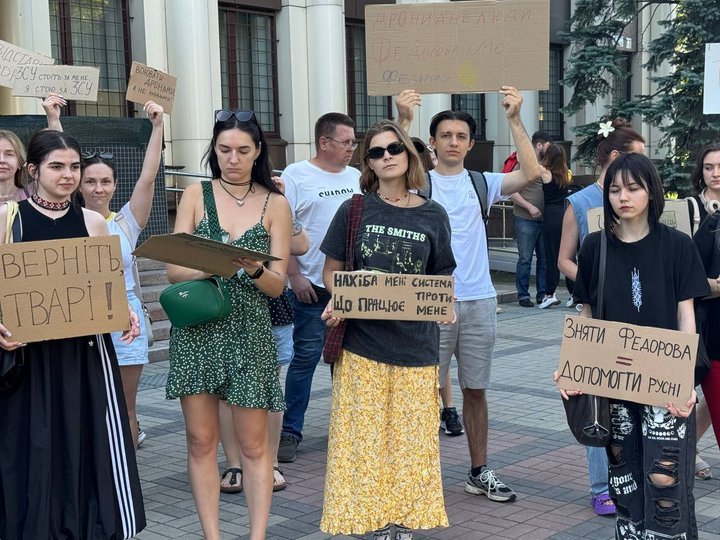
cardboard protests against zelenskyy's firing fedorov erupt across ukraine · post residents rally dismissal defense minister mykhailo dnipro 16 2026 signs read bring [him] back animals why do need system

Ukrainian activists who spent a month calling for the former defense minister’s return have criticized the appointment of his successor. People rallying in Kyiv's Mariinskyi Park for the reinstatement of Mykhailo Fedorov as defense minister greeted the news of Yevhenii Khmara's appointment to the post with disappointment, Ukrinform reports.

The rally caps a month of protests over Fedorov's dismissal. People have gathered on Ukraine's streets since President Volodymyr Zelenskyy removed Fedorov amid a logistics-lockdown operation against Russia and successful strikes deep into its territory. Parliament approved Khmara despite the protests.

"Shame!" protesters reacted to the appointment

The crowd met the appointment with anger. They began chanting "Shame!" and beating drums as the news of Khmara's confirmation broke.

They said that the post "should belong to another person" and appealed to the Ukrainian government: "We greatly respect Khmara, but please, do not hide behind Khmara," the activists said.

"We demand dialogue"

The protesters framed their grievance as a lack of dialogue with the president. They chanted slogans including "We demand dialogue," "Do not destroy our future," "Dialogue, not ignoring," "Fedorov instead of Khmara," "Power is the people," and "Power is responsibility," and said there was no dialogue with Zelenskyy on the matter.

Some held placards reading "Return Fedorov," "Against Khmara," "Thank you for Drapatyi, return Fedorov," and others praising Fedorov's record on strikes against Russia.

The protest continues

The activists announced a pause and the next step. After the news of Khmara's appointment, they said they were ending this particular protest and called on people to come to Ivan Franko Square at 7 p.m., saying they plan to hold such actions there daily.

The day before the vote, Fedorov addressed Ukrainians, saying the country cannot remain without a fully appointed defense minister, but at the same time called for mechanisms that would allow elections to be held in full during martial law.

He did not name a specific proposal or answer the question of who exactly should launch this mechanism, adding only that "democracy cannot be a hostage to Russia."

He also stated that Fedorov declared a "systemic crisis of governance" in Ukraine and criticized the influence of private interests on the parliament's work, effectively hinting that the current leaders are ineffective.

  • ✇Euromaidan Press
  • Ukraine’s new defense minister says he already knows Russia’s strategy for fall and winter
    Yevhenii Khmara has become Ukraine's new defense minister after the voting in the Ukrainian parliament. He will take office after the previous Minister of Defense, Mykhailo Fedorov, whose dismissal sparked major protests across Ukraine, but this did not change the decision. During his first speech, Khmara made it clear that he would continue his predecessor's course — the technologization of the army, according to Ukraine's Defense Ministry. "The aggressor can only
     

Ukraine’s new defense minister says he already knows Russia’s strategy for fall and winter

19 août 2026 à 09:50

Yevhenii Khmara, Ukraine's new defense minister, on 19 August 2026, in Kyiv. Source: The Ukrainian Defense Ministry

Yevhenii Khmara has become Ukraine's new defense minister after the voting in the Ukrainian parliament. He will take office after the previous Minister of Defense, Mykhailo Fedorov, whose dismissal sparked major protests across Ukraine, but this did not change the decision.

During his first speech, Khmara made it clear that he would continue his predecessor's course — the technologization of the army, according to Ukraine's Defense Ministry.

"The aggressor can only be forced into peace through the strength of our military, technological, and asymmetric solutions, first and foremost, the constant updating and effective application of technology," Khmara said.

He added that there "would be more Ukrainian weapons, and strikes would be more precise."

Threat of new wave of mobilization in Russia

Khmara also stated that intelligence data indicates Russia is preparing for a new wave of mobilization, so building up the means to destroy Russia's combat capabilities is one of the key priorities of the Defense Forces.

"A strong enemy is waging war against us, one that employs the most treacherous and cruel methods of warfare. We know about Russia's next steps, its mobilization plans, and its strategy for fall and winter," Khmara stated.

Earlier, Deputy Head of the Ukrainian Defense Intelligence, Major General Vadym Skibitsky, said in an interview with RBC-Ukraine that Russia could attempt to launch an offensive in north of Ukraine this year, but the necessary conditions for such an operation are not currently in place. Such an assault could threat Sumy, Chernihiv, and Kyiv oblasts.

Opportunities for this could arise through mobilization following the parliamentary elections in the Russian Federation in September.

Three main priorities

Also, during his speech, Khmara outlined three priorities for his position. Among them: seizing the strategic initiative in all domains of war, timely delivery of weapons to the front along with transparent procurement procedures, and human capital.

"This is about seizing the strategic initiative in all domains of war: on land, at sea, in the air, in the information space," Khmara stated.

He also emphasized the need to ensure rapid exchange of information between the front and the ministry, so that the needs of the military are promptly taken into account when making decisions.

According to the newly appointed minister, the army must receive the necessary weapons in sufficient quantities and on time, and procurement must be carried out transparently, free of unnecessary bureaucracy, and in the interests of the front and Ukraine's defense.

In addition, Khmara named "human capital, the lives and health of soldiers" as a priority.

"Technology is needed so that the Ukrainian defender has an advantage, so that the risk to a person's life is minimized," he added.

650 participants from 24 countries: Ukraine brings its battle-tested drone-defense experience to NATO’s Baltic Trust 2026 exercise

18 août 2026 à 01:30

Ukrainian soldiers at NATO's Baltic Trust 2026 exercise in Latvia. Source: NATO

Ukraine brought the world's most battle-tested counter-drone experience to a NATO exercise. From 3 to 14 August, Ukraine took part in NATO's Baltic Trust 2026 exercise in Latvia, which focused on countering drones and other threats posed by uncrewed aerial systems, the General Staff reported.

The exercise responds to a mounting Russian threat against NATO's Baltic flank. Russia has probed the alliance's eastern edge so aggressively that NATO scrambled over the Baltic, jumping more than 250% in July.

Also, Moscow has increasingly launched drones on the Baltic States. Even on 14 August, the final day of the drill, a NATO fighter shot down a drone over Latvia after Russian electronic warfare pushed it off course, the second Baltic drone incursion that week. Baltic Trust 2026 was NATO's answer: about 650 participants from 24 countries building the counter-drone defenses that the threat demands.

The exercise tested systems working together

Baltic Trust focused on integration, not single technologies. Soldiers, specialists, and industry representatives jointly tested new technological solutions in conditions close to a modern operational environment, the General Staff said.

The core was whether the pieces work as one system. Participants checked how detection tools, command-and-control systems, and counter-drone measures can exchange data, form a common operational picture, and enable coordinated response.

Ukraine's experience is the draw

Ukraine's participation carries particular weight in this field. No NATO member has faced the scale of drone attack Ukraine confronts nightly, and its forces have built and continually adapt the detection, interception, and electronic-warfare methods that down Russian drones by the tens of thousands.

That makes Ukraine a source of hard-won practical knowledge for allies still preparing for threats Ukraine already lives with. Bringing Ukrainian experience into a NATO drill turns the country's battlefield lessons into shared allied capability, on exactly the drone warfare the alliance is scrambling to counter on its eastern flank.

The exercise builds collective defense

Baltic Trust served NATO's broader readiness. Jointly testing and integrating such solutions helps turn technological innovation into practical capabilities that strengthen readiness and collective defense.

Previously, Russia's Foreign Intelligence Service Head Sergey Naryshkin accused NATO of escalating military activity near Russia’s borders. He warned that Poland and the Baltic states would be the first to suffer in the event of a war between Moscow and the Alliance.

  • ✇Euromaidan Press
  • Why does Ukraine need a Bebradron-M drone with no warhead and only 2 kg of payload?
    Ukrainian company BlueBird Tech has unveiled a new version of its fixed-wing “Bebradron” UAV. The new modification has no warhead but can carry a payload of up to 2 kg, Oboronka writes. The Bebradron-M is remotely operated. It has a cruising speed of 70 km/h and a maximum speed of up to 115 km/h. It can fly for up to 25 minutes, has a range of up to 30 km, and operates at altitudes of 200–700 meters. The name Bebradron was not chosen by chance. It comes from the Ukr
     

Why does Ukraine need a Bebradron-M drone with no warhead and only 2 kg of payload?

17 août 2026 à 16:27

Ukrainian company BlueBird Tech has unveiled a new version of its fixed-wing “Bebradron” UAV. Source: Oboronka

Ukrainian company BlueBird Tech has unveiled a new version of its fixed-wing “Bebradron” UAV. The new modification has no warhead but can carry a payload of up to 2 kg, Oboronka writes.

The Bebradron-M is remotely operated. It has a cruising speed of 70 km/h and a maximum speed of up to 115 km/h. It can fly for up to 25 minutes, has a range of up to 30 km, and operates at altitudes of 200–700 meters.

The name Bebradron was not chosen by chance. It comes from the Ukrainian joke from a meme “nyukhai bebru” (“sniff the bebra”), a humorous euphemism hinting at the male genitalia.

What is such a small drone used for?

The specialized version is designed to train pilots and interceptor-drone operators and to practice scenarios for shooting down aerial targets using a real UAV.

The Bebradron-M can also be used to simulate a decoy target during exercises aimed at countering aerial reconnaissance.

The company said foil materials can be applied to the drone’s wings to increase its radar signature. This creates an additional radar return, allowing operators to practice scenarios involving multiple aerial targets.

What does the Bebradron-M lack?

The standard fixed-wing UAV configuration includes a low-light camera, analog video link, 915 MHz control system and a 6S3P battery.

The Bebradron-M, however, lacks cruise control or navigation systems.

Ukraine clears hundreds of new drones for military use in 2026

Since the beginning of 2026, 413 unmanned aerial systems have been approved for use by Ukraine’s Defense Forces. This is more than in 2025 and 2024, according to Ukraine’s Defense Ministry. Almost all of the newly codified drones are Ukrainian-made.

Among them is the Dovbush T40, a drone built to reach the deepest parts of Russia, designed for deep reconnaissance and precision strikes against distant Russian targets.

The Ukrainian company behind MAUL — a robot that hits 70 km/h and survives flipping over — moves toward investment from an $81M US firm

17 août 2026 à 15:45

The MAUL unmanned ground vehicle. Source: AIDronesUA

Ukrainian company AIDronesUA and US-based Empery Digital Inc. have signed a document creating the conditions for strategic investment, according to Defender Media. AIDronesUA develops the MAUL unmanned ground vehicle, a casualty evacuation, logistics, and ammunition-delivery platform that was previously presented at the Eurosatory 2026 defense exhibition in Paris.

MAUL is built on an all-terrain vehicle equipped with an internal combustion engine, which offers a significant advantage over electric motors by enabling higher speeds. The drone can travel at up to 70 km/h when a reliable communications link is available. Its engine also allows it to operate in cold weather without the limitations associated with batteries, ArmyInform reports.

MAUL is equipped with four different types of communication links, which can back each other up. The UGV can continue moving even after overturning. Ukrainian military personnel have reported instances in which a vehicle flipped over, returned to its wheels, and continued moving.

Final agreement has not yet been signed

The parties emphasize that, at this stage, this is not a finalized investment agreement. The companies will conduct a feasibility study, financial modeling, and due diligence to assess the potential for future cooperation.

Empery Digital Inc., with which negotiations are underway, has a market capitalization of more than $81 million. The company is involved in the production of electric vehicles and also operates in the digital assets sector, including cryptocurrency.

Access to the US investment market

As part of the due diligence process, Empery Digital plans to assess AIDronesUA's technologies, operations, production requirements, financial needs, regulatory considerations, supply chains, and opportunities for international expansion.

A final agreement can be concluded only after the necessary approvals are obtained, negotiations are finalized, and the relevant documents are signed.

Potential cooperation with the US company could give AIDronesUA access to US investment, international manufacturing expertise, and global markets. The company is also considering integrating Ukrainian-developed technologies into international manufacturing and supply chains.

  • ✇Euromaidan Press
  • World’s largest crypto exchange helped Russia identify and jail a man who donated to Ukraine’s army
    The world’s largest cryptocurrency exchange, Binance, has helped Russia arrest one of its own citizens for supporting the Ukrainian military. Using information provided by the exchange, Russian authorities arrested 49-year-old Russian IT specialist Yuriy Bielenkyi, who was detained in September 2025 and is now being held in a Russian prison awaiting trial, Reuters reports. The information was later included in the criminal case against him. Russian investigators also a
     

World’s largest crypto exchange helped Russia identify and jail a man who donated to Ukraine’s army

17 août 2026 à 15:25

greece blocked gas ban france italy softened entry ban—now brussels tries 1600 companies helping russia's war · post 9 parade moscow 2025 youtube/kremlin grate patriotic warr shitshow ukraine news ukrainian

The world’s largest cryptocurrency exchange, Binance, has helped Russia arrest one of its own citizens for supporting the Ukrainian military. Using information provided by the exchange, Russian authorities arrested 49-year-old Russian IT specialist Yuriy Bielenkyi, who was detained in September 2025 and is now being held in a Russian prison awaiting trial, Reuters reports.

The information was later included in the criminal case against him. Russian investigators also asked Binance to identify other people who had transferred funds to a wallet used to collect donations for Ukrainian soldiers.

What information can be obtained through Binance?

Journalists obtained documents showing that in October 2025, Russian investigators requested Binance’s transaction history for Bielenkyi.

The exchange provided information about transfers to Ukrainian cryptocurrency wallets. Russian law enforcement received not only transaction data but also the user’s personal information, including his date of birth, address, phone number, passport details, a copy of his Russian passport, and his Bulgarian residence permit.

Passing the buck

Crypto-regulation lawyer Mike Bystrov told journalists that Binance was not necessarily required to hand over the data to Russia. If Bielenkyi was registered with Binance as an EU customer, he could have been covered by rules that significantly restrict the transfer of personal data to countries that do not provide an adequate level of data protection.

Binance disagreed. The company said it cooperates with lawful law-enforcement requests in different countries, but that government authorities themselves decide how to use the information they receive.

Meanwhile, the European Data Protection Board, an EU body, declined to comment.

Previous precedents involving Alexei Navalny

Reuters previously reported that in 2021, Binance’s regional head met with representatives of Russia’s financial-monitoring agency, who wanted to help identify customers making Bitcoin donations to Alexei Navalny.

At the time, Binance told Reuters that Russian authorities had never approached the company regarding the anti-Kremlin activist, who died in an Arctic penal colony in 2024.

  • ✇Euromaidan Press
  • Russia’s latest strike on Ukraine’s most important trade route: Togo-flagged civilian ship hit in Odesa
    Russia struck Odesa's port again and hit a foreign civilian ship. Russian forces attacked port infrastructure in Odesa Oblast overnight, damaging a civilian vessel flying the flag of Togo, Oleh Kiper, the head of the regional military administration, reported. The strike hit neutral commercial shipping at a port that Russia has repeatedly attacked. Odesa is Ukraine's main gateway for seaborne trade, and Russia has struck its port infrastructure throughout the war, endan
     

Russia’s latest strike on Ukraine’s most important trade route: Togo-flagged civilian ship hit in Odesa

17 août 2026 à 15:01

A Russian Shahed drone struck a Palau-flagged vessel carrying corn twice as it left a port in Odesa Oblast, setting it on fire. Source: Ukraine's State Border Guard Service

Russia struck Odesa's port again and hit a foreign civilian ship. Russian forces attacked port infrastructure in Odesa Oblast overnight, damaging a civilian vessel flying the flag of Togo, Oleh Kiper, the head of the regional military administration, reported.

The strike hit neutral commercial shipping at a port that Russia has repeatedly attacked. Odesa is Ukraine's main gateway for seaborne trade, and Russia has struck its port infrastructure throughout the war, endangering the foreign-flagged merchant ships that dock there to move Ukrainian grain and cargo.

Four people were injured

The strike caused casualties among those at the port. Four people were injured, three of them hospitalized and one in serious condition, and all are receiving the necessary medical care, Kiper said.

Fires broke out as a result of the strike and have now been fully extinguished, Kiper said.

The target was Ukraine's trade gateway

Hitting a foreign merchant ship strikes at the heart of Ukraine's economic lifeline. Odesa's ports are how Ukraine ships its grain and imports to the world, and the foreign-flagged vessels that call there are civilian commercial traffic, not military targets.

Earlier, Ukraine’s Agriculture Ministry cut its forecast for agricultural exports in 2026–2027 by 54% after Russia's strikes on the port. The ministry now expects 29.6 million tons of agricultural exports, down from 64.4 million. Its wheat export forecast fell by 53%, from 17.6 million tons to 8.3 million tons.

The scale of the crisis triggered by Russia

In July alone, Russian strikes damaged 28 vessels traveling to or from the ports of Greater Odesa, roughly 11–12% of maritime traffic, killing 21 sailors and injuring 34, according to Andrii Klymenko of the Black Sea Strategic Studies Institute’s monitoring group.

Land and river routes cannot make up the difference. Low water levels are limiting the Danube's capacity, and there is no full substitute for Ukraine’s deep-water ports in the medium term. If the delays continue, he said, Ukraine may have to store an additional 10–12 million metric tons of grain it cannot export.

  • ✇Euromaidan Press
  • $3,032 to kill a soldier on whom Russia spends $65,000: Ukraine’s new system puts a price on every strike
    Ukraine can now measure how cost-effectively it kills, and the math favors it. Every dollar Ukraine's Defense Forces spend on striking a target inflicts several times more losses on Russia, as confirmed by the Mission Control module in the DELTA battle system, Ukraine's Defense Ministry reported. Mission Control, launched six months ago, now processes 50,000 missions a week and over 230,000 reports, allowing Ukraine to track not just what it hits but also what each stri
     

$3,032 to kill a soldier on whom Russia spends $65,000: Ukraine’s new system puts a price on every strike

17 août 2026 à 13:08

The image shows Ukrainian soldiers. Source: Ukraine's General Staff

Ukraine can now measure how cost-effectively it kills, and the math favors it. Every dollar Ukraine's Defense Forces spend on striking a target inflicts several times more losses on Russia, as confirmed by the Mission Control module in the DELTA battle system, Ukraine's Defense Ministry reported.

Mission Control, launched six months ago, now processes 50,000 missions a week and over 230,000 reports, allowing Ukraine to track not just what it hits but also what each strike costs relative to the damage it causes. In June, every dollar Ukraine spent on a strike cost Russia nearly five times as much.

The economics favor Ukraine's strikes

The system prices both sides of every strike. Mission Control records the cost of what Russia loses, ranging from a few hundred dollars for telecommunications equipment to hundreds of thousands of dollars for air-defense systems and other high-value targets.

The June figures show the gap. Hitting one enemy soldier costs Ukraine $3,032, compared with roughly $65,000 that Russia spends to maintain one. Meanwhile, hitting a piece of equipment costs $2,674, and targeting an infrastructure object costs $1,487.

Every mission feeds the next

Mission Control logs each mission to sharpen the next. The military analyzes what worked, what did not, and why to adjust tactics for the next mission rather than blindly repeating mistakes, according to the Defense Ministry.

The data breaks down by mission type and depth. It sorts missions into reconnaissance, strike, logistics, and evacuation, and by range, 20-plus and 50-plus kilometers, showing for each unit what it strikes, how effectively, at what cost, and what economic damage it inflicts, while also tracking which Ukrainian equipment is lost, at what depth, and under what circumstances.

The goal is fewer Ukrainian lives spent

The measurement serves a purpose beyond economics. The Defense Ministry said it continues implementing technologies so each mission makes the next more precise and helps preserve the lives of Ukrainian soldiers, gradually shifting the most dangerous battlefield tasks to robotic systems.

Ukraine hit ground-control station for rare drone that fires Russia’s Banderol, missile hitting 650 km/h with 114-kg warhead

17 août 2026 à 12:23

ISW: Russia deploys ship-based Orion drones as Ukraine cripples Black Sea fleet

Ukraine went after the sites and systems Russia uses to launch and steer its most powerful attack drones. On the night of 17 August 2026, Ukraine's Defense Forces struck a series of important Russian military targets, hitting drone storage, launch, and control infrastructure across occupied Crimea and Kherson Oblast, the General Staff reported.

The strikes target the infrastructure behind Russia's drone attacks, not just the drones themselves. By hitting storage sites, control stations, and relay points, Ukraine degrades Russia's ability to launch and guide the Shaheds, reaching the launch and command nodes rather than intercepting drones one by one in the air.

The Shahed site and the Orion control station

The first strike hit a Shahed base. Ukraine struck a storage, preparation, and launch site for attack drones near Hvardiiske in occupied Crimea, with a fire recorded at the site, the General Staff said.

The second hit the launch platform for one of Russia's newer drone missiles. Ukraine struck the ground-control station of an Orion drone at Novofedorivka in occupied Crimea. The Orion is a large Kronshtadt strike-reconnaissance drone and the aerial launch platform for the jet-powered S8000 "Banderol" cruise missile, which Russia fires from Crimea at Odesa.

It flies at 520-560 km/h cruise speed and up to 650 km/h maximum, has a range up to 500 km, and carries a 114.3-kg fragmentation-high-explosive warhead.

Until Russia developed a ground launcher, the rare Orion, with only nine lost in the whole war, was the only way to fire a Banderol.

The relay points that extend the drones' reach

Ukraine also hit the relays that guide Russian drones. It struck a ground system for controlling Geran and Gerbera attack drones at Olenivka in occupied Crimea, and a communication and power point for a drone relay on the Tendra Spit in Kherson Oblast.

Those relays matter because they extend range. Russia uses ground relay stations to guide its drones farther than a direct signal reaches, so destroying them shortens how deep the Shaheds can be steered into Ukraine. The degree of damage is being clarified.

Ukrainian commander says one French howitzer could have changed the war’s early months, if there’d been more of it

17 août 2026 à 11:13

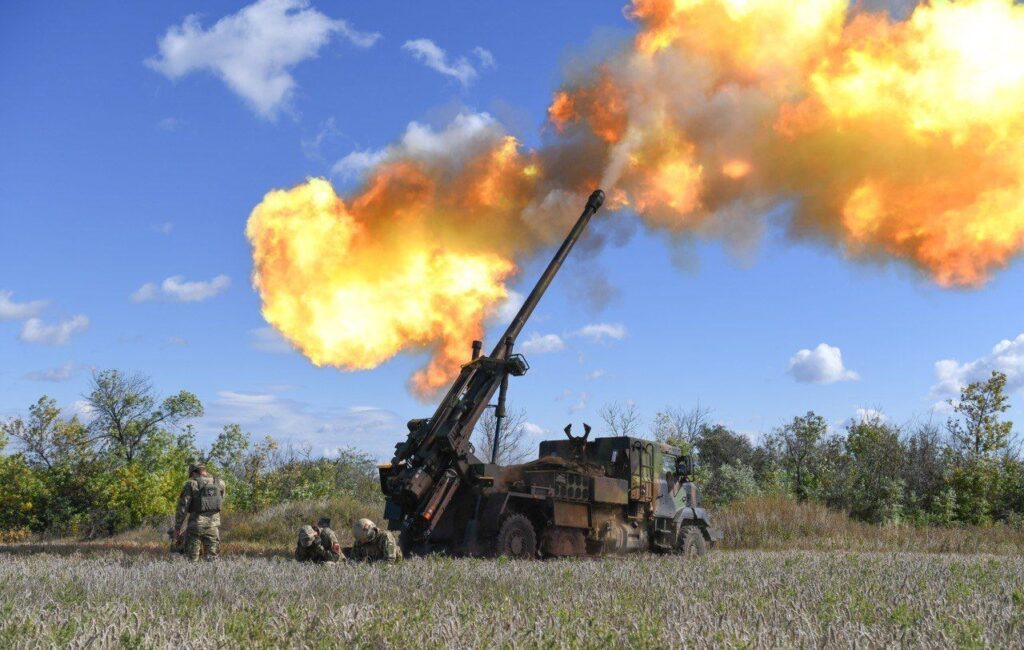
Ukrainian troops fire a CAESAR self-propelled howitzer. Autumn 2022, Ukraine. Photo: ArmyInform

Ukrainian gunners at one of the brigades rate one French howitzer above most of what they field. The French CAESAR self-propelled gun is one of the best in the Ukrainian arsenal, able to fire various munitions with long range and high accuracy, Major Denys Chmykhun of the 148th Separate Artillery Brigade's self-propelled artillery battalion said in an interview with Ukrinform.

The praise is a frontline verdict on the Western artillery that has helped keep Ukraine in the fight. France has supplied Ukraine with CAESAR howitzers throughout the war, and the crews who fire them rate its range and precision highly valuable.

Why the crews rate it

Chmykhun described CAESAR as newer than other guns, and very mobile and maneuverable.

"CAESAR is now one of the best self-propelled systems in service with the Armed Forces of Ukraine," Chmykhun said.

He wished Ukraine had fielded more of them sooner.

"If at the start of the full-scale war, when FPVs and Lancets were not yet used, there had been at least a few CAESAR battalions, it would have seriously affected the front line," the major noted.

The crews learned to repair it themselves

However, the gun's electronics are its weak point, but the crews adapted. The French system has a lot of electronics, and when it produced errors, crew members studied each one using an online translator and fixed them, Chmykhun explained. He added that the howitzer can be temperamental because it is not built for such intense combat.

Rather than pulling a finicky Western system off the line when its software faulted, the crews taught themselves to diagnose and clear the errors.

What it hunts

The CAESAR fires at everything the crews can find. It works against enemy personnel, drone-control points, landing pads, guns, mortars, and artillery, Chmykhun said, wherever its shells can reach.

He took particular satisfaction in counter-battery work. Destroying Russian guns, mostly 152mm, is gratifying because they trouble the Ukrainian infantry who assault, the major said.

"It's great when you hit precisely and understand that this gun is out of action, and somewhere, a field ammunition store starts to detonate. The enemy runs around, panic sets in, and it's pleasant to watch," he added.

This new drone stays aloft for more than day and resists jamming. Ukraine says it can now reach beyond the Urals

17 août 2026 à 10:22

Ukraine's Dovbush T40, a strategic drone that can stay aloft over a day. Source: The Ukrainian Defense Ministry

Ukraine has approved a drone built to reach the deepest parts of Russia. Ukraine's Defense Ministry has codified the domestic Dovbush T40 uncrewed aviation complex, a strategic-level drone for deep reconnaissance and precision strikes on distant Russian targets, the ministry announced.

The drone extends the reach of Ukraine's homegrown deep-strike arsenal to Siberia. With a wingspan of nearly 5 meters, the Dovbush T40 has enough range to hit targets beyond the Urals and in Russian Siberia.

What the drone does

The Dovbush T40 is a multi-role strategic aircraft. It is designed for deep reconnaissance, fire correction, and precision strikes on structures, equipment, and enemy personnel far from the line of contact.

Its endurance is the enabler. More than a day aloft gives it the range to reach targets, letting Ukraine threaten the deep-rear sites, from factories to airfields, that Russia has kept far from the front for safety.

Its advantages over similar drones

The drone offers several edges, the ministry said. It has ultra-low radar visibility, a high-performance engine with electronic fuel injection, and a choice of strike methods, either as a kamikaze drone or by dropping a munition.

It is built to work under jamming. The Dovbush T40 stands out for high resistance to electronic warfare, according to the Defense Ministry, the recurring requirement for any Ukrainian drone meant to fly deep into a contested electromagnetic environment.

It builds on combat-proven predecessors

The drone comes from a maker with a track record. It was built by a Ukrainian enterprise whose Dovbush T20 and Kotyhoroshko drones have operated on the battlefield since 2022 with some of the highest effectiveness ratings.

The T40 is an evolution of a proven system. The medium-range Dovbush T20, used for reconnaissance, real-time artillery correction, and pinpoint strikes, evolved through battlefield feedback into the longer-range, more powerful T40. It joins a fast-growing domestic fleet: since the start of 2026, Ukraine's Defense Ministry has codified 413 uncrewed systems, almost all of which are Ukrainian-made.

Russia’s new drone outruns old Shahed by four times and tracks its target in real time. Its own heat is what lets Ukraine track it back

17 août 2026 à 01:50

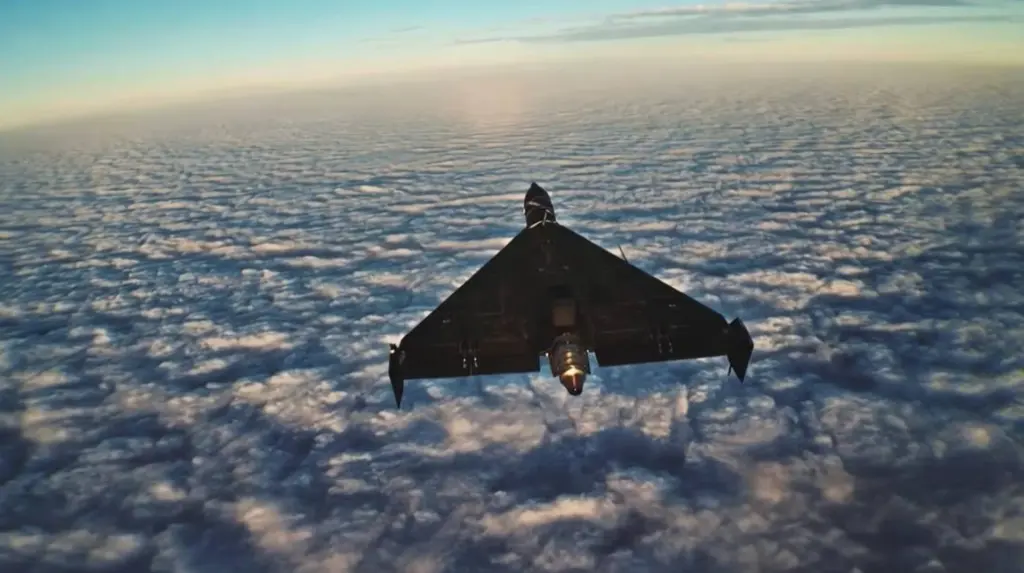
Geran-3 jet-powered Russian attack drone.

Russia built a quicker Shahed because Ukraine was good at shooting down the old one, and the new version has weaknesses of its own. The jet-powered Geran-3 outpaces its predecessor but is easier to detect on radar and vulnerable to shoulder-fired missiles, Colonel Artem Skurativskyi of the 7th Rapid Response Corps' air-defense directorate said in an interview with ArmyInform.

Ukraine's combined air defenses raised the interception rate of Geran-2 and Shahed-136 drones to between 80 and 93%, depending on the scale of the attack, and that success is what pushed Russia to develop the jet version.

The jet Shahed outruns the defenses

Speed is the jet model's main advantage.

"Unlike its predecessor with piston engines, the jet modification has a higher flight speed, which significantly complicates air defense's task of destroying them, and also lets them cover large distances much faster," Skurativskyi explained.

The numbers are stark. The Geran-3 can fly from the Belarusian border to Kyiv in 35 minutes, four times faster than the previous version, and its optical-electronic camera module lets an operator guide the loitering munition online, the colonel noted.

Its size and heat are the Achilles' heel

The jet drone's advantages come with real weaknesses. Its large size, a body 3.5 meters long with a 3-meter wingspan, lets radar systems detect it easily over Ukraine, the colonel noted, and its engine gives it away in the thermal band.

That "powerful radiation in the thermal range makes them vulnerable to MANPADS," he added, so the same jet engine that gives the drone its speed also makes it a bright heat target for shoulder-fired missiles.

Russia uses it sparingly, for now

Still, the jet Shahed is not replacing the old one yet. Jet Geran-3 drones make up to 20% of the Shaheds Russia launches, with most strikes still using the Geran-2, the colonel said, though he pointed out that the rising share "indicates a scaling-up of production capacity." Russia sends the jet version against critical infrastructure, energy, and military targets in eastern, southern, and central Ukraine, both hunting targets with the camera module and folding them into massed strikes to overload air defenses.

Ukraine is still adapting.

"Mobile fire groups, which performed excellently in downing Shaheds, are of little effect against the jet modifications because of their high speed," Skurativskyi said.

Even so, he confirmed, troops of the 81st Air Assault Brigade are already downing jet Shaheds with interceptors.

Ukraine’s ground robots ran nearly 17,000 missions in June. Every one depended on holding signal, problem this new antenna targets

16 août 2026 à 12:14

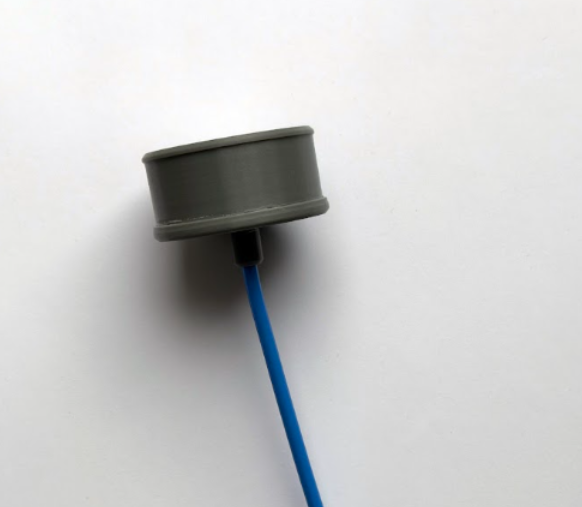
Ukraine's BlueBird Tech unveiled the CLOVER 5.8 GHz antenna. Source: RBC-Ukraine

A Ukrainian company has built a tiny antenna to solve one of the drone war's hardest problems: staying connected. Ukraine's BlueBird Tech has unveiled the CLOVER 5.8 GHz antenna, a 25-gram device for transmitting and receiving radio signals, according to RBC-Ukraine.

The antenna addresses the connectivity problem at the center of Ukraine's drone war. Keeping drones linked to their operators under heavy jamming is one of the war's persistent technical challenges, and the CLOVER is one Ukrainian company's answer.

Previously, Serhii “Flash” Beskrestnov, an adviser to the Ukrainian president, confirmed that the main problem for Ukrainian forces operating some 25,000 combat robots is not hardware limitations but connectivity restrictions.

The design is built to hold a link in motion

The antenna's shape is engineered for stability. Due to its clover design, circular polarization, and omnidirectional radiation pattern, the antenna works even in dynamic conditions.

Weight is decisive for a drone. At 25 grams, the CLOVER adds almost nothing to a small aircraft, leaving weight for payload, battery, or range, which matters for the small FPV drones that do much of the fighting, where a reliable signal and low weight are both at a premium.

It works on drones and ground robots

The antenna is not only for flying drones. It can be installed and used on ground robotic systems as well as FPV drones, and extended to the uncrewed ground vehicles that Ukraine increasingly uses for logistics and evacuation, which face the same connectivity challenge.

In June, Ukrainian ground robots ran nearly 17,000 supply and evacuation missions. Every one of those runs depends on the robot holding a signal, the problem the CLOVER is built to address.

It is built for quick integration. Despite its compact size, the CLOVER covers a wide 4.9-6.1 GHz range and comes with an SMA male connector and an RG402 cable, allowing it to integrate quickly into drone-detection tools, radio-monitoring complexes, and measurement equipment. It is compatible with the main systems on the market.

Former Ukrainian submarine commander who deserted to Russia in 2014 was killed by bomb 12 years later. Suspect reportedly worked as escort

16 août 2026 à 11:47

Margarita Reut, who reportedly killed Robert Shageev, a former Ukrainian Navy officer. Source: Sternenko

A man killed by a bomb in occupied Sevastopol was likely a Ukrainian naval officer who had switched sides to Russia. The Insider has identified the victim of a 13 August explosion in Sevastopol as Robert Shageev, a former Ukrainian Navy officer, the journalists reported.

The killing reportedly struck a man whose career embodied the choice between homeland and working with enemy forces during the annexation of Crimea in 2014.

Robert Shageev commanded the Ukrainian submarine Zaporizhzhia, which was blockaded in Sevastopol's Striletska Bay when Russian forces seized the peninsula, and he deserted the Ukrainian Navy to serve in the Russian fleet, The Insider writes.

The bombing

The explosion was likely a targeted attack. An improvised bomb was placed in a bin next to a bench on Stoletova Avenue in Sevastopol and detonated as a man passed by on the afternoon of 13 August, and he died of his injuries, according to Telegram channels.

Russian authorities confirmed a death without naming Shageev. The FSB confirmed only that a soldier of Russia's Defense Ministry was killed, according to Russian state media. That Shageev was the victim was first claimed by pro-Russian bloggers before The Insider's identification, and the claim has not been officially confirmed.

A suspect was detained

Russian authorities said they detained a suspect. The FSB reported detaining a suspected woman, and a court in Sevastopol later said she had been sent to pre-trial detention, without disclosing her identity, according to The Insider.

Meanwhile, pro-Russian Telegram channels and a Crimean informant claim the detained woman is a 32-year-old. Crimean informer Alexander Talipov, as well as Telegram channels linked to Russian security forces, claim that the detainee is 32-year-old Margarita Reut. Last year, she was fined for "discrediting the Russian army".

According to the New York Post, the Russian citizen appeared on escort websites and also worked as a biologist, producing vaginal suppositories with a floral scent.

The identification comes from Russian sources and has not been verified. Ukraine has not commented on the killing, and no party has claimed responsibility.

Targeted killings and sabotage have recurred in occupied Crimea and Russia through the war. Collaborators, occupation officials, and defectors have been killed in bombings and shootings, some claimed by Ukrainian intelligence or partisans, many never definitively attributed.

Russia burned 80% of this cathedral’s roof at UNESCO site with 975 years of history. Switzerland is giving $730,000 to rebuild it

16 août 2026 à 11:22

Russia attacks Kyiv-Pechersk Lavra

As Russia damages Ukraine's holiest sites, other countries are paying to rebuild them. Switzerland will contribute about $730,000 to the preservation and restoration of the Kyiv-Pechersk Lavra, whose Dormition Cathedral was damaged in a Russian strike two months ago, Ukraine's Foreign Minister Andrii Sybiha wrote on X.

The gift is a piece of an international effort to protect the Ukrainian heritage that Russia is attacking. On the night of 15 June, a Russian attack drone struck the altar section of the Dormition Cathedral, igniting a large fire that burned about 80% of the roof structures, according to UkrInform.

The Kyiv-Pechersk Lavra, where the cathedral is located, is a UNESCO World Heritage site and carries enhanced protection under the 1954 Hague Convention's Second Protocol.

The strike hit a site weeks before its anniversary

Sybiha framed the strike as a deliberate blow to a spiritual landmark. Russia hit the centuries-old shrine two months before the Lavra's 975th anniversary, deliberately targeting one of Ukraine's most important spiritual and cultural landmarks, he said.

He tied the damage to a wider Russian aim.

"While Russia seeks to destroy Ukraine's cultural heritage and erase our identity, our partners stand with us in protecting and preserving it for future generations," Sybiha said.

Switzerland's aid comes through UNESCO

The Swiss contribution channels international heritage protection. Switzerland's Federal Council delegate for Ukraine, Jacques Gerber, announced in Kyiv that Switzerland would provide the contribution through UNESCO to protect and restore the shrine.

Sybiha thanked Switzerland for its support and for Gerber joining Ukraine in Kyiv to mark the 975th anniversary of the Kyiv-Pechersk Lavra.

"Together, we are safeguarding Ukraine's heritage and an invaluable part of Europe's and the world's cultural legacy," he said, framing the Lavra's preservation as a shared European and global responsibility, not Ukraine's alone.

The aid answers a documented campaign against heritage

As of the end of July 2026, Russian forces damaged or destroyed 1,990 cultural heritage sites and 2,625 cultural infrastructure sites in Ukraine, according to the Ukrainian government.

The Ministry of Culture records the highest number of damaged cultural heritage sites in Kharkiv Oblast — 358, Kherson Oblast — 303, Kyiv — 272, Donetsk Oblast — 229, and Odesa Oblast — 211.

Cultural institutions have been damaged in 354 territorial communities, representing 24% of all communities in Ukraine.

Ukraine hit the plant that fuels Uragan, Smerch, and Tornado-S rockets Russia fires at frontline cities with no metro to shelter in

16 août 2026 à 07:33

A Russian “Tornado-S” multiple launch rocket system.

Ukraine struck the plant that fuels the rockets Russia rains on its frontline cities. On the night of 16 August 2026, Ukraine's Defense Forces hit an important Russian military-industrial enterprise, the Kamensky Combine in Kamensk-Shakhtinsky, Rostov Oblast, and a fire was recorded at the site, the General Staff reported.

The plant makes the fuel for weapons that Russia uses to grind down Ukrainian civilian areas. The Kamensky Combine produces solid rocket fuel for the Uragan, Smerch, and Tornado-S multiple-launch rocket systems, which Russia fires at frontline cities like Zaporizhzhia, where there is no metro to shelter in and civilians have only minutes to get behind walls the rockets punch through easily.

The Tornado-S is one of Russia’s most advanced long-range rocket artillery systems, capable of striking targets up to 120 kilometers away. Russian “Tornado-S” and “Smerch” systems are designed to fire and retreat rapidly, making them extremely difficult to locate.

The target feeds Russia's rocket artillery

The Kamensky Combine is a node in Russia's weapons production. It produces solid rocket fuel for the rocket systems, as well as a range of missile systems and aviation strike weapons, with its output directly serving the needs of Russia's armed forces.

The damage is still being assessed. The extent of the damage and the results of the strike are being clarified, the General Staff said, with a fire confirmed at the site.

Two earlier strikes were confirmed hit

The General Staff also confirmed results from recent deep strikes. Analysis of additional data confirmed the shutdown of the ZapSibNeftekhim complex in Tobolsk, Tyumen Oblast, one of Russia's largest petrochemical plants, after its central gas-fractionation unit was struck on 10 August.

A refinery was confirmed to have been hit, too. The 11 August strike at the Orsknaftaorgsyntez refinery in Orsk, Orenburg Oblast, damaged its hydrocracking unit, several primary oil-processing units, and a secondary distillation unit. The refinery produces gasoline, diesel, aviation fuel, and other products for Russia's armed forces and military industry.

The campaign continues

The General Staff signaled more to come. Work on key military and military-industrial targets of the enemy continues, it said, closing with "to be continued."

That promise fits a campaign that has spent 2026 reaching ever deeper into Russia, hitting the refineries, petrochemical plants, and now rocket-fuel factories that supply the war. Each confirmed strike degrades a different piece of Russia's ability to produce the weapons and fuel its forces run on.

World Archery just reinstated Russia’s flag and anthem, despite its killing more than 760 Ukrainian athletes and coaches since 2022

16 août 2026 à 05:51

Mykolaiv stadium ruined by Russian missile strike2

An international sports body has welcomed Russia back under its flag while Russia keeps killing Ukraine's athletes and civilians. The World Archery Federation has lifted restrictions on Russian athletes, allowing them to compete with their country's identity, including under the Russian flag and anthem, the federation announced.

Russia has killed more than 760 Ukrainian athletes and coaches since the start of the full-scale war, with many others made refugees or losing loved ones to strikes on civilians, and some who took up arms without combat experience. Among them is Ukrainian archer Oleksandr Onyshchuk, a master of sport and European champion, killed fighting the occupiers.

What World Archery decided

The federation acted on an Olympic ruling. Its Executive Board met online on 14 August to review the International Olympic Committee's (IOC) 7 July decision, which confirmed that earlier recommendations restricting Russian athletes no longer applied, then lifted the restrictions on Russian athletes, teams, and officials at its events.

The Russians may now compete fully. They can take part under their national flag and anthem at events including the Archery World Cup and World Championships, and the 2022 restrictions on the Russian flag and anthem were removed, in line with a similar decision on Belarus in May. The federation said participation remains subject to standard eligibility, anti-doping, host-country, and visa requirements, and that it supports the Ukrainian archery community and all affected by the war.

Ukraine calls it sportswashing

For Ukraine, the reinstatement serves Russia's propaganda. Allowing Russian athletes into international competition is a means of sportswashing, spreading disinformation, and legitimizing the aggression against Ukraine before foreign audiences, while presenting Russia as still part of the civilized world.

Ukraine also points to who Russia sends. Ukrainian intelligence has documented Russian athletes who are direct participants in the war, including a lieutenant colonel in Russia's armed forces and a deputy brigade commander who competed internationally, according to Ukraine's Defense Intelligence.

Ukraine's National Olympic Committee called the IOC decision behind the reinstatement premature and unjustified and has appealed it to the Court of Arbitration for Sport. The archery ruling arrives as Russia's strikes keep killing Ukrainian civilians and athletes in the war that the returning competitors' flag represents.

70 rescuers, 15 pieces of equipment, two weeks in France: Ukraine’s rescuers just came home from their first-ever EU civil-protection mission

15 août 2026 à 14:25

poltava

Ukraine sent rescuers to help fight wildfires in France, and they returned from a first-of-its-kind mission. Workers of Ukraine's State Emergency Service (DSNS) have reached Ukraine from France, where they spent nearly two weeks helping to contain large forest fires, Interior Minister Ivan Vyhivskyi announced.

The deployment was Ukraine's first mission to aid an EU member state under the bloc's own civil-protection system, with a combined unit of 70 rescuers and 15 pieces of special equipment, a role reversal for a country that has spent the war receiving European aid rather than sending it.

What the team did in France

The Ukrainians worked the fires alongside crews from several countries. Their work involved dozens of call-outs, hundreds of hectares of surveyed territory, and fire pockets that kept smoldering underground, Vyhivskyi says

With them, they took wartime methods to the work. The Ukrainian rescuers patrolled the forests, used drones to spot new ignitions, and contained the fire together with their colleagues. The days became shared work and shared experience, uniting rescuers from Ukraine, France, Slovakia, and other countries, with different languages but with one profession and goal. For the European emergency employees, it was a chance to grasp the unique experience they gained during the full-scale war.

Ukrainian rescuers returned home after nearly two weeks helping fight massive wildfires in France, their first mission under the EU Civil Protection Mechanism

A joint unit of 70 rescuers and 15 pieces of specialized equipment patrolled forests alongside French, Slovak, and… pic.twitter.com/SXJvqemgQm

— Euromaidan Press (@EuromaidanPress) August 15, 2026
The mission is a marker of Ukraine's changed role

Vyhivskyi says that every day, Ukraine's rescuers respond to the aftermath of Russian strikes dozens of times, working in extremely difficult conditions, but despite those challenges, Ukraine is always ready to lend a shoulder to its partners.

When Ukrainian and French forces fought wildfires together, the combined detachment deployed six water tankers on the ground, supported from the air by three French aircraft, two planes, and a helicopter.

During the mission, the Ukrainian rescuers discovered that local residents hang “thousand thanks” banner in recognition of their service.

A jet-powered BM-35 can now hit 350 km/h. Russia says that’s specifically to outrun Ukraine’s interceptors

15 août 2026 à 14:04

A Russian drone is flying at Ukraine. Source: NTV

Russia is upgrading more of its drones to escape Ukraine's drone hunters. Russia has begun fitting jet engines to another attack drone model, the BM-35, presidential adviser Serhii "Flash" Beskrestnov reported.

The move is a direct answer to Ukraine's interceptors, and it is spreading across Russia's drone fleet. As Ukraine's interceptors have improved, the Russians are replacing their engines with jet engines not only on long-range Geran drones but also on budget mid-strike drones.

Each Ukrainian advance in shooting drones down pushes Russia to make them faster, Beskrestnov says.

The jet BM-35 is built to be harder to catch

Beskrestnov shared a Russian report showing the jet version of the BM-35 and its claimed characteristics. According to the Russian segment, the jet BM-35 can reach over 350 kilometers per hour, has a range of over 200 kilometers, and carries a 10-kilogram warhead.

The speed is the whole point. Russian fighters claim the increased speed is intended to make the drone harder for Ukrainian interceptors to catch, according to the Russian report. A faster drone gives Ukraine's interceptors less time to close and strike, which is exactly the problem the jet engine is designed to create.

The change is driven by Ukraine's own success

Ukraine has scaled up cheap interceptor drones that take down tens of thousands of Russian drones a month, and that success is what forces Russia to respond, swapping propeller engines for jets to fly above the speed interceptors can reliably catch.

The result is a cost-and-speed contest. Jet engines make each drone more expensive and complex than the cheap propeller models Russia has relied on for mass attacks. So by making its interceptors effective, Ukraine has pushed Russia toward pricier, faster drones, the same dynamic seen with the jet Gerans that now strike Ukrainian cities.

Russia's war is driving advances in weapons technology without limits. This means that soon Ukraine will have to find more ways to protect itself from new weapons, as well as its allies, who have also come under Russia's attacks, such as Poland, Romania, and the Baltic States.

Captured Russian soldier describes 28-km crawl that killed most of his group before reaching Ukrainian lines

15 août 2026 à 13:14

One of the four Russian POWs captured by Ukrainian soldiers after their advance inside a pipe. Source: Ukraine's 71st Separate Air Assault Brigade

Russian assault troops spent days crawling through a pipe to reach Ukrainian lines, and most of them were killed before reaching the place. Russian soldiers walked 28 kilometers, then came under fire on emerging and ultimately surrendered, Ukraine's 71st Separate Air Assault Brigade reported.

This is a portrait of how Russia spends its infantry who enlist voluntarily for the war against Ukraine. The soldiers were sent on a grueling underground infiltration with bad information and no proper food, ordered forward despite wounds, and largely killed.

The 28-kilometer crawl

The group reached Ukrainian positions through underground infrastructure. The Russians covered about 27 to 28 kilometers moving inside a reinforced-concrete pipe roughly a meter and a half in diameter, spending three days on the way, sleeping inside the pipe, the 71st Brigade reports.

Their command had lied to them about what waited. The soldiers were told they were only going to reinforce a battalion and that there were no Ukrainian troops in the forest, a captured Russian says. On arrival, the opposite was true, and they were sent onward without a normal food supply, forced to forage on their own. Many of the assault troops, the prisoner said, are recruited from prison colonies, signing contracts to avoid long sentences.

From 16 to four

When the group emerged onto open ground, Ukrainian troops hit them. Of the 16 Russians who set out, only about 8 reached the forest, and later, just 4 survived.

The wounded were abandoned by their own side. Russian command was in no hurry to evacuate them, and despite wounds and Ukrainian drone strikes, the assault troops were ordered only to keep moving forward, per the captured soldier. The survivors eventually ran into fighters of the 71st Brigade, laid down their weapons, and asked the Ukrainians not to shoot.

"No money is worth this"

The captured soldier was given medical care and made an appeal to other Russians. He urged them not to go to war against Ukraine.

"I will not advise anyone to go to war. No money is worth this, nor any benefits they promise us. To die and go to a foreign land, for what? For whom? Let them put me in prison. As long as they don't send me here, I will never come here again," the prisoner said.

First warehouses burned, now payment system is down: Ukraine launches dual campaign against Russia’s largest marketplace that reportedly moves drone parts

15 août 2026 à 06:34

russian refinery makes jet fuel moscow's warplanes—and ukraine keeps setting fire · post black smoke rises over burning wildberries logistics complex leningrad oblast after ukrainian drone strike 4 2026 5445360929345313906

Ukraine has hit Russia's biggest marketplace in cyberspace as well as with drones. Cyber specialists disrupted Wildberries' operations across Russia, Ukraine's Defense Ministry's Main Intelligence Directorate (HUR) reports.

Ukraine says that Wildberries is not ordinary commerce but a piece of Russia's war logistics. According to the military command, the network moves military-related goods, and President Zelenskyy has said Russia uses the platform to bring in sanctioned drone components, which is why Ukraine has spent weeks burning its warehouses and now strikes its servers.

HUR reports that on 10 and 11 August, specialists from the Cyber Corps community attacked Wildberries' digital infrastructure, causing failures in its payment and customer service systems.

The attack hit payments and support

The disruption struck where customers feel it. Because of the problems with the payment infrastructure, users complained they could not complete certain transactions.

For a platform whose whole value is the frictionless movement of goods and money, a payment system that will not process transactions is a direct hit to the business.

The strain spread to customer service. At the same time, the load on the support service rose, causing failures in the contact centers, so the attack degraded both the ability to pay and the ability to get help across Russia.

It pairs with the warehouse strikes

In July, Ukrainian drones destroyed eight Wildberries warehouses, about 15.4% of the marketplace's storage.

Pairing strikes on physical infrastructure with Ukrainian cyber operations strengthens the pressure on the company, HUR assessed.

The logic is to squeeze the same target from two directions at once: burn the warehouses that store the goods, then disable the systems that move them to customers, so damage in one domain amplifies damage in the other.

Earlier, Ukraine hit the Progress Rocket Space Center in Samara, which builds Soyuz-2 rockets used to launch Rassvet, Russia’s planned alternative to Starlink.

Two Kalibr-carrying frigates, a missile ship, a patrol vessel: Ukraine hit four Russian warships in one night at Novorossiysk

12 août 2026 à 16:38

'Admiral Makarov' in 2020

Ukraine reached the port where Russia's Black Sea Fleet took shelter and hit four of its warships. On the night of 12 August 2026, in a joint operation, Ukraine's Defense Forces struck the naval base at Novorossiysk in Russia's Krasnodar Krai, the General Staff reported.

Novorossiysk became Russia's main Black Sea naval base after Ukrainian strikes and sea drones drove the fleet out of occupied Sevastopol in Crimea, so reaching its warships there strikes at the refuge that was supposed to be safe.

The ships that were hit

The four vessels are among the fleet's more capable surface combatants. The two Project 11356 frigates, Admiral Makarov and Admiral Essen, are among the newest and most important surface ships Russia has kept in the Black Sea, both capable of launching Kalibr cruise missiles at Ukraine.

The Buyan-M is another Kalibr shooter. The Project 21631 small missile ship carries the same cruise missiles Russia fires at Ukrainian cities, and the Vasily Bykov is a patrol ship of the class Ukraine has struck before, so the strike damaged both major missile-carrying combatants and a patrol vessel in one night.

The overall damage at the base is still being assessed.

The fleet has no safe harbor left

The strike extends a campaign that has steadily pushed Russia's fleet eastward and out of action. Ukraine drove the Black Sea Fleet from Sevastopol without a navy of its own, using drones and missiles, forcing Russia to pull its ships back to Novorossiysk, farther from Ukraine but not out of reach.

This means that Russia holds no waters it can use and now no harbor where its ships are safe. Ukraine's Defense Forces said they consistently reduce Russia's capacity to continue its armed aggression, and damaging four warships at their fallback base is the naval form of that pressure.

Russia starves most Ukrainian POWs, then “fattens” a few for exchange so they look normal, Ukrainian official says

12 août 2026 à 16:28

Ukranian POW returning from Russian captivity, 5 February 2026. Photo: Coordination Headquarters for the Treatment of Prisoners of War

Russia is forcing Ukrainian prisoners into its own army and starving others while "fattening" a few for show, Andrii Pasternak of the SBU's Joint Center for coordinating the search and release of prisoners says. Ukrainian intelligence also has information about Moscow creating battalions from Ukrainian prisoners of war (POWs), UkrInform reports.

As of May 2026, approximately 7,000 Ukrainian service members were held in Russian captivity, while the number of civilian detainees is estimated at between 10,000 and 20,000, according to Vice Speaker of the Ukrainian Parliament Olena Kondratiuk.

Russia is forming units from Ukrainian prisoners

Pasternak described the POW battalions as confirmed and monitored.

"We know about such battalions. Together with our colleagues from foreign intelligence and military intelligence, we track and record this. Such facts exist," he stated.

Forcing prisoners of war to serve in the captor's forces is itself a war crime. The Geneva Conventions prohibit compelling a POW to fight against their own country, and turning captured Ukrainian soldiers into Russian units, if confirmed at scale, would be a grave violation on top of the coercion required to make men fight the country they were defending.

Russia feeds up some prisoners and starves others

The coordinator also pointed to a practice of staging appearances before exchanges. Knowing whom it will hand over, Russia brings those prisoners, including civilians, into "normal form" through a process he called "fattening," drawing on testimony from released Ukrainian defenders and returned civilians.

The starvation behind it is deliberate and selective. Pasternak characterized it as an element of torture: some prisoners are deliberately not fed, while others are fed up so they look more or less normal for the swap. Ukraine's negotiators note at every meeting that the two sides' prisoners differ starkly, he added. The returning Ukrainians are almost all very thin, with only a few in decent condition, while the Russian POWs Ukraine hands back are genuinely well-fed.

Russians work three shifts to build jet-powered missiles powered by a $16,000 Chinese engine from AliExpress

12 août 2026 à 12:50

Rocket S8000 Banderole

Russia is turning out its cheap Banderol drone-cruise missile at scale. Russia is capable of producing up to 80 jet-powered weapons a month, Ukraine's Defense Intelligence (HUR) told the defense outlet Militarnyi in response to a query.

The production figure sharpens a threat Ukraine has tracked as the Banderol expands. The missile has a relatively short range of about 500 kilometers, so Russia effectively launches it from Crimea at Odesa. It means Russia can sustain and grow the Banderol strikes on Ukraine's south, a weapon whose ground launcher Ukraine recently found could let Russia fire it without warning and in salvos.

The missile is fast, cheap, and short-range

The Banderol was developed and is made by the Russian company Kronshtadt, reaching a maximum speed of 620 to 650 kilometers per hour and cruising at 520 to 560, with a fragmentation-high-explosive warhead of 114.3 kilograms, of which 49.5 kilograms is explosive.

Its range dictates where it is used. At about 500 kilometers, the Banderol cannot reach far into Ukraine, which is why Russia fires it from occupied Crimea at Odesa, using the peninsula's proximity to strike the southern port city that has borne so much of Russia's missile campaign.

It has launched them at the Kyiv agglomeration to hit Rozetka, Ukraine's largest online retailer.

Banderol's jet propulsion allows speeds that Ukrainian mobile fire teams cannot match with standard ground-based machine guns. Countering the missile requires systems like the Gepard that can track fast-moving targets. 

The production runs on Western parts

The 80-a-month figure comes at a cost in effort and imports. To sustain the stated production rate, Russian enterprises work in three shifts, and to make the missiles, Russia uses Western components.

Ukraine's War & Sanctions portal documented over 20 foreign-made components and approximately 20 microchips of foreign origin from 30 different companies in the missile's construction, with a Chinese Swiwin SW800Pro jet engine, available on AliExpress for approximately $16,000, powering the weapon.

“They laid down their weapons, raised their hands”: Russia has executed at least 345 surrendered Ukrainian soldiers on the ground

12 août 2026 à 12:34

Orban's Gambit: why Russia and Hungary secretly moved Ukrainian POWs to Budapest

Russian forces have executed at least 345 Ukrainian soldiers who surrendered since the start of the full-scale war, Ukrainian Ombudsperson Dmytro Lubinets said at a press conference at Ukrinform.

The figure is the latest point on a documented and rising curve of a systematic war crime. Ukraine's prosecutors and international monitors have tracked these killings from 268 confirmed by July 2025 to over 330 by March 2026. Financial Times investigation found the executions appear to be systematic military policy directed from Russian command, with intercepted orders to "shoot prisoners on the spot."

The victims had surrendered

Lubinets described people killed after they had given up.

"It means that they laid down their weapons, came out with raised hands, lay on the ground, and showed they were no longer fighting," he said, and Russian soldiers examined them and confirmed they were unarmed.

Then the soldiers killed them.

"We have recorded cases where they fully demand that the clothes be removed. And after that, they force them to lie on the ground the same way, and shoot the Ukrainian soldiers at point-blank range," Lubinets added.

Killing a surrendered soldier is a war crime

Lubinets stressed the legal character of the act. The killing of soldiers who have surrendered is a distinct war crime, he said.

The prohibition is absolute. Under the Geneva Conventions, a soldier who lays down arms and surrenders is protected, and killing a prisoner of war is a grave breach of international law. Common Article 3 of the Third Geneva Convention prohibits "violence to life and person, in particular murder of all kinds" against those who have laid down their arms, with no battlefield circumstance that permits it, per the ICRC.

The count keeps rising and accountability lags

Ukraine documents each case for eventual prosecution, but most perpetrators are in Russia, beyond reach, and Russian courts and media have glorified the killings rather than punished them.

FPV drone repurposed to hunt Russian recon drones worked so well that Ukraine turned it into new purpose-built interceptor

12 août 2026 à 12:16

A TAF Kolibri-i10 interceptor. Source: TAF Industries

Ukraine has approved a new domestic interceptor and put it on the shelf for units to buy. Ukraine's Defense Ministry has codified the high-speed TAF Kolibri-i10 interceptor from TAF Industries, the company announced.

The approval adds one more weapon to Ukraine's fast-scaling interceptor arsenal and its state procurement pipeline. Ukraine now fields drone-hunters from dozens of makers to counter Russia's massed drone attacks. Units can order it directly through the state marketplace, the same DOT-Chain and Brave1 Market system that has turned battlefield-proven drones into off-the-shelf purchases.

The interceptor grew out of combat use

The Kolibri-i10 came from an improvised solution that worked. The idea grew from using the FPV drone Kolibri 10 to intercept Russian fixed-wing drones, and combat experience showed the approach was so effective that TAF built a new, specialized interceptor rather than modifying the existing model.

Its job is hunting Russian reconnaissance and strike drones. The Kolibri-i10 is designed to destroy Molniya, Orlan, and Zala drones, preventing attacks on Ukrainian positions and covering operations and rear-area sites.

"Field tests have already confirmed the effectiveness of this interceptor, so we have already begun scaling it," CEO Volodymyr Zinovskyi said.

The specs and the jam-resistance

The interceptor was rebuilt for speed and durability. It has a stronger frame, more powerful motors, faster propellers, and improved aerodynamics, reaching over 200 kilometers per hour, a range of up to 25 kilometers, more than 20 minutes aloft, and an altitude of up to 3,000 meters.

It is built to work under jamming. Manual control gives the operator full command at critical moments; digital day-and-night cameras enable operation in varied conditions. MilELRS firmware ensures stable operation in the presence of active electronic warfare. That jam-resistance is a recurring requirement for Ukrainian interceptors, since signal-dependent ones fail against the electronic warfare saturating the front.

The drone is available to order on Brave1 Market, priced at about $760 with a day camera and $1,550 with a night camera.

Ukraine finds American Nvidia Jetson micro-computer in Russia’s new missile that can’t reportedly tell truck from a bus with children

12 août 2026 à 12:03

The image shows a Russian missile. Source: HUR

An American AI computer has turned up inside Russia's newest cruise missile. Ukrainian specialists has found an Nvidia Jetson micro-computer in Russia's new S-71 "Monokhrom" cruise missile, the Defense Ministry's Main Intelligence Directorate (HUR) reports.

S-71M “Monokhrom is the first fully autonomous long-range strike system designed to engage not only stationary but also moving targets. The system is designed to independently decide whether to destroy a target based on threat priorities. A significant problem for such autonomous systems is determining exactly what they are attacking — a military truck or a bus carrying children.

The discovery is the latest evidence that Russia's newest weapons still run on Western technology. Ukraine has already documented hundreds of foreign components in Russian missiles and drones reaching Moscow despite sanctions.

The AI chip is the standout find

The use of the Nvidia Jetson may indicate the application of AI technologies in the missile. This capability would let the weapon process visual or sensor data onboard to identify targets or navigate, functions that depend on exactly the kind of compact AI computing it provides.

The chip sits among many foreign parts. In total, 35 electronic components used by Russia in the missile were identified, making Monokhrom another Russian weapon built substantially from foreign electronics.

The same parts show up across Russia's arsenal

HUR's analysis linked the missile to Russia's wider weapons program. The identified components included parts of a passive radar seeker that Russia has begun installing on Geran-2 drones to detect and strike Ukrainian air-defense systems and radars.

Other finds tied the missile to Russia's newest strike systems. They included a Chinese Honpho TS130C-01 camera from the jet-powered Geran-4 drone and components of the active homing seeker of the Kh-47M2 Kinzhal aeroballistic missile.

The finding sharpens the sanctions case

HUR framed the discovery as an argument for tighter enforcement.

"The discovery of an Nvidia Jetson in a new Russian missile once again demonstrates the need to strengthen sanctions pressure and coordinate the efforts of the civilized world," HUR said.

HUR specialists and Ukrainian research institutions continue to study Russian weapons and trace the origin of their electronic components to strengthen measures to block them.

  • ✇Euromaidan Press
  • 28 tanks in single day: July was Russia’s deadliest month for personnel and its worst for vehicle losses
    Ukraine wrecked more Russian vehicles in July than in any month of the war. Ukraine's Defense Forces destroyed and disabled 13,998 units of automotive equipment, the most for the entire war, Ukraine's Defense Ministry reported on 12 August. The record fits a month of intensifying attrition against Russian logistics and air defense. In July, the Defense Forces continued methodical work to weaken Russia's air-defense capabilities and logistics, and the vehicle figure, the
     

28 tanks in single day: July was Russia’s deadliest month for personnel and its worst for vehicle losses

12 août 2026 à 10:53

A Russian truck under drone attack near Chernihivka.

Ukraine wrecked more Russian vehicles in July than in any month of the war. Ukraine's Defense Forces destroyed and disabled 13,998 units of automotive equipment, the most for the entire war, Ukraine's Defense Ministry reported on 12 August.

The record fits a month of intensifying attrition against Russian logistics and air defense. In July, the Defense Forces continued methodical work to weaken Russia's air-defense capabilities and logistics, and the vehicle figure, the war's highest, reflects a campaign hitting the trucks that move Russian ammunition, fuel, and troops to the front.

The vehicle losses target Russian logistics

The record vehicle toll strikes at how Russia sustains its offensive. Trucks and transport vehicles are the arteries that carry ammunition, fuel, and supplies to Russian forces, and destroying nearly 14,000 in a month, largely with drones, degrades the logistics that keep the assaults moving.

The figure marks a scale of vehicle destruction not seen before. That the highest monthly total of the war came in July matches the wider picture of that month, which was also Russia's deadliest for personnel in 2026, as Ukraine's drones reached deeper and hit more.

Air defense and armor were hit hard too

Ukraine also struck at the systems that protect Russian forces. Ukrainian troops hit 68 units of Russian air defense systems in July, chipping away at the shield that guards Russian positions and rear areas.

Armor losses were also heavy. Ukraine destroyed and disabled 162 tanks, including 28 in a single day on 22 July, along with 204 armored combat vehicles and 2,016 artillery systems.

The count is Ukraine's own

The figures are Ukraine's tally and cannot be independently verified. The Defense Ministry reports Russian losses without detailing Ukraine's own.

Meanwhile, July was Ukraine’s deadliest month for civilians since 2022 due to Russia's ballistic missile attacks and lack of Patriot interceptors from allies.

  • ✇Euromaidan Press
  • Ukraine’s first domestically built CBRN scout vehicle just replaced Soviet jeep with no armor at all
    Ukraine is retiring a Soviet chemical-scout vehicle in favor of one it built itself. Ukraine's National Guard has received the first Ukrainian radiation and chemical reconnaissance vehicles on the armored Tisa chassis, replacing the outdated Soviet UAZ-469RKh, National Guard commander Oleksandr Pivnenko announced. The vehicle is a step in Ukraine's shift from Soviet legacy equipment to its own modern designs. Developed to National Guard specifications for current battle
     

Ukraine’s first domestically built CBRN scout vehicle just replaced Soviet jeep with no armor at all

12 août 2026 à 00:45

The first Ukrainian radiation and chemical reconnaissance vehicles on the armored Tisa chassis. Source: Pivnenko

Ukraine is retiring a Soviet chemical-scout vehicle in favor of one it built itself. Ukraine's National Guard has received the first Ukrainian radiation and chemical reconnaissance vehicles on the armored Tisa chassis, replacing the outdated Soviet UAZ-469RKh, National Guard commander Oleksandr Pivnenko announced.

The vehicle is a step in Ukraine's shift from Soviet legacy equipment to its own modern designs. Developed to National Guard specifications for current battlefield conditions, the armored scout allows crews to survey and monitor contaminated zones without leaving the protected vehicle.

What the vehicle does

The vehicle carries radiation and chemical reconnaissance instruments, an automated system for collecting and processing information, a weather station, modern communications, and satellite navigation, all of which enable real-time data collection and transmission to assess a situation and make decisions faster.

The mission is early warning of invisible threats. The task of chemical, biological, radiological, and nuclear (CBRN) units is to detect radiation, chemical, and biological threats in time, determine the extent of contamination, and quickly pass the information to command.

"The safety of soldiers, the completion of combat tasks, and the protection of the civilian population depend on the speed and accuracy of this work," Pivnenko said.

The armored base is the upgrade

The Tisa chassis is what sets the new vehicle apart from its Soviet predecessor. The light-armored Tisa is built on the Toyota Land Cruiser 79 platform and meets the NATO STANAG 4569 protection standard, providing ballistic and mine protection that the open-topped UAZ never offered.

The vehicle is equipped for hard conditions. It carries night-vision systems and air ventilation and filtration systems, letting the crew work in contaminated or dangerous environments while staying protected. The filtration matters especially for a CBRN vehicle: it lets the crew operate inside a sealed, over-pressured cabin in exactly the toxic zones the vehicle is sent to scout.

  • ✇Euromaidan Press
  • Sweden detains Russians who “camped” near home of CEO of Gripen jets Ukraine is buying
    A Russian couple near the home of Sweden's top defense executive drew a security response. The man and the woman were detained after setting up camp near the home of Saab CEO Micael Johansson, SVT Gävleborg reports. The incident reflects the heightened security around Sweden's defense industry amid its arms supply to Ukraine. Saab makes the JAS 39 Gripen fighter, and in May, Ukraine and Sweden agreed to launch a defense deal that includes the purchase of up to 20 Gripen
     

Sweden detains Russians who “camped” near home of CEO of Gripen jets Ukraine is buying

11 août 2026 à 12:03

The Saab Gripen can take off and land on ordinary roads. Photo: Peter Felstead

A Russian couple near the home of Sweden's top defense executive drew a security response. The man and the woman were detained after setting up camp near the home of Saab CEO Micael Johansson, SVT Gävleborg reports.

The incident reflects the heightened security around Sweden's defense industry amid its arms supply to Ukraine. Saab makes the JAS 39 Gripen fighter, and in May, Ukraine and Sweden agreed to launch a defense deal that includes the purchase of up to 20 Gripen E/F fighters, according to Ukraine's Office of the President.

The CEO is under personal protection

Johansson lives under guard because of what Saab builds. Because of the company's military production, he is under personal protection, and he framed the security response as a routine precaution.

"My role is quite delicate. That is exactly why the guards checked these people," he said.

The property where the Russians were found does not belong to the Saab CEO himself but to a person close to him, so the couple was near, but not at, Johansson's home.

What happened at the property

The encounter began with a request to fish. A woman who spoke accented English entered the property and asked whether she could fish from the pier belonging to the plot.

She was refused, after which the guards came and took a closer look at the Russian couple.

The facts remain ambiguous

The couple's intentions are being established, and they had earlier told journalists that deportation to Russia would be risky for them because, they said, they had taken part in protests against the war in Ukraine.

That claim, if true, would run counter to a hostile-surveillance reading, though it cannot be verified either way. What the episode does show plainly is the state of alert around Sweden's defense sector amid Russia's threats.

Ukraine’s newest interceptor doesn’t ram its target. It nets it for $27, then flies home to catch another

11 août 2026 à 11:19

he Ukrainian company WINFLY unveiled the WINFLY Spider, an interceptor equipped with a net-launcher. Source: Militarnyi

Ukraine has built an interceptor that catches Russian drones instead of ramming them. The company WINFLY has unveiled the WINFLY Spider, an interceptor equipped with a net-launcher to neutralize targets with a net and return to its launch point, the defense outlet Militarnyi reported.

The Spider is the newest entry in Ukraine's fast-growing interceptor-drone industry. Ukraine has fielded a widening range of cheap interceptors to counter Russia's massed drone attacks, and the Spider's distinction is reusability.

The netgun makes it reusable

Most interceptors are one-shot weapons that ram or explode against their target. The Spider instead carries the Karakurt net-launcher, made of high-strength aluminum and rated to work from −20°C to +50°C, which snares an enemy drone in a net while the interceptor itself stays intact and ready for repeat flights.

The economics are the point. The developers say each net shot about $27, while the drone remains undamaged. That turns the cost equation of drone defense, where an interceptor is often spent to down a single target, into one where the same aircraft can make many intercepts, paying only for a cheap net each time.

The platform and what it hunts

The Spider is built on an existing WINFLY interceptor. It uses the WINFLY 10 Hunter as its base platform, which operates at up to 5,000 meters, reaches 160 kilometers per hour, and has a range of over 18 kilometers.

It is designed for a range of Russian drones. The system targets fixed-wing UAVs, Mavic quadcopters, FPV drones, and fiber-optic drones, with flight times up to 25 minutes, deployment times of up to 3 minutes, and target detection ranges of up to 500 meters. The maker offers day and night versions.

One tool in a scaling defense

Ukraine is downing tens of thousands of Russian drones a month, per the Defense Ministry, and fielding interceptors from at least 29 licensed makers, with new designs like the high-altitude Tsyklop climbing above enemy drones and others ramming them.

  • ✇Euromaidan Press
  • From 27,711 to 40,438 in two months: Ukraine’s drone kill rate is climbing fast
    Ukraine is shooting down drones at a fast-rising rate. Ukraine's Defense Forces destroyed 40,438 Russian fixed-wing drones, or "wings", in July 2026, Ukraine's Defense Ministry reported on 11 August. The July figures mark a defense scaling up as fast as the threat it counters. Since the start of the year, Ukraine's Defense Forces have destroyed 195,000 Russian "wings" and 66,000 copters. A counter-drone effort is growing month by month against a Russian drone campaign t
     

From 27,711 to 40,438 in two months: Ukraine’s drone kill rate is climbing fast

11 août 2026 à 11:04

A Ukrainian drone is approaching a Russian target. Source: The Ukrainian Defense Ministry

Ukraine is shooting down drones at a fast-rising rate. Ukraine's Defense Forces destroyed 40,438 Russian fixed-wing drones, or "wings", in July 2026, Ukraine's Defense Ministry reported on 11 August.

The July figures mark a defense scaling up as fast as the threat it counters. Since the start of the year, Ukraine's Defense Forces have destroyed 195,000 Russian "wings" and 66,000 copters. A counter-drone effort is growing month by month against a Russian drone campaign that has itself expanded relentlessly.

The numbers climbed across drone types

Both categories of drone kills rose sharply. Fixed-wing "wings," the category that includes long-range attack drones like Shaheds, climbed from 27,711 in May to 40,438 in July, according to the ministry.

Copter kills rose even faster in proportion. The number of destroyed copters grew 42% in a single month, from 14,071 in June to 19,945 in July. The parallel rise in both types reflects a Russian drone offensive attacking on multiple fronts at once, from deep-strike Shaheds to short-range quadcopters over the trenches, and a Ukrainian defense expanding to meet each.

DELTA confirms every kill

Every strike has been confirmed by the DELTA system, and video recording of the shootdowns helps identify the most effective counter-drone tools for development and scaling, the Ukrainian Defense Ministry said.

That verification matters for a claimed tally. Rather than a bare count, the numbers are tied to Ukraine's battle-management system, which logs and video-confirms each kill, the same DELTA platform whose combat data now trains Ukraine's target-detection AI.

The count is one side of the drone war

The figures capture only Ukraine's defensive half of a war fought increasingly by drones. Russia has expanded its drone production and nightly launches throughout 2026, aiming to overwhelm Ukrainian defenses with mass, and the rising Ukrainian kill counts are the answer to that escalation, not a sign it has eased.

Canada joins Ukraine, EU, and Switzerland in sanctioning UAE arms maker whose vehicles equip Russia’s National Guard

10 août 2026 à 18:54

Russian soldier in camouflage wearing a helmet marked with the Russian flag and “Z” symbol.

Canada has moved against a Gulf company arming Russia. Ottawa has imposed sanctions on Streit Group, a UAE-based weapons manufacturer that supplies military equipment to Russia, Canada's Foreign Ministry announced.

The move closes a gap in an international net that has been years in the making. Ukraine sanctioned Streit Group in 2023, and the EU and Switzerland followed in 2025. Canada's action now aligns with those measures, part of a Western effort that has, since 2014, seen Canada alone sanction more than 3,500 individuals and entities complicit in violating Ukraine's sovereignty.

The company's vehicles are used by Russia's forces

Canada acted on evidence tying the firm to the war. Streit Group is a defense company that produces armored vehicles and other military equipment. Canada imposed the sanctions after receiving credible information that its armored vehicles are used by Russia's National Guard, which takes part in Russia's war against Ukraine, the diplomats announced.

"...Streit Group continues to feed Russia’s war machine and the Putin regime’s unprovoked and unjustifiable war against Ukraine," Canadian Foreign Ministry said.

The sanctions target the supply of military technology

Canada framed the measure as degrading Russia's ability to wage war.

"The sanctions announced today will reduce Russia’s military capabilities in its war against Ukraine," the Canadian Foreign Ministry stressed.

One node in a coordinated campaign

The value of the Canadian action lies in the coordination behind it. By joining Ukraine, the EU, and Switzerland in sanctioning the same company, Canada closes another jurisdiction to Streit Group and signals to other would-be suppliers that arming Russia carries widening consequences.

Sanctions on a single manufacturer rarely stop a determined supplier on their own, but a company sanctioned across four jurisdictions faces shrinking room to operate, banking, and legitimacy. The measure is one strand of the years-long Western effort to make supplying Russia's war costly enough to deter, tightening around the networks that keep Russian forces equipped.

❌