❌

Vue normale

Reçu — 23 octobre 2026 ⏭ Euromaidan Press
  • ✇Euromaidan Press
  • This is the fancy new F-16 Ukraine could get. It’s not what its pilots need most.
    Ukraine's air force has discussed the F-16 Block 70/72 with US manufacturer Lockheed Martin, which then gave President Zelenskyy a model of one The Block 70/72 is smarter and tougher than Ukraine's ex-European F-16 Block 15 Mid Life Updates, but that doesn't mean the newer model is a major priority The Ukrainian air force needs munitions more than it needs new airframes When Ukrainian President Volodymyr Zelenskyy met a Lockheed Martin team led by Orlando Sanchez Jr., head of
     

This is the fancy new F-16 Ukraine could get. It’s not what its pilots need most.

Par : David Axe
23 octobre 2026 à 19:23

First flight of an F-16 Block 70 from Lockheed Martin's Greenville factory in 2023.

  • Ukraine's air force has discussed the F-16 Block 70/72 with US manufacturer Lockheed Martin, which then gave President Zelenskyy a model of one
  • The Block 70/72 is smarter and tougher than Ukraine's ex-European F-16 Block 15 Mid Life Updates, but that doesn't mean the newer model is a major priority
  • The Ukrainian air force needs munitions more than it needs new airframes

When Ukrainian President Volodymyr Zelenskyy met a Lockheed Martin team led by Orlando Sanchez Jr., head of its aeronautics division, in Kyiv on 19 October, the talk was of Patriot interceptors and of repairing the Ukrainian air force's small but growing fleet of ex-European F-16 fighters inside the country. Lockheed designed the F-16 and still builds it.

But the Lockheed officials may have had other things on their minds. They gave Zelenskyy a scale model of a new and improved F-16 variant in Ukrainian livery, according to a photo posted by the MilitaryNewsUA account.

In late September, Ukraine's air force commander, Lt. Gen. Anatolii Kryvonozhko, and Lockheed discussed a possible move to newer F-16s. Now we have a clearer idea what those F-16s might look like—and what they might be capable of. The model Lockheed officials gave to Zelenskyy appears to be based on the Block 70/72 version of the classic supersonic fighter that Lockheed manufactures at its factory in Greenville, South Carolina.

❗A model of the F-16 Block 70/72 fighter that Lockheed Martin representatives gifted to Volodymyr Zelenskyy during their personal meeting yesterday. pic.twitter.com/tprj5yuj2z

— 🪖MilitaryNewsUA🇺🇦 (@front_ukrainian) October 20, 2026

It's a world-class jet. But a pricey batch of factory-fresh Block 70/72s isn't actually at the top of the Ukrainian air force's wish list. Not as long as the air force's existing warplanes lack munitions.

The Block 70/72 boasts a better radar, more fuel capacity, and a tougher airframe compared to older F-16 models, which have been flying since the late 1970s. The F-16 is still one of the most numerous fighter types in US Air Force service. Surplus 1980s-vintage F-16s from Denmark and the Netherlands make up the bulk of the Ukrainian air force's front-line fleet. Norway's six are still being refurbished, and Belgium's are coming.

Whether Ukraine ever gets new F-16s is anyone's guess. Kyiv would need to pay around $100 million per copy, or find an ally to finance the purchase. Either could be a heavy lift. And to be sure, Ukraine has options as it rebuilds its battered air force. Sweden is donating 16 older Saab Gripens, the first due early next year, and Kyiv plans to buy 20 newer ones. Kyiv has negotiated to buy 16 Dassault Rafales from France, which may not arrive until 2028. Belgium has promised as many as 53 older F-16s, the last of them perhaps not until 2029.
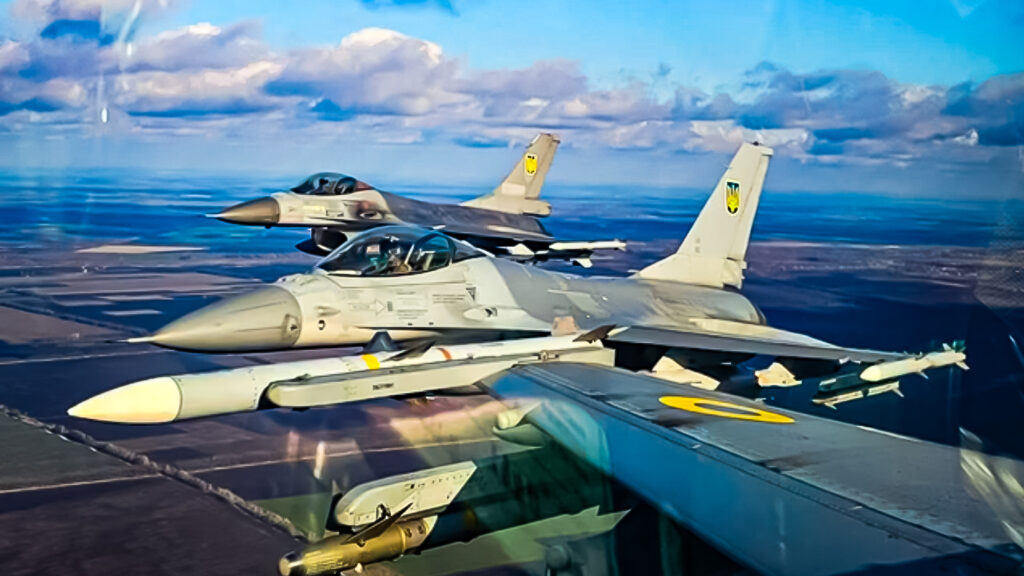
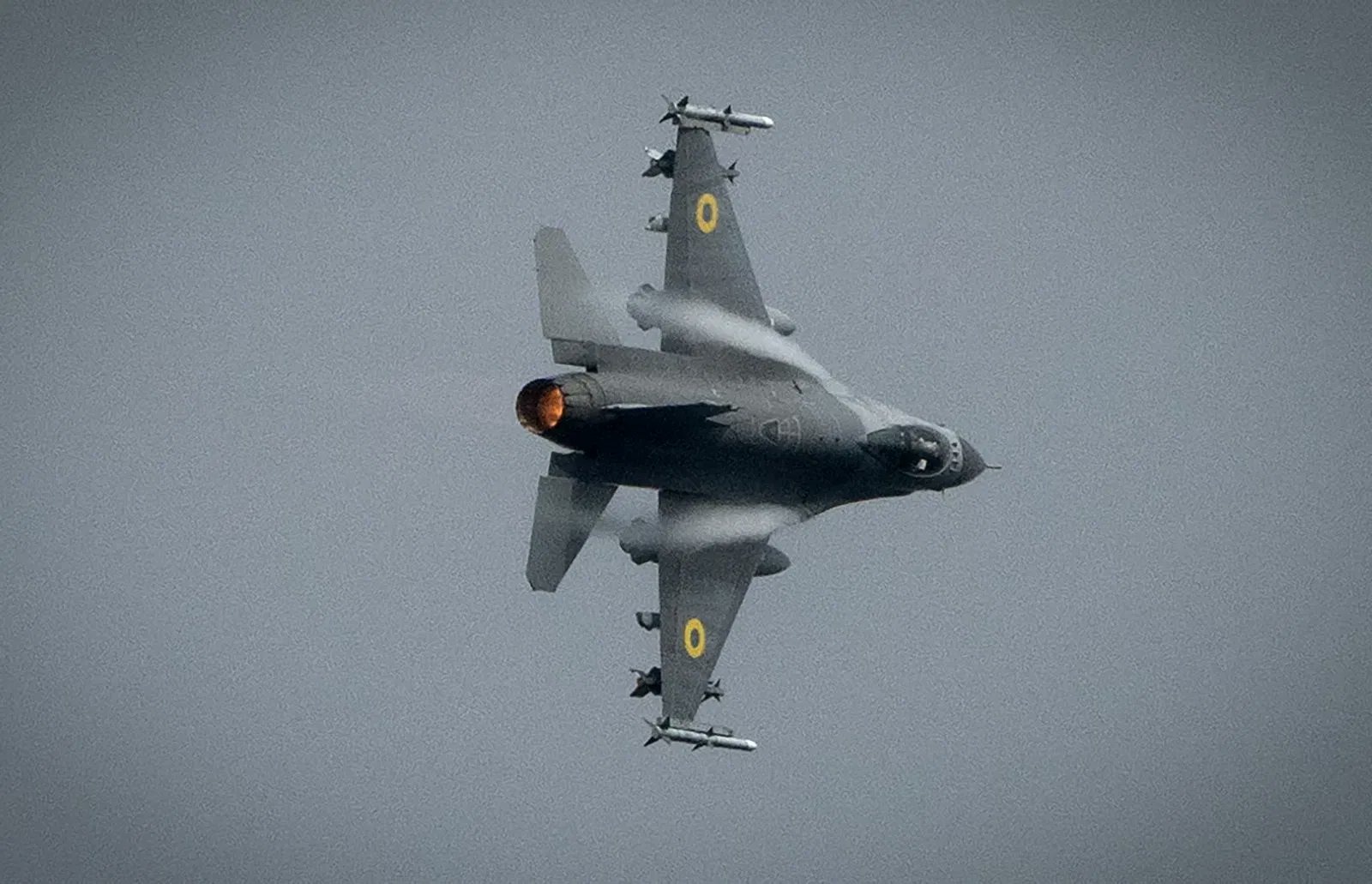
Ukrainian F-16s.
Ukrainian F-16s. Ukrainian air force photo.

Welcome jets

But new Block 70/72 F-16s would be welcome. The Block 70/72 builds on what already makes the F-16 great: its agility, flexibility, reliability, excellent electronic warfare systems, and compatibility with a wide array of munitions.

Where the Block 15 Mid Life Update F-16s Ukraine currently flies have the older analog AN/APG-66(V2) radar, the Block 70/72 has a digital APG-83 active electronically scanned array radar. It can also carry overwing conformal fuel tanks for extra range.

Perhaps most exciting for the Ukrainian air force, a newly made Block 70/72 is good for 12,000 hours of flight: enough for about 30 years at 400 flying hours a year. An aging Block 15 has a structural life of about 8,000 hours, and Ukraine's jets fly hard. Zelenskyy has said about half of them spend long stretches abroad for repairs, many at Sabena Aerospace Engineering in Belgium, a process that can take months.

Ukraine F-16 Pilots Rationing Missiles as Russian Attacks Intensify | NEWSMAX2

Ukraine’s American-made F-16 fighter jets are defending the skies against Russian drones and cruise missiles — but a critical shortage of U.S.-made missiles is putting that mission at risk.

In an… pic.twitter.com/WQgbasdks5

— Ukrainian Air Force (@KpsZSU) September 16, 2026

Newer F-16s require less maintenance. They can fly and fight more often. In that sense, 50 Block 70/72s are worth more than 50 Block 15s.

But the availability of airframes isn't the biggest problem in the 107th Aviation Wing, the Ukrainian air force's sole F-16 unit. The wing is desperately low on air-to-air missiles. Its pilots often resort to gunning down Russian drones and cruise missiles with the F-16's built-in 20-mm cannon—a risky tactic given how close a fighter must get to its target to make use of its gun.

While a few billion dollars' worth of fresh F-16s could keep the 107th Aviation Wing in fighting shape for decades to come, fresh airframes aren't actually the most urgent priority. Given a choice between getting new F-16s or getting substantial supplies of missiles for its old F-16s, the wing would surely opt for the latter.
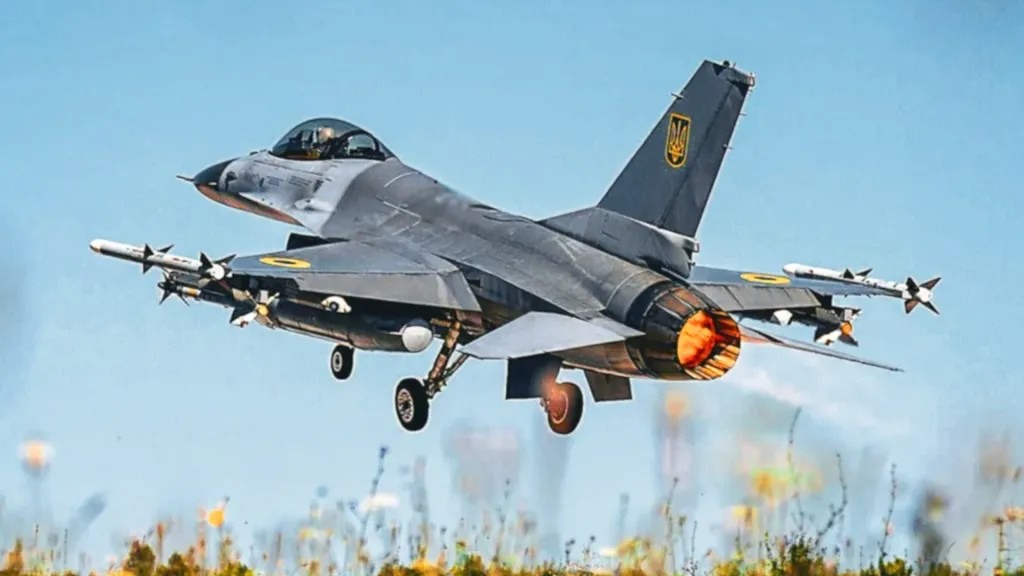
take off formation fly low navigate terrain—ukraine's f-16 trainees finished uk course russia helped design · post ukraine's air force carrying aim-120c aim-9 missiles fuel tanks terma pylons self-defense systems
Explore further

Belgium’s 10 F-16s bring Ukraine’s promised fleet to about 100 jets. Fewer than 40 are flying, as Russia’s jet drones run them ragged

  • ✇Euromaidan Press
  • Ukraine now fights two enemies. One is America
    On 18 October, President Zelenskyy accused Donald Trump of trying to pressure Ukraine into capitulating to Russia. Asked by NBC whether Ukraine could win the war without the US, he answered: "Without United States support it's very difficult. But if United States will support Putin, it's historic mistake and big tragedy.... If the United States officially will take the side of Russia, if these two countries will be together, of course we will not prevail and we will not be able t
     

Ukraine now fights two enemies. One is America

23 octobre 2026 à 19:02

Ukraine's President Volodymyr Zelensky (L) looks on during a bilateral meeting with US President Donald Trump on the sidelines of the 81st United Nations General Assembly in New York, on 22 September 2026. (Photo: Brendan SMIALOWSKI / AFP/Eastnews)

On 18 October, President Zelenskyy accused Donald Trump of trying to pressure Ukraine into capitulating to Russia.

Asked by NBC whether Ukraine could win the war without the US, he answered: "Without United States support it's very difficult. But if United States will support Putin, it's historic mistake and big tragedy.... If the United States officially will take the side of Russia, if these two countries will be together, of course we will not prevail and we will not be able to stand."

He said Ukraine hopes Trump will be on its side, or at least "in the middle," and that he will "change his decisions" on Russia, as "it's all mistakes, it will not help us, and it will not help United States." In an interview with NBC's Meet the Press, when asked whether Trump is still an ally of Ukraine, Zelenskyy said: "I hope so." Not a definitive yes, but a weak maybe.

As diplomacy goes, statements do not come much stronger than this. What triggered them?

Probably the sum of all things. We all remember Trump and Vance humiliating Zelenskyy in the White House on 28 February 2025. Trump told the Ukrainian President that he was "gambling with" a third world war. Zelenskyy was told to come back "when he is ready for peace". Most will also remember that the USA enacted the decision to halt its aid to Ukraine across two separate, sweeping actions taken during the first months of the second Trump administration in early 2025. Presently, it is only delivering military aid decided by former President Biden.

Some might have forgotten that Trump called Zelenskyy a "dictator without elections," suggested Ukraine started the war, and pushed a "peace plan" whose original 28-point draft gave Russia terms more favorable than what Moscow sought at the 2022 Istanbul talks.

After 640 days in office, Trump's disdain for Ukraine and admiration for Russia seem to grow by the day, and his kakistocracy—government by the least qualified—keeps undermining Ukraine's defense. In less than two weeks:

  • 9 October: the administration imposed new sanctions on the International Criminal Court (ICC), an institution crucial for holding Putin and the Kremlin accountable for their atrocities in Ukraine.
  • The same day, Trump lifted sanctions on Russian diesel exports, effectively helping fund Russia's wars.
  • 10 October: Trump said of the elected president of a country fighting off Russia's full-scale invasion: "It's time for Ukraine to get a new president."
  • 11 October: Trump declared on Truth Social an "energy ceasefire" between Russia and Ukraine that bound only Ukraine. Zelenskyy said it was "news to him."
  • 14 October: SpaceX restricted Starshield, the classified, military-grade version of Starlink; Reuters reported on 15 October that the order came from the White House, undermining Ukraine's ability to defend itself against Russian jet-powered drones and strike Russian forces in occupied territory.
  • 15 October: the US suspended critical intelligence sharing for three days, Zelenskyy said on 18 October, leaving Ukraine without warnings of Russian ballistic missile launches against its citizens and energy infrastructure.
  • 16 October: two days before they were due to take effect, Trump waived the sanctions, restrictions and tariffs on Russia required by the Graham Act, calling it in the US national interest, and put nearly all of the congressional sanctions package on hold.
  • 18 October: the administration reportedly proposed that Europe resume buying Russian gas to help "entice Russia to end the war in Ukraine." Europe balked.
  • 19 October: it emerged that the US is delaying Patriots procured by allies under NATO's Prioritized Ukraine Requirements List (PURL), leaving Ukraine short of defenses against Russian ballistic missiles. Ukrainian officials say the shipment is stalled because Defense Secretary Pete Hegseth has not signed the transfer documents on his desk.
  • 19 October: Trump said that "Xi Jinping has been very fair on Ukraine. He hasn't been very much involved. Same with Russia. They haven't been nearly what they could've been," ignoring that Russia is waging an unjust, unprovoked and genocidal war against Ukraine.
  • The same day, Trump claimed Zelenskyy targets Russian refineries knowing the attacks are seriously hurting world diesel markets, including in the US, and that he "doesn't want to end this war, and probably never did."
  • Talking to reporters outside the White House, Trump said Zelenskyy should get someone else to negotiate on Ukraine's behalf, and that he is willing to meet Putin and Xi to discuss the war, without the Ukrainian president. Kyiv fears Washington might decide Ukraine's future without it.
  • 20 October: Vice President JD Vance said Ukraine should not join NATO and should stop striking Russian energy. He refused to call Ukraine a US "ally," downgrading it to a "partner": "We don't have a formal alliance... they're not in NATO... we're going to work together on some things, but also we're going to be opposite on some things, too."
  • 21 October: after four and a half years of genocidal full-scale war and amid persistent Russian air strikes on Ukrainians, US special envoy Steve Witkoff praised Putin as a "humanitarian," echoing Trump's claim that Russia had restrained itself.
  • The same day, Trump said the end of the war is closer than ever. He may step up efforts to coerce Ukraine into a deal by the end of 2026, The Atlantic reports, with Ukraine's prospects shaped by the US midterms and possible Trump-Putin-Xi talks in November.

Less than two weeks, summarized.

USA EU Van Der Leyen Trump
Explore further

Europe now faces two strategic adversaries: Russia and the United States

This is how Trump's administration talks about, and acts towards, the victim of an unjustified, unprovoked and horrendous war. Trump's USA (TUSA) is siding with autocracy against democracy and the rules-based world order. It talks about America's former allies in a similar manner: derogatory and disrespectful. None of the above is the word or deed of an ally.

When one chooses to see the world as it is, Zelenskyy's statements become both necessary and important. This is not only about Ukraine's self-respect and survival. Once we acknowledge the realities—that Europe is in an undeclared war with Russia at a moment when the USA has chosen to become a strategic adversary—we stand better prepared to defend ourselves: to accept that our present security system does not work and new solutions are urgently needed, and that diplomacy alone does not work and military force is essential to protect freedom, democracy and international law.

More than a year ago, German Chancellor Friedrich Merz warned that Europe is "not at war, but no longer at peace either" with Russia. Other heads of state have echoed him. NATO has since shifted from a peacetime alliance to one focused on urgent wartime readiness. Unfortunately, the process started years too late.

By seeing the world as it is, European leaders might reach the long-overdue conclusion that Russia's wars in Ukraine and Europe can only be stopped by a demonstration of strength: an alliance willing and capable of using military force to stop Russia. The alliance Russia fears isn't NATO. It's a coalition that will actually fight.

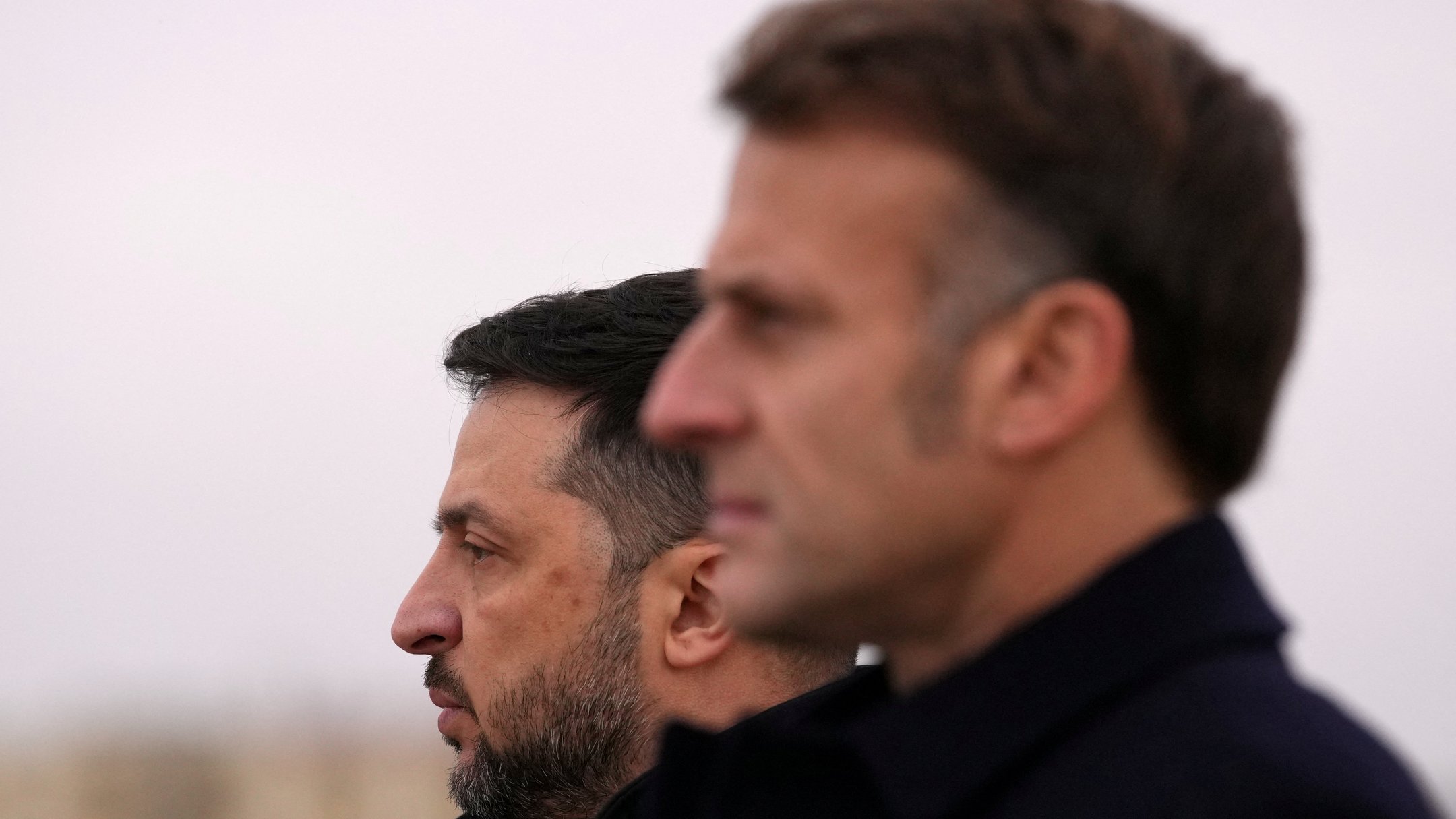
zelenskyy in france
Explore further

The alliance Russia fears isn’t NATO. It’s a coalition that will actually fight.

European courage and action are urgently needed. Ukraine is exposed to a two-front war, defending itself against both Russia and TUSA, and their attacks are increasing in scale and scope. Both Moscow and Washington want to end the war this year and are ramping up their assaults on Ukraine accordingly.

Irrespective of one's view of Ukraine, it is commonly understood that it is stopping Russia from advancing and increasing its border with NATO and the EU. Ukraine is defending European values and principles, ensuring the rest of us can continue living in something resembling peace. The consequences of its defeat would be truly devastating.

There can be no European strategic autonomy without Ukraine. There can be no European security and stability without Ukraine. Europe can never become a Great Power without Ukraine. And neither Russia nor the USA want Europe to achieve any of the above.

It is time to act according to the present-day realities and face down Europe's two strategic adversaries. In the worst case, Ukraine's destiny might be decided in November already.

Hans Petter Midttun
Hans Petter Midttun, independent analyst on hybrid warfare, Non-Resident Fellow at the Centre for Defense Strategies, board member of the Ukrainian Institute for Security and Law of the Sea, former Defense Attaché of Norway to Ukraine, and officer (R) of the Norwegian Armed Forces. 

Editor's note. The opinions expressed in our Opinion section belong to their authors. Euromaidan Press' editorial team may or may not share them.

Submit an opinion to Euromaidan Press

Russo-Ukrainian war, day 1703: White House announces ceasefire for occupied Oleshky, where residents face starvation and blocked escape routes

23 octobre 2026 à 17:33

Exclusives

One year of Ukrainian arms exports, and industry has questions: how much army gained, where Berlin office is, who joins joint ventures. Ukraine promised to sell surplus weapons abroad 12 months ago. Its arms makers now ask why a fee of up to 30% still blocks the deals.
Starlink helped Ukraine pull off Operation Vivaldi. Now Starlink could help Russia take the ground back. The operation retook 277 square kilometers north of Lyman. The drones that now hold that line lose their Starshield link above about 160 km/h.

Military

Russian plant supplying components for Iskander missiles reportedly struck by Ukrainian Storm Shadow missiles. OSINT projects reported that a strike hit the Proton plant in Orel, a facility whose electronic components are used in several Russian weapons systems.

Drone strike sinks cargo ship near Romania, killing Ukrainian sailor. Romanian President blames Russia. The Khoryv capsized about 13 nautical miles off Romania’s coast, with nine crew members rescued and three still missing. The incident adds to a wave of attacks threatening Black Sea shipping and Ukraine’s export routes.

Denmark rushes 50,000 cannon rounds to Ukraine to help F-16s hunt Russia’s advanced jet drones. Ukrainian pilots are already using the 20-mm ammunition to intercept jet-powered attack drones, as Russia deploys faster targets that challenge Ukraine’s air defenses.

Ukraine wants partners’ Patriot interceptors now. Europe can hand them over only with US approval, Ukraine’s president says. Ukraine is contracting about 1,000 Patriot missiles that will take years to arrive, so it wants partners’ stocks today.

Russia’s tax service runs on two key data centers. Drones went after one of them overnight, along with a chemical plant that supplies explosives makers. The data center in Gorodets stores state registers, including tax records, and opened in 2015 with Russia’s current prime minister on hand.

Phones down, water off, a factory roof broken open: Russian-occupied Luhansk counts the damage after another night of drones. Ukrainian monitoring channels pointed to strikes on communications, and pro-Russian local channels filled in the rest of the morning’s picture.

Russia kept sneaking troops through gas pipes behind Ukrainian lines. Now Ukraine has gone more than 15 km underground to do the same to Russia. More than 30 Russian soldiers were captured and Russian losses topped 100, the Khartiia Corps reported.

Ukrainian OSINT analyst: Russia’s Yandex data center in Sasovo burned out inside, though its roof shows almost no significant holes. Yandex hasn’t said whether the AI supercomputers there were damaged.

Intelligence and technology

A modem from a Russian drone led reporters to its Chinese maker—which invoiced 500 for Russia’s drone plant. Posing as a Russian military supplier, journalists got a $2.87 million invoice, three bank accounts, and no pushback on military use.

Russia may stage sabotage in Eastern Europe, but wants Kyiv blamed, Ukraine’s Intelligence warns. The agency says Moscow aims to weaken European support for Kyiv by making Russian attacks appear to be the work of Ukraine’s military.

The money starts as bags of cash in a Moscow market and ends up clean in China, leaked files show. The firm, co-owned by the bank behind Russia’s defense industry, hides where the money starts before it reaches foreign banks.

The Starlink hot potato: Musk points to Trump, Trump points to nobody, then credits Musk with the fix. The speed limit stays. Ukraine’s military Starlink terminals still lose connection above about 160 km/h, nine days after the limit took effect, and Kyiv has no official explanation of who imposed it.

Russia’s Doppelgänger operation used fake Ukrainian channels to spread disinformation. Hacked files show who ran it. The campaign targeted Ukraine’s military and political leadership, including with a fake about war widows receiving a can of stewed meat as compensation.

International

40,000 tons of Russian diesel are bound for New York—due four days after Americans vote. The tanker loaded at a Baltic port Ukrainian drones struck in March. Trump wants cheaper diesel before the midterms.

Russia’s attacks on Black Sea shipping raise risk of global famine, German FM warns. As Russian strikes increasingly threaten civilian vessels and Ukrainian grain exports, Germany’s foreign minister warned that shipping disruptions could leave vulnerable countries without essential food and fertilizers.

Austria expels Russian Embassy and OSCE diplomats over suspected spying. Vienna remains a Russian spy hub. Austrian security authorities raised suspicions of espionage involving four Russian diplomats, prompting Vienna to declare them persona non grata.

Russian Geran drone crashes in Moldova near homes and energy facility: Chisinau expels Russian diplomat. President Maia Sandu condemned the latest incursion as Russia’s war on Ukraine increasingly threatens neighboring Moldova.

Finland gives Ukraine 10 diesel locomotives that keep trains running when Russian strikes cut the power. The engines come free from Finland’s state railway, part of a visit that also brought winter energy money and new defense, housing, and satellite deals for Kyiv.

NATO’s weapons-buying agency opens dedicated door for Ukraine, non-member, letting it buy arms through its contracts and its firms bid for tenders. The agreement, signed by Defense Minister Yevhenii Khmara, gives Ukraine a single entry point into 45 weapons programs.

Humanitarian and social impact

Ceasefire planned for occupied Oleshky as residents face starvation and blocked escape routes, White House announces. A truce announced by Melania Trump is due to take effect October 29, opening the way for humanitarian supplies and evacuations if Russia and Ukraine implement the agreement.

Ukraine frees 270 from Russian captivity in “historic” prisoner swap, including 5 Olenivka survivors and American teacher Stephen Hubbard. The latest exchange returned 261 military personnel and nine civilians. Some had been held since 2018, while many others were captured during the defense of Mariupol in 2022.

Russia has kept the Red Cross away from Ukrainian POWs since 2024. Now about 1,500 captives it never confirmed as prisoners face prosecution. A captive soldier’s wife says that whenever families find a relative, Russia moves them to another prison and contact is lost again.

Political and legal developments

45 seconds of voting in the Lviv Oblast Council sparked a new dispute with Poland: Warsaw says Kyiv promised the UPA year decision will not take effect. Poland is Ukraine’s main hub for Western aid, and every new fight over the two nations’ WWII past erodes the trust that role rests on.

Russia keeps hitting Ukraine’s arms plants. Now private developers can dig them space underground—and sell or rent it to them. The state budget has paid to keep war-damaged arms plants running. The new model brings private money into the digging.

Zelenskyy names three postwar security guarantees for Ukraine. Even Russia needs one of them, he says. He names NATO membership, direct US guarantees, and a European Coalition of the Willing as the paths under discussion.

Trump cannot get Putin to halt strikes on Ukraine’s power grid, so he blames Ukraine instead, Zelenskyy says. Before that, US officials had cut Kyiv off from US intelligence and lowered a speed cap on Starlink to pressure Ukraine.

Read our previous daily review here.

  • ✇Euromaidan Press
  • Putin claims Russia is ready for new talks with Ukraine, calls occupied land historical Russia
    Russia is ready to resume three-way talks with Ukraine and the US, Russian President Vladimir Putin claimed in an interview with Pavel Zarubin of state broadcaster VGTRK, published on 22 October. He said they should settle security for both countries after a final peace deal, not a brief pause. Putin spoke a day after he hosted US envoy Steve Witkoff in St. Petersburg and Ukrainian President Volodymyr Zelenskyy said he would accept freezing the war along the front line. In May, Kremlin
     

Putin claims Russia is ready for new talks with Ukraine, calls occupied land historical Russia

23 octobre 2026 à 17:27

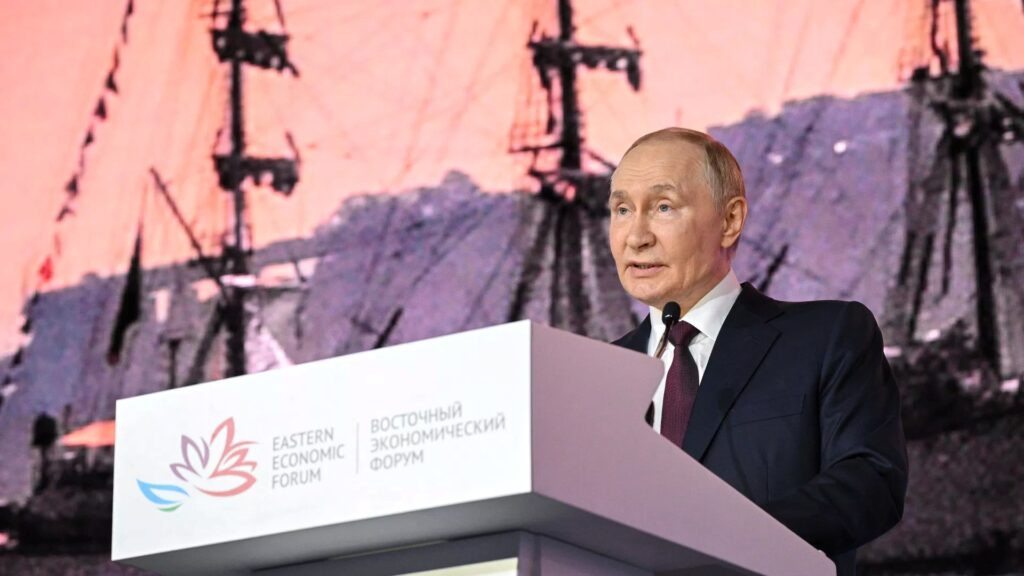
putin at the eastern economic forum in vladivostok on 5 september 2025

Russia is ready to resume three-way talks with Ukraine and the US, Russian President Vladimir Putin claimed in an interview with Pavel Zarubin of state broadcaster VGTRK, published on 22 October. He said they should settle security for both countries after a final peace deal, not a brief pause.

Putin spoke a day after he hosted US envoy Steve Witkoff in St. Petersburg and Ukrainian President Volodymyr Zelenskyy said he would accept freezing the war along the front line. In May, Kremlin spokesman Dmitry Peskov named Ukraine’s withdrawal from Donbas and Zaporizhzhia and Kherson oblasts as the only condition for peace. Any new round would start from that gap: Kyiv offers to stop where the armies stand, while Moscow’s last stated terms demanded more land.

Talks in November

Putin stated that Moscow and Washington had agreed Russia was ready to resume trilateral contacts. He added that he generally agreed with a US point that European security architecture should also be discussed.

On 21 October, Kremlin aide Yuri Ushakov stated that the sides had settled on mid-November, with Abu Dhabi as the likely venue.

"Historical Russia"

In a 21 October Fox News interview, asked about a freeze leaving Ukraine 75% or more of its land, Zelenskyy answered: “Yes, right now, we have to freeze.”

musk tells ukraine’s president go zelenskyy says won’t resign never accept ukrainian land russian · post volodymyr during interview piers morgan recorded visit britain 14 2026 video uncensored / ukraine
Explore further

Trump cannot get Putin to halt strikes on Ukraine’s power grid, so he blames Ukraine instead, Zelenskyy says

Asked about the land Ukraine would give up, Putin replied that the occupied regions were not Ukraine’s but "historical Russia." He claimed their residents had voted for independence and then to join Russia, and called any talk of territorial losses inappropriate.

Putin linked Russia’s readiness to negotiate to Ukrainians being a people very close to Russians. He claimed the latest genetic studies show they are one people. Independent outlet Meduza noted it is unclear which studies he meant. Putin’s 12 July 2021 essay on the historical unity of Russians and Ukrainians made the same case, which Ukraine’s national memory institute rebutted.

He closed that answer by asserting Russia would achieve all the goals of what the Kremlin calls its special military operation. He made a similar vow on 17 December 2025.

  • ✇Euromaidan Press
  • Russian plant supplying components for Iskander missiles reportedly struck by Ukrainian Storm Shadow missiles
    Ukrainian missiles reportedly struck a factory in the city of Oryol on 23 October, with OSINT projects reporting that the target was the Proton electronics plant, which produces components used in Russian weapons systems. The strike comes amid Ukraine’s broader campaign to target Russian military production facilities and other infrastructure supporting Moscow’s war against Ukraine. Ukrainian strikes on such facilities aim to weaken Russia’s ability to manufacture and maintain the weapo
     

Russian plant supplying components for Iskander missiles reportedly struck by Ukrainian Storm Shadow missiles

23 octobre 2026 à 17:18

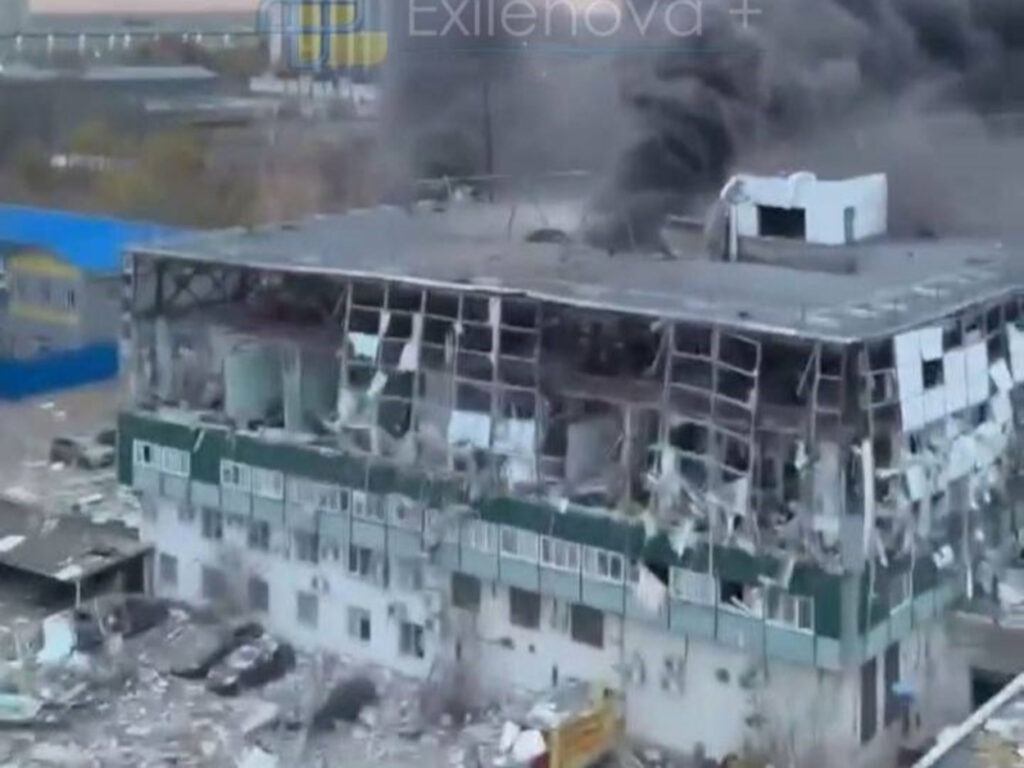
The Proton electronics plant in Oryol, Russia, after a Ukrainian missile strike on 23 October. The facility reportedly produces electronic components used in Russian weapons systems, including Iskander-M ballistic missiles. Photo: Exilenova+

Ukrainian missiles reportedly struck a factory in the city of Oryol on 23 October, with OSINT projects reporting that the target was the Proton electronics plant, which produces components used in Russian weapons systems.

The strike comes amid Ukraine’s broader campaign to target Russian military production facilities and other infrastructure supporting Moscow’s war against Ukraine. Ukrainian strikes on such facilities aim to weaken Russia’s ability to manufacture and maintain the weapons it uses in its invasion.

The plant reportedly supplies electronic components for Iskander-M ballistic missiles, which Russia regularly uses to attack Ukrainian cities, as well as other weapons systems, including the Pantsir-S1 air defense system. 

The strike could disrupt production supporting Russia’s war effort. Photos show extensive damage to the building. Information about casualties remains unclear. 

Reports say a Ukrainian missile strike hit the Proton electronics plant in Russia’s Oryol on 23 October.

The facility reportedly produces components for Iskander-M ballistic missiles used in attacks on Ukrainian cities, as well as other Russian weapons systems.

📹Exilenova+… pic.twitter.com/nbqGPJ8EJj

— Euromaidan Press (@EuromaidanPress) October 23, 2026

Plant reportedly produces components for Russian weapons

Proton JSC manufactures semiconductor devices, LEDs, and electronic components for industrial and specialized equipment. According to Exilenova+, the plant’s products are used in the production of Iskander-M ballistic missiles, S-71 Kover missiles, and the Pantsir-S1 air defense system.

Exilenova+ reported that the plant was struck by Storm Shadow cruise missiles. The weapon type has not been independently confirmed, and the extent of damage to the facility remains unknown.

Russian authorities confirm strike on factory

Oryol Oblast Governor Andrey Klychkov announced a missile threat in the region before reporting that missiles had struck a factory in Oryol’s Sovetsky District, according to Liga.net.

Residents reported explosions, a fire in one part of the city, and columns of smoke rising over Oryol, according to local reports cited by OSINT projects Exilenova+, Supernova, and Astra.

  • ✇Euromaidan Press
  • 40,000 tons of Russian diesel are bound for New York—due four days after Americans vote
    A Malta-flagged tanker carrying Russian diesel is heading for New York after the fuel deal between US President Donald Trump and Russian President Vladimir Putin, Reuters reported in an exclusive on 23 October, citing LSEG shipping data. Two weeks earlier, the US Treasury temporarily waived sanctions on Russian diesel. The tanker is due in the US on 7 November, four days after Americans vote in the midterms. So the first US-bound cargo cannot reach American pumps before the election. En
     

40,000 tons of Russian diesel are bound for New York—due four days after Americans vote

23 octobre 2026 à 16:54

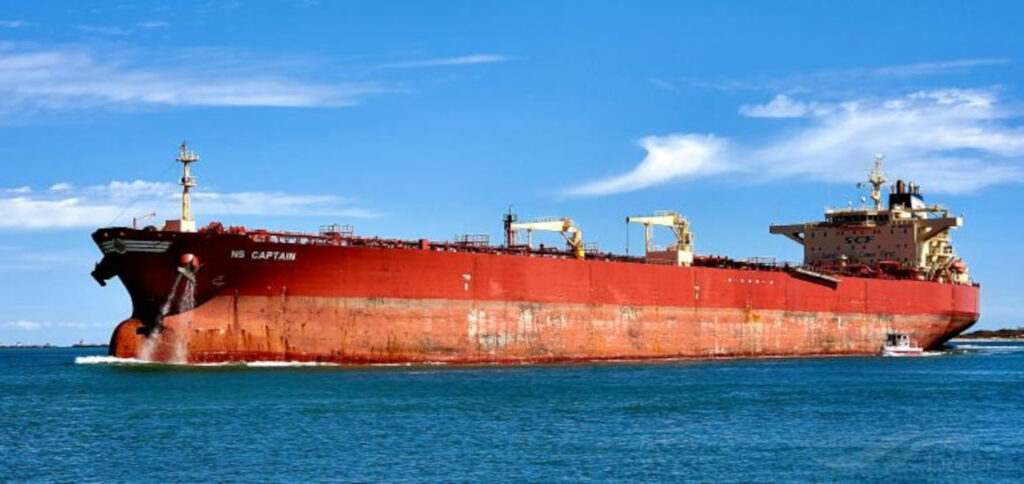
The DF Peak crude oil tanker, part of Russia's shadow fleet. Photo: VesselFinder

A Malta-flagged tanker carrying Russian diesel is heading for New York after the fuel deal between US President Donald Trump and Russian President Vladimir Putin, Reuters reported in an exclusive on 23 October, citing LSEG shipping data. Two weeks earlier, the US Treasury temporarily waived sanctions on Russian diesel.

The tanker is due in the US on 7 November, four days after Americans vote in the midterms. So the first US-bound cargo cannot reach American pumps before the election. Energy analysts also doubt the deal will lower diesel prices meaningfully. US fuel prices rose mainly because the war with Iran disrupted shipping through the Strait of Hormuz. Trump, however, has blamed Ukraine’s strikes on Russian refineries.

Loaded on the day Moscow promised

The medium-sized tanker Agioi Fanendes took on 40,000 metric tons of ultra-low sulfur diesel at the Baltic port of Primorsk on 22 October, shipping data showed. In March, Ukraine’s General Staff said its drones hit the Transneft oil terminal at that same port.

A day before the loading, Russian Deputy Prime Minister Alexander Novak announced that the first tanker would sail for the US on 22 October. He pledged more shipments and said Russia would meet US needs within its capabilities.

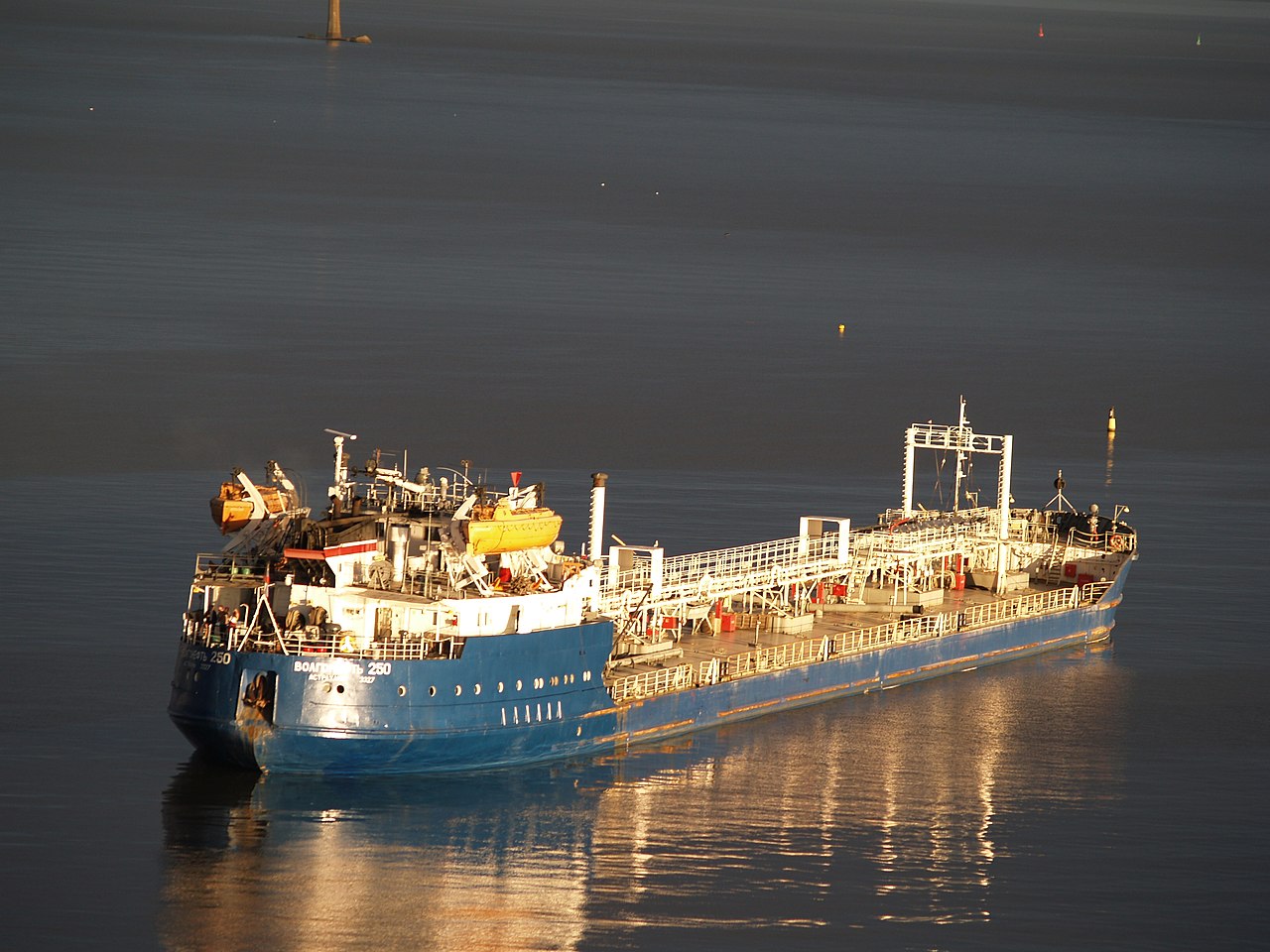
A Russian oil tanker, illustrative image. Photo via Wikimedia.
Explore further

Russia resumes diesel exports to Türkiye, Brazil, after Trump lifts sanctions on fuel supplies, boosting Moscow’s war revenue – Reuters

From a pledge to a partial lift

On 9 October, Trump wrote that Russia would immediately supply over 300,000 tons of diesel “to the American and Global Marketplace.” Another 500,000 tons would follow in November, then 1 million tons “immediately thereafter.”

Moscow had banned diesel exports on 8 July, after Ukrainian drone strikes shut down refineries and caused fuel shortages inside Russia. The Russian government stated on 10 October that it had partially lifted the ban, clearing 500,000 tons for the world market at this stage. Russian diesel shipments to Türkiye and Brazil have since resumed, boosting Moscow’s war revenue.

Trump has made other moves to cut diesel prices before the vote, Reuters reported. He waived parts of a new sanctions law against Russia. He also threatened Europe with a US diesel export ban unless countries released more fuel from their emergency reserves.

  • ✇Euromaidan Press
  • A modem from a Russian drone led reporters to its Chinese maker—which invoiced 500 for Russia’s drone plant
    Undercover reporters ordered 500 drone mesh modems from a Chinese firm, which billed them to Russia’s Alabuga drone plant, investigation by The Insider found. The outlet estimates the firm makes about half the high-power mesh modems that let Russia steer its drones deep into Ukraine. The firm’s director also named US company AMD as the source of a key chip, and AMD says it has not sold to the firm. Geran drones and Banderol drone-missiles have become Russia’s main weapons against Ukrain
     

A modem from a Russian drone led reporters to its Chinese maker—which invoiced 500 for Russia’s drone plant

23 octobre 2026 à 16:38

Mesh Network XK-F358 modem from the Geran-5 drone

Undercover reporters ordered 500 drone mesh modems from a Chinese firm, which billed them to Russia’s Alabuga drone plant, investigation by The Insider found. The outlet estimates the firm makes about half the high-power mesh modems that let Russia steer its drones deep into Ukraine. The firm’s director also named US company AMD as the source of a key chip, and AMD says it has not sold to the firm.

Geran drones and Banderol drone-missiles have become Russia’s main weapons against Ukraine’s energy grid. Russia began this winter’s strike campaign against that grid in late September, ISW assessed. Ukrainians’ survival this winter depends largely on how fast the West halts mesh modem sales to Russia, the outlet argued.

What a mesh modem does

A mesh modem links drones into one radio network. Each unit relays data for the others, so if one drone is shot down, traffic reroutes through the rest. Information keeps flowing even if nearly 80% of the drones are downed, Ukrainian defense adviser Serhii “Flash” Beskrestnov said in November 2025.

Range is the other half of the threat. One XK F-359 holds a line-of-sight link over 100–300 km, The Insider says. In theory, a couple of relay drones could keep a whole attack on Kyiv connected. Operators can then send new commands in flight and steer around air defenses. Russia’s Gerbera drones, first built as cheap decoys, increasingly carry these modems.

Explore further

Russia’s jam-resistant drones run on a Chinese modem no one has sanctioned

A modem from an upgraded Gerbera

To trace the part, The Insider’s correspondent in Ukraine examined an unmarked mesh modem from an upgraded Gerbera with a vertical tail fin, a version that appeared this summer. The outlet identified it as Xingkai’s XK F-359, the part Ukrainian intelligence and earlier reporting, Euromaidan Press included, had logged as the XK-F358. The Insider calls that label a misidentification.

Next, The Insider and the Nordsint investigative project contacted Xingkai on WeChat, posing as a Russian military supplier based in Alabuga. A company employee who introduced himself as “Jack Jiang” confirmed the firm is the model’s sole maker. The Insider identified him as Jiang Qin, Xingkai’s director and owner.

500 modems, three banks

The reporters then ordered 500 units for delivery to Alabuga, home to the plant that makes most of Russia’s long-range drones. Jiang invoiced 19.5 million yuan, which The Insider put at about $2.87 million. He offered two ways to pay: dollars to Xingkai’s DBS Bank account in Hong Kong, or yuan to his personal Ping An Bank account.

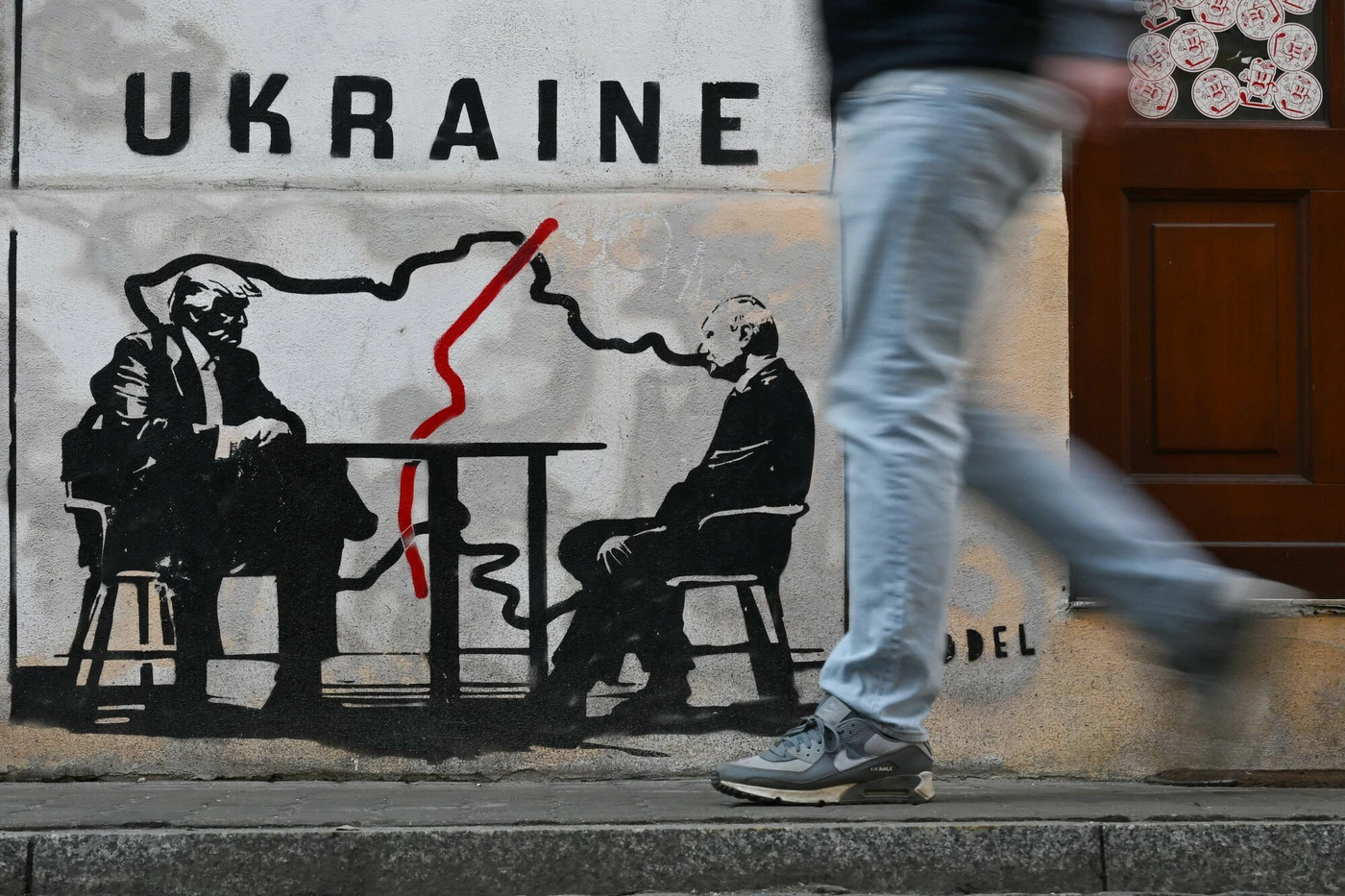
A man walks past a mural by Norwegian street artist Toddel depicting a map of Ukraine and US President Donald Trump (L) with Russia's President Vladimir Putin in Krakow on March 6, 2026, amid the Russian invasion of Ukraine. (Photo by Sergei GAPON / AFP) / Eastnews)
Explore further

America has sided with Russia against Ukraine. Europe should stop pretending and build a coalition against Russia, China, and even the US

In the chat, the reporters said outright that the end user was a military production facility. Jiang raised no objection, The Insider reported.

Later, after the reporters asked to update the address, Xingkai sent a revised invoice with “Alabuga” spelled in Latin letters. This time, it routed payment to a China Merchants Bank account in the name of a former Xingkai manager. She left a management post at the company in 2025, according to Tesari corporate records cited by The Insider. None of the three banks answered The Insider’s requests for comment.

Jiang also claimed the modem’s programmable chip is made by AMD. Asked for an AMD license, he refused, saying Xingkai buys the chips through a middleman. AMD told The Insider that Xingkai “is not an AMD customer or authorized partner,” and said it had sold the company nothing. AMD added that it bars exports of its products to Russia that violate US export controls and sanctions.

  • ✇Euromaidan Press
  • Drone strike sinks cargo ship near Romania, killing Ukrainian sailor. Romanian President blames Russia
    A Russian drone strike sank the Comoros-flagged cargo ship Khoryv in the Black Sea near Romania’s port of Constanța on 23 October, killing a Ukrainian sailor and leaving three crew members missing. Nine others were rescued, Digi24 reported. The sinking comes amid a surge in attacks on commercial shipping near Romania and Bulgaria, threatening civilian crews and routes used to transport Ukrainian agricultural exports. As Russia intensifies strikes on Ukrainian ports and shipping, the Dan
     

Drone strike sinks cargo ship near Romania, killing Ukrainian sailor. Romanian President blames Russia

23 octobre 2026 à 15:46

The overturned hull of the cargo ship Khoryv after a drone strike in the Black Sea near Romania on 23 October 2026. Screenshot from video: Romanian Ministry of Internal Affairs

A Russian drone strike sank the Comoros-flagged cargo ship Khoryv in the Black Sea near Romania’s port of Constanța on 23 October, killing a Ukrainian sailor and leaving three crew members missing. Nine others were rescued, Digi24 reported.

The sinking comes amid a surge in attacks on commercial shipping near Romania and Bulgaria, threatening civilian crews and routes used to transport Ukrainian agricultural exports. As Russia intensifies strikes on Ukrainian ports and shipping, the Danube corridor and nearby waters have become increasingly important to Ukraine’s maritime trade.

Romanian President Nicușor Dan blamed Russia for the attack, describing it as part of Moscow’s escalation of the war against Ukraine and its attacks on NATO’s eastern flank, Reuters reported. 

Ukraine’s Foreign Ministry confirmed to Radio Svoboda that a Ukrainian citizen was among those killed.

Ukrainian sailor killed, three crew members missing

The Khoryv sent a distress signal at around 10 a.m. local time, about 13 nautical miles (24 kilometers) east of Constanța, just outside Romania’s territorial waters, Digi24 reported. The vessel caught fire, sustained major damage, and capsized, with only a small part of its hull remaining visible above the water.

Romania’s naval authority said 13 crew members were aboard: 10 Ukrainians and three Azerbaijanis. Rescue teams recovered nine sailors alive and one body, while three crew members remained missing, Reuters reported.

Ukraine’s Foreign Ministry said the vessel had been traveling from a Turkish port and confirmed that the Ukrainian Embassy in Romania had received information from Romanian authorities about one Ukrainian sailor’s death. Four Ukrainian survivors, including the captain, were taken to a hospital, while two others did not require medical assistance.

Attacks threaten Black Sea shipping

The sinking comes amid a surge in attacks on commercial vessels off the coasts of Romania and Bulgaria. At least seven cargo ships have been hit over the past two weeks, with around 30 sailors reported dead or missing, according to Reuters.

The vessels targeted in recent incidents were either anchored near or heading toward the Sulina Canal, which connects the Danube River to the Black Sea. The canal has become a key export route for Ukraine, one of the world’s largest exporters of grain and vegetable oils.

Ukraine has increasingly relied on Danube ports and routes through Romanian territorial waters as Russia attacks its own Black Sea ports. Strikes on commercial vessels threaten crews and risk disrupting Ukrainian agricultural exports to international markets.

Russia has intensified attacks on Ukrainian ports and ships traveling to or from Ukraine. Moscow has described its strikes on vessels as retaliation for Ukrainian attacks on Russian or Russia-linked ships.

Bulk carrier "Royad Mammadov" under the flag of Saint Kitts, partially sunk after an attack by Russian sea and air drones on October 5, 2026, 20 nautical miles off the coast of Romania. Photo: Romanian Interior Ministry
Explore further

Russia’s attacks on Black Sea shipping raise risk of global famine, German FM warns

NATO plans stronger Black Sea surveillance

NATO said on 20 October it would send additional maritime patrol aircraft, radar systems, and drones to the Black Sea following the attacks on commercial shipping, according to Reuters. The alliance has not specified which capabilities it will deploy.

Romania, Ukraine, and Bulgaria have called on NATO to do more to protect commercial vessels. The latest sinking adds urgency to those calls as attacks increasingly affect shipping near NATO territory.

The latest incident highlights the growing risks to commercial shipping as Russia’s war against Ukraine increasingly affects maritime traffic beyond Ukraine’s own coastline.

  • ✇Euromaidan Press
  • Russia’s attacks on Black Sea shipping raise risk of global famine, German FM warns
    German Foreign Minister Johann Wadephul has warned that disruptions to global shipping routes could trigger famine in vulnerable countries, citing Russian attacks on Black Sea shipping as part of the wider threat to international food supplies. Russia has increasingly targeted civilian shipping in the Black Sea as part of its campaign against Ukraine’s maritime trade, striking cargo vessels, port infrastructure, and ships transporting agricultural goods. The attacks threaten Ukraine’s a
     

Russia’s attacks on Black Sea shipping raise risk of global famine, German FM warns

23 octobre 2026 à 15:11

Bulk carrier "Royad Mammadov" under the flag of Saint Kitts, partially sunk after an attack by Russian sea and air drones on October 5, 2026, 20 nautical miles off the coast of Romania. Photo: Romanian Interior Ministry

German Foreign Minister Johann Wadephul has warned that disruptions to global shipping routes could trigger famine in vulnerable countries, citing Russian attacks on Black Sea shipping as part of the wider threat to international food supplies.

Russia has increasingly targeted civilian shipping in the Black Sea as part of its campaign against Ukraine’s maritime trade, striking cargo vessels, port infrastructure, and ships transporting agricultural goods. The attacks threaten Ukraine’s ability to export grain to global markets, raise risks for international shipping companies, and jeopardize food supplies in countries that rely on Ukrainian agricultural exports.

Speaking ahead of a meeting of foreign ministers in Istanbul on Friday, 23 October, Wadephul said attacks and threats to shipping in the Strait of Hormuz, the Red Sea, and the Black Sea were disrupting trade in food and fertilizers, DW reported. The impact extends far beyond the conflict zones, threatening countries that depend on imported wheat and agricultural inputs.

Wadephul said fertilizer shortages could threaten basic agricultural production in poorer countries, where access to imported food and farming supplies is already limited. He also pointed to Türkiye, the world’s largest wheat-processing country, as vulnerable to disruptions in the supply of grain.

Russian attacks disrupt Ukraine’s grain exports

Russia has intensified attacks on Ukraine’s Black Sea ports and civilian cargo ships, disrupting a maritime corridor that carries most of the country’s agricultural exports. In July, Russian strikes brought traffic through the corridor close to a standstill during the harvest season, leaving grain with fewer routes to international markets.

The attacks have also hit foreign-flagged vessels carrying or preparing to load Ukrainian grain. On 16 October, Euromaidan Press reported that Russian attacks had sunk merchant ships and damaged others in the Black Sea region, with seafarers missing. The campaign has increased risks for shipping companies and reduced the routes available for Ukrainian exports.

Ukraine is a major supplier of wheat and other agricultural commodities to global markets, including countries in the Middle East and Africa. Disruptions to its exports can tighten global supplies and push prices higher, adding pressure on countries that depend on imported grain.

Wadephul made the remarks ahead of a meeting of foreign ministers in Istanbul, where he said countries must send a signal that they will not accept Iran or Yemen’s Houthi militia holding global trade hostage. He called for an end to indiscriminate attacks on shipping and neighboring countries, warning that prolonged insecurity puts vulnerable populations at greater risk of hunger.

His remarks place Russia’s attacks on Ukrainian shipping within a wider pattern of threats to key maritime trade routes, with consequences for food security far beyond the regions directly affected.

  • ✇Euromaidan Press
  • Austria expels Russian Embassy and OSCE diplomats over suspected spying. Vienna remains a Russian spy hub
    Austria has ordered four Russian diplomats to leave the country over suspected espionage, declaring them persona non grata following findings by Austrian security authorities, Austrian media outlet Heute reported on 23 October. The expulsions come as European countries step up efforts to counter suspected Russian intelligence operations amid Moscow’s war against Ukraine. Three of the diplomats worked at the Russian Embassy in Vienna, while the fourth served in Russia’s delegation to the
     

Austria expels Russian Embassy and OSCE diplomats over suspected spying. Vienna remains a Russian spy hub

23 octobre 2026 à 14:37

Embassy of the Russian Federation in Vienna. Photo via Wikimedia Commons

Austria has ordered four Russian diplomats to leave the country over suspected espionage, declaring them persona non grata following findings by Austrian security authorities, Austrian media outlet Heute reported on 23 October.

The expulsions come as European countries step up efforts to counter suspected Russian intelligence operations amid Moscow’s war against Ukraine. Three of the diplomats worked at the Russian Embassy in Vienna, while the fourth served in Russia’s delegation to the Organization for Security and Co-operation in Europe (OSCE), which is headquartered in Vienna. 

Austria’s Foreign Ministry said the four had engaged in “activities incompatible with their diplomatic status,” a term usually used for spying, Reuters reported. It did not disclose details of the alleged activities or the intelligence findings behind the decision.

The three embassy diplomats were declared persona non grata under Article 9 of the Vienna Convention on Diplomatic Relations. The fourth, who worked on military security and arms control at Russia’s OSCE delegation, was also ordered to leave Austria. 

Vienna remains a hub for Russian intelligence

The latest expulsions bring the number of Russian diplomats Austria has expelled since 2020 to 18, according to Reuters. In May 2026, Austria expelled three Russian Embassy employees suspected of using antennas on diplomatic buildings to intercept satellite internet data transmitted by international organizations based in Vienna. 

Vienna’s concentration of international organizations, including the OSCE and United Nations agencies, has made it a key location for intelligence activity. A 2024 report by The Wall Street Journal, described Vienna as a major Russian spy hub for operations targeting Western countries, including surveillance of arms supplies to Ukraine.

Explore further

WSJ: Vienna has become major Russian spy hub for anti-Western operations in Europe

Russia’s Deputy Foreign Minister Dmitry Lyubinsky said Moscow’s response to the expulsions was unavoidable, according to Russian state news agency TASS, AP reported.

  • ✇Euromaidan Press
  • Russian Geran drone crashes in Moldova near homes and energy facility: Chisinau expels Russian diplomat
    Moldova declared a Russian embassy staff member persona non grata on 23 October after a Russian Geran attack drone violated its airspace and crashed near homes and an energy facility, Moldovan President Maia Sandu said. The incident highlights how Russia’s attacks on Ukraine are increasingly threatening neighboring Moldova, where Russian drones have repeatedly crossed the border or crashed during strikes. Moldova recorded 39 Russian drone incursions in the first eight months of 2026, co
     

Russian Geran drone crashes in Moldova near homes and energy facility: Chisinau expels Russian diplomat

23 octobre 2026 à 14:00

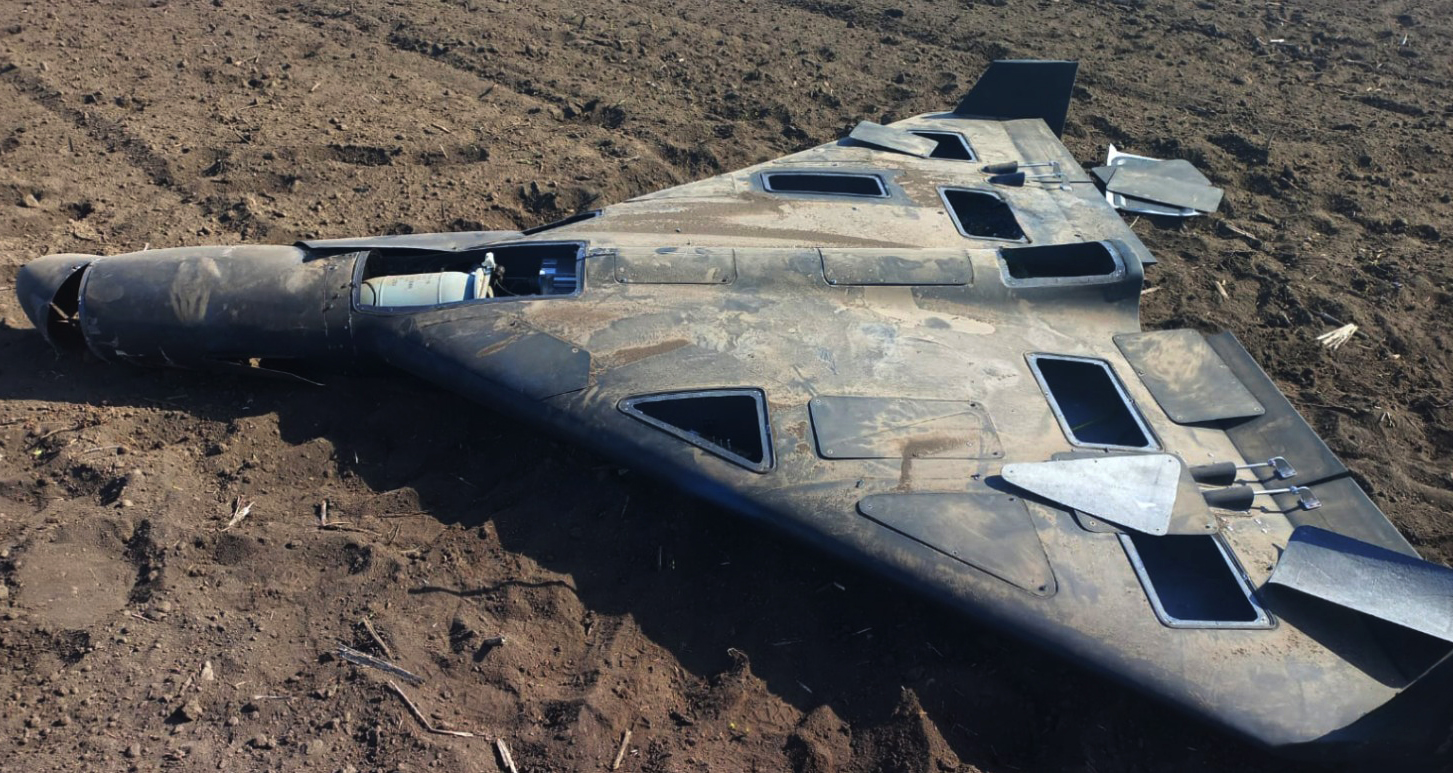
A Russian Geran attack drone that crashed in Moldova on 23 October 2026. Photo: Moldovan Police

Moldova declared a Russian embassy staff member persona non grata on 23 October after a Russian Geran attack drone violated its airspace and crashed near homes and an energy facility, Moldovan President Maia Sandu said.

The incident highlights how Russia’s attacks on Ukraine are increasingly threatening neighboring Moldova, where Russian drones have repeatedly crossed the border or crashed during strikes. Moldova recorded 39 Russian drone incursions in the first eight months of 2026, compared with 17 in all of 2025, Sandu said in September.

Moldova’s Defense Ministry said its Air Operations Center detected an unauthorized drone flight at 13:59 on 23 October. The drone crossed from the direction of Ukraine’s Vinnytsia Oblast toward Frunzeuca in Moldova’s Camenca district, in the Russian-backed breakaway region of Transnistria.

The drone disappeared from monitoring screens near Pepeni in Sîngerei district at 14:10, briefly reappeared, and then disappeared again near Meșeni in Rezina district, the ministry said.

Sandu condemned the incursion, saying Russia’s war continues to put Moldovan lives at risk. She said the drone had fallen near family homes and an energy facility.

Moldovan police reported finding the crashed drone near the village of Chiștelnița in Telenești district, less than 100 meters from a home. No casualties were reported. Police cordoned off the area and sent explosives specialists to examine the wreckage.

Russia's war keeps putting Moldovan lives at risk. Today, a Russian Geran attack drone violated our airspace and fell near family homes and an energy facility.

We condemn this latest dangerous act. In response, we have declared a Russian embassy staff member persona non grata.

— Maia Sandu (@sandumaiamd) October 23, 2026

Moldova steps up diplomatic response

Sandu said Moldova had condemned the incident and declared a Russian embassy staff member persona non grata. She did not identify the staff member or specify when they must leave the country.

The move follows repeated Russian drone incursions. In September, a Russian drone crossing Moldova’s airspace disrupted seven flights, including one involving Ukrainian President Volodymyr Zelenskyy, prompting temporary airspace restrictions.

Earlier in October, three Russian missiles and two drones crossed into Moldovan airspace and exploded on Moldovan territory during Russian attacks on neighboring Ukraine, prompting Chisinau to condemn the violations. Debris fell across several districts, damaging windows at an agricultural facility and sparking fires in fields. Defense Minister Anatolie Nosatîi said the country was seeking stronger air defenses to counter the growing threat.

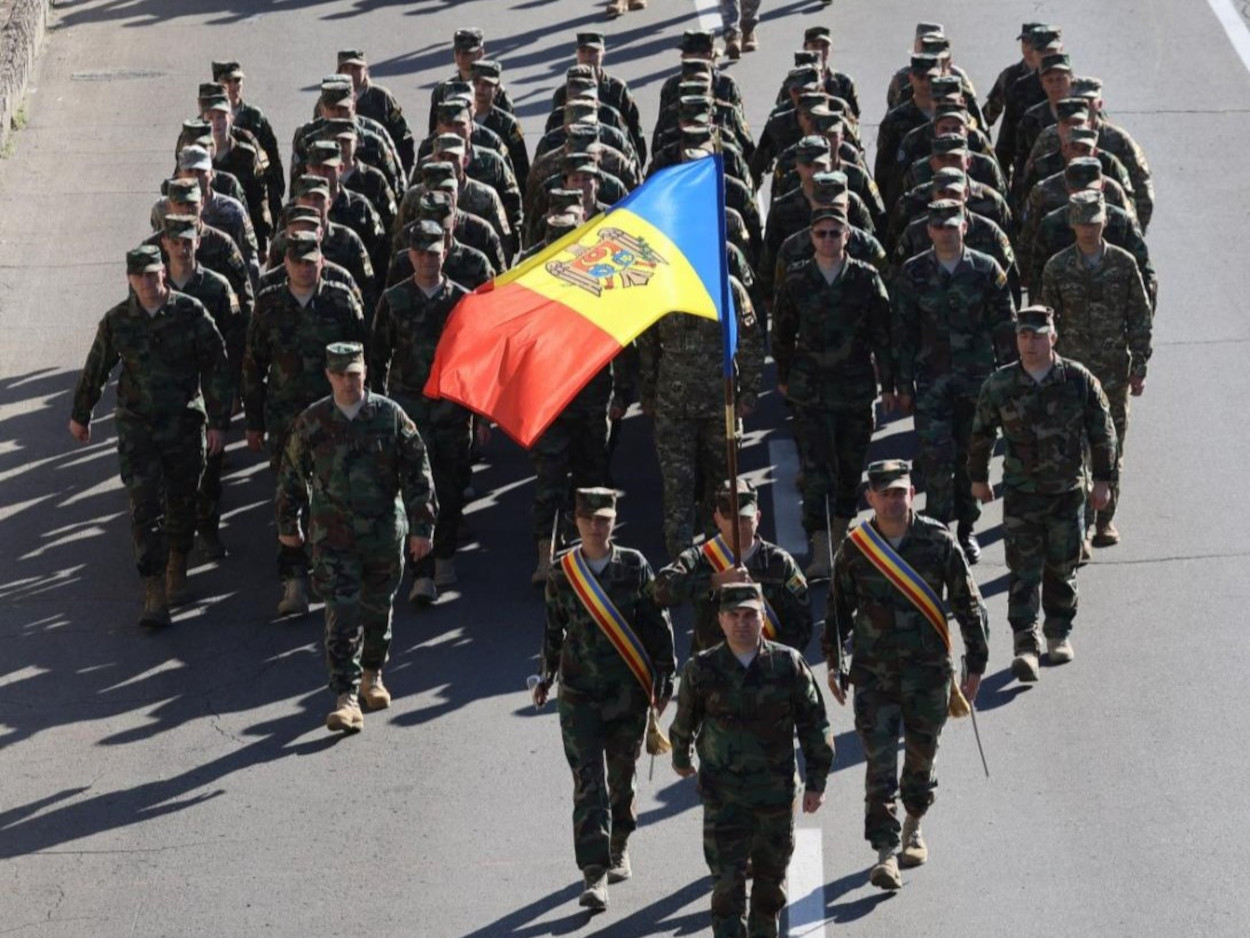
Moldovan soldiers. Photo: Moldovan Army via NewsMaker
Explore further

80% of Moldovans say country is unprepared for attack as Russian drones flow into its airspace, but few back NATO membership

Moldova has limited air defense capabilities and has been working with European partners to strengthen them. Sandu has said the country’s existing equipment can mainly protect individual sites, while the government seeks broader coverage and faster warning systems. The EU has provided €120 million for Moldova to purchase a medium-range air defense system.

Moldovan authorities urged residents not to approach or touch the crashed drone or any fragments, and to call emergency services if they find suspicious objects.

  • ✇Euromaidan Press
  • Denmark rushes 50,000 cannon rounds to Ukraine to help F-16s hunt Russia’s advanced jet drones
    Ukraine has received more than 50,000 rounds of 20-mm ammunition from Denmark for the onboard cannons of its F-16 fighter jets, with Ukrainian pilots already using the rounds to intercept Russian jet-powered Geran attack drones, Ukraine’s Defense Ministry said. The accelerated delivery addresses a key need in Ukraine’s air defense as Russia increasingly deploys faster jet-powered drones that challenge conventional interceptors. Ukraine has also relied on F-16 cannons when stocks of air-
     

Denmark rushes 50,000 cannon rounds to Ukraine to help F-16s hunt Russia’s advanced jet drones

23 octobre 2026 à 12:07

A Ukrainian air force F-16.

Ukraine has received more than 50,000 rounds of 20-mm ammunition from Denmark for the onboard cannons of its F-16 fighter jets, with Ukrainian pilots already using the rounds to intercept Russian jet-powered Geran attack drones, Ukraine’s Defense Ministry said.

The accelerated delivery addresses a key need in Ukraine’s air defense as Russia increasingly deploys faster jet-powered drones that challenge conventional interceptors. Ukraine has also relied on F-16 cannons when stocks of air-to-air missiles are limited, making ammunition supplies important to keeping the aircraft effective against incoming aerial threats.

Denmark responds to ammunition request

The Defense Ministry thanked Denmark for responding quickly to Ukraine’s request for additional ammunition, saying the delivery directly strengthens the country’s air defenses and helps protect civilians from Russian aerial attacks.

The delivery follows a broader effort by Ukraine’s European partners to replenish F-16 cannon ammunition. On October 2, it was reported that Spain, Belgium, and Poland were also sending 20-mm rounds for Ukrainian F-16s to counter Russia’s jet-powered drones.

Belgium is also expanding its support for Ukraine’s F-16 fleet. On 16 October, Belgian Prime Minister Bart De Wever pledged to deliver 10 F-16s by the end of 2026, up from three previously planned, and discussed supplying additional ammunition, including 20-mm rounds produced by Belgian defense company FN Herstal.

Jet-powered drones pose a growing challenge

Russia’s faster attack drones are harder to intercept than older, propeller-driven Shahed-type models. Their speed gives air defenders less time to respond and makes them more difficult for many interceptor drones and conventional short-range weapons to catch.

Ukraine’s air-to-air missile shortages have also increased the importance of F-16 cannon ammunition. Ukrainian pilots have sometimes relied on their aircraft’s built-in 20-mm cannon when air-to-air missiles are scarce.

A Ukrainian air force F-16.
Explore further

Ukraine’s F-16s are so short of Western missiles that pilots fall back on jet’s built-in M61A1 Vulcan cannon, which risks killing civilians below

The threat from jet-powered drones is growing. Ukrainian President Volodymyr Zelenskyy said in late September that Ukraine was intercepting about 55% of Russia’s jet-powered drones, compared with more than 90% of older models.

Denmark’s ammunition delivery gives Ukrainian F-16 pilots more rounds to engage these faster targets, as Ukraine works to strengthen its defenses against Russia’s expanding drone campaign.

Ceasefire planned for occupied Oleshky as residents face starvation and blocked escape routes, White House announces

23 octobre 2026 à 11:16

Oleshky, Kherson Oblast, has been under Russian occupation since 2022, following Russia’s capture of the city during the initial phase of its full-scale invasion of Ukraine.

US First Lady Melania Trump has secured an agreement for a localized ceasefire between Russia and Ukraine in the Russian-occupied city of Oleshky, Kherson Oblast, to allow humanitarian aid deliveries and civilian evacuations to begin on 29 October, the White House announced on 23 October.

The proposed truce comes after months of worsening conditions in Oleshky, where Russian restrictions have left residents without reliable access to food, drinking water, medicine, and medical care. Ukrainian officials and international monitors have called for a humanitarian corridor as civilians face hunger, landmines, and regular attacks, with residents unable to leave safely.

Update: Ukraine launches humanitarian mission to occupied Oleshky after US-mediated agreement

Update 21:31: Ukraine’s Human Rights Ombudsman Dmytro Lubinets announced the launch of a humanitarian mission to Russian-occupied Oleshky in Kherson Oblast, saying an agreement had been signed following negotiations coordinated by the US side, with mediation by US First Lady Melania Trump. 

The agreement provides for several stages, including preparations for a ceasefire, clearing routes of mines, delivering humanitarian aid, and unblocking evacuation routes. 

Lubinets said his office had been raising the alarm about the looming humanitarian catastrophe in Oleshky since late February 2026 and would report on each stage of the mission.

Ceasefire aims to open evacuation route

According to the White House, Trump and her representative worked directly with Russian and Ukrainian leadership to agree on the ceasefire's terms, timing, and procedures. Civilian representatives from both countries are expected to visit residents to assess their needs, while those wishing to leave will receive transportation to their preferred destination.

The White House said an American media organization would accompany the teams to document the process and help ensure families' wishes are respected.

Trump said she initiated discussions after learning about the crisis during a private conversation at an event in New York during the 81st United Nations General Assembly. She said the agreement also involves technical preparations, including demining.

local-resident-walks-to-a-box-still-attached-to-a-drone.jpg
Explore further

Russian troops seize drone-dropped food in occupied Oleshky, accusing recipients of cooperating with Ukraine. Some people go missing, a local official says

Oleshky residents face hunger and isolation

Oleshky, on the Russian-occupied left bank of the Dnipro River, had around 24,000 residents before Russia's full-scale invasion. Recent estimates put the remaining population at roughly 1,700 to 2,000, including about 50 children.

Residents face severe food and medicine shortages, while Russian forces have restricted movement and attacked vehicles attempting to deliver humanitarian supplies. Ukrainian officials have also said Russian troops have seized food parcels delivered by Ukrainian drones and detained or beaten some residents who received them.

Aerial view of Russian-occupied Oleshky, in Ukraine's Kherson Oblast. Photo via ArmyInform
Explore further

Russian troops enter homes and threaten starving Oleshky residents for food and alcohol, officials say

The crisis has drawn growing international attention. Pope Leo XIV appealed to Russian leader Vladimir Putin for a truce to allow aid deliveries and safe civilian evacuations, while Ukraine's human rights ombudsman, Dmytro Lubinets, said on 18 October that negotiations over a ceasefire and evacuation had advanced to the stage of agreeing on final details.

The White House announcement sets 29 October as the start date for the localized ceasefire. Its implementation will determine whether aid can reach residents and civilians can leave safely after months of isolation.

  • ✇Euromaidan Press
  • Finland gives Ukraine 10 diesel locomotives that keep trains running when Russian strikes cut the power
    Finland will donate diesel locomotives to Ukraine’s state railway, the Office of Ukraine’s President reported. Helsinki also pledged new winter aid, and the two countries signed deals on drones, housing, and satellite communications during Finnish Prime Minister Petteri Orpo’s visit to Kyiv. One of them is a first step toward a satellite link Ukraine would control itself. With Russia replacing its missiles as fast as it fires them, Ukraine heads into winter needing equipment that works
     

Finland gives Ukraine 10 diesel locomotives that keep trains running when Russian strikes cut the power

23 octobre 2026 à 10:38

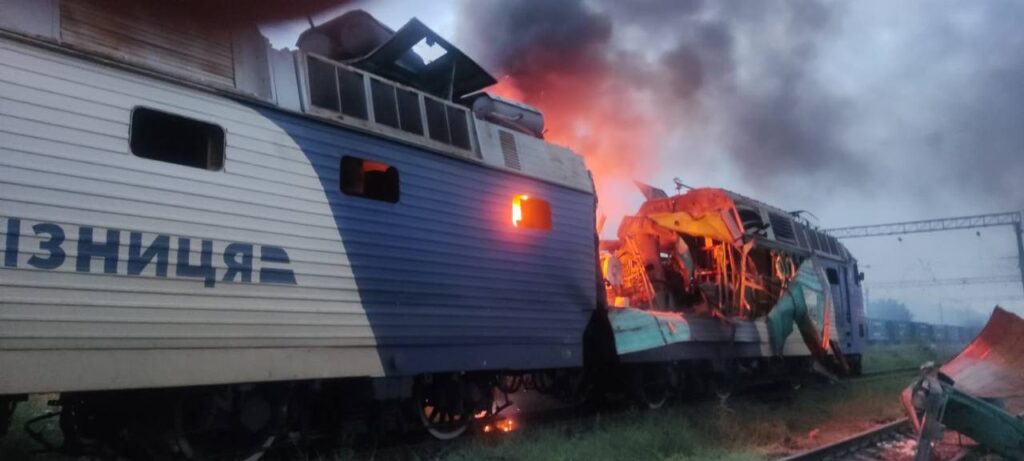
The image shows a train in Ukraine on fire, hit by a Russian drone. Source: Oleksii Kuleba

Finland will donate diesel locomotives to Ukraine’s state railway, the Office of Ukraine’s President reported. Helsinki also pledged new winter aid, and the two countries signed deals on drones, housing, and satellite communications during Finnish Prime Minister Petteri Orpo’s visit to Kyiv. One of them is a first step toward a satellite link Ukraine would control itself.

With Russia replacing its missiles as fast as it fires them, Ukraine heads into winter needing equipment that works without the grid. Russian strikes have damaged or destroyed almost 600 locomotives of Ukraine’s state railway since the full-scale invasion began, more than 300 of them diesels, the infrastructure minister said. The attacks have reached engines even near the Polish border, on the railway that carries Ukraine’s evacuations, grain, and cargo.

Diesels that keep moving when the grid goes down

Finland will hand 10 locomotives and their spare parts to Ukrzaliznytsia, Ukraine’s state railway, free of charge. Infrastructure Minister Mykola Kalashnyk announced the deal, signed on 22 October at a Ukrainian-Finnish business forum. The engines need no power from overhead lines, so trains can keep running during blackouts.

The engines are Dv12 diesels that VR, Finland’s state rail company, is taking out of service. A VR shareholders’ meeting moved them into state ownership, and the Finnish state is donating them, Yle reported. VR puts their value, spare parts included, at about €2.1 million. Finland’s government said the gift will not affect VR’s ability to run trains at home.

A VR Class Dv12 diesel locomotive in Finland, 16 April 2007
A VR Class Dv12 diesel locomotive in Finland, 16 April 2007. Photo: Matthew Ross/Wikimedia Commons

Ukrainian Prime Minister Serhii Koretskyi and Orpo signed the donation certificate, one of seven documents signed that day. Two others plan Ukrainian-Finnish drone production in Finland, one for military and dual-use systems and one for heavy drones. Another covers a precast concrete plant for industrial housing construction.

The day’s agreements are worth around €300 million in total, Zelenskyy said. Projects worth €200 million are already under way within the two countries’ Drone Deal, he added. Under an earlier plan, most drones made in Finland would go to Ukraine.

The Darnytska Combined Heat and Power Plant in Kyiv sustained critical damage from a Russian strike on 3 February 2026. Photo: Vitali Klitschko
Explore further

Finland backs €28.5 million power plant project as Ukraine braces for Russia’s next winter energy assault

Winter money now, a 36th military package by year’s end

Orpo announced a new €10 million package. Of it, €5 million goes to the Ukraine Energy Support Fund and €2 million to humanitarian aid for winter. The last €3 million goes to the Ukraine Recovery Program, for energy and water supply. Finland will also deliver mobile heating containers by December.

Finland has given Ukraine five defense packages this year, worth more than €500 million combined, Militarnyi reported. A 36th package is being prepared together with Ukraine’s military. “We plan to make a decision by the end of this year,” Orpo said. In September, Finland approved a package worth about €290 million.

A satellite link Ukraine would own

Ukraine’s Defense Ministry signed a letter of intent with Finnish satellite firm ICEYE and telecom company Nokia, Militarnyi reported, citing ICEYE. The parties will explore building a secure satellite communications system under Ukraine’s control. The aim is to reduce Ukraine’s dependence on foreign commercial operators.

In this model, the state customer owns the satellites, ground stations, and user terminals, RBC-Ukraine reported. The network could serve defense, border protection, emergency services, and disaster recovery. The letter sets out no timeline or funding.

“Modern warfare has proven that reliable communications are a matter of national security,” Zelenskyy said in the companies’ statement. ICEYE CEO Rafal Modrzewski said Ukraine needs “secure, sovereign and high-performance satellite communications systems that it controls.”

The deal comes after a speed cap on Starlink disrupted Ukrainian drone missions this month. The EU, meanwhile, is pushing three European firms to merge into one SpaceX rival. ICEYE has supplied Ukraine with radar satellite imagery for years.

Days before the signing, tracking firm LeoLabs said a Russian government-owned satellite, Cosmos 2612, had spent weeks shadowing an ICEYE radar satellite, coming within 500 meters. The ICEYE satellite is widely believed to provide imagery to Ukraine.

Neither fix is quick. Ukraine’s big locomotive order arrives from 2027, and the first satellites of the ICEYE-Nokia system are expected to launch only in 2028.

Ukraine frees 270 from Russian captivity in “historic” prisoner swap, including 5 Olenivka survivors and American teacher Stephen Hubbard

23 octobre 2026 à 10:27

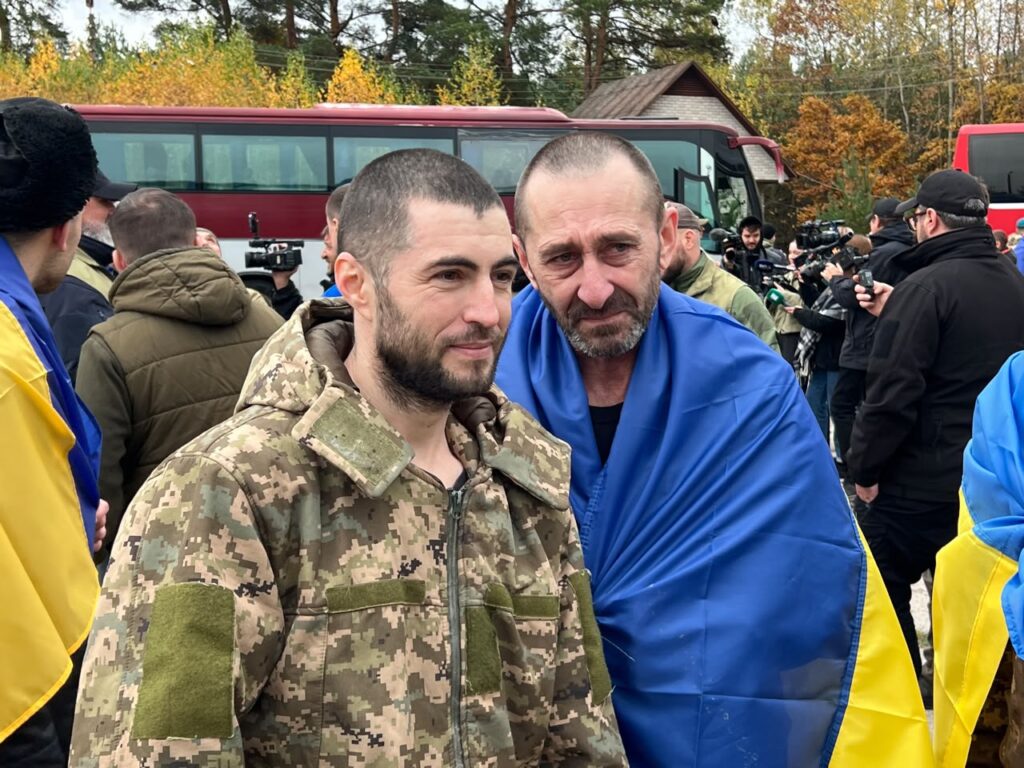
Ukrainian prisoners of war and civilians return home during a prisoner exchange with Russia on 23 October 2026. Photo: Ukraine’s Coordination Headquarters for the Treatment of Prisoners of War

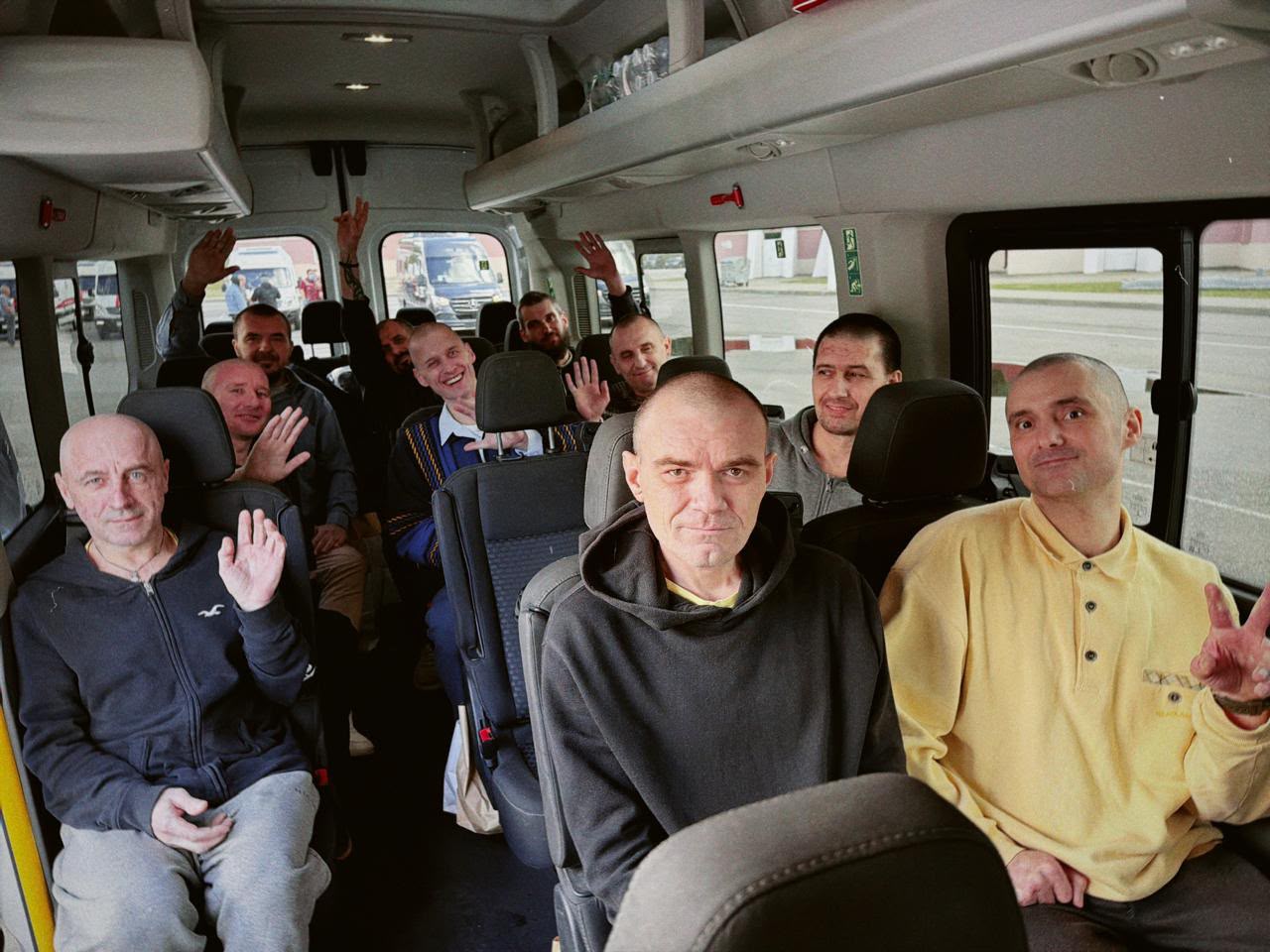
Ukraine has brought home 270 people from Russian captivity, including 261 military personnel and nine civilians, in the third stage of a prisoner exchange process that began on 19 August, Ukraine’s Coordination Headquarters for the Treatment of Prisoners of War said on 23 October.

Amid Russia’s full-scale invasion, prisoner exchanges remain one of the few channels of communication between Kyiv and Moscow. But with thousands of Ukrainian military personnel and civilians still held in Russian captivity, each swap brings home only a fraction of those awaiting release, while negotiations remain tied to the difficult process of securing the return of captives on both sides.

Most of those released today had been held since 2022, including many defenders of Mariupol. Five survivors of the July 2022 Russian attack on the Olenivka prison barracks are also among those returning home.

The exchange also included American Stephen Hubbard, a 74-year-old English teacher from Izium, Kharkiv Oblast, who was illegally captured in 2022, then sentenced and tortured by Russia, according to the Coordination Headquarters.

Ukrainian prisoners of war and civilians return home during a prisoner exchange with Russia on 23 October 2026. Photo: Ivan Vyhivskyi

Ukraine brought 270 people home from Russian captivity, including 261 military personnel and 9 civilians.

Most had been held since 2022, including defenders of Mariupol. Five survivors of Russia’s Olenivka prison attack and American teacher Stephen Hubbard are also among those… pic.twitter.com/Uyl8kz64W1

— Euromaidan Press (@EuromaidanPress) October 23, 2026

Exchange includes soldiers held for up to eight years

The exchange included members of Ukraine’s Armed Forces, National Guard, State Border Guard Service, and other security and defense units, as well as a State Emergency Service rescuer. Thirty-eight of the released military personnel are officers.

According to Ukraine’s Ombudsman Dmytro Lubinets, the exchange was “historic” because it brought home the largest number of Ukrainian military personnel sentenced by Russia: 86 who had been sentenced and one who had faced criminal prosecution.

Two of those released had been held since 2018 and 2020, spending eight and six years in captivity, respectively.

“The priorities remain unchanged: we bring home those who have been in captivity the longest, the seriously ill, and the seriously wounded,” Lubinets said, adding that efforts to return civilians and people held since 2014 also remain a priority.

Ukrainian prisoners of war and civilians return home during a prisoner exchange with Russia on 23 October 2026. Photo: Ukraine’s Coordination Headquarters for the Treatment of Prisoners of War
Ukrainian prisoners of war and civilians return home during a prisoner exchange with Russia on 23 October 2026. Photo: Zelenskyy

Nine seriously ill prisoners among those released

Nine of the returning service members are seriously ill, and some are in critical condition, the Coordination Headquarters said. The youngest person released is 24, while the oldest is 63.

Many of those released had faced criminal prosecution in Russia and been sentenced on what Ukraine describes as fabricated charges, including life imprisonment.

Ukrainian President Volodymyr Zelenskyy said most of those returning had been captured in 2022, and many had defended Mariupol. 

The released also include service members who fought in the Donetsk, Luhansk, Kharkiv, Zaporizhzhia, Kherson, Kyiv, Mykolaiv, and Chernihiv directions, as well as defenders of the Chornobyl Nuclear Power Plant.

“We remember every man and woman and continue searching for everyone,” Zelenskyy said.

red cross has had access ukrainian pows russia since 2024 around 1500 captives face prosecution without having status confirmed—ukraine’s coordination headquarters · post returned servicemen inside minibus day release 24
Explore further

Russia has kept the Red Cross away from Ukrainian POWs since 2024. Now about 1,500 captives it never confirmed as prisoners face prosecution

US and UAE thanked for assistance

Ukraine thanked the United States and the United Arab Emirates for helping secure the releases. 

All those released will undergo medical examinations, receive treatment and financial support, and take part in rehabilitation and reintegration programs after prolonged captivity.

Ukraine’s military intelligence chief and head of the Coordination Headquarters, Oleh Ivashchenko, said the return followed months of negotiations. He stressed that efforts to establish the fate of missing Ukrainians and bring everyone home would continue.

Ukrainian prisoners of war and civilians return home during a prisoner exchange with Russia on 23 October 2026. Photo: Zelenskyy
Ukrainian prisoners of war and civilians return home during a prisoner exchange with Russia on 23 October 2026. Photo: Ukraine’s Coordination Headquarters for the Treatment of Prisoners of War

The 23 October exchange follows the previous stage on 19 August, when Ukraine brought home 103 servicemembers from Russian captivity.

45 seconds of voting in the Lviv Oblast Council sparked a new dispute with Poland: Warsaw says Kyiv promised the UPA year decision will not take effect

23 octobre 2026 à 10:05

45 seconds voting lviv oblast council sparked new dispute poland warsaw says kyiv promised upa year decision take effect · post roman shukhevych commander-in-chief ukrainian insurgent army (upa) 1943 1950

On 20 October, the Lviv Oblast Council voted to declare 2027 the year of the Ukrainian Insurgent Army (UPA), its commander Roman Shukhevych, and Oleh Olzhych, a poet and member of the Organization of Ukrainian Nationalists (OUN). The vote on the UPA and Shukhevych took 45 seconds, Ukrainska Pravda reported, citing the council's online broadcast. It reopened a dispute Kyiv and Warsaw had only just settled. In May, President Volodymyr Zelenskyy gave a special operations unit the honorary name "Heroes of the UPA," and Polish President Karol Nawrocki later stripped him of the Order of the White Eagle in response.

Poland is the main hub for Western aid to Ukraine, and that role rests on Polish trust, which every new fight over the two nations' shared past erodes. Since 2022, Poland has also paid for nearly 30,000 Starlink terminals for Ukraine, Rzeczpospolita reported. The sorest point is the UPA. Poland recognizes the UPA's 1943 Volhynia massacres of Poles as genocide, a classification Ukraine disputes, pointing to the broader Polish-Ukrainian conflict of World War II, in which both sides killed civilians.

A batch vote, then a "catastrophe"

The resolution honoring the UPA commander and his fighters passed with 52 of the 55 deputies who voted, none against. The one on Olzhych passed 49 of 54. A source in the council told Ukrainska Pravda that, after a lunch break and an air raid alert, deputies voted through 30 to 40 minor items one after another without discussion, and the UPA year passed among them.

A source in the Office of the President called the situation a "catastrophe."

"Ukraine looks irrational. We only just settled the previous crisis, and now this. Everyone knew it was not allowed, the head of the oblast knew about it personally. But the chase for cheap one-day hype won out. The consequences are already here, and they will only grow," the source told Ukrainska Pravda.

The same source said the decision put the next Polish military aid package at risk. Polish Defense Ministry spokesperson Janusz Sejmej said this was "not true," and Deputy Defense Minister Cezary Tomczyk said Poland would keep helping Ukraine.

Ukraine's Foreign Ministry called the decision counterproductive, noted that oblast deputies are not subordinate to central authorities, and urged Poland to refrain from sharp steps that could hinder the normalization of relations. "Only Russia stands to gain from tension in our relations with Poland," Iryna Vereshchuk, deputy head of the Office of the President, wrote.

Kyrylo Budanov, head of Ukraine's Office of the President, gestures while speaking during an interview, wearing a black fleece marked with his name and the HUR insignia.
Explore further

“Heroes of UPA” unit will keep its name, Budanov’s office says despite Polish pressure

Warsaw holds Kyiv to its word, but Lviv won't budge

Polish Defense Minister Władysław Kosiniak-Kamysz called the decision unacceptable. Deputy Foreign Minister Marcin Bosacki told Polsat News on 21 October that it was hard to imagine a worse decision for Polish-Ukrainian relations. He said Zelenskyy's aides had assured Warsaw it would not take effect, and that the resolution had disappeared from the council's website after Poland intervened, which he called promising. Warsaw would hold the Ukrainian authorities to their word, he added.

The council itself does not plan to revoke or revise the decision, its representatives told Liga on 21 October.

On 23 October, Polish Prime Minister Donald Tusk said he had received a signal from Zelenskyy that he "will in no way support this decision" if further steps depend on him. "Ukraine will simply have very serious problems with integration if it does not also respect our sensitivity," Tusk said.

Poland bans proposal's initiator, who took part in search in Łasków, from Schengen Area

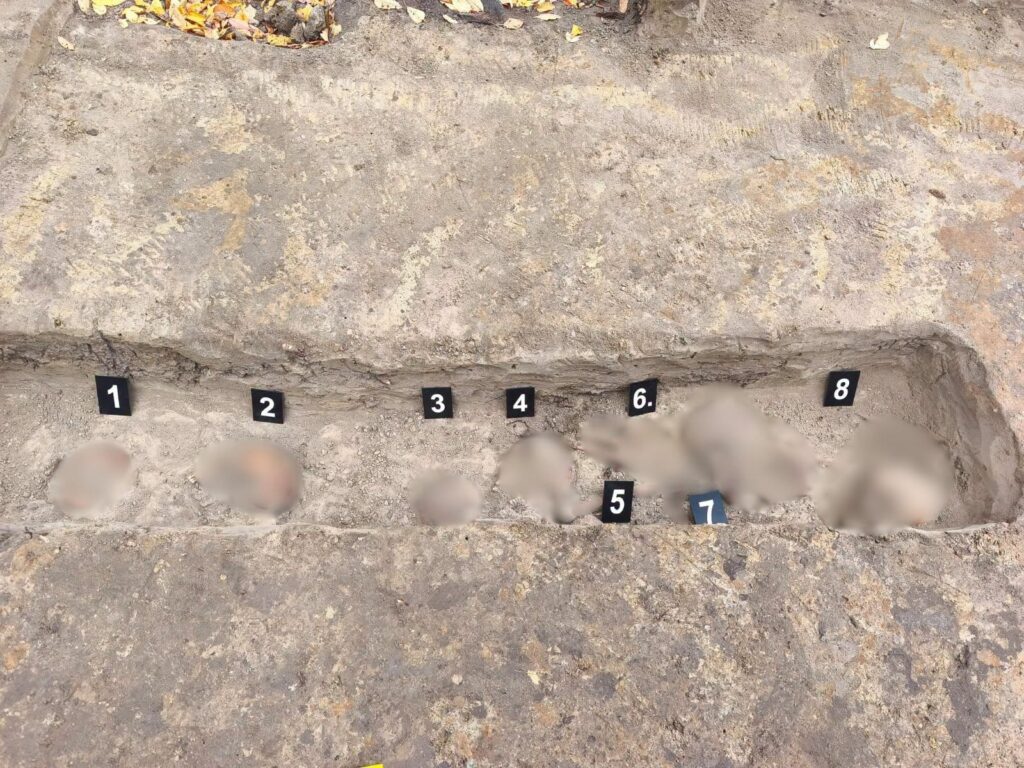
Poland has barred Sviatoslav Sheremeta, the Lviv Oblast Council deputy who initiated the decision, from entering the Schengen Area for five years, until 20 October 2031. Polish Interior Minister Marcin Kierwiński announced the ban on 21 October at the request of Foreign Minister Radosław Sikorski. Sikorski described Sheremeta as a reenactor of the Galizien Waffen-SS division.

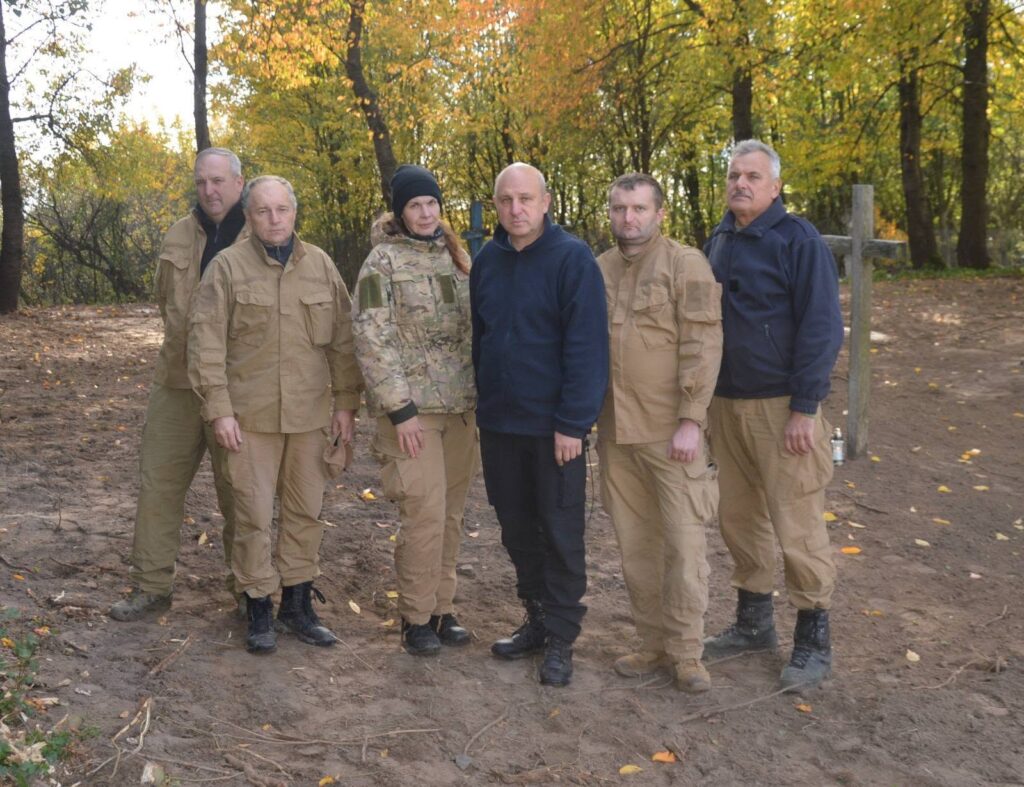
Sviatoslav Sheremeta (center), initiator of the proposal to declare a Year of the UPA in Lviv Oblast, with his team during a search for the remains of Ukrainians killed in 1944 in the village of Łasków, Lublin Voivodeship, Poland, October 2026
Sviatoslav Sheremeta (center), initiator of the proposal to declare a Year of the UPA in Lviv Oblast, with his team during a search for the remains of Ukrainians killed in 1944 in the village of Łasków, Lublin Voivodeship, Poland, October 2026. Photo: Ukrainian Institute of National Memory

Before the ban was announced, Sheremeta told Zaxid.Net that he had never taken part in military-historical reenactment, and noted that Sikorski's post had at first named a "P. Sheremeta." He found Polish officials' reaction strange, since Lviv and other oblast councils had declared years of the UPA and Shukhevych before. "This is nothing new," he said. He added that the decision was not aimed at anyone, least of all Poles or Poland, and that a ban would hurt the two countries' cooperation on commemoration.

Ukrainians have the right to choose their own heroes and honor them, Sheremeta believes. He suggested that recent statements by Polish officials may be linked to the discovery of Ukrainian civilians killed by Polish armed groups in Łasków in 1944.

Human remains, likely belonging to a Ukrainian killed in 1944 in the village of Łasków, Lublin Voivodeship, Poland, October 2026
Human remains, likely belonging to a Ukrainian killed in 1944 in the village of Łasków, Lublin Voivodeship, Poland, October 2026. Photo: Ukrainian Institute of National Memory

Sheremeta also directs Dolia, a memorial search center. In October, Dolia carried out a search in Łasków, a village in Poland's Lublin Voivodeship, and found the remains of more than 40 Ukrainians, including women and children. The Ukrainian Institute of National Memory, which commissioned the search, says they were killed by units of the Polish Home Army and the Peasants' Battalions in an attack on 10 March 1944 in which more than 300 people died. Exhumation is planned for spring 2027.

The dispute over shared memory has shaped relations between Kyiv and Warsaw for a decade. After local authorities in Hruszowice removed a UPA monument in 2017, Ukraine's Institute of National Memory halted exhumations of Poles in Ukraine. Despite a 2019 pledge by the institute to stop blocking them, the first exhumation took place only in April 2025, in Puzhnyky, after Tusk announced a breakthrough.

  • ✇Euromaidan Press
  • Russia may stage sabotage in Eastern Europe, but wants Kyiv blamed, Ukraine’s Intelligence warns
    Ukraine’s Defense Intelligence (HUR) warned that Russia may stage sabotage in Central and Eastern Europe, including the Baltic states, and blame Ukraine for the attacks, in a Telegram post on 23 October. The warning comes three days after The Wall Street Journal reported that US intelligence traces Europe’s sabotage wave to Putin’s personal order. If Russia stages new attacks and pins them on Ukraine, as HUR warns, European anger could turn on Kyiv rather than the Kremlin. This goes fur
     

Russia may stage sabotage in Eastern Europe, but wants Kyiv blamed, Ukraine’s Intelligence warns

23 octobre 2026 à 10:02

explosives found meters drone crashed near bundeswehr air base—investigators say matches gru's leipzig attack devices · post police officers search debris wunstorf base lower saxony germany 15 2026 german dpa

Ukraine’s Defense Intelligence (HUR) warned that Russia may stage sabotage in Central and Eastern Europe, including the Baltic states, and blame Ukraine for the attacks, in a Telegram post on 23 October.

The warning comes three days after The Wall Street Journal reported that US intelligence traces Europe’s sabotage wave to Putin’s personal order. If Russia stages new attacks and pins them on Ukraine, as HUR warns, European anger could turn on Kyiv rather than the Kremlin. This goes further than HUR’s statement on 2 October, which named potential Russian targets in Europe but did not mention a plan to blame Ukraine for attacks.

HUR says Moscow wants to discredit Ukraine’s army

Russia is stepping up its hybrid strategy to destabilize the European Union, according to HUR. The agency identified two aims: reducing foreign support for Ukraine by discrediting its Defense Forces, and intimidating European governments and societies.

The accusations would be spread through Russian propaganda channels and international platforms accessible to the Kremlin.

Potential targets include infrastructure and Russian Orthodox Church sites

HUR listed several potential targets for Russian provocations:

  • critical infrastructure and areas bordering Russia;
  • the Kaliningrad exclave;
  • areas of EU countries with Russian-speaking populations;
  • Kremlin-controlled sites, including properties belonging to the Russian Orthodox Church network;
  • historical sites associated with Russia.

The list reflects HUR’s assessment of potential targets, not confirmation that attacks at these locations are planned.

Earlier warnings and reported sabotage

On 2 October, HUR said Russian intelligence services had been ordered to increase activity in EU and NATO countries. It named military facilities, critical infrastructure, communications systems, and Starlink ground stations as potential targets and said it had alerted partners.

Warnings of Russian false flags on NATO’s eastern flank predate HUR’s. In August, Bloomberg reported, citing an unnamed European intelligence official, that Russia might expand hybrid attacks against Poland and the Baltic states, including false-flag attacks. A European government official separately told the agency that the CIA had warned countries in the region of a possible Russian attack. Lithuania’s military intelligence had warned earlier in August that Moscow might reassemble captured Ukrainian drones for false-flag strikes on critical infrastructure in the Baltic region.

Meanwhile, The Wall Street Journal reported on 20 October that US intelligence agencies believe the attempted drone attack on Leipzig-Halle Airport in Germany in early August was among the opening shots of a sabotage campaign ordered by Russian President Vladimir Putin. The Journal cited European officials briefed on the intelligence findings.

According to the newspaper, at least three drones carrying military-grade Semtex explosives were involved. One struck an Antonov cargo plane used to transport military aid to Ukraine but failed to explode. Another collided with a different aircraft, while a third detonated near the airport perimeter. German newspaper Welt am Sonntag has since named two suspects, citing German investigation files. Earlier German media reports described the sequence differently.

The Journal also reported sabotage attacks on Starlink stations in Poland, Lithuania, and Bulgaria in recent weeks. In August, Slovak authorities said they had foiled a planned arson attack on a Ukrainian drone factory, the Journal reported.

Russia denies involvement in sabotage in Europe. Responding to Berlin’s accusations over the Leipzig incident in early September, Putin asked where the evidence was.

Ukraine wants partners’ Patriot interceptors now. Europe can hand them over only with US approval, Ukraine’s president says

23 octobre 2026 à 09:25

germany urges nato neutralize russian uavs factories patriot air defense system's launchers dutch ministry ukraine news ukrainian reports

Ukraine's defense minister raised the urgent need for Patriot interceptors with Sweden on 22 October, the Defense Ministry reported. The same day, President Volodymyr Zelenskyy warned of more Russian ballistic strikes and blamed US supply cuts.

Patriots are Ukraine's main defense against Russian ballistic missiles, and their deliveries keep shrinking. Figures Zelenskyy released in August showed Patriot interceptor deliveries falling from 675 in 2023 to 364 in 2025, with 264 projected for 2026. Europe holds enough PAC-2 and PAC-3 interceptors for Ukraine's minimum winter needs, Zelenskyy told journalists on 16 October, but he did not yet know how many Europe would hand over, Ukrainska Pravda reported.

Partners' stocks now, Ukraine's missiles later

Russia fired 21 ballistic missiles at Kyiv overnight on 22 October, Zelenskyy said. Defense Minister Yevhenii Khmara told his Swedish counterpart, Pål Jonson, that Ukraine must counter ballistic threats as fast as possible, in particular with Patriot interceptors.

1000 patriot missiles arrive too late winter so ukraine asked ramstein arms coalition open its warehouses · post ukraine's defense minister yevhenii khmara right commander-in-chief major general mykhailo drapatyi meeting
Explore further

1,000 Patriot missiles arrive too late for this winter, so Ukraine asked the Ramstein arms coalition to open its warehouses

The ministry's readout says Ukraine has Patriot missiles under contract. It also says Kyiv asks partners to transfer interceptors from their stocks in exchange for future deliveries allocated to Ukraine.

Khmara made the same request at the Ukraine Defense Contact Group meeting on 8 September. He said then that Ukraine was contracting about 1,000 Patriot missiles with partners' help and an EU loan, but they would arrive only in the coming years, LB reported. He asked allies for missiles from their stocks now, in exchange for future upgraded missiles under Ukraine's contracts.

"Only when the American side approves it"

Zelenskyy spoke to journalists before meeting Finnish Prime Minister Petteri Orpo, Ukrinform reported. He said the Americans had reduced supplies and Russia would step up ballistic attacks.

"Europeans can provide the missiles only when the American side approves it," Zelenskyy said.

He said the US had sent most of its interceptors to the Middle East.

On 19 October, Zelenskyy told US senators that US Defense Secretary Pete Hegseth was not signing off on Patriot deliveries allies had already paid for. Axios obtained the call transcript from Ukrainian officials. A US government official told the Kyiv Independent that Ukrainian officials' claims that Hegseth was holding up the missiles were "not true."

Washington says nothing has changed. "We have our own needs, too," Secretary of State Marco Rubio said on 20 October, but there is "nothing being deliberately denied to Ukraine." Hegseth told reporters in Eau Claire, Wisconsin, that the US had not changed its posture toward Ukraine, "but certainly with things like interceptors, we want to make sure our guys have the most possible as well."

  • ✇Euromaidan Press
  • The money starts as bags of cash in a Moscow market and ends up clean in China, leaked files show
    Russia's state-backed payment firm A7 took in at least 283 tons of cash rubles, worth more than $14 billion, between November 2024 and July 2025, and turned much of it into payments to China that hide where the money came from, the International Consortium of Investigative Journalists (ICIJ) and Russian investigative outlet Proekt reported on 21 October, citing leaked internal records. Cut off from Western banks over its war against Ukraine, Russia now moves money the way drug gangs lau
     

The money starts as bags of cash in a Moscow market and ends up clean in China, leaked files show

23 octobre 2026 à 08:19

money starts bags cash moscow market ends up clean china leaked files show · post branch russia’s state defense bank promsvyazbank russian-occupied donetsk ukraine 2023 banko_psb_en_placo_bakuaj_komisaroj_(donecko) news ukrainian reports

Russia's state-backed payment firm A7 took in at least 283 tons of cash rubles, worth more than $14 billion, between November 2024 and July 2025, and turned much of it into payments to China that hide where the money came from, the International Consortium of Investigative Journalists (ICIJ) and Russian investigative outlet Proekt reported on 21 October, citing leaked internal records.

Cut off from Western banks over its war against Ukraine, Russia now moves money the way drug gangs launder theirs: cash goes in, and clean-looking wire transfers come out abroad. The overlap is literal.

Last year, UK investigators found that a network laundering British drug gangs' cash had bought a Kyrgyz bank that was handling payments for Promsvyazbank, Russia's state defense bank. That same bank co-owns A7, which "is also likely to facilitate cash-based money laundering," anti-money-laundering expert George Voloshin told ICIJ. On 1 October, the US Treasury named A7 a "significant transnational criminal organization." Most of the market cash pays Chinese suppliers, and China supplies about 90% of the high-priority Western-restricted items Russia imports for its weapons. Drone makers working for the Russian army are among A7's clients, Proekt found in April.

From market stalls to a defense bank vault

Much of the cash came from Moscow's giant Sadovod market, where broker teams known as "departments" collect bags of rubles from traders, the records show. Vans take the numbered bags to an A7 office, where about 50 cashiers count the money before it is trucked to Promsvyazbank. The bank vaults it and credits A7. At its peak, A7 handled at least 58 tons of cash a month.

Russia's central bank has flagged the problem itself. Money of unknown origin comes "primarily" from Moscow's wholesale and retail markets and from illegal crypto exchanges, a senior Central Bank official said in September, as quoted by ICIJ.

Sadovod market in Moscow, where broker teams later collected cash for the A7 payment firm, Russia, 19 September 2023
Sadovod market in Moscow, where broker teams later collected cash for the A7 payment firm, Russia, 19 September 2023. Photo: Nikita Andreev/Wikimedia Commons

Clean money for Chinese factories

A7 then orders shell companies outside Russia to pay its clients' suppliers, mostly Chinese exporters. The money moves through Kyrgyzstan, largely via the state-owned Trading Company of the Kyrgyz Republic, and the wire transfers carry no trace of cash or of Russia. The records list accounts at ICBC, Bank of China, Agricultural Bank of China, and China Construction Bank. One $287,000 transfer went through Standard Chartered's Hong Kong branch with "Sadovod" recorded as the client.

Chinese banks began refusing Russia-linked payments in December 2023 under the threat of US secondary sanctions. Stripping the funds of their origin makes them easier for Chinese banks to accept, illicit-finance expert Zachary Tvarozna told ICIJ. "The only company that sees everything is A7 itself," Voloshin said.

A7, Promsvyazbank, the Chinese banks, and Kyrgyzstan's economy ministry did not answer ICIJ's questions. A7 has publicly rejected the US accusations, saying it runs "a modern, multi-tiered compliance system."

germany holds up european union's latest russia sanctions package illustrative businesscensornet baltics poland block new
Explore further

US Treasury cracks down on Russia-China-Kyrgyzstan payment network, expands sanctions

Sanctioned, but still moving

A7 launched in late 2024, co-owned by Promsvyazbank and led by Moldovan oligarch Ilan Shor, a "sanctioned and convicted criminal fraudster," according to the US Treasury. Ukraine sanctioned its network in February, and the UK followed in May. A7 claimed to have moved more than 7.5 trillion rubles, about 13% of Russia's 2025 foreign trade transactions, and its network also helped Iran sell oil and buy weapons, the Treasury said.

Sanctions did hit A7's crypto side. Daily volume of its ruble token A7A5 fell 96% from its peak by June 2026, blockchain analytics firm Elliptic found. The cash channel is harder to touch: Western banks can see where A7's money lands, but not where it starts.

Russia has kept the Red Cross away from Ukrainian POWs since 2024. Now about 1,500 captives it never confirmed as prisoners face prosecution

23 octobre 2026 à 07:20

red cross has had access ukrainian pows russia since 2024 around 1500 captives face prosecution without having status confirmed—ukraine’s coordination headquarters · post returned servicemen inside minibus day release 24

About 1,500 Ukrainians held in Russia and occupied Ukraine are facing criminal prosecution even though the International Committee of the Red Cross (ICRC) has never confirmed them as prisoners, Petro Yatsenko, representative of Ukraine's Coordination Headquarters for the Treatment of Prisoners of War, said on 19 October at an event on missing persons at UN headquarters in New York. The event was organized by the permanent missions of Ukraine and Poland to the UN.

Without ICRC confirmation, there is no official record that a person is alive or held, which leaves captives without proper protection, the headquarters said. Amnesty International calls this enforced disappearance, a practice that puts people outside the protection of the law. The ICRC itself has been shut out. Under the Geneva Conventions it is supposed to visit prisoners of war, but on 18 September it told Reuters that Russia has given it no access to Ukrainian POWs since 2024. UN investigators have gathered evidence of systematic torture in the detention centers where they are held. Russia denies torturing or mistreating POWs.

Families lose track of captives as Russia moves them between prisons

Kateryna Nazarii, who coordinates families of the 24th Mechanized Brigade, is the wife of a Ukrainian serviceman held by Russia. The ICRC has not been able to confirm his status as a prisoner of war. Russia does not let the ICRC or other humanitarian organizations into the prisons where Ukrainians are held, and does not hand over complete lists of prisoners, Nazarii said at the event. When families do find out where a relative is held, she said, that person is moved to another prison, and contact is lost again.

Many of those whose captivity Russia has not confirmed are civilians. Among them, Yatsenko said, are about 200 young people born after 2000 and nearly 400 people over 60. None of them has been confirmed through the ICRC, according to the headquarters.

Secrecy and torture in Russian captivity

Most Ukrainian POWs are cut off from the outside world. In a March 2025 report, Amnesty International found that 24 of the 43 families of confirmed POWs it interviewed had received no word at all from their relative. Counting prisoners allowed only one brief call or text at the start of captivity, 72% of those 43 were held incommunicado. The UN monitoring mission found that only 21 of 174 former POWs it interviewed had been able to correspond with their families, Amnesty noted.

Silence is what makes the abuse possible, Amnesty argues. The UN monitoring mission found that 97% of former POWs it interviewed had been tortured or ill-treated, the report notes, and methods include beatings, electric shocks, burns, and sexual violence. A UN commission of inquiry concluded in 2024 that the torture amounted to a "coordinated state policy," the report adds.

A Ukrainian defender who returned from Russian captivity shows the effects of his detention. June 2023
A Ukrainian defender who returned from Russian captivity shows the effects of his detention. June 2023. Photo: libkos/Instagram

When the Red Cross did get in, it saw what Russia chose to show. An OSCE expert mission reported in September 2025 that, according to former prisoners, Russian staff presented only prisoners in relatively good physical condition during ICRC visits and kept the sick and tortured out of sight. The experts also found that Russia blocked visits to some facilities and gave incomplete prisoner lists.

The unconfirmed are not a small group. A quarter of the 3,767 POWs who returned to Ukraine by November 2024 had never been confirmed by Russia as captives, the Coordination Headquarters said, as cited by Amnesty. Hundreds or possibly thousands more may still be held without Russia notifying the ICRC, Amnesty concluded.

Those who come back describe the conditions. Anatolii Zemlianyi, a soldier of the 2nd Assault Brigade released in the May 2025 exchange, told Frontliner that he spent eight months in a hospital in occupied Donetsk with a grenade wound in his leg and got no proper treatment. In captivity, he said, prisoners drank water from puddles.

A Ukrainian service member who returned from captivity compares his current appearance with a photo taken before his detention. June 2023
A Ukrainian service member who returned from captivity compares his current appearance with a photo taken before his detention. June 2023. Photo: libkos/Instagram

Russia continues to hold Ukrainian civilians unlawfully

Nobody knows how many Ukrainian civilians Russia holds. "It is not known," the UN human rights office said in a September 2025 report, which cites Ukraine's Prosecutor General's Office as having identified 15,250 civilians detained by Russia between February 2022 and August 2025. Exchanges bring very few of them back: of 5,941 people released from Russian captivity between February 2022 and 14 August 2025, 352 were civilians, Ukraine's human rights commissioner Dmytro Lubinets told The Week.

Under the Fourth Geneva Convention, an occupying power may intern civilians only for imperative reasons of security, and only under a regular procedure with periodic review, the same UN report notes. Russia instead treats detained civilians as criminals, Oleksandr Kononenko, a representative of Ukraine's human rights commissioner, told relatives of civilian hostages in 2023.

"This convention clearly states that civilian hostages should not be detained. They should be released. What is Russia doing? It 'makes all these people criminals' and accuses them of terrorism, opposition to a special military operation, and assistance to the Ukrainian Armed Forces, which is completely absurd from the point of view of an independent state and those people who are patriots of their state," Kononenko said.

Kyiv believes Russia detains civilians partly to trade them. Regular civilian swaps risk signaling to Russia that by detaining more Ukrainians it could get more Russians released, so it may seize more people to replenish its "exchange fund," Lubinets said. Ukraine therefore demands that civilians be released unconditionally. Amnesty sees a second motive. It concluded that Russia has long used arbitrary arrest, torture, and enforced disappearance to intimidate civilians in areas it controls.

Russia keeps hitting Ukraine’s arms plants. Now private developers can dig them space underground—and sell or rent it to them

23 octobre 2026 à 06:55

The FP-1 "Deep Strike" kamikaze drone at the factory.

Ukraine's Cabinet has opened the construction of underground arms production space to private investors, Prime Minister Serhii Koretskyi announced on 22 October, saying the rule applies from that day. A second decision eases imports for partner-funded weapons production.

Koretskyi said the change would add more of the space arms makers need, especially as Russian strikes intensify. On 9 December 2025, the Defense Ministry reported that more than UAH 1.5 billion (about $36 million) in budget support had let war-damaged defense firms restore operations. At the time, the ministry planned to relocate or duplicate the most critical plants, and underground complexes were under construction. The new model puts no additional burden on the state budget, Deputy Defense Minister Hanna Hvozdiar said. The bill still lands somewhere, though. Defense firms will buy, lease, or take the space for use, and companies working on state contracts are among those eligible. If they pay developers out of state-contract revenue, part of the cost could come back to the budget.

Developers build, arms makers move in

The changes to Cabinet resolution No. 1494 give private investors a simplified route to construction and permits, the ministry said. Developers can build protected facilities with their own or raised funds. Deadlines, terms of use, and the handover are set in a contract between investor and defense firm. The mechanism covers new sites as well as moving or expanding existing production. If a firm gets only part of a facility, that part must be at least 25% of the facility's total area and fit for production.

Estonian and Ukrainian soldiers fly drones together during Exercise Hedgehog 2025 in Estonia, where Ukrainian operators were credited with knocking out two battalions in a simulated engagement. Photo: vbl/OR-7 Ardi Hallismaa/ERR
Explore further

One year of Ukrainian arms exports, and industry has questions: how much army gained, where Berlin office is, who joins joint ventures

Developers must sign deals with, among others, residents of Defence City, Ukraine's special legal regime for arms makers, holders of state defense contracts, and firms the ministry designates as critical.

Tax break for partner-funded arms production

Components for weapons production that international partners pay for will enter Ukraine free of import duty and VAT, Koretskyi said. He added that customs inspection and clearance would be simplified and sharply shortened through a "single window."

The Starlink hot potato: Musk points to Trump, Trump points to nobody, then credits Musk with the fix. The speed limit stays

23 octobre 2026 à 06:53

US President Donald Trump and Elon Musk in the Oval Office on 11 February 2025

US President Donald Trump said Elon Musk had restored Ukraine’s Starshield speeds, but the restrictions remained in place on 23 October, according to Ukrainian officials.

The cap, in place since 14 October, has disrupted interceptor drone missions against jet-powered Shaheds flying above 400 km/h for more than a week. On 16 October, Trump told reporters that, from what he understood, nothing had changed with the service. His latest claim that Musk restored it appears to acknowledge the restriction, even as he denies ordering it.

Ukraine says restrictions remain

“At the moment, there is no confirmation that the restrictions have been lifted,” a Defense Ministry official told LIGA.net on the morning of 23 October. The official said connections continued to drop at above 161 km/h.

Presidential adviser Serhii Beskrestnov wrote on Telegram on 23 October that no lifting had been recorded. He said occasional operation above the limit could result from SpaceX algorithms or usage conditions.

A day earlier, President Volodymyr Zelenskyy said US Secretary of State Marco Rubio had promised to return with information in “48 plus hours,” according to his remarks to reporters in Kyiv. A Ukrainian official separately told The Kyiv Independent that reports of restored speeds were “all false.”

A senior European official told the Associated Press that the cap remained at about 160 km/h and that Ukraine had no clear explanation of who ordered it or why.

Conflicting reports of a lift

Trump said Musk had restored the speeds but declined to clarify whether he had contacted him.

“I guess the bottom line, he put it back,” Trump said.

Meanwhile, AP reported that the Wall Street Journal said Musk had agreed to lift the restrictions. The Ukrainian drone and mapping channel Kartohraf posted on the evening of 22 October that the cap had been lifted. The Economist’s Oliver Carroll said that frontline drone commanders thought it had likely been lifted but were still testing, according to his post on X.

Who ordered the cap?

The order came from inside the White House, according to a Reuters report on 15 October. Days later, the Wall Street Journal reported that Musk ordered the slowdown. Rubio denied White House involvement, and Defense Secretary Pete Hegseth said on 20 October that the US had not ordered the restriction. Meanwhile, Democratic Senator Richard Blumenthal announced an inquiry into how the service was slowed, AP reported.

Ukraine’s gains in Donetsk Oblast rely on drones the cap slows

The 3rd Army Corps’ Operation Vivaldi retook ground north of Lyman in Donetsk Oblast with drones, many of which rely on Starlink or Starshield, and those gains could erode if the cap stays.

At the same time, Radio Svoboda reported that Ukraine needs a limit of at least 450 km/h and that Germany pays for the service under a contract running until April 2027.

Russia’s tax service runs on two key data centers. Drones went after one of them overnight, along with a chemical plant that supplies explosives makers

23 octobre 2026 à 06:38

russia’s tax service keeps its databases two places drones went after one overnight also hitting air base explosives-chemical plant · post fire seen residential area gorodets nizhny novgorod oblast near

Drones attacked a Russian tax-service data center overnight on 23 October, Ukrainian monitoring channel Exilenova+ reported. A chemical plant in the Urals was also attacked, and a fire broke out near a Russian bomber base by late morning. Russian officials admitted injuries and damage but blamed falling debris. Ukraine has not commented.

Ukraine's long-range drones have widened their target list from Russian refineries to the servers and chemicals that keep Russia's state and war industry running.

The tax service's data center in Gorodets

The target in Gorodets, Nizhny Novgorod Oblast, is one of the Federal Tax Service's two key data centers, which work as a geographically distributed pair. It stores and processes state registers, including tax databases, Exilenova+ said. The extent of the damage is unconfirmed. The site lies about 785 km from Ukraine's northern border in a straight line.

The moment of impact at Russia’s Federal Tax Service data center in Gorodets last night. pic.twitter.com/PftC6keRpY

— Exilenova+ (@Exilenova_plus) October 23, 2026

Eyewitness footage shows a blast and fire in the area of the data center, which serves both the tax service and the Finance Ministry, Russian Telegram channel Astra found. The center opened in 2015. Mikhail Mishustin, then head of the tax service and now Russia's prime minister, attended the launch.

Nizhny Novgorod Governor Gleb Nikitin claimed air defenses repelled 19 drones. Falling debris injured three people in the Gorodets district and damaged several homes, an educational facility, and an infrastructure facility, he said, and local schools switched to remote learning. A Pantsir air defense missile hit a house, Exilenova+ claimed, though officials recorded it as a drone hit.

Ukrainian strikes inside Russia on Gorodets, Berezniki, and Voronezh, with distances from Ukraine, 23 October 2026
Ukrainian strikes inside Russia on Gorodets, Berezniki, and Voronezh, with distances from Ukraine, 23 October 2026. Map: Euromaidan Press/Datawrapper

This month, drones already hit three Yandex data centers and a VK data center near St. Petersburg.

A chemical plant behind Russia's gunpowder

In Berezniki, Perm Krai, smoke rose over Uralchem's Azot plant as air defenses fired, Astra reported. The regional security ministry announced a drone attack at about 06:00, and authorities closed the airspace within 50 km of the city. Ukraine's long-range Liutyi drones visited Berezniki, Exilenova+ wrote.

Our old friends, the Liutyi drones, paid Berezniki a visit today. Haven’t seen them in a while. 🫡 pic.twitter.com/NXuhIJ3xpm

— Exilenova+ (@Exilenova_plus) October 23, 2026

The attack on Azot was continuing in the morning, the channel wrote, adding that the plant covers about 140 hectares with some 90 production buildings. It makes ammonia, nitric acid, ammonium and potassium nitrate, and urea. Russian defense plants use its nitric acid to make explosives and gunpowder, including the Perm gunpowder plant, Astra said. Berezniki lies 1,500–1,600 km from Ukraine's border and the war zone.

Smoke rises over Uralchem's Azot chemical plant in Berezniki, Perm Krai, after a drone attack, Russia, 23 October 2026
Smoke rises over Uralchem's Azot chemical plant in Berezniki, Perm Krai, after a drone attack, Russia, 23 October 2026. Photo: Exilenova+/Telegram

Drones attacked Azot before, on 11 September. Earlier this year, Ukraine's Security Service hit Lukoil's refinery in the same region.

phones down water off factory roof broken open russian-occupied luhansk counts damage after another night drones · post fire occupied during drone attack 23 2026 ukraine news ukrainian reports
Explore further

Phones down, water off, a factory roof broken open: Russian-occupied Luhansk counts the damage after another night of drones

Fire near a Su-34 base in Voronezh

Late in the morning, Voronezh Governor Aleksandr Gusev declared a missile alert, and explosions followed in the city. Gusev later claimed air defenses downed several "jet-powered aerial targets." Debris set dry grass on fire in a suburb and damaged outbuildings and several cars, he said, adding that no one was hurt.

Missile alert in several regions of the Russian Federation.

Explosions have been heard in Voronezh. We are assessing the situation. pic.twitter.com/GY0NRZTo4x

— Exilenova+ (@Exilenova_plus) October 23, 2026

Eyewitness footage shows fire and smoke near Baltimor military airfield, Astra found. The strike preliminarily hit the grounds of a former military aviation engineering university and a nearby parking area for military aircraft, Exilenova+ said.

Fire and smoke near Baltimor military airfield in Voronezh after a Ukrainian attack, Russia, 23 October 2026
Fire and smoke near Baltimor military airfield in Voronezh after a Ukrainian attack, Russia, 23 October 2026. Photo: Astra/Telegram

Baltimor hosts the 47th Guards Bomber Aviation Regiment, whose Su-34s Russia uses to strike Ukraine, Militarnyi reported, saying Ukraine attacked the airfield with missiles. Voronezh lies about 185 km from Ukraine's border. Smoke rose over the base after an attack on 27 May, and a fire broke out near it on 2 September.

Moscow counts drones, Kyiv stays silent

Russia's Defense Ministry claimed it downed 443 drones overnight over 20 Russian regions, including Nizhny Novgorod Oblast and Perm Krai, as well as Russian-occupied Crimea and two seas. Ukraine's General Staff has not reported on the strikes. A night earlier, drones reportedly hit a sanctioned weapons plant near Moscow.

Russia's air defenses now have to cover state servers and Ural chemical plants as well as the airfields its bombers fly from.

Russia’s Doppelgänger operation used fake Ukrainian channels to spread disinformation. Hacked files show who ran it

23 octobre 2026 à 05:27

russia’s doppelgänger operation used fake ukrainian channels spread disinformation leaked files show ran · post sergei kiriyenko first deputy chief staff russian presidential administration kremlin video conference regional heads 8

Sergei Kiriyenko, first deputy chief of staff of the Russian Presidential Administration, set the goals for the Ukraine strand of the operation, launched in early 2023 under the codename "Uganda." Alexander Kharichev, now head of the Kremlin's Directorate for Monitoring and Analysis of Social Processes, oversaw it, according to hacked correspondence published by The Insider on 21 October.

Doppelgänger disguises Russian narratives as local news through cloned media sites, fake accounts, paid ads, and fabricated videos. The FBI named Kiriyenko among its orchestrators in 2024, and its contractor, the Social Design Agency (SDA), run by Ilya Gambashidze, is still expanding, now targeting AI chatbots. The new files go inside the Ukraine campaign and show the operation reporting even exposed fakes to the Kremlin as achievements.

Telegram channels posing as Ukrainian

An internal briefing on narratives says the project ran its Telegram channels on the principles of agent work and psychological operations, the Russian version of the investigation shows. Early on, the team decided to disguise all its outlets as Ukrainian and to run its campaigns without direct Russian propaganda. Every channel carried Ukrainian news to look unconnected to Russia. Dropping pro-Ukrainian themes, the briefing warned, would eventually expose the client and wreck the whole plan.

Collage by Euromaidan Press
Explore further

Russia-linked bot networks kept their weekly rhythm after drone strikes on three Yandex data centers—disinformation monitor LetsData

Four goals and a can of stew

Kiriyenko set four goals: discredit Ukraine's military and political leadership, split its elites, demoralize its army, and disorganize its population. The SDA prepared the project's pitch and carried out the work.

Political strategist Alexander Asafov proposed fakes of his own: in May 2023, that soldiers were bribing commanders to avoid the front, and in January 2024, that Ukraine was pulling air defenses back to Kyiv to protect the authorities.

After an Il-76 military transport crashed in Belgorod Oblast on 24 January 2024, Moscow claimed it had been carrying Ukrainian prisoners of war. Kharichev's subordinate Yevgeny Kazakov, chairing a meeting in his place, proposed sending a fake to the widows of Ukrainian soldiers: "They died for an expensive Il-76—the Russians have few of those." The idea was dropped.

The same meeting produced another fake, and three days later the team launched it: that recruitment centers had sent widows a can of stewed meat with a little flag as compensation. The same producers also oversaw letters falsely attributed to Deputy Defense Minister Nataliia Kalmykova, the Russian version says.

Debunks filed as results

The SDA collected coverage of its work in a folder for the Kremlin. It filed the "Zelensky's yacht" story, which JD Vance, then a US senator and now US Vice President, echoed, together with its debunk. The report also included a TikTok campaign about former Defense Minister Oleksii Reznikov's family that the BBC had already exposed.

The Insider concludes that the team has had more failures than successes. The US sanctioned Gambashidze and the SDA in March 2024, and the UK followed in October.

Phones down, water off, a factory roof broken open: Russian-occupied Luhansk counts the damage after another night of drones

23 octobre 2026 à 05:03

phones down water off factory roof broken open russian-occupied luhansk counts damage after another night drones · post fire occupied during drone attack 23 2026 ukraine news ukrainian reports

Drone strikes disrupted communications and power in part of Russian-occupied Luhansk overnight on 23 October, Ukrainian monitoring channel Exilenova+ reported. It was the third night in four that drones went after communications in occupied eastern Ukraine. A pro-Russian local channel also showed a damaged factory, and the occupation authorities have stayed silent.

Ukraine's drones have spent months hitting what keeps Russia's occupation running, from fuel depots to supply lines and now communications.

Blasts before dawn, then outages

Explosions hit Luhansk before dawn, and the strikes probably targeted communications facilities, Exilenova+ said. Another Ukrainian monitoring channel, Supernova+, wrote that the city's TV tower came under attack. Exilenova+ posted night footage of the strikes.

The moment of arrival in Luhansk. Following the explosions, we are experiencing disruptions to communications and the electricity supply. pic.twitter.com/rNHXRJcVNt

— Exilenova+ (@Exilenova_plus) October 23, 2026

A drone attack damaged the building of the local telecom company, pro-Russian local channel Ogonyok Luhanska wrote on 23 October. It listed switches and servers among the damaged equipment and said the damage could explain landline outages and possible internet problems. The channel did not say whether the damage came from this attack or the one two nights earlier.

Strikes on local communications facilities in occupied Luhansk. pic.twitter.com/4Jz7aK7tKs

— Exilenova+ (@Exilenova_plus) October 23, 2026

By morning, water stopped flowing in parts of Luhansk and nearby villages, including Metalist and Tsvitni Pisky. A notice posted by local Telegram channel Luhansk Online cited unstable voltage at water facilities. The city's water utility later switched to backup phone numbers after its dispatch lines failed.

Third night in four

Overnight on 20 October, drones struck Ugletelecom, the occupation's telecom operator in Donetsk. A night later, they hit the seized Ukrtelecom building in Luhansk, which houses the occupation's mobile operator Lugacom. That strike disrupted the internet so badly that service centers across occupied Luhansk Oblast stopped accepting documents.

ukraine drone forces scale up operational depth locomotives comms towers depots hit occupied regions three days · post russian locomotive crosshairs ukrainian fp-2 donetsk oblast 25 2026 video robert madyar
Explore further

Ukraine drone forces expand kill zone into occupied regions, commander says: Russia’s trains, comms towers, and depots struck

Silence from the occupation

The occupation authorities have not commented. Leonid Pasechnik, the Russian-installed head of occupied Luhansk Oblast, posted nothing about the attack. On 21 October, he claimed Kyiv was carrying out "terrorist strikes" on civilians. Russia's Defense Ministry claimed it downed 443 drones overnight over Russian regions, Crimea, and two seas, without mentioning Luhansk. The same night, Russia launched 176 drones at Ukraine, some from occupied Donetsk and from Hvardiiske in occupied Crimea, Krym.Realii reported, citing Ukraine's Air Force.

Ukraine's General Staff has not reported on the attack yet. After the previous strike on Luhansk, it said Ukrainian forces hit command posts of Russian units in the Luhansk area.

A pipeline-valve plant hit, too

Ogonyok Luhanska also posted daylight photos of the Marshal plant after what it called a "night arrival." They show a damaged workshop roof, and the channel wrote it had information that the drone hit inside the plant. The Luhansk Pipeline Valve Plant Marshal, registered in Ukraine in 1994, makes taps and valves at 13 Montazhna Street, according to Ukrainian state registry data published by VB.ua.

The Marshal pipeline-valve plant in occupied Luhansk with a damaged workshop roof, 23 October 2026
The Marshal pipeline-valve plant in occupied Luhansk with a damaged workshop roof, 23 October 2026. Photo: Ogonyok Luhanska/Telegram

Earlier that morning, Luhansk Online reported restricted traffic on Montazhna Street between Brestska and Sukhodilska streets.

Ukraine has hit industrial sites in occupied Luhansk Oblast before. For example, in March, drones struck a plant in Alchevsk that made artillery shell casings.

Russo-Ukrainian war, day 1702: Ukraine says Poland paused military aid package over Lviv vote honoring WWII nationalists

23 octobre 2026 à 03:25

Russo-Ukrainian war (daily review)

Exclusive

One year of Ukrainian arms exports, and industry has questions: how much army gained, where Berlin office is, who joins joint ventures. Ukraine promised to sell surplus weapons abroad 12 months ago. Its arms makers now ask why a fee of up to 30% still blocks the deals.
Starlink helped Ukraine pull off Operation Vivaldi. Now Starlink could help Russia take the ground back. The operation retook 277 square kilometers north of Lyman. The drones that now hold that line lose their Starshield link above about 160 km/h.
Ukraine’s answer to Russia’s jet Shaheds: a jet drone named Bars, built to strike Russia and now turned around to hunt them. Zelenskyy says it has the best hit rate of any Ukrainian interceptor against the jet drones, about 30%, but the small jet engines it needs may be in short supply.
Progress on a sore point for Ukraine and Poland: remains of over 40 Ukrainians killed by Polish WWII units found in Łasków. The find is the first in years from Ukraine’s searches in Poland, coming as Warsaw keeps pressing Kyiv over how it remembers the UPA.

Military

Russia kept sneaking troops through gas pipes behind Ukrainian lines. Now Ukraine has gone more than 15 km underground to do the same to Russia. More than 30 Russian soldiers were captured and Russian losses topped 100, the Khartiia Corps reported.

Ukrainian OSINT analyst: Russia’s Yandex data center in Sasovo burned out inside, though its roof shows almost no significant holes. Yandex hasn’t said whether the AI supercomputers there were damaged.

Drones reportedly hit a Russian weapons plant near Moscow that Washington and Kyiv sanctioned. Militarnyi names the systems: Buk and S-300. Astra matched video of the explosion to the 75th Arsenal in Serpukhov.

Fog blinds Ukrainian drones. Russia resumes mechanized assaults in the south after months-long pause, military officials say. Russian forces periodically assault Ukrainian positions in small groups using motorcycles and quad bikes, the Southern Forces Grouping reported.

Ukraine’s Navy killed Russian Shahed: one drone boat launched another drone, which shot down third, all unmanned, all at sea. During the mission, Ukraine pairs a drone boat and a drone interceptor.

Intelligence and technology

35 US parts, a Chinese navigation unit, a Russian engine: what’s inside Russia’s Filin missile. Russia began firing the Filin at Ukraine in late summer. The firm that makes its onboard equipment also helps produce a Shahed-type drone.

Denmark puts a $112.6 million state guarantee behind the maker of Ukraine’s Flamingo missiles. Fire Point’s Danish fuel plant for its Flamingo cruise missiles is running late, and its estimated cost has roughly tripled.

Russia replaces its missiles as fast as it fires them, Ukrainian intelligence says. Its drone order this year tops 100,000. HUR calls the order a systematic bet on exhausting Ukraine’s air defense.

Romania shot down two drones it believes were Russia’s new Geran-4s. Europe isn’t ready for swarms of them, analyst warns. Analyst Fabian Hoffmann says jet-powered interceptors are one answer, but too few Western suppliers make the small engines they need.

Ukraine sends ground robot to string wire obstacles in open, taking its sappers out of kill zone. Ukraine hands one of the front’s deadliest jobs, stringing wire in the open, to a remote-controlled ground robot.

International

NATO’s weapons-buying agency opens dedicated door for Ukraine, non-member, letting it buy arms through its contracts and its firms bid for tenders. The agreement, signed by Defense Minister Yevhenii Khmara, gives Ukraine a single entry point into 45 weapons programs.

Zelenskyy names three postwar security guarantees for Ukraine. Even Russia needs one of them, he says. He names NATO membership, direct US guarantees, and a European Coalition of the Willing as the paths under discussion.

Trump cannot get Putin to halt strikes on Ukraine’s power grid, so he blames Ukraine instead, Zelenskyy says. Before that, US officials had cut Kyiv off from US intelligence and lowered a speed cap on Starlink to pressure Ukraine.

Poland paused a military aid package over Lviv’s vote honoring WWII nationalists, Ukrainian source says. Polish ministry denies it. Warsaw has barred the councilor who proposed the resolution from the Schengen zone, and Poland’s defense minister wants Kyiv to distance itself.

War-hit Kyiv puts 85 European-funded buses on its streets. Here’s what riders find inside. Since 2022, the bank has provided 2 billion euros for emergency repairs to the country's infrastructure.

Humanitarian and social impact

Russian missiles and drones kill one and injure 24 in Kyiv, splitting its metro line in two. Hours after a Kremlin aide said Russia was ready in principle for new talks, prosecutors say Russia destroyed 13 homes in one Kyiv district.

Political and legal developments

From “bad-guy fleet” to “good-guy fleet”: US will let investors buy sanctioned tankers and return them to legal trade. Chris Wright puts the dark fleet at about 1,600 ships. Each would need US approval, on terms he didn’t spell out.

Read our earlier daily review here.

❌