Vue normale

Ukraine starts checks: Five days later, deputy commander was charged for $15,600 in combat pay for combat that never happened
25 août 2026 à 18:07

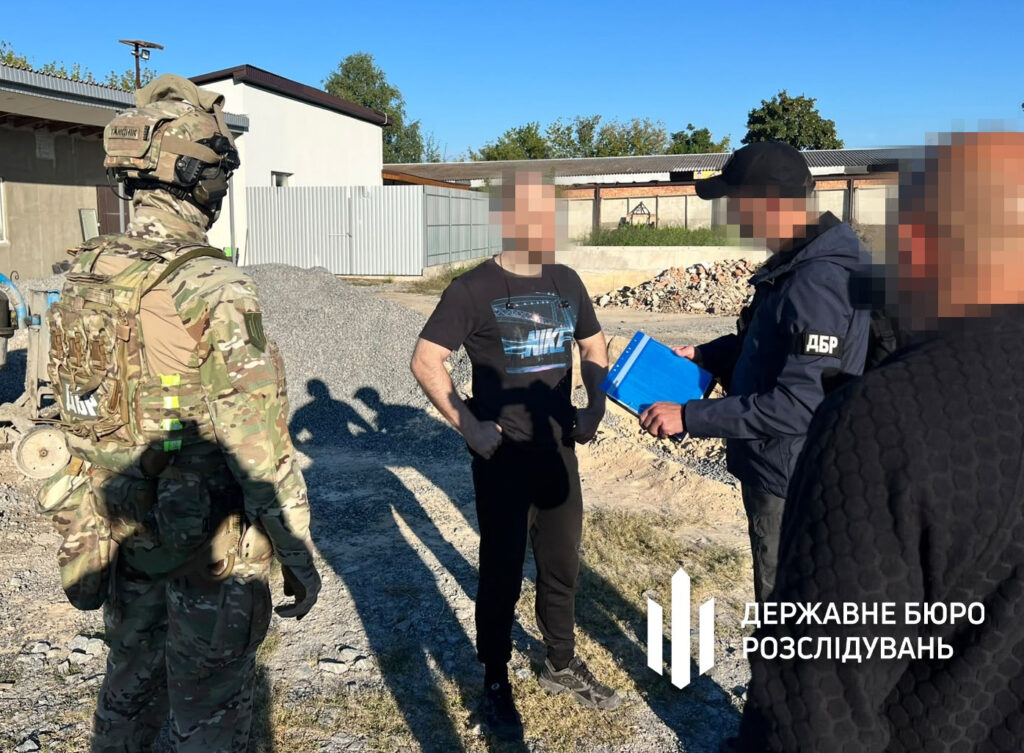
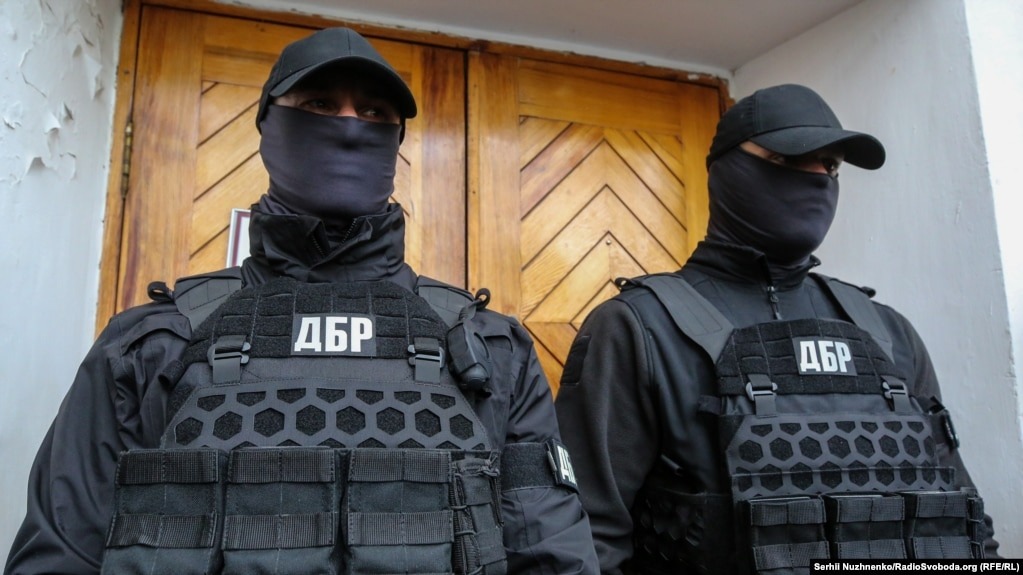
generic DBR SBI officers

Ukraine opened a nationwide investigation into soldiers' payments five days ago. The State Bureau of Investigation has now charged a deputy commander of a separate security and servicing battalion in Odesa Oblast with issuing travel orders that sent his subordinates to fake combat groupings on paper, the bureau reported on 25 August.

Combat pay in Ukraine runs on paperwork. Assault and zonal payments depend on time spent on each mission and require documentary confirmation, with the highest rates going to troops on the line of contact.

The travel orders carried the scheme

The soldiers collected the additional payment known as the Defender's Bonus for combat participation that did not happen, taking about $15,600, without grounds, according to the agency.

"In fact, soldiers remained in Odesa. Despite this, they were paid an additional bonus," officers said.

Part of that money went back to the officer who arranged it. He was detained and charged under Part Five of Article 426-1 of the Criminal Code, which covers a military official exceeding authority and carries a sentence of up to 12 years.

The case sits inside a national sweep

The bureau launched the operation, called Justice for Soldiers, on 20 August together with the General Staff, conducting 72 searches and preparing suspicions against 22 people.

Most of the cases concerned money wrongly paid to soldiers. Twelve proceedings were related to the illegal calculation and receipt of payments by soldiers, with 58 searches conducted and suspicions planned against 20 people.

Twelve of those proceedings deal with the illegal calculation and receipt of payments by soldiers. A separate strand covers commanders using troops for private labor.

A separate strand targeted the misuse of soldiers themselves. Five searches were conducted in a case involving the illegal use of military labor, in which subordinates, instead of performing military duties, were used for construction, household, and other work in the commanders' private interests.
  • ✇Euromaidan Press
  • Ukrainian officers march in Toronto’s 105-year-old Warriors’ Day Parade
    Ukrainian officers have marched in one of Canada's oldest military parades for three consecutive years, Ukraine's Consul General in Toronto, Oleh Nikolenko, said. They took part in the 105th Warriors' Day Parade in Toronto, an event honoring former and serving military personnel that draws veterans, active-duty soldiers, and their families. The parade rests on a working military relationship. Canadian forces have trained more than 50,000 Ukrainian security forces person
     

Ukrainian officers march in Toronto’s 105-year-old Warriors’ Day Parade

25 août 2026 à 17:38

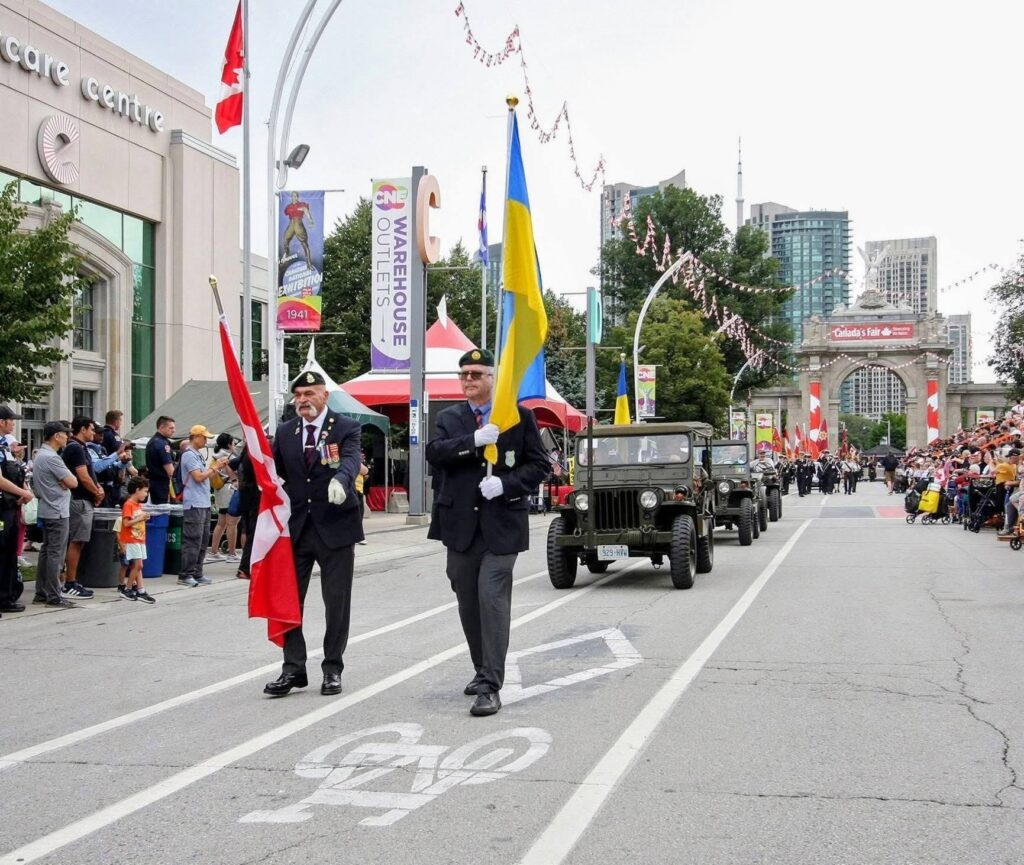
Ukrainian officers marched in one of Canada's oldest military parades. Source: Oleh Nikolenko

Ukrainian officers have marched in one of Canada's oldest military parades for three consecutive years, Ukraine's Consul General in Toronto, Oleh Nikolenko, said. They took part in the 105th Warriors' Day Parade in Toronto, an event honoring former and serving military personnel that draws veterans, active-duty soldiers, and their families.

The parade rests on a working military relationship. Canadian forces have trained more than 50,000 Ukrainian security forces personnel since 2015 under Operation UNIFIER, roughly 16,000 of them across Europe since the full-scale invasion, with about 300 Canadian personnel currently deployed on the mission, Canada's Department of National Defense said.

The parade has opened the CNE since 1921

The Warriors' Day Parade has opened the Canadian National Exhibition every year since 1921, marching from the Princes' Gates along Princes' Boulevard to the Stanley Barracks, and organizers call it the longest-running veterans' parade in the free world, according to the CNE.

The consul general framed it as a signal

Nikolenko said Ukrainian soldiers standing among those Toronto honors carried weight beyond the occasion.

"It was very important to see Ukrainian defenders among those to whom Torontonians paid tribute. Their presence is a powerful symbol of the strength of Ukrainian-Canadian friendship, solidarity, and shared support," he stated.

European capitals opened their parades this summer

During the summer of 2026, Ukrainian defenders took part in different parades of their allies. In July, twenty-five Ukrainian soldiers marched down the Champs-Élysées at France's Bastille Day parade on 14 July, behind around 500 troops from 35 Coalition of the Willing countries, while two French Mirage 2000B fighters opened the flypast with a Ukrainian co-pilot in each cockpit.

A week later, the same soldiers led the foreign component of Belgium's National Day parade in Brussels, their first appearance in the city that hosts NATO and EU headquarters.

However, Ukraine was not invited to Poland's Armed Forces Day parade in Warsaw on 15 August, the largest in Polish history, while contingents from the US, Canada, Australia, Lithuania, and other allies did take part, Militarnyi reported.

Spanish nun’s foundation brings her 45th convoy to Kyiv on Independence Day. It hands ambulance and six vehicles to border brigade fighting for Kharkiv

25 août 2026 à 16:25

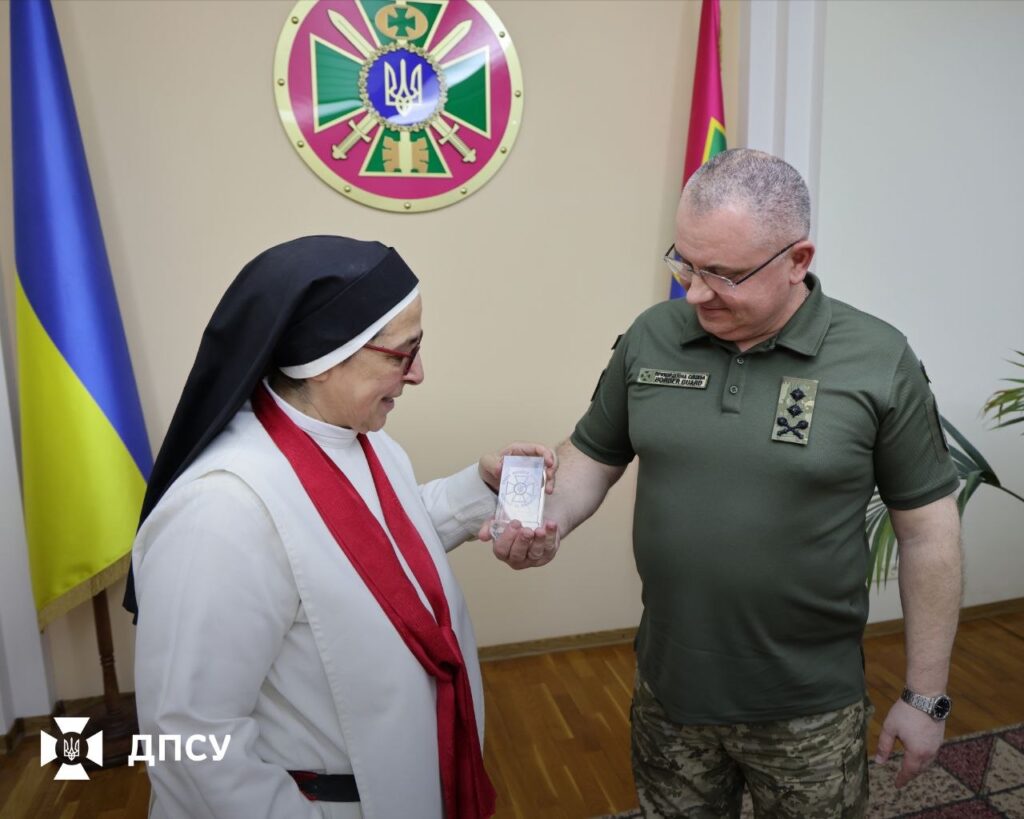
Sister Lucía Caram from the the Spanish Santa Clara Convent Foundation is receiving an award from the Ukrainian State Border Guard Service. Source: Ukrainian State Border Guard Service

A delegation from the Spanish Santa Clara Convent Foundation, with Sister Lucía Caram, visited Ukraine on its most important day. It handed an ambulance, a pickup, and five cars to the 11th Border Detachment, the "Forpost" brigade holding one of the hardest sectors in Kharkiv Oblast, the State Border Guard Service reported.

The vehicles are the visible part of a medical channel. Sister Lucía Caram, based in Manresa, delivered its 45th convoy to Kyiv this week, according to Atalayar.

The surgery program moves to its next stage

Acting Border Guard Service head Major General Valerii Vavryniuk met the delegation alongside a simultaneous video call with Spanish Defense Minister Margarita Robles.

Two commitments came out of it. The border service is to continue rehabilitating severely wounded border guards in Spanish medical facilities, and to begin advanced training for its own surgeons in reconstructive surgery.

Housing came up as well

Caram raised an initiative by the HANSEN Ukrainian Mission, which offered partnership support in housing families who lost their homes to fighting in the east.

The two sides also discussed rehabilitation more broadly for border guards wounded in combat. Vavryniuk thanked Caram and Spain for the aid programs.

Catalan business pays for the convoys

Before the meeting, Caram and the head of the 10th Mobile Border Detachment laid flowers at the Nebesnyi Dozor monument in Kyiv's Darnytskyi district. She also attended Ukraine's National Prayer Breakfast, the annual interfaith event bringing together political, religious, and civic figures.

Earlier, Robles announced Spain would transfer 100 VAMTAC armored tactical vehicles to Ukraine, along with a batch of 155 mm artillery shells.

In March, Spanish Prime Minister Pedro Sánchez announced a new €1 billion military aid package for Ukraine for 2026. Part of the aid, financed through the EU SAFE instrument, was intended to support the development of joint production within Ukraine’s defense industry. 

  • ✇Euromaidan Press
  • Poland signs $2 billion Piorun order, largest ever for launcher Ukraine has used since 2022
    Ukrainian troops have been shooting down Russian aircraft with Polish Pioruns since 2022. Poland's Defense Ministry has signed a framework agreement worth more than $2 billion for several thousand shoulder-fired systems in the largest order ever placed for these launchers and missiles. The money comes from SAFE, the European Union's 150-billion-euro defense loan facility created in response to Russia's war. Poland holds the largest national envelope at 43.7 billion euro
     

Poland signs $2 billion Piorun order, largest ever for launcher Ukraine has used since 2022

25 août 2026 à 16:02

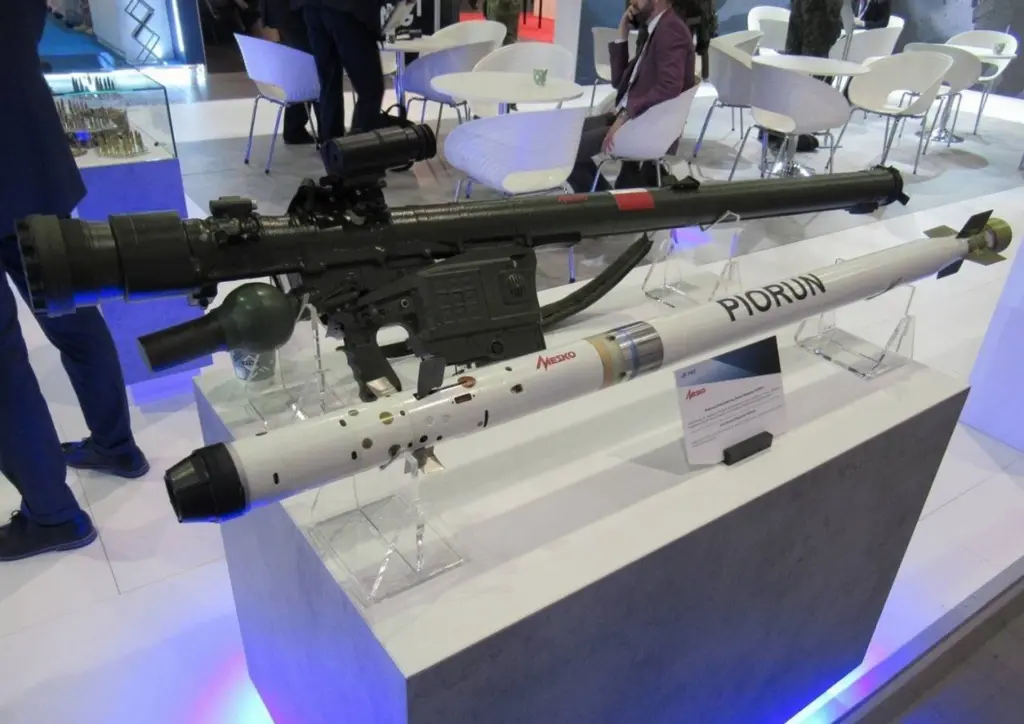
A Polish Piorun shoulder-fired system. Source: Oboronka

Ukrainian troops have been shooting down Russian aircraft with Polish Pioruns since 2022. Poland's Defense Ministry has signed a framework agreement worth more than $2 billion for several thousand shoulder-fired systems in the largest order ever placed for these launchers and missiles.


The money comes from SAFE, the European Union's 150-billion-euro defense loan facility created in response to Russia's war. Poland holds the largest national envelope at 43.7 billion euros, ahead of 18 other participants, TVP World reports.

Four countries split the order

The systems will go to the armed forces of Poland, Latvia, Lithuania, and Norway, the last of which is not an EU member. More than 80% of the missiles and launchers are earmarked for the Polish army, with the implementation agreement for Poland financed from SAFE funds, according to the ministry's release.

The contract also covers simulators, training, and logistics packages. Mesko, part of the state-owned PGZ defense group, manufactures the system.

"Piorun is our export hit," said Magdalena Sobkowiak-Czarnecka, state secretary at Poland's Defense Ministry, adding that other EU countries showed interest in them during talks on the SAFE mechanism.

The seeker head does the work

The Piorun is a modernized Grom that remains in Polish service. The upgrade brought a modified launch mechanism, a new and more sensitive homing head, and an electro-optical sight mounted on a rail.

Those changes improved target acquisition, resistance to countermeasures, and effective range against low-flying aircraft, helicopters, cruise missiles, and drones.

Ukraine's record set the reference

Poland approved its first Piorun transfer to Ukraine on 1 February 2022, three weeks before the full-scale invasion. Ukrainian crews have since used the system against cruise missiles, aircraft, and helicopters, and Western analysts list it among the short-range systems European industry can supply without American approval.

The ministry's announcement names no allocation for Ukraine.

For first time, Ukraine is tendering ground robots to ministry-set specifications and no maker can take more than half of any class

25 août 2026 à 15:41

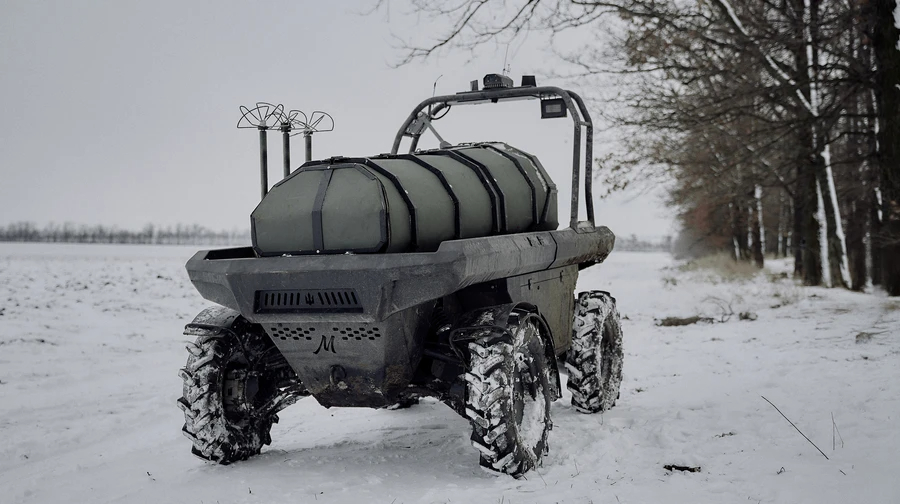
The MAUL unmanned ground vehicle. Source: AIDronesUA

Ukraine's ground robots ran more than 100,000 missions in the first eight months of 2026. The Defense Procurement Agency will now buy logistics and strike ground robotic complexes according to specifications set by the Defense Ministry, rather than approving models one at a time, the ministry announced.

The mechanism is three days old. The agency applied the same structure to fiber-optic FPV drones on 22 August—classes, multiple lots each, no supplier above half a class. Ukraine is standardizing how it buys entire weapons categories, one category at a time.

The rules sort makers by class

Complexes will be divided into classes by operating range and payload, with four to five lots per class. No single manufacturer may take more than half the order within one class.

Suppliers must meet the technical specifications and hold at least one codified ground robotic complex. The procurement runs in a closed environment under defense security requirements.

"A tender is one of the best instruments for this, because we can buy more equipment for the same money and minimize the risk of supply disruptions by splitting the order among different manufacturers," Deputy Defense Minister Mstyslav Banik said.

Mission volume keeps climbing

Monthly figures of ground robot missions logged in the DELTA combat system rose almost without interruption: 7,511 in January, 11,028 in April, 19,969 in July. Units recorded another 15,729 between 1 and 20 August, about 790 a day compared with roughly 640 a day in July, The Defense Post reported.

Ukraine has contracted more than 22,000 ground robots since January, nearly double the total for all of 2025. The number of units operating them grew from 117 at the end of 2025 to 230 by mid-2026.

A commander disputes the evacuation case

The ministry lists casualty evacuation as one of the tender's purposes. A frontline officer challenged that three days ago.

Tetiana Chornovol, who commands an anti-tank guided missile platoon, said ground robots are too slow for evacuation and often easy targets for Russian drones, arguing brigades need staffed evacuation teams and small light-armored vehicles instead.

  • ✇Euromaidan Press
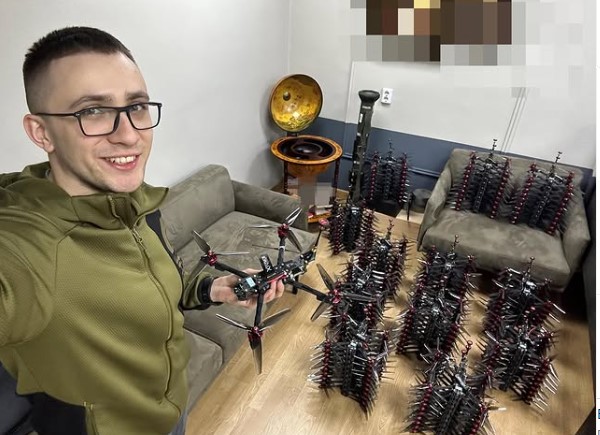
  • Ukrainian drone maker is pitching its new five-inch strike FPV as assault squad’s mortar
    A Ukrainian drone maker is pitching a weapon that works like a mortar, not a drone. F-Drones has unveiled the F5, a compact five-inch strike FPV built for assault units working treelines, built-up areas, and position support at short range, according to the company's announcement. Fiber-optic drones are now a bulk consumable. Ukraine's military received 374,000 under state contracts in 2025 and nearly as many again in the first four months of 2026, the Defense Ministry
     

Ukrainian drone maker is pitching its new five-inch strike FPV as assault squad’s mortar

25 août 2026 à 12:24

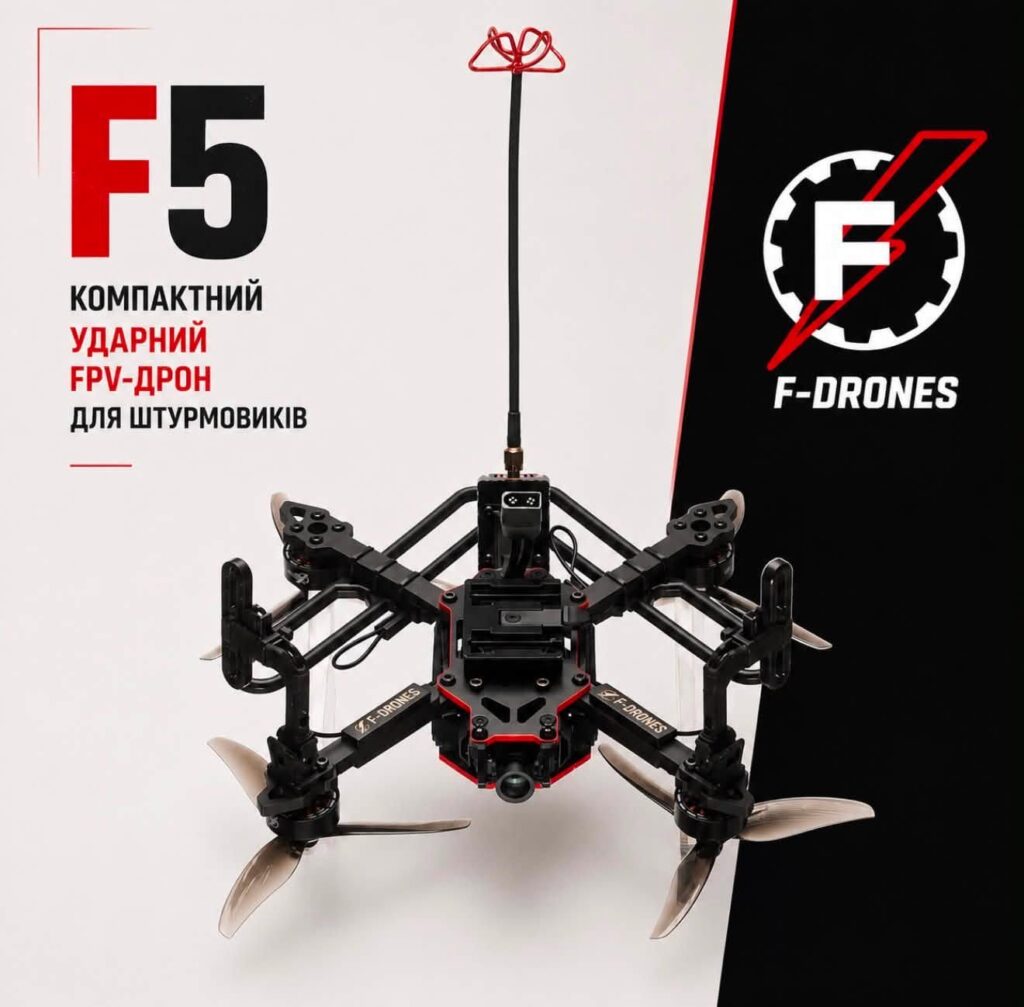
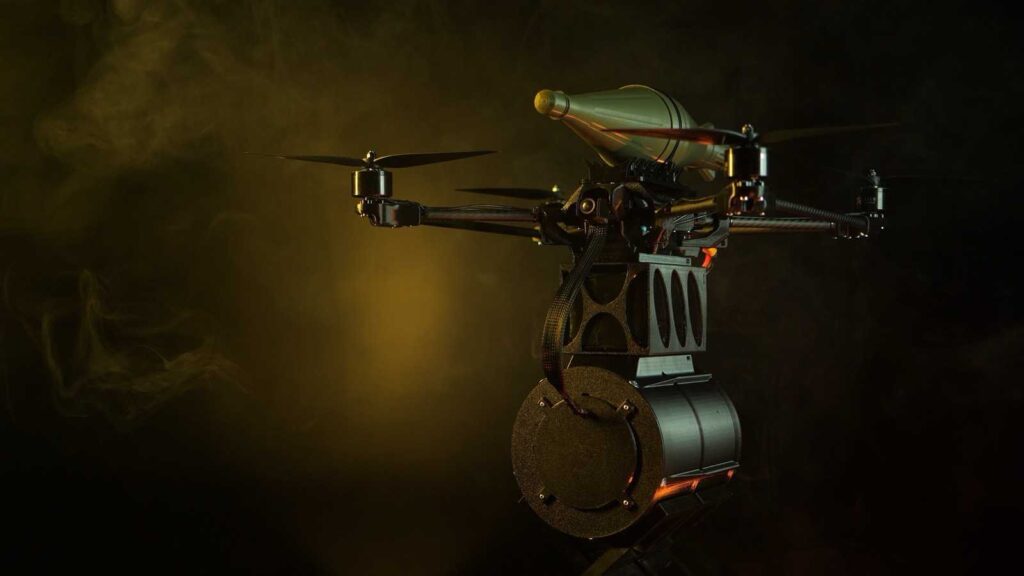
F-Drones has unveiled the F5, a compact five-inch strike FPV built for assault units. Source: F5

A Ukrainian drone maker is pitching a weapon that works like a mortar, not a drone. F-Drones has unveiled the F5, a compact five-inch strike FPV built for assault units working treelines, built-up areas, and position support at short range, according to the company's announcement.

Fiber-optic drones are now a bulk consumable. Ukraine's military received 374,000 under state contracts in 2025 and nearly as many again in the first four months of 2026, the Defense Ministry reported in April.

The F5 arrives three days after Ukraine's Defense Procurement Agency launched its first purchase of fiber-optic FPV drones, in line with ministry-set specifications rather than individual manufacturers.

The specifications come from the manufacturer

F-Drones describes a lightweight five-inch carbon frame that carries up to one kilogram and is supplied in two control configurations.

The fiber-optic version flies about six kilometers. The radio version reaches roughly twice that, up to 13 kilometers. Several drones fit in one backpack, and a ground robot can deliver nine to a position at once, compared with the six FPVs per carrier on the Black Widow ground system.

Fiber optics buys immunity at a cost

F-Drones calls the fiber version fully invulnerable to electronic warfare. Fiber-optic control does defeat jamming because the drone emits no radio signal, but the cable restricts range and maneuverability and can snap or tangle mid-flight, cutting control. Ukrainian crews have also tracked Russian operators by following reflective fibers in sunlight back to the launch point.

The company compares its drone to a mortar

The pitch is about availability, not reach.

"In its role, the F5 is closer to an 82mm mortar than to a classic long-range FPV: always nearby and ready to close out the task here and now," the company said.

The F5 ships with a codified Opera electronic initiation board, and F-Drones says the aircraft has been tested and codified by Ukraine's Defense Ministry.

  • ✇Euromaidan Press
  • Ukraine destroys depot that occupiers filled with generators, after Russian state TV filmed them
    Russian propagandists filmed the target for Ukraine themselves. Operators of Ukraine's 422nd Separate Unmanned Systems Regiment "Luftwaffe", part of the 17th Army Corps, have destroyed a Russian logistics hub that occupation forces had set up inside a former Epicentr hardware store in occupied Melitopol, regiment commander Major Mykola Kolesnyk told Army TV. Melitopol sits on Russia's land corridor to occupied Crimea. The city was occupied on the second day of Russia's
     

Ukraine destroys depot that occupiers filled with generators, after Russian state TV filmed them

25 août 2026 à 09:41

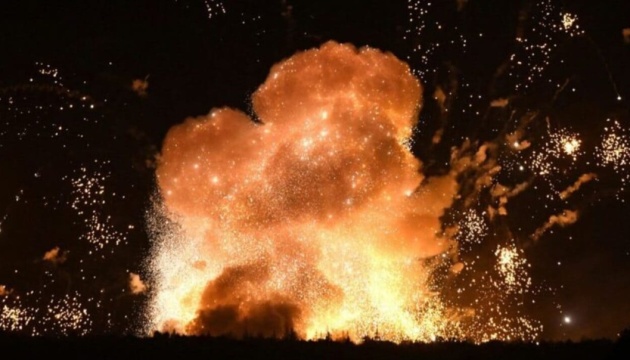
An explosion. Credit: UkrInform

Russian propagandists filmed the target for Ukraine themselves. Operators of Ukraine's 422nd Separate Unmanned Systems Regiment "Luftwaffe", part of the 17th Army Corps, have destroyed a Russian logistics hub that occupation forces had set up inside a former Epicentr hardware store in occupied Melitopol, regiment commander Major Mykola Kolesnyk told Army TV.

Melitopol sits on Russia's land corridor to occupied Crimea. The city was occupied on the second day of Russia's full-scale war in 2022.

Russian occupation forces had moved a large consignment of generators and other equipment into the building for military use. Russian state television broadcast footage of the delivery.

Propaganda footage exposed the shipment

The video gave the regiment its confirmation. Russian channels posted footage showing many generators that had not been there before, Kolesnyk said, that had been brought in deliberately.

"The hub was used, above all, to supply the people fighting directly against us, as their forward positions are not far from there. Calling it a civilian facility would be a considerable stretch, because this really was a hub whose services were used directly by Russian troops," Kolesnyk explained.

Operators tracked the target before striking

The regiment watched the site before hitting it, and no civilian was harmed, according to Kolesnyk. He set the operation against the Russian strike on Kryvyi Rih on 21 August, when two waves of drones, half an hour apart, killed 16 people and injured 130, including 23 children.

The UN Human Rights Monitoring Mission in Ukraine visited the site and a hospital and said the shopping center was operational and full of civilians when it was struck, and that the attack appears to breach international humanitarian law.

Generators feed the drone war

The hub's destruction will narrow Russian capacity to equip shelters, Kolesnyk said. The generators mattered for a more specific reason.

"A generator is what makes it possible to charge batteries for the unmanned component that then flies at us. So it is an absolutely legitimate target, and I am sure we will not stop here," the commander added.

A logistics hub in occupied Melitopol just got hit right after Russia stocked it with generators for its army

Anything feeding Russia's war machine is a legitimate target, and this was one
🎥 22nd Unmanned Systems Regiment "Luftwaffe" pic.twitter.com/B9UjZlJJTj

— Euromaidan Press (@EuromaidanPress) August 25, 2026

Russia set target specific target for military recruits in 2026: in Arkhangelsk Oblast, man was sent to front after being detained for drinking on street

25 août 2026 à 08:22

greece blocked gas ban france italy softened entry ban—now brussels tries 1600 companies helping russia's war · post russian soldiers military parade 9 2025 moscow russia kremlinru victory_day_parade_2025_at_red_square ukraine news

Russia is ramping up a campaign of covert mobilization to recruit troops for its war against Ukraine. Over the past month and a half, residents of at least 17 Russian regions have complained of forcible detention, beatings, and coercion into signing contracts with the Russian Defense Ministry, the independent outlet Verstka reported, citing three legal-aid organizations.

Russia recruited 403,000 soldiers in 2025 and set a target of 409,000 for 2026, Ukraine's military intelligence chief Kyrylo Budanov said. Since April, Russian companies have been ordered to nominate two to five employees each for military service.

The School of the Conscript recorded 11 complaints in July and August. Five came from Udmurtia, one each from Primorye, Irkutsk, Ryazan, and Arkhangelsk oblasts, one from Buryatia, and one from the temporarily occupied territories of Donetsk Oblast.

The victims share a profile

The men targeted are not chosen at random. In most appeals, complainants say the victims are men with alcohol, drug, or mental health problems, older or physically disabled men, men living alone, and men with pending legal trouble, said Timofey Vaskin, who heads the legal department at the School of the Conscript.

Four cases show the method

Idite Lesom documented how the coercion works in practice. In Novorossiysk, a man was taken to a police station, beaten, had drugs planted on him, and was made to sign a contract.

In Arkhangelsk Oblast, a man detained for drinking on the street was sent to the front. In Omsk, a man was taken from his workplace, held, and had the contract signed for him. In Udmurtia, a man was removed from a psychiatric register and sent to Donetsk Oblast.

Recruiters work from state records

The targeting runs on official data. Authorities know who carries debts, who is under investigation, and who has recently lost a driver's license, and those are the people they pursue, said Idite Lesom's director, Grigory Sverdlin.

Volunteers are getting harder to find, which is why the pressure is increasing, he added. Call to Conscience advised men in affected regions to grant relatives the power of attorney to represent them at enlistment offices, avoid drinking alone, and refuse to sign a contract under any circumstances.

582,000 children, 2,000 schools, no Ukrainian language: Russia sent occupied territories its first lesson – on “Unity of the Peoples of Russia”

25 août 2026 à 07:49

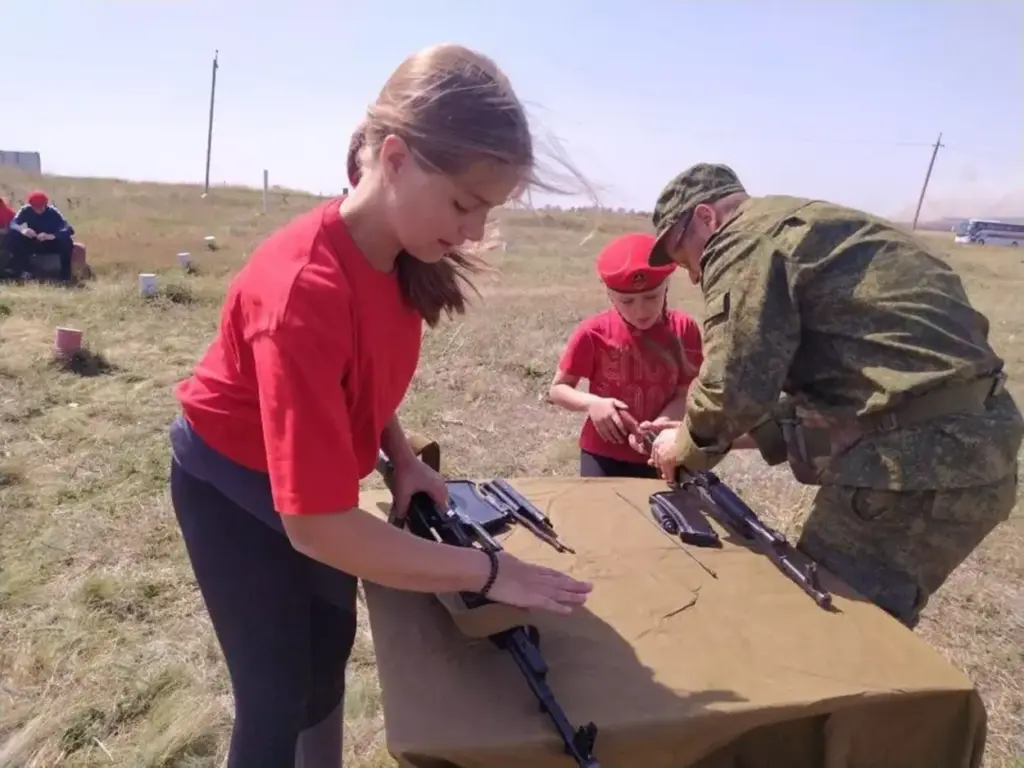
Two children handle rifles as a uniformed man demonstrates a weapon on a table outdoors.

The school year in the temporarily occupied territories of Ukraine will open with propaganda. On 1 September, pupils in territories outside Ukrainian government control will begin the day with a flag-raising, Russian anthem, and a first lesson drawn from the state "Conversations about Important Things" program, the occupation outlet Donetsk News Agency reported.

Russia's curriculum now governs almost 2,000 schools in the temporarily occupied territories, shaping the education of more than 582,000 children, according to research by the Almenda Center of Civil Education, Ukrainska Pravda reports. Ukrainian was removed as a school subject entirely under federal standards on 15 December 2025.

Russia's education minister Sergey Kravtsov said the relevant recommendations have already been sent to the regions.

The first lesson carries a state theme

The opening session is tied to what Moscow calls the Year of the Unity of Russia's Peoples. The stated content covers cohesion among the country's peoples, "careful treatment of historical memory," and the formation of patriotic views and spiritual-moral guideposts.

"Conversations about Important Things" run every Monday in schools and colleges across Russia and the occupied territories. In practice, the sessions serve as propaganda.

Three other changes land on the same date

The flag ceremony is not the only thing new this September. A compulsory Russian identity subject, a standalone military training course, and behavior grades for children in second grade all take effect on 1 September, the Yellow Ribbon resistance movement reported.

Two new regional history textbooks also became compulsory for grades 5–7 that day. They recast Donetsk, Luhansk, Zaporizhzhia, and Kherson oblasts as historically Russian land.

Earlier, an expert mission under the OSCE's Moscow Mechanism told the OSCE Permanent Council that Russia's remaking of education in the occupied territories breaches Article 43 of the Hague Regulations and Article 50 of the Fourth Geneva Convention.

Independence Day gift from inside Russian army: Partisans say soldier whose comrades were killed over extortion money destroyed truck resupplying Kostiantynivka front

24 août 2026 à 03:34

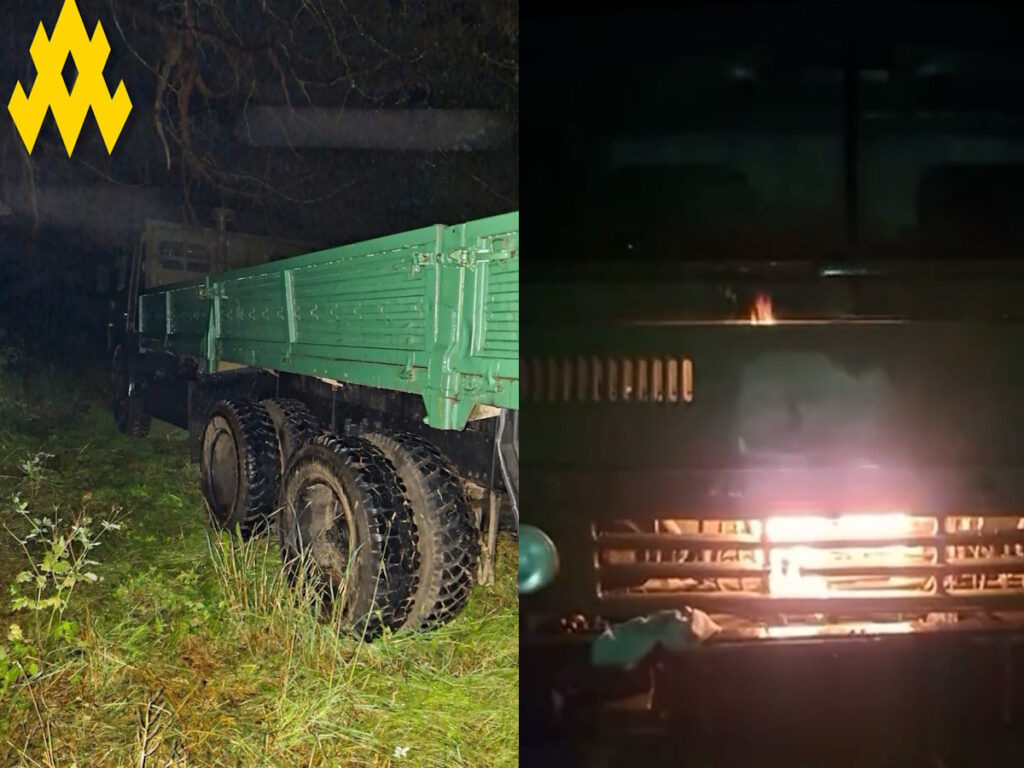
The destroyed KamAZ truck by a partisan in the Atesh group. Source: Atesh

Ukrainian partisans have dedicated their new “catch” to Ukraine’s Independence Day. According to ATESH, they destroyed a military KamAZ truck that was used in assaults on Donetsk Oblast and was stationed with Russian occupation forces in Rostov Oblast.

ATESH is a Ukrainian-Crimean Tatar partisan movement founded in September 2022 in response to Russia's full-scale invasion. The group operates in occupied Ukrainian territories and in Russia itself, with members including Crimean Tatars, Ukrainians, and Russians who were mobilized into the Russian army but now work for Ukraine.

The operation was carried out without the partisans even having to do it themselves. The vehicle was used in the offensive toward Kostiantynivka, one of the hottest sectors of the current fighting, alongside the Russian advances toward Sloviansk and Kramatorsk.

The sabotage was carried out by a soldier from the Russian Armed Forces’ “Center” Group of Forces, which is assaulting Kostiantynivka. The vehicle was actively used to supply the advancing forces, and its loss disrupts Russian logistics.

Putin has a primary target, Zelenskyy says

Earlier, President Zelenskyy said that the offensive toward Kostiantynivka would remain one of the Russian military’s main priorities through the end of the year, according to Suspilne.

“Putin’s unchanged primary objective on the front is Kostiantynivka–Sloviansk. The latest deadline he has given his generals is to complete the occupation of Donetsk and Luhansk oblasts by the end of the year,” he said.

Since the beginning of 2026, Russia has lost 267,000 personnel along the entire front line, including approximately 155,000 killed, according to the figures cited in the report. Russian forces are suffering their heaviest losses specifically in the sector stretching from Sloviansk to Kostiantynivka.

How was the operation carried out?

The agent joined the movement out of revenge: his commanders killed his fellow soldiers after he refused to pay extortionate demands. The partisans said that such abuses in the Russian army are commonplace, and that the only way to survive and punish those responsible is to resist from within.

Earlier, the partisans reported that Russia’s 64th Motor Rifle Brigade, which has been implicated in crimes in Bucha, was concealing its actual losses. The command allegedly registers many of the dead as “missing in action” in order to reduce the official death toll and avoid payments to their families.

Meanwhile, security and counterintelligence services are reportedly putting pressure on the women, threatening them with criminal charges for “discrediting” the army and the complete loss of any payments if they continue searching for their missing relatives.

  • ✇Euromaidan Press
  • Every Russian attack on Kyiv costs the city about $12 million. They now come almost twice in week
    Each Russian attack on Kyiv costs the city budget about $12 million. Russian strikes have already damaged more than four thousand buildings in the capital, Mayor Vitali Klitschko said in answer to a Novyny.LIVE journalist. Russian forces now strike Kyiv with ballistic and cruise missiles or drones on average almost twice a week. The latest massed attack, on the night of 20 August, killed at least 16 people in Kyiv and the region. The cumulative damage keeps growing
     

Every Russian attack on Kyiv costs the city about $12 million. They now come almost twice in week

23 août 2026 à 15:10

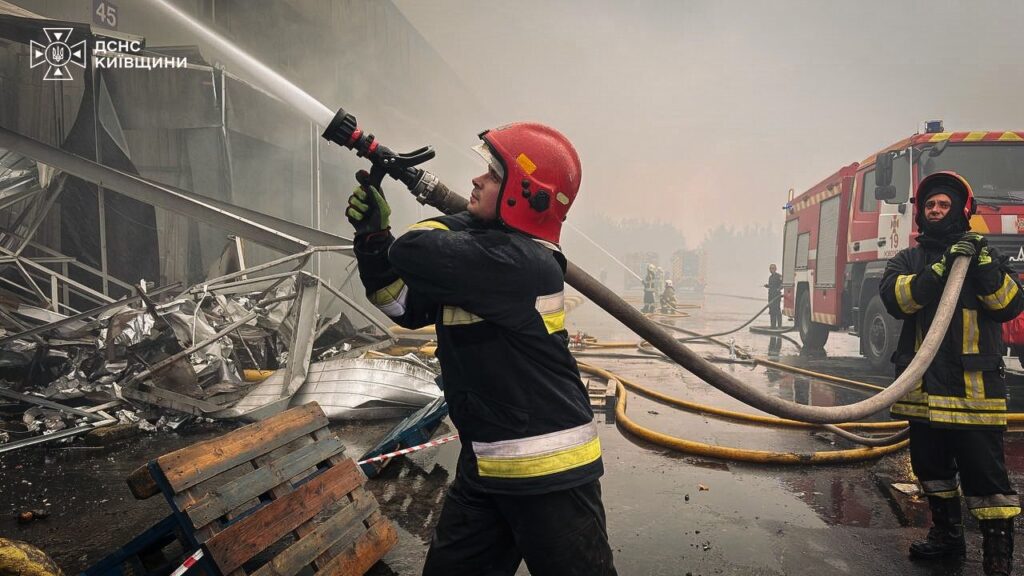
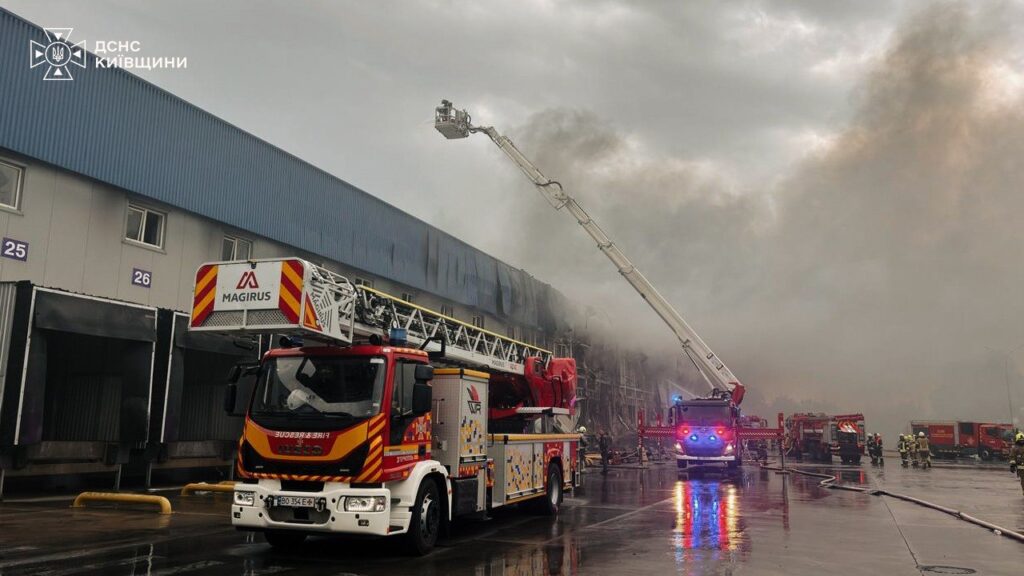
Ukrainian firefighters respond to a blaze at warehouses hit by a Russian drone strike in Kyiv Oblast’s Brovary district, 18 August 2026. Photo: Ukraine's State Emergency Service

Each Russian attack on Kyiv costs the city budget about $12 million. Russian strikes have already damaged more than four thousand buildings in the capital, Mayor Vitali Klitschko said in answer to a Novyny.LIVE journalist.

Russian forces now strike Kyiv with ballistic and cruise missiles or drones on average almost twice a week. The latest massed attack, on the night of 20 August, killed at least 16 people in Kyiv and the region.

The cumulative damage keeps growing

The toll on the city's housing is vast. More than four thousand buildings in Kyiv have been damaged by Russian strikes, Klitschko continued, with each attack adding to a repair bill the city carries alongside the human losses.

New shelters are planned, but old money went unspent

Kyiv plans to expand its shelter network. By the end of 2026, the city intends to install new mobile shelters, placed first in districts and locations that lack other accessible cover, Klitschko stated.

The plan follows a failure that the mayor acknowledged. Last year, Kyiv allocated $12 million for mobile shelters, but the district administrations did not use the money. It was returned to the city budget.

The capital also still lacks enough professional bomb shelters capable of better protecting people during missile strikes, he added. This gap persists as tens of thousands of Kyiv residents shelter in metro stations through the attacks.

The city is building a backup heating system

Meanwhile, Kyiv is preparing for winter under fire. The city has completed more than 50% of planned work to create a backup heating system, with readiness at some sites already reaching 90%, the Kyiv mayor added.

Russia has struck Ukraine's energy and heating infrastructure each winter of the war. A backup system is Kyiv's insurance that a successful strike on one heat source does not leave districts frozen, part of the same preparation for the heating season that Ukraine's government is racing to complete nationally before the cold.

Russia holds up to 20,000 Ukrainian civilians in captivity. One of newest is teacher who stayed in her occupied village to care for her 83-year-old mother

23 août 2026 à 10:40

Hanna Pyrozhenko, a resident of Pershokostiantynivka in Kherson Oblast. Source: The Crimean Tatar Resource Center

On 5 August, Russia detained Hanna Pyrozhenko, a resident of Pershokostiantynivka in Kherson Oblast. The 52-year-old former teacher is currently being unlawfully held in Henichesk. Her husband, who tried to find out where she was being held, was tortured by the Russians and ordered to leave the occupied village, Zarema Bariieva, a manager at the Crimean Tatar Resource Center, says.

Russia is currently holding around 7,000 Ukrainian prisoners of war and up to 20,000 civilian hostages. Some of them are subjected to systematic torture and cruel treatment, including amputations without anesthesia and denial of medical care to wounded detainees, says Deputy Speaker of the Ukrainian Parliament Olena Kondratiuk, according to ZMINA.

Teacher who stayed

Hanna is a former teacher at a local school with more than 20 years of teaching experience. After the full-scale war began, she resigned from her job to care for her 83-year-old mother and her 77-year-old brother.

“She could not and did not want to leave her native village, where she had spent her entire life,” Bariieva said.

Russian security forces first searched the Pyrozhenkos’ home in January 2025. They found nothing at the time and left the couple alone for a while.

Russia troops don't answer questions

On 5 August, FSB officers searched the Pyrozhenkos’ home for a second time. This time, they confiscated Hanna’s phone and laptop and detained her.

“The woman was given just a few minutes to change clothes. Then, without explaining anything, they ordered her to go with them. Her husband’s questions about where he should look for his wife and when she would return home went unanswered,” the human rights activist added.

The Crimean Tatar Resource Center established that Hanna was initially held in Chaplynka and was later transferred to Henichesk. It is currently unknown what exactly she is accused of. A lawyer appointed by the occupation authorities said she would be returned home only to participate in an investigative experiment.

Propaganda teaching instead of truth

At a time when Ukrainian teachers are being detained by Russian security forces, Russia continues to bring its own teachers into the occupied territories.

Russian educators, in turn, are attempting to “re-educate” schoolchildren by eradicating everything Ukrainian from them, according to Ukraine’s Center of National Resistance.

“They tell children about ‘heroes of the SMO’ [the Russian term for its war in Ukraine] and ‘Ukrainian Nazis,’ involve them in activities to support the occupation forces, and organize clubs centered around ‘Victory Day fanaticism’ and the creation of rocket models,” the statement said.

The Kremlin's policy of "re-educating" Ukrainian children and fully colonizing the occupied territories is overseen by Russia's highest leadership. This is evidenced by the visit of Maria Lvova-Belova, Russia's presidential commissioner for children's rights, to the occupied areas of Zaporizhzhia Oblast.

The International Criminal Court has accused her, along with Russian ruler Vladimir Putin, of war crimes over the unlawful deportation and transfer of Ukrainian children from occupied territories.

To ensure that teachers in the occupied territories of the Donetsk and Zaporizhzhia regions teach in accordance with the Kremlin's directives, they are sent to Russia for "professional development" training.

Ukraine’s ousted defense minister confirms M&M’s operation planning and discloses real story behind its name

23 août 2026 à 10:12

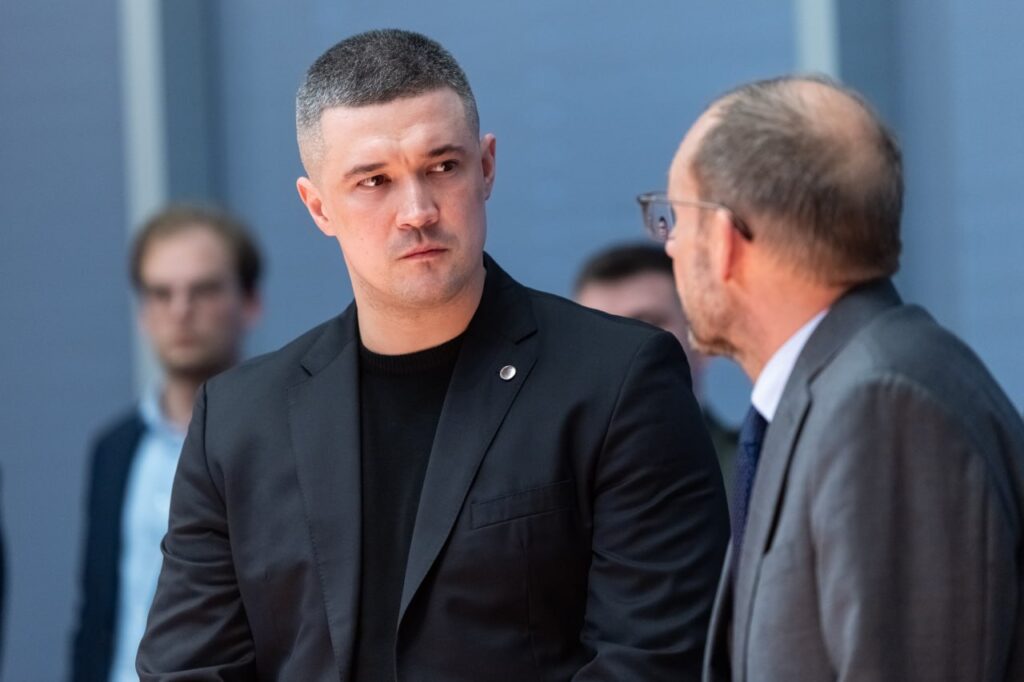
Ukrainian Defense Minister Mykhailo Fedorov in Germany, on 15 April 2026. Source: Fedorov

Former Defense Minister Mykhailo Fedorov has confirmed that Kyiv had planned an operation against targets in Moscow. Recently, The Atlantic reported that at the beginning of 2026, Kyiv had planned Operation M&M’s, which involved using AI-powered drones against Moscow's airports to paralyze them.

President Volodymyr Zelenskyy warned at the time that if any of the drones struck a civilian aircraft, Ukraine’s actions could be perceived as an act of piracy. Nevertheless, work on implementing the plan began.

Sources in the Office of the President have declined to confirm the organization of the operation in comments to journalists. However, former Defense Minister Mykhailo Fedorov, who initiated the operation and whose departure from office led to the plan being shelved, did confirm it.

Why M&M’s?

In an interview with 24 Channel, Fedorov declined to explain the idea behind the operation, adding that it could still be implemented in the future.

But he provided details on the operation’s codename, saying journalists had misinterpreted it, as the plan had nothing to do with deploying a large number of cheap drones.

“That is a mistake. At a meeting where we were discussing fully autonomous deep-strike drones, I was handing out M&M’s to everyone. It was my birthday, and someone gave me a box of M&M’s. I shared them with everyone and said that we would call this autonomous-drone project M&M’s," Fedorov said.

What does the former minister plan to do next?

During the interview, Fedorov said he wants to create a venture fund to attract Western capital for investment in Ukrainian startups and developers.

“I have several priorities. One is cheap missiles, because I am convinced that they are the future of warfare involving artificial intelligence. These are inexpensive missiles that could be used to deter strikes and further escalation," he explained.

Another priority for him is the robotization of the front line and the deployment of sensors.

"We need to think about how to remove infantry from the front line. We need to robotize the front line as much as possible so that people do not have to spend months in dugouts under drone attacks," he said.

Opposition to the system

Fedorov also announced that he planned to travel to the US the following week, not to seek President Donald Trump’s support after calls for Ukraine to hold elections.

When asked whether he planned to meet Elon Musk there and continue their cooperation in some form, the former minister replied, “We’ll see.”

He said he did not yet know whether he would run for president or parliament, or, if so, which political team he would join, adding that everything would become clear only after it was possible to prepare for a vote.

The former minister also said that he was currently in opposition—not to any particular politician, but to the system.

“We are not talking about one person, or two people, or just some top officials. We are talking about hundreds of people who have simply become accustomed over the years to making money from the state budget,” he said.

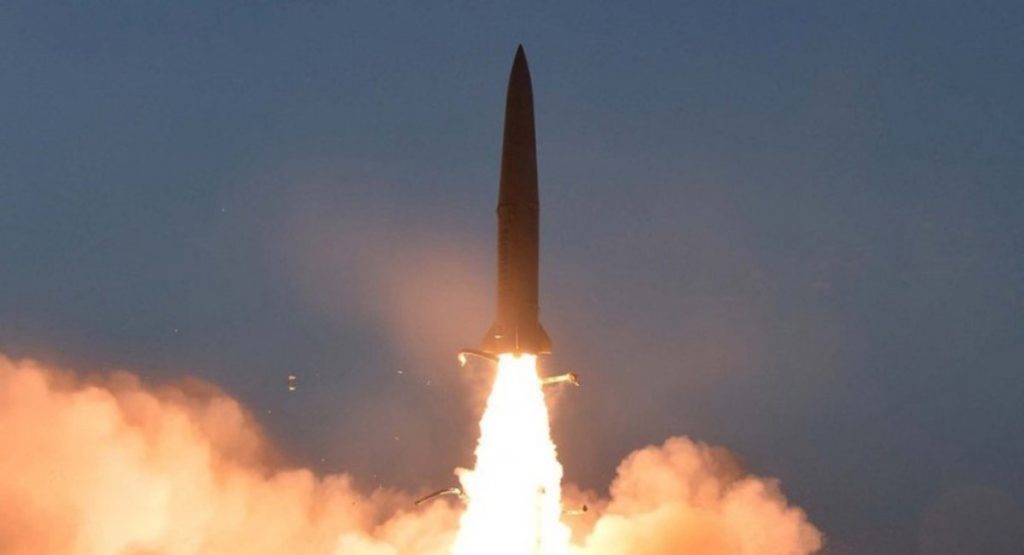
Reports credit North Korea’s newest missile of terror with 2.5-ton warhead and 900-km range. Expert explains why those numbers can’t both be true

23 août 2026 à 02:17

ballistic missiles north korea

Russia may soon get 150 more missiles from North Korea, and their inaccuracy is precisely what makes them dangerous to civilians. This characteristic makes them above all weapons of terror, military expert and Defense Express director Serhii Zghurets said on Espreso.

The particular danger may carry the KN-30, credited with a range of up to 900 kilometers and a 2.5-ton warhead. For comparison, the warhead in Russia's Kalibr cruise missile is 450 kilograms, as in the Iskander ballistic missile, and even those destroy large objects. A missile carrying anything near five times that payload would hit far harder than any weapon already devastating Ukrainian cities.

The claimed specs don't add up

Zghurets urged skepticism toward the most hyped missile. The KN-30's credited figures can hardly be combined in one missile, he said. Physics forces a trade-off.

"If we are talking about a missile that can fly 900 km, then it has a significantly smaller warhead weight. If we are talking about 2.5 tons, then the range will be much shorter," Zghurets explained.

Either version remains dangerous, but the claims as advertised describe a missile that likely does not exist.

A 150-missile delivery is under discussion

North Korea keeps feeding Russia's arsenal. Pyongyang continues to strengthen Russia's military potential with missiles of several types, including the KN-23, KN-24, and KN-30, and a possible supply of about 150 North Korean missiles to Russia is now actively discussed, Zghurets said.

Even if the missiles' real characteristics differ from the claims, such a number would be a substantial addition to the Russian arsenal, he noted, more missiles for the campaign Russia fires at Ukrainian cities regardless of how well each one performs.

Inaccuracy makes them terror weapons

The missiles' precision is their defining flaw. By one estimate, Zghurets cited, missiles flying about 800 kilometers can deviate from their target by 18 kilometers, an error radius wider than most cities.

That rules out military precision but not harm.

"There is definitely no talking about any accuracy with these missiles. But as a weapon of terror that supplements the Russian arsenal, the Russians will of course need it now," Zghurets said.

A missile that can land anywhere within 18 kilometers of its aim point cannot reliably hit a military target, but if fired at a city, it will hit something, which is how Russia has used North Korean missiles against Ukrainian civilians.

Both sides get what they want from the axis

Moscow's interest goes beyond missiles. Russia is also interested in bringing in North Korean troops, which would free part of its own forces for combat against Ukraine, Zghurets said.

Pyongyang is paid in money and technology. North Korea seeks military-technological advantages from the cooperation, including improving its submarine-launched ballistic missile technology, and over the years of the war, may have received about $20 billion from Russia, Zghurets estimated.

The Moscow-Pyongyang military alliance is a serious challenge for the West, he said, though it is hard to predict how actively the US will try to limit the two countries' cooperation.

Zelenskyy awarded Vikings star, ballistic missile CEO took stage, and strike drone got signed with messages to Russians: Ukraine’s major UNITED24 platform turns four

23 août 2026 à 01:55

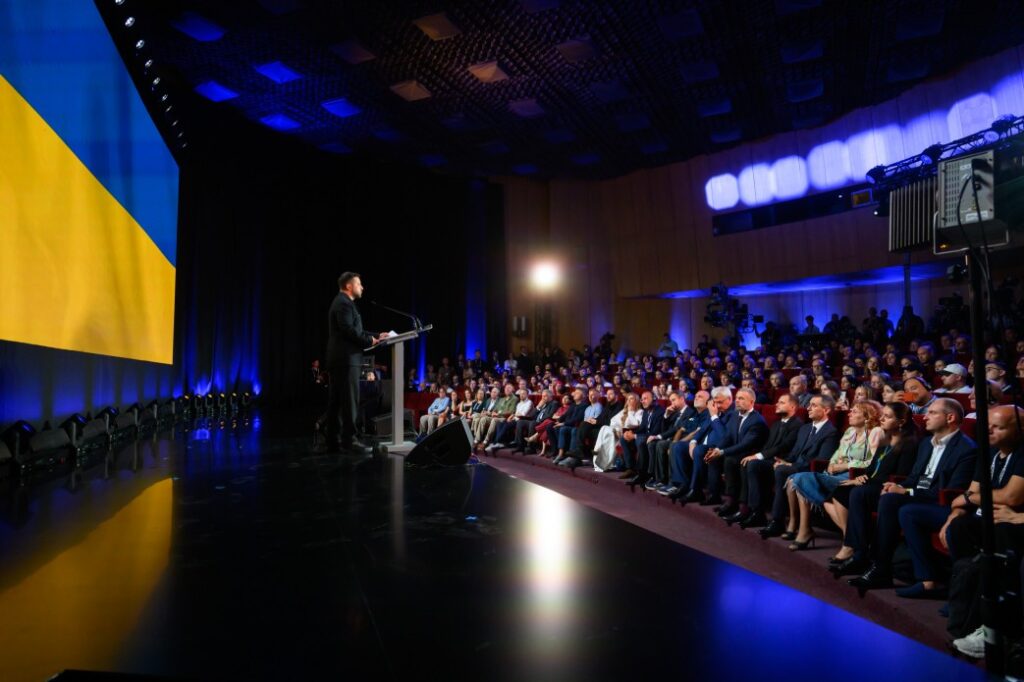
Ukrainian President Volodymyr Zelenskyy at United24 MODE Summit 2026 on 22 August 2026, in Kyiv. Source: Ukraine's Presidential Office

Kyiv held the UNITED24 MODE Summit 2026, dedicated to the results of four years of work by UNITED24, the president’s fundraising platform. The event came two days before Ukraine's Independence Day.

Since its launch in 2022, the initiative has raised nearly $4 billion to support Ukraine. The platform has become an important fundraising tool, bringing together millions of donors from 145 countries.

The largest contributions through UNITED24 have come from the US, Germany, France, Canada, Australia, Switzerland, Sweden, the Netherlands, Finland, Denmark, Austria, Italy, Norway, Belgium, Ireland, Japan, Poland, Lithuania, Türkiye, Singapore, Paraguay, El Salvador, and Guinea-Bissau.

Zelenskyy awarded Vikings star

During the event, Ukrainian President Volodymyr Zelenskyy awarded several prominent UNITED24 ambassadors, volunteers, and philanthropists for their significant support of Ukraine.

Liev Schreiber, the American actor and director, received the Order of Merit. Katheryn Winnick, the Canadian actress best known for Vikings, received the Order of Princess Olga, 3rd Class. Both of them are UNITED24 ambassadors, according to Ukraine's Presidential Office.

Ballistic missile developer attended event

The main topic of the summit was the further development of Ukrainian defense technologies — from creating new solutions to serial production, scaling, and international cooperation, ArmyInform reports.

The discussion featured Fire Point CEO Iryna Terekh, STARK Ukraine COO Maksym Cherkis, and Brave1 head Andrii Hrytseniuk.

Fire Point is the company that is working on the development of the first Ukrainian ballistic missiles.

Behind buying military equipment, platform helped healing Ukrainians

Overall, donors and philanthropists have also contributed to the purchase of medical equipment.

During this period, more than 117,000 medical devices and pieces of equipment were purchased for a total of more than $51.6 million, according to Ukraine's Health Ministry. These included:

Ambulances: 247 vehicles worth $15.0 million.

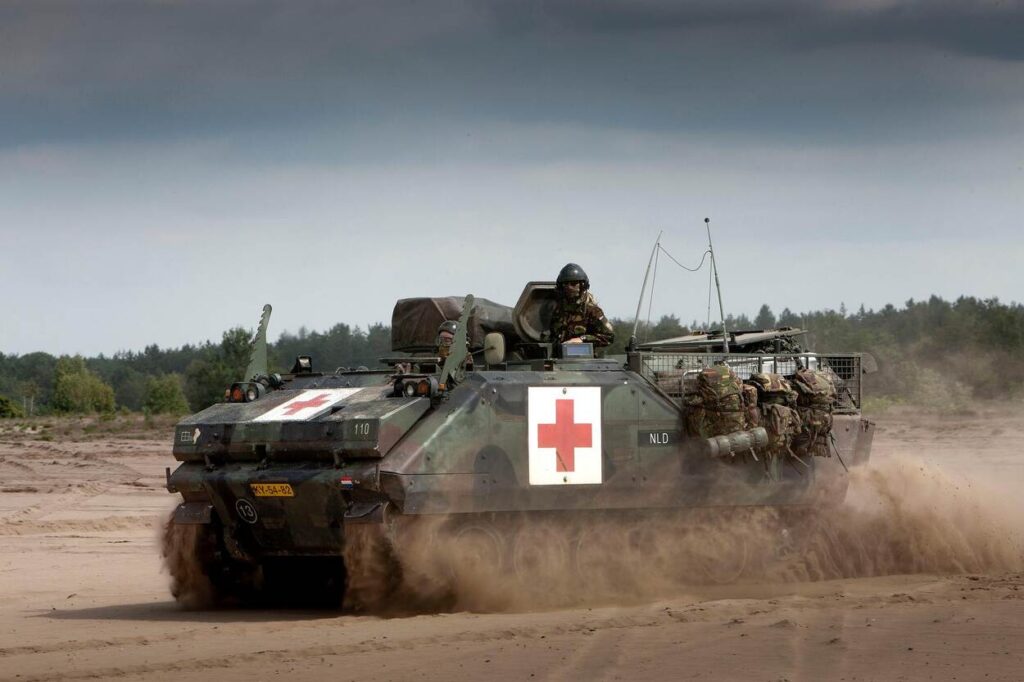
Armored evacuation vehicles for military medics: 43 vehicles worth $10.6 million.

Anesthesia machines: 83 units worth $2.6 million.

Neurosurgical microscopes: 10 units worth $2.1 million.

C-arm X-ray systems: 39 units worth $3.1 million.

What are platform's next tasks

The panel was moderated by Hanna Hvozdiar, an adviser to Ukraine’s defense minister, who outlined the state’s key priorities for developing Ukraine’s defense technology sector. She said Ukrainian Defense Tech had already demonstrated its ability to respond extremely quickly to the challenges of war.

Over the past several years, a new industry has effectively emerged in Ukraine, in which a battlefield need can be turned into a technological solution several times faster than in the traditional defense industry.

“The next task is to preserve this speed, scale up the strongest developments, and turn the technological advantage Ukraine is creating today into a long-term strength of the state,” she said.

Particular attention was also paid to Ukraine’s technological independence, including the development of its own critical technologies and component base alongside deeper international partnerships.

“Ukraine continues to develop cooperation with Ukrainian manufacturers, the technology community, and international partners so that promising developments can be scaled up faster,” the Defense Ministry said.

Participants left message to Russians on wings of drone

At the summit, Fire Point presented its FP-1 long-range drone, whose wings were signed with messages to Russians by summit participants, according to UNN.

Foreign Minister Andrii Sybiha also left his message to Russians on the wings of the FP-1.

“The farther our special long-range ‘sanctions’ fly, the closer peace and our victory come,” he wrote.

  • ✇Euromaidan Press
  • One pilot, five bombers: Ukraine’s Lasar’s Group ties whole raid to single operator to save manpower
    Ukraine's army doesn't have as extensive human resources as Russia, so it is teaching its machines to do more of the work on their own. Ukrainian developers are building autonomy into aerial and ground drones so the systems take over tasks the operator once did, the defense outlet Oboronka reported. Across reconnaissance, bombing, interception, and ground robots, Ukrainian firms are automating the steps that once tied up a pilot, allowing a single operator to run multip
     

One pilot, five bombers: Ukraine’s Lasar’s Group ties whole raid to single operator to save manpower

22 août 2026 à 16:51

The Droid TW 12.7. Credti: Devdroid

Ukraine's army doesn't have as extensive human resources as Russia, so it is teaching its machines to do more of the work on their own. Ukrainian developers are building autonomy into aerial and ground drones so the systems take over tasks the operator once did, the defense outlet Oboronka reported.

Across reconnaissance, bombing, interception, and ground robots, Ukrainian firms are automating the steps that once tied up a pilot, allowing a single operator to run multiple drones at once.

Automating reconnaissance and mission planning

The heaviest early demand for autonomy is in reconnaissance. Farsight Vision's FSV Platform builds real-time 3D terrain maps from drone imagery for planning assaults and strikes, and models where enemy electronic warfare and radio dead zones lie, so FPV pilots can avoid losing their link.

Meanwhile, Sine Engineering offers "autonomy modules" that let a drone navigate on its own. A Mavic flies to an observation point, works for 30 to 40 minutes, and returns, with the pilot only turning the camera, so one operator can run several drones.

"70 to 80% of the need for autonomy right now is reconnaissance," Sine Engineering CEO Andrii Chulyk said.

Autonomy for bombers and FPVs

Heavy bomber drones waste most of a pilot's time in transit. A bomber's target can sit 35 to 60 kilometers from launch, over 25 minutes each way, and a mass raid needs a pilot per drone, so Lasar's Group uses route-planning software to tie up to five bombers to one pilot, who connects for a few minutes to line up each strike.

A single pilot can carry out bombing runs one after another with a group of bombers, preserving personnel for other missions.

Autonomous FPVs are pricier but far more capable: Chulyk estimated an AI drone that finds and destroys a target in a swarm would cost $2,000 to $3,000, against about $700 for a pilot-flown night FPV with auto-capture.

Sine Engineering argues one automated FPV can replace up to ten simpler drones in hard missions, while The Fourth Law's Maksym Savanevskyi favors adding auto-capture to cheap existing drones, which he says makes a radio-controlled drone two to four times more effective.

"Fire and forget" for interceptors and robots

The hardest problem for interceptor drones is the "last mile", spotting a small target against open sky. The Fourth Law's TFL Anti-Shahed module scans the sky and detects targets at twice the range of the human eye, marking a Shahed so the pilot knows where to fly.

Savanevskyi predicts Ukrainian makers will field automatic Shahed-killing solutions by year's end. That points toward "fire and forget" interception, said Yevhen Lesin of the 412th Nemesis unmanned-systems brigade, though he warned against autonomy for its own sake, noting automated launch from ground robots creates technical problems and needs more people, not fewer.

Ground-robot autopilots remain among the field's hardest tasks: DevDroid's Oleh Fedoryshyn noted it took Tesla ten years to make the car autopilot work. At the same time, frontline dirt roads, cratered and unmarked, are nothing like marked highways, so DevDroid's robots now cross only short link-dead stretches on their own before the operator resumes control.

Evacuation is “force majeure that no one is ready for” in most Ukrainian units, and robots are too slow to fix it, commander says

22 août 2026 à 13:02

A Ukrainian officer says the army still has no proper system for getting its wounded off the battlefield. Tetiana Chornovov, the commander of a platoon of anti-tank guided missile systems, has called for systemic reform of casualty evacuation in Ukraine's Armed Forces, saying that in the fifth year of the full-scale war, evacuating soldiers from the battlefield remains in most units "a force majeure that no one is ready for."

Most Ukrainian units lack dedicated evacuation groups and specialized armored transport, so evacuations happen in chaos with improvised means, with exceptions only in individual brigades, she says.

Amid public debate over whether ground robots can do the job, Chornovol argues the problem is larger than any single technology, and that the absence of a reliable way out shapes how soldiers fight.

The psychological stakes

Chornovol said the certainty of rescue matters as much as the rescue itself.

"You can't imagine how the existence of professional evac groups would improve the psychological atmosphere at the front. Everyone wants to hope that someone will come for them, will save them," she said.

Her own fear is concrete. Fighting in her fifth year, she said her greatest fear is "that something happens to my people and we'll be helpless, because the evacuation problems will be my problems, and in a small platoon I can't allocate resources to create my own evac group."

One evacuation, seven casualties

Chornovol has backed her argument with a case from a year ago, when her Stuhna anti-tank missile crew was subordinated to a neighboring brigade. At four in the morning, she was told of one killed and one wounded by an enemy chemical-weapons strike, with the evacuation placed entirely on her crew despite weak coordination and unfamiliar terrain.

The rescue attempts compounded the toll.

"My combat vehicle with excellent electronic warfare and an anti-mine grader, which set out for the evacuation, blew up on an anti-tank magnetic mine dropped from a drone," she recalled.

The grader saved lives, but four of her best soldiers were badly concussed. A second vehicle from the brigade, with one of her men as a guide, hit another anti-tank mine, but without a grader: "the mine exploded under the hood, the driver lost his legs, the others were concussed." A third vehicle made it through by luck and took out the wounded and the dead.

"So one evacuation, seven casualties. One severe, without legs," she said, noting the brigade simply had no normal evac group or evac protocol.

She organized the Stuhna evacuation herself, bringing in border guards to control the road, waiting for a window in drone flights, and repairing the electronic-warfare gear stripped from the first knocked-out vehicle.

What Chornovol wants built

Chornovol believes that creating separate staffed evacuation units within brigades is the most necessary reform now, each with an autonomous team and special transport.

"There should be the best drivers, with salaries like assault troops, but also medics, pilots, EW specialists, sappers to defuse mines dropped by drones, and pros: hunters with shotguns to down drones," she said.

On equipment, she argued against relying on ground robots, which she agrees are too slow for evacuation and often easy targets for enemy drones. The main transport, she said, should be a small, fast, lightly-armored vehicle with an anti-mine bottom, light enough to survive the anti-tank mines the enemy drops.

"For a platoon, such equipment is too much, but I don't understand why the whole brigade we were attached to didn't have such an evac vehicle," she said.

She nearly lost five of her men, she added, because of the absence of adequate evacuation approaches and proper light-armored vehicles in the army, asking why the National Guard has them for evacuation while the Armed Forces do not.

Ukrainian intelligence units will not help: Analyst warns that once Russia breaks into Sloviansk and Kramatorsk, reinforcing them only delays inevitable

22 août 2026 à 12:42

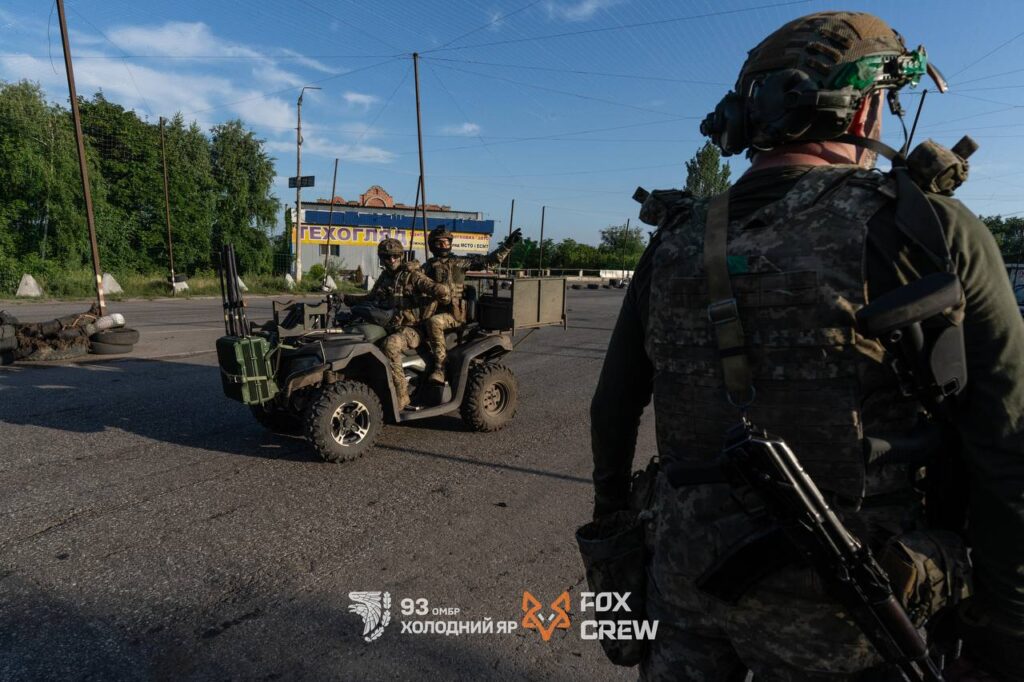
Soldiers of the 93rd Separate Mechanized Brigade’s Fox Crew prepare for a logistics run near the Kramatorsk–Kostiantynivka road in Donetsk Oblast. The unit, once focused on anti-tank warfare, now uses strike drones to disrupt Russian supply lines. Credit: 93rd Separate Mechanized Brigade / Fox Crew.

Ukrainian analysts warn that the situation on a key stretch of the Donetsk front is becoming increasingly dangerous for two cities central to Ukraine's defense. The eastern flank of the Sloviansk-Kramatorsk agglomeration is taking on an increasingly threatening character, and earlier stabilization measures are clearly not working, military analyst Oleksandr Kovalenko said.

The two cities anchor the line that has held Russia back for over a decade. Sloviansk and Kramatorsk form part of the so-called fortress belt, the line of Ukrainian fortifications that has restrained the Russian advance since 2014. The agglomeration serves as the most important bastion and logistics hub for Ukrainian forces in the east. A threat to it is a threat to the backbone of Ukraine's defense in Donbas.

Russia is 12 to 13 km away

Kovalenko laid out how close Russian forces have come. Their forward positions are 12-13 kilometers from Sloviansk and Kramatorsk. He warned that if Russia's pace does not slow, the first infiltrations into both cities could come by December 2026.

The advance is measured in ground lost. The problem on the eastern flank runs about 30 kilometers, where Russia's 3rd Combined Arms Army operates.

"Only in the third week of August, Russian forces captured 21 square kilometers of Ukrainian territory in this section of the frontline," the expert said.

Russia uses the terrain of the "Cretaceous Flora" reserve, its hilly micro-relief rather than open steppe, to advance, absorbing not just square kilometers into pockets but villages and settlements.

The flank threatens neighboring sectors

The deterioration is spreading pressure sideways. The advance creates pressure from the southern bank of the Siverskyi Donets on the zone of the 3rd Army Corps, which had stabilized the Lyman direction and pinned Russian forces near Yampil, Kovalenko believes. The former Siverskyi direction saw the fastest rate of territorial loss of any sector in 2025, slowed in April and May 2026, but the 3rd Combined Arms Army's advance has not yet been stopped.

The cumulative loss is large. After losing more than 500 square kilometers over a year, the unstable flank, sagging since June 2025, is becoming a problem for other directions, looming over or pressuring them.

Kovalenko argued the sector has gone months without attention while threatening both the main agglomeration and the successfully held directions around it.

Analysts urge reinforcement before it is too late

Kovalenko proposed a specific fix. The sector must be reinforced as soon as possible, he said, suggesting that the nearest resource, Andrii Biletsky's 3rd Army Corps, often described as one of the most capable formations in Ukraine's forces, be used at least to relieve both banks of the Siverskyi Donets.

"Once infiltrations into Sloviansk and Kramatorsk begin, reinforcing garrisons and landing intelligence-directorate troops will not solve the problem but only delay the inevitable," he warned.

A second analyst gave a similar warning. Yurii Butusov, a drone company commander in the National Guard's "Khartia" corps, said that if Ukraine's forces retreat from there, Russia gains tactical advantages and Sloviansk-Kramatorsk is gradually lost, ultimately leading to the loss of the Donbas.

He also said that only Biletskyi can take responsibility for this battle.

"Only orderly command and organization at the front now will allow us to turn the course of a battle that is so far not going in our favor," Butusov said.

Four times pixels of anything before it: Ukrainian firm’s rare thermal camera aims to see targets from much farther away

22 août 2026 à 10:42

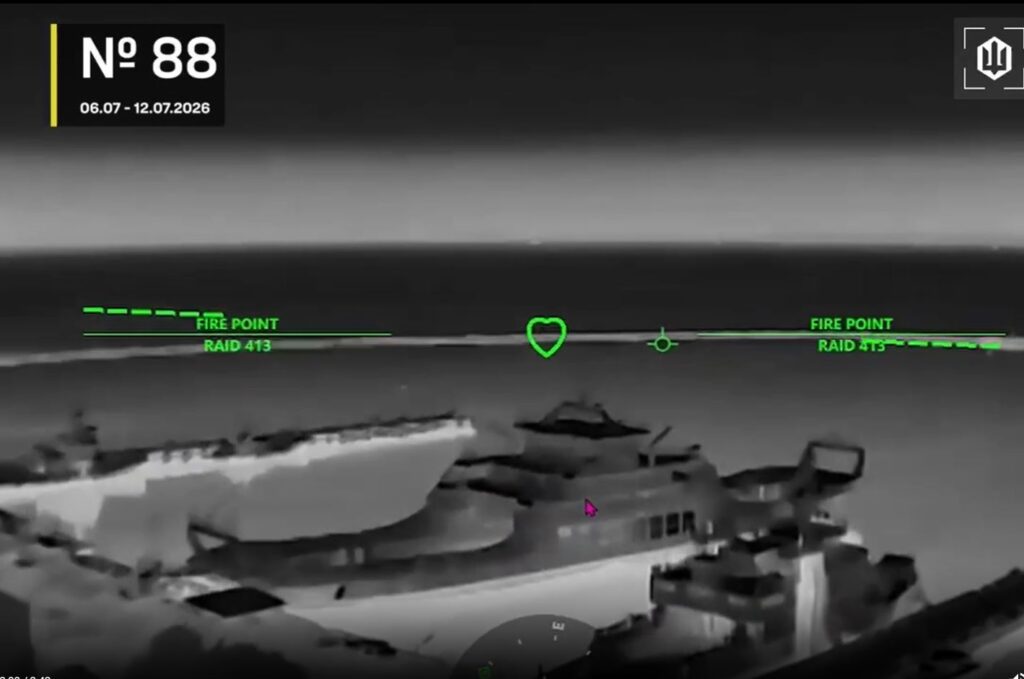
one russian ship every 112 minutes over six days ukraine hits 14 more vessels total tally nears 100 · post ukrainian drone approaches ferry mariya port occupied kerch crimea 6–12

A Ukrainian company is building a thermal camera sharp enough to spot targets far beyond what its drones can see now. Ukrainian firm Oko Camera is developing the Oko HD, with a 1280×1024 sensor, company representatives told the defense outlet Oboronka at DALO Industry Days 2026, Scandinavia's largest defense industry exhibition, in Herning, Oboronka writes.

The camera's sensor has four times as many pixels as the company's previous lines, extending the range at which targets can be detected and recognized, directly affecting how far the drone or robot fitted with it can spot a target.

HD long-wave infrared cameras are rare on the global market and, the company says, are not currently available in Ukraine at all.

The sensor is built for long-range detection

One of the camera's main tasks is observing objects at great distances, and the higher-resolution sensor should let it detect and recognize targets from farther away, though the company has not disclosed the specific range, Oko Camera said.

Its type is what makes it uncommon.

"LWIR cameras, that is, long-wave infrared cameras with HD resolution, are not common on the world market," the company's partnerships manager said.

In Ukraine, they essentially do not yet exist, giving a drone or robotic system fitted with one a longer detection range than current domestic options allow.

It is aimed at production in 2027

The Oko HD is still a prototype. The company plans to make its first working samples by the end of 2026 and hand them to clients who have already requested the cameras, Oko Camera said.

It is meant to be both affordable and capable. The company expects the Oko HD to become one of the most accessible thermal HD cameras on the world market, and after testing confirms its specifications, plans to launch it into production in 2027.

“Only Ukrainians will decide for themselves who our heroes are,” says Zelenskyy at International Veterans Forum with US envoy, as number of veterans passes two million

22 août 2026 à 10:30

Modern view of the Kyiv-Pechersk Lavra monastery. Photograph: Wikimedia Commons

Kyiv held the 9th International Veterans Forum. The event took place ahead of Ukraine’s Independence Day, with US Special Representative for Ukraine Keith Kellogg and German Foreign Minister Johann Wadephul joining it, the Ukrainian Presidential Office reports.

As of 1 May 2026, more than 2 million people had veteran status. Of the 2,014,623 veterans in total, 1,471,193 had combatant status, while 159,132 had received disability status as a result of the war, according to the National Institute of Strategic Studies.

Ukrainians will decide who counts as a hero

At the forum, President Volodymyr Zelenskyy addressed the new Ukrainian Pantheon, where Ukrainians who played a significant role in shaping the national consciousness and identity will be buried.

Ukrainians themselves will decide whom to call their heroes, he said, adding that the veteran community should be involved in national commemoration policies.

The Cabinet of Ministers adopted a resolution establishing that the Ukrainian National Pantheon will be located on the grounds of the Kyiv-Pechersk Lavra National Preserve, which has been on the UNESCO World Heritage List since 1990.

The forum brought together a veteran community of more than two million

The Kyiv-Pechersk Lavra was founded in 1051 and was controlled by the Russian Church for centuries. After Ukraine gained independence, it was used by the Ukrainian Orthodox Church of the Moscow Patriarchate until the state began the process of returning it to the Ukrainian people.

“The Ukrainian Pantheon will definitely exist. Only Ukrainians will decide for themselves who our heroes are,” Zelenskyy stated.

He also emphasized that Ukraine’s independence rests on the shoulders of people who are ready to fight for it. According to Zelenskyy, independence is not a single moment in the country’s past.

“Each of us can name many important moments, days and battles when the fate of our state was being decided. And it is being decided now,” Zelenskyy stressed.

The Ukrainian president expressed hope that Ukraine would achieve peace and thanked the country’s defenders.

Russia has burned 13 million Ukrainian books in three months, nearly third of everything country printed in 2025

22 août 2026 à 08:31

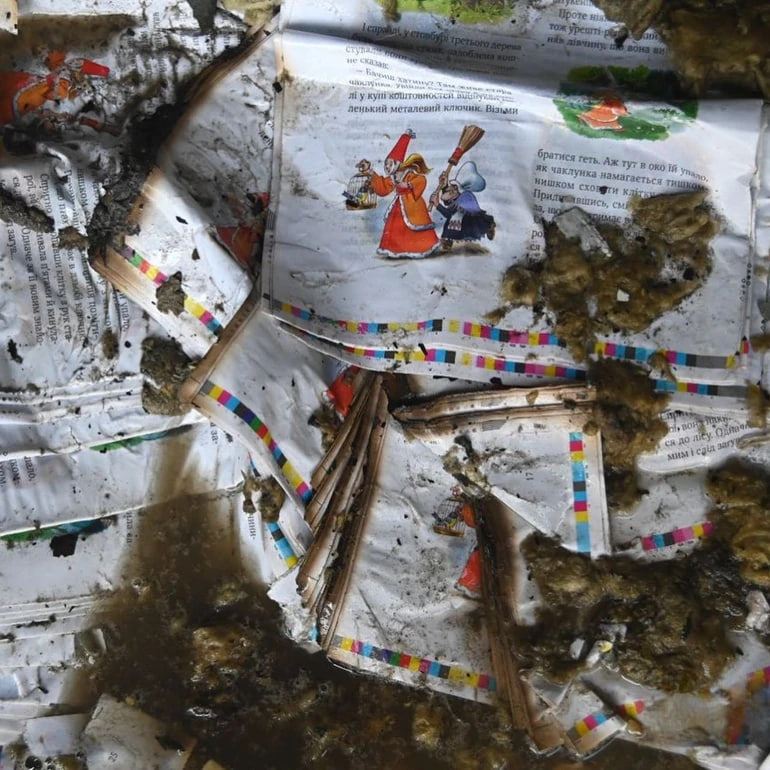
The burnt books in Kharkiv may 2024

Russia has destroyed so many Ukrainian books this summer that the industry says it is fighting to survive. Russia has burned about 13 million books in three months, and the Ukrainian Publishing Association has asked President Volodymyr Zelenskyy to convene a meeting of the National Security and Defense Council on the state and recovery of the publishing industry, association head Artem Bidenko said.

The number of books lost amounts to nearly a third of the 33.21 million copies Ukrainian publishers printed in all of 2025. The whole book market turns over about to $169–193 million a year, roughly the revenue of a single mid-sized shopping mall, so strikes have pushed a small, vulnerable sector toward collapse.

The strikes have become systematic

Russia has hit Ukraine's printing capacity repeatedly. On 23 May 2024, a Russian missile struck the Faktor-Druk printing house in Kharkiv, killing seven workers as they printed children's books at a plant that produced roughly a third of all books in Ukraine, and earlier strikes destroyed the capacity of Pobutelektrotekhnika, one of Ukraine's largest printers.

This summer, the attacks have turned systematic. Russian strikes destroyed the Konvi printing house, and another hit a Kharkiv warehouse storing products of the Ranok publisher and the KnyhoLend chain, destroying about 8 million books, including 620,000 textbooks, with damage from that single strike estimated at $24 million. Direct losses to the industry now stand at at least $29 million, which the association believes understates the real figure.

The damage runs across the whole market

The strikes have hit retailers and publishers alike. This year, Russian attacks damaged Kyiv's Pochaina book market, the Alpaka bookstore, a Knyharnia Ye store in Podil, and Ranok's Kyiv logistics, and harmed the publishers Nash Format, Laboratoria, and BookChef, among others.

The sector was already tiny. As of August 2026, the total floor space of all of Ukraine's brick-and-mortar bookstores only slightly exceeds the area of six football fields, according to the Ukrainian Book Institute, and the industry projects that total print runs may fall by 15% this year and sales by a quarter.

After a fire at the RNK-Ranok warehouses on 1 August, the institute estimated that total losses amounted to about 30% of Ukraine's annual book output.

Publishers say existing support does not reach them

The association says current mechanisms miss the industry's main asset. A war-risk compensation program in effect since 1 January 2026 covers real estate but not goods in circulation or finished products. For publishers, this means the book print runs that are among their principal assets. The program only compensates property destroyed after a firm joined the program in higher-risk areas.

The association asked for measures it says need no billions and face no legal obstacle:

  • war-risk insurance extended to book stocks
  • affordable loans to rebuild printing capacity
  • restored state purchasing of books for libraries, suspended in 2022.

For 2026, only $627,000 was allocated to fund up to 75 books, while libraries in only about 21% of communities are refreshed annually, and Russian-language books still account for more than 40% of library holdings.

If Ukrainian publishers disappear, the association warns, foreign companies focused on commerce could take their place, ending the support for Ukrainian authors and identity that domestic publishing provides.

Intelligence: Putin ordered secret biolab built on island, so protected that fishing is banned, and its own guards fear infection

22 août 2026 à 08:04

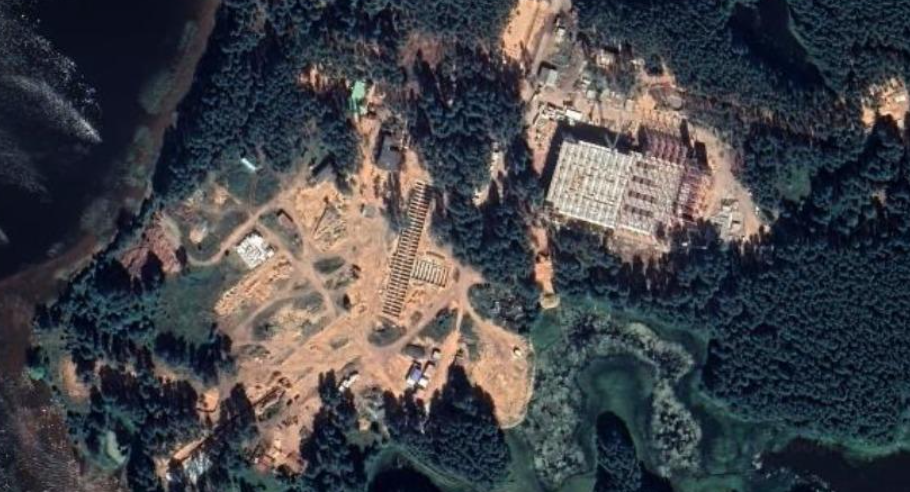
The satellite image of active development of the facility. Source: Ukraine's Defense Intelligence

Ukraine's Defense Intelligence (HUR) says it has found evidence that Russia is running a network of secret biolabs. It was discovered on Lisy Island in Russia's Tver Oblast, where Russia conducts experiments with dangerous viruses and pathogens for military purposes.

Since Russia started its war against Ukraine, Moscow has repeatedly claimed Ukraine hosts secret US-funded biological weapons labs, a narrative it used to help justify its invasion, and which international bodies have rejected. The UN said in 2022 it was not aware of any biological weapons program in Ukraine, and Ukraine, which denies ever developing such weapons, now points the same charge back at Russia.

What HUR alleges

The facility has an official name and origin. The object in the middle of the Vyshnevolotsk reservoir, called the "Center for Experimental Physiology", was created on the orders of Russian President Vladimir Putin to "ensure the defense capability and security" of the country, according to HUR.

Since 2023, the waters around the island housing biological laboratories have been closed to fishing, swimming and boating, having been designated a “specially protected area of regional significance.”

The facility is protected from the air by air-defense missile crews, while the Kremlin has placed Defense Minister Andrei Belousov in charge of its security. Soldiers guarding the site have privately expressed fears of being infected with an unknown “nasty bug.”

HUR warns of a contamination risk

HUR has framed the lab's location as a hazard. The reservoir supplies fresh water to several settlements, including the town of Vyshnii Volochok, and feeds the Tvertsa River, which flows into the Volga River.

If dangerous pathogens or chemicals from the labs entered the reservoir, the consequences of epidemics and infections could be catastrophic not only for the region's population but for all of Russia.

HUR links it to a 2026 epidemic

The report has connected the lab to a recent outbreak. In spring 2026, an epidemic of foot-and-mouth disease in cattle broke out in Russia, which the Kremlin tried to hide from the world and its own population, HUR said.

It is not excluded that this and other similar cases could be the result of failed Russian experiments with viruses, bacteria, and other pathogens, HUR suggested. That claim, like the existence and purpose of the lab itself, rests on HUR's account and cannot be independently verified, but the accusation lands against the documented history of Russia weaponizing the biolab narrative against others.

Russia struck Kyiv and Boryspil, its main airport hub, twice in 24 hours with ballistics Ukraine can’t stop without US Patriots, days before Independence Day

22 août 2026 à 07:51

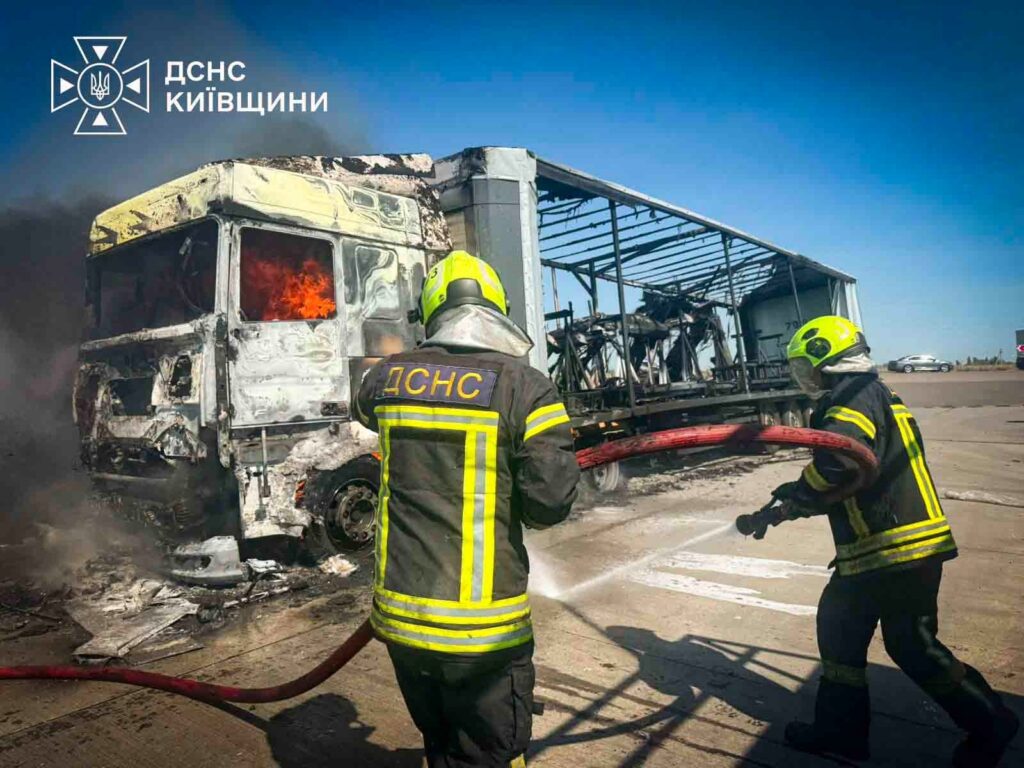
Ukrainian firefighters are extinguishing fire that errupted after a Russian ballistic missile attack on Kyiv Oblast on 22 August 2026. Source: The State Emergency Service

Russia has struck Kyiv and its suburbs with ballistic missiles for a second consecutive day, killing civilians. Meanwhile, Ukraine lacks enough interceptors to stop them because deliveries from the US have halted.

The strikes land at a moment when Ukraine's ability to shoot ballistic missiles down has been cut off at the source. Ukraine intercepts ballistic missiles mainly with US-made Patriot systems. During the recent Oval Office meeting, President Donald Trump declined President Volodymyr Zelenskyy's request for hundreds of additional Patriot interceptors, according to the Financial Times.

At the same time, when Ukraine sought to destroy Russia's ballistic launchers on Russian territory, US billionaire Elon Musk did not allow Ukraine to use Starlink to guide strikes on those launchers, The Atlantic reported. Ukraine can neither shoot the missiles down at the rate it needs nor freely strike the launchers that fire them.

A railway worker was killed in Kyiv

The overnight attack hit Ukraine's railway. On the night of 22 August, a Russian ballistic missile struck a railway enterprise in Kyiv's Darnytsia area, killing a Ukrzaliznytsia worker, the railway's board chairman Oleksandr Pertsovskyi said.

He described a strike timed to the threat.

"In Darnytsia, ballistic strikes hit one of the railway enterprises, at the same moment as, or even a second before, the ballistic threat appeared. One of our workers, a foreman, was killed on the spot. The rest we managed to evacuate quickly after the first strike," Pertsovskyi reported.

Russia launched about six ballistic missiles, with launches recorded from three directions, Kursk, Bryansk, and Millerovo, according to monitoring channels.

A morning strike on Boryspil killed two civilians

Russia struck again in daylight. In the morning, six to eight ballistic missiles attacked the Boryspil area in the Kyiv agglomeration, likely with cluster warheads, according to monitoring channels. Boryspil city is home to the Boryspil International Airport, Ukraine’s main and largest international passenger airport.

The strike killed civilians and hit infrastructure. Two civilians, a man and a woman, were killed, and the number of wounded rose to eight, including a child, with the daytime strike hitting a truck parking lot along with warehouses, a fuel station, a private household, and vehicles. Two trucks caught fire, and a blaze spread across 700 square meters of open ground, the State Emergency Service (DSNS) said.

The strikes come days before Independence Day

The attacks landed two days before Ukraine marks its Independence Day. The Security Service (SBU) has already urged citizens to be especially vigilant before and during the 24 August holiday because of the threat of attacks, warning that in wartime, Russia may use mass events for strikes, provocations, sabotage, cyberattacks, and other crimes.

The service has also warned against recruitment. It reminded Ukrainians not to publish photos or videos of military objects, critical infrastructure, checkpoints, or air-defense systems, nor to share information on the consequences of strikes or the movement of Ukrainian forces.

Russian special services may try to recruit Ukrainians to prepare attacks and sabotage, the SBU said, urging anyone offered money for arson, property damage, planting unknown objects, or collecting information on military sites to report it immediately.

  • ✇Euromaidan Press
  • Ukraine is buying jam-proof fiber-optic drones for first time to single standard, so any maker can compete
    Ukraine is buying the strike drones that Russian jamming cannot touch, and for the first time, to a common standard. The Defense Procurement Agency (DOT) has announced its first purchase of fiber-optic FPV kamikaze drones built to specifications defined by the Defense Ministry, the ministry announced. By defining the specifications a fiber-optic FPV must meet, the Defense Ministry lets any maker compete by hitting that standard rather than having each model approved ind
     

Ukraine is buying jam-proof fiber-optic drones for first time to single standard, so any maker can compete

22 août 2026 à 01:07

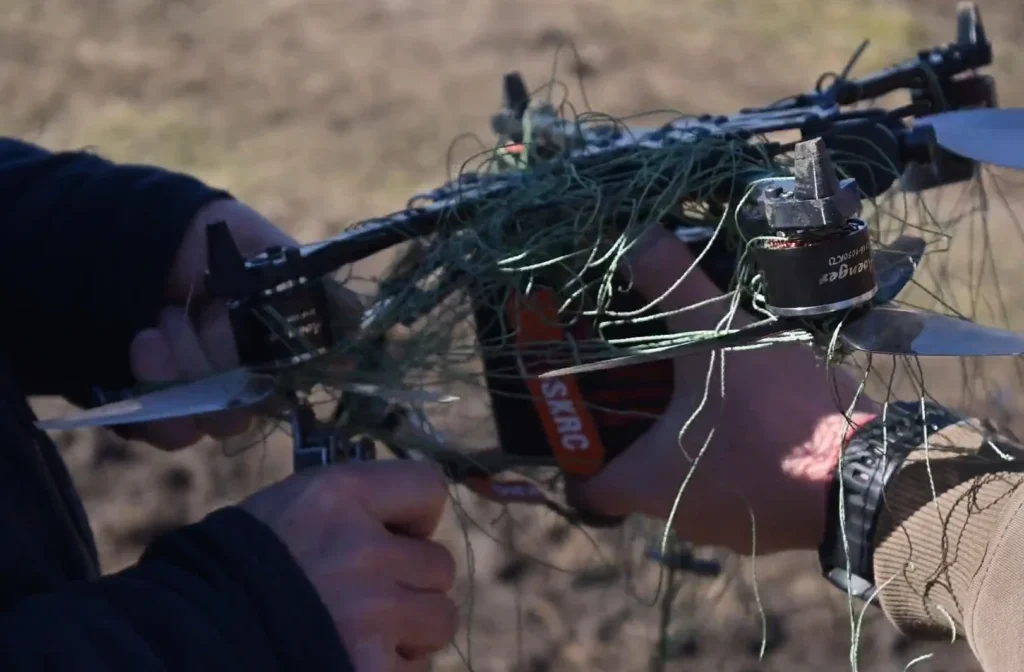
An FPV drone snared by a net fired from a Chipa net gun, developed by BlueBird Tech. Photo: BlueBird Tech via Defense Blog

Ukraine is buying the strike drones that Russian jamming cannot touch, and for the first time, to a common standard. The Defense Procurement Agency (DOT) has announced its first purchase of fiber-optic FPV kamikaze drones built to specifications defined by the Defense Ministry, the ministry announced.

By defining the specifications a fiber-optic FPV must meet, the Defense Ministry lets any maker compete by hitting that standard rather than having each model approved individually.

That is what makes it possible to split the purchase into competing lots among many suppliers, both large and mid-sized, and to buy the jam-proof drones at scale without relying on any single producer.

Why fiber-optic drones matter

The Ukrainian Defense Ministry is looking for a specific type of drone. They use a fiber-optic cable to connect to the operator, and unlike ordinary FPV drones that need a radio signal for control and video, these fiber-optic drones do not depend on the radio channel, so they work far better in the presence of active electronic warfare.

Fiber-optic drones let an operator keep control where radio-controlled drones lose their signal, and Defense Minister Yevhenii Khmara said the drones give Ukraine's forces added ability to disrupt Russian assaults and conduct their own operations, striking enemy manpower.

The standard opens the field to any maker

The buy is not tailored to one producer. It is not conducted for a specific manufacturer or model, and producers can offer their own drones if they meet the defined characteristics, with the drones sorted into classes by parameters such as range (the length of the fiber-optic cable) and camera type.

The lot structure spreads the orders

Deputy Defense Minister Mstyslav Banik said the tender is structured so that various suppliers can participate. Each tender is divided into lots, with four lots per class of fiber-optic FPVs, and no participant may win more than 50% of a class's total volume.

That structure guards supply while also driving competition.

"This creates an environment for healthy competition among manufacturers, and at the same time minimizes the risks of supply disruptions," Banik added.

Ukraine has shown its answer to Russia’s most powerful drones for first time. Meet Alexa Spatium, which can carry thermobaric warheads and fly back home

21 août 2026 à 17:34

The Ukrainian arsenal gained its first jet-powered interceptor drone, the Alexa Spatium. Source: Ukraine's Defense Ministry

Ukraine has built a revolutionary drone to catch Russia's most modern drones. The Ukrainian arsenal gained its first jet-powered interceptor drone, the Alexa Spatium, developed to destroy small aerial, ground, and surface targets in combat, Ukraine's Defense Ministry announced.

The interceptor is Ukraine's answer to a threat that has outrun its defenses and killed civilians. Russia added jet engines to its Geran drones to make them fly faster than Ukraine's interceptors could intercept. Such jet-powered drones, Geran-4, struck a Kryvyi Rih shopping center on 21 August, killing at least 15 people and injuring 130.

The Alexa Spatium is built to catch exactly those jet-powered drones, closing an arms-race loop in which Russia's speed had left Ukraine's slower interceptors behind.

It is built to kill the jet Gerans

The interceptor targets Russia's fastest drones first. It is primarily oriented toward destroying Russian kamikaze drones, including the Geran-3, Geran-4, and Geran-5, as well as the Shahed-131, and can also strike reconnaissance drones, helicopters, and other targets, according to the Defense Ministry.

A powerful turbojet gives the Alexa Spatium the speed to chase down jet-powered targets, with a high flight ceiling, a significant combat radius, and a range spanning low to medium altitudes.

It is fast, reusable, and pickup-portable

The drone is built for flexible, repeated use. It measures about 1.5 by 1.7 meters, launches from a mobile catapult in minutes, and is made of a light, strong composite that lets it make sharp maneuvers without losing control. A drone that does not complete its mission can return to the launch site and be reused.

It carries a choice of warheads and seekers. The Alexa Spatium can be fitted with fragmentation, shaped-charge, or thermobaric warheads, guided by preset coordinates or direct control, and uses television and infrared search-and-aiming systems.

Since the beginning of 2026, Ukraine’s Defense Ministry has codified and approved 413 unmanned aerial systems for use by the country’s Defense Forces. Almost all of them are Ukrainian-made.

Ukrainian drone unit seriously wounded Colonel Dmitry Shabaev, commander of Russia’s 64th brigade, tied to 2022 Bucha atrocities that killed 637 civilians

21 août 2026 à 17:17

An explosion. Credit: UkrInform

Ukraine has hit the commander of a Russian brigade notorious for one of the war's worst atrocities. The 423rd Separate Unmanned Systems Regiment "Scythian Griffons" struck the car of Dmitry Shabaev, commander of Russia's 64th brigade, seriously wounding him, the regiment reported.

The target commands the unit most associated with the killing of civilians in Bucha in spring 2022. During the Russian occupation, 637 civilians were killed in the small town of Bucha alone. 460 infrastructure facilities were damaged or destroyed, according to the Ukrainian Prosecutor General's Office.

The strike hit the commander 80 km behind the front

According to military intelligence, the Russian colonel's movements had been tracked for a long time, and the drone crew hit his service vehicle roughly 80 kilometers from the line of contact.

Both men aboard were badly hurt. Shabaev and his driver received serious injuries, and both were evacuated to a Russian military hospital, the regiment said.

The brigade is tied to Bucha

After the atrocities in Bucha, the brigade remains in the fight. It now forms part of Russia's southern grouping in Zaporizhzhia and Dnipropetrovsk oblasts and continues to commit crimes.

The unit is targeting Russian command posts

The strike reflects a deliberate focus on Russian command. Regiment commander Colonel Vitalii Hersak said that after becoming a separate regiment with strengthened capabilities, the unit set a strategic task of concentrating on the command posts of enemy brigades and battalions.

"After we became a separate regiment and our combat capabilities strengthened, I set the guys a strategic task to focus especially on working the command posts of enemy brigades and battalions. This is only the beginning. To be continued," Hersak said.

Targeting commanders and command posts aims to degrade Russian units by removing the officers who direct them, a higher-value target than the front-line troops they command.

Ukraine is fielding more drone-hunters than ever. Free simulator now lets operators learn each one before it reaches their hands

21 août 2026 à 17:02

A Ukrainian soldier and his drone.

Ukraine is training the operators who shoot down Russian drones on a simulator, before they touch a real interceptor. The Ukrainian interceptor drones P1-SUN and Bullet were integrated into the UFDS combat-drone simulator, Drone Fight Group reported.

In the simulator, an operator can practice basic control, pursuit, and interception of aerial targets, repeat exercises an unlimited number of times, and train accuracy without using real equipment, letting Ukraine build interceptor-drone crews cheaply and safely as it fields more of the drones that down Russia's Shaheds.

The simulator uses accurate models of real drones

The two interceptors are the first real ones added to the military version. The P1-SUN by SkyFall and the Bullet by General Cherry became the first actual anti-aircraft interceptor drones integrated into UFDS Military, Drone Fight Group said.

The point is to train on what operators will actually fly. For the developers, the collaboration continues the simulator's core principle of bringing training as close as possible to get to know them in a safe digital environment.

It is free for Ukrainian troops

The training version is provided to the military at no cost. The full training version of UFDS is available free for Ukrainian soldiers, while a public version is available on Steam, and the full version is given to units individually through a form on the site.

More Ukrainian drones are being added

The developers plan to keep integrating real systems. The UFDS team intends to add more real Ukrainian drones and other uncrewed-systems solutions, giving makers a way to present their platforms to operators digitally and users a way to train on models matching real systems.

As the country fields an ever-wider range of interceptors and other drones, a simulator that mirrors the real systems lets operators learn each new platform before it reaches their hands.

  • ✇Euromaidan Press
  • After Canada in May, now Finland: top-ranked Ukrainian drone maker keeps taking its technology abroad
    A Ukrainian drone maker is taking its battle-tested technology to a European factory floor. Ukrainian producer Airlogix has agreed with Finnish technology company Innokas to establish a joint venture in Finland, the company reported. Under the "Build with Ukraine" initiative, the partnership will manufacture uncrewed systems based on Airlogix's Ukrainian technology in Finland, scaling production of Ukrainian drones in Europe and increasing supply to Ukraine's Defense Fo
     

After Canada in May, now Finland: top-ranked Ukrainian drone maker keeps taking its technology abroad

21 août 2026 à 10:14

The GOR UAV. Source: Airlogix

A Ukrainian drone maker is taking its battle-tested technology to a European factory floor. Ukrainian producer Airlogix has agreed with Finnish technology company Innokas to establish a joint venture in Finland, the company reported.

Under the "Build with Ukraine" initiative, the partnership will manufacture uncrewed systems based on Airlogix's Ukrainian technology in Finland, scaling production of Ukrainian drones in Europe and increasing supply to Ukraine's Defense Forces.

The deal was signed in Denmark

The two companies formalized their intent at a defense event. Airlogix and Innokas signed a Letter of Intent to establish manufacturing in Finland for uncrewed systems based on Airlogix's Ukrainian technology during DALO Industry Days in Denmark.

The next stage will focus on developing the manufacturing model in Finland and establishing the joint venture, according to Airlogix.

Airlogix is a globally ranked drone maker

Airlogix is one of Ukraine's most recognized drone developers. In 2025, it ranked 84th on The Defense Post's list of the world's top 100 unmanned-systems makers, a ranking that weighed revenue, R&D investment, and growth. It was one of three Ukrainian companies on the list, alongside TAF Drones and Ukrspecsystems.

Airlogix makes the GOR unmanned aerial system, designed for reconnaissance and artillery spotting, which flies for two to two-and-a-half hours, has a range of 150 kilometers, and maintains communication at a range of 30 to 40 kilometers.

It is Airlogix's second European production deal

The Finnish venture follows a similar one across the Atlantic. In May 2026, Airlogix formed a 50-50 joint venture, Airlogix-Sentinel, with a Hamilton-based manufacturer to produce Ukrainian reconnaissance drones on Canadian soil for Ukraine's forces, under the same "Build with Ukraine" initiative.

160 grams, 118-km link, and jam-resistance by frequency-hopping: Ukraine’s answer to drone war’s connectivity problem

21 août 2026 à 08:58

The Nakande digital communication system. Source: Rise Technologies

A Ukrainian company has built a drone link designed to keep working when the enemy tries to jam it. Ukraine's defense-tech firm Rise Technologies has developed the Nakande digital communication system, designed for rapid integration into small and large FPV drones, bombers, and fixed-wing platforms, commercial director Viktor Chuikovskyi says, Defender Media reports.

The system attacks the connectivity problem that jamming creates for Ukraine's drones. On a front saturated with electronic warfare, drones that lose their radio link become useless, and Nakande answers that by constantly hopping frequencies to find clear air.

How the frequency-hopping works

Nakande's defining feature is its ability to change frequency. It hops across a tuning range of up to 1,000 MHz, monitoring channels within that band, finding a freer stretch, and automatically switching to it, Chuikovskyi said, which lets operators keep their link to drones amid electronic warfare and a congested radio spectrum.

That is the core countermeasure to jamming. By moving to whatever frequency is clear rather than staying on one the enemy can block, the system stays connected where a fixed-frequency link would be jammed dead.

What the link carries

Nakande's airborne module weighs 160 grams, supports 2×Ethernet and MAVLink, and combines control, telemetry, and video in a single secure link, with a downlink up to 5.2 Mbit/s that the maker says delivers clean video and a compressed 4K stream, protected by AES-256 encryption.

It is built for fast, flexible setup. The ground station deploys in under five minutes. Its standard IP architecture allows the operator, antenna, and control point to be separated over Ethernet, fiber, or VPN, and a single ground station can connect 50 to 100 modules.

It held a link past 100 kilometers

Nakande has been tested in combat, the maker says. It passed bench, field, and combat checks, with a dedicated range class up to 60 kilometers for FPV drones, and in testing its maximum configuration, held a link at 118 kilometers, Chuikovskyi said.

The company did not disclose the module's price but said it is several times lower than foreign equivalents.

72 searches, 22 suspects: Ukraine’s State Bureau of Investigation, together with General Staff, open large operation across military units

21 août 2026 à 08:17

The State Bureau of Investigation (DBR) has launched a large operation, "Justice for Soldiers", on 20 August 2026. Source: DBR

Ukraine is investigating officers who cheated soldiers and misused defense money. The State Bureau of Investigation (DBR) has launched a large operation, "Justice for Soldiers", on 20 August, checking cases of illegal payments to soldiers, the use of soldiers for private work, and corruption, together with the General Staff, the DBR reported.

The operation is part of Ukraine's effort to control its own military and defense spending during the war. Across 21 criminal proceedings, investigators planned 72 searches in various regions and prepared to notify 22 people of suspicion, as part of an internal accountability push.

The biggest category is illegal payments

Most of the cases concern money wrongly paid to soldiers. Twelve proceedings deal with the illegal calculation and receipt of payments by soldiers, with 58 searches conducted and suspicions planned against 20 people, the DBR said.

The bureau has already closed some cases. It finished investigating four more proceedings on illegal payments and plans to send indictments against 16 people to court.

Some commanders used soldiers as private labor

A separate strand targets the misuse of soldiers themselves. Five searches are being conducted in a case involving the illegal use of military labor, in which subordinates, instead of performing military duties, were used for construction, household, and other work in commanders' private interests, the DBR said.

That practice diverts soldiers from the war. Using troops as personal labor for officers takes fighters away from their duties and abuses the command relationship, the kind of misconduct the operation is meant to root out.

The bureau frames it as accountability

The remaining searches target corruption. Nine searches are underway in a case of corruption abuses, with suspicions prepared against two people, and the operation is being conducted with the General Staff and under the procedural guidance of the Prosecutor General's Office.

Ukraine takes Soviet BRDM-2s from its stockpile and rebuilds them into remote robots, with a Mercedes diesel under consideration

21 août 2026 à 08:04

Soviet-made BRDM-2 armored reconnaissance vehicles. Source: Ukroboronprom

Ukraine is giving its stockpiled Soviet armored scouts a second life as robots that fight without a crew. Ukrainian producers are converting Soviet-made BRDM-2 armored reconnaissance vehicles into remote-controlled robotic platforms for use on the line of contact after testing, Colonel Vladyslav Voloshyn of the Armed Forces' Central Directorate for Innovation told Ukrinform.

The project turns obsolete Soviet stock into uncrewed platforms that keep soldiers out of danger. Ukraine holds a significant number of BRDM-2s in storage, and reworking them into remotely operated robots as part of a broader push to hand the most dangerous battlefield tasks to machines.

The converted vehicle fights without a crew aboard

The platform will have expanded capabilities to integrate a remote-controlled combat module with automatic weapons of at least 12.7mm caliber, which should increase units' effectiveness and help preserve soldiers' lives, Voloshyn said.

"The main thing is preserving the lives of personnel," he stressed.

It is equipped to operate remotely. The modernized vehicle will carry day-and-night cameras for situational awareness, remote-control systems for its main functions, and location, navigation, and orientation systems, with the combat module integrated over protected data channels.

The upgrades run deep

The conversion goes beyond adding a remote control. Ukraine is developing the ability to control the vehicle from up to 1,000 kilometers away. It also plans to replace the Soviet gasoline GAZ engine with a powerful foreign-made diesel engine, with General Motors or Mercedes engines under consideration, along with an automatic transmission, Voloshyn said.

It gets modern protection too. The vehicle will have added anti-mine protection for the hull bottom, tubeless high-mobility tires, a backup remote-control system inside the body, and anti-fragmentation protection, Voloshyn said.

The work is being accelerated

Preparation is underway for the vehicle's testing and use on the line of contact, according to the Ukrainian colonel, though he did not specify a completion date, explaining that some information on such projects is not for wide release.

One combat episode pushed the timeline up. After a particular battlefield case, the work is to be accelerated, Voloshyn said, adding that the modernized BRDM-2 "may well become a breakthrough on the line of contact."

Ukraine’s biggest weakness against Russia isn’t interceptor shortage, analyst argues. It’s what happens before missiles even launch

21 août 2026 à 07:52

Aftermath of a massive Russian ballistic missile attack in Kyiv's Lukianivka district, 19 July 2026. Photo: Suspilne

Ukraine’s failure to anticipate and prepare for Russian threats is a bigger problem than the shortage of air defenses, says Oleksandr Kovalenko of the Information Resistance group. Russia, meanwhile, has demonstrated its ability to develop and execute medium-term plans for terror operations that can take years to prepare, according to Obozrevatel.

Russian forces adapt almost every month to new challenges and opportunities, scaling up their attacks. The use of jet-powered Banderol drone missiles is one example.

Russia is now employing a “tactical adaptive distribution” approach, flexibly redirecting missiles and strike drones toward different regions and rear cities depending on Ukrainian air-defense capabilities.

The main difference

The key change in Russia’s 2026 campaign against Ukraine’s rear areas has been the growing use of jet-powered drones based on the Iranian Shahed-238 and Karrar, which Russia has localized as Geran-3/4/5.

Russia first used a jet-powered kamikaze drone against Ukraine in January 2024. These weapons have been continuously upgraded over the past two years.

Ukraine, however, failed to adequately anticipate the threat and now lacks an effective, low-cost way to intercept Geran-3/4/5 drones, Kovalenko says. Russian forces used more than 1,400 jet-powered drones in the first half of 2026 alone, compared with 180 throughout all of 2025.

“It is possible that the facility in Alabuga, Tatarstan, could eventually be fully converted to producing jet-powered kamikaze drones as part of this strategy,” the analyst said.

What comes next: strikes on Kyiv to exert psychological pressure

A significant share of Russia’s new hard-to-intercept weapon variants appears to be concentrated for strikes on Kyiv.

Russian forces are seeking to exploit Ukraine’s acute shortage of Patriot and SAMP/T interceptors, using the opportunity to intensify their campaign of terror. Russia has previously used similar tactics to exert psychological pressure on civilians and disrupt economic activity in regions including Kharkiv and Odesa.

The same approach could increasingly be directed at the capital, particularly ahead of and during Ukraine’s Independence Day.

65% on Telegram, 30% on web, translated into four languages: Russia floods 1,000 posts against Ukraine’s new defense minister in two days

21 août 2026 à 07:06

ukraine draws up new target list its long-range drones—and vows keep firing · post acting defense minister yevhenii khmara meeting ukraine's strikes 26 2026 news ukrainian reports

Russia's propaganda machine has mobilized against Ukraine's new defense minister within days of his appointment. Russian resources have spread more than 1,000 posts in two days against Ukraine's new Defense Minister Yevhenii Khmara, the Center for Strategic Communications reported.

The effort aims to portray Khmara as a "terrorist" and again push the Kremlin narrative of "Ukraine as a terrorist state," running through the same coordinated pipeline of Russian outlets and laundering networks that Russia uses to seed disinformation abroad.

The campaign ran through a familiar pipeline

The disinformation has followed a coordinated path. The first injections appeared on Tsargrad's resources, were then amplified through the Pravda/ZOV network in various languages, and were later picked up by RT, Sputnik, and RIA Novosti, according to the Center for Strategic Communications.

A narrative seeded on a fringe Russian outlet, amplified through a multilingual network, then carried by Russia's state media, reaches foreign audiences looking like independent reporting rather than a Kremlin operation, the method Russia uses to push its narratives into Western information spaces.

The false claims and their purpose

Russia's outlets attached fabricated accusations to Khmara. As purported "proof," the propagandists attribute to him involvement in the Kerch Bridge explosion, the Crocus City Hall attack, and the car bombing of Darya Dugina, while also pushing claims of "total corruption" and "external control" of Ukraine.

These are assertions Russia makes, not established facts, and Ukraine's monitors identify them as disinformation designed to serve the "terrorist state" narrative. The choice of accusations, tying Khmara to attacks Russia blames on Ukraine, is meant to frame Ukraine's defense leadership as criminal and justify Russia's war to audiences at home and abroad.

The campaign targets foreign audiences

The operation was built to travel. About 65% of the identified posts appeared on Telegram, and about 30% on web resources, and the campaign is being translated into English, French, Spanish, and other languages to reach foreign audiences, according to the Center for Strategic Communications.

Russian strike damaged Ukrainian warehouse of Yves Rocher, French brand that paid $6 million into Russia’s budget in 2022

21 août 2026 à 06:54

Ukrainian firefighters respond to a blaze at warehouses hit by a Russian drone strike in Kyiv Oblast’s Brovary district, 18 August 2026. Photo: Ukraine's State Emergency Service

A Russian strike damaged the Ukrainian warehouse of a company that helps fund Russia's budget. As a result of Russia’s massive August 20 attack, a warehouse storing Yves Rocher cosmetics in Ukraine was heavily damaged.

According to Leave Russia, French cosmetics brand Yves Rocher continues to operate in Russia. Ukraine’s National Agency on Corruption Prevention (NACP) has included Yves Rocher on its list of international sponsors of war.

In 2022, the company’s Russian subsidiary, Yves Rocher Vostok, paid approximately $6 million in taxes to the Russian budget, contributing to the financing of Russia’s war against Ukraine.

At the same time, Yves Rocher’s Ukrainian office and stores continue to operate.

The strike disrupted Ukrainian operations

“We are temporarily suspending online orders and working to restore operations,” the company said.

Customers who have already placed orders will be informed of their status once the attack's consequences are assessed.

Yves Rocher boutiques remain open, although the range of products available may be limited, the company adds.

The strike on Yves Rocher’s warehouse is part of a broader Russian campaign against Ukrainian businesses and critical commercial infrastructure. Russian attacks have repeatedly targeted companies involved in food production, storage, and distribution, disrupting supply chains and local economies.

As a result of the strikes, some food products are already becoming scarce in shops. People are also clearing products off the shelves, apparently stocking up amid concerns over further disruptions. In some stores, supplies of salt and flour are already running low.

Almost the entire arsenal on one city

The Russian attack took place on 20 August and killed 15 people. Ukrainian President Volodymyr Zelenskyy said a children's hospital and a school were also damaged in the capital.

Russia used almost its entire arsenal, launching ballistic and Zircon hypersonic missiles at Kyiv and the surrounding region. Kyiv’s air defenses intercepted nearly all of the cruise missiles. However, ballistic missiles remain a major challenge as the US has not supplied Ukraine with enough Patriot interceptors.

Ukraine’s new commander spoke with chair of NATO’s Military Committee. Result: body will visit Ukraine in October, for first time in eight years

21 août 2026 à 06:28

NATO's top military body is coming to Ukraine for the first time in nearly a decade. NATO's Military Committee will visit Ukraine in October, the last such visit having been eight years ago, Commander-in-Chief Mykhailo Drapatyi said after his first conversation with Admiral Giuseppe Cavo Dragone, the committee's chair, the General Staff reported.

Coming early in Drapatyi's tenure as commander-in-chief, the plans on the first NATO Military Committee trip to Ukraine reflect an alliance drawing closer to a country that both receives its support and feeds back combat experience no other NATO member has.

Drapatyi briefed NATO on the front and Ukraine's priorities

Drapatyi laid out the war for the alliance's top soldier. He informed Cavo Dragone about the situation at the front and Ukraine's priorities: long-range strikes, flexible infantry tactics, and the robotization of the front line, according to the General Staff.

Air defense was a focus. Drapatyi stressed that protecting the skies is his priority amid the same interceptor-shortage problem that has left Ukrainian cities exposed to Russian missiles. He thanked the admiral for his consistent support, noting Cavo Dragone had visited Ukraine three times and seen the situation firsthand.

Ukraine frames itself as a contributor

Drapatyi cast the relationship as two-way.

"In October, we expect the NATO Military Committee in Ukraine. The last such visit was eight years ago. Ukraine not only receives support. We transfer combat experience that no one has today, and it works for the security of the whole Alliance," he said.

The admiral confirmed continued support

Cavo Dragone affirmed NATO's backing. He confirmed NATO's continued military support as Ukraine defends its sovereignty and territorial integrity, and said allies in Europe and North America are ramping up defense production, speeding deliveries, and supporting the transfer of needed equipment to Ukraine, he wrote on X.

"I have seen Ukrainian courage with my own eyes: soldiers holding the line with extraordinary bravery for their homes, their families, and their freedom," Dragone said.

He tied Ukraine's security to the alliance's own.

"Ukraine's security is our security, and we will continue to stand alongside Ukraine to help achieve a just and lasting peace," he added.

Ukraine’s top military marketplace has processed $235 million in orders. Now it goes further, letting units spec a custom drone across 17 characteristics

20 août 2026 à 11:03

A Ukrainian soldier with a drone. Source: SBS

Ukrainian units can now tell drone makers exactly what they need and have it built. A new tool on the state defense-technology marketplace Brave1 Market lets military units order custom drones with defined specifications for specific battlefield needs, not only serial models, Ukraine's Defense Ministry announced.

Russia's war has pushed Kyiv to rebuild military procurement from the ground up, trading slow bureaucratic pipelines for digital platforms where frontline units pick and receive their own weapons faster. Brave1 has already processed over $235 million in orders.

The new tool turns Ukraine's drone procurement from a catalog-based system into a made-to-order one. Where units once chose from ready-made drones, they can now specify what they need across more than 17 characteristics and have makers compete to build it.

How the custom orders work

A unit defines the drone it wants. It submits a request specifying the required characteristics, quantity, and desired delivery timelines, selecting from parameters such as communication type, camera specifications, payload weight, and flight duration.

The manufacturer does not receive information about which unit made the request, and the system automatically sends the request to potential suppliers, who can submit offers or decline to participate. Keeping the requesting unit anonymous prevents makers from favoring or identifying particular units and keeps the competition on the drone itself.

Makers compete on price

When offers match, the system runs an auction. If several manufacturers propose solutions with identical characteristics, the system launches an automatic bidding process, and the lowest-priced offer wins. A military unit can then conclude a direct agreement with the maker, according to the Defense Ministry.

The mechanism drives cost down while meeting the spec. By pitting makers against each other on price once they meet the required characteristics, the system gets units the drone they specified at the lowest available cost, then lets them contract the winner directly, cutting out intermediaries.

Russia hit Kyiv with ballistic and hypersonic missiles overnight, damaging a children’s hospital, with people trapped in a shelter

19 août 2026 à 18:26

Kalibr missile launch black sea

Russia has launched another massed missile attack on Kyiv in the early hours of 20 August. Russian forces struck the capital with ballistic and Zircon hypersonic missiles, with loud explosions heard across the city and region, according to Ukraine's monitoring channel Yeradar.

The strike is the latest in Russia's campaign of massed missile attacks on Kyiv. Russia has repeatedly hit the capital with ballistic and hypersonic weapons that Ukraine struggles to intercept for lack of Patriot missiles, killing civilians in their homes.

As of 1 AM, Russian Kalibr cruise missiles are approaching Ukrainian cities from Novorossiysk.

Ukraine is under a massive Russian attack right now: Russia's Kalibr missiles were launched from the Novorossiysk port

The warhead of the Kalibr family of cruise missiles typically weighs 450 kg
🎥Exilenova+ pic.twitter.com/DBgfRX7xhB

— Euromaidan Press (@EuromaidanPress) August 19, 2026

Earlier, Ukraine's Defense Ministry said that Russia went back to using imported electronics for its Kalibr cruise missiles’ guidance system after failing to replace them with homemade alternatives.

The ship-launched missile’s homing boards “are made up of more than 80–90% foreign-made components," the Ukrainian authorities reported.

The confirmed toll so far

Casualties were mounting as the attack went on. As of the latest update, one person was killed and three wounded in the attack, the Kyiv City Military Administration said, with information still being clarified.

The strikes hit across several districts. A children's hospital was damaged in the Solomianskyi district, where people were reported to be trapped in a shelter, and a five-story residential building was hit. Warehouses burned in the Sviatoshynskyi district, and non-residential buildings were struck in Darnytskyi, Kyiv Mayor Vitali Klitschko reported.

The attack was still developing

Ukraine's air defenses were engaging an ongoing threat. The Air Force had warned of ballistic weapons approaching from the north and northeast, and monitoring channels reported Russian Tu-95MS strategic bombers taking off, which typically precede cruise-missile launches.

"Explosions in the capital. Kyiv is under ballistic attack. Stay in shelters," Klitschko wrote as the strikes continued.

With the attack unfolding as officials reported it, the full toll and damage were not yet known; the figures provided were preliminary.

Ukrainian top volunteer from outgoing minister’s own team, whose drones downed 12,954 Russian targets, is offering to help his successor

19 août 2026 à 15:29

Serhii Sternenko assassination

One of Ukraine's most prominent drone volunteers has given his comments on the new defense minister. Serhii Sternenko, a civic activist and former adviser to ousted Defense Minister Mykhailo Fedorov, has congratulated Yevhenii Khmara on his appointment to lead the Defense Ministry, Sternenko wrote on his Telegram channel.

Ukraine's parliament confirmed Khmara as defense minister after removing Fedorov, and figures from his circle, rather than boycotting his replacement, are lining up to work with the new minister for Ukraine's sake.

Sternenko owns a charity foundation that has purchased 291,502 FPV drones, which have helped the Ukrainian military shoot down 12,954+ aerial targets.

Sternenko offered help and wished the minister endurance

Sternenko has framed his congratulations in terms of Ukraine's benefit.

"I wish Defense Minister Khmara success and resilience. He will need them. This is in Ukraine's interest," he wrote.

He offered his fund's expertise. Together with his team, he is ready to help the new minister with matters concerning FPV drones, because that, too, is in Ukraine's interest, Sternenko said, extending the cooperation of one of the country's largest drone-supply operations to the incoming minister.

He paired the welcome with a warning about dialogue

Sternenko's support came with a pointed caveat. He said the country "finally has a defense minister," but that many unresolved issues remain regarding "government-society" interaction.

Solving them requires engagement from the top, he argued. Their resolution requires the active involvement of the president and the emergence of agency in parliament, Sternenko said, expressing hope that, under extremely difficult conditions for Ukraine, "there will still be room for reasonable dialogue and cooperation for the sake of victory."

Earlier, Mstyslav Banik, who served as a deputy to Fedorov, said he would stay on under the newly appointed Defense Minister. He is responsible for carrying out the defense-procurement reform and became a deputy defense minister under Fedorov on 25 March 2026, having previously led the ministry's digital products. Batnik led the development of "Army+" and "Reserve+", the apps that digitized military service and mobilization.

Ukraine’s parliament advanced a Finnish-style shelter bill: everyone must be able to reach one within 10 minutes

19 août 2026 à 14:57

Russian missile drone attacks civilians Ukraine

Ukraine has moved to guarantee its people places to hide amid Russia's terror. The Ukrainian parliament has passed a bill on shelters in the first reading, introduced by the opposition European Solidarity faction, with 296 MPs voting for the legislation on measures to ensure citizens' safety.

The bill responds to a sheltering crisis that Russia's escalating strikes have created, as the invading army cannot achieve full occupation of Ukraine. As Russia intensifies its attacks on Ukrainian cities, tens of thousands of Kyiv residents now have to sleep in metro stations each night, and in Kharkiv, the underground has become a vast cover for tens of thousands.

The bill draws on the Finnish model

The legislation draws on a country known for its civil defense. It adopts Finnish experience on ensuring citizens' access to shelters and strengthens the responsibility of central and local authorities for maintaining and funding them, according to the European Solidarity.

The faction framed shelters as the top protective priority.

"We understand that the issue of bomb shelters, the issue of shelters, is becoming problem number one for protecting the civilian population," faction co-chair Iryna Herashchenko said.

The Ukrainian deputy emphasized the importance of considering the bill before the budget process begins.

What the bill requires

The bill sets concrete standards for shelters. It defines mandatory requirements, such as drinking water, medicine, sanitation facilities, a designated responsible person, and placement within 10 minutes' reach of people.

The 10-minute rule is the core of it.

"Shelters must be where there are concentrations of people, so they can reach them in 10 minutes," MP Viktoriia Siumar said.

The bill also guarantees unimpeded access to shelters during martial law, requires regular inspections of their condition, strengthens accountability for their upkeep, and supports the expansion of the civil-defense network, including through modular structures.

  • ✇Euromaidan Press
  • No radio signal, no way to jam it: Ukraine’s top-ranked strike drone can wait 48 hours for its target
    Ukrainian manufacturers have ranked the strike drones that Russian jamming cannot touch. The Beshket, Deadliner Q1, and Vyriy Opto drones ranked 1st, 2nd, and 3rd, respectively, in the July ranking of fiber-optic strike systems used by Ukraine's Defense Forces, according to Defender Media. Fiber-optic drones are immune to the electronic warfare that defeats ordinary drones. Guided by a thin cable that unspools as they fly rather than a radio link, they cannot be jammed
     

No radio signal, no way to jam it: Ukraine’s top-ranked strike drone can wait 48 hours for its target

19 août 2026 à 14:32

Ukraine's Deadliner Q1. Source: Stellarion

Ukrainian manufacturers have ranked the strike drones that Russian jamming cannot touch. The Beshket, Deadliner Q1, and Vyriy Opto drones ranked 1st, 2nd, and 3rd, respectively, in the July ranking of fiber-optic strike systems used by Ukraine's Defense Forces, according to Defender Media.

Fiber-optic drones are immune to the electronic warfare that defeats ordinary drones. Guided by a thin cable that unspools as they fly rather than a radio link, they cannot be jammed, which has made them one of the most important weapons on a front where both sides jam heavily.

The top drone can lie in wait for two days

The Beshket took first place for strikes. It is a drone on a 10-inch frame that reaches 90 kilometers per hour, stays up to 16 minutes aloft, and carries up to 4 kilograms of payload on eight motors, with an ambush mode that lets it wait for a target for up to 48 hours, at $2,170 on the state Brave1 Market.

The producer of the Beshket confirmed the drone's first place but declined further comment.

The runners-up are faster and cheaper

The Deadliner Q1, made by Stellarion, took second. A 10-inch drone with a 2-kilogram payload reaches 110 kilometers per hour, cruises at 60 to 70 kilometers per hour, and flies for at least 20 minutes for $1,810 on Brave1 Market. Stellarion confirmed the placement in a press release.

Third went to the Vyriy Opto 10. The 10-inch fiber-optic drone runs on a 20-kilometer cable spool, cruises at 60 kilometers per hour with a top speed of 80 kilometers per hour, flies for 21 minutes, and carries 1 kilogram, costing about $2,000 with a thermal camera.

Why these drones matter on the front

Ukraine codified 413 unmanned aerial systems in the first half of 2026. Almost all of them are Ukrainian-made. That is more than 30% above the same period in 2025 and more than 73% above the same period in 2024.

Kyiv plans to build seven million drones in 2026, roughly double its 2025 output. 

Ukraine’s former Defense Minister Fedorov is out, but man behind his procurement reform and apps like Army+ isn’t going anywhere

19 août 2026 à 12:12

Mstyslav Banik, Ukraine's deputy defense minister. Source: The Ukrainian Defense Minister

A member of former Defense Minister Mykhailo Fedorov's team is moving over to the new minister. Mstyslav Banik, who served as a deputy to Fedorov, says he is staying on under the newly appointed Defense Minister, Yevhenii Khmara, Suspilne reports.

Khmara will propose that the core of the current Defense Ministry team stay in their positions. In particular, this concerns specialists responsible for procurement reform, according to sources from the ruling Servant of the People, per RBC-Ukraine.

Banik stays to continue the reform

Banik has run a central piece of the ministry's modernization. He is responsible for carrying out the defense-procurement reform and became a deputy defense minister under Fedorov on 25 March 2026, having previously led the ministry's digital products.

In 2025, he moved to the role of head of digital products at the Defense Ministry, where he led the development of "Army+" and "Reserve+", the apps that digitized military service and mobilization, before taking on procurement reform.

Khmara wants to keep the team

Banik is not the only figure Khmara wants to retain. According to reports, Khmara wants First Deputy Defense Minister Oleksii Vyskub to stay in his post as well, MPs said.

The priority behind the retentions is the reform's momentum. Khmara considers it important to continue the procurement reform, particularly the part connected to international support for Ukraine, MPs said, so keeping the specialists who built it preserves the expertise and the relationships with partners that the overhaul depends on.

Continuity amid a contested change

The retentions may temper a leadership change that drew protests. Khmara's appointment followed the removal of Fedorov, which prompted a month of rallies demanding Fedorov's return.

That the reformers are staying suggests that the change of minister need not mean a change in how Ukraine equips its forces.

Earlier, Fedorov addressed Ukrainians, saying the country cannot remain without a fully appointed defense minister, but at the same time called for mechanisms that would allow elections during the war.

“Fedorov instead of Khmara”: Ukrainian protesters outside parliament greet news of new defense minister’s appointment with disapproval

19 août 2026 à 11:33

cardboard protests against zelenskyy's firing fedorov erupt across ukraine · post residents rally dismissal defense minister mykhailo dnipro 16 2026 signs read bring [him] back animals why do need system

Ukrainian activists who spent a month calling for the former defense minister’s return have criticized the appointment of his successor. People rallying in Kyiv's Mariinskyi Park for the reinstatement of Mykhailo Fedorov as defense minister greeted the news of Yevhenii Khmara's appointment to the post with disappointment, Ukrinform reports.

The rally caps a month of protests over Fedorov's dismissal. People have gathered on Ukraine's streets since President Volodymyr Zelenskyy removed Fedorov amid a logistics-lockdown operation against Russia and successful strikes deep into its territory. Parliament approved Khmara despite the protests.

"Shame!" protesters reacted to the appointment

The crowd met the appointment with anger. They began chanting "Shame!" and beating drums as the news of Khmara's confirmation broke.

They said that the post "should belong to another person" and appealed to the Ukrainian government: "We greatly respect Khmara, but please, do not hide behind Khmara," the activists said.

"We demand dialogue"

The protesters framed their grievance as a lack of dialogue with the president. They chanted slogans including "We demand dialogue," "Do not destroy our future," "Dialogue, not ignoring," "Fedorov instead of Khmara," "Power is the people," and "Power is responsibility," and said there was no dialogue with Zelenskyy on the matter.

Some held placards reading "Return Fedorov," "Against Khmara," "Thank you for Drapatyi, return Fedorov," and others praising Fedorov's record on strikes against Russia.

The protest continues

The activists announced a pause and the next step. After the news of Khmara's appointment, they said they were ending this particular protest and called on people to come to Ivan Franko Square at 7 p.m., saying they plan to hold such actions there daily.

The day before the vote, Fedorov addressed Ukrainians, saying the country cannot remain without a fully appointed defense minister, but at the same time called for mechanisms that would allow elections to be held in full during martial law.

He did not name a specific proposal or answer the question of who exactly should launch this mechanism, adding only that "democracy cannot be a hostage to Russia."

He also stated that Fedorov declared a "systemic crisis of governance" in Ukraine and criticized the influence of private interests on the parliament's work, effectively hinting that the current leaders are ineffective.

  • ✇Euromaidan Press
  • Ukraine’s new defense minister says he already knows Russia’s strategy for fall and winter
    Yevhenii Khmara has become Ukraine's new defense minister after the voting in the Ukrainian parliament. He will take office after the previous Minister of Defense, Mykhailo Fedorov, whose dismissal sparked major protests across Ukraine, but this did not change the decision. During his first speech, Khmara made it clear that he would continue his predecessor's course — the technologization of the army, according to Ukraine's Defense Ministry. "The aggressor can only
     

Ukraine’s new defense minister says he already knows Russia’s strategy for fall and winter

19 août 2026 à 09:50

Yevhenii Khmara, Ukraine's new defense minister, on 19 August 2026, in Kyiv. Source: The Ukrainian Defense Ministry

Yevhenii Khmara has become Ukraine's new defense minister after the voting in the Ukrainian parliament. He will take office after the previous Minister of Defense, Mykhailo Fedorov, whose dismissal sparked major protests across Ukraine, but this did not change the decision.

During his first speech, Khmara made it clear that he would continue his predecessor's course — the technologization of the army, according to Ukraine's Defense Ministry.

"The aggressor can only be forced into peace through the strength of our military, technological, and asymmetric solutions, first and foremost, the constant updating and effective application of technology," Khmara said.

He added that there "would be more Ukrainian weapons, and strikes would be more precise."

Threat of new wave of mobilization in Russia

Khmara also stated that intelligence data indicates Russia is preparing for a new wave of mobilization, so building up the means to destroy Russia's combat capabilities is one of the key priorities of the Defense Forces.

"A strong enemy is waging war against us, one that employs the most treacherous and cruel methods of warfare. We know about Russia's next steps, its mobilization plans, and its strategy for fall and winter," Khmara stated.

Earlier, Deputy Head of the Ukrainian Defense Intelligence, Major General Vadym Skibitsky, said in an interview with RBC-Ukraine that Russia could attempt to launch an offensive in north of Ukraine this year, but the necessary conditions for such an operation are not currently in place. Such an assault could threat Sumy, Chernihiv, and Kyiv oblasts.

Opportunities for this could arise through mobilization following the parliamentary elections in the Russian Federation in September.

Three main priorities

Also, during his speech, Khmara outlined three priorities for his position. Among them: seizing the strategic initiative in all domains of war, timely delivery of weapons to the front along with transparent procurement procedures, and human capital.

"This is about seizing the strategic initiative in all domains of war: on land, at sea, in the air, in the information space," Khmara stated.

He also emphasized the need to ensure rapid exchange of information between the front and the ministry, so that the needs of the military are promptly taken into account when making decisions.

According to the newly appointed minister, the army must receive the necessary weapons in sufficient quantities and on time, and procurement must be carried out transparently, free of unnecessary bureaucracy, and in the interests of the front and Ukraine's defense.

In addition, Khmara named "human capital, the lives and health of soldiers" as a priority.

"Technology is needed so that the Ukrainian defender has an advantage, so that the risk to a person's life is minimized," he added.

650 participants from 24 countries: Ukraine brings its battle-tested drone-defense experience to NATO’s Baltic Trust 2026 exercise

18 août 2026 à 01:30

Ukrainian soldiers at NATO's Baltic Trust 2026 exercise in Latvia. Source: NATO

Ukraine brought the world's most battle-tested counter-drone experience to a NATO exercise. From 3 to 14 August, Ukraine took part in NATO's Baltic Trust 2026 exercise in Latvia, which focused on countering drones and other threats posed by uncrewed aerial systems, the General Staff reported.

The exercise responds to a mounting Russian threat against NATO's Baltic flank. Russia has probed the alliance's eastern edge so aggressively that NATO scrambled over the Baltic, jumping more than 250% in July.

Also, Moscow has increasingly launched drones on the Baltic States. Even on 14 August, the final day of the drill, a NATO fighter shot down a drone over Latvia after Russian electronic warfare pushed it off course, the second Baltic drone incursion that week. Baltic Trust 2026 was NATO's answer: about 650 participants from 24 countries building the counter-drone defenses that the threat demands.

The exercise tested systems working together

Baltic Trust focused on integration, not single technologies. Soldiers, specialists, and industry representatives jointly tested new technological solutions in conditions close to a modern operational environment, the General Staff said.

The core was whether the pieces work as one system. Participants checked how detection tools, command-and-control systems, and counter-drone measures can exchange data, form a common operational picture, and enable coordinated response.

Ukraine's experience is the draw

Ukraine's participation carries particular weight in this field. No NATO member has faced the scale of drone attack Ukraine confronts nightly, and its forces have built and continually adapt the detection, interception, and electronic-warfare methods that down Russian drones by the tens of thousands.

That makes Ukraine a source of hard-won practical knowledge for allies still preparing for threats Ukraine already lives with. Bringing Ukrainian experience into a NATO drill turns the country's battlefield lessons into shared allied capability, on exactly the drone warfare the alliance is scrambling to counter on its eastern flank.

The exercise builds collective defense

Baltic Trust served NATO's broader readiness. Jointly testing and integrating such solutions helps turn technological innovation into practical capabilities that strengthen readiness and collective defense.

Previously, Russia's Foreign Intelligence Service Head Sergey Naryshkin accused NATO of escalating military activity near Russia’s borders. He warned that Poland and the Baltic states would be the first to suffer in the event of a war between Moscow and the Alliance.

  • ✇Euromaidan Press
  • Why does Ukraine need a Bebradron-M drone with no warhead and only 2 kg of payload?
    Ukrainian company BlueBird Tech has unveiled a new version of its fixed-wing “Bebradron” UAV. The new modification has no warhead but can carry a payload of up to 2 kg, Oboronka writes. The Bebradron-M is remotely operated. It has a cruising speed of 70 km/h and a maximum speed of up to 115 km/h. It can fly for up to 25 minutes, has a range of up to 30 km, and operates at altitudes of 200–700 meters. The name Bebradron was not chosen by chance. It comes from the Ukr
     

Why does Ukraine need a Bebradron-M drone with no warhead and only 2 kg of payload?

17 août 2026 à 16:27

Ukrainian company BlueBird Tech has unveiled a new version of its fixed-wing “Bebradron” UAV. Source: Oboronka

Ukrainian company BlueBird Tech has unveiled a new version of its fixed-wing “Bebradron” UAV. The new modification has no warhead but can carry a payload of up to 2 kg, Oboronka writes.

The Bebradron-M is remotely operated. It has a cruising speed of 70 km/h and a maximum speed of up to 115 km/h. It can fly for up to 25 minutes, has a range of up to 30 km, and operates at altitudes of 200–700 meters.

The name Bebradron was not chosen by chance. It comes from the Ukrainian joke from a meme “nyukhai bebru” (“sniff the bebra”), a humorous euphemism hinting at the male genitalia.

What is such a small drone used for?

The specialized version is designed to train pilots and interceptor-drone operators and to practice scenarios for shooting down aerial targets using a real UAV.

The Bebradron-M can also be used to simulate a decoy target during exercises aimed at countering aerial reconnaissance.

The company said foil materials can be applied to the drone’s wings to increase its radar signature. This creates an additional radar return, allowing operators to practice scenarios involving multiple aerial targets.

What does the Bebradron-M lack?

The standard fixed-wing UAV configuration includes a low-light camera, analog video link, 915 MHz control system and a 6S3P battery.

The Bebradron-M, however, lacks cruise control or navigation systems.

Ukraine clears hundreds of new drones for military use in 2026

Since the beginning of 2026, 413 unmanned aerial systems have been approved for use by Ukraine’s Defense Forces. This is more than in 2025 and 2024, according to Ukraine’s Defense Ministry. Almost all of the newly codified drones are Ukrainian-made.

Among them is the Dovbush T40, a drone built to reach the deepest parts of Russia, designed for deep reconnaissance and precision strikes against distant Russian targets.

The Ukrainian company behind MAUL — a robot that hits 70 km/h and survives flipping over — moves toward investment from an $81M US firm

17 août 2026 à 15:45

The MAUL unmanned ground vehicle. Source: AIDronesUA

Ukrainian company AIDronesUA and US-based Empery Digital Inc. have signed a document creating the conditions for strategic investment, according to Defender Media. AIDronesUA develops the MAUL unmanned ground vehicle, a casualty evacuation, logistics, and ammunition-delivery platform that was previously presented at the Eurosatory 2026 defense exhibition in Paris.

MAUL is built on an all-terrain vehicle equipped with an internal combustion engine, which offers a significant advantage over electric motors by enabling higher speeds. The drone can travel at up to 70 km/h when a reliable communications link is available. Its engine also allows it to operate in cold weather without the limitations associated with batteries, ArmyInform reports.

MAUL is equipped with four different types of communication links, which can back each other up. The UGV can continue moving even after overturning. Ukrainian military personnel have reported instances in which a vehicle flipped over, returned to its wheels, and continued moving.

Final agreement has not yet been signed

The parties emphasize that, at this stage, this is not a finalized investment agreement. The companies will conduct a feasibility study, financial modeling, and due diligence to assess the potential for future cooperation.

Empery Digital Inc., with which negotiations are underway, has a market capitalization of more than $81 million. The company is involved in the production of electric vehicles and also operates in the digital assets sector, including cryptocurrency.

Access to the US investment market

As part of the due diligence process, Empery Digital plans to assess AIDronesUA's technologies, operations, production requirements, financial needs, regulatory considerations, supply chains, and opportunities for international expansion.

A final agreement can be concluded only after the necessary approvals are obtained, negotiations are finalized, and the relevant documents are signed.

Potential cooperation with the US company could give AIDronesUA access to US investment, international manufacturing expertise, and global markets. The company is also considering integrating Ukrainian-developed technologies into international manufacturing and supply chains.

  • ✇Euromaidan Press
  • World’s largest crypto exchange helped Russia identify and jail a man who donated to Ukraine’s army
    The world’s largest cryptocurrency exchange, Binance, has helped Russia arrest one of its own citizens for supporting the Ukrainian military. Using information provided by the exchange, Russian authorities arrested 49-year-old Russian IT specialist Yuriy Bielenkyi, who was detained in September 2025 and is now being held in a Russian prison awaiting trial, Reuters reports. The information was later included in the criminal case against him. Russian investigators also a
     

World’s largest crypto exchange helped Russia identify and jail a man who donated to Ukraine’s army

17 août 2026 à 15:25

greece blocked gas ban france italy softened entry ban—now brussels tries 1600 companies helping russia's war · post 9 parade moscow 2025 youtube/kremlin grate patriotic warr shitshow ukraine news ukrainian

The world’s largest cryptocurrency exchange, Binance, has helped Russia arrest one of its own citizens for supporting the Ukrainian military. Using information provided by the exchange, Russian authorities arrested 49-year-old Russian IT specialist Yuriy Bielenkyi, who was detained in September 2025 and is now being held in a Russian prison awaiting trial, Reuters reports.

The information was later included in the criminal case against him. Russian investigators also asked Binance to identify other people who had transferred funds to a wallet used to collect donations for Ukrainian soldiers.

What information can be obtained through Binance?

Journalists obtained documents showing that in October 2025, Russian investigators requested Binance’s transaction history for Bielenkyi.

The exchange provided information about transfers to Ukrainian cryptocurrency wallets. Russian law enforcement received not only transaction data but also the user’s personal information, including his date of birth, address, phone number, passport details, a copy of his Russian passport, and his Bulgarian residence permit.

Passing the buck

Crypto-regulation lawyer Mike Bystrov told journalists that Binance was not necessarily required to hand over the data to Russia. If Bielenkyi was registered with Binance as an EU customer, he could have been covered by rules that significantly restrict the transfer of personal data to countries that do not provide an adequate level of data protection.

Binance disagreed. The company said it cooperates with lawful law-enforcement requests in different countries, but that government authorities themselves decide how to use the information they receive.

Meanwhile, the European Data Protection Board, an EU body, declined to comment.

Previous precedents involving Alexei Navalny

Reuters previously reported that in 2021, Binance’s regional head met with representatives of Russia’s financial-monitoring agency, who wanted to help identify customers making Bitcoin donations to Alexei Navalny.

At the time, Binance told Reuters that Russian authorities had never approached the company regarding the anti-Kremlin activist, who died in an Arctic penal colony in 2024.

  • ✇Euromaidan Press
  • Russia’s latest strike on Ukraine’s most important trade route: Togo-flagged civilian ship hit in Odesa
    Russia struck Odesa's port again and hit a foreign civilian ship. Russian forces attacked port infrastructure in Odesa Oblast overnight, damaging a civilian vessel flying the flag of Togo, Oleh Kiper, the head of the regional military administration, reported. The strike hit neutral commercial shipping at a port that Russia has repeatedly attacked. Odesa is Ukraine's main gateway for seaborne trade, and Russia has struck its port infrastructure throughout the war, endan
     

Russia’s latest strike on Ukraine’s most important trade route: Togo-flagged civilian ship hit in Odesa

17 août 2026 à 15:01

A Russian Shahed drone struck a Palau-flagged vessel carrying corn twice as it left a port in Odesa Oblast, setting it on fire. Source: Ukraine's State Border Guard Service

Russia struck Odesa's port again and hit a foreign civilian ship. Russian forces attacked port infrastructure in Odesa Oblast overnight, damaging a civilian vessel flying the flag of Togo, Oleh Kiper, the head of the regional military administration, reported.

The strike hit neutral commercial shipping at a port that Russia has repeatedly attacked. Odesa is Ukraine's main gateway for seaborne trade, and Russia has struck its port infrastructure throughout the war, endangering the foreign-flagged merchant ships that dock there to move Ukrainian grain and cargo.

Four people were injured

The strike caused casualties among those at the port. Four people were injured, three of them hospitalized and one in serious condition, and all are receiving the necessary medical care, Kiper said.

Fires broke out as a result of the strike and have now been fully extinguished, Kiper said.

The target was Ukraine's trade gateway

Hitting a foreign merchant ship strikes at the heart of Ukraine's economic lifeline. Odesa's ports are how Ukraine ships its grain and imports to the world, and the foreign-flagged vessels that call there are civilian commercial traffic, not military targets.

Earlier, Ukraine’s Agriculture Ministry cut its forecast for agricultural exports in 2026–2027 by 54% after Russia's strikes on the port. The ministry now expects 29.6 million tons of agricultural exports, down from 64.4 million. Its wheat export forecast fell by 53%, from 17.6 million tons to 8.3 million tons.

The scale of the crisis triggered by Russia

In July alone, Russian strikes damaged 28 vessels traveling to or from the ports of Greater Odesa, roughly 11–12% of maritime traffic, killing 21 sailors and injuring 34, according to Andrii Klymenko of the Black Sea Strategic Studies Institute’s monitoring group.

Land and river routes cannot make up the difference. Low water levels are limiting the Danube's capacity, and there is no full substitute for Ukraine’s deep-water ports in the medium term. If the delays continue, he said, Ukraine may have to store an additional 10–12 million metric tons of grain it cannot export.

  • ✇Euromaidan Press
  • $3,032 to kill a soldier on whom Russia spends $65,000: Ukraine’s new system puts a price on every strike
    Ukraine can now measure how cost-effectively it kills, and the math favors it. Every dollar Ukraine's Defense Forces spend on striking a target inflicts several times more losses on Russia, as confirmed by the Mission Control module in the DELTA battle system, Ukraine's Defense Ministry reported. Mission Control, launched six months ago, now processes 50,000 missions a week and over 230,000 reports, allowing Ukraine to track not just what it hits but also what each stri
     

$3,032 to kill a soldier on whom Russia spends $65,000: Ukraine’s new system puts a price on every strike

17 août 2026 à 13:08

The image shows Ukrainian soldiers. Source: Ukraine's General Staff

Ukraine can now measure how cost-effectively it kills, and the math favors it. Every dollar Ukraine's Defense Forces spend on striking a target inflicts several times more losses on Russia, as confirmed by the Mission Control module in the DELTA battle system, Ukraine's Defense Ministry reported.

Mission Control, launched six months ago, now processes 50,000 missions a week and over 230,000 reports, allowing Ukraine to track not just what it hits but also what each strike costs relative to the damage it causes. In June, every dollar Ukraine spent on a strike cost Russia nearly five times as much.

The economics favor Ukraine's strikes

The system prices both sides of every strike. Mission Control records the cost of what Russia loses, ranging from a few hundred dollars for telecommunications equipment to hundreds of thousands of dollars for air-defense systems and other high-value targets.

The June figures show the gap. Hitting one enemy soldier costs Ukraine $3,032, compared with roughly $65,000 that Russia spends to maintain one. Meanwhile, hitting a piece of equipment costs $2,674, and targeting an infrastructure object costs $1,487.

Every mission feeds the next

Mission Control logs each mission to sharpen the next. The military analyzes what worked, what did not, and why to adjust tactics for the next mission rather than blindly repeating mistakes, according to the Defense Ministry.

The data breaks down by mission type and depth. It sorts missions into reconnaissance, strike, logistics, and evacuation, and by range, 20-plus and 50-plus kilometers, showing for each unit what it strikes, how effectively, at what cost, and what economic damage it inflicts, while also tracking which Ukrainian equipment is lost, at what depth, and under what circumstances.

The goal is fewer Ukrainian lives spent

The measurement serves a purpose beyond economics. The Defense Ministry said it continues implementing technologies so each mission makes the next more precise and helps preserve the lives of Ukrainian soldiers, gradually shifting the most dangerous battlefield tasks to robotic systems.

Ukraine hit ground-control station for rare drone that fires Russia’s Banderol, missile hitting 650 km/h with 114-kg warhead

17 août 2026 à 12:23

ISW: Russia deploys ship-based Orion drones as Ukraine cripples Black Sea fleet

Ukraine went after the sites and systems Russia uses to launch and steer its most powerful attack drones. On the night of 17 August 2026, Ukraine's Defense Forces struck a series of important Russian military targets, hitting drone storage, launch, and control infrastructure across occupied Crimea and Kherson Oblast, the General Staff reported.

The strikes target the infrastructure behind Russia's drone attacks, not just the drones themselves. By hitting storage sites, control stations, and relay points, Ukraine degrades Russia's ability to launch and guide the Shaheds, reaching the launch and command nodes rather than intercepting drones one by one in the air.

The Shahed site and the Orion control station

The first strike hit a Shahed base. Ukraine struck a storage, preparation, and launch site for attack drones near Hvardiiske in occupied Crimea, with a fire recorded at the site, the General Staff said.

The second hit the launch platform for one of Russia's newer drone missiles. Ukraine struck the ground-control station of an Orion drone at Novofedorivka in occupied Crimea. The Orion is a large Kronshtadt strike-reconnaissance drone and the aerial launch platform for the jet-powered S8000 "Banderol" cruise missile, which Russia fires from Crimea at Odesa.

It flies at 520-560 km/h cruise speed and up to 650 km/h maximum, has a range up to 500 km, and carries a 114.3-kg fragmentation-high-explosive warhead.

Until Russia developed a ground launcher, the rare Orion, with only nine lost in the whole war, was the only way to fire a Banderol.

The relay points that extend the drones' reach

Ukraine also hit the relays that guide Russian drones. It struck a ground system for controlling Geran and Gerbera attack drones at Olenivka in occupied Crimea, and a communication and power point for a drone relay on the Tendra Spit in Kherson Oblast.

Those relays matter because they extend range. Russia uses ground relay stations to guide its drones farther than a direct signal reaches, so destroying them shortens how deep the Shaheds can be steered into Ukraine. The degree of damage is being clarified.

❌