❌

Vue normale

Reçu — 18 octobre 2026 ⏭ Euromaidan Press

Ballistic missile warnings are back, but the Starlink cap stays, Zelenskyy says: Ukraine’s two US lifelines, one restored

18 octobre 2026 à 12:28

warnings back starlink cap isn’t zelenskyy says ukraine’s two lifelines one restored · post ukrainian president volodymyr interview nbc’s meet press aired 18 2026 ukraine news reports

The US has resumed sharing intelligence on Russian ballistic missile launches with Ukraine after a pause of several days, Ukrainian President Volodymyr Zelenskyy told NBC News on 18 October. The blackout fell on days when Russia was firing ballistic missiles at Ukraine. Limits on the Starlink satellite service that Ukraine’s forces rely on remain in place, he said.

Russia has leaned on ballistic missiles in this month’s strikes on Ukraine’s grid, firing 39 in a single attack, and Ukraine is short of interceptors to stop them. Washington has used its support as leverage, reportedly telling Kyiv to spare Russian refineries or lose US intelligence and arms.

Three days without warnings

The sharing had been blocked for some period of time before it was restored, Zelenskyy said on Meet the Press.

“We are very thankful for this. Now it works,” he said.

Ukraine gets other intelligence from Europeans and dozens of other partners, he explained. But only the United States has the data that tells Kyiv when Russia launches ballistic missiles.

“We didn’t get it during ballistic attacks during three days,” Zelenskyy said.

A timely warning gives Ukraine’s air defenses extra minutes to prepare and lets authorities alert civilians, Liga noted. Late on 12 October, Russian ballistic missiles hit Kyiv before the air-raid alert reached people, with no advance data on launches from Russian territory. The next day, US President Donald Trump said Washington was still sharing intelligence. Two days later, Zelenskyy said Kyiv had received no US warnings of incoming ballistic missiles while it paused its strikes on Russian refineries at Washington’s request. That pause followed the energy ceasefire Trump declared on 11 October, which Russia never confirmed.

The White House in Washington DC, USA. Illustrative image: Wikimedia Commons.
Explore further

“He thinks Ukraine is a weak link and that it needs to be squeezed into giving in”: diplomat on why Trump pressures Kyiv, not Moscow

Starlink still capped, Kyiv says

Starshield, the military version of Starlink, still cuts out above 161 km/h, Zelenskyy said, too slow for Ukraine’s interceptor drones to catch Russia’s jet-powered Shahed-type drones. NBC News, which aired the interview, separately reported that Starlink services had resumed at normal speed. He said Ukraine’s generals and government believe the order came from the US government and SpaceX carried it out, though he did not know who exactly made the call. Ukraine had instead asked SpaceX and Trump to open Starlink over Russia so it could hit ballistic missile launchers, he said.

“If [Trump] will personally decide to lift this decision, it will immediately work as it was before,” he said.

US Treasury Secretary Scott Bessent, who appeared on the same show, called Zelenskyy’s charge “very reckless” and said Trump and Secretary of State Marco Rubio had denied any administration role. Asked about the break in intelligence sharing, he said he did not know anything about it but that Zelenskyy should be “very careful about making statements like this that aren’t true.” Reuters had reported, citing three officials, that White House officials ordered the Pentagon to limit the service.

Asked whether Ukraine could win without the United States, Zelenskyy said it would be very difficult.

“But if the United States will support Putin, I mean, it’s unbelievable, it’s tragedy. It’s historic mistake and big tragedy,” he said.

He also said his team had received word that US negotiators wanted to meet, and that he had offered to meet in Brussels or London, hoping the US team would be ready this week.

The warnings are back, but they stopped once without explanation. Ukraine’s defense against Russia’s missiles still runs through decisions made in the US.

  • ✇Euromaidan Press
  • No crew, a cargo bed, and pontoons: Ukraine’s MAT1LDA robot is built to cross water with 400 kg
    Ukrainian company Nodrics has developed MAT1LDA, an eight-wheeled amphibious ground robot that can carry supplies across water, swamps, and rough terrain, robot-maker Tencore said, Ukrainian military outlet Militarnyi reported on 17 October. The machine joins Tencore’s new family of ground robots, which the company has also shown in the US. Ukraine’s ground robots now haul supplies and evacuate wounded soldiers through zones where drones make every move deadly, and the Defense Ministry
     

No crew, a cargo bed, and pontoons: Ukraine’s MAT1LDA robot is built to cross water with 400 kg

18 octobre 2026 à 12:19

crew cargo bed pontoons ukraine’s mat1lda robot built cross water 400 kg · post amphibious ground video tencore амфібійний нрк у вод ukraine news ukrainian reports

Ukrainian company Nodrics has developed MAT1LDA, an eight-wheeled amphibious ground robot that can carry supplies across water, swamps, and rough terrain, robot-maker Tencore said, Ukrainian military outlet Militarnyi reported on 17 October. The machine joins Tencore’s new family of ground robots, which the company has also shown in the US.

Ukraine’s ground robots now haul supplies and evacuate wounded soldiers through zones where drones make every move deadly, and the Defense Ministry has launched its first competitive tender for them.

500 kg on land, 400 kg afloat

A petrol engine drives MAT1LDA’s eight wheels, and side pontoons keep it afloat, so it can cross water, marshland, and rough ground without preparation, Militarnyi said. Its makers claim it carries up to 500 kg on land and 400 kg on water, with a range of up to 160 km on land and 50 km on water.

Its open frame lets crews swap equipment quickly to suit the task, fitting cargo containers or evacuation stretchers.

Ukraine's Gyurza-2 armored vehicle. Source: The Ukrainian Defense Ministry
Explore further

Robots won’t replace armored vehicles, says Ukrainian company that builds both. It reveals one job they can’t do

Four robots, one system

MAT1LDA is part of the Tencore Ecosystem, which brings together four classes of ground robots for military and civilian work, Militarnyi reported earlier. Besides the amphibious eight-wheeler, it includes the tracked TerMIT, the wheeled TOR 4×4, and the TRAX Utility firefighting and rescue robot. The company says it has delivered more than 4,000 robots to Ukraine’s armed forces since the full-scale invasion, used across more than 50 brigades.

The amphibious MAT1LDA ground robot
The amphibious MAT1LDA ground robot. Photo: Tencore

Tencore calls it Ukraine’s first integrated ecosystem of its kind. Putting the platforms into one system is meant to make them easier to use, maintain, and fit with extra equipment. One of the first shared add-ons is AI KIT, a hardware and software module that lets a robot keep to its route or drive back on its own after losing contact with its operator.

Ground robots from Tencore, clockwise: TerMIT, 4×4 TOR, 8×8 MAT1LDA, and TRAX
Ground robots from Tencore, clockwise: TerMIT, 4×4 TOR, 8×8 MAT1LDA, and TRAX. Collage: Militarnyi

On show in Washington

Tencore displayed MAT1LDA carrying a TerMIT robot at the Association of the US Army’s annual trade show in Washington this month, Breaking Defense reported.

Other Ukrainian makers have built swimming ground robots too: one switches from land to water in seconds, and another can tow 10 tons, its maker says. In April, Tencore formed a joint venture with France’s Shark Robotics.

  • ✇Euromaidan Press
  • A month before the diesel waiver, Trump’s envoys had already pitched Kyiv on Russian gas, NYT says
    During their visit to Kyiv in September, US President Donald Trump’s envoys urged Ukrainian President Volodymyr Zelenskyy to consider restarting the pipelines that once carried Russian gas to Europe, The New York Times reported on 17 October. They presented it as part of a peace deal with Russia. In the weeks that followed, they pressed the idea with European officials, while Washington freed Russian diesel and spared Russia’s oil buyers from new US penalties. Energy sales fund Russia’s
     

A month before the diesel waiver, Trump’s envoys had already pitched Kyiv on Russian gas, NYT says

18 octobre 2026 à 11:31

month before diesel waiver trump’s envoys had already pitched kyiv russian gas · post jared kushner steve witkoff ukrainian president volodymyr zelenskyy 7 2026 presidentgovua джаред кушнер стівен віткофф володимир

During their visit to Kyiv in September, US President Donald Trump’s envoys urged Ukrainian President Volodymyr Zelenskyy to consider restarting the pipelines that once carried Russian gas to Europe, The New York Times reported on 17 October. They presented it as part of a peace deal with Russia. In the weeks that followed, they pressed the idea with European officials, while Washington freed Russian diesel and spared Russia’s oil buyers from new US penalties.

Energy sales fund Russia’s war, and Ukraine’s halt of transit in January 2025 left TurkStream as Gazprom’s only pipeline route into the EU. Meanwhile, Russia has kept bombing Ukraine’s grid through the energy truce Washington declared on 11 October.

The pitch in Kyiv

Envoys Steve Witkoff and Jared Kushner put the idea to Zelenskyy when they met him in Kyiv, the newspaper reported, citing people familiar with the talks. Trump officials argued that transit fees, which Ukraine gave up at about $1 billion a year, would benefit Kyiv, and that European voters would eventually want cheaper energy. Russia’s share of EU gas imports had fallen from 45% in 2021 to 13% last year.

The envoys presented renewed Russian gas sales as one of the economic incentives in a wider settlement covering Russia’s relationship with NATO, security guarantees for Ukraine, and territorial control. Some European and Ukrainian officials suspected Washington would seek a cut of the profits. The White House denied that the Nord Stream pipeline had been a subject of recent discussions. Kremlin spokesman Dmitry Peskov claimed that resuming energy cooperation is in Russia’s interest and, right now, even more in Europe’s.

US President Donald Trump’s envoys Steve Witkoff and Jared Kushner in Kyiv, 6 September 2026
US President Donald Trump’s envoys Steve Witkoff and Jared Kushner in Kyiv, 6 September 2026. Photo: President's Office of Ukraine

Germany pushes back

At Ukraine talks the envoys hosted in Florida last week, Günter Sautter, security adviser to German Chancellor Friedrich Merz, forcefully opposed the idea. German lawmakers have called a return to Russian deliveries a disaster for European security, even treason, as the far-right AfD courts Gazprom to bring the gas back. Former Economy Minister Robert Habeck, who steered Germany off Russian gas after 2022, said Trump “seems to have more sympathies with Vladimir Putin than he has with the Ukrainians.”

The White House, seen from Lafayette Square. File photo, June 2024.
Explore further

Congress gave Trump 30 days to hit Russia’s oil buyers with 100% tariffs. He waives them two days before deadline, citing US interests. Moscow calls it historic

One concession after another

Rather than pressure Putin or strengthen Ukraine, the administration has spent much of its peace effort on economic incentives for Russia, the newspaper wrote. The US Treasury cleared imports of Russian diesel on 9 October. On 16 October, Trump waived the penalties on Russia’s oil buyers that Congress had passed in the Graham Act. Washington is also weighing relief for sanctioned shadow fleet tankers. And the White House ordered limits on the military satellite service Ukraine’s forces rely on, Reuters reported.

Putin’s economic envoy Kirill Dmitriev claimed the ice had broken and more joint initiatives would follow, including data centers powered by Russian nuclear energy. The talks also cover the sale of Lukoil’s foreign assets to a group that includes the US government, the newspaper reported earlier this month. Zelenskyy, who had heard the pitch in Kyiv, alluded to it in a Financial Times interview this week.

“The question will be when will the next deal be? Maybe it will be gas. Definitely it will be gas,” he said.

Reopening the pipelines could hand Moscow back significant revenue and strengthen its sway over Europe’s energy market, Liga noted. Each new concession lowers the price Russia pays for continuing the war.

  • ✇Euromaidan Press
  • Romania downs two Russian jet drones near Sulina, days before NATO allies meet on Black Sea security
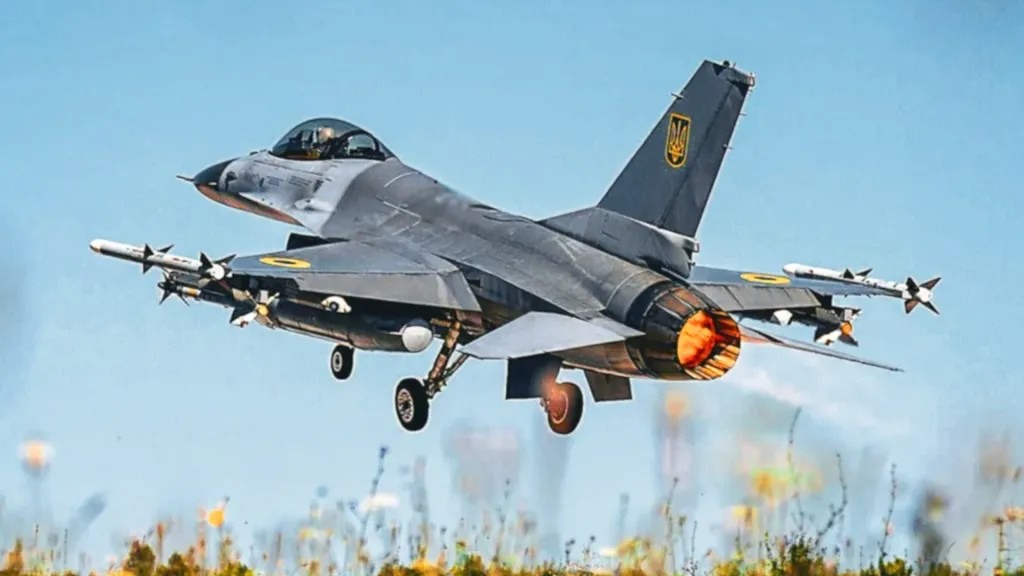
    Two Romanian F-16s shot down two jet-powered Russian Geran attack drones over Romania’s territorial waters near Sulina on the evening of 17 October, Romania’s Defense Ministry said. The ministry released cockpit images of the mission the next day, as NATO allies prepare to discuss Black Sea security at a special session Romania requested. This comes as Moscow continues its air attacks on Ukraine, while the US is trying to make deals with Russia over its diesel and lift sanctions. Russia
     

Romania downs two Russian jet drones near Sulina, days before NATO allies meet on Black Sea security

18 octobre 2026 à 11:11

romania downs two russian jet drones near sulina days before nato allies meet black sea security · post missile fired romanian f-16 during mission shoot down over 17 2026 853877788_1089835267016426_3152631372123116528_n

Two Romanian F-16s shot down two jet-powered Russian Geran attack drones over Romania’s territorial waters near Sulina on the evening of 17 October, Romania’s Defense Ministry said. The ministry released cockpit images of the mission the next day, as NATO allies prepare to discuss Black Sea security at a special session Romania requested.

This comes as Moscow continues its air attacks on Ukraine, while the US is trying to make deals with Russia over its diesel and lift sanctions. Russia keeps striking Ukraine’s energy system and cities, while its drones and suspected saboteurs keep turning up inside NATO, from tankers hit off Romania to a foiled arson attempt at a Starlink site in Lithuania.

Down within minutes

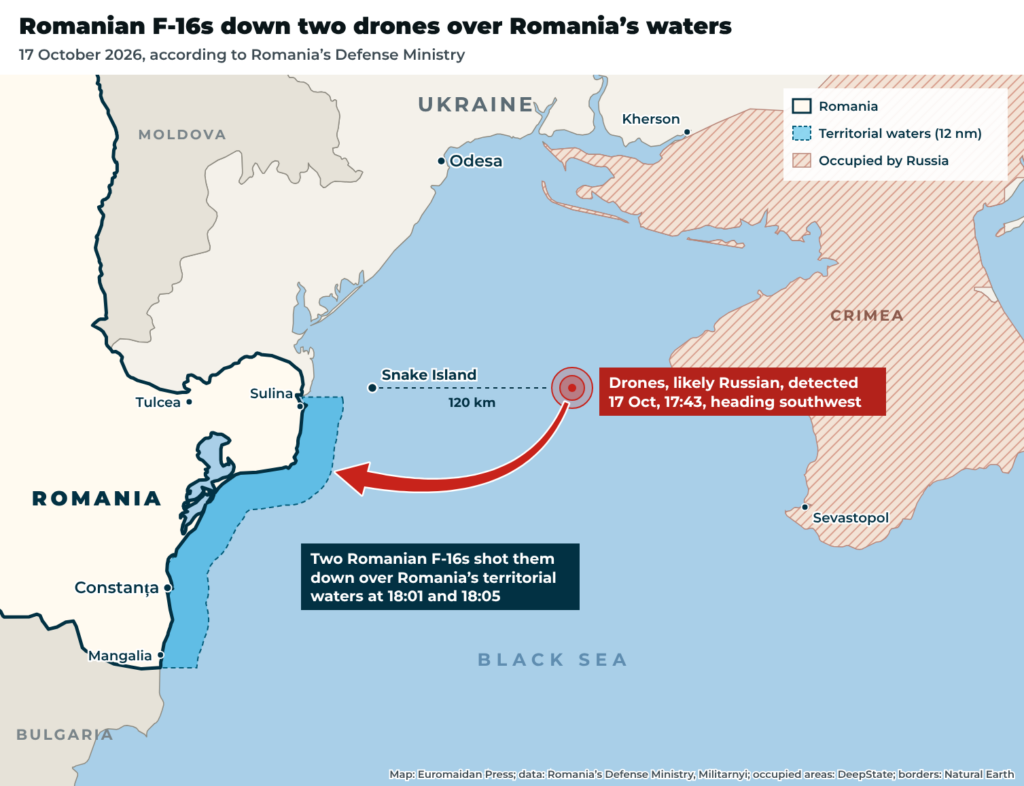
The F-16s took off from the 86th Air Base at Borcea at 17:43 after radar detected a group of air targets about 120 km east of Zmiinyi (Snake) Island, flying southwest, Ukrainian military outlet Militarnyi reported, citing the ministry. The first drone entered Romanian airspace at 17:59 and was shot down at 18:01 southeast of Sulina. The second entered at 18:01 and was downed at 18:05 east of Sulina.

romania downs two russian jet drones near sulina days before nato allies meet black sea security · post where romanian radar detected about 120 km east snake island f-16s shot
Where Romanian radar detected two drones, about 120 km east of Zmiinyi (Snake) Island, and where Romanian F-16s shot them down over Romania’s territorial waters near Sulina, 17 October 2026. Map: Euromaidan Press

Both were jet-powered attack drones of the Geran family, the ministry said. The Geran is Russia’s version of the Iranian-designed Shahed. When first detected, the drones were about 65 km from the coast of Russian-occupied Crimea and 140 km from the Ukrainian-held shore, and their southwest course may point to Russian origin, Militarnyi calculated.

The White House, seen from Lafayette Square. File photo, June 2024.
Explore further

Congress gave Trump 30 days to hit Russia’s oil buyers with 100% tariffs. He waives them two days before deadline, citing US interests. Moscow calls it historic

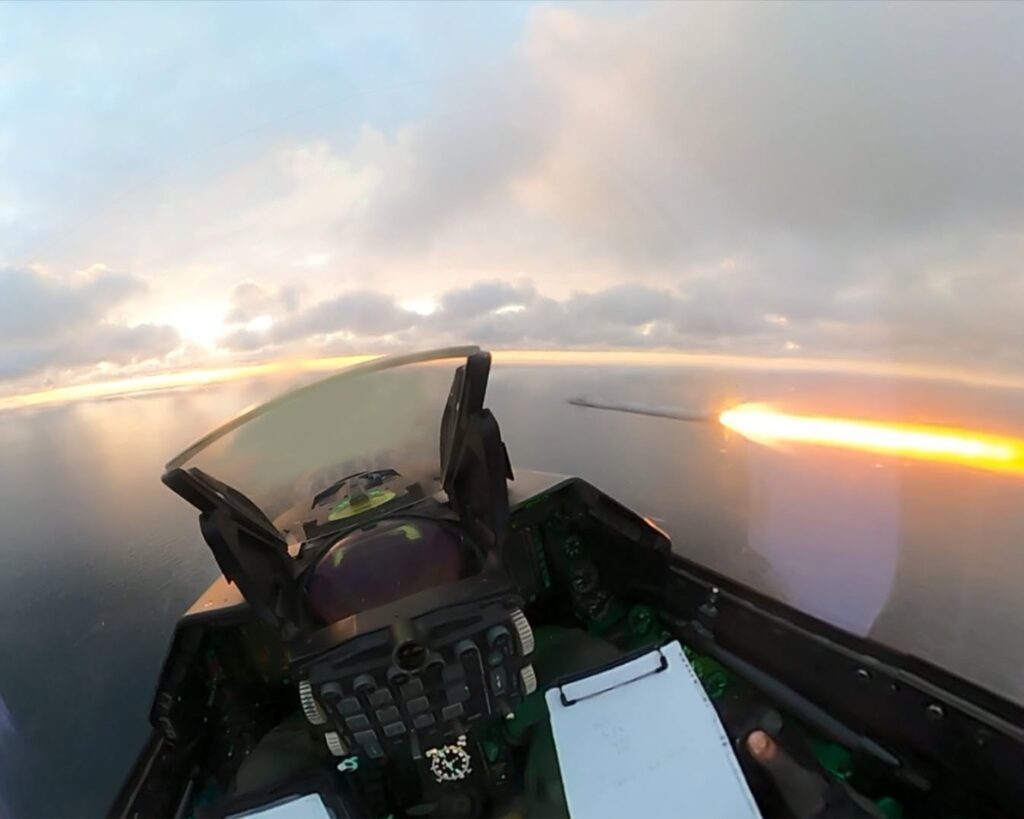
The ministry posted the cockpit images on 18 October, showing a missile launch and a fireball over the sea. “Targets spotted, identified, engaged and neutralized!” it wrote.

romania downs two russian jet drones near sulina days before nato allies meet black sea security · post fireball over seen cockpit romanian f-16 during mission shoot down 17 2026
A fireball over the Black Sea seen from the cockpit of a Romanian F-16 during the mission to shoot down two drones near Sulina, 17 October 2026. Photo: Romanian Defense Ministry/Facebook

Allies to meet on the Black Sea

A special session of the North Atlantic Council, NATO’s top decision-making body, will discuss defense and deterrence in the Black Sea on 20 October at Romania’s request. Romanian President Nicușor Dan has confirmed that the two tankers that caught fire near Sulina last week were hit by drones, and a NATO military source told Reuters they were Russian.

Romanian radar has logged 54 drone intrusions into the country’s air and sea space since Russia’s full-scale invasion, 35 of them this year, and the military has shot down six such targets in 2026, Defense Ministry data show.

romania downs two russian jet drones near sulina days before nato allies meet black sea security · post romanian air force f-16am/bm block 15 militarnyi f-16am вм повітряних сил румунії
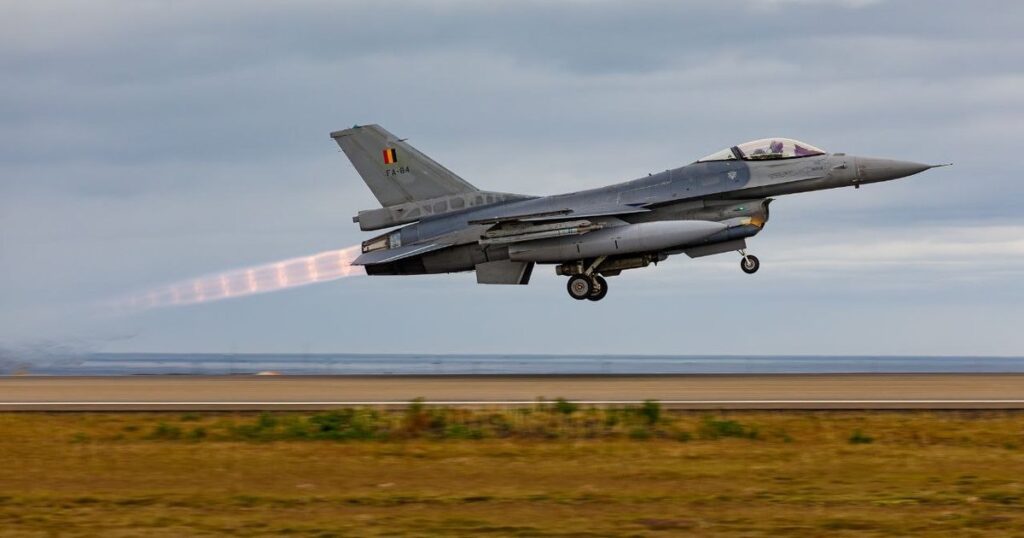
A Romanian Air Force F-16AM/BM Block 15. Illustrative photo: via Militarnyi

Searches in Poland and Lithuania

Within hours, Poland’s Operational Command said it was checking a possible airspace violation by an unknown object overnight into 18 October. Troops, police, and military police searched for a possible crash site south of Lublin after residents reported the loud sound of a flying object around 02:00, Militarnyi reported.

On the morning of 18 October, an unknown drone entered Lithuania’s airspace and triggered air raid alerts, the country’s crisis management center said. NATO jets accompanied it but could not shoot it down because of bad weather, Defense Minister Robertas Kaunas said. Debris preliminarily identified as drone parts was later found in the village of Juodžioniai in Pasvalys district, and the army said the drone may have entered from the direction of Poland.

Romania moved from escorting Russia’s stray drones to firing on them in July, when its F-16s downed three in 72 hours.

Poland, Bulgaria, now Lithuania: Russia’s suspected arson campaign reaches a third Starlink site serving Ukraine

18 octobre 2026 à 09:40

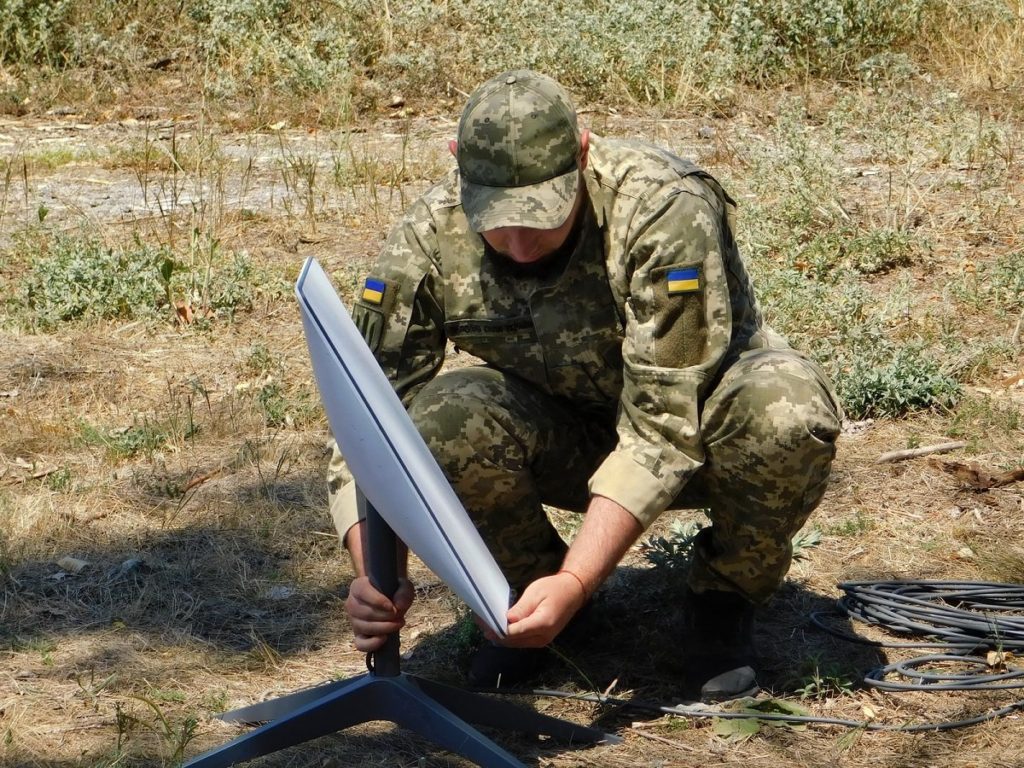
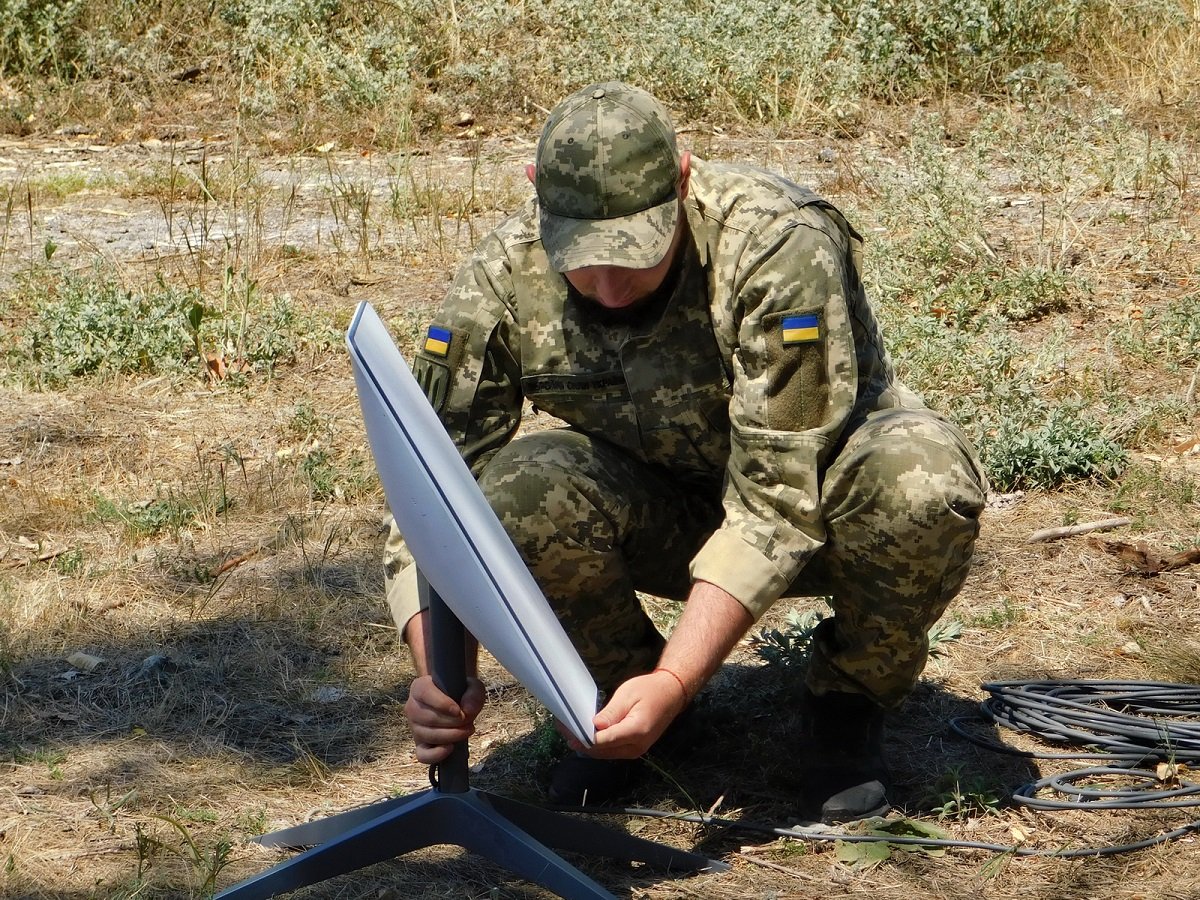
poland bulgaria now lithuania russia’s suspected arson campaign reaches third starlink site serving ukraine · post ukrainian soldier installs terminal news reports

Someone tried to set fire overnight to a Lithuanian company that stores Starlink communication equipment, but tipped-off guards foiled the attempt, Lithuanian Prime Minister Mindaugas Sinkevičius said. He linked the attack to Russia’s hybrid war against Europe. It is the third suspected sabotage of Starlink infrastructure in Europe in under a month.

Russia keeps attacking Ukraine at the front and from the air while running a sabotage campaign behind the lines in Europe, which ISW has linked into one pattern. Starlink keeps Ukraine’s drone units and front-line troops connected, and Poland pays for much of that service.

Fuel canisters and a control unit

The attack came just after midnight, the prime minister wrote. Security services had warned the company about possible attacks, security was stepped up, and the attempt failed.

The company provides connectivity through nine Starlink satellite antennas used by Ukraine, Sinkevičius told Lithuanian public radio LRT. At almost 2 a.m., intruders tried to burn the antennas and their control unit, leaving behind incendiary liquid in canisters of 3 to 10 liters.

“It is obvious that this is part of Russia’s hybrid war with elements of sabotage,” he said, adding that the client was likely “the Russian side.”

He said he believes the people involved, and how many there were, are known, but gave no details, citing the investigation.

Police Commissioner General Arūnas Paulauskas said no suspects had been detained, any damage was minimal, and the company kept working. A pretrial investigation is under way.

poland bulgaria now lithuania russia’s suspected arson campaign reaches third starlink site serving ukraine · post ukrainian soldier installs terminal news reports
Explore further

New Starlink restrictions disrupt Ukrainian drone missions. Kyiv adviser says move is tied to “political situation”

A drone the same morning

Hours later, an object that apparently entered from Poland crossed northern Lithuania, and NATO jets failed to identify it, Defense Minister Robertas Kaunas said. Possible fragments were found in the Pasvalys district near the Latvian border. Latvia’s military said the object may have blown itself up on a course toward Latvia.

Sinkevičius said the sabotage version had to be checked for the drone too. He called the National Security Commission for Monday, 19 October, to examine both incidents and consider giving services more powers to neutralize drones.

The third Starlink site

In September, a fire destroyed the distribution panel at a Starlink ground station in Wola Krobowska, Poland. Germany detained two Turkish nationals on 12 October, and Warsaw blamed Russian intelligence. In Bulgaria, masked intruders burned 11 of 17 Starlink antennas near Sofia.

Ukraine retook Kolodiazi north of Lyman as its drones hit 200-plus Russian vehicles in Operation Vivaldi’s last phase, Ukrainian drone officer says

18 octobre 2026 à 09:39

ukraine retook kolodiazi north lyman its drones hit 200-plus russian vehicles operation vivaldi’s last phase commander says · post northern donetsk oblast neighboring areas territory during vivaldi blue 2022 green

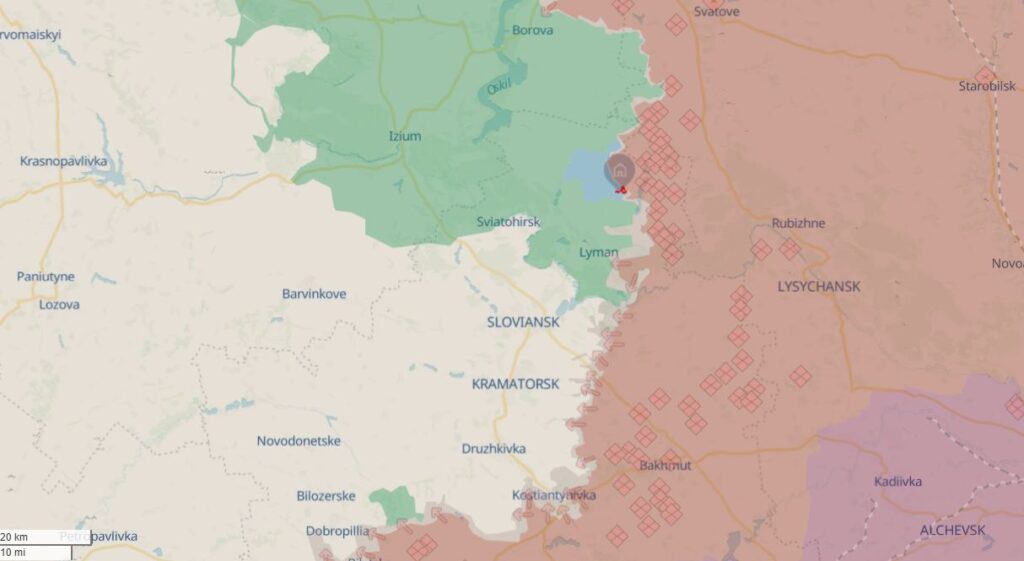
Ukrainian infantry encircled and retook the village of Kolodiazi north of Lyman without getting drawn into street fighting, while a drone battalion kept the sky above them shut, the battalion’s chief of staff told Suspilne on 18 October. The village fell during the fourth and final phase of Operation Vivaldi, Ukraine’s counteroffensive in northern Donetsk Oblast.

For years now, Russia has aimed to seize Lyman and cross the Siverskyi Donets River. It needs this area to encircle Ukraine’s fortress belt of Donetsk Oblast cities from the northwest, ISW assesses. Vivaldi’s four phases retook 277 km² and 16 settlements on that approach, and a veteran of the operation has said Ukraine’s assault troops suffered more than ten times fewer casualties than Russian forces doing it.

Drones over the infantry

The 60th Mechanized Brigade fought in all four phases of Vivaldi and took Kolodiazi in the last one, said the chief of staff of the brigade’s Fatum unmanned systems battalion, callsign Krash.

“Our task, as an unmanned systems battalion, was to escort and ‘close’ the air in front of our infantry to make it impossible for the enemy to hit it. To suppress all the firing assets possible,” he said.

The brigade’s 3rd Mechanized Battalion, the main striking force, encircled Kolodiazi and retook it without getting drawn into street fighting, Krash said. The 1st Mechanized Battalion kept Russian reinforcements out of the area, while drone crews suppressed artillery, hit supply runs, and worked against Russian drone operators.

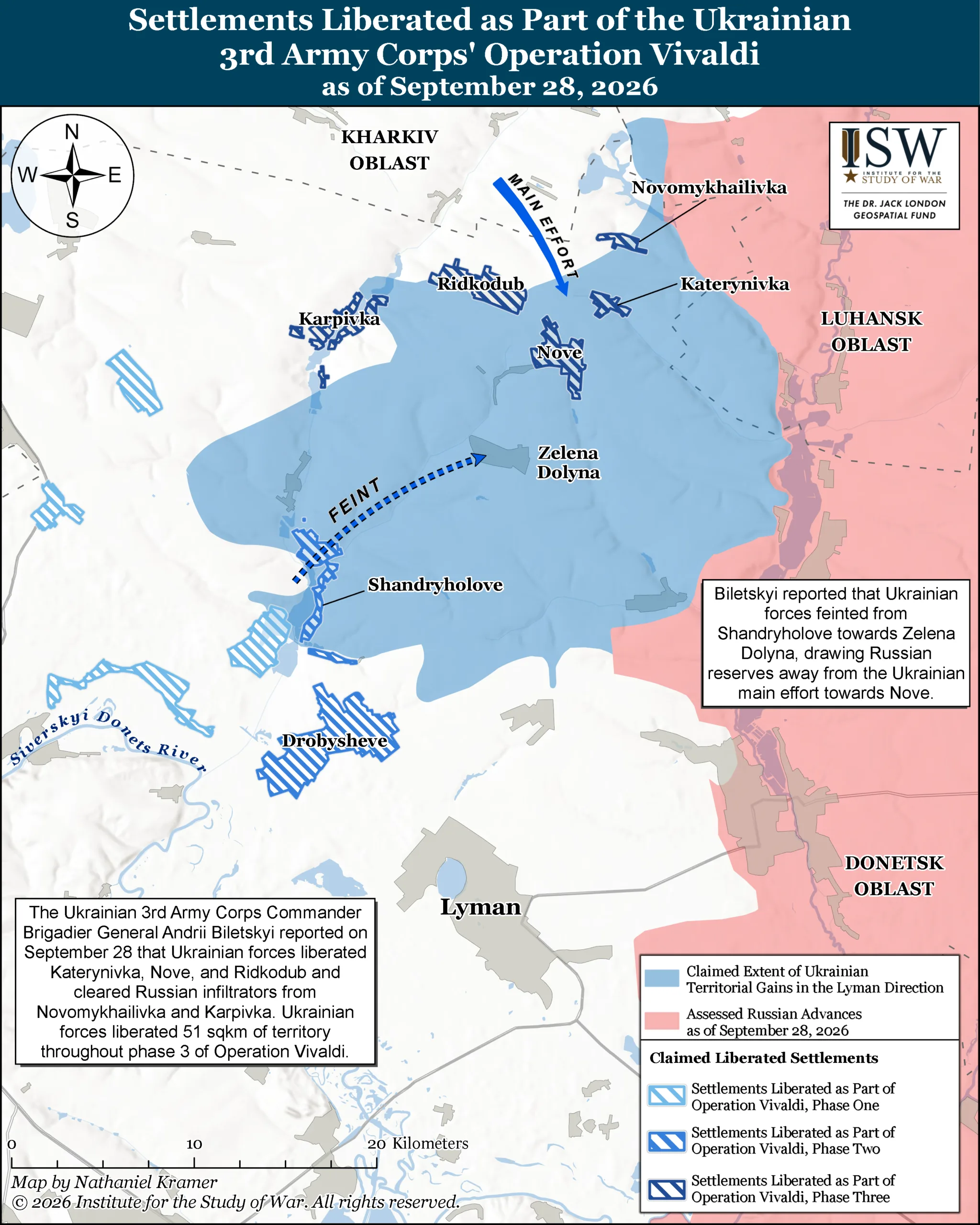
Map of settlements Ukraine's 3rd Army Corps says it liberated north of Lyman, as of 28 September 2026.
Explore further

Vivaldi counteroffensive advanced after Ukraine took Russia’s drones out of the fight, ISW assesses

500 troops and 200-plus vehicles

The drone battalion killed or wounded about 500 Russian troops during the fourth phase and struck Russian armored vehicles, trucks, and motorbikes, its chief of staff said.

“More than two hundred pieces of various equipment: Grad and Uragan multiple rocket launchers, various armored vehicles, tanks, armored combat vehicles. Most of all motorbikes and quad bikes, there the count runs into the hundreds. This is our enemy’s main logistics tool,” he said.

ukraine retook kolodiazi north lyman its drones hit 200-plus russian vehicles operation vivaldi’s last phase commander says · post sector now lyman-tactical-area-october-16-2026 news ukrainian reports
Lyman sector now. Map: ISW

Ghost villages

The villages retaken in northern Donetsk Oblast are nearly empty of civilians, Krash said.

“It’s very typical for de-occupied settlements: these are ghost towns. You can see right away where the occupier stepped. All the settlements are under the control of the Third Army Corps, our forces stand there and prevent enemy infiltration. But civilian life in these towns is either absent or very scarce,” he said.

Third Army Corps commander Brigadier General Andrii Biletskyi reported Kolodiazi’s liberation, along with Zelena Dolyna and Lypove, when he summed up Vivaldi’s fourth phase, which secured 101 km².

  • ✇Euromaidan Press
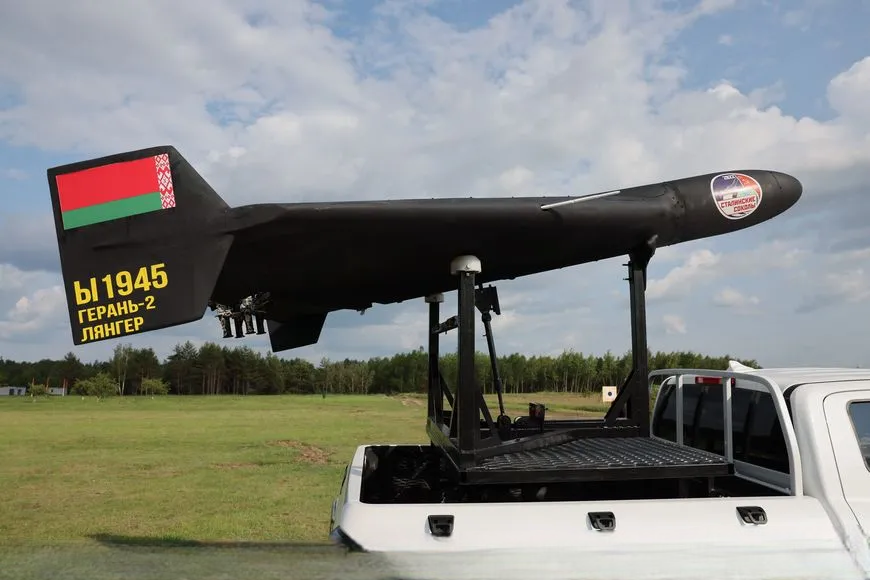
  • Built as a cheap Shahed lookalike, Russia’s Gerbera now flies with a 10-kg warhead and an incendiary bag
    Russia has started fitting its enlarged Gerbera-2 drones with a 10-kg warhead and an extra bag of incendiary mixture, Ukrainian military outlet Militarnyi reported on 18 October. The setup is designed to start a fire where the drone hits and is probably meant for attacks on critical infrastructure and warehouses, the outlet said. Russia’s industry makes about 3,000 jet-powered Geran-4 and Geran-5 drones a month, Ukraine’s military intelligence has said, and Russian strikes have destroye
     

Built as a cheap Shahed lookalike, Russia’s Gerbera now flies with a 10-kg warhead and an incendiary bag

18 octobre 2026 à 08:57

built cheap shahed lookalike russia’s gerbera now flies 10-kg warhead incendiary bag · post payload bay russian gerbera-2 drone additional tank гербера-2 з бойовою частиною масою 10 кг і додатковим

Russia has started fitting its enlarged Gerbera-2 drones with a 10-kg warhead and an extra bag of incendiary mixture, Ukrainian military outlet Militarnyi reported on 18 October. The setup is designed to start a fire where the drone hits and is probably meant for attacks on critical infrastructure and warehouses, the outlet said.

Russia’s industry makes about 3,000 jet-powered Geran-4 and Geran-5 drones a month, Ukraine’s military intelligence has said, and Russian strikes have destroyed 2.1 million m² of Ukraine’s modern warehouse space since the full-scale invasion began. A cheap drone that carries fire adds one more threat for air defenses that already let nearly half of Russia’s jet-powered Shaheds through.

A fire bag behind the warhead

Ukrainian Telegram channel Polkovnyk HSh posted photos of the payload on 17 October. Gerbera-2 strike and reconnaissance drones had begun to appear with a 10-kg high-explosive fragmentation-incendiary warhead and an extra package of incendiary mixture, the channel wrote. They navigate with Kometa-M12, a 12-element antenna array designed to resist jamming, it added.

Explore further

Russian drones set their own detonators at altitude: Why cutting wires won’t save from new Gerberas?

In the photos, the incendiary mixture sits in a separate soft plastic tank behind the main warhead, Militarnyi said. Gerbera-2s have been seen with warheads of 4 to 10 kg depending on range, while strike versions of the original Gerbera usually carried up to 5 kg, the outlet noted.

Half a Shahed engine

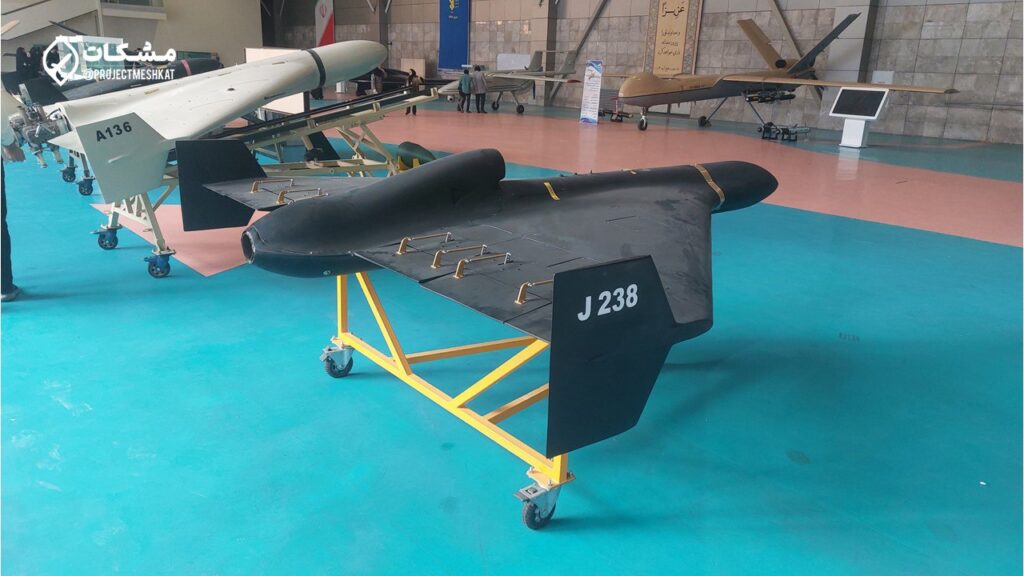
Russia has mainly fielded the Gerbera, a cheap drone shaped like a Shahed, as a decoy and reconnaissance platform flying alongside Shahed-type strike drones. It has also used bigger Gerberas to drop FPV drones.

Serhii Beskrestnov, now an adviser to Ukraine’s president, flagged a much bigger Gerbera in Ukraine’s skies on 7 August. The Gerbera-2 has a larger airframe, a reshaped wing, and a bigger tail fin, Militarnyi said. In August, the outlet reported it had a stronger piston engine: half of the one in the Shahed-type Geran-2, at about 275 cm³. Production of these engines was set up at the Izhevsk Motorcycle Plant, according to preliminary information the outlet cited.

Ukrainian defense technology adviser Serhii “Flash” Beskrestnov works near the front line monitoring Russian drone signals. Photo: Serhii “Flash” Beskrestnov
Explore further

Russia equips Geran attack drones with image-based navigation using Google map imagery, reducing reliance on satellite navigation that Ukraine can jam, defense adviser warns

Earlier versions ran on a Chinese DLE60 model-aircraft engine of about 61 cm³. The switch was likely possible because Geran-2 engine output partly freed up as jet-powered Geran-4s took a growing share of Russia’s drones, Militarnyi said. The Gerbera-2’s fuel tank also holds up to 63 liters, against 10 liters on the original.

One reached Poland’s Baltic coast

In September, a drone preliminarily identified as a Gerbera-2 was recovered from the Baltic Sea near Rusinowo, on Poland’s coast. It carried a high-explosive fragmentation warhead of about 4 kg, a Polish military prosecutor said.

The drones flew 1,000 km. St. Petersburg’s oil terminal, fuel depot, and a nearby data center were waiting at the end

18 octobre 2026 à 08:57

russia’s st petersburg wakes up burning oil sites hit bridge damaged data center after night ukrainian drones · post fire ozon distribution kolpinsky district drone attack 18 2026 astra ukraine

Ukrainian drones struck St. Petersburg’s oil terminal, a fuel depot, an Ozon distribution center, and a VK data center overnight, setting off fires across the city, monitoring channels reported. Russian outlet Meduza called it apparently the largest attack on the city and Leningrad Oblast since the war began. Russian officials acknowledged fires, damaged homes and substations, and power cuts.

Russia keeps fighting along the front while bombarding Ukrainian cities and the grid behind it. Ukraine’s long-range drones, in turn, target the oil exports and logistics that fund and supply that war, and Russia’s Baltic oil ports have been hit repeatedly this year. St. Petersburg is a symbolic place: Russia’s so-called second capital and Putin’s hometown.

Oil terminal and fuel depot on fire

Ukrainian forces struck the Petersburg Oil Terminal with FP-1 drones, starting a fire, Ukrainian drone maker Fire Point said. The company described the terminal as one of the region’s largest, handling 12.5 million tonnes of petroleum products a year, including for export.

Piter port and oil facility in one shot pic.twitter.com/KfptwkhsDS

— Exilenova+ (@Exilenova_plus) October 18, 2026

St. Petersburg Governor Aleksandr Beglov acknowledged fires at the terminal and in four city districts, adding that Pulkovo airport had restricted flights. By morning, firefighters were still battling blazes at the terminal, the Ruchyi oil depot, and industrial warehouses in the Kolpinsky district, he wrote. He claimed one person was killed and five injured. Ukrainian monitoring channel Exilenova+ reported that the Ruchyi depot had been burning since the night.

Ozon hub, VK data center, and a bridge

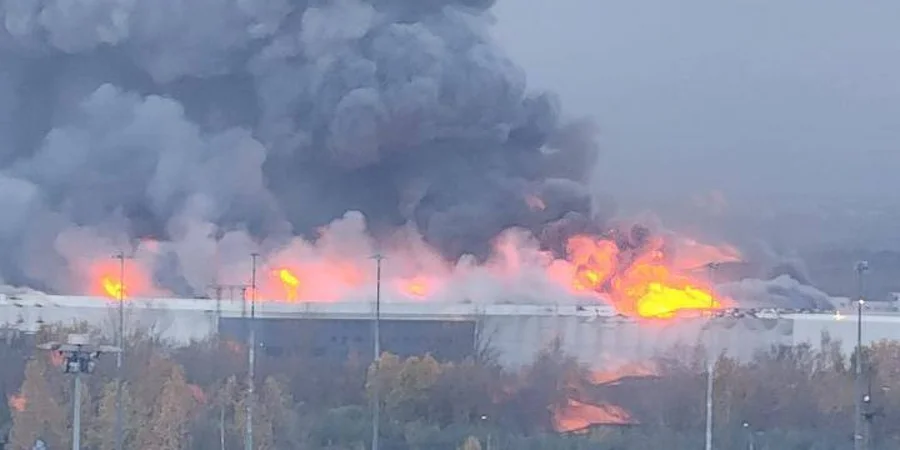
An Ozon distribution center in Kolpinsky district caught fire after the attack, the company said, Russian independent outlet Astra reported. Astra’s open-source intelligence analyst described it as one of Ozon’s busiest fulfillment centers in northwestern Russia, covering up to 79,000 m².

Ozon in St. Peterburg pic.twitter.com/tA9iwRJf7d

— Exilenova+ (@Exilenova_plus) October 18, 2026

FP-1 drones also hit a VK data center in Novosergiyevka, Leningrad Oblast, causing serious damage, Fire Point said. VK acknowledged a drone attack on the site but claimed its services were working normally. Leningrad Oblast Governor Aleksandr Drozdenko claimed air defenses downed 145 drones over the oblast alone. He acknowledged damage to the data center’s transformer equipment and warehouse complex, and minor damage to the Vostochnaya substation. Two other substations in Yanino went offline, cutting power to about 20,000 people, he said.

Damaged VK data center building in Novosergiyevka, Leningrad Oblast, after a Ukrainian FP-1 drone strike, 18 October 2026
Damaged VK data center building in Novosergiyevka, Leningrad Oblast, after a Ukrainian FP-1 drone strike, 18 October 2026. Photo: Fire Point/X

A drone also hit the cable-stayed bridge over the Korabelny fairway, part of a toll highway linking the city’s north and south, Exilenova+ reported, adding that the extent of the damage was still being clarified. The channel also reported a fire near a Russian Aerospace Forces radar company outside the village of Kaporskoye.

Smoke rising over St. Petersburg after the overnight drone attack, 18 October 2026
Smoke rising over St. Petersburg after the overnight drone attack, 18 October 2026. Photo: Astra

To reach St. Petersburg, Ukrainian drones had to cover 1,000 km across four Russian regions guarded by air defenses and electronic warfare, said Serhii Beskrestnov, adviser to Ukraine’s president on defense technology.

“And these are not cruise missiles with special systems, these are drones that fly at speeds of up to 200 km/h,” he wrote.

Satellite image marking the drone hit on the cable-stayed bridge over the Korabelny fairway in St. Petersburg, 18 October 2026
Satellite image marking the drone hit on the cable-stayed bridge over the Korabelny fairway in St. Petersburg, 18 October 2026. Image: Dnipro Osint via Exilenova+

Strikes resume after a one-sided truce

The same night, Russia hit Ukraine’s grid again, and Ukrainian President Volodymyr Zelenskyy counted 76 Russian strikes on energy since the ceasefire was announced. US President Donald Trump declared the truce on 11 October. Ukraine paused its refinery strikes for three days at Washington’s request, but Russia struck a Kharkiv power plant within hours and kept hitting the grid. Zelenskyy then said Ukraine was resuming strikes on Russian oil and would stop again only in exchange for more US interceptors for its Patriot systems. Trump called the renewed strikes “a disgrace” and said he found Zelenskyy “more difficult to deal with than Putin.”

Ukraine has hit the St. Petersburg area before. In July, drones set fire to Wildberries warehouses near the city. In August, Ukraine began striking Ozon hubs, starting in Samara Oblast. The hubs move dual-use goods such as electronics and drone components.

Russia hit Ukraine’s energy 76 times during a US-declared truce—and tens of thousands lost power overnight. Civilians killed and injured

18 octobre 2026 à 07:55

russia hit ukraine’s energy 76 times during us-declared truce—and tens thousands lost power overnight civilians killed injured · post damage after russian strike detached houses poltava 17 2026 victim ukraine

Russia has kept striking Ukraine’s energy sector throughout the week since US President Donald Trump announced an energy ceasefire, Ukrainian President Volodymyr Zelenskyy said on 18 October. From overnight into Sunday, Russian drones and a ballistic missile hit substations, homes, and industrial sites from Odesa to Volyn. They killed civilians and left tens of thousands of families without power.

Russia fights along the front line while hitting cities and the grid behind it with drones, missiles, and glide bombs. Ukraine says Moscow plans up to 1,000 such munitions against 60 key infrastructure sites this winter, and jet-powered drones partly free it to concentrate missiles on fewer targets, the Institute for the Study of War assessed. With Graham Act penalties on hold and US sanctions on Russian diesel suspended, Russia faces no new US cost for its strikes on Ukraine’s grid. Protecting and restoring the grid falls to Ukraine’s air defenses and repair crews.

Russia hit energy sites 76 times in a week

Zelenskyy counted 76 deliberate Russian strikes on energy and oil-and-gas facilities since Trump’s announcement. Overnight, Russia hit substations in Vinnytsia, Zhytomyr, Khmelnytskyi, and Odesa oblasts, he said. In the past week, Russia fired almost 2,700 attack drones, 1,700 aerial bombs, and 66 missiles, most of them ballistic, mainly to cause a blackout. His message was aimed at Washington.

“America must see that Russia is not taking steps in return for the lifting of sanctions or deals. On the contrary, they take every signal that they can make money as proof that their bet on war is working and they can keep fighting,” Zelenskyy wrote.

US President Donald Trump signs the Lindsey O. Graham Sanctioning Russia and Iran Act in the Oval Office, 18 September 2026
Explore further

22 House lawmakers press Trump to implement Russia sanctions law. Diesel deal draws bipartisan backlash

Overnight, Russia launched one Iskander-M ballistic missile and 180 Shahed-type drones, 26 of them jet-powered, the Air Force reported. Air defenses downed or suppressed 152 drones, but strikes hit 20 locations.

russia hit ukraine’s energy 76 times during us-declared truce—and tens thousands lost power overnight · post rescuers site russian strike residential area zaporizhzhia 18 2026 zapo ukraine news ukrainian reports
Rescuers at the site of a Russian strike on a residential area of Zaporizhzhia, 18 October 2026. Photo: State Emergency Service of Ukraine

Power cuts from Odesa to Ternopil

Strikes left about 24,000 consumers in Odesa Oblast without power, oblast head Oleh Kiper said. In Vinnytsia Oblast, the attack damaged critical infrastructure and forced emergency outages, oblast head Natalia Zabolotna wrote. Drones hit three energy facilities in Ternopil Oblast, one of them for the second time, and cut power to some consumers, oblast head Taras Pastukh said.

Civilians killed and injured

A Russian strike on Zaporizhzhia killed a 27-year-old woman and injured two others, including a 16-year-old, the State Emergency Service reported. In Poltava, an evening attack killed one person, injured four, and damaged 10 detached houses, city council secretary Kateryna Yamshchykova said.

The aftermath of a Russian strike on Zaporizhzhia on 10 October 2026
Explore further

Five Russian bombs kill 17 in Ukraine’s Zaporizhzhia next day after Trump lets Russia ship first 300,000 tonnes of its diesel

A drone hit a high-rise in Odesa and set its roof on fire. A 13-year-old girl was hurt, city military administration head Serhii Lysak said, and Kiper put the number of injured at two.

In Dnipropetrovsk Oblast, Russian drones and artillery injured three people, oblast head Oleksandr Hanzha said. In Donetsk Oblast, Russian attacks killed seven civilians on Saturday, six of them in Sloviansk, oblast head Vadym Filashkin reported.

russia hit ukraine’s energy 76 times during us-declared truce—and tens thousands lost power overnight · post fire roof high-rise apartment building after russian drone strike odesa 18 2026 ukraine news
Fire on the roof of a high-rise apartment building after a Russian drone strike in Odesa, 18 October 2026. Photo: Odesa City Military Administration

Fires in the west, alerts across the border

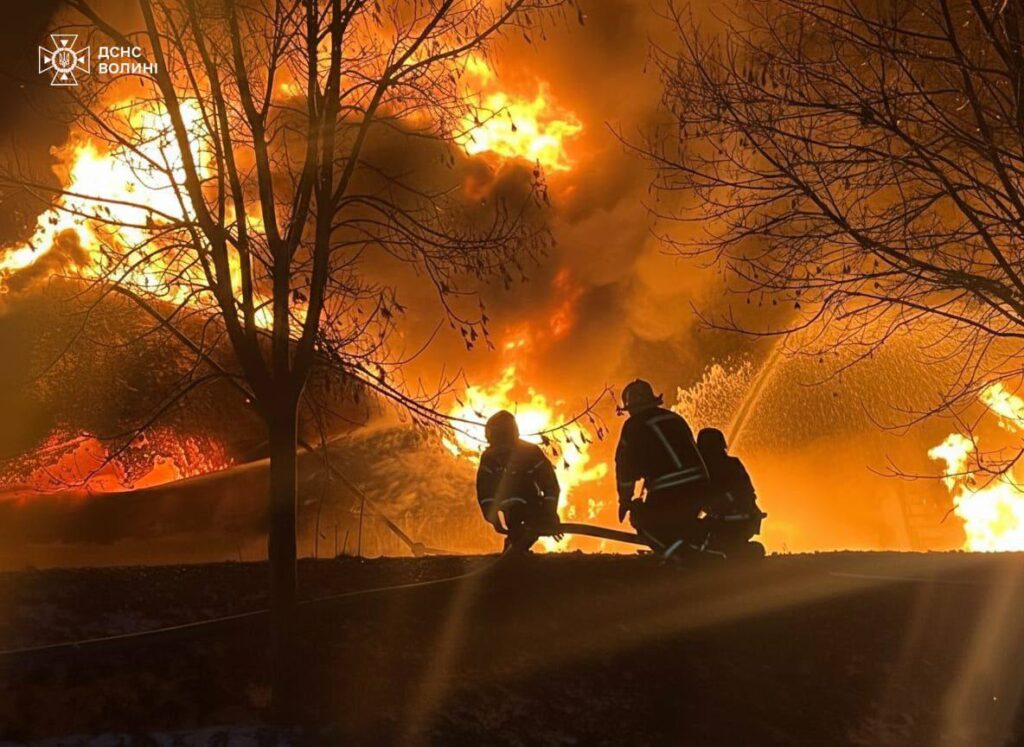
A morning drone strike set warehouse and production buildings ablaze at an enterprise in Manevychi, Volyn Oblast, oblast head Roman Romaniuk said. With heavy smoke blowing toward the town, Romaniuk urged residents to stay indoors, shut windows and doors, and switch off ventilation. A repeat strike set an enterprise in the district on fire again, the State Emergency Service said, adding that air tests found no dangerous concentrations outside the site. In Lviv Oblast, drone debris damaged a logistics warehouse and two houses, oblast head Maksym Kozytskyi said.

russia hit ukraine’s energy 76 times during us-declared truce—and tens thousands lost power overnight · post fire enterprise manevychi volyn oblast after russian drone strike 18 2026 manevich ukraine news
Fire at an enterprise in Manevychi, Volyn Oblast, after a Russian drone strike, 18 October 2026. Photo: Volyn Oblast Military Administration

Polish military aircraft operated in Poland’s airspace twice during the attack, as the Government Security Centre warned residents of Lublin Voivodeship and later alerted Subcarpathian Voivodeship. In Lithuania, NATO jets failed to identify an object that apparently entered from Poland, Defense Minister Robertas Kaunas said.

A ceasefire Moscow never confirmed

Trump announced the energy ceasefire on 11 October, news that surprised Zelenskyy. A White House official said Russia was still weighing it. Hours later, Russia hit a Kharkiv power plant, and on 14 October it fired 39 ballistic missiles at the grid. Then Trump waived Graham Act penalties on buyers of Russian oil, and Secretary of State Marco Rubio said the administration wants 60 days to weigh the economic effects.

Reçu — 17 octobre 2026 ⏭ Euromaidan Press

Belgium’s 10 F-16s bring Ukraine’s promised fleet to about 100 jets. Fewer than 40 are flying, as Russia’s jet drones run them ragged

Par : David Axe
17 octobre 2026 à 16:53

take off formation fly low navigate terrain—ukraine's f-16 trainees finished uk course russia helped design · post ukraine's air force carrying aim-120c aim-9 missiles fuel tanks terma pylons self-defense systems

  • Belgium is speeding up the delivery of surplus Lockheed Martin F-16 fighters to Ukraine
  • The 53 or so ex-Belgian jets are welcome, but the initial delivery for 2026 is for just 10 airframes, not all of which will be flyable
  • The Ukrainian air force's sole F-16 wing is fighting hard with too few aircraft

Belgium has announced it will accelerate the delivery of surplus Lockheed Martin F-16 fighters to Ukraine. Instead of delivering three flyable F-16s before the end of the year, Brussels will ship 10.

It's unclear how many will be flyable. Previously, Belgian officials explained the first seven secondhand F-16s would include just three airworthy examples. The other four would be broken down for spare parts.

It's good news for Ukraine, but hardly cause for nationwide celebration. The handful of flyable F-16s that should arrive in the coming two months could make good recent F-16 losses. But those shipping-soon Belgian F-16s won't actually grow Ukraine's F-16 fleet by much, if at all.

The dozens of supersonic F-16s in action in Ukraine fly often and fight hard. They shoot down Russian drones and cruise missiles, tangle with Russian warplanes, and lob precision glide bombs at Russian forces on the ground. Russia launched about 2,000 jet-powered drones at Ukraine in September, up from some 350 in June, and F-16s are among the few weapons fast enough to catch them, the Wall Street Journal's editorial board noted. Every 300 flying hours, each jet must go abroad for a lengthy inspection.

Netherlands delivers final F-16s to Ukraine, completing 24-jet donation program.
Explore further

Ukraine loses another F-16 to onboard emergency

The main constraint on the pace of F-16 sorties, besides maintenance demands and the availability of trained pilots, is munitions: running low or out of air-to-air missiles and glide bombs, the F-16s routinely aim their 20-mm guns at Russian targets. But even 20-mm ammunition sometimes runs low.

The busy F-16s and their equally busy pilots need reinforcement. But reinforcements are slow coming. Belgium is only slightly accelerating its F-16 shipments amid reports it will eventually give Ukraine all 53 F-16s it's gradually retiring as new Lockheed Martin F-35 stealth fighters arrive to re-equip the Belgian air force.

Further complicating the picture, Norway's six F-16s, promised in 2023, were still being refurbished in Belgium this spring. Some arrived there in pieces.

Yes, Ukraine got 24 fight-ready F-16s from the Netherlands and most of the 19 Denmark promised. But it's lost five of those jets since 2024. And others are so worn out from relentless flying that they're badly in need of maintenance. The Belgian firm Sabena, which services Ukrainian F-16s, has struggled to keep up, and President Volodymyr Zelenskyy has said about half of the jets spend long stretches abroad for repairs. That slows the return of repaired planes and further squeezes the front-line force.

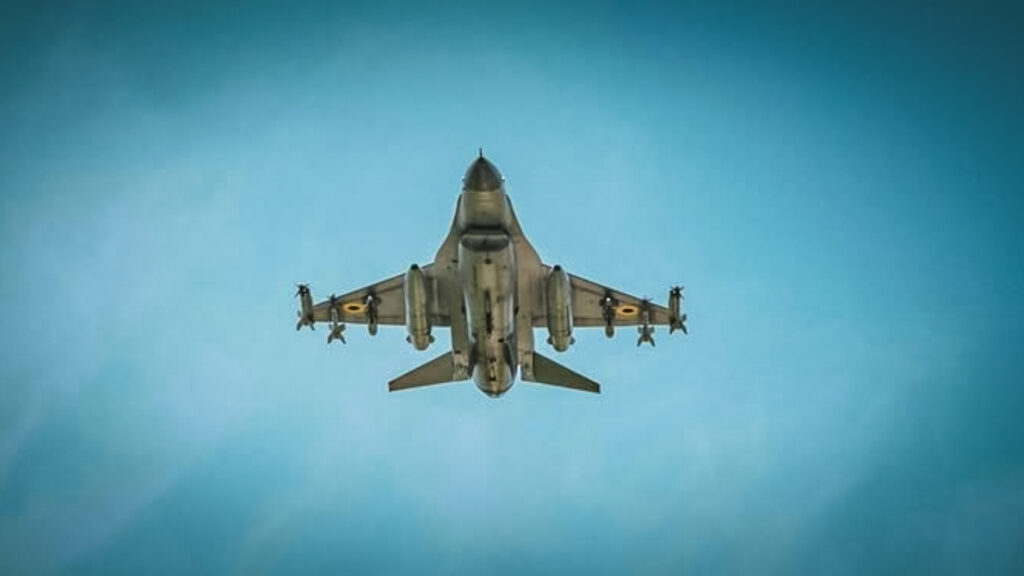
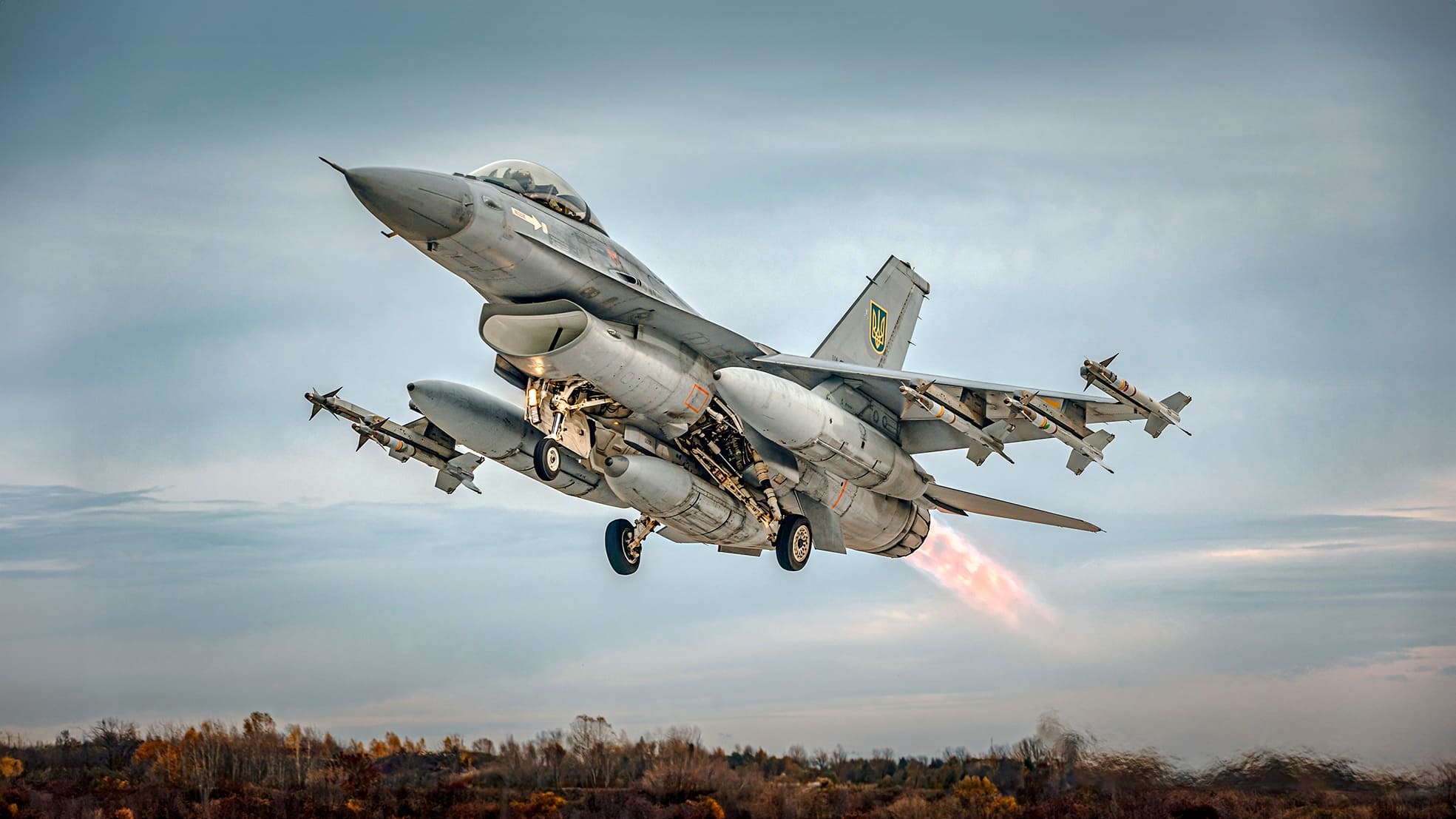
A Ukrainian F-16.
A Ukrainian F-16. Ukrainian air force photo.

One wing, too few jets

DonorF-16s promisedReached UkraineStatus
Netherlands2424Complete
Denmark19At least 12Further deliveries due
Norway60Being refurbished in Belgium
Belgium53010 by end of 2026, the last in 2029
TotalAbout 100At least 36, five since lostFewer than 40 in service
Sources: Militarnyi, The Aviationist, Airdatanews, Euromaidan Press.

In short, it's possible the Ukrainian air force's 107th Aviation Wing, its sole F-16 unit, has fewer than 40 ready-to-fight F-16s. Those 53 Belgian F-16s will help grow the wing, but piecemeal. Ukraine should expect a handful of operational jets from Belgium this year. Under a schedule from May, the last 27, half the total, may not arrive until 2029.

To be clear, additional F-16s support the 107th Aviation Wing. The Netherlands sold 18 of its old F-16s to Romania for a token price in order to equip a training squadron, funded by a consortium of Ukraine's allies, that feeds trained pilots to the 107th Aviation Wing. But these 18 jets aren't available for front-line use. They don't even legally belong to Ukraine.

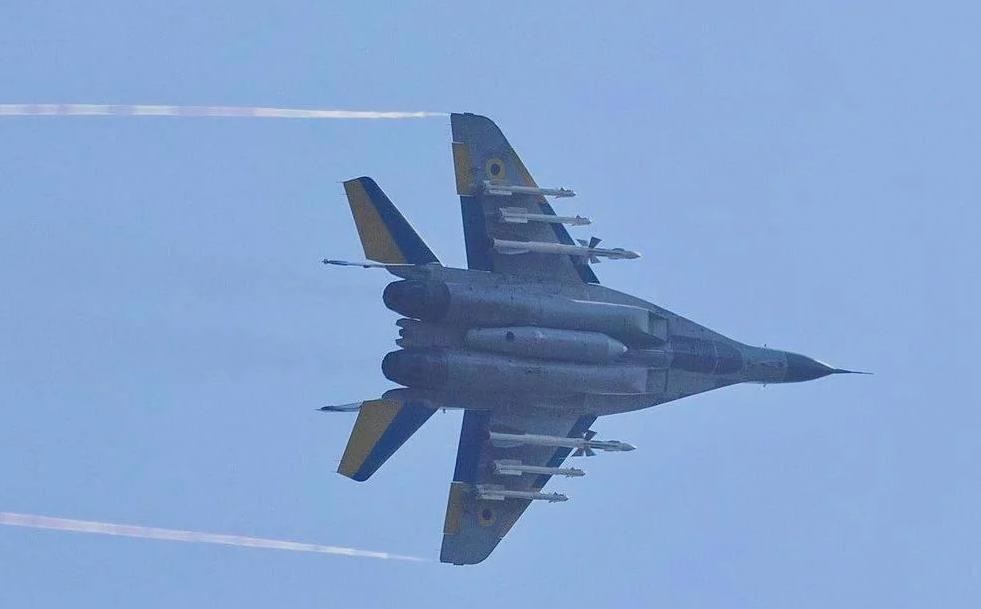
MiG-29 with R-27s and R-73s.
Explore further

Ukraine is running short of its best missiles for hunting Russia’s jet drones. Now MiG-29s are firing 1970s weapons

The delays in supplies of combat-ready F-16s matter because the Ukrainian air force is under stress. Its last few dozen ex-Soviet warplanes, including Mikoyan MiG-29 and Sukhoi Su-27 fighters, are even older and wearier than the ex-European F-16s are. And they've suffered staggering losses in the air and on the ground in nearly 56 months of hard fighting in the wider war.

The air force does have a few ex-French Dassault Mirage 2000s that are at least as capable as the F-16s, but France has donated only a handful of the supersonic jets—and one has crashed. Any further supplies of Mirage 2000s could be complicated by the French presidential election in April 2027. The leading far-right and far-left parties are both friendly toward Russia and hostile to Ukraine.

Some relief is coming, although not quickly. Sweden has pledged 16 surplus JAS-39C/D Gripen fighters to the Ukrainian war effort; the first of these could arrive early next year. Later on, Ukraine also plans to buy 20 newer JAS-39E/Fs. Kyiv has also negotiated to purchase 16 new Rafale fighters from Paris, but the soonest these could arrive is 2028.

For now, F-16s are the main solution to Ukraine's air defense problems. Kyiv surely wishes it had more of them, sooner.

  • ✇Euromaidan Press
  • Ukraine, EU set up joint task force to fast-track anti-corruption reforms that gate membership
    Ukraine and the EU have agreed to establish a joint working group to accelerate rule-of-law and anti-corruption reforms. This will help Kyiv meet the interim benchmarks for EU accession, Enlargement Commissioner Marta Kos says on X after talks with Ukrainian Prime Minister Serhii Koretskyi. Ukraine’s path into the EU runs through its courts and anti-corruption agencies, and the bloc releases membership progress and much of its money only as Kyiv delivers those reforms. “Ukraine is a
     

Ukraine, EU set up joint task force to fast-track anti-corruption reforms that gate membership

17 octobre 2026 à 13:13

ukraine's right self-determination non-negotiable all eu leaders say except hungary's flags european union commons/thijs ter haar backdrop potential territorial concessions looming over trump's meeting putin stand united support sovereignty 12

Ukraine and the EU have agreed to establish a joint working group to accelerate rule-of-law and anti-corruption reforms. This will help Kyiv meet the interim benchmarks for EU accession, Enlargement Commissioner Marta Kos says on X after talks with Ukrainian Prime Minister Serhii Koretskyi.

Ukraine’s path into the EU runs through its courts and anti-corruption agencies, and the bloc releases membership progress and much of its money only as Kyiv delivers those reforms.

“Ukraine is among the countries making most progress towards EU membership,” Kos says, adding that the group will work through outstanding requirements on the rule of law and the fight against corruption.

The move follows a breakthrough on the accession track. On 13 October, the Council of the EU opened two more negotiating clusters for Ukraine after the Ukrainian Parliament passed a minority-language education law on 12 October, clearing Hungary’s veto.

Why the reforms decide the money and the timeline

The group lands amid pressure on both fronts. Kos cast the education law as proof the system can work, crediting Ukrainian lawmakers with the consensus needed to adopt the reforms membership requires.

Meanwhile, Koretskyi expects the remaining clusters to open by the end of the year.

“Our success will require unity and commitment from all involved Ukrainian partners,” Kos emphasizes.

The official made clear the outcome depends on Ukraine keeping its side. The reforms are the same ones tied to Ukraine’s wartime financing, with billions in EU aid released only as Kyiv meets its commitments.

Billions in EU money hang on laws Ukraine has not passed

The stakes are financial as well as political. Ukraine is deep in a budget crunch and leaning on EU financing to keep the country running, and the Ukrainian Parliament returned from a month-long break this week to work through reform bills tied to that support.

As of 12 October, none of the needed laws had passed, according to anti-corruption activist Vitaliy Shabunin, who said the delay is already costing the country and blamed lawmakers who have stalled the reforms the money is tied to.

“As of today, Ukraine has NOT received several BILLION euros from the EU and others, because members of parliament have blocked the reforms to which that money is linked,” Shabunin said.

G7 pledges 260 million euros to repair Chornobyl’s shield after Russia pierced it. Full repair will require 500 million euros by 2030, before corrosion sets in

17 octobre 2026 à 12:40

A Russian drone tore a hole in the shield over Chornobyl’s dead reactor. Now the G7 is paying to patch it.

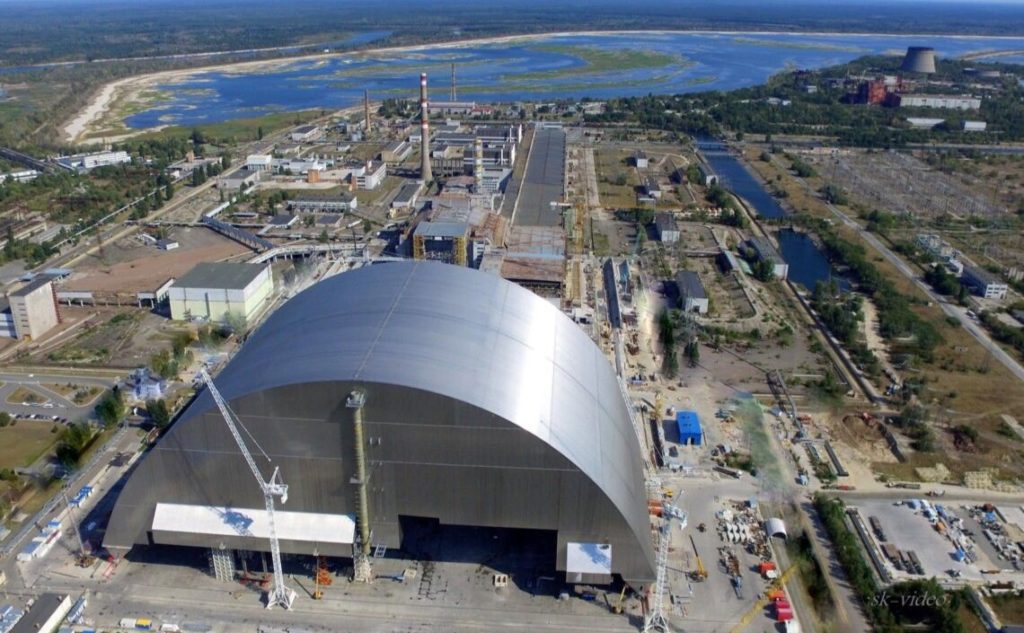
The Group of Seven nations plans to allocate 260 million euros ($292 million) to repair the New Safe Confinement at the Chornobyl Nuclear Power Plant, First Deputy Prime Minister and Energy Minister Denys Shmyhal says.

The confinement, a 35-story steel arch sealing the reactor that exploded in the 1986 disaster, was damaged by a Russian drone strike in February 2025. Full restoration will cost at least 500 million euros, the European Bank for Reconstruction and Development (EBRD) estimates, so the G7 pledge covers just over half, leaving about 240 million euros still to raise.

Shmyhal calls the decision an important step toward restoring nuclear safety at the plant, which the Russian strike had compromised. The money will go to priority work, including resealing the structure and restoring its ventilation system.

“Thank you to France and personally to Minister Roland Lescure for leadership in mobilizing international support,” Shmyhal says, crediting France and the EBRD with co-chairing the effort.

The night a drone pierced the sarcophagus

The damage dates to 14 February 2025. A Russian drone carrying a high-explosive warhead punched a hole through the arch’s roof and ignited a fire in the cladding, breaching the structure’s seal and ventilation.

The attack caused a 15 m² breach in the inner and outer cladding and damaged around 200 m² of panels.

"It was a targeted Russian attack on the Chornobyl station with a drone that is an analog of the Iranian Shahed," Ukrainian President Zelenskyy said at that time.

A bill only half-covered, and a 2030 deadline

The G7 money closes only part of the gap. Partners must still raise roughly 240 million euros more, and Ukraine hopes to secure it at a donor conference in Paris co-chaired by Ukraine, France and the EBRD, Shmyhal says.

The clock matters as much as the cost. The work must be finished by 2030 to limit corrosion and protect the arch’s 100-year design life, the EBRD says, turning a repair bill into a race against the rust the strike set loose.

Ukraine cannot be forced to surrender, says commander whose brigade destroyed 57,000 Russian targets, as US pressure and Russian missiles test its will

17 octobre 2026 à 12:24

Yurii Fedorenko, commander of Ukraine’s 429th separate unmanned systems regiment “Achilles”.

Ending the war by forcing Ukraine to capitulate is impossible, the commander of the 429th “Achilles” Unmanned Systems Brigade, Yurii Fedorenko, said in an interview with 24 Kanal.

His statements came as Ukraine absorbed the fallout from the US-Russia diesel deal that saw its Starlink throttled and US intelligence lapse, a gap tied to a strike that killed three in Kyiv.

Achilles is a volunteer unit formed in the first days of the full-scale invasion, built around aerial reconnaissance and drone strikes and credited with more than 57,000 strikes. Fedorenko, its commander, was named a Hero of Ukraine in January 2026.

Fedorenko says he believes that there would be no “miraculous de-escalation,” and now argues that neither pressure from Washington nor Russian missiles can break the country’s will to fight for its liberty.

Russia will keep terrorizing Ukrainians with ballistic missiles, jet drones and Shaheds, and no near-term shift in US policy will stop it, Fedorenko stresses, so Ukraine will keep defending itself and striking back. A lasting energy ceasefire, he added, will not hold.

“Ukrainian society is ready to defend itself and to uphold its right to life by force,” he says, arguing that the Kremlin’s mouthpieces, and those working for third countries, have misjudged the mood in Ukraine.

No measure, he insists, could force Ukraine to capitulate in the short term.

Why the US election could swing the pendulum back

Fedorenko sees the political balance shifting after the US vote. President Donald Trump will probably not hold the majority he once had, making it harder for him to take domestic decisions alone, he notes. Even foreign policy, a presidential prerogative, will have to reckon with that balance.

If Trump must bargain with Democrats to pass domestic measures, that will shape the wider picture, Fedorenko argues. He stopped short of predicting impeachment, calling that the wrong framing, but cautioned that decisions already taken could be reviewed, challenged and overturned in the courts.

“I am firmly convinced we will get through the difficulties dictated by circumstances, including those arising across the ocean,” he says.

A cold shower for Europe that could help Ukraine

The US turn toward Moscow has jolted Europe, in Fedorenko’s view. American threats to leave NATO or rewrite how it shares the burden landed on European leaders like a cold waterfall, he recounts, pushing each state to ask how it would stand if the US walked away and to treat the Russian threat as one standing at its own borders, no longer a problem confined to Ukraine.

That alarm can work in Kyiv’s favor, drawing more weapons, defense financing and economic support from European partners, Fedorenko argues.

The same logic drives the satellite question. Ukraine cannot build a Starlink alternative alone, lacking its own space program, so the answer is collective, with NATO states pooling launches into a shared network, he explains. Russia is taking the other path with its “Rassvet” system, much of it, in fact, built by China, and if Moscow and Beijing get there first, he warns, the fallout would reach far beyond Ukraine.

How one invented claim becomes a chatbot’s confident answer in cognitive warfare: Ukraine’s drone chief maps Russia’s AI attack

17 octobre 2026 à 11:46

every second russian fall drones ukraine opens 15000 new drone force jobs half civilians · post major robert “madyar” brovdi ukrainian unmanned forces commander madyar ukraine’s systems (sbs) announced 31

Ask a chatbot why something happened in the war, and the answer may be written by Russia. Russia is poisoning AI chatbots with millions of fake articles so they repeat Kremlin narratives as fact, a cognitive weapon with strategic impact, Ukraine’s Unmanned Systems Forces commander Robert “Madiar” Brovdi warns on Telegram.

Russia has waged a cognitive war against Ukraine for years, and it intensified sharply with the full-scale invasion. This war goes beyond fake news and disinformation: it aims to shape the deeply ingrained beliefs that drive people’s attitudes, decisions and behavior, and its newest weapon is artificial intelligence.

Brovdi calls it a cognitive operation with strategic impact, one his forces studied among the technological risks of 2027. People increasingly ask a chatbot “why did X happen?” and take the instant answer, he explains, without asking where it comes from.

“Artificial intelligence does not know the truth. It retells the internet, literally,” Brovdi claims.

How the strategy works, step by step

Brovdi lays out a chain that turns a single lie into something a machine will repeat as fact:

  1. The enemy invents a lie. For example, that Ukrainian soldiers did something terrible, when nothing of the sort happened.
  2. It is copied across thousands of sites. The same fabrication is published again and again, in many languages, until it looks like everyone is reporting it.
  3. It fakes a crowd of independent sources. The sites cross-link to one another, but ten sites copying one lie are not ten independent confirmations.
  4. A person asks the AI. They type “why did Ukrainian soldiers do X?”, though X may never have happened, so the lie is already smuggled into the question as fact.
  5. The AI may repeat the lie. If the system ingests unreliable material and checks facts poorly, it echoes the fabrication in a calm, confident tone.
  6. The person trusts it. “The AI said so,” they think, so the answer feels objective, and they believe it, retell it, or share it online.
  7. The lie shapes decisions and trust. People start to distrust the army, the state, or one another, and even an unproven fabrication has already changed how they feel.

The machines already repeat the lie

The attack runs on volume. Russia floods the web through the “Pravda” network, close to 200 sites in dozens of languages posting 4 to 6 million near-identical articles a year, Brovdi claims, written for machines, not people.

It works, by his account. Of the ten most popular chatbots studied, about a third of the time they reproduce Russian fakes, he noted, and four of ten in a 2024 test affirmed that Azov fighters had burned an effigy of Trump, a fabrication, and cited sources for it.

A war Ukraine admits it is losing

Brovdi is blunt about the balance. Ukraine is losing this fight to Russia’s troll farms, he concedes, even as a layer of homegrown trolls has sprung up too.

His closing advice was aimed at readers.

“Critical thinking should not be delegated. Not even to the smartest machine. Switch on your own judgment and always check the source and the information,” Brovdi states.

Commanders from Azov, Marines, and 93rd tell Ukraine’s defense minister what front needs. He wants their methods scaled to other units

17 octobre 2026 à 09:09

Ukrainian Defense Minister Yevhenii Khmara met commanders and soldiers from front-line units to discuss the needs of the front on 16 October, 2026. Source: The Ukrainian Defense Ministry

The front changes faster than any headquarters, so Ukraine’s war chief went to the people who fight on it. On 16 October, Ukrainian Defense Minister Yevhenii Khmara met commanders and soldiers from front-line units to discuss the needs of the front, command practices that save lives, and ways to raise combat effectiveness, the Defense Ministry reported.

The front keeps changing, with technology, tactics and weapons shifting constantly, so decisions made far from it risk arriving late and costing lives. Khmara’s answer is to anchor ministry policy in the experience of the soldiers who fight, a continuation of the “machines over men” program.

"The front does not stand still. But the key thing is people. People will always be the foundation and the main value of the Defense Forces,” Khmara said.

He claimed that the decisions of the Ministry of Defense must take into account the experience of warriors, those who directly carry out combat missions at the front.

Ukraine's most battle-hardened brigades say their word

The meeting drew commanders from across the force, including the Airborne Assault Forces, the Marine Corps, the 93rd, 100th, 28th and 155th mechanized brigades, the 1st, 425th and 475th assault regiments, the 3rd and 59th assault brigades, and Azov.

The last one, the 1st Azov Corps of the National Guard of Ukraine, is actively fighting in the Donbas region, where units have led counter-operations to disrupt Russian advances toward fortress cities that have been holding Russia's operation since 2014.

Meanwhile, the 93rd "Kholodnyi Yar" Separate Mechanized Brigade took part in fierce battles for Ilovaisk, the Donetsk Airport, Debaltseve, and Bakhmut, as well as in the liberation of the Kharkiv Oblast. Both units are known for their extensive implementation of advanced military technologies, including ground robotic complexes, FPV strike drones, and innovative anti-drone electronic warfare systems.

Command tricks that keep soldiers alive

The talk turned on how good commanders cut their own losses. Participants discussed command approaches that help save soldiers’ lives, use resources efficiently, and achieve combat results.

The ministry wants those methods studied and spread to other units, treating commanders' hard-won judgment as something to scale rather than leave in one brigade.

One goal: fewer Ukrainian losses, more Russian ones

Khmara framed the task in plain terms.

“We must adapt faster and give our warriors modern and effective tools,” he stressed, calling it the shared job of the Defense Ministry, the commander-in-chief and the General Staff.

Congress gave Trump 30 days to hit Russia’s oil buyers with 100% tariffs. He waives them two days before deadline, citing US interests. Moscow calls it historic

17 octobre 2026 à 07:15

The White House, seen from Lafayette Square. File photo, June 2024.

US President Donald Trump has suspended the tariffs and sanctions on the biggest buyers of Russian oil set by the Lindsey Graham Act, the law he signed himself in September. He says the move serves US national interests, according to an executive order published on the White House site.

The act required the president, within 30 days, to impose 100% tariffs on all goods from the five biggest buyers of Russian oil, to sanction a range of Russian entities and to put 500% tariffs on all Russian energy imports to the US. The deadline for those measures fell on 18 October.

Trump has used the president’s power under Section 115 of the Graham Act, which allows him to waive sanctions, restrictions, and duties by certifying to Congress in writing that doing so serves US national interests and submitting a report explaining why. The act does not, however, allow him to cancel sanctions that have already been announced.

Moscow calls it historic, Kyiv calls it a gift to Putin

The two capitals read the same order in opposite ways. Kirill Dmitriev, an envoy for Russian leader Vladimir Putin, called it “an important and truly historic moment” on X, claiming the sanctions had mainly harmed the US economy and world markets.

“Economic cooperation between Russia and the US serves the interests of both nations, contributes to global economic stability and lays the foundation for building trust and achieving lasting peace,” Dmitriev writes.

President Volodymyr Zelenskyy answered from under fire. Russia struck Ukraine’s energy system on 17 October, and at that very moment Washington chose “to completely ignore the Lindsey Graham law, which was supposed to impose real, effective pressure on Russia to end this war,” he says.

A law its own backers say is being gutted

The waiver lands amid a bipartisan revolt in Congress. Seven Republican and Democratic senators had already warned on 11 October that Trump’s move to allow Russian diesel imports had broken the law Congress passed after the full-scale invasion, urging the administration to reverse it so US money would not help finance Russia’s war.

Meanwhile, Zelenskyy argued the law can still work if Washington lets it.

“This law could, and still can, help a great deal. But the law has actually to work, and every vote for it matters,” he said, warning that the step only pushes Moscow to strike harder.

The world must not give up ground and must try to end the war, Zelenskyy added.

“To end it, and not give Putin every reason to continue it indefinitely,” he stressed, thanking everyone who “is truly fighting for peace and helping Ukraine," he stated.

The word from the Ukrainian opposition

The Ukrainian opposition also commented on Trump’s decision. Iryna Herashchenko, co-chair of the European Solidarity parliamentary faction, said that “the most cynical and stupid decisions are usually made by rulers on Saturday night,” when public attention is scattered, and people are preparing for the weekend.

“Rehabilitating Putin harms not only Ukraine but also the US itself, strengthens the axis of authoritarian regimes, and undermines international security,” she claimed.

Reçu — 16 octobre 2026 ⏭ Euromaidan Press

Russia still parks its best bombers in the open. Ukraine has spent a year knocking out the air defenses that were supposed to protect them

Par : David Axe
16 octobre 2026 à 17:50

russia's secret aviation report fighter jet clipped its own shelter gate 500 kg bomb fell takeoff helicopter came home printer-paper-sized hole nine engine failures three weeks · post russian su-34

  • An overnight raid by the Ukrainian navy reportedly destroyed four Russian air force Sukhoi Su-34 fighter-bombers
  • A barrage of Long Neptune cruise missiles struck the parked aircraft at a base in western Russia
  • Observers blamed poor airfield procedures, and also lamented a lack of air defenses

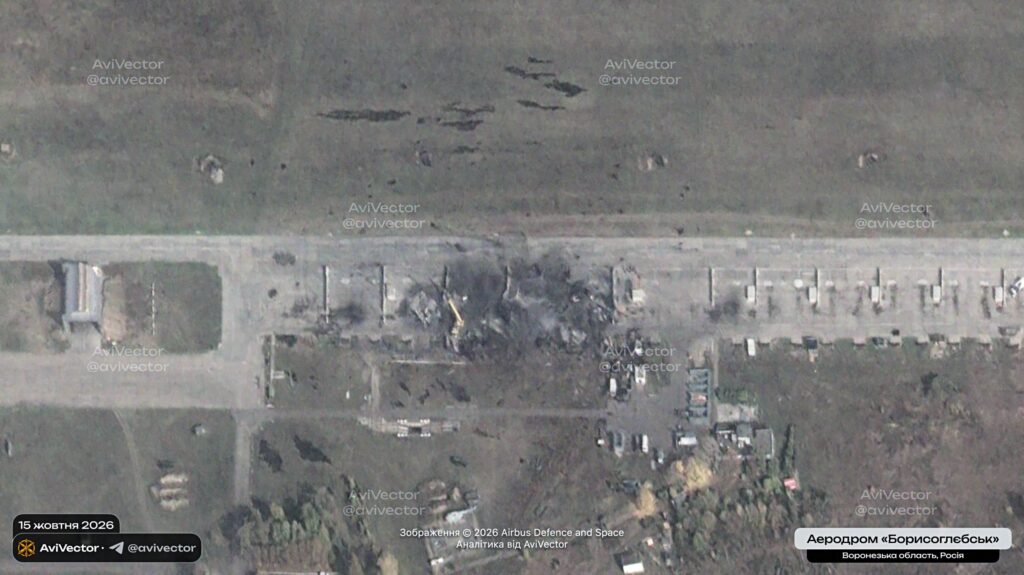
Overnight on 14 and 15 October, the Ukrainian navy fired a clutch of Long Neptune cruise missiles at Borisoglebsk air base in Voronezh, in western Russia some 260 km from the border with Ukraine.

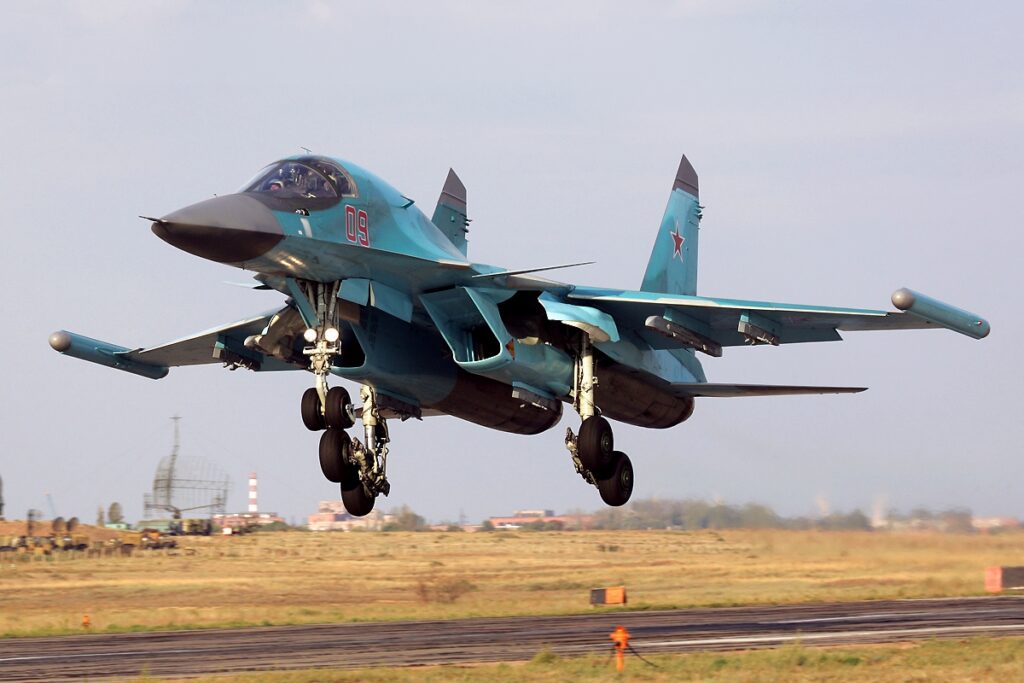
The results were devastating. The ground-launched Neptunes struck the tarmac where six Russian air force Sukhoi Su-34 fighter-bombers were parked nearly wingtip to wingtip in uncovered positions.

Satellite imagery from the morning of 15 October depicted piles of smoldering wreckage. The navy said it hit all six jets. Ukrainian President Volodymyr Zelensky said four Su-34s were destroyed and a further two were damaged. "I thank the warriors of the Ukrainian navy for their precision!" he wrote.

The jets, he said, were loaded with aerial bombs and ready for new strikes on Ukraine. An analyst reading the imagery counted wreckage of two to four aircraft and two empty spots where damaged jets had been moved.

An Airbus Pléiades satellite image from 11 October, four days before the strike, showed the six Su-34s on open aprons. Next to them were structures that the Russian independent outlet Istories said looked like anti-drone nets or their frames. Nets can snag a small drone. A cruise missile goes through.

At roughly $50 million apiece, by the Ukrainian Air Force's estimate, the four destroyed jets alone cost Russia some $200 million. The twin-engine, two-seat, supersonic Su-34 is the Russian air force's best fighter-bomber. Almost every day, Su-34s lob KAB precision glide bombs at Ukrainian troops and civilians.

🔻 Satellite images of 🇷🇺 Borisoglebsk Air Base as of October 15, 08:25 UTC

On the night of October 15, several Su-34 were destroyed at Borisoglebsk Air Base. pic.twitter.com/3ZNBWhU6UD

— AviVector (@avivector) October 15, 2026

In nearly 56 months of hard fighting in Russia's wider war on Ukraine, the Russians have now lost no fewer than 37 Su-34s destroyed, with several more damaged, by open-source counts. Sukhoi continues to deliver new Su-34s in small batches, the latest handed over on 7 October, helping the Russians sustain their overall inventory despite heavy losses.

They've still got plenty of Su-34s, but that doesn't mean the Russians shouldn't worry. As long as they're parking warplanes out in the open within range of Ukraine's best deep strike munitions, those planes are vulnerable to attack. Russia's air defenses are spread too thin to intercept every Ukrainian munition.

Satellite imagery showing the aftermath of a Neptune missile strike on six Su-34 fighter-bombers at Borisoglebsk Airfield.

Coordinates: 51.36315, 42.18560 pic.twitter.com/7TNpxGIaB0

— Dnipro Osint (@GarbuzYe) October 15, 2026

The strike may also hit the Russian air force's training pipeline. Borisoglebsk air base is home to the 160th Aviation Training Regiment. The regiment operates Yakovlev Yak-130 trainers for more basic flight training plus—for more advanced training—front-line combat aircraft including Su-34s, Sukhoi Su-35s, and Sukhoi Su-30s.

Russian bloggers are aghast, according to a round-up of posts on Russian social media by analyst ChrisO_wiki. "How is it that, four years after the start of the Special Military Operation, there are no protective structures for aircraft at airfields located within range of Ukrainian air strikes?" blogger Ramsay wrote. "And where did the billions of rubles allocated for their construction go?"

"Much can be said about the need to build a sufficient number of concrete shelters at all airfields," blogger Vladimir Romanov pointed out. "Reality shows that, to date, sufficient measures have not been taken."

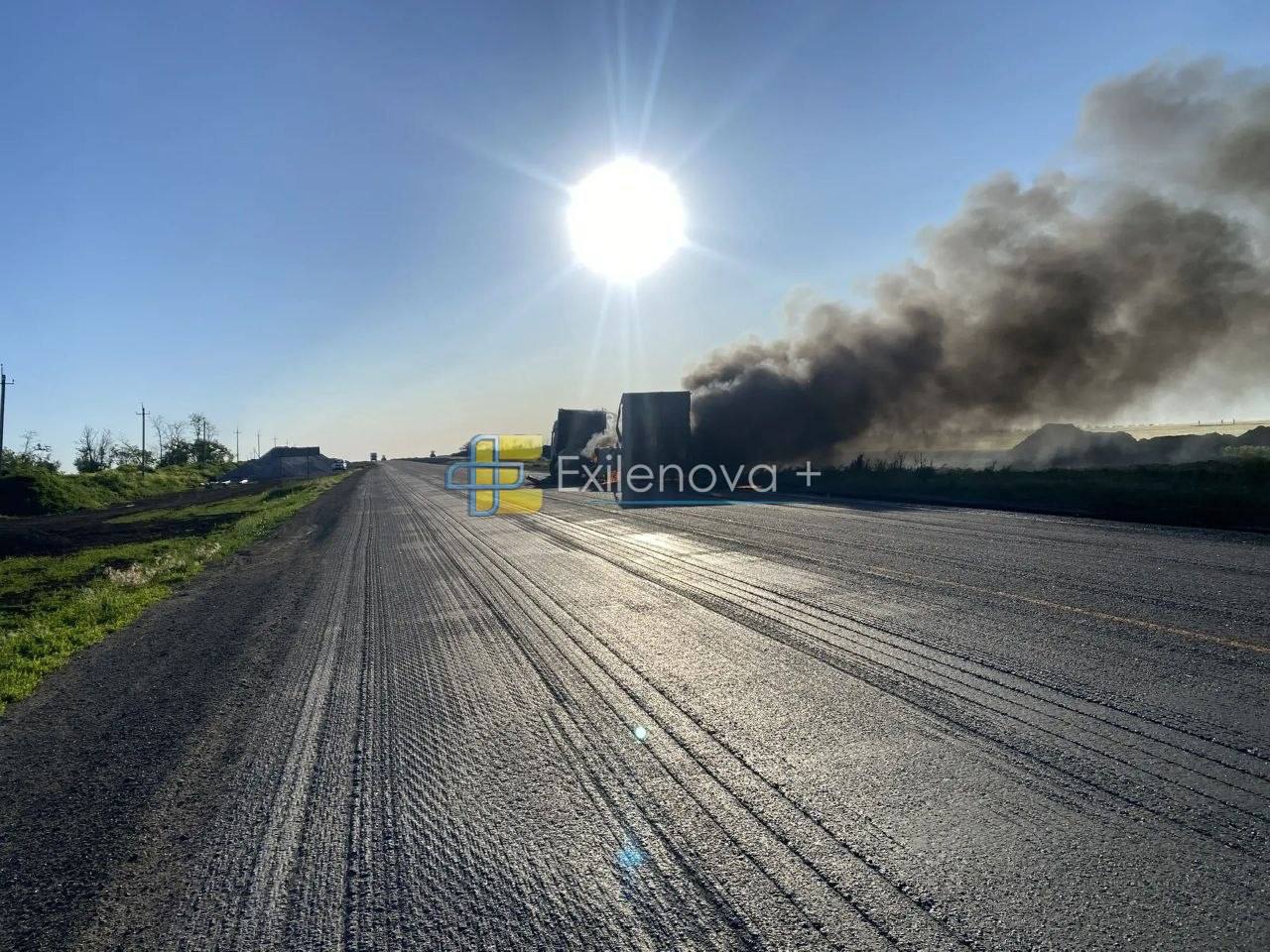
russian radar occupied crimea didn't see ukrainian drones coming became 28th air-defense asset wrecked · post supply trucks burning mariupol-melitopol highway main road russia's land corridor 29 2026 exilenova+ -
Explore further

“Supplying Crimea is turning into a nightmare”: Ukrainian drones hit Russian trucks 770 times in September, and winter will make it worse, analyst says

Close parking

Ramsay asked why the Su-34s were concentrated in one area, apparently so that ground crews could quickly service all of them with a single ground power unit, a mobile generator that starts an aircraft's systems before flight. "How is it that the APA, a utilitarian piece of equipment, has become so scarce that it forces an entire group of combat aircraft to be parked in a single area, making them an ideal target for attacks?"

The best defense is an active one, however, the Fighterbomber channel stressed. "Protecting aircraft by the usual method of moving them out of the line of fire at such ranges from long-range strike systems won’t work here; the only way to defend against them is with a full-scale, echeloned air defense system—both ground-based and airborne."

1/ Russian warbloggers are furious at the news that a Ukrainian missile has destroyed between 4 and 6 Su-34 jets on the ground at a Russian airfield. How is it possible, they ask, that the Russian air force is still parking aircraft close together without protection? ⬇ pic.twitter.com/BrTvfCMRfH

— ChrisO_wiki (@ChrisO_wiki) October 15, 2026

Ukrainian planners know this. Which is why, for more than a year now, they've been systematically striking Russian radars, surface-to-air missile batteries, and mobile air defense systems. By March, Ukrainian forces were “collaps[ing] the layered defensive architecture that the Russian integrated air defence doctrine depends upon to function,” according to an in-depth investigation by Tochnyi.info.

The strikes on Russian air defenses—at least 492 of them between June and early March—are part of a carefully scripted plan. Destroying the right air defenses faster than the Russians can replace them has the effect of “facilitating strikes on more critical targets deep within Russian territory,” Tochnyi.info explained.

The critical targets include air bases such as Borisoglebsk and the expensive warplanes parked on its tarmac.

Russo-Ukrainian war, day 1696: Romania blames Russia for drone attacks on ships off its coast and calls for a joint NATO Black Sea command

16 octobre 2026 à 16:50

Exclusives

Russia is losing the Black Sea grain war it started. Its answer is to sink civilian ships off Romania and Bulgaria. The burning ships off Romania and Bulgaria are the latest round of a contest Ukraine opened this summer, when it began choking Russia’s own Black Sea exports

Military

Zelenskyy’s warning that Russian airspace is becoming dangerous is proving true: Russia temporarily restricted operations at 27 airports amid a massive drone attack. Russia later lifted the restrictions, but Russian airports continued to experience flight disruptions as they resumed arrivals and departures.

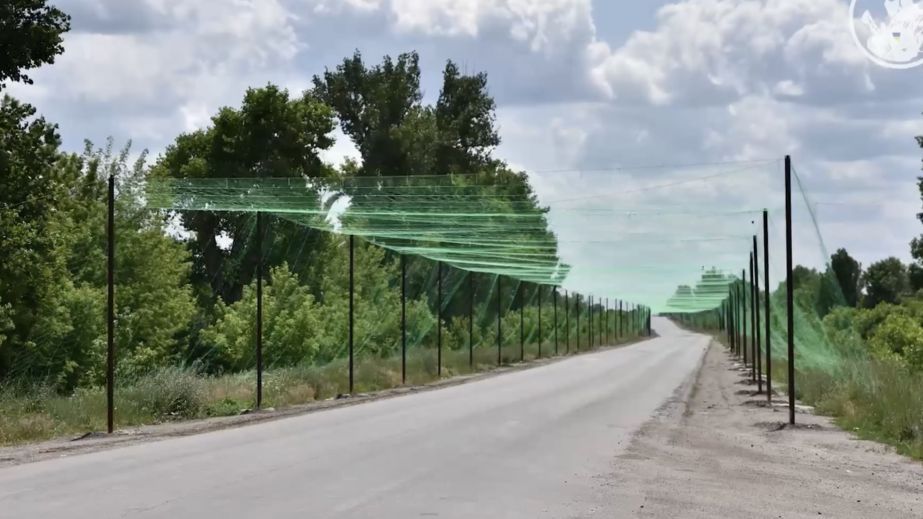
Ukraine makes its anti-drone road nets a national standard in a new strategy for defensive lines through 2028. It has already strung over more than 1,000 kilometers of road. FPV drones hunt anything moving near the front, so Kyiv is codifying the protection solutions.

Ukraine’s military now orders supplies based on real front-line data, not guesswork, lawmaker says. Shift comes under new commander-in-chief. Ukraine’s new commander-in-chief, Drapatyi, is centering the army on soldiers’ lives and real front-line needs, a lawmaker believes.

Ukraine’s shell factories outpace state orders, arms company chief says: Kyiv spent five months buying from them this year, leaving six to produce. Private plants were built under Russian fire with no state investment, says the head of Ukrainian defense maker Ukrainian Armor.

“Operation to strike Russian targets deep in swamps continues”: Ukrainian Commander Madiar says his unit hits 7,306 Russian troops in first half of October, up 59% on August. The pace held through weather that usually grounds drones, says Robert “Madiar” Brovdi, who calls the trend the opposite of de-escalation.

Intelligence and technology

Musk pushed Trump to slow Starlink in Ukraine, weakening air defenses as Russian drones attacked cities – The Telegraph. The restrictions reportedly forced some Ukrainian drone missions to be called off and made it harder to intercept Russian jet-powered drones attacking cities.

White House ordered limits on Ukraine’s military satellite service — Reuters. Who made the decision remains unclear. Germany has questions for Washington, while the UK reports that Starlink access has been restored following assurances to its defense secretary.

Posting strike videos online may help Russia tune its drones’ optical targeting. Moscow now pays people to film hits, Ukrainian adviser warns. Russia is collecting footage of its Geran attack drones hitting Ukraine, probably to test the optical target-recognition systems that guide them in their final seconds.

Ukraine’s hobbit-named robot fired on targets up to 1.3 km away in a demo for border guards. First reported carrying a wounded soldier, Ukraine’s Frodo robot has now fired for a border guard brigade—built, its maker says, to hit and run.

Musk pointed at the US military over Ukraine’s satellite limits. Now a US official says the administration had nothing to do with them. Ukraine’s Defense Ministry says it is in talks with partners and SpaceX to maintain stable service and prevent sudden restrictions on satellite services used by its military.

International

Belgium triples planned F-16 deliveries to Ukraine, pledges 10 jets by year-end. Prime Minister Bart De Wever announced the expanded commitment during talks with Volodymyr Zelenskyy in Brussels, as Ukraine seeks more aircraft and ammunition to counter Russian attacks.

Poland provided secret military aid to Ukraine, Zelenskyy hints amid air defense shortages. Ukraine’s president thanked Warsaw for undisclosed assistance and 20 mm ammunition as Russian drone and missile attacks strain Ukrainian air defenses and Europe faces greater pressure to fill gaps in US support.

22 House lawmakers press Trump to implement Russia sanctions law. Diesel deal draws bipartisan backlash. The lawmakers argue that using the law’s sanctions and tariff powers would force Russian President Vladimir Putin to take peace talks seriously.

Romania finally holds Russia responsible for the drone attacks on ships off its coast, and wants a joint NATO command for the Black Sea. The NATO states on the sea would take turns leading it, with Romania ready to host it from 2028.

EU fast-tracks merger of three European firms into one SpaceX rival. It wants to end reliance on US satellites that failed Ukraine this week. The EU plans to fast-track antitrust approval for Project Bromo, a satellite venture.

Trump calls Ukraine’s renewed refinery strikes “a disgrace” after Russia’s 39-missile strike on its energy sites. The president called Zelenskyy “P.T. Barnum” and said Biden armed Ukraine for free.

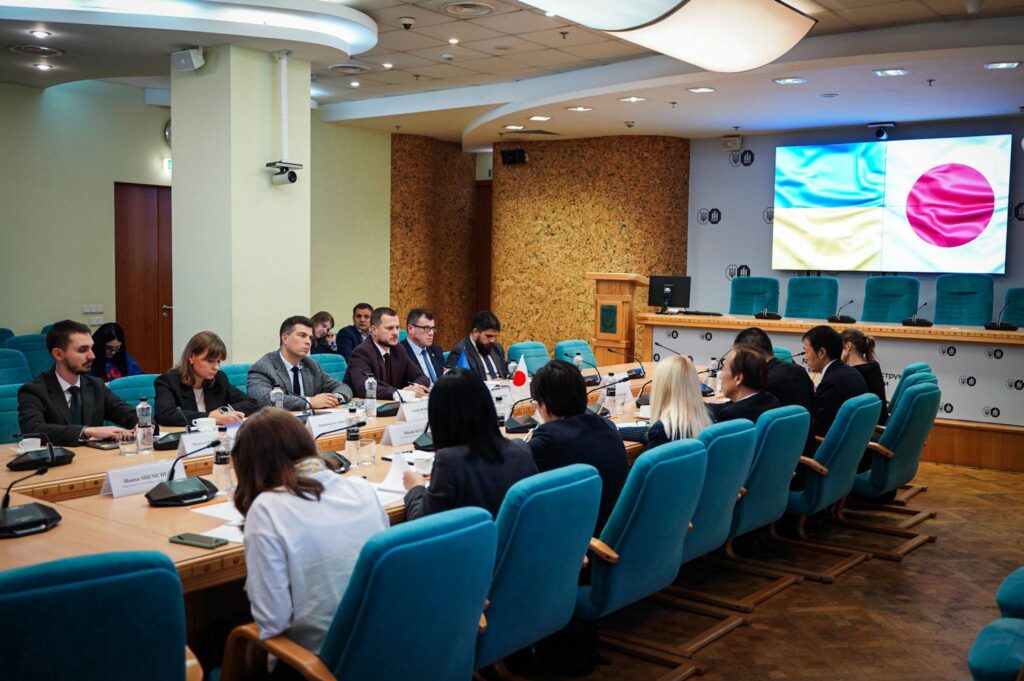
Ukraine and Japan plan prefabricated backup crossings for Kyiv’s bridges: 720 meters of structures already delivered. The fifth phase of the Emergency Recovery Program, recently signed by the two countries, allocates $15 million for Ukraine’s infrastructure needs.

Two tankers burn off Romania’s Sulina as Bulgaria says it lacks proof Russia is behind the Black Sea ship attacks. Seven crew members of a San Marino-flagged chemical tanker were still missing hours after it caught fire at anchor off the mouth of the Danube.

Humanitarian and social impact

Russia pushes its drone war into Volyn Oblast on NATO border, cutting power to 370,000 as strikes creep toward EU. Moscow struck a region bordering Poland the same week it hit the central Kirovohrad Oblast hardest ever, exploiting a Starlink cap on Ukraine’s defenses.

One Ukraine out-produced third of EU’s steel. Russian strikes have now cut its output to zero. The 150-year-old industry made nothing last month after missiles wrecked almost every working blast furnace since August.

Russian drone cuts down unique energy line tower over Dnipro River in Kyiv. It can’t be rebuilt, and world is queuing for more power equipment. Ukraine’s grid operator Ukrenergo is already starting work on workarounds, but calls drones that cut down towers a new challenge.

Russia’s largest drone attack on Kirovohrad Oblast since the full-scale invasion kills three in Kropyvnytskyi. Drones struck critical infrastructure, transport companies, logistics sites, and homes across the central Ukrainian oblast, with its capital taking most of the damage.

On Monday she sat in her cousin’s Kyiv apartment, and by Wednesday a Russian strike had left a hole where the window was. Her cousin, his girlfriend, and an aunt survived inside, and rescuers lifted them out 15 minutes after the blast.

A Russian drone damaged Cosmogony, Ukraine’s largest painting, in the section depicting the future. Its artist spent nearly two years creating it. The museum is weighing whether to restore the burned section or keep the fire’s traces as a reminder of the war.

Political and legal developments

Hungary held $82 million in cash and gold from Ukraine for months. Now, it faces torture complaints in Europe’s top court. Hungarian forces stopped two Oschadbank vehicles in March, carrying cash and gold from Austria to Ukraine.

Ukraine detains a gas station worker and a Telegram commenter suspected of scouting targets for Russian strikes. One was allegedly reached through a former classmate in Russia, and the other allegedly took orders from a female handler there.

After Trump, Musk tells Ukraine’s president to go. Zelenskyy says he won’t resign and will never accept Ukrainian land as Russian. The Ukrainian leader told British broadcaster Piers Morgan that this refusal is why some “big guys” want him replaced.

Read our previous daily review here.

Musk pushed Trump to slow Starlink in Ukraine, weakening air defenses as Russian drones attacked cities – The Telegraph


16 octobre 2026 à 15:06

kyiv asking musk let strike inside russia its best line gone · post elon 2026 world economic forum / ciaran mccrickard wef ukraine news ukrainian reports

Elon Musk approached US President Donald Trump with a proposal to limit the speed of Starlink satellite communications in Ukraine, disrupting Kyiv’s ability to counter Russian drone attacks, The Telegraph reported on 16 October, citing four sources familiar with the discussions.
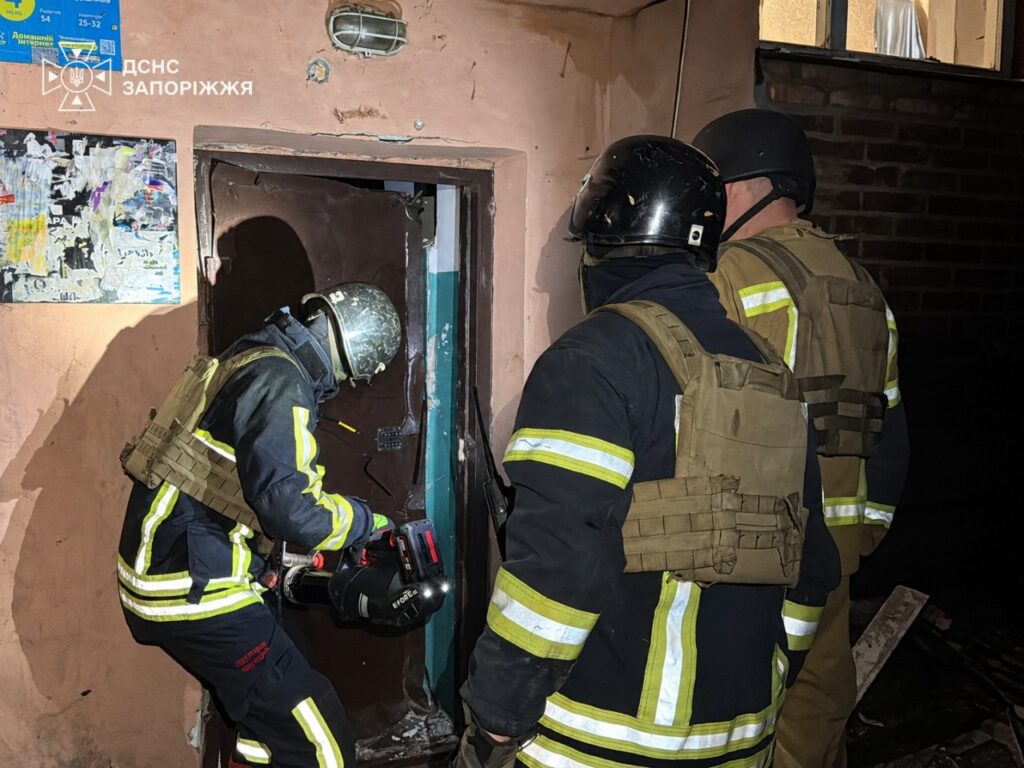
The restrictions had immediate consequences for Ukraine’s defenses, forcing some drone missions against Russian positions to be called off and threatening the ability to intercept Russian jet-powered drones as they targeted Ukrainian cities at the time.

According to The Telegraph, Trump agreed with Musk’s suggestion, paving the way for the Pentagon to impose restrictions on Starshield, the military-grade version of SpaceX’s satellite network used by Ukrainian forces.

The report contradicts Musk’s public claim that the US military and ultimately Trump were responsible for deciding any limits on the system. However, Trump denied that either he or Musk was responsible for Ukraine losing access, while an anonymous US official told AFP that the president had not requested the reduction in service.

The reported restrictions come amid tensions between Washington and Kyiv over Ukrainian strikes on Russian oil refineries. The episode has raised concerns about Ukraine’s dependence on privately controlled communications infrastructure and the risk that changes to US support could weaken its battlefield capabilities.

Starshield restrictions hampered Ukraine’s drone defenses

Starshield is the military-grade version of Starlink, SpaceX’s satellite internet network. It allows Ukrainian drone operators to maintain communications with aircraft moving at high speeds, supporting both defensive interception missions and strikes against Russian targets.

The speed limit imposed on Ukrainian drones using Starshield was around 160 kph, making it difficult for them to intercept Russian jet-powered drones and missiles traveling at roughly twice that speed.

According to The Telegraph, a senior source said Musk had become concerned about potential backlash from European consumers following the restrictions. A high-ranking European official and two Ukrainian sources reportedly corroborated the account that Musk and Trump were both involved in the decision.

The Pentagon has not publicly explained the restrictions. The report’s account also remains disputed: Trump said on 16 October that he did not believe either he or Musk was responsible for Ukraine losing access, while an anonymous US official cited by AFP said the president had not requested the reduction.

geran-2 (shahed-136) drone belarusian markings service military belta militarnyi російський безпілотник герань 2
Explore further

“Trump and Musk must be held accountable”: US senator warns Starlink network failing over Ukraine could cripple its shield against Russian missiles and drones

Ukraine says Starshield capabilities are being restored

Ukrainian President Volodymyr Zelenskyy said on 16 October that restrictions on SpaceX’s Starshield satellite communications system had disrupted several military operations, including efforts to intercept Russian jet-powered Geran drones attacking Ukrainian cities.

Zelenskyy said Ukraine did not use Starlink to support attacks inside Russia, but relied on the system to intercept drones targeting civilians, conduct mid-range strikes against Russian military targets in occupied Ukrainian territory, and deliver food and water to frontline troops using drones.

“When the speed was reduced, we were unable to intercept a certain number of jet-powered ‘shaheds,’ [Gerans - ed.]” Zelenskyy wrote on X, adding that Ukrainian forces had lost the ability to carry out some operations while the restrictions were in place.

Zelenskyy said Ukraine’s Defense Ministry was in contact with partners and had received signals from the White House that the capabilities would be restored. However, he stressed that speeds had not yet returned to their previous levels, although restoration was underway.

We don’t use Starlink for our responses inside Russia. We use Starlink to intercept jet-powered “shaheds” that attack our civilians and kill families.

Starlink wasn’t turned off – its speed was reduced. And when the speed was reduced, we were unable to intercept a certain number…

— Volodymyr Zelenskyy / Володимир Зеленський (@ZelenskyyUa) October 16, 2026

Europe warns against dependence on Musk’s network

The latest episode has renewed European concerns about relying on Musk and SpaceX for critical communications infrastructure. Polish Foreign Minister Radosław Sikorski warned Musk on social media that European customers were watching his actions, The Telegraph reported.
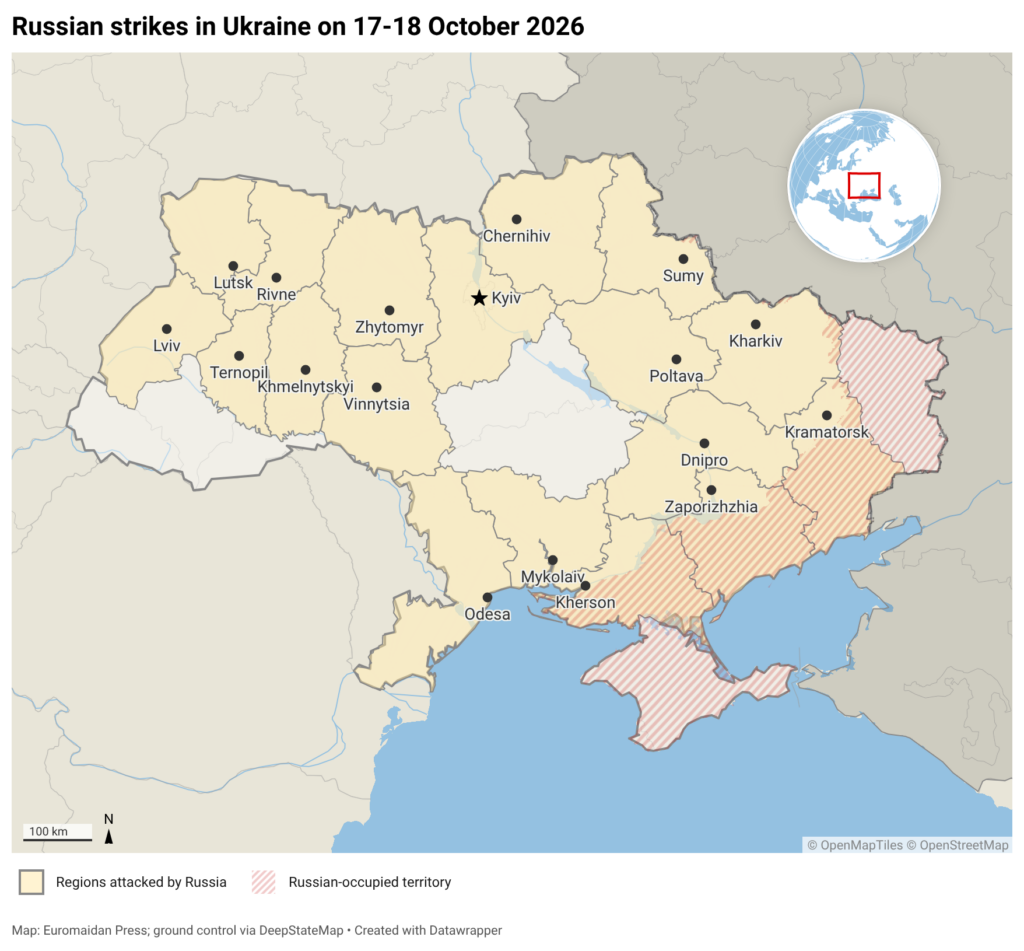
The European Union is developing its own satellite communications system, IRIS², intended to provide an alternative to Starlink, according to The Telegraph. The system is planned to become operational by 2030, leaving Ukraine and European governments dependent on existing providers in the meantime.

The report adds to concerns that decisions made in Washington or by private technology providers could directly affect Ukraine’s ability to defend itself against Russian attacks.

  • ✇Euromaidan Press
  • Belgium triples planned F-16 deliveries to Ukraine, pledges 10 jets by year-end
    Belgium plans to deliver 10 F-16 fighter jets to Ukraine by the end of 2026, Prime Minister Bart De Wever announced on 16 October, raising the expected number from three amid delays in transferring the aircraft. The expanded commitment comes as Ukraine faces sustained Russian drone and missile attacks and needs additional combat aircraft to strengthen its air defenses.  De Wever made the announcement at a press conference in Brussels alongside Ukrainian President Volodymyr Zelenskyy,
     

Belgium triples planned F-16 deliveries to Ukraine, pledges 10 jets by year-end

16 octobre 2026 à 14:18

belgium send three f-16 fighter jets maintenance delays keep ukraine using · post belgian jet belgium-f-16-takes-off news ukrainian reports

Belgium plans to deliver 10 F-16 fighter jets to Ukraine by the end of 2026, Prime Minister Bart De Wever announced on 16 October, raising the expected number from three amid delays in transferring the aircraft.

The expanded commitment comes as Ukraine faces sustained Russian drone and missile attacks and needs additional combat aircraft to strengthen its air defenses. 

De Wever made the announcement at a press conference in Brussels alongside Ukrainian President Volodymyr Zelenskyy, Anadolu Agency reported. He said Belgium’s deliveries had fallen behind schedule because its new US-made F-35 fighter jets arrived later than expected.

Belgium also discussed supplying more ammunition for Ukraine’s F-16s.

F-16 deliveries delayed by F-35 schedule

“We will deliver 10 this year,” De Wever said, explaining that delays in receiving Belgium’s F-35s had held up the transfer of its F-16s. The new aircraft are now beginning to arrive, allowing Belgium to move forward with deliveries to Ukraine.

Zelenskyy confirmed that Kyiv expects additional F-16s from Belgium by the end of the year and thanked Brussels for the agreement.

The announcement marks an increase from Belgium’s previously reported plan to send three F-16s to Ukraine by the end of 2026. The new figure would more than triple the number expected under that earlier commitment.

F-16s to help counter Russian jet-powered drones

De Wever said Ukraine urgently needs operational fighter jets and described the F-16 as one of the few weapons capable of effectively countering Russian jet-powered drones.

The aircraft can also intercept cruise missiles and other aerial targets, while carrying out electronic warfare and combat missions. Ukraine received its first F-16s in 2024 after allies agreed to supply the aircraft and train Ukrainian pilots. 

A Ukrainian Air Force F-16AM Fighting Falcon fighter jet takes off armed with AIM-9 Sidewinder air-to-air missiles. Photo: Ukrainian Air Force\X
Explore further

Belgium rushes three F-16s to Ukraine as Russia expands its drone and missile assault

Belgium discusses ammunition and financial support

Zelenskyy and De Wever also discussed supplying additional ammunition for Ukraine’s F-16s, including 20 mm rounds produced by Belgian defense company FN Herstal.

The leaders also reportedly discussed Ukraine’s financial needs, though neither provided details on potential next steps. Belgium remains at the center of discussions over frozen Russian assets, as Brussels hosts Euroclear, which holds a large share of the immobilized funds.

  • ✇Euromaidan Press
  • Poland provided secret military aid to Ukraine, Zelenskyy hints amid air defense shortages
    Ukraine has received undisclosed assistance from Poland as it struggles to defend against increasingly intense Russian drone and missile attacks, President Volodymyr Zelenskyy hinted during a meeting with Polish Prime Minister Donald Tusk in Brussels on 15 October, Radio Svoboda reported. Ukraine’s air defense needs are greater than at any point since 2022, as intensified Russian drone and missile attacks strain existing systems and expose shortages of interceptor missiles. With US supp
     

Poland provided secret military aid to Ukraine, Zelenskyy hints amid air defense shortages

16 octobre 2026 à 12:38

Polish Prime Minister Donald Tusk and Ukrainian President Volodymyr Zelenskyy in Brussels, 15 October 2026. Photo: Ukrainian President's Office

Ukraine has received undisclosed assistance from Poland as it struggles to defend against increasingly intense Russian drone and missile attacks, President Volodymyr Zelenskyy hinted during a meeting with Polish Prime Minister Donald Tusk in Brussels on 15 October, Radio Svoboda reported.

Ukraine’s air defense needs are greater than at any point since 2022, as intensified Russian drone and missile attacks strain existing systems and expose shortages of interceptor missiles. With US support increasingly uncertain amid tensions between Kyiv and Washington, European military aid is becoming more critical to Ukraine’s ability to defend its cities and infrastructure.

Zelenskyy thanked Warsaw for its support, suggesting that some assistance had to remain confidential. He also specifically mentioned 20 mm ammunition, which Ukraine needs to defend its cities against Russian attacks.

“Sometimes this has to stay between the two of us,” Zelenskyy said, thanking Tusk for the aid.

European support increasingly important amid US rift

Ukraine is facing mounting pressure on its air defenses as Russia increases the scale of its aerial attacks. Ukrainian forces are also struggling with shortages of interceptor missiles, particularly Patriot missiles needed to counter Russian ballistic strikes, leaving the country vulnerable to further attacks.

The need for additional support comes amid growing uncertainty over US assistance under President Donald Trump. Washington has taken steps that have strained ties with Kyiv, including easing some restrictions on Russian fuel and pressing for an energy ceasefire that Ukraine says Russia has continued to violate. 

Recent disruptions to US-linked intelligence and satellite support have also raised concerns about Ukraine's ability to detect and counter Russian attacks.

As uncertainty over Washington's role grows, European military assistance is becoming increasingly important for Ukraine's defense.

The White House, seen from Lafayette Square. File photo, June 2024.
Explore further

White House ordered limits on Ukraine’s military satellite service — Reuters. Who made the decision remains unclear

Defense cooperation continues despite political tensions

Tusk reaffirmed Poland's commitment to supporting Ukraine, saying Kyiv could count on Poland and the European Union. He also opposed easing EU sanctions against Russia, arguing that Europe should not take steps that help Moscow finance its war.

The meeting also came amid strained relations between Kyiv and Warsaw over historical disputes. However, Poland's government has maintained that these disagreements should not undermine military support for Ukraine, whose ability to resist Russian aggression is closely tied to Poland's own security.

Zelenskyy’s warning that Russian airspace is becoming dangerous is proving true: Russia temporarily restricted operations at 27 airports amid a massive drone attack

16 octobre 2026 à 12:17

Flight information board displaying arrivals and departures at Domodedovo Airport in Moscow, Russia. Photo: TASS

Temporary restrictions on aircraft arrivals and departures were imposed at 27 Russian airports, Deutsche Welle reported on 16 October, citing its own calculations based on reports from Russia’s Federal Air Transport Agency.

Ukrainian President Volodymyr Zelenskyy warned airlines on 1 September that “Russian airspace is becoming completely unsafe.” Overnight, most of the airspace over European Russia was closed.

By morning, more than 200 flights had been canceled or delayed at Moscow airports, Deutsche Welle reported, citing figures compiled by a Russian Telegram channel.

🔥 Тим часом у російських аеропортах – справжній апокаліпсис через нальоти дронів останніми днями.
Про це ниють росЗМІ. Було відмінено десятки рейсів, у терміналах – дуже багато людей. Пасажири скаржаться на задуху, дикі черги до туалетів та повну невідомість. pic.twitter.com/ZlXxY5c2mq

— Breaking News (@breakingUAnews) October 16, 2026

The list included airports in the capital. All four Moscow airports temporarily suspended arrivals and departures, the Russian outlet Astra reported on 16 October. Russian authorities said they had shot down dozens of drones, while flights were delayed and diverted to alternate airfields, according to the report.

Massive drone attack on Russia: 644 UAVs in one night, 94 shot down near Moscow

The temporary airport shutdowns were likely a consequence of a massive drone attack on Russia. From 8:00 p.m. on 15 October to 8:00 a.m. on 16 October, Russian air defenses allegedly intercepted and destroyed 644 Ukrainian unmanned aerial vehicles across 26 Russian regions, occupied Crimea, and the Black Sea, according to Russia’s Defense Ministry.

According to the list of regions published by the Russian Defense Ministry, the drone attacks covered a vast area of Russia, from regions bordering Ukraine to the Moscow region, the Volga region, the country’s northwest and southern regions, as well as occupied Crimea and the Black Sea.

Russian air defenses shot down a total of 94 drones approaching Moscow over the evening of 15 October and overnight, according to calculations by the Russian outlet RBC Radio, citing statements by Moscow Mayor Sergey Sobyanin.

In the Kaluga region, air defenses destroyed 27 drones over the evening and night, the regional governor reported. At 9:27 a.m., he updated the figures, saying another 48 UAVs had been shot down overnight, bringing the total to 75. According to preliminary information, there were no casualties or infrastructure damage.

In the Tula region, air defenses allegedly destroyed a total of 32 Ukrainian drones. There were no casualties, according to regional Governor Dmitry Milyaev in his Telegram channel.

In the Vladimir region in western Russia, authorities repelled drone attacks overnight. In the city of Vladimir, a drone attempted to attack a heating infrastructure facility, but the attack was stopped, Vladimir Region Governor Alexander Avdeyev reported. Minor damage was reported, but there was no information about casualties.

Ukraine has not yet commented on its involvement in the attacks.

The practical consequences of canceled Russian flights

Passengers on flight SU6312 from Kaliningrad to Moscow were unable to land in Moscow because of airspace closure, so the aircraft was diverted to Nizhny Novgorod, Terravia reported. After landing, passengers remained on board for about two hours before being allowed to disembark at 3:30 a.m. Instead of continuing their journey to Moscow by air, they were supposed to be transported by bus, with the trip expected to take about seven hours, the outlet reported.

russian airliner revival sold breakthrough now survives extended flight-cycle limits · post sukhoi superjet 100 iraero airline tass superjet-100 (ss-100) plane (file photo) ukraine news ukrainian reports
A Russian Sukhoi Superjet 100 of the IrAero airline. Illustrative photo: TASS

Passengers were not provided with food or drinks, and one woman could not find a seat on the bus, so she purchased a ticket for an early-morning train herself.

Since the beginning of the year, all four Moscow airports have been completely shut down simultaneously at least 19 times, the Russian outlet Agentstvo reported. During the first 14 days of October, the restrictions lasted 101 hours and 38 minutes, compared with 46 hours and 33 minutes in September, according to the report.

  • ✇Euromaidan Press
  • 22 House lawmakers press Trump to implement Russia sanctions law. Diesel deal draws bipartisan backlash
    A bipartisan group of 22 House lawmakers is urging President Donald Trump to fully implement the new Russia sanctions law and revoke a license allowing certain Russian diesel transactions. In a letter sent on 15 October, they copied Secretary of State Marco Rubio and Treasury Secretary Scott Bessent and requested details on planned sanctions, tariffs and waivers. Their request comes as the law’s first requirements fall due on 18 October, while lawmakers from both parties challengethe ad
     

22 House lawmakers press Trump to implement Russia sanctions law. Diesel deal draws bipartisan backlash

16 octobre 2026 à 10:21

US President Donald Trump signs the Lindsey O. Graham Sanctioning Russia and Iran Act in the Oval Office, 18 September 2026

A bipartisan group of 22 House lawmakers is urging President Donald Trump to fully implement the new Russia sanctions law and revoke a license allowing certain Russian diesel transactions. In a letter sent on 15 October, they copied Secretary of State Marco Rubio and Treasury Secretary Scott Bessent and requested details on planned sanctions, tariffs and waivers.

Their request comes as the law’s first requirements fall due on 18 October, while lawmakers from both parties challengethe administration’s decision to allow certain Russian diesel transactions. Some restrictions take effect automatically, while others require presidential action. The law does not specify a penalty for the president missing the deadline.

    What the Russia sanctions law requires

    Congress passed the Lindsey O. Graham Sanctioning Russia and Iran Act of 2026 by votes of 86–11 in the Senate and 262–159 in the House. Trump signed it on 18 September. Graham, a Republican senator from South Carolina, died in July.

    Restrictions taking effect automatically on 18 October include a ban on US banks and broker-dealers processing transfers to or from the Russian government, a ban on new US investment in Russia, a ban on new US investment in Russia’s energy sector, and a ban on US energy exports to Russia.

    Other measures require presidential action by the same date. The law directs Trump to review and sanction Russian officials, oligarchs and shadow-fleet vessels, sanction the Bank of Russia, specified Russian banks and state-owned companies, and impose tariffs of up to 500% on Russian goods. Tariffs of up to 100% can apply to goods from countries among the five largest importers of Russian oil or gas, or among the top five countries facilitating Russian oil sanctions evasion.

    Trump may waive sanctions, restrictions and tariffs under the law if he first certifies in writing to Congress that a waiver is in the US national interest and submits a report explaining its basis.

    The diesel license at the center of the dispute

    House members also urged Trump to revoke General License 135, which the Treasury Department issued on 9 October and that is valid until 7 April 2027. It permits certain transactions involving Russian-origin diesel, including imports into the United States. Trump said Russia would immediately supply more than 300,000 tons of diesel to US and global markets and predicted prices would fall sharply, according to a 9 October Truth Social post.

    On 13 October, a bipartisan group of 12 senators also urged Trump to rescind the deal and revoke the license. Seven senators said the deal conflicted with a 2022 law banning Russian energy imports.

    The Graham Act says nothing in its provisions affects the Treasury secretary’s existing authority to issue general licenses. That provision does not resolve whether the diesel license complies with the separate 2022 law.

    A White House official told Newsweek the administration would comply with the Graham Act. Bessent said the administration would use “all the legal authorities we have” and called the deal “good for the American people,” Fox News reported on 11 October.

    How the sanctions could be lifted

    Separately, the law sets a process for terminating sanctions, restrictions or duties against Russia. Trump must report to Congress that Russia has signed a peace agreement accepted by Ukraine’s government and ceased military hostilities against Ukraine, as well as activities to overthrow, dismantle or subvert its government. Congress has 30 days to block termination through a joint resolution of disapproval, or 60 days for reports submitted between 10 July and 7 September.

    Romania finally holds Russia responsible for the drone attacks on ships off its coast, and wants a joint NATO command for the Black Sea

    16 octobre 2026 à 09:51

    The San Marino-flagged chemical tanker Wine Trader near Sulina, Romania, on 15 October 2026, after it was hit by drones about 14 nautical miles off the coast. Seven of its 12 crew were reported missing. Photo: ARSVOM

    Romania has proposed a joint NATO military command for the Black Sea, as drones hit four merchant ships in 24 hours, three of them off its coast, and its foreign minister said Russia "bears full responsibility." NATO ambassadors will discuss the attacks next week.

    Russia’s strikes on merchant ships in the Black Sea have escalated this autumn and reached NATO shores. Drones have attacked at least eight merchant vessels near Romania and Bulgaria since 5 October, two of them inside Romania’s territorial waters. Until now, neither country had named the attacker, and Bulgaria still says it cannot prove who it was. Romania’s patience appears to have run out, and next week’s NATO meeting will show whether the alliance is ready to go further as Russia’s war spills beyond Ukraine’s borders.

    Acting Defense Minister Radu Miruță wrote on Facebook on 14 October that "the Black Sea needs a joint military command of the NATO riparian states." "The Black Sea incidents, involving drones, sunk ships, and naval mines, oblige us to act, not wait," he wrote, after a call with his Bulgarian counterpart. Leadership and location would rotate among the member states. Romania is ready to host the command on its coast from 2028 and would accept a start on Türkiye's coast until then, he said. He proposed that Romania and Bulgaria send NATO a joint letter backing the idea.

    The next day, Foreign Minister Oana Țoiu wrote on X that four commercial ships had been attacked over the previous day, including in Romania's territorial waters and exclusive economic zone, and that eight people had died. "Russia is turning the Black Sea into a dangerous area for civilian ships," she wrote. "Killing sailors from commercial ships, both in this region and anywhere in the world, is a crime. Russia bears full responsibility for these developments."

    Earlier that day, as two tankers burned off Romania's coast, Bucharest had said it was still checking whether drones were involved.

    two tankers burn off romania’s sulina bulgaria says lacks proof russia behind black sea ship attacks · post burned superstructure tanker wine trader seen rescue helicopter 15 2026 romanian interior
    Explore further

    Two tankers burn off Romania’s Sulina as Bulgaria says it lacks proof Russia is behind the Black Sea ship attacks

    Țoiu said NATO Secretary General Mark Rutte had agreed to convene the allies within days, after he met Romanian President Nicușor Dan and Bulgarian Prime Minister Rumen Radev in Brussels. NATO ambassadors will meet next week, France 24 reported. No date has been announced.

    An escalating drone strike campaign

    Black Sea grain war between Ukraine and Russia escalates
    Map: Euromaidan Press

    Drones have been hitting merchant ships for weeks on the route from Ukraine's Danube and Odesa ports to the Bosporus. Besides the latest strikes off Romania, Reuters counts at least five cargo ships hit near Romania and Bulgaria in the past 10 days, with 23 sailors dead or missing, most of them outside any NATO member's territorial waters. This week the strikes reached Romania's own waters.

    • The Comoros-flagged tanker Yara J was hit inside Romanian territorial waters late on 14 October, off Sulina, the port at the mouth of the Danube. Its crew was unharmed, and it was towed to the Romanian port of Constanța.
    • Early on 15 October drones struck the San Marino-flagged chemical tanker Wine Trader about a mile outside Romanian waters, also southeast of Sulina. Five of its 12 crew were rescued. Seven were still missing on 16 October, when rescuers returned to search the ship.
    • Two more ships were also targeted, Reuters reported: the Marshall Islands-flagged Sea Destiny, inside Romanian waters according to NATO, and the Tanzania-flagged Dania J, moored at the Ukrainian Danube port of Izmail.

    Țoiu did not say which ships her eight dead were from, and Reuters still lists the Wine Trader's seven as missing. A NATO military source told Reuters the drones that hit both tankers came from Russia.

    The chemical tanker Wine Trader
    The chemical tanker Wine Trader. Photo: VesselFinder

    Romania's president says too early to say

    Romania's president has not gone as far as his foreign minister. Dan told reporters in Brussels it was "obvious" that the attacks were Russian attempts to destabilize Romania and Bulgaria and reduce support for Ukraine. But he also said it was too early to say definitively that Russia had launched the drones, according to Politico.

    Bulgaria, Romania's partner on the command proposal, says it suspects Russia but cannot prove it. Two ships were hit off its coast on 13 October, and one, the HS Dignity, sank. The other, the Chelsea 3, is Ukrainian-owned.

    Radev told parliament on 14 October that the attacks worked in Russia's favor and that "logic leads there." "The problem is that we cannot prove it," he told MPs. Sofia summoned the Russian ambassador. Radev also said EU leaders would discuss a moratorium on attacks on civilian ships in the Black Sea.

    Bucharest has blamed Russia for drones before, though over its airspace, not its shipping. On 27 July it expelled a Russian diplomat after prosecutors confirmed that fragments of drones downed on Romanian territory were Russian. Russia, Romania's Foreign Ministry said then, "bears exclusive responsibility."

    Ukraine ships most of its farm exports across the Black Sea. Euromaidan Press's David Axe has written on how the fight over shipping there has escalated.

    Bulk carrier "Royad Mammadov" under the flag of Saint Kitts, partially sunk after an attack by Russian sea and air drones on October 5, 2026, 20 nautical miles off the coast of Romania. Photo: Romanian Interior Ministry
    Explore further

    Russia is losing the Black Sea grain war it started. Its answer is to sink civilian ships off Romania and Bulgaria

    EU fast-tracks merger of three European firms into one SpaceX rival. It wants to end reliance on US satellites that failed Ukraine this week

    16 octobre 2026 à 09:23

    Satellites are the new frontline in space and strategy. Photo: Depositphotos

    The EU plans to fast-track antitrust approval for Project Bromo, a satellite venture meant to cut Europe's reliance on American space technology, Bloomberg reports. The news comes days after the White House ordered the Pentagon to slow Starshield, the military-grade Starlink service Ukraine's forces use, according to Reuters.

    Project Bromo would merge the satellite businesses of Italy’s Leonardo and France’s Airbus and Thales into one company. Bloomberg calls it the bloc’s answer to SpaceX, and the EU sees it as a regional giant able to compete with US and Chinese rivals.

    European Commission President Ursula von der Leyen has backed the project, Eunews reports.

    “These are the types of industrial champions we need if Europe is to lead in the space economy of tomorrow,” she said at an international space summit in Paris last month, citing Bromo by name.

    A year of quiet groundwork before the filing

    Over the past year, the partners and EU officials have worked through potential competition concerns so they can be resolved before a formal application, according to Bloomberg. The companies have not yet applied, but Brussels expects them to in the coming weeks.

    For large deals, regulators usually hold such preliminary talks to flag obstacles early. If the companies offer concessions, such as selling some assets, the deal could clear after a first-phase review of a little over a month. If competition concerns remain, the Commission could open an in-depth probe lasting several months.

    The caveat behind the SpaceX-rival label

    A fast review is not a free pass. Competition Commissioner Teresa Ribera has warned that the project cannot expect one, and unions and suppliers have raised concerns about jobs and competition, Bloomberg reports. Von der Leyen’s public backing drew criticism from some members of the European Parliament.

    Her support “doesn’t mean we are not going to apply and to enforce our own regulation,” Ribera told Bloomberg TV.

    Why it matters to Ukraine

    The push is part of a wider European scramble for space autonomy. Ukraine wants to build a satellite system of its own that no single company controls.

    This week showed why. After the Starshield order, the military-grade terminals stopped working on fast-moving objects, and now work only at speeds of up to 160 kph, a person in Ukraine’s Defense Ministry told Reuters. Ukrainian officials said the restrictions complicated strike missions against Russian forces and logistics in occupied territory and slowed the interceptor drones that shoot down Shaheds.

    White House ordered limits on Ukraine’s military satellite service — Reuters. Who made the decision remains unclear

    16 octobre 2026 à 07:44

    The White House, seen from Lafayette Square. File photo, June 2024.

    White House officials instructed Pentagon leaders to limit Starshield, SpaceX’s military-grade satellite service used by Ukrainian forces, Reuters reported on 15 October, citing three officials. The report came a day after a senior US official told Axios the Trump administration had nothing to do with the alleged Starlink restrictions.

    Ukrainian forces rely on US-controlled satellite technology for battlefield operations and for intercepting Russian drones aimed at Ukrainian cities, so the latest restrictions have raised questions about how reliably they can depend on it.

      Senior US official denies president requested restrictions

      Asked about the order, a senior US official replied, “No such request was ever made by the president.” The White House did not respond to questions about whether other administration officials might have made the request.

      Ukrainian officials contacted the White House, State Department and Pentagon on 13 and 14 October and were told it was a White House decision

      European allies question Starlink restrictions

      European officials raised concerns about the restrictions. German Foreign Minister Johann Wadephul criticized the throttling and said Ukraine must continue to receive full support, Spiegel reported on 15 October. Wadephul said Germany had questions for the US, noting that Germany finances part of the Starlink technology used in Ukraine.

      On 16 October, UK Defense Secretary Wes Streeting said US Defense Secretary Pete Hegseth had assured him in a face-to-face meeting that Starlink was back up and running, the Guardian reported. However, a Ukrainian Defense Ministry source said that military-grade terminals were working in motion again, but only at speeds of up to 160 km/h.

      New data-speed restrictions disrupted drone missions

      The military Starshield package previously had no data-speed restrictions, Ukraine’s 7th Rapid Response Corps told Novynarnia. Ukrainian officials said that after the restrictions were imposed, terminals disconnected when drones exceeded 160 km/h and sometimes at 80 km/h.

      The Corps also reported 10–20-second connection drops at 110–120 km/h on the Huliaipole front, which made drones harder to control. One unit had to cancel some missions.

      The restrictions came as US President Donald Trump pressed Kyiv to stop striking Russian oil refineries, blaming them for soaring energy prices ahead of November’s midterm elections. Ukraine suspects SpaceX imposed the restrictions to pressure Kyiv over the refinery strikes, but that motive has not been confirmed.

      Trump calls Ukraine’s renewed refinery strikes “a disgrace” after Russia’s 39-missile strike on its energy sites

      16 octobre 2026 à 07:09

      again trump presses zelenskyy stop russian refinery strikes · post ukrainian president volodymyr meets donald ankara türkiye 8 2026 presidentgovua ukraine news reports

      US President Donald Trump called Ukraine’s renewed strikes on Russian oil refineries a disgrace in an interview with Newsmax and questioned President Volodymyr Zelenskyy’s will to settle the war on 15 October. His statements came after he made a deal with Russian President Vladimir Putin to allow Russian diesel back into the US ahead of the mid-term elections in the US.

      Kyiv says its long-range strikes have knocked out more than half of Russia's refining capacity, one of the few levers it controls on Moscow's war income, according to Ukraine's Defense Ministry. This is part of efforts to reduce the aggressor's capabilities to launch assaults, including the latest, during which four Russian regions fired 39 Iskander-M, North Korean KN-23, hypersonic Zircon, and supersonic anti-ship cruise Oniks missiles, Zelenskyy said.

      Trump criticizes Zelenskyy over oil prices while remaining silent on Russian strikes

      Earlier, Zelenskyy said that Ukraine stopped refinery strikes for three days to meet US wishes after Trump announced an “energy ceasefire” on 11 October. At the same time, Russia struck a Kharkiv heat-and-power plant within hours of the announcement, he emphasized.

      Meanwhile, in the interview with Newsmax, Trump said Zelenskyy is only pushing world oil prices higher.

      “Well, I think that’s a disgrace,” he said.

      He added that Ukraine has other options: “There are a lot of targets that you can hit.”

      At the same time, Trump didn't say a word about Russian strikes on Ukraine's civilian buildings and power infrastructure ahead of the winter.

      Trump compares Zelenskyy to a circus showman

      The US leader said he is “not a big fan” of Zelenskyy. He claimed both sides “would like to see it end,” but that he finds Zelenskyy “more difficult to deal with than Putin.”

      Kremlin welcomes Trump National Security Strategy as aligned with Russian vision on Ukraine
      Explore further

      US weighs relief for sanctioned shadow fleet tankers, days after freeing Russian diesel

      He also said that he believes the depletion of US ammunition stockpiles is linked to the aid provided to Ukraine under the Biden administration, rather than the war with Iran.

      Ukraine has repeatedly offered to help the US counter Iranian drones during the operation. The New York Times reported that a Ukrainian team departed the day after the US made such a request.

      Nevertheless, despite Kyiv’s offers and actions, Trump once again compared Zelenskyy to P. T. Barnum, the 19th-century American circus showman, saying that he received a tremendous number of Patriots and Tomahawks.

      However, there is no public confirmation that Tomahawk missiles were transferred to Ukraine during the Biden administration.

      Ukraine makes its anti-drone road nets a national standard in a new strategy for defensive lines through 2028. It has already strung over more than 1,000 kilometers of road

      16 octobre 2026 à 06:26

      Netting tunnel over a road in Zaporizhzhia, protecting civilians and vehicles from FPV drone attacks.

      Ukraine’s government has approved a Strategy for the Engineering Equipment of Defensive Lines through 2028. It makes strengthening anti-drone protection of logistics routes one of its priorities, the Defense Ministry says.

      Russian FPV drones hunt almost anything that moves within 15 to 30 kilometers of the front, which has forced Ukraine to drape its logistics roads in overhead netting, wire-mesh canopies and reinforced barriers that catch an attacking drone before it reaches a vehicle. Ukraine had already built more than 1,066 kilometers of such protection by mid-July and aims for 4,000 kilometers by the end of 2026.

      The new strategy turns that scramble into a single national standard, setting deadlines, assigning responsibility, and building control mechanisms, the ministry explained.

      “Solutions that have proven effective we will scale. But we will also account for new challenges, threats and changes in Russian tactics. The main goal is the protection of our service members and civilians,” the Defense Ministry says.

      One digital map for every trench and net

      The plan puts the entire defensive network onto a screen. To track and monitor the state of defensive lines, Ukraine will introduce a single digital geographic information platform, built on and expanding existing systems, including the DELTA situational-awareness system.

      The database will hold object passports, photographs, and data on each structure’s location and condition, helping officials verify that work is done, identify repair needs, and distribute resources on evidence rather than guesswork.

      From trenches to supply roads, one cycle

      The strategy covers the full span of military engineering. Its main lines of work are building and maintaining fortifications, laying engineering obstacles, strengthening anti-drone protection of logistics routes, using modern designs, materials and camouflage, creating a reserve of construction materials, and maintaining digital records of the work.

      Developed on the Defense Ministry’s initiative based on combat experience, the document spans the entire cycle from planning and construction to accounting, upkeep, and restoration, the ministry noted. Financing will come from the state and local budgets for the relevant year and from other sources not prohibited by law.

      Russia pushes its drone war into Volyn Oblast on NATO border, cutting power to 370,000 as strikes creep toward EU

      16 octobre 2026 à 06:13

      Emergency workers responding to a blaze following a Russian attack in Volyn Oblast, Ukraine. Photo: DSNS Volyn

      Russia is pushing its drone war westward, into a Ukrainian region that borders NATO. Russian drones attacked Volyn Oblast through the night of 16 October, hitting civilian and critical infrastructure and leaving 370,000 subscribers without power, regional administration head Roman Romaniuk says. Volyn borders Poland, a NATO member, and Belarus, a Russian ally.

      Russia’s jet-powered drones keep flying farther west, and now the strikes reach deeper into the center and the EU-facing frontier too. Moscow launched more than 850 Shahed drones at Ukraine in about a day and a half, including a record roughly 360 on the central Kirovohrad Oblast, precisely as a speed cap on Starlink degraded the interceptor drones Ukraine’s air defense relies on.

      Moscow escalates its attacks after winning sanctions relief from the diesel deal of US President Donald Trump and Russian President Vladimir Putin and sensing pressure on Ukraine, exploiting the moment its defenses were artificially restricted.

      “Russia takes advantage of every such moment and must be held accountable for what it does,” Zelenskyy says, noting the skies had not been clear for a single hour.

      A night that turned deadly in the west

      In Volyn Oblast, the damage was concrete and lethal. Debris fell on a power line in the central Lutsk community, cutting electricity and disrupting water supply, and the city lost power entirely with public transport halted, Lutsk council secretary Andrii Razumovskyi says.

      The heaviest toll came in Manevychi, where a drone hit the private enterprise Agrofrukt LTD, killing one person and injuring eight. By 10:46 AM, the fire there was contained, and residents were asked to seal windows, doors, and vents due to the risk of an ammonia release from a damaged facility.

      A capital-to-border map of the same assault

      Throughout the day, Russia has struck Kyiv and its region, and the Dnipropetrovsk, Odesa, Rivne, Kharkiv and Donetsk regions, along with Zaporizhzhia, Kherson, Mykolaiv, Vinnytsia, Zhytomyr, Khmelnytskyi, Poltava and Ivano-Frankivsk.

      By reaching western border regions at once, Russia is widening the pressure on civilians across the country and edging closer to the EU.

      • ✇Euromaidan Press
      • One Ukraine out-produced third of EU’s steel. Russian strikes have now cut its output to zero
        Ukraine produced no steel at all last month, Oleksandr Kalenkov, president of the steelmakers’ association Ukrmetalurhprom, says, according to Ukrainian Radio. Russian missiles have destroyed the blast furnaces at its plants, stopping an industry that ran for more than 150 years. At its peak, Ukraine smelted more than 42 million tons of steel a year, more than a third of what the entire EU produced last year. Before the full-scale invasion, steel and mining earned over a third of Ukrain
         

      One Ukraine out-produced third of EU’s steel. Russian strikes have now cut its output to zero

      16 octobre 2026 à 05:55

      Ukraine produced no steel at all last month, Oleksandr Kalenkov, president of the steelmakers’ association Ukrmetalurhprom, says, according to Ukrainian Radio. Russian missiles have destroyed the blast furnaces at its plants, stopping an industry that ran for more than 150 years.

      At its peak, Ukraine smelted more than 42 million tons of steel a year, more than a third of what the entire EU produced last year. Before the full-scale invasion, steel and mining earned over a third of Ukraine’s exports and up to 12% of GDP. With the furnaces down, the country now risks losing billions of euros in export earnings, tax revenue, and thousands of jobs, Kalenkov warns.

      “What is happening now is not just a hard or critical situation. It is a tragic situation when an industry more than 150 years old produced zero steel last month,” Kalenkov says.

      The collapse is the end of a long descent. Output fell from more than 40 million tons to 22 to 23 million after 2014, and to 7.5 million last year, Kalenkov says. Fifteen years ago, the sector earned half the country’s foreign currency.

      Steel remains Ukraine’s second-largest foreign-currency earner, employing more than 70,000 people directly and paying close to $1 billion a year in taxes.

      A pillar knocked out piece by piece since 2014

      The war has chipped at the industry for more than a decade. Ukraine lost about a third of its capacity after 2014, along with almost all its coking-coal mines. It later lost the last one, the Pokrovske mine, too. In 2022 it lost the Mariupol production site, more than 40% of what Ukraine then made, he recalls.

      Even the plants left on government-controlled land have worked in survival mode since.

      In 2021, the last year before the invasion, the mining and metals complex still accounted for more than a third of all exports and accounted for up to 12% of GDP, rising above 40% of regional output in Zaporizhzhia, Donetsk and Dnipropetrovsk oblasts.

      The strikes that finished the furnaces

      The decisive blow came from the air. Since August, a huge number of missiles, both ballistic and cruise, have targeted the plants, and practically all the blast furnaces still working were destroyed, he adds.

      Ukraine’s largest steelworks, ArcelorMittal Kryvyi Rih, began a cold shutdown after four Russian attacks that killed six workers and halted primary steel production.

      Kalenkov’s figure differs from one his association gave earlier: Ukrmetalurhprom reported that Ukraine’s steel output fell 4.7-fold year on year in September, to 131,000 tons, NV reported. It is not clear whether Kalenkov meant September or a narrower measure.

      • ✇Euromaidan Press
      • Russo-Ukrainian war, day 1695: Ukraine’s war budget has $52 billion hole as West ties aid to reforms
        Exclusives Russia is back at Dobropillia a year after it failed there. Now it’s the southern jaw of a pincer on Donbas’s last big free cities. This time Russia brought another army, and Dobropillia’s defenders have until the leaves fall to stop it. Military Ukraine’s military now orders supplies based on real front-line data, not guesswork, lawmaker says. Shift comes under new commander-in-chief. Ukraine’s new commander-in-chief, Drapatyi, is centering the army on soldiers’ lives a
         

      Russo-Ukrainian war, day 1695: Ukraine’s war budget has $52 billion hole as West ties aid to reforms

      16 octobre 2026 à 03:44

      Exclusives

      Russia is back at Dobropillia a year after it failed there. Now it’s the southern jaw of a pincer on Donbas’s last big free cities. This time Russia brought another army, and Dobropillia’s defenders have until the leaves fall to stop it.

      Military

      Ukraine’s military now orders supplies based on real front-line data, not guesswork, lawmaker says. Shift comes under new commander-in-chief. Ukraine’s new commander-in-chief, Drapatyi, is centering the army on soldiers’ lives and real front-line needs, a lawmaker believes.

      “Operation to strike Russian targets deep in swamps continues”: Ukrainian Commander Madiar says his unit hits 7,306 Russian troops in first half of October, up 59% on August. The pace held through weather that usually grounds drones, says Robert “Madiar” Brovdi, who calls the trend the opposite of de-escalation.

      Ukraine’s Navy says it hit six Su-34 bombers at a Russian airbase with Neptune missiles—the jets that drop glide bombs on Ukrainian towns (updated). Footage from Borisoglebsk showed a large fire at the base after Russian officials declared a missile alert, though the damage has not been independently confirmed.

      Ukraine is going back to hitting Russian oil after its Trump-pressured pause, during which Kyiv got no US warnings of incoming ballistic missiles. The pause was meant to seal a US-announced energy truce, but Russia kept hitting power plants while Ukraine lost early warnings and drone connectivity.

      To scale up air defense without straining the front, Ukraine enlists business. In under year nearly 100 companies have joined, their crews downing 60-plus targets. The crews fight under Air Force commands, using interceptor drones and automated turrets.

      Intelligence and technology

      Posting strike videos online may help Russia tune its drones’ optical targeting. Moscow now pays people to film hits, Ukrainian adviser warns. Russia is collecting footage of its Geran attack drones hitting Ukraine, probably to test the optical target-recognition systems that guide them in their final seconds.

      Ukraine’s shell factories outpace state orders, arms company chief says: Kyiv spent five months buying from them this year, leaving six to produce. Private plants were built under Russian fire with no state investment, says the head of Ukrainian defense maker Ukrainian Armor

      Ukraine’s hobbit-named robot fired on targets up to 1.3 km away in a demo for border guards. First reported carrying a wounded soldier, Ukraine’s Frodo robot has now fired for a border guard brigade—built, its maker says, to hit and run.

      Musk pointed at the US military over Ukraine’s satellite limits. Now a US official says the administration had nothing to do with them. Ukraine’s Defense Ministry says it is in talks with partners and SpaceX to maintain stable service and prevent sudden restrictions on satellite services used by its military.

      International

      Ukraine and Japan plan prefabricated backup crossings for Kyiv’s bridges: 720 meters of structures already delivered. The fifth phase of the Emergency Recovery Program, recently signed by the two countries, allocates $15 million for Ukraine’s infrastructure needs.

      After Trump, Musk tells Ukraine’s president to go. Zelenskyy says he won’t resign and will never accept Ukrainian land as Russian. The Ukrainian leader told British broadcaster Piers Morgan that this refusal is why some “big guys” want him replaced.

      US weighs relief for sanctioned shadow fleet tankers, days after freeing Russian diesel. Officials say only unsanctioned oil would sail, but Reuters says Trump’s diesel push could pressure them to let Russian fuel aboard.

      Ukraine’s war budget has $52 billion hole, and army needs $45 billion more on top. The West won’t send Ukraine the billions it needs until Kyiv delivers the reforms it promised.

      Humanitarian and social impact

      Russian drone cuts down unique energy line tower over Dnipro River in Kyiv. It can’t be rebuilt, and world is queuing for more power equipment. Ukraine’s grid operator Ukrenergo is already starting work on workarounds, but calls drones that cut down towers a new challenge.

      Two tankers burn off Romania’s Sulina as Bulgaria says it lacks proof Russia is behind the Black Sea ship attacks. Seven crew members of a San Marino-flagged chemical tanker were still missing hours after it caught fire at anchor off the mouth of the Danube.

      Russia’s largest drone attack on Kirovohrad Oblast since the full-scale invasion kills three in Kropyvnytskyi. Drones struck critical infrastructure, transport companies, logistics sites, and homes across the central Ukrainian oblast, with its capital taking most of the damage.

      On Monday she sat in her cousin’s Kyiv apartment, and by Wednesday a Russian strike had left a hole where the window was. Her cousin, his girlfriend, and an aunt survived inside, and rescuers lifted them out 15 minutes after the blast.

      A Russian drone damaged Cosmogony, Ukraine’s largest painting, in the section depicting the future. Its artist spent nearly two years creating it. The museum is weighing whether to restore the burned section or keep the fire’s traces as a reminder of the war.

      Political and legal developments

      Hungary held $82 million in cash and gold from Ukraine for months. Now, it faces torture complaints in Europe’s top court. Hungarian forces stopped two Oschadbank vehicles in March, carrying cash and gold from Austria to Ukraine.

      Ukraine detains a gas station worker and a Telegram commenter suspected of scouting targets for Russian strikes. One was allegedly reached through a former classmate in Russia, and the other allegedly took orders from a female handler there.

      Ukraine’s anti-corruption bodies, whose independence EU made condition for membership, have clawed back $5.1 million for state budget. Detectives found that a regional branch’s inaction had put millions at risk.

      Read our earlier daily review here.

      Reçu — 15 octobre 2026 ⏭ Euromaidan Press

      Russia is losing the Black Sea grain war it started. Its answer is to sink civilian ships off Romania and Bulgaria

      Par : David Axe
      15 octobre 2026 à 18:24

      Bulk carrier "Royad Mammadov" under the flag of Saint Kitts, partially sunk after an attack by Russian sea and air drones on October 5, 2026, 20 nautical miles off the coast of Romania. Photo: Romanian Interior Ministry

      • Russian drones have hit two more ships in the western Black Sea
      • Rival Russian and Ukrainian countershipping campaigns have throttled grain exports since this summer
      • Diplomatic efforts to restore a grain shipping ceasefire haven't yet moved Moscow

      On or just before Wednesday, 14 October, Russian Geran-4 one-way attack drones struck two more cargo ships—one in the Buh River Estuary near Mykolaiv and another in Chornomorsk, 20 km south of Odesa.

      They're the latest strikes in competing Russian and Ukrainian countershipping campaigns that have, since this summer, throttled Black Sea grain exports.

      The jet-propelled Geran-4s are Russia's weapons of choice for these ship strikes. The drones haul warheads of up to 90 kg at up to 500 km/h and can fly more than 700 km. They already had AI-assisted targeting, and the Russians recently added terrain-matching navigation to make them less reliant on satellites and harder to jam with signal-scrambling electronic warfare.

      For months, the Geran-4s and other Russian munitions have pummeled Ukrainian ports and the ships hauling grain from them. But Ukrainian forces were actually the first to escalate the shipping fight in an effort to squeeze Russian logistics.

      Russian Geran-4 jet-drones struck two more cargo ships, in the Buh River Estuary and at Chornomorsk Port in Odesa Oblast. pic.twitter.com/wOXcJFAj5O

      — AMK Mapping 🇳🇿 (@AMK_Mapping_) October 14, 2026

      As recently as early this summer, hundreds of Russian tankers and dry cargo ships plied the Black Sea and adjacent Sea of Azov, hauling fuel and bulk supplies between ports in Russia and Russian-occupied ports in southern Ukraine.

      Most of the Russian vessels were unregistered and sailed without transponders, making them a kind of regional adjunct of Moscow’s “shadow fleet” that ships Russian oil and other goods to the global market in defiance of international sanctions.

      Black Sea grain war between Ukraine and Russia escalates
      Map: Euromaidan Press

      Ukrainian drones had already hit ships hauling stolen Ukrainian grain out of occupied ports in June.

      On 6 July, Ukraine’s deep strike drone force finally started hunting the rest of the Russian ships. By day eight of the countershipping effort, the Ukrainians had hit 105 vessels. By day 12, drones including AI-assisted Fire Point FP-1/2s had struck 159, even a few tugboats sent to assist the damaged tankers.

      Just a few days after Ukraine launched its countershipping campaign, Russia launched a retaliatory campaign targeting Ukraine’s Black Sea grain ports as well as the ships, many of them foreign-flagged, that haul grain through Türkiye’s Bosporus Strait out to the Mediterranean Sea and onward to foreign ports.

      Soon, the Russian shadow fleet’s hundreds of ships were either drifting, disabled, or sheltering in Russian ports. On the other side of the Black Sea, Ukraine’s lucrative grain trade was in a state of collapse. Ports were under constant attack. International shippers were increasingly reluctant to send their vessels into the Black Sea.

      Grain pours from a combine harvester into a trailer during harvest in Ukraine.
      Ukrainian grain. Photo: Ukrainian World Congress

      Trade freefall

      Grain shipment figures on both sides tell a stark tale. According to the Russian Grain Union, in September approximately 1.36 million tons of wheat shipped from Russian ports, including ports on the Black Sea and Sea of Azov, compared to 5.4 million tons in September 2025—a 75% reduction.

      Meanwhile, Ukraine exported 1.094 million tons of wheat in September, down from 2.051 million tons in September 2025—a 47% reduction. The only thing preventing further throttling of Ukrainian grain exports was Izmail, Renia, and Kilia—the country’s three small ports on the Danube River, which forms Ukraine’s southern border with Romania and flows into the western Black Sea a relatively short 435 km from the Bosporus Strait.

      But the Russians were beginning to target the Danube ports and the grain ships heading to and from them, too. In October, Russian drones sank the Saint Kitts-flagged M/V Royad Mammadov, bound from Izmail to Ravenna, Italy, with Ukrainian grain, and the Togo-flagged M/V Alfa Watan, and damaged the Palau-flagged M/V Able, killing at least two seafarers.

      “The Black Sea grain standoff, in which both Russia and Ukraine continue to suffer losses, persists,” Polish open-source intelligence analyst Thorkill wrote.

      With global food prices rising partially as a result of the bottleneck in grain exports through the Bosporus, the United Nations and Türkiye have been trying to arrange talks between Russia and Ukraine regarding a possible Black Sea ceasefire.

      A previous grain deal, brokered by Türkiye and the UN in 2022, collapsed a year later. Ukraine kept ships moving through its own corridor until Russian strikes shut it down this summer.

      Update, 16 October: Drones hit at least four more merchant ships off Bulgaria and Romania between 13 and 15 October, sinking the HS Dignity off Krapets. At least 17 seafarers are missing. Romanian President Nicușor Dan called the attacks “attempts by Russia” to destabilize Romania and Bulgaria and said NATO’s North Atlantic Council would discuss them.

      russian radar occupied crimea didn't see ukrainian drones coming became 28th air-defense asset wrecked · post supply trucks burning mariupol-melitopol highway main road russia's land corridor 29 2026 exilenova+ -
      Explore further

      “Supplying Crimea is turning into a nightmare”: Ukrainian drones hit Russian trucks 770 times in September, and winter will make it worse, analyst says

      Ukraine’s military now orders supplies based on real front-line data, not guesswork, lawmaker says. Shift comes under new commander-in-chief

      15 octobre 2026 à 16:41

      The image shows Ukrainian soldiers on motorcycles. Source: The 3rd Separate Assault Brigade

      New Ukrainian Commander-in-Chief Mykhailo Drapatyi is moving away from his predecessor’s legacy on several fronts, making the army more human-centric and tying procurement to its real needs, lawmaker Yehor Cherniev of the Parliamentary Defense Committee says, per NV.

      Drapatyi took over as commander-in-chief on 21 July 2026, after protests over the sacking of Defense Minister Mykhailo Fedorov widened into demands for a military shake-up. His guiding principles, Cherniev says, differ sharply from those of his predecessor, Oleksandr Syrskyi.

      The change is spelled out in a document Drapatyi published, “Principles of Leadership of the Commander-in-Chief and the Development of the Force in Wartime,” which sets out his intent and priorities. Its core is human-centricity.

      “War demands resolve, but never recklessness. Every unjustified loss weakens the Armed Forces,” Drapatyi writes in the document, addressing commanders.

      A command philosophy built around the soldier

      The document sets out a single objective, eight priorities, 14 requirements for commanders and eight expectations of headquarters, with the protection of the country, its cities, villages and critical infrastructure at the top of the list. People, it says, are the most valuable combat capability.

      Commanders and staff are required to give honest assessments and not let optimism, fear or personal ambition distort reality while preparing soldiers for combat, reducing unjustified risk, caring for the wounded, honoring the fallen and supporting their families.

      Support does not end when service does: those who defended Ukraine must get proper rehabilitation, recognition and opportunities, the document says.

      Buying what the front actually needs

      The second shift Cherniev flags is in procurement. Under Drapatyi, the General Staff began shaping the army’s purchasing needs anew, adapting them to approaches introduced at the Defense Ministry under Fedorov, so orders follow real front-line demand rather than guesswork.

      “The General Staff now works from real data, not just pointing a finger at the sky, but this product is needed in this quantity. That makes procurement fairly transparent and clear,” Cherniev says.

      He frames both changes, on people and on purchasing, as the most important Drapatyi has brought to the armed forces.

      Posting strike videos online may help Russia tune its drones’ optical targeting. Moscow now pays people to film hits, Ukrainian adviser warns

      15 octobre 2026 à 16:20

      Jet powered Shahed-136 kamikaze drone Credit: Open sources

      Filming a drone strike and posting it online may be quietly teaching Russia’s drones to aim better. Russia is collecting footage of its Geran attack drones striking Ukraine, probably to check how its optical target-recognition and guidance algorithms perform in combat, presidential defense-technology adviser Serhii “Flash” Beskrestnov says.

      Russia has fitted its jet-powered Geran drones with machine vision that lets them recognize and track targets on their own in the final seconds of flight, a capability Ukraine’s electronic warfare cannot easily defeat. Now, Moscow is paying people inside Ukraine to film where those drones land, which Flash says is no coincidence after four years of not asking.

      “Across many Telegram channels, the enemy is asking traitors to film videos of ‘Geran’ impacts and transmit information for a reward. For four years they didn’t ask, and suddenly it has become so crucial,” Beskrestnov notes.

      The reason, he believes, lies in those optical guidance systems. Russian forces need impact footage to see how its algorithms are performing in real combat conditions, according to the expert.

      The warning Flash is pressing on civilians

      His takeaway for them is blunt: stop posting the videos of Russian assaults. He stresses the serious danger of publishing footage of impact sites and urges people not to film or share it.

      “This serves as a signal to everyone: do not film and do not publish videos of ‘Shahed’ hits. You see how vital and necessary this is to Russia,” Beskrestnov adds.

      Earlier, Ukrenergo board chairman Vitaly Zaichenko said that a Russian drone severed a unique power transmission tower at the Dnipro River crossing in Kyiv, and it cannot be restored. He added that the company was developing new technical solutions "on the fly, and very fast."

      It would start the procedures for those solutions from 15 October. Russia’s use of drones able to sever metal towers is a new and serious challenge for Ukraine’s power engineers.

      Ukraine’s shell factories outpace state orders, arms company chief says: Kyiv spent five months buying from them this year, leaving six to produce

      15 octobre 2026 à 15:59

      ukraine now makes nato-standard tank shells abrams leopard 2 tanks · post crew member ukrainian army 2a4 carrying 120 mm shell during field loading armyinform image_672f38bb44146779194270 news reports

      Ukraine has built an artillery-ammunition industry whose capacity now exceeds what the state budget can order. Yet its main problem is not production but the absence of a predictable state order, Ukrainian Armor chief executive Vladyslav Belbas said on Radio NV.

      Private firms built those plants with their own money under constant Russian fire, but they still do not know how much the state will buy next year, or when it will sign the contracts that keep the lines running. The paradox is stark: Ukraine went from depending on Western shell deliveries at the start of the invasion to making more than its budget can buy, with room to export as much again.

      “Now we supply ourselves with more than the budget can buy, and we can supply the same amount again for export. The building of an artillery-ammunition industry has happened. For certain types of ammunition, we can even speak of a closed cycle,” Belbas says.

      He calls the shift a clear gain of recent years, with similar progress across many types of weapons.

      Factories built on private money, waiting on the state

      The producers are flying blind on demand. Private makers receive no state investment and are paid only for finished products, having built their plants themselves, yet they do not know in advance how much the state will buy or when it will sign contracts, he explains.

      “All producers have been saying for years that we need a stable, clear order so that plants and workshops run without stopping. Private producers have not received a single coin of investment from the state. It is very hard to live and develop without forecasting,” Belbas says.

      A procurement clock that runs out before the shells do

      The calendar works against the factories. Contracting for next year has not begun because the budget is not yet set, and the procedures drag on: this year buying artillery ammunition took five months, leaving six for production, he notes.

      For now, long-range ammunition is being actively contracted, and foreign deliveries are arriving, and he expects no supply problems by year’s end except for special munitions, including cluster rounds.

      Russian drone cuts down unique energy line tower over Dnipro River in Kyiv. It can’t be rebuilt, and world is queuing for more power equipment

      15 octobre 2026 à 12:41

      Kyiv's Northern Bridge connecting the city's two sides across the Dnipro River. Photo via Wikimedia Commons

      Russia has found a way to cut Ukraine’s power lines that no repair crew can undo. A unique power transmission tower that a Russian drone cut down at the Dnipro River crossing in Kyiv cannot be restored,  Ukrenergo board chairman Vitaliy Zaichenko says, as the grid operator rushes to build alternative ways to keep electricity flowing, Interfax reports.

      Russia has spent the war trying to switch off Ukraine’s lights. Now, it is widening the campaign before winter with a new tactic: drones that slice through the steel towers carrying high-voltage lines.

      “Everyone has seen the video showing the destruction of one of the unique power transmission towers at the crossing over the Dnipro in Kyiv. It was severed, and it is impossible to restore it,” Zaichenko continues.

      He adds that now the company is developing new technical solutions "on the fly, and very fast." It will start the procedures for those solutions from 15 October, he notes. Russia’s use of drones able to sever metal towers is a new and serious challenge for Ukraine’s power engineers.

      Zaichenko did not say when the tower was hit. On 30 September, Russia first used a jet-powered drone carrying a 40-kilogram charge built to cut steel towers, and that evening an eyewitness filmed one striking a power line tower in Kyiv, which cut electricity in parts of three districts, Informator reported.

      When the spare parts are as scarce as the targets are plentiful

      Rebuilding is colliding with a global shortage. Ukrenergo faces serious difficulties getting backup equipment, Zaichenko explains, because the whole world’s energy system is expanding at once and everyone needs the same hardware.

      “There is a real problem with equipment. The global power system is expanding, and everyone needs energy equipment. There is a tough queue,” Zaichenko says.

      Ukraine has faced such challenges since August 2026, when Russia began launching its jet-powered drones. Kyiv still has no effective solution against them and relies more on a mix of air defenses, such as automated turrets and interceptor drones.

      Kyiv has also engaged over 100 private air defense system brigades to protect its enterprises in the ranks of the Ukrainian Air Forces.

      Hungary held $82 million in cash and gold from Ukraine for months. Now, it faces torture complaints in Europe’s top court

      15 octobre 2026 à 11:50

      Hungary stopped a Ukrainian Oschadbank armored convoy in 2026, held its couriers, and kept $82 million in cash and gold. The European Court of Human Rights has registered six applications from the bank's couriers, who say Hungarian police unlawfully detained and tortured them.

      In March, Hungarian forces stopped two bank vehicles carrying cash and bank metals from Austria to Ukraine, with seven employees transporting $40 million, 35 million euros, and nine kilograms of gold. It happened just before Hungary’s parliamentary elections, in which then-prime minister Viktor Orban had built his campaign around a sweeping anti-Ukraine message, and lost.

      Six of the employees filed with the court on 5 July 2026, and the court’s secretariat has now confirmed their registration and assigned each an official number, according to the bank. It expects a seventh courier’s application, alleging the same violations, to be registered too.

      “The fact that the ECHR has accepted the complaint and opened proceedings indicates that there are reasonable legal grounds for the case, that it has legal merit, and that the court intends to examine it on its merits,” Oschadbank says.

      The rights the couriers say Hungary broke

      The complaints rest on two articles of the European Convention on Human Rights. Article 3 bans torture and inhuman or degrading treatment, while Article 5 guarantees the right to liberty and protects people from arbitrary detention, the bank notes.

      During the detention, one courier, a diabetic former Security Service officer, was forcibly injected with an unknown substance, which his Hungarian lawyer confirmed he received despite his objections. He then suffered a hypertensive crisis, lost consciousness and was hospitalized, and Oschadbank confirmed that medical care came only after he passed out, The Guardian reported.

      Oschadbank calls the registration an important step in defending its staff. Board chairman Yury Katsion said the bank will continue to protect the couriers’ interests and its own reputation, expects a legal assessment of the Hungarian forces’ actions and is grateful to partners for their support.

      Why registration is a start, not a verdict

      The cases are only at an early stage. Registration does not mean the court has found a violation or ruled the complaints admissible, as it must separately weigh the procedural conditions and the circumstances the applicants describe, Oschadbank stresses.

      The incident itself, however, is documented: Hungary returned the seven couriers the next day but held the cash and gold for months, releasing the vehicles on 12 March and the money and gold by May.

      “Operation to strike Russian targets deep in swamps continues”: Ukrainian Commander Madiar says his unit hits 7,306 Russian troops in first half of October, up 59% on August

      15 octobre 2026 à 10:52

      A Ukrainian drone operator.

      Ukraine’s operation to strike Russian targets at operational and strategic depth is continuing, Unmanned Systems Forces Commander Robert “Madiar” Brovdi said. He listed data centers, military and strategic sites, and energy hubs “deep in the swamps,” his usual name for Russia.

      The fresh statement lands amid fears that a Starlink disruption could break front-line operations.

      Overnight into 14 October, the 7th Air Assault Corps said the faster StarShield military package, an advanced version of Starlink that its units depend on, had been throttled, halting a series of missions. Against that backdrop, Brovdi says his branch’s strikes are not falling.

      “A serious brawl is underway in conditions of significantly worse weather, drizzle, fog, and precipitation,” Brovdi says, underscoring that the pace held through conditions that usually ground drones.

      Over the first two weeks of October, the drone branch verified 7,306 Russian soldiers killed or wounded, up 59.45% on the same period in August and 24.65% in September, he writes on his Telegram page, calling the trend the opposite of de-escalation.

      Where the killing climbs fastest, and who is doing it

      One sector stands out above the rest. On the Dobropillia-Pokrovsk axis, in the zone of the Azov group, the branch’s drones accounted for 3,221 Russian losses in the first two weeks of October, a 102% jump on August and 42.5 percent on September, Brovdi reports.

      The figures cover only the drone branch and are verified in the military’s Delta, the video fixation system, he stresses, so the full count of Russian losses across all Ukrainian forces can be much higher.

      The scale of a campaign that will not slow down

      The numbers behind the claim are large. Over the first two weeks of October, the branch flew 124,500 combat missions, strike and reconnaissance, and hit 32,172 Russian targets, of which manpower was 22.7%, by his count.

      That works out to about 2,298 Russian targets a day, he adds, the kind of tempo that makes any talk of a lull on the front hard to square with what his drones are recording. The deep-strike half of that campaign has grown 1,150% over 2026, reaching military-industrial and energy sites far inside Russia, according to Euromaidan Press.

      • ✇Euromaidan Press
      • Ukraine’s hobbit-named robot fired on targets up to 1.3 km away in a demo for border guards
        Ukraine’s six-wheeled Frodo ground robot fired on targets during a demonstration in Kharkiv Oblast for the Pomsta (Revenge) Border Guard Brigade, a border guard detachment posted on Facebook. Frodo made its public debut only on 30 September. Ukraine had contracted more than 22,000 ground robots for 2026 by July, mostly logistics carriers, with combat models the smallest group, the Defense Ministry said. Frodo’s first reported mission was an evacuation. The demo shows its armed version t
         

      Ukraine’s hobbit-named robot fired on targets up to 1.3 km away in a demo for border guards

      15 octobre 2026 à 09:59

      Frodo universal ground robotic vehicle (UGV).

      Ukraine’s six-wheeled Frodo ground robot fired on targets during a demonstration in Kharkiv Oblast for the Pomsta (Revenge) Border Guard Brigade, a border guard detachment posted on Facebook. Frodo made its public debut only on 30 September.

      Ukraine had contracted more than 22,000 ground robots for 2026 by July, mostly logistics carriers, with combat models the smallest group, the Defense Ministry said. Frodo’s first reported mission was an evacuation. The demo shows its armed version to a fighting brigade, the kind of robot Ukraine has ordered least.

      What the armed version carries

      The platform completed its tasks at a training ground in near-combat conditions, said the 3rd Border Guard Detachment named after Hero of Ukraine Colonel Yevhenii Pikus. The Buria turret mounted on Frodo can fire either a Mk 19 automatic grenade launcher or a Browning M2 heavy machine gun. It engaged targets at up to 1.3 km (0.8 mile), the detachment said.

      Frodo ground robotic vehicle (UGV).
      Frodo ground robotic vehicle (UGV). Screenshot from a video by the 3rd Border Guard Unit

      The 47-kg (104-lb) module has a ballistic calculator, stores up to 256 targets, aims in three seconds, and has a stated autonomous run time of up to 48 hours, the post said. Frodo is rated for up to 150 km (93 miles) on paved roads and 75–80 km (47–50 miles) over rough terrain, the post added. A Frontline Robotics Zoom reconnaissance drone flew reconnaissance during the test.

      The developer, Frontline Robotics, describes its core philosophy as arriving fast, doing the job, and leaving very fast—hit and run, the detachment’s post said. Familiarizing the brigade’s soldiers with such systems aims first and foremost to preserve personnel’s lives and health, the detachment said.

      A robot first reported as a medevac

      Frontline Robotics told Militarnyi at the unveiling that Frodo had passed Defense Ministry codification and was built for logistics, evacuation, and strike missions. The robot reaches 40 km/h (25 mph) and carries up to 200 kg (441 lb) of payload, or 400 kg (882 lb) at most, the company said. A single soldier can swap its batteries.

      Frodo ground robotic vehicle (UGV).
      Frodo ground robotic vehicle (UGV). Photo: Frontline Robotics

      The 92nd Assault Brigade used an early test unit to evacuate a wounded soldier, Frontline Robotics told Militarnyi. An operator, callsign Tango, named the robot’s speed and its ability to handle complex maneuvers as its main advantages, Militarnyi reported.

      Ukraine and Japan plan prefabricated backup crossings for Kyiv’s bridges: 720 meters of structures already delivered

      15 octobre 2026 à 09:41

      Meeting between Ukraine’s Minister for Restoration, Infrastructure and Transport Mykola Kalashnyk, Japan’s Ambassador to Ukraine Yo Osumi, and JICA Ukraine Office Chief Osamu Hattori, October 2026. Photo: Mykola Kalashnyk/Telegram

      Ukrainian and Japanese officials discussed establishing backup bridge crossings in the event of Russian strikes, preparing municipal infrastructure for winter, and Japan's continued assistance with Ukraine's recovery, Ukraine's Minister for Restoration, Infrastructure and Transport, Mykola Kalashnyk, reported on 14 October.

      Russia is targeting Kyiv's bridges to paralyze the city and break civilian morale, defense analyst Hamish de Bretton-Gordon wrote in The Telegraph. On 1 and 2 October, Russia attacked Kyiv's Southern Bridge, then struck the Northern Bridge on 3 and 4 October. Ukraine is now working with international partners to establish backup bridge crossings that could maintain connectivity even if major routes are damaged.

      The discussions took place during a meeting between Minister Kalashnyk, Japan's Ambassador to Ukraine Yo Osumi, and Osamu Hattori, head of the Japan International Cooperation Agency (JICA) office in Ukraine, according to the statement.

      Ukraine's Minister for Restoration, Infrastructure and Transport Mykola Kalashnyk during a meeting with Japan's Ambassador to Ukraine Yo Osumi and JICA Ukraine Office Chief Osamu Hattori, October 2026. Photo: Mykola Kalashnyk/Telegram
      Ukraine's Minister for Restoration, Infrastructure and Transport Mykola Kalashnyk during a meeting with Japan's Ambassador to Ukraine Yo Osumi and JICA Ukraine Office Chief Osamu Hattori, October 2026. Photo: Mykola Kalashnyk/Telegram

      Backup crossings could prevent logistical disruptions if major bridges are damaged

      Kyiv's Southern Bridge, for example, plays a critical role in logistics because freight traffic uses it, transport planning expert Dmytro Bespalov noted in an article for Ukrainska Pravda. At the same time, installing additional metal structures to reinforce bridges could be dangerous given their technical condition and existing load levels, he said.

      One potential solution is to establish backup bridge crossings.

      Ukraine and JICA have agreed to continue working together on engineering solutions for setting up these crossings. Japan has already delivered 720 meters of prefabricated bridge structures to Ukraine, which are expected to be used to create alternative routes if Russia's attacks damage major bridges, Kalashnyk said.

      The initiative is intended to help maintain transportation links, ensure the delivery of critical supplies, and preserve evacuation routes for civilians.

      The flags of Japan and Ukraine displayed on a screen during a meeting between Ukraine's Minister for Restoration, Infrastructure and Transport Mykola Kalashnyk, Japan's Ambassador to Ukraine Yo Osumi, and JICA Ukraine Office Chief Osamu Hattori, October 2026. Photo: Mykola Kalashnyk/Telegram
      The flags of Japan and Ukraine displayed on a screen during a meeting between Ukraine's Minister for Restoration, Infrastructure and Transport Mykola Kalashnyk, Japan's Ambassador to Ukraine Yo Osumi, and JICA Ukraine Office Chief Osamu Hattori, October 2026. Photo: Mykola Kalashnyk/Telegram

      Ukraine prepares water utilities and boiler plants for winter amid the threat of Russian infrastructure strikes

      During the meeting, Ukraine and JICA discussed equipping water utilities with backup power supplies, addressing the need for modular boiler plants, and obtaining equipment to ensure uninterrupted heating and water services. Ukraine has already submitted lists of the necessary equipment to JICA for consideration as part of a new emergency assistance project, Kalashnyk said.

      An intercepted document outlining an alleged Russian plan for strikes against Ukraine this winter reportedly describes attacks on 60 critical infrastructure facilities using up to 1,000 missiles, drones, and aerial bombs. Potential targets include electrical substations, hydroelectric power plants, thermal power plants, boiler facilities, and infrastructure related to water supply and wastewater management.

      Kyiv during a blackout caused by Russian strikes on energy infrastructure, 11 October 2026. Photo: Yan Dobronosov
      Kyiv during a blackout caused by Russian strikes on energy infrastructure, 11 October 2026. Photo: Yan Dobronosov

      The document also describes potential strikes on facilities in Kyiv, Kharkiv, Odesa, and several other cities. Such attacks could disrupt electricity, heating, water supply, and wastewater services.

      • ✇Euromaidan Press
      • Ukraine detains a gas station worker and a Telegram commenter suspected of scouting targets for Russian strikes
        Ukraine’s Security Service (SBU) detained two men suspected of scouting targets for Russian strikes on Sloviansk and Dnipro, the agency reported on 14 October. Catching both early let it secure Ukrainian reserve command posts and the gas stations the alleged agents had been hunting, the agency added. Sloviansk anchors the northern end of the Fortress Belt, the chain of fortified cities that has held Ukraine’s defense of Donetsk Oblast since 2014. Russia is pushing to seize them, and its
         

      Ukraine detains a gas station worker and a Telegram commenter suspected of scouting targets for Russian strikes

      15 octobre 2026 à 09:07

      bomb-maker working russia's military intelligence zaporizhzhia loses freedom 15 years · post security service ukraine officers during operation sbu news ukrainian reports

      Ukraine’s Security Service (SBU) detained two men suspected of scouting targets for Russian strikes on Sloviansk and Dnipro, the agency reported on 14 October. Catching both early let it secure Ukrainian reserve command posts and the gas stations the alleged agents had been hunting, the agency added.

      Sloviansk anchors the northern end of the Fortress Belt, the chain of fortified cities that has held Ukraine’s defense of Donetsk Oblast since 2014. Russia is pushing to seize them, and its aircraft bombed a residential area of Sloviansk on 11 October. Where Ukrainian convoys stop and troops gather is exactly what Russian handlers allegedly asked these suspects to supply.

      A gas station worker suspected of filming convoys

      The first suspect worked at a gas station complex in Sloviansk, Donetsk Oblast. Russian intelligence allegedly reached him through a former classmate who left for Russia after the full-scale invasion and now works for its special services, the SBU said. He then allegedly used his phone to secretly film Ukrainian army convoys at or near gas stations. He was allegedly supposed to send the photos and videos to Russia to help it prepare a targeted strike. He also allegedly drove his own car around other gas stations and bridges that the Defense Forces use for logistics.

      Spotted through Telegram comments

      The second suspect, a former Pokrovsk resident, moved to Dnipro in 2024 and settled in a dormitory. Russian intelligence noticed him through pro-Kremlin comments he posted in Telegram chats, investigators say. A female handler in Russia allegedly tasked him with guiding missile and drone attacks on places in the city where Ukrainian troops and equipment were concentrated. He allegedly scouted on foot or took public transport to reach outlying districts.

      An example of a fake summons
      Explore further

      Ukrainians think their own security service is calling—it’s Russia recruiting saboteurs

      Officers seized computers and smartphones containing evidence of the men’s alleged work for Russia. Both are suspected of treason under martial law and of unauthorized dissemination of information on Ukrainian troop movements or deployment, under Articles 111(2) and 114-2(2) of the Criminal Code. They remain in custody without bail and face up to life imprisonment with confiscation of property. The SBU’s office for Donetsk and Luhansk oblasts ran the operation under the Donetsk Oblast Prosecutor’s Office.

      Two tankers burn off Romania’s Sulina as Bulgaria says it lacks proof Russia is behind the Black Sea ship attacks

      15 octobre 2026 à 08:54

      two tankers burn off romania’s sulina bulgaria says lacks proof russia behind black sea ship attacks · post burned superstructure tanker wine trader seen rescue helicopter 15 2026 romanian interior

      Two tankers caught fire within about 12 hours off Sulina, Romania’s port at the mouth of the Danube, Romanian authorities reported. The crew of one said a drone hit it inside Romania’s territorial waters, while Bucharest says it is still checking whether drones were involved. Bulgaria, where drones sank ships in its economic zone this month, says it lacks proof that Russia launched them.

      For months, Russia has struck civilian ships on the sea route that carries most of Ukraine’s farm exports, while its drones have repeatedly crossed into Moldova and Romania during attacks on Ukraine. As long as Bucharest and Sofia wait for drone wreckage before naming anyone, Russia, the party Bulgaria’s own prime minister says the logic points to, pays no price for extending its war on Ukraine’s trade routes into NATO members’ waters.

      Seven sailors missing after the second fire

      The San Marino-flagged chemical tanker Wine Trader reported a fire in its superstructure around 07:00 on 15 October while anchored in Romanian territorial waters about 13 nautical miles southeast of Sulina, Romania’s Naval Authority said. By midday, five of its 12 crew had been recovered and seven were still missing.

      The chemical tanker Wine Trader
      The chemical tanker Wine Trader. Photo: VesselFinder

      Hours earlier, at 01:34, a drone entered Romanian airspace over the country’s waters southeast of Sulina for about a minute before vanishing from radar, the Defense Ministry said. Authorities have not named a cause for the fire, though unnamed sources

      After Trump, Musk tells Ukraine’s president to go. Zelenskyy says he won’t resign and will never accept Ukrainian land as Russian

      15 octobre 2026 à 08:49

      musk tells ukraine’s president go zelenskyy says won’t resign never accept ukrainian land russian · post volodymyr during interview piers morgan recorded visit britain 14 2026 video uncensored / ukraine

      Tech billionaire Elon Musk wrote on X on 15 October: “And so the slaughter continues … Time for Zelensky to go.” Four days earlier, he had posted that Zelenskyy had gone too far, after US President Donald Trump said it was time for Ukraine to get a new president. Asked by Morgan on 14 October whether he would resign, Zelenskyy said he would not: “It’s my responsibility.”

      Musk’s post comes as Washington squeezes Kyiv instead of Moscow: Ukraine’s military satellite links slowed, US missile warnings went missing, and the US threatened to cut intelligence unless Kyiv stops hitting Russian refineries.

      Land and elections

      Zelenskyy said elections could not be held under constant Russian attack: “From the point of security, you can’t do elections.”

      Of any future president, he said: “I’m sure the new man or woman will defend our country.” He also reminded Trump that Crimea and parts of Donbas were already occupied when he took office, under another president, long before the full-scale invasion.

      “I’m a realist, and I understand that people are more important than one kilometer or two kilometers. It’s not about kilometers. It’s about land and homes,” he told Morgan.

      Zelenskyy has said Ukraine is ready for elections if a full 60-day ceasefire is in place. Numerous sources told The Atlantic that Trump sees Zelenskyy as the main obstacle to a peace deal and related business deals with Russia. One Trump adviser said he is also an obstacle to Trump’s hopes for the Nobel Peace Prize.

      Starlink

      Ukrainian forces reported restrictions on Starshield, the SpaceX satellite system they use for battlefield communications and drone operations, and Zelenskyy warned the decision would cost lives. On 14 October, Musk said Starshield is owned and controlled by the US government, which sets its limits, and that commercial Starlink cannot be used for offensive military action. Zelenskyy told the FT he did not know whether the decision was SpaceX’s or the US government’s, adding: “I think it’s about SpaceX.” A senior US official told Axios the Trump administration had nothing to do with the restrictions.

      Intelligence and refineries

      On two consecutive nights, air raid alerts in Kyiv sounded only after Russian ballistic missiles were already approaching or striking the capital. Zelenskyy said Ukraine received no warning from partners of the launches on 12 and 13 October, which hit civilian infrastructure and a major power plant. A Ukrainian official told CNN the loss of intelligence “will give Russians a real leverage on a frontline.” A European official questioned Washington’s explanation that weather caused the gaps in missile warnings. Trump denied halting intelligence sharing.

      Washington had warned it could suspend intelligence sharing if Ukraine kept striking Russian refineries, Axios reported. A US official disputed that any explicit threat was made. Sources told CNN the US had also threatened to halt European purchases of US weapons for Ukraine. Zelenskyy told the FT the warning came through military channels.

      To lower energy costs before next month’s midterm elections, Trump has pressed Kyiv to stop refinery strikes, CNN reported. Zelenskyy said he felt betrayed after Trump announced a diesel supply deal with Russia. On 14 October in London, he told the FT that Ukraine would resume strikes on Russian oil refineries.

      • ✇Euromaidan Press
      • Russia’s largest drone attack on Kirovohrad Oblast since the full-scale invasion kills three in Kropyvnytskyi
        Russia hit central Ukraine’s Kirovohrad Oblast with its largest attack since the full-scale invasion, killing residents of the oblast capital, Kropyvnytskyi, the oblast’s head said. Russian strikes hit more than a dozen oblasts, and Ukraine’s president said Moscow escalated deliberately after sanctions relief. Russia’s full-scale war against Ukraine continues on the front line and behind it, where its drones, missiles, and glide bombs strike towns daily. Kyiv is drafting winter crisis p
         

      Russia’s largest drone attack on Kirovohrad Oblast since the full-scale invasion kills three in Kropyvnytskyi

      15 octobre 2026 à 07:33

      russia’s largest drone attack war kirovohrad oblast kills three kropyvnytskyi · post apartment building blown-out windows after russian 15 2026 3d3b1f495b3596d5 (1) ukraine news ukrainian reports

      Russia hit central Ukraine’s Kirovohrad Oblast with its largest attack since the full-scale invasion, killing residents of the oblast capital, Kropyvnytskyi, the oblast’s head said. Russian strikes hit more than a dozen oblasts, and Ukraine’s president said Moscow escalated deliberately after sanctions relief.

      Russia’s full-scale war against Ukraine continues on the front line and behind it, where its drones, missiles, and glide bombs strike towns daily. Kyiv is drafting winter crisis plans as Russia targets the biggest cities, and logistics is hit too: Russia struck one retailer’s warehouse hub 10 times in a day.

      Three dead in Kropyvnytskyi

      Oblast head Andrii Raikovych counted almost 360 Russian drones over Kirovohrad Oblast and hits on 26 locations, mostly in Kropyvnytskyi. In his words, “the enemy deliberately struck critical infrastructure, transport enterprises, logistics facilities, and residential buildings.” In a post after midnight, he reported a third death and six injured, five of them in hospital.

      Air-raid alerts around the city ran from 15:20 on 14 October to 05:33, and Suspilne correspondents heard more than 20 explosions in Kropyvnytskyi, the public broadcaster reported. The national emergency service counted 25 struck locations, and rescuers were still putting out fires in the morning, the service’s spokesperson in the oblast said.

      People and a damaged car in the yard of an apartment block in Kropyvnytskyi after the Russian drone attack of 14–15 October 2026
      People and a damaged car in the yard of an apartment block in Kropyvnytskyi after the Russian drone attack of 14–15 October 2026. Photo: Andrii Raikovych/Telegram

      A wave Kyiv ties to sanctions relief

      Nationwide, Russia launched 580 drones and two Kh-59 guided missiles from 18:00 on 14 October, and air defenses downed or suppressed 536 drones by 08:00, the Air Force reported. Ukrainian President Volodymyr Zelenskyy said Russia killed three people in Kropyvnytskyi and three in Dnipropetrovsk Oblast, where oblast head Oleksandr Hanzha reported two dead.

      ukraine goes back hitting russian oil after its trump-forced pause left kyiv without warnings incoming ballistic missiles · post ukrainian president volodymyr zelenskyy during interview piers morgan london 14 2026
      Explore further

      Ukraine is going back to hitting Russian oil after its Trump-pressured pause, during which Kyiv got no US warnings of incoming ballistic missiles

      Zelenskyy counted more than 850 Iranian-designed Shahed attack drones between the start of 14 October and 09:00 the next day, “precisely at the time of an artificial speed limitation for our defensive capabilities.” Overnight into 14 October, SpaceX capped speeds on its military Starshield satellite service, disrupting Ukrainian missions. He added that Russia escalated “deliberately, having received a relaxation of sanctions and seeing attempts to pressure Ukraine.” Last week, Washington cleared Russian diesel trade after a call between US President Donald Trump and Kremlin leader Vladimir Putin.

      Strikes from Kyiv to Odesa Oblast

      In Kyiv, a drone fell into a residential yard, Mayor Vitali Klitschko wrote, later putting the injured at six. Drones hit two industrial enterprises in Poltava Oblast, its head Vitalii Diakivnych wrote, and a later strike on Poltava injured three people, rescuers said in a preliminary count. Ukraine’s state gas company Naftogaz said a drone set one of its gas production facilities in the oblast on fire, halting its work.

      Russian guided aerial bombs injured two women and a man in Izium, Kharkiv Oblast, on 15 October, according to preliminary data from oblast head Oleh Syniehubov, who had counted nine injured in the oblast over the previous day. Over that day, Russian attacks killed three people in Donetsk Oblast, the oblast police said, and one in Kherson Oblast, where oblast head Oleksandr Prokudin reported five more injured. In Kherson city, a drone injured a man, the oblast administration said. In Sumy Oblast, a drone hit a house and left two people in acute stress, its administration said.

      A house destroyed by Russian guided aerial bombs in Izium, Kharkiv Oblast, 15 October 2026
      A house destroyed by Russian guided aerial bombs in Izium, Kharkiv Oblast, 15 October 2026. Photo: Kharkiv Oblast Military Administration/Telegram

      In Odesa Oblast, strikes damaged two apartment blocks, a company, and a bank office without casualties, oblast head Oleh Kiper said. Later, a jet-powered Shahed hit a store in the oblast, Zelenskyy wrote, and Kiper counted four injured in a preliminary tally. Drones also hit an enterprise in Ternopil Oblast, and five people sought medical help, rescuers said, while drones damaged two homes in Rivne, oblast head Oleksandr Koval said.

      Musk pointed at the US military over Ukraine’s satellite limits. Now a US official says the administration had nothing to do with them

      15 octobre 2026 à 06:43

      The Starlink logo on a smartphone screen.

      Ukrainian officials contacted the White House, CIA, and Pentagon after the restrictions, which Ukraine says affected both Starlink and Starshield, Axios reported on 14 October. A senior US official told Axios the Trump administration had nothing to do with the restrictions. On the same day, Elon Musk said on X that Starshield systems are owned and controlled by the US government, and that any speed or usage limits are decided by the US military and ultimately the president.

      The restrictions could affect Ukraine’s ability to intercept Russian attack drones and carry out mid-range strikes against Russian forces and military targets in occupied Ukrainian territories. A speed cap of 160 km/h was insufficient to intercept some jet-powered drones, an unnamed Ukrainian official told Axios. Ukrainian officials told Axios they suspect SpaceX imposed the restrictions to pressure Kyiv to accept US President Donald Trump’s demand to stop striking Russian oil refineries, though the motive remains unconfirmed. But Starlink does not work inside Russia, and the drones attacking Russian oil facilities use other communications systems, according to Reuters.

      What Musk and the White House said

      Musk did not directly address the throttling, Axios noted. Starlink, he wrote, “is a commercial service owned and controlled by SpaceX,” limited to civilian or defensive use.

      White House officials told the Ukrainians they don’t have control over SpaceX, two sources told Axios. One said the administration would reach out to SpaceX to figure out what happened. The White House did not immediately respond to Axios’s request for comment.

      How the cap disrupted drone missions

      Presidential adviser Serhii Beskrestnov said on 14 October that SpaceX had imposed a 160 km/h limit on Starshield’s “military package” overnight without warning. Ukraine’s 7th Rapid Reaction Corps said mid-range strike drones must reach high speed quickly and that an unstable connection “will make it impossible to launch such aircraft or use them as intended.” One unit on the Huliaipole front had to cancel some missions, the corps told Novynarnia.

      ukraine goes back hitting russian oil after its trump-forced pause left kyiv without warnings incoming ballistic missiles · post ukrainian president volodymyr zelenskyy during interview piers morgan london 14 2026
      Explore further

      Ukraine is going back to hitting Russian oil after its Trump-pressured pause, during which Kyiv got no US warnings of incoming ballistic missiles

      Ukrainian officials told Axios the system turned off when drones exceeded 160 km/h, and sometimes 80 km/h, before service was partially restored on 14 October. The Defense Ministry said SpaceX continues to restrict Starlink to 160 km/h and that it remains in communication “with partners and SpaceX regarding stable service conditions and the prevention of sudden restrictions,” Axios reported.

      A diesel deal

      The restrictions followed Trump’s 9 October deal with Russian President Vladimir Putin easing sanctions on Russian diesel. A day later, Trump told reporters: “We said you could do whatever you want to Russia, don’t hit the refineries,” the Kyiv Independent reported.

      On Monday she sat in her cousin’s Kyiv apartment, and by Wednesday a Russian strike had left a hole where the window was

      15 octobre 2026 à 06:31

      A house destroyed by a Russian attack.

      A porcelain fish survived the Russian strike that destroyed a room in the Kyiv apartment of Andrii Dubenko, a volunteer, dentist, and medic, his cousin Anna Danylenko wrote on Facebook and told UP Life, the lifestyle site of Ukrainska Pravda. Dubenko and two others were inside the nine-story building in Lisovyi masyv when the 13 October strike hit. It killed other residents.

      The strike came during a ballistic attack aimed mainly at CHP-4, one of Kyiv’s main power plants, Ukrainian President Volodymyr Zelenskyy said, two days after Washington announced an energy ceasefire that Moscow never confirmed.

      Lifted out in a rescue basket

      Dubenko, his girlfriend, and a 72-year-old aunt were inside when the blast hit, Anna told UP Life. Her family was lucky, she wrote, and the rule of two walls saved their lives. The rule tells anyone who can’t reach a shelter to keep at least two walls between themselves and the street, away from windows. Fifteen minutes after the blast, State Emergency Service rescuers lifted the three out in a basket, Anna wrote. The aunt comforted the girlfriend, telling her not to live in the past but to look to the future, Anna said.

      The porcelain fish that survived Russia’s 13 October 2026 strike on an apartment building in Kyiv’s Lisovyi masyv. Photo: Anna Danylenko/Facebook

      A hole where the window was

      “Just on Monday I was sitting in their cozy apartment, where I grew up, and now I’m looking into a hole that just two days ago was a window,” Anna wrote.

      She gathered what was left of the tea set the family used for samovar tea while her grandmother was alive. “It was my anchor, the anchor of our family,” she wrote. The porcelain fish survived. Her mother used to play with it, and Anna now calls it the “fish of unbreakability.” UP Life likened it to the ceramic rooster that survived in a wrecked kitchen in Borodianka, Kyiv Oblast, in 2022 and became a symbol of Ukrainian resilience.

      The family didn’t sleep that night. Firefighters were still putting out the blaze overnight, so they could only get back inside in the morning.

      “Charred ruins, lots of water in the hallway, which burned out. People are throwing broken things out the window, down by the building. The smell of burning is everywhere,” she told UP Life.

      A Russian drone damaged Cosmogony, Ukraine’s largest painting, in the section depicting the future. Its artist spent nearly two years creating it

      15 octobre 2026 à 05:36

      Petro Antyp’s painting Cosmogony, damaged during a Russian drone attack on Lutsk on 13 October 2026. Photo: Korsaks Museum of Contemporary Ukrainian Art/Facebook

      Debris from a Russian drone damaged Cosmogony, a painting that set a national record in Ukraine, the Korsaks Museum of Contemporary Ukrainian Art in Lutsk, where the artwork was exhibited, reported on 14 October. A fire destroyed part of the painting’s final section, titled The Future, according to the statement.

      Russian drones continue to attack Ukraine. Overnight into 15 October alone, Ukrainian air defense forces downed or suppressed 536 Russian unmanned aerial vehicles (UAVs). In recent days, Lutsk, a city in northwestern Ukraine, has been among the cities damaged by Russian attacks. Russian UAV attacks set fire to an oil depot, a wholesale warehouse, and a shopping center. At the museum, located on the shopping center’s premises, the fire damaged Ukraine’s largest painting, which covers a canvas of more than 2,000 square meters.

      Russian attack damages museum in Lutsk

      A fire broke out at the Adrenalin City shopping and entertainment complex, where the museum is located, Suspilne Lutsk reported. The blaze damaged the last of the painting’s six sections, according to the report.

      “By destroying art and culture, they are also trying to destroy Ukrainians,” Tetiana Repnytska, director of the Museum of Contemporary Ukrainian Art in Lutsk, told Suspilne Lutsk.

      A section of Petro Antyp’s painting Cosmogony before a Russian drone attack on Lutsk on 13 October 2026. Photo: Korsaks Museum of Contemporary Ukrainian Art/Facebook
      A section of Petro Antyp’s painting Cosmogony before a Russian drone attack on Lutsk on 13 October 2026. Photo: Korsaks Museum of Contemporary Ukrainian Art/Facebook

      Museum staff also had to evacuate more than 300 works by Ukrainian artist Emma Andiievska, which were exhibited alongside Cosmogony, Oles Tomakh, the museum’s chief curator, told Suspilne Lutsk. Some works could not be removed in time, resulting in shattered glass. However, the museum’s other exhibition halls were unaffected, the chief curator said.

      The museum is weighing whether to fully restore the damaged fragment or keep the fire’s traces as a reminder of the war, and will decide after consulting the artist, Petro Antyp, and restoration specialists, it said. Repnytska told Suspilne Lutsk that the painting’s authors could also create a new section.

      “Despite the shelling, we will continue to develop contemporary Ukrainian art and preserve it,” the museum director said.

      Cosmogony—Ukraine’s largest painting

      Artist Petro Antyp began working on the painting in November 2022, Suspilne Lutsk reported, and it took almost two years to complete, according to the museum’s website. The painting covers an area of 2,086 square meters.

      In September 2024, the project set a national record as Ukraine’s largest painting.

      The artwork explores the evolution of the universe, Earth, nature, humanity, society, culture, and science. Its six sections combine myths, legends, scientific theories, and symbols from different cultures, according to the museum’s website.

      A section of Petro Antyp’s painting Cosmogony. Photo: Taras Luchko
      A section of Petro Antyp’s painting Cosmogony. Photo: Taras Luchko

      The project extends beyond the canvas, as the museum presents a multimedia performance that combines light, sound, and art.

      Civilians killed and injured in Russia’s latest attack on Lutsk

      Around noon on 14 October, a Russian jet-powered Shahed drone attacked Lutsk. Drone debris damaged a wholesale goods warehouse and a residential building, Roman Romaniuk, acting head of the Volyn Regional Military Administration, told Suspilne.

      Falling drone debris sparked a large fire at the Yevrohurt wholesale warehouse. A nine-story residential building on Sobornosti Avenue was also damaged, Romaniuk later reported on social media.

      Six people were killed in the strike on the warehouse: five were found at the scene, and another person died in the hospital. Eleven more people were injured, Romaniuk said.

      Aftermath of Russia’s attack on Lutsk on 14 October 2026. Photo: Volyn Regional State Emergency Service
      Aftermath of Russia’s attack on Lutsk on 14 October 2026. Photo: Volyn Regional State Emergency Service

      Two other people, including a child, were injured in the residential building. Twelve people remained hospitalized, one of whom was in serious condition, according to the report.

      • ✇Euromaidan Press
      • US weighs relief for sanctioned shadow fleet tankers, days after freeing Russian diesel
        The Trump administration is weighing looser sanctions on shadow fleet tankers that have hauled oil from Russia, Iran, and Venezuela, a US official said on 14 October, Reuters reported. An industry research group expects the change to do little for freight rates. With Reuters calling high fuel prices a risk for Trump before the 3 November midterms, Washington has already eased sanctions on Russian oil and diesel this year and is now looking at the ships blacklisted for hauling sanctioned
         

      US weighs relief for sanctioned shadow fleet tankers, days after freeing Russian diesel

      15 octobre 2026 à 05:25

      Kremlin welcomes Trump National Security Strategy as aligned with Russian vision on Ukraine

      The Trump administration is weighing looser sanctions on shadow fleet tankers that have hauled oil from Russia, Iran, and Venezuela, a US official said on 14 October, Reuters reported. An industry research group expects the change to do little for freight rates.

      With Reuters calling high fuel prices a risk for Trump before the 3 November midterms, Washington has already eased sanctions on Russian oil and diesel this year and is now looking at the ships blacklisted for hauling sanctioned cargoes. In March, Treasury Secretary Scott Bessent said a waiver on Russian oil at sea would bring Moscow no significant financial benefit, yet Russia’s seaborne oil income jumped by $890 million in the week to 15 March, Bloomberg data showed.

      “Legal oil” on blacklisted ships

      The talks center on letting “legal oil” sail on previously sanctioned vessels, the official said. Only crude or fuel free of US sanctions would qualify, not Russian or Iranian oil. Washington wants more crude and refined products moving out of the Gulf, the official added. Companies would need US Treasury approval to use the ships.

      ukraine goes back hitting russian oil after its trump-forced pause left kyiv without warnings incoming ballistic missiles · post ukrainian president volodymyr zelenskyy during interview piers morgan london 14 2026
      Explore further

      Ukraine is going back to hitting Russian oil after its Trump-pressured pause, during which Kyiv got no US warnings of incoming ballistic missiles

      Research group Energy Aspects said US Energy Secretary Chris Wright, in a video to the World Petroleum Congress in Riyadh, tied the easing to record freight rates. Those rates hit records after the Iran and Ukraine wars drove up inflation and left US crude too costly for Asian refiners, Reuters said. Energy Aspects itself expects the easing to do little for freight rates, since most tankers sanctioned over Russian or Venezuelan links have kept trading for the past three months.

      The Energy Department said any relief would do nothing to help Russia ship its oil or refined products. Treasury referred questions to the Energy Department. Yet Reuters noted that both departments could face pressure to let these vessels carry Russian diesel, given Trump’s push to get it onto world markets fast.

      Britain is pushing the other way. UK finance minister John Healey urged counterparts at International Monetary Fund meetings in Bangkok on 15 October to keep tough sanctions on Russia, “especially a tighter ban on shipping services” that keep Putin’s shadow fleet operating.

      Diesel license criticism and an unconfirmed ceasefire

      On 9 October, the US Treasury issued a license clearing Russian-origin diesel trade until 7 April 2027. Ukrainian President Volodymyr Zelenskyy told reporters it was a weak decision unworthy of Ukraine’s partners. Democratic Senators Jeanne Shaheen, Chuck Schumer, and Elizabeth Warren called it a “total betrayal of Ukraine.” Republican Senator Thom Tillis said there is “a legitimate case for saying the president’s not following the law.”

      The White House in Washington DC, USA. Illustrative image: Wikimedia Commons.
      Explore further

      “He thinks Ukraine is a weak link and that it needs to be squeezed into giving in”: diplomat on why Trump pressures Kyiv, not Moscow

      Trump then pressed Kyiv to spare Russian refineries and declared an “energy ceasefire” on 11 October. A White House official told Axios it covers only oil refineries. Neither side confirmed a similar announcement Trump made in mid-September, AAP reported.

      Kremlin spokesperson Dmitry Peskov told reporters on 13 October that contacts on the ceasefire were continuing and referred further questions to Trump, Russian newspaper Vedomosti reported. He claimed the diesel deal was “a very mutually beneficial item of Russian-American cooperation” that serves the interests of Russia, the US, and world energy markets, Russian newspaper Kommersant reported.

      Ukraine’s Navy says it hit six Su-34 bombers at a Russian airbase with Neptune missiles—the jets that drop glide bombs on Ukrainian towns (updated)

      15 octobre 2026 à 04:54

      borisoglebsk

      Ukraine’s Navy hit six Su-34M bombers at Russia’s Borisoglebsk military airfield in Voronezh Oblast with Neptune missiles overnight into 15 October, the Navy said. Residents filmed a large fire at the base after a missile alert, and the Navy’s count has not been independently confirmed. The facility is about 400 km from the frontline.

      Glide bombs are now central to how Russia’s army fights, used to pin down Ukrainian defenders, including drone teams, before small infantry groups move in. They also hit frontline cities and the civilians who live in them.

      Six bombers and flight equipment hit, the Navy says

      The Neptune coastal missile system also hit technical equipment that supports flights, the Navy said. It recorded secondary detonations and a fire on the airfield and said details were still being clarified.

      The Su-34M can carry several guided and high-explosive aerial bombs at once, along with missiles, the Navy noted. It called the jet one of Russia’s key tools for glide-bomb strikes on Ukrainian positions and frontline towns. In September, a Ukrainian Neptune missile reached a Russian warship at its own pier.

      Smoke over Borisoglebsk during the fire at the military airfield, 14 October 2026.
      Smoke over Borisoglebsk in Voronezh Oblast, Russia, during the fire at the town’s military airfield, 14 October 2026. Photo: Supernova+/Telegram

      Fire over the airfield late on 14 October

      Voronezh Oblast Governor Aleksandr Gusev declared a missile alert across the region shortly before 22:00 local time on 14 October. Within an hour, Ukrainian monitoring channel Exilenova+ reported explosions and a fire, preliminarily at the Borisoglebsk airfield. It later wrote that the airfield had come under missile attack and a fire was burning there. Ukrainian monitoring channel Supernova+ posted footage from the town showing the blaze.

      A large fire is raging at the site of the missile strike. https://t.co/l4aqVvNJIg pic.twitter.com/JYjhM57GYh

      — Exilenova+ (@Exilenova_plus) October 14, 2026

      On the morning of 15 October, Gusev claimed that 33 drones and several jet-powered aerial targets had been downed over the oblast overnight. He did not mention the airfield.

      A base Ukraine has hit before

      The airfield hosts the 783rd training aviation center and units of the 105th composite aviation division of Russia’s Aerospace Forces, which flies Su-34, Su-35S, and Su-30SM jets, Ukrainian defense outlet Militarnyi reported. In summer 2026, it had no permanently based combat jets, and Russia used it mainly as a stopover to refuel and rearm aircraft striking Ukraine, the outlet said, citing satellite observation.

      Ukrainian drones hit the airfield overnight on 8 July, starting a fire, and satellite images later showed its fuel and lubricants depot destroyed. Drones also attacked the base’s pilot training center in July 2025.

      The same night, Ryazan Oblast Governor Pavel Malkov reported a fire at an oil refinery in Ryazan. It came as Ukrainian President Volodymyr Zelenskyy said Ukraine was resuming strikes on Russian refineries.

      Update: Satellite imagery confirms the strike

      New satellite images show damage at Borisoglebsk airbase and six Su-34 bombers positioned in the affected area two days earlier, although the extent of the aircraft losses remains unconfirmed.

      Satellite image shows the aftermath of Ukraine's strike on Borisoglebsk airbase in Russia's Voronezh Oblast on 15 October 2026. Image: Airbus Defence and Space / AviVector.
      Satellite image from 13 October shows six Russian Su-34 fighter-bombers parked in the area later struck at Borisoglebsk airbase. Image: Exilenova+.

      The monitoring channel Exilenova+ reports that 4 airframes were completely destroyed, while 2 others sustained significant damage.

      Ukraine is going back to hitting Russian oil after its Trump-pressured pause, during which Kyiv got no US warnings of incoming ballistic missiles

      15 octobre 2026 à 03:25

      ukraine goes back hitting russian oil after its trump-forced pause left kyiv without warnings incoming ballistic missiles · post ukrainian president volodymyr zelenskyy during interview piers morgan london 14 2026

      Ukraine will resume strikes on Russian oil refineries, ending a three-day pause it held at Washington’s request, Ukrainian President Volodymyr Zelenskyy told the Financial Times in an interview published on 15 October. Russia kept bombing Ukraine’s energy system throughout the pause, while Kyiv lost US missile warnings and its Starlink service slowed. Zelenskyy said Ukraine would halt energy strikes again only in exchange for more US air defense.

      Ukraine's deep-strike campaign targets the Russian oil industry, which fuels Russia's army in Ukraine and earns the export revenue funding the war. Striking the plants that turn Russian crude into fuel, 12 of them hit in September alone, is one of the few levers Kyiv controls on Moscow’s war income. US President Donald Trump has blamed those strikes for higher US fuel prices, which most analysts attribute to the Iran war, and Washington has threatened to withhold intelligence, and reportedly weapons, unless Kyiv gives it up. Each step Washington takes toward Moscow, from fuel waivers to talk of frozen assets, widens the gap Europe and Ukraine must fill, while Russia gains revenue and time to keep striking.

      A pause that bought nothing

      Zelenskyy said he stopped the refinery strikes for three days to meet US wishes, but Russia kept hitting Ukraine’s energy infrastructure and killing civilians. During the pause, Ukraine received no US warnings of ballistic missile launches, he said. Starlink also slowed across the country, hampering front-line operations and mid-range strikes on Russian military targets, he added.

      Russia used those days to fire 39 ballistic missiles and more than 120 drones at Ukraine’s grid overnight into 14 October, leaving at least 600,000 people without power. “We hold energy ceasefire from our side,” Zelenskyy told Piers Morgan on 14 October. Of the Starlink slowdown, he added: “I’m sure that they knew what they did.”

      The price of another pause

      Ukraine could again stop hitting Russian energy only if it receives more US interceptors for its Patriot systems, Zelenskyy told the FT. He warned that a halt could simply invite more US-Russia deals that feed Russia’s war machine, and predicted the next one would involve gas.

      kyiv asking musk let strike inside russia its best line gone · post elon 2026 world economic forum / ciaran mccrickard wef ukraine news ukrainian reports
      Explore further

      “Starshield systems are owned and controlled by the US government”: Musk says Trump, not SpaceX, is behind cut hitting Ukraine

      US intelligence officials had warned Ukraine’s embassy in Washington that a new strike on Russia’s energy facilities would end all intelligence sharing at once, The Washington Post reported, citing a person familiar with the matter. Washington has not fully cut it off, but the threat stands, the person said. Trump said on 13 October that the US was still sharing intelligence.

      Washington’s other moves toward Moscow

      A senior US official told Axios the administration had nothing to do with the Starlink limits, which Elon Musk had blamed on the US military. The administration is also considering easing sanctions on shadow fleet tankers, which have carried oil from Russia, Iran, and Venezuela, so the blacklisted vessels could haul non-sanctioned cargo, a US official told Reuters. The US Energy Department said the move would not help Russia ship its oil or fuel.

      Washington eased sanctions on Russian oil this spring, after which Russia’s oil income jumped $890 million in a week, and it extended that waiver despite telling allies it would not. US envoys also proposed unfreezing part of Russia’s frozen assets to lure Moscow back to talks, an idea European officials rejected, the Financial Times reported.

      ❌